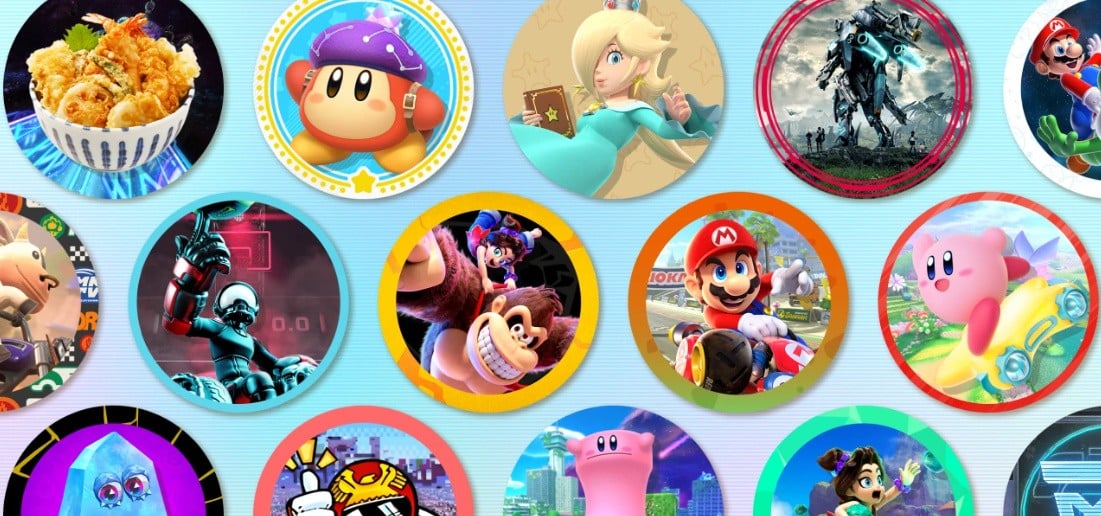
Nintendo has released all sorts of unique icons for Switch Online subscribers in 2025, and to go out with a bang, it’s once again bringing back select designs that you may have missed.
Switch owners already have access to Layers of Fear: Legacy and its sequel, but Bloober Team is back with a new port for Switch 2. Utilising Unreal Engine 5 to achieve some truly impressive visuals, Layers of Fear: The Final Masterpiece Edition is neither a sequel nor a remake, but rather the definitive vision of the series so far, packaging both titles into one enhanced experience.
The result is mixed. Although this is new for Switch 2, it launched elsewhere in 2023, before the studio significantly upped its game (in my opinion) with Silent Hill 2 and Cronos: The New Dawn. As such, what you’re getting here is a perfect representation of what I’d call ‘old’ Bloober; one that focuses on scripted, linear events with minimal player agency.
Persona 5: The Phantom X‘s global version has just reached its sixth month in the mobile games market, and the team is providing lots of fun to celebrate. I had the opportunity to interview Sega’s operational director and development producer, as well as the chief producer from Atlus, and asked them about plans for the milestone, whether a console release might be on the horizon, and whether those Lufel rumors have any weight.
It’s worth noting that the three answered my questions in Japanese, so we used a translator, but they were very insightful, so I hope you enjoy reading what they had to say.
I was curious about the motivations for making a mobile game out of Persona, a series that has shied away from the platform in the past. Yuta Sakai had this to say on the matter: “Before P5X, we’ve had various Persona games on many different platforms except for mobile, and we’ve had requests for more platforms so that the series would have more reach, so that’s the main reason why we decided to make a mobile game.”
I know a lot of us are eager to know whether there are plans to expand Persona 5X to other platforms beyond mobile, and while it seems like there may be something on the horizon, nothing is set in stone yet. Sakai states, “It’s not clear-cut on when or where it would be ready, but we do want to try our best to create the console versions… It’s in the corner of our minds.”
In terms of the challenges that they face with console, Sakai-san continues, “For Microsoft and Sony, it wouldn’t be too difficult to make a console version. But for Nintendo, they have a few rules that might make it difficult for us to have P5X on it. But we are continuing our research and development so that we can get more players and reach more audiences through various platforms as well.” That being said, the team is prioritizing the current versions that are out. Sakai-san goes on to say, “Most of our focus currently is on the development and improvement of our current mobile and PC versions.”
Persona 5X in English has over a million downloads on the Google Play Store alone, an impressive number given that the translated version of the game came out only six months ago. It’s clearly a hit, but I wondered how the team decided what elements of the original game would make it into the mobile version.
Yuta-san answers my question succinctly, honing in on one particular feature. “In Persona 5, there was a whole year where you would have actual dates, and you spend each day differently. But when we made the mobile version, we had to get rid of that. The main reason was that if we stuck to that, and had real dates in-game, that would mean other players who started playing the game later would miss out on earlier dates.”
Do they miss the calendar? It doesn’t appear so, as Sakai continues, “We have also run some seasonal events like summer to make sure that players still have that real-time feeling of playing a Persona game as well.”
I definitely do, and as a big fan of Persona 5, I wanted to hear a bit more from the team about story-specific differences between the games, so I asked the team about the involvement of the original Phantom Thieves. “If we just made Persona 5 but on smartphones, it wouldn’t fit the platform, and it wouldn’t work very well. So when we moved forward with the development, we decided we needed a new cast of characters, fresh faces to help push the story in the game, a brand new story in the game,” Yuta-san says.
“The key thing that we focused on in a discussion with the entire team is that we wanted to make sure that even people who have played Persona 5 before can feel the thrill of playing Persona 5 all over again, erase your memories and play the game again.”
There’s certainly enough in P5X that I’ve found to be similar to the original game, but one huge difference is the existence of limited time events, making the game feel interactive, dynamic, and community-oriented compared to the main line of Persona games. I asked the team if they would speak a little bit about what we can expect from the six-month anniversary events.
Yuta-san says, “So our first main event for our six-month anniversary that’s coming up is going to be Justine and Caroline. Within the Persona series, this is going to be the first time you’re going to be able to play as a Velvet Room Attendant. So we really think that is going to be something that is big for all Persona fans.”
Yosuke Uda chimes in with some extra information. “Some additional things that we’re going to do for the half-anniversary are a bunch of events and campaigns, because we really want to have that festive feel to it as well. The first thing is that we’re going to be able to get a lot of contract pools compared to the other versions. We’re also going to add a feature that gives you your half-year in review. For example, it will tell you how many times you have used a particular character and on what stages.”
This all sounds pretty fun to me, and though it’s unusual to have a half-year anniversary event, I get the impression that the team wants its Western fans to feel as involved in the action as the fans who’ve already had the game in Japan and China for longer. I asked Jun Matsunaga what the translation process was like and if any lines felt crucial to get right in translation.
He answered very eloquently, telling me that the number one thing the team sought to get right was the voicelines of, and interactions between, beloved characters from the original game. “The love that the fans have for those characters has been built up for over ten years now, and each of the characters when they appear have their catchphrases, their famous voice lines, and interactions with each other as well. Those parts are what we particularly spent a lot of time and paid a lot of attention to when doing the localization from Japanese to English.” This makes sense to me, as some of the most iconic parts of the game are the battle voice lines.
Demand online is high for languages like Spanish, French, and others, so I also queried whether they have plans to translate P5X into other languages. Matsunaga-san is “sorry to disappoint” on this front. “Although we know that there’s a demand for it and a lot of fans want it, we currently don’t have the capacity, and it’s not logistically possible.”
He goes on to give a reasonable explanation, saying that due to P5X being a live service game, it’s difficult for the team to be able to keep up with fortnightly updates. “We wouldn’t be able to maintain our pace, our development schedule if we added more languages.”
Keen to give his opinion on the half-anniversary event, Matsunaga-san also adds that the Justine and Caroline event is the first time that the team have attempted to do a simultaneous update between all the versions. “It’s a lot of work. And it’s definitely not something we can do often”, but they wanted to do it so that Western players “don’t feel like they got left behind.” A sweet sentiment.
Given that they seem very in touch and keen to connect with their playerbase, I wanted to know if they had seen the ‘Lufel is Lucifer’ conspiracy theories and if they could confirm or deny the allegations. As soon as the question was translated, all three developers and the translator burst into laughter. “We can’t comment on that, but we enjoy seeing players theorise on that, so please feel free to theorise on that even more,” Yuta-san says.
And finally, I asked them to provide their Western fans with a message: Yuta-san sends his warm wishes. “To our Western friends, we are extremely happy to be able to do this simultaneously-released character and event at this time to be able to have everyone enjoy it at the same time. So if you’re interested in the character, then we’d be happy if you would pull for Justine and Caroline as well, and we hope you continue to enjoy Episode 5X.”
Thank you once again to Yuta Sakai, Jun Matsunaga, and Yosuke Uda for their time.
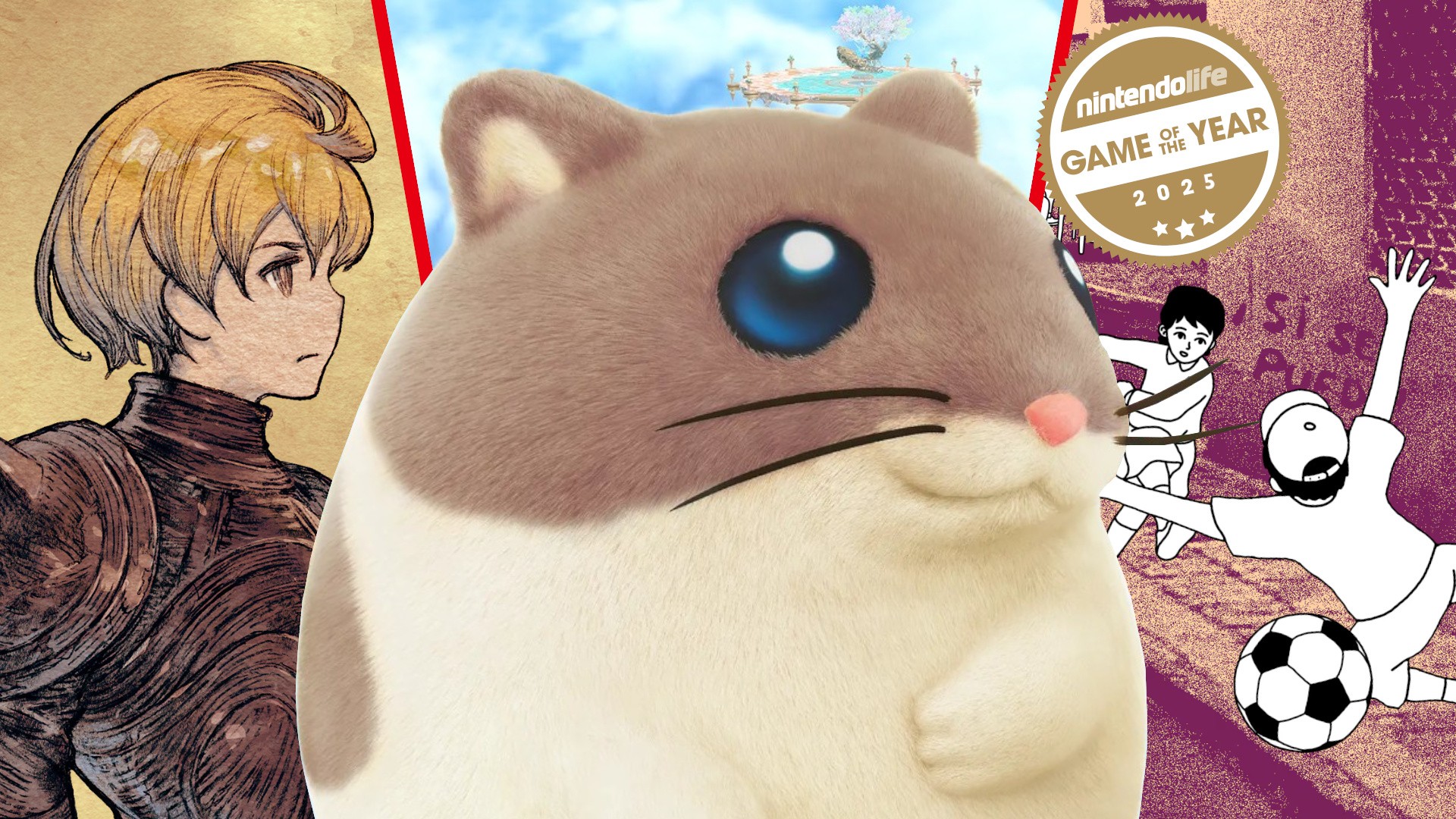
Best ‘squirrel with a gun’ game, most ‘Huh?’ Nintendo moment, and more!
Hello, well met stranger, and welcome to Jurassic Park! Nintendo Life’s Alternative Awards 2025!
It’s been…well…it’s been a year in which we have all existed, that’s for sure, and as a result games happened. Loads of them, in fact. Of course, and as is tradition at this time of year (it’s Christmas, mate, wake up), you’ve got your usual shoe-ins for Game of the Year, your fancy writing awards, nice acting, and good gameplay nods. All that stuff and nonsense for people who do everything right all the time.
Over the holiday season, we’re republishing some of the best articles from Nintendo Life writers and contributors from2025. This article was originally published in March. Enjoy!
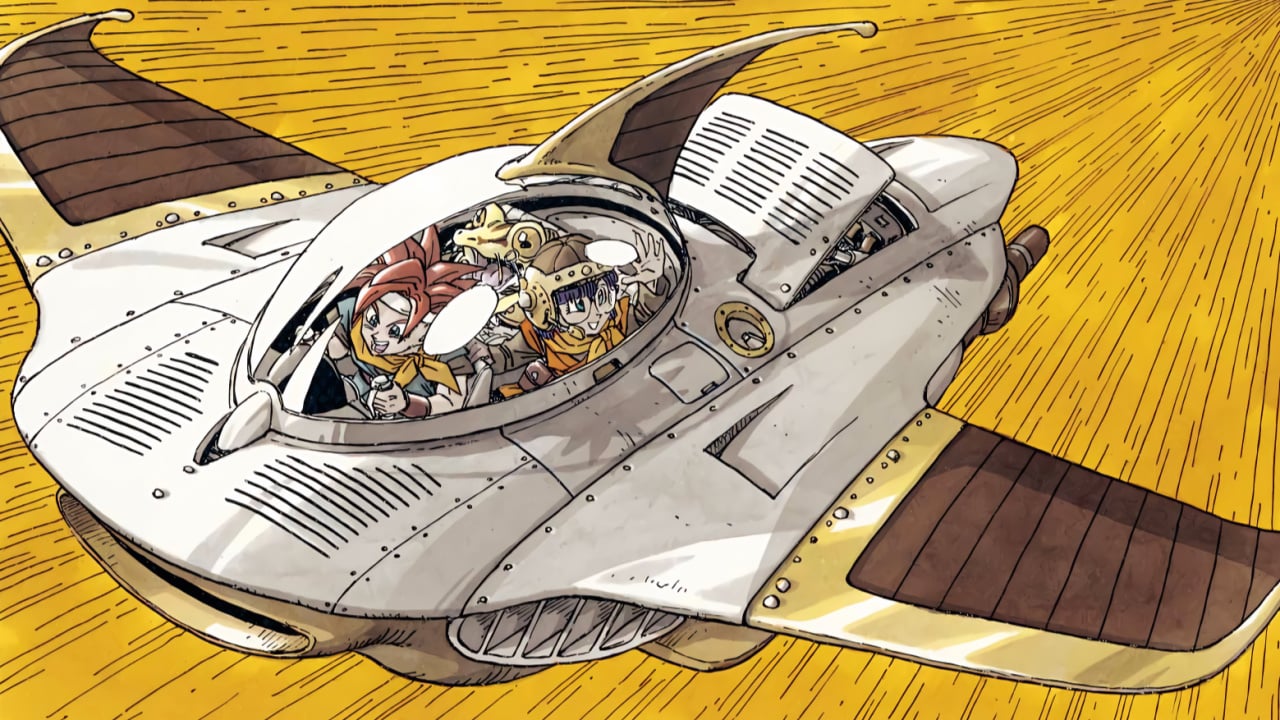
Note: If you haven’t played Chrono Trigger to completion…what are you playing at? If you’re sensitive to spoilers, come back when you’re done as we discuss end-game details below…
Update []: Following last week’s update from ConcernedApe, Stardew Valley – Nintendo Switch 2 Edition is now officially available. Once again, it’s a free upgrade for owners of the existing version of Stardew Valley on Switch.
Note: This upgrade is currently live in the US, so if it’s not available on your local eShop yet, you can download it from there.
Original Story:[Thu 18th Dec, 2025 04:30 GMT]:
Image: ConcernedApe
In September, the Stardew Valley creator Eric ‘ConcernedApe’ Barone lifted the lid on a Nintendo Switch 2 Edition of his farming and life sim. During the Nintendo Direct reveal, it was noted how this version would be arriving in “Fall 2025”. We’re now just weeks out from the end of the year, so what’s the status of it?
If you have been wondering where the Switch 2 version is (and the free upgrade for existing Switch players), apparently, there is going to be “something” announced “very soon”. Barone also apologised to fans for the wait – here’s what he had to say on social media:
Eric Barone: “I’ll announce something very soon sorry about the long wait”
Image: ConcernedApe, Nintendo
As for the game’s anticipated 1.7 update, the creator has now shared details about some of the content fans can expect, and there’s “lots more” planned:
“There will be some more character/social stuff, it’s also traditional to add a new farm type. Lots more but I don’t want to reveal much yet”
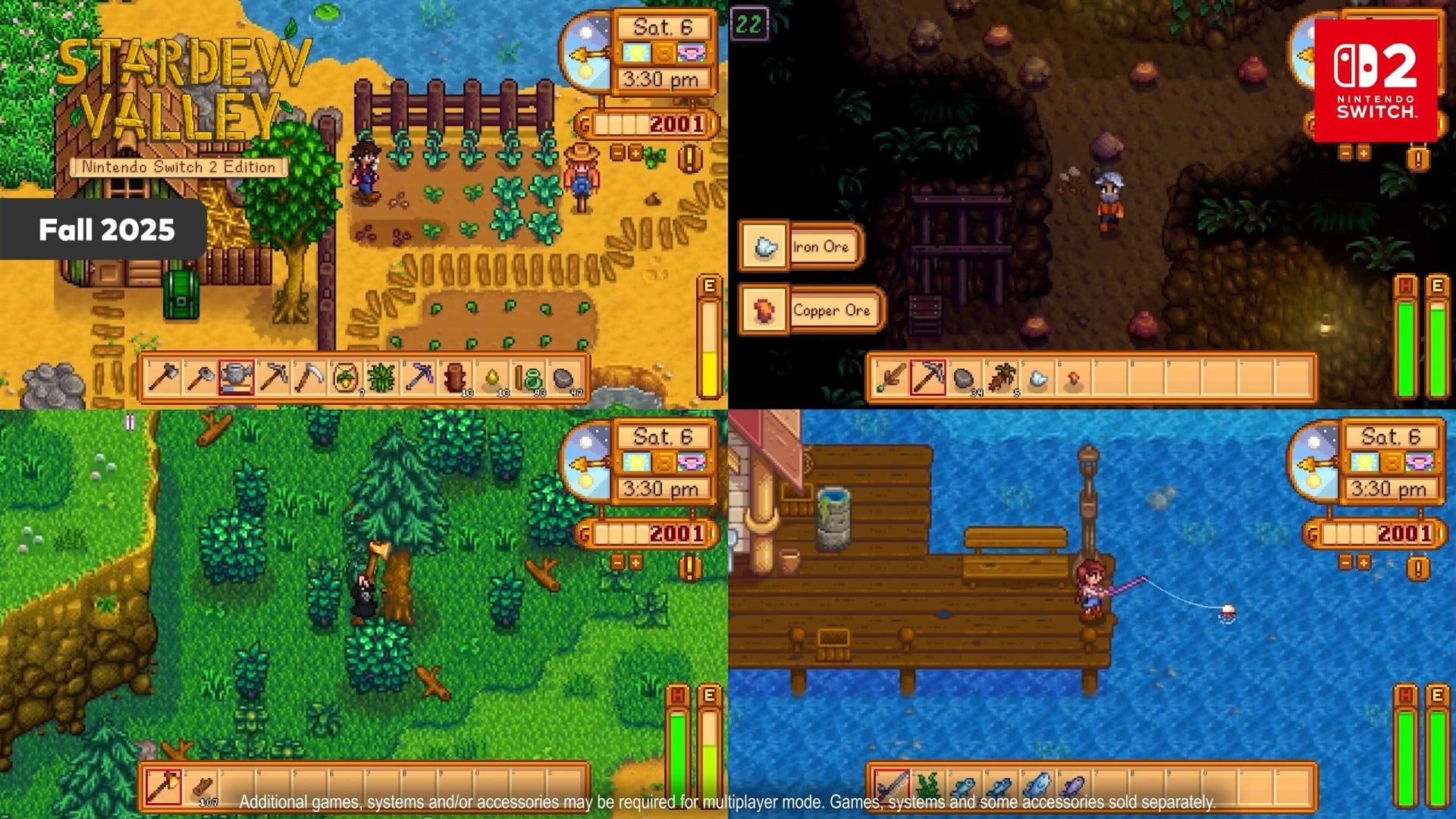
In case you missed the original announcement, the Switch 2 Edition of Stardew Valley will come packed with mouse controls, four-player split-screen and eight-player online multiplayer. There’ll also be GameShare support, so Switch and Switch 2 users without a copy of the game can join in on the fun.
Do you think we’ll see the Switch 2 Edition of this game before the year is out? What else would you like to see added in the 1.7 update? Let us know in the comments.
Over the holiday season, we’re republishing some of the best articles from Nintendo Life writers and contributors from2025. This article was originally published in February. Enjoy!
There’s no question that Nintendo makes some of the best video games in the world thanks to its incredibly skilled and passionate in-house and partner developers. But how often does the company let those developers speak freely about the games they make?
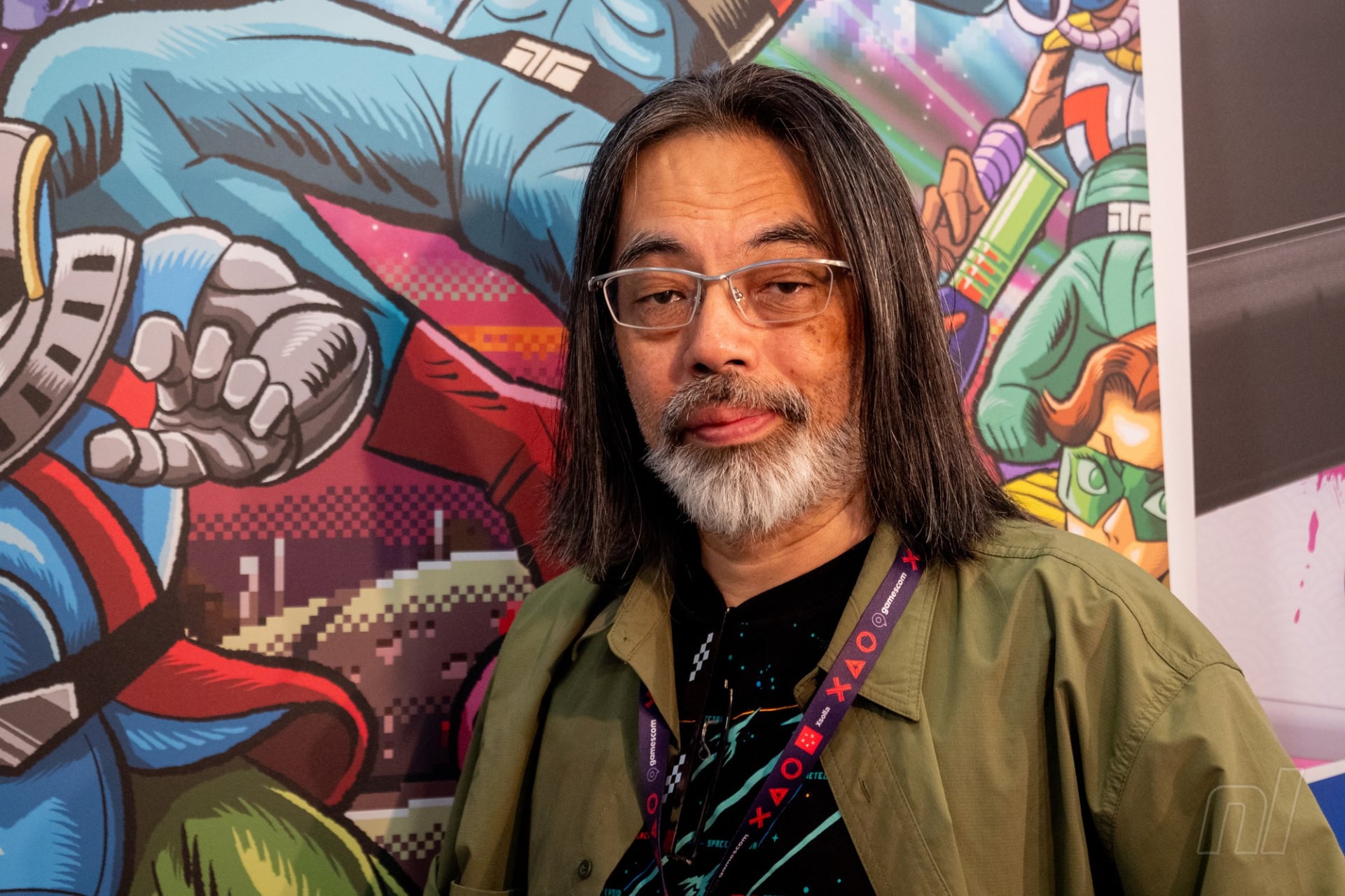
Last year we got the opportunity to chat with the legendary artist Takaya Imamura, famous for Star Fox, Captain Falcon and the many machines in F-Zero, and even Majora’s Mask itself. He was with Nintendo for over 30 years working on countless games until leaving the company in 2021 to pursue something different. So, naturally, we said ‘Yes!’ and flew thousands of miles to sit down with the man himself.
Imamura-san is now coming back to gaming with his new project OMEGA 6: The Triangle Stars, an adventure inspired by his own manga. In this interview, we speak about the upcoming game, his days working on games like Zelda, and why he left Nintendo after all those years…
Nintendo Life (Zion Grassl): Omega 6 looks a lot like a long-lost Super Famicom game. How long have you had the idea for this game in your head?
Takaya Imamura: So it’s actually pretty new as a concept. It’s derived from the manga. The idea wasn’t there from the beginning. I wrote the manga, then the chance to create a game based on it came up.
In that regard, what do you love about working outside of Nintendo and how is developing a game different now for you?
Now I enjoy it. I’m happy.
Did we hear correctly that you’re a professor as well? How do you juggle all of that?
Simply put, as a professor I’m teaching students, they come to class at a certain time, there’s summer holidays and I know when I need to work and when I don’t. Like Indiana Jones. [makes whip-cracking sound]
What has it been like being a teacher and a famous game developer? Do you have students that know of and are fans of your work?
There are some like that, but the majority don’t really know who I am.
Wow! That’s so interesting! I feel if you were a teacher in the US or the UK people would react differently to you being their teacher.
Even students who really look up to me tend to hold back during class. It’s when we go out for a meal or drinks then they ask if I’ll sign or draw something!
It’s nice that there’s a time and place for that sort of thing. To get back to Omega 6, what was your biggest inspiration for the art direction?
Once I left Nintendo, I was thinking, ‘How can I do something on my own as a creative?’ The easiest and first thing that came to mind was to make a comic since I can draw. I really wasn’t thinking of how I could sell the comic and make money, I just really wanted to draw this comic. If I can put it digitally on Kindle and a few people buy it? Great!
The game itself has a massive roster of characters, and I love how there’s a list of them all that you can flip through. Are you sharing design duties with anyone else or are they all created by you?
Thank you! Basically it was all me except there are four characters in there that my students designed. I did the pixel art for those few characters but my students came up with the original designs.
That’s amazing! You directed Steel Diver and have worked on plenty of other games with Nintendo over your many years there, but when’s the last time you’ve gotten to express yourself in this way?
It’s the first time I’ve been this free, because there’s nobody to tell me ‘No’, or to tell me when to stop. I just do what I want as much as I want.
When I was at Nintendo, or when you’re doing something in a professional environment and the project has milestones that people have to check off, you get senior people like the producers and managers that say, “Alright, you need to reel this one in,” or, “Let’s not do this.” Ya know, I really never liked that. I think for pretty much anybody who is a professional game developer, this is something they’ll go through. Of course, you know, when you’re at a company, the company has to make money!
Do you remember what it was that made you want to leave Nintendo? You’d been there for many years, but it’s a dream for many to work there.
It’s actually pretty simple. I quit when I was 65. This is the same for anybody, but life is short. We’ve only got a number of years on this earth and there’s a limit to the amount of things you can do with that time. I was kind of mulling over that and at the same time I got an invitation from the university to come and teach and I thought, ‘Whoa, this is an opportunity to change things.’
What are a few things you miss working at Nintendo?
For the first six months or so after leaving Nintendo, I kept dreaming I was still going to work. I’d start developing a game and then I’d wake up and go, “Oh, oh. Okay that’s weird.”
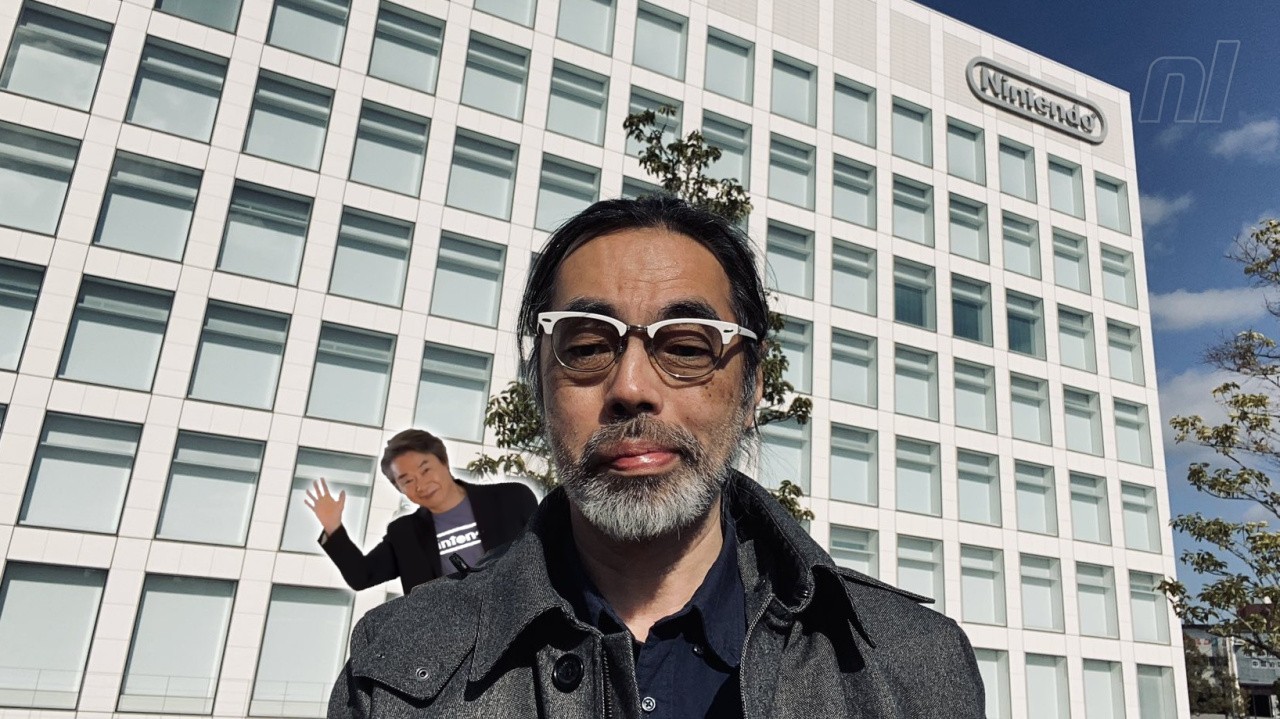
I actually met with Shigeru Miyamoto once after I left and I said, “Hey, long time no see!” But I actually didn’t feel like that was true since I was seeing him in my dreams all the time. He got a good laugh out of that.
You were at Nintendo for such a long time, so were you pretty close with a lot of your colleagues?
Yeah, I still keep in contact with all of them. For example, the director of Animal Crossing, Aya Kyogoku, is coming out to see me teach in the classroom in October.
Wow, really?! Is she going to be speaking or just sitting in to observe?
She’s just coming over for a chat! If I have her give a lecture or something like that, then she’s gotta ask Nintendo and it has to be approved.
How does it feel for you to be able to pass on all the things you’ve learned to a newer generation?
It’s very difficult because if I was to host a speech, lots of people would come and listen, I think. When we turn it into a formal lecture, then there’s people who are like, “Ughhh, I don’t wanna be here.” People sleep in class, so it’s like any lecture in school.
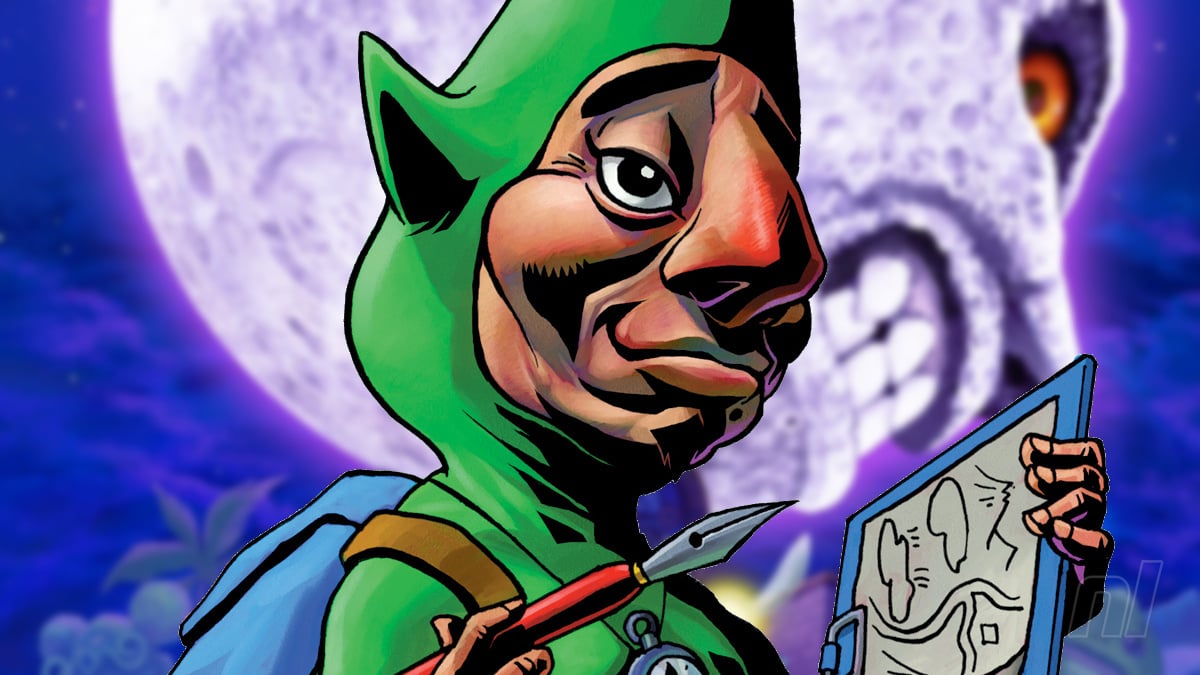
So I know you’re very famous for creating Tingle – was there anything specific that really inspired you to make him?
The background and the lore of the character was decided beforehand and I was only responsible for the visuals. Basically, I found a guy on the team and drew a caricature and there was Tingle!
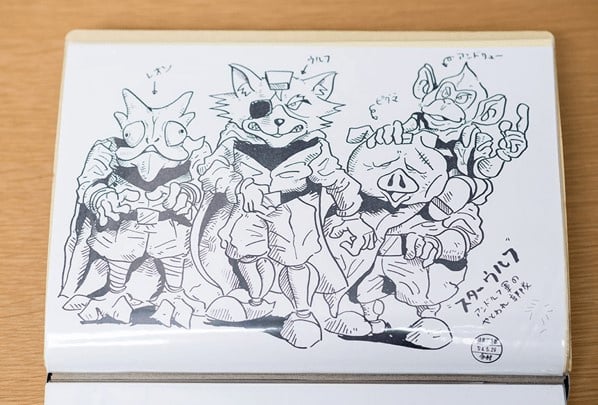
That seems to be a running theme for you, taking members of your team and putting them in the game! You did this with Star Fox, Falco and Slippy too, yeah?
I’m pretty good at caricatures. With Star Fox, it wasn’t a direct caricature but instead I was taking inspiration from different people. But yeah, that is one of the ways I do it.
Image: Nintendo
So you’re saying there’s a real-life Tingle roaming around in the world?
Yes.
We know there were a lot of character designs that were carried over from The Legend of Zelda: Ocarina of Time to Majora’s Mask but did you design any other characters in that game?
The only real NPC I made was Tingle, but I designed the Moon and Majora’s Mask and that was kind of iconic. I was the art director, so I wasn’t designing the actual characters, more setting the overall theme and direction for the art.
Do you remember why you were tasked with designing Tingle then? Did someone on the team want you to do it?
It was just a coincidence really. Everyone else was busy so someone asked me, “Hey, could you do this one?” and I said, “Sure!”
Majora’s Mask was developed in a very short amount of time, which sounds like it could be really stressful, but when you think back to that time making that game, is there anything that stands out? A funny moment, maybe the way you bonded with a coworker, or a way you made yourself proud?
It was a really short project compared to general Nintendo timelines, so everybody was really focused on getting it done. So there really wasn’t much room for fun, games, and hijinks. But, near the end of development, I had a homepage at the time and I was drawing caricatures on it just for fun and a TV company got in contact. There’s a program in Japan where they get people on and they compete by drawing caricatures and they’re judged and everything, and I got invited to go on that!
And I thought, ‘Huh, okay!’ It’s a pretty famous program in Japan, so I thought I’d ask Nintendo and they said, “Yeah, go ahead, why not!” Nintendo said okay, but I was planning to go on without making a big deal about the fact I worked for Nintendo. Then I heard the date the program was going to go live, and it was the release date for Majora’s Mask in Japan!
So I thought, ‘Well, in that case, I’ll go on and say who I was!’ Then the program ended up coming down to the studio and filmed us developing the game a little bit, and there was me at my desk drawing some pictures. It was such a happy coincidence.
Image: Nintendo Life
Do you know if that is available online to watch?
I haven’t been able to find it actually.
Oh really?! I would personally do so much to see that!
The program was called TV Champion. *picks up phone and starts looking* It’s a knockout competition and I made it through to the final!
By the way, are you a fan of Tingle?
*shrugs and shakes head*
[Laughs] I know there was a fan campaign to get rid of Tingle at one point, much like Jar Jar Binks in Star Wars!
I was quite young when the game came out, I think I played it when I was eight. I remember wanting to be Link when I was a kid, so when I saw Tingle, I was like, “Oooo, who is this guy?” He doesn’t fit in the suit, flying around on balloons, letting out a funny scream when you shoot him down. I’ve grown to love him now, but as a kid I always wanted to be the ‘cool guy.’
This interview has been edited for clarity and to remove some details at the request of the interviewee. Travel accommodations for this trip were provided by Gamescom.
Many thanks to Mr Imamura for speaking with us. Omega 6: The Triangle Stars launches for Switch in the West on 28th February. Dark Horse Comics has also announced that the Omega 6 manga will be available in English in October this year.
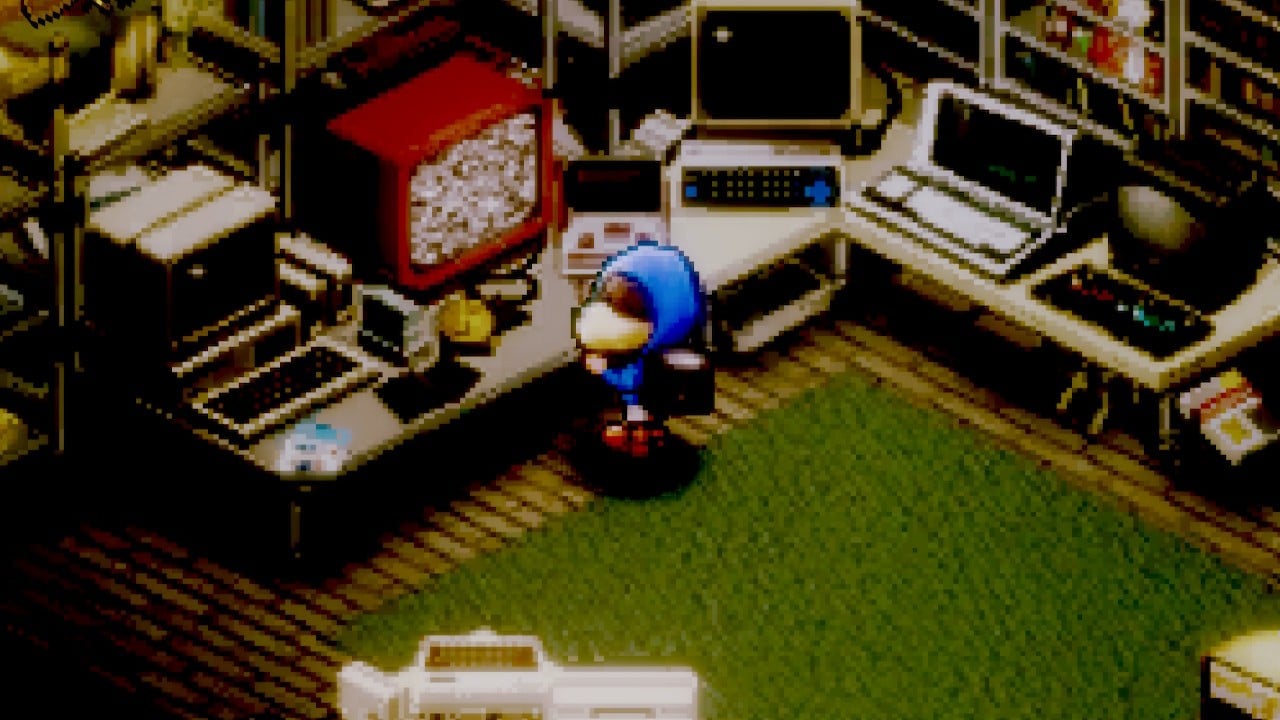
Stray Children launched on the Japanese eShop on 26th December 2024. We weren’t able to review it back in October when it arrived in the West, but we’ve now managed to catch up with Onion Games’ latest…
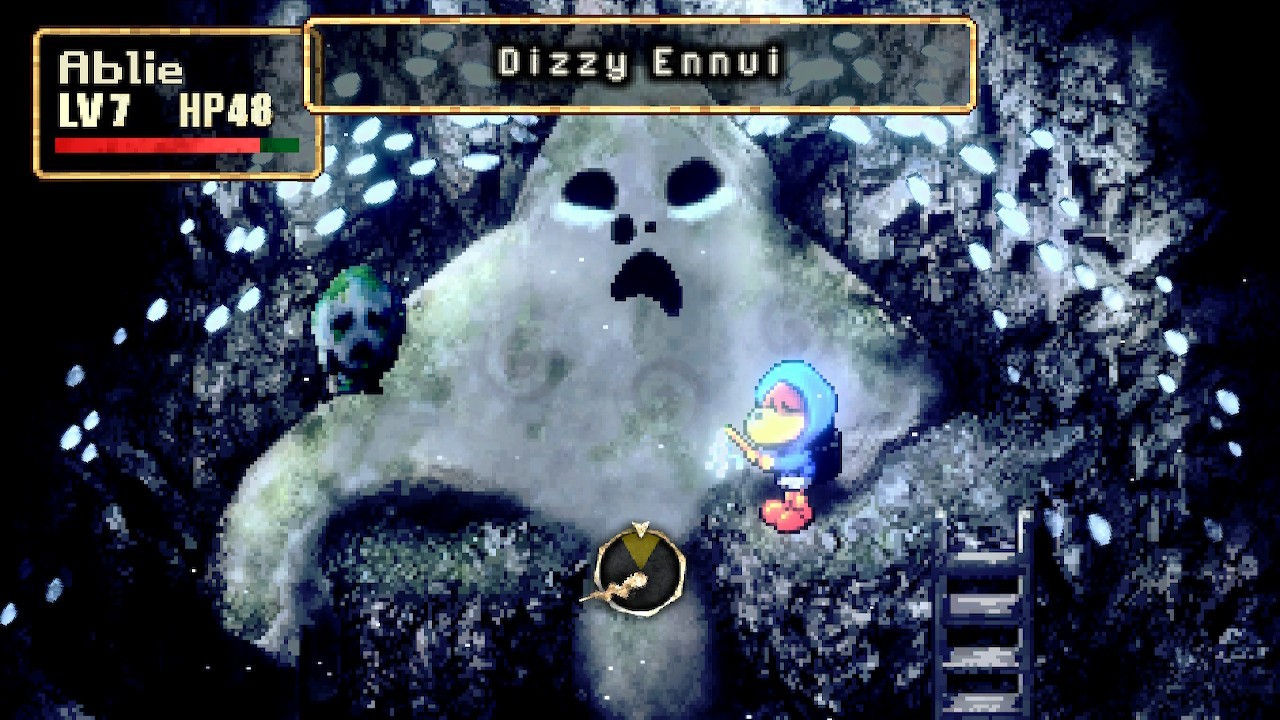
Your dad’s missing and some weird “uncle” is at the door, claiming to know you. Stray Children just chucks you straight into things with barely a title screen – but perhaps that sort of stylistic confidence is unsurprising coming from people behind Moon: Remix RPG Adventure. Yoshihiro Kimura and Onion Games have delivered a compact, auteur-driven project, heading off on adventures into emotional storytelling rather than into sophisticated mechanics. And it uncovers some impressive treasures on its quest.
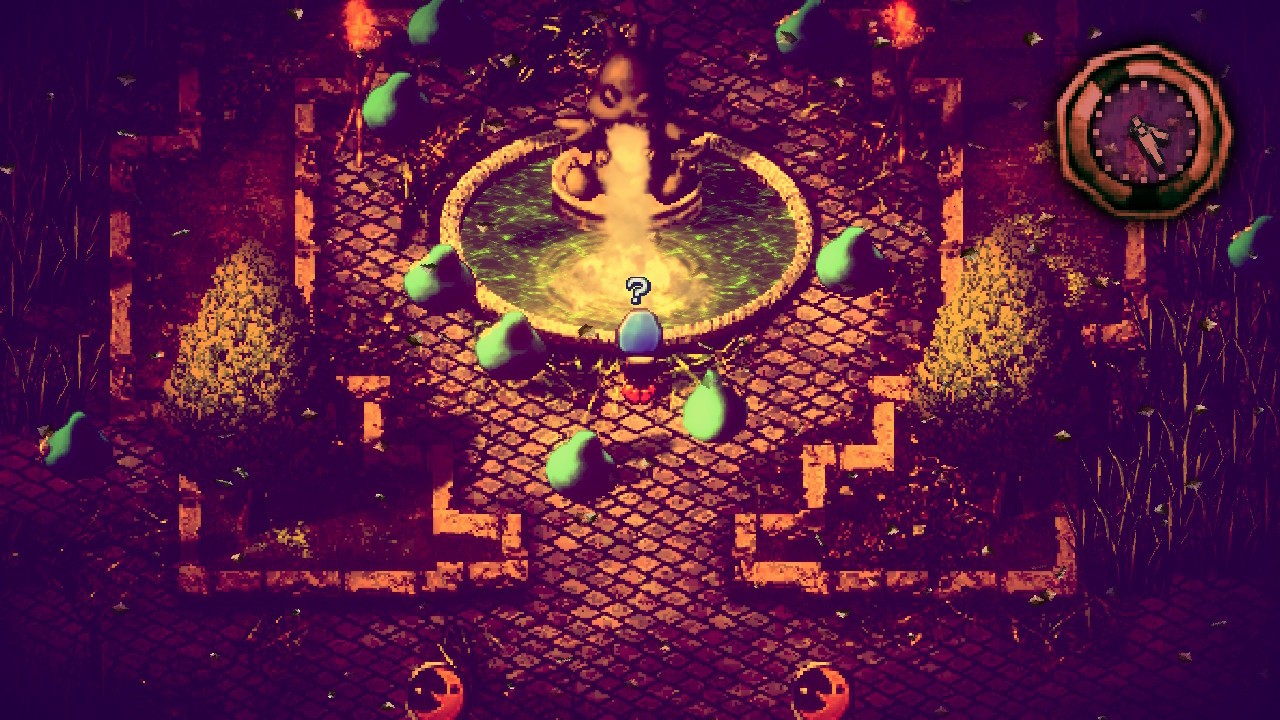
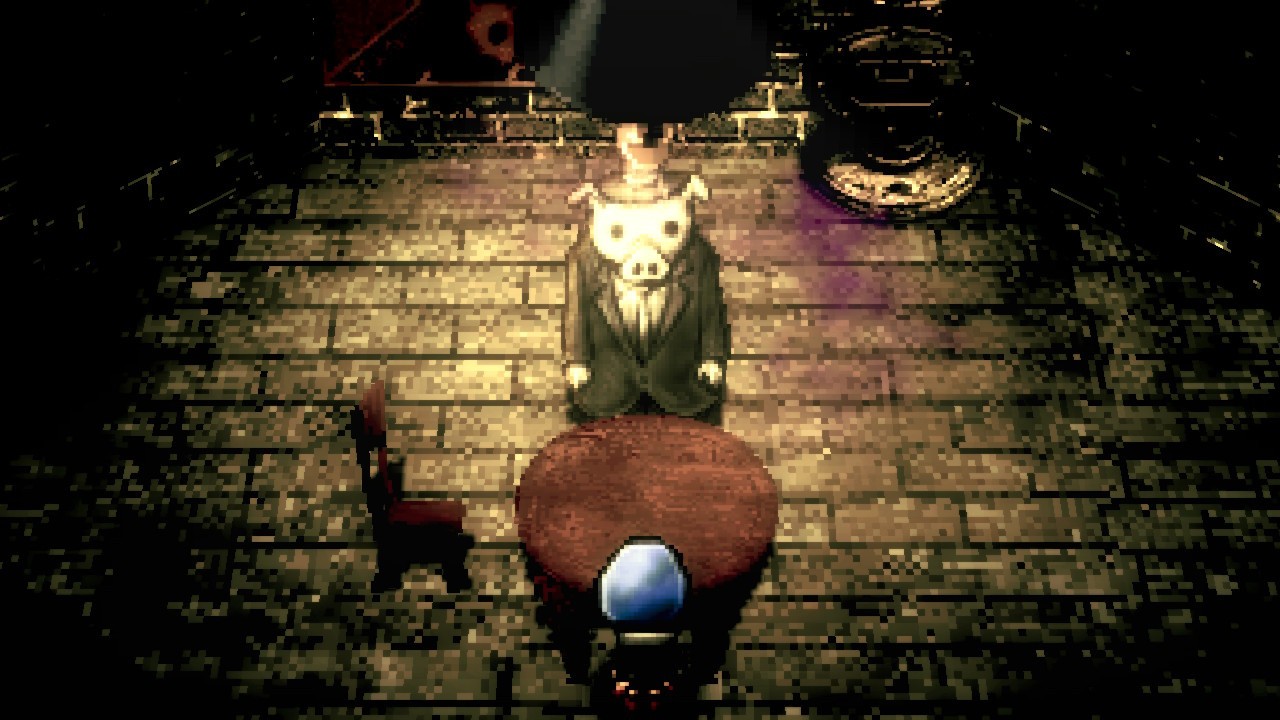
The story we’re told is that of a dog-faced kid venturing into a fantasy world through the screen of a video game. That world is surreal, funny, and sometimes very dark. In contrast to this unsettling tone, the graphics present charming, cute pixels, with a colour palette stirring memories of the Game Boy Advance. That soft presentation is the lens to show rather strange and uncomfortable things: Lord of the Flies orphans in a prison, for example, or a stalking frog paparazzo.
Captured on Nintendo Switch (Handheld/Undocked)
The game takes its unexplained opening and runs with it, shunning straightforward exposition and trading instead on feelings and vague impressions. Nonetheless, the gist of it is that you are trapped in a trippy, sinister world populated by children who are abandoned and lost.
It is the world of a video game, and its heroic knight has been destroyed – your task is to put it back together. The children, meanwhile, are lacking clear figures of authority, yet subject to judgement, labelled “bad” and punished. You explore from a top-down perspective in the 16-bit style, talking to myriad inhabitants of this endlessly off-kilter world.
The themes of parental authority and a child’s perspective are taken further by the enemies in the lands you explore. You will face random encounters with the “Olders” – creatures based on adults, themselves failing to cope with hang-ups and demons. They inflict suffering and strict expectations while wrestling their own internal frustrations.
Captured on Nintendo Switch (Handheld/Undocked)
In practice, this is represented by bullet-hell-style attacks dealt out in a turn-based structure. Kimura was reportedly inspired by Undertale, which is no bad thing. The Olders can be defeated by attacking on your turn, which requires you to stop a spinning arrow on a segment of a circle. The size of the segment, its position, and the number of rotations you’re allowed before you have to press all get changed up. However, it’s not exactly the deepest mechanic – that’s just not what the game’s going for.
Instead of fighting, the Olders can instead be talked down from their fixations and freed, excluding them from further random encounters. This talking mechanic is a continuation of the inscrutable approach Onion Games has taken to the game. Various speech options need to be selected in the right order during combat, taking one turn per option, and resetting when mistakes are made.
Finding out the right order for your statements, however, is mysterious in the extreme. It’s very easy to miss out completely on freeing the Olders, and even the ones you get will still require some guesswork. Later, tougher bosses make trial and error pretty severe, too.
Captured on Nintendo Switch (Docked)
That experience of talking to the Olders is emblematic of the game’s general attitude to you as you play. There is plenty of friction here, but it’s so consistent from minute one that it’s clearly intentional. Experiencing the world as something confusing and unexplained — inexplicable perhaps — is alienating but childlike. This hammers home what the game’s about, but it doesn’t always feel good to engage with. There’s a tension between delivering on the theme and being fun to play, but that just makes the game interesting.
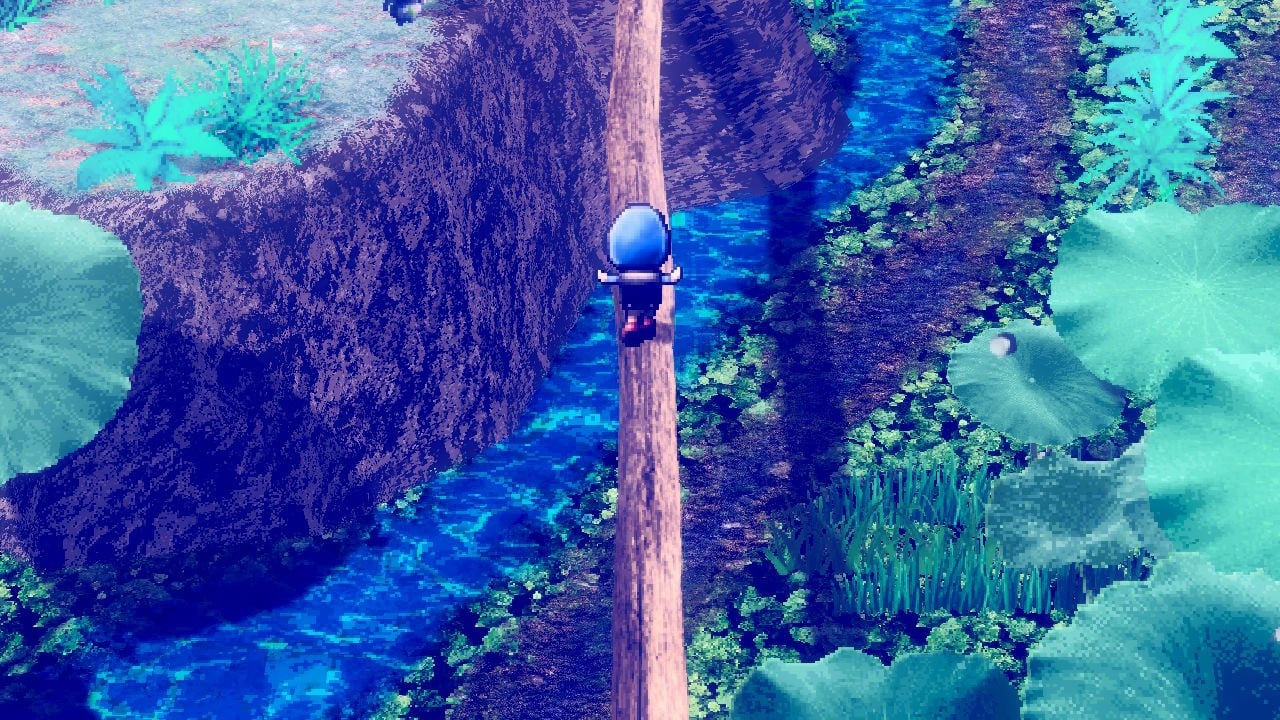
One thing that consistently delights, however, is the sound. The music sits perfectly with the game’s surreal world and its colours, which seem at once washed out and oversaturated. Eerie woodwinds, for example, make the perfect theme tune for tailing pigs along a train track, something like 2000s J-pop accompanies a lily pad gliding minigame, and a trilling harpsichord leads you around a grand palace.
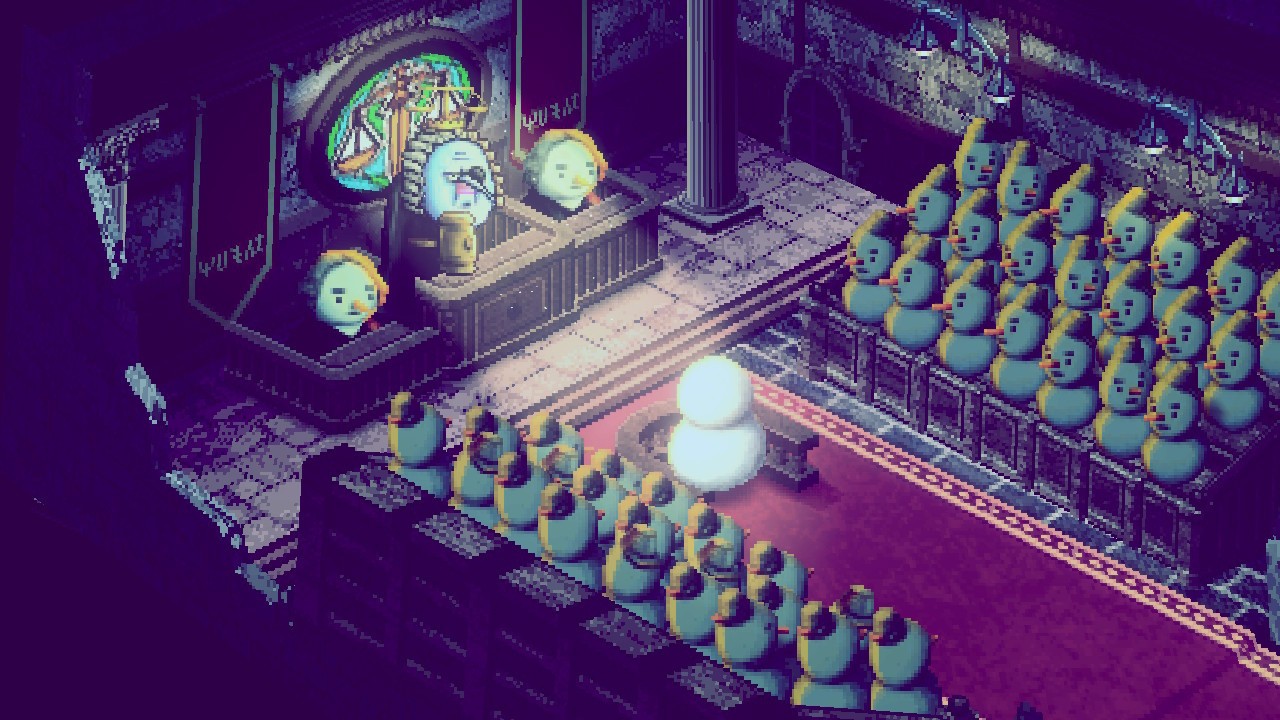
The stand-out feature of the sound effects, meanwhile, has to be the character voices. These sit somewhere between the apparent sentences of Simlish and the one-dimensional jibber-jabber of Animal Crossing. They are clearly somehow composed from different languages, with some distinctly German snowmen being particularly memorable.
Captured on Nintendo Switch (Handheld/Undocked)
Despite some frustrating repetition (unskippable dialogue right between a save point and a boss fight? Check!), Stray Children is not overlong, clocking in at about 12-15 hours. A lot of my time was spent wandering, searching for hidden items in every nook and cranny, and talking to every character I saw – sometimes a requirement for progression.
Again, though, the game gets away with the friction: the disorientation and lack of comfort create a sense of vulnerability – of being a stray. No doubt some players will find this opacity all a bit much. But for those feeling patient and intrigued by the art style and storytelling, it’s a joyful thing to play overall.
While I was in the latter camp — loving the surreal world despite the challenges — I was definitely grateful for the pick-up-and-play nature of the Switch. The pixel art looks great on the small screen, too. The hybrid console is still the best way to play the right kind of games, and this is one of them.
Conclusion
Stray Children is nothing if not opinionated. From its abrupt opening to its inscrutable mechanics, it outright refuses to hold your hand. This clarity of purpose builds a world that is totally captivating – if it gets its hooks into you.
If you don’t have the time and patience to explore and experiment while being labelled a “bad child”, this may not be for you. However, if you’re game for some surreal challenges, this is a memorable and ultimately optimistic adventure.
Over the holiday season, we’re republishing some of the best articles from Nintendo Life writers and contributors from2025. This article was originally published in January. Enjoy!
I suspect many of my fellow parents can relate to this, but when you have your first child, a whole bevvy of problems that never existed before are suddenly thrust upon you.
“Do we have enough nappies?” “Oh God, she missed the potty again.” “No, you can’t sit there Daddy, my Peppa Pig toy is sitting there.”
Granted, a lot of these aren’t necessarily ‘problems’ as such, rather minor inconveniences that, along with frequent moments of unbridled joy, make up the weird and wonderful world of parenthood. I do, however, have a bit of a bone to pick with Nintendo, specifically with its approach to game difficulty in the last mainline Mario, Super Mario Bros. Wonder.
Before having a child, the idea of lowering a game’s difficulty had honestly never really entered my mind. If anything, I would crank the difficulty up wherever I could in the hope that it would both extend my overall playtime and provide a unique sense of accomplishment. Halo on Legendary? No problem. Bayonetta on Climax? Is that all you’ve got?
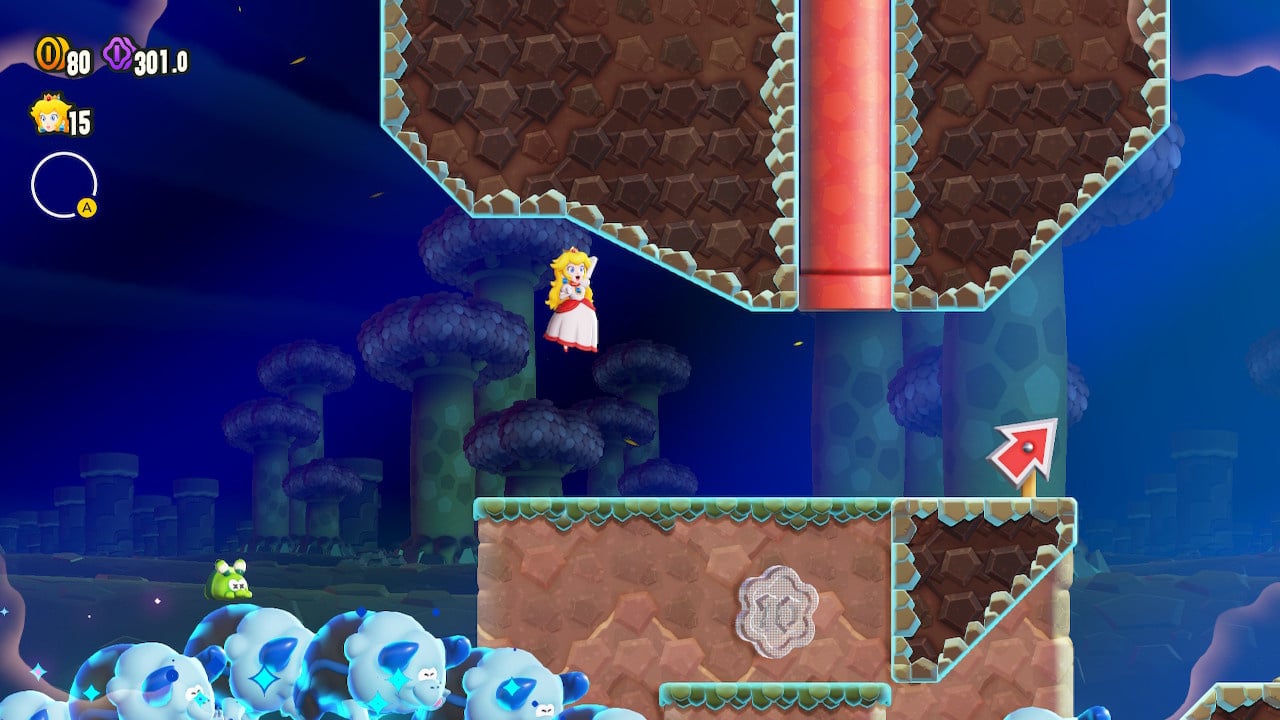
This all changed, however, when my daughter expressed interest in playing Mario Wonder. She watched the Super Mario Bros. Movie and became somewhat obsessed with the characters – especially Princess Peach. She’s only three, so I knew immediately that if I’m going to let her play, I’d need to make sure it was as approachable as possible, despite my own proclivities.
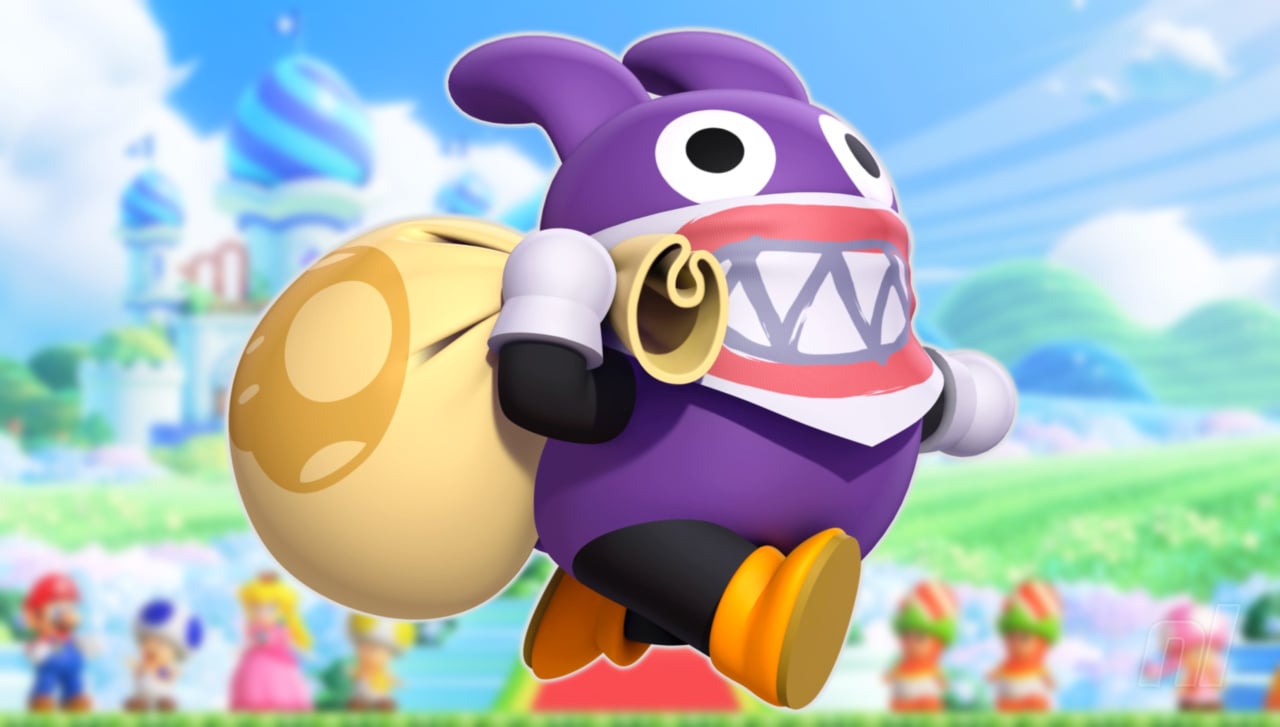
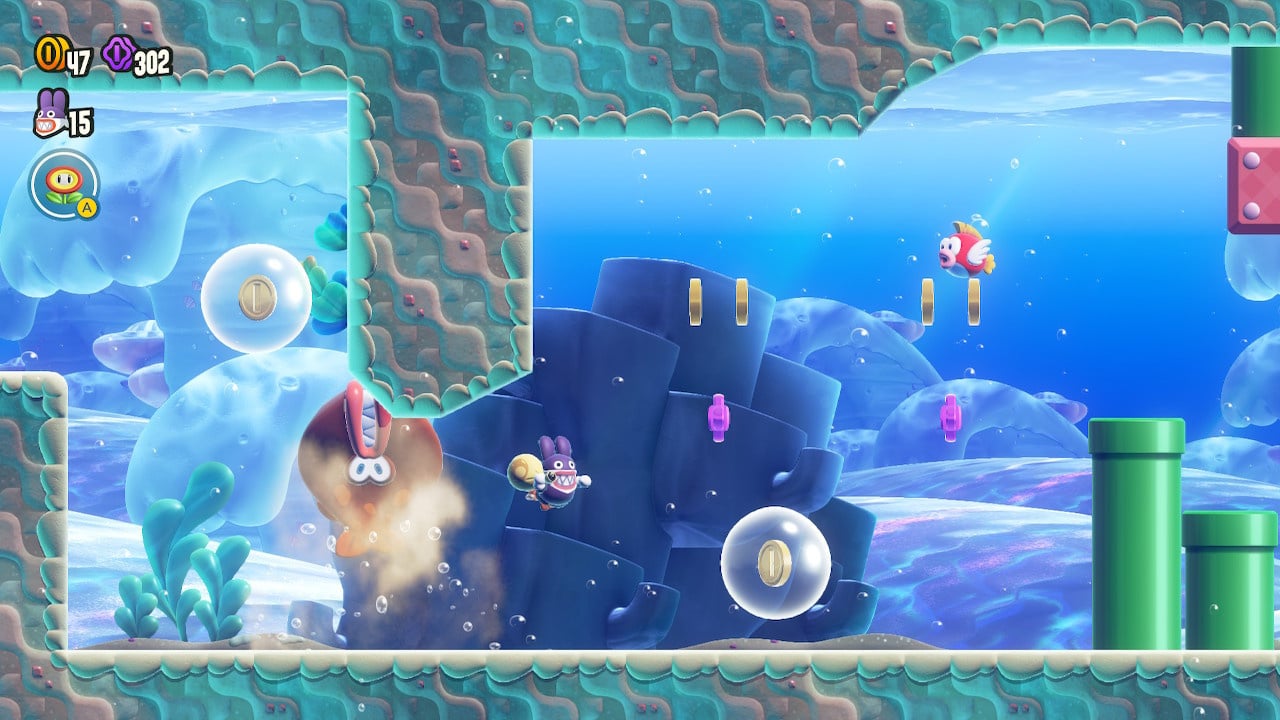
As you might know, however, Super Mario Bros. Wonder essentially locks its lower difficulty setting to specific characters: Nabbit and four Yoshis. So when the character select screen came up, I gently tried to explain this to my daughter, knowing full well how the conversation would go.
“Now listen, if you go for one of these characters, the game will be a bit easier for you and you’ll have a lot more fun.” “I want to be Princess Peach thoooough!” “That might be a bit trickier. If you go for the purple rabbit, it’ll be better.” “No, Princess Peach!”
“You’ll play as Nabbit and you’ll LIKE IT!”
Sigh. Anyone who’s had the pleasure of raising a three-year-old knows that it’s borderline impossible to change their mind once their heart is set on something. In this case, Princess Peach is my daughter’s favourite character from the movie, so of course she’s going to want to play as her. This meant we’d have to do without the perks – including invincibility – that come with Yoshi or Nabbit.
Wonder’s Badge system would have potentially eased certain tricky scenarios, but they’re not a comprehensive replacement for proper difficulty options
So how did it go? Well, rather predictably, not well. The opening stage – Welcome to the Flower Kingdom – was doable, but it went rapidly downhill from there. I knew that changing to Yoshi or Nabbit wasn’t suddenly going to make the game a cakewalk; after all, while both characters boast unique abilities that would theoretically make most scenarios easier, there’s still the task of actually navigating the levels. Given my daughter’s age and inexperience, even that would no doubt prove quite the challenge.
Still, it seems baffling to me that Nintendo would create a game aimed at children and families and not offer any optional difficulty settings for the majority of its 12 playable characters. No offence to Nabbit, but no child wants to play him when the likes of Mario, Luigi, and Princess Peach are sitting right there; especially when the Illumination movie had such an immediate, profound influence on my daughter’s perception and preferences.
And yes, I know Wonder’s Badge system would have potentially eased certain tricky scenarios, but they’re not a comprehensive replacement for proper difficulty options, in my eyes.
I wish I could say that I managed to convince her so she could enjoy the game, but she was exceptionally stubborn in her desire to play as Peach. And honestly? I’m quite proud of that. It makes me think that perhaps, way off in the future, she’ll be playing her games on higher difficulties just like me… Or she just loves Peach and wants to play as her – yeah, that’s probably it. In the end, though, she gave up and went back to playing with her Peach plushie.
Yeah… She never got this far.
Games like Celeste have proven that even the most challenging of experiences can be accessible to almost anybody when it has the right options in place. Quite frankly, I think with invincibility turned on and unlimited stamina applied, my daughter could probably have more fun with Celeste than she did with Mario Wonder – and I consider the latter to be much easier on its default settings.
So come on, sort it out, Nintendo. You’ve made some strides with difficulty and accessibility options over the years, but you’ve clearly got a long way to go. Applying blanket difficulty settings to a tentpole Mario title seems like the most basic of tasks when your goal is to reach as many potential players as possible, but as ever, the company stubbornly does things its own way.
Forcing those who want a breezier time to play as a specific character, though..? Nah, that ain’t it.