The new miniseries was announced during the August 2023 Pokémon Presents and has been produced by Studio WIT, the same talent behind last year’s Pokémon: Hisuian Snow. Set in the Paldea region — the home region for Pokémon Scarlet & Violet — the Paldean Winds will follow three students from the academy as they make a video showcasing their school.
Episode one, titled ‘Breathe Out’, focuses on Ohara, a flautist who is struggling with the video work, so she heads to Glaseado Mountain to carry out the school’s Treasure Hunt. Ohara and her partner Pokémon Fuecoco explore the mountain and get involved in some danger, but they also meet a familiar face from the main game. The series is due to be four episodes long, so we’re sure the other episodes will focus on Ohara’s friends, Aliquis and Hohma.
To commemorate the episode’s release, The Pokémon Company has shared a brand new Mystery Gift Code to redeem in Scarlet & Violet, which will get you a Cetitan.
The first episode comes just seven days before Pokémon Scarlet & Violet – The Hidden Treasure of Area Zero: The Teal Mask is due to launch. This first piece of DLC — which makes up one-half of the Expansion Pass — is set in a new location: Kitakami. So it’s going to be a big month for Pokémon!
Check out episode one below, and let us know what you think of it in the comments.
Posted by: xSicKxBot - 09-07-2023, 10:26 AM - Forum: Lounge
- No Replies
News - IFA 2023: Honor’s V Purse is a reverse-folding fashion statement
Folding phones, while new, have been the same for a little while now, but Honor looks like it could shake things up. At IFA 2023 in Berlin, the company announced the Honor V Purse, a phone that has its screen all around the outside of the case and unfolds to make a bigger screen. It’s definitely different from the other best foldable phones on the market at the moment.
While it may sound impractical, it’s only a concept phone, and Honor is advertising the device in a different sort of way. It’s all in on the fashion side of things, with the phone getting a handbag-style strap, various designs for the outside of the device, and even a catwalk fashion display on the show floor at IFA. It’s putting the device firmly in a different category from usual flagships.
Of course, it’s just a concept phone, but the design does raise some questions. Obviously, having your display all around the outside of the phone isn’t going to be good for hazard-prone fashionistas — that thing’s gonna crack — while the idea of having a fashionable wallpaper always on also sounds fun, that’s gonna murder battery life. And it doesn’t look like the device could fit a particularly big battery either.
Still, it’s good fun, and there’s no point in being a tech cynic about it. Just look at the video below and see for yourself.
Awakened in a strange new land, and displaced from his final resting place, The Penitent One is thrust back into the endless cycle of life, death, and resurrection, with no other option than to explore this perilous new world and uncover its long-forgotten secrets. https://www.youtube.com/watch?v=v6hNxChZFvU&ab_channel=Team17
Today we look at PowerIK for Unreal Engine, a full body IK solver. PowerIK was recently released as part of the December monthly UE giveaways as part of the free forever category. On the Unreal Engine marketplace, PowerIK was described as:
Power IK is a full-body IK solver that lets animators push and pull any skeleton with any number of effectors.
Use Power IK to easily align creatures to uneven terrain, or dynamically modify their pose at run-time. Power IK is a robust and efficient solver that produces remarkably natural poses even under extreme circumstances.
PowerIK has the following features:
Unique proprietary full-body IK solver
Power IK Solver AnimGraph node
Built-in ground alignment
Power IK Rig Actor Component for making interactive rigs
Bonus! Procedural animation example blueprints
Bonus! 6 sample skeletal meshes with fully documented blueprints
While it supports Unreal Engine 4.26, the current install will give you an error when you try to run PowerIK. If this occurs, on Windows the fix is fairly simple. Navigate to your install directory for UE 4.26, then navigate to:
Now it should work just fine. In the video below we go hands-on with PowerIK using the example project currently available for download here. If you run into some trouble, the documentation is available here.
If you’re looking to get ahead in the newest AFK adventure, you’ve come to the right place. Our list of Fortress Saga codes will help you build your fortress and protect your people much faster by getting you a bunch of free gems and other rewards.
There are currently no expired Fortress Saga codes.
What are Fortress Saga codes?
Fortress Saga codes are coupons that the developer Cook Apps gives out to celebrate milestones in the game’s journey. You can redeem them for cool rewards like free gems and canon tickets.
How do I redeem Fortress Saga codes?
Redeeming Fortress Saga codes is super easy. All you need to do is:
Open Fortress Saga
Open the menu
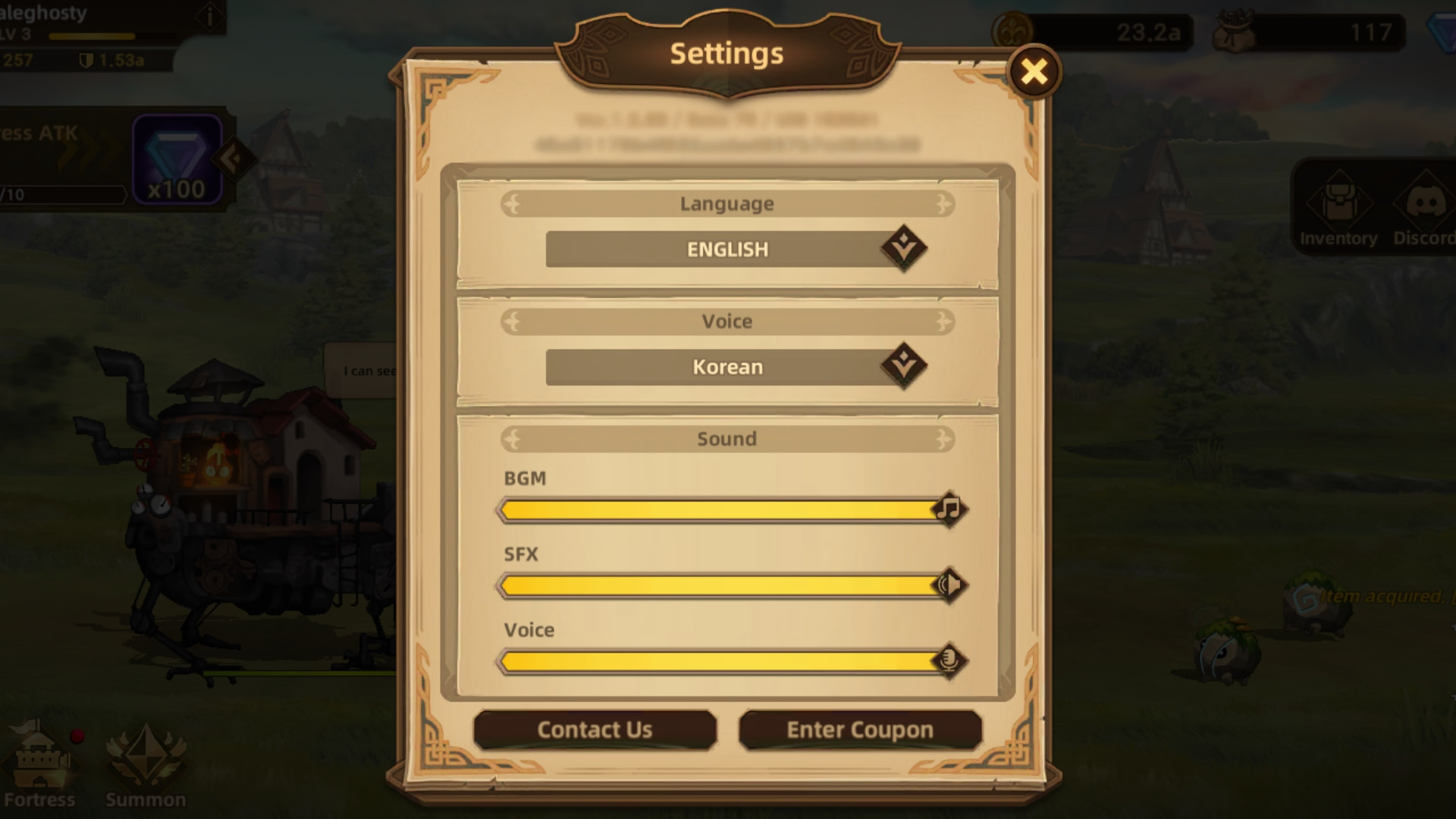
Click Settings
Tap Enter Coupon
Enter your username and one of the codes from above and click redeem
Enjoy your freebies!
You can also redeem your codes directly online on this website.
Azure Static Web Apps is a service that automatically builds and deploys full stack web apps from a GitHub repository. Azure Static Web Apps consist of a static web frontend, and an Azure Functions based backend. When you create a Static Web Apps resource, Azure sets up a GitHub Actions workflow in the app’s source code repository that monitors a branch of your choice. Every time you push commits to the watched branch, the GitHub Action automatically builds and deploys your app and its API.
To help you get started, we’ve created a GitHub repository template, which you can use as a starting point for your own projects.
In GitHub, click on the Use this template button to create a new GitHub repository using the template, providing it a name of your choosing (we’ll use my-blazor-app here) and click Create repository from template.
There are three folders in the template:
Client: The Blazor WebAssembly sample application
API: A C# Azure Functions API, which the Blazor application will call
Shared: A C# class library with a shared data model between the Blazor and Functions application
To run the app locally, start both the API and Client projects. The “Fetch data” page in the Blazor app requests weather forecast data form the backend Function API and display it on the page.
To run the app from the command-line, you’ll need to install the Azure Functions Core Tools for your platform of choice.
Deploying to Static Web Apps
To deploy this app as an Azure Static Web App, log into your Azure account (sign up for a free one here) and search for Static Web Apps.
Click Create, provide a Subscription, Resource Group and name for the application.
Next, sign into GitHub and locate your GitHub repo (my-blazor-app) and select the branch you wish to deploy.
Finally, select Blazor from the Build Presets, which will populate the App location, API location and App artifact location with Client, API and wwwroot. The first and second values are the path within the Git repository to where the project files for the Blazor and Functions app resides, so if you’ve modified the structure of the Git repository, make sure these values are updated to reflect. The third value is the output path that Blazor will compile into and doesn’t need updating.
Complete the wizard and Static Web Apps will create the GitHub Actions workflow file for you and deploy your application to Azure.
Summary
We started by forking a GitHub repository (but you could’ve also used a project created in Visual Studio/Visual Studio Code/etc.), created a Static Web App in Azure, and it setup a GitHub Actions workflow for us, automatically building and deploying our Blazor and Functions application. We’ve now got a statically hosted application with a serverless backend, ready to scale for our demands.
We’re excited to have Blazor WebAssembly and .NET Functions supported by Azure Static Web Apps, and can’t wait to see what you build with them. Let us know what you think by filing an issue on GitHub.
AppleInsider - Amazon issues month-end deals on AirPods, MacBooks, iPads & Apple acc
Big-ticket items on sale at Amazon.
Amazon continues to slash prices on Apple items ahead of the long-awaited iPhone refresher next month. That means you can take home some of the hottest items with an incredible deal that saves you big.
These deals include $210 off a 12.9-inch iPad that comes fully loaded with the latest M2 chip and a massive 2TB of storage. Likewise, laptop shoppers have their pick between the latest M2 MacBook Air, a heavily discounted M1 MacBook Air, or a 16-inch MacBook Pro.
Posted by: xSicKxBot - 09-06-2023, 12:15 PM - Forum: Windows
- No Replies
Microsoft - With next-generation AI and new cloud solutions, we have a real opportun
Frontline workers represent the face of organizations and make up the lion’s share of the workforce. But new Work Trend Index data reveals that 1 in 2 frontline workers cite being burned out in their jobs. Investing in technology that supports the frontline is key. Notably, 65% of frontline workers are optimistic that AI will help them in their jobs.
We are excited to highlight new Microsoft solutions and investments in next-generation AI for the frontline workforce across nearly every business. Frontline managers and workers can optimize their time from work order creation to schedule management with Copilot in Dynamics 365 Field Service and the new Shifts plug-in for Microsoft 365 Copilot. In Viva Connections, frontline workers can stay up-to-date on internal communications. And with shared device mode for Intune, VMware and SOTI, employees can simplify the sign-in experience securely.
Today’s announcements not only reduce administrative burden and time on spent on manual tasks, but also enable frontline workers to focus on end customer experiences and receive an overall improved employee experience. Learn more here: https://lnkd.in/e9Ash_82
Teaching People to Share Technology: Adafruit Founder Limor Fried
This story is based on our interview with Adafruit founder Limor Fried
When Adafruit founder Limor Fried was studying electrical engineering and computer science at MIT, she realized she was less interested in the electrical engineering part.
“What I really liked to do was build stuff,” she said.
Instead of working on her homework or thesis, Fried spent her time designing hardware projects in her dorm. She built an MP3 player way before Apple made iPods popular.
“With electronics, you could build anything from an MP3 player to a GPS tracker,” she said.
Fried started building different gadgets, including LED light toys for the annual Burning Man creative festival. She published these projects on her website at MIT, including the CAD schematics, firmware and instructions on how to build them.
“It was kind of open source hardware, but at the time it wasn’t a thing yet. People would say, ‘Oh, no, you just published everything and gave it away,’” she recalled.
She started getting queries from around the world from people interested in building the devices she posted about, but they were having trouble sourcing the components.
“They needed actual hardware that I used in my projects. It was really difficult to get different components from different places,” Fried said. “You would have to order PCB [printed circuit board] from one place, resistors and chips from another place. It was really complicated for most people.”
Soon she started getting emails asking if she could sell a whole kit. Initially, she wasn’t interested, but she relented and began a small side business.
“I started selling a couple of kits, which I would ship from the local post office,” Fried said.
That small business eventually became her full-time job: Adafruit. In the last 13 years, the venture has grown from a few kits to over 4,000 products.
Adafruit offers what it calls “open source hardware,” designing and manufacturing innovative yet affordable electronics products, components, tools and accessories. When this hardware gets into the hands of creative people, they build some incredible things with it.
What Fried loves about hardware is that you can actually touch it, pick it up and show it off.
“You can take it out and wear it at Burning Man or cosplay conventions,” she said.
In addition to being fun and creative, Adafruit’s hardware also helps people. In the last couple of years, Adafruit has been working on assistive technologies, developing adaptive and rehabilitative devices to assist people with disabilities.
“It changes their lives,” Fried said.
These types of devices are a great option for people because you can do only so much with proprietary technologies. Off-the-shelf devices are difficult to customize, and hiring someone to build just what you need could be very expensive and out of reach for most people.
“Open source hardware is a perfect middle ground. It’s inexpensive and allows you to customize the way you need it,” Fried said. “The code is there. Instructions are there. Anyone can do it. Since it’s open source, people can iterate, tweak, fine-tune to their needs. We are seeing a lot of interest in open source hardware for assistive technologies.”
Adafruit’s hardware is working for everyone from creative hobbyists to people interested in building things for their smartphones to developers inventing products for the next industrial revolution. Adafruit also worked with computer game company Nvidia to help build its Jetson Nano Developer Kit, which lets users run multiple neural networks for artificial intelligence, machine learning and edge computing.
Adafruit also sends its kits to schools to facilitate STEM programs, as kids tend to respond well to learning with physical objects. A project that started as just a fun activity for Fried now has a real purpose.
“I think the mission is to teach people to share technology and show people how much fun and exciting and creative it can be,” she said.