The following blog post, unless otherwise noted, was written by a member of Gamasutra’s community. The thoughts and opinions expressed are those of the writer and not Gamasutra or its parent company.
The following is a reproduction, and was originally posted November 2, 2017. The original post, and many others, can be found at RemptonGames.com
A few months ago, I wrote an article about game design lessons I learned from my honeymoon at DisneyWorld. In that article, I looked at some of the ways that design principles from other fields could be applied to game design. In this article, I want to go the other way, and look at how some designers have been trying to apply game design principles to real-life, also known as Gamification.
These days Gamification is practically everywhere, from education to fitness, health to business. Many businesses believe that gamification is a cheap and easy way to change consumer behavior by providing them with points and achievements. However, gamification is not without it’s critics. These critics believe that gamification is misleading, because it takes only the most surface elements of games in order to trick consumers.
In this article, I want to take a close look at gamification. First, I will go more in-depth into exactly what gamification is, and how it is used currently. Next, I will look at why gamification is used, and some of the criticisms of the current system. Finally, I’ll present some of my ideas on how this system could be improved.
Gamify me to the Moon
Pictured: A game, apparently
Lets start with a simple question – what does it mean to “Gamify” something? Games come in a massive variety of shapes and sizes, with almost infinite combinations of different mechanics to choose from. That being said, these days gamification generally refers to one thing – a rewards system. The simplest and most common form of gamification simply boils down to a system of points and achievements that users can gain over time by doing some task. The thought behind this method is that earning points and achievements will give “players” a sense of accomplishment, and make doing the task feel like playing a game.
In many cases, these techniques are actually used with good intentions. For example, for about a year I used an app called “Plant Nanny”, which I used to keep track of how much water I drank. In this app, you would set a daily goal for how much water to drink, and record the amount you drank as you went. As you drank, the app would water a plant in the app, and over time it would grow. When you grew a plant to full size, you would get some seeds which you could use to get and grow new types of plants.
D’aww
For me, Plant Nanny is proof that, when done right, this type of gamification can actually be a good thing. The app was simple, unobtrusive, and yet very effective – I actually did end up drinking more water, and it became a habit that I continue to this day. In certain applications, such as health, exercise, and education, simple gamified programs such as this can be useful tools for promoting positive behavioral change. However, not all gamified programs use it for such noble ends, and most are not so well designed.
Plan Nanny, in my eyes, does a lot of things right. Firstly, there is a very clear connection between what you do in real life and what happens in the game – you drink water, the plant gets water. Secondly, it actually gets you invested in the endeavor – instead of simply watching a progress bar fill up, you are actually watching an adorable plant grow. Over time you become attached to that little plant, and you actually want to take care of it. Finally, unlike many gamification programs there are actually consequences in Plant Nanny – if you don’t keep up with your water goals, the little plant will slowly shrivel and eventually die.
Quick! Somebody drink something!
Unfortunately, most gamified apps and systems are not this well designed. Instead of being a single, well unified system, in many cases the elements of points and achievements is simply pasted on top. However, if you are trying to encourage positive change, badly designed gamification can still be better than none at all. The best uses of gamification are when it is used to give users a little extra motivation to do something that they already want to do, like work out more or learn a new language.
The Name of the Game
Although there are some cases where gamification can be used to improve people’s lives, it is definitely not without it’s criticisms. One of the biggest criticisms of gamification is that it is misnamed, and has almost nothing to do with games. In many cases, the only aspect of games that are actually used is the reward system, which is presented as the entire game experience. While this type of points system may have it’s place, it is not necessarily fitting with the name “gamification”. In this article, author Margaret Robertson suggests the term “pointsification” instead.
The debate about gamification goes much deeper than the name, however. While gamification can give people the motivation to complete tasks they already wanted to do, it can also be a tool that companies use to influence consumer behavior. One example of this is the (now defunct) My Coke Rewards program. This program allowed users to enter codes found on Coca-cola products to earn virtual points, which could then be spent on “prizes” (usually more coke products). This program grew to become the world’s largest corporate rewards program, before it was replaced earlier this year with a new “Sip&Scan” system.
Boy do I love playing games!
The My Coke Rewards system is a great example of how gamification can be used to encourage unhealthy behavior, just as much as it can healthy behavior. Throughout it’s life, My Coke Rewards was criticized by numerous groups, mainly for promoting unhealthy behavior (particularly for children and young adults). Despite this, the system was incredibly popular, and was only replaced due it’s use of outdated technology.
While it’s true that gamification can be used to encourage unhealthy behavior, I don’t think that this necessarily makes it bad. Gamification is simply a tool, and like any tool it is only as good or bad as what you do with it.
Fun fact: Every time you give a player points for social media shares, a baby bunny sheds a single tear
Getting Your Head in the Game
According to Bunchball, the gamification company behind My Coke Rewards and numerous other gamification projects, gamification uses 10 primary “game mechanics”. These include:
Fast Feedback
Transparency
Leveling Up
Onboarding
Competition
Collaboration
Eagle-eyed readers might notice something about this list of “game mechanics”. With the exception of perhaps leveling up and points, none of the things listed are game mechanics. Some of them even have very little to do with games! For example, raise your hand if you consider “Onboarding” to be a game mechanic.
Now put your hands d….oh, nevermind
The biggest problem with gamification as it currently stands is that most often it is put into practice by people who seem to know very little about games (you know, the kind of people who consider one of the ten most important game mechanics to be “badges”). Because of this, as we have shown, gamification has almost nothing to do with actual games. The idea of using aspects of games to motivate people is not a bad one, but it would be a lot more effective if it actually tried to live up to that, instead of simply slapping a point system on top and calling it a day.
In fact, I believe that the system that is most effective at using game elements to motivate a change in behavior was not a “gamified” app at all, but Pokemon Go. While I believe that Pokemon Go has a lot of problems (some of which I wrote about here), one thing cannot be denied – it got a lot of people walking!
Pokemon Go did what no other app has managed to do – it got millions of users to start walking more, and actually made it fun (for a time). The reason for this is simple – it was designed, from the ground up, as a game. Although Pokemon Go resulted in a lot of walking, the walking was not itself the goal. Instead, the walking was a prerequisite to achieving the actual goal – catchin’ ’em all.
Or, more realistically, catchin’ a whole lot of Rattata
That is the big difference between “gamification” and designing a game – in the first one, your goal is to get somebody to do something, while in the latter the goal is to be fun. I think that gamification could be much improved if it started with the goal of making the action as fun as possible, and worked from there. Instead of simply rewarding users for doing what you want them to do, give them something that they actually want – a game.
Let’s suppose, for example, that you own a chain of gyms and want to create an app to encourage players to come in to the gym more often. The end goal is to increase the frequency and amount of time that they spend at your gyms. After establishing this goal, the next step is to figure out a way to make going to your gyms a fun and rewarding activity.
Cause let’s face it – personal health is just not a good enough reason
The activity that you are trying to encourage should correlate with what happens in the game itself. What could we possibly do in-game that correlates with the action of working out at a gym? Well, when you work out you are trying to make yourself stronger and healthier. Therefore, I think a good correlation would be if somehow the act of working out at the gym was able to improve the stats of your character inside the game.
Over time, you could see your character grow and level up as you workout more, gaining new skills and abilities. In addition, the game could be designed that the player can actually go backwards after not going to the gym for a certain amount of time. This mechanic would form the main “hook” of the game.
After deciding on this hook, we have a few questions. Firstly, we know that our character will grow over time as we attend the gym, but how will this actually be implemented? Secondly, what do we actually do with this character?
For the first point we have a couple of different options. One solution that jumps to mind is to tie the rewards to the location either through a GPS system, or through inputting codes that can only be found at the Gym location. This would do the job of encouraging people to go to the gym, but might not necessarily encourage them to workout. In order to get that part, you could have a system in which character upgrades are connected to your actual workout – running boosts your character’s speed and endurance, for example, while bench-pressing can increase strength.
Now that we have figured out how to reward the player, we need to make those rewards a prerequisite to the goal of the game, not the goal itself. Basically, we need to figure out a way to put all of those hard-earned stats to good use! For this, we have lots of options, but one that fits quite well is the RPG. Your character could start out weak, and as you go along the enemies and challenges would get more and more difficult. In order to move forward you would have to improve your character, and that means grinding – not in the game, but at the gym.
I know that my example above is quite rough, but even so I believe that it shows what is possible with gamification. I believe that the system above would be far more effective than simply giving the user points every time they walk into the gym, both for the user and the company.
Until Next Week
That is all I have for this week! I hope you enjoyed this article about gamification! If you did, check out the rest of the blog and subscribe on Facebook, Twitter, or here on WordPress so you will always know when I post a new article. If you didn’t, let me know what I can do better in the comments down below. And join me next week, where I will be talking all about the game design lessons of everyone’s favorite Italian plumber (besides Luigi)!
E3 2018: Fighting Conformity in the Demented World of We Happy Few
One of the newest members of the Microsoft development family, Compulsion Games has been working on the dystopian action adventure We Happy Few for quite some time. What began as a procedural roguelike has morphed into a much more narrative-driven experience, and considering its fascinating backdrop, hilarious dialogue, and menacing enemies, that was a wise decision.
Having recently played a 45-minute demo of the reworked game, we came away excited at its potential, enamored with its writing, and slightly creeped out by its unsettling characters.
Set in an alternate version of 1960s England, We Happy Few tells the intertwining tale of three rebellious citizens trying to escape from the city of Wellington Wells. A drug called Joy has been forced upon the populace, turning otherwise pleasant peasants into stressed-out sheep cowering under an authoritarian regime.
We played as former journalist Arthur Hastings, who awakens from a Joy hangover to find himself lost in Wellington’s maintenance tunnels. After making our way out, we emerged in the colorful and seemingly tranquil district of Barrow Holm. Dotted with abandoned homes, Barrow Holm is a fully explorable, open-world area, underscored by a sense of desolation and sorrow.
We retrieved a map at the top of a lookout tower, directing us to a buried treasure a few yards away. We picked flowers that we could eventually craft into helpful items and wandered through the remnants of the district’s former inhabitants. A nightmarish stuffed animal tea party sits in the middle of a field. Children’s toys are strewn about, dirtied and torn. Despite the cheery colors, something very, very bad happened here. Picking up tidbits of narrative, we eventually bumped into a resident who offered us a way out of Barrow Holm in exchange for a few items required to operate a gate.
The demo shifted gears here, as we were asked to infiltrate the well-guarded camp of a local gang. We Happy Few doesn’t shy away from action; after sneaking into camp, we were caught red-handed and thrust into a ridiculous, makeshift fighting pit where we learned the ins and outs of We Happy Few’s melee combat. Grabbing a large stick, we went mano a mano against a frightened fellow named Danny Dafoe. Danny turned out to be a former co-worker still angry at us for making fun of his lousy writing; given the choice between a non-lethal club or a decidedly deadly pointy stick, we went with the club. Danny might have been a jerk at work, but he didn’t deserve to die.
Or perhaps he did? It’s up to the player to make these sorts of decisions in We Happy Few, each having ramifications the further you press on. We weren’t as kind to the remaining guards, using a combination of stealth and straight-up roughhousing to take out the baddies, steal the requested items, and hightail it back to the gate.
Our next stop was a dilapidated village overrun with aggressive locals (colloquially called “wastrels”) strung out on Joy. Starved and wearing tattered clothing, the wastrels didn’t take kindly to our fancy duds. Only after finding a few key ingredients could we properly dirty up our suit and conform, though not before accidentally (and optionally) throwing down with a few wastrels guarding a treasure chest.
Ultimately, we opened the gate and made our way to the train station, though getting there required a combination of smart stealthing and plenty of fleeing. Taking on multiple enemies at once isn’t a great idea in We Happy Few, especially when they have billy clubs and you have an (admittedly sharp) umbrella. But fight we did, until we entered the train station.
As we tussled with more guards, we endured several flashbacks about our lost brother Percy, regretting our decision to leave him in the clutches of the authorities to save our own skin. We also meet the gruff, potty-mouthed Ollie, who has taken up residence in the train station and is defending his position from wastrels. When we finally reach him, it’s revealed that Ollie is an old neighbor who may be our only way out of this deranged town.
We still have a million questions about We Happy Few. What was life like before the occupation? What made neighbor turn on neighbor? How in the world did the world get like this? The demo hints at life before wartime, but with two more playable characters and over 20 hours of story in front of us, there’s a lot more discover when this strange, well-written game finally arrives on Xbox One August 18.
The latest update to the Nintendo eShops in North America is here, and it’s brought all manner of new and exciting games to your digital doorstop. Whether its a LEGO-themed blockbuster or a new addition to your growing HAMSTER collection, there’s bound to be something to tickle your fancy. Be sure to drop a vote in the poll below, and a comment or two with your favourite picks. Enjoy!
Switch eShop
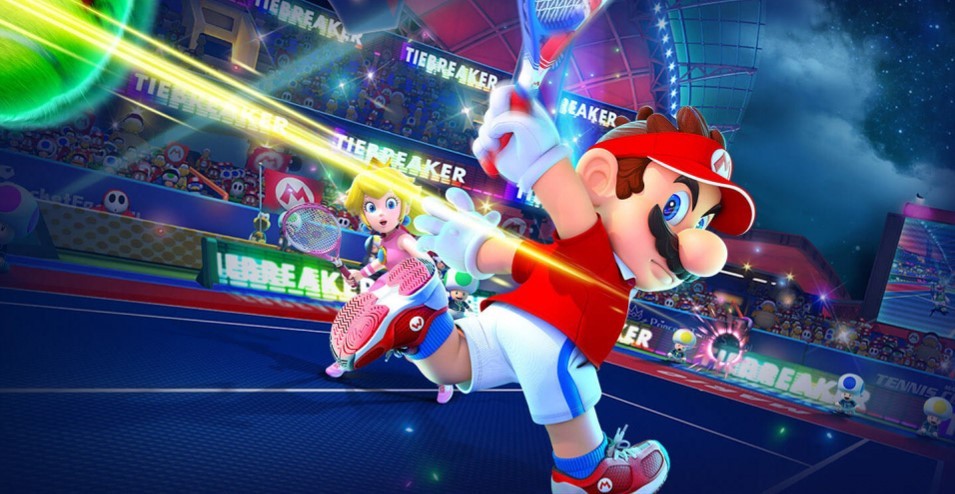
Mario Tennis Aces (Nintendo, $59.99) – Unleash an arsenal of shots and strategies in all-out tennis battles with friends, family and fan-favorite Mushroom Kingdom characters. Whether you play locally*, online** or using simple motion controls, intense rallies await. In Adventure mode, experience a new flavor of tennis gameplay, with a variety of missions and boss battles. The Mario Tennis Aces game will be available on June 22. Read our review.
LUMINES REMASTERED (Enhance, $14.99) – The critically acclaimed puzzle game produced by legendary creator Tetsuya Mizuguchi arrives on Nintendo Switch. An HD remaster of the original game, LUMINES REMASTERED beautifully marries the elements of sound, light and puzzle-action into one addictive, yet easy-to-play game. You’re at the center of the high-energy, block-dropping action while you groove to awesome house, trance and techno beats. LUMINES REMASTERED will be available on June 26.
Ys VIII: Lacrimosa of DANA (NIS America, $59.99) – Adol awakens shipwrecked and stranded on a cursed island. There, he and the other shipwrecked passengers he rescues form a village to challenge fearsome beasts and explore mysterious ruins on the isolated island. Amid this, Adol begins to dream of a mysterious blue-haired maiden living in an unknown world. Join Adol as he unravels the riddle of the cursed isle and the blue-haired maiden Dana in the Ys VIII: Lacrimosa of DANA game, available on June 26. Read our review.
ACA NEOGEO THE LAST BLADE 2 (HAMSTER, $7.99) – “THE LAST BLADE 2” is a fighting game released by SNK in 1998. The Four Gods aiming to seal Hell’s Gate and the eternal dead who aim to stop them are in the middle of an intense battle. A variety of systems have been introduced. Characters have their own individual Sword Quality, the ability to Repel and turn back enemy attacks, Desperation Moves and Super Desperation Moves, as well as the ability to cancel enemy moves and sequence them into Desperation Moves known as Super Cancel.
Destiny’s Princess: A War Story, A Love Story (D-Pad Studio, $14.99) – A historical Japanese romance game for women, with beautiful visuals and sound. Enjoy romance with famous Warring States military leaders in a tense environment born of despair and amidst the beauty of Japan.
Drawful 2 (Jackbox Games, $9.99) – The team behind the hit party games Fibbage, Quiplash, and YOU DON’T KNOW JACK presents Drawful 2, the game of terrible drawings and hilariously wrong answers!
GUNBIRD 2 for Nintendo Switch (Zerodiv , $7.99) – Five characters with distresses went out for an adventure to get the medicine that was handed down from the ancient times.
Johnny Turbo’s Arcade: Wizard Fire (FTE Games , $6.99) – Wizard Fire a is classic multiplayer action RPG for one to two players. Originally released in 1992, and a noted classic arcade title from the 90s.
Lost in Harmony (Plug In Digital, $6.99) – Dive into a fantastic musical odyssey, brought by an immersive soundtrack imagined by famous composers.
Minecraft (Mojang, $29.99) – Current owners of Minecraft: Nintendo Switch Edition will be able to upgrade to the new version of Minecraft by downloading it from Nintendo eShop for free! This new version will let you play together across different devices, access a multitude of content through the Minecraft Store and get all future game updates, starting with Update Aquatic.
MUSYNX (PM Studios, $26.99) – Experience MUSYNX, the new music game sensation! Featuring classic hardcore rhythm game play mechanics!
Pode (Henchman & Goon, $24.99) – Pode is a co-op puzzle exploration game about a rock and a fallen star working together to solve ancient puzzles in a stunning environment inspired by Norwegian art and culture.
The Journey Down: Chapter One (BlitWorks, $9.99) – In a shady corner of Kingsport Bay, at the outskirts of St Armando, Bwana and his trusted sidekick Kito struggle to make ends meet at their run-down gas station. Little do they know that they are about to be thrown into a spine-tingling adventure that will take them far from home and right into a twisting plot of corruption and danger.
Vegas Party (Funbox Media, $24.99) – Welcome to the gambling-friendly universe of this over-the-top version of Las Vegas city.
Grab the Bottle (Sometimes You, $4.99) – Innovative, twisted way of solving puzzles by stretching and retracting your arm.
Anima: Gate of Memories – The Nameless Chronicles (Badland Games, $19.99) – Anima The Nameless Chronicles is a third person action RPG that tells the story of a man without name, an immortal being cursed to walk the world until the end of time.
Anima: Gate of Memories: Arcane Edition (Badland Games, $29.99) – Anima Gate of Memories Arcane Edition is the complete edition of Gate of Memories. Anima: Gate of Memories is a third person action RPG that tells the story of both sides of a unique conflict, a war in the shadows between a girl who has lost her past and an immortal cursed to walk the world until the end of time.
INK (Digerati, $8.99) – The world’s first splatformer is here! INK is a fast-paced platformer with a twist – levels are invisible and must be splattered with brightly colored paint before they can be seen!
The Lost Child (NIS America, $49.99) – The Lost Child is an RPG set in modern Japan. Hayato Ibuki, an occult journalist, is thrust into the middle of a conflict between angels, demons, and fallen angels. Now, he must capture defeated foes and turn them into valuable allies.
FLASHBACK (Microïds, $19.99) – FLASHBACK, the hit action-adventure game with over 2.2 million units sold, is back on Nintendo Switch! Read our review.
LEGO The Incredibles (WB Games, $59.99) – Experience the thrilling adventures of the Parr family as they conquer crime and family life through both Disney-Pixar films The Incredibles and Incredibles 2, in a LEGO world full of fun and humor. LEGO The Incredibles allows players to explore action-packed story levels and an epic hub world – including Municiberg, as they use their unique “Super” abilities to bring the city’s Super Villains to justice. Gamers can also team up with family and friends in 2 player co-op to assemble incredible LEGO builds! Read our review.
1917 – The Alien Invasion DX (KORION, $7.99) – 1917 – A memorization shooter combined with the fast and frantic action of bullet hell shoot ’em ups.
Air Mail (N-Fusion, $13.49 – normally $14.99) – N-Fusion Interactive’s award winning flight-adventure game, Air Mail, has arrived on Nintendo Switch™! Get ready for an incredible ride through a fantasy world filled with exotic lands to explore. Available June 26.
Cubikolor (LIGHTMAZE, $8.99) – Immerse yourself in the world of Cubikolor! Move your Kube by matching the kolors of the sides and the platform to complete each level. Armed only with your logic and your Kube, move through the 150 levels outwitting the traps in the System, an evil, scheming entity, to confront the machine and pass the test! Available June 26.
de Blob (Nordic Games, $29.99) – Equal parts amorphous blob of paint, struggling artist, revolutionary and juvenile delinquent, de Blob’s goal is to replace the drab, lifeless gray coloring that the I.N.K.T. Corporation has imposed on Chroma City and its inhabitants, the Raydians, with a range of vibrant life-giving colors, all the while avoiding and battling the gray-clad forces of the Inkies. Available June 26.
Mahjong Deluxe 3 (Joindots, $19.99) – Mahjong Deluxe 3 is the newest entry in the popular Mahjong series of casual games produced by award-winning game developer EnsenaSoft. With more than 15 million downloads across versions, the blockbuster series of Mahjong Deluxe continues to impress with its ease of use, intuitive controls and family-friendly features and content.
WHIP! WHIP! (Alpha-Unit, $9.99) – Tira the dessert hunter explores ruins to uncover the recipe required to revive a dessert from ages past.
Demos
Caveman Warriors – Demo Version (Nintendo eShop on Nintendo Switch)
Underhollow changes; * When defeated, heroes now drop the 3 highest net worth items they are carrying. The remaining items are converted and dropped as gold for their sale cost. * Significantly increased the amount of experience awarded for player eliminations. * Fixed invisible Roshan killing players. * Adjusted difficulty of a few combat encounters. * Added an initial stock time to dynamite of 60s. * Fixed heart being purchasable via its recipe. * Added localization.
Heather Kirksey on Integrating Networking and Cloud Native
As highlighted in the recent Open Source Jobs Report, cloud and networking skills are in high demand. And, if you want to hear about the latest networking developments, there is no one better to talk with than Heather Kirksey, VP, Community and Ecosystem Development, Networking at The Linux Foundation. Kirksey was the Director of OPNFV before the recent consolidation of several networking-related projects under the new LF Networking umbrella, and I spoke with her to learn more about LF Networking (LFN) and how the initiative is working closely with cloud native technologies.
Kirksey explained the reasoning behind the move and expansion of her role. “At OPNFV, we were focused on integration and end-to-end testing across the LFN projects. We had interaction with all of those communities. At the same time, we were separate legal entities, and things like that created more barriers to collaboration. Now, it’s easy to look at them more strategically as a portfolio to facilitate member engagement and deliver solutions to service providers.”
Posted by: xSicKxBot - 06-21-2018, 10:32 PM - Forum: Windows
- No Replies
New version of Minecraft is out on Nintendo Switch
We’ve put together this handy FAQ with everything you need to know to enjoy the new version of Minecraft on Nintendo Switch!
Q: What is the Bedrock version of Minecraft?
A: The Bedrock version of Minecraft has been the codebase on mobile and Windows 10 since 2012, also known as our Bedrock Engine. We brought this version to Xbox One with the Better Together Update last fall and now we’re launching it on Nintendo Switch.
Q: How is this version different than the one I already own?
A: Minecraft delivers a united experience to players on all platforms that the Bedrock codebase is used. Build with friends via cross-play with Xbox One, Windows 10, VR and mobile devices, and customize how you play with community content available through the in-game marketplace. Servers will become available via a post-launch update at a later date.
Q: I already own Minecraft: Nintendo Switch Edition, how do I get this new version?
A: Players who already own Minecraft: Nintendo Switch Edition can download the new version of Minecraft free of charge. Either follow the prompts in-game to download or find it directly in the Nintendo eShop.
Q: Will DLC content I currently own transfer over to the new version of Minecraft?
A: All of the existing DLC content will be transferable from Minecraft: Nintendo Switch Edition to the new version of Minecraft.
Q: What’s a Microsoft Account and why do I need it for a Nintendo Switch?
A: A Microsoft Account is a free account you can sign-in on device that allows Minecraft players on Switch to play with others on non-Nintendo devices like iOS, Android, Xbox One and Windows 10 via cross-play, Realms or Servers. Having a Microsoft Account also enables the portability of your MINECOINS and marketplace purchases to other devices and platforms. To create an account click here.
Hands On: LIFX’s Beam wall lighting with Apple HomeKit
Hands-On
By Roger Fingas Thursday, June 21, 2018, 12:11 pm PT (03:11 pm ET)
The Beam is one of the more unusual smarthome accessories on the market, as much a centerpiece decoration as it is practical lighting.
Despite the singular in its name, the Beam kit actually includes six beams, as well as a corner piece, power adapter, and controller unit. The beams and corner join together magnetically, and can be arranged in different patterns — typically in L-shapes or a straight line, since LIFX only includes one corner.
Installation may be the trickiest part of the whole endeavor. Beam ends can only join opposite magnetic poles, naturally, and each segment sticks to the wall with special 3M adhesive, meaning you’ll have to press against them to make sure they stick firm and flat.
You can pull them off and reapply if need be. You probably will at one point, whether to pick another pattern, level the lights, or make sure that the power adapter (which is also magnetic) can connect to the beam closest to your wall socket.
The LIFX app does a good job of onboarding, guiding users through adding the Beam to the LIFX cloud as well as Apple HomeKit. If you want to go a step further you can add it to Amazon Alexa, Google Assistant, and even Microsoft Cortana, as well as platforms like IFTTT and Nest.
We were able to test the product with HomeKit and Alexa, but in truth, neither assistant can take full advantage. Those platforms only let users assign a single color across all beams, whereas the LIFX app enables complex color patterns, maximizing the 10 lighting zones on each beam.
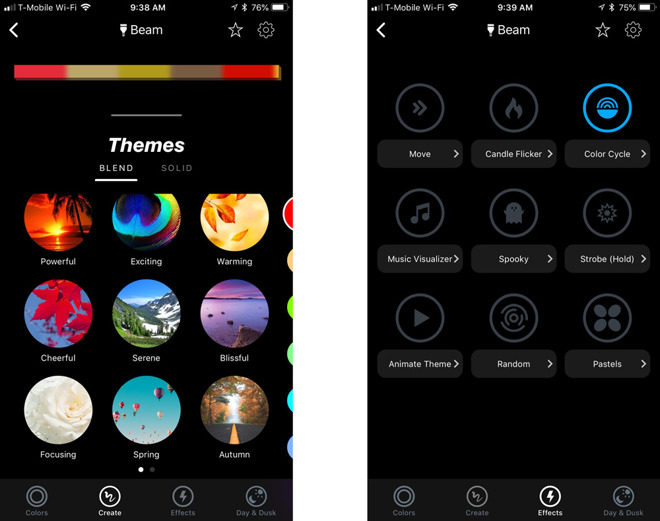
We’ll talk more about options in our full review, but for now suffice it to say that you can “paint” your own themes, or pick from a variety of preset ones with solid or blended transitions. You can also enable some special effects, such as flickering, color cycling, time-of-day transitions, or a music visualizer that taps into your iPhone or iPad’s microphone.
Keep following AppleInsider for our upcoming review.
Return to Glorantha with King of Dragon Pass Successor Six Ages
By Matt Thrower21 Jun 2018
In the beginning was an egg, which hatched into an infinite dragon. From the dragon came first two gods, then a third, who spawned a bunch more lesser gods. They fell to fighting, as gods do, and then Chaos invaded, and the Cosmic Mountain exploded and the few humans who were around had a really miserable time of it.
Welcome to Glorantha, a fantasy world like no other. Invented in 1966 by a student seeking to deepen his appreciation of cultural mythology, it has spawned several tabletop games and a single videogame: 1999’s King of Dragon Pass. A bizarre mix of strategy and story-telling, it got a face-lift and a wave of adulation for a modern iOS release.
“It only scratched the surface of the wealth of stories you can tell in Glorantha,” the designer, David Dunham, admitted to me. “And people have been asking for a sequel for almost 20 years. It wasn’t until 2014 that I figured out what sort of game was a worthy successor.”
The answer is Six Ages: Ride like the Wind, due for release at the end of June. It takes place during the aforementioned God’s War, known as the Storm Age in Glorantha parlance. “It’s the mythic past compared to King of Dragon Pass” Dunham explained. “And you’re playing a barbarian clan from an entirely different culture.”
In spite of Dunham’s implication that it’s a different sort of game, fans of the original will quickly find themselves at home. The player is in charge of making decisions for their clan on a season by season basis. What Gods they should be sacrificing to, where they should be exploring, which other clans they trade with or raid in war. I asked Dunham what had changed.
“We tried to address some things that frustrated people,” he replied. “Combat is no longer as abstract, while we abstracted food production a bit more, still keeping it as a critical component. There’s also a lot of changes you can’t see directly. But it’s now much easier to add new interactive scenes, new treasures, maybe even new ventures.”
The interactive scenes he’s talking about are the other key component in the game’s appeal. Events, usually tied into Glorantha’s unique lore, often pop up, requiring you to choose between various options to resolve them. Children in your village, for example, might suddenly exhibit the ability to wield powerful fire magic they can’t control. Do you keep them? Ask a more magic-rich clan to train them? Cast them out before they burn down someone’s house?
Whatever you choose, the consequences often lead to further events later in the game, slowly building a clan saga in epic detail. And this, I sense, is where the bulk of the differences lie. “Some changes just reflect the fact that we’re telling a different story,” Dunham told me. “You’re in an unknown land, so the map starts blank. It’s also much larger, and you can choose what your party is looking for. You can deal with spirits, as well as gods.”
Glorantha is a very unusual setting and Six Ages is a very unusual game. The marriage of statistical management and story can clash as you’re rarely able to see exactly why your choices played out the way they did. But Dunham’s in no doubt which he thinks is more important to the experience. “If I have to pick, then it’s a narrative game,” he opined. “The strategy ties together the story. But if you haven’t figured out how to feed your clan, your story might not have a happy ending.”
Still, he’s made other changes to the game to help the player to understand what’s going on. “We still try to fully immerse you in the world, rather than leave you on the outside peering at game numbers,” he explains. “But we also tried to give more in-world feedback to explain why things happened. For example, if a hero quest fails, your quester will reflect on what went wrong.”
Hero quest isn’t a reference to the fondly-remembered board game of the 90’s, but another slice of Gloranthan pie. They’re ritual re-enactments of stories from a clan’s mythology which gain access to powerful rewards. You can undertake them in the game, but your clan starts out with only a piecemeal understanding of these myths. Patching them back together is an important goal of play, which also pushes the player deeper into Glorantha’s bizarre setting.
They were also a part of King of Dragon Pass. That game, though, originally came out on PC. With the advent of mobile, Dunham quickly realised the potential of a port. “The short interactive scenes are perfect for very short game sessions,” he enthused. “Your clan advisors help remind you of the context, and you can always refer back to the Saga for more specifics about what happened. I think being turn-based helps too, since you don’t have to set aside enough time for a complete Battle Royale match.”
Still, launching on mobile alone in the modern multi-platform market seems risky. It’s not what Dunham had originally planned. “I’d hoped to launch on more platforms,” he explains. “But a bunch of things didn’t work out. Luckily, I think the game is perfectly suited to iPad. Sitting back with a tablet is just like reading a great book, except you’re playing one.”
In the time I’ve spent with the preview, it’s hard to shake the feeling that I’ve been here before, in several senses. First, Six Ages plays a lot like a smoother, more refined version of the earlier game. Second, you’re back in charge of another bunch of barbarians, which Dunham refers to as the “movers and shakers of Glorantha”. But mostly, it’s familiar because we’re back in the rich and vivid world of Glorantha. I’ll take a little sameness in the game mechanics if that’s the price to explore this extraordinary place again.
Pixologic just released the first update for ZBrush 2018 bringing it to 2018.1. ZBrush is a popular 3D sculpting application that now includes Sculptris pro, a dynamic tessellation system that frees you from having to think about polygon counts. This is a free update for all ZBrush users, be careful when upgrading there are specific instructions depending on the version you are coming from.
Sekiro: Shadows Die Twice Doesn't Have Multiplayer
Sekiro: Shadows Die Twice is the new game from Dark Souls and Bloodborne developer From Software. Many of the company's previous games--most notably those from the Soulsborne series--have some form of multiplayer gameplay. This usually manifests through either invading other players' worlds or by helping strangers beat tough areas of the game. Sekiro, however, will not follow suit.
"This title is designed, from the beginning, to be a single-player experience," From Software's Yasuhiro Kitao said as part of a roundtable interview attended by GameSpot. "As a part of that, one of the focuses of the game is, instead of having a choice between various classes from the beginning, you must play as a ninja. As a result, [the team] has really been able to focus in on what those mechanics are and make them as deep as possible."
When GameSpot asked if this means there is no multiplayer of any kind in Shadows Die Twice, Kitao was unequivocal in his answer. "Yes. No online components."