When I read Brian Benchoff’s recent claim in Hackaday that the maker board market was stalling, I had a sense that there might be some truth to it. The novelty of community-backed, open-spec SBCs has worn off, and there were few new boards in 2018 that seem destined to become Raspberry Pi killers. Yet, the more I researched open-spec Linux/Android maker SBCs for LinuxGizmos’ New Year’s edition SBC catalog, the more I realized that the sector was very much alive — just a bit quieter than before.
There were 19 new SBC entries since our June roundup of 116 SBCs (compared to 13 new products that appeared in that reader survey catalog since the January 2018 New Year’s hacker catalog roundup of 103 boards). Despite the removal from market of several older products in Q2 2018 and the dissolution of The Next Thing and its Chip board — and even after we eliminated several older boards with fading communities, such as the 86Duino and PCDuino8 — we ended up with 122 boards, six more than in June.
Benchoff’s speculation that fewer maker boards were sold in 2018 may well be correct, but I have seen no proof of it. If there has been a slowdown, Benchoff nailed the reason: poor documentation. Other drawbacks to the hacker board scene include buggy software and less frequently, hardware. In many cases, the documentation and images are fine, but by the time they arrive, your shiny new SBC is already halfway to obsolescence.
Many of the casual, Raspberry Pi home automation hobbyists who experimented with faster, but not always reliable Banana, Orange, and NanoPi’s and other more obscure bargain-basement SBCs in recent years have returned to the fold. And why not return to the very capable Raspberry Pi 3 Model B+ — the SBC of the year and the winner of our June reader survey — or the smaller new RPi 3 Model A+? The RPi 3B+ is only a modest improvement over the 3B, but it is close enough to the competition in price, features, and performance to shift the comparison to software and support issues. If the Raspberry Pi Foundation had been faster to transition from ARM11 to Cortex-A SoCs, the hacker board market might be considerably smaller than it is today.
Despite the atypically buggy PoE board for the RPi 3B+, which was quickly resolved with a refund and a reboot, things tend to work more smoothly in Raspberry land. Most buyers are more interested in solid community support and no-doubt software and HAT compatibility than they are in having full schematics.
Yet, there’s a second trend that is leading us toward more diversity: The maker board movement continues to merge with the commercial SBC industry. There appears to be significant growth in small manufacturing customers using open-spec boards with a variety of special features ranging from AI to voice control to Time Sensitive Networking. These technically knowledgeable buyers need solid documentation and schematics for prototyping new products but are usually less interested in other community resources. More to the point, they are tired of the high prices charged by commercial vendors, which only make sense with huge volumes.
New maker SBCs and trends in late 2018
Many of the new boards we’ve seen since June are aimed at relatively niche applications rather than trying to beat the Pi at world domination. There are new router boards such as the Banana Pi BPI-R2, as well as an increasing number of extended temperature SBCs such as the Firefly-PX3-SE. We’ve seen industrial focused newcomers such as the HummingBoard CBi (CAN bus interface) and novel sandwich-style module/carrier board combos like the Khadas Edge. Seeed has introduced a ReSpeaker v2.0 model aimed at far-field voice control applications.
The trend toward Power-over-Ethernet (PoE) continues with products like the Renegade Elite. (The RPi 3B+ may now have a PoE option, but it’s hobbled by a Gigabit Ethernet port that is limited to 300Mbps.)
We’re seeing more SBCs with built-in cellular modems or mini-PCIe and M.2 slots capable of supporting them. FriendlyElec has jumped on this trend this year with 2G, 3G, and 4G themed NanoPi IOT models.
The still fledgling x86 hacker board arena continues to grow with the Intel Gemini Lake based Odroid-H2 board, which appears to be the most powerful hacker SBC in history. The Odroid-H2 is the first hacker board to feature an Atom processor from a recently released Atom/Celeron product family.
Another new Intel-based board — Aaeon’s Apollo Lake based Up Core Plus — is one of several new entries since June designed for machine learning and neural network processing. These AI contenders include the Allwinner V5 based Lindenis V5 and Bitmain Sophon BM1880, which uses a novel TPU-enhanced Arm SoC of Bitmain’s own design. Khadas is selling a version of the Khadas Edge with the AI-enhanced Rockchip RK3399Pro SoC.
Among more mainstream boards, we saw a continuing shift from Allwinner SoCs to the high-end, hexa-core Rockchip RK3399. In early 2018 we saw a lot of RK3399 entries in the $110 to $150 range, but newer models are more affordable.
The new Khadas Edge, Renegade Elite, and 96Boards form-factor Rock960 all start at about $100, and others have been cheaper. FriendlyElec introduced a $65 (2GB) and up NanoPi-M4 and followed up with a compact, $45 NanoPi Neo4. The Neo4 is an impressive feat despite the limitation of only 1GB of RAM, which isn’t enough for the RK3399. Also in this range is Pine64’s $60 (2GB) and up RockPro64, which shipped earlier this year.
No single Raspberry Pi killer emerged in 2018. Yet, the collective group of RK3399 vendors appear to be acting as a counterpoint in the Pi. The RK3399 is fast and offers x86 like technologies such as PCIe, SATA, and HDMI 2.0, and it has better Linux mainline support than the still-improving Allwinner SoCs.
2019 SBC trends
So what can we expect in 2019’s board market? The Raspberry Pi Foundation has already said there will be no major new Pi models in 2019, so as we await 2020’s Raspberry Pi 4, there will be room for other boards to shine. If there’s a major recession, we will likely see fewer SBC introductions. Otherwise, however, the growth in niche applications will probably block consolidation for the time being.
With TI’s new quad-core Cortex-A53 Sitara AM65x, it might be time for a BeagleBone reboot, and we should see more NXP i.MX8M boards such as TechNexion’s new sandwich-style PICO-PI-IMX8M spin on the Wand-Pi-8M. In the x86 world, meanwhile, a community-backed SBC based on the AMD Ryzen Embedded V1000 chip may arrive, although it may not clear our $200 limit.
So far, no RISC-V based SBCs have slid under our $200 limit, but one is likely to arrive in 2019. We could even see a low-cost Google Fuchsia hacker board. Meanwhile, you can check out the new Linux supported C-SKY ISA for as little as $6 with the new C-SKY board.
Overall, we’ll see a growing focus on 5G and edge analytics. In 2019 we are likely to see at least one 5G-ready board, and many more high-end edge IoT boards with NPUs, VPUs, and smartened up GPUs. So get ready to start talking TOPS and deep learning frameworks.
Super Smash Bros. Ultimate's Next Weekly Event Features NES Characters
A new in-game event is set to kick off in Super Smash Bros. Ultimate very soon. This week's Spirit Board event is titled Classics, and as its name suggests, it revolves around old-school video game characters.
Throughout the weekend, characters from the NES, Famicom, and the Famicom Disk System--such as the Balloon Fighter and Donkey Kong Jr.--will appear much more frequently on the Spirit Board. You'll also have a chance to get a handful of Legend-class Spirits during the event, including Donkey Kong & Lady, Sukapon, and the NES incarnation of Link.
On top of that, defeating retro characters during the Classics event will net you even more Snacks than usual, which you can use to further level up your Spirits. The event is scheduled to begin at 10 PM PT on January 3 (1 AM ET / 6 AM GMT / 5 PM AEDT on January 4) and will run until the same time on January 6.
Classics follows last week's Mario Time event, which was themed around characters from the Mario series. Unlike other events in the game thus far, it also featured a handful of exclusive Super Mario Party Spirits: Dice Block, River Survival, and Golden Dash Mushroom. These weren't previously available to get in Super Smash Bros. Ultimate, and there's no word yet on if they'll reappear in the game.
Ok, I’m going to level with you right away… there’s only three apps. Maybe four. I’m a sucker for a catchy title and I had made an endeavour to play more mobile games over the holiday period. It turns out I only managed to really dabble in a handful. I blame my wife.
Fun fact: The twelfth day of Christmas is January 6th, also known as the Feast of the Epiphany, Three Kings’ Day or, in very ancient texts, Joe’s Birthday.
Anyway, here’s a quick summary of the mobile games that kept me entertained over the holiday period.
Probably the game I spent the most time with, I actually wasn’t planning on playing this at all except a friend of mine happened to be playing it when he came to visit between Christmas and New Year. He’d downloaded the free version and convinced two of my other friends to get it, which then prompted me to bust out my game that I’d bought a couple of years ago but hadn’t played in a while.
I seemed to have lost what little progress I had made last time I played the game seriously, so I was back to starting from scratch with me friends. We had a good time going through the various plagues, swapping strategies and knowledge… I remembered more than I thought I would, so I raced through the early plagues, getting slowed and slightly stuck only on Nano Virus and Bio Weapon. To my shame, I had to look up a guide for Bio Weapon as I just couldn’t figure out where I was going wrong. It taught me some more secrets about infection strategies that I’ll try and use on my Brutal playthroughs.
It just shows how robust Plague Inc. is, to still be interesting and playable after all these years, but I think the flaws are starting to come through. They’ve done well with their more creative or special edition plagues, but a lot of the base plagues require the same patient strategy, which detracts from the experience over-all. Still, it was a good blast from the past, and despite our significant others getting extremely annoyed at us all sitting on our phones, it was an oddly social experience.
My wife plays a lot of mobile games. A lot more than me… the problem is, she’s cheap. Like, VERY cheap, so to my shame the only games she actually ends up playing are the F2P trash that remains a blight on this industry.
She has an actual process – she will binge a free game as far as she can, conserving what free premium currency she has and spending it on the most optimum things, before the game finally overtakes her with its freemium nonsense, and then she moves on. She’s played everything form Farmville, to some game about Cats and Towns. Her most recent beau is some kind of Café running game.
I’ve finally, FINALLY managed to convince her to buy an actual, bona-fide mobile game. We play a lot of physical boardgames together as a couple. Since Asmodee Digital was recently running a winter sale, she ended up picking up Ticket to Ride. We have the Nordic physical game which she enjoys, but we’ve stuck with the base USA map that the main app comes with.
It’s been great and proved a great app to bust out when there’s nothing else to do – we’ve played it in the car as we were being taken to the sea-side, we did a big five-player pass-and-play session with our friends before the left, and we even played it together in our hotel room over Christmas, both huddled in the dark and whispering as our baby daughter slept in her cot nearby.
The potential of digital board games has always been a theoretical concept for me before now, but I think Ticket to Ride has us both hooked. We’re looking for more games with pass-and-play, and I’m personally keen to avoid any we’re already got the physical version of – perhaps games we’re interested in playing but not interesting in buying for real.
I was really excited when I saw this had gone on sale – £2.99 for a fully fledged Final Fantasy Tactics game on mobile seemed like a steal and a great game to draw out my latent mobile gamer potential. I had found memories of playing Final Fantasy Tactics Advance on my GBA, and I was very much looking forward to discovering that game again…
… what I somehow failed to realise (do your research, folks) is that Final Fantasy Tactics: War of the Lions is not, in fact, Final Fantasy Tactics Advance. It’s a re-release of Final Fantasy Tactics, which is also not Final Fantasy Tactics Advance. Oops.
I tried not to be perturbed by this fact, but so far, I’m finding the game to be extremely clunky compared to the Advance version, so I haven’t played as much as I was planning too. Besides the basics of combat, the game doesn’t actually explain itself that well at all – I don’t know what all the choices and character options are in terms of customisations, jobs etc… I don’t know what the special abilities do half the time and rotating the map around is a real chore.
I’ve also found it’s not as friendly for drop in/drop out play as I can’t seem to save in the middle of a match, and also, an undo button would be super, super helpful, especially for movement. I’ll stick with it, but It’s not the game I’d hoped it would be so far.
Before my wife discovered Ticket to Ride, I tried introducing her to Cat Lady as I had it on my phone still from a previous Weekender update. She didn’t really take to it but it did lead to a conversation about other mobile board game conversions, and it wasn’t long after that she decided to dive into Ticket to Ride.
We’ve said this before – it’s a neat little card game with some tactically meaningful mechanics, but you have to really like cats for it to truly win you over. I’ll probably delete it the next time I think about it.
What games did you end up playing over the holiday period? Let us know in the comments!
To assess the state of adoption of machine learning (ML) and AI, we recently conducted a survey that garnered more than 11,000 respondents. As I pointed out in previous posts, we learned many companies are still in the early stages of deploying machine learning:
Companies cite “lack of data” and “lack of skilled people” as the main factors holding back adoption. In many instances, “lack of data” is literally the state of affairs: companies have yet to collect and store the data needed to train the ML models they desire. The “skills gap” is real and persistent.
Posted by: xSicKxBot - 01-03-2019, 10:24 AM - Forum: Lounge
- No Replies
Top 10 UK Games Chart: Red Dead Redemption 2 Ends 2018 At No.1
Red Dead Redemption 2 was one of the biggest games of 2018, and we now know it ended the year at the top of the UK sales chart. Rockstar's open-world PS4 and Xbox One game was the best-selling physical game in the UK's final trading week of the year after also topping the Christmas chart the week before.
No new titles entered the chart this week, though old faces do crop up: both Spyro Reignited Trilogy and Crash Bandicoot N. Sane Trilogy are in the top 10 at No.7 and No.9, respectively. The continued success of the '90s gaming mascots is an encouraging sign for Activision with Crash Team Racing Nitro-Fueled coming to Switch, PS4, and Xbox One in June.
You can read the full top 10 sales chart below, courtesy of UKIE and Chart-Track. Note this table does not include digital sales data, and so should not be considered representative of all UK game sales.
Video: This Pocket-Sized Portable Plays GameCube And Wii Games
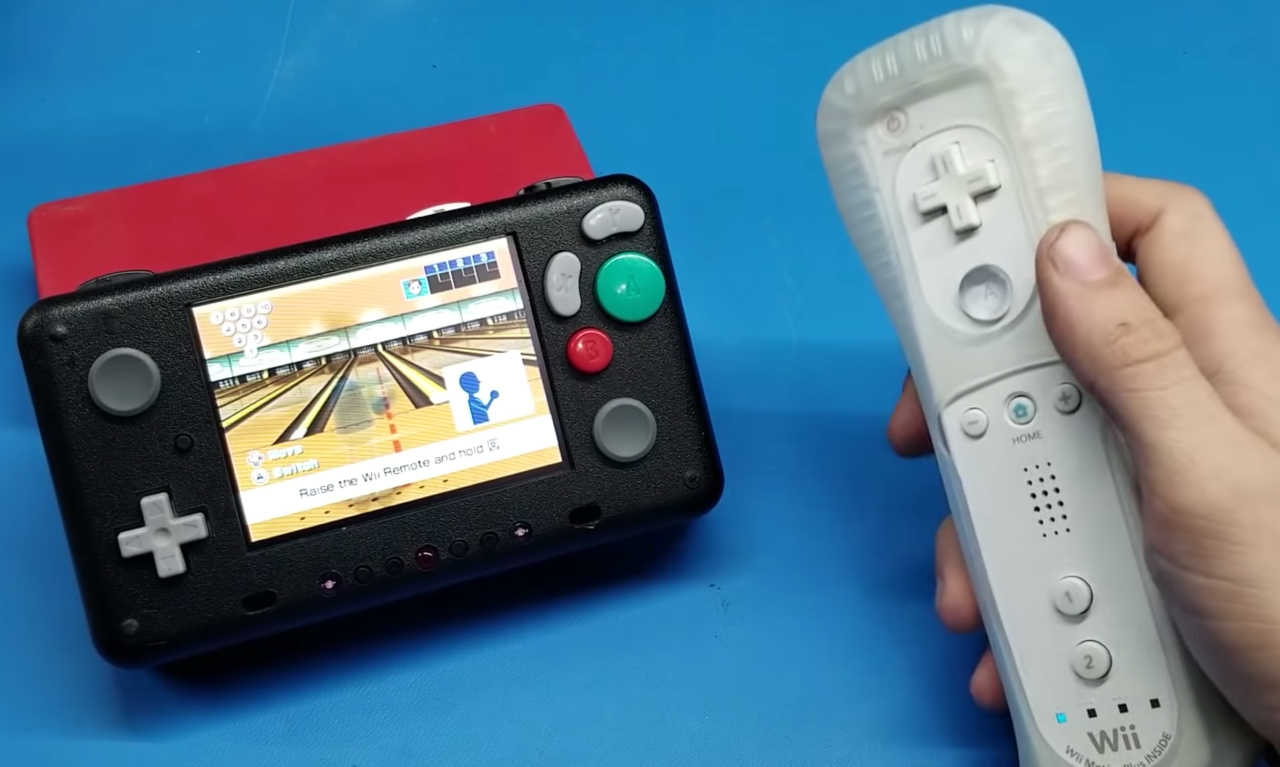
Portable Wii consoles aren’t a new thing – we’ve seen one that fits inside a coat, lest we forget – but few fan-made mods come as elegantly packaged as this one.
The PiiWii Pocket is the creation of YouTuber Shank Mods, and uses actual Wii internals rather than emulation. It comes with a suite of controls, internal cooling and a rechargeable battery that offers around 4 hours of play – you can even use your Wii Remote with it to play motion-based titles.
Given the size of the unit, the optical media drive has had to go, and the PiiWii instead boots games from a USB thumb drive. The project is the culmination of three years of work, and while it’s a shame that we won’t be seeing this thing turn up on Amazon in the near future, you have to admire this guy’s craft.
It’s not the first time he’s modded a Wii, either – check out the Kill Mii below.
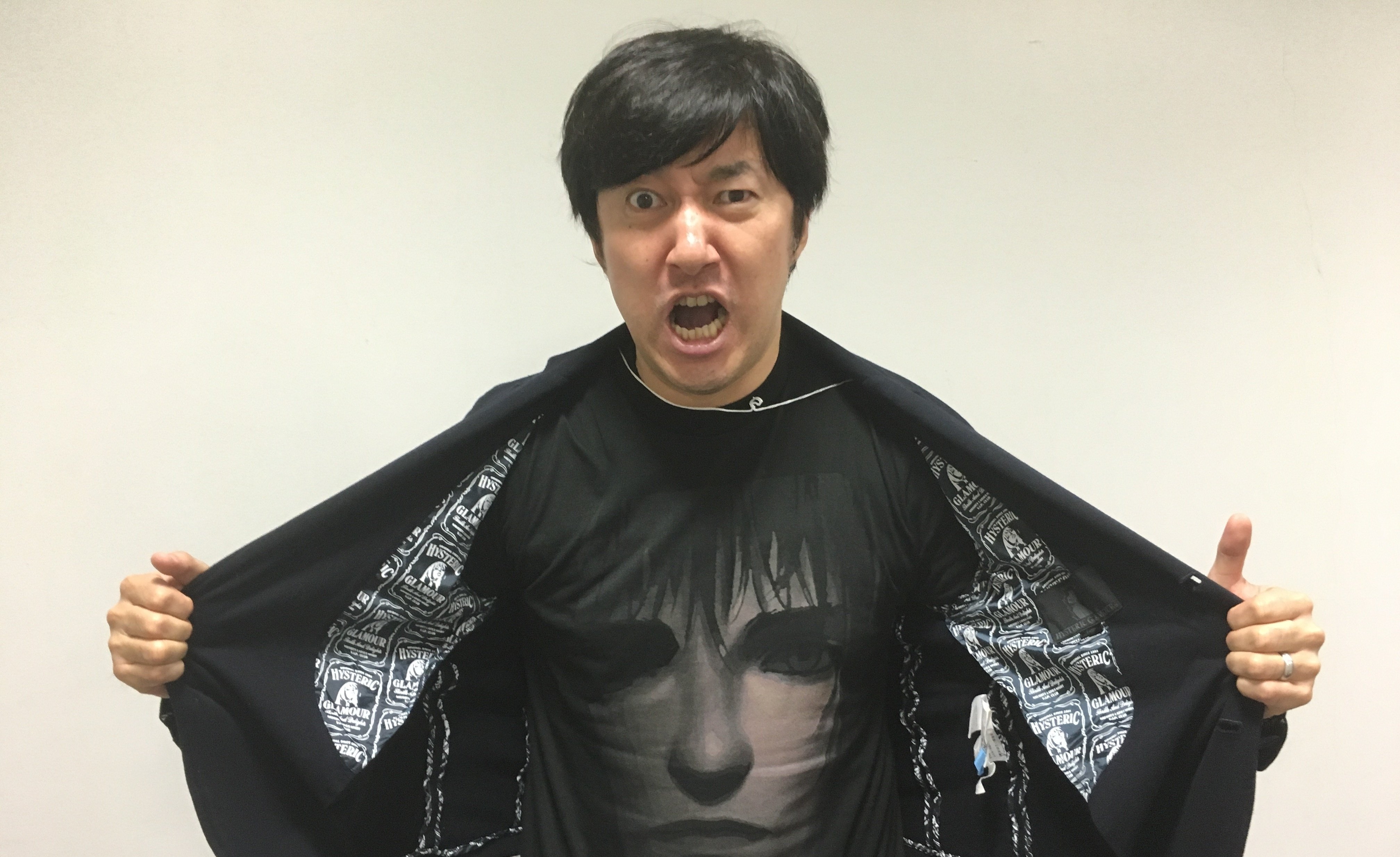
Today, video game designer and director Goichi Suda – best known under the name ‘Suda51’ – is celebrating his 51st birthday. We couldn’t just let that slip by without a quick mention, right?
Suda51 first found his way into the video game development world as a designer at Human Entertainment, a Japanese studio which eventually declared bankruptcy at the turn of the millennium. His best-known work, however, has come from his own company Grasshopper Manufacture, which he founded after leaving Human in 1998.
Since then, Grasshopper has developed numerous games across PlayStation 2, GameCube, Nintendo DS, Wii, and more, with titles like The Silver Case, Killer7, and the No More Heroes series being particularly notable. His work is known for going against the norms of development, often using particularly striking visuals or gameplay styles that make his games instantly recognisable.
Posted by: xSicKxBot - 01-03-2019, 10:24 AM - Forum: Windows
- No Replies
MyAnalytics, the fitness tracker for work, now more broadly available
MyAnalytics—the fitness tracker for work—is now available to everyone using Office 365 and Microsoft 365 Enterprise and Business suites that include Exchange Online. Previously, MyAnalytics was only available with an Enterprise E5 plan or as an add-on to E1 and E3 plans.
Via a personal dashboard, an Outlook add-in, and weekly emails, MyAnalytics summarizes how you spend your time at work, then suggests ways to work smarter—from cutting unproductive meeting time to reducing time spent working after hours. It even uses artificial intelligence (AI) to help you stay on top of your to-dos by flagging commitments you’ve made in email.
The MyAnalytics dashboard.
New insights give a more complete picture of how you spend time at work
As we continue to evolve the product, today we’re also making MyAnalytics insights more well-rounded. MyAnalytics currently provides insights based on time spent in Outlook emails and meetings, and Skype for Business calls and chats. This month, we’re adding new insights based on your Microsoft Teams calls and chats, as well as signals from documents you’re working on that are saved in OneDrive and SharePoint. With 329,000 organizations and 87 of the Fortune 100 using Teams, this takes us one step closer to providing you with a more complete picture of how you’re spending time at work.
MyAnalytics Outlook add-in and weekly email.
A recent Gallup study found that two-thirds of full-time employees say they experience burnout at work. Multiple factors are contributing to burnout—such as the increased pace of work, a rise in collaborative work like chats, emails, and meetings, and the continuing trend of technology blurring the lines between work and life. Our customers tell us they’re looking for ways to address these challenges by helping employees find time to focus, improve work-life balance, build better meeting habits, and create deeper connections with their colleagues. By making MyAnalytics features more broadly available to our millions of customers, it is our goal to make work days around the world a little more balanced and fulfilling.
Availability: MyAnalytics insights from Microsoft Teams and documents saved in OneDrive or SharePoint will begin rolling out to existing customers with MyAnalytics in January 2019. MyAnalytics features will start rolling out to the new suites in the next couple months. With today’s updates, MyAnalytics features are now available for Office 365 and Microsoft 365 suites: Business Essentials, Business Premium E1, E3, and E5 plans.
Posted by: xSicKxBot - 01-03-2019, 08:50 AM - Forum: Lounge
- No Replies
Blizzard hopes linked Battle.net accounts will solve toxic Twitch chats
Blizzard is looking to curb misbehaving Twitch users in the chats of its official Overwatch streams by requiring that chat participants link their Twitch and Battle.net accounts together before sending messages during a stream.
Blizzard describes the move as a new moderation program, and aims to give it a test run during the upcoming Overwatch Contenders quarterfinals from now through January 12, 2019.
In order to send a message in Twitch chat during the live-streamed events, viewers will have to log into their Twitch accounts and link their Battle.net accounts up through Twitch’s webpage, though it isn’t explicitly said what action, if any, Blizzard will take against misbehaving chatters following the Battle.net linkup.
In a blog post on the test, Blizzard says that the change hopes “to improve the viewer experience for the Overwatch Path to Pro ecosystem” and that the team will evaluate how, if at all, the requirement led to a “more positive viewing experience.”
Posted by: xSicKxBot - 01-03-2019, 04:21 AM - Forum: Lounge
- No Replies
Bethesda Parent Company Trademarks A New Game Called "Deathloop"
Bethesda parent company ZeniMax has filed a trademark application for a new game called "Deathloop." The goods and services description in the trademark application filed with the United States Patent & Trademark Office on December 26, 2018 states that Deathloop could be an online-enabled mobile game. That's all there is to go on at this stage, however.
Trademark applications are not necessarily good predictors of future products, but they're still intriguing to look over and consider. ZeniMax originally filed a trademark application for Starfield back in 2013, and it wasn't until 2018 that the company officially announced Starfield as one of Bethesda Game Studios' next projects.
Bethesda enjoyed tremendous success with its first mobile game, Fallout Shelter, so it's no surprise that the company may be returning to that arena with a new game. Bethesda opened a new studio in Montreal back in 2015, and that branch was dedicated in part to mobile game development.
Bethesda did not respond to a request for comment outside of regular business hours.
A so-called death loop in a video game is when a game reloads after a save with players finding themselves thrust into a situation they can't get out of without dying. A death loop is also a problematic situation that can happen in kitesurfing. While we don't know what Bethesda's Deathloop video game is about, it's probably not related to kitesurfing.
It's also possible that Deathloop never becomes a video game, because it could be that Bethesda is merely trademarking the name to protect its potential future use.