Nintendo Participating In Virtual Reality “VRM Consortium” As An Observer
A total of 13 Japanese companies are joining forces to establish a joint enterprise known as the “VRM Consortium” in February 2019. The aim is to develop an international virtual reality business that has a special focus on 3D avatars.
Another objective of the enterprise is to advocate the file format “VRM” (based on gITF2.0) in the hope it can become the standard file format for 3D human models featured in Virtual Reality. This format is reportedly platform-independent, free to use and open-source. The companies involved, hope it will make the creation process easier for video game designers, virtual YouTubers and other projects that utilise this type of technology. The enterprise also intends to expand this initiative beyond Japan.
Why we’re even talking about this, is because Nintendo is participating as an observer. So, basically at this stage, it’s curious to see how it all unfolds. According to Anime News Network, these are the main companies directly involved:
“They include game development platform creator Unity Technologies Japan, virtual reality development companies IVR and XVI Inc., GREE‘s virtual YouTuber company Wright Flyer Live, artist website pixiv, livestreaming platforms Showroom and Mirrativ, telecommunications company Dwango, online game sales platform S-Court, virtual YouTuber and amusement development company DUO, VR distribution platform Virtual Cast, virtual event platform developer Cluster, and Vocaloid’s music technology company Crypton Future Media.”
Virtual Cast also uploaded a video about the new enterprise, highlighting the participating companies and the existing VR model creation and distribution platforms. Take a look below:
As recently as last October, when Nintendo of America President and COO Reggie Fils-Aimé spoke to Ars Technica about virtual reality, he said the company was “looking” at the technology, but said how it had to be fun before considering it more seriously:
“For virtual reality, we’ve said: it’s tech that we’re looking at, but in the end it has to be fun. That’s our mission, and that is what we do arguably better than anyone else. We have nothing to announce here on this stage. These are going to be technologies that we’ll continue to experiment with. There are new experiences we want to bring to life.”
Would you like to see Nintendo embrace VR technology in the near future? Tell us below.
Cephalocon Barcelona aims to bring together more than 800 technologists and adopters from across the globe to showcase Ceph’s history and its future, demonstrate real-world applications, and highlight vendor solutions. Join us in Barcelona, Spain on 19-20 May 2019 for our second international conference event.
Posted by: xSicKxBot - 01-04-2019, 10:35 AM - Forum: Lounge
- No Replies
Some Lord Of The Rings Games Have Been Delisted On Xbox, PlayStation, And PC
Lego: The Lord of the Rings and Lego: The Hobbit have been removed from a number of digital storefronts on PC, Xbox, and PlayStation. You can no longer buy the games digitally, and their removal could be tied to the expiration of a licensing deal.
Lego: The Lord of the Rings (2012) and Lego: The Hobbit (2014) seemingly require numerous licenses, from the films, Lego toys, and other rights-holders, so it's not a total surprise to see them leave digital stores. Other Lord of the Rings games, like Middle-earth: Shadow of War, remain available to buy, however.
Reddit user SuperMoonky, who first reported the removal of the games, reckons the Lego games might have been removed because they feature dialogue and music that came straight from the movies, while Shadow of War does not do this.
Outside of games, Amazon is producing a very expensive Lord of the Rings TV show that is set long before the events of the movies. Additionally, a movie about author J.R.R. Tolkien and his wife Edith Bratt is in the works with Nicholas Hoult and Lily Collins.
Posted by: xSicKxBot - 01-04-2019, 08:55 AM - Forum: Lounge
- No Replies
Video Game Deep Cuts: End Of The Year Extravaganza
The following blog post, unless otherwise noted, was written by a member of Gamasutras community. The thoughts and opinions expressed are those of the writer and not Gamasutra or its parent company.
[Video Game Deep Cuts is a weekly newsletter from video game industry ‘watcher’ Simon Carless (GDC, Gamasutra co-runner), rounding up the best longread & standout articles & videos about games, every weekend.
This week’s highlights include another gigantic chunk of ‘end of year’ charts, discourses, thoughts and ruminations.
And while we’re at it – I’m not really big on editorializing in this newsletter, but just wanted to say: please take some time for you and your loved ones at year’s end, before 2019 gets incredibly busy & clouds your vision.
Molleindustria’s highlights from 2018(Paolo Pedercini / Molleindustria – ARTICLE)
“These indiepocalyptic times are giving us an embarrassment of releases but the most popular development strategy seems to be: work within established genres, put a lot of effort into visual polish (probably a result of increasing visual social media), and often just… make games punishingly hard (which I guess yields more play hours in face of limited resources?). [SIMON’S NOTE: Continuing his provocateur shenanigans, but Paolo’s yearly picks are nonetheless reliably some of the most interesting.]”
Athletes Don’t Own Their Tattoos. That’s a Problem for Video Game Developers.(Jason M Bailey / New York Times – ARTICLE)
“When LeBron James bounds down a basketball court, he is both a transcendent athlete and a prominent palette for dozens of tattoos. His mother’s name, Gloria, rests on a crown on his right shoulder and his forearms bear a portrait of his son LeBron Jr. and 330, an area code for his hometown, Akron, Ohio. Although those tattoos have personal connections, they may not truly be his.”
Greg Kasavin’s Top 10 Games of 2018(Greg Kasavin / Giant Bomb – ARTICLE)
“I made time for plenty of other games, which as always kept me entertained, grounded, and inspired in 2018, through all its ups and downs. There’s a lot of stuff I’m only just getting to, so I’m going to divide my list into two halves–games I played too little or not enough, and games I sank my teeth into enough to put them in a real Top 10. [SIMON’S NOTE: absolutely just the tip of the iceberg on Giant Bomb – please read all of the staff & guest Top 10s if you have a few, uh, hours – including folks like Subset Games, the ever-entertaining Jeff Gerstmann, and Night In The Woods’ Scott Benson.]
[Interview] Eric Chung (exA-Arcadia CEO): ‘We aim to be the next NEOGEO’(Staff / Shmup ‘Em All – ARTICLE)
“After Spain and numerous public appearances in Japan, exA-Arcadia visited France during Stunfest 2018. Shmup’Em-All took this opportunity to interview the president of this new company, Eric Chung, in order to learn more about this ambitious new arcade hardware. [SIMON’S NOTE: this is a very interesting new cartridge-based arcade game effort – pity it’ll be so expensive for home collectors, but it’s a super neat idea.]”
Netflix Takes Interactive Storytelling to the Next Level With ‘Black Mirror: Bandersnatch’(Janko Roettgers / Variety – ARTICLE)
“Back in early 2017, Netflix approached “Black Mirror” creators Charlie Brooker and Annabel Jones with an unusual idea. The streaming service had been experimenting with interactive kids content, giving young viewers the ability to choose their own path through a story with a series multiple-choice questions that could be easily answered with the help of a TV remote. [SIMON’S NOTE: This Wired piece has more detail behind the scenes, too.]”
The 10 best video game soundtracks of 2018(Tayyab Amin, Lewis Gordon & Scott Wilson / FACT – ARTICLE)
“It was also another fantastic year for video game soundtracks. FACT has picked 10 of the year’s best, from the grimy, industrial synth backdrop to experimental first-person horror title Paratropic, to the blissed-out accompaniment for retro platformer Celeste and the big budget Old West sounds of Red Dead Redemption 2.”
The history of the strategy game(Fraser Brown / PC Gamer – ARTICLE)
“The history of computer strategy games begins on tables and boards, crammed inside cupboards alongside that knackered old box of Risk that every home seems to possess. The moment strategy made the leap to consoles and computers, it was already familiar.”
The Year In Relaxing and Stressful Games(Paul Tamayo & Gita Jackson – ARTICLE/VIDEO)
“With the year winding down, I thought it’d be great to look at three games you can chill with as the impending apocalypse—I mean New Year’s—rolls in. Or, if you’d like to prepare for the end times with some hectic games that get your heart rate up, Gita was nice enough to give me her favorite stressful games of the year. [SIMON’S NOTE: rest of Kotaku’s Year In Review is here, including ‘different’ stuff like ‘This Year In Video Game Sex’.]
Esports players are burning out in their 20s(Aisha Hassan / Quartz – ARTICLE)
“Some of the world’s top esports players work as many as 80 hours a week, with much of the time spent on marathon video-game sessions that end up taking physical and mental tolls. According to a new documentary by CBSN Originals, this practice, known as “the grind,” is causing many professional gamers to retire by their mid-20s.”
Gamasutra’s Best of 2018: The top 10 game developers of the year(Staff / Gamasutra – ARTICLE)
“The way game developers are telling stories, serving their audiences, and helping their employees stay happy, healthy, and creative are evolving year by year. Looking back and seeing all the good stuff game devs have done this year reminds us how games are small miracles, and the people making them are some of the most gifted people around. [SIMON’S NOTE: also see a Top 10 Games Of The Year list, naturally.]”
How the Artificial-Intelligence Program AlphaZero Mastered Its Games(James Somers / New Yorker – ARTICLE)
“AlphaGo was a triumph for its creators, but still unsatisfying, because it depended so much on human Go expertise. The A.I. learned which moves it should make, in part, by trying to mimic world-class players. It also used a set of hand-coded heuristics to avoid the worst blunders when looking ahead in games. To the researchers building AlphaGo, this knowledge felt like a crutch. They set out to build a new version of the A.I. that learned on its own, as a “tabula rasa.””
The gift of gaming: the joys of getting a console for Christmas(Keith Stuart / The Guardian – ARTICLE)
“We all remember that one Christmas present we got as a kid. The one we’d begged our parents for all year, the one we’d looked up 100 times in the Argos catalogue or on Amazon, depending on our age… For many of us, that present was a games machine.”
The Animation of Gris(Dan Root / YouTube – VIDEO)
“Happy Grismas! There’s something magical about the animation of Gris, and I’m here to give you my thoughts on how it does it.”
Why 2019 could be the year video game unions go big(Charlie Hall / Polygon – ARTICLE)
“When members get together, Kinema said, it’s not just idle talk. Efforts are ongoing inside at least 12 existing studios to form bargaining units and demand the right to negotiate the terms of employment and compensation as a collective. She said that the size of the studios involved run the gamut from several dozen employees all the way up to shops with thousands of workers.”
Weather Systems Took on a New Meaning in 2018(Rob Zacny / Waypoint – ARTICLE)
“Video games love to stun you with the gorgeous vista, the unexpected majesty (or tragicomedy) of a rare animal in the wild. But these depictions started having an unshakably melancholic resonance this year. How much of what the last two Assassin’s Creed games portrayed is in danger of disappearing during our lifetimes? [SIMON’S NOTE: here’s the ‘games of 2018’ article tag on Waypoint – go wade in!”]
The best VR games of 2018(Samuel Horti / PC Gamer – ARTICLE)
“This year has been a relatively quiet one for VR, but headset owners have still been treated to their fair share of great games. The likes of Beat Saber, In Death and Moss have become must-plays for anyone with an Oculus Rift or HTC Vive, while we’ve also seen plenty of excellent VR ports of existing games, such as Skyrim VR.” [SIMON’S NOTE: plenty of other good end of year charts on PC Gamer, including top games ‘you might have missed’ & a big ‘best-of’ by genre & editor.]
Recovering Nintendo’s Lost SimCity for the NES(Frank Cifaldi / Video Game History Foundation – ARTICLE)
“A lot of you are probably aware of Nintendo’s remarkable rendition of SimCity for the Super Nintendo Entertainment System. The cartridge launched alongside the system here in the United States, and brought the popular PC game to a brand new console audience. But did you know that Nintendo’s version of SimCity actually started life on the original 8-bit Nintendo Entertainment System?”
Alex Wiltshire’s 5 best games of 2018(Alex Wiltshire / RockPaperShotgun – ARTICLE)
“Now I look back, I realise that I’ve particularly enjoyed a series of games which gave me space to explore them on my own terms. Whether on the scale of giant monsters or the confined scale of the decks of a ship, they’ve all felt expansive and generous, and respectful of me as a player. [SIMON’S NOTE: yep, lots more best-ofs from RPS are here.]”
Dojin Game Trailers of Comic Market 95 (2018)(EdelweisNal / YouTube – VIDEO)
“[SIMON’S NOTE: Just wanted to post this 70+ minute compendium of trailers for Japanese indie/fangames (?!), compiled from the in-progress Comiket event in Tokyo, because there’s a vibrant Japanese game-making scene that isn’t discussed much – it’s just very much traditional genre-based.]”
The Weirdest Video Games Of 2018(David Wildgoose / Junkee – ARTICLE)
“Fortunately, there’s a whole world of games outside the so-called triple-A space. It’s a world that celebrates the lo-fi, embraces diversity, explores the obscure and champions originality. These are the bravest, strangest, most unconventional and experimental–and, yeah, just plain weirdest–video games of the last twelve months.”
——————
[REMINDER: you can sign up to receive this newsletter every weekend at tinyletter.com/vgdeepcuts – we crosspost to Gamasutra later on Sunday, but get it first via newsletter! Story tips and comments can be emailed to [email protected]. MINI-DISCLOSURE: Simon is one of the organizers of GDC and Gamasutra & an advisor to indie publisher No More Robots, so you may sometimes see links from those entities in his picks. Or not!]
Posted by: xSicKxBot - 01-04-2019, 08:55 AM - Forum: Lounge
- No Replies
Best of 2018: Gamasutra’s top games, devs, events and trends
The game industry in 2018 saw events that will shift the future of games, landscape-shaping trends that we’ll see evolve for years to come, developers and studios who set the bar high, and of course, games we’ll never forget.
Here we present a roundup of our roundups to make your end of year game industry round-upping that much simpler. This is what Gamasutra’s writers thought of 2018.
There are a lot of games released into the market every year.
And we cover this trend; this inundation of games filling the marketplace. It’s a trend that complicates the chance for success and recognition, from developer to developer, from game to game.
That was true as ever in 2018. But among our staff, there hasn’t been a real complaint about there being “too many games.” We get it — there are a lot of games, but no one would say “there are too many games” if there weren’t so many games that were great.
There were so many games that were great in 2018. Here are the 10 games that stood out in the minds of Gamasutra’s writers this year. (Selections in alphabetical order.)
When Celeste first came out this year, I played it for maybe a half hour, and then stopped. I just wasn’t in the mood for yet another hard-as-hell platformer.
It wasn’t until I picked it back up at the end of the year when I completely fell in love with it, and appreciated what it was doing. Yes, the game is difficult. But the way the story addresses that difficulty, and emboldens the player to keep climbing, is absolutely brilliant. Celeste shows us that we can be our own worst enemy, but that “enemy” is still an innate part of who we are. And having a friend or two help you realize that along the way never hurts.
Mechanically, it’s a simple concept for a player to understand. Jump, dash, and grab. The game masterfully introduces players to the traversal mechanics, then sprinkles in new level design elements where players have to use those basic skills in new ways. It all just feels perfect. – Kris Graft
Ben Esposito’s Donut County is the perfect amount of video game. It’s a funny, surreal story about remote control holes that’s a joy to play, one that doesn’t overstay its welcome. – Alex Wawro
Before diving into why Florence is a unique experience, the developers deserve credit for making a game that’s the perfect length of time. Clocking in at around two hours, Florence tells a story about love at a great pace.
The game takes the generic formula of a traditional relationship (meeting, falling in love, falling out of love) but tells it in such a different way through effective use of simple mechanics, powerful score, and unique art style.
Games without a lot of dialogue or text need to go the extra mile to convey an engaging and emotional story effectively, and Florence absolutely nails it.
No story spoilers will be given away, because it’s a game that needs to be played in order to fully grasp the impact it has. Florence is made for mobile and other short, narrative games would find themselves a great home on the platform. Mobile is confined to a very small subset of mechanics: Tapping, swiping, or holding an icon on your screen. Those constraints serve as powerful storytelling tools ripe for innovation.
The game in its entirety is made up of small, digestible vignettes of very personal and intimate moments in adult relationships where both the good and the bad are shared in a special way. – Emma Kidwell
11 bit Studios’ Frostpunk was the 2018 game I could never stop thinking about. From the moment my poor survivors reached the totemic Generator sitting in the frozen Arctic north, every decision I spent with this society simulator helped me reckon with the demons of authoritarianism and how much control and the lies you can tell yourself in the name of the greater good.
Frostpunk’s thoughtful design means that it’s not just an arbitrary moral messenger here to warn you of the woes of a police state or theocratic regime. It’s crafted to guide you on a path of different path of pain points to remind you that just because you didn’t commit higher crimes against freedom, your lesser decisions still infringed on the rights of your people. And as the pressure drops, and your city is freed from the frozen snow in a great sigh of relief, you’ll look at it’s become and see how even its physical shape was impacted by how much you’d give up in the name of survival. – Bryant Francis
The Hitman sequel drops the episodic format of that last rendition but keeps a firm grasp on Hitman 2016’s charm and quirks as it introduces just the right dose of new mechanics, new levels, and new content to the last game’s already tried and true formula. Hitman 2‘s magic is in each of the massive sandboxes that each main story mission of the game is set in and how it gives players the freedom to take complete ownership of their plans and assassinations, whether the steps they took to complete those objectives were laid out by the game’s suggested or plotted out completely from scratch.
While setting up a platform for another season’s worth of dev and user-made content is an impressive feat, the team at IO Interactive also remade every level, both DLC and base Season 1, from Hitman 2016 for Hitman 2. It’s an undertaking that no doubt took a considerable amount of work, especially since each Legacy level manages to embrace the new mechanics and AI of Hitman 2 without losing the feel of the original. Between the Legacy levels and the still-evolving agent-versus-agent multiplayer Ghost Mode, Hitman 2 has become a game that both builds on the successes of its predecessor without shying away from risk. – Alissa McAloon
Nothing I’ve played conveys the sensation of snatching salvation from the jaws of failure quite like Into the Breach. There’s a lot to admire about Subset Games’ sophomore effort, but what’s most striking is how often it sets up tactical problems that seem first impossible, then survivable, then solvable. It’s my favorite strategy game since chess, and a remarkable follow-up to FTL. – Alex Wawro
Marvel’s Spider-Man is just one emotional pit stop for the web-headed hero who’s had a hell of a 2018. He gave his life in the film Infinity War, he’s reframing his own heroic origins in Spider-Man: Into the Spider-Verse, and when given a shot, Insomniac Games doesn’t waste any time when granted use of one of the biggest icons in pop culture.
Not only does Marvel’s Spider-Man give breath to a dizzying and dynamic traversal system that takes advantage of New York’s iconic architecture, Insomniac also uses its mission design and gadget expertise to weave a narrative about the struggles of Peter Parker, and how his selfless nature and faith in other people can be used against him.
But it’s still not a cynical game! It’s quippy, it’s cute and it gives Mary-Jane Watson something to do. If superheroes are becoming the modern-day mythological heroes, it’s great that Insomniac Games injects a meaningful experience in the middle of its well-honed, well-polished technical achievement. – Bryant Francis
Rockstar’s Red Dead Redemption 2 excels on the merits of its smallest moments. The massive open world is an ambitious undertaking, and a space you as a player spend a considerable amount of time traversing during and between missions. And that downtime is where Red Dead Redemption 2 shines. It’s captivating, or even just relaxing to just toss headphones on and exist in that world for a while, fishing, or hunting, or tracking down small oddities hidden out in the wilderness.
The same is true for the moments spent catching up with the other members of the Van der Linde gang. Catching small conversation with a friend around camp or even just lingering among that cast of characters as they sing, drink, and celebrate after a heist well done makes such an endearing and heartwarming experience that I can’t say I’ve found in other games before.
It’s impossible to mention Red Dead Redemption 2 here however without calling out some of the controversy that’s surrounded the game in the leadup to its release regarding excessive crunch, mandatory or otherwise, during the development of Red Dead Redemption 2. Current and former Rockstar developers have spoken at length about their experiences while working on the game, and the stories on those perspectives should be mentioned with any discussion or praise of the game itself. – Alissa McAloon
In an indie scene where retro has become a cliche, a few games continue to remind us of why gaming’s past remains a valuable space to explore. Lucas Pope’s latest, a brilliant supernatural mass murder mystery-cum-insurance investigator simulator, uses its 80s-inspired graphics to reinforce core mechanics. First, your character uses an enchanted watch to see a deceased person’s moment of death in freeze-frame; no animation required, just an eye for detail. Second, that detail is brought into sharp relief by those same graphics. Where certain things might get lost in the haze of bloom and shaders, the unpretentiously-used bit graphics work in favor of clue-finding.
The story that evolves is an incredibly gripping spec-fic narrative in its own right. You only get snapshots of every life aboard the Obra Dinn, often at their lowest moments and their very ends, but you still come away knowing something all-too-human about them all as you piece together Pope’s grand puzzle. The end result is one for the ages. – Katherine Cross
In the run-up and launch of Tetris Effect, I formed a new pet peeve: people saying things like ‘it’s just re-skinned Tetris‘ or ‘do we really need another version of Tetris?’
For one, Tetris is a game that humankind will be playing in some shape or form for the next thousands of years, barring any near- to mid-term self-destruction of our species. To say something is “just Tetris” is like saying “just the Ancient Pyramids” or “just the moon landing” or “just penicillin.” Tetris is a monumental human achievement.
Ahem ok where were we? Oh yes, Tetris Effect. Yes we do need another version of Tetris — specifically this version. Tezuya Mizuguchi’s take on the game (which was directed by Takashi Ishihara) is surprisingly emotional, bringing together visuals, sound and music, and interactivity together perfectly, with a soulful sincerity unique to Mizuguchi’s work.
And don’t pass up on this if you don’t own PSVR — while that’s a great Tetris Effect experience, the game doesn’t lose its beauty on a regular screen. Just turn the lights down, turn the sound up, and play yet another version of Tetris. – Kris Graft
Today we’re unveiling lists of the top selling and top played games on Steam in 2018! Like last year, we’ve built five lists – Top Sellers, Top New Releases, Top Selling VR Titles, Top Early Access Grads, and Most Played Games.
Top Sellers
We started with the basics by looking at overall Top Sellers. This is a list of the games that earned the most revenue in 2018, which includes all different kinds of Steam revenue; game sales, in-game transactions, and DLC. The resulting list includes a mix of free-to-play and premium games.
This page highlights the 150 top-selling games released in 2018, split out by their month of release. To build this list, we looked at a combination of first-week revenue and overall revenue in 2018 to create a list of games that had achieved a sizable level of commercial success, regardless of when during the year each title released.
We find it pretty interesting how much variation there is from month to month. For example, December is a busy month and a lot of activity to compete with, so it’s understandable that it might be a less desirable month to release in. But April only had 5 releases that made our list and July only had 6, whereas February was the busiest month with 22 popular releases.
This year again saw over 1,000 new releases with Virtual Reality support, with almost all of those (over 900) being VR-only experiences. Top VR sellers included new releases such as Beat Saber, Blade & Sorcery, Budget Cuts, and The Elder Scrolls V: Skyrim VR, plus some of last-year’s top hits including Fallout 4 VR and Rick and Morty: Virtual Rick-ality. There were even some classics appearing in top for the third year in a row, such as RAW DATA and Arizona Sunshine.
Our list this year highlights the leading VR titles by sharing the 100 top selling VR titles of 2018, plus a new section on the page for the top 20 VR releases of 2018.
This year’s batch of notable titles launching through Steam Early Access includes the hugely popular games Raft and SCUM, and the VR-only experience Beat Saber. Meanwhile many popular titles such as DayZ, The Forest, and RimWorld made their transition from Early Access to full release in 2018.
We wanted to recognize the games that have worked hard to build happy communities and make the transition from Early Access to full release this year. So, we’ve put together a list of the top 50 games that transitioned out of Early Access to full release during 2018, as measured by revenue earned during 2018 (during Early Access and after full release).
The Most Played Games list contains games that had more than 15,000 simultaneous players at some point during the year. To fully recognize the games that have built a significant community and player base, we’ve excluded a number of games that only had short-term spikes in player count due to running giveaways.
We don’t disclose specific revenue for the lists, but top sellers are broken into four categories in order to give you an idea of how they placed:
Platinum: 1st – 12th Top Seller Gold: 13th – 24th Top Seller Silver: 25th – 40th Top Seller Bronze: 41st – 100th Top Seller
Thanks for reading, and for another great year on Steam! We’re constantly surprised by the amazing new games that seem to come out of nowhere, delight their audiences and end up on these lists (and in our Steam libraries) by year-end.
Also, don’t forget to check out the Steam Winter Sale, on now through January 3rd. Many of the titles in the lists above are on great discounts, and these lists are a great way to see which games were resonating the most with players this year.
Open Source Summit Japan is the leading conference in Japan connecting the open source ecosystem under one roof, providing a forum for technologists and open source industry leaders to collaborate and share information, learn about the latest in open source technologies and find out how to gain a competitive advantage by using innovative open solutions.
Posted by: xSicKxBot - 01-04-2019, 04:35 AM - Forum: Lounge
- No Replies
Big Bang Theory Casts Two Big Names For Final Season
The long-running and wildly popular American sitcom The Big Bang Theory is ending with its current 12th season, and now we've learned more details about how it will wrap up. According to The Hollywood Reporter, Harold & Kumar actor Kal Penn and Lord of the Rings star Sean Astin will guest-star in the show's final season.
Penn and Astin will play physicists who by accident confirm Sheldon and Amy's super-asymmetry theory, which could have a major impact on how things turn out. There is no word yet on when the episode featuring Penn and Astin will air.
Season 11 averaged 14 million viewers per episode, making it one of the most popular shows on TV, according to Variety. A spinoff, Young Sheldon, premiered in 2017.
The latest Nintendo Download update for North America has arrived, and it’s bringing new games galore to the eShop in your region.As always, be sure to drop a vote in our poll and comment down below with your potential picks for the week. Enjoy!
Nintendo Switch – Retail
Fitness Boxing(Nintendo, Fri 4th January, $49.99) Get off the couch and get moving with fun, boxing-based rhythmic exercises set to the instrumental beats of songs by popular artists. You can personalize your workouts by selecting from different fitness goals. Train your way, whether you’re on your own, with a friend, at home, or on the go! Read our Fitness Boxing review
Switch eShop
Catastronauts(Inertiasoft, Today, $16.99) Gather your friends and join the illustrious Space Fleet in this fast-paced party game! Can you deal with unrelenting disaster and hold your ship together long enough to destroy the enemy invaders? Repair systems, extinguish fires, arm the torpedoes, avoid deadly solar flares, destroy your friends and clone them back again; it’s all in the life of a Catastronaut!
99Seconds(EnjoyUp Games, Fri 4th January, $2.99) 99Seconds, a fun, retro-style video game, where you can modify time to avoid all kinds of dangers. After finishing off Black Eye, V-99 entered a mysterious zone called Bit 8, without knowing why V-99 could modify time!
ACA NEOGEO THE KING OF FIGHTERS 2002(HAMSTER, Thu 27th December, $7.99) “THE KING OF FIGHTERS 2002” is a fighting game released by SNK in 2002. The 9th entry in the KOF series. In this tame, the “Striker System” is replaced by creating teams for the comeback of the “3-on-3 Battle Mode”.
Animated Jigsaws: Wild Animals(Rainy Frog, Today, $9.99) Complete video jigsaw puzzles alone or team up with friends and finish them together! Animated Jigsaws: Wild Animals contains short videos as jigsaw puzzles that are pieced together to reveal stunning shots of wild animals close up!
Don’t Sink(Hitcents, Today, $9.99) Explore a massive world with unique islands and landscapes. Discuss rumors and discover the origins of each island by talking to the people that live there Expect the unexpected when at sea. Events you may be unprepared for may occur such as a foodborne illness among your crew.
Dreamwalker(Code Mystics Inc., Today, $4.99) Dreamwalker is an action puzzler where you control the maze, shepherding Walker safely to his goal while counting sheep and avoiding sleep-disturbing hazards. Collect Reward Stars for clever solutions that complete the puzzle in minimal time or actions.
JCB Pioneer: Mars(Atomicom, Today, $24.99) Experience incredible survival sandbox gameplay and explore Mars using a selection of futuristic, ultra-rugged JCB vehicles designed specifically for the challenge. Mine precious materials, construct large-scale buildings and research new technologies to ensure humanity’s future lies beyond planet Earth.
Job the Leprechaun(Herrero Games, Today, $2.99) Help Job the Leprechaun to rescue his friend Eri in this classic platformer game. Collect all clovers in the stage and find the door to go to the next level. A horde of goblins, zombies, caterpillars and many more monsters will try to stop you. Use your Magic Hat to fight them.
Johnny Turbo’s Arcade: Fighter’s History(FTE Games, Today, $7.99) Practice your fighting skills and the special moves of each character, as you complete the rounds to win the brawling tournament!
Mad Age & This Guy(SimFabric, Fri 4th January, $4.99) This is the age of steam. This is the time of unprecedented technology development never seen before. This is the era of science, research, and inventions. However, this world has also another side, the side not everyone aware of.
Mentori Puzzle(ITL, Today, $8.00) Puzzle game featuring the popular Mentori characters. Use the “Hiyoko Ball” anytime to easily make combos. Easy to pick up for newcomers to the genre. Progress the “Story” to collect Photos and have fun with Mentori 4-Box Manga.
Octahedron: Transfixed Edition(Square Enix Europe LTD, Thu 17th January, $12.99) Surf through a pulsating underworld on platforms YOU pull from thin air, where and when you want, in this psychedelic action platformer. Unlock devastating abilities across 50+ handcrafted levels as you defy gravity to a pumping beat.
Pic-a-Pix Pieces(Lightwood Games, Today, $7.99) Pic-a-Pix is a picture logic game, sometimes known as Picross, Nonogram or Hanjie, where whimsical pixel-art pictures are created by solving puzzles. In Pic-a-Pix Pieces, large pictures have been split into a number of smaller pieces. Each piece is a puzzle grid, and by solving them all you’ll form a mosaic that reveals a spectacular final image.
The Aquatic Adventure of the Last Human(Digerati, Today, $12.99) Explore the ruins of humanity in this mesmerising underwater action-adventure. Discover thriving wildlife, encounter monstrous beasts, and let curiosity guide you through an inevitable voyage of extinction. The water rose by an unpredictable amount due to climate change.
Unicornicopia(Pocket Money Games, Today, $4.99) Alone in the forest, a Unicorn wakes, Searching for its herd as a new dawn breaks. Where are my friends? Not to the west, to find them I must set out on a quest! Aimed at a younger audience this endless runner, virtual pet hybrid is simple to play but hard to put down. With a sprinkle of magical minigames, this enchanted title will be sure to keep you smiling!
3DS eShop
RTO 3(nuGAME, Today, $9.99) The lunar base, where you are stationed as part of the security forces, is under siege. Having just escaped from enemy captivity you are now on your own and must fight against overwhelming odds to survive. Featuring large and complex levels with nonstop action RTO 3 is a first-person shooter which will keep you entertained for hours.
So that’s your lot for this week’s North American Nintendo Download. Go on, be a sport and drop a vote in the poll above, and comment below with your hot picks!
The latest Nintendo Download update for Europe has arrived, and it’s bringing new games galore to the eShop in your region.As always, be sure to drop a vote in our poll and comment down below with your potential picks for the week. Enjoy!
Switch eShop – New Releases
Overdriven Reloaded: Special Edition(Maïlys Brouste, €7.99 / £7.19) – Let’s destroy huge bosses and dodge thousands of bullets… It’s time to save the universe one more time!
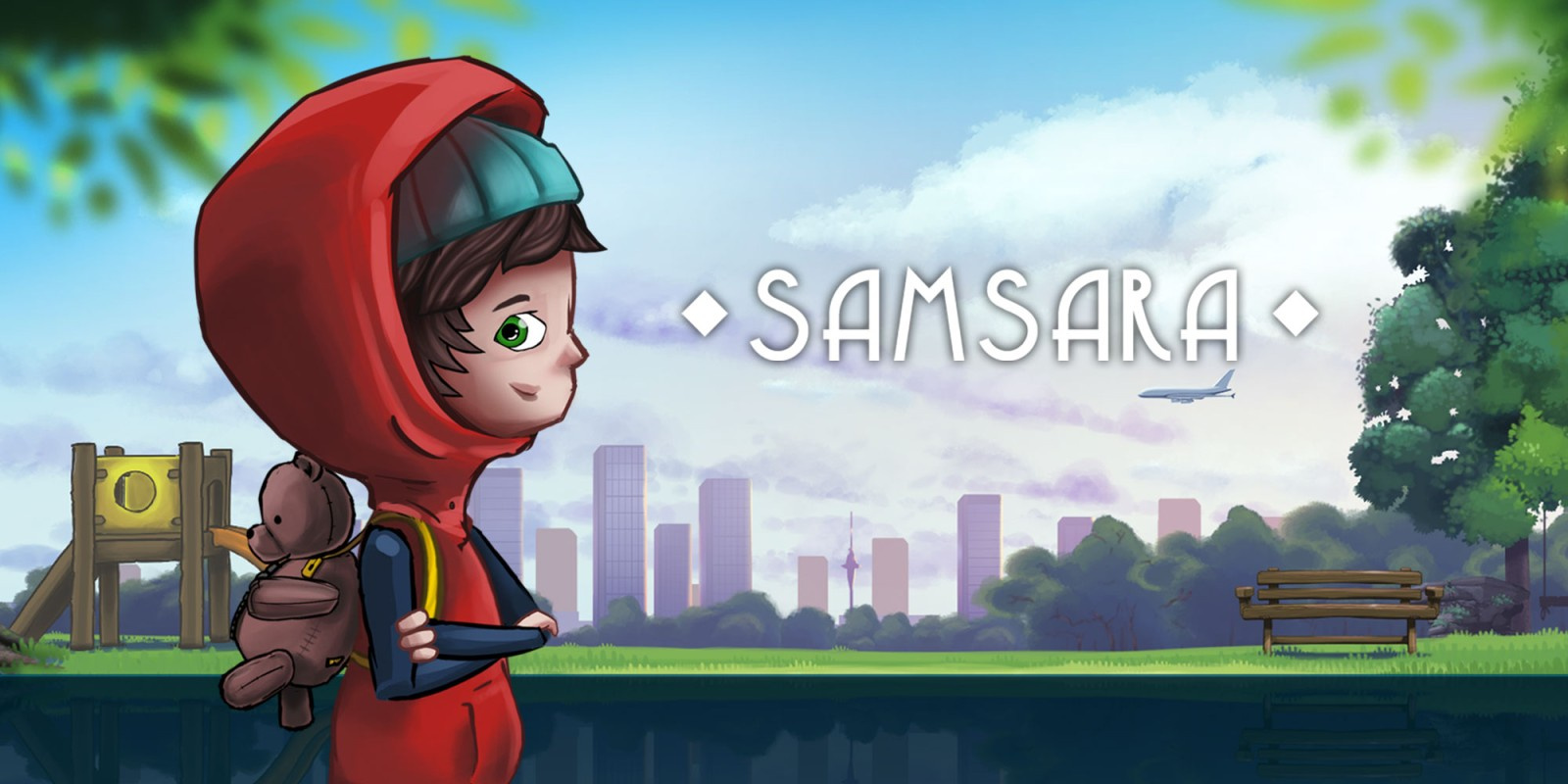
Samsara: Deluxe Edition(Marker, €7.99 / £7.99) – While playing in the park, Zee follows a squirrel through a portal to a world of echoes, inhabited by a shadow child. Surrounded by the unknown and trapped in a series of realms both confusing and dangerous, the youngsters must avoid slipping into the pool between dimensions, embarking on a voyage of discovery and awakening they share with the player, up and down staircases, through light and dark, across the upside-down and the right-side-up to their eventual freedom.
Xenon Valkyrie+(COWCAT, €9.99 / £8.99) – Xenon Valkyrie+ is a rogue-like platformer game in which you must fight to the deepest part of a moon and halt the plans of a wicked witch. Obtain many weapons as you fight through a unique, randomly-generated world every time you play. Encounter many characters, stores and enemies that tell a legendary story.
Don’t Sink(HitcentsDe, €8.99 / £7.99) – Explore a massive world with unique islands and landscapes. Discuss rumours and discover the origins of each island by talking to the people that live there Expect the unexpected when at sea. Events you may be unprepared for may occur such as a foodborne illness among your crew. You’ll need to have access to the right supplies and have the experience to keep your ship afloat
ACA NEOGEO RAGNAGARD(HAMSTER, €6.99 / £6.19) – “RAGNAGARD” is a fighting game released by SNK in 1996. Take control of unique characters based on gods and beasts of legend, and take down your enemies to gain power over Heaven. This game’s Element System allows for a variety of playing styles. Charge your Element Gauge to utilize destructive Disaster Arts and Miracle Arts!
Guns of Mercy – Rangers Edition(Storybird, €11.99 / £10.79) – Aliens invaded the world’s underground! All Rangers are required to help to restore the peace. Take your favourite hero, weapon and meka and start blowing them up! Guns of Mercy is an arcade shooting and pixelated game where you must go through hundreds of levels.
Gnomes Garden 2(8Floor Games, €4.99 / £4.49) – The wicked queen of the trolls has returned from banishment! Using her evil magic, she has kidnapped the princess of the gnomes and taken her to a distant kingdom. In those lands, none know of the power of the magical gardens! The gnomish people who live there have suffered long at the hands of the queen of the trolls and her subjects. The princess decides to help her brothers and sisters and return the power of the magic trees.
Johnny Turbo’s Arcade: Fighter’s History(FTE Games, €7.99 / £7.10) – Practice your fighting skills and the special moves of each character, as you complete the rounds to win the brawling tournament!
Marble Power Blast(EntwicklerX, €2.99 / £2.69) – Play Marble Power Blast, a Match-3 Bubble shooter game! Get beautiful HD backgrounds in 50 levels and 7 different locations/themes. Unlock the shuffle gaming mode and generate your own levels with random calculated difficulty, marble waves, length and number of colours.
Number Place 10000(SUCCESS, €5.09 / £4.59) – Mind Training logic puzzle “Number Place” The objective is to fill a 9×9 grid with numbers without repeatedly in all row, column and 3×3 squares. 10000 questions in 4 levels of difficulty from Easy to Expert. Let’s choose a question that suit yourself, or challenge harder with others!
Pang Adventures(DotEmu, €9.99 / £8.99) – The Pang series is a beloved collection of arcade games from the ’90s. Guide two brothers around the world to save humankind from an alien invasion! Use your skills to overcome the attack balls pouring from the skies & rescue the world from impending annihilation!
Pic-a-Pix Pieces(Lightwood Games, €7.99 / £6.99) – Pic-a-Pix is a picture logic game, sometimes known as Picross, Nonogram or Hanjie, where whimsical pixel-art pictures are created by solving puzzles. In Pic-a-Pix Pieces, large pictures have been split into a number of smaller pieces. Each piece is a puzzle grid, and by solving them all you’ll form a mosaic that reveals a spectacular final image. Play alone or solve puzzles with friends! Co-op play supports up to 4 players using any combination of controllers. Touchscreen controls can be used in handheld mode.
Unicornicopia(Pocketmoneygames, €4.19 / £3.79) – Alone in the forest, a Unicorn wakes, Searching for its herd as a new dawn breaks. Where are my friends? Not to the west, to find them I must set out on a quest!
99Seconds(EnjoyUp Games, €2.99 / £2.69) – 99Seconds, a fun, retro-style video game, where you can modify time to avoid all kinds of dangers. After finishing off Black Eye, V-99 entered a mysterious zone called Bit 8, without knowing why V-99 could modify time!. But everything became complicated with the appearance of the BLACK VECTORS: mysterious beings that aim to destroy any intruder who reaches Bit 8.
Switch eShop – Demos
Guns of Mercy Demo(Storybird, Free) – Aliens invaded the world’s underground! All Rangers are required to help to restore the peace. Take your favourite hero, weapon and meka and start blowing them up! Guns of Mercy is an arcade shooting and pixelated game where you must go through hundreds of levels.
3DS eShop – New Releases
RTO 3(nuGame, €9.99 / £8.99) – The lunar base, where you are stationed as part of the security forces, is under siege. Having just escaped from enemy captivity you are now on your own and must fight against overwhelming odds to survive. Featuring large and complex levels with nonstop action RTO 3 is a first-person shooter which will keep you entertained for hours.
Switch eShop – Pre-Orders
Everything(David Oreilly, €10.39 / £9.35, pre-order from 31/12/2018) – Everything is an interactive simulation game where every single object in the Universe is a playable character, from atoms to animals to planets to galaxies. The player can manipulate the world in infinite ways and construct their own, while exploring the interconnected relationships between everything. Narrated by the late British philosopher Alan Watts.
Feudal Alloy(Attu Games, €14.99 / £13.49, pre-order from 31/12/2018) – Explore an unusual medieval world with a fish-controlled robot, Attu. Improve your combat techniques and skills by smashing many kinds of mechanical creatures in a beautiful hand-drawn world. Attu is an ordinary farmer robot who lives in a small cottage in sunflower fields. He had been living a simple but pleasant life until a bunch of outlaws attacked the village, stole their oil supplies and burnt his house.
Neko Navy – Daydream Edition(Fruitbat Factory, €9.89 / £8.90, pre-order from 31/12/2018) – Flying cats versus 10,000 soothing characters! What awaits them beyond all those furious midair fights…? Witness the world’s most shocking ending for yourself! Shoot, evade, and detonate Bombers! “Neko Navy” is an exhilarating horizontal scrolling shooter where you can shoot them up with easy controls.
Planet RIX-13(Sometimes You, €4.24 / £3.81, pre-order from 02/01/2019) – You are the pilot of a spacecraft that is looking for and exploring worlds that are potentially suitable for life. While scanning the next target, you lost control of your ship and had to make an emergency landing. It quickly becomes clear that you are not the first person on this planet…
At Sundown(Versus Evil, €15.99 / £14.39, pre-order from 03/01/2019) – At Sundown is stealth driven, top-down, multiplayer shooter in which up to 4 players compete in both online and local deathmatch. With a variety of cool weapons to take each other out with and multiple maps across 6 different zones, only the BEST will dominate each round and survive the ultimate challenge to rise to the top at sundown!
Caveblazers(Yogscast, €10.39 / £9.59, pre-order from 03/01/2019) – Caveblazers is an action-focused platformer roguelike set in a fantasy world. Each game is unique with procedurally generated levels to explore and a massive amount of items, weapons and equipment to discover. As you delve deeper in to the cave, you’ll discover new areas to explore, new weapons and new monsters to try them out on.
HoPiKo(Merge Games, €6.99 / £6.29, pre-order from 03/01/2019) – The evil Nanobyte virus is out, gaming is over… It’s time to hook up your power gloves and save your HoPiKo brothers! HoPiKo is an intense speed run platformer where you get to save gaming. Jump from platform to platform avoiding death, exploiting shortcuts and ripping through 100s of hand-crafted levels, each one dropped into a 5-stage mini-run designed to break your mind!
Left-Right: The Mansion(Triple Boris, €4.00 / £3.59, pre-order from 03/01/2019) – The Mansion is a little game about a boy, Billy, whose dog named Gigi ran away inside a big mansion. He must journey through this mysterious place, where he will have to find and remember the right path in order to find her. Every room will challenge him with a simple choice to make: left or right. Two doors, yet only one will make him go forward; the other one will bring him back to the beginning.
Stellar Interface(ImaginationOverflow, €11.69 / £11.69, pre-order from 03/01/2019) – Fight In Ever Changing Space Battles! Run through the universe, discover the numerous perks/consumables and their synergistic effects. Explore the randomly-generated galaxy to find merchants, unlock spacecrafts, collect StellarNetES Cartridges, checkmark your kills of the various galactic overlords.
DYING: Reborn – Nintendo Switch Edition(Coconut Island games, €6.71 / £6.07, pre-order from 03/01/2019) – 《DYING: Reborn – Nintendo Switch Edition》is a highly unique first-person problem-solving puzzle game. In this special edition, we will be introducing you to a whole new story; every shred of paper, every nook and cranny, are scattered with fragments of the past. Don’t miss out on a single detail and piece together a complete storyboard. Explore every corner of a storied hotel of blood and violence, solve layers of puzzles, and inch your way towards the chilling truth.
Double Cross(Headup Games, €14.99 / £13.49, pre-order from 03/01/2019) – A recent attack on R.I.F.T. headquarters thrusts players into a thrilling new case where they must use their R.I.F.T. developed gear to sling, swing, fight and investigate across distinct dimensions. During their travels, players will gather clues to bring themselves one step closer to finding the identity of R.I.F.T.’s attacker and save every variation of the universe.
DreamWorks Dragons Dawn of New Riders(Outright Games, €39.99 / £34.99, pre-order from 04/01/2019) – A new heroic dragon and rider are taking to the skies and only you can help them defeat the evil villains who destroyed a dragon sanctuary created by Hiccup, Toothless, and his dragon riders. When the island of Havenholme is found in ruins, mysterious survivors emerge as unlikely future heroes. Scribbler is a scholar who cannot remember his past while Patch is a unique breed of dragon, a “chimeragon,” with new, unexpected powers they discover along the way. Together they must explore new islands, battle fierce enemies and recover the memories that reveal Patch’s true origin in this fun and fiery new action adventure.
Happy New Year Sale
Nintendo has launched a huge Happy New Year Sale including discounts on some big-name Switch games. It’s too big to squeeze into this article, so we’ve had to share it here.