New Detective Pikachu Trailer Reveals Lickitung And It's Weird
The Internet was pleasantly surprised at the first trailer for Detective Pikachu, but at the same time the realistic take on the classic creatures was slightly unsettling. The latest spot for the upcoming film has revealed another pokemon done up in its realistic style, and it's equally odd.
The 30 second spot is mostly an abridged summary of the first trailer, filling us in on the major details: unlikely friendship, talking Pikachu, etc. It has a few new gags mixed in, but it's the new pokemon around the halfway mark that really turns heads.
Lickitung, the gen-1 pocket monster with a tongue that's way too large to fit in its weird little lizard head, can be spotted on a bus or train doing what can only be described as "unfurling" with his massive mouth muscle. It comes complete with a wet plopping sound, just to accent the grossness. Behold:
Just afterwards, we get the barest glimpse of the much cuter tiger-like pokemon Growlithe sitting in the background of a restaurant, and a closer look at a Bulbasaur. And of course, Ryan Reynolds as the title character continues to show his voice-acting chops. Check out the trailer above, just maybe not while eating.
Soapbox: My Love Affair With Tetris, Probably The Best Video Game Ever Created
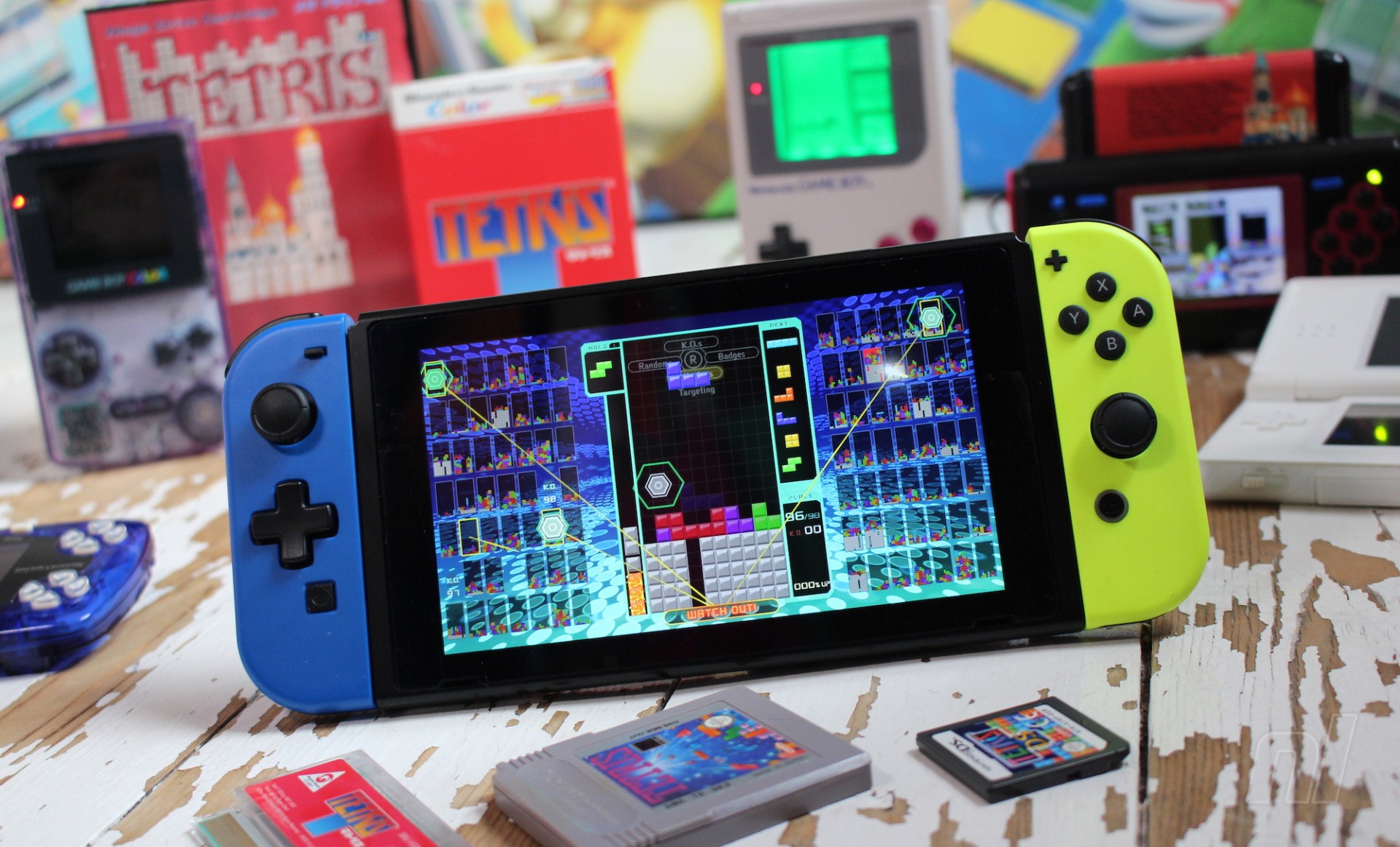
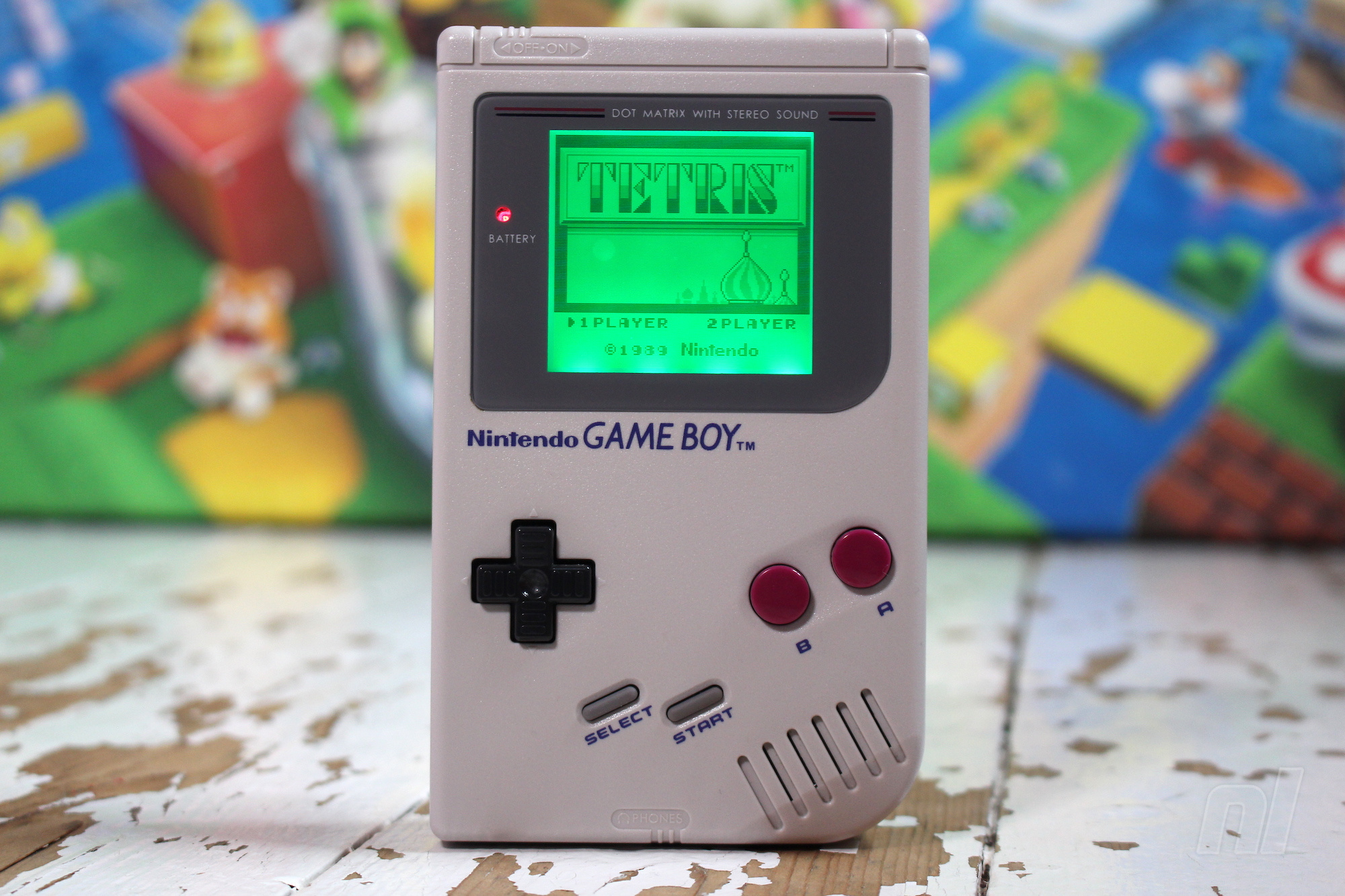
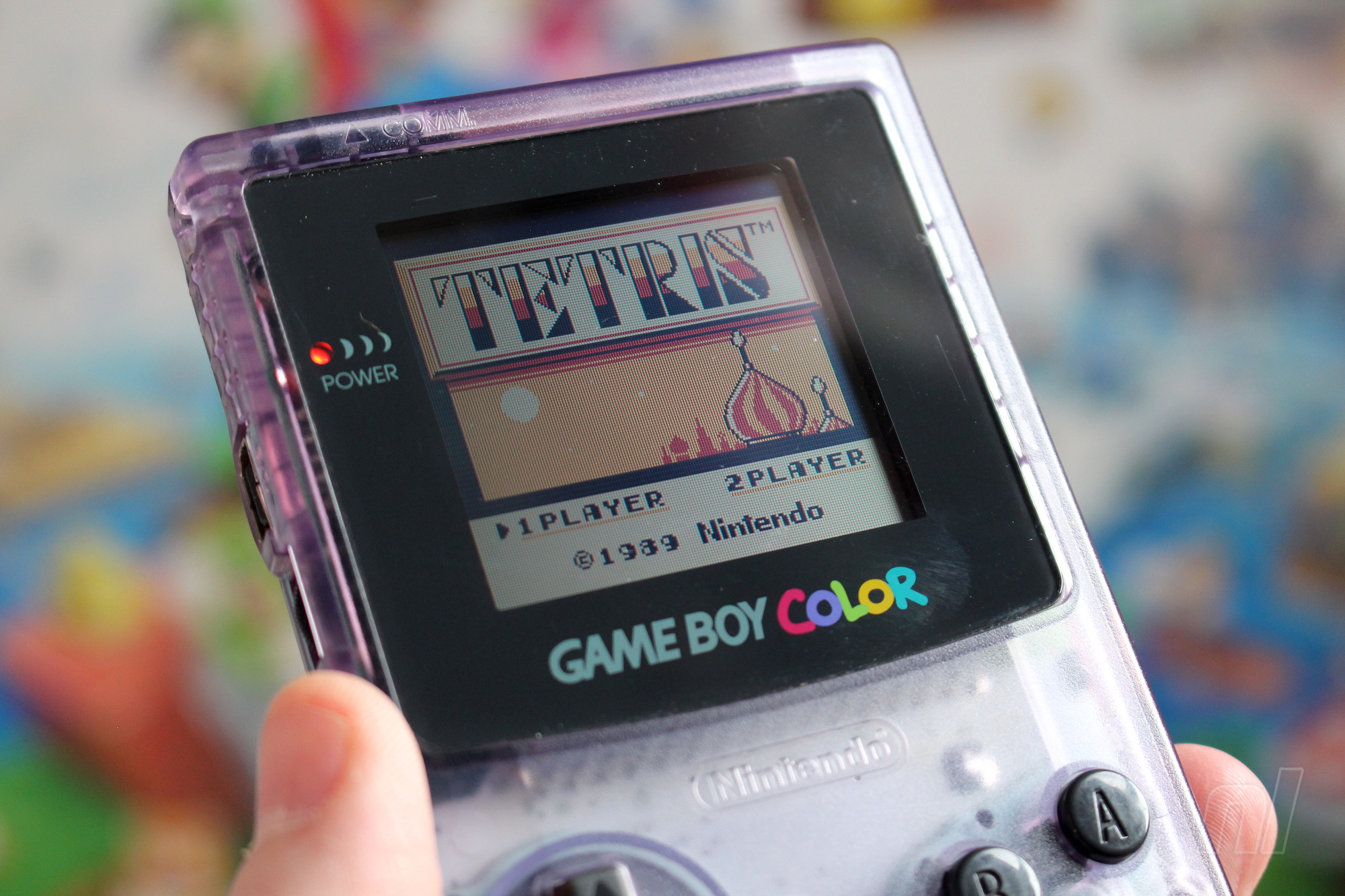
Like millions of players all over the world, my relationship with Tetris began with the Game Boy. Alexey Pajitnov’s famous puzzler may have begun its life on computers in 1984, but it would find a whole new level of fame thanks to the fact that it was bundled with Nintendo’s million-selling monochrome handheld.
I didn’t own a Game Boy at launch, and my first experience of the system – and Tetris – was playing on a friend’s console. I’d owned Nintendo’s pocket-friendly Game & Watch LCD handhelds in the past but nothing could prepare me for this new product; twinned with Tetris, it became the first ‘gadget’ I can remember desiring more than anything else in the world. I begged and pleaded with my parents to buy me one, and while they eventually relented, for what felt like forever I had to make do with playing my friend’s console as and when I was able.
I still remember the day he excitedly ran over to my house to show me that he’d reached the ‘end’ of the game and that iconic space shuttle animation. I could barely contain my jealousy, but I probably did a good job because I was simultaneously excited and elated to be witnessing this seemingly life-changing event; this was decades before you could watch pretty much any segment of gameplay on YouTube, and it’s a sequence that I’ve seen only a handful of times myself since.
When I did eventually get my very own Game Boy, I was stunned at the variety of amazing gameplay experiences that awaited me; Tiny Toon Adventures, Castlevania II: Belmont’s Revenge, Operation C, Zelda: Link’s Awakening, Super Mario Land (1, 2 and 3)… waiting a little before becoming a Game Boy owner turned out to be a bit of a masterstroke, as the system had loads of games available when I got my system.
However, Tetris was the constant; the only game that, when I left the house with my Game Boy-branded bum-bag (fanny-pack, if you’re in North America), would 100% be coming with me. And thanks to its ubiquitous nature, if I met anyone on the road who also owned a Game Boy, I could be sure that an impromptu link cable battle was on the cards. It was a magical time to be a gamer, and even if Tetris hadn’t been one of the most addictive and finely-crafted video games of all time, I still think I would hold fond memories of travelling the country with my console, link cable and ample supply of AA batteries.
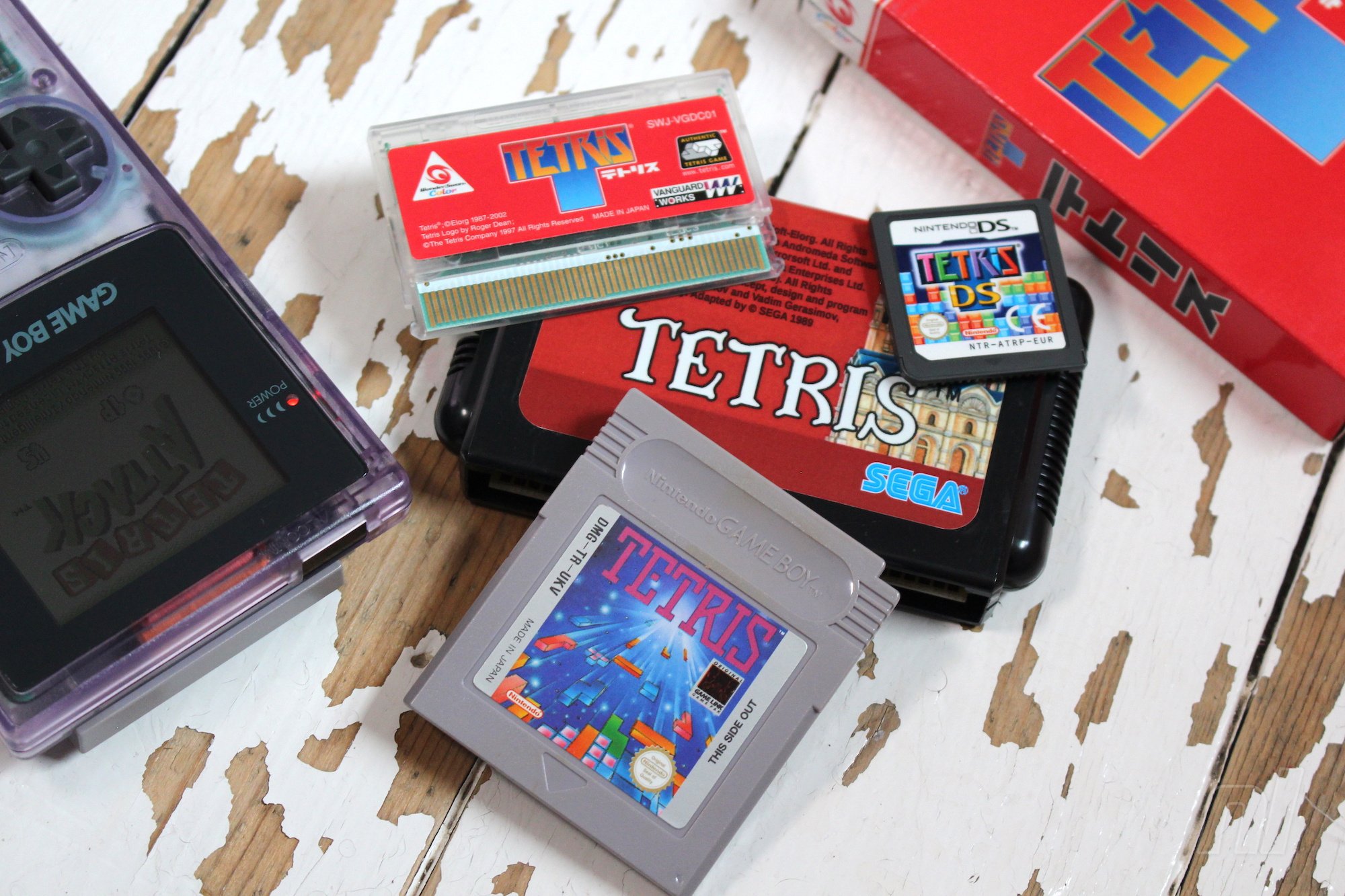
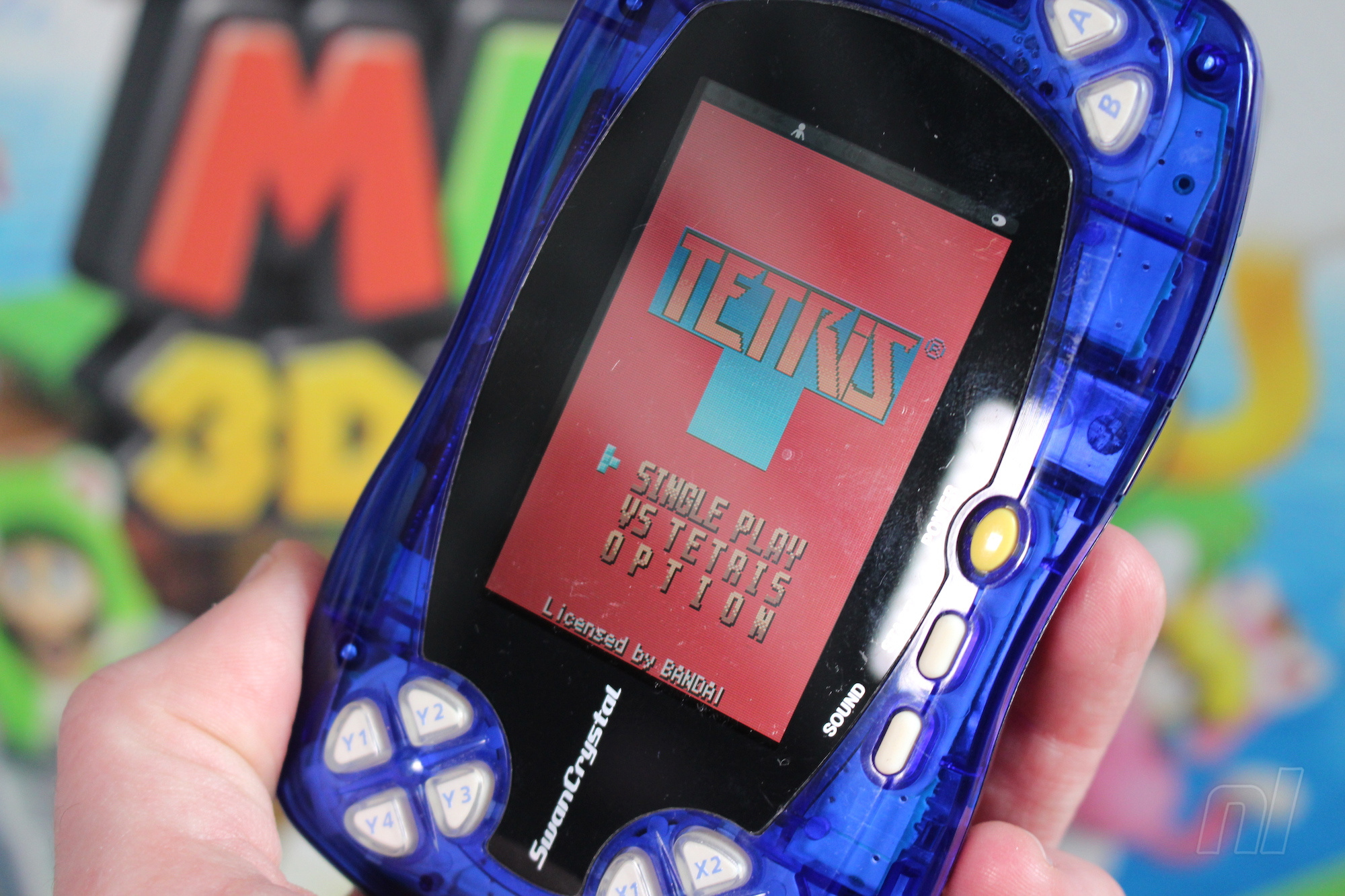
Nintendo capitalised on Tetris’ innate playability with a Game Boy sequel, which strangely bypassed me entirely. I’m not sure why, but I never felt the need to invest in the follow-up; perhaps it was because even in my young eyes, the original game was already as close to perfection as it was possible to get, given the limitations of the hardware. Instead, I got all excited about Tetris on the Bandai WonderSwan, not because it offered any massive gameplay innovations, but because it could be played in portrait orientation, which felt like a better fit, given the dimensions of the playfield.
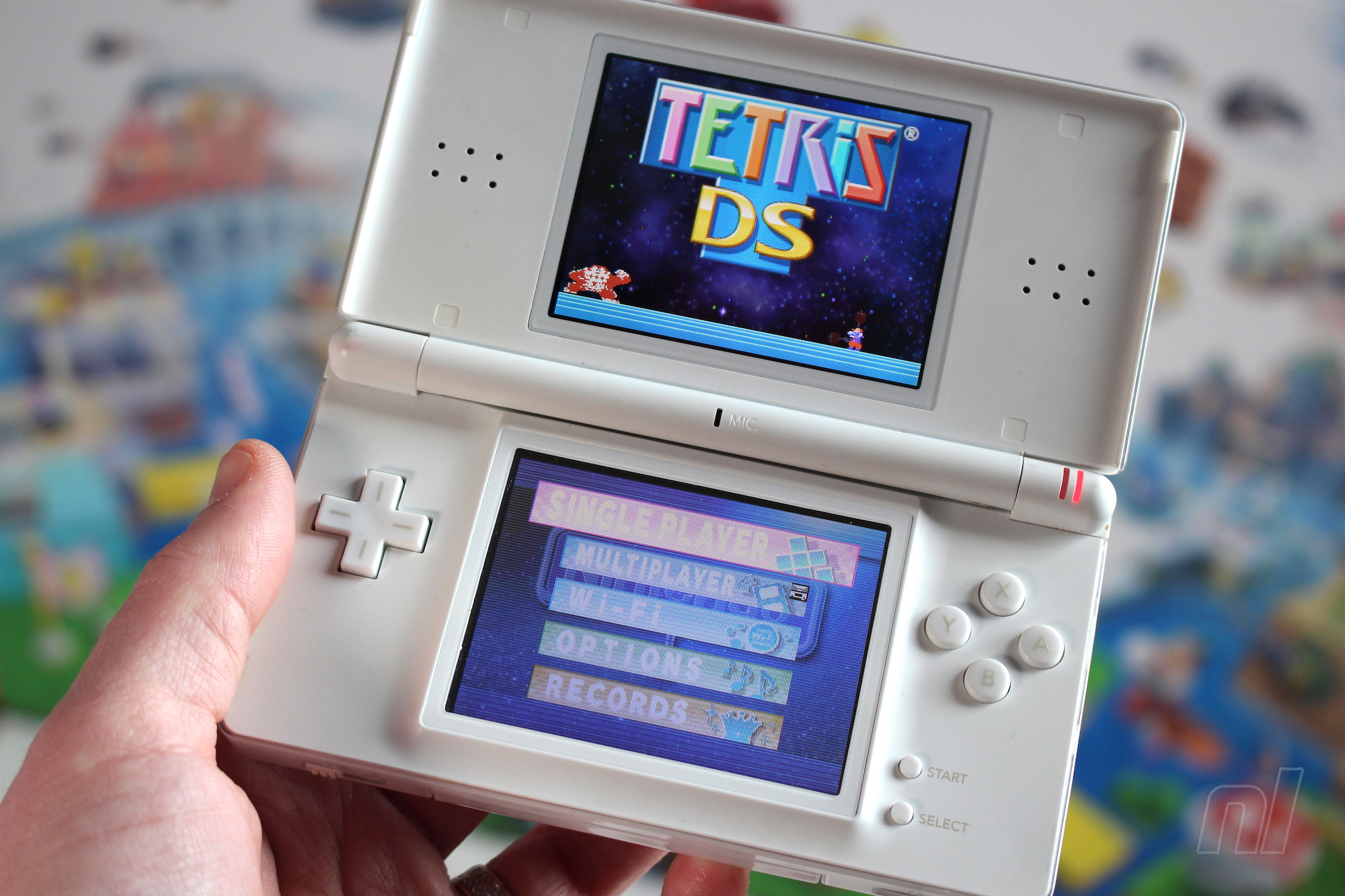
In fact, I wouldn’t play Tetris again on a Nintendo console until the DS era, when another port – with Nintendo at the helm and packed with characters from famous Nintendo franchises – made me fall in love with it all over again; sure, it was ‘just’ Tetris, but it became a new killer app for my DS; there’s something about portability and falling blocks that just works.
My love affair for Pajitnov’s masterpiece then went on hiatus again for a few years, with the Hudson Soft-made Tetris Axis and Ubisoft-published Tetris Ultimate failing to get my pulse racing on 3DS. I also didn’t get as excited about the crossover title Puyo Puyo Tetris as I perhaps should have done; as a fan of both series, it was, on paper, the dream ticket. However – and I can’t for the life of me fathom why – it just didn’t grab me as much as other fans.
It wouldn’t be until Tetris Effect arrived on the PlayStation 4 that my affection for plummeting tetrominoes returned in earnest; twinned with the PSVR headset – which is capable of higher refresh rates than your typical TV – Enhance, Inc’s unique take on the title made me appreciate its magic in an entirely different way. By fusing a captivating and often hypnotic audiovisual experience with the tried-and-tested Tetris gameplay, Tetsuya Mizuguchi and his team produced one of 2018’s surprise critical hits; Tetris Effect topped many press ‘Game of the Year’ polls, and rightly so.
Such was my appreciation of Tetris Effect that when I sat down to watch last week’s Nintendo Direct broadcast, I was hoping (perhaps beyond hope) that it would be announced for Switch; despite how brilliant it is in VR, I’d dearly love to have a copy of Tetris Effect that I can take out of the house with me, just like I did with the Game Boy version all those years ago.
When Tetris 99 was revealed out of the blue, my heart jumped then quickly sank; the gorgeous, trippy visuals of Tetris Effect were nowhere to be seen and instead we had the old-fashioned coloured blocks which had been part of the series since the ’80s. We weren’t getting Tetris Effect on Switch, but unbeknownst to me at that point, we were getting something just as good – if not better.
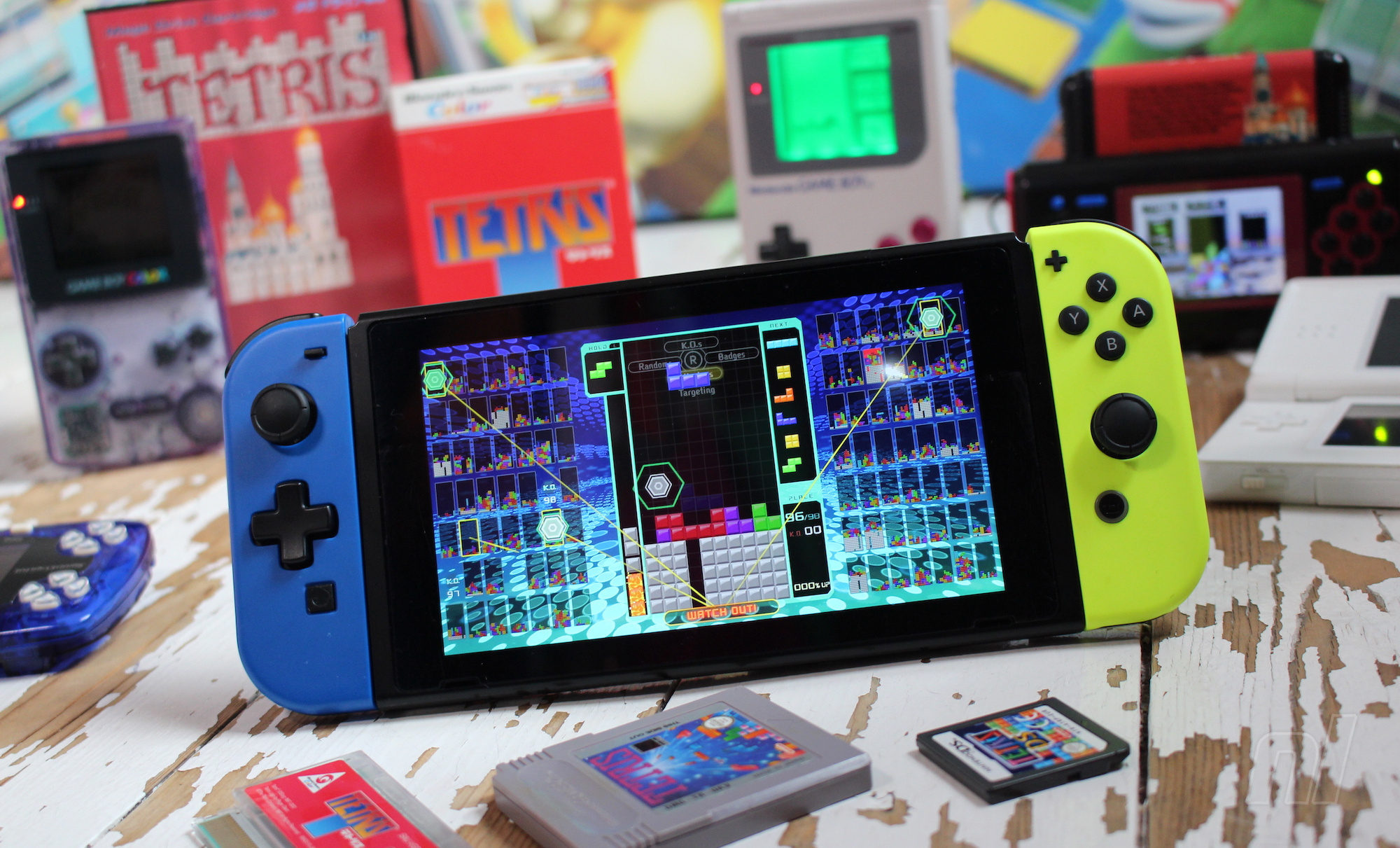
As you’ll know if you’ve read our review, Tetris 99 is special. We’ve had competitive play in Tetris before – linking up Game Boys in the early ’90s to online play on the DS – but this new version adds a ‘Battle Royale’ twist which makes it truly unique. You and 98 other players are fighting to be the last one standing, with a range of tactics allowing you to choose where your ‘junk’ lines get sent. While it’s rather limited in scope at the moment (more modes are on the way, it seems), it’s one of the most compelling and downright addictive versions of Tetris I’ve ever played – and that’s saying something.
I’ve now found that my love for Tetris has returned, and all I can think of those falling shapes and the so-called ‘ecstasy of order’. It’s also made me seriously consider what I’d deem to be the greatest video game of all time; sure, titles like Zelda: Breath of the Wild and Super Mario Odyssey deliver the kind of experience that stays with you forever, but, if I had to pick one game to take with me on a lifetime of seclusion on a desert island, would it be either of those? Or would I select Tetris as my solitary pick; a game that I’ve been playing, on and off, for 30 years?
It’s a question I hope I never legitimately have to answer, but Tetris 99 has served as a timely reminder that Pajitnov struck gold when he (with the help of Vladimir Pokhilko, whose name is often overlooked, perhaps due to the tragic and disturbing nature of his passing) created Tetris on Soviet Academy of Sciences hardware. Given that Tetris has been adapted and iterated so brilliantly over the years without sacrificing what makes it so special speaks volumes, and Tetris 99 shows that even after 35 years, its appeal is totally undiminished.
T’is the season of failed festivals, although the latest on the list arguably isn’t quite on par with the high-profile Fyre fiasco.
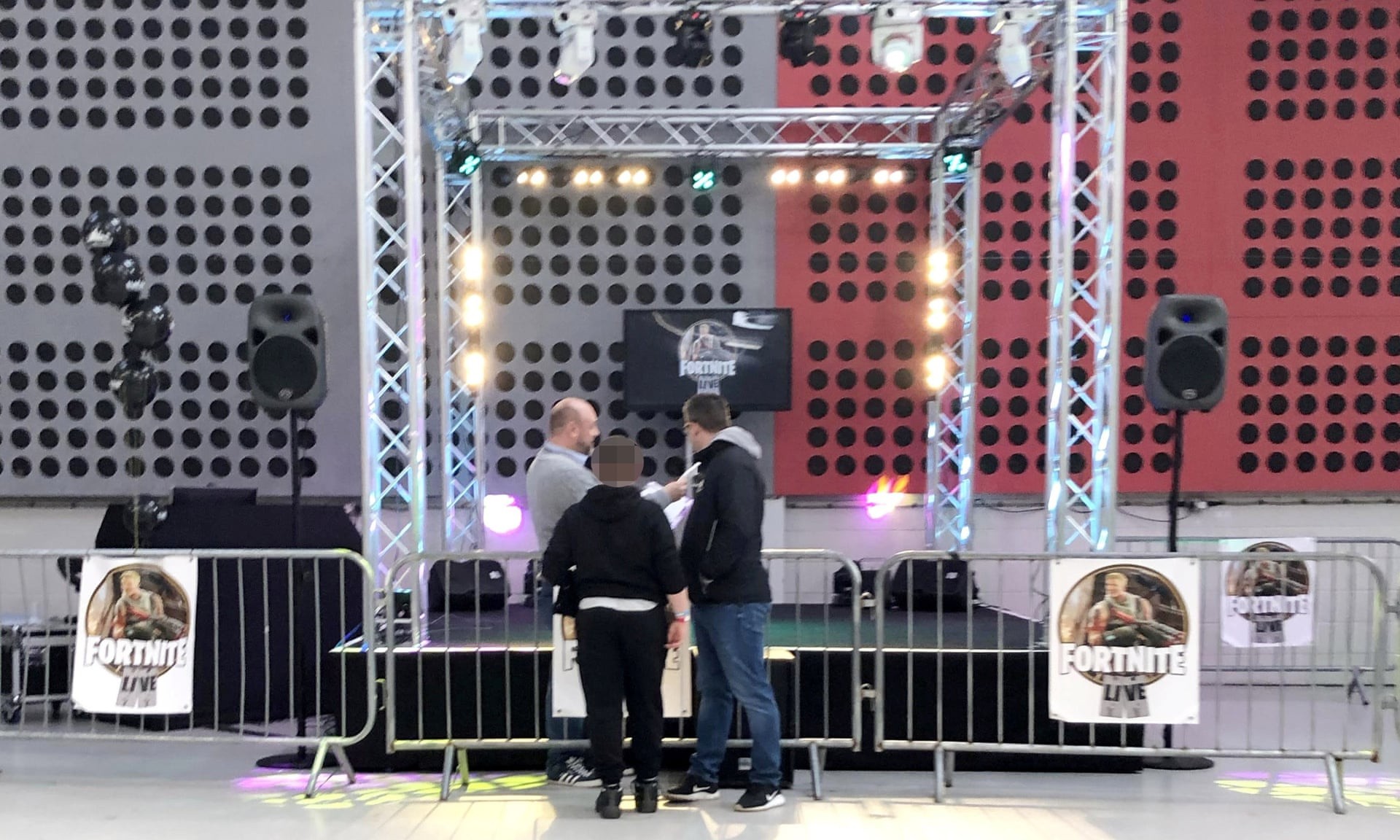
An unofficial event – billed as ‘the Fortnite event of the year’ by the organisers and promising rock climbing, go karts, laser tag, plus the requisite dose of the most popular Battle Royale game on the planet – left many attendees unhappy due to long queues, poor planning and staff shortages. Stations to sit and play the free-to-play game were present and correct, but there weren’t nearly enough to satisfy the 2,500 fans who turned up to share their enthusiasm for battling royally.
While Kotaku drew comparisons between this and the multi-million dollar fraud-fest that recently inspired Hulu and Netflix specials, we doubt attendees to this Norwich-based weekend event had similar expectations to those paying thousands of dollars to party with influencers on Pablo Escobar’s private Caribbean island.
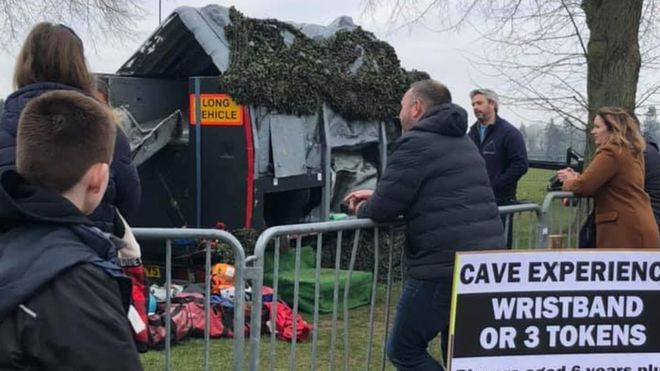
It seems Fortnite Live attendees expected more, though. Staged at Norfolk showground, tickets started at £12 – going up by another £20 for ‘unlimited access’ – but visitors soon got miffed when it became clear that the organisers simply weren’t prepared for the number of attendees.
BBC News spoke to one Oliver Phillips who called the event “pretty rubbish […] the sort of thing you see at a school fete.” Mr Phillips also described the ‘cave experience’ as a “trailer, no bigger than a car, with a tunnel going through it”. Let’s see what he means:
Hmm. To be fair, a video update from the organisers – which has since been removed – showed an indoor area that was actually better than we expected after reading reports, but queues are never going to go down well, especially if you’ve forked out for the deluxe ‘unlimited access wristband’ and end up waiting in line to play a game you can play at home instantly, and for free.
The company that organised the event apparently has others planned for the future, so hopefully they’ll be better prepared next time.
Were expectations simply too high or was this an avoidable state of affairs? Did you attend the event? Let us know your thoughts in the comments.
An artistic puzzle game inspired by Art Deco and stained-glass artisans of the 20th century. Combine hidden glass pieces to unveil clocks and themes exhibited by various cultures of the world at an interactive electronic show.
after HOURS has players sharing a tiny space with Lilith, a young woman suffering from Borderline Personality Disorder (BPD) due to childhood molestation. Through sharing her space and thoughts, players will get to witness the break between the objective reality and the hurtful realities the disorder creates.
Gamasutra sat down with Bahiyya Khan, designer of the Best Student Game-nominated after HOURS, to talk about using discomfort and pressure to draw out empathy and understanding, using FMV and animation to recreate the dual realities of BPD, and the challenges of exploring (and reliving) difficult topics like molestation.
Who is Bahiyya Khan?
Existentially? Who can say? Some things that I do know is that my name is Bahiyya Khan and I’m the game designer and writer for after HOURS. I play Lilith, the protagonist in the game, and since it’s a full motion video game, I co-directed it. I also provided my own teenage poetry for the game, which is very cool to me.
Breaking from what games “should” be
When I was in my final year of high school, I didn’t really know what I wanted to do. I mean, I knew I wanted to be in a band and write, but I have brown parents so hahaha yeah. I ended up studying game design at university because I figured I could make games about being in a band.
I only *really* started making games three years into my four-year degree. I mean, I made games for school, but I was so unhappy in my degree for the first two years that I just didn’t give a shit about what I was making. Half the time my best friend was carrying me through my degree cause I was just so sad and felt like an outcast. Once I stopped caring about all the things that everyone told me a game “should” be, that’s when I began making games that I cared about and actually had fun doing it.
Using rage to help others
I had to make a year-long game for my honors project at varsity. A year is a long time, so I knew that I wanted to make something important. Unfortunately, at the time, there was a rise in violence against women and children in South Africa. Friends and family I’d known my whole life had also come out to me about being raped or molested. I’ve also experienced a disgusting amount of sexual assault and fuck man, I was fucking furious about it all. That’s when I decided to make my honors game about it. I wanted to direct my rage into something that could potentially help people.
In terms of the Borderline Personality Disorder (BPD) aspect, I have it and it is my desire to kick its arse in the pit. A lot of people that have BPD have been sexually abused in childhood or just have had unstable childhoods, so it made sense to me to show that Lilith has developed this disorder because she was abused. I was also so sick of people with BPD being demonized, whether by The Diagnostic and Statistical Manual of Mental Disorders (DSM) or just experiences I had in my own life.
So, I wanted to show that we’re not evil people. We’re hurting and trying our best and we read “Catch 22” a lot and like The Front Bottoms enough to stick their lyrics on our bedroom walls.
The tools to create after HOURS
Initially, I prototyped the game in Twine. I did that to kind of guide the way I wanted the game to flow. I also mapped out the game on paper. I just drew out how I wanted the bedroom to look and what I wanted players to be able to interact with. The game was then filmed using a Sony a7s ii camera and #MadeWithUnity.
Very importantly, we also used our hands and brains and hearts. Lest the general public forget that video games are made by people.
On choosing to explore the challenging topics of after HOURS
I’m a woman that lives in South Africa. We have one of the highest rape rates in the world. I needed to talk about it. I wanted survivors and people with BPD to feel less alone. To not feel like they’re insane for feeling the emotions that they do. That they are valid and are more than what has happened to them or their illness.
The difficulties of developing a game about heart-wrenching topics
A lot of the development process was the worst! Wow, it was really bad. So, in the beginning, I was working in Twine, whatever, that wasn’t too emotionally taxing ‘cos I’d just sort of done vague plot points. When I had to get into the character of Lilith, that’s when things started getting bad. I have BPD, so a lot of Lilith’s reactions are very close to my own, and performing something on camera that I hate going through in my actual life was really weird and uncomfortable.
The molestation aspect of the game ruined me. It actually ruined my life and I’m still trying to recover from it. Immersing yourself in content like that for concentrated periods of time… I just couldn’t stop thinking about how ugly it is that it exists. I was losing my mind trying to come up with solutions to end all the pain for people. I couldn’t live with the knowledge that I had. I became obsessed with reading articles about children that had been molested because I felt like I wanted these kids to not just be another statistic but for someone out there to know their names. All the scenes in the game where I’m crying and tearing down my room, I really was that angry.
Sometimes I’d be unable to do my bit of work on the game because I was so depressed and that would, in turn, set everyone back and just make the whole process really pressurized and awful and it was a really bad cycle.
Leaving the player with no room to relax
My intention wasn’t for the player to passively consume her story. I knew that I wanted them to play the game with bated breath and give them no room to relax – to sort of mirror some of what Lilith goes through. I wanted them to have access to the voices in her head so that they could contrast that against what was “objectively” happening and think about the dissonance in Lilith’s reality and how scary it is not being able to trust your perception of things.
I wanted players to interact with her thought processes when sending texts to her boyfriend or friend and then not give them agency in choosing certain options to show them how often Borderline people feel like they have no agency in their lives, and are being dragged by the hair by the evil bastard in their brains.
Using FMV & hand-drawn animations to create a split reality
I’m pop-punk trash and watch a lot of music videos, and one of my favorite bands, All Time Low (pls notice me), released this music video for their song Nice2KnoU which combined hand-drawn animations over film, and I thought that looked dope as hell. Then I was like, “Shit! This will be perfect for after HOURS!” because the way I feel as a person with Borderline is that a lot of the time, the reality that I experience is different to everyone else’s. It’s a more wounded and intense reality. That’s when I decided to use animation in the game to show that sort of split in reality – what is objectively going on and what is going on for Lilith.
I feel like I often inhabit a different reality as opposed to everyone else, and while this is true for all human beings, I feel like mine is different in a much more intense way. I thought adding the animations were a useful tool in depicting this. They also help with letting the players know when Lilith is triggered by something or experiencing a particularly strong emotion by the repeated trope of her eyes being scratched out or an animated snake going into her head and symbolically poisoning her mind.
Drawing out empathy with after HOURS
I want to make people uncomfortable. I feel like a lot of the time, people watch their friends or whoever experiencing depression in a rather passive way. They don’t see who you are when you’re alone. They can’t see into your mind or see what you see. And while no one can ever really inhabit your reality and experience your depression or what it’s like to be molested, I want players to get as close as they could to empathizing with those realities in a 20-minute video game.
Oxford study finds no link between violent video games and teen aggression
“Despite interest in the topic by parents and policy-makers, the research has not demonstrated that there is cause for concern.”
– Oxford Internet Institute Director of Research and lead researcher Andrew Przybylski details the findings of the study.
Researchers at the University of Oxford’s Oxford Internet Institute have published the findings of a study into the relationship between aggressive behavior in teens and violent video games, finding that, in short, no link exists.
The study’s subject itself isn’t new ground by any means, but Oxford researchers say that their case has a few notable differences from past studies that, according to the University, make it “one of the most definitive to date.”
The paper, which can be found in its entirety on Royal Society Open Science, collected data from a representative sample of British 14- and 15-year-olds as well as from their caretakers, totaling 2,008 participants in all. Both parties answered a series of questions provided by researchers, with the teenaged participants answering a questionnaire on their personality and video game habits while caretakers answered the Strengths and Difficulties Questionnaire. Games were also classified according to PAL or ESRB ratings, rather than participant-defined content descriptions.
“Following a preregistered analysis plan, multiple regression analyses tested the hypothesis that recent violent game play is linearly and positively related to carer assessments of aggressive behavior,” reads the paper. “Results did not support this prediction, nor did they support the idea that the relationship between these factors follows a nonlinear parabolic function. There was no evidence for a critical tipping point relating violent game engagement to aggressive behavior.”
Researchers also note that, unlike other studies on the subject, they opted to publicly preregister their hypothesis, methods, and analysis technique before starting in on the research itself in order to prevent personal bias from playing a part in the findings.
“Our findings suggest that researcher biases might have influenced previous studies on this topic, and have distorted our understanding of the effects of video games,” co-author Dr. Netta Weinstein told Oxford.
R.B.I. Baseball 19 Coming to Xbox One March 5, Pre-Order Today
Today is an exciting day for MLB fans. Not only are pitchers and catchers reporting for Spring Training, but R.B.I. Baseball 19 will launch March 5 on Xbox One and is available for pre-order on the Microsoft Store. Baseball is back, Spring is right around the corner, and we’re even closer to Opening Day! We’re also excited to unveil the R.B.I. 19 intro video with music featuring “Warrior” by Evaride that you can watch above.
In case you missed the news over the last few weeks, we revealed Houston Astros third-baseman Alex Bregman as our cover star & Toronto Blue Jays second baseman and shortstop Lourdes Gurriel Jr. as our Canadian cover star.
With R.B.I. Baseball 19, fans can enjoy new additions and improvements across all aspects of the game with a genuine MLB experience, heightened authenticity, and incredible depth including the ability to manage your MLB franchise across multiple seasons, hundreds of new animations, updated player models, every official 2019 uniform, more player gear, improved ball physics, and enhanced environments!
For more information on R.B.I. Baseball 19, follow @RBIGAME on Facebook, Twitter, and Instagram.
Posted by: xSicKxBot - 02-19-2019, 08:52 AM - Forum: Lounge
- No Replies
Pre-Order Division 2 On PC, Get A Free Game
The Division 2 is just under a month away, leaving plenty of time to get in your pre-orders. If you plan on exploring the burned-out husk of Washington DC on PC, you can get a free game for putting your order in early.
Ubisoft announced that pre-orders on PC will get to choose one of three games: Ghost Recon Wildlands, Far Cry Primal, or Watch Dogs 2. All pre-orders made before March 14 will be eligible, and the offer works retroactively if you've already pre-ordered. You can head over to the offer page to redeem your code. If you're undecided, you have until March 31 to make a selection.
The games themselves will become playable on March 15, alongside The Division 2 launch date. Presumably this is so unscrupulous types can't snag a free game and then cancel their pre-order.
Ubisoft also recently announced that an open beta is coming for The Division 2, running from March 1-4 on all platforms. That would leave you plenty of time to sample and decide if you want to take part in the pre-order offer. Taking part in the beta will get you a DC Patriot weapon skin, and if you complete the Invaded mission you get a Capitol Hill arm patch.
This game takes place in the wreckage of a post-apocalyptic Washington DC, following a bio-engineered epidemic that began in New York City. For more details, check out everything we know and some of our favorite new features. Ubisoft has also detailed its plans for the endgame, and it will be releasing free DLC well after launch.
New Fan-Made Splatoon 2 Gear Coming In Japanese Mag CoroCoro
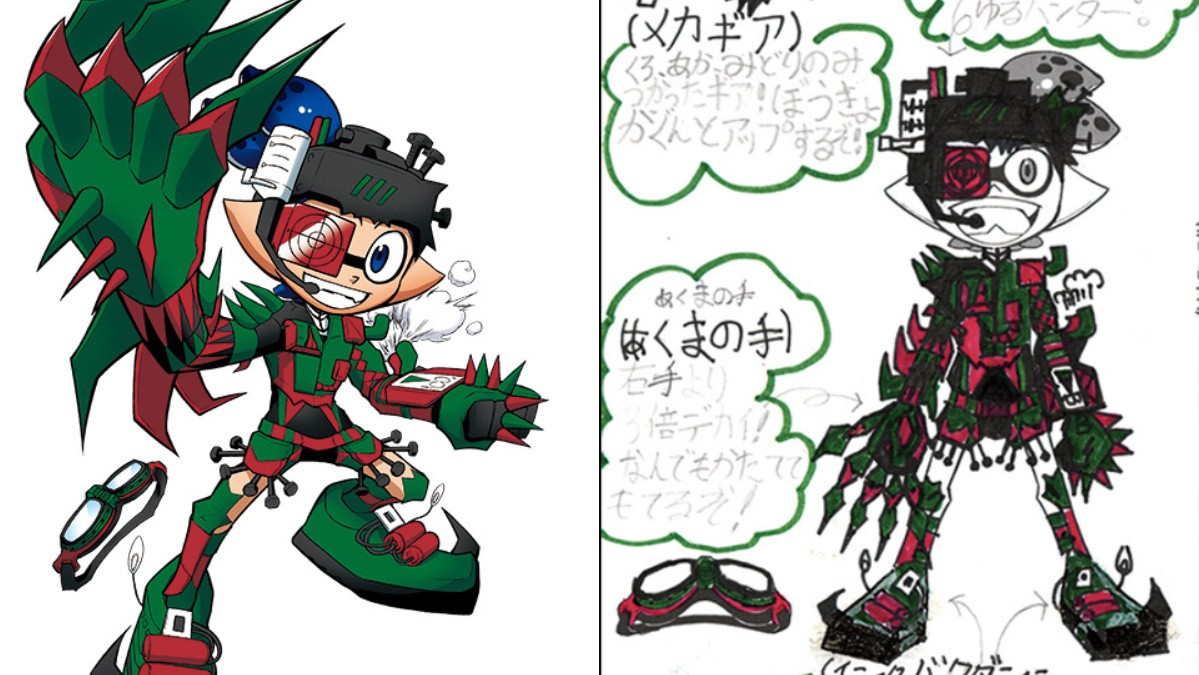
CoroCoro, the Japanese manga magazine, will be offering some exclusive in-game Splatoon 2 gear to readers via a special download code with an upcoming issue. The ‘Mecha Gear’ is the result of a competition to design some new accessories for the online shooter, and as you can see from the pics, it’s a green and reptilian take on a mech suit.
Nintendo will adapt this for the game, giving the design its own spin, but we very much like the look of that eyepiece and big, pointy mecha-claw.
This isn’t the first time that contest-winning swag has worked its way into the game. The ‘Traditional’ and ‘Moist Ghillie’ sets both originated from a contest in gaming mag Famitsu.
The upcoming issue of CoroCoro with the code goes on sale on 25th April, and although there’s no word on a western release, the previous contest-winning sets made their way over here, so we’d expect this to follow suit.
Like the look of this squid-based swag? What gear would you like to see added to Splatoon’s wardrobe? Share your thoughts in the comments.
Posted by: xSicKxBot - 02-19-2019, 02:10 AM - Forum: Lounge
- No Replies
Fortnite Season 8 Is Near, And The Island Is Cracking Apart
Season 7 of Fortnite is quickly approaching its conclusion and will end on February 28. As is customary for Epic's wildly popular battle royale title, the transition into Season 8 will seemingly be through some sort of calamitous event. For the last few weeks players have been reporting the occurrence of earthquakes, but now it seems things are escalating, with cracks in the landmass emerging.
Seeing these cracks in the earth form is very much a case of being in the right place at the right time, but some players have captured the phenomenon and posted videos of it online. There's also a dedicated website that features a countdown to the next appearance, so you can at least get yourself into the right spot to see one first-hand.
These cracks in the island will likely continue to appear with increasing frequency and severity. What that means for Season 8 remains to be seen, but it could be that Epic is looking to drastically change the island by breaking pieces of it off. Although a start date for Fortnite Season 8 hasn't officially been confirmed, a set of Overtime Challenges introduced as part of update 7.40 will expire on February 27, leading many to speculate that Season 8 could kick off on February 28.
Interestingly, the Overtime Challenges also provide players with an opportunity to get a free Fortnite Season 8 Battle Pass. All they need to do to claim a Battle Pass for free is complete 13 of the challenges included in the event between now and February 27. The first batch of Overtime Challenges are available now, and you can learn more about the event as well as see the challenges here.
If you still have outstanding challenges from this season, take a look at our complete Fortnite Season 7 challenges roundup, which compiles all the tips and guides we've written for Season 7's trickier challenges. Use that and you'll have them all done in no time.