Posted by: xSicKxBot - 02-21-2019, 04:02 AM - Forum: Windows
- No Replies
Savvy Business Leaders podcast series debuts
Savvy Business Leaders is a five-episode thought leadership podcast series featuring industry-leading influencers and some of the leading brands tackling emerging business challenges facing leadership teams today.
Host Bill Detwiler, Managing Editor of TechRepublic and Tech Pro Research, interviews leading experts to dive into key areas of business transformation, from relationship selling to connected field service, and beyond. He speaks with business leaders that have successfully navigated the business challenges using Microsoft technology, sharing insights uncovered in their digital transformation journey.
How to listen:
You can listen to individual episodes and view the transcripts with related content below. Or, listen on the go by searching for “Savvy Business Leaders” in the podcast category on iTunes, Google Play Music, and Spotify.
Renowned data journalist David McCandless shares simple strategies for leveraging data visualizations to reveal the meaningful insights organizations need to drive their business forward. Stuart Stock, CIO at Veolia UK, will share how the environmental resource management company is using Microsoft Power BI to transform the way their employees and customers analyze data to make data-driven decisions.
David McCandless
Data Journalist, Founder of Information is Beautiful
Sales strategist Jill Konrath orients us to the changing landscape of sales relationships. She explains how access to information empowers salespeople to connect with and provide the greatest value to customers. Next, Jennifer Deutsch, CMO, and Michael Cantor, CIO of global data center maintenance organization Park Place Technologies, share how embracing sales enablement technologies brings new opportunities to advance their business goals.
Jill Konrath
Relationship selling expert, keynote speaker, and author
Sucharita Kodali discusses the digital disruption of the retail industry. She provides valuable insight into building a data strategy to address these emerging challenges, including key considerations and guidance on where to start. Learn about the role of AI in the retail sphere, how connecting and consolidating data can ensure its integrity, and why automating processes improves customer experiences.
Sucharita Kodali
Vice President and Principal Analyst at Forrester Research, retail industry analyst
Host Bill Detwiler talks field service management with Brian Solis, Principal Analyst and Futurist at Altimeter Group, and Paul Bean, CEO of Mining Worldwide at Sodexo. Brian Solis explains how disruptive technologies are enabling connected field service and unlocking new business models. Then, Paul Bean explains how they are harnessing these technologies to make early, informed, and holistic decisions.
Brian Solis
Author, The End of Business as Usual and X: The Experience When Business Meets Design
Brian Solis discusses how customer experience is guiding digital transformation, with companies using data to be more accessible on mobile platforms and best meet customers’ expectations. Jaclyn Wainwright, CEO of AiR Healthcare Solutions, explains how customer engagement tools enable her healthcare delivery company to anticipate patient needs.
Brian Solis
Author, The End of Business as Usual and X: The Experience When Business Meets Design
Principal Analyst and Futurist, Altimeter Group
Jaclyn Wainwright
CEO, AiR Healthcare Solutions
Series host:
Bill Detwiler
Managing Editor of TechRepublic and Tech Pro Research
Fortnite Challenges Have Grown Stale, And Epic Needs To Shake Them Up Fast
If you've played Fortnite for more than a couple of seasons with the Battle Pass in hand, you know the weekly ritual all too well by now. A new batch of challenges are released, and each week you head to the internet (preferably GameSpot's essential guides) to find out where golden balloons are scattered, shooting galleries are located, or where exactly to search between landmarks. Then you hop into Fortnite with the sole intention of completing these challenges as quickly as humanly possible.
At this point, the majority of these challenges are monotonous, and completing them each week has become a bit of a chore. There's an obligation to do them that evokes a feeling not too dissimilar from the compulsory urge you get to play an MMO each month purely because you're paying a subscription fee.
Fortnite's Battle Pass is good value, but only if you put in the time to get the most out of it, and that means completing challenges to earn battle stars, which in turn help you to gradually ascend through the tiers and unlock each of the skins, emotes, and whatever else is on offer for that particular season. You can even earn enough V-Bucks to purchase the next season without spending a dime of real money, provided you can resist the temptation to purchase any of the skins that go on sale in the item shop throughout the 10 weeks a season typically lasts.
The battle royale scene has heated up in recent months thanks to Apex Legends and Call of Duty: Black Ops 4's Blackout mode. These are now vying for attention alongside established games such as Fortnite and PUBG. Epic has responded in kind with the opportunity for anyone to earn Season 8's Battle Pass free of charge. Fortnite isn't going to start hemorrhaging too many of its 200 million players any time soon, but with more options for people to choose from, offering an appetising incentive to play Fortnite is a prudent move on Epic's part.
In order to gain free access to Season 8's Battle Pass you have to complete a particular amount of the new Overtime Challenges. Much like the regular challenges found in the game, their quality varies wildly, but there's one key difference so far: You can complete most of them by simply playing the game.
Whether you're hopping in a plane to travel between numerous locations or have your face buried in a walkthrough to find a gaggle of hidden collectibles, you regularly have to veer off course to complete Fortnite's normal weekly challenges. Sure, these kinds of tasks encourage players to explore the map to a certain degree, and they do introduce gameplay variety beyond shooting to kill, but you're already incentivised to visit brand-new areas of the map just to see what's new, while The Block--a specific area of the map used to showcase user creations--disregards challenges completely because it isn't feasible when the play space changes each week. Sadly, however, the Block is all too easy to ignore if your time is dedicated to completing challenges.
There are exceptions to this rule, of course, and while the straightforward act of killing three people with a shotgun isn't the most inventive of challenges, it is something that can occur naturally while playing to win, or even playing to rack up as many kills as possible. Other similarly structured challenges might force you to go out of your way to use a weapon type you usually never do, or task you with approaching firefights with a builder's mindset. Fortnite could do with more of these challenges, as well as others that reinvigorate the weekly grind, instead of relying on the fetch quest facsimiles. Playing the game shouldn't feel like a compulsory chore each week if you want to get the most out of your Battle Pass purchase.
The things you're doing [in Fortnite's challenges] aren't changing in enough meaningful ways from week to week and season to season
At this point in Fortnite's lifecycle, particularly if you've been playing for more than a few seasons, the things you're doing aren't changing in enough meaningful ways from week to week and season to season. Shooting golden balloons might be different from dancing in front of various gargoyles, but it's still a bland task you have to go out of your way to do, and this whole process has become disappointingly rote. Epic does an admirable job of trying to keep the game fresh each week, introducing new weapons, working in exciting world events, and so on, but when it comes to the Battle Pass the weekly makeup of challenges has become counterintuitive to this freshness.
With the most dynamic aspect of Fortnite becoming stale we could see a slice of Fortnite's player base look to other battle royale experiences for a fresh twist on the formula. With high-quality alternatives such as Apex Legends now competing for our time, it feels imperative that Fortnite breaks out of this monotony. Offering a free Battle Pass for completing relatively easy tasks might be a shrewd idea, but the Overtime Challenges, like the regular weekly ones, only serve to highlight how lacklustre this aspect of the game has steadily become.
Chrono Trigger Director Takashi Tokita Is Producing Switch JRPG Oninaki
Oninaki was one of the new titles announced during last week’s Nintendo Direct, and has been the beneficiary of some significant coverage in this week’s issue of Japanese magazine Famitsu.
Published by Square Enix and developed by Tokyo RPG Factory, Oninaki is being described as an “intensely shocking title” and is currently around 65% complete; a release is expected this summer.
However, rather more interesting is the news that Takashi Tokita – who served as director and scenario writer on the SNES titles Chrono Trigger and Live A Live – is working on the game as creative producer. Tokita also directed Parasite Eve on the Sony PlayStation, and more recently was director and scenario writer on Final Fantasy: The 4 Heroes of Light.
The scenario is in the hands of Hirotaka Inaba, who also performed the same role on Tokyo RPG Factory’s previous titles, I Am Setsuna and Lost Sphear. Atsushi Hashimoto (I Am Setsuna) is installed as director, while Ryutaro Sasaki is acting as producer.
Are you a fan of Tokyo RPG Factory’s games? Are you looking forward to playing Oninaki? Let us know with a comment.
Nintendo Switch Online To Launch In Hong Kong And South Korea
If Switch owners in the west thought they had to wait a long time for Nintendo’s belated Online service to arrive, spare a thought for their counterparts in the east. The service, which launched back in September last year, will finally arrive in South Korea and Hong Kong this spring.
Interestingly, @chinesenintendo, the Twitter account devoted to reporting Nintendo developments in the region, points out the use of Famicom controllers despite labelling the service as ‘NES’ in both the Simplified and Traditional Chinese banners:
To be fair, while four months is a long time, this is a relatively small delay if you look back over the history of product launches in the region. While South Korea is arguably the home of eSports, conversely, the Chinese government has historically been very restrictive with official releases, digital or otherwise.
Until as recently as 2015, a ban on the sale of video games consoles produced outside the country led to some inventive solutions from the likes of Nintendo and other companies. With that in mind, it’s impressive that Switch’s online service has come to Hong Kong so quickly.
The Chinese mainland, of course, is another matter entirely. Despite being the largest video game market in the world, companies of all varieties must deal with some very stringent restrictions to get their products on sale in China.
There’s no word on pricing just yet, but it’s great to see Nintendo slowly expanding the service.
Are you a Switch owner in the region who’s been waiting for NSO to arrive? Drop us a line below…
Set up two-factor authentication for SSH on Fedora
Every day there seems to be a security breach reported in the news where our data is at risk. Despite the fact that SSH is a secure way to connect remotely to a system, you can still make it even more secure. This article will show you how.
That’s where two-factor authentication (2FA) comes in. Even if you disable passwords and only allow SSH connections using public and private keys, an unauthorized user could still gain access to your system if they steal your keys.
With two-factor authentication, you can’t connect to a server with just your SSH keys. You also need to provide the randomly generated number displayed by an authenticator application on a mobile phone.
The Time-based One-time Password algorithm (TOTP) is the method shown in this article. Google Authenticator is used as the server application. Google Authenticator is available by default in Fedora.
For your mobile phone, you can use any two-way authentication application that is compatible with TOTP. There are numerous free applications for Android or IOS that work with TOTP and Google Authenticator. This article uses FreeOTP as an example.
Install and set up Google Authenticator
First, install the Google Authenticator package on your server.
$ sudo dnf install -y google-authenticator
Run the application.
$ google-authenticator
The application presents you with a series of questions. The snippets below show you how to answer for a reasonably secure setup.
Do you want authentication tokens to be time-based (y/n) y
Do you want me to update your "/home/user/.google_authenticator" file (y/n)? y
The app provides you with a secret key, verification code, and recovery codes. Keep these in a secure, safe location. The recovery codes are the only way to access your server if you lose your mobile phone.
Set up mobile phone authentication
Install the authenticator application (FreeOTP) on your mobile phone. You can find it in Google Play if you have an Android phone, or in the iTunes store for an Apple iPhone.
A QR code is displayed on the screen. Open up the FreeOTP app on your mobile phone. To add a new account, select the QR code shaped tool at the top on the app, and then scan the QR code. After the setup is complete, you’ll have to provide the random number generated by the authenticator application every time you connect to your server remotely.
Finish configuration
The application asks further questions. The example below shows you how to answer to set up a reasonably secure configuration.
Do you want to disallow multiple uses of the same authentication token? This restricts you to one login about every 30s, but it increases your chances to notice or even prevent man-in-the-middle attacks (y/n) y
By default, tokens are good for 30 seconds. In order to compensate for possible time-skew between the client and the server, we allow an extra token before and after the current time. If you experience problems with poor time synchronization, you can increase the window from its default size of +-1min (window size of 3) to about +-4min (window size of 17 acceptable tokens).
Do you want to do so? (y/n) n
If the computer that you are logging into isn't hardened against brute-force login attempts, you can enable rate-limiting for the authentication module. By default, this limits attackers to no more than 3 login attempts every 30s.
Do you want to enable rate-limiting (y/n) y
Now you have to set up SSH to take advantage of the new two-way authentication.
Configure SSH
Before completing this step, make sure you’ve already established a working SSH connection using public SSH keys, since we’ll be disabling password connections. If there is a problem or mistake, having a connection will allow you to fix the problem.
On your server, use sudo to edit the /etc/pam.d/sshd file.
$ sudo vi /etc/pam.d/ssh
Comment out the auth substack password-auth line:
#auth substack password-auth
Add the following line to the bottom of the file.
auth sufficient pam_google_authenticator.so
Save and close the file. Next, edit the /etc/ssh/sshd_config file.
$ sudo vi /etc/ssh/sshd_config
Look for the ChallengeResponseAuthentication line and change it to yes.
ChallengeResponseAuthentication yes
Look for the PasswordAuthentication line and change it to no.
The verification code is randomly generated by your authenticator application on your mobile phone. Since this number changes every few seconds, you need to enter it before it changes.
If you do not enter the verification code, you won’t be able to access the system, and you’ll get a permission denied error:
Posted by: xSicKxBot - 02-20-2019, 09:40 PM - Forum: Windows
- No Replies
New research: Emotion and Cognition in the Age of AI
Given the accelerating pace of change around the globe, the worlds of school and work are undergoing massive transformations. New technologies such as artificial intelligence are empowering today’s students to address big challenges that motivate them, such as reversing climate change and slowing the spread of disease. At the same time, collaboration tools, mixed reality and social media are bringing them closer to one another than ever before.
To successfully navigate these changes and to leverage the opportunities ahead of them, we need to prepare students with the diverse skills they will need in the future.
To better understand how to prepare today’s kindergartners to thrive in work and life, last year we released research about the Class of 2030.
Our findings highlighted two core themes: Student-centric approaches such as personalized learning and the growing importance of social-emotional skills.
Social-emotional skills such as collaboration, empathy and creativity have long been essential, but our research revealed they have become newly important to employers and educators alike. Social-emotional skills are also necessary for well-being, which is a key predictor of academic and employment success.
So this year we decided to dig deeper, to better understand what educators and schools worldwide are doing to enhance students’ skills and well-being and to understand how technology can help. We worked with the Economist Intelligence Unit (EIU) to survey more than 760 educators in 15 countries. From Mexico to Sweden and from Indonesia to Canada, we listened to the voices of educators. We also interviewed leading experts on and reviewed 90 pieces of research.
What we learned is that educators around the globe are placing a high priority on student well-being and they are actively seeking ways to nurture it in their classrooms, across the school environment, and in their communities.
According to the survey, 80 percent of educators believe that well-being is critical for academic success, for developing foundational literacies and for cultivating strong communication skills, and 70 percent of educators say well-being has grown in importance for K-12 students during their careers.
At the same time, school systems have not moved as quickly as educators to prioritize well-being. Only 53 percent of educators said their schools have a formal policy in place to support students’ well-being. Individual educators can do great things in their own classrooms. But to impact well-being at scale, systemic approaches are needed.
We identified some common barriers that educators encounter in trying to help improve their students’ well-being:
64 percent of educators said they lack the resources or time to support students’ well-being
71 percent of respondents said changes to enhance student well-being need to be driven by school leaders
And, we asked educators what technologies they find most beneficial in overcoming these barriers. Three areas stood out:
58 percent mentioned immersive experiences that allow students to explore scenarios from the perspective of others, which show strong promise for promoting social-emotional skills, particularly empathy
49 percent cited tools that foster collaboration among students
46 percent of educators favor tools that help collect and analyze data about students’ emotional states
In addition, technology provides the critical scale to take any of these approaches beyond a single classroom.
To help identify best practices, we took a close look at schools where teachers report their students enjoy higher-than-average well-being. We found several common threads. These leader schools are more likely to:
Have a formal plan to promote well-being
Measure and monitor well-being as well as academic achievement
Support inclusive classroom practices that amplify student voice
Engage purposefully with the community
Take a whole-school approach to professional learning
A complete summary of our research results will be released in March. In the meantime, we invite you to join our free webinar series on Teaching Happiness, starting February 25, 2019, for a broader exploration of the skills that empower students to lead happy and fulfilling lives.
We are excited to be on this journey together with all of you, to learn from you, and to contribute our insights and our technologies to help every student on the planet achieve more.
You may never read another app description as resigned as Partia 3’s. The developer, Dustin, laments the financial failures of the previous two entries, the cost of his vacations and weekends to the creation of this final chapter in the trilogy, and the likely mediocre response the new game will generate. Declaring it the ‘last app store description he will ever write,’ he signs it: “For the lovers only.”
The Parthia series is the creation of a devoted two-person team who have been making console-style strategy RPGs with no IAP for seven years with little reward to show for it. For that alone it’s worth a look – although unless you’re a strategy RPG die-hard, maybe not much more than a look.
The first Partia came out in 2012 and Partia 2 followed in 2014. Five years later, the labor of love is finally complete. Unfortunately, in that time, not much has advanced in the games’ design. Many of the criticisms given in PT’s review of the first game in the series still hold true even seven years later. Now, you do have touch controls rather than an on-screen controller, and the field isn’t pillarboxed into an approximation of a Game Boy Advance aspect ratio. But the UI is still frustrating, and the graphics and animations are limited. It would be nice if the gameplay made up for that.
The Parthia series has always been a devoted homage to Fire Emblem , which is known for its handheld titles on Nintendo platforms. Now there is an official Fire Emblem game on mobile, and a very popular one, albeit not the one fans were probably hoping for. Fire Emblem: Heroes reduced the size of the battlefield and dropped the series’ signature character permadeath. Parthia, on the other hand, is orthodox in its presentation of traditional strategy RPG gameplay. Your units move freely around the large battlefields. They can carry different equipment, gain levels, and have their individual advantages and weaknesses. In between battles, you can manage your army, buying and selling equipment and recruiting new soldiers. Most importantly, permadeath remains a threat, encouraging you to play carefully with your favorite characters.
However, battles are tedious. First, it takes a dozen taps to enter a simple command. Tap to select the unit. Tap to choose move. Tap to choose attack. Tap to choose the weapon. Tap to choose the target. Tap to confirm. Watch the animation. And that’s after turning off the default setting that requires double taps for each of those commands! Then, units too-frequently miss their targets or do little damage, making each battle a war of slow attrition. The AI does little to help the pace, preferring to wait to be attacked or otherwise being easily lured into bottlenecks and slowly whittled down one by one. Further, Parthia 3 doesn’t do a good job of teaching the player the capabilities of the units, instead leaving the education up to trial and error. I’m still not 100% sure which units are supposed to be strong against which, or if there even is a big difference between them. The AI is never a threat unless a story event demands overwhelming enemy forces.
Battles are often driven by story events, which push some drama onto the map by suddenly manifesting new enemy or allied units. The story remains forgettable, although commendable in its ambition. It’s trying to tell an epic tale of war and justice, but the large and thinly-drawn cast makes it hard to get a handle on why you should care. Not helping the narrative is the poor English used, which features grammatical or spelling errors in every other dialogue box. It’s not enough to make comprehension impossible, but it is enough to be frustrating to read and drop you out of the tale.
Devotees of the console strategy RPG style of Fire Emblem may find a lot to like in Parthia 3 and its prequels, especially those disappointed by Nintendo’s limited Fire Emblem: Heroes. This series was created by someone with a lot of love for a very particular kind of game. Now that the creator is freed of this obsession, I hope his next project can find the audience it deserves.
Finishing in hard cover form just in time for GTC 2019, NVidia and APress have team up to author Ray Tracing Gems, a book on real-time raytraced graphics development in the popular “Gems” format. Even better, they are making digital chapters available as they are developed, free to those with a NVidia developer account (which is also free). The chapters are distributed under the Creative Commons 4.0 International License and are available for download here. Unfortunately Part 5 is currently missing and parts 6 and 7 are slated to be published later this week.
1. Ray Tracing Terminology, by Eric Haines and Peter Shirley
2. What is a Ray? by Peter Shirley, Ingo Wald, Tomas Akenine-Möller, and Eric Haines
3. Introduction to DirectX Raytracing, by Chris Wyman and Adam Marrs
4. A Planetarium Dome Master Camera, by John E. Stone
5. Computing Minima and Maxima of Subarrays, by Ingo Wald
PART 2: INTERSECTIONS AND EFFICIENCY, editor: Ingo Wald
6. A Fast and Robust Method for Avoiding Self-Intersection, by Carsten Wächter and Nikolaus Binder
7. Precision Improvements for Ray/Sphere Intersection, by Eric Haines, Johannes Günther, and Tomas Akenine-Möller
8. Cool Patches: A Geometric Approach to Ray/Bilinear Patch Intersections, by Alexander Reshetov
9. Multi-Hit Ray Tracing in DXR, by Christiaan Gribble
10. A Simple Load-Balancing Scheme with High Scaling Efficiency, by Dietger van Antwerpen, Daniel Seibert, and Alexander Keller
PART 3: REFLECTIONS, REFRACTIONS, AND SHADOWS, editor: Peter Shirley
11. Automatic Handling of Materials in Nested Volumes, by Carsten Wächter and Matthias Raab
12. A Microfacet-Based Shadowing Function to Solve the Bump Terminator Problem, by Alejandro Conty Estevez, Pascal Lecocq, and Clifford Stein
13. Ray Traced Shadows: Maintaining Real-Time Frame Rates, by Jakub Boksansky, Michael Wimmer, and Jiri Bittner
14. Ray-Guided Volumetric Water Caustics in Single Scattering Media with DXR, by Holger Gruen
PART 4: SAMPLING, editor: Alexander Keller
15. On the Importance of Sampling, by Matt Pharr
16. Sample Transformations Zoo, by Peter Shirley, Samuli Laine, David Hart, Matt Pharr, Petrik Clarberg, Eric Haines, Matthias Raab, and David Cline
17. Ignoring the Inconvenient When Tracing Rays, by Matt Pharr
18. Importance Sampling of Many Lights on the GPU, by Pierre Moreau and Petrik Clarberg
PART 5: DENOISING AND FILTERING, editor: Jacob Munkberg
19. Cinematic Rendering in UE4 with Real-Time Ray Tracing and Denoising, by Edward Liu, Ignacio Llamas, Juan Cañada, and Patrick Kelly
20. Texture Level of Detail Strategies for Real-Time Ray Tracing, by Tomas Akenine-Möller, Jim Nilsson, Magnus Andersson, Colin Barré-Brisebois, Robert Toth, and Tero Karras
21. Simple Environment Map Filtering Using Ray Cones and Ray Differentials, by Tomas Akenine-Möller and Jim Nilsson
22. Improving Temporal Antialiasing with Adaptive Ray Tracing, by Adam Marrs, Josef Spjut, Holger Gruen, Rahul Sathe, and Morgan McGuire
PART 6: HYBRID APPROACHES AND SYSTEMS, editor: Morgan McGuire
23. Interactive Light Map and Irradiance Volume Preview in Frostbite, by Diede Apers, Petter Edblom, Charles de Rousiers, and Sébastien Hillaire
24. Real-Time Global Illumination with Photon Mapping, by Niklas Smal and Maksim Aizenshtein
25. Hybrid Rendering for Real-Time Ray Tracing, by Colin Barré-Brisebois, Henrik Halén, Graham Wihlidal, Andrew Lauritzen, Jasper Bekkers, Tomasz Stachowiak, and Johan Andersson
26. Deferred Hybrid Path Tracing, by Thomas Schander, Clemens Musterle, and Stephan Bergmann
27. Interactive Ray Tracing Techniques for High-Fidelity Scientific Visualization, by John E. Stone
PART 7: GLOBAL ILLUMINATION, editor: Matt Pharr
28. Ray Tracing Inhomogeneous Volumes, by Matthias Raab
29. Efficient Particle Volume Splatting in a Ray Tracer, by Aaron Knoll, R. Keith Morley, Ingo Wald, Nick Leaf, and Peter Messmer
30. Caustics Using Screen Space Photon Mapping, by Hyuk Kim
31. Variance Reduction via Footprint Estimation in the Presence of Path Reuse, by Johannes Jendersie
32. Accurate Real-Time Specular Reflections with Radiance Caching, by Antti Hirvonen, Atte Seppälä, Maksim Aizenshtein, and Niklas Smal
Once compiled the electronic version of the book will remain freely downloadable, although in what formats has yet to be determined.
New Xbox Games With Gold For February 2019 Now Available
The month's mid-point has come, which means that the Xbox Games With Gold have cycled over into the next set. February's previous games are still available through the end of the month, while this new batch will be available to download through mid-March.
On Xbox One, Super Bomberman R joins the line-up next to Bloodstained: Curse of the Moon, which went up earlier this month. Super Bomberman is an action game that pays homage to the classic series, having you set bombs and traps against friends and foes alike in a maze-like environment. Curse of the Moon is modeled after classic Castlevania games and serves as a prequel to the upcoming Bloodstained: Ritual of the Night.
Meanwhile, the classic Xbox game Star Wars Jedi Knight: Jedi Academy has joined the service, replacing Assassin's Creed Rogue. This is an unusual example of an original Xbox game rotating instead of one for Xbox 360, but it's well-regarded among Star Wars fans.
As always these games are free and will be yours to keep as long as you grab them during the promotional period, even if your Gold account expires. Separately, Microsoft offers the subscription-based Game Pass service, which this month adds Crackdown 3, Shadow of the Tomb Raider, and more.
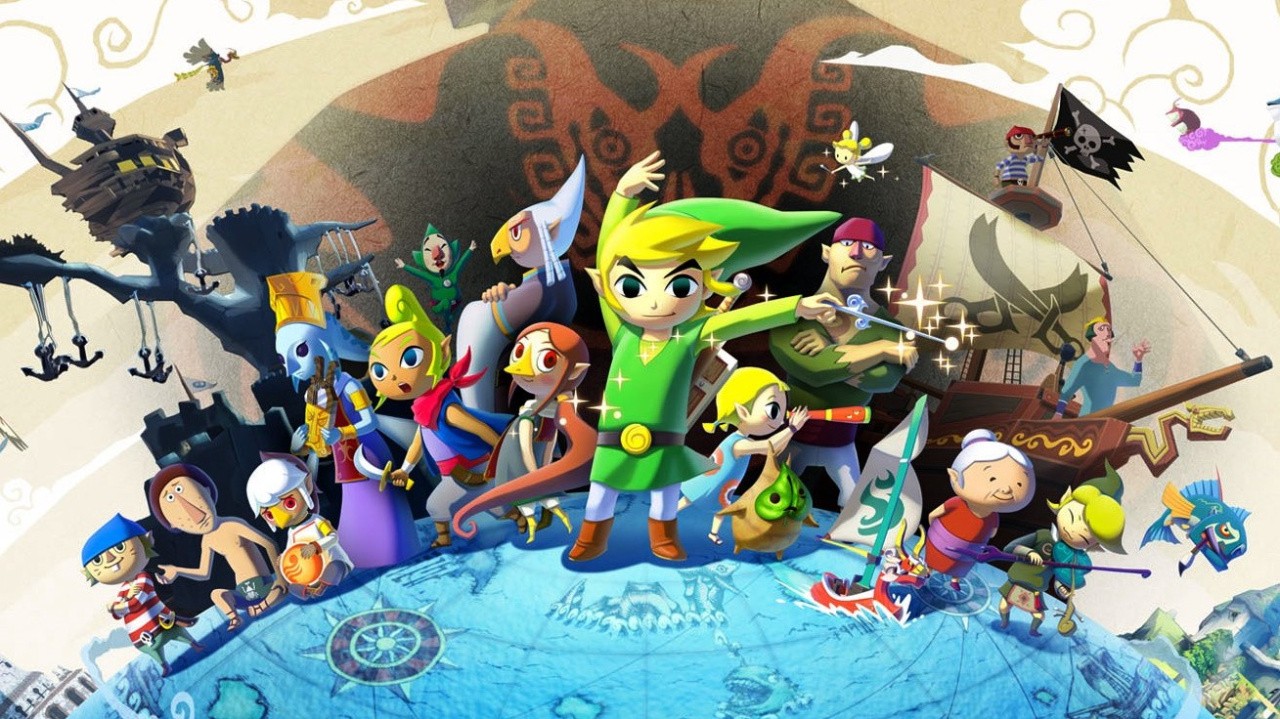
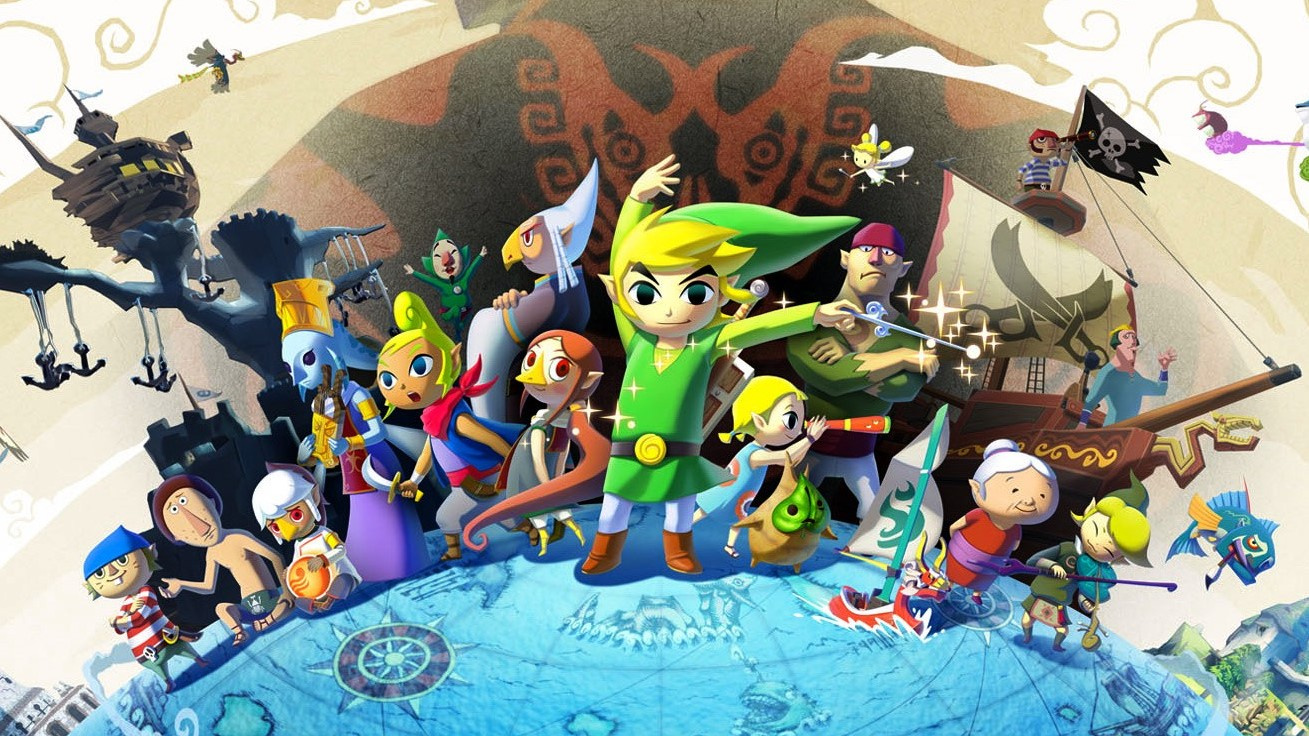
Turns Out Many Characters Shared One Body In Zelda: The Wind Waker
The Legend of Zelda: The Wind Waker got off to a rocky start with fans. The ‘Celda’ backlash may seem like a dim and distant memory now, but at the time many fans were furious that their beloved series was being twisted and turned in a way they didn’t agree with. Fancy that, eh?
Fortunately, Nintendo stuck to its guns and Wind Waker’s timeless art style holds up in a way many other games of the era struggle to in these Ultra High Definition times. Even its harshest critics have calmed down a little and come around to its clean and simple animated style.
We got a chance to enjoy the game all over again on Wii U, but Twitter user @JasperRLZ has made an interesting observation regarding the game’s oddball cast that passed us by in the seventeen years since the game’s initial release:
Look closely and you’ll see that many of the game’s characters share identical body models, with only head and clothes textures changing.
It’s not something we’d have ever noticed without having it pointed out, but now it’s the only thing we’ll be able to think about when we next fire up the GameCube classic. It goes so show just how clever and economical Nintendo’s development team was when called upon to save memory on those cute little GameCube discs.
Had you ever noticed this before? Can you think of any other examples of body-swapping (or, more accurately, head-swapping) models in other games? Let us know in the comments below.