Free Play Days: NBA 2K19 and Tom Clancy’s Rainbow Six Siege
Here’s this weekend’s all-star lineup for Free Play Days! Xbox Live Gold members can celebrate all-star weekend with NBA 2K19 and play Tom Clancy’s Rainbow Six Siege in-between matches of the Six Invitational for free. The Free Play Days event begins Thursday, February 14 at 12:01 a.m. PT and runs through to Sunday, February 17 at 11:59 p.m. PT. You can find and install the games here. To download on console, click on the Gold member area on the home dashboard on your Xbox One.
The games are also available at a discount (see below) so you can continue playing while keeping your Gamerscore and achievements earned in-game.
NBA 2K19
Whether you’re on Team Giannis or Team LeBron, make the most of NBA All-Star Weekend and hit the court! In this critically acclaimed basketball video game, unlock special moves with the new Takeover feature, create your very own MyPLAYER card in MyTEAM, or run the neighborhood with live events on the block. With an all-new narrative in MyCAREER, fans can go from neighborhood legend to global phenomenon and live out their NBA dreams.
Tom Clancy’s Rainbow Six Siege
Jump in to this intense, tactical shooter where explosive action awaits you! Work as a team and put your strategies and tactics to work against the opposition. In combat, you will have access to an array of weapons, gadgets, and operators to defeat your enemies and their surrounding environment. With Rainbow Six Siege, expect an evolving experience with new content, maps, balancing changes, and more.
This weekend, you can also tune in to Mixer to watch the third annual Six Invitational, the most prestigious tournament in the Siege esports calendar, streaming live from Montreal at https://mixer.com/rainbow6. Programming highlights include:
The Grand Final of the tournament on Sunday
Live broadcast premiere of the Rainbow Six esports documentary: “To Win It All: The Road to the Six Invitational”
Full reveal of Operation Burnt Horizon, the next season of new content set in Australia
Don’t miss out on this weekend’s great games! Learn more about Free Play Days here and stay tuned to Xbox Wire to find out about future Free Play Days and all the latest news on Xbox.
STEINS;GATE ELITE follows a rag-tag band of tech-savvy young students who discover the means of changing the past via e-mail using a modified microwave.
New Overwatch Paris Map And Update Now Live On PS4, Xbox One, And PC
Paris, the newest map for Blizzard's popular hero shooter, Overwatch, is now live across PS4, Xbox One, and PC. The map arrives as part of a new patch that also fixes numerous bugs and other issues in the game.
Paris is the fifth Assault map to hit the game. It's set in the titular French city and features narrow streets, corridors, and storefronts to funnel players into firefights. It also encompasses a variety of areas, most notably the Cabaret Luna, the Pâtisserie Galand, and the sprawling Maison Marat located in the heart of the city.
The Paris map made its debut in Overwatch earlier this month on the PC test servers, but this marks the first time it is available on all platforms. If you want to take a closer look at it before hopping in, you can watch us play a round on the new map in the video above.
In addition to Paris, the new Overwatch patch implements a long list of general and character-specific bug fixes across platforms. Among other things, Blizzard has patched out a bug that allowed Symmetra's teleporter to reach "unintended" areas, as well as one that prevented an enemy from being hit by Reinhardt's Earthshatter if they were pinned by his charge. You can find the full patch notes on Blizzard's website.
Overwatch's annual Lunar New Year event recently wrapped up on February 18, and as usual, it introduced a variety of seasonal skins. Blizzard also made some big buffs and nerfs to certain characters as part of that update, notably Brigitte and D.Va; the former's Rally was capped at a maximum duration of 30 seconds, while the latter's Defense Matrix cooldown was increased from 1 second to 2 seconds.
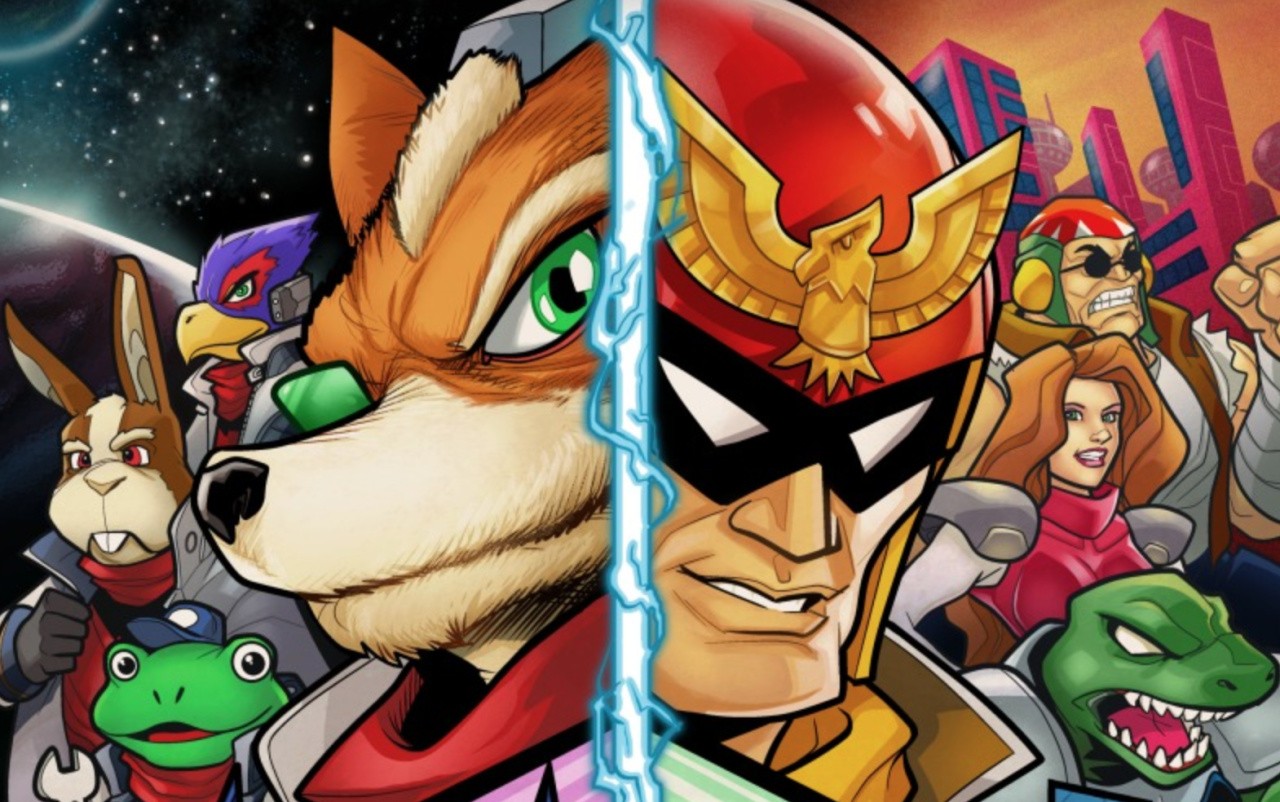
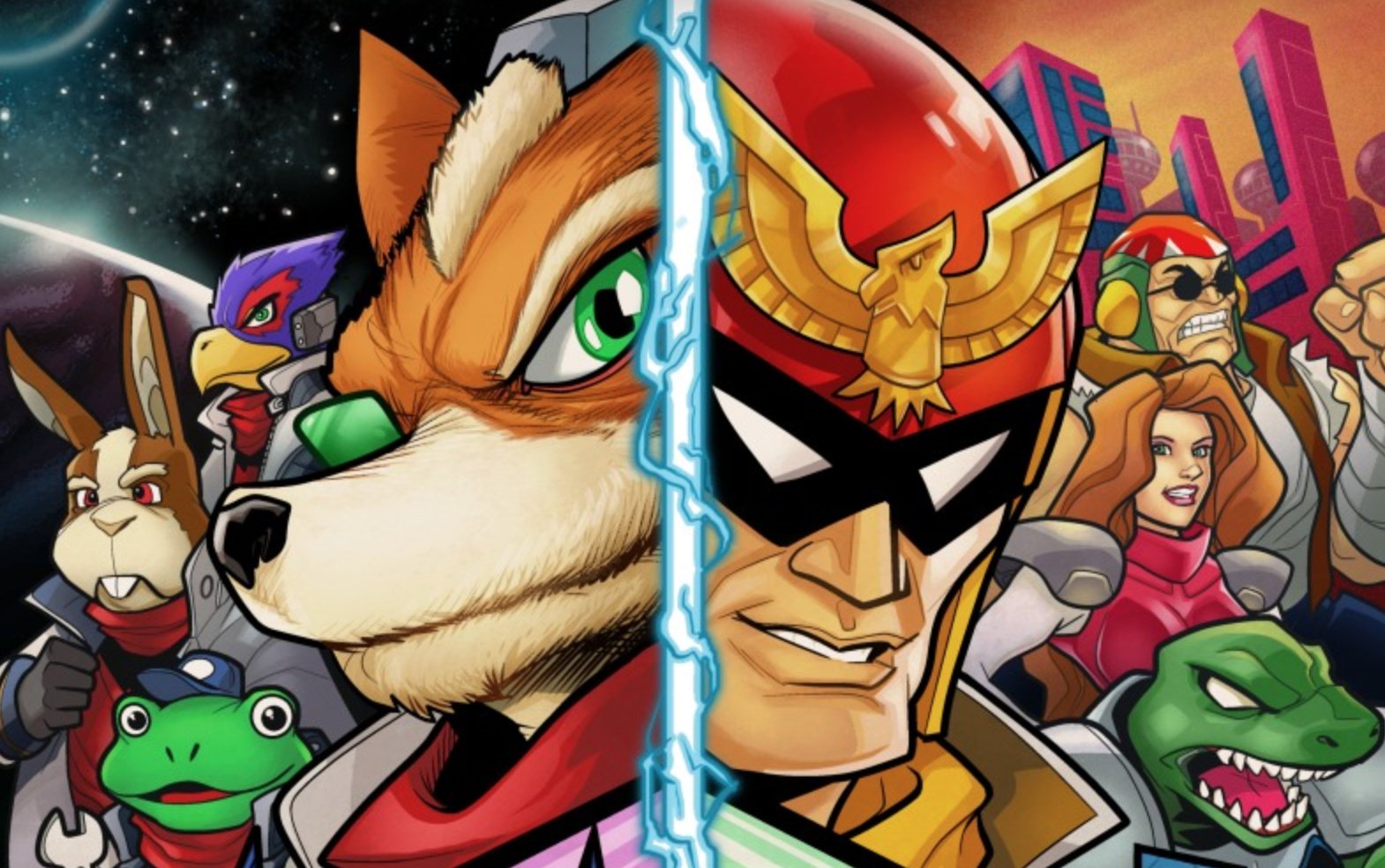
New Book Delves Into The History Of Star Fox And F-Zero
Star Fox and F-Zero. Hearing those two names – assuming you’re of a certain age – will probably force you to come out in fits of nostalgia, your mind flooded by memories of the good old days when the SNES and N64 were the hottest tickets in town.
Today, neither franchise really seems to be at the forefront of the Nintendo’s mind; sure, we had Star Fox Zero not so long ago and there are rumours of a racing game showcasing Fox and his buddies, but surely such an esteemed series deserves better – and as for being part of an (admittedly good) Ubisoft toys-to-life game?Tut. And don’t get us started on the state of the F-Zero series…
Before we get too angry, it’s worth pointing out that those lovely people over at Hardcore Gaming 101 have produced any of their excellent ‘Digest’ books which is focused on – you guessed – Star Fox and F-Zero.
This fourth HG101 Digest covers a lot of ground; it lists every game in both series, as well as the history of British developer Argonaut Software (which looks at titles like Starglider and the Game Boy title, X) and a study of similar on-rails shooters. It’s packed with screenshots, art and loads and loads of lovely, and comes with supplemental bonus features focusing on Castlevania fan games and anime, Wonder Boy: The Dragon’s Trap remake and 11 (more) best video games of all time. Phew!
Fancy picking up a copy? Then head over to Amazon and lay down some cash.
Please note that some of the links on this page are affiliate links. If you click them and make a purchase we may receive a small percentage of the sale which helps support the site. Please read our FTC Disclosure for more information.
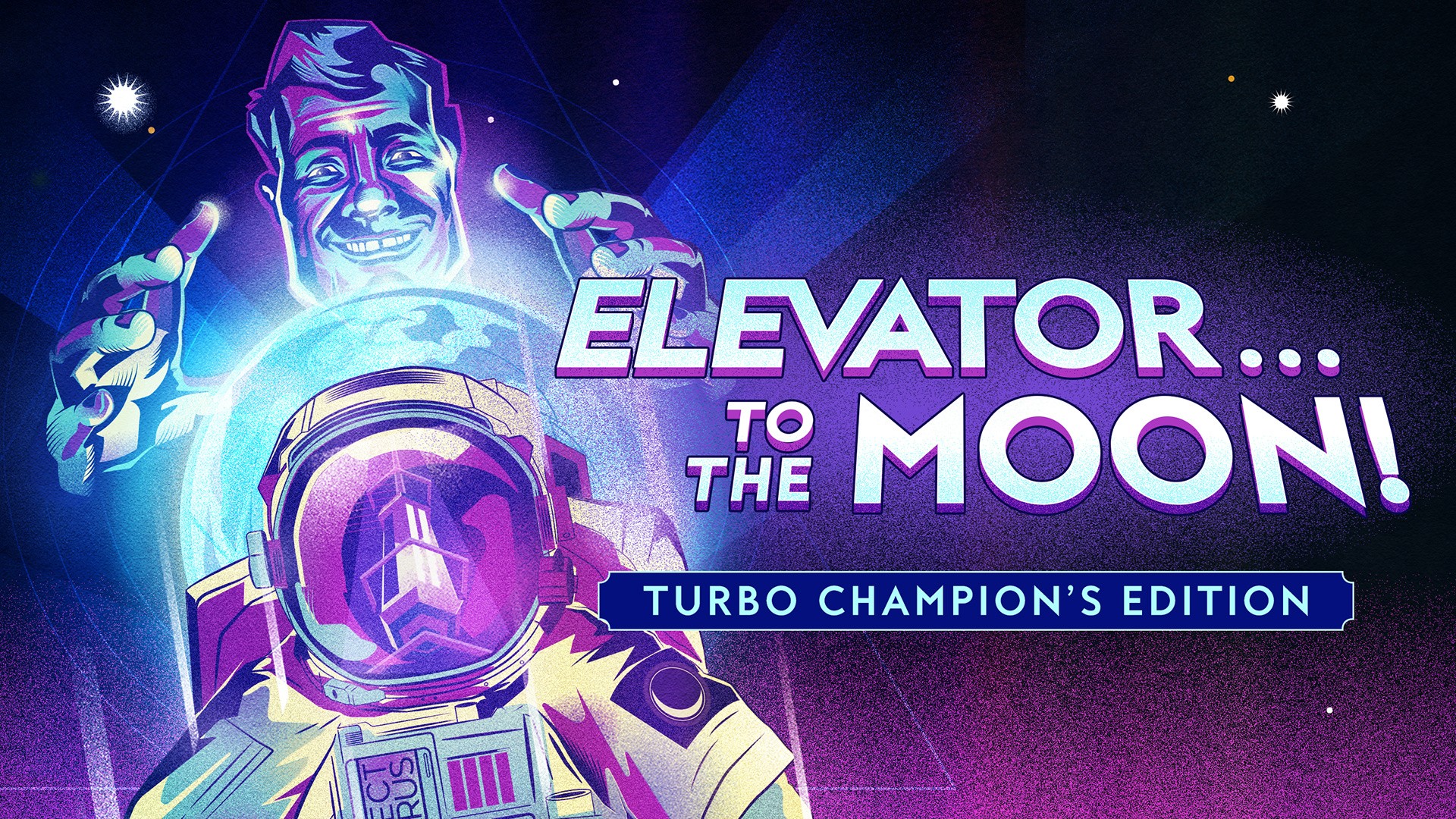
VR Game Elevator…to the Moon! Is Coming Soon To Switch
Previously released on VR platforms, Elevator…to the Moon! Turbo Champion’s Edition is a sci-fi comedy set in an elevator that – true to its title – goes to the moon, and it arrives this March on Switch courtesy of Roccat Game Studio and Arcade Distillery.
This elevator belongs to the ‘President of the World’, a particularly demanding individual who wishes for you to repair the malfunctioning contraption. Of course, it’s your choice whether you listen to the Arnold Schwarzenegger-soundalike or ignore his screaming; through the course of the game he’ll give you increasingly unreasonable orders which you’re free to follow or not.
Here are some more details from the blurb:
You are a space cadet, rudely commanded by the President of the World to “Liberate” a Moon Elevator, evoking the wrath of the world’s most powerful AI. Will you crack under pressure trying to hold this broken Space Elevator together?
Obey! The ridiculous demands of President of the World, Doug-Slater Roccmeier, solving head scratching puzzles or…
Disobey! And cause hilarious havoc, or find your own sweet spot. Each way of playing has its own advantages and outcomes as you navigate through a plot with more twists and turns than a twisty-turny thing! It’s up to you, intrepid elevator person, to blaze your own altitudinal path…to the moon!
The Switch edition of this VR original gets some new motion-based pointer controls, and a bonus mini-game, entitled ‘Bat Batty Bats’. Ahem. It looks to be a pretty surreal ride, and we dearly hope that we’re told to GET TO DA CHOPPER! at some point.
We’re intrigued to see how this VR experience translates to the handheld – with whispers that Nintendo are planning moves into the VR space, possibly via a low-tech Labo route, perhaps we’ll be seeing more VR originals coming to Switch in the not-to-distant future.
So, you’re trapped in a lift with only the President for company – what do you do? Let us know in the comments.
STMicroelectronics announced its first Cortex-A SoC and first Linux- and Android-driven processor. The STM32MP1 SoC intends to ease the transition for developers moving from its STM32 microprocessor unit (MCU) family to more complex embedded systems. Availability was a bit unclear, but it appears ST is sampling the SoCs at the very least.
Aimed at industrial, consumer, smart home, health, and wellness applications, the STM32MP1 features dual, 650MHz Cortex-A7 cores running a new “mainlined, open-sourced” OpenSTLinux distro with Yocto Project and OpenEmbedded underpinnings. There’s also a 209MHz Cortex-M4 chip with an FPU, MPU, and DSP instructions. The Cortex-M4 is supported by an enhanced version of ST’s STM32Cube development tools and supports the Cortex-A7 cores in addition to the M4 (see below).
Like most of NXP’s recent embedded SoCs, including the single- or -dual Cortex-A7 i.MX7 and its newer, Cortex-A53 i.MX8M and i.MX8M Mini, the STM32MP1 is a hybrid Cortex-A/M design intended in ST’s words to “perform fast processing and real-time tasks on a single chip.” Hybrid Cortex-A7/M4 SoCs are also available from Renesas, Marvell, and MediaTek, which has developed a custom-built MT3620 SoC as the hardware foundation for Microsoft’s Azure Sphere IoT framework.
As the market leader in MCUs, ST has made a larger leap from its comfort zone than these other semiconductor vendors. NXP is also a leading MCU vendor, but it’s been crafting Linux-powered Cortex-A SoCs since long before it changed it named from Freescale. The SM32MP1 launch continues a trend of MCU technology companies reaching out to the Linux community, such as Arm’s new Mbed Linux distro and Pelion IoT Platform, which orchestrates Cortex-M and Cortex-A devices under a single IoT platform.
Inside the STM32MP1
The STM32MP1 is equipped with 32KB instruction and data caches, as well as a 256KB L2 cache. ST also supplies an optional Vivante 3D GPU with support for OpenGL ES 2.0 and 24-bit parallel RGB displays at up to WXGA (1280×800) at 60fps.
The SoC supports a 2-lane MIPI-DSI interface running at 1Gbps and offers native support for Linux and application frameworks such as Android Qt and Crank Software’s Storyboard GUI. While the GPU is pretty run-of-the-mill for Cortex-A7 SoCs it’s a giant leap from the perspective of MCU developers trying to bring up modern HMI displays.
Three SoC models are available: one with 3D GPU, MIPI-DSI, and 2x CAN FD interfaces, as well as one with 2x CAN FD only and one without the GPU and CAN I/O.
The STM32MP1 is touted for its rolling 10-year longevity support and heterogeneous architecture, which lets developers halt the Cortex-A7 and run only on the Cortex-M4 to reduce power consumption by 25 percent. From this mode, “going to Standby further cuts power by 2.5k times — while still supporting the resumption of Linux execution in 1 to 3 seconds, depending on the application,” says ST. The SoC includes a PMIC and other power circuitry such as buck and boost converters.
For security, the SoC provides Arm TrustZone, cryptography, hash, secure boot, anti-tamper pins, and a real-time clock. RAM support includes 32/16-bit, 533MHz DDR3, DDR3L, LPDDR2, LPDDR3. Flash support includes SD, eMMC, NAND, and NOR.
Peripherals include Cortex-A7 linked GbE, 3x USB 2.0, I2C, and multiple UART and SPI links. Analog I/O connected to the Cortex-M4 include 2x 16-bit ADCs, 2x 12-bit DACs, 29x timers, 3x watchdogs, LDOs, and up to 176 GPIOs.
OpenSTLinux, STM32Cube, and starter kits
The new OpenSTLinux distribution “has already been reviewed and accepted by the “Linux community: Linux Foundation, Yocto project, and Linaro,” says ST. The Linux BSP includes mainline kernel, drivers, boot chain, and Linaro’s OP-TEE (Trusted Execution Environment) security stack. It also includes Wayland/Weston, Gstreamer, and ALSA libraries.
Three Linux software development packages are available: a quick Starter package with STM32CubeMP1 samples; a Dev package with a Yocto Project SDK that lets you add your own Linux code; and an OpenEmbedded based Distrib package that also lets you create your own OpenSTLinux-based Linux distro. ST has collaborated with Timesys on the Linux BSPs and with Witekio to port Android to STM32MP1.
STM32 developers can “easily find their marks” by using the familiar STM32Cube toolset to control both the Cortex-M4 and Cortex-A7 chips. The toolset includes GCC-based STM32CubeProgrammer and STM32CubeMX IDEs, which “include the DRAM interface tuning tool for easy configuration of the DRAM sub-system,” says ST.
Finally, ST is supporting its chip with a four development boards: the entry level STM32MP157A-DK1 and STM32MP157C-EV1 and the higher end STM32MP157A-EV1 and STM32MP157C-EV1. All the boards offer GPIO connectors for the Raspberry Pi and Arduino Uno V3.
The DK1/DK2 boards are equipped with 4GB DDR3L, as well as USB Type-C, USB Type-A OTG, HDMI, and MIPI-DSI. You also get GbE and WiFi/Bluetooth, and a 4-inch, VGA capacitive touch panel, among other features.
The more advanced A-EV1 and C-EV1 boards support up to 8GB DDR3L, 32GB eMMCv5.0. a microSD slot, and SPI and NAND flash. They provide most of the features of the DK boards, as well as CAN, camera support, SAI, SPDIF, digital mics, analog audio, and much more. They also supply 4x USB host ports and a micro-USB port. A 5.5-inch 720×1280 touchscreen is available.
Posted by: xSicKxBot - 02-21-2019, 04:02 AM - Forum: Lounge
- No Replies
Ghost Recon: Wildlands Special Operation 4 Update Coming Next Week
Ubisoft has announced the next Special Operation is coming to Ghost Recon: Wildlands on February 27. Special Operation 4 will introduce new PvP and PvE content, as well as several community-requested features.
A brand-new PvE mode is included in Special Operation 4, although Ubisoft hasn't yet revealed exact details for it other than that it would "test your endurance." In a blog post, the developer did say that completing the mode for the first time will unlock a new outfit, and that more information would be shared "soon." On the PvP side of things, Ghost War multiplayer will be getting a new class in Special Operation 4, as well as two additional maps. The new Ghost War class will be exclusive to Year 2 Pass holders for a week, before going live for everyone else on March 6.
Several community-requested features will go live in Special Operation 4 as well. You'll now be able to change the time of day in the solo campaign. Both Battle and Prestige Crates have been updated, with all voice lines and several emotes moving from the former to the latter. Prestige Crates will also drop higher rarity items more often. A new browser will allow you to look through custom matches based on your selected criteria. Challenges will also have increased Prestige Credit rewards, and two new PvP events are being added to the pool.
In our Ghost Recon: Wildlands review, Miguel Concepcion gave the game a 7/10, writing, "As only the second open world game in the Clancyverse, Ghost Recon: Wildlands is a middlingly safe tactical shooter and a slightly wasted opportunity given the ambitious scope of its seemingly boundless map. While its main strength is its mission diversity, it doesn’t take long to lose the motivation after reaching El Sueno's doorstep. Even with a foursome of highly trained friends, Wildlands eventually reveals its diminishing returns. The feeling of positive immediacy and dopamine hits begin to wane sooner than you expected from a game with such a large and diverse world."
Hard West, A Gunspinning XCOM-Alike Is Coming To Switch Very Soon
There’s no shortage of cowboy simulators for fans of the Old West, but Forever Entertainment’s upcoming Switch version of Hard West will let players enjoy barroom brawls with a shot of turn-based XCOM-style strategy.
From the screens and the trailer, it bears a passing resemblance to Wasteland 2, a game which struggled technically on Switch, but the developers promise that performance won’t be a problem for Hard West. Forever has remastered Creative Forge’s PC version for the handheld and it reportedly runs at 1080p in docked mode, too.
Here’s a little more flavour from their official description of the ‘Weird West’:
During journey through the world where the Wild West and the world of fantasy connect, the player will encounter events and choices that will determine his fate. In 8 scenarios consisting of 40 fights, you will meet a colorful cast of playable characters whose fates are intimately intertwined with yours.
During the fight, the player has an access to special skills in the form of cards collected during journey. In addition, the cards can be combined into powerful combinations that allow additional options during battles.
One of the unique features in Hard West is “Luck”, which introduces an additional, exciting element during skirmishes with opponents. “Luck of the Draw” is more than just a pure probability – in Hard West Luck guarantees an exciting and demanding fight, significantly affecting the chances of a shot or miss.
The Switch version comes with the Scares of Freedom DLC, making it cheaper than the same package on Steam at the time of writing. During the first two weeks of release there’ll be a 10% discount, plus 33% off for anybody who’s got another Forever Entertainment game in their Switch library. We’re not sure if those discounts accumulate, but either way it’s a sizeable chunk off the full price.
With ‘Mostly Positive’ user reviews on Steam, this may well be one to watch out for. It’s coming on 7th March for €19,99/$19.99 with pre-orders available from 28th February, so if you like the look of this turn-based West-em-up or enjoyed it on PC, you’ve got something to look forward to.
Played the original game? How does it compare to XCOM? Let us know below…
Rumour: Pokémon News Coming Soon According To Leaker
It’s not even a week since the February Nintendo Direct dropped and finally kickstarted 2019 for Nintendo fans. Of course, the world of video games is fast-moving, and we all knew it wouldn’t be long before the rumour mill began creaking and moving again.
Our friends over at NintendoSoup have noticed that @muguwus, a Twitter user who predicted a whole bunch of last week’s Direct has posted this enigmatic missive:
Not the loquacious sort, it seems. While truckloads of salt are required with most things found on the internet, Pokémon Day – the anniversary of the series’ launch in Japan back in 1996 – is coming up on 27th February. This mysterious tipster also accurately called a long list of games from the Direct, almost as if they’d seen the video before the broadcast:
Whether this rumour turns out to have substance or not, the absence of news in the last Direct coupled with the upcoming anniversary means it doesn’t take a Sherlock to foresee a Pokémon Switch announcement on the horizon.
Are you getting impatient for more details on Pokémon Switch? Would you be disappointed if the only news is a Pikachu with a different hat in Pokémon Go? Drop us a line below…
Posted by: xSicKxBot - 02-21-2019, 04:02 AM - Forum: Windows
- No Replies
Daimler AG launches a new cloud platform for data-driven innovation
Daimler AG is both a world leader in commercial vehicles and premium cars, and a pioneer in innovative mobility. The work requires processing enormous amounts of confidential, business-critical data, but until recently, the automaker had a problem. Its on-premise data platform, built five years ago, lacked the flexibility and scalability needed for big data projects, while Daimler’s strict security standards – more rigorous than what’s legally required – prevented the company from moving data into the cloud.
To solve the problem, Daimler launched eXtollo, the company’s new cloud platform for big data and advanced analytics. Developed with Microsoft, the platform uses Azure Key Vault, a service that safeguards encryption keys and secrets, including certificates, connection strings and passwords.
Guido Vetter, head of Daimler’s Corporate Center of Excellence Advanced Analytics & Big Data.
The solution paved the way for Daimler to migrate its data lake to the cloud, with eXtollo now serving internal business units around the world, including production, finance, sales, marketing and research. Hosted on Azure, the platform also enables more artificial intelligence (AI) projects that help Daimler accelerate innovation, better serve its customers and shape the future of mobility.
To learn more about eXtollo and Daimler’s work with big data, Transform chatted with Guido Vetter, head of Daimler’s Corporate Center of Excellence Advanced Analytics & Big Data.
TRANSFORM: What challenges did you have with your on-premise data platform?
VETTER: We had a monolithic environment and limited capacity. The requests and demands for service from Daimler’s business units were so massive that we were not able to scale the calculation power to what we needed. We had our units competing for calculation resources and we had to schedule and plan who was calculating when. But with Azure, the big advantage is we scale up, we compute, we pay, we scale down.
TRANSFORM: How did Azure Key Vault help?
VETTER: Azure Key Vault was the lever for us to move into the cloud. The biggest challenge for us internally is that we process confidential data. We don’t want this data to leak anywhere. But with “bring your own key” in Azure Key Vault, we are in control of the data and encryption material. Nobody but us can use the data. Combined with services like Azure Active Directory, it gives us all the data protection and security we need to make sure everything is to our highest standards of security.
TRANSFORM: How long did it take you to develop eXtollo?
VETTER: We launched the idea of eXtollo in workshops with Microsoft in January 2018. Then we went live for Europe in April. It was a three-month exercise and a lot of the time we spent validating concepts. We went live in the U.S. in October and later in Asia. So, we have in nine months of almost-global coverage. It was lightning-fast. Cloud is really bringing us the speed and the flexibility to do that.
TRANSFORM: What are some use cases for eXtollo?
VETTER: We do a lot of forecasting cases. In the past, it took days to calculate forecasts in the finance or production areas, which the algorithms can now do in minutes and seconds. We also do driving behavior analytics and forecasting with AI on what a customer potentially wants to buy and that gives us a better portfolio of sales.
The best use case scenario is error code forecasting for the vehicle. When you take your car to the workshop for a repair, the mechanic can download an error code log from the car and immediately see how to solve the problem. The computer program is based on a machine-learning algorithm that analyzes historical, diagnostic data of cars to give targeted suggestions for faster, better service.
The cloud really enables the potential of AI for all levels of the organization. That’s one of the advantages of Azure – we have all the tools we need, whether we use AI algorithms or normal advanced analytics algorithms.