Assetto Corsa Competizione is Racing to Xbox One This June
Today we
bring the news so many sim racers have been waiting for! We’re thrilled to
announce that Assetto Corsa Competizione, the Official GT World Challenge
game, will launch on Xbox One June 23.
The road to
get here has been incredibly exciting for everyone at 505 Games and Kunos Simulazioni
and we can’t wait to bring ACC to Xbox One later this year. In the
meantime, let me tell you more about what to expect…
The Official
Gt Challenge Series Game
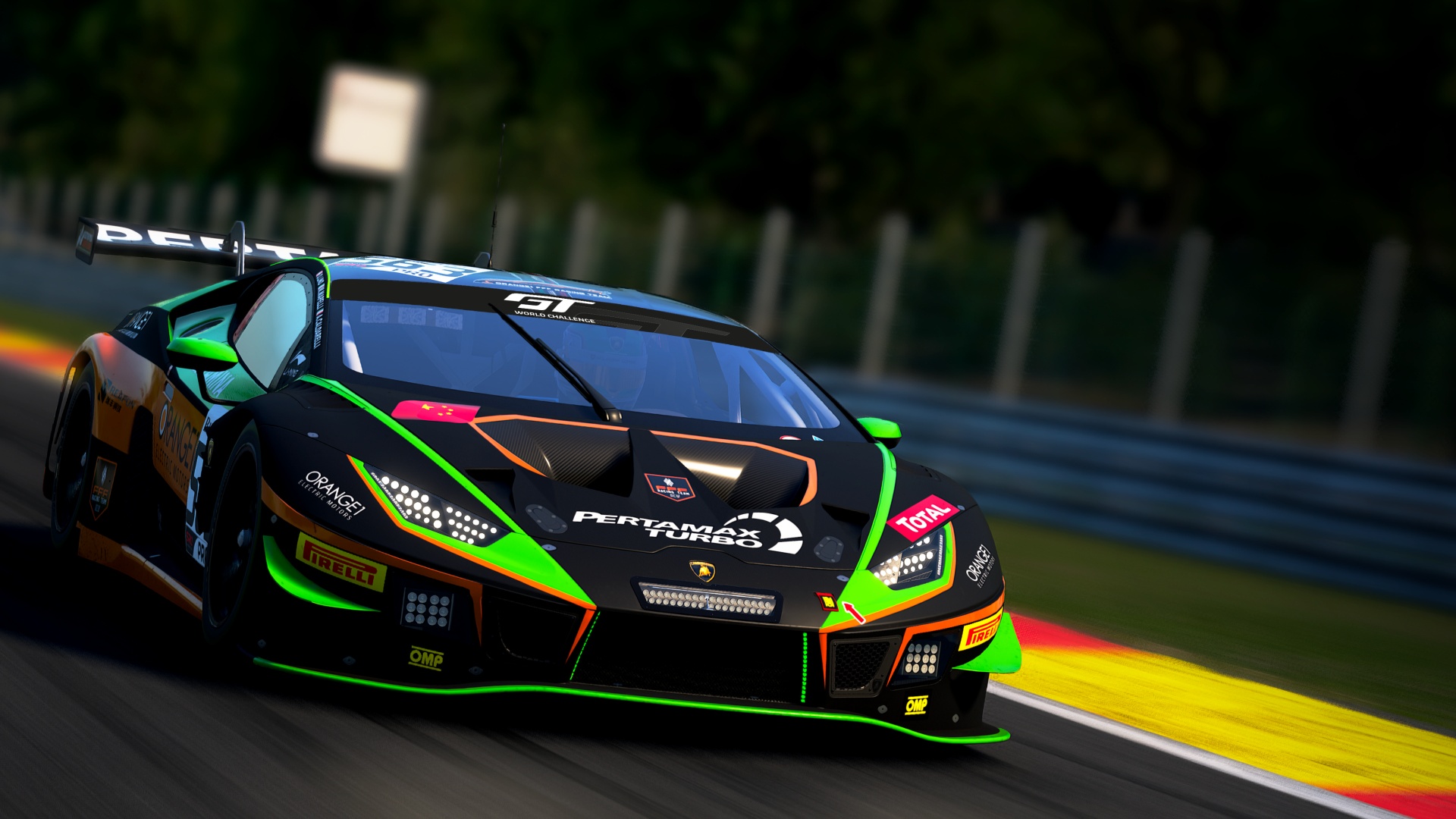
As mentioned, Assetto Corsa Competizione is the Official GT World Challenge game,
giving players the opportunity to experience the real atmosphere of the GT3
championship with manufacturers such as Ferrari, Mercedes, McLaren, Lamborghini,
and Porsche. Featuring official cars, tracks, drivers and teams, our players
will be able to jump into Sprint and Endurance races, as well as the iconic Spa
24hr race, in both single and multiplayer modes.
Laserscan
Technology
Assetto Corsa
Competizione features
some of the most well-known circuits on the planet, brought to life through
Laserscan technology. This tech enables our dev team to recreate circuits with
the highest level of accuracy, so expect to feel every bump and kerb on track
that you would in the cockpit of a real car. Those that know Kunos Simulazioni
know that this dev team is all about attention to detail, so tracks such as
Silverstone, Monza, Spa-Francorchamps and the Nürburgring are going to be real fun
to race on.
Realism
ACC takes full advantage of Unreal Engine 4,
bringing day and night races, photorealistic weather conditions and graphics,
motion capture animations, improved tyre and aerodynamic models and more to
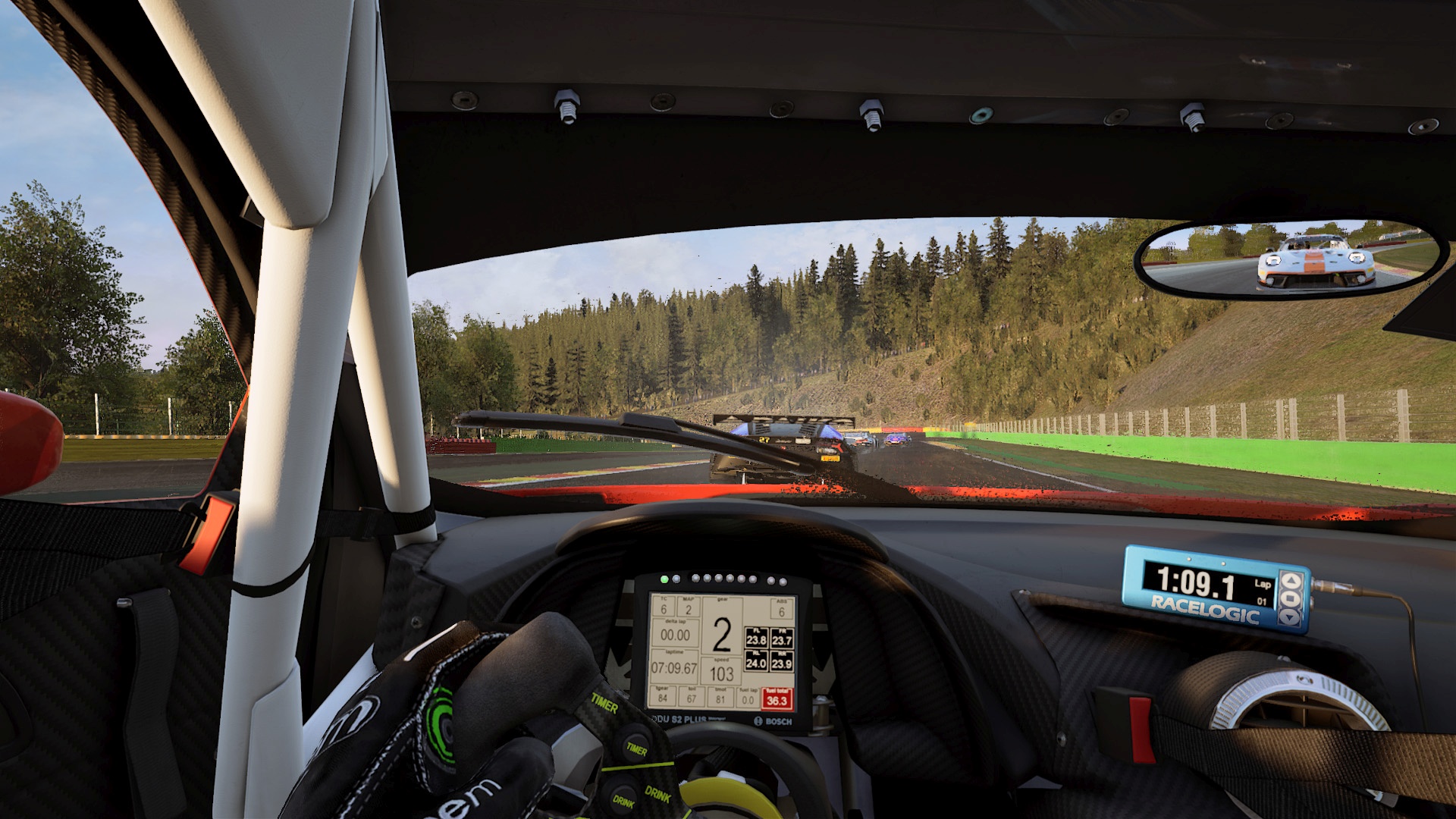
game. The level of immersion you’ll experience from a driver’s perspective is
incredible. In fact, we’ve already seen GT World Challenge drivers jump on the
PC edition of ACC, which is surreal to see. If anything, this is solid
proof that Kunos developed something very close to the real-life experience.
Intercontinental
GT Pack DLC
Players who
decide to pre-order Assetto Corsa Competizione will receive free access
to the Intercontinental GT Pack DLC at launch, which features four of the most
iconic international circuits from around the world: Kyalami Grand Prix Circuit
(South Africa), Suzuka Circuit (Japan), Weathertech Raceway Laguna Seca (United
States), and Mount Panorama Circuit (New South Wales Australia). What’s more,
this DLC will come with over 45 new car liveries, 30 new teams and 50 new
drivers, along with all-new game modes from the Intercontinental GT Challenge,
powered by Pirelli. (There’s a lot to be excited about here!)
For those who
don’t want to pre-order, don’t worry! The Intercontinental GT Pack comes to
Xbox One this Summer as a standalone paid DLC.
Race to The
Finish Line
Over the
coming weeks, we’ll be giving our community more info on the console edition of
Assetto Corsa Competizione over on our official AC and 505 Games Twitter channels. Today
has been super exciting for the team and as a Community Manager, it’s awesome
to finally be able to talk about today’s announcement. We’ve seen the console
question asked so many times so it’s nice to finally be able to say yes, ACC
is coming to Xbox One June 23! See you trackside!
Alt.Ctrl.GDC is dedicated to games that use alternative control schemes and interactions. Gamasutra will be talking to the developers of each of the games that have been selected for the showcase
Plug-Pluggives players a controller with pieces they can attach, allowing them to use the varied parts to create a custom cute tank to play with.
Gamasutra spoke with Matthieu Chapeland, lead developer of Plug-Plug, to talk about the challenges that came from designing a controller players could custom-assemble, how to create the right playful mood with the game’s visual style, and making experiences that encourage players to be creative.
My name is Matthieu Chapeland. I am the game designer and lead developer for Plug-Plug. I came up with the concept for Plug-Plug with François Iakouchev, who did all the artwork for the game. Our team is made up of François Iakouchev, a game designer/game artist, Thomas Giuliani, a game designer, Adrien Six, our product designer, Florian Hochez, who created some music for the game, and me, who worked as a game designer/programmer.
Our team is primarily composed of students from Rubika Supinfogame, a French school for game development. With this being our third year in this school, we’ve worked on multiple different projects and games. I’ve personally created two board games with François Iakouchev (Vostok & L’Odyssée des rêves), that are on their way to being published. I’ve also developed a 3D platformer with a team of five students in 2018-2019 called Haut Comme Trois Pommes. I’ve worked on multiple small and personal projects over the years, and have started working on a new 2D platform fighting game with François Iakouchev.
With Plug-Plug, each player can personalize a controllable modular robot by plugging up to three parts into their controller. There are multiple unique parts, each offering an original ability/manner of interaction. Using their unique configurations, players can face off in a variety of game modes like Sumo Wrestling, Basketball, or Volleyball.
While brainstorming for the creation of Plug-Plug, we really fell in love with the childlike fun of creating your own robot and using it to fight your friends. Following that train of thought, we knew that we wanted the controller to be what the player would directly be assembling, really keeping this aspect of childlike play. I guess that the robots being cute was a natural outcome of that core concept and our dynamic as a team.
To create Plug-Plug, we primarily used Unity 2D and the Arduino IDE. We used Photoshop to create the assets and Illustrator to create the blueprints for laser cutting. For the music, Florian Hochez used FL Studio.
Being students, we don’t have access to a lot of resources for the physical parts, so we aimed for efficiency. The controllers are made of laser cut wood. The controller houses an Arduino Uno board and a LOT of wires. We also used small but powerful magnets to make the connections between the parts, as well as to make the controller feel more satisfying.
Really early on in development, we knew that each part would need to be completely unique and offer really fun ways to interact with each other. We didn’t want to stop ourselves when an idea seemed too wacky or strange. The fact that some parts are a bit weird is key to letting the players unleash their creativity. It’s really satisfying as a developer when a player takes your game and flips it on its head by trying new, different, and wild combinations that you would never have thought of. The plugs really give an opportunity for anyone to express themselves and create their own gameplay experience.
The aim was: simple but stimulating. The fact that Plug-Plug can sometimes be a bit unwieldy, depending on the plugs used, makes it really hard to have objectives that are too challenging or complicated for the players. We really wanted the mini-games to be as simple and straightforward as possible. Often, adding a simple objective that pits two players against each other, is enough to have them be fully engaged in the game when you factor in the meta game of choosing your combinations, trying to control your creation, and having an opponent that uses a completely different move set.
But we’re still thinking of new game ideas to implement Plug-Plug in. Our latest idea was to create simple co-op puzzle platforming levels. With Plug-Plug we really just created a control scheme – in what game we choose to use it in, it is completely up to our imagination.
Personally, this was my very first time using Arduino, and learning how to make it communicate efficiently with Unity was a bit of a challenge. The documentation and support for Arduino to Unity communication exists, but isn’t great. A lot of tinkering and replacement code had to be done to have everything work without any latency or data loss.
Another problem that we came across was how to recognize the parts that had been plugged in. I really wanted to keep it as simple as possible, as it was my first time doing any of this, so we came up with a really cool way of using the digital pins as binary code to identify the parts. Each plug type has a unique 3 pin code that differentiates it from the others. This simple system, combined with the specific analog pins connected to each side of the controller, lets Unity know exactly what part is plugged where at any given time.
Plug-Plug’s art style directly stems from the core intention of childlike fun. Taking inspiration from games like Kirby and Snipperclips, the aim was to convey the feeling of silliness and chaos that the gameplay provides, while still having the game look very accessible.
We started this project with simple tanks in mind, but as soon as the idea of adding faces to them came up, the whole theme of the game really came together. Having the robots react to everything that happens around them really adds to the experience of watching the game being played. We really wanted the game to be entertaining to watch, so we spent a lot of time making the abilities look as fun as possible. The tentacle, for example, took me a lot of time to get right, but it was definitely worth it.
It’s all meant to come together to make the game look like pure unadulterated fun, especially when combined with the silliness of watching the players fumble around with their parts, hectically trying to to switch up their tactics. People who haven’t tried the game yet can very easily imagine what parts they would use, and what play style they would go for, just by looking at others play.
The modular nature of the controller really fascinated us from the very beginning. It’s a concept that hasn’t really been commercially done in a similar fashion before, or at least not that we’re aware of, so the Alt.Ctrl competition was a great opportunity for us to really try to make it work.
Something that really fascinates me as a developer is the way that players approach a new experience. How do they take advantage of a provided system? What do they try first? How do they acclimate themselves to a new mode of interaction? The modular controller really lets every player express themselves in this way, even though they might not realize it.
Video Game Deep Cuts: Animal Crossing, Animal Crossing, DOOM
The following blog post, unless otherwise noted, was written by a member of Gamasutras community. The thoughts and opinions expressed are those of the writer and not Gamasutra or its parent company.
[Video Game Deep Cuts is a weekly newsletter from video game industry ‘watcher’ Simon Carless (GDC, Gamasutra co-runner, No More Robots advisor), rounding up the best longread & standout articles & videos about games, every weekend.
The latest highlights include plenty of Animal Crossing neatness (reviews, franchise overviews, code recreations of villager dialog), as well as DOOM Eternal (sorry, I’m shouting), Roundgard, death loops, Tony Hawk & conspiracy theories, social distancing & games, and lots, lots more besides.
For those reading this in newsletter form – this is likely the last time this newsletter will be sent out via TinyLetter! So look out for a new newsletter host for it in the near future, as well as some potential new formats & even an optional paid sub that will get you extra GOODNESS. More on this very soon…
2020 Independent Games Festival & Game Developers Choice Awards(GDC / YouTube – VIDEO) “Enjoy this (pre-recorded) broadcast of the 2020 Independent Games Festival & Game Developers Choice Awards! [SIMON’S NOTE: although GDC couldn’t happen, the awards still went on in virtual form, even including virtual acceptance speeches! Thanks to everyone who made this possible, especially master behind-the-scenes wrangler Sandesh & the hosts for their swift adaptation. And bonus: Day Of The Devs: GDC Edition Direct with Greg Rice & Tim Schafer is pretty darn good.]”
Animal Crossing: New Horizons is a chill, charming life sim that puts you in control(Andrew Webster / The Verge – ARTICLE) “Animal Crossing has always been a slow burn. It’s not the kind of game you marathon for hours at a time. Instead, its joys reveal themselves over days, weeks, and months. It’s a quirk of the premise: Animal Crossing is a laid-back life simulator that takes place in real time, forcing you to wait for things to happen. This also makes it an acquired taste.”
Tales From Discoverabilityland: March 2020(Simon Carless / Game Discoverability Now! – ARTICLE) “As you may recall, I’ve been a fan of Steam’s discoverability advances in recent months. They’ve been rolling out a number of their Steam Labs experiments into the actual full Steam interface/website. The latest of these is the Steam interactive recommender, which – reminder, “uses a machine learning model…”
Can machine learning revolutionise game development? Stadia thinks it can(Chris Wallace / MCV Develop – ARTICLE) “Google has taken this time-saving philosophy [of the Stadia] and applied it to game development itself – by experimenting with machine learning technology. And this work is touching on elements as disparate as content creation, balance testing and language-based interaction. [SIMON’S NOTE: Google’s spending a lot of $ on interesting R&D here – will be interesting to see if it pays off in the long run.]”
What Online Multiplayer Is Like For Someone Who Doesn’t Play Games(Razbuten / YouTube – VIDEO) “In this episode of Gaming For A Non-Gamer, I tossed my wife into the wide world of online multiplayer. It went about as well as you guessed it would. This is what online multiplayer is like for someone who doesn’t play games.”
How Prince of Persia slew the Apple II’s memory limitations(Lee Hutchinson / Ars Technica – ARTICLE/VIDEO) “Mechner’s game had a long road from development to the screen, but what I learned from our interview with the man is just how much the Apple II’s memory limitations shaped the game’s final form—even though none of those limitations applied to the platform on which I (and the majority of players, going by sales numbers) first experienced PoP.”
How a would-be priest explores the horror of God in videogames(Edwin Evans-Thirlwell – RockPaperShotgun – ARTICLE) “Part visual novel and part collection of footnotes, The Exegesis unfolds from multiple vantage points: an inquisitor, following up hints of an impending apocalypse; the novel’s ostensible author, who has provided a commentary that is at odds with the text; the author’s friend, trying to piece everything together; and Yan himself, at once creator and observer.”
The History Of Adventure(Chris Klimas / MICA Game Lab / YouTube – VIDEO) “Chris Is a Baltimore-based web developer, game designer, and writer. He created Twine and now works on it with a group of really smart people all over the world, he finds the intersection of words and interactivity irresistible. We are also lucky enough to have Chris teach Game Design and Interactive Fiction classes here at MICA. [SIMON’S NOTE: excellent lecture on the history of (Colossal Cave) Adventure.]”
How Mick West Went From Making Tony Hawk’s Pro Skater to Debunking Conspiracy Theories(Blake Hester / USGamer – ARTICLE) “It took West a long time to get from his career in games to his current career debunking conspiracy theories. But as far as West is concerned, his two career paths aren’t as dissimilar as they may seem on the surface. In his opinion, he may not be where he is now without that background in programming, testing, and debugging video games. And it’s only because of his work in the video game industry that he’s able to do the deep-dive analysis on conspiracies he’s now known for.”
The Social Distancer’s Guide to Gaming(Gita Jackson / VICE – ARTICLE) “So you’re stuck inside, bored, and have decided to play some video games. I’m here to help you on that journey. Maybe it’s your first time playing games. Maybe you’re coming back from a long break. Maybe your friends bullied you into getting Apex Legends because you’re probably not going to see them for a month.”
Inside PlayStation 5: the specs and the tech that deliver Sony’s next-gen vision(Richard Leadbetter / Digital Foundry – ARTICLE) “What’s exciting about this presentation is that Sony presents a vision for next-gen that recaptures some of the pioneering spirit of its early consoles by delivering state-of-the-art, exotic custom silicon with a razor-sharp focus on taking the gaming experience to the next level. But at the same time, the design embraces the developer-friendly ethos that proved so successful with PlayStation 4.”
Baer Plays Roundguard(BaerTaffy / YouTube – VIDEO) “Baer plays Roundguard, an adorable Peggle-like roguelike with a Dicey Dungeons-esque story theme and cute characters. [SIMON’S NOTE: don’t link a lot of Let’s Plays here, but Baer is entertaining and goes deep on Roguelikes, so this one makes sense! Also, love the game, which is also on Apple Arcade – here’s The Verge’s review if ya missed it.]”
Magic: The Gathering and Keyforge creator Richard Garfield on 35 years of making the games he wants to play(Matt Jarvis / Dicebreaker – ARTICLE) “From a board game about leading a clan to rabbits to take over a fantasy land (Bunny Kingdom) to his reimagining of the trivia game (the recent Half Truth), Garfield’s games vary widely in theme and gameplay. The element that connects almost all of them is the designer’s continual effort to explore something new that interests him.”
Indie Game Dev: Death Loops(Derek Yu / Make Games With Derek – ARTICLE) “In this article, I will identify two traps that many indie game developers fall into that either prevent them from finishing their projects or extend the length of the development to a point where there is tremendous pressure for the game to succeed. I call these traps “death loops” because of the fatigue and burnout they can cause (and how easy it is to get stuck in them). The article will also offer some suggestions on how to break out of these loops.”
While the sports world falls silent, esports and streamers fill the void(Noah Smith / Washington Post – ARTICLE) “American stadiums have lain dormant for two weeks since the coronavirus silenced nearly all sporting events. But in the vacuum, competitions rooted in online arenas are filling the entertainment void in a world increasingly confined to digital environments.”
28 great GDC talks you can watch for free right now(Wes Fenlon / PC Gamer – ARTICLE) “But wait—GDC maintains a vault of recorded talks stretching back years, hundreds of which are available for free. I’ve sorted through them to pick out a boatload that will keep you entertained, and teach you a little something about games, in these strange times of self-isolation. From the archives, here are 28 great GDC talks, telling the behind the scenes stories of PC gaming.”
Animal Crossing: New Horizons – the video game where we can still be together(Sarah Maria Griffin / The Guardian – ARTICLE) “My first step into this softer life came when I was commuting more than two hours a day to college. My Nintendo DS was a comforting escape from the juddering trains and slow buses, and the tender world of Animal Crossing was the opposite of the heightened drama of being a teenager.”
ASCII art + permadeath: The history of roguelike games(Richard C. Moss / Ars Technica – ARTICLE) “Roguelike games have grown in popularity over the 40 years the genre has existed, even though they implement ideas that might seem anathema to popular gaming: extreme randomness, ASCII graphics, permadeath, enormous complexity, and more. Yet these days, you can just about sneeze and hit something that has at least been influenced by roguelikes.”
There’s Something Hiding in Petscop(Phillip Moyer / EGM Now – ARTICLE) “Something like Petscop couldn’t really have existed at any previous point in time. It’s a series of videos that, at first, appear to be just amateurish uploads of footage from an unreleased video game, complete with halting, unpracticed voiceovers by the player. It’s the kind of thing you might stumble across during a deep dive into YouTube, among the thousands of Let’s Plays and game analyses that get uploaded on a daily basis.”
Animal Crossing’s Dialogue(Mix & Jam / YouTube – VIDEO) “The villagers from Animal Crossing express a lot of their emotions through dialogue, and this is one of the main reasons why players create such big connections with them. I wanted to experiment and see if I could achieve a similar system, using Unity! [SIMON’S NOTE: All the source code is available for this too – super cool!]”
——————
[REMINDER: you can sign up to receive this newsletter every weekend at tinyletter.com/vgdeepcuts – we crosspost to Gamasutra later, but get it first via newsletter! Story tips and comments can be emailed to [email protected]. MINI-DISCLOSURE: Simon is one of the organizers of GDC and Gamasutra & an advisor to indie publisher No More Robots, so you may sometimes see links from those entities in his picks. Or not!]
Announced at Google’s virtual GDC 2020 event, CryEngine will be receiving Android support in beta form this summer. However if you check out the beta signup page, you will notice another key mobile OS is also shown.
Crytek is pleased to announce that developers everywhere are invited to experience the power of CRYENGINE on mobile first by registering for a beta program at cryengine.com/beta. The beta program will launch later this year. CRYENGINE is the cutting-edge 3D game development platform famed for its industry-leading renderer, real-time lighting, and optimized VR support, and Crytek has partnered with Google to bring the engine to the Android ecosystem.
The technology behind CRYENGINE is platform-agnostic by design. Starting with the Android pipeline, the mobile beta program is the first step in bringing the engine that powers some of the most ambitious and beautiful games on console and PC to more mobile platforms, following the Oculus Quest launch of Crytek’s award-winning free solo rock climbing game, The Climb.
You can learn more about the upcoming mobile support in CryEngine in the video below.
Apple on Monday introduced a pair of Apple Music features that should help users stay positive during the ongoing COVID-19 pandemic, with the new “Get Up! Mix” and Home Office DJ playing upbeat tunes for those quarantined or working from home.
Located in the For You section of Apple Music, “Get Up! Mix” boasts a tracklist of curated “happy-making, smile-finding, sing-alonging music,” reports Engadget.
Similar to algorithmically assembled collections, like Chill Mix and New Music Mix, Get Up! Mix is curated in part by human editors who refresh the feed with new tracks each week. Computer algorithms parse through those songs and offer up a playlist based on listener preference.
In addition to Get Up! Mix, Apple introduced Home Office DJ, a playlist of “uptempo, easygoing” songs from a variety of genres. The new playlist can be found in the Browse section of Apple Music.
Finally, Beats 1, Apple Music’s live internet radio station, will continue to air new episodes during the global crisis. As Engadget reports, Beats 1 hosts including Queens of the Stone Age’s Josh Homme and Vampire Weekend’s Ezra Koenig are using FaceTime on their iPhones to conduct interviews with artists like Elton John and Hayley Williams.
Get Up! Mix and home Office DJ began rolling out to Apple Music subscribers on Monday.
It looks like a handful of new titles from Inti Creates could be headed our way soon, with a tweet from the company’s CEO teasing upcoming announcements.
Inti Creates head Takuya Aizu shared the following message to Twitter today, noting that the company has three titles currently under development and that show cancellations due to the coronavirus outbreak have impacted announcement plans (thanks, Japanese Nintendo). He mentions the option of revealing them “directly” on YouTube, which suggests that a livestream presentation might be one announcement method considered.
Review: Wunderling – A Fun And Fresh New Take On The Typical 2D Platformer
Since the advent of platform gaming, the genre has come on leaps and bounds. Although some (this writer included) would argue that many titles overcomplicate their gameplay, introducing unnecessary additions that threaten to overwhelm younger gamers. Thankfully then, Wunderling is perhaps one of the most accessible platform titles in years, albeit with challenging level design that will gradually test your abilities to their limit. Combine this with beautiful pixelated graphics and Wunderling is one of the most accomplished platform games available on the Switch – no, really.
With a plot that flips genre conventions on their head, you play as a very low-level goon who has been granted with the remarkable ability to jump. If you’ve been playing games for, well, any stretch of time, this might not sound like the most exciting perk, but it actually forms the foundation for Wunderling’s puzzle gameplay. To say much more of the plot would ruin the fun, but the writing is incredibly witty throughout, with some not-so-subtle pop culture references dropped in the dialogue exchanges (a Mother 3 reference early on made us chuckle with glee).
The gameplay is incredibly simple to pick up, yet remains addictive and full of hidden depth throughout the game. The titular protagonist, while cute and brave, isn’t particularly smart, and can only walk in the direction he happens to be facing. He’ll continue along his path – much like one of the characters from Lemmings – until he walks into a wall, at which point he’ll turn around and walk right back the other way. Your job is to time your jumps to perfection in order to navigate the terrain and avoid any barriers that may be in your way.
In addition to simply moving yourself from point A to B within the levels, you’re often required to collect keys in order to unlock gates along the way. Due to the nature of the gameplay, if you happen to miss one of these, it can sometimes be impossible to make your way back for a second run, so you’re forced to jump into some spikes or some water in order to restart the level from scratch. This might sound annoying in theory, but thanks to the swift loading times, this is never really much of an issue. And to be honest, once you’ve missed a key once, the game is generally forgiving enough to ensure that you don’t make the same mistake again.
The game’s worlds take place across various locales, including beaches and desert areas, all split into more than ten separate levels of increasing complexity. As you progress, you’ll gain access to more and more perks that will aid you along your quest, including a speed boost, adorable wings that allow you to fly, and curious creatures that swallow Wunderling whole, spitting him across the level in a specific direction. These perks are all temporary, but learning how and where to use them is crucial in completing the levels in a timely manner.
You’ll need to be quick too, as scattered throughout the levels are collectable flowers. Collecting these keeps Wunderling functioning; spend too long in the level without picking any up, and he’ll explode. So not only will you undoubtedly die numerous times due to the sheer complexity of some the levels, but you’re also constantly working against the clock. Don’t panic though, as despite the difficulty, Wunderling remains a satisfyingly relaxing experience; one that feels built for both children and adults in mind.
The graphics and sound design really compliment the overall gameplay experience. There are no unnecessary bells and whistles, but the pixelated visuals look lovely, and it runs incredibly well in both docked and handheld modes. You can also completely customise the look of Wunderling with unlockable costumes and accessories, which is a nice little touch. A little more variation with the environmental art design could have pushed the game even higher, but it’s serviceable enough for the most part. It’s the gameplay itself that really shines, and this makes Wunderling a very easy recommendation.
Conclusion
By removing the basic ability to turn direction whilst walking, Wunderling proves itself to be an incredibly addictive platformer that boasts excellent level design, brilliant writing, and adorable visuals. Its impressive accessibility means that almost anyone can pick it up, but it simultaneously remains challenging enough to keep you engaged for hours.
Posted by: xSicKxBot - 03-24-2020, 11:50 AM - Forum: Lounge
- No Replies
The Knives Out Script Is Now Online, So You Can See How It Looked On The Page
Knives Out was a favorite film of many in 2019, and it earned a lot of praise (and an Oscar nomination) for its script. Now, with the film out on digital services and DVD, director and writer Rian Johnson has released the film's shooting script for fans to pore over and enjoy.
The script is available on Rian Johnson's website, along with the scripts for most of his other films. As Johnson says on Twitter, "All previous scripts that don't involve outer space are up there too" (his Star Wars: The Last Jedi script is not available).
Johnson's other films include Brick, Looper, and The Brothers Bloom. Brick is also available as a novella.
This is the shooting draft, which means it's the "final" script. Johnson is a very well-regarded screenwriter, so for writers this script provides some valuable insight into what his work looks like.
The DVD and Blu-Ray of Knives Out also come with multiple special features, including all the film's deleted scenes. This script contains scenes that did not make it into the final film.
?Professor Indie Bundle & Bandai Namco Super Sale!
Professor Indie Bundle | 8 Steam Games | 95% OFF [www.indiegala.com] Time to learn some fascinating trivia, solve some puzzles and use our brain efficiently. Don't forget about the special 24h launch deal!
Quarantine Sale Day 3: Bandai Namco Super Sale!, up to 82% OFF!
Obviously there are many unsung heroes when it comes to the development of any video game, with various familiar names contributing to the series over the years in different capacities, as well as hundreds of Nintendo staff that aren’t so well-known or public-facing. Still, the people below are the principle players responsible for the series we know and love, from the initial entry up to the brand-spanking new Animal Crossing: New Horizons.
What’s that? You hadn’t heard there was a new Animal Crossing out on Switch? Sounds most unlikely, but you should probably read our review of the game, quick-smart! SPOILERS: we quite like it.
The principle people behind the Animal Crossing series
Katsuya Eguchi (Creator, Director, Producer)
As we said above, many people have contributed to make Animal Crossing what it is today, but the man most directly responsible is Katsuya Eguchi.
Euguchi joined Nintendo 1986 working as a designer on Super Mario Bros. 3 before moving on to direct Star Fox and Wave Race 64. He took on the role of Chief Designer for Yoshi’s Story before getting down to work on creating Animal Crossing based on his experiences of moving from his hometown of Chiba to Kyoto when he joined Nintendo over a decade earlier.
Co-directing the first Animal Crossing with Hisashi Nogami (below) with Takashi Tezuka on producing duties, Eguchi put down the foundation that the series has been building on for nearly two decades now. He would move on to producer roles on subsequent instalments (and on many other games besides), but he’ll forever be tied to this most delightful of Nintendo franchises.
Hisashi Nogami (Co-Director, Director, Producer)
Hisashi Nogami joined the company in 1994 and worked on character design for Yoshi’s Island. He directed the first three Animal Crossing entries (the first jointly with Katsuya Eguchi, Animal Crossing : Wild World solo and Animal Crossing: City Folk with Isao Moro) and acted as Producer on New Horizons.
He also produced Splatoon and its sequel, which we’ve spoken to him about. Thoroughly nice chap, and someone who has left an indelible mark on the series since the very beginning. Speaking with the late Satoru Iwata in an Iwata Asks interview for City Folk, Nogami recalled how Iwata’s approval during the development of the original game gave the team encouragement to persevere with an idea which wasn’t quite like anything else available at the time:
At that time, you were not yet President of Nintendo, but the fact that you had thought it was interesting really spurred us on in developing the title after that. Those of us working on it had thought it was interesting, but we were still at a point where we weren’t really sure about whether anyone would want to play a game that wasn’t quite a game…
It seems to have caught on, no?
Aya Kyogoku, (Co-Director, Director)
As noted last year in our look at the most important figures in Nintendo history, there’s a significant lack of women in higher profile developmental roles at the company, but Aya Kyogoku is certainly one of them. She began as a script writer on the Legend of Zelda series and was responsible for much of the dialogue in City Folk. After taking on the co-directing role with Animal Crossing: New Leaf (with Isoa Moro), she and producer Eguchi hired a large number of female staff to bring the gender balance of the development team to an even 50-50 split. This diversity contributed to the most successful series entry to date.
Over the years her prominence has continued to grow and she was the sole director helming the latest entry for Switch. Within the last year she’s been promoted to Manager of the production group responsible for both the Splatoon and Animal Crossing series and under her watchful eye we’d say the future of the series is in excellent hands.
Kazumi Totaka (Composer, Sound Designer)
One of several composers who has worked on the series, Totaka is without doubt the most prominent thanks to his beloved namesake character who has appeared in every iteration thus far: the guitar-toting canine and musical chameleon K.K. Slider. While it isn’t apparent from his English name, everyone’s favourite good boy performer is named Totakeke in Japan (in fact, he introduces himself as such in the first game saying that his more familiar moniker is his Saturday night stage name).
Totaka’s ‘appearance’ in the game tends to overshadow the work of multiple other Nintendo composers who have worked on the series including Manaka Kataoka, Asuka Hayazaki, Toru Minegishi, Shinobu Tanaka and plenty more of Nintendo’s audio department. Still, Totaka will forever be associated with this series, K.K. and the song he has sneakily inserted into dozens of Nintendo games over the years. The appearance of infamous Easter Egg Totaka’s Song in Animal Crossing is perhaps the most obvious of the lot. It’s called K.K. Song and Slider will usually play it on request.
Isao Moro, (System Director, Co-Director)
After acting as System Director on Wild World, Isao Moro graduated to subdirector on City Folk and co-director along with Aya Kyogoku on New Leaf. In collaboration with Kyogoku, it was Moro who fashioned the finest Animal Crossing experience to date (well, until New Horizons came along) and introduced the world to the wonders of mayoral duties, fan-favourite administrator Isabelle and the ability to customise not only the interior of your home, but also the town itself with bridges, fountains and a wide variety of public works projects.
The spin-off game Animal Crossing: Happy Home Designer, which debuted several quality of life features that would find their way back into New Leaf via the Welcome amiibo update, would be Moro’s last directing gig at Nintendo. He left the company in 2018 and relocated to the island of Okinawa where he teaches programming.
Ryuji Kobayashi (Design/Art Director)
Kobayashi began working on character animation for the first game and graduated to design director on Wild World for Nintendo DS, a role he returned to for the Wii entry. He took on the Art Director role for the gorgeous New Leaf and over the years has steered the series in a very specific direction in terms of look and feel. He has also worked extensively on the Legend of Zelda series, most recently doing animation work on the rather lovely Breath of the Wild.
Much like its systems, there’s an elegant simplicity and beauty to Animal Crossing’s visual presentation and Ryuji Kobayashi is one of the people responsible for that.
Koji Takahashi, (Character Design, Design Director)
Another veteran staff member with nebulous sounding credits on the series, Koji Takahashi has been responsible a broad number of things across several series entries, notably the design of characters in Wild World and coordinating design for Animal Crossing: New Leaf, a role he also took on The Legend of Zelda: A Link Between Worlds.
One area Takahashi worked on was choosing the right characters for the right jobs in New Leaf, which introduced Cyrus and Reese the alpacas and Leif the sloth. According to the Iwata Asks interview on the game, finding the right fit wasn’t always easy:
Well, we weren’t indiscriminate in our search. We tried to find animals that fitted their in-game function and suited the shop where they would appear. That’s why we thought that an animal that lives in the forest would work well in the gardening center, so we settled on the sloth.
In the same interview Takahashi mentions the hard work that goes into the growing list of items available in each entry, and it’s clear that his efforts haven’t been in vain, with each game adding to the list of items and activities to enjoy in a way which makes returning a thrill, even if you’ve played every last game to death.
Makoto Wada, (Script Writer)
Makoto Wada is credited with script work on Animal Crossing, although given Nintendo’s habit of doling out director credits across the spectrum, we wouldn’t be surprised to find out he had one of them somewhere for this series, too.
He’s directed game like Super Punch-Out!! and Mario Kart DS, but he has worked on the script of multiple Animal Crossing games including the original and New Leaf. According to an Iwata Asks interview, he was responsible for the lines of Mr. Resetti, the gruff, curmudgeonly mole who would get’s most upset if you turn the game off without saving properly. Without him, we’d be without those fabulous rants.
Nintendo Treehouse
Okay, we’re cheating here by lumping Nintendo of America’s entire in-house localisation team into a single entry, but we couldn’t finish this list without doffing our collective caps to the sterling work the Treehouse has done with every single entry in the series. The easy-going nature of the games belies the colossal about of text and translation work required to bring an Animal Crossing game to the West and while the original writers obviously deserve recognition, the localisation team is equally deserving of thanks for capturing the spirit of the original script.
More than that, the Treehouse team has fed back into the series from the beginning when Nintendo of Japan ended up reincorporating holidays from original GameCube localisation of N64’s Animal Forest into an updated Japanese version. Since that time the teams across different sides of the globe have collaborated much more closely from the beginning of each new project.
If you can’t get enough Animal Crossing content to satisfy your insatiable thirst for all things Nook, our ranked rundown of the best Animal Crossing games puts every series entry and spin-off into best-to-worst list form, so feel free to check that out and let us know how you’d amend our picks in your own personal ranking.