The world after this pandemic will not be the same as the one that came before it.
From remote teamwork and telehealth, to supply management and customer service, to critical cloud infrastructure and security—we are working alongside customers every day to help manage through a world of remote everything.
The COVID-19 pandemic has impacted nearly every aspect of people’s lives and every aspect of the healthcare system. It’s preventing healthcare delivery practices from operating at normal business levels, it’s disrupting patient access to high-quality medical care, and it’s forcing everyone to think about how to continue pushing forward in new and different ways. Our commitment has always been to ensure the tools we provide are up to the task of supporting our customers in their time of need. Hear CEO Satya Nadella’s words for more on Microsoft’s thoughts for our healthcare workers.
In that same spirit, Microsoft is announcing its first industry-specific cloud offering, Microsoft Cloud for Healthcare, now available in public preview and through a free trial for the next six months. The offer brings together existing and future capabilities that deliver automation and efficiency on high-value workflows, as well as deep data analytics for both structured and unstructured data, that enable customers to turn insight into action. A robust partner ecosystem extends the value of the platform with additional solutions to address the most pressing challenges the healthcare industry is facing today. Healthcare will be the first industry served with additional industry-specific clouds to follow.
Microsoft Cloud for Healthcare brings together trusted and integrated capabilities for customers and partners that enrich patient engagement and connects health teams to help improve collaboration, decision-making, and operational efficiencies. Microsoft Cloud for Healthcare will support accelerated health transformation into the future, with capabilities for customers spanning the most important needs for healthcare organizations:
Enhancing patient engagement
Empowering health team collaboration
Improving operational and clinical data insights
Cloud built on interoperability, security, and trust
Extensible healthcare partner ecosystem
Enhance patient engagement
More than ever, being connected is critical to creating an individualized patient experience. Microsoft Cloud for Healthcare helps healthcare organizations to engage in more proactive ways with their patients, allows caregivers to improve the efficiency of their workflows and streamline interactions with patients with more actionable results. Organizations can use Microsoft Cloud for Healthcare to extend the value of Microsoft Dynamics 365 Marketing, Dynamics 365 Customer Service, and Azure IoT to deploy:
Consumer-friendly patient experience: healthcare organizations can create individualized care plans for patients, or groups of patients, that allows providers to publicize relevant content and proactive outreach to patients on any device when they need it. Deploy secure virtual visits, chatbot assessments, and remote health monitoring to create a connected health experience. One of those tools is our Microsoft Healthcare Bot Service. Since March, more than 1,600 instances of COVID-19 bots based on our service have gone live impacting more than 31 million people across 23 countries. The CDC and healthcare systems from Seattle to Copenhagen, and from Rome to Tel Aviv, are using this service to create COVID-19 self-assessment tools to reduce some of the strain on their emergency hotlines.
Connected physician and referral management: care teams can easily create referrals, search for providers, and understand physician spend, satisfaction, and enhanced analytics on referral categories.
Enhanced patient engagement portals: patients and providers can easily interact through this self-service portal which enables various healthcare tasks such as online appointment booking, reminders, bill pay, and much more. This also allows providers the ability to engage with patients easily through the device of their choice.
Intelligent patient outreach: enables healthcare organizations to design interactive patient journeys to nurture leads, publicize relevant events, and contact patients with preventative and care management programs that help promote better health outcomes.
Continuous patient monitoring through IoT: generate secure, scalable data ingestion from medical devices to allow care teams to monitor patients in and outside of clinical facilities. With real-time insights, care teams can provide timely escalations of care, reduce readmissions, and provide personalized, predictive care.
Empower health team collaboration
Even before the current global pandemic, the healthcare industry has been in the midst of a massive shift marked by the rise of team-based care due to increased medical specialization, exponential growth in the volume of digital patient data, and increasingly demanding data protection requirements. Too often, the tools providers use to coordinate patient care are fragmented and impede the collaborative workflows required in a complex care environment.
To address these challenges, we have been building capabilities in Microsoft 365 and Microsoft Teams that streamline healthcare workflows and provide a secure platform for connected care coordination. Teams, which supports HIPAA compliance and is HITRUST certified, brings together chat, voice and video meetings, and offers recording and transcription, as well as secure messaging features, available across devices.
As we’ve seen during the COVID-19 pandemic, clinicians also need greater flexibility and convenience in how they are able to connect with patients. Today we are announcing general availability of the Bookings app in Teams, which enables healthcare providers to schedule, manage, and conduct provider-to-patient virtual visits within Teams.
In an effort to protect patients and providers while maintaining continuity of ambulatory care, healthcare providers including St. Luke’s University Health Network, Stony Brook Medicine, and Calderdale & Huddersfield NHS Foundation Trust in the U.K. have been using teams to conduct virtual patient visits and provide continuity of care while protecting providers and patients. Patients receive a customized email and can join their appointment in one click on a desktop, or in the Microsoft Teams iOS or Android Mobile apps.
Microsoft Cloud for Healthcare brings together existing and future capabilities important to how care teams communicate, collaborate, coordinate care, and generate insights that help improve patient outcomes and workflow effectiveness.
Improve clinical and operational data insights
Healthcare organizations are taking advantage of building virtual agents, automating workflows, analyzing data, and sharing insights in real-time. COVID-19 has accelerated the urgent need for healthcare organizations to create no-code/low-code apps and workflows in hours or days, not weeks or months. Thousands of organizations are relying on new integration between Microsoft Teams and Power Apps to share timely information.
In just two weeks, Swedish Health Services, the largest non-profit health provider in the Seattle area, used Power Apps to build a solution to track critical supplies.
Microsoft’s newest releases that support FHIR technology enabled the Chicago Dept of Public Health (CDPH) and Rush Hospital with an end to end solution to bring together clinical, lab and capacity data analysis in just a few days to support the COVID crisis. Using the C-CDA converter to FHIR converter, the API for FHIR—a cloud-based FHIR Server, and the Power BI FHIR connector, CDPH was able to ingest data in different formats with a simple API call, convert it to FHIR and add visualizations and downstream analytics that enabled rapid connectivity of data and interoperability across multiple hospitals.
Cloud built on interoperability, security, and trust
Underpinning all these great capabilities is our focus and commitment to interoperability, security, and compliance. We know that to provide the best care, healthcare organizations need to be able to consume, access, and share information rapidly and securely.
The future of highly secure data agility in the cloud– and the interoperability tools that healthcare organizations need to organize their health data in the cloud around FHIR – are integrated into Microsoft Cloud for Healthcare. Last year Microsoft was the first cloud to offer a generally available Azure FHIR service—which allows healthcare organizations to ingest and persist data in the FHIR format.
Healthcare organizations that are already underway with open standards like FHIR have been able to collaborate in rapid time, and it’s given their teams the ability to care for patients with a high level of agility. We’re seeing examples all around the globe and it’s been both humbling and inspiring to see the FHIR technology we’ve built specifically for health workloads in Microsoft Cloud for Healthcare support these efforts.
Security and compliance remain a strategic priority for healthcare organizations, and the shift to remote work only increases the need for integrated, end-to-end security architecture that reduces both cost and complexity. Microsoft has the highest levels of commitment to trust, security, and meeting industry compliance standards and certifications in the industry.
Extensible healthcare partner ecosystem
Microsoft Cloud for Healthcare also enables healthcare systems to take advantage of our robust ecosystem of healthcare partners who can provide solutions that complement and extend core cloud capabilities. Using these partners’ expertise will help organizations through EHR and platform integrations, implementation services, and healthcare SaaS offerings. Microsoft is proud to work closely with the leading providers of health systems, from organizations like Accenture, Adaptive Biotechnologies, Allscripts, DXC Technology, Innovaccer, KPMG, and Nuance to co-develop new solutions with leaders in their respective sectors like Humana, Providence, Novartis, and Walgreens Boots Alliance.
What’s powerful about these tools is that they’re being used not just by providers in the delivery of healthcare but by ISVs, pharmaceutical and life sciences companies, and government systems. We’ve seen companies like KenSci—a healthcare AI & data management platform—launch their Mobile Command Center with Real Time Bed Management, Ventilator Utilization, and Capacity Planning for COVID-19. In just 48 hours they can create a hospital solution—even those using legacy data systems—and help manage their data in the Microsoft Cloud for Healthcare using the open standard of FHIR.
Commitment to industry
We know that technology has a role to play in accelerating progress for solutions to the pandemic and other pressing healthcare concerns and challenges. Looking ahead, we expect to see healthcare organizations continue to use newly implemented technology tools throughout the recovery period and into the new normal. Companies that need to accelerate their digital transformation during this time will continue to rely on trusted partners who can support their trust, security, and technology adoption into the future.
Microsoft Cloud for Healthcare will make it easier for them to remain agile and focus on what they do best – delivering better experiences, insights, and care.
Today, on National Solitaire Day, we are celebrating the 30th anniversary of the beloved Microsoft Solitaire and saying ‘Thank You!’ to all the players over the past 30 years!
With a worldwide appeal, Microsoft Solitaire Collection, as it is known today, hosts over 35 million players each month, from more than 200+ countries and territories, in 65 different languages. And after 30 years, Microsoft Solitaire is still one of the most played games on the planet every day, with more than 100 million hands played daily around the globe.
The Solitaire we all know and love was first called Windows Solitaire on Windows 3.0 in 1990. The game helped people learn how to drag and drop items on their computer screens using a mouse, which was novel at the time.
Today, at the start of year 31, Microsoft Solitaire is played on computers, laptops, tablets, and phones in every corner of the globe, arguably by one of the most diverse gaming audiences in the world. Its Microsoft Solitaire’s unmatched familiarity and availability that’s contributed to its unending popularity, with more than half a billion players in the past decade alone, which no doubt added to the game being inducted into the Video Game Hall of Fame in 2019.
We’re celebrating the 30th Anniversary by inviting all players to join our record-breaking event today, with our goal to reach the most games of Microsoft Solitaire completed in one day. Join us as we embark on this record-breaking mission by downloading Microsoft Solitaire Collection for free on Windows, iOS, or Android, or play right through your browser! You can also visit our 30th Anniversary Event page on Facebook for more details and extra Anniversary fun. And don’t miss Major Nelson’s interview with a pair of Solitaire experts discussing the coveted winnability rate of the game.
[embedded content]
Whether you play to take a break and relax or to test your brain for a challenge, we offer you, our players, a sincere round of applause for your passion and dedication. For that, there’s something new that I couldn’t be more pleased to introduce for the Microsoft Solitaire community: Microsoft Solitaire t-shirts and mugs are available now for the first time ever!
No matter where you shuffle the deck from – whether it’s the US, Japan, Brazil, China, or the UK – coincidentally, that’s in order the territories with the most Microsoft Solitaire players, or the Cocos Islands, Anguilla, Vatican City, Barbados, or New Zealand, in order the territories with the most players per capita (I love this stat!) – thank you for creating this amazing community!
It really is something special that a game called Microsoft Solitaire has brought together so many people for so many years.
Enjoy your next hand of Microsoft Solitaire.
Microsoft Solitaire Collection
Xbox Game Studios
☆☆☆☆☆1
★★★★★
Check out the new look and feel of Microsoft Solitaire Collection on Windows 10! Solitaire remains the most played computer game of all time, and for good reason. Simple rules and straightforward gameplay make it easy to pick up for everyone. Solitaire has been part of Windows for more than 25 years, and the Microsoft Solitaire Collection makes it the best experience to date with five different card games in one: Klondike This version is the timeless classic that many people just call “Solitaire.” Try to clear all the cards from the table using one or three-card draw, while using traditional scoring or the Vegas scoring system. Spider Eight columns of cards await your attempts to clear them with the fewest moves possible. Start out playing with a single suit until you’re comfortable, and then see how you fare when using two or even all four suits in a game. FreeCell Use four extra cells to move cards around as you try to clear all cards from the table. More strategic than the Klondike version, FreeCell rewards players who think several moves ahead. TriPeaks Select cards in a sequence, either up or down, to earn points and clear the board. How many boards can you clear before you run out of deals? Pyramid Pair two cards that add up to 13 in order to remove them from the board. Try to reach the top of the pyramid. See how many boards you can clear and how high you can score in this highly addictive card game! Daily Challenges Players receive new challenges each day. Complete enough Daily Challenges in a month to earn badges and compete with your friends. Star Club Even more challenges arranged in collections and packs you can unlock by earning stars. Choose Your Theme The Microsoft Solitaire Collection features several beautiful themes, from the simplicity of “Classic” to the serenity of an Aquarium that comes to life before you while you play. You can even create custom themes from your own photos! Xbox Live Integration Sign in with your Microsoft account to earn achievements, compete with your friends on the leaderboards, and track your personal gameplay statistics. If you sign in with a Microsoft account, your progress is stored in the cloud so you can play the game on any device without missing a beat!
At the 2005 Conference on Neural Information Processing Systems, researcher Hanna Wallach found herself in a unique position—sharing a hotel room with another woman. Actually, three other women to be exact. In the previous years she had attended, that had never been an option because she didn’t really know any other women in machine learning. The group was amazed that there were four of them, among a handful of other women, in attendance. In that moment, it became clear what needed to be done. The next year, Wallach and two other women in the group, Jennifer Wortman Vaughan and Lisa Wainer, founded the Women in Machine Learning (WiML) Workshop. The one-day technical event, which is celebrating its 15th year, provides a forum for women to present their work and seek out professional advice and mentorship opportunities. Additionally, the workshop aims to elevate the contributions of female ML researchers and encourage other women to enter the field. In its first year, the workshop brought together 100 attendees; today, it draws around a thousand.
In creating WiML, the women had tapped into something greater than connecting female ML researchers; they asked whether their machine learning community was behaving fairly in its inclusion and support of women. Wallach and Wortman Vaughan are now colleagues at Microsoft Research, and they’re channeling the same awareness and critical eye to the larger AI picture: Are the systems we’re developing and deploying behaving fairly, and are we properly supporting the people building and using them?
Senior Principal Researchers Jennifer Wortman Vaughan (left) and Hanna Wallach (right), co-founders of the Women in Machine Learning Workshop, bring a people-first approach to their work in responsible AI. The two have co-authored upward of 10 papers together on the topic, and they each co-chair an AI, Ethics, and Effects in Engineering and Research (Aether) working group at Microsoft.
Wallach and Wortman Vaughan each co-chair an AI, Ethics, and Effects in Engineering and Research (Aether) working group—Wallach’s group is focused on fairness, Wortman Vaughan’s on interpretability. In those roles, they help inform Microsoft’s approach to responsible AI, which includes helping developers adopt responsible AI practices with services like Azure Machine Learning. Wallach and Wortman Vaughan have co-authored upward of 10 papers together around the topic of responsible AI. Their two most recent publications in the space address the AI challenges of fairness and interpretability through the lens of one particular group of people involved in the life cycle of AI systems: those developing them.
“It’s common to think of machine learning as a fully automated process,” says Wortman Vaughan. “But people are involved behind the scenes at every step, making decisions about which data to use, what to optimize for, even which problems to solve in the first place, and each of these decisions has the potential to impact lives. How do we empower the people involved in creating machine learning systems to make the best choices?”
A framework for thinking about and prioritizing fairness
When Wallach took the lead on the Aether Fairness working group, she found herself getting the same question from industry colleagues, researchers in academia, and people in the nonprofit sector: Why don’t you just build a software tool that can be integrated into systems to identify issues of unfairness? Press a button, make systems fair. Some people asked in jest; others more seriously. Given the subjective and sociotechnical nature of fairness, there couldn’t be a single tool to address every challenge, and she’d say as much. Underlying the question, though, was a very real truth: Practitioners needed help. During a two-hour car ride while on vacation, Wallach had an aha moment listening to a Hidden Brain podcast episode about checklists. What practitioners wanted was a framework to help them think about and prioritize fairness.
“I’m getting this question primarily from people who work in the technology industry; the main way they know how to ask for structure is to ask for software,” she recalls thinking of the requests for a one-size-fits-all fairness tool. “But what they actually want is a framework.”
Wallach, Wortman Vaughan, Postdoctoral Researcher Luke Stark, and PhD candidate Michael A. Madaio, an intern at the time of the work, set out to determine if a checklist could work in this space, what should be on it, and what kind of support teams wanted in adopting one. The result is a comprehensive and customizable checklist that accounts for the real-life workflows of practitioners, with guidelines and discussion points for six stages of AI development and deployment: envision, define, prototype, build, launch, and evolve.
During the first of two sets of workshops, researchers presented participants with an initial AI fairness checklist culled from existing lists, literature, and knowledge of fairness challenges faced by practitioners. Participants were asked to give item-level feedback using sticky notes and colored dots to indicate edits and difficulty level of accomplishing list items, respectively. The researchers used the input to revise the checklist.
Co-designing is key
AI ethics checklists and principles aren’t new, but in their research, Wallach, Wortman Vaughan, and their team found current guidelines are challenging to execute. Many are too broad, oversimplify complex issues with yes/no–style items, and—most importantly—often appear not to have included practitioners in their design. Which is why co-designing the checklist with people currently on the ground developing AI systems formed the basis of the group’s work.
The researchers conducted semi-structured interviews exploring practitioners’ current approaches to addressing fairness issues and their vision of the ideal checklist. Separately, Wallach, Wortman Vaughan, and others in the Aether Fairness working group had built out a starter checklist culled from existing lists and literature, as well as their own knowledge of fairness challenges faced by practitioners. The researchers presented this initial checklist during two sets of workshops, revising the list after each based on participant input regarding the specific items included. Additionally, the researchers gathered information on anticipated obstacles and best-case scenarios for incorporating such a checklist into workflows, using the feedback, along with that from the semi-structured interviews, to finalize the list. When all was said and done, 48 practitioners from 12 tech companies had contributed to the design of the checklist.
During the process, researchers found that fairness efforts were often led by passionate individuals who felt they were on their own to balance “doing the right thing” with production goals. Participants expressed hope that having an appropriate checklist could empower individuals, support a proactive approach to AI ethics, and help foster a top-down strategy for managing fairness concerns across their companies.
A conversation starter
While offering step-by-step guidance, the checklist is not about rote compliance, says Wallach, and intentionally omits thresholds, specific criteria, and other measures that might encourage teams to blindly check boxes without deeper engagement. Instead, the items in each stage of the checklist are designed to facilitate important conversations, providing an opportunity to express and explore concerns, evaluate systems, and adjust them accordingly at natural points in the workflow. The checklist is a “thought infrastructure”—as Wallach calls it—that can be customized to meet the specific and varying needs of different teams and circumstances.
During their co-design workshops, researchers used a series of storyboards based on participant feedback to further understand the challenges and opportunities involved in incorporating AI fairness checklists into workflows.
And just as the researchers don’t foresee a single tool solving all fairness challenges, they don’t view the checklist as a solo solution. The checklist is meant to be used alongside other methods and resources, they say, including software tools like Fairlearn, the current release of which is being demoed this week at the developer event Microsoft Build. Fairlearn is an open-source Python package that includes a dashboard and algorithms to support practitioners in assessing and mitigating unfairness in two specific scenarios: disparities in the allocation of opportunities, resources, and information offered by their AI systems and disparities in system performance. Before Fairlearn can help with such disparities, though, practitioners have to identify the groups of people they expect to be impacted by their specific system.
The hope is the checklist—with such guidance as “solicit input on system vision and potential fairness-related harms from diverse perspectives”—will aid practitioners in making such determinations and encourage other important conversations.
“We can’t tell you exactly who might be harmed by your particular system and in what way,” says Wallach. “But we definitely know that if you didn’t have a conversation about this as a team and really investigate this, you’re definitely doing it wrong.”
Tackling the challenges of interpreting interpretability
As with fairness, there are no easy answers—and just as many complex questions—when it comes to interpretability.
Wortman Vaughan recalls attending a panel discussion on AI and society in 2016 during which one of the panelists described a future in which AI systems were so advanced that they would remove uncertainty from decision-making. She was confounded and angered by what she perceived as a misleading and irresponsible statement. The uncertainty inherent in the world is baked into any AI systems we build, whether it’s explicit or not, she thought. The panelist’s comment weighed on her mind and was magnified further by current events at the time. The idea of “democratizing AI” was gaining steam, and models were forecasting a Hillary Rodham Clinton presidency, an output many were treating as a done deal. She wondered to the point of obsession, how well do people really understand the predictions coming out of AI systems? A dive into the literature on the ML community’s efforts to make machine learning interpretable was far from reassuring.
“I got really hung up on the fact that people were designing these methods without stopping to define exactly what they mean by interpretability or intelligibility, basically proposing solutions without first defining the problem they were trying to solve,” says Wortman Vaughan.
That definition rests largely on who’s doing the interpreting. To illustrate, Wallach provides the example of a machine learning model that determines loan eligibility: Details regarding the model’s mathematical equations would go a long way in helping an ML researcher understand how the model arrives at its decisions or if it has any bugs. Those same details mean little to nothing, though, to applicants whose goal is to understand why they were denied a loan and what changes they need to make to position themselves for approval.
In their work, Wallach and Wortman Vaughan have argued for a more expansive view of interpretability, one that recognizes that the concept “means different things to different people depending on who they are and what they’re trying to do,” says Wallach.
As ML models continue to be deployed in the financial sector and other critical domains like healthcare and the justice system—where they can significantly affect people’s livelihood and well-being—claiming ignorance of how an AI system works is not an option. While the ML community has responded to this increasing need for techniques that help show how AI systems function, there’s a severe lack of information on the effectiveness of these tools—and there’s a reason for that.
“User studies of interpretability are notoriously challenging to get right,” explains Wortman Vaughan. “Doing these studies is a research agenda of its own.”
Not only does designing such a study entail qualitative and quantitative methods, but it also requires an interdisciplinary mix of expertise in machine learning, including the mathematics underlying ML models, and human–computer interaction (HCI), as well as knowledge of both the academic literature and routine data science practices.
The enormity of the undertaking is reflected in the makeup of the team that came together for the “Interpreting Interpretability” paper. Wallach, Wortman Vaughan, and Senior Principal Researcher Rich Caruana have extensive ML experience; PhD student Harmanpreet Kaur, an intern at the time of the work, has a research focus in HCI; and Harsha Nori and Samuel Jenkins are data scientists who have practical experience building and using interpretability tools. Together, they investigated whether current tools for increasing the interpretability of models actually result in more understandable systems for the data scientists and developers using them.
Three visualization types for model evaluation are output by the popular and publicly available InterpretML implementation of GAMs (top) and the implementation of SHAP in the SHAP Python package (bottom), respectively. Left column: global explanations. Middle column: component (GAMs) or dependence plot (SHAP). Right column: local explanations.
Tools in practice
The study focuses on two popular and publicly available tools, each representative of one of two techniques dominating the space: the InterpretML implementation of GAMs, which uses a “glassbox model” approach, by which models are designed to be simple enough to understand, and the implementation of SHAP in the SHAP Python package, which uses a post-hoc explanation approach for complex models. Each tool outputs three visualization types for model evaluation.
Through pilot interviews with practitioners, the researchers identified six routine challenges that data scientists face in their day-to-day work. The researchers then set up an interview study in which they placed data scientists in context with data, a model, and one of the two tools, assigned randomly. They examined how well 11 practitioners were able to use the interpretability tool to uncover and address the routine challenges.
The researchers found participants lacked an overall understanding of the tools, particularly in reading and drawing conclusions from the visualizations, which contained importance scores and other values that weren’t explicitly explained, causing confusion. Despite this, the researchers observed, participants were inclined to trust the tools. Some came to rely on the visualizations to justify questionable outputs—the existence of the visualizations offering enough proof of the tools’ credibility—as opposed to using them to scrutinize model performance. The tools’ public availability and widespread use also contributed to participants’ confidence in the tools, with one participant pointing to its availability as an indication that it “must be doing something right.”
Following the interview study, the researchers surveyed nearly 200 practitioners, who were asked to participate in an adjusted version of the interview study task. The purpose was to scale up the findings and gain a sense of their overall perception and use of the tools. The survey largely supported participants’ difficulty in understanding the visualizations and their superficial use of them found in the interview study, but also revealed a path for future work around tutorials and interactive features to support practitioners in using the tools.
“Our next step is to explore ways of helping data scientists form the right mental models so that they can take advantage of the full potential of these tools,” says Wortman Vaughan.
The researchers conclude that as the interpretability landscape continues to evolve, studies of the extent to which interpretability tools are achieving their intended goals and practitioners’ use and perception of them will continue to be important in improving the tools themselves and supporting practitioners in productively using them.
Putting people first
Fairness and interpretability aren’t static, objective concepts. Because their definitions hinge on people and their unique circumstances, fairness and interpretability will always be changing. For Wallach and Wortman Vaughan, being responsible creators of AI begins and ends with people, with the who: Who is building the AI systems? Who do these systems take power from and give power to? Who is using these systems and why? In their fairness checklist and interpretability tools papers, they and their co-authors look specifically at those developing AI systems, determining that practitioners need to be involved in the development of the tools and resources designed to help them in their work.
By putting people first, Wallach and Wortman Vaughan contribute to a support network that includes resources and also reinforcements for using those resources, whether that be in the form of a community of likeminded individuals like in WiML, a comprehensive checklist for sparking dialogue that will hopefully result in more trustworthy systems, or feedback from teams on the ground to help ensure tools deliver on their promise of helping to make responsible AI achievable.
More than ever, educators are relying on technology to create inclusive learning environments that support all learners. As we recognize Global Accessibility Awareness Day, we’re pleased to mark the occasion with a spotlight on an innovative school that is committed to digital access and success for all.
Seattle-based Hamlin Robinson School, an independent school serving students with dyslexia and other language-based learning differences, didn’t set a specific approach to delivering instruction immediately after transitioning to remote learning. “Our thought was to send home packets of schoolwork and support the students in learning, and we quickly realized that was not going to work,” Stacy Turner, Head of School, explained in a recent discussion with the Microsoft Education Team.
After about a week into distance learning, the school quickly went to more robust online instruction. The school serves grades 1-8 and students in fourth-grade and up are utilizing Office 365 Education tools, including Microsoft Teams. So, leveraging those same resources for distance learning was natural.
Built-in accessibility features
Stacy said the school was drawn to Microsoft resources for schoolwide use because of built-in accessibility features, such as dictation (speech-to-text), and the Immersive Reader, which relies on evidence-based techniques to help students improve at reading and writing.
“What first drew us to Office 365 and OneNote were some of the assistive technologies in the toolbar,” Stacy said. Learning and accessibility tools are embedded in Office 365 and can support students with visual impairments, hearing loss, cognitive disabilities, and more.
Josh Phillips, Head of Middle School, says for students at Hamlin Robinson, finding the right tools to support their learning is vital. “When we graduate our students, knowing that they have these specific language-processing needs, we want them to have fundamental skills within themselves and strategies that they know how to use. But we also want them to know what tools are available to them that they can bring in,” he said.
For example, for students who have trouble typing, a popular tool is the Dictate, or speech-to-text, function of Office 365. Josh said that a former student took advantage of this function to write a graduation speech at the end of eighth grade. “He dictated it through Teams, and then he was able to use the skills we were practicing in class to edit it,” Josh said. “You just see so many amazing ideas get unlocked and be able to be expressed when the right tools come along.”
Supporting teachers and students
Providing teachers with expertise around tech tools also is a focus at Hamlin Robinson. Charlotte Gjedsted, Technology Director, said the school introduced its teachers to Teams last year after searching for a platform that could serve as a digital hub for teaching and learning. “We started with a couple of teachers being the experts and helping out their teams, and then when we shifted into this remote learning scenario, we expanded that use,” Charlotte said.
“Teams seems to be easiest platform for our students to use in terms of the way it’s organized and its user interface,” added Josh.
He said it was clear in the first days of distance learning that using Teams would be far better than relying on packets of schoolwork and the use of email or other tools. “The fact that a student could have an assignment issued to them, could use the accessibility tools, complete the assignment, and then return the assignment all within Teams is what made it clear that this was going to be the right app for our students,” he said.
A student’s view
Will Lavine, a seventh-grade student at the school says he appreciates the stepped-up emphasis on Teams and tech tools during remote learning and says those are helping meet his learning needs. “I don’t have to write that much on paper. I can use technology, which I’m way faster at,” he said.
“Will has been using the ease of typing to his benefit,” added Will’s tutor, Elisa Huntley. “Normally when he is faced with a hand written assignment, he would spend quite a bit of time to refine his work using only a pencil and eraser. But when he interfaces with Microsoft Teams, Will doesn’t feeling the same pressure to do it right the first time. It’s much easier for him to re-type something. His ideas are flowing in ways that I have never seen before.”
Will added that he misses in-person school, but likes the collaborative nature of Teams, particularly the ability to chat with teachers and friends.
With the technology sorted out, Josh said educators have been very focused on ensuring students are progressing as expected. He says that teachers are closely monitoring whether students are joining online classes, engaging in discussions, accessing and completing assignments, and communicating with their teachers.
Connect, explore our tools
We love hearing from our educator community and students and families. If you’re using accessibility tools to create more inclusive learning environments and help all learners thrive, we want to hear from you! One great way to stay in touch is through Twitter by tagging @MicrosoftEDU.
And if you want to check out some of the resources Hamlin Robinson uses, remember that students and educators at eligible institutions can sign up for Office 365 Education for free, including Word, Excel, PowerPoint, OneNote, and Microsoft Teams.
In honor of Global Accessibility Awareness Day, Microsoft is sharing some exciting updates from across the company. To learn more visit the links below:
We are living in a new world, a world racing online as social distancing forces many of us to work, communicate and connect in new ways. In the United States alone, state and local directives have urged 316 million Americans to stay in and, when possible, work from home. As communities around the world adapt to a world with COVID-19, broadband connectivity and access are more critical to our lives and livelihoods than ever before.
Broadband already powers much of our modern lives, but COVID-19 has acted as an accelerant, a fuel of sorts that has driven many essential activities online. All learning, services, commerce, most workplaces and daily interactions online require a high-speed connection to the internet. Those without access to this online world – more than 18 million Americans with 14 million living in rural areas, according to the Federal Communications Commission – risk falling farther behind. While 18 million is a big number – more than the entire populations of Indiana, Iowa and Tennessee combined – a new study has found that the actual number of people lacking access to broadband in the US is closer to 42 million.
We will eventually come out the other end of the COVID-19 crisis, but the future that emerges will look different from the world we left when this crisis began. The future of commerce, work, medicine, education and services will have changed – and, in some instances, permanently.
A problem intensified by COVID-19
Lack of broadband for rural populations, both in the United States and in the developing world, just can’t be ignored. That’s why, in the last three months, we’ve doubled down on our Microsoft Airband Initiative to expand the number of people reached. As of March 31, we’ve helped provide 1.2 million people with access to broadband in rural, previously unserved areas of the United States. This is almost double our total from December 31, 2019, and up from 24,000 people in the whole of 2018. We’re doing the most recent work by donating hotspots and wireless connectivity equipment, and expanding our digital skills offerings by developing COVID-19-specific digital skills offerings for rural communities.
We’re undertaking this work in tandem with ISPs, state and local governments, non-profits such as the National 4-H Council, and other mission-aligned public- and private-sector entities. Eight out of 12 of our commercial ISP partners have taken the FCC’s Keep Americans Connected Pledge, committing to maintaining connectivity to customers who are economically impacted by the crisis. Even those partners that have not formally signed on to the FCC’s pledge have committed to serving their communities by maintaining connectivity for existing customers and connecting new subscribers. The Airband Team has published a customer-ready Airband US COVID-19 Response Summary outlining our programmatic and policy responses to COVID-19 in the US.
We’re not the only ones trying to make a difference. Companies across the country are stepping up to the plate, including tech companies such as Google and T-Mobile. But it isn’t just tech that’s helping – companies such as Land O’Lakes are also working to close the broadband gap. We need the government to step up and meet us halfway.
Policy principles and new federal funding to accelerate much-needed changes
The most significant way to move the dial for Americans without broadband is by changing policy at the federal, state and local level, not only for more funding but to remove roadblocks so that broadband can reach rural and underserved Americans faster. In short, there’s a critical need for Congress to do three things.
First, Congressional action is needed to address the immediate broadband connectivity needs that are having a heightened impact on individuals and communities during the COVID-19 crisis. Funding is needed in the next stimulus bill so that students and teachers have access to remote learning, people have access to their doctors and other telehealth options, and to help people work from home, file and maintain their unemployment benefits, and apply for jobs online.
Second, there’s an urgent need to provide funding to the FCC so it can implement recently enacted broadband-mapping legislation. As we’ve said before, we can’t solve a problem we don’t understand.
Third, additional action is needed to permanently close the broadband gap. With accurate data on broadband availability, we recommend Congress provides funds based on seven important principles. Namely, these funds should be:
Targeted: Any broadband funding mechanism should be designed to address a known market need; for example, the need to deliver broadband access to unserved rural areas and connect students without broadband access before schools start in the fall.
Technology neutral: Broadband funding should be made available on a technology neutral basis.
Broadband-capable: Networks should be required to meet at least the FCC-defined speed for broadband.
Least costly: To minimize costs, funding amounts should be determined through a competitive bidding process (the FCC’s use of reverse auctions is an example of such a mechanism).
Non-distortionary: Any program should aim to minimize market distortions in how funds are collected and how they are distributed.
Deployed quickly: Preference should be given to broadband providers that commit to rapid deployment of broadband networks and services.
Avoid administrative burdens: Programs should minimize red tape and only impose requirements on recipients that are necessary to ensure the integrity of the programs.
With this approach, the country can finally provide the funding needed for ISPs to close the broadband gap. In addition, we support efforts by the FCC, USDA and other federal and state agencies to release funds under new and existing programs to address the needs of vulnerable healthcare workers and patients, educators and learners, and remote workers. This is especially important because, in times of economic downturn, states are more cash-strapped than usual and don’t have resources necessary to make these critical investments.
The COVID-19 virus has created a national crisis. But it has also created an important opportunity. It’s time to galvanize the nation and recognize the obvious. Broadband has become the electricity of the 21st century. Well before the end of the 20th century, we recognized that no American should live without electricity. As we embark on the third decade of the 21st century, every American deserves the opportunity to access broadband.
For the first few years, the school relied on traditional teaching methods and computers were only available for office administrative services. But in 2009, the school acquired a few affordable laptops to see how technology could be integrated with the teaching curriculum.
“Once we acquired the laptops, there has been no looking back,” says Kishore Kumar, an alumnus of the school, who returned after finishing his bachelor’s in computer science to serve the school as its IT head. Since then, the school has implemented Microsoft Learning Tools on OneNote to teach and engage with students with different learning disabilities.
For students with dyslexia, who suffer from difficulties in reading, writing, and poor memory, teachers use Immersive Reader widely to enhance their reading skills. For young students, many of whom are first-generation learners in their families, teachers also include picture dictionary to help with memory retention.
“I can see the difference in confidence in children when they start using technology. For older children with dyslexia, who are learning to write, the Dictate feature helps them write simple sentences without worrying about making spelling mistakes,” says Vidhya, a remedial teacher at the school.
Similarly, for students with ADHD, teachers use OneNote to teach vocabulary by encouraging them to create mind maps, linear and web charts to increase their attention span and memory retention. Meanwhile tools like Sway help them learn visually while Kahoot quizzes at the end of every class are handy to test their retention.
It is students with autism, however, who need the most attention. The teachers at Helikx Open School and Learning Center have found the Flipgrid to be an engaging tool for students like Sam (name changed).
“Sam loves to tell stories. When I tell a story in class, he takes some characters from it and creates a whole new story. His imagination comes to full play when creates a new story on Flipgrid,” says Vidhya.
Today, the school has deployed Microsoft Teams for every teacher and student. Kumar has created separate channels as per their grade, which allows them to learn even when they are away from the school, like in the current COVID-19 situation.
A mathematics class in progress for children in the 15-17 age group.
“Most of our students don’t have laptops at home, but they are still able to attend the classes on their phones,” says Kumar.
Moving to Teams has also provided teachers new tools to engage with their students remotely. While some teachers are using Kahoot quizzes at the end of their classes, others are encouraging students to create and share content using Sway, Buncee, and Paint 3D. To replicate the test environment, teachers are also sharing Microsoft Forms on Teams, which they need to fill and send back.
“Considering the students are currently not in school, we are also creating PowerPoint presentations with audio clips and OneNote pages with immersive reader and picture dictionary, which they can download and learn whenever they can,” adds Pradha Senthil, another teacher at the school.
Dreams do come true
When Dr. Senthilkumar returned to his hometown in 2000, he’d never imagined how impactful his vision would turn out to be. Many of his students have managed to make it to the regular workforce.
“One student of mine completed his engineering, worked for some of the biggest IT companies in the country and now runs a startup in Bengaluru,” he says with pride.
So what’s next for Dr Senthilkumar and his team at Helikx?
“We have seen the productive outcome of technology over the past couple of years. We have even established an innovation lab and are keen to expand and upgrade ourselves with tools over the next few years to see our children fly high,” he says.
Top photo: Sam (name changed), a student with autism, uses Immersive Reader on OneNote with picture dictionary to read a story. All images courtesy Helikx Open School and Learning Center.
“When you hear that someone has autism, you can’t go in with specific stereotypes, you need to just start engaging with them one-on-one, learning about them, learning what their challenges are, what they enjoy doing, how they prefer to interact with someone. It’s a very individualized disorder.”
Meet Kendall and Delaney Foster. They’re the sisters behind Unified Robotics, an inclusive after-school program for students with cognitive disabilities. Delaney started the program in 2015 to create a shared activity between her and her sister Kendall, who has autism spectrum disorder. In this episode, find out how the Foster sisters are raising disability awareness. They prove that when programs and technology include people with disabilities, everyone wins.
I hope this blog finds you, your family and friends and your colleagues all healthy and safe during these changing times. I’m excited to share some of the updates we are incorporating within Windows 10 to make it easier to see and use for people with low or no vision. These improvements, coming to Windows 10 users in the May 2020 Update, represent the next steps in our journey to empower every person on the planet to achieve more.
Thank you for all the feedback to date. Please keep it coming! Our users, especially Windows Insiders, are continuing to shape Windows 10 accessibility by helping us understand what improvements matter most. Information about how best to reach us is included at the end of this post.
Making Windows 10 easier to see and use
Text cursor improvements
We recently made text and pointers easier to personalize in Windows 10. Millions of people prefer larger text, and larger and brighter pointers to make Windows 10 easier to see and use. Perhaps not surprisingly, many low vision users asked us to continue to make it easier to work with text cursors. More specifically, they told us that text cursors are difficult to find when they are too thin and don’t contrast enough with text. Now users can easily make cursors wider and add a text cursor indicator; we’ve even included the ability to choose custom colors, making it even easier to find their text cursor on the screen.
Figure 1 – New Ease of Access Settings make text cursors easier to see and use.
We made some related changes in Magnifier. We recently added a Magnifier option to follow the mouse pointer, so that users did not have to scan their display to find the pointer. Instead, they could rely on the mouse pointer to be in an expected location in the center of their display. Again, not surprisingly, users asked us to make it easier to work with text cursors with Magnifier. Now Magnifier will follow the text cursor in the center of the display by default, so that users can find the text cursor in an expected location.
Magnifier reading reduces strain and fatigue
We’ve heard from many Magnifier users that it can be difficult to read and work with text throughout their day; they often strain to read text and end their day with severe fatigue or headaches. We added a new feature that makes it easy to have text read aloud to reduce the strain of reading. Magnifier now includes Play, Pause, Next sentence, Previous sentence and Read from here controls to make it easy to read text in popular browsers including Edge, Chrome and Firefox and other Windows applications like Microsoft Word, Outlook and PowerPoint. Magnifier will highlight each word that is spoken and will scroll content into view if it is not currently displayed.
Finally, we’ve improved the Magnifier user interface. Magnifier will now respond to larger text and Dark mode settings, so that it is easier to see and use.
Figure 2 – New Magnifier features include reading and support for larger text and dark mode.
Making Windows easier to use without sight, with a screen reader
We’ve made a few sets of improvements to Narrator, which is the free, built in screen reader in Windows 10.
Narrator easier to use
We made reading more natural by reducing unnatural pauses and processing complete sentences to aid with proper pronunciation. We also redesigned Narrator sounds to enable Narrator users to be more efficient. We added sounds for the most common actions while reducing the total number of sounds to make them easier to learn and use. For example, rather than having to hear “scan on” or “scan off” when switching between scan mode and other modes, now you can choose to hear tones instead of the words. By default, both the words and sounds are turned on, to learn the new sounds. You can then change the level of detail that Narrator speaks about text and controls to hear fewer words for common actions. Finally, we improved support for announcing capital words and letters, e.g., when proofing a message or document. Narrator will handle initial, mixed and all cap words.
Smarter browsing
We made multiple improvements to the Narrator browsing experience.
First, Narrator will automatically start reading web pages from the top of the page. Automatic reading is intended to improve efficiency and give users confidence that the intended page loaded. Second, we implemented a page summary on demand. In addition to better understanding the complexity of a page, e.g., the number of landmarks, links and headings, you can also get a list of the most popular links generated by Bing to make it easier to get to where you want to go. Press Narrator key + S to hear the landmarks, links and headings on the page and press Narrator key + S twice quickly to bring up the page summary that includes a list of popular links. Third, we addressed one of the top accessibility issues with poorly crafted web pages. We made it possible to disambiguate links with titles like “Click here” without having to press the link to see where it goes. Press Narrator key + Ctrl + D, the same command to generate an image description, to hear the title of the linked page before pressing the link.
Finally, we made multiple improvements to Narrator with popular browsers. In addition to Microsoft Edge and Chrome, Narrator now supports Firefox. We improved several Narrator experiences, including faster “Find” and more reliabletable reading. We also added support for rich text in Chrome and Firefox, which makes it easier to consume content on sites like Wikipedia.
More efficient Outlook mail
In addition to general Narrator and Narrator browsing improvements, we improved Narrator’s Outlook experience. We optimized Narrator for the Outlook inbox to make it faster and easier to triage mail; we read a smaller set of data in the expected order. We also improved the message reading experience. Like when web pages load, we now automatically start reading content when you open a message. We also automatically enable scan mode and recognize and ignore layout tables to make it easier to navigate and read message content. We improved Outlook responsiveness, e.g., reducing lags when arrowing through messages in the inbox or through text in a message.
Please keep the feedback coming
While we are excited to share our progress, we recognize that we have more work to do to create delightful experiences for people with disabilities. Thank you to the many people who have provided feedback — both positive and constructive — to help make Windows great. If you’re interested in providing help or suggestions, we welcome your feedback via the Windows Insider Program. All the features referenced in this blog were shared with and shaped by Windows Insiders. Whether you’re using an Insider build, or a generally available version of Windows, Windows 10 makes it easy to share your thoughts and suggestions — just press Windows logo key + F to launch the Feedback hub and share what’s top of mind.
Finally, if you are a customer with a disability and need technical assistance, the Disability Answer Desk is there to assist via phone (800-936-5900) and chat. In addition, we also have an ASL option available for our customers who are deaf or hard of hearing in the U.S. (+1 503-427-1234). Please contact us, we are always happy to help.
Stories from inside Microsoft’s journey to design a more accessible world
She did not want to stop at the hospital. She had a flight to catch, an accessibility conference to attend in California, and more people to enlist in her journey to build a more inclusive world.
She had to get to that event.
But Jenny Lay-Flurrie’s left leg was positively throbbing. The mysterious pain, which had erupted 24 hours earlier, was only growing. So, despite the packed bag in her car and the pressing mission on her mind, she grudgingly agreed when her husband, Tom, suggested that they pause their drive to the Seattle airport and instead visit a nearby emergency room.
Tom’s insistence saved her life, she would say later.
Within an hour, doctors had their diagnosis: A 2-foot-long blood clot snaked from her foot to her stomach, reaching perilously close to her lungs. A previously undetected anatomical defect was the cause. That day in March 2019, Lay-Flurrie was admitted to the intensive care unit. Her flight was canceled. Emergency surgery was scheduled. More would follow.
Jenny Lay-Flurrie with her husband Tom McCleery.
“I never expected, at my age, to hear a message from doctors: ‘You may not live through this,’” she recalls.
Surgeons successfully reduced the clot’s size. But the embolism caused long-term leg damage. After leaving the hospital, she relied on two canes to walk. The leg began to heal. More than a year later, she still needed her two canes on some days.
Yet to the surprise of no one in her life, Lay-Flurrie found both whimsy and wisdom in the harrowing episode.
First the humor. She decided to name her clot. She called it “Gerry.” Then she named her canes, a.k.a. her “trusty steeds,” dubbing them “Michael” and “Rosie.” She derided Gerry as “stubborn, sneaky and attention seeking” but soon reported that “Gerry and I have figured out how to cohabitate.”
Next came the insight. Microsoft’s chief accessibility officer – a tech exec who is profoundly deaf – now had a visible disability. More than 1 billion people live with disabilities and about 70% of those are not immediately apparent, such as deafness. On that level, the clot had shoved Lay-Flurrie into a somewhat different reality.
Early in her career, until about age 30, she purposely hid her severe, ever-increasing hearing loss, originally caused by childhood measles and multiple ear infections. Back then, she feared it would define her. So, no hearing aids, no sign language interpreters. Video captioning at work was not yet a thing.
But her perfect diction and exceptional lip-reading skills – honed by practicing in the mirror as a little girl – allowed her to cloak the deafness. Of course, that made workdays exhausting. In time, Lay-Flurrie accepted and then celebrated the disability, though some colleagues still didn’t know she had one.
When Gerry came along, everyone saw the canes.
Strangers asked Lay-Flurrie how she’d been injured. Other people offered advice, some of it helpful. A few well-meaning folks spotted her trudging through hallways and scurried to open doors, once causing Lay-Flurrie to lose her balance and crash to the floor.
Yet all of it gave her a fresh view of how millions of folks – people for whom she advocates – depend on mobility equipment, power entry doors and disabled parking spots – and how they often navigate their days in front of wide eyes filled with fascination, pity or both.
“I’ve had 30, 40 years to get used to the deafness thing,” Lay-Flurrie says. “This thing literally happened in the space of 90 minutes. The learning was immense. Still is. Every time those canes come out, the questions come with them.
“It’s in no way representative of what other people live with on a permanent basis,” she adds. “But good grief, there are things we need to do better. This experience has been a good reminder of why we need people with disabilities to be in the process of product design.”
The episode laid bare many of the personal traits that have aided Lay-Flurrie since becoming Microsoft’s accessibility chief in 2016 – characteristics that enabled her to bring big changes to a big company.
Colleagues say Lay-Flurrie’s leadership style blends relentless honesty, contagious energy and masterful communication. They describe her as unapologetic about who she is – or what must be fixed – charismatic, convincing and empathetic. They say she is utterly grounded yet adept at challenging coworkers to rise to the moment.
The Gerry experience only deepened Lay-Flurrie’s drive to elevate accessibility from afterthought to foresight, from a corporate novelty once beset by ROI questions to simply smart business.
That calling was heard by many across the company, igniting a shared spirit to reshape Microsoft and its products while also influencing change inside industries near and abroad.
It also meshed with a new business culture fostered by Microsoft Chief Executive Officer Satya Nadella – a culture that “needed to be about realizing our personal passions and using Microsoft as a platform to pursue that passion,” as Nadella wrote in his 2017 book “Hit Refresh.”
It takes a village, an army of passionate, incredibly talented people to drive change.
“For me, my greatest satisfaction has come from my passion to see technology become more accessible for people with disabilities,” he wrote, “and to help improve their lives in a myriad of ways.”
Capturing the complete portrait of Microsoft’s accessibility progress would require far more than a single, lengthy post. That story would fill a fat book.
It is a sprawling tale informed by the feedback of thousands of customers and fed by the collective efforts of thousands of Microsoft employees who built a half decade’s worth of products and services to enrich the lives of people with disabilities.
The accessibility gains made never would have been achieved without those tens of thousands of collaborators inside or outside the company. What follows is one trek through selected pieces and people embodying that vast, ongoing pilgrimage.
To see the birth of the Inclusive Tech Lab, you’ll need to trek back to the year 2016, locate Bryce Johnson on the Microsoft campus and take a quick look under his desk.
There, piled into several metal toolboxes, Johnson kept a collection of alternative gaming controllers, all made by different companies. He would often pluck them from the boxes, then place them in meeting rooms or other campus gathering spots, encouraging colleagues to try them out.
“We needed to show people that not everyone can use a traditional controller,” says Johnson, the inclusive lead for Microsoft devices.
In other words, Johnson helped demonstrate how some consumers were not using Xbox – because they were physically unable to manipulate the controls. Other Xbox users, meanwhile, were forced to hack their controllers to match their disabilities.
Across the Xbox team – and throughout the disabled gaming community – the seeds were sewn for a revolution that, in 2018, culminated with the launch of the Xbox Adaptive Controller, designed for gamers with limited mobility.
The Xbox Adaptive Controller became part of a growing list of accessible Microsoft products dreamed up and developed since 2014, many “hacked” on the fly by company employees to boost productivity at work and fun at home.
“Xbox had such a clear mobility problem,” Johnson adds. “We had a barrier that we needed to get rid of.”
In fact, the vision for an Xbox controller that many more people could adapt and use flowed from a team of Xbox employees, says Chris Capossela, Microsoft’s chief marketing officer.
“It’s just another example of teams being innovative in their own spaces, totally independent from top-down management,” Capossela says. “People feel like they can take risks like this, do unusual things. We’ve unleashed this machine.”
That machine geared up as Microsoft President Brad Smith prioritized accessibility across all products, touted that quest in his conversations with other senior leaders at the company and, in 2018, invested millions of dollars toward the mission.
People with disabilities need to be more involved beyond user research. It is not good enough to just say, ‘Here, we made a product. Is this useful?’
Smith funded the AI for Accessibility program as part of Microsoft’s AI for Good initiative, investing at least $25 million over five years, including grants to organizations and entrepreneurs building artificial intelligence tools for people with disabilities.
“Back in 2016, we doubled down on accessibility and our vision to empower more than 1 billion people around the world with disabilities by providing them with technology,” Smith says.
“What we have learned since is that it takes a village, an army of passionate, incredibly talented people to drive change,” Smith adds. “But when you activate a company like Microsoft, amazing things can happen.”
So, back to those toolboxes that once sat beneath his desk. Johnson and his team realized they needed a dedicated place where people could drop by, interact with the alternative gaming controllers and find the empathy to develop something fresh, something more inclusive.
They needed a spot where people could feel what it’s like to be a gamer with a disability, an embassy to show other Xbox employees “that this was a problem for a certain segment of the population,” Johnson says.
With minimal budget and scrappy attitudes, they took over a room at Microsoft, painted the walls green and gray, installed desks, office chairs, tables and sofas purchased from Ikea, made it all as accessible as possible and, in 2017, launched the Inclusive Tech Lab.
It is an airy space filled with individual nooks furnished with flat screens and gaming consoles where more than 7,000 visitors have sampled a patchwork of gaming demos that force users to compete while using parts of their bodies – a knee or a foot or a mouth. They can control a game with their voice or blow into a sip-and-puff joystick used by gamers with quadriplegia.
In that lab – designed “for people with disabilities, not about people with disabilities” – the Xbox Adaptive Controller came to life, Johnson says. It has large, programmable buttons and connections to external switches, buttons, mounts and joysticks, letting users create a custom controller experience.
“It was the first thing we started but the last thing we launched,” Johnson says.
In early 2019, the Xbox Adaptive Controller was featured in its own Super Bowl ad as young gamers with disabilities focused, played, laughed, cheered and tasted victory. The commercial offered the tagline: “When everybody plays, we all win.”
“This is the thing,” Johnson says. “We, as Microsoft employees, live off this idea of empowerment. We all want to make a difference.
“Accessibility before 2015 didn’t feel like we were making a difference,” he adds. “It felt like we were throwing buckets out of a leaky boat. The new focus on accessibility brought … the fun and the passion. And honestly, the community.”
An array of other accessible Microsoft inventions and inventors has broadened both the product catalogue – and that community.
At his home in northern Virginia, Eric Bridges discovered some creative uses for a Microsoft app called Seeing AI.
Bridges, who is blind and serves as executive director for the American Council of the Blind, activated Seeing AI on his smart phone to scan schoolwork completed by his son, Tyler, 5. The app, which describes the world around you, read Tyler’s hand-written answers, allowing Bridges to review the tasks and guide his son.
There was more.
“I also use it for wine. We’re in a wine club and we just got our shipment. So, I pulled out Seeing AI to read the wine labels,” he says.
“The cool thing is, there’s a suite of Microsoft apps out there that blind people can use, including Seeing AI and Microsoft Soundscape – which gives you information about where you are and what’s around you. Microsoft developed these applications and makes them free to use,” Bridges adds.
Seeing AI, which uses computer vision, speaks text as soon as it appears in front of the camera. It also scans barcodes to identify products, describes perceived colors, identifies currency bills, and recognizes friends and the people nearby, including their emotions.
Bridges worked with the creators of Seeing AI on the initial beta testing. The driving force behind the app, Microsoft software engineering manager Saqib Shaikh, has something else in common with Bridges. Shaikh is blind. He lost his sight at age 7. During his college days in the U.K., Shaikh began noodling with the concept of tech that can see.
“We had ideation sessions in the dormitory,” Shaikh has said. “We’d say things like, ‘Okay, we should make a pair of glasses with a camera on it that can look around at everything and describe it out loud.”
As an engineer, Shaikh collaborated with scientists at Microsoft Research, the company’s research and development arm. They relied on cloud computing, which enables a computer to describe the scene in a photo – a breakthrough for Shaikh’s dream. His team launched Seeing AI in 2017.
Microsoft seeks people with disabilities for roles across the company, from Azure to Windows to Office, to draw on their experiences and talents to help embed accessibility into its products and services.
“Seeing AI was successful, in part, because so many employees at Microsoft who are blind and low vision were a part of it,” says Mary Bellard, Microsoft’s senior architect lead for accessibility. In 2015, she played an early role in helping to develop the app at the company’s annual Global Hackathon.
“People with disabilities need to be more involved beyond user research. It is not good enough to just say, ‘Here, we made a product. Is this useful?’ It has to be more ingrained than that,” Bellard adds.
Globally, only one in 10 people with disabilities has access to assistive technologies and products, according to the World Health Organization. AI solutions may offer a path to close that gap.
That helped lead Microsoft to launch its AI for Accessibility initiative. Bellard manages the program.
Grants are already supporting innovations like Braille AI Tutor, which helps students practice and improve their Braille literacy skills via gamification.
It’s built on the very same spirit that fueled Seeing AI, Bellard says.
“When the history of accessibility is written,” Bellard says, “there’s going to be a big chapter on Apple’s iPhone and, at some point in that book, there’s also going to be a chapter on Seeing AI.”
Years later, Rico Malvar can recall the conversation. And the words still make him smile.
Steve Gleason, a retired NFL safety whose blocked punt electrified a New Orleans Superdome crowd in the first game after Hurricane Katrina, and a man whose body was later stilled by amyotrophic lateral sclerosis (ALS), once revealed a fresh hope to Lay-Flurrie.
“Look,” Gleason said, his voice softening though still audible in 2014, “I’m here in a wheelchair. I can’t move anything. I just have my eyes.
“Can you give me some eye tracking,” he asked, “so I can play with my son and argue with my wife?”
That conversation had started with an email Gleason sent to Microsoft after he was featured in the company’s 2014 Super Bowl ad on technology’s power to help humanity achieve a greater good. His email reached Microsoft CEO Nadella, who shared it with Lay-Flurrie.
The challenge galvanized a group of Microsoft engineers, program managers, marketers and advocates – including Lay-Flurrie – to design and build a wheelchair Gleason could drive with his eyes.
They dubbed themselves the Ability Eye Gaze team and formed to compete at the 2014 Microsoft Global Hackathon. It marked Lay-Flurrie’s first Ability Hack – then a new category within the Global Hackathon, enabling employees to focus on creating technologies that enrich the lives of people with disabilities.
Lay-Flurrie had 10 Ability Hack projects that year. She kicked off Ability Eye Gaze after speaking with Gleason, his father-in-law and one of the leaders of Team Gleason, a foundation started in 2011 by Gleason, his friends and family. The organization helps provide technology, equipment and services to people with neuromuscular diseases or injuries. Lay-Flurrie later became a foundation board member.
The Ability Eye Gaze team, which spanned more than 30 members, put Gleason’s idea into action. They overhauled a wheelchair, strapped it with electronic gadgetry as well as slices of Styrofoam and lots of duct tape. Gleason was able to operate the chair just with his eyes.
That year, the Eye Gaze Wheelchair won the Hackathon’s grand prize.
You know, you’ve got to dress for success. And sometimes you need to dress to be a superhero.
From the project’s inception to its completion, Gleason remained their guiding star and their honest chief analyst. Later that year, when Nadella met the Ability Eye Gaze team to celebrate the win, Malvar was introduced to Gleason and soon began heading a team to bring Eye Gaze to the market.
“Steve is one of the most wonderful people you could possibly meet,” says Malvar, leader of the Microsoft Research NExT Enable group, which creates technology innovations that improve the lives of people with disabilities, including Microsoft Soundscape and the Hands-Free Keyboard.
“He’s very critical, very pragmatic. If we bring him prototypes, he will say, ‘Improve it this way’ or ‘Let’s do this.’ It’s wonderful. We learn a ton from him.”
Gleason later described how the experience changed his life.
“I was at a point in my disease progression where I could no longer drive myself. Stuck,” Gleason said.
“I am no longer confined to my wheelchair; I am set free by my wheelchair.”
Eventually, that Hackathon invention resulted in a new accessibility feature called Eye Control for Windows 10, which allows users to operate an onscreen mouse, keyboard and text-to-speech features, using only their eyes.
Not long ago, Lay-Flurrie opened the front door to her home and spotted her husband and daughter, awaiting her arrival. Both were watching her. Both were giggling.
Her phone had triggered a smart speaker in the house to automatically play one song: “God Save the Queen.”
As the royal anthem from Lay-Flurrie’s native country blasted away, her husband, Tom McCleery, and 12-year-old daughter, Fira, broke into full laughter. Their joke was laced with the family’s beloved brand of dark humor: Lay-Flurrie could not hear any of it.
Welcome to the family’s lively Mercer Island, Washington home, a “goofy old hippie house,” Lay-Flurrie says, packed with music, joy, pranks, action movies on the TV, a golden retriever named Jack, a cat named Bitesize and – “somewhere around here” – two rabbits.
“We call it ‘the McFlurries.’ It’s chaos. Chaos is what my house is,” Lay-Flurrie says.
No wonder she purposely chose a shady garden shed to install her home office. It is a private and peaceful space where she often works on all things Microsoft accessibility, sometimes flanked by a snoozing Jack, “who is quite popular on Twitter,” she says.
But occasionally, McCleery and his daughter will roll into the shed unannounced and abruptly appear on camera during her Microsoft Teams video meetings. When that happens, Lay-Flurrie is likely to smile as the intruders trade their usual banter – now for her colleagues to also enjoy.
“Everything is beautiful, and nothing hurts,” McCleery announced (channeling author Kurt Vonnegut) as he and Fira recently popped into a video call.
“What are you two doing?” Lay-Flurrie responded with a chuckle.
“She calls us ‘The Crashers,’” Fira told the camera.
“You,” McCleery said, “are a goofball.”
“Well, I get my goofiness from you.”
Lay-Flurrie and McCleery met about 10 years ago. He has roots in Texas and Oklahoma, loves landscaping his yard and works at Microsoft as a principal engineering manager, focused on cloud-based networking.
A human resources employee at Microsoft set them up on a blind date. They had dinner out. They were still talking at closing time. The restaurant manager gently nudged them to exit.
Together, they have four kids, including three from Tom’s previous marriage – Aubrey, 27, Reilly, 23, and Aiden, 19.
“He’s way smarter than me,” Lay-Flurrie says. “He’s an English major. I’ll sit there playing video games. He sits there reading the memoirs of Winston Churchill or Napoleon.
“My family is everything to me,” she adds. “I would do anything for any of them.”
Fira plays the flute, paints and possesses her mom’s personality – “a little stubborn, a little goofy and too smart for our own good,” Lay-Flurrie says. “Fira means ‘fiery,’ which was relevant to us when she was born but, man, don’t call your kid something like that!”
Inclusive design is not one size fits all; it’s one size fits one.
About the only time Lay-Flurrie will wear her pair of purple hearing aids is to listen to Fira. (“Otherwise, I’m actually quite happy not hearing. You guys are way too noisy,” she recently told colleagues.)
Despite her progressive hearing loss, Lay-Flurrie adores music, grooving to the distinct vibrations she can feel when it’s played loudly, sensing the purpose of pianists as they pound the keys, trading downloaded songs with Fira, and collecting a cabinet full of sheet music from the 1920s, ‘30s and ‘40s.
She can read and play all those old charts with the many instruments she has at home, including a piano and a clarinet. (A photo atop her LinkedIn profile shows Lay-Flurrie playing the piano.)
In 1997, she earned a bachelor’s degree in music from the University of Sheffield, located in South Yorkshire. She also earned an MBA in management from the University of Bradford in England, managed European support for T-Mobile and, while based in London, led broad-scale, customer-support operations for Microsoft.
More than a decade after moving to the U.S., Lay-Flurrie retains her British accent and fills her life with pieces of England – British flags, a Union Jack sleeping blanket for (of course) Jack and, in her Microsoft office, a large replica of a double-decker London bus, built entirely from Legos. The banner image on her Twitter profile – @jennylayfluffy – shows three jars of Marmite, one labeled “Jenny,” one “CAO Flurrie,” the third, “Britabroad.”
Her British grace, disarming charm and easy humor infuse her, colleagues say, with a beguiling sway, allowing her to aggressively promote accessibility across a global company, fiercely advocate for hiring more people with disabilities and guide the development of inclusive technologies.
She uses some of those same technologies in her job. Those include captions for Teams meetings and the Teams Background Blur feature, which allows her to concentrate only on speakers’ faces, reducing visual distractions as she lip reads their words. In addition, she tracks live conversations by watching the face and hands of her American Sign Language interpreter, whose image is pinned to the Teams video wall.
“It is a unique experience to live with someone with a higher purpose,” says her husband. “She bounces out of bed in the morning ready to go save the world. That is her love.”
For years, Swetha Machanavajhala has made almost daily video calls to her parents back in India to share her personal updates and catch up on tales from home.
Connectivity is poor where her parents live, which often made the video glitchy on her screen. That, in turn, diminished the ability of Machanavajhala, deaf since birth, to read their lips as they spoke.
“I used to tell them, ‘Please turn off the lights in your background so I can focus more clearly on your faces.’ I kept repeating that every day,” says Machanavajhala, a program manager at Microsoft. As a college student in India, she developed a one-of-a-kind text-to-speech synthesizer for the Tamil language, incorporating the emotions of the speaker.
“I thought, why can’t I do something with a technology that would automate these things?” she adds. “That’s when I came up with an idea.”
In time, she helped influence the development of Background Blur in Teams and Skype, one of the collaboration tools offered by Microsoft Office. Speakers in Teams remain clear while all details behind them are obscured.
“If there is a lot of light coming from a window behind the speaker during a video call, or if there are people walking behind them, it’s very hard to follow what they are saying through lip reading,” she says.
“For me, it was exhausting,” adds Machanavajhala, who also founded Hearing AI, a Microsoft app that alerts users to sudden changes in vital sounds. A life moment also inspired that app: Her carbon monoxide detector beeped for days without her noticing – fortunately due to a low battery, not a lethal gas.
Microsoft seeks people with disabilities for roles across the company, from Azure to Windows to Office, to draw on their experiences and talents to help embed accessibility into its products and services, says Neil Barnett, director of inclusive hiring and accessibility at Microsoft.
“Can you imagine when more companies hire software engineers who are blind or low vision?” Barnett says. “The code that blind developers produce is accessible and their coworkers are going to understand how to do that a lot faster.”
“We identify the people who can make Windows easier to use, bring them onto the team, then design experiences with them and for them,” adds Jeff Petty, principal program manager for Windows accessibility.
Case in point: Magnifier, part of Windows, enlarges a user’s screen and provides an adjustable “lens view” that simulates moving a magnifying glass around the screen. People with low vision often suffer eye strain and fatigue while reading their screen, causing headaches and cutting productivity.
“We just built a new feature into Magnifier, a simple reader,” Petty says. “Somebody now can zoom into the words and have the content read aloud without having to be an expert in technology – just play and pause.
“As part of a usability study for Magnifier, a (low-vision) participant saw that we had updated the application. When she hit the play button and it started reading the content aloud, she was so happy she started crying,” Petty adds. “These are the reasons we do what we do.”
Then there’s Narrator, a screen-reading app in Windows, supporting 27 languages. It lets users interact with Windows apps without viewing a screen and displays Braille. Color Filters in Windows is made for people with color blindness, which include about 8% of men. It changes a screen’s color palette to help users better distinguish words and images.
Within Microsoft 365, Accessibility Checker instantly alerts users when and if their content is difficult to access for people with disabilities because their text is too low-contrast to read or because the font color is too similar to the background color.
And Microsoft Learning Tools – available in Word, OneNote, Outlook Online and Microsoft Edge – are free tools that implement proven techniques to bolster reading and writing for learners, regardless of their age or abilities.
Within Learning Tools is Immersive Reader. It helps students and others with dyslexia, ADHD or dysgraphia decode the text in front of them through features like Picture Dictionary, which shows a related photo when a user clicks on a word. A free tool, Immersive Reader also reads text out loud, breaks text into syllables, lets users change the language of the text they’re reading, and increases spacing between lines and letters. It is gaining fans beyond the classroom as well.
Petty envisioned Learning Tools, including Immersive Reader. He drew inspiration from his father. Paul Petty was a Cold War-era engineer who helped develop the U.S. spy satellite program called Hexagon (popularly known as “Big Bird”). Some credit Hexagon with preventing World War III.
“It was always mission-driven work for him,” Jeff Petty says. “It was always about making a difference in the world. That was instilled in me.”
He partnered with Mike Tholfsen, a Microsoft principal product manager, in the creation of Learning Tools and Immersive Reader. (Every month, they empower more than 23 million people with dyslexia and learning disabilities.) Tholfsen had his own family inspiration – he is the son of a teacher and a librarian.
Together, they worked with colleagues across Windows, Microsoft Research and Office to bring the vision to life through the Microsoft Global Hackathon in 2015. Eventually, Tholfsen brought Learning Tools to market.
“Mike has always been passionate about and a leader in Microsoft Education and scaled Learning Tools beyond our original hopes,” Petty says.
At the Hackathon, as Learning Tools was emerging in a rudimentary form and shortly before it won the event’s grand prize, Tholfsen took a moment away from the exhaustive build to huddle with Petty.
“Oh my gosh, this is going to be revolutionary,” Tholfsen quietly told Petty.
“When I recalled that conversation later, I felt this sort of tingling,” recalls Tholfsen. “I haven’t had that feeling too often in my career.”
Recently, a teacher in Argentina offered Tholfsen some feedback on Immersive Reader. It came straight from her classroom.
“I just wanted to let you know that today a mom spoke to me and she started crying,” said the teacher, Jennifer Verschoor. “Her son was finally able to read on his own thanks to the Immersive Reader. I am currently changing the lives of so many children.”
A woman stood outside Jenny Lay-Flurrie’s Microsoft office wearing a smirk and a cape.
In addition to a blue t-shirt and white shorts, the woman was bedecked in a black mask and a pair of black-and-white Avengers gloves. The black cape, which dangled down to her calves, was festooned with the letters: “ABILITY HACK.”
Facing Lay-Flurrie, she raised a gloved hand to her forehead, snapped a jaunty salute with two fingers then whirled 180 degrees and – cape fluttering – silently ran 50 feet down the carpeted hallway, her arms rhythmically chugging like pistons. Then she bolted outside into the July heat, joining the mass of people and tents assembled for the 2019 Microsoft Global Hackathon.
As the woman sprinted in her superhero costume – a prominent campus sight during the annual event – Lay-Flurrie recorded the moment with her phone camera, giggling loud enough to be heard in offices at the far end of the hallway. Then she tweeted the video.
“Every good Hackathon needs at least one fearless caped crusader. Meet Mary Bellard, leader of the Ability Hack!” Lay-Flurrie typed, adding a short text description of what the video showed.
Beneath the largest temporary tents in North America, thousands of people chatted near whiteboards and sat at picnic tables, tapping code into laptops.
Many had lugged their office monitors out to the tented tables – along with pens, power cords and water bottles – setting up for a week of outside work on the Microsoft campus in Redmond, Washington.
They represented every slice of the company’s org chart. But that day, they shared one common title: Inventor.
Loud, hot and hectic, the scene marked another moment at the 2019 Hackathon, part of One Week, an annual celebration of the company’s people, products and ideas as a platform for innovation.
The Hackathon alone attracts about 18,000 employees across 75 countries. Microsoft executives sponsor their own “challenges” to hack new products. Each year, Lay-Flurrie sponsors the “Ability Hack,” where Ability Eye Gaze, Learning Tools and Seeing AI first arrived.
Bellard manages the Ability Hack. In 2014, at the inaugural Ability Hack, she playfully donned a makeshift cape made from event swag. That year, a handful of employees built about 10 projects inside a campus conference room because the tents were not yet accessible.
By 2019, when a legion of Ability Hack teams engineered nearly 300 accessibility projects under the giant tents, the cape had become part of the Ability Hack branding – and how participants could spot Bellard among the throngs.
“It hangs on the back of my office door (throughout the rest of the year), in case I ever need it,” Bellard says. “You know, you’ve got to dress for success. And sometimes you need to dress to be a superhero.”
Many Ability Hackers are anxious to concoct products that get released to the market to bring accessible tech to more people.
“But there is more value, I think, in just having the space and time to iterate. That value is in the culture it fosters,” Bellard says.
“If products are released to the market, that’s icing on the cake,” she adds. “It’s the spirit of trying something new and thinking outside the box that has a much greater ROI.”
The event fuses collaboration and creativity to give customers more accessible tools for daily living, working and playing – a chance to dream up new tech strictly through the extensive lens of disability.
But it’s also part of something bigger at Microsoft, Lay-Flurrie says. Throughout the year, developers seize the opportunity to craft new products and apps that follow the maxims of inclusive design.
That methodology – the guiding design principal at Microsoft – draws on the full spectrum of human diversity to create tech that’s accessible to one person with highly unique needs, a consumer whose disabilities were historically overlooked by traditional product architects.
Through that process, engineers can devise better products that everyone can use, advocates say.
“Inclusive design is not one size fits all; it’s one size fits one,” says Johnson, lead designer of the Xbox Adaptive Controller.
In 2013, Johnson worked closely with August de los Reyes, then head of design at Xbox. That same year, de los Reyes had fractured his spine and damaged his spinal cord in a fall, leaving him permanently unable to walk.
Soon, de los Reyes and Kat Holmes helped pioneer the inclusive design approach for Microsoft. (Today, de los Reyes is the chief design officer at Varo, a mobile banking company that seeks to improve the financial health of Americans through mobile-centric design. Holmes is senior vice president of product design and user experience at Salesforce.)
“August always described the difference between inclusive design and accessibility. It’s still the way I think about it today,” Johnson says. “Accessibility practices were based in engineering: You have a barrier, what’s the facilitator that gets you over that barrier?
“Whereas inclusive design asks: What if we just didn’t have the barrier in the first place?”
That maxim is helping inform game design across the company, says Dave McCarthy, Microsoft corporate vice president of gaming and Xbox.
He points to Gears 5, a third-person shooter game published in September 2019 by Xbox Studios for Microsoft Windows and Xbox One.
“The reason I love Gears 5 as an example of inclusive design is because it’s a pretty hardcore game with blood and chainsaws. And that game has won an unprecedented number of industry awards for its accessibility feature set,” McCarthy says.
It’s a prime example of an area influenced by Gaming for Everyone – a Microsoft Gaming initiative to drive product-led inclusion in the gaming world and to ensure that Xbox remains fun for everyone. McCarthy is the program’s founding executive sponsor.
“In order for gaming to realize our aspirations as a global business that appeals not just to tens of millions of people, but to hundreds of millions if not billions of people, we had to embrace product-led inclusion,” McCarthy says. “If we’re going to appeal to 2 billion gamers, nobody can feel unwelcome.”
That global embrace is just as crucial in moments when gaming systems or controllers aren’t working – or when accessibility questions prevent customers from playing.
Meanwhile, the Microsoft Disability Answer Desk is also available 24/7 via live chat to help people with disabilities keep playing or working on their Microsoft products. The team of accessibility experts offers a full range of customer support, guiding installations and talking through specific tech questions.
Conceived by Lay-Flurrie, the Disability Answer Desk provides customers with disabilities free support for their Xbox, Windows and Office products as well as third-party assistive technologies such as screen readers and speech-recognition software. On average, the answer desk fields 150,000 annual inquiries.
It is staffed by people with disabilities. Some are deaf. They communicate with customers on videophone while using American Sign Language. The desk also relies on the Be My Eyes app, which connects blind and low-vision people with volunteers for visual assistance through live video calls.
Those conversations lead to better products. Customer feedback is shared with Microsoft engineers, who use that intel to improve products and services, such as the narrator feature in Magnifier.
“The feedback loop she’s created is real and sincere,” Bridges says. “Having a person with a disability in that role gives them empathy, helps them understand the community’s needs.”
Bridges has long been an honest appraiser of Microsoft’s products.
“There are still accessibility gaps inside some products. But Microsoft has come a long way,” Bridges says. “I would characterize them in the upper echelon of companies, particularly within the tech industry. I still don’t think it’s where it ought to be – but I would never say that, even if it was.”
“Microsoft is not just on the accessibility journey; they’re sharing that journey,” says Jill Houghton, president and CEO of Disability:IN, a nonprofit resource for business disability inclusion with a global network of more than 200 corporations. Houghton has a learning disability. Lay-Flurrie serves as chair of the Disability:IN board of directors.
Companies should view compliance as the minimum requirement, Houghton says. In contrast, sharing and asking for feedback along the way demonstrates a true commitment to learn.
“The fear is by talking about it, companies may be met with scrutiny, or worse – legal action” Houghton says. “Microsoft paves the way, in stating they don’t have all the answers. But they are putting all their goodness into the open space, then asking the community where they need to do better, nonetheless. As they learn, other companies are also able to follow their journey.”
In fact, it’s about doing better together, Lay-Flurrie says.
By partnering with Disability:IN, the American Council of the Blind and other nonprofits working for people with disabilities, Microsoft has incorporated that community feedback to improve its products and experiences, advocates say.
Since 2015, those assessments have helped Microsoft build a sustainable culture of accessibility that’s designed to be durable well beyond Lay-Flurrie’s tenure at the company, says Clint Covington, a Microsoft principal program manager who oversees accessibility in Windows and Office products.
Rooted in a metric-rich assessment process, the engineering system now includes standardized accessibility testing for all Microsoft 365 products, Covington says. In conjunction, Microsoft works closely with people with disabilities to incorporate their feedback into future iterations.
In addition, product teams each create monthly scorecards that track (among other things) what percentage of the teams are compliant with accessibility standards and which teams are working to fix identified issues, in the process of redesigning the user experience or of moving to a new technology stack.
Every quarter, those scorecards and metrics are shared with Nadella and other senior leaders at Microsoft for top-down visibility on accessibility across the company.
“We didn’t want to get experiences into a good state and have them slowly regress,” Covington says. “It takes constant effort for products and standards to evolve.”
Through that journey, Microsoft has gradually built a blueprint that allows the company to manage accessibility like a business.
Now, Microsoft is publicly sharing that strategy, called the Accessibility Evolution Model, to help develop cultures of accessibility elsewhere.
The model offers eight overarching criteria that enable organizations to appraise their level of inclusion, assess milestones achieved and spot opportunities to make accessibility sustainable.
Jessica Rafuse dropped her laptop onto her office floor. This was a problem.
Rafuse, a senior program manager on Lay-Flurrie’s accessibility team, a lawyer and previously an administrative judge, uses a wheelchair, has limited mobility and could not retrieve the fallen Surface on her own.
She hollered to Crystal Jones, an accessibility escalation engineer who works just down the hall. Before joining Microsoft, Jones worked at the U.S. Department of Education as a management and program analyst, leading training efforts to ensure the agency was providing accessible documents to employees, students and the general public.
“Crystal? Can you please come pick up my laptop?”
This also was a problem. Jones is blind. The situation would require teamwork.
Jones walked from her office into Rafuse’s workspace. They quickly devised their own version of two well-known kids’ games: Marco Polo meets Hot and Cold.
“OK, a little bit closer,” Rafuse directed. “Little to the left. Little to the right. You’ve got it! Thank you!”
“Our team is many disabilities brought together,” Rafuse says later. “We embrace the things that we’re good at. We also recognize and support each other when maybe we need a little bit of help.
“I always say we would make for a great reality TV show,” she adds. “With 90-plus percent of (our team) being people with disabilities, our experiences day-in and day-out are sometimes funny, sometimes stressful, but always prove that disability is a strength.”
The group spans colleagues who are blind, deaf and use wheelchairs, people with learning and cognitive disabilities as well as people with mental health conditions.
Visitors to the team’s Microsoft offices follow a tactile sidewalk strip from the parking lot to the front door. The strip helps people who are blind or low vision navigate with a cane or their feet. At the entrance, a button automatically opens the door. Rafuse uses that button.
They all occupy separate, first-floor offices.
“You come down our hallway, it is always very loud,” Rafuse says. “When Jenny’s in the office, she is yelling down the hallways. She is a big personality, making her presence known. But she’s also someone who is deaf and appreciates that communicating with others who are visual on the team needs noise.”
Their kitchenette’s cabinets and walls are filled with signs that contain large print and Braille. It’s also a place of training – team members are taught to always put food, beverages and equipment back where they found them, to help employees who are blind and low vision locate them when needed.
Across Microsoft’s campus, offices contain Braille signage, dimmable lighting, accessible entries as well as desks that can be raised to accommodate wheelchairs.
Some cafés offer touchscreen kiosks with audio navigation bars. Blind employees and those with low vision can plug their headsets into the bars. A screen reads to them and they make their selections using the keys on the bar.
Employees also have access to sign language interpreters on staff at Microsoft and can use assistive technologies, modified work schedules, and other accommodations. There are company-wide trainings on disability education and etiquette – part of an accessible culture that includes a focus on hiring people with disabilities.
The Autism Hiring program, for example, is built on the idea that traditional recruiting does not allow people with autism to demonstrate their strengths and qualifications.
Through the program, applicants with autism engage in an extended interview process that focuses on workability, team projects and skill assessment.
Mary Ellen Smith, Microsoft corporate vice president of worldwide operations, helped launch the program. She was moved by her experiences while coaching interview techniques to her son. Shawn is 24, and on the autism spectrum. She realized the typical Q&A interviewing techniques may not be the best way to display the talents of highly skilled, capable people on the spectrum.
There is one compelling truth to this accessibility world. The work will never be done.
“In many cases, people with autism seem to have been defined more by disability than ability,” Smith says. “Defined by the perceptions of society, placed into different categories with limits. I always knew that Shawn was capable of doing much more.
“Each person with a disability brings something unique in their ability to contribute. It’s a hidden, untapped talent pool society needs to capitalize on,” she adds. (Her son recently graduated from the University of Washington with a bachelor’s degree in environmental science.)
Through the program, Microsoft has hired more than 100 full-time employees for roles in Windows, Xbox, Azure and other engineering and business functions.
That benchmark is equally personal to Lay-Flurrie. Her daughter, Fira, was diagnosed with autism.
Yet the program also feeds something deeper: Lay-Flurrie’s definition of what makes a good day.
“If I’ve been able to throw a spark that delivers something that I know will have material impact, that’s a good day,” she says. “Not every day is a good day. Sometimes there are two steps back to make a leap forward.
“And there is one compelling truth to this accessibility world,” she adds. “The work will never be done.”
Day to day, her job includes talking with customers and acting on their feedback, working with engineering groups, thinking about design, promoting product development, measuring and assessing progress, listening with employees and community members about all things inclusion, and planning conferences.
One of the biggest events on her calendar each year is the Ability Summit, which brings Microsoft employees and members of the disability community into conversation with leaders in government, business and academia to discuss building inclusive cultures and using tech to empower people with disabilities.
Ability Summit 2020 will be an all-digital event due to the COVID-19 pandemic.
At the inaugural Ability Summit in 2011, about 80 people attended. In 2019, about 2,500 people and 25 companies participated. There was a job fair and the keynote speaker – an Olympian with 23 gold medals – got personal.
“Michael Phelps was talking about mental health, suicide and therapy – taboo topics that aren’t talked about enough,” Lay-Flurrie recalls. “I mean, I’m deaf, but I knew that you could hear a pin drop in that room.”
The mission may feel incomplete to Lay-Flurrie, but her work and the work of hundreds of accessibility advocates across the company is helping remake Microsoft and resulting in products with more usable experiences for all, colleagues say.
“There is no doubt,” adds Capossela, “our collective push around accessibility has made people feel like the company is more soulful, has more of a purpose.”
The two friends figured they would brave the ominous dark clouds, hop in a cab and reach the theme park well ahead of the rain.
Besides, they were headed to the Wizarding World of Harry Potter in Orlando.
“Priorities,” Lay-Flurrie recalls.
But before they could they see Harry, the Florida sky split open with a violent gush. They abandoned their plan and frantically hurried back toward their hotel, screaming in laughter.
“Just a couple of sopping wet girls with disabilities,” Rafuse remembers.
She was in her power wheelchair. Lay-Flurrie was on foot. They had traveled to Orlando together to attend an accessibility conference. Then, as the fat drops fell, the wheelchair motor died.
“Suddenly, Jenny was pushing me through the rain,” Rafuse recalls. “I’m yelling at her which way to go and she can’t hear me.”
Finally, they reached the hotel, drenched, exhausted and giggling even louder. But in the lobby, they saw the faces of several people who did not share their joy, who “scoffed at us and walked on,” Lay-Flurrie says. “Their faces were like, ‘What the hell are you doing?’ No empathy.”
Lay-Flurrie and Rafuse smiled at each other, sharing the same thought: Their moment was about people with disabilities who integrate into every element of life, whether that’s enjoying cocktails by the hotel pool or embracing a muddy slog with wild glee.
Disability should not feel foreign or unapproachable or somber, they reminded each other. It should never be bathed in syrupy sentiments like sympathy. And it should never be seen as “inspiring.”
It is real. It is simply part of being human. And, quite often, it is absolutely about laughing your way through the storm to spend an afternoon with Harry Potter.
We’re delighted to announce that our ever-evolving pirate adventure Sea of Thieves will be launching on Steam on June 3, 2020. For over two years the members of our community have been sailing freely into fantastical adventure with Xbox Game Pass and on Xbox One and Windows 10, but as we go full steam ahead we look forward to onboarding a whole new community of PC players. We can’t wait to welcome these eager new pirates into the fold and watch them discover Sea of Thieves’ wide open world for themselves.
With a player base of 10 million pirates and counting and a host of exciting plans for the future, the wind is now in Sea of Thieves’ sails. Since launching on Xbox One and Windows 10 in March 2018, the game has been on a hugely eventful journey. From the arrival of its first free new adventures in The Hungering Deep to the enormous Anniversary Update that introduced Tall Tales and The Arena, and then on to the introduction of more regular monthly content releases in 2019 – most recently with Ships of Fortune in April – it’s evolved into the definitive pirate adventure – growing stronger with each slew of additions and ways to play.
With this in mind and to celebrate everything it means to be sailing our seas in 2020, we’ve created a brand new Sea of Thieves showcase trailer, which you can watch above or on YouTube here.
Set to the track ‘New Legends’ by rock band Gold Coin, this new trailer is designed to take you on a tour of some of Sea of Thieves’ most unique and awe-inspiring moments. Anything can happen in a session on the seas: you can fight immense Megalodon battles, tangle with a Kraken, raid a Skeleton Fort, chase down other unsuspecting player ships to steal their loot (or fall prey to another crew with the same idea), or change gears to take on fast-paced PvP gameplay at its purest in The Arena. If you’ve got the skill and the mettle to overcome these challenges, you might even reach the heights of Pirate Legend – unlocking exclusive cosmetics, locations and quests reserved for only the best of buccaneers.
When it launches on Steam with a price tag of $39.99 USD/£34.99 GBP/€39.99 EUR, Sea of Thieves will be opening up the virtual pirate life to more players than ever before by sailing into brand new territories. Sea of Thieves is the biggest new Xbox IP of this generation, and we’re proud to be forging on through uncharted territory with a wave of new Steam players incoming and even more feature-packed updates on the horizon! For more details and answers to your burning questions, check out our Steam FAQ on the Sea of Thieves community page on Steam.
New to Sea of Thieves? Join the fun with our Maiden Voyage, a narrative-driven tutorial experience separate from Adventure and Arena modes. New Sea of Thieves players will begin their travels within this scenario, which provides guidance and information to fledgling sailors. Learn more about Sea of Thieves at www.xbox.com/seaofthieves, or join the ongoing adventure at www.seaofthieves.com where you can embark on an epic journey with one of gaming’s most welcoming communities!


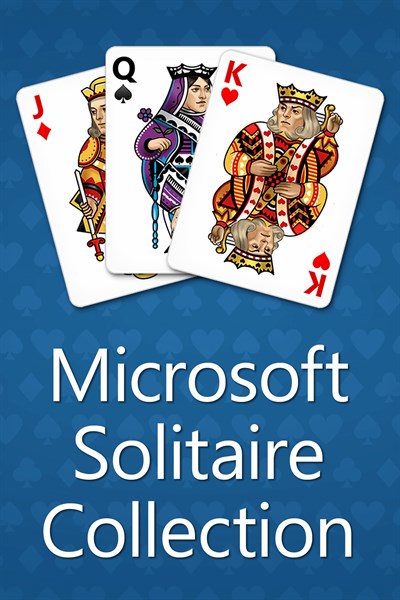


 Jenny Lay-Flurrie with her husband Tom McCleery.












