Phone Link, formerly known as Your Phone, brings your Android phone and your Windows PC closer together.
Today we are thrilled to announce the evolution of Your Phone app as Phone Link. We introduced the Your Phone experience more than three years ago, allowing you to keep your smartphone in your pocket and still be able to access your photos and texts on your computer. Since then, we have enabled more capabilities, such as the ability to filter notifications on your Windows PC, make and receive phone calls even when your phone is out of reach, and use your Android mobile apps on your Windows PC.
As part of this evolution, we’re now introducing a brand-new interface that brings notifications upfront to help you be confident that you’re not missing out on anything. With the new tabbed navigation, all the important capabilities and content from your phone are still right at your fingertips. And we have also made improvements to make set-up even easier. With the next update of Windows 11, you will also be able to set-up Phone Link during your set-up with your new PC with the ease of scanning a QR code.
We see this experience as more than just bringing your phone into your PC but as a bridge between the two devices, so we are renaming the app to Phone Link. And to further celebrate this connection between your two devices, we have also renamed the mobile companion app from Your Phone Companion to Link to Windows for all Android users. We’re bringing both apps together with the same icon too.
Phone Link has updated design for Windows 11
In our journey to make it easier for customers to get to the content that matters to them, we saw a great opportunity with the recent release of Windows 11 to also refresh the app design. We carefully updated our controls, color palette, and overall look and feel to deliver a native app experience on the new Windows 11 OS. New app design changes include rounded corners, fresh illustrations and updated iconography.
Phone Link is reaching more customers around the world
Recently we took an exciting step in unlocking this cross-device functionality for a brand new market. Phone Link is now available in China thanks to a partnership with HONOR, making these experiences now available on HONOR Magic V, Magic 4 series and Magic 3 series devices, with more to come.
This is in addition to our existing partnerships with Surface Duo and Samsung to integrate deeply and provide an even better experience on these devices beyond what’s possible on other Android devices. Recently, in partnership with Samsung, we’ve made it easier to launch the apps you were recently using on your phone and continue using them on the PC. This brings the mobile and PC worlds closer by allowing you to jump to the Office desktop and web experiences for files you were viewing on your Office mobile app.
Get started with Phone Link on your PC
We want to express how excited we are to share the evolution of our Phone Link and Link to Windows experiences and thank all our customers for joining us on this journey thus far. The journey doesn’t stop here, we’ll continue to bring more cross-device experiences to Windows through Phone Link. If you haven’t tried it yet, now is the best time to dive in. Start your cross-device journey here: aka.ms/phonelink.
Today, Microsoft is announcing the acquisition of Minit, a leader in process mining technology that enables businesses to uncover opportunities for continuous process improvement and better operational efficiency.
Organizations across the globe are seeking to be more operationally resilient and accelerate their digital transformation plans. Seamless operations and ensuring that every component of each business process runs smoothly is critical, but most leaders are not able to understand the actual performance of their processes and end up making decisions based on subjective information. Gartner® notes that “Recent trends in automation and knowledge of the underlying processes and interactions are key to digital transformation.” *
Minit currently enables businesses to transform the way they analyze, monitor and optimize their processes. Minit’s solutions have helped businesses gain deep insights into how processes run, uncover root causes of operational challenges and help mitigate undesired process outcomes.
This acquisition will further empower Microsoft to help our customers digitally transform and drive operational excellence by creating a complete picture of their business processes, enabling every process to be easily and automatically analyzed and improved. Customers will be able to better understand their process data, uncover what operations look like in reality and drive process standardization and improvement across the entire organization to ensure compliance at every step.
Today’s announcement further signals Microsoft’s commitment to help organizations quickly discover and optimize their business processes by bringing data and execution together to unlock powerful insights. Learn more about getting started by visiting the Minit website.
Read Minit’s announcement about the acquisition here.
*Gartner Market Guide for Process Mining, Marc Kerremans, Tushar Srivastava, Farhan Choudhary November 2021 GARTNER is a registered trademark and service mark of Gartner, Inc. and/or its affiliates in the U.S. and internationally and is used herein with permission. All rights reserved
The Microsoft Garage celebrated the opening of new locations in Nairobi, Kenya and Lagos, Nigeria, as part of the growth of the Microsoft Africa Development Center (ADC).
“These new Garage locations are the culmination of several years of planning with the ADC,” says Jeff Ramos, GM of the Microsoft Garage. “We are pleased to bring to life our commitment to support innovation at the individual and regional level across Microsoft – and now in ADC campuses. In The Garage, we believe that great ideas can come from anywhere, and we enable people to cultivate their ideas in an environment where they can collaborate, experiment, and learn new things.”
The Garage provides employees the space, tools, and programming for creative collaboration along with opportunities to engage customers and the local ecosystem in digital transformation. The Garage programs include the Garage Growth Framework with team coaching, new employee hackathon sessions, student innovation workshops, and the annual Microsoft Global Hackathon – the largest of its kind in the world.
“The Garage is meant to spread the values of openness and collaboration throughout the Microsoft ADC, where people come to The Garage to work with interdisciplinary teams on passion projects that sometimes make their way into Microsoft products – this should ultimately allow Microsoft ADC to become a more prominent shaper of Africa’s tech culture,” Lydiah Karanja of The Garage East Africa explained.
Linda Thackeray, Senior Director of The Garage EMEA, adds, “We are pleased to add Garage sites in Africa to join the network of our culture and innovation programs in Europe, North America, the Middle East, and Asia.”
At the ADC launches, President Uhuru Kenyatta was among other key guests welcomed by The Garage East Africa at the Nairobi facility at the Dunhill Towers. The Executive Governor of Lagos State, Mr. Babajide Sanwo-Olu, joined the opening festivities in Lagos at The Garage West Africa located at Kings Tower, Ikoyi.
President of Kenya Uhuru Kenyatta (center) visits The Garage East Africa in Nairobi, with Linda Thackeray, Senior Director of The Garage EMEA (left), and Lydiah Karanja, Program Manager of The Garage East Africa (right).
With these strategic investments in Africa, The Garage is ready to support Microsoft’s mission of empowering every person and every organization on the planet to achieve more.
The Garage West Africa in Lagos welcoming Executive Governor of Lagos State, Mr. Babajide Sanwo-Olu.
Read more about the Microsoft ADC launch and The Garage:
Current and future University of Arizona and Arizona Online students can earn credit toward their college degrees by playing Age of Empires IV.
We talked with those involved in the creation of this unique opportunity for Universe of Arizona students.
Age of Empires IV is available to play today with PC Game Pass and for purchase on the Windows Store and Steam.
Earning college credit for playing video games sounds like the stuff dreams are made of. Luckily for students attending the Universe of Arizona, this dream is turning into a reality thanks to a unique partnership between the university and Age of Empires IV.
Starting this semester, current and future University of Arizona and Arizona Online students can earn credit toward their college degrees when they interact with special educational content while playing Age of Empires IV.
To learn more about this partnership, we had a chance to talk with Associate Professor of Medieval History Paul Milliman, Executive Director of Corporate Initiatives and Business Development Kara Aquilano Forney, Associate Professor of Roman History and Department Head Alison Futrell, and Franchise Narrative Director for Age of Empires at World’s Edge Studio (Xbox) Noble Smith about this unique opportunity for Universe of Arizona students, what inspired them to create this program, and how Age of Empires IV can help affirm the accurate portrayal of history.
What inspired you to create this program at the University of Arizona?
Paul Milliman – When Kara asked me whether I would like to help create this program, I was teaching the History Department’s senior capstone course. One of the best students in the class was someone I had never worked with before, so I asked him how he had learned so much about medieval history. He said he was inspired to learn more about medieval history by playing games like Age of Empires II.
In recent years, so many of the best students I’ve worked with are gamers. They are researching historical events while they are playing these historical events in games, so I wanted to meet these gamer-historians where they are meeting history and show them some of the wonderful places they can go online to do their own historical research. As Age of Empires IV says, I wanted to teach them how to make history their story.
Alison Futrell – I was very excited when Kara approached us about this opportunity. My teaching and research for years has turned to how the past has been interpreted in film and television; students have also been alerting me to intriguing innovations in video games. One of them focused on a couple of examples for his final project and I was captivated by the narrative twists and layers of meaning that he explored. These were very distinctive, very creative approaches to the past! I’m enthusiastic about bringing in additional historical resources to enrich this kind of exploration.
Can you share some history (no pun intended) on how this partnership between Microsoft/Xbox, Age of Empires IV, and the University of Arizona came about?
Kara Aquilano Forney – The idea for the partnership came about more than two years ago when I connected with Will McCahill, business lead at Microsoft’s World’s Edge game studio. Will reached out to brainstorm about expanding the learning opportunities in Age of Empires IV and we talked about providing players a place to go once they finished their AoE experience. We had many “What if?” conversations — What if we enhanced the user experience with added learning content? What if we extended that learning beyond the game, what does that look like? The UArizona powerhouse history department quickly jumped on board, and the rest (pun intended) is History.
Were there other examples (games for college credit, etc.) you drew from to create this program at your university?
Paul Milliman – I am not aware of anything like this anywhere else. I teach history with games. I teach courses about historical games. I even have students create games in my courses as a more engaging way of presenting their historical research. I think this playful way of approaching historical research was very useful for this project.
Alison Futrell – I teach spectacle and performance (and film) and encourage students to move away from their desks, bring their other skills into the expanded classroom. This builds on those habits, certainly. A colleague across campus built a course around creating history tabletop games, focusing on how ancient economic decisions shape other experiences and choices, which I thought was very exciting.
What was it about Age of Empires IV specifically that drew you to the idea of creating college credit for playing through the game’s campaign?
Paul Milliman – I was intrigued by the script, especially the “Hands on History” videos. My teaching style is very hands-on. I’m a guide by your side, not a sage on a stage. I’m designing a special course just for gamer-historians who want to continue learning by building on their experiences in the game. They are going to learn more about the campaigns they fought by doing their own historical research and creating their own “Hands on History” videos.
Alison Futrell – The short documentaries alongside the enriched game play were fantastic! Yay archaeology! As a former archaeologist, I really appreciated the depth and tangibility those presentations brought to the dynamic ‘you are there’ quality of AoE IV. Many ways to understand what’s going on! With the special course, we’re adding different kinds of challenges to enhance what gamers have already experienced.
Are there any campaigns or levels that you’re excited for students to experience as part of this program at your university?
Paul Milliman – I think all four campaigns are great. They make me think about which campaigns you could present for the other civs in the game. Also, I really liked the promo video that came out last April in which Indian elephants were rampaging through the streets of medieval London and Chinese junks were sailing up the Thames. In the Middle Ages, Europe was not the center of the world, so placing later colonialism in its proper historical context through counterfactual history like this is a really engaging way to get students thinking about Europe’s historical relations with the larger world.
Alison Futrell – I think the four campaigns address important turning points in a really broad context, which is great. As Paul noted, the creativity in the promo, the collision of world cultures, was very entertaining, but also prods us to think broadly and comparatively, and to consider what tools can add substance to this kind of speculation.
Noble Smith – We’re thrilled that University of Arizona students will be able to dive into the rich history of Age of Empires IV’s campaigns. Diverse historical personages like the French heroine Jeanne d’Arc and the Mongol Emperor Genghis are brought to life through beautifully modeled 3D characters that speak in their respective native languages. Because this is a real-time strategy game, the player is in control of all their units — from the above-mentioned Heroes (with their unique special abilities) all the way down to the basic Man-at-Arms. Key battles, viewed from a 3/4 aerial view, are experienced in a visceral and exciting way that makes them feel as relevant as the day they were fought centuries ago.
Do you feel that this course helps to affirm the accurate portrayal of history, celebrating the High Medieval period to the Late Renaissance age, that Age of Empires IV strives to achieve?
Paul Milliman – I believe so. When I wrote the Illuminated Histories and the assessment, I really tried to tie everything back to the game. I want to take the excitement people have playing the game and channel that excitement into doing historical research about topics that excite them. I want them to experience the thrill of discovery, which can be just as thrilling as a campaign victory.
Alison Futrell – Absolutely! Authenticity and rich/deep exploration is what we’re after. History is complicated, with many layers of experience to probe. The course we’ve designed offers a range of pathways to get started doing just that.
Noble Smith – Beginning with the Battle of Hastings in 1066 and ending with the Siege of Kazan in 1552, the four campaigns in AoE IV most definitely span the sweeping era of the High Medieval period to the Late Renaissance. The evolution of armor, weapons, architecture, language, and accompanying music were all thoroughly researched and guided by subject matter experts from around the world.
So, for example, in the grand arc of the four campaigns the player gets to witness military units advancing from mail armor and swords (the Normans campaign) to sophisticated plate armor and gunpowder weapons (the Hundred Years War campaign). Even the languages spoken by the units in AoE IV evolve from their High Medieval versions to the Late Renaissance forms.
What future programs at your university, or others, you’d like to see to help recognize gaming as a source of education (when applicable)?
Paul Milliman – This is already happening in the history profession. There are many publications and conferences on this topic and many people who teach with games. Also, last year The American Historical Review, the leading academic history journal in the US, began reviewing historical computer games as a recognition of how important gaming is in informing people’s views of history.
Alison Futrell – This is a hot topic in History right now, with many people working on different pedagogical approaches that engage a range of student experiences and skill-building and, importantly, creativity. Games as a topic and as an inspiration are having an impact and are popping up in scholarly conferences as well.
Do you hope this experience will give your students a greater appreciation of cultures other than their own? What else do you hope they take away from this experience?
Paul Milliman – I do. As a historian of the global Middle Ages rather than just medieval Europe, I appreciate that half of the campaigns are not in western Europe. I hope this experience inspires these gamer-historians to learn more about the medieval world by visiting (virtually or in person) both the museums and libraries that contain the primary sources with which medieval history is written and the places which are depicted in the game. I also hope people will try their own “Hands on History.” Because of Age of Empires IV, I’ve broadened by own experiential learning. I started learning archery a few months ago, and soon I will take lessons on falconry and historical fencing. So, Age of Empires IV can inspire people of all ages and historical skill levels!
Alison Futrell – Of course! History offers people the chance to appreciate new outlooks through exploring the old, as it were, to see the human experience through the eyes of those who’ve gone before, to gain new insights, to broaden their understanding. I always hope that students will have the chance to dive a bit deeper into something that speaks specifically to them. I think that’s a particular strength in the way this class is structured.
Noble Smith – We hope that students who play AoE IV will develop a profound love of history. Maybe they will be inspired to tour a famous site represented in one of the missions (like the Hastings Battlefield in the United Kingdom) or visit the Guédelon castle project in France (shown in one of the game’s accompanying “Hands on History” films — Building a Castle) or perhaps study a new language. Maybe we’ll motivate someone to write a book about the Mongolian Yam messenger system or learn how to craft plate armor using traditional tools. We might even get some people who want to join our Age of Empires team… and keep on making history come to life for years to come!
Thanks to Paul, Kara, Alison, and Noble for taking the time today to share with us this amazing opportunity for University of Arizona students. You can learn more about this program here on AgeofEmpires.com. Age of Empires IV is available to play today with PC Game Pass and for purchase on Windows Store and Steam. Keep it tuned here to Xbox Wire for all the latest news about your favorite Xbox and Windows PC games.
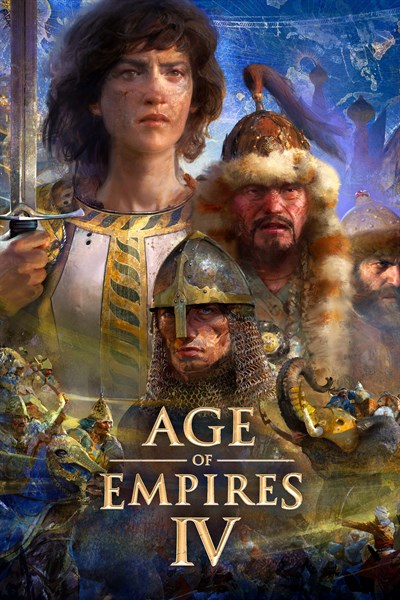
Age of Empires IV
Xbox Game Studios
☆☆☆☆☆2
★★★★★
PC Game Pass
One of the most beloved real-time strategy games returns to glory with Age of Empires IV, putting you at the center of epic historical battles that shaped the world. Featuring both familiar and innovative new ways to expand your empire in vast landscapes with stunning 4K visual fidelity, Age of Empires IV brings an evolved real-time strategy game to a new generation. Return to History – The past is prologue as you are immersed in a rich historical setting of 8 diverse civilizations across the world from the English to the Chinese to the Delhi Sultanate in your quest for victory. Build cities, manage resources, and lead your troops to battle on land and at sea in 4 distinct campaigns with 35 missions that span across 500 years of history from the Dark Ages up to the Renaissance. Choose Your Path to Greatness with Historical Figures – Live the adventures of Joan of Arc in her quest to defeat the English, or command mighty Mongol troops as Genghis Khan in his conquest across Asia. The choice is yours – and every decision you make will determine the outcome of history. Customize Your Game with Mods – Available in Early 2022, play how you want with user generated content tools for custom games. Challenge the World- Jump online to compete, cooperate or spectate with up to 7 of your friends in PVP and PVE multiplayer modes. An Age for All Players – Age of Empires IV is an inviting experience for new players with a tutorial system that teaches the essence of real-time strategy and a Campaign Story Mode designed for first time players to help achieve easy setup and success, yet is challenging enough for veteran players with new game mechanics, evolved strategies, and combat techniques.
Semiconductor and silicon technology are the basis of digital transformation happening everywhere, across industries and our daily lives, impacting the way we work, learn, and play. The continuous improvement in the performance and power of silicon has been key to enabling this innovation. Here at Microsoft, we’ve empowered our long-standing partners in the semiconductor industry to embrace Azure’s cloud infrastructure and scale out electronic design automation (EDA). With a new EDA-optimized cloud environment running on Azure, the launch of Synopsys Cloud marks a significant milestone for the industry by offering silicon design teams the ability to scale and accelerate their development cycles—transforming chip design the way that the cloud transformed computing.
Increasing flexibility and efficiency in silicon development on Azure
The collective rise in time-to-market pressure caused by the global chip shortage and increasing computational demands have caused chipmakers to seek more flexibility and efficiency in the silicon design process. Migrating chip design to Azure’s optimized infrastructure helps address part of this equation by enabling critical design and verification workloads on the cloud—resulting in faster time-to-results and better quality at a lower cost. With Synopsys Cloud built on Azure, chip designers will now also have access to a new pay-per-use model offering automated provisioning of infrastructure and EDA tools to address the growing demands of silicon design.
This “pay-as-you-go” model is a software as a service (SaaS)-based approach that will reduce barriers for companies of all sizes while enabling greater innovation and value for customers and EDA vendors alike. Using the power of Azure’s workload scaling and virtual machine (VM) selection capabilities, Synopsys Cloud customers will be able to optimize critical EDA workloads—from reducing processing time on verification tasks to saving runtime and enabling faster design convergence on library characterization.
Expanding access to chip design on the cloud
Microsoft has long been committed to helping companies of all sizes unlock more potential on the cloud. With its powerful chip design and verification tools running on Azure’s trusted and comprehensive cloud platform, Synopsys is Microsoft’s preferred partner for EDA on the cloud. Using Synopsys’ solution, customers ranging from startups to large design enterprises benefit from simplified access to custom infrastructure for all their chip design needs—helping them build silicon and tackle designs they previously could not
Innovation for wide-ranging impact
From intelligent scaling of EDA resources to using AI and machine learning models to transform design and resource management, silicon manufacturing has already seen vast improvements with the introduction of the cloud. The shift towards cloud-centric silicon design has enabled newfound access to compute, storage, and tooling resources. Ultimately, improved time-to-results, quality-of-results, and cost-of-results are just the beginning of what cloud-enabled EDA enhancements can offer. As design on the cloud becomes increasingly widespread, I look forward to seeing the silicon industry continuing to innovate towards new levels of ingenuity—powered by the Microsoft Cloud.
Tune in to Synopsys’ SNUG 2022 conference to watch a keynote by Dr. Aart de Geus, Chairman and co-CEO of Synopsys, including a fireside chat with Satya Nadella, Chairman and CEO of Microsoft.
This blog has been co-authored by Jessie Jia, Senior Program Manager, Azure Networking and Gunjan Jain, Principal Program Manager, Azure Networking.
In 2019, we launched Azure Front Door to bring enterprise-grade content delivery network (CDN) capabilities to our customers. This was a result of our own cloud journey over the past 13 years, which led us to develop unique infrastructure and services hardened by support for Microsoft’s largest applications like Bing, Microsoft 365, LinkedIn, Skype, and Azure. Read about LinkedIn’s experience1 migrating their own infrastructure to Azure Front Door.
Since then, a lot has changed for you and your customers. The acceleration of digital transformation to adapt to new ways of doing business, hybrid working models, and increasing security costs has driven the demand for a new type of cloud CDN that can address these modern challenges and simplify internet-first architectures in the cloud.
Today, we are announcing the general availability of the new Azure Front Door, our native, modern cloud content delivery network (CDN) catering to both dynamic and static content acceleration with built-in turnkey security, and a simple and predictable pricing model. There are two Azure Front Door tiers—Azure Front Door Standard and Premium—that provide a unified, secure solution for delivering your applications, APIs, and content on Azure or anywhere.
Azure Front Door: The modern enterprise CDN
Every company is now a technology company challenged with managing a rapidly growing digital footprint, dispersed workforce, and evolving security threats. As a result, enterprises are looking for solutions that help meet the rising demands for better scalability, more security, higher performance, greater automation, and easier manageability—with reduced costs.
Whether you’re delivering content and files or building global apps and APIs, Azure Front Door can help you deliver higher availability, lower latency, better scale, and more secure experiences to your users wherever they are. Azure Front Door also enables you to define, manage, and monitor the global routing for your app.
Dynamic and static content acceleration with intelligent security
With the addition of Azure Front Door Standard and Premium, two new tiers that combine the capabilities of Azure Front Door (classic) and Azure CDN from Microsoft (classic) and attach with Azure Web Application Firewall (WAF), Azure Front Door is now a unified, modern cloud CDN platform with intelligent threat protection and simple to understand pricing model, built on Microsoft’s massive-scale private global network.
Azure Front Door now also provides a rich set of advanced capabilities that enhance the DevOps experience, security posture, and cost-effectiveness for enterprise customers migrating and/or deploying high-performance, scalable, and secure applications on Azure or anywhere.
The key benefits you can get from Azure Front Door include:
Modern architecture
Build and operate dynamic, high-quality digital experiences with highly automated, secure, and reliable platforms.
Deeply integrated experiences with other Azure applications and services such as domain name system (DNS) and Web Apps to improve manageability and speed up deployment. We now offer DNS TXT record-based validation to simplify and reduce delays around custom domain validation.
Improved automation and simplified provisioning with cloud-native and DevOps friendly command line tools. For example, you can now provision custom domains along with other resources in one deployment and validate the domain ownership afterward or use the new Quick Create option in the portal to dramatically reduce deployment and configuration steps.
Enhanced analytics capabilities such as access logs, health probe logs, additional metrics, and pre-built traffic and security reports for more effective monitoring, troubleshooting, and debugging.
Expanded rules at the edge with enhanced rules engine capabilities adding regular expressions and server variables that let you move more of your business logic to the edge and create more complex and dynamic routing between your users and backends.
Fast global delivery
Deploy your apps and content at scale to your users wherever they are—creating opportunities for you to compete, weather change, and quickly adapt to new demand and markets.
A truly global network built by Microsoft with hundreds of edge locations connected to Azure via a private WAN that can improve latency for apps by up to three times and provides enterprise-grade reliability and massive scalability to deliver low latency and high throughput for consistent application experiences.
Unified static and dynamic delivery is offered in a single service to accelerate and scale your application and with real-time routing to develop high-availability experiences for applications hosted in Azure or anywhere.
A simplified cost model that reduces billing complexity by having fewer meters customers need to plan for and integrated egress (data transfer outbound) pricing that removes the separate egress charge from Azure regions to Azure Front Door. Please refer to the Azure Front Door pricing page for more details.
Intelligent security
Protect your digital estate against known and new threats with intelligent security that embrace a Zero Trust framework.
Best-of-breed security services seamlessly attached such as built-in layer 3-4 DDoS protection, Web Application Firewall, Azure DNS to protect your domains, and Azure Private Link.
WAF enhancements offer a powerful, yet cost-effective protection from common attacks and bots and are customizable to application-specific detections. Azure Front Door Premium includes Azure Web Application Firewall at no additional cost and provides enhanced capabilities. Azure WAF is also releasing a new DRS 2.0 RuleSet, offering reduced false positives and anomaly scoring-based detection. Bot manager—now generally available, provides an additional layer of Bot detection based on Microsoft Threat Intelligence.
Azure Private Link support on Azure Front Door Premium with availability in all Azure regions with availability zones, enabling your application to extend all the way out to the edge with private access from Azure Front Door to your backends in Azure.
Azure Front Door (classic) and Azure CDN from Microsoft (classic)
The existing Azure Front Door and Azure CDN from Microsoft will now be known as Azure Front Door (classic) and Azure CDN from Microsoft (classic) moving forward. Azure Front Door (classic), as well as Azure CDN from Microsoft (classic), will continue to be fully supported and you can continue to use them. However, we encourage you to take advantage of Azure Front Door Standard and Premium as the latest capabilities and future enhancements will not be available on Azure Front Door (classic).
Over the coming months, we will be launching zero downtime migrations from Azure Front Door (classic) and Azure CDN from Microsoft (classic) to Azure Front Door Standard and Premium. Please stay tuned for more updates. If you are new to Azure Front Door, you can easily launch Azure Front Door Standard and Premium in the Azure portal or using our API.
Today, we’re introducing new capabilities to help customers protect identities, devices, applications, and data holistically across clouds. In this video, Charlie Bell and Vasu Jakkal share why a multi-cloud, multi-platform security approach is critical for every business today.
What a treat chatting with the amazing Charlie Bell. I love that Charlie and I have the same vision – a safer, more secure digital world for all. Charlie’s brilliance, compassion and empathy inspire me every day and I am so grateful to have him as a partner on this incredible security journey as we build multi cloud and multi platform capabilities. We’re lucky to have him here in the trenches with us, building a better world.
We’re committed to taking a principled approach to our app stores, as we work to promote a more open app market that better serves users and creators alike.
https://lnkd.in/e6hHs977 Governments around the world are moving forward with laws to promote competition in app markets. We’re announcing a new set of Open App Store principles to proactively adapt to legislation being considered. We have developed these principles in part to address Microsoft’s growing role and responsibility as we start the process of seeking regulatory approval for our acquisition of Activision Blizzard in capitals around the world.
Thank you to my colleagues across the globe who continue to volunteer and give to the causes and communities they care about. Giving is core to our culture, and you are exemplifying this every day.
In 2021, helping those in need became of paramount importance. We’re inspired by the generous giving from Microsoft employees making a difference around the corner and around the world.
On International Women’s Day, we celebrate the potential of women and girls everywhere, and their ideas and innovations that are shaping our future. March is also Women’s History Month in the United States. Introduced in the late 1980s, this month is a celebration of the numerous, but often overlooked, accomplishments by women across history, culture and society. This is a time to reflect — and keep working to close equity gaps.
We know that companies with more diversity generate more innovation[1] and better financial results.[2] Yet less than 2% of enterprise software startups in the U.S. feature a women founder.[3] The COVID-19 pandemic has — and will continue to — disproportionately affect women across the globe, with the time it will take to close the global gender gap increasing by a generation from 99.5 years to 135.6 years.[4]
The data is staggering and calls for action.
At Microsoft, our goal is to create and maintain a healthy ecosystem where all employees, partners and customers can thrive. We work with purpose and passion to enable inclusive economic opportunity through the Microsoft commercial marketplace and in our Microsoft partner and startup ecosystem.
Highlighting diverse partner businesses in the commercial marketplace
To help support the growth of diverse businesses within our partner ecosystem, we’re enabling partners to self-attest relevant diversity business classifications in Partner Center. By building this information into our system, it’s easy for customers to discover women-led businesses and their solution offerings in the commercial marketplace and through our co-sell channels.
Supporting the U.N. to empower women across the globe
As a partner to the United Nations, Microsoft has pledged to support its Sustainable Development Goals (SDGs),[5] a set of 17 initiatives adopted by member states in 2015 focused on creating a more inclusive, sustainable and equitable world by 2030.
Through the Microsoft #BuildFor2030 Initiative, we support SDG 5: achieving gender equality and empowering all women and girls. We partner with community organizations, like Women in Cloud (WIC), an organization focused on acting with global leaders, corporations and policymakers to help women entrepreneurs create $1 billion in economic access and opportunity by 2030.
Through the WIC accelerator, Microsoft supports women entrepreneurs in building and publishing their solutions to the commercial marketplace. We are proud to celebrate these women-led businesses and their innovative solutions that are driving positive business and community impact, such as:
eKidz.eu: Their educational solution helps parents and educators teach German, English and Spanish to children. Realizing the importance of helping people stay connected to their roots while raising trilingual children, co-creator and CEO Nataliya Tetruyeva set out to create more accessible, personalized language learning. The mobile app leverages artificial intelligence (AI), audio support and visual animation to nurture language development skills like listening, learning, speaking and written expression.
Advocat Technologies: Their solution, Advocat AI, is a conversation-driven, AI-enabled platform that helps make it faster and easier to create and manage legal contracts for in-house legal teams and business users alike. Advocat Founder and CEO Pradnya Desh is a legal advisor and former U.S. diplomat seeking to enable effective business practices that support companies, communities and individuals.
Supporting women founders in the end-to-end startup journey
Startups play a pivotal role in a thriving ecosystem, and often are the impetus that push everyone else forward. Despite being vital to innovation and growth, by some estimates, more than 90% of startups will go out of business in their first year,[6] meaning women-founded businesses are fighting an uphill battle.
Earlier this year, we launched a global mentoring program to pair women employees at Microsoft with women founders of startups in the Microsoft for Startups Founder Hub. This new program includes reoccurring safe space talks, monthly role model conferences, and access to VC and investor master classes — and all members of the Hub have access to $150,000 of Microsoft Azure. The Microsoft for Startups Founders Hub is open to anyone with an idea, and we’re seeing an influx of diverse founders including women-led organizations come through.
For example, SciMar ONE, a Microsoft for Startups and Women in Cloud accelerator partner, is using AI technology to speed innovation in drug development through their project management solution, The Scientific Data Engine. A women-owned business, SciMar ONE shifts the time-consuming tasks of clinical data analytics from humans to technology, driving cost savings in R&D.
And Time to Raise helps women founders in Nordic countries with their fundraising journeys from master classes, pitching sessions hosted by Microsoft Reactor, Female Founder networking events supported by Microsoft for Startups to matchmaking connections with participating investors and more.
Speaking of Microsoft Reactor, it partners regularly with ChickTech, an American nonprofit organization empowering people of marginalized genders through tech programs and events. Microsoft Reactor also partners with Women in Data to host collaborative content and events, all with the aim of connecting developers and startups who share the same goals.
Empowering girls to follow their interests in STEM
The path to a career in tech is different for everyone. However, exposure to STEM (science, technology, engineering and math) learning paths and encouragement to follow one’s interests is critical, especially for those who identify as girls.
We recognize that tomorrow’s tech talent are today’s students, and that’s why we work with Girls Who Code, TechTogether, and IGNITE (Inspiring Girls Now in Technology Evolution). These organizations are actively and tirelessly inspiring girls to follow their dreams and helping them gain skills across a gamut of technology paths. And the Microsoft DigiGirlz program is our in-house program that offers middle- and high schoolers opportunities to learn about careers in technology, connect with Microsoft employees and participate in hands-on computer and technology workshops.
Historically, girls haven’t had the same level of encouragement to pursue careers in STEM as boys — and that must change. Fostering tomorrow’s talent is a critical component to growing women’s presence in technology.
What you can do
Both International Women’s Day and Women’s History Month remind us to take stock and raise up girls and women. I invite you to join me in supporting women tech entrepreneurs and helping to grow their businesses. What this means looks different to everyone. Here are two ways you can learn how to help women in tech:
Join Women in Cloud and participate in their community engagement opportunities to gain experience, build your network and find ways to support economic access for women.
And register for the May 6 #WICxMicrosoft Lunch and Learn session where I’ll be the keynote speaker for a session about empowering access and driving inclusive economic opportunity.
Though we’re talking specifically about women’s impact in tech, the equity gaps that exist are not solely the responsibility of women to solve. Everyone has a stake in this effort, and it takes all of us to continue to make progress. Through our collective action, we can grow and support diverse representation in our partner and startup ecosystem together.
Image: A group of boys play soccer at sunset near aqals of the town of Hargeysa, Somalia.
Today, we’re adding two new languages to Translator’s ever-growing list of languages—Somali and Zulu! Somali and Zulu text translation is available now in the Microsoft Translator apps, Office, and Translator for Bing. Using Translator, a Microsoft Azure Cognitive Service you can add Somali and Zulu text translation to your apps, websites, workflows, and tools; or use Translator’s Document Translation feature to translate entire documents, or volumes of documents, in a variety of different file formats preserving their original formatting. You can also use Translator with Cognitive Services such as Speech or Computer Vision to add additional capabilities such as speech-to-text and image translation into your apps.
The Somali language
The Somali language is spoken throughout the horn of Africa by more than 21 million people in Somalia, Somaliland, Ethiopia, Djibouti, and northern Kenya. The language is in the Cushitic branch of the Afroasiatic language family. It is related to languages such as Oromo, Afar, and Hadiyya.
The Zulu language is spoken by 12 million people in South Africa and neighboring countries. The Zulu language is in the Bantu language family, related to languages such as Swahili and Xhosa.
Zulu is a home language of South Africa and is recognized as one of South Africa’s 11 official languages. The Zulu people are known for their intricate beadwork, which is used as both decoration and as a form of communication to convey information about the wearer.
At home Translate real-time conversations, menus and street signs, websites, documents, and more using the Microsoft Translator app for iOS and Android. Learn more
At work Globalize your business and customer interactions with customizable text and document translation using Azure Cognitive Services Translator. Learn more
In the classroom Create a more inclusive classroom for both students and parents with live captioning and cross-language understanding. Learn more
As a child, Megan Shaw was always falling. She bruised easily, seemed to be accident-prone and fainted a lot. As a teenager, she found out she had Ehlers-Danlos syndrome, a rare genetic condition that affects connective tissue. But at 23, she focuses on what she can do, not what she can’t.
A native of Scotland, she loves “wild” (in other words non-pool) swimming in nearby lakes (including Loch Ness) with friends and family. In the winter, she uses a wetsuit, but she doesn’t need to wear braces or tape in the cold water, which soothes her joints. Mountain hikes are also part of her routine – though her backpack comes with a feeding tube. She’s also six months out of medical school, doing a vascular surgery rotation as a junior doctor (the equivalent of a medical residency program in the U.S.). She intends to pursue a career as a pediatric physician.
“In pediatrics it’s very much about helping children live with what they have,” she says. “It’s about getting their symptoms controlled to a point where they can do the things they want to do.”
This is a philosophy that also drives her own approach to the disease she lives with.
She has never met anyone in person who also has this rare disease – though she had perused some online support forums – but recently she connected with a teenager in the U.S. who is also living with Ehlers-Danlos. They star in “Beyond Xbox: A Player Like Me,” the next film in the Xbox “Beyond” series, which began with “Beyond Generations.”
“It was actually really easy to talk to him. It was almost like I was talking to myself a few years ago,” says Shaw, who chatted with Jordan Strong, 15, through a headset while the two played the auto racing game Forza Horizon 5. Shaw played from her home, while Strong used a GO Kart (Gamers Outreach Kart) system outfitted with an Xbox Series S at a facility where he does physical therapy every other week.
The two spent hours getting to know one another as they played the game.
“I’m not that much older than him, but I didn’t know whether we would have anything in common,” Shaw says. “But it turns out we have quite a lot in common.”
They share a love of music. She plays the piano; he sings in choirs. They both have siblings who are able to do things they wanted to do but couldn’t: baseball for him, diving for her.
There was good-natured ribbing too, as Strong joked about Shaw’s driving skills as they played the game. (In her defense, she notes that they do drive on the other side of the road where she lives.) They both spent time trying to find each other on the Forza map, too. Their conversation ebbed and flowed naturally, but in-between the fun chats, they also talked about some serious topics.
Jordan Strong playing Forza Horizon 5 while chatting with Megan Shaw
“We talked about how sometimes you get medical advice, but at the end of the day you know your own body. You’re the one who has to live with it,” Shaw says. “It’s just nice talking to someone who understands. I think at the end of the day, it doesn’t matter that they are a different age from you or they’re in a different country. My friends or family are really supportive, but it’s quite a difficult thing to understand if you’ve never experienced it.”
Strong, a high school freshman in a small town in Georgia, had never even talked to someone else who had Ehlers-Danlos. Though he and Shaw have different sub-types of the disease, he still found a lot of value in their conversation – and hoped to connect again.
“It was really cool to see beyond Ehlers-Danlos that we share common interests and understand each other, more than just what are you going through,” says Strong, who admired Shaw’s active and outgoing life. “That was surprising, how she could put aside the risks a little bit.”
The film emerged as the next in Xbox’s experimental storytelling series that focuses on how gaming can be an important medium for connecting to others, especially during the pandemic. “Beyond Generations,” which debuted in December 2020, showed how a U.K.-based grandfather and grandson separated by lockdowns kept in touch over their headsets and through games.