Posted on Leave a comment

Gamers: Ori and the Will of the Wisps is coming soon; enter the sweepstakes now for tickets to the launch event in LA

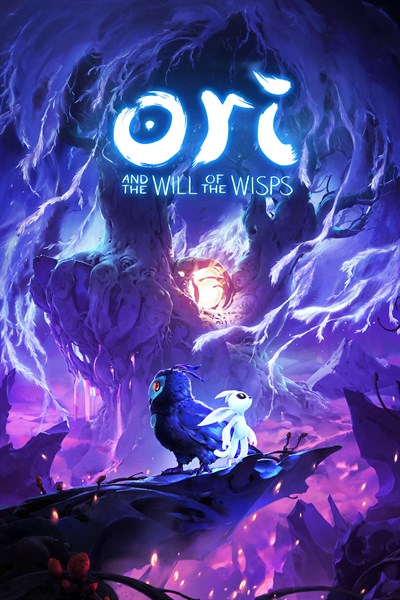
With the global launch of Ori and the Will of the Wisps just around the corner on March 11, Moon Studios and Xbox are excited to invite you to a special launch event in Los Angeles on March 5 that brings Ori’s world to life! In celebration of Ori’s latest adventure, we are giving away 40 pairs of tickets to the event and offering you and a guest the opportunity to be invited.

On
March 5, you and your guest will be transported to an exotic world through a
fully immersive digital art and music experience that brings the magic of Ori
and the Will of the Wisps
into reality in Los Angeles. You will be able to walk
into a digital representation of Ori’s world, accompanied by the original game
soundtrack played by a live pianist. Attendees will also have an opportunity to
meet Moon Studios co-founders Thomas Mahler and Gennadiy Korol and other Moon
Studios developers, as well as get hands on with the game.

How
To Enter

To
enter the sweepstakes, visit our contest page here and
fill out the online entry form. Entries must be submitted between February 25,
2020 at 12:01 a.m. Pacific Time (PT) and February 28, 2020 at 11:59 p.m.
Pacific Time (PT). You must complete all required information to be eligible to
win one pair of tickets to the event. We will randomly select the winners and
contact them via e-mail.

Winners
will need to make their own travel arrangements to the venue in Los Angeles, so
please have that in mind before entering the sweepstakes.

Rules

The sweepstakes
is only open to participants over the age of 21. You may only enter once. Please
read our full sweepstakes terms and conditions on the contest page before
entering.

To our Ori community, we’re just a few short days away until the launch of Ori and the Will of the Wisps on March 11, 2020! You can still pre-order Ori and the Will of the Wisps today ahead of the game’s worldwide release on Xbox One, Windows 10 PC, Steam, and with Xbox Game Pass.

Stay tuned for the latest game news and updates at orithegame.com.

Ori and the Will of the Wisps

Xbox Game Studios

Xbox One X Enhanced
PC Game Pass
Xbox Game Pass

Pre-Order now and get ready to embark on an all-new adventure to unravel Ori’s true destiny. Play with Xbox Game Pass on March 11, 2020. From the creators of Ori and the Blind Forest – the acclaimed adventure game with more than 50 awards and nominations – comes the highly-anticipated sequel, Ori and the Will of the Wisps. Embark on an all-new adventure in a vast and exotic world where you’ll encounter towering enemies and challenging puzzles on your quest to unravel Ori’s true destiny.

Posted on Leave a comment

Head of Xbox Phil Spencer: What you can expect from the next generation of gaming

The future of gaming has never been more inspiring. Creativity in games is flourishing. New services empower you to discover more games—and bring you closer to the games and creators and streamers you love. The cloud creates a massive opportunity to stream console-quality games and play with the people you want, wherever you want. And for many of us, nothing is more inspiring than the dawn of a new console generation.

We know you
expect the next generation of consoles to set new standards in graphical power
and processing speed, converging together in games that look incredible and feel
alive. This will be defined by worlds that are visually astounding and
immediately immersive, with innovative leaps in CPU, GPU and storage technology
to give you frictionless access to new stories and new creators constantly.

We’ve
been using Xbox Series X in our internal Takehome program and are energized by
the feedback we’ve been receiving. At Xbox we value being open and transparent
with you, and I’m proud to be able to share details about some of the technologies
we are enabling for the next generation, and look forward to boldly sharing more
as we head towards E3.   

Xbox Series X

A
superior balance of power and speed

Compared
to the previous generation, Xbox Series X represents a superior balance of
power and speed in console design, advancing on all technological fronts to delivering
amazing, dynamic, living worlds and minimize any aspects that can take you out
of the experience. Our job at Team Xbox is to give teams the tools they need to
achieve their ambitions and tap into the console’s power with efficiency, a few
of which we’re detailing today. Raw power is just part of the story:

  • Next Generation Custom Processor: Xbox Series X is our most powerful console ever powered by our custom designed processor leveraging AMD’s latest Zen 2 and RDNA 2 architectures. Delivering four times the processing power of an Xbox One and enabling developers to leverage 12 TFLOPS of GPU (Graphics Processing Unit) performance – twice that of an Xbox One X and more than eight times the original Xbox One. Xbox Series X delivers a true generational leap in processing and graphics power with cutting edge techniques resulting in higher framerates, larger, more sophisticated game worlds, and an immersive experience unlike anything seen in console gaming.
  • Variable Rate Shading (VRS): Our patented form of VRS empowers developers to more efficiently utilize the full power of the Xbox Series X. Rather than spending GPU cycles uniformly to every single pixel on the screen, they can prioritize individual effects on specific game characters or important environmental objects. This technique results in more stable frame rates and higher resolution, with no impact on the final image quality.
  • Hardware-accelerated DirectX Raytracing: You can expect more dynamic and realistic environments powered by hardware-accelerated DirectX Raytracing – a first for console gaming. This means true-to-life lighting, accurate reflections and realistic acoustics in real time as you explore the game world.

Immersion
in an instant

The next
console generation will be defined by more playing and less waiting. And when
play begins, we know many gamers demand ultra-low latency to be as immersed and
precise as possible. To this end, the team analyzed every step between player and
game, from controller to console to display, and asked how we could make it faster.
 

  • SSD Storage: With our next-generation SSD, nearly every aspect of playing games is improved. Game worlds are larger, more dynamic and load in a flash and fast travel is just that – fast.
  • Quick Resume: The new Quick Resume feature lets you continue multiple games from a suspended state almost instantly, returning you to where you were and what you were doing, without waiting through long loading screens.
  • Dynamic Latency Input (DLI): We’re optimizing latency in the player-to-console pipeline starting with our Xbox Wireless Controller, which leverages our high bandwidth, proprietary wireless communication protocol when connected to the console. With Dynamic Latency Input (DLI), a new feature which synchronizes input immediately with what is displayed, controls are even more precise and responsive.
  • HDMI 2.1 Innovation: We’ve partnered with the HDMI forum and TV manufacturers to enable the best gaming experience through features such as Auto Low Latency Mode (ALLM) and Variable Refresh Rate (VRR). ALLM allows Xbox One and Xbox Series X to automatically set the connected display to its lowest latency mode. VRR synchronizes the display’s refresh rate to the game’s frame rate, maintaining smooth visuals without tearing. Ensuring minimal lag and the most responsive gaming experience.
  • 120 fps Support: With support for up to 120 fps, Xbox Series X allows developers to exceed standard 60 fps output in favor of heightened realism or fast-paced action.

The next
generation of game compatibility

The
benefits of the next console generation extend in every direction, bringing
greater visual fidelity and improved loading speeds to your existing gaming
legacy, in addition to new games. We’re continuing our commitment to compatibility
with Xbox Series X and investing in technology that makes game ownership easier
across generations.

  • Four
    generations of gaming
    :
    Our commitment to compatibility means existing Xbox One games, including
    backward-compatible Xbox 360 and original Xbox games, look and play better than
    ever before. Your favorite games, including titles in Xbox Game Pass, benefit
    from steadier framerates, faster load times and improved resolution and visual
    fidelity – all with no developer work required. Your Xbox One gaming
    accessories also come forward with you.
  • Smart Delivery: This
    technology empowers you to buy a game once and know that – whether you are
    playing it on Xbox One or Xbox Series X – you are getting the right version of
    that game on whatever Xbox you’re  playing
    on. We’re making the commitment to use Smart Delivery on all our exclusive Xbox
    Game Studios titles, including Halo Infinite, ensuring you only have to
    purchase a title once in order to play the best available version for whichever
    Xbox console they choose to play on. This technology is available for all
    developers and publishers, and they can choose to use it for titles that will be
    release on Xbox One first and come to the Xbox Series X later.
  • Xbox
    Game Pass:
    In
    addition to games from across four generations of consoles, our leading game
    subscription service, Xbox Game Pass, will continue to have our first party
    games, like Halo Infinite, included at their launch.  We look forward to millions of you experiencing
    the Xbox Game Pass portfolio and immersing yourselves in a deep library of
    high-quality games, playing those you love now and also discovering your next
    great adventure.

A
generation with players at the center

Xbox
Series X is our fastest, most powerful console ever, designed for a console
generation that has you at its center. This means a high-fidelity gaming
experience enclosed in a quiet and bold design, with the ability to discover
thousands of games across four generations, all with more playing and less
waiting. 

Whether
it’s empowering amazing creators at our 15 Xbox Game Studios, fueling game
discovery with Xbox Game Pass, or expanding what and where you can play with
Project xCloud, Team Xbox stands for frictionless pathways between players and
the best experiences our remarkable art form has to offer. Xbox Series X
represents that same commitment for players who want immediate immersion in
games that also look and feel better than ever.

We can’t
wait to share more details about the new Xbox with you in the coming months.

Posted on Leave a comment

Teachers: Take your students to space March 2 with astronaut Jessica Meir aboard the International Space Station

The countdown is on! Now we just need your STEM-loving students to join in on March 2 at 9:55am PST. That’s when Astronaut Jessica Meir will speak with students around the world in a broadcast from the International Space Station.

Bring this special 20-minute conversation to your classroom from here.

Astronaut and marine biologist, Dr. Jessica Meir made history last year when she partnered with Astronaut and physicist Christina Koch to complete the first, all-female spacewalk. Give your students a chance to hear directly from Jessica about that historic milestone and a host of other inspiring experiences.

Today’s astronauts have diverse backgrounds in STEM fields, including engineering, medicine, geology and a lot more. By engaging with role models like Jessica, students have the opportunity to see how STEM education can lead to future technical jobs.

2020 is a critical milestone for STEM, space travel, and inclusion. It marks 20 years of humans living and working continuously aboard the International Space Station. Your students are the first to grow up during  a time in which humans are living both on Earth and in space. As STEM jobs grow to over 9 million by 2022, it is also a critical time to encourage young people to explore exciting and empowering STEM career paths.

Microsoft Education has partnered with NASA’s STEM on Station team to develop a hands-on STEM curriculum for middle and high school students based on real-life scenarios in space.  The collection celebrates the considerations that astronauts need to think about when living and working in space. It includes the Astro Socks Design Challenge that has students take on the roles of biomechanical engineers and product designers to solve the foot pain astronauts experience in microgravity. The standards-aligned lesson plan incorporates design thinking with an introduction to working with sensors and live data in Excel. It has been designed for the classroom and ready for you to try it out with your students!

Don’t miss out on what’s certain to be an incredible conversation and a milestone moment in the education of your students

Learn more by visiting the Microsoft Education Downlink event page. 

As always, share your feedback with us on Twitter by tagging @MicrosoftEDU!  

Posted on Leave a comment

Azure Sphere—Microsoft’s answer to escalating IoT threats—reaches general availability

Today Azure Sphere—Microsoft’s integrated security solution for IoT devices and equipment—is widely available for the development and deployment of secure, connected devices. Azure Sphere’s general availability milestone couldn’t be timelier. From consumer device hacking and botnets to nation state driven cyberterrorism, the complexity of the landscape is accelerating. And as we expand our reliance on IoT devices at home, in our businesses and even in the infrastructure that supports transit and utilities, cybersecurity threats are increasingly real to individuals, businesses and society at large.

From its inception in Microsoft Research to general availability today, Azure Sphere is Microsoft’s answer to these escalating IoT threats. Azure Sphere delivers quick and cost-effective device security for OEMs and organizations to protect the products they sell and the critical equipment that they rely on to drive new business value.

To mark today’s general availability milestone, I sat down with Galen Hunt, distinguished engineer and product leader of Azure Sphere to discuss the world of cybersecurity, the threat landscape that businesses and governments are operating in, and how Microsoft and Azure Sphere are helping organizations confidently and securely take advantage of the opportunities enabled by IoT.


ANN JOHNSON: Let me start by asking about a comment I once heard you make, where you refer to the internet as “a cauldron of evil.” Can you give us a little insight into what you mean?

GALEN HUNT: Well, I actually quote James Mickens. James is a former colleague at Microsoft Research, and he’s now a professor at Harvard. Those are his words, the idea of the internet being a cauldron of evil. But I love it, because what it really captures is what the internet really is.

The internet is a place of limitless potential, but when you connect a device to the internet, you’re also creating a two-way street; anybody can come in off the internet and try to attack you.

Everything from nation states to petty criminals to organized crime is out there, operating on the internet. As we think about IoT—which is my favorite topic—being aware of the dangers is the first step to being prepared to address them.

ANN JOHNSON: When you’re thinking about folks that are in charge of security organizations, or even folks who have to secure the environment for themselves, what do you view as the biggest threats, and also the biggest opportunities for companies like Microsoft to address those threats?

GALEN HUNT: I think the biggest threat is—and I’m coming at this from the IoT side of things—as we’re able to connect every single device in an enterprise or every single device in a home to the internet, there’s real risk. By compromising those devices, someone can invade our privacy, they can have access to our data, they can manipulate our environment. Those are real risks.

In the traditional internet, the non-Internet-of-Things internet, the damage that could be done was purely digital. But in a connected IoT environment, remote actors are able to affect or monitor not just the digital environment but also the actual physical environment. So that creates all sorts of risks that need to be addressed.

In response, the power that a company like Microsoft can bring is our deep experience in internet security. We’ve been doing it for years. We can help other organizations leverage that experience. That’s a tremendous opportunity we have to help.

ANN JOHNSON: So, with that, walk us through what Azure Sphere is—how do you see our customers and our partners leveraging the technology?

GALEN HUNT: There are four components to Azure Sphere: three of them are powered by technology and one of them is powered by people. Those components combine to form an end-to-end solution that allows any organization that’s building or connecting devices to have the very best of what we know about making internet-connected devices secure.

Let’s talk about the four components.

The first of the three technical components is the certified chips that are built by our silicon partners, they have the hardware root of trust that Microsoft created. These are chips that provide a foundation of security, starting in the silicon itself, and provide connectivity and compute power for these devices.

The second technical component of Azure Sphere is the Azure Sphere operating system. This runs on the chips and creates a secure software environment.

The third technical component is the cloud-based Azure Sphere security service. The security service connects with every single Azure Sphere chip, with every single Azure Sphere operating system, and works with the operating system and the chip to keep the device secured throughout its lifetime.

ANN JOHNSON: So, you’ve got hardware, software, and the cloud, all working together. What about the human component?

GALEN HUNT: The fourth component of Azure Sphere is our people and all their security expertise. Our team provides ongoing security monitoring of Azure Sphere devices and, actually, of the full ecosystem. As we identify new types of attacks and new emerging security vulnerabilities, we will upgrade our operating system and the cloud services to mitigate against those new kinds of attacks. Then we will deploy updates to every Azure Sphere-based device, globally. So, we’re providing ongoing support, and ongoing security improvements for those devices.

ANN JOHNSON: I want to make this real for folks. Walk me through a use case; where would somebody actually implement and use Azure Sphere? How does their infrastructure or architecture fit in?

GALEN HUNT: Okay, let’s start with a device manufacturer. They say, okay we’re going to create a new device, and we want to have that device be an IoT device. We want it to connect to the internet, so it can be integrated into an organization’s digital feedback loop. And so, they will buy a chip, an Azure Sphere-based microcontroller or SoC, which will serve as the primary processing component, and they build that into their device. The Azure Sphere chip provides the compute power and secured connectivity.

Now, of course not everybody is building a brand-new device from scratch. There are a lot of existing devices out there that are very valuable. Sometimes they’re too valuable to take on the risk of connecting them and exposing them to the internet. One of the things we’ve developed during the Azure Sphere preview period is a new class of device that we call a “guardian module.” The guardian module is a very small device—no larger than the size of a deck of cards—built around an Azure Sphere chip. An organization interested in connecting existing devices can connect through the guardian module and pull data from that existing device and securely connect it to the cloud. The guardian modules, powered by Azure Sphere, are a way to add highly secure connectivity—even to existing devices—that’s protected by Microsoft.

ANN JOHNSON: Interesting, it solves a pretty big problem with device security, especially as we continue to see a massive proliferation of devices in our environment, most of which are unmanaged. What do you think is slowing the broad adoption of security related to connected devices?

GALEN HUNT: Well, there are a couple of things. I think the biggest barrier, up until now, has been the lack of an end-to-end solution. For companies that have had aspirations to build or to buy highly secured devices, each device has been a one-off. Customers have had to completely build a unique solution for each device, and that just takes an incredible amount of expertise and hard work.

The other obstacle I’ve found is that organizations realize that they need secure devices, but they just don’t know where to begin. They don’t know what they should be looking for, from a device security perspective. There’s a bit of a temptation to look for a security feature checklist instead of really understanding what’s required to have a device that’s highly secured.

ANN JOHNSON: I know you’ve given this a lot of consideration and your background gives you a deeper view into what it takes to secure devices. You wrote a paper on the seven properties of highly secure devices, based on a lot of research you’ve done on the topic. How did you coalesce on the seven properties and how customers can implement them securely?

GALEN HUNT: Yes, I’m a computer scientist, and for over 15 years I ran operating systems research in Microsoft Research. About five years ago, someone walked into my office with a schematic, or a floor map, of a brand new—actually, still under development—microcontroller. This was actually the very first of a new class of a microcontroller.

A microcontroller, for anybody who is not familiar, is a single-chip computer that has processer, and storage, memory, and IoT capabilities. Microcontrollers are used in everything from toys, to appliances, even industrial equipment. Well, this was the first time I had seen a microcontroller, a programmable microcontroller, with the physical capabilities required to be able to connect to the internet—built in—and at a price point that was just a couple of dollars.

When I looked at this thing, I realized that for the price of a cup of coffee, anything on the planet that had electricity could be turned into an internet device. I realized I was looking at the fifth generation of computing, and that was a terribly exciting thought. But the person who had come into my office was asking, what kind of code should we run on this so that it would be secure if we did want to build internet-connected devices with it?

And what I realized, really quickly, was that even though it had some great security features, it lacked much of what was required to build a secure device from a software perspective, and that set me off on journey. I imagined this dystopian future where there are nine billion new insecure devices being added to the world’s population, every year.

ANN JOHNSON: Sure, the physical risks of device hacking make nine billion insecure IoT devices a daunting thought.

GALEN HUNT: Well for me, that was a really scary thought. And as a scientist, I said, well we know that Microsoft and our peer companies have built devices that have been out on the internet. They’ve been connected for at least a five-year period and have withstood relentless attacks from hackers and other ne’er-do-wells. The driving question of our next phase of work was: why are some devices highly secure, and what is it that separates them?

And we did a very scientific study of finding these secure devices and trying to figure out the qualities and the properties that they had in common, and this led to our list of these seven properties. We published that paper, which then led to more experiments.

Now, the devices we found that had these seven properties were devices that had hundreds of dollars in electronics in them, and, you know, that’s not going to scale to every device on the planet. You’re not going to be able to add hundreds of dollars of electronics to every device on the planet, like a light bulb, in order to get security.

Then we wondered if we could build a very, very small and a very, very economical solution that contained all seven properties. And that’s what ultimately led us to Azure Sphere. It’s a solution that, really, for just a few dollars, any company can build a device that is highly secured.

ANN JOHNSON: So, the device itself is highly secured; it has all these built-in capabilities, but one of the biggest problems our customers face is fundamentally a talent shortage, right? Is there something that we’re inherently doing here, with Azure Sphere, that could make it easier for customers?

GALEN HUNT: Yes. Fundamentally what we’re trying to do is create a scalable solution, and it is Microsoft talent that helps these companies create these highly secure devices. There’s something like a million-plus openings in the field of security professionals. Globally there’s a huge talent shortage.

With Azure Sphere we allow a company that doesn’t have really deep security expertise to draft off of our security talent. There are a few areas of expertise that one has to have in order to build a highly-secure device with similar capabilities to Azure Sphere.

Sometimes I’ll use the words technology, talent, and tactics. You have to have the technical expertise to actually build a device that has a high degree of security in it. Not just a device with a checklist of features, but with true integration across all components for gap-free security. Then, once the device is built and deployed out into the wild, you need the talent to fight the ongoing security battle. That talent is watching for and detecting emerging security threats and coding up mitigations to address them. And finally, you’ll have to scale out those updates to every device. That’s a really deep set of expertise, talent, and tactics and, for the most part, it’s very much outside of what many companies know how to do.

When building on top of Azure Sphere, instead of staffing or developing all of this expertise outside of their core business, organizations can instead outsource that to Microsoft.

ANN JOHNSON: That’s a really great way to put it. It also gives you that end-to-end security integration, right? Because I would imagine Azure Sphere is going to integrate with all of Microsoft’s infrastructure and services?

GALEN HUNT: In building Azure Sphere, we leveraged pretty deeply a lot of expertise and a lot of talent that we have at Microsoft. Take, for example, the infrastructure that we use to scale out the deployment of new updates. We leveraged the infrastructure that Microsoft created for the Windows update service—and, our operating system is much, much smaller than Windows. So now we have the capability to update billions of devices, globally, per hour. We also have a place where we can tie Azure Sphere into the Azure Security Center for IoT.

We also really drew on all of the expertise around Visual Studios for very scalable software development. We brought that power even to the smaller microcontroller class devices.

And the hardware root of trust that we put inside of every single Azure Sphere chip. That hardware root of trust is not something that we just created, just woke up one day and said, hey, let’s build a hardware root of trust from scratch. We actually built it based on our learning from the Xbox console.

The Xbox console, over 15 years has made three huge generational leaps. Those consoles can live in hostile environments—from a digital security perspective and a physical security perspective. So, we’ve taken everything we’ve learned about how to make those devices highly secured and applied it to building the hardware root of trust inside Azure Sphere. These are some of the ways that we’re really leveraging a lot of Microsoft’s deep expertise.

ANN JOHNSON: Today, marks the general availability of Azure Sphere—which I’m super excited about, by the way! But I know you’ve been thinking for a long time about how we solve some of these bigger problems, particularly the explosion of IoT, and how customers are going to have to think about that within the next two, to three, to five, to ten years from now. What are the challenges you see ahead for us, and what are the benefits our customers will be able to realize?

GALEN HUNT: We’re excited as well—it’s a huge milestone for the team. Even at this point, at GA, we’re only at the beginning of our real journey with our customers. One of our immediate next steps is scaling out the silicon ecosystem. MediaTek is our first silicon partner. Their MT3620 chip is available in volume today, and it’s the perfect chip, especially for guardian modules and adding secure connectivity to many, many devices.

With microcontrollers, there are many, many verticals. They range in everything from toys to home appliances, to big industrial equipment. And no single chip scales across that entire ecosystem effectively, so we’ve engaged other silicon partners. In June, NXP, the world’s number one microcontroller manufacturer, announced their timeline for their very first Azure Sphere chip. And that chip will add much larger compute capabilities. For example, they’ll do AI, and vision, and graphics, and more sophisticated user interfaces. And then in October, Qualcomm announced that they’ll build the very first cellular native Azure Sphere chip.

The other place we see ourselves growing is in adding more enterprise readiness features. As we’ve engaged with some of our early partners, for example, Starbucks, and have helped them deploy Azure Sphere across their stores in North America, we’ve realized that there’s a lot we can do to really help integrate Azure Sphere better with existing enterprise systems to make that very, very smooth.

ANN JOHNSON: There’s a lot of noise about tech regulations, certainly about IoT and different device manufacturing procedures. How are we thinking about innovation in the context of balancing it with regulation?

GALEN HUNT: So, let’s talk about innovation and regulation. There are times when you want to step out of the way and just let people innovate as much as possible. And then there are times as an industry, or as a society we want to make sure we establish a baseline.

Take food safety, for example. The science of food safety is very well established. Having regulations makes sure that no one cuts corners on safety for the sake of economic expediency. Most countries have embraced some kind of regulations around food safety.

IoT is another industry where it’s in everybody’s favor that all devices be secure. If consumers and enterprises can know that every device has a strong foundation of security and trustworthiness, then they’ll be more likely to buy devices, and build devices, and deploy devices.

And so I really see it as an opportunity whereby collectively and, with governments encouraging baseline levels of security, agreeing on a strong foundation of security we’ll all feel confident in our environment, and that’s really a positive thing for everybody.

ANN JOHNSON: That’s really a great perspective, and I think that we’ve always been that way at Microsoft, right? We view regulation in a positive way and thinking that it needs to be the right regulation across a wide variety of things that we’re doing, whether it be AI, just making sure that it’s being used for ethical use cases.

Which brings me to that last-wrap question, what’s next, what are your next big plans, what’s your next big security disruption?

GALEN HUNT: We recently announced new chips from NXP and Qualcomm, we’ll continue our focus on expanding our silicon and hardware ecosystem to deliver more choice for our customers. And then beyond that, our next big plan is to take Azure Sphere everywhere. We’ve demonstrated it’s possible, but I think we’re just starting to scratch the surface of secured IoT. There’s so much ability for innovation, and the devices that people are building, and the way that we’re using devices. When we’re really able to close this digital feedback loop and really interact between the digital world and the physical world, it’s just a tremendous opportunity, and so that’s where I’m going.

ANN JOHNSON: Excellent, well, I really appreciate the conversation. Azure Sphere is a great example of the notion that while cybersecurity is complex, it does not have to be complicated. Azure Sphere helps our customers overcome today’s complicated IoT security challenges. Thank you, Galen, for some great insights into the current IoT security landscape and how Microsoft and Azure Sphere are advancing IoT device security with the broad availability of Azure Sphere today.

If you are interested in learning more about how Azure Sphere can help you securely fast track your next IoT innovation.

About Ann Johnson and Galen Hunt

Ann Johnson is the Corporate Vice President of the Cybersecurity Solutions Group at Microsoft where she oversees the go-to-market strategies of cybersecurity solutions. As part of this charter, she leads and drives the evolution and implementation of Microsoft’s short- and long-term security, compliance, and identity solutions roadmap with alignment across the marketing, engineering, and product teams.

Prior to joining Microsoft, her executive leadership roles included Chief Executive Officer of Boundless Spatial, President and Chief Operating Officer of vulnerability management pioneer Qualys, Inc., and Vice President of World Wide Identity and Fraud Sales at RSA Security, a subsidiary of EMC Corporation.

Dr. Galen Hunt founded and leads the Microsoft team responsible for Azure Sphere. His team’s mission is to ensure that every IoT device on the planet is secure and trustworthy. Previously, Dr. Hunt pioneered technologies ranging from confidential cloud computing to light-weight container virtualization, type-safe operating systems, and video streaming. Dr. Hunt was a member of Microsoft’s founding cloud computing team.

Dr. Hunt holds over 100 patents, a B.S. degree in Physics from University of Utah and Ph.D. and M.S. degrees in Computer Science from the University of Rochester.

Posted on Leave a comment

Nuance announces general availability of ambient clinical intelligence, innovated by Nuance and Microsoft

AI-powered ambient solution already improving physician productivity, patient throughput, and 88% higher physician satisfaction scores

BURLINGTON, Mass—February 24, 2020— Nuance Communications, Inc (NASDAQ: NUAN) today announced the general availability and accelerated delivery of the Nuance® Dragon Ambient eXperience™ (DAX™) solution, an ambient clinical intelligence (ACI) solution for a wide array of medical specialties. Working in tandem with electronic health record (EHR) systems, the Nuance DAX™ solution revolutionizes the physician-patient experience by securely capturing and contextualizing physician-patient conversations and powering the exam room of the future where clinical documentation writes itself.™

Innovated by Nuance and Microsoft, the Nuance DAX solution is built on decades of healthcare experience, in-depth research investments in conversational AI, and enterprise-focused cloud services. Nuance DAX leverages and extends the proven power of Nuance Dragon® Medical, already relied upon by over 500,000 physicians globally, with the latest advancements in ambient sensing technology and AI to create a fully voice-enabled and ambient exam room environment. As part of a multi-year joint development effort, Microsoft has come together with Nuance to enrich Nuance DAX’s capabilities with AI and cloud capabilities from Microsoft, including the ambient intelligence technology, EmpowerMD, which will come to market as part of the Nuance DAX solution.

The accelerated delivery of the Nuance DAX solution is driven by the healthcare industry’s need to mitigate what the World Medical Association is calling a “pandemic of physician burnout,” with 51 percent of physicians reporting frequent or constant feelings of burnout caused by a staggering administrative workload of electronic paperwork to document patient care and which is required for insurance coverage, financial reimbursement, and medicolegal liability protection. Burnout is a serious barrier to improving the cost and availability of healthcare services. A recent study published by the Annals of Internal Medicine reported that physician turnover and reduced clinical hours are attributable to burnout costs of $4.6 billion, or about $7,600 per physician, in the United States each year.

“It is essential to develop technology that empowers clinicians so that they can get back to doing what they trained for and love. It is equally important that we return to patients their doctors’ undivided attention,” said Joe Petro, CTO, Nuance. “Our development of Nuance DAX began with a deep understanding of how doctors need and want to work. We’ve delivered an unobtrusive solution that is as present and available as the light in the exam room – and already producing meaningful results for clinicians and their patients.”

Novant Health, Rush University Medical Center, and SSM Health are among the many leading healthcare organizations that have chosen the Nuance DAX solution to improve the physician and patient experience. Organizations of varying sizes such as Nebraska Medicine are already realizing increased efficiency and patient throughput, higher satisfaction scores, and reduced provider burnout after using Nuance DAX. Provider satisfaction scores for clinical documentation increased approximately 88 percent, and patient consent rates exceeded 90 percent, within only two weeks of using Nuance DAX.

SSM Health, a Catholic non-profit integrated health system serving communities throughout the Midwest, plans to pilot this technology in some of its specialty clinics in St. Louis, Mo., Oklahoma, and Wisconsin, beginning in March. “With the Nuance Dragon Ambient eXperience solution, our providers can spend more time with their patients and less time on administrative tasks,” said Ann Cappellari, MD, Vice President and Chief Medical Information Officer, SSM Health. “This helps providers and patients communicate more clearly and build stronger relationships. That results in better care, which is everyone’s goal.”

Said Greg Moore, Corporate VP, Health Technology and Alliances, Microsoft, “As AI continues to improve, we expect it will empower our health system partners to turn their observations into actions — to reduce risk, flag concerns, and even help guide clinicians to the most effective care plans. By working together with Nuance, and applying the power of Azure and Azure AI, we aim to positively transform the day-to-day life of front-line care providers – ultimately empowering them to provide optimal health for their patients.”

The Nuance DAX solution is built on Microsoft Azure, a highly secure HITRUST CSF certified platform, compliant with the HITECH Act, and that has implemented the physical, technical, and administrative safeguards required by HIPAA. The Nuance DAX solution is now available for an array of medical specialties and includes:

Ambient device: A purpose-built ambient device with a highly optimized microphone array, large interactive display, integrated biometrics, and multi-sensory capabilities, capable of reliably capturing a multi-party conversation within an exam room setting.
Ambient documentation: An automated clinical documentation solution powered by deep-learning-based AI and certified through a quality review process.
Ambient skills: A growing list of integrated Dragon virtual assistant capabilities through a hands-free access point that will enable care teams to complete tasks in real-time within their EHR and other third-party applications.

Learn more:
• To learn more about the Nuance Dragon Ambient eXperience (DAX) solution, watch this video.
• To see a live demonstration of Nuance DAX in action, or learn more about Nuance, visit Nuance booth #1944 at HIMSS 2020, March 9-13, in Orlando, Florida.

About Nuance Communications, Inc.
Nuance Communications (NASDAQ: NUAN) is the pioneer and leader in conversational AI innovations that bring intelligence to everyday work and life. The company delivers solutions that understand, analyze, and respond to people – amplifying human intelligence to increase productivity and security. With decades of domain and AI expertise, Nuance works with thousands of organizations globally across healthcare, financial services, telecommunications, government, and retail – to create stronger relationships and better experiences for their customers and workforce. For more information, please visit www.nuance.com.

Trademark reference: Nuance and the Nuance logo are registered trademarks or trademarks of Nuance Communications, Inc. or its affiliates in the United States and/or other countries. All other trademarks referenced herein are the property of their respective owners.

For more information, press only:
WE Communications for Microsoft, (425) 638-7777, rrt@we-worldwide.com
Caitlyn Keating, Nuance Communications, (781) 565-8926, Caitlyn.Keating@nuance.com

Note to editors: For more information, news and perspectives from Microsoft, please visit the Microsoft News Center at http://news.microsoft.com. Weblinks, telephone numbers and titles were correct at time of publication but may have changed. For additional assistance, journalists and analysts may contact Microsoft’s Rapid Response Team or other appropriate contacts listed at http://news.microsoft.com/microsoft-public-relations-contacts.


Posted on Leave a comment

Creating a world of good: Microsoft launches the Global Social Entrepreneurship program

Imagine what it would mean if communities that lack access to safe drinking water had a simple, affordable way to test their water supply for cholera, a water-borne disease that sickens 4 million people every year and causes an estimated 143,000 deaths? Or if we could skim plastic bottles, bags and microfibers from coastal waterways around the world? And what if there was a way to connect Africa’s growing community of young data scientists with organizations that have valuable data sets but lack the expertise to uncover the insights that the data might provide?

Whether it’s by saving lives, protecting the marine environment or focusing the talent of up-and-coming experts in machine learning on local issues in Africa, each one would mark an important step toward addressing some of the world’s most pressing challenges.

The good news is that today, this work is already happening. It’s happening at startups that are creating new businesses, built around powerful technologies and designed to make the world a better place. A smartphone-based cholera detection system developed by OmniVis is already being tested in field studies in Bangladesh and elsewhere. More than 800 trash-skimming devices deployed by Seabin Project have collected more than half a million tons of marine litter, the majority of which is microplastics. And more than 10,000 data scientists have signed up for Zindi’s web platform, which has hosted dozens of competitions that have yielded valuable artificial intelligence (AI) solutions for companies, nonprofits and government organizations across Africa and around the world.

This is truly just the beginning. Around the world, innovators and entrepreneurs are finding new ways to harness technology to fuel purpose-driven social enterprises that measure success not just by the profit they generate, but by the good they do. At Microsoft, we are deeply inspired by the commitment of these social entrepreneurs, who are focusing their passion for positive change on improving human health and the environment, advancing social and economic equity, and much more.

But these are huge, complicated problems and far too large for any single organization to hope to solve alone. So to empower social entrepreneurs, Microsoft is launching a new Global Social Entrepreneurship program to offer qualified startups access to technology, education, customers and grants.

Our global initiative is designed to help social enterprise startups build and scale their companies to do good globally. The program is available in 140 countries and will actively seek to support underrepresented founders with diverse perspectives and backgrounds. The criteria to qualify for the program include a business metric that measures impact on an important social or environmental challenge; an established product or service that will benefit from access to enterprise customers; and a commitment to the ethical and responsible use of AI.

At Microsoft, we believe in providing the foundational building blocks to help social entrepreneurs create companies that can achieve worldwide impact. Social enterprises that become part of the Global Social Entrepreneurship program will receive access to free Microsoft cloud technologies, including up to $120,000 in Azure credits, along with technical support and guidance. A dedicated program manager will help Global Social Entrepreneurship startups market and sell solutions and connect to large commercial organizations and nongovernmental organizations that are potential customers. Participants focused on sustainability, accessibility, and skills and employability will also be eligible for grants. And social enterprises that join the Global Social Entrepreneurship program will be part of a worldwide community of like-minded innovators who come together to share ideas, foster connections and celebrate success.

To help us identify promising social entrepreneurs from around the world who are pursuing innovative tech-based solutions that can have a transformational impact, we’re excited to be working with organizations like MIT Solve. A marketplace for social impact innovation at the Massachusetts Institute of Technology, Solve currently supports more 130 teams of social entrepreneurs – more than half of which are led by women – from 36 countries. With its global reach and reputation, Solve will ensure that we recruit talented social entrepreneurs who might otherwise be overlooked.

I see social enterprise startups like OmniVis, Seabin Project and Zindi as examples of one of the most important trends of the past decade – the growing recognition that building a business can be a powerful way to be a force for progress to benefit people and the planet. It’s an idea that has been gathering momentum. A 2016 report by the Global Entrepreneur Monitor found that one-third of startups around the world were focused on social good rather than just commercial success.

Today, social entrepreneurship is much more than a trend. It has developed into a global movement as more and more entrepreneurs find innovative ways to use AI to pioneer new approaches to solving the problems the world faces. For many of them, it is a chance to turn a lifelong passion into mission-driven enterprise that can thrive because it is doing good and driving positive change.

Dr. Katherine Clayton, the founder of OmniVis – which was selected as a 2019 Solver with MIT Solve – is a great example. After her uncle died of AIDS when she was just 7 years old, she declared she was going to get rid of disease when she grew up. It was a promise that led her to study biomedical engineering in college and then work on water safety issues in rural Thailand in a study-abroad trip alongside Engineers Without Borders. When she learned about the impact of cholera on vulnerable communities around the world, she saw a perfect opportunity to bring her knowledge of technology together with her desire help rid the world of life-threatening health issues.

One reason cholera is so difficult to control is that current tests for the bacteria must be processed in a major laboratory, which takes days and comes with high costs. Working with colleagues at Purdue University, Clayton has developed a simple, cellphone-based device that can analyze a few drops of water and provide an answer within minutes and then transmit location data to let health authorities know where to send the supplies needed to prevent an outbreak. And all for less than $10 a test.

Seabin Project is a similar story of lifelong passion applied to a contemporary problem. It was co-founded by Pete Ceglinski, who grew up in a small coastal town in Australia, where he learned to surf at age 8. He began his career as a product designer in Perth while still in his 20s and then became a builder of high performance boats for America’s Cup racing teams.

In 2014, Ceglinski quit his job and used his life savings to launch Seabin Project. Based on a business model pioneered by Patagonia, Seabin Project combines education and technology, with a goal of removing debris from the ocean and teaching people that if we are smarter about the use of plastics, we can keep them out of our oceans in the first place.

Named one of the world’s 50 best inventions by Time magazine in 2018 and recognized by the U.N. as a technology that can help address ocean pollution, Seabin trash skimmers are now trapping an average of 3.6 tons of marine litter per day in ports and marinas in more than 52 countries. And the devices not only collect trash, they collect data that scientists can use to better understand the impact that plastic debris has on marine life and human health.

At Zindi, which is based in Cape Town, South Africa, CEO Celina Lee sees incredible opportunities to be a catalyst for applying the power of AI to challenges for businesses, nonprofits and governments in Africa. A platform for hosting online machine learning competitions, Zindi connects engineers and data scientists at every level of experience with organizations that have difficult problems that machine learning and AI can help solve. Recent Zindi competitions include a UNICEF-sponsored effort to use AI to predict the impact of flooding in Malawi, a challenge to be presented at the International Conference on Learning Representations to use computer vision to recognize crop diseases, and a competition sponsored by Tunisia’s Ministry of Finance to use AI to detect tax fraud.

As important as the results of these competition are in creating AI solutions to meet the specific needs of African communities and organizations, Lee believes Zindi can have an even greater long-term impact by helping to build and support a thriving AI ecosystem in Africa and by giving young data scientists opportunities to improve their skills, build their work portfolios and connect with potential employers.

I never stop being inspired by the passion and purpose of people like Katherine Clayton, Pete Ceglinski and Celina Lee, who have dedicated their knowledge, time and resources to making a difference in the world. At Microsoft, we are honored to stand with them by offering access to technology, financing, partners, customers and a community that recognizes that people have great power to effect positive change if they have the right resources.

I believe more than ever that amazing things happen when startups work together with investors, enterprises, governments, nonprofits and communities. Through Global Social Entrepreneurship, we look forward to working in close partnership with social enterprises from around the world. I can’t think of a more compelling way to help create a sustainable, accessible and equitable world. To learn more and apply, please visit: https://startups.microsoft.com/en-us/social-entrepreneurship/

Tags: ,

Posted on Leave a comment

Gears of War unveils new action figures at New York Toy Fair

Summary

  • Two new Gears of War action figures are available now for preorder and will be available later this year
  • Featured in the upcoming Gears Tactics, available worldwide on April 28, The Disciple is a ferocious Locust Drone unleashed upon the Coalition of Ordered Governments
  • A ferocious new foe from Gears 5, The Warden’s sole purpose is to enforce order among the Swarm’s Hives through overwhelming strength

Building off the excitement around the first wave of Gears of War action figures last year, Storm Collectibles and The Coalition are thrilled to debut two new additions at this year’s New York Toy Fair with the new Disciple – Locust Drone and Warden action figures, available later this year (you can pre-order now with Big Bad Toy Store in North America and Storm Collectibles globally).

We loved
working with our partners at Storm Collectibles, and are happy to show off how these
highly detailed 1:12 scale premium format action figures feature over 30 points
of articulation and a full array of accessories like weapons, armor pieces and more.

Disciple – Locust Drone

Featured in the upcoming Gears Tactics, available worldwide on April 28, The Disciple is a ferocious Locust Drone unleashed upon the Coalition of Ordered Governments. During the early days of the Locust War, Ukkon, the lead scientist of the Locust Horde harnessed the power of Imulsion to build his army. Resulting experiments with the Locust Drones led to the creation of the deadly Disciple.

Each
Disciple wears an injection harness that delivers a continual flow of Imulsion
into their bodies, amplifying the power of their attacks and granting them
increased resilience and strength. These enhanced Drones form the fierce and
unrelenting front-line of Ukkon’s army.

The Disciple figure comes with the Locust Drone Head Sculpt,
a sniper goggle, cyclops helmet, Boomshot, Longshot Sniper Rifle, Boltok Pistol
and three pairs of swappable hands. The figure will be available for a
suggested retail price of $65 USD and will be available in July.

Warden

A ferocious new foe from Gears 5, The Warden’s sole purpose is to enforce order among the Swarm’s Hives through overwhelming strength. They prefer to take the fight up close, devastating enemies with each swing of their dual Breaker maces.

Wardens
are an elite form of Scion – Locust that have
evolved after exposure to the Imulsion Countermeasure Weapon. As a
result, the contamination that has warped their cells has led to their flesh
becoming a near-indestructible crystal. This natural armor gives the Warden a
fearsome advantage in combat.

Included with the Warden action figure is his head
sculpt, battle-damaged Gear Infantry Helmet, two of its signature breaker maces
and three pairs of swappable hands. The Warden will be available in September
for a suggested retailer price of $100 USD.

Fans can pre-order both action figures now at the Big Bad Toy Store in North America and at Storm Collectibles globally.

Gears
Tactics
 
is available on April 28 for Windows 10 PC, Steam and with Xbox Game
Pass for PC
 (Beta), and if you haven’t experienced Gears 5’s five
thrilling modes and deepest campaign ever, join the fight across Xbox One,
Windows 10 PC, Steam and with Xbox Game Pass.

For the latest on Gears 5 and the Gears of War
franchise, stay tuned to Xbox Wire and follow Gears on Twitter @gearsofwar.

Posted on Leave a comment

What’s New in EDU: Free tools to enhance collaboration, STEM learning, inclusion and more from Bett 2020

We hope you caught all the news we brought you from the Bett education technology conference in London, but – there was a lot to take in 😄. Don’t worry, we’ve got you covered in this month’s What’s New in EDU as we recap the can’t-miss Bett highlights and news about resources to help transform teaching and learning in your classroom. We’ll also share new “You can in :90” videos to give you quick tips for using Microsoft tools.

First, if you haven’t done so already, check out the What’s New in EDU episode above as our own Mark Sparvell and Stephen Eustace get together over Microsoft Teams to recap the Bett headlines and give you a close-up look at Teams in action, including the power of the new Class Insights tab. It allows educators to see average grades, on-time assignments, average return time and more. Mark and Stephen also show you how easy it is to record Teams meetings. Plus, they share the latest on other resources that can have a positive impact on your students and updates on affordable and durable devices.

New season of “You Can in :90” live from Bett:

See the latest “how to” video tutorials filmed live from Bett with the help of education technology expert Leslie Fisher, who joined us at Bett this year.

In the video below, Leslie offers an overview of handy Windows 10 shortcuts that will save you time and make the most of free accessibility features. Those include tips for reading student-created content and teacher-generated content in one window, how to pull up the emoji keyboard quickly, and ways to easily take screen shots and incorporate them into your work. These tips will make working with windows even easier than ever.

[embedded content]

Leslie also has some great insights to share on using Microsoft Stream, which allows you to safely record videos and share them with colleagues, students and families. The video below offers quick and concrete tips on recording videos, annotating and editing them and sharing them with your school community.

[embedded content]

Bett WNIE episodes all in one place

We recorded What’s New in EDU episodes daily during Bett, and you can find each one below for convenience. In this first one, we look at how to find affordable, secure and reliable devices for the classroom starting at US$219. We also offer updates on the new Microsoft Edge internet browser and its built-in accessibility features and new tools like Live Presentations in PowerPoint, which can deepen student engagement. And there is plenty more in this episode on helping students collaborate and improve their communications skills, so check it out now.

[embedded content]

In the second episode of our Bett 2020 series, we share ideas for helping students develop the kind of skills that can help them thrive in school and in future careers. We heard from teachers about the updated Microsoft Educator Center, got news about Minecraft: Education Edition with their Mindful Knight curriculum and the powerful role it can play in social and emotional learning, got updates from the Hacking STEM and Video Editor teams and more. This is a must-see video, if you haven’t done so already or want a recap.

[embedded content]

Finally, this last What’s New in EDU episode we produced during Bett spotlights ways to use technology as a vital tool for fostering inclusion and accessibility in the classroom. It features educators in Winnipeg, Canada who are making a real difference in the lives of their students through inclusive practices and offers practical ideas for using free, web-based Microsoft Learning Tools to do the same.

And check out the announcement around our 6th annual Education Exchange (E2) taking place in Sydney next month. One of our passionate and hard-working Microsoft Innovative Educator Experts is getting a free trip to the big event happening March 23-26.

[embedded content]

Thanks for tuning in this month. Stay tuned next month for exciting new product updates and the news from E2 2020. We’ll be highlighting innovation in education happening across Australia and showcasing steps to provide access to effective technology to students from the cities to the outback.

As a reminder, E2 brings together Microsoft Innovative Educator Experts (MIEE) to work through problems and collaborate on projects with peers who are equally enthusiastic and ambitious in their use of technology that can have a powerful and positive impact on teaching and learning.

And don’t forget that students and educators at eligible institutions can sign up for Office 365 Education for free, which will give you access to Word, Excel, PowerPoint, OneNote and now Microsoft Teams, plus additional classroom tools. All you need is a valid school email address. 

As always, we love hearing from you and value your feedback. One way to let us know what you think of the news we shared here is through Twitter by tagging @MicrosoftEDU! And if you haven’t already done so, sign up for the Microsoft Educator newsletter here.

Posted on Leave a comment

Microsoft announces $1.1B investment plan to drive digital transformation in Mexico, including its first cloud datacenter region

The investment plan will provide cloud services from local datacenters to contribute to the development of the country, a robust education and skilling program to support employability for hundreds of thousands of youth, projects applying AI to benefit the society, and an Advisory Board with important CEOs as some of the first initiatives over the next five years

Mexico City, Mex. –February 20, 2020 – Microsoft announces continued progress on its plan “Innovate for Mexico», to contribute to the development of the country. The main pillar of the plan is focused on accelerating Mexico’s digital transformation through democratizing the access to technology. The company announced plans to establish a new cloud datacenter region in Mexico to deliver its intelligent and trusted cloud services to serve Mexico’s public entities, organizations and Mexican society, including Microsoft Azure, Office 365, Dynamics 365 and the Power Platform. This datacenter region is an important part of Microsoft’s $1.1 billion investment plan in Mexico over the next five years. The plan also includes a robust education and skilling program with different initiatives the first one being  the creation of three laboratories and a virtual classroom, in collaboration with public universities to create an education platform for digital skills, to expand employability in future generations. The first initiative of the commitment to apply artificial intelligence to create societal impact is an  investment in the project “Artificial Intelligence to Monitor Pelagic Sharks in the Mexican Pacific Ocean” (Shark ID), focused on the conservation of Mako shark species, driven by Mexico Azul, as part of the initiative AI for Earth, creating societal impact. Furthermore, with the objective to connect the digital transformation experiences and needs, Microsoft is engaging CEOs of  leading industry companies evolving in their digital transformation to be part of  an Advisory Board to identify the demand for skilling initiatives, share best practices, track progress, and improve employability.


Satya Nadella, CEO at Microsoft, talks about the announcement of a $1.1 billion investment plan to drive digital transformation in Mexico including its first cloud datacenter region.

Few places in the world today are as dynamic and diverse as Mexico. In this landscape, we see enormous opportunity for the cloud to accelerate innovation, support people across the country working to transform their businesses, explore new entrepreneurship opportunities and help solve some of the country’s most difficult challenges. Microsoft’s plan to establish a new cloud datacenter region in Mexico will deliver its intelligent, secure and trusted cloud services expanding the company’s global cloud infrastructure to 57 cloud regions in 22 countries. Microsoft Azure, Office 365, Dynamics 365 and the Power Platform services will help companies innovate in their industries and move their businesses to the cloud while meeting security and compliance needs:

From left: Video of Satya Nadella, CEO Microsoft, announcing an investment plan in Mexico; Andrés Manuel Lopez Obrador, President of Mexico

Microsoft Azure is an ever-expanding set of cloud services that offers computing, networking, databases, analytics, and Internet of Things (IoT) services. Office 365 enables cloud-based productivity with email, collaboration, conferencing, enterprise social networking and business intelligence. Dynamics 365 and Power Platform is the next generation of intelligent business applications that enable organizations to grow, evolve and transform to meet the needs of customers and capture new opportunities.

Carlos Emiliano Calderon Mercado, Head of National Digital Strategy for Mexico's Government
Carlos Emiliano Calderon Mercado, Head of National Digital Strategy for Mexico’s Government

Microsoft’s new cloud datacenter region in Mexico will provide highly available, scalable and secure cloud services across Mexico with the option of data residency in country. This local datacenter infrastructure benefits small, medium and large business and the startups ecosystem and stimulates economic development for both customers and partners alike, enabling companies, governments, and regulated industries to realize the benefits of the cloud for innovation and new projects, as well as bolstering the technology ecosystem that supports these projects.

“At SAT, we are collaborating with Microsoft to make the digital transformation initiatives that support fiscal processes a reality. This is how, through the use of cloud computing on Microsoft Azure, we are able to process huge volumes of information and evolve our electronic invoicing service, which receives an average of 21.1 million invoices per day. To accomplish this, SAT worked with Microsoft to build the first low-cost platform for mass processing of electronic invoices, decreasing from hours to few minutes the processing time, but also reducing the monthly cost of the solution by 90%, which translates to approximately $4M USD. This latest generation architecture is based on the Spark Open Source platform on Azure called Databricks and Data Lake storage.” Juan Pablo de Botton, Planning General Manager, SAT.

«Telmex and Telcel in collaboration with Microsoft work on the digital transformation of their processes and systems, including the use of Artificial Intelligence, with benefits and efficiencies for their end customers. Together they also offer services to support the digital transformation of Mexican companies,» Oscar Von Hauske, Chief Fixed-line Operations Officer, Director of America Movil.

“As part of Liverpool’s digital transformation strategy, in 2019 we changed the way to interact digitally with our customers through personalized electronic communication based mostly on Microsoft technology. This personalization initiative enables Liverpool to be closer to our customers, understand their needs and their life cycle so we can offer them what’s best for each one.  With this, Liverpool transforms itself to really become customer centric and customer first.» Graciano Guichard, CEO El Puerto de Liverpool.

Enrique Perezyera, General Manager Microsoft Mexico

“In a decade where the digital transformation will undoubtedly open new opportunities and horizons, we are convinced that the announcement of this $1.1 billion investment plan represents how we remain true to our commitment to Mexico’s social and economic development. The new datacenter region in our country will provide intelligent services to help companies innovate in their industries. The skilling program not only benefits government institutions, businesses and society at large, it also shows the importance of Mexico as a leader in the adoption of artificial intelligence, cloud and other technologies in Latin America. Over the next 5 years we will invest on these and other initiatives including events to foster innovation and skilling for developers, startups, organizations in general. There is only one future, and it will be digital. Mexico is well positioned to harness the power of new technologies, and by jointly working with Microsoft, the country will make this future a reality” Enrique Perezyera, general manager Microsoft Mexico.

Microsoft is committed to sustainability. We’re using the power of our technology to minimize the environmental impact of our products and operations and working with our partners around the world to discover and implement innovative ways to transition to a sustainable, low-carbon future. This new datacenter cloud region in Mexico will be part of Microsoft’s effort to reduce its carbon emissions by more than half by 2030, both for its direct emissions and for its entire supply chain and value; by 2050, Microsoft will remove from the environment all the carbon it has emitted directly or by electricity consumption since its founding in 1975.

Skilling for the Future

The plan “Innovate  for Mexico” has a second important pillar called “Skilling for the Future”, with the objective of developing skills in new technologies for young students that give them a higher level of education and better future employability opportunities. As one of the first initiatives  of a comprehensive plan on this area, Microsoft is announcing the implementation of three physical laboratories of state-of-the-art technologies in three universities selected by the Education Ministry (in the North, Central and South of the country). The main objective of the Microsoft Laboratories is to make available to teachers, researchers and higher-level students updated training proposals in technological solutions, especially focused on a deep understanding of knowledge and the skills that society and the labor market require at all times. Teachers, students, researchers and administration  of the university in which the laboratory is located, will have the opportunity to configure a personalized and articulated learning path with their needs and interests. The basic training proposal includes the development of new technical skills and content relevant to professional profiles. In addition to the physical sites, Microsoft will work with  public universities to implement a concept called virtual Classroom  accompaniment that will be basis of the educational proposal that will allow to amplify the innovation generated in the laboratories seeking to benefit thousands of young Mexicans  and improve their employability in the future.

Creating societal impact in the country

Cesar Cernuda, President Microsoft Latin America

The objective of the third pillar of the Microsoft “Digital Innovation for Mexico” plan is to positively impact society in Mexico. As one of the first initiatives, Microsoft is announcing the investment to support the project “Artificial Intelligence to Monitor Pelagic Sharks in the Mexican Pacific Ocean (Shark ID)”, led by the Mexican NGO Mexico Azul together with students from La Salle University. Mako Shark initiative in Cabo San Lucas will receive a grant to create open source software that will photo-identify individual sharks of four highly vulnerable pelagic species in the Mexican Pacific by using AI and machine learning technologies, thus shaping a more efficient process to help to estimate population parameters, resulting in better marine conservation policies. The main objective of this project is to generate fundamental data to improve the monitoring and conservation of these species, first in Mexico and in the long run, worldwide. This initial investment is part of the AI for Earth initiative; designed to support projects that use  AI  to change the way people and organizations monitor, model, and manage Earth’s natural systems.

With these initiatives and our investments on the Plan Innovate for Mexico in the next five years, Microsoft reaffirms its commitment to Mexico’s development. Over the past 34 years Microsoft has had a significant employability  impact by contributing to the creation of more than 156,000 jobs in the IT sector, this in conjunction with the network of  4,000 business partners, which are Mexican small, medium-sized and enterprises. We have maintained the alliance with foundations and NGOs by creating a network of training centers where people can have access to computers, Internet and trainings, to learn digital skills; to date 15 million online trainings have been completed. People with disabilities are also a priority for Microsoft, making accessible technologies available for them, in order to bring them the tools that allow them to be educated, informed and with employability opportunities.

From left: Andres Manuel Lopez Obrador, President Mexico; Carlos Emiliano Calderon Mercado, Head of National Digital Strategy for Mexico’s Government; Cesar Cernuda, President Microsoft Latin America; and Enrique Perezyera, General Manager Microsoft Mexico.

Today’s announcement of the new cloud datacenter region in Mexico is another example of Microsoft commitment with  the digital transformation of small and large companies through offering secure and fast access to advanced technology providing a competitive advantage to access the global market and increase satisfaction for consumers. By the creation of a robust education program starting with  three laboratories and virtual classroom for technical skills development on new technologies, Mexican citizens are given the opportunity to have access to better job opportunities and inclusion in the digital world. With the shark conservation project, AI can contribute to a positive society in Mexico and with the Advisory Board insights more young people will be benefited with more and better employability options.

Tags: , , , , , , ,

Posted on Leave a comment

How Microsoft 365’s new solution uses machine learning to stop data leaks and insider attacks

If an employee who recently gave two weeks’ notice starts downloading large numbers of files from the company network and copying them to a thumb drive, it is entirely possible that he or she has no malicious intent. The employee could be saving innocuous files related to their employment record or examples of marketing pieces they created.

However, in a small number of cases, the employee could be attempting to take confidential product designs, sensitive legal information, private employee data or trade secrets with them to a rival company.

It can be difficult for a company to even spot these “insider risks,” much less distinguish between routine behavior and the outlier that could destroy a company’s competitive advantage or reputation.

That’s why Microsoft is offering a new Insider Risk Management solution within Microsoft 365 that uses machine learning to intelligently detect potentially risky behavior within a company. It also quickly identifies which activities are most likely to pose real security threats, even inadvertently.

Because mistakes are a larger source of actual risk than insider attacks, the solution was designed to help employees make the right choices and avoid common security lapses. To be effective, engineers knew, the solution also had to help people do their jobs rather than slow them down.

“Fundamentally, a company’s employees are usually trying to do the right thing,” said Bret Arsenault, Microsoft’s chief information security officer and corporate vice president. “But sometimes intention is different than outcome.”

A couple of years ago, the security threats keeping Arsenault awake at night weren’t limited to hackers, cybercriminals or nation state attacks that Microsoft employs a small army of experts and leading-edge technologies to thwart. He increasingly worried about the potential risks, largely unintentional but occasionally malicious, from employees who already have easy access to a company’s most sensitive information.

For instance, that could include someone who inadvertently keeps sensitive information in a folder that’s searchable to anyone in the company, making it vulnerable to theft. Or the person who just hits the wrong button and mistakenly emails a highly confidential document outside the company.

In a recent survey of cybersecurity professionals, 90 percent of organizations indicated that they felt vulnerable to insider risk, and two-thirds considered malicious insider attacks or accidental breaches more likely than external attacks. More than half of organizations reported that they had experienced an insider attack in the past year, according to an insider threat report from Crowd Research Partners.

Brad Arsenault stands in front of a concrete wall
Bret Arsenault, Microsoft corporate vice president and chief information security officer. Photo by Scott Eklund/Red Box Pictures.

“In the security industry there has been a disproportionate amount of focus on external adversaries,” Arsenault said. “But with thousands of employees logging into a company’s systems every day, the threat of users — whether with inadvertent or malicious intent — may be a higher risk scenario. And that’s when we realized we needed to expand our focus.”

Arsenault tasked engineers from his security team and Microsoft 365 with creating a solution that leverages machine learning to intelligently detect and prevent internal security breaches, and to eventually turn that into a solution for customers. But it had to be designed with Microsoft core principles in mind: respecting employee privacy, assuming positive intent at the outset and encouraging the free flow of information and collaboration within a company.

The Insider Risk Management solution combines the massive array of signals from Microsoft 365 productivity tools, Windows operating systems and Azure cloud services with machine learning algorithms that can identify anomalous and potentially risky behavior from people using those products.

Product engineers worked closely with internal security analysts, human resources and other experts within Microsoft — and consulted with workers’ advocates in countries that share Microsoft’s strong commitment to privacy — to ensure the solution struck the right balance in respecting employees’ privacy and workflows.

“We knew that insider risk was becoming a more pervasive and expensive challenge, but also that we had to have an entirely different lens for addressing it,” said Erin Miyake, Microsoft’s senior program manager for insider threats, who worked with human resources, compliance and product experts to develop the new solution.

To start, you’re looking at people who already have access to company assets as part of their jobs, so it’s harder to detect, she said.

Then, because you’re analyzing activity from people who are already in your workforce, it’s essential to balance risk management with company culture, privacy, fairness and compliance needs. Those considerations simply don’t come up when you’re protecting a company from faceless cybercriminals in distant countries, said Talhah Mir, principal project manager in the Microsoft 365 security and compliance team.

“Employees absolutely should have access to the things they need for their jobs and shouldn’t feel unnecessary friction,” Mir said. “This is really about taking all these signals that already exist in the background and reasoning over it at scale with machine learning to find that thread in that sea of information that identifies possibly suspicious activities.”

All initial reports of unusual behavior in the Insider Risk Management system can be anonymized at the outset — to protect reputations and prevent any bias from creeping into the process. But because data signals only get you so far, the tool also offers a collaboration platform for investigators, human resource experts or business managers to determine whether the unusual behavior might be malicious or just something outside a person’s normal workflow.

Microsoft engineers working on the Insider Risk Management solution consulted with internal legal and human resources departments to delineate what thresholds would need to be met within Microsoft for anyone involved in an investigation to take necessary next steps.

“The system doesn’t pass any judgment or assume ill intent,” Mir said. “If there is an anomaly, you start from the place that the end user is probably just trying to get their job done, but we’re still going to trust and verify.”

Talhah Mir and Erin Miyake looking at a laptop, with a projector screen behind them
Talhah Mir, principal project manager in the Microsoft 365 security and compliance team (left), and Erin Miyake, Microsoft senior program manager for insider threats (right), collaborated with security, human resources and compliance experts across the company to develop the Insider Risk Management solution. Photo by Scott Eklund/Red Box Pictures.

The new solution uses machine learning algorithms to look for patterns of unusual and potentially risky behavior, which might be downloading hundreds of sensitive files from a SharePoint site, copying files to a USB device, disabling security software or emailing sensitive files outside of the company. It leverages Microsoft Graph and other services to look for anomalous signals across Windows, Azure and Office products such as SharePoint, OneDrive, Teams and Outlook.

None of those activities are inherently threatening, as employees do these things each day as part of their jobs. But the patterns become more meaningful as the system draws information from other sources, such as classification and labeling tools offered in Office 365 that can be used to flag sensitive documents and datasets.

That allows the algorithms to begin to distinguish between the risks posed by the employee who might be downloading uncontroversial presentations or documents — perhaps because they’re about to embark on a sales trip — and the employee who’s downloading highly confidential designs for a product under development.

The system can also indicate if downloaded files contain customer banking or credit card information, which would be a red flag for would-be identity theft. And, with the proper permissions, an analyst can see the content of downloaded files to further assess how harmful an outside leak of that information might be.

The Insider Risk Management solution can also plug into third-party human resources software, for instance, to bring in other pertinent data, such as whether an employee has recently resigned.

The algorithms factor in all of that information and assign each unusual activity a numerical “risk score,” which helps people tasked with managing insider risk to easily see where they need to focus additional attention.

That mirrors solutions such as the Azure Secure Score and Azure Security Center, which help Microsoft customers protect their data stored in the cloud by monitoring for, identifying and prioritizing the most serious security vulnerabilities. That could include mistakes in the way a customer configures a firewall that could allow a hacker to gain access and reflects the shared responsibility that both enterprises and cloud providers have to protect data in the cloud from all threats.

Microsoft’s own digital risk security team initially developed the insider risk machine learning algorithms as part of its own in-house solution to better detect potential insider risks from the data that’s already generated by its 150,000 employees around the world. The anomaly detection — which uses audit logs from existing tools — is part of a long line of technologies that have enabled the company to provide better security in ways that are relatively frictionless for employees, Arsenault said.