Introducing the new Microsoft 365 Personal and Family subscriptions
Today, we offer a powerful set of free applications and services that help you create, share, connect, and collaborate with your friends and family across the web and on Windows, macOS, iOS, and Android devices. Used by more than a half billion people, free Office, Word, Excel, PowerPoint, Skype, Outlook, OneNote, and OneDrive apps enable you to coauthor, video chat, organize, and come together. We are committed to improving and innovating on these experiences every day.
We are excited to announce that Science, a leading academic journal, has published a new paper entitled Flux-Induced Topological Superconductivity in Full-Shell Nanowires. This research, born from a cross-disciplinary collaboration on the Microsoft Quantum team, highlights how theoretical physics, experimental physics, and materials science can unite across academia and industry to generate new ideas that lead to breakthrough technologies.
Our approach: topological systems
At Microsoft Quantum, our ambition is to help solve some of the world’s most complex problems by developing scalable quantum technology. Our global team of researchers, scientists, and engineers are addressing this challenging task by developing a topological qubit.
To realize this vision, our teams have been making advances in materials and device fabrication, designing the precise physical environment required to support the topological state of matter. The latest discovery by the team expands the landscape for creating and controlling the exotic particles critical for enabling topological superconductivity in nanoscale devices.
Discovery: a new route to topology
Our qubit architecture is based on nanowires, which under certain conditions (low-temperature, magnetic field, material choice) can enter a topological state. Topological quantum hardware is intrinsically robust against local sources of noise, making it particularly appealing as we scale up the number of qubits.
An intriguing feature of topological nanowires is that they support Majorana zero modes (MZMs) that are neither fermions nor bosons. Instead, they obey different, more exotic quantum exchange rules. If kept apart and braided around each other, similar to strands of hair, MZMs remember when they encircle each other. Such braiding operations act as quantum gates on a state, allowing for a new kind of computation that relies on the topology of the braiding pattern.
A topological qubit is constructed by arranging several nanowires hosting MZMs in a comb-like structure and coupling them in a specific way that lets them share multiple MZMs. The first step in building a topological qubit is to reliably establish the topological phase in these nanowires.
While exploring the conditions for the creation of topological superconductivity, the team discovered a topological quantum vortex state in the core of a semiconductor nanowire surrounded on all sides by a superconducting shell. They were very surprised to find Majorana modes in the structure, akin to a topological vortex residing inside of a nanoscale coaxial cable.
Charles M. Marcus, Saulius Vaitiekėnas, and Karsten Flensberg at the Microsoft Quantum Lab in Copenhagen
With hindsight, the findings can now be understood as a novel topological extension of a 50-year old piece of physics known as the Little-Parks effect. In the Little-Parks effect, a superconductor in the shape of a cylindrical shell – analogous to a soda straw – adjusts to an external magnetic field, threading the cylinder by jumping to a “vortex state” where the quantum wavefunction around the cylinder carries a twist. The quantum wavefunction must close on itself.
Thus, the wavefunction phase accumulated by going around the cylinder must take the values zero, one, two, and so on, in units of 2π. This has been known for decades. What had not been explored in depth was what those twists do to the semiconductor core inside the superconducting shell. The surprising discovery made by the Microsoft team—experiment and theory—was a twist in the shell, under appropriate conditions, can make a topological state in the core, with MZMs localized at the opposite ends.
While signatures of Majorana modes have been reported in related systems without the fully surrounding cylindrical shell, these previous realizations placed rather stringent requirements on materials and required large magnetic fields. This discovery places few requirements on materials and needs a smaller magnetic field, expanding the landscape for creating and controlling Majoranas.
Worldwide collaboration
What started as two separate papers – one experimental, the other theoretical – was combined into a single publication that tells the complete story, with mutual support of experiment, theory, and numerics.
Of course, looking back, deep connections to previous ideas and experiments can now be recognized, and results that were first mysterious now seem inevitable. That is the nature of scientific progress: from seemingly impossible to seemingly obvious after a few months of making, measuring, and thinking.
Notes from a team brainstorm over lunch (June 2018)
Saulius Vaitiekėnas, then a PhD student and postdoc at the Niels Bohr Institute, University of Copenhagen, and now a newly minted Microsoft researcher, was the main experimentalist. As he comments, “The paper represents a series of surprises. And it was really exciting to see so many different disciplines come together, all in a united activity.”
Roman Lutchyn, Principal Research Manager and lead of the theoretical effort, reflected on the collaboration process. “Microsoft Quantum started with just a small group in Santa Barbara. Now we’ve grown into a much broader organization with labs all around the world – Copenhagen, Delft, Purdue, Sydney, Redmond, among others. I think this paper is a landmark in our partnership between teams and is a model of how we can work effectively together as one team – around the world – on related ideas in physics, ultimately generating new and potentially important results.”
Charles Marcus, Scientific Director of Microsoft Quantum Lab – Copenhagen and lead for the experimental effort, concurs, “[This paper is an example] where two results – from theory and experiment – help each other to make more conclusive statements about physics. Otherwise, we would have been left with more abstract theory; and experimentally, we would have measurements but may have hedged on interpretation. By merging theory and experiment, the overall story is stronger and also more interesting, seeing the connection to related phenomena in different systems.”
We congratulate the team on their recognition in the scientific community and look forward to further discoveries in moving the world closer to quantum computing making a positive impact on the world.
March was always going to be a busy month for M12, Microsoft’s venture fund. The team, which funds early stage B2B companies, was hard at work planning their second Female Founders Competition. On the schedule: a two-day pitch session in the Bay Area where 20 entrepreneur finalists would present to a trio of judges. M12, working in partnership with Mayfield and Melinda Gates’s Pivotal Ventures, would then choose four winners from the group and award a total of $6 million to seed their respective companies. By the first week of the month, however, the impact of COVID-19 had broken through in the news, and it was clear that the finalists—based in tech hubs across the U.S. and internationally in the U.K., Germany, and Israel—could not travel to the event.
Postponing was not an option. “Early stage Female Founders pitching for capital receive on average $1 million less than their male counterparts,” wrote M12 General Manager and Managing Director Tamara Steffens in a recent LinkedIn post about the competition. “That $1 million deficit ladders up to a much broader systemic issue; if we take a step back, female-founded companies raised only 2.8 percent of venture capital in 2019.” The team was adamant: they needed to deploy this capital as soon as they could. So they decided to hold the event virtually over Microsoft Teams.
Here’s how they did it, and what they learned along the way.
The plan
Customizing the experience
The M12 team carefully considered how moving the event online would impact the presenters as well as the panel of judges: Steffens, along with Priya Saiprasad from Mayfield and Pivotal Ventures’ Julie Wroblewski. They spread the pitch sessions out over two days; judges heard ten 30-minute pitches each day. M12 wanted to make sure each finalist had the judges’ complete attention during their presentations, just as they would if they were presenting in a room. So rather than create a single meeting in which the finalists called in at a given time, M12 scheduled each presentation as an individual meeting. While one finalist gave her presentation, M12 Marketing Lead Colleen O’Brien would jump to the following call to help the next one prepare. By organizing the event this way, O’Brien was able to make sure each presenter had her deck ready to go and could check her audio and video in the “room.” Plus, it never hurts to have a little company when you’re about to deliver a pitch and there are millions of dollars at stake.
Preparing presenters
In the days before the call, O’Brien held office hours so that each founder could call in and practice the pitch over Teams in advance. This way, they could work out any technical glitches in advance, get used to controlling the slides within the digital environment, and time out their presentation in front of a friendly audience. O’Brien even sent the presenters screenshots so they got a sense of what the judges would see during the live event. This was essential for presenters who had not used Teams before, and it gave everyone a chance to get comfortable so that they could perform with focus when it counted.
Another consideration: access to fast and reliable Wi-Fi varies. One founder dialing in from Pakistan forewarned judges that the Wi-Fi might cut out during her pitch. Another, who lives in a Michigan neighborhood full of online video game players, even took the step to contact those neighbors to request that they limit streaming during her presentation time. If they lost connection, presenters were given the option to call into the Teams meeting directly. And the judges were sent copies of every presenter’s slides in advance. If a presentation stalled, they always had a local version to follow along with.
Creating human connection
Typically, when venture funds invest in an entrepreneur, they spend time getting to know the founders behind the startup. And during their pitch, presenters get a sense of the funder’s reaction as well—are they leaning forward and engaged? Are they looking back at the slides to better understand something?—and can adjust based on these cues. The team wanted to enable this human connection as much as possible and kept their video on whenever possible. And because the Teams interface allowed judges to see both the slides and the presenter’s face at the same time, the virtual presentation came alive to judges in a way it could not if they were seeing the presentation deck alone.
Lessons learned
While the M12 team is encouraged by the success of their virtual event, they did learn some things along the way.
For event planners:
Schedule thoughtfully. There’s a certain energy that happens when you gather a group of people in a room. This energy is hard to recreate online and, without it, fatigue can set in earlier. Natural interruptions are fewer, and pick-me-ups like hallway chats and side tables with coffee, water, and snacks are notably absent at home. While the judges took breaks between pitches, hearing 10 pitches over two days proved challenging. In the future, the team plans to spread virtual events out a bit more than they would with in-person events.
For virtual presenters:
Find your light. We are used to presenting in professional conference rooms or from well-lit stages. Home lighting tends to be duller. Play with lighting to create a bright backdrop and enlist a family member to take pictures or video so you have a sense of what your audience will see.
Have fun! Even some of the most dynamic in-person presenters can be tempted to tone it down when presenting virtually. Resist the urge to read from a script. Practice just like you would for a stage performance, and deliver your pitch directly to the audience, as if you were altogether in a room. The M12 team also encouraged presenters to be authentic and embrace the experiment—we are all working through a challenging moment together, and there is plenty of room for humor and humanity.
By quickly moving their competition to Microsoft Teams, M12 is on schedule to announce their winners and deliver essential capital to four extraordinary female founders. They successfully took an important event online by considering how the move to digital would impact the event and its participants; customizing the experience to meet their specific needs; and giving presenters an opportunity to practice within the tool so they could be truly present during their pitch to the judges. They also considered potential issues, including a lack of familiarity with the tool and Wi-Fi quality, and put measures in place to address them. And they embraced a growth mindset, encouraging everyone to be authentic and understanding under challenging circumstances. We hope their experience is helpful to you as you work to bring your own events online. We’ll be sharing more remote-work stories from our customers in the days to come, so please check back here often.
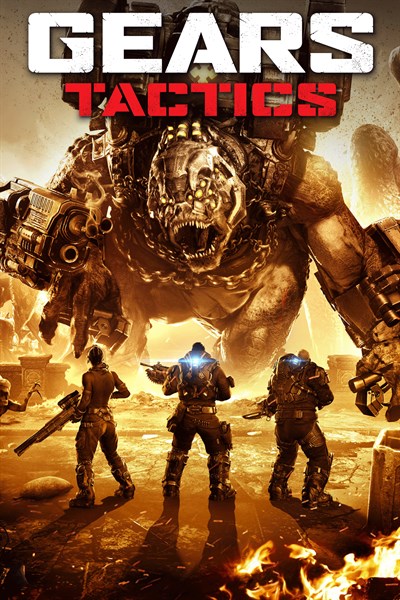
The hulking
Brumak bellows as it launches a salvo of missiles into the sky, then bears down
on my COG Scout, preparing to unload an arm-mounted chain gun in her direction.
Nearby, an emergence hole opens up, bursting forth with bounding Wretches. Make
that two e-holes. Then, for the first time in a Gears of War title, I… stop. I
look around the battlefield. And I think. Think about how bad of a situation
I’m in (very bad), formulate a plan, and execute.
On the surface, the Gears of War franchise doesn’t immediately scream “strategy,” as you survive moment to moment, cover to cover, reload to active reload. But when you look at some of the top strategy games out there, Gears fans’ may find many familiar elements; battlefields rife with chest-high cover, the importance of positioning to flank or get off a shot without exposing yourself, and stakes so high that a single mistake may find you reloading from a checkpoint. I must confess that while playing through recent genre standouts like XCOM 2, Mutant Year Zero, even Mario + Rabbids Kingdom Battle, I’ve found myself thinking “there’s a bit of Gears in here!”
And it *is* nearly here; this week I got my (well-sanitized) hands on the first few hours of Gears Tactics. We’ll keep this look free of story spoilers, but the fact that there is something to spoil speaks volumes about the level of narrative Gears Tactics brings to the genre. While some entries in this genre are non-canon side stories, Gears Tactics yields valuable insights on the events that took place before the Gears of War titles you know and love, told through the eyes of some new, instantly likable heroes.
Let’s talk Tactics: most missions see you deploying a quartet of Gears to the battlefield, choosing from an ever-expanding roster of Heavies, Scouts, Vanguards, Snipers, and Support units. Each character takes three actions per turn, which can be split amongst shooting, moving, and using skills in any way you like. Move, shoot, reload – that can be your turn. Dig in and shoot multiple times – that works too. Or sprint long-distance across the battlefield into cover… you’ve got the freedom to act however you need to, as there is no grid in Gears Tactics. Those skills, by the way, are very Gears – if a Drone gets too close, that Lancer has a chainsaw for a reason (one hit kill!). Powerful melee moves, Support heals, and grenades of various types are moderated by cooldowns to ensure you can’t spam your way to victory.
Gears Tactics brings a unique twist to these actions. If you’re playing defensively and go into overwatch with all your turns banked, you can take up to three shots at enemies who cross your sights on their turn. Conversely, executing a down-but-not-out enemy with a showy finisher inspires your teammates to take an extra action in the current turn. Gears Tactics is a game in which intelligent aggression swings momentum in your favor; a moment of inspiration can take you from being hopelessly pinned down to mopping up stragglers in a single turn.
Once your
objective is achieved, your troops return to their convoy, a mobile base of
operations where you can level up, open equipment cases you find on the
battlefield, recruit and customize troops, and gear up for your next mission. I
spent a lot of time in the convoy, sorting through mods for weapons, and
deliberating on where to spend ability points on a (very extensive) skill tree
unique to each class. You can even customize the appearance of all your troops
and their gear, the better to help them pop on the battlefield.
A word on
difficulty – playing on Normal, the game quickly ramped up, punishing bad
decisions, but (usually) granting me an opportunity to pull myself out of the
fire. Stakes are kept high, as outside of some key heroes, death is permanent. The
result is that I was constantly on the edge of defeat, making even early
victories feel like a legendary triumph. Those new to the genre can lower
difficulty, while true tactical pros will want to engage the no-reloads-allowed
Ironman mode. My playthrough culminated in the aforementioned battle with a
giant Brumak that tested my skills and required more than one attempt to
prevail.
Despite the transition from an in-your-face shooter to a higher-altitude strategic view, your Gears’ key actions are conveyed in close-up sequences that show the brutality of the world of Sera. This, coupled with the familiar report of the Lancer, the meaty clacks of a reloading Longshot, and fully realized cutscenes means Gears Tacticsfeels like a Gears game. If strategy games previously saw you running for cover, Gears Tactics may be the one to change your mind.
Gears Tactics arrives on Windows 10 PC, Steam and with Xbox Game Pass for PC (Beta) on April 28th. Pre-order Gears Tactics or play with Xbox Game Pass for PC (Beta) before May 4 to receive the Thrashball Cole Character Pack which includes Augustus Cole as a recruit and the Thrashball Armor Set, complete with rare abilities.
Series fans will want to check out Gears of War: Bloodlines, the new novel by New York Times bestselling author Jason Hough, that sets the stage for the events of Gears 5 and Gears Tactics, and the father-daughter relationship between the games’ leads, Kait and Gabe Diaz. Gears of War: Bloodlinesis available in paperback, ebook and audiobook on April 21, 2020.
Gears Tactics Pre-Order
Xbox Game Studios
☆☆☆☆☆
★★★★★
Pre-order Gears Tactics or play Gears Tactics on Xbox Game Pass for PC (Beta) before May 4, 2020 and receive the Thrashball Cole Character Pack.* * Offer available with (1) pre-orders/purchases of Gears Tactics digital game made by April 28, 2020 OR (2) play Gears Tactics with an active Xbox Game Pass for PC (Beta) membership by May 4, 2020. Content requires internet to download. May take up to two weeks to receive content in-game. Gears Tactics is the fast-paced, turn-based strategy game set 12 years before the first Gears of War. Cities on the planet Sera are beginning to fall to the monstrous threat rising from underground – the Locust Horde. With the government in disarray, a squad of survivors emerge as humanity’s last hope. Play as Gabe Diaz, recruiting, equipping and commanding your squads on a desperate mission to hunt down the relentless and powerful leader of the Locust army: Ukkon, the evil mastermind who makes monsters. Against all odds and fighting for survival, outsmart your enemy in uniquely brutal, turn-based tactical combat. Experience the intensity of one of the most-acclaimed video game sagas in an exciting new way. Immersive and character-driven story: Play as the defiant soldier Gabe Diaz, rescuing and building your troops in a journey of leadership, survival and sacrifice. Customizable squad and equipment: Prepare your troops to face tough enemies, upgrading their skills and outfitting them with loot collected in challenging missions. Aggressive gameplay: Command your squad in fast paced, turn-based battles, advancing and surviving intense and visceral encounters with the unstoppable, swarming enemy. Massive boss battles: Defeat towering deadly bosses that defy your strategies and completely change the scale of the battle.
Accelerate classified missions with unparalleled connectivity, high availability, and resiliency across three regions with more than 35 services
Azure Government Secret recently achieved Provisional Authorization (PA) at Department of Defense Impact Level 6 (IL6) and Intelligence Community Directive (ICD) 503 with facilities at ICD 705. We’re also announcing a third region to enable even higher availability for national security missions to stay ahead of their unique threats.
Built exclusively for the needs of US government and operated by cleared US citizens, Azure Government Secret delivers dedicated regions to maintain the security and integrity of classified Secret workloads while enabling reliable access to critical data. The first cloud natively connected to classified networks; Azure Government Secret enables customers to leverage options for private, resilient, high-bandwidth connectivity.
Protect national security production workloads with geodiversity across three regions
Azure Government Secret is designed for the unique requirements of critical national security workloads that cannot be served out of a single geographic location. To provide the geodiversity required, Azure Government Secret delivers across three dedicated regions for US Federal Civilian, Department of Defense (DoD), Intelligence Community (IC), and US government partners working within Secret enclaves. These dedicated Azure regions are located over 500 miles apart to enable applications to stay running in the face of a disaster without a break in continuity of operations.
In addition, these regions provide greater choice when working across multiple locations and delivering cloud-to-edge scenarios. With comprehensive cloud services Azure Government Secret enables faster innovation for the mission from cloud to tactical edge meeting the critical availability needs of the warfighter.
Enabling classified missions at scale with more than 35 services
Designed and built for Infrastructure as a Service (IaaS), Platform as a Service (PaaS), Software as a Service (SaaS) and Marketplace solutions, Azure Government Secret provides a broad range of commercial innovation for classified workloads. Some of the services include: identity, analytics, security, and high performance computing to support advanced artificial intelligence (AI) and machine learning.
Operated by cleared US citizens, these new regions are part of Azure Government, delivering a familiar, consistent experience and alignment with existing resellers and programs. Eligible customers can also leverage cleared Microsoft cloud support for their workloads.
Gain speed by connecting directly or extending on-premises networks
With Azure Government Secret, customers can connect natively to classified networks or leverage options for private, resilient, high-bandwidth connectivity using ExpressRoute and ExpressRoute Direct:
Native connection: Agencies with direct connections through US government classified networks can connect natively to Azure Government Secret.
ExpressRoute: Extend on-premises networks into Azure Government Secret regions over a private connection facilitated by a connectivity provider with ExpressRoute.
ExpressRoute Direct: Get the ability to connect directly into Azure Government Secret locations using ExpressRoute Direct.
Continued investments in commercial parity across data classifications
In addition to serving mission customers at DoD IL6 and ICD 503, we continue to invest in rapidly delivering new Azure Government capabilities to support mission needs across all data classifications for any US government customer. In the last six months we’ve continued our drive toward commercial parity, adding hundreds of features and launching 40+ new services and 101 total services in FedRAMP High, with more to come across Azure commercial, Azure Government and Azure Government Secret.
These continued investments enable customers across the full spectrum of government, including departments in every state, all the federal cabinet agencies, and each military branch, modernize their IT to better achieve their missions.
The next (fifth) generation of wireless networks, or “5G,” will enable a host of new opportunities for businesses and society, including autonomous vehicles, smart cities, virtual reality and a range of other smart industry use cases and services. These next-generation networks will create new capabilities, new markets and help advance local economies.
As we’ve seen with other technology transformations, we believe that software can play an important role in helping advance 5G and deliver new network solutions that offer step-change advancements in speed, cost and security. There is a significant opportunity for both incumbents and new players across the industry to innovate, collaborate and create new markets, serving the networking and edge computing needs of our mutual customers.
At Microsoft, we intend to empower the telecommunications industry as it continues its move to 5G and support both network equipment manufacturers and operators in their efforts to find solutions that are faster, easier and cost effective. Today, I am pleased to announce that we have signed a definitive agreement to acquire Affirmed Networks. Affirmed Networks’ fully virtualized, cloud-native mobile network solutions enable operators to simplify network operations, reduce costs and rapidly create and launch new revenue-generating services.
This acquisition will allow us to evolve our work with the telecommunications industry, building on our secure and trusted cloud platform for operators. With Affirmed Networks, we will be able to offer new and innovative solutions tailored to the unique needs of operators, including managing their network workloads in the cloud.
Previous generations of wireless networks have been based on purpose-built hardware. We believe that with innovation in software and by making use of broadly available cloud computing platforms like Microsoft Azure, operators can deploy and maintain 5G networks and services more efficiently, more cost effectively, more rapidly and more securely.
We look forward to building on the great work by Affirmed Networks with its leadership in virtualized mobile networks. Bringing this technology and team of experts into Microsoft allows us to extend our cloud offering to operators everywhere as they increasingly look to run their networks in a hybrid environment. We’re excited about our future together where carriers will be able to better leverage Microsoft’s cloud to improve overall profitability and create new revenue streams.
As we continue to extend cloud-based software defined networking into the world of 5G connectivity, we recognize the importance of deep and strong partnerships and interoperability. To ensure the success of our customers, we will work closely with existing suppliers, emerging innovators and other stakeholders around the world including in Europe, Asia, the U.S. and other markets to help make this vision a reality.
As so many organizations have shifted to remote work during COVID-19, we are hearing inspiring stories from customers discovering new ways to connect, collaborate, and keep business moving. From Sydney, Australia, to Seattle, Washington, schools, hospitals, small businesses, and large companies alike have found inventive ways to enable remote work across their organizations. We want to share what they are learning. Each week we will be spotlighting customers in one impacted region around the globe. First up: the Greater China Region. My colleague Lily Zheng in Shanghai is sharing stories for customers who, faced with extraordinary and difficult circumstances, have found innovative new ways to work.
Since we last heard from Lily and team, the region has begun to move into recovery mode. “Many businesses reopened, and more and more people have started going back to work,” Lily reports. “In the past two months, Teams has certainly played an important role in helping our customers pass through the most difficult time.” Looking ahead, she says: “Teams can play an even bigger role in helping our customers boost their productivity and increase their business resilience.” Here are some examples of how organizations in the Greater China Region kept things moving over the past few months.
Education
With travel bans and health concerns keeping students, faculty, and staff at home over the past months, schools and universities have experienced a crash course in moving to remote learning. In February, the Peking University Guanghua School of Management used Teams to hold a digital school-opening ceremony with thousands of students. Meanwhile, Tamkang University, a private university headquartered in New Taipei City, Taiwan, quickly enabled distance learning for students in China, Macau, and Hong Kong by leveraging Microsoft Teams and cloud resources on their iClass Mobile Learning Platform. A total of 637 students and 1,041 teachers were set up to use the platform in 2,366 classes. Hong Kong Polytechnic University is conducting 120 to 160 concurrent teaching sessions daily through Microsoft Teams, with 10,000 to 11,000 students connecting simultaneously during peak times. And Wellington College International Tianjin, quickly established a solid e-learning program where students have been able to continue their learning journey with lessons conducted over Microsoft Teams.
Healthcare
The healthcare industry has faced extraordinary pressure during COVID-19. We’ve all seen news stories about medical supply challenges, but these organizations have experienced challenges in the IT space, too, including a lack of video conferencing solutions and heavy dependency on manual patient data inputting. Staff at the largest hospital in WenZhou, China, 2nd AffiliatedHospital of WMU, for instance, were unable to communicate with personnel inside the quarantined area. They had never used Teams before, but quickly deployed it and were able to communicate with quarantined-area colleagues. The team at Zhongshan Hospital in Shanghai hadn’t used Teams before the outbreak either, but they put it to use to hold their first remote leadership meeting. “It only took a few days to get reports,” said Mr. Li, Chief of Information Management Center at Zhongshan Hospital, “and we were able to successfully hold our first leader’s meeting, which was well-received by the whole leadership team.”
Commercial
SF-Express is one of the best-known logistics companies in China. CIO Sheng Wang said, “Fortunately, we deployed Teams after we revamped our network branches [in] December of 2019. “It solves our needs for remote working, meeting, and training, and allows our staff to collaborate with high productivity.” DHL Supply Chain China also deployed Teams to handle its increasing remote collaboration needs.
The manufacturing industry has been hit hard by the impact of the outbreak, but also used it to discover new ways to digitally transform. Headquartered in Ningbo, China, Joyson Electronic has more than 100 bases in 30 countries and over 50,000 employees globally. “Microsoft Teams really helps Joyson improve our cross-regional and boundary collaboration productivity during the COVID-19 outbreak,” reported CIO Zong Jia. “We hold daily internal meetings, co-edit documents, and interview candidates on Teams.”
Over 50 percent of China International Marine Containers (CIMC) Group Ltd.’s business comes from export, which brings an urgent need for project-based management and real-time communications. CIMC has been using Teams to easily enable multiple collaborative team channels and remove restrictions imposed by different work locations. They’re finding it facilitates employee collaboration and has helped them complete their first successful step towards a modern workplace transformation.
We hope you’ve found it helpful to read about some of the innovative ways our customers have transformed their organizations during this difficult time. We have seen how schools have moved quickly to remote learning in virtual classrooms, and are continuing to hold important meetings, with Teams. We’ve seen how healthcare workers, faced with communication barriers brought on by COVID-19, have used Teams to connect. And we’ve seen how commercial enterprises are bringing distributed teams together and are bringing formerly in-person-only meetings—including job interviews—online. As the Greater China Region enters a new phase of its COVID-19 experience, we look forward to learning about how they apply what they’ve discovered in the days to come. We’ll be sharing more inspiring customer stories here soon, so check back often.
I doubt I’d be in the role I am now if leaders at one of my first jobs hadn’t taken an interest in my career. Although I taught myself to code when I was young, I graduated from college with a degree in English Literature and began my post-college career in editorial. I worked my way up to Assistant Editor at a math and science college textbook publisher located in Boston, Massachusetts. I was responsible for acquisitions and training on the software that that the company distributed with its textbooks. The senior editors sent me to a conference in Florida to train the sales team on how to present the software to professors. This is where I met Jennifer. Jennifer headed up the network and IT support for our California parent company, and because we shared a room at the conference hotel, we got to know each other, and she saw me present. This interaction proved pivotal. When the publisher created a new position to support a network of AS/400s, Jennifer talked me into applying—and yes, she did have to talk me into it! Like a lot of young professionals, I was intimidated to take on such a different role. But I’m so glad she was looking out for me. It was the start of my career in technology, which ultimately led me to Microsoft.
My experience is a great example of how individuals and company culture can influence the trajectory of someone’s career. To celebrate Women in Cybersecurity month, Microsoft is exploring tactics to increase diversity in the tech industry. In the first post in the series, Ann Johnson wrote about mentorship. In this post, I share some ideas for cultivating the diverse talent that already work at your company to build a strong and diverse leadership team.
Retention is as important as recruitment
When we talk about the lack of diversity in tech, much of the conversation focuses around hiring. And it’s true that we need to dramatically increase the number of women, non-binary, and people of color that we recruit. But if we want to create more diverse technology teams, we also need to address the talent drain. Too often smart technologists with nontraditional backgrounds drop out of STEM careers. Studies have shown that up to 52 percent of women leave technology fields. This is nearly double the percentage of men who quit tech. And for those who think it’s because women don’t enjoy technology, 80+ percent of women in STEM say they love their work. The problem often comes down to culture. Which means it’s something we can fix! I’ve worked with and managed many neuro-diverse teams and here’s what I’ve seen work.
People aren’t books
One of the most famous pictures of Einstein shows him with his hair in disarray, sticking his tongue out. If you didn’t know he was one of the greatest thinkers in the world, you might assume he wasn’t the fastest electron in the universe. Or what does it say that many of us didn’t discover Katharine Johnson, another brilliant physicist, until 2017 when the movie “Hidden Figures” was released.
Our collective mental model for what an engineer or scientist is supposed to look and act like doesn’t reflect reality. Some people have purple hair, some like to work in yoga pants, some listen to loud music on headphones all day, or have creative face tattoos. And many are women or LGBTQ or people of color or disabled. People’s race, gender, appearance and work styles have no bearing on whether they are a hard worker or a valuable contributor. We know this, but often we don’t realize we’ve made a judgement based on unconscious biases.
How to address: Don’t judge people by their “covers.” This starts by acknowledging that your biases may not be explicit or intentional, but they still exist. Listen to what people say. Evaluate the work they produce. Observe how they collaborate with others. These are the indicators of the value they bring. And keep in mind that people who’ve been conditioned to believe that technology isn’t for them, may not exhibit the level of confidence you expect. It doesn’t mean they can’t do it. They may just need a little more encouragement (thank you, Jennifer!).
Women often leave jobs because they feel stalled in their careers. In one study, 27 percent of U.S. women said they feel stalled and 32 percent were considering quitting in the next year. For a variety of reasons, unconscious bias results in straight white men getting more opportunities on high profile projects, more ideas greenlit, and faster promotions. As a result, women get discouraged, do not feel supported and look for other opportunities. That is why in the previous blog, we focused on mentorship.
How to address: Be a champion for women and other underrepresented groups in your company. My relationship with Jennifer is a great example of this. She took an interest in my career, identified an opportunity and helped me get to the next rung. Our relationship was informal, but you can also create a structured sponsorship program. The goal is to go beyond mentorship and become an advocate for promising women, people of color, and other underrepresented groups. Use your influence to get them the right projects, the right advice, and the right exposure to help them advance their careers.
Nurture unique thinkers
Back when I was a manager at KPMG, we used to try to hire people who “think outside the box.” But the tricky part about hiring out of the box thinkers is that their ideas are, well, outside the box. Organizations often think they want people to shake things up but in practice many are uncomfortable being challenged. This leads them to quickly shut down bold new ideas. When original thinkers don’t feel valued, they take all that innovation and creativity elsewhere.
How to address: Build a culture of inclusion where everyone has a chance to share. Not every idea is great; in my career I’ve had more than my share of bad ones! But you should listen to and consider all opinions—even if they seem a little off the wall. It doesn’t mean you have to move them all forward, but sometimes an idea that sounds outlandish one day starts to make sense after a good night’s sleep. Or take a page from the women in the Obama administration and amplify ideas that have been overlooked.
Respect the hours
Not everyone can commit to a regular eight in the morning to six in the evening work week. Many people care for children, sick spouses, and elderly parents—being a caretaker is a skill in and of itself! In fact, this quality of being a caretaker is something that in most technology roles can be a valued asset. In addition to being a caretaker, others can’t work “regular” weeks because they’re finishing degrees or have other time challenges and commitments.
Varied approaches to time also apply to project milestones. People deal with deadlines differently—some get stressed if the deadline is too close (like me!) and do their work in advance, others need that adrenaline pump and wait until (almost) the last minute to deliver.
How to address: Institute and support flexible work hours, job sharing (two people share the same job, both doing it half-time), or three weeks on/one week off work schedules that enable people to contribute without requiring them to keep the same hours as everyone else. Trust that people can be productive even if they don’t work the same way or at the same time as your typical employee.
To build a diverse, experienced team of leaders, you need an environment that supports and accepts differences of all kinds. Don’t let bias about gender, appearance, or the hours someone can work get in the way of nurturing all those great hires into the next generation of great leaders. Our senior director for our cybersecurity operations team, Kristina, looks for diversity as this helps with managing the diversity of threats. Listen to her thoughts on diversity in our CISO Spotlight Episode 7.
What’s next
For those interested in how to find more diverse talent, next week Theresa Payton will share ideas from her experience recruiting girls, women, and other people with differing backgrounds into technology.
In the meantime, bookmark the Security blog to keep up with our expert coverage on security matters. Also, follow us at @MSFTSecurity for the latest news and updates on cybersecurity. To learn more about our Security solutions visit our website. Or reach out to me on LinkedIn or Twitter.
A lot has changed in Sea of Thieves since Rare’s shared world pirate fantasy first set sail in March 2018. Thanks to a series of major content updates in the first year – including the game-changing Anniversary Update – and a recent commitment to regular monthly updates, the game has grown and evolved at a scale that few other service-based games can match. Even better, all content has been added for free!
To celebrate the game’s second anniversary, here are 38 of the biggest things that have been added over the past two years. If you’re yet to try the game or haven’t played for a while, be sure to jump in by trying it out with Xbox Game Pass or buying the game on the Microsoft Store or your local retailer. Sea of Thieves’ uniquely horizontal progression system means that you can set sail again at any time and not be at a disadvantage against other players.
1) Tall Tales Tall Tales are Sea of Thieves’ unique take on a story-driven campaign, offering cinematic quests within the game’s emergent shared world. The first collection of stories, Shores of Gold, take players on an epic adventure in search of a lost island and magical treasure, while recent additions ‘The Seabound Soul’ and ‘Heart of Fire’ tell a whole new story. Available to solo players or crews of any size, there are eleven Tall Tales in total which should keep you occupied for up to 30 hours.
2) The Arena Added as part of 2019’s mega Anniversary Update, The Arena is a standalone competitive game mode that lets crews battle it out in fixed-length contests described by Eurogamer as “glorious, consequence-free PvP carnage”. The Arena also features its own Trading Company – the Sea Dogs – with which you can earn reputation and rise in rank, together with its own social space and cosmetic rewards.
3) The Megalodon The game’s first Megalodon – think Jaws on steroids – was added to the game in its first major content update, The Hungering Deep. This fearsome giant shark was an emergent threat that could attack ships at any time, with rewards for crews who could defeat it. It was later followed to the Sea of Thieves by many dangerous Megalodon variants, including rare species like the legendary Shrouded Ghost.
4) The Devil’s Roar The Devil’s Roar is a wild and dangerous world region that was added to the game with the Forsaken Shores content update (wonderfully brought to life by actor and comedian Matt Berry). This world region is full of natural perils including volcanoes, lava, geysers and superheated water. So dangerous is The Devil’s Roar that its Ashen treasures deliver sizeable gold and reputation gains when cashed in.
5) Skeleton Ships The introduction of Skeleton Ships in July 2018 changed the game by allowing players to engage in ship-to-ship combat outside of PvP. These fearsome sea-based threats can be found sailing beneath the ship-shaped cloud, and can burst from beneath the waves without warning to ambush unsuspecting pirates. Sink them and take their treasure!
6) Fog Providing the ‘Shrouded’ bit of November 2018’s Shrouded Spoils content update, fog brought both atmosphere and gameplay depth. Exploring islands in thick fog adds an additional layer of threat and complexity, while clever captains can use the swirling mists to hide their ships from other crews…
7) Maiden Voyage The Maiden Voyage is a tutorial that goes the extra mile. Set just outside Sea of Thieves’ shared world, the Maiden Voyage is the perfect opportunity for new pirates to find their sea legs in a safe space. And while it’s perfect for new players wanting to learn how to play, it also offers plenty for more experienced players including a chance to meet the Pirate Lord himself and earn some exclusive cosmetics.
8) Fire The addition of fire turned up the heat on players when it was added to the game last November. Fires can be started by firebombs, angry Chests of Rage or through less aggressive means, such as leaving food on the ship’s stove unattended. One thing’s for sure, fire had a huge impact on the game and proved that Alfred Pennyworth was right when he observed: “Some men just want to watch the world burn.”
9) Lots of lovely emergent loot Back at launch, finding treasure could be a difficult business. But these days the Sea of Thieves is positively awash with loot, with Barrels of Plenty (floating barrels of bonus treasure), emergent Skeleton Captains, increased shipwreck loot, Mermaid Statues and their valuable gems, treasure maps in barrels, more washed-up treasure and rewards for defeating the Megalodon, Kraken and Skeleton Ships.
10) Fishing People asked. And asked. And asked some more. So as part of the Anniversary Update, Rare added a huge fishing mechanic to the game that offers hours of distraction from epic adventuring. There are 10 main types of fish, each with their own variants, some of which can only be caught in specific world regions with the right bait and conditions. You can cook and eat fish to restore health, or cash them in with The Hunter’s Call Trading Company found at any Seapost. Sea of Thieves’ fishing was the highest-rated experience in PC Gamer’s article ‘Which PC game has the best fishing?’.
11) The Hunter’s Call Trading Company Headed by the lovable Merrick (of The Hungering Deep fame), The Hunter’s Call is a Trading Company that rewards players for catching and cooking fish or meat. Unique among Trading Companies in that its representatives are located at Seaposts rather than Outposts, The Hunter’s Call offers a more leisurely path to Pirate Legend status.
12) Cargo Runs Introduced to the game back in the Forsaken Shores update, Cargo Runs are a twist on the standard Merchant Alliance quest. Collect and deliver valuable cargo to various locations across the Sea of Thieves, both on time and in good condition, for a handsome payday.
13) Legends of the Sea Sea of Thieves’ world has always contained Easter eggs that celebrate the stories of our most legendary players. Umbra’s sidequests, introduced in January 2020’s Legends of the Sea update, offer players the chance to earn Commendations and Doubloons for tracking down the stories behind these inspiring and entertaining player immortalisations.
14) Fort of the Damned Raiding Skeleton Forts has always been an essential part of the Sea of Thieves experience, but the Fort of the Damned is a standout encounter. Released in time for Halloween 2019, this spooky Fort represents a major upgrade on the raid experience, both in terms of challenge and reward. Unlike other Forts, the Fort of the Damned can be activated on demand by crews who want to unlock its treasures again and again.
15) Gunpowder Skeletons First came skeletons. Then skeletons with weapons (including snipers and cannoneers). But things got serious once the skeletons of the Sea of Thieves discovered that Gunpowder Barrels also make very effective weapons. Boom!
16) Stronghold Kegs Available through raiding Forts, Stronghold Kegs are Gunpowder Barrels that make a really big bang (colloquially known as “mega-kegs”). These rare items command a high price from the Merchant Alliance, or they can be used as devastating weapons against all manner of enemies…
17) Reaper’s Chests Reaper’s Chests are high-value chests found emergently in shipwrecks across the Sea of Thieves, and reveal their location through a mysterious beacon that rises up to the sky. But beware – once a Reaper’s Chest is recovered, other crews will be able to see on the map that you have this valuable reward and can hunt you down.
18) Pets Every pirate needs an animal companion. The Pirate Emporium, added to the game in September 2019, brought with it a range of lovable pet parrots and monkeys, with more types still to come. Available in various breeds and colours, pets can also be dressed up in costumes for added hilarity. These furry and feathered sidekicks are an essential addition to any crew.
19) More than 100 new emotes Emotes have always been a popular way for players to express themselves, but the addition of the Pirate Emporium has seen more than 100 new emotes added to the game. From the classic “we’re flying” emote inspired by a certain sea-based movie to the infamous “Crab Dab”, there’s something for every pirate and every situation.
20) Cursed Cannonballs Introduced to the game as part of July 2018’s Cursed Sails update, Cursed Cannonballs are powerful weapons that can be found emergently in the world. Each of the eleven types of Cursed Cannonballs imparts a powerful, time-limited effect on an enemy, from making them dance to rendering their cannons impotent.
21) Cooking Not only did the Anniversary Update bring fishing and hunting to the game, it brought cooking to legions of hungry pirates. Food can be cooked using the stove aboard every ship or at campfires. Once perfectly prepared, cooked food can be eaten to restore health or sold to The Hunter’s Call for a premium.
22) The Bilge Rats The Bilge Rats are an unofficial Trading Company who arrived in Sea of Thieves in summer 2018. Dedicated to celebrating a pirate’s life of adventure outside the traditional Trading Companies, Duke and his motley crew give players a range of regular sidequests which can unlock additional rewards and cosmetics.
23) Alliances Sometimes it can be Sea of Friends, thanks to the Alliance feature that lets two or more crews team up to improve the odds and share the rewards. Perfect for pirates looking to earn loot in a hurry, and a great way to meet other players and make friends.
24) Creator Crew With its emphasis on player freedom and creativity, Sea of Thieves is a hugely watchable game. The Creator Crew is a programme which helps budding streamers and YouTubers get noticed, offering asset packs, opportunities to have work shared across official channels and ‘How To’ tutorials for improving content. What’s more, there’s also the chance to unlock exclusive cosmetic items by completing creator challenges. Go create and share your pirate stories!
25) Brigantines Another feature that was introduced in the Cursed Sails update, the Brigantine is a ship type made for three players. More agile than a Galleon but boasting significantly more firepower than a Sloop, Brigantines soon became a player favourite.
26) Rowboats Originally introduced in the Forsaken Shores update as a tool to deal with the superheated waters of the volcanic Devil’s Roar region, Rowboats are perfect for pirates looking to move around more loot than they can carry or sneak up on larger ships undetected. Racing them can also be fun!
27) The Harpoon Every ship – and even some Rowboats – now come equipped with harpoon guns. These handy tools can be used in lots of ways, from plucking resources out of the water to making a sharp turn around an island. They can also be used to steal treasure from unsuspecting pirates in what has become known within the community as a ‘zoink’.
28) Doubloons and the Black Market The arrival of the Bilge Rats on the Sea of Thieves also introduced a brand new currency which could be earned for completing time-limited events, a range of sidequests or by unlocking certain Commendations. Once earned, valuable Doubloons can be exchanged for rare cosmetics through the Black Market, or used to buy favour with the main Trading Companies and level up faster.
29) Seaposts Dotted around the Sea of Thieves, Seaposts are mini-Outposts. They offer crews a great opportunity to stock up on resources, plus you’ll find traders who’ll sell a variety of cosmetics at a discount. Seaposts are also home to The Hunter’s Call, so they’re where you need to go to sell fish and meat.
30) Chest of Rage Added recently in February 2020, the Chest of Rage is the latest Cursed Chest to be found within the game. These rare and valuable chests are filled with fury which vents itself regularly if not kept cool, making this a high-risk (but high-return) item which can also double up as a powerful weapon…
31) Collector’s Chests Originally introduced as part of Tall Tales: Shores of Gold, Collector’s Chests – chests that can be opened and will hold whatever treasure you put in – have recently been added as rewards for solving riddle quests. What does that mean? More loot!
32). Tucking Tucking, you say? What on earth is that? Let us explain. Pioneered by several high-profile streamers, ‘tucking’ in Sea of Thieves involves using emotes such as sleeping and sitting to hide aboard other players’ ships (the emote hides the gamertag above a player). Opening up a stealthy – not to mention hilarious – new way to play the game, tucking was officially recognised by the addition of a number of hide emotes to the Pirate Emporium (one of which is available to players for free).
33) Expanded ship customization Having a cool-looking ship is one of the best parts of Sea of Thieves. Every pirate takes pride in how their vessel looks, plus a ship’s visibility from distance means that it’s your calling card in the world. Since the Shrouded Spoils expansion, players can now determine all elements of how their ship looks including the sails, figurehead, hull, capstan, cannons, wheel and flag. Get customising!
34) Skeleton variety While the principal threat on land for pirates remains skeletal in nature, the threat has expanded through the addition of a number of skeleton variants – such as Gold, Plant, Shadow and Ashen – that each pose a different challenge. What’s more, you’ll also run into Skeleton Captains (and their crews) around the world, and may even encounter a fearsome Skeleton Lord…
35) Speaking Trumpet The Speaking Trumpet is a handy tool for anyone looking to communicate with another crew. Kind of like a pirate-themed megaphone, the Speaking Trumpet amplifies the distance over which voice and text chat can be heard by other crews. Perfect for communicating with other ships without getting too close (just in case).
36) Throwable weapons Throwable weapons offer more combat variety and come in two main flavours. Firebombs, as the name suggests, explode on impact and set fire to anything and anyone in the vicinity. Blunderbombs are closer in style to a grenade, dealing damage to (and knocking back) anyone in their blast radius.
37) Chainshot Another new game feature added just this March, chainshot is a new ammo type that can be loaded into cannons and used to take down another ship’s mast. Bringing more tactical depth to ship-to-ship combat, there’s nothing more satisfying than felling another ship’s mast in a single shot.
38) Another 1200 gamerscore Last but not least, the ever-expanding quantity of content in Sea of Thieves has also meant the addition of hundreds of new achievements and another 1200 gamerscore to play for (making a total of 2200 in all).
And there’s more! We haven’t even mentioned combat improvements, new musical instruments and more shanties to enjoy, hundreds of extra cosmetic items, a wealth of new Commendations or the countless ongoing quality of life improvements across all areas of the game. Visit the official Sea of Thieves website to see more about the latest updates, and for the latest on all things Xbox stay tuned to Xbox Wire.
As the world comes together to combat COVID-19, and remote work becomes a critical capability for many companies, customers have asked us how to best maintain the security posture of their cloud assets while enabling more remote workers to access them.
Misconfiguration of cloud security controls has been at the root of several recent data breaches, so it’s extremely important to continue monitoring your security posture as usage of cloud assets increases.
To help you prioritize the actions that you need to take, we are listing three common scenarios for remote workers and how to leverage Azure Security Center security controls to prioritize relevant recommendations for these scenarios:
1. As more users need to access resources remotely, you need to ensure that Multi-Factor Authentication (MFA) is enabled to enhance their identity protection.
Azure Security Center has a security control called Enable MFA, ideally you should remediate all recommendations that are part of this security control, as shown below:
2. Some users might need remote access via RDP or SSH to servers that are in your Azure infrastructure.
Instead of allowing full 24 x 7 access to those servers, ensure that you are using Just-In-Time (JIT) VM access to those servers. Make sure to review the Secure management ports control in Azure Security Center and remediate the recommendations that are relevant for this scenario.
3. Some of the workloads (servers, containers, databases) that will be accessed remotely by users might be missing critical security updates.
Review the Remediate vulnerabilities control in Azure Security Center to prioritize the updates that must be installed. Make sure to review the result of all recommendations in built-in vulnerability assessment and remediate those items.
Security posture management is an ongoing process. Review your secure score to understand your progress towards a fully compliant environment.
Users of Azure are likely just a portion of your user base. Below is additional guidance on enabling and securing remote work for the rest of your organization: