The relaxing life simulation Pokémon Pokopia has been a huge hit for Nintendo and The Pokémon Company, and to encourage even more Switch 2 sales, Nintendo has now announced a new bundle.
This bundle will be available on 5th June 2026 and contains the Switch 2 system with a full game download for the title.
No details about pre-orders or the price have been revealed at this early stage, but it will be available at “select retailers” and on the My Nintendo Store. The catch is it’s only confirmed for Australia and New Zealand right now.
Nintendo: Build your charming utopia with this Nintendo Switch 2 + Pokemon Pokopia bundle, available from 5th June! Keep an eye out for this bundle on My Nintendo Store and select retailers in Australia & New Zealand.
We’ll provide more details about this bundle soon, and if we hear about this bundle’s availability outside of this location, we’ll let you know. This announcement follows the release of a Switch 2 bundle featuring Pokémon Legends: Z-A. Nintendo has also released a Switch 2 bundle including Mario Kart World.
When Pokémon Pokopia was launched earlier this year in March, its sales surpassed 2.2 million units globally in just the first four days. Although the title received an in-store release, it is a game-key card.
Would you be interested in this bundle? Let us know in the comments.
Although the Switch 2 version of 007 First Light has been delayed, the title from the Hitman developer IO Interactive is still on its way to other platforms this month, and new details are now emerging.
If you’re wondering about the length of Bond’s new mission, it seems we now have a vague idea about how long a single playthrough will take to complete.
YouTube JorRaptor apparently spoke to the title’s gameplay director and some other members of the development team, and was supposedly told 007 First Light will take the average player around 20 hours to finish the main campaign (thanks for the heads up, Insider-Gaming).
“We’re looking at a 20 hour campaign for the average player, and this is without the recently announced Tactical Simulator that will see brand new missions added, ever after launch.”
So, depending on the difficulty level of the playthrough and the skill of the player, it may take less or even more hours to complete. Of course, similar to Hitman: World of Assassination, there’ll also be a range of missions via a separate mode (known as the Tactical Simulation mode), where players can compete in new challenges to earn the best high score.
If we hear anything else about the length of 007 First Light’s main game campaign, we’ll provide an update. This title launches on PlayStation, Xbox and PC on 27th May 2026 and will arrive for the Switch 2 “later this summer”.
Pokémon has a huge scalper problem: it feels like we see a story every day about exclusive merchandise and cards being sold for extortionate prices online. And it’s happening again thanks to a collaboration between The Pokémon Company and US retail giant Target.
Kotaku reports that, specifically, scalpers are setting their sights on Pokémon themed Pop-Tarts, which you can only buy at Target. The extremely-sugary breakfast treat comes with an exclusive Pikachu box and contain 6×2 wrapped pastries in Frosted Vanilla flavour. At just under $3 a box, it’s… reasonable enough.
But if you can’t find any in your local Target store, then you’ll soon find that sellers are putting boxes of the stuff for sale for more than $10 a box on eBay. We saw one box on sale for $34.99, excluding shipping. Madness.
And, as Kotaku rightly points out, this isn’t the first time Kelloggs and TPC have teamed up: back in the late ’90s and early 2000s, the collaboration went much further than just a Pikachu on a box, with Pokémon-themed sprinkles and a new Wild Cherry flavour.
There was even another collab where, as well as a little sugar boost at breakfast, you also got a minifigure.
Scalpers are clearly leaning on that FOMO; one quick search for Pokémon Pop=Tarts didn’t just bring up the new Target version, but plenty of social media posts begging TPC to bring back these classic ones. The Target ones are much simpler.
Of course, it’s not just the Pop-Tarts that are being scalped, that’d be too simple: the whole range of Target merch, which only launched this weekend, is already being sold for ridiculous prices. Do you want to pay $249.95 for a jacket? That’s double the price of it in-store, and it’s out of stock in most places, including online.
So, you either have to get lucky or wait for a second drop, which is apparently coming later in the year.
Just as baffled as us? Let us know in the comments whether you’ve managed to try these.
Please note that some external links on this page are affiliate links, which means if you click them and make a purchase we may receive a small percentage of the sale. Please read our FTC Disclosure for more information.
The latest UK physical charts data is here, and despite competition from a few new releases, Tomodachi Life: Living the Dream has reclaimed the top spot.
Last week, the zany life sim was pushed to one side by Capcom’s brand new IP Pragmata, but the third-person adventure shooter has slipped all the way down to tenth.
We thought for sure that Housemarque’s PS5 exclusive Saros would grab the top spot, but we suppose you can’t beat a good ol’ bit of internet memeing, hey? The other new release of the week is fighting game Invincible VS (which also isn’t on Switch 1 or 2) which managed to debut in seventh.
In terms of other Nintendo releases, Pokémon Pokopia is back in the top five, while EA SPORTS FC 26 has shot up the charts from 29th to fourth: must be World Cup fever building up. Mario Kart World remains in eighth, and Cyberpunk 2077 also sticks to second — though almost all copies of that are selling on PC and PS5.
So, not too many surprises: here’s the full top 40, with platform breakdowns for games available on Switch, Switch 2, and other consoles:
The two suns have risen on yet another Star Wars Day — May the Fourth be with you, my fellow Rebels — so my thoughts have naturally drifted to what we can expect to see from Switch 2 in the coming years, as far as a galaxy far, far away is concerned.
The console has been treated to just the one Star Wars game thus far (I won’t sing the praises of Outlawsagain, fear not), and, at the time of writing, there aren’t any more on the release schedule. But that’s just the Switch 2 side of things.
There are a bunch of Star Wars titles slated for other platforms in the near future, and today, I want to weigh up their chances of making the jump to Nintendo’s little hybrid.
To be clear, I’m only talking about games that are definitely real and happening as of 2026. Below, I’ve listed these games, accompanied by a trailer, description, a breakdown of their Switch 2 likelihood, and a score out of 10 for the chances they’ll come our way at some point.
It’s all predictions, of course (no Bothan spies were employed to retrieve this information), but it’s always fun to dream…
Upcoming Star Wars Games – Will They Come To Switch 2?
Set during the High Republic era, Star Wars Eclipse is an intricately branching action-adventure game that can be experienced in many ways, and puts the destinies of multiple playable characters in your hands, created in collaboration between Quantic Dream and Lucasfilm Games.
It’s difficult to make any predictions about Star Wars: Eclipse, given that we still know so little about it. Originally announced at The Game Awards 2021, all that we’ve really heard out of developer Quantic Dream’s narrative adventure game in the years since is the studio departure of its lead writer. At last count, the game is supposedly “years off from completion“, with the team pinning their hopes on the PC multiplayer free-to-play game, Spellcasters Chronicles, to fund the project.
Hmm, it’s not looking great for a Switch 2 release (or any release, for that matter), then.
Led by Casey Hudson, Game director of the original Star Wars: Knight of the Old Republic and the Mass Effect trilogy, the team of veteran game developers and storytellers at Arcanaut Studios is crafting an epic interactive adventure across a galaxy on the brink of rebirth where every decision shapes your path towards light or darkness.
It’s yet another one that we know very little about for now, but if that blurb and reveal trailer weren’t enough of a giveaway, Fate of the Old Republic looks like it’ll demand quite a lot of power (unlimited power). I’ll have to see some actual gameplay to make a proper judgment call on this one, but from what we’ve seen so far, I can’t imagine it’ll make it to Switch 2 without some serious compromises.
The Empire’s grip on the galaxy has finally broken, and with its fall comes a new obsession: speed. As the New Republic struggles to rebuild, gambling, entertainment, and glory fuel a booming underground. Out of this chaos, the Galactic League is born: an unsanctioned racing circuit where syndicates sponsor pilots, fortunes are won and lost in seconds, and only the bold survive.
We all have fond memories of playing Star Wars Episode I: Racer on N64, right? Well, this looks like the spiritual successor to that… meets Burnout.
Star Wars: Galactic Racer launches on 6th October 2026 and while it’s only slated for PS5, Xbox Series and PC at the moment, it feels like it’d be right at home on Switch 2. This is the debut title from UK-based studio Fuse Games, so there’s no Nintendo history there, though publisher Secret Mode has brought a bunch of adorable indies to the system in recent years.
Galactic Racer is a big project, it’s true, coming with all the demands of a fast-moving racing game made in Unreal Engine 5 (which Digital Foundry has previously touched on the difficulties of using on Switch 2), but something like Fast Fusion shows that the gameplay can work on the system. I’m not ready to write this one off just yet.
Switch 2 likeliness: 6/10
‘Star Wars Jedi 3’
Image: Electronic Arts
We know that a third entry in Respawn Entertainment’s Star Wars Jedi series is in the works, but we have little else to go on outside of that.
I love Cal Kestis and his ‘Jedi’ games, though the first two were never going to run on Switch 1. Switch 2 might be a different question, mind you, and a port of the first two entries might just be the perfect way to kickstart the marketing for number three — they only used Unreal Engine 4, let’s not forget.
So, it’s a potential, but there’s so little evidence to hang anything on at the moment (paired with Respawn’s lack of previous Switch ports) that I’m going to stay a little hesitant on this one.
With Star Wars: Knights of the Old Republic – Remake, our hope is to give both series newcomers and long-term fans an experience that can live alongside the very best modern releases. We’re rebuilding it from the ground up with the latest tech to match the groundbreaking standard of innovation established by the original, all while staying true to its revered story.
Remember way back in 2021 when Aspyr revealed it was working on a remake for Star Wars: Knights of the Old Republic? Yep, I had forgotten about it too. However, just last month, Saber Interactive chief creative officer Tim Willits confirmed that the game is “still in development”, so that’s something.
We still know so little about this one that it’s difficult to make much of a prediction. The original KOTOR arrived on Switch eventually, though the remake was specifically billed as “a console exclusive on PlayStation 5 at launch” upon reveal, and I don’t see that changing any time soon.
That said, there’s always hope for a future Switch 2 release somewhere down the line.
Step into the shoes of Hawks, a former Republic officer who leads Zero Company – an unconventional outfit of professionals for hire hailing from across the galaxy. Hawks and Zero Company are recruited for an operation that pits them against an emerging threat that will consume the galaxy if left unchecked. To succeed, Hawks will lead a team of uneasy allies who must set aside their differences to overcome nearly impossible odds.
A single-player turn-based tactics game set immediately after the Clone Wars? Yes please. On paper, Star Wars Zero Company feels like a good fit for Switch 2 — XCOM-meets-Star Wars is a tempting proposition — and publisher EA has shown a decent willingness to support the system in its first year, with FC 26, Apex Legends, Split Fiction and Madden all making the jump across.
That said, co-developers Bit Reactor and Respawn Entertainment were hardly prolific on Switch, and it seems to be another Unreal Engine 5 joint, which might not be the easiest for a Switch 2 port.
So, a game that certainly looks the part, but might prove more difficult in practice. Still, I think it has the strongest chances of coming to the console of all the games here.
Switch 2 likeliness: 7/10
Still a lot to look forward too, then, just maybe not on Switch 2! Which of the above titles would you most like to see come our way? You can let us know in the following poll, then take to the comments to share what excites you the most.
Which upcoming Star Wars game would you most like to see on Switch 2? (327 votes)
Star Wars: Eclipse4%
Star Wars: Fate of the Old Republic13%
Star Wars Galactic Racer29%
Star Wars Jedi 324%
Star Wars: Knights of the Old Republic – Remake14%
8BitDo makes some killer accessories, producing high-quality yet surprisingly affordable controllers that many consider to be better than first-party offerings.
Its Arcade Controller, the leverless alternative to its earlier Arcade Stick, is one of the most affordable options on the market, and a great entry-point for those looking to play fighting game competitively. Its tactile buttons felt satisfying to press, the aesthetics were spot on, and it came with all the features you’d expect to find in a much more premium device at a fraction of the cost.
But for as good as the switches felt to press, they were really bloomin’ loud, and this was easily the biggest downfall for the Arcade Controller. So now, 8Bitdo is offering two new options to mitigate this.
The first is the Arcade Controller – Signature Edition at £79.99 / $94.99, which features a lovely transparent purple colour alongside signatures from professional fighting players Vxbao & Zhen. It boasts pretty much the same features as the original except in one key area: the buttons. Rather than the loud, clicky Kailh Wizard switches, this one contains Purple Glede switches that are practically silent with a much lower profile.
So with a quicker actuation point and a subtle, almost imperceptible cushiony base, the new switches are incredibly responsive with none of the ‘clickity-clackity’ noise that plagued the first model. It’s also much easier to execute sliding techniques now that the buttons sit lower.
So let’s check it out:
Image: Ollie Reynolds / Nintendo Life
Now, if you already own the original Arcade Controller and don’t fancy forking out for the Signature Edition, 8BitDo has also released the Upgrade Pack at $29.99 (there’s no UK price from what we can see).
This includes 16 replacement Purple Glede switches to emulate the Signature Edition along with some swanky golden button caps. We weren’t sure how this would look from the promotional images, but it’s really nice in person, and you can mix and match the black and red colours from the original to great effect.
You’ve also got a standard keycap puller and a plain wrist rest. The latter feels a little superfluous since it’s always good practice to keep your wrists elevated when using arcade controllers, but it feels suitably heavy and high-quality.
Image: Ollie Reynolds / Nintendo Life
Please note that some external links on this page are affiliate links, which means if you click them and make a purchase we may receive a small percentage of the sale. Please read our FTC Disclosure for more information.
What do you make of 8BitDo’s Signature Edition controller? Do you prefer tactile switches over quieter ones? Let us know with a comment.
We’ve seen a fair few snazzy fan-made Switch dock covers in our time, but few have appealed to our current obsession with Tomodachi Life: Living the Dream quite like this one.
Instagram creator rocketlab_design recently popped up on our Reels feed with a Switch dock cover that takes ‘the Dream’ to the extreme. You see, this dock is an accurate replica of the Fresh Kingdom — the in-game supermarket where you find all sorts of food for your Miis.
Packing in all the details you’d hope to see, including the rooftop lettuce and baguettes, the design is capable of holding either a Switch 1 or 2 dock, and rocketlab has put the blueprints up for grabs on their makerworld account.
The finished product is quite the looker (we’ve attached the Reel showcasing it below), but the creator also made a video of the build process, which you should check out if you want to see how all those little pieces fit together.
We never doubted it, but the Tomodachi Life community has come at the Switch entry with all the creativity you’d expect. Sharing those in-game creations hasn’t been the easiest, thanks to Nintendo’s restrictions, but we’ve already seen enough lifelike (and creepy) Mii designs for a lifetime.
What do you make of this fan-made dock cover? Let us know in the comments.
Nintendo of America’s former president, Reggie Fils-Aimè, has described how a request for “an obscene amount of support” from Amazon during the Wii and DS era ultimately led to the withdrawal of both systems from sale on the site.
Speaking at the NYU Game Centre lecture series (thanks, Eurogamer), File-Aimé states that an Amazon executive spoke with him to request enough financial support so that the company could undercut the likes of Walmart on price.
Fils-Aimé rejected the request outright, with Nintendo of America completely withdrawing both the Wii and DS from sale on Amazon. Here’s what he had to say:
“At that time, just in the Americas, I was selling ten million Wiis, DS’ a year. We’re driving a lot of revenue. We had a lot of scale. And, at the time, Amazon was looking to get bigger into the video game space. Amazon’s mentality back then was that they wanted to have the lowest price out in the marketplace, even lower than Walmart.
“One of their executives called me… Well, it was a conversation that got to me after it had progressed through all of the levels of my sales organisation, and essentially what Amazon wanted is an obscene amount of support – financial support – so they could have the lowest price and beat Walmart. I literally said to the executive, ‘You know that’s illegal? I can’t do that’. You know you get silence on the other end, and it’s like: ‘Well, but this is what I want.’
“And literally… Literally, we stopped selling to Amazon, and it’s because I wasn’t going to do something illegal. I wasn’t going to do something that would put at risk the relationship we have with our other retailers. But it also set the stage to say, ‘look, you’re not going to push me around. This is the way we do business’. And so, that’s how, over time, you build respect.”
“Jump forward a number of years, we’re getting ready to launch the Switch. We wanted every retailer to participate with us and go big, and Amazon was right there at the table. Supported the launch exceptionally well. But it was based on mutually beneficial approach that led to that type of strong business result.”
Pretty cool to hear Reggie being so assertive, right? The executive was a huge presence at Nintendo during his time at the company, ultimately retiring in 2019 during the height of the Switch. His successor, Doug Bowser, took over as president until 2025, after which he was then succeeded by current president Devon Pritchard.
What do you make of Reggie’s story here? Share your thoughts with a comment down below.
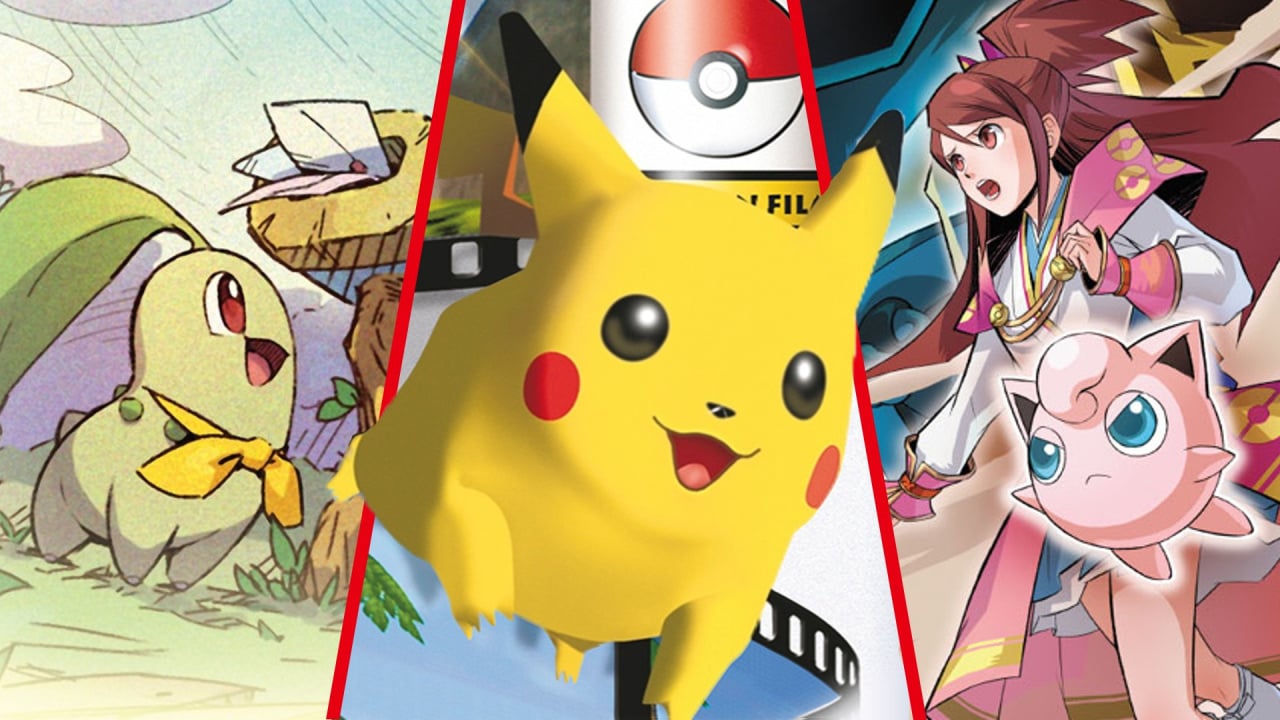
Pokémon Pokopia and Pokémon Champions launched nearly two months and one month ago, respectively, so today we’re revisiting our reader-ranked list of Pokémon spin-off games to see where they’ve both settled in.
Remember, you can influence the real-time ranking even now by giving any of the games below a User Rating. Enjoy!
If there’s any franchise that’s no stranger to a spin-off or two, it’s Pokémon. The inherent appeal of the little Pocket Monsters makes the series ripe for all kinds of genres and video games. Name a genre, and Pokémon has most likely done it.
But, dear readers, what’s the very best Pokémon spin-off? That’s what we’re here to find out!… Why else would you be here?
Though some of Pokémon Friends‘ puzzles can be fun, even the best ones begin to grow stale after only a few hours, as they’re so quick to complete and pop up so often, which dampened our enthusiasm for unlocking Mudkip and Jirachi plushies to decorate our rooms.
Unfortunately, we have no desire to boot up Pokémon Friends daily for a few quick puzzles like how we rip packs in TCG Pocket, leaving us with the sense that this puzzle package will fade into the background with other casual Pokémon spin-offs, forgotten until the next Presents announcing a handful more overpriced puzzle packs. A shame.
Other than the odd camera-darkening problem, we actually like Pokémon Smile. It isn’t going to give Smash Bros. a run for its money or anything like that, but it isn’t trying to: it’s a light-hearted, free way of trying to inject a little fun into an otherwise mundane task.
Just bear in mind that it can be a little harsh when it comes to judging your brushing, and so you need to prepare your child for the reality that they won’t be catching a Pokémon every time they play. Essentially, it’s a fun little app to use to help get your kids into brushing their teeth, but little more than that.
For the first Pokémon game to be released on the DS, Pokémon Dash was something a little bit different. Using the stylus to control and race with Pikachu was a novel idea, but given the creativity of other DS games at the time, it soon became outdated.
It’s also a little bit too short for what it is, and it takes only a handful of hours to complete all of the races. As a result, this is often considered one of the weaker Pokémon spin-offs. On a console that already has plenty of other games (mainline and side), this one isn’t worth dashing for.
Pokémon Rumble Rush was charming and it could be fun if you like collecting things. Pokémon fans like that, right?
However, the awkward map feature and the requirement of refining ore to get gears to boost the Pokémon meant it was sometimes a needlessly frustrating grind, and with the inclusion of a two-week deadline between area swaps, there was unwelcome added pressure thrown into the mix.
This free-to-play Pokémon outing didn’t set the world on fire, then — which meant the service shut down in July 2020, just a year after launching on iOS — but the truly dedicated fans who followed the Rumble series enjoyed it all the same.
In the ’90s and 2000s, everyone wanted to be friends with Pikachu, and what better way than talking to him through a microphone and having him act out all of your requests? Sadly, Hey You, Pikachu! is infamous for all of the wrong reasons.
At first glance, using the microphone seems like a technical marvel, but in practice, the game just doesn’t work properly. With limited gameplay, Hey You, Pikachu! is more of a curio than something you should seek out and play. Still, it might appeal to the kids, and we are fans of weird, little-supported periphrals.
The core mechanics of online competitive battles remain as solid as a Steelix in Pokémon Champions. Predicting whether your opponent will switch out their Whimsicott, protect with their Mega Charizard Y, or try to catch you off guard with a powerful, offensive attack creates mind games as addictive and intense as ever.
The ease with which you can now train Pokémon has us hopeful that Champions will, much like Scarlet & Violet before it, evolve into a more complete, comprehensive experience. But as it stands at launch, the convoluted monetisation, disappointing performance, and inexplicable bugs make this another lacklustre Pokémon experience to add to the pile.
My Pokémon Ranch was chock full of missed potential. There’s no question it was an ideal game for young, fledgling Pokémaniacs to freely watch and interact with cuddly Pokémon of all shapes and sizes while looking forward to new toys and Pokémon daily. As long as you kept your expectations in check, you may have found yourself charmed by this goofy WiiWare title.
A few seriously misguided storage-related decisions — such as no interface to conveniently organise all the Pokémon you have stored — compounded its problems, though.
Learn With Pokémon: Typing Adventure is an unexpectedly entertaining entry to the long list of Pokémon spin-offs. While it may not teach you how to type, you will learn how to quickly spell MIENSHAO or how to tell apart a Marill from an Azurill from a distance — utterly essential life skills, if you ask us.
This game is fun and challenging for both Typing Rookies and Master Typists alike; even so, it shouldn’t be considered a must-buy, even for hardcore fans. Still, if you were in the market for a sturdy little Bluetooth keyboard and you also liked Pokémon, this was a solid purchase.
Pokémon Masters EX is a bit of a megahit now, with many Pokémon fans turning in for their dailies, events, and new characters. In fact, we’d say it’s one of the most well-realised Pokémon mobile titles to date – especially in terms of presentation.
Partnering up with classic Pokémon characters is fun, and the game has only improved since its original release in 2019 (as Pokémon Masters). There are loot boxes galore, of course, but in terms of mobile outings for the franchise, this is one of the better ones.
As a free-to-play downloadable Switch game, Pokémon Café ReMix is rather pleasant. The art style and designs are charming (especially when you recruit them and they get their uniforms), and the dishes you prepare are clever; the Fluffy Eevee Pancakes and Cheesy Rowley Pizza look particularly appetising. We think we’ll just skip straight to dessert, thanks.
The microtransactions aren’t massively intrusive, the energy system isn’t too debilitating, and the stages aren’t Candy Crush Saga-style efforts where it’ll take you 70 goes to get lucky enough to eventually clear them.
Pokémon Café won’t keep you engaged forever, but it’s a nice little distraction. Now, an espresso macchiato, por favore.
Swapping a microphone for the Nintendo e-Reader (at least in the US and Japan – the peripheral never launched in Europe), Pokémon Channel is an odd mixture of life-sim, tamagotchi-style pet-carer, and minigame collection.
It was pretty darn cute, plus you got a free Jirachi in Ruby & Sapphire. But there’s just nothing to do. Wake up, watch TV, play with Pikachu — that’s basically it. The idea of taking care of Pokémon is ripe for a decent game, and Pokémon Channel felt like a missed opportunity.
But hey, watching the weather with Pikachu isn’t that bad, and there are lots of collectibles to keep the youngest Poké Trainers entertained.
Pokémon: Magikarp Jump is a fascinating package. It has great style, but it severely lacks in gameplay. It feels like the epitome of a generic mobile title with a Pokémon twist, which is somewhat unfortunate. With no gameplay other than feeding the fish and playing ‘Whose stat is bigger?’, there’s just unfortunately so little to the game.
It’s definitely something fun to play on the bus or the train to kill time, but it just lacks the depth that we’ve come to expect from the other Pokémon mobile titles. While it’s easy to recommend having it on your mobile device, it’s hard to recommend paying for microtransactions.
Pokémon Quest is a fun little time waster that will satisfy your collect ’em all urges if you’ve exhausted everything the mainline Switch Pokémons have to offer.
You will have to splash some cash if you want to get the most out of it, but it’s far from a money sink. You can get everything you need in a single purchase, or unlock most of it slowly by playing for free — it’s one of the most generous ‘freemium’ systems out there.
Overall, Quest is a great jumping-off point for new fans of the series, and the cutesy art style just might win over veterans. No harm in giving it a shot.
Pokémon Rumble U is straightforward fun that’s a far cry away from the main Pokémon titles, but it does pair some key strategic elements of the series with the button bashing – though there are definitely moments where there’s too much going on to keep real track of, which does lead to more reliance on the latter than the former.
Despite its short length, there’s lots to go back to when you consider the hundreds of Pokémon to collect and challenges to beat. It’s not essential by any means, but it’s a fairly decent multiplayer game.
If you plan to embark on this new adventure (which takes place between the events of Raiders of the Lost Ark and The Last Crusade), according to the official Nintendo eShop listing, an estimated 59.7GB of space is required for the digital version. It will set you back £59.99 / $69.99.
A standalone listing for The Order of Giants DLC says this add-on content is estimated to require 4.4GB of free space. This is an all-new story chapter that takes Indy to the ancient streets of Rome, “where forgotten catacombs twist into something far more sinister”, and is priced at £17.99 / $19.99.
Both the game and DLC include pre-order bonuses. For the main game, you can get a Travelling Suit Outfit and Lion Tamer Whip as seen in The Last Crusade, and in the DLC you’ll get Indy’s iconic Temple of Doom outfit. If you would prefer a physical version of Indiana Jones and the Great Circle, as we’ve previously mentioned, a full cart edition has been confirmed.
Indy’s latest adventure launches on 12th May 2026 for Switch 2. To find out more, check out our preview. We’ve also had a chat with MachineGames Creative Director Axel Torvenius.
Will you be downloading this one from the Nintendo eShop? Let us know in the comments.