Posted on Leave a comment

Splatoon 2 Starter Edition launches March 16; Pearl and Marina “Off the Hook” amiibo coming later this year

Splatoon 2 Starter Edition launches March 16; Pearl and Marina “Off the Hook” amiibo coming later this year

Fans who don’t yet own the Splatoon 2 game are in for a splat-acular treat. On March 16, the Splatoon 2 Starter Edition will launch in stores. The special bundle of the hit Nintendo Switch game includes the full game, a 100-page Splatoon 2 strategy guide to equip you with skills to climb the competitive ranks and two sheets of Splatoon stickers, all at a suggested retail price of only $59.99. That’s the same price as the stand-alone game, so this new Starter Edition adds even more value.

Splatoon 2 launched exclusively for Nintendo Switch last summer and, so far, has sold more than 4.9 million units worldwide. The action-filled game pits teams of Inklings against each other in a variety of fun and messy modes. Since launch, Nintendo has consistently rolled out new content for the game, including recurring fan-favorite competitions called Splatfests, a new battle mode, as well as new gear and stages, like the just-announced Dark Tetra Dualies weapon and basketball-arena-themed Goby Arena stage.

In addition to this amaz-ink news, Pearl and Marina, two of the most popular new characters in Splatoon 2, are getting their own amiibo figures. This talented duo forms the group “Off the Hook,” and has been burning up the Inkling music charts. Fans love them for their unique futuristic sound, but they’re also making quite the name for themselves as the broadcasters of Inkopolis News and Splatfest events! The amiibo figures will launch in stores exclusively as part of a 2-pack set later this year.

For more information about Splatoon 2, visit https://splatoon.nintendo.com/.

Game Rated:

Cartoon Violence

Posted on Leave a comment

Soapbox: What Happened To All The Great Baseball Games On Nintendo Consoles?

“Right! Try and get your heads round this, okay? Imagine the sun setting on the vast waters of Lake Victoria… A hundred thousand wildebeest grazing on the Masai Steppe, yeah? A misty, sleepy dawn rises to reveal Kilimanjaro in all its hypnotic majesty…”

Lovely stuff. Those are the poetic, naturalistic witterings of Steven. An investment banker. A yuppy. A character in legendary British television supercomedy Only Fools & Horses, Steven states that he has “gotta be up early in the morning, playing baseball” to which fellow dinner guest and comedy legend Derek Trotter chips in, “Oh, baseball! Yeah! No… I love it. I always watch it on Channel Four”.

Originally screened on Christmas Day 1989, the mere mention of baseball to the millions watching is crucial because in the UK at the time, television station Channel 4  had exclusive rights to screen several US sports, including NFL football and baseball. Channel 4 had only broadcast in colour since 1982, so the platform was relatively new. Not only that, but this was one of the first times these sports had been beamed live, on a semi-regular basis, on a terrestrial television network. It meant that the popularity of NFL football and MLB baseball had soared and US sports were very much ‘in’ with the traditionally insular British public.

And I should know; the mid-’80s was around the time word began to filter around the school playground about which team you supported. Who is good? Who is bad? Who stayed up all night to the flicker of a 13” Matsui in their bedroom on the quietest volume in order to catch a glimpse of the Superbowl or the World Series? Purely for housekeeping purposes, I selected the LA Rams and New York Giants and the New York Mets respectively (though today I have a soft spot for the Oakland A’s, Seattle Mariners and LA Dodgers, too). On Christmas Day 1987 I received a Giants jersey, an NFL rule book and copies of 4th and Inches and Hardball for my Commodore 64. That was it. I was hooked.

The Games They Cometh Fast

Baseball computer games have been around far longer than you think. In May 1963 (a mere 6 months before the assassination of JFK) The Ledger Star ran an article about a newly-developed ‘computer program’ for the IBM 1620. The first ever baseball simulation game. Work on the simulator began in 1961, but by the time of its demonstration in 1963 the game was polished and magnificent in both its simplicity for the end user to install, and its sheer complexity under the hood. Once loaded, the game would ask for a set of variables (player choice of batters, team name and so on). Once ‘locked in’ the program generates its own variables and begins to eerily mash the keys itself, automating the play by play. If you saw that in 1963 you’d likely be in need of a stiff drink to recover from the shock. 

Fast forward 20 years to 1983, and Nintendo releases the aptly-named Baseball for its new Famicom console. A small, but perfectly crafted (albeit heavily dated now) video game interpretation of the sport of baseball. I’ve always thought that baseball should be reasonably simple to translate across any video game platform. At the core is a straightforward game. Nintendo’s Baseball welded together enough quality components to translate in to a solid, enjoyable game of baseball. Nothing more. And that was likely what gamers craved at the time.

According to official Famitsu Japan sales data, Baseball has sold 2.35 million copies (LTD). Compare that to Famitsu Japan sales for Super Mario World, which shifted 3.55 million copies (LTD) and you can see, when compared to a video game hailed as one of the very best ever made, it put in a solid performance at the tills. That is not all, for if we delve into the vaults of till rolls and ledgers for the past three decades, you will find that cheeky Konami PlayStation slugger Jikkyou Powerful Pro Yakyuu ’99 Kaimakuban is the 106th fastest-selling video game of all-time in Japan. 106th. I can hear you choking on your cup of tea by the way. Yes.

When you look at the list of other fast sellers, this plucky slugfest is right in there amongst the titans of gaming history. Final Fantasy, Mario, Dragon Quest, Pokémon and so on. And right there in 106th place, selling 324,721 copies by July 22nd 1999, is the first game to break the procession. No, not GTA or some other AAA hyper-blockbuster, but a piddly baseball game.

Designated Hitters

Back to the 1980s and ’90s and as the (golden?) age of the video game began, like Reggie Jackson’s bell bottom trousers worn to his trade to the Yankees in 1977, to hit a fuller, richer stride. Along with the rare polished diamonds came the glut of garbage. And boy was there a lot of garbage when it came to baseball titles. From the dreadful ESPN Baseball Tonight, Hatayama Hatch no Pro Yakyuu News! Jitsumei Han and Human Baseball to the exquisite Ken Griffey Jr Presents MLB and Jikkyou Powerful Pro Yakyuu series, Nintendo sure gave their ‘seal of quality’ to some gems and absolute stinkers.

I loved this period of video game history. Everything was fresh, new, exciting. Developers could set up shop overnight, take a risk and produce something extraordinary. The rules were few and laissez-faire, and that lead to some beautifully original ideas that would seep into the pores of the Super Famicom in particular. Baseball games became more than just a simple bat and ball game, the concept would mutate into a puzzler, with the awesome Puyo Puyo-esque game Pro Yakyuu Nettou: Puzzle Stadium. Think NPB mascots battling with baseball’s and catchers mitts for play pieces and you are pretty much there. This was a fun, addictive puzzler with some lovely combo mechanics chucked in for good measure.

Lest we forget the best-selling Family Stadium (aka ‘Famista’) series that has proved for decades to be a huge hit across multiple Nintendo platforms, including the 3DS. However, as time marched on ever forward, the breadth of baseball titles began to shrivel to a mere handful of tried and trusted titles. Looking at software sales figures for the GameCube for example, it’s no wonder publishers moved these games away from Nintendo and over to the house of Sony. THE BASEBALL 2003 バトルボールパーク宣言 パーフェクトプレープロ野球, released on the GameCube in 2003, sold a mere 2,463 copies and charted for just one week.

What began with a cutting-edge simulation in 1961 progressed to a full-colour, highly detailed game of baseball by 1983. Since then, baseball games weathered stormy seas both on and off the pitch in both the glut of poor quality games but also the players strike, the loss of the Montreal Expos and the steroid scandal (Aaron > Bonds, btw). Today, we’re left with not so much a mere trickle of titles but a full-on drought of baseball games. In the past decade alone we’re only seen about three games released on a regular basis – one of which is Japan-only.

Think Like The Dock

What happened? Where has the creativity gone? Where gridiron, football, golf, NHL and so forth have gone on and flourished, baseball appears to have been left to rot in a ditch. Dock Ellis (who will feature in MLB 18: The Show) was a great player who pushed many exploratory boundaries. On June 12th, 1970 The Dock famously pitched a ‘no-hitter’ while completely off his face on LSD. A no-hitter is one of the rarest things you’ll see in baseball bar a triple play, taking into account a regular season comprises 2,430 games and there have only been 296 no-hitters since 1875. Quite an accomplishment. Why can’t a development studio out there perform a similar feat? Get a team together to start producing baseball titles that offer something new? Explore new boundaries. Carve a legacy through non-conformity. Be original.

I refer you to the wonderful Super Famicom port of steely Neo Geo big hitter Super Baseball 2020. A game that takes the bare bones of baseball but tweaks the rules just a smidgen to make a wonderful new game. The Famicom had hefty bat and brawl chubster Cyber Stadium Series: Base Wars, the only baseball game I’ve seen where you’re actively encouraged to come off the bench and rip a man’s head off. Or, looking toward the arcade, the delightful club ’em up Ninja Baseball Bat Man. Within the madcap Wario Ware a surprise for the eagle-eyed is available to nourish your joyless souls. Nintendo featured an old toy they produced in the 1960s entitled the Nintendo Ultra Machine as a mini game! Even the Satellaview got a Kirby take on America’s pastime with Kirby no Omocha Hako. Why have developers lost their sense of adventure these days, compared to these zany, left-field moments?

With the Catcus and Grapefruit spring training leagues (that wouldn’t sound out of place at all in Mario Kart 8 Deluxe!) literally days away, it is a huge bat signal (pun intended) that the the new MLB season is just around the corner. What we have to look forward to this year is the (admittedly incredible, and one of my favourite games of 2017) AAA title MLB 18: The Show alongside the shaping-up-to-be-a-stinky-crapfest (if it’s anything like last year’s version, anyway) R.B.I. Baseball ‘18. Then it’s a long wait until April for the latest 2018 Powerful Pro title. Two of those games are PS4 exclusives (Powerful Pro 2018 is also available on Vita), which mean the Switch is left with R.B.I. Baseball ‘18 and…that’s it. Unless of course you count the aforementioned 2020 Baseball, which is available on the Switch eShop.

Nintendo is a company that, until as recently as 2016, owned major league club the Seattle Mariners for crying out loud! Baseball is in its blood (and no, Mario Sports Superstars doesn’t count). The fact that Switch-owning baseball fans are so poorly served is borderline criminal, and I long for a day when the sport returns to the spotlight and we get a quality title worthy of our attention. If you feel the same way, be sure to take a swing in the comments section below.

Posted on Leave a comment

Feature: Unbinding The Fall Part 2 with Developers Over The Moon

As a follow up to the award-winning 2014 Wii U Sci-Fi adventure The Fall, developer Over The Moon took some time to talk to us about the upcoming sequel, bound for the Switch. With an interesting mix of exploration, puzzle solving and an absorbing psychological story, The Fall Part 2: Unbound is sure to grab attention when it launches next week.

Nintendo Life: Could you introduce yourself? 

John Warner: Hi, I’m John Warner, the Creative Director at Over The Moon. I enjoy walks on the beach and engaging conversation by firelight. When I’m not doing either of those I can be found making video games in my apartment, with the help of my small but exceptionally fantastic team of contractor ninjas.

How was the reception to The Fall Part 1 on Wii U, both critically and commercially? 

I would say fair-to-good. So far, we’ve done quite well critically, and most of our players seem to have enjoyed the game. As everyone knows, there’s a discoverability problem these days, so it’s been somewhat of an uphill battle. For that reason, it’s always hard to say exactly how well we’ve done vs how we would have done a few years ago, vs how poorly we could have done if we hadn’t been lucky… So I don’t think about it. We’re in a crazy time right now. Hard to get your bearings. Our strategy is to just no worry about it and move forward as strongly as we can. 

How was the transition from developing for Wii U to the Switch? 

Oh, perfectly fine! From a technical standpoint, it’s really a non-issue. We develop in Unity, which handles 90% of the porting for us. There’s always pain and tears associated with coming to a new console, but that’s true for every console, honestly – how to handle controller disconnects, understanding their save system, jumping through legal requirements. I won’t lie – it’s a real pain in the butt to go through that stuff but it’s not like developing for the Switch was really that different from developing for the Wii U. Both have their list of requirements. Whether you’re jumping through red hoops or green hoops… a hoop’s a hoop.

There seems to be a mix of exploration and more traditional adventuring- how did the balance regarding the different gameplay elements develop? 

There are a few reasons for this. First of all, I’ve grown frustrated with games that contain exploration because most of the time, it’s not connected to the central gameplay mechanics. Tragically, this makes it quite meaningless from a technical perspective. I wanted to create a game where you needed to explore and interpret your environments in order to understand what to do. Other unusual mixes in the game come as a result of trying to create a compelling emotional through-line for players. 

Combat falls into this category. In my opinion, there are a number of emotional elements that need to stack so that a game can take on a fullness. For example, if you’re solving puzzles in a world that has a real tangible threat, then the challenges you’re overcoming are more meaningful because they have consequences. A few of our players have complained about our desire to put combat into the game of course but I believe it makes it better.

When was the decision made to make a second game and continue the story, and begin the game at this point in its timeline (it starts right after the first game ended)? 

I had planned a trilogy from the start, way back when I did our Kickstarter campaign. I try and keep my commitments so unless Part 2 bombs, we should have a Part 3 that follows it. The decision to continue the story from where we left off took a while to come to and was a result of a lot of conversation with the project’s writer, Caleb. We toyed with a lot of ideas. Ultimately, however, we wanted a single protagonist to act as a simple literal grounding in the story, and Arid fits that bill. Also, we were both attracted to the challenge of exploring where we left her. Part 1 spoilers here, but Arid has a systems breakdown, (or mental collapse) at the end of Part 1, and Part 2 opens with her in a more open and formless state. Getting from that point into a position of action wasn’t easy, but it was interesting to us.

How much does Part 2 rely on having played the first? 

Our hope is not very much. We have a story recap at the beginning of the game, but even so, Part 2 is its own self-contained story. There are a few ideas that carry over for sure, and fans of the first game will certainly get a little bit more out of Part 2, but new players shouldn’t be lost, by any means.

Can you introduce the series/ game for those unfamiliar with the first? 

The Fall is about an AI onboard an armoured combat suit, whose job is to assist the human occupant. When The Fall begins, the human inside the suit has been injured and is unconscious. The AI (the Armored Robotics Interface Device) must take control of the suit and drag his helpless body towards medical help. Unfortunately, A.R.I.D’s very limited and rigid set of rules quickly get in her way, and players work to help her circumvent her own rules to progress. 

Gameplay-wise, The Fall is centred around needing to explore to understand how to progress through our many strange point-and-click adventure puzzles, with a little bit of combat to keep things tense. The Fall Part 2: Unbound picks up where The Fall left off and is more complex and larger in every way. It’s always been our goal to create strange puzzles that drive an interesting story forward, and The Fall Part 2: Unbound will take players to some low, high, and unusual places. 

Any plans to bring part one over to the Switch? 

Absolutely! It’s been hard to get Nintendo onboard, but I’m just going ahead and doing it anyway, with the hope that when/if they give me the green light, I can just upload it and make it available for players as soon as possible. 

This is Part two of ‘The Fall’- was there always/ is there a series planned out? 

Yeah, there’s always been a series planned out, and I’ve had a vague idea of where we should take it, but each game has become its own exploration. Part 2 turned into something that I absolutely did not expect when making Part 1, but I think it’s the correct beat for the story at large. Likewise, I’ve got some damn good ideas for Part 3 (I think) but when we get started…. hell, who knows. As I’m discovering, these things have a life of their own! 

Is there a balance of sci-fi and darker, more psychological themes. How do the two play off each other? 

Well personally, I think that good sci-fi is often psychological. Frankly, I’m starting to see robots as a sort of archetype for human rigidity, conformity, choicelessness, etc. I suspect that people are drawn to stories about robots because, in part, we’re robots! Humans run algorithms all the time; I’ve brushed my teeth the same way for a long time, for example. That’s a small example, but we have a robotic aspect to us, and we adhere to our values and worldview in a rigid way at times, executing on our assumptions despite how narrow in scope they might be. 

Arid’s assumptions are challenged in The Fall Part 1, but that happens to human beings all the time. It’s so common it’s crazy. And if not for that, people wouldn’t care about our stories at all, because they would have no relevance to human existence. It seems logical to me that any sentient lifeform that operates with a limited model of reality, can have a crisis of meaning when their model is exposed to be insufficient. When that happens, you get an archetypal fall from a paradisal state of ignorance. Now perhaps for a robot, that won’t have an emotional weight to it, but… hell. We’ve got to make our stories relatable. 

What works of popular culture inspired the story and characters? 

That’s always a really hard question to answer. The project’s writer Caleb and I are quite interested in all kinds of different philosophies and stories, so I think it all sort of bubbles out of you once you’ve ingested it. For example, I wasn’t really thinking of Asimov at all when I started making the original game, but I mean, come on: Arid has rules and she has to wrestle with those rules. That isn’t exactly my idea! You can go further back than Asimov if you’d like. Wrestling with the limitation placed on you by culture is probably an ancient, ancient story. These stories are at the base of our culture, and they inhabit us. A big part of what storytellers do, I suspect, is resurrect them in contemporary trappings. 

What influenced the art style? 

Limbo! Playdead is so fantastic. The goal was to create an art style that was easy enough to execute, but evoked a larger world than was visible by the camera. Allowing a player’s imagination to fill in some blanks was a big goal. 

Where did the idea for The Caretaker come from? 

The Caretaker evolved a few times during development, and it was Caleb that eventually made him really work, of course. Initially, I knew I wanted The Caretaker to be Arid’s opposite in a way – a character with an insane, dogmatic, self-contradictory way of looking at the world. It seems to me that when you’re faced with evidence that you’ve left something out of your conceptualization of the world, you can grow from that experience (which is painful) or you can double-down on your original conceptualization and create a sort of sick, crutch-like support for yourself in order to avoid changing. If Arid was to grow out of her limitations (and we wanted her to) we needed a character who represented the opposite of that. 

The Caretaker is almost unconscious in how little he cares about how appropriate or coherent his actions are. You wonder if there’s any life in him at all. To explore the dogmatic part of that, in the early versions, there was a religious aspect to him (hence the crosses), but that was coming off as cumbersome and served to muddle our themes, so it was left by the wayside. NL- Without spoiling too much, how does the subtitle ‘unbound’ fit into the game? JW- I would say it’s quite fitting! Arid is certainly in an unbound state at the end of the first game, and personal boundaries, in general, is something that we explore in Part 2. 

Is there any shift in genre or gameplay elements between Part 1 and Part 2?

There are a few shifts, yes. First of all, combat has gotten a lot better, in my opinion, and *hopefully* is more thematically fitting for the story that’s going on around it. Secondly, puzzles are all designed around set-pieces that have more inherent meaning to them. This frees us from having meaningless puzzles, like some examples in Part 1. Pick up a wrench. Get a robotic arm. Use it to pick up a keycard – there’s nothing interesting happening there. In Part 2, all of the puzzles should be much more meaningful and novel. 

Did this develop organically or was it a strong conscious decision from the outset? 

Strong conscious decision for sure. I’m always looking for an opportunity to layer as much meaning as possible into the interactive aspect of our games, which I believe is the first place that meaning should be.

What Nintendo games did you play growing up? 

My first game was Mario 2! I would get so entranced while playing it (according to my dad) that I would jump on the spot along with Mario, or Peach, I suppose, because she had that baller-ass dress that made her fly. After that, it was…. let’s see… Blades of Steel, Zelda 2: The Adventure of Link, Double Dragon, oh and of course, Ninja Turtles, which was designed to torture children like me. 

We would like to thank John for his time. The Fall Part 2: Unbound is out on the Nintendo Switch eShop next week on the 13th Feb.

Posted on Leave a comment

Review: Samurai Shodown II (Switch eShop / Neo Geo)

With its weapon-based combat and gameplay that often rewarded patience, Samurai Shodown was a different type of fighting game, but a very good one. SNK thought they could do better however, so went away and came up with Samurai Shodown II, a game similar to its predecessor but with some additions to the lineup and gameplay.

Eleven of the twelve playable characters from the first game have made it across to this one along with four newcomers. You pick your warrior then fight against twelve others en route to new end of game boss Mizuki. There’s a good range of fighters and weapons in the lineup including twin-blade wielding Jubei, boomerang-throwing cat girl Cham Cham and huge and imposing kusarigama user Earthquake – an extreme visual opposite to diminutive staff-master Nicotine Caffeine.

As before in addition to weapon-swinging, you can throw a kick at your opponent or perform a special attack including rolling, jumping and projectile moves. There are three strengths of attack available with “strong” moves requiring you either push the other two strengths together or make use of the fact these combinations are mapped to the Switch’s Z buttons.

Spying an opportunity for an opening is still a more sensible approach to jumping in and flailing about wildly, but the introduction of the roll does a lot to up the pace of battle compared to the first game. Similar to the dash ability rolls are a good way of quickly closing (or putting) distance between fighters, but with the added bonus of letting you get under certain attacks. Once combat is initiated there’s an increase in slashing and kicking whether the fighters are trading blows or hopping back to avoid an attack or blocking; it’s even possible to deflect an attack, which after a moments pause allows for a counterattack.

Another useful addition which can help turn the tide of battle are the special weapon attacks. Your “Rage Gauge” fills up as you are attacked and while the more powerful moves that result when full are useful, a bigger help is that you can now input a command to perform a move that not only removes the opponent’s weapon but destroys it. Helpfully (via the options menu) you can have the game display the required input, so it doesn’t matter if you momentarily forget it. After a while a replacement weapon is thrown on screen, but until then they must rely on their fists. Should you find yourself weaponless, it’s a good idea to avoid combat unless necessary, but you can still do plenty of damage will well-timed punches and kicks and it’s even possible to catch the opponent’s weapon before impact, throw them and launch your own offensive.

Complimenting the action is the wonderful presentation, with detailed and varied environments fought in. There’s a few bits of destructible scenery allowing bamboo to be cut down and barrels smashed and the dynamic camera system that zooms in and out of the action (based on fighter positions) adds to the experience. There are also some good background animations, whether that’s spectators, lightning, crashing waves, a Xenomorph bubbling in a pot, or simply corn blowing in the wind.

Atmospheric, traditional sounding music enhances the experience and the range of slashing and clashing weapon sounds work well as does the voice work: yells, chatter and background chanting. Entertaining in a different way is the amusing Engrish peppered throughout: “Long Long ago, there were a man who try to make his skill ultimate. Because of his bloody life, it’s no accident that he was involved in the troubles”.

The game can get quite tough it it’s later stages, with final opponent Mizuki having the ability to turn you into a pig as well as having hard to get through defences. Master your various abilities and it of course gets easier. The game has the usual eight difficulty settings to adjust the challenge to your liking or you can try and beat the game on a single credit (default settings) in the Hi Score mode, which as always features an online table for you to try and move up.

The five-minute caravan mode (with its own scoreboard) offers another alternative way to play, but the most fun and replayability comes from the game’s two-player mode. Simply have a second player buy in to the regular arcade mode at any time for lots of entertaining multiplayer battles as you dash, slash and roll about the screen, some fights quickly ending, but others being lengthy more tactical affairs with the tide of battle constantly shifting.

Conclusion

The first game was already a well put together fighter, but Samurai Shodown II improves on it with an expanded cast and additions to the gameplay that add to the fighting experience without over-complicating things. This is still a game that requires thought, but when you do spy your opportunity fights can be over quickly. Even if they’re not, they can still be fast-paced as you each use various means to avoid getting hit and the new weapon-breaking moves can help turnaround certain defeat – or lead to you looking a bit foolish if you get defeated by an unarmed opponent. There’s plenty of one-on-one fighters on the Switch, but this is one of the best.

Posted on Leave a comment

Joe Dever’s Lone Wolf Leaps On To The Switch eShop Next Week

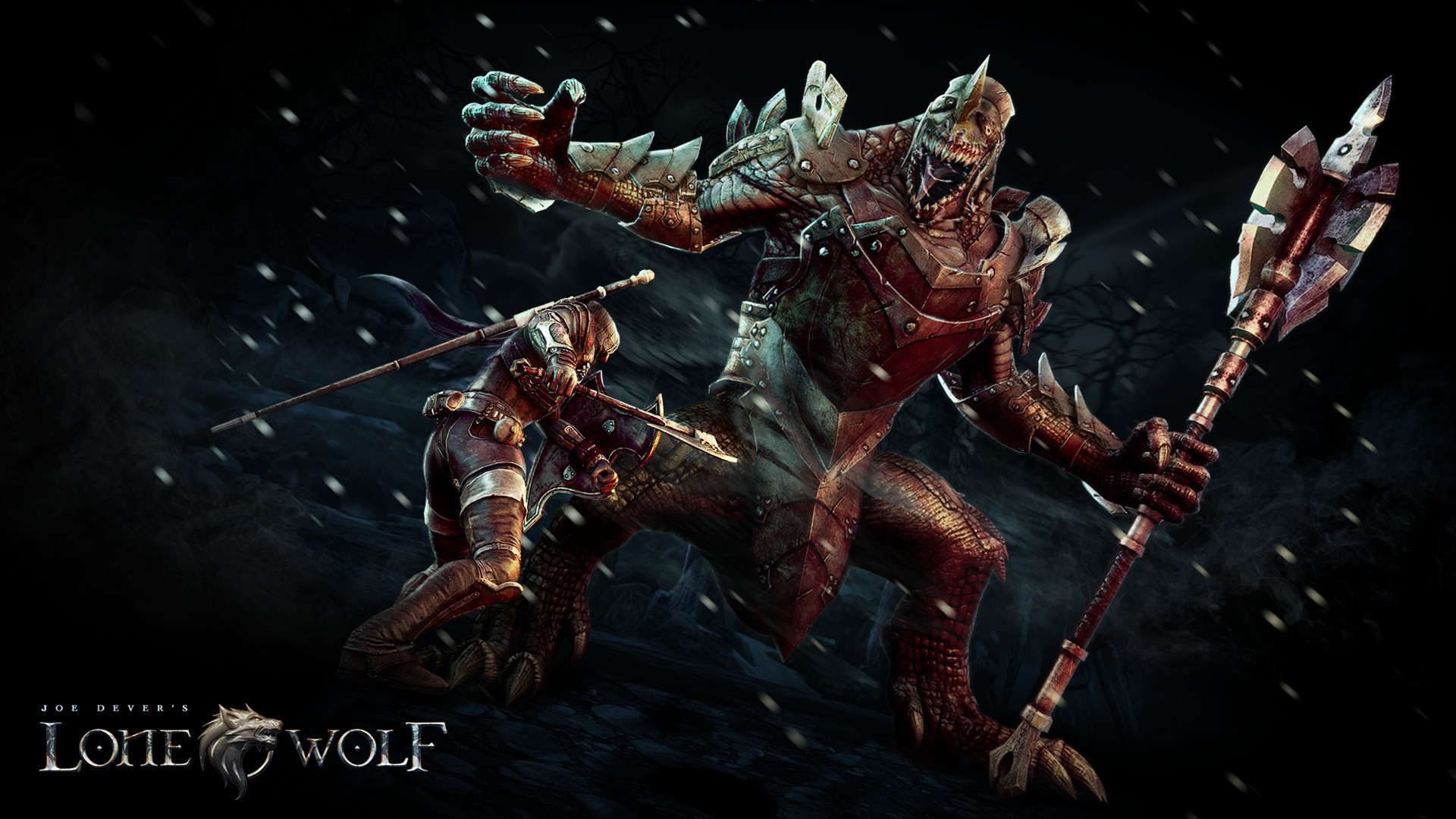
If you’re a bit of a smartphone gamer, you will have likely heard of Joe Dever’s Lone Wolf by developer Forge Reply, which has been a popular game pushing the boundaries of what is possible on those platforms. The game features a unique blend of non-linear storytelling and RPG combat and is coming to the Nintendo Switch on the 16th February with a special introductory offer, which will be revealed at 5pm GMT today in the eShop.

Joe Dever’s Lone Wolf is based on the “choose your own adventure” gamebooks of the ’80s, written by worldwide famous author (you guessed it) Joe Dever. The author was involved personally in the development, writing the story and driving the work of the whole development team at Forge Reply with his inspiring passion.

Lone Wolf, the last of the order of the Kai Lords, must face yet another threat posed by the dreaded Darklords. No-one has heard from the border village of Rockstarn in weeks, and Lone Wolf travels to the very frontier of the Kingdom of Sommerlund to find out what happened. He will find challenges and adventures awaiting for him, as well as memorable characters and meaningful choices to make as the story progresses. Epic battles will take place at the wild frontier, deep down in ancient ruins and even across the border, trespassing into the terrible Darklands.

Joe Dever’s Lone Wolf presents the player with an enhanced gamebook that includes classic RPG elements, such as an interactive world map, quests and merchants, from which you can acquire and upgrade powerful battle gear. When the moment for action comes, battles are played in dynamic turns, with abilities that range from melee to ranged, to the mighty magical attacks of the Sommerswerd, the legendary Sword of the Sun.

It certainly looks like this will be one to watch out for when it arrives on the Switch eShop next week. Watch the trailer above and let us know if you plan to pick this up with a comment below.

Posted on Leave a comment

Legend Of Kay Anniversary Will Claw Its Way Onto Nintendo Switch in 2018

10 years after its initial release on PS2, THQ Nordic revived and rezzed up martial arts platformer Legend Of Kay Anniversary for Wii U. Now, a good three years later, the publisher is bringing the game back yet again with a Nintendo Switch slated for sometime in 2018.

If you’ve never played or heard about it before, you play as Kay, a hot-headed young cat who must master the power of the sword, the hammer and the claws across 25 Eastern-styled levels. It’s very PS2 in terms of gameplay, but THQ Nordic did a decent enough job of porting it before so we’re looking forward to seeing how well it performs on Switch. There’s even a new trailer. Huzzah!

Be sure to let us know what you think about Legend Of Kay Anniversary heading to Switch this year. Did you play it on Wii U? Will you try it for the first time on Switch? Discuss…

Posted on Leave a comment

Community: Strap In Pilots, We’re Looking For Shmup Top Guns

You might have noticed that besides many other things, the Nintendo Switch is becoming quite a treasure trove for shmups both old and new

Thankfully it seems we’re not likely to run out of aliens or evil dictators to shoot down any time soon on Nintendo’s current console, so to spice things up Nintendo Life community member OorWullie has decided to organise a community event based around the timed high score challenge modes (also known as ‘caravan’) – something we’re keen to support officially. 

We’ll let the man himself explain:

With all the great arcade classic shoot-em-ups we have on Switch I thought it would be fun to have a place to show off our high scores and try to beat each others. I was thinking we could have a weekly challenge too, where we pick a specific game and whoever has the highest score on it at the end of the week gets to choose the next one. I’ve thought up some loose rules to get us started and we’ll see how it goes.

For the weekly challenge, I think we should keep it limited to Caravan Mode only, where we have 5 minutes to set as high a score as possible. This should keep things pretty tight and give us all a chance of winning. I’ll choose the first game to get things started and whoever is in first place in 7 days from now gets to select the next game. Obviously we won’t all have the same games but I’ll keep a record of the weekly challenge top scores and include the link on this post, so they are still there to be beaten if you do buy that game in future.

For all time high scores, we can use High Score Mode with the Hamster games. The Psikyo shooters unfortunately don’t have a similar mode so it’ll just have to be taken from normal play. No shenanigans please.

To have your high score registered it should be accompanied with a screenshot of your place on the Hamster leaderboard. For Psikyo shooters a screenshot of the in-game leaderboard. Try and remember to put your initials or whatever you use instead of AAA like I always do. Also give me a mention when posting your score and screenshot so I know to edit it in.

So if you think you got what it takes to be the best of the Nintendo Life best, head on over to our forum and submit your finest score! This week the challenge is Pulstar’s Caravan Mode from stage 1. Also note that we don’t take any Billy Mitchell style VHS shenanigans here, so play fair.

Of course, we’re not saying you have to play to the sound of Kenny Loggins “Danger Zone“… but we’re not expressly forbidding it, either. Good luck, pilots!

Posted on Leave a comment

Sounds Like Bandai Namco Really Is Working on Metroid Prime 4

Metroid Prime 4 is one of the next big games coming to Nintendo Switch, but all that lack of concrete detail has led to countless rumours. At one point we learned Retro Studios (which worked on the original Metroid Prime trilogy) wouldn’t be on development duties, then there were murmurs that id Software might be stepping in to work on the title. Then it was Bandai Namco’s turn to be centre of all MP4 rumours.

Well, Eurogamer has today confirmed (via multiple sources) that Bandai Namco is indeed working on Metroid Prime 4, specifically its Bandai Namco Singapore studio. Obviously, there are very few details on the ground – and no real certainty we’ll see it before 2019 – but at least we now know which studio is bringing Samus back to the FPS party.

Let us know your thoughts on this MP4 news and whether you think the studio is the right choice for the game…

Posted on Leave a comment

Daruk Voice Actor Had No Idea That He Was Auditioning For Breath of the Wild

Thanks to the nature of the gaming industry at present, playing host to constant leaks of information and having rumours flying around all over the place, it is perhaps unsurprising that Nintendo would hold back as much information on its major projects during development as possible. It would seem that even those lucky enough to be working on such projects are sometimes kept in the dark, too.

Joe Hernandez, the voice behind Daruk and Yunobo in The Legend of Zelda: Breath of the Wild, has revealed in an interview with CatWithMonocle that he was never specifically told what he was auditioning for.

Cat With Monocle: How did you get the roles of Daruk and Yunobo in Zelda: Breath of the Wild? What did you enjoy the most while recording as these characters?

Joe Hernandez: Originally, I was sent the audition around March of 2016. As is the case with some high profile video games, we were never told specifically what we were auditioning for. I remember the specs calling for a British/Mid-Atlantic voice, which was in my wheelhouse. I remember nothing in any of the audition copy made reference to Link, Zelda, Hyrule, etc. so again, we were a little in the dark as to what project it was.

Now, if you ask any voice actors out there, rare is the day that the entirety of info is shared with talent by the time they audition. Some of that is done by design, because they don’t want any important info getting leaked, but another reason is that so much of the games are still in various stages of development, so things can change drastically, (Daruk wasn’t called by that name when I had gone into audition).

The casting director had given me a sort of Lord of the Rings direction as to the world in which these characters lived. He wanted me to think of my character as this big, larger than life kind of gentle giant, (a la Gimli in LotR). it helped set the tone for what I had read for and allowed me get specific with his voice and characterization. After the initial audition, I was called back again to re-read for them. Shortly thereafter, I was told that I had booked it and we didn’t begin recording until August/September of that year.

Joe isn’t the only one that was kept in the dark, either; Patricia Summersett, the English voice actress for Zelda herself, revealed that she only found out what she was auditioning for well after landing the role.

Can you imagine finding out that your most recent job interview was actually for the next big Zelda title? Of course, we might need to learn how to actually act before that can happen.

Posted on Leave a comment

Indie Dev tinyBuild Is Announcing Six New Switch Games In Live A Stream Tomorrow

Indie developer and publisher tinyBuild has announced that they will be revealing a whopping six games coming soon to the Nintendo Switch in a live stream tomorrow.

The publisher, which already has the existing Switch titles Phantom Trigger and Mr. Shifty under its belt, will be hosting the live stream under the name ‘#HelloSwitch’ on the studio’s YouTube, Twitch, and Facebook accounts. You can check out the announcement tweet below.

It all kicks off at 10am PST / 1pm EST (and therefore 6pm UK / 7pm CET) on Saturday 10th February and, just to hammer home the fact that the Switch is of utmost importance, the studio has already told us that even more titles will be announced later in the year so there is sure to be something for everyone.

Will you be tuning in? Why not take a look at this list of the studio’s titles and let us know which games you’d like to see announced for the Switch?