In your single minded determination to burn through all Bayonetta 2 has to offer, you might completely miss a bunch of Hidden Verses. These provide even more battles in each chapter that let you duff up even more enemies, and beef up your score at the end.
So they’re well worth hunting down, basically. Or, you could save yourself the hard work and just follow our guide below. We’ll list every single Hidden Verse and where you can find them by chapter.
Chapter One
Verse
Location
One
Head past the plaza at the beginning of the chapter. Keep to the left and you’ll find a portal to this Hidden Verse.
Three
Right after the fight in Verse Two, follow the path to the left to find this Hidden Verse.
Four
After the water section, head in the opposite direction of the Gates of Hell to find a portal to this Hidden Verse.
Five
Go beneath the archway in the plaza to find a portal to this Hidden Verse.
Eight
Head to the second floor of the temple right after the fight with Valiance to find this Hidden Verse.
Eleven
When you’ve completed Verse 10, head back to where Loki was caught to find this Hidden Verse.
Twelve
Jump in the water right after Verse 10 to find this Hidden Verse.
Chapter Two
Verse
Location
One
There’s a portal to this Hidden Verse on the eastern side of the first area of this Verse.
Three
Right after you escape the tidal wave, head back to Verse Two’s location.
Four
Head inside the room after chatting with Loki, then head back outside to kickstart this Hidden Verse.
Six
Open a couple of chests in the cathedral entrance to trigger this Verse.
Nine
Defeat Belief and you’ll see a portal to this Hidden Verse on the left side of a pathway you follow right after.
Chapter Four
Verse
Location
Two
Defeat Fidelity, then climb the rubble near a building to the east.
Four
When you’ve completed Verse Three, head back to the area where you fought to find this Hidden Verse.
Six
After the Loki cutscene, leave the area and re-enter to trigger this Hidden Verse.
Eight
Destroy the bench a couple is sitting on to trigger this Hidden Verse.
Chapter Five
Verse
Location
Two
At the beginning of the chapter, dive into the water nearby and swim under the destroyed building to find an island. There’s a Hidden Verse here.
Three
There’s an underwater tunnel in this area too. Find it and swim through it to find another Hidden Verse.
Five
In the flooded room, glance up on the balconies and you should spot a Hidden Verse.
Six
After swimming through the water, dive back in and swim to the bottom to trigger this Hidden Verse.
Seven
In a circular room, follow it around in the opposite direction of the staircase.
Eight
Climb to the very top of the staircase to trigger this Hidden Verse.
Chapter Seven
Verse
Location
Four
Complete Verse Three and travel to the eastern side of this area to find a Hidden Verse.
Chapter Eight
Verse
Location
Two
Complete Verse One and climb a building on the left. Enter a room by a closed door to trigger this Hidden Verse.
Six
Defeat Inferno and head back to the beginning of the chapter to trigger this Hidden Verse.
Eight
When Loki creates a portal, head behind it to find this Hidden Verse.
Ten
When swimming through the water, head inside a smaller room before you enter a large room to trigger this Hidden Verse.
Twelve
When you enter the Ruins of Lost Memory, you’ll see this Hidden Verse on the left.
Chapter Nine
Verse
Location
One
Follow the floating platforms at the beginning of the chapter to find this Hidden Verse.
Three
Head inside the temple and find this Hidden Verse between two pillars.
Five
At the broken staircase, head left and jump onto a platform to find this Hidden Verse.
Chapter Ten
Verse
Location
One
At the beginning of the chapter, head down a path to the left.
Three
At the end of Verse Two, jump onto the cliff to the east to trigger this Hidden Verse.
Seven
Complete Verse Six and climb the hill to the east.
Eight
In the branch, stick to the right and follow it all the way to the end to find this Hidden Verse.
Nine
After the branch, you’ll easily spot this Hidden Verse.
Eleven
Defeat Sloth and head to the right to trigger this Hidden Verse.
Twelve
Defeat Sloth and activate the nearby tree to trigger this Hidden Verse.
Chapter Thirteen
Verse
Location
One
Find a small room in the first building you enter in this chapter and open a chest to trigger this Hidden Verse.
Two
You’ll easily spot this one by a big fountain.
Eleven
Before you enter the room with the crescent moon-shaped table, cross the grate on the right and you’ll find this Hidden Verse by a vase.
Chapter Fourteen
Verse
Location
Three
Complete Verse Two and you’ll see this Hidden Verse right away.
Chapter Fifteen
Verse
Location
Seven
Complete Verse Six, then follow the path. You’ll see a Hidden Verse on your left.
Eight
Keep following the path to find the next Hidden Verse.
Chapter Sixteen
Verse
Location
Three
While climbing the stairs to the temple, head right to find this Hidden Verse.
The hybrid design of Nintendo Switch makes it the ideal system for all types of games. As illustrated by previous releases on the platform, there are certain games catering to prolonged couch sessions while other titles have been providing audiences with shorter bursts of fun better suited to the daily commute. Qbik, developed by Norbert Palacz and published by Forever Entertainment, manages to find the right balance between these two play styles – with sessions able to be enjoyed for a few minutes in transit or even an hour or two in your living room.
Qbik is a single-player title where you take control of a self-aware blue block, with one eye and a big mouth, as it traverses 63 levels filled with challenging puzzles, riddles and brainteasers. The more levels you manage to complete, the more you learn about the block’s back story and the grim universe it resides in. The common joy from a game such as this typically comes from solving the puzzles presented before you. It’s no different in this case. The primary task is to consume all the yellow blocks in each level. This might sound simple, but as with all games of this kind, additional mechanics are slowly incorporated over time making each section increasingly difficult.
New blocks with different properties further add to these stimulating puzzle-solving sessions. Generally, blocks will either halt your progress or aid you in finding a solution to a level. There are plenty of different varieties as well – from dirt blocks to yellow sand-like blocks that fall when a block beneath is removed. Other mechanics that come into play later include teleportation and switches. Even if these devices function in a predictable fashion, each one adds a further layer of complexity to the puzzling action, and makes it all that much more rewarding upon completion of a level.
As you progress, levels grow in size. From this point onwards it becomes important to survey your surroundings and plan your moves in advance in order to succeed. With the forces of gravity in play, the only direction Qbik can move is horizontally. This is when other methods of movement such as teleportation become even more important – allowing you to reach higher ground if you have dropped to the depths below. If you do find yourself struggling on a certain level, you can rewind time prior to an error.
The ability gives you the chance to experiment until you finally have that “eureka” moment and the solution becomes apparent. Of course, you can also completely restart levels from the very beginning as well. There is one last option you can resort to. That is the skip function. If a puzzle is too hard you can skip it altogether. The catch – you can only skip a total of five levels, so chose wisely – else persist. With not that much hand-holding, this is as much help as you’ll get from the game as you work your way through each level.
Undoubtedly, the most surprising inclusion in this package is the level editor. It might not be on the same level as certain other games, however, it’s still a welcome addition. There are no limitations in terms of what can be used within the editor. Here you can use all the same blocks and special devices available to you in the main game as well as shape and decorate the levels however you like. The main setback is you can only share maps locally on your system (at the time of review). Other releases of the game enable you to upload your own custom levels and share them with the wider community. Despite this drawback, it’s still fun to create your own levels. The controls also enhance this mode – with the touch controls in the handheld mode making block placement and movement both quick and easy. Admittedly, the button controls are not quite as effortless at times.
The world surrounding Qbik are dim caverns enhanced by atmospheric sounds and eerie tones. As recycled as the pixel-art is, it still does a great job bringing the simple game world to life and adding an extra layer of polish. The star block also has a great sense of character because of the quality animations and sound effects, along with the assistance of the dialogue and storytelling.
Conclusion
Qbik may not be a ground-breaking puzzle game but it does what any title under the genre should do; it provides you with a great sense of accomplishment. It’s exactly how you want to feel when playing a game like this. Its puzzles get better as you progress due to the complexity, making it an obvious go to for fans of the genre. The level editor is also a nifty inclusion despite its obvious limitation. Still, in this mode you’ll be able to experiment to your heart’s content.
As a Switch title, Qbik is yet another accessible game that can adapt to your play style – be it a brief session when you’re out and about, or a longer period of gaming in between the bigger releases you’re currently playing. If you’re eager for more puzzle action on the Switch, this is definitely an eShop game you should check out.
Rocket League is pretty amazing, but combined with Hot Wheels, it’s a whole new level of awesome.
Psyonix and Hot Wheels have revealed that they are collaborating on the Hot Wheels Rocket League RC Rivals Set. Due for release this fall, the set contains bluetooth-connected Octane and Dominus Battle-Cars that you can control using your smartphone or tablet.
But that’s not all – the pack will also include new Hot Wheels DLC for use within the game itself.
Jeremy Dunham, Vice President, Publishing at Psyonix, had this to say about the news:
We’re thrilled to further our partnership with Hot Wheels and bring Rocket League to life with this upcoming toy set. But that’s just the beginning of what we have planned. You can expect to see some really, really cool things come out of our new Hot Wheels alliance.
Chris Down, Senior Vice President and General Manager, Hot Wheels, added:
Hot Wheels’ partnership with Rocket League has given us the opportunity to reengage with older gamers who may have played with Hot Wheels as a kid. We know that Hot Wheels and Rocket League fans loved our digital DLC integration in 2017, and will be thrilled to take on the challenge with this new RC playset that merges physical and digital gaming.More details will be coming later this year.
Now if you’ll excuse us, we’re going to clear some space in our bedrooms for this awesome set.
According to Kotaku UK – which has consulted sources close to the project – we’ll be getting a Spyro the Dragon Trilogy Remaster this year similar in scope to the wildly-successful Crash Bandicoot N. Sane Trilogy.
The games included will be Spyro the Dragon, Ripto’s Rage!, and Year of the Dragon, and there’s a chance that new content will make the cut. As with Crash, the package will boast vastly improved visuals and enhanced gameplay mechanics, such as a new save system. Vicarious Visions is handling the work, the same studio which produced the Crash remaster.
The trilogy will apparently be announced for PlayStation 4 in March this year, with a Q3 release. In 2019 it will then come to other consoles when Sony’s exclusivity period ends. Given that Crash is rumoured to be coming to Switch, one would hope that this (unconfirmed) package will also make the leap.
The latest UK software sales charts are in from GfK Chart-Track and they show some of Nintendo Switch’s strongest titles are still selling well. So Switch games aren’t tackling any of the top spots right now, but then again the platform hasn’t had any triple-A, mainstream-capturing releases since 2017 so the fact Mario Kart 8 Deluxe and Super Mario Odyssey have held onto the same spots shows just how strong Mario is as a brand.
The Legend Of Zelda: Breath Of The Wild was finally knocked from the top 10, dropping two places to number 12. Still, at least FIFA 18 and WWE 2K18 are still very much in the mix at four and 18 respectively. The official top 20 can be found below. As usual, the number in brackets denotes each game’s position last week:
1(-) – Shadow Of The Colossus 2(2) – EA Sports UFC 3 3(1) – Monster Hunter World 4(4) – FIFA 18 5(5) – Grand Theft Auto V 6(3) – Call Of Duty WWII 7(7) – Mario Kart 8 Deluxe 8(8) – Super Mario Odyssey 9(15) – Assassin’s Creed Origins 10(-) – The Evil Within 2 11(18) – Crash Bandicoot N.Sane Trilogy 12(10)- The Legend Of Zelda: Breath Of The Wild 13(-) – Overwatch: GOTY Edition 14(21) – Fallout 4 15(16) – Forza Horizon 3 16(11) – PlayerUnknown’s Battlegrounds 17(13) – Rocket League: Collector’s Edition 18(19) – WWE 2K18 19(6) – Dragon Ball FighterZ 20(20) – Tom Clancy’s Rainbow Six Siege
What do you make of this week’s UK charts? Let us know below…
Due out in Japan in May, this ‘Face-to-face type Arcade Stand’ would fit perfectly on a table or on the floor if you’re willing to crouch down for your couchplay fun. It’s got plenty of ventilation so your two Switch units don’t overheat and will have a suggested retail price of 8,300 yen (tax-excluded price) 8,964 yen (tax included price) – so that’s somewhere between £55.62 and £60.
Let us know what you make of this ‘fighting base’ from Japan and whether you think it’s a cool idea or a little pointless. Imagine the Street Fighter 30th Anniversary Collection on this thing. Drop up us a comment or two…
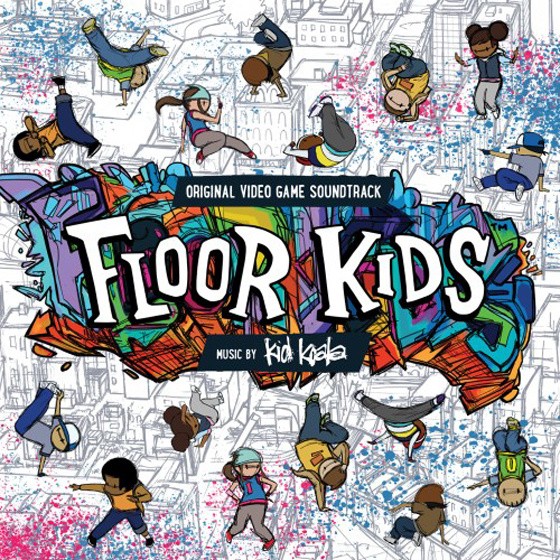
Floor Kids was a welcome surprise on the Switch eShop, blending hand drawn art with an infectious hip hop soundtrack and rhythm gameplay. The music—produced by Kid Koala—was a serious highlight for the release, and now those of you who loved it will have a chance to own the full soundtrack in its own separate release.
Kid Koala just announced that Floor Kids: Original Video Game Soundtrack is coming out on 27th April, containing 71 minutes and 42 tracks of “‘70s funk, thumping ’80s 808s, granular ’90s 12-bit hip-hop, and 2000s synth funk.” The soundtrack will be available in both digital and vinyl formats, with pre-orders already open here. And for those of you that would like to hear it live, Kid Koala is kicking off the Vinyl Vaudeville tour in April, you can find the dates and locations through here.
What do you think? Did you like Floor Kids? What did you think of the soundtrack? Share your thoughts in the comments below.
Celebrate Valentine’s Day with sweet, charming, and downright loveable fun with Nintendo.
Play Nintendo The Valentine’s Day activities on Play Nintendo are perfect for younger players and their families. Grown-ups will love them, too! You can turn foes into friends with charming printable cards. You know, the kind that are sweet and funny…just like you. <3 You can also take the Meet Your Match quiz to find out which Nintendo character could be your video-game Valentine!
My Nintendo My Nintendo is offering a download code for an adorable Super Mario: Pastel Pink Nintendo 3DS HOME Menu theme. You can redeem points up to five times to receive five codes, so you can share them with someone special. Makes a great last-minute Valentine’s Day gift!
*Additional games, systems, and accessories may be required for multiplayer mode. Games, systems, and some accessories sold separately.
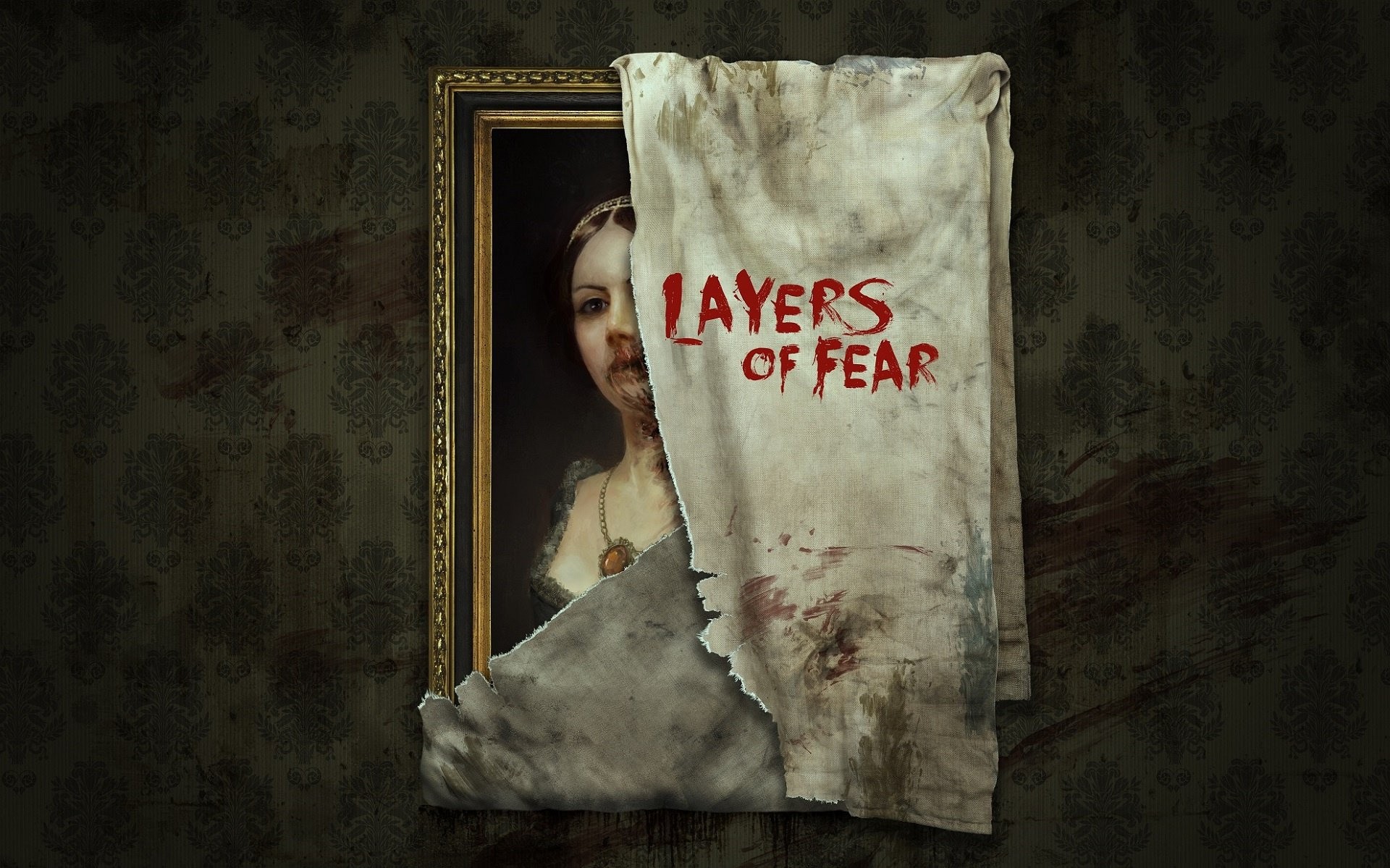
Horror can be a divisive genre, and it can be extremely tough to get it right. Thankfully if the reactions in the video above are anything to go by, Layers of Fear: Legacy manages to do just that. By letting your mind play tricks on you and fill in the details of what’s happening, fear is all but assured.
Make sure you give that video above a good look-in to see what the earliest and tamest parts of the game have in store. Remember though, your play through might be quite different.
Layers of Fear: Legacy lands on the Nintendo Switch eShop on 21st February.
Finnish developer 10tons has announced the top-down fantasy RPG title Undead Horde is currently in development for Nintendo Switch. It’s due for release in November 2018 for PC, so we imagine the Switch version should drop around the same time.
It places you in the questionable boots of a necromancer who uses his power to raise the dead to create an army commandable corpses. It’s a hack and slash kind of experience with a splash of strategy for good measure, including the ability to swell your army with the cadavers of your fallen foes. So it’s basically the Night King from Game Of Thrones in game form. Loot and items are also procedurially generated so there’s a potential endless stream of things to find and equip on your journey to rid the world of all those pesky living people.
You can check out the official pre-Alpha trailer below for a taste of the unholy gameplay below. Dare you dabble in the dark arts later this year? Let us know…