We’ve covered the phenomenon of “real life” Mario Karting in the past, but it would seem that this light-hearted attempt to replicate the feel of the classic racing series comes with some pretty negative side-effects.
Not only is the company which runs the “MariCar” event being taken to court by Nintendo, there have been multiple reports of people crashing these vehicles and causing damage or injury.
According to Kotaku, one tourist crashed a MariCar into a police box, while another was arrested following an alleged hit-and-run. The victim in the latter case required several weeks to fully recover.
The latest mishap involved a 30-something tourist from Singapore driving a MariCar onto the pavement and into a restaurant sign. Oops.
Mercifully, no pedestrians were involved and the driver sustained only minor injuries.
Update: And just like that, the game is back up on the Wii U eShop. We’ll let you ponder why this might be in the comments section below.
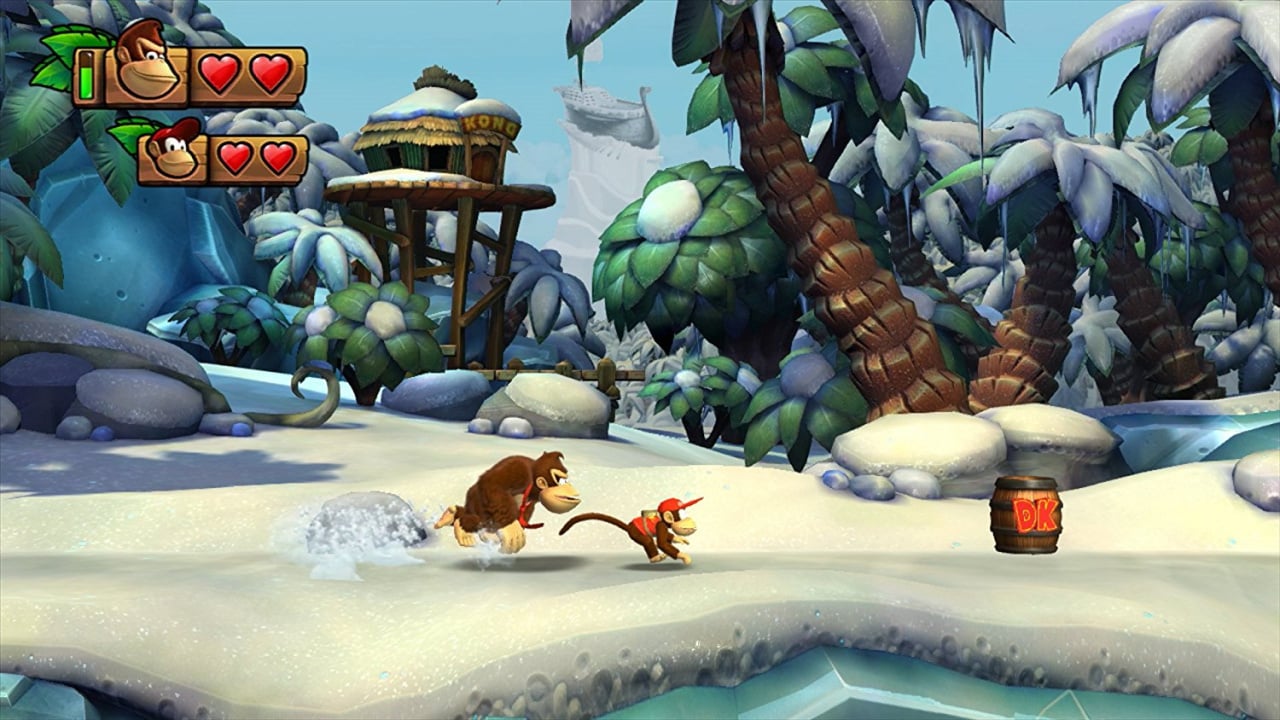
Original Story: The Nintendo Switch has had its fair share of Wii U ports, something which has divided the fanbase a little, but makes a whole lot of business sense. Considering the poor sales of the Wii U, many games that saw an exclusive launch on the console didn’t get a proper chance to reach a wide audience, and porting these games over to the Switch gives them a new lease on life while also filling in gaps in the Switch’s release schedule. Donkey Kong Country: Tropical Freeze is the latest game to be receiving the porting treatment—it launches next week—but Nintendo has made a questionable move regarding its original release.
Strangely enough, Donkey Kong Country: Tropical Freeze can no longer be purchased from the North American Wii U eShop, not even via download code from Amazon, although other regions still have access. It very well could be just a bizarre mistake made ahead of the launch of the Switch version, but some are suspecting foul play, and it doesn’t seem unreasonable. Until its disappearance, the game could be bought on the Wii U eShop for twenty bucks, significantly less than the full price version launching next week. Considering that the new version has minimal changes from the Wii U version, some are saying that this could be a move by Nintendo to maximize sales of the new release. As of yet, the company hasn’t commented on the issue, but hopefully we’ll have answers soon.
What do you think? Is Nintendo being deceptive? Was this just a mistake? Share your thoughts in the comments below.
Team17’s upcoming pinball and platformer mash-up Yoku’s Island Express is getting ever closer to release and, as luck would have it, we’ve had the chance to get an early look at exactly what will be on offer. Developed by independent Swedish studio Villa Gorilla, the game takes you on a journey alongside protagonist Yoku, who just so happens to be both a dung beetle, and a super awesome postal worker.
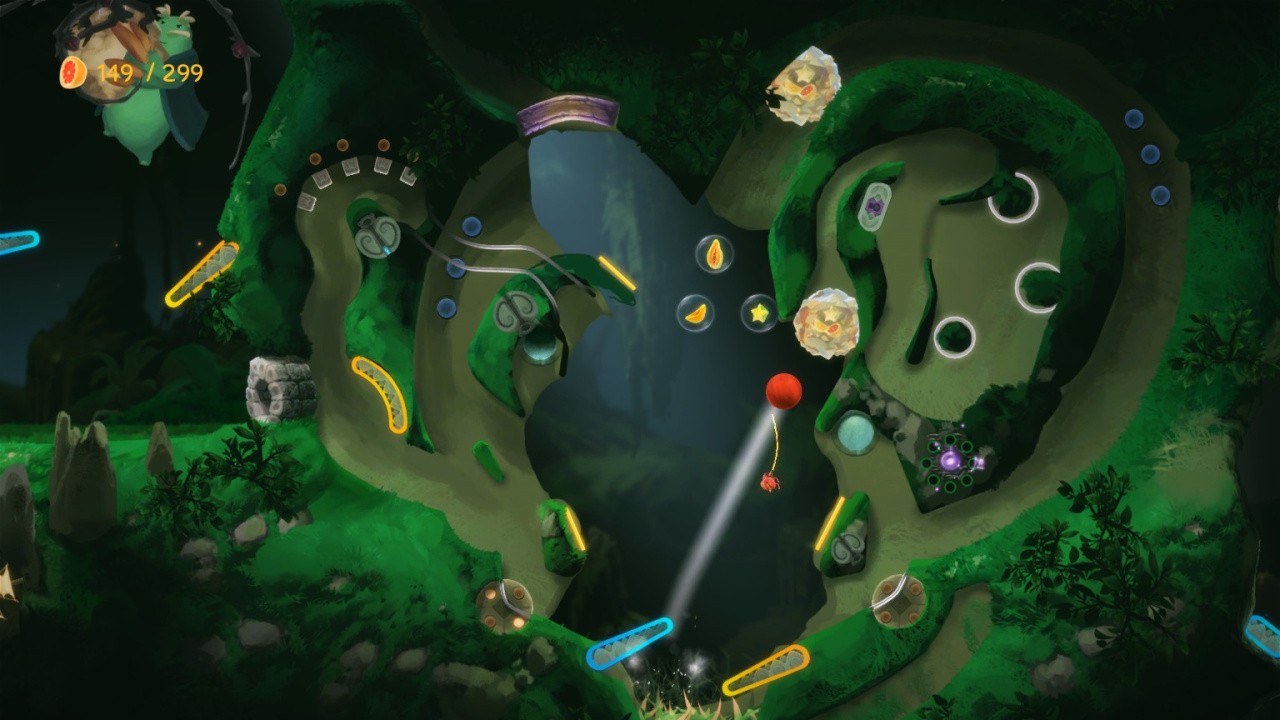
As we just mentioned, Yoku’s Island Express is a mix of platforming and pinball action, and while these two genres aren’t necessarily the first two you’d think to combine, the entire premise actually works really nicely. Rather than being split into sectioned-off levels, or even set over a handful of worlds, the whole game takes place within one ever-expanding map, with the pinball elements acting as little puzzles to progress. The two styles work effortlessly hand-in-hand, and we instantly forgot all doubts about how they might gel together.
As you bump and flick Yoku around the game’s world, you’ll find yourself collecting pieces of fruit that are added to a tally at the top of the screen. The fruit acts as a sort of currency, allowing you to unlock extra pinball flippers dotted across the map to aid your travel. This fruit can be found almost anywhere, but you’ll find tons of the stuff tucked away inside the pinball sections; if you stay inside one of these pinball areas, sending yourself flying from bumper to bumper, you’ll start to see lots of extra juicy fruit pop out ready for you to collect.
It’s not just about running around and playing pinball, though. Yoku is on a mission to deliver letters and part of this plot point sees you locating the world’s chiefs – which act in a way as checkpoint bosses. We only managed to reach the first of these chiefs during our hour-or-so playtime, but the meeting introduced a special, beefed-up pinball section to play, with all sorts of tasks to complete as we flung ourselves around. You’ll be sucking up explosive slugs to destroy rocks, placing other balls into specific areas with the flippers, and collecting gems to unlock doors, all while zooming around the living, breathing table.
Falling through the flippers in these sections, which would usually result in a lost ball in real pinball, doesn’t really have any consequence here; Yoku can never ‘die’ or be sent back to a previous section, and it isn’t long before you unlock a sidekick who can save you from any pitfalls anyway. This makes it a pretty relaxed affair, which you can probably already tell from the calming artistic direction, both graphically and musically. The game places a much heavier focus on exploration and soaking up the world around you than intense pinball action.
For any classic platformer fans out there, this approach works a treat. The setup means that you’ll be foraging through the entire world, looking in every last nook and cranny for any hidden collectibles – some of which are very cleverly hidden indeed, without stressing too much along the way. It’s the sort of game that will take a good few number of playthroughs to find every last hidden detail, and it will be interesting to see how the plot progresses and if even more new elements are added in future boss sections. We’ll make sure to find this out and more in our final review.
Yoku’s Island Express is scheduled to release on 29th May, and will be available to pre-order from the eShop from today for £15.99/€19.99/$19.99. Will you be grabbing a copy?
Platformers aren’t quite what they once were; whether they’re 3D or 2D we’ve had a bit of a mini-renaissance with them in recent years, but they hold nowhere near the draw that they did in the ’80s and ’90s. What a shame then that one of the best and most polished games of the genre happened to not only launch after these golden years, but on a console that – for the most part – passed most people by. In case it wasn’t already obvious enough given the title, we are, of course, referring to Donkey Kong Country: Tropical Freeze, the latest entry in the revitalised Donkey Kong Country series. It made a splash with the handful of people who bought a Wii U, but it received nowhere near the commercial success it deserved. Blasting back onto Switch, is it finally time for this game to shine, or have the years been too cruel? It’s the former, let’s not even try to pretend.
As stated in our review of the Wii U original, Tropical Freeze takes everything that made Donkey Kong Country Returns great and doubles down on it. The running, jumping, and rolling that made the original games so enjoyable has been refined further and tightened to the Nth degree. The higher resolution also pays dividends in allowing you to see more of the level from afar, meaning you can react more appropriately when pits or enemies lie ahead of you. The Wii U version was only able to display at 720p, but it still looked good. This new version, however, boosts it up to a gorgeous full 1080p that fits the style and aesthetic so well we didn’t even notice. It’s a real testament to the art direction.
Other changes are fairly minimal, as shown by Digital Foundry’s recent video comparison. Shading appears to be marginally different and DK’s fur is a bit nicer to gawp at, but overall the biggest change is absolutely the resolution. The frame rate remains the same, solid 60fps as well, which has proven absolutely unshakeable regardless of what’s going on on screen. For a hardcore platformer like this that stability is essential, and they’ve completely nailed it.
Speaking of hardcore, let’s address the gorilla in the room. The biggest new addition to this version of the game is that of Funky Kong, the bodacious ape that’s totally tubular or mondo, or whatever. When you start a save file for the first time you’ll be asked whether you want to play in Original Mode or Funky mode. The former is the game just as it was with absolutely nothing changed beyond the previously mentioned resolution and fur and stuff. The latter Funky mode, however, is a totally ‘hang-ten’ way to play, noticeably reducing the difficulty thanks to Funky Kong’s shiny new move-set.
He behaves much like DK, only he can roll forever just as though he had a partner Kong with him (although when playing as Funky you can never use a partner Kong), double-jump, slow his descent by using his surfboard as a makeshift helicopter, obviously, and also stand stationary on spiked floors without taking damage. You’ll also have five hearts to play with rather than the standard Kong default of two each, allowing you to take a lot more punishment before returning to your last checkpoint.
You’ll not be locked into this new way to tackle the game’s challenges however, as at any time you can switch to playing as good old Donkey Kong should you wish, provided you’re not in the middle of a level. You’ll get a smidgen more health than if you were playing in Original Mode, so it’s not heading directly from one extreme to the other. Whichever mode you choose to play in, that decision is permanent, so make sure you’re absolutely certain what kind of challenge you’re after. Of course, there’s nothing to stop you starting a new save file in the other mode, as well.
While some of the more seasoned players may be put off by the idea of taking the sting out of the game’s difficulty, it really is a superb addition. The fact that save files are locked in either mode means no matter how tempted you are, you can’t quickly beat a tricky level as Funky Kong before reverting back unless you’ve specifically selected Funky Mode. If you’re committed to playing it in its original form, you lock yourself into that decision, and the game offers no relief at any time. If you want a challenge, it’s still here, and it’s still chuffing hard.
For less experienced players, this is an absolute godsend; what was once a bright and colourful yet deceivingly devilish platformer is now much more accessible to those new to the Donkey Kong Country formula. That’s not to say that Funky Mode is straight-up easy though. Despite having played through the Wii U version several times we still found our time with Funky frustratingly unforgiving at times. It’s certainly easier than with DK, but it’s by no means something you can blitz through without taking a hit. Enemies are exactly where they were before, pits are just as big, and Funky’s new moves aren’t as overpowered as they may seem on paper.
Despite having the ability to slow his descent to a crawl by holding the jump button, when you’re doing so your horizontal movement is cripplingly slow. Unless you’re about to miss a ledge by a very small margin, you’ll probably still end up tumbling to your death, albeit gradually. Standing on spikes is all well and good, but it’s just standing. You can’t run or even walk, meaning you have to jump each time you want to move forward, which can put you in troublesome situations if an enemy is approaching you. Being able to roll forever also has its drawbacks, as it’s not as easy to come to a stop when doing so, and on several occasions we’ve blasted ourselves into spear-wielding foe before we can stop ourselves. So can all this hardship, even in Funky Mode, be worth it? Absolutely.
The difficulty balance is borderline perfect. Levels are tough, but each time you die you’re painfully aware that it’s your fault and you’re the one who misread the situation or mistimed that jump. We believe we only encountered one instance of what you could call a ‘cheap’ moment where we didn’t have had enough time to react, and even then it was only a single hit from an enemy rather than an instant death. It was during one of the infamously tricky ‘K’ levels which can only be unlocked by finding all the KONG letters in a world.
The sense of accomplishment for finally completing a level you’ve been struggling with is undeniably wonderful, yet no single level is so frustrating that it made us quit out of anger. Every time you’ll progress a little bit further, you’ll learn where you went wrong, and you’ll improve for the next run. Again, we feel this is largely due to the almost total absence of cheap, artificial difficulty spikes.
Let’s quickly round up by talking about the presentation. It’s totally and utterly gorgeous, with every screen looking entirely original and unique and bursting with colour, a soundtrack to make Mozart jealous, and animations smoother than butter. Everything is refined to a T, from the gameplay, to the presentation. Sure, the rough charm present in the Rare titles is missing, but that’s to be expected; those games were created by a different team with different sensibilities using much cruder technology. Tropical Freeze is a glorious refinement of Rare’s approach, but we can see how some diehard DKC fans might prefer the SNES originals, perhaps due to the use of rose-tinted specs.
Conclusion
There’s no doubt about it, Donkey Kong Country: Tropical Freeze is one of the most refined and enjoyable platformers money can buy. The levels are all beautiful – not only because of their delightful new 1080p resolution, but also their structure; the characters move with fluidity and brilliant responsiveness, and the inclusion of Funky Kong brings balance for those who have less experience with brutally tough platformers. It’s so well-made that it’s almost too well-made; there’s an absence of a certain ‘rough-and-ready’ charm found in the original DKC trilogy. This is, however, a complaint so minor it’s practically insignificant. Donkey Kong’s first appearance on Switch is streamlined, rewarding, and immensely good fun; any fan of 2D platformers simply has to get this game.
E3 2018 is fast approaching, and with Switch performing so well, we’re expecting plenty of big news when it comes to the world of handheld gaming. One rumour suggests we’ll be getting one of those megaton announcements from Capcom, which has purportedly listed an untitled game it plans to unveil at the big show in June.
According to the post, the game is listed as an ‘Action/Adventure’ title, one that will supposedly be coming to PC, Xbox One and Nintendo Switch. And, interestingly, not for PS4. Of course, this could be an unfounded rumour, but if true it could mean Switch is getting a new piece of software that isn’t Resident Evil or Street Fighter. With Monster Hunter World having already hit PC and Xbox One already, it also seems unlikely to be anything from the MH universe. E3 2018 runs from 12th June – 14th June 2018.
So what do you make of this new, freshly-rumoured title at E3 2018? What could Capcom be potentially planning for the expo in June? Share your thoughts below…
As you’ll see in our in-depth review of Toy-Con 01 – Variety Kit 1, Nintendo Labo is bursting at the seems with potential, and that extends to the working Piano kit you can build with nothing more than some cardboard, some sticks and a Nintendo Switch console.
One user – Mancunian chiptune musician, Critcal Strike – has decided to push the kit’s power to its limits by using it in an actual live performance. The ‘concert’ was held at Chip Bit Day, which took place this last weekend in Manchester. You can even see how the Piano can be shaken to create vibrato while it’s playing.
What do you make of this little performance? Is it enough to convince you to pick up a Labo yourself? Or even put on your very own cardboard show? Share your thoughts below…
Back in 1994, Natsume delivered the definitive ‘shooting gallery’ shmup made famous in previous years by the likes of Neo Geo NAM-1975 and TAD’s Cabal. Sadly, a limited number of copies coupled with being a late generation SNES game meant that a lot of people missed out on this slice of space western action. Add in some inflated prices and nowadays it remains a crown jewel on many gamer’s Super Nintendo collection. But two years ago, the game had a new chance at the spotlight and at long last it has now made its way back to Nintendo hardware. But are these guns worth reloading?
You will find the complete content of the original WILD GUNS in the newly minted Wild Guns Reloaded. That means that every level, heroes Clint and Annie, the original soundtrack (if you unlock it by completing the game with no continues) and the original graphics (with some slight lighting enhancements) are all present and accounted for.
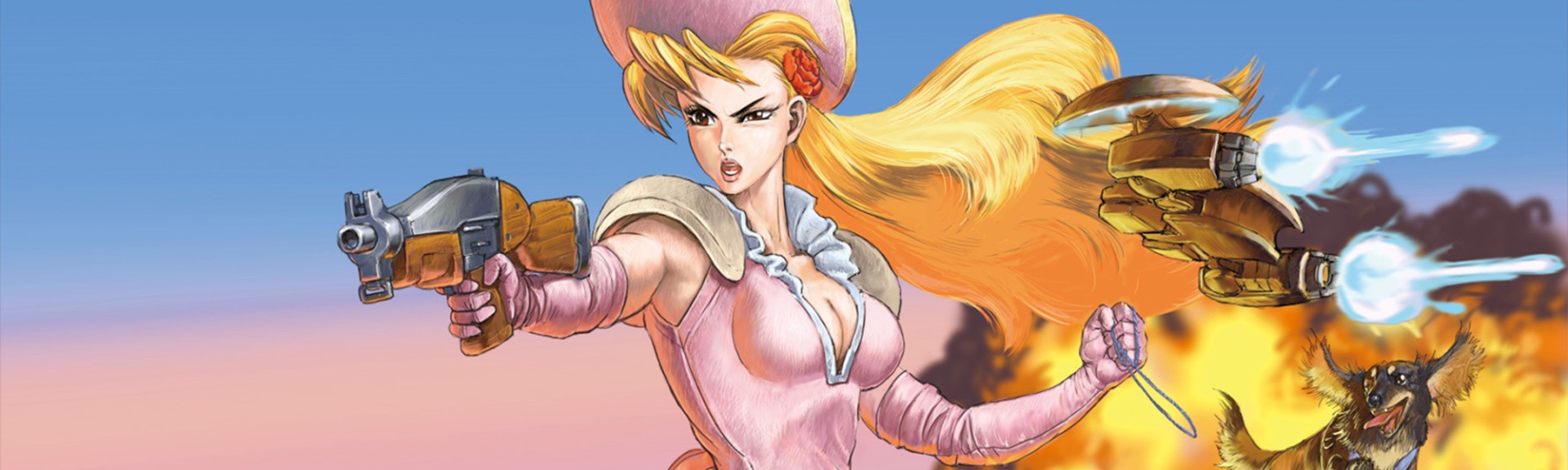
However, Natsume made sure that use of the word ‘Reloaded’ in the title wasn’t just for show and enhanced the already stellar original game with a few extras. The biggest additions are most certainly the two new playable characters and, unlike Clint and Annie (who were just a gender swap in terms of their gameplay style), the new faces offer completely new ways to tackle the challenge.
Unlike Clint and Annie, Doris does not carry a gun, instead opting out for grenades to do her long range damage. Holding ‘Y’ will charge up to three grenades at once, and she even has a ground pound area attack that you can use to very efficiently ensure her physical safety should enemies get too close to comfort at melee strike range.
The second new character, Bullet, could well be the very first playable dachshund in a video game. Since it’s a dog, it carries no weapons and isn’t exactly a master of close quarter combats. However, it is far from useless on the battlefield since it controls a hovering battle drone that can auto lock onto any enemies on screen. The pooch can even use the drone to hover to safety. Having to control two characters at once takes a bit of getting used to, but once you master their movement it’s absolutely brilliant. Just keep this in mind at all time when playing with Bullet: the drone is invincible, the dog is not.
Along with these new characters, Natsume also added a couple of extra levels: ‘Underground’, a horror-themed stage with mask-wearing enemies and ‘Flying Ship’, an aerial enemy fortress. It successfully manages to keep the original game’s visual aesthetics intact (and add a couple more memorable bosses to the memorable original line up), creating something that looks, sounds and feels authentic to the SNES era. There are also a few new weapon power-ups such as the laser that gives you new gameplay options to take on your enemies.
If you are unfamiliar with the original game or even what a ‘shooting gallery’ shmup is, you control your aiming reticule freely all over the screen. Unlike games such as Taito’s Operation Wolf, you will also have your character present at the bottom of the screen, and moving the reticule left or right will also move your character in the same direction. ‘Y’ shoots, ‘B’ jumps and double-jumps while ‘X’ allows the use of a limited quantity high explosive weapon that will clear most of the screen of baddies and bullets. Tapping ‘Y’ repeatedly and letting go will unleash your electro lasso attack, able to stop or slow down every enemy in the game if successfully connecting.
You can use ‘B’ to help you dash out of harms way (speed and distance depends on chosen character) and sometimes there will be enemies that come into your character’s movement line that you can’t shoot, instead needing to dispatch these with a quick stab at ‘Y’ for a well-placed close quarter attack. Most of the scenario is destructible, so shooting around instead of just the enemies will often reward you with bonus pickups and is thus encouraged. Each stage as a few different scenarios and will always end with a huge, memorable boss fight. Successfully clearing five stages will take you to the final fight stage. Lives and continues are limited and there are several difficulty levels to choose from (with a few left for you to unlock).
There is one last addition to this ‘Reloaded’ version. While more than able to stand on its own as a single-player game, the two-player co-op mode on the Super Nintendo was what made up for the best memories over two decades ago. Natsume upped the maximum player count here up to four players on-screen and despite being local-only on the Switch version, the console’s design focus on multiplayer means it’s ideal for sharing Joy-Cons or Pro controllers with up to three of your friends. The game truly takes off here, with the single-player survival gameplay taking a back seat to some friendly rivalry.
Conclusion
Wild Guns Reloaded sets the new benchmark on how to bring back old Super Nintendo titles to the current generation of gamers. It not only manages to remain faithful to everything that made up the original such a stellar effort, but actually offers some worthwhile new content. With the continued absence of the Virtual Console service on Switch (and the rising costs of a complete-in-the-box original Super Nintendo versions of the game), we offer little refrain in welcoming one of Natsume’s finest games home. Solid, memorable and fun arcade shooting action that will keep you coming back for more, even if only to see Bullet hovering about while grappled by his lethal drone.
Those of you with long memories will no doubt recall that, once upon a time, EA never missed a trick when it came to milking the lucrative FIFA licence.
As well as the yearly FIFA updates we’d also get special editions, such as FIFA: Road to World Cup ’98 (which took the place of the yearly entry for 1997) which was then followed by World Cup ’98 a year later, along with FIFA 99.
We’ve since seen official World Cup video games from EA for the 2002, 2006, 2010 and 2014 competitions, too – but this year, there’s no official game on the way. Instead, EA is generously updating the current FIFA 18 game to include World Cup 2018 content.
The update will be free to download and arrives on May 29th. Excited much?
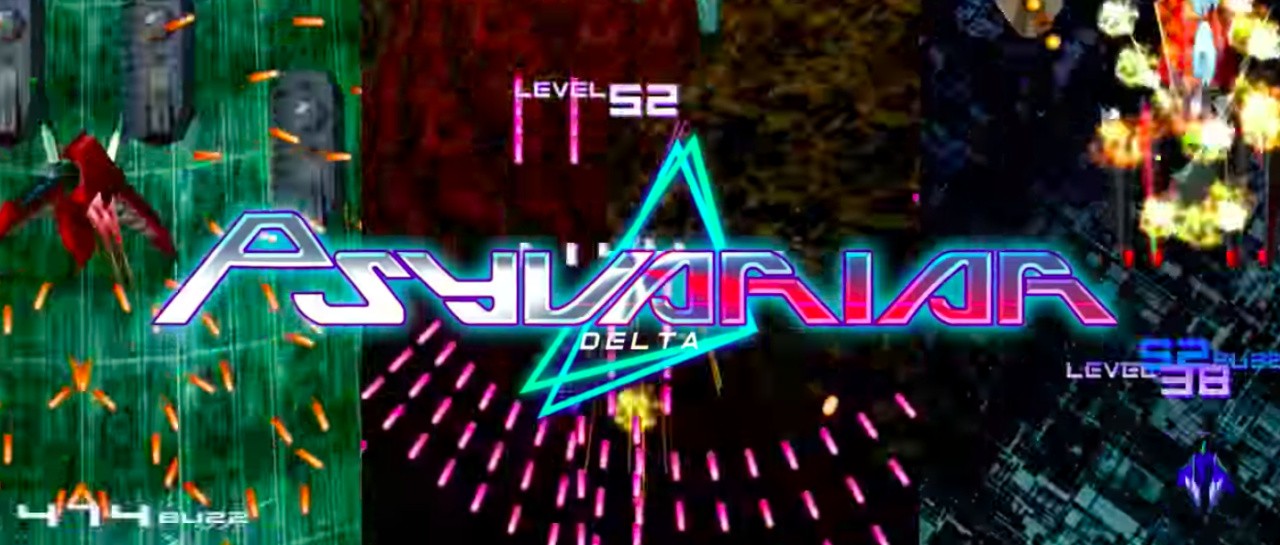
We’ve known for some time now that Psyvariar is getting updated for the Switch in the form of Psyvariar Delta, but so far we’ve only had a Japanese release confirmed.
That has now changed thanks to a timely trailer – shown above – which tells us that the title is also coming to the west this summer, courtesy of Dispatch Games.
Originally released in arcades in 2000, Psyvariar was later ported to the PlayStation 2 and has seen various revisions over the years, as well as a sequel. Psyvariar Delta is an enhanced version of the original game that will include all of the updates released so far. Japanese studio City Connection is handling the port, under licence from original developer Success.
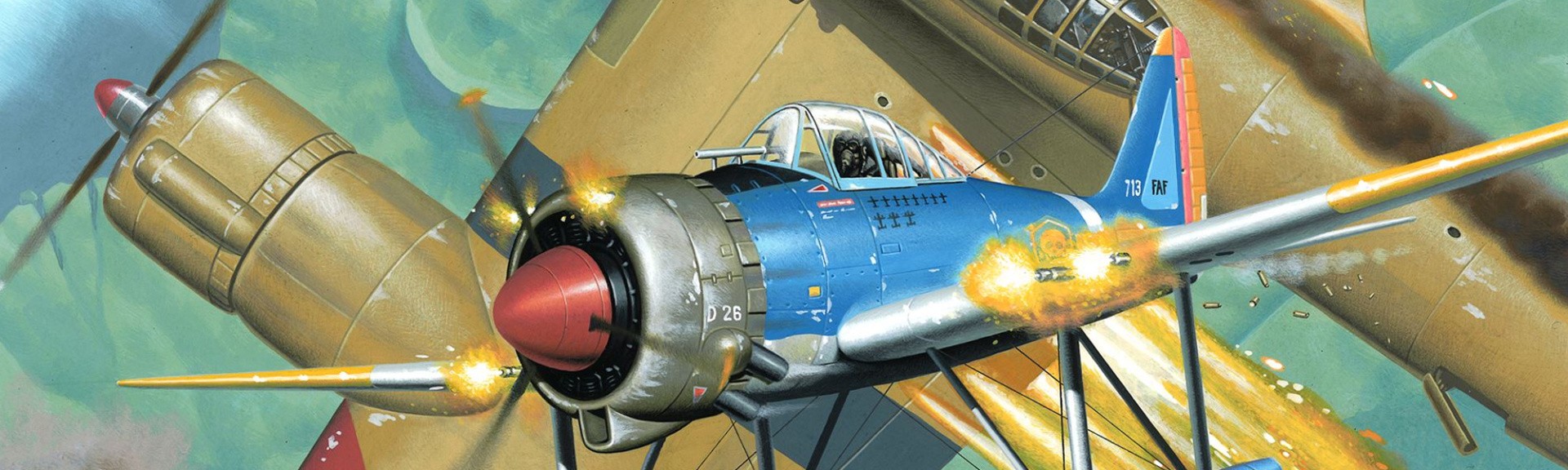
SNK may be famous for its fighting games, but in 1991 the Japanese firm decided that it wanted a piece of the ‘shmup’ pie that Capcom had been munching all to itself thanks its superb 194X series of WW2-themed shooters. Using a 4:3 ratio and replacing the more classic WW2 propeller planes with generic seaplanes, Ghost Pilots certainly aimed to soar, but in the end did it just crash and burn?
The story is thus; it looks like the Axis forces are up to their usual no-good deeds, and somehow the Allies’ best counter-plan is to send two lonely freelance ace pilots – Tom Phillips and Charlie Stingley – in their mighty seaplanes to fight against the combined might of the Axis ground and aerial forces. If you think that’s cliché, wait until we tell you the game is played with just two fire buttons, with the first used for the regular machine gun while the second unleashes a screen-clearing smart bomb. Ah yes, familiar skies indeed.
The game is the perfect showcase for the AES / MVS hardware. The detailed graphics and sheer number of rotating sprites-on-screen – with no noticeable slowdown – truly made our Sega, Nintendo and NEC home consoles feel vastly outdated in comparison. The sound is no slouch either; the upbeat music is the only melodic distraction from the punchy, bass-heavy explosions that constantly accompany the action. Played at high volume, this game will not make you popular with your neighbours.
Shoot down a formation of red enemy planes and you get a weapon upgrade power-up or an extra bomb, both vital when you come with the huge, screen-filling end of level bosses. Some variety is offered when you reach the end of the second part of the first level, with a choice of attacking either the enemy ground units or the enemy air force, which means you can’t see everything the game as to offer in a single sitting. But will you have the endurance to want to do it?
Shmups are tricky beasts to balance. One small mistake and you might end up with a dud; a lovely-looking shooter that somehow falls apart on implementation. So while we are sure SNK was having a blast when designing this game, there is simply too much going on to efficiently manage, even with two players. You will die. A lot. And, you’ll often die in some truly unfair ways, because even if the scrolling does shift left and right to expand the playing field, there’s just too much being thrown at you to keep up – a fact which betrays the true coin-munching nature of this title.
Gameplay aside, the port is as solid as ever; you can count on HAMSTER’s emulation wrapper to customise the experience to your own liking and even compete on worldwide leader boards thanks to the recurring inclusion of the Caravan mode.
Conclusion
Ghost Pilots is a classic case of SNK saying “Look, we can do it too!” in Capcom’s general direction, but believing that in every shooter more enemies means a better game was a mistake. It truly is a fantastic hardware showcase of what the AES could do, but from the player’s perspective it quickly becomes an infuriating exercise of unfair deaths followed by inserting fresh credits until you manage to make your way to the end – at least now we don’t have to put in real quarters to continue. Ghost Pilots is recommended only to the die-hard digital Neo Geo collector who has exhausted all other shmup avenues already available on the Switch. More sensible players should look at Video System and Psikyo’s better offerings instead.