Posted on Leave a comment

Nintendo’s Share Price Sees Dramatic Rise After Pokémon Let’s Go Pikachu and Eevee Reveals

The Pokémon: Let’s Go, Pikachu! and Let’s Go, Eevee! game reveals have obviously had quite the effect on fans of the series across the globe, but it seems that investors are thoroughly behind the games, too.

Since the reveal, which happened just as we reached the 30th May in the image below, Nintendo’s share price spent the following hours continuously rising, eventually ending the day with a rise of 4.3%. It might not be in the same league as when Pokémon GO was first released – the initial hype of that game saw an astonishing 25% jump in share price back in 2016 – but the new games’ connection with the mobile sensation could well be a contributing factor here.

From a business sense, Nintendo and The Pokémon Company seem to have been very smart here; having mainline Pokémon entries launch on Switch, looking and behaving a little like Pokémon GO (and being able to communicate with it), could see a significant boost in sales and interaction with both the Switch, and Nintendo’s mobile experiences. It looks like a win-win, and investors seem to agree.

We’ll have to wait and see how the release of the new titles will impact Switch sales towards the end of this year, of course, but Pokémon is usually a major player in Nintendo’s library and we can’t see this time being any different.

How do you think these games will fare on Switch? Will they be a runaway success, or surprising under-achievers? Share your thoughts with us in the comments.

Posted on Leave a comment

Feature: Unravelling The Crossover Fisticuffs Of Blade Strangers

Studio Saizensens new fighting game, Blade Strangers, brings together a diverse and interesting mix of established characters in their own respective universes, but are new to the fighting game genre. Teaming up with publisher Nicalis has further bolstered the roster to include the protagonists from indie favourites Shovel Knight, Binding of Issac and Cave Story, as well as including the studio’s own Code of Princess heroine Solange and lead character from Super Famicom platformer, Umihara Kawase. So we caught up with president Toshinobu Kondo to discuss title leading up to its upcoming summer release. 

Nintendo Life: Hello, could you introduce yourself? 

Toshinobu Kondo: Nice to meet you, my name is Toshinobu Kondo, president of Studio Saizensen. I started making video games as a hobby when I was around 13 years old and I’ve been making games for 35 years now. My first job was as a video game graphic designer. Next, I became a manga artist and illustrator, and then we established a game company. That was 20 years ago.

It seems like more than the average amount of backstory has gone into Blade Strangers. Could you outline the story for those new to the game? 

The world of Blade Strangers is actually a virtual world, part of a simulation of the entire universe. Our world is also one of the many virtual worlds, as are the game worlds that our favourite characters come from. And this virtual world is facing a great danger that threatens the survival of all the worlds. Only the strongest fighters can face that danger, which is why many heroes have gathered together in the virtual world – so they can become Blade Strangers and save the whole universe!

What influenced the story?

We based the story on the theory that our current universe is actually simulated by a computer, speaking in terms of quantum mechanics. If that is really true, we can restore the world to a previous time or even make different routes, similar to the SVN (Apache Subversion) software that we use in game programming. Things like UMAs can be thought of as conflicts created by merging a different route. Are Akashic records really not the logs of the main server?! What is the difference between a perfectly simulated world and the real world? It was fun for us to think about these concepts, and they formed the basis of the game’s main storyline.

Was it difficult to balance the game for both newcomers and fighting game veterans? 

Balancing is a very difficult element when it comes to fighting games. We progressed with adjustments that were based on having both novice players and veteran world-class professionals playtest Blade Strangers over and over. We put many hours into the playtesting and we’re confident that all players will be happy with the final balance at launch.

How did the roster come together? 

We were originally making the game by ourselves, so at first, we were mainly looking at Studio Saizensen characters like Solange and Umihara Kawase. And then we had a wonderful encounter with Tyrone from Nicalis! He and I (and the team) discovered that we all had very similar thoughts and opinions regarding the direction of the game. So, whenever Nicalis would say, “How about adding THIS character?” everyone was totally up for it! Everything was decided very smoothly, and pretty soon we had 14 characters lined up, haha!

How was the selection process of bringing in various Studio Saizensen characters, along with a few other Nicalis published games and even a surprise or two?

Like I said, it happened very quickly. You’d think there would have been long, drawn-out debates and arguments about the character selection process. However, we found that everyone involved liked similar games, so by agreeing with each other’s ideas, the line-up sort of evolved by itself!

Is it difficult to introduce characters that weren’t in a fighting game before or characters that might not be well known to players? 

I love all these characters, and the characters that you love should go above and beyond the game where they originally appeared; they should transcend genres. Therefore, it never bothered me that the characters came from different kinds of games. Of course, it’s fun to include characters that are already known and loved by fans, but it’s even more fun to introduce characters to people who are unfamiliar with them and create new fans. That was very enjoyable; I never thought of it as a difficult thing to do.

How does the range in the background of the characters affect their fighting style and move sets?

That was one of the first things we needed to think about. We tried hard to include the skills that each character already had in the games where they previously appeared. Because of this, the characters’ fighting styles and move sets were heavily influenced by their backgrounds.

Blade Strangers is a mixture of ’old school’ and ’new school’. Can you elaborate for less seasoned fighting game players?

Games that have been established in a genre can sometimes be a dead-end in terms of evolution, so it narrows down the user base and makes it harder for new players to join. With Blade Strangers, we are trying to make a game that provides a new experience – to make good use of the more established elements, but evolve them to make it easier for new users to join in. Our goal is to create an enjoyable experience that both established fighting game players and new players can have fun with!

The development system of transforming a 3D character models into 2D sprite work is an interesting choice. How did they become an option and what were the challenges? 

Studio Saizensen has been using and refining this style of development for more than ten years. So for us, the decision to go with this art style for Blade Strangers was an easy and natural one.

What are you hoping from Blade Strangers in terms of entering the competitive fighting game scene?

Even players who have avoided fighting games up to this point should be able to compete well in Blade Strangers matches, because of the elegant controls. My wish is for the game to become a fighting game that many people can play, both casually and competitively.

What do you think it can offer that differentiates itself from the institutions of the genre such as Street Fighter or Tekken?

Probably the biggest difference is that the characters in Blade Strangers can be freely used with simple controls; players aren’t required to memorize complex button inputs. Also, players can become familiar with many characters that nobody would’ve expected to see in a fighting game. We want to provide our players with the fun of simple controls that feel good, along with the freedom to choose the character of their liking. And to top it off, if players are then able to hone their skills and discover the depth of the fighting game that lies beyond the simplicity, that would make us extremely happy too.

Are there any Switch specific features or is there any exclusive content at launch/in the future?

The great thing about the Switch hardware is the ability to take it with you wherever you go and challenge other players on the go. Aside from that inherent hardware benefit, there are no platform-exclusive features that we’ve announced.

Publisher Nicalis has done a great job of including extra content with physical editions of Switch games. Can you reveal any information about what’s coming with the physical edition? 

You’ll have to ask Nicalis about this, but I’m sure they’ll have some announcements coming soon.

What other media would you like to see the Blade Strangers universe in?

To tell you the truth, I really want to see the different types of fan art that this game will inspire. Next, I’d love to see anime.

We would like to thank Kondo-San for his time. Blade Strangers arrives on Nintendo Switch this summer…

Posted on Leave a comment

Pokémon Core Series RPG Will Arrive In The Second Half Of 2019

Following the announcements of Pokemon QuestPokemon Let’s Go Pikachu! and Pokemon Let’s Go Eevee! at the 2018 Pokemon Video Game Press Conference, The Pokemon Company has revealed the core series will make its grand return in the second half of 2019. 

Other than this confirmation, details about the eighth Pokemon generation are still scarce at this point in time. 

The next entry in the series was originally announced during the Nintendo Spotlight at E3 2017, with Pokemon CEO Tsunekazu Ishihara confirming Game Freak had begun development. 

Let us know in the comments how excited you are about this confirmation. 

Posted on Leave a comment

Meet The Pokéball Plus, A New Tool For Aspiring Trainers With Pokémon GO Or A Switch

Alongside the announcement of Pokémon Let’s Go Pikachu! and Pokémon Let’s Go Eevee!, Nintendo and Game Freak showed off the Pokéball Plus. Functioning as both a Joy-con for catching Pokémon in the freshly unveiled console games and as an updated version of the Pokémon GO Plus from Nintendo’s mobile game. Players will be able to take a Pokémon from either game and transfer it into the device, allowing them to take it into the real world to train it further.

The Pokéball Plus will come equipped with LED lights, HD Rumble, and a speaker to transmit the noises the Pokémon inside is making. Speaking about the new peripheral, Junichi Masuda—director of Game Freak—had this to say:

One of the things we noticed from the Pokémon plus device with Pokémon Go is that kind of lighting up when you’re catching a Pokémon, having an LED light up and flash, was kind of an exciting element for a lot of players. So, we made sure to incorporate that in the Pokéball Plus, so in addition to the HD rumble and the lighting up, it does make it feel like you’ve caught a pokémon and it’s going in the ball.

No price has been announced for this yet, but it’s a fairly safe bet that there will be some sort of bundle deal with this and the new games.

What do you think? Will you be making use of this? What do you think of the new games? Share your thoughts in the comments below.

Posted on Leave a comment

Pokémon Quest Is A New Free-to-Start Game for Nintendo Switch & Mobile Devices

The Pokémon Company has revealed two new titles at the 2018 Pokémon Video Game Press Conference today, with the first being the free-to-start game Pokémon Quest for Nintendo Switch and mobile devices. 

Out now on Nintendo Switch and in late June on mobile devices, the adventure developed by Game Freak, takes place on the mysterious Tumblecube Island.

With a party of three Pokémon, players will be able to uncover the secrets of the island, while battling wild Pokémon, gathering treasure and even befriending new Pokémon along the way – provided you have the right treats to tempt them. 

You’ll also be able to decide the characteristics of the Pokémon you have and use special items called Power Stones to strengthen your team. The Pokémon featured in this title originate from the Kanto region and have a boxy, cube-like aesthetic.  

Here’s some additional information from the press release:

  •  Battle by tapping—Pokémon Quest uses simple touch controls that can be enjoyed by everyone.
  •  Befriend many Pokémon—Use items collected throughout expeditions to befriend a wide array of Pokémon.
  • Create your Pokémon dream team—Partner with three of your Pokémon friends to battle through diverse environments.
  • Pokémon unique to you—Use different Power Stones to personalize your Pokémon friends however you want and give them unique stats.
  • Customize your base camp—Decorate your home with cute and fun collectibles that not only look good, but can provide in-game benefits.

Check out the trailer below and tell us in the comments if you are excited about this new free-to-start Pokémon game. 

Posted on Leave a comment

Nintendo Announces Pokémon Let’s Go Pikachu! and Let’s Go Eevee! For Nintendo Switch

A few weeks ago, leaks started coming out for the Pokémon games that Nintendo promised would be coming this year, and indeed, those leaks seemed to be a little out of left field. Pokémon Let’s Go Pikachu and Let’s Go Eevee were the rumoured names, and there was plenty of talk about how the two games would feature cross-platform integration with Pokémon GO. Well, as it turns out, those rumours were right on the money, and the actual product looks bloody awesome.

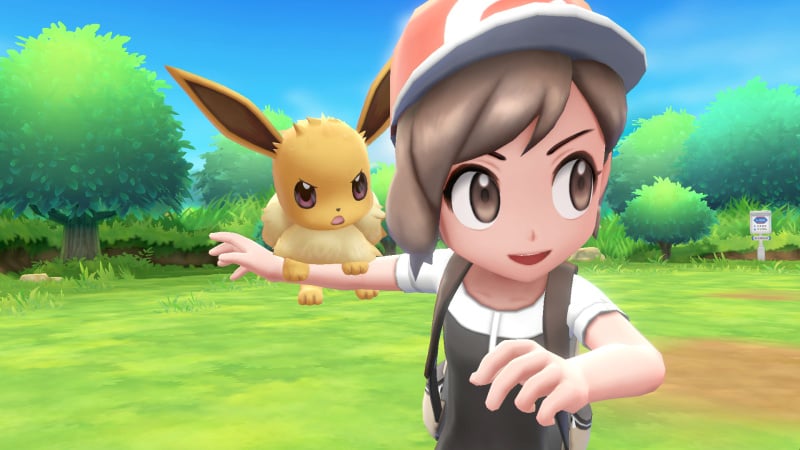
Today, Nintendo announced Pokémon Let’s Go Pikachu and Pokémon Let’s Go Eevee, due out for a worldwide release on 16th November. These games will take players back to the Kanto region for a new adventure that Junichi Masuda says is being built on the formula of Pokemon Yellow, and will feature only the original 151 Pokémon. However, rather than Squirtle, Bulbasaur, or Charmander, your starter will be either an Eevee or a Pikachu that will follow you around outside the Pokéball. Gameplay looks like it will be a cross between the main series and Pokémon GO, and it will feature direct connectivity with the AR game that allows one to trade Pokémon back and forth between games.

What do you think? Which version will you be getting? What do you think of the gameplay direction? Share your thoughts in the comments below.

Posted on Leave a comment

Play 12 classic Street Fighter games with Street Fighter 30th Anniversary Collection!

Play 12 classic Street Fighter games with Street Fighter 30th Anniversary Collection!

Celebrate Street Fighter’s historic legacy with Street Fighter 30th Anniversary Collection for Nintendo Switch. This all-in-one package highlights the series’ past in an anthology of 12 classic titles!

  • Fans of the series can also enjoy diving into the past 30 years of Street Fighter history with rich character bios, a huge Museum Mode including never before seen art and interactive timeline, and listen to tracks in the Music Player.
  • This collection also includes online-enabled versions of Street Fighter II: Hyper Fighting, Super Street Fighter II Turbo, Street Fighter Alpha 3 and Street Fighter III: 3rd Strike. While playing these four titles online, players can recreate the classic arcade gaming experience by battling the CPU whilst waiting for online opponents.
  • Exclusive to the Nintendo Switch version is a special re-creation of Super Street Fighter II: The Tournament Battle. This allows up to eight players to link four Nintendo Switch systems together to form local tournaments. Please watch the Related Videos for more info!

Includes:

Street Fighter
Street Fighter II: The World Warrior
Street Fighter II: Champion Edition
Street Fighter II: Hyper Fighting
Super Street Fighter II
Super Street Fighter II Turbo
Street Fighter Alpha: Warriors’ Dreams
Street Fighter Alpha 2
Street Fighter Alpha 3
Street Fighter III: New Generation
Street Fighter III 2nd Impact: Giant Attack
Street Fighter III 3rd Strike: Fight for the Future

To purchase the digital version of this collection, please visit https://www.nintendo.com/games/detail/street-fighter-30th-anniversary-collection-switch.


Alcohol Reference
Mild Blood
Suggestive Themes
Violence

Posted on Leave a comment

Review: ATOMINE (Switch eShop)

Go up to any of your tech-savvy friends and whisper, “STUXNET!” in their ear and don’t be surprised if they break out in cold sweats. This nasty little number was first discovered back in 2010 and it used no less than four zero-day exploits on Windows operating systems to spread and lay dormant in thousands of systems, looking for specific software responsible for the automated operations of industrial control systems. The stuff of nightmares for any IT professional and not as glamorous or science fiction as one might be led to believe.
    
A realistic video game adaptation about malware might not have been the best approach to some proper entertainment so instead Broken Arms Games opted for the ‘TRON’ school of thought. ATOMINE is an unashamed old-school twin-stick shooter with a few ‘new-school’ rogue-lite elements such as procedurally generated levels.

Your ultimate goal is to take over a nuclear missile control system, but you won’t believe that to be even remotely possible when you first start the game and notice how under-powered your only available ‘worm’ is. Unlike single screen twin-stick shooters you actually need to explore around the randomly generated interconnected rooms, looking for data hubs where you get to upgrade your default pea-shooter default weapon and ‘compile’ your worm with more efficient weapon modules

You can only proceed to the next stage after clearing the level of all enemies, in this case security software represented by different shapes ad attack patterns that will do their fines to hit you. Despite not being a one-hit kill type of twin-stick shooter you will quickly get overwhelmed if you charge blindly into new rooms. Disposing of enemies will drop green shapes representing experience that you need to collect to level up and sometimes they even drop bigger green chunks that will replenish some of your worm energy. When you are destroyed, it’s all over. You do get to keep any modules you have unlocked along your sessions, but those rogue-lite elements we mentioned earlier mean that once you’re dead, all your progress is lost and it’s back to the very first level.

Along your trek towards the nuclear missile controls you will stumble upon defense systems that translate to boss encounters. These do break the standard exploration gameplay by presenting enclosed arenas much more familiar to twin-stick shooter fans. The difficulty spikes really high if you happen to come into these fights under-powered, so it pays to make sure you shoot everything in the explorations levels – secret walls can be destroyed and usually lead to dangerous areas with big experience boost so it does pay to explore levels patiently instead of immediately jumping out to the next area.

The visual aesthetics are very plain, using flat, shaded polygons to represent everything from the player worm to the defence programs and the systems themselves. They are functional but somehow lack a bit of the visual spectacle we are used to from other similar offerings within the genre. The soundtrack on the other hand is very much what one would expect from a hacking-themed twin-stick shooter: Very electronic and very loud.

Multiplayer is sadly completely absent so only consider picking up this one if you are okay with the life of a lonely Kevin Flynn. At least there is enough locked content to certainly keep you going beyond your initial runs that will again likely end rather quickly due to the initial state of your lowly underpowered program, but stick with it and begin unlocking modules and new worms to see the game rewarding both persistence and patience… not at all unlike real hacking, really.

Conclusion

ATOMINE delivers a solid albeit somehow mundane interpretation of the twin-stick shooter that will still satisfy those with cravings for something new within the realm of the genre but will probably not convert any newcomers to the format. We still give it a recommendation despite feeling that while polished, its premise might have allowed for a more extravagant visual experience. Hack away humble little program, hack away.

Posted on Leave a comment

Review: White Night (Switch eShop)

The year is 1938; the economic tsunami that is the Great Depression is sweeping over America and late one night a man finds himself driving home from a local bar, located on the outskirts of Boston in an inebriated state. As he crosses over a bridge at a steady pace in his automobile, a ghostly silhouette of a girl walks out, leaving the man with no option but to veer off into a ditch in order to avoid colliding with her. When finally regaining consciousness, the man realises he is outside an eerie mansion in severe pain and in desperate need of help. This is the opening act of White Night.

If this premise sounds cliché for an adventure puzzle game featuring elements of survival horror, that’s because it is. Between the story and gameplay, White Night is rather formulaic. The obvious difference here, when compared to other titles under the same banner, is the bold visual direction. The black and white film noir aesthetics are what the game is built around. From the beginning, this art style does a good job representing the era the story is set in, even if it doesn’t necessarily reinvent the graphical wheel.

Starting outside the lonely mansion, you’re taught how to inspect your surroundings, including how to interact with individual objects and also access the local newspaper – which is basically used in this context as a hint section recapping anything noteworthy. There’s also some world building with the paper making reference to relevant topics of the time. Shortly after learning the basics, you’re sent on your first key recovery quest, which requires you to push aside a statue in a graveyard so you can open the front doors of the creepy house your character is so desperate to gain entry to.

It’s from here the drama escalates. Upon entry, you learn how to light the limited amount of matches at your disposal to prevent the darkness from smothering the protagonist altogether, all while searching the surroundings for any useful objects or clues about your location and the whereabouts of the residents. Eventually, you find switches and other sources of light including fireplaces, but not all rooms are like this – meaning you’ll need a sufficient amount of matches on you at all times. If you don’t have light, it’s game over. This mechanic adds an extra dimension to the gameplay, but it’s not necessarily one that hasn’t been done before.

As you progress, you’ll encounter objects that must be interacted with at a closer proximity under match light. There are also symbols to take note of, along with letters and notes written by family members of the house as well as paintings on display that link to bigger mysteries. Encountering apparitions becomes more common over time, with these supernatural spirits posing a threat to your existence. If you need a moment to catch your breath, there are rest areas in the mansion acting as save points. It’s very much rinse and repeat, with the main requirements to piece together information with the items, objects and clues you uncover – enabling you to move the story along. Again, even with the odd twist and scare, it’s nothing new, but what is there in terms of puzzling is at least skilfully strung together when you aren’t fumbling about in the dark because of the art style.

The atmosphere is arguably another standout trait alongside the visuals. From the minute you enter the house, there are plenty of noises like ringing bells to hooting owls and the sound of thunder outside. The constant bumps in the dark certainly make you feel like you are within the presence of supernatural forces. The stylish jazz from time to time is easy to associate with the era the game takes place in. Unfortunately, what removes you from the experience a lot of the time is the dialogue. The character will often spout silly lines about how he just had to enter a particular dark or dangerous location. On the plus side, there’s voice acting and enough constructive tips to make you forgive him for his other comments.

The film noir aesthetics might be reminiscent of the Wii exclusive MadWorld (minus the blood), however, the fixed camera angles and sluggish character movement more closely resembles a classic Resident Evil title. The fixed camera shots have a tendency to create problems when you’re moving the character about, and can also completely disorientate you when you move from one area (or room) to another. The way these angles are aimed, doesn’t always make solving certain puzzles the easiest – with thorough checks of each area required because of this design choice and the black and white visuals. A dynamic camera would have been the more functional option. Loading sequences are also quite lengthy at times. Fortunately, there are few of them. 

Conclusion

White Night does serve up some scares and a few twists along the way, however, there’s nothing particularly different about what this title has to offer over only a handful of hours, even with consideration of the black and white film noir aesthetics including the special mechanics built around it. Despite its eagerness to run with clichés, it at least sticks with its style through to the end and does everything competently enough to make it a satisfactory experience for anyone looking for a colourless curio. 

Posted on Leave a comment

A ‘Hylian Shield Edition’ Legend Of Zelda 2DS XL Is Coming Exclusively To GameStop In The US

Nintendo has revealed the latest addition to its ever-growing catalogue of cosmetic options for the Nintendo 3DS family of systems. This time around sees a Legend of Zelda-inspired New Nintendo 2DS XL, and it’s certainly rather eye-catching.

Designed to look like Link’s famous Hylian Shield, the system is launching exclusively in GameStop stores on 2nd July at a suggested retail price of $159.99. The console will come pre-loaded with The Legend of Zelda: A Link Between Worlds – the 3DS sequel to the beloved SNES classic The Legend of Zelda: A Link To The Past.

Naturally, this GameStop exclusivity would suggest that this design might not reach the eager hands of European fans – we’ll have to wait for more news on that one.

Do you like the look of this one? If you’re lucky enough to be near a GameStop store, will you be heading out to buy one for yourself? As ever, let us know your thoughts in the comments below.