GRIDD: Retroenhanced, an intense arcade-style shoot ’em up heavily influenced by ’80s hacker culture and cyberpunk, is set to launch on Nintendo Switch tomorrow (7th June).
Players are tasked with flying their ships through a computer system filled with an evolving set of glowing gates, obstacles, and enemies, attempting to take down an unrelenting security mainframe. The game features a pulsing synthwave soundtrack by Melbourne-based musician Dream Fiend, and an early home computing visual style, aiming to take a classic era and evolve it into a modern arcade experience.
The game’s difficulty adapts to the player’s in-game performance; as players succeed and gain mastery of each element of the game, those elements become more difficult in future encounters. Likewise, obstacles too difficult to beat will relax until they reach just the right difficulty for the player.
GRIDD: Retroenhanced also makes use of the Nintendo Switch’s unique features; by attaching a Joy-Con and engaging in “Power Glove Mode,” players can control the game using motion controls.
The game will be available for $11.99 when it arrives on the eShop. Will you be giving this one a whirl? Let us know your initial impressions down below.
Square Enix is one of those third party companies that’s been a little more hesitant in its support of the Nintendo Switch. The company most notably brought I Am Setsuna and Lost Sphear—two low-budget, retro-inspired JRPGS—and is prepping to release the heavily anticipated Octopath Traveler. Apart form that, things have been relatively quiet from the company on the Switch front, but it seems that Square is finally doubling down on bringing bigger projects in greater volume to the platform in the future.
Game Informer recently got to talk with Square at a press event about Octopath Traveler, and the executive they were talking with had an interesting tidbit of news. Tomoya Asano, division executive at Square, said that the company has established a Switch division in April, and that the sales of Octopath Traveler will be used to judge how much support the company will give in the future. Here’s what was said:
Square Enix has decided that it wants to focus on original titles for the Switch. If Octopath Traveler does well and this is something that appeals to fans, we want to focus on Switch. Please pick up the Switch if you want to play games like Octopath Traveler.
In addition to this, Asano also confirmed that there are more large projects on the way to Switch, though he wouldn’t say what’s being worked on. Here’s what he said:
There are several other titles that we’re currently working on for Switch. If you could just wait a bit longer, we’ll work with Nintendo and announce them in the future.
With any luck, we’ll hear more about these projects at E3, but at least it looks like Square is going to be sticking with the Switch for quite some time.
What do you think? Will you be getting Octopath Traveler? What other Square games or franchises do you want to see on the platform? Share your thoughts in the comments below.
Bloodstained: Ritual of the Night is one of those games that’s been in development for what feels like forever, and though there’s some concern that it could end up being another Mighty No. 9, much of what’s been shown of the game has been promising. Ahead of its release this year, Inti Creates put out a smaller taster of a game in Bloodstained: Curse Of The Moon, a short and heavily Castlevania inspired game that’s received plenty of praise.
Inti Creates recently released a sales breakdown of Bloodstained: Curse Of The Moon and to the surprise of nobody, it sold the most units on Switch by a distant margin. Here’s the distribution:
Switch – 56%
Steam – 19%
PlayStation 4 – 17%
3DS – 4%
PlayStation Vita – 4%
Inti Creates also released sales data based on region and the results were rather surprising in how much they skewed towards North America. Here’s how much each region bought:
North America – 64%
Japan + Asia – 23%
Europe + Australia – 13%
What do you think? Did you enjoy Bloodstained: Curse Of The Moon? How do you think the full release will turn out? Share your thoughts in the comments below.
E3 is but a week away, and leaks are coming from every direction. Usually, however, they don’t come directly form Nintendo’s own servers, as is the case with this report. Dataminer and Pokemon researcher Michael revealed an update for the as-yet unannounced Switch version of Epic’s world-beating game has been uploaded to the Switch eShop in a series of tweets.
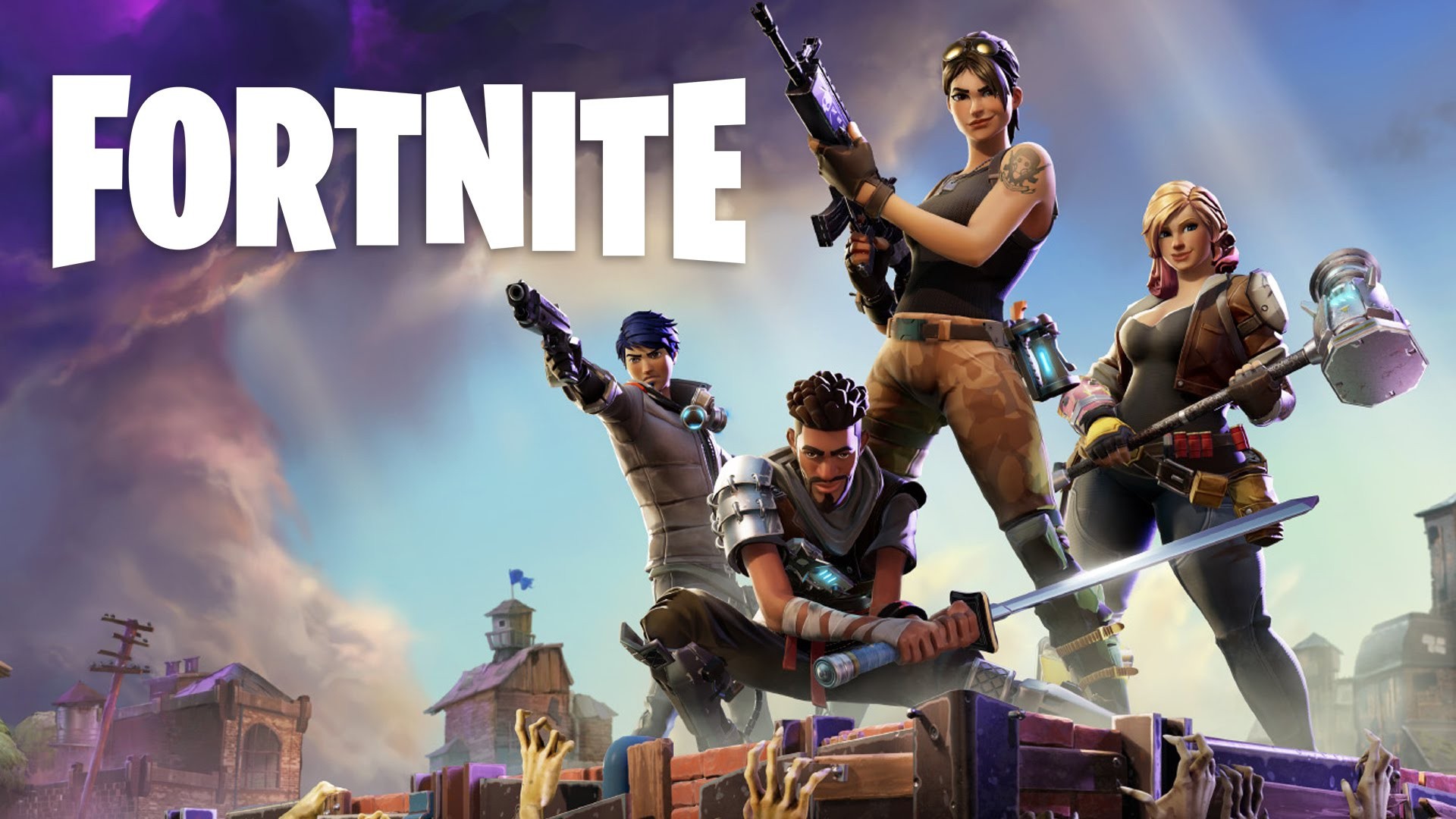
The image above appears to be Fornite’s Switch icon, and matches the dimensions typically found in eShop postings. Just last week, Fornite also appeared on the Korean game ratings board, which itself appeared to corroborate a potential E3 leak.
As the old saying goes, “where there’s smoke, there’s fire,” and there certainly seems to be a lot of smoke surrounding Fortnite’s eventual appearance on the Switch. In fact, with both ratings a patch now existing for the game, we would wager we may see the game release during E3.
What do you make of this news? Are you planning to play Fortnite on the go? Let us know with a comment.
Take The Legend of Zelda: Breath of the Wild, Harvest Moon, and Animal Crossing, mix it all together in a big game stew, and what do you get? Something that would no doubt closely resemble Yonder: The Cloud Catcher Chronicles. The newest release from Prideful Sloth certainly isn’t shy about the franchises and games that led to its creation, although the final product goes to show the value of focusing on a game’s strengths. Yonder: The Cloudcatcher Chronicles is the kind of game that tries to do a lot of things and doesn’t do any of them all that well, but it’s still an enjoyable game in its own right.
The story opens with you on a ship bound for the island of Gemea, an idyllic environment that was once your childhood home. After your ship is wrecked in the storm, you encounter the magical Sprites in a dream realm, who task you with finding their brethren on the island of Gemea to beat back the terrible purple Murk substance that has covered parts of the land. It’s a simple enough plot that acts as a way of framing your adventures to come, although there is a certain element of mediocrity to it that can’t be shaken. Not only does the plot not really go anywhere after the initial introduction, but the supposed stakes seem nonexistent; the Murk doesn’t seem all that threatening, and life in the various villages goes on peacefully and carefree in spite of it. Even so, it’s hard to fault a game like this for its lackluster story, and it does its job of giving your actions context.
Gameplay in Yonder spans a variety of genres, from farm sims to open-world adventures, meaning there’s something here for everyone. Your character can traverse a vast and diverse map that’s spotted with villages, rundown farms you can acquire, and various other points of interest relating to quests. The map is divided into several different regions, each of which is governed by a completion percentage that will grant you benefits the higher it goes. Doing quests for village workers, planting trees, tending farms, and clearing murk will contribute to this percentage, and raising it will grant you new multipliers that increase the chances of finding collectibles or more wild animals.
Doing quests for villagers seldom goes beyond the age-old ‘go here and grab X amount of this thing and bring it back’, but these quests are essential in collecting tools and supplies for the utilising the crafting system that much of Yonder is built around. Your character can build everything from flower beds to shelters for your animals, but much of these products must be unlocked by partaking in certain guild quests that give you new things to craft.
Crafting is handled by either picking up things in the overworld (such as rocks, vines, and wood) or by trading goods with villagers you come across. There’s no currency in Yonder, rather, all items in a transaction have a certain value to them, and a successful trade requires you to put up enough things to meet that value. It’s a bit of a strange system, but it works in practice, although the crafting all feels a little bit too tacked on.
Indeed, there’s a recurring thread in Yonder where it never quite follows up on any of these gameplay threads in a significant way; by trying to do a little bit of everything, it ends up doing none of it that well. The exploration feels neutered by the absence of any sort of combat system or enemy presence, making it feel more like a walking simulator with a few things scattered about to find on the way. The farm sim elements, arguably standing as the main draw, aren’t anywhere near as rewarding or deep as those you might find in something like Stardew Valley, and this isn’t helped by the fact that you can’t even strictly make any money on what you produce.
All of this comes together to make for an experience that fails to provide players with adequate incentive to keep going. There’s no drive to find what’s next because there’s no real sense of progression to be found, aside from seeing patches of Murk slowly disappear. Zelda empowers players by granting them new combat abilities and perks so they can take on stronger challenges and harder puzzles. Minecraft gives you the ability to set your own goals and projects in a completely open environment. Stardew Valley slowly gives you more farming options as you successfully manage what you have. Yonder has none of this, it simply asks you to do things for the sake of it and doesn’t give you much reward for your trouble.
In spite of this, there is still enjoyment to be found in Yonder, just of a different kind. It’s quite relaxing to simply walk around and find things or tackle quests at a leisurely pace, and though there isn’t much else to do but keep going once you’ve hit a goal, it’s a nice ‘breather’ kind of game. In this way, Yonder echoes Animal Crossing with its directionless aims, and though it doesn’t quite manage to nail the same quality of that chill atmosphere, it comes close enough to be satisfying. The portability of Switch lends itself well to this sort of experience, and we greatly enjoyed being able to check in for just a little bit every now and then.
From a presentation perspective, Yonder manages to impress, even arguably by first-party standards. The art style has that Wind Waker-esque look to it, but the dynamic lighting is what really sets this one apart from the rest of the pack. Light and shadow are handled in a realistic and convincing way, and it lends the cartoony visuals a kind of depth that’s admittedly surprising. Couple that with friendly writing for the villagers and a relaxing soundtrack, and Yonder proves to be a game that is a delight to experience, docked or undocked.
Conclusion
All told, Yonder is that kind of game that has value, but only a very specific kind of gamer will be able to find it. Yonder isn’t a bad game by any means, but it’s clear that it tries to do too much at once and doesn’t stop to make sure that anything is that fun in practice. Mediocre gameplay mechanics aside, it’s a relaxing game to play with your coffee in the morning, and the presentation value is a definite plus. We’d recommend this to anyone looking for a relatively shallow game that doesn’t take a whole lot of a time investment; for what it is, Yonder is a decent game, though it’s hardly a must-play.
Super Smash Bros. creator and incredibly hardworking man Masahiro Sakurai has confirmed that he will be appearing in the Nintendo Direct: E3 2018 Presentation.
We already knew that Super Smash Bros. for Switch is scheduled to appear during the show, but this suggests that we’ll be seeing a pleasing amount of details about the game next week. Sakurai’s tweet below mentions that it’s been a while since he last appeared on a Nintendo Direct (which is very true), and that he will be introducing something this time around.
We’re not sure exactly how much involvement Sakurai has had in the creation of this latest Super Smash Bros. title – it was only a few months ago that we heard of his ideas regarding stepping down as a video game director. All we know is that he is definitely involved in some capacity and this appearance will likely play host to the game’s true, major reveal.
Are we ready to get the Nintendo E3 hype train up and running? Let us know what you hope to see for Super Smash Bros. at E3 in the comments.
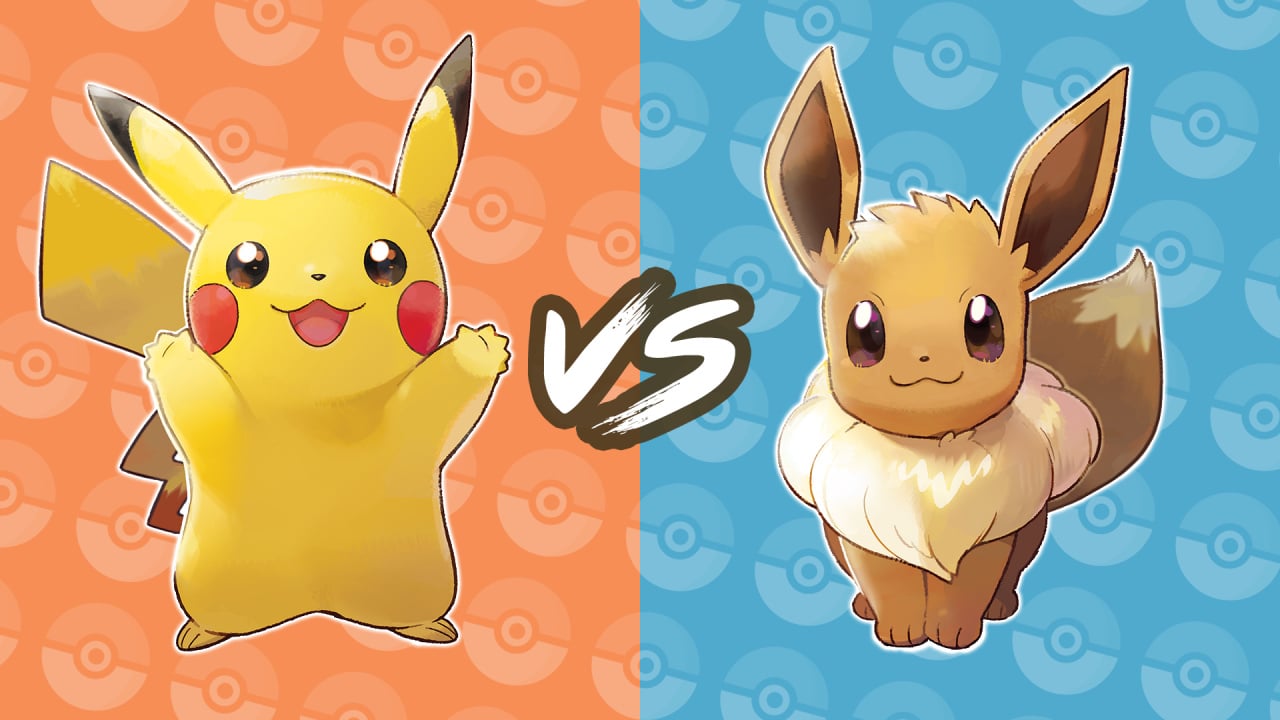
Hello there, lovely readers! Unless you’ve been living under a particularly large Geodude for the past week or so, you’ll no doubt be aware that Pokémon: Let’s Go, Pikachu! and Let’s Go, Eevee! are headed to the Switch this November. While having new Pokémon adventures on Switch is obviously great news, one very important question has risen as a result of the announcement:
For your return to the Kanto region later this year in Pokémon Lets Go, which Pokémon would you rather have by your side? Pikachu, or Eevee?
Before you cast your vote (we’ve even made a cheeky poll for you to take part in below), here’s a reminder of the pros and cons for each of the adorable little mascots. Take a read, have a think, and make sure to choose your favourite below.
Pikachu
Pros
When you think of Pokémon, you think of Pikachu. This little yellow face has been plastered over almost every little piece of merchandise littering your bedroom floor for years – surely he deserves some love in return?
Remember those annoying Zubats? Well, ZAP! They’re gone. Pikachu’s electric attacks are super effective against flying monsters so you can take them down with ease.
Pikachu positively bursts with personality. Did you see the scene in the anime where he falls in love with a bottle of tomato ketchup? If you did, you know that this is the right choice.
Cons
When you think of Pokémon, you think of Pikachu. Yes, we included this as a pro as well, but think about it… Everyone loves him. Everyone picks him. If you want to be different and stand out from the crowd, you should probably avoid this sucker.
Team Rocket are well and truly obsessed with Pikachu. We know that these evil-doers are making a comeback in the new games, so surely you want to keep the poor electric mouse away from their grubby hands, not offer him up to them?
Pikachu can’t hurt the Pokémon found in the first Gym. Yep, that’s right, electric moves do literally no damage against the likes of Geodude and Onix who appear in that first major hurdle. He’s cute and all, but you’ll get crushed if you’re not prepared.
Eevee
Pros
Eevee can evolve into eight different Pokémon that are all different types. Yes, EIGHT. If that’s not cool to you then we simply can’t please you.
It sits on your hat as you merrily run along. It’s cute, it’s adorable, and we shall call it our squishy.
Eevee has become something of a fan-favourite over the years, especially among the crowd who know their Bellsprouts from their Burmys. Join them, feel the love, and share silly pouty faces next to your copy of the game on Instagram. #Eevee4Ever
Cons
Eevee was originally the starter Pokémon of your rival in Pokémon Yellow, and also Ash’s rival Gary in the Pokémon anime. Let’s not give them the satisfaction.
Eevee may well be able to evolve into eight different Pokémon, but again, we know that your starter will refuse to evolve in these games. You’ll need to grab yourself a second, third, and fourth Eevee to get your hands on all the evolutions appearing in this game.
It’s not Pikachu. Deep down inside, you know you love Pikachu. It’s impossible to truly dislike it, and choosing anything else over that adorable zappy munchkin may well leave you with horrible guilt for years to come.
So, after that extremely serious and informative list of pros and cons, it’s time for you to pick your Pokémon. Make sure to choose your favourite below.
Feel free to let us know which version you went for in the comments below. Pokémon Let’s Go, Pikachu! and Let’s Go, Eevee! launch for Nintendo Switch on 16th November.
When you use both ‘Samurai’ and ‘Ninja’ in your game title, certain epic expectations come along with it. If the name sounds at all familiar, you might have stumbled upon the previous release of this game back on 3DS. Now having lost one screen while making the jump to the Switch, can Link Kit’s charming feudal Japan castle defence adventure possibly live up to its namesakes?
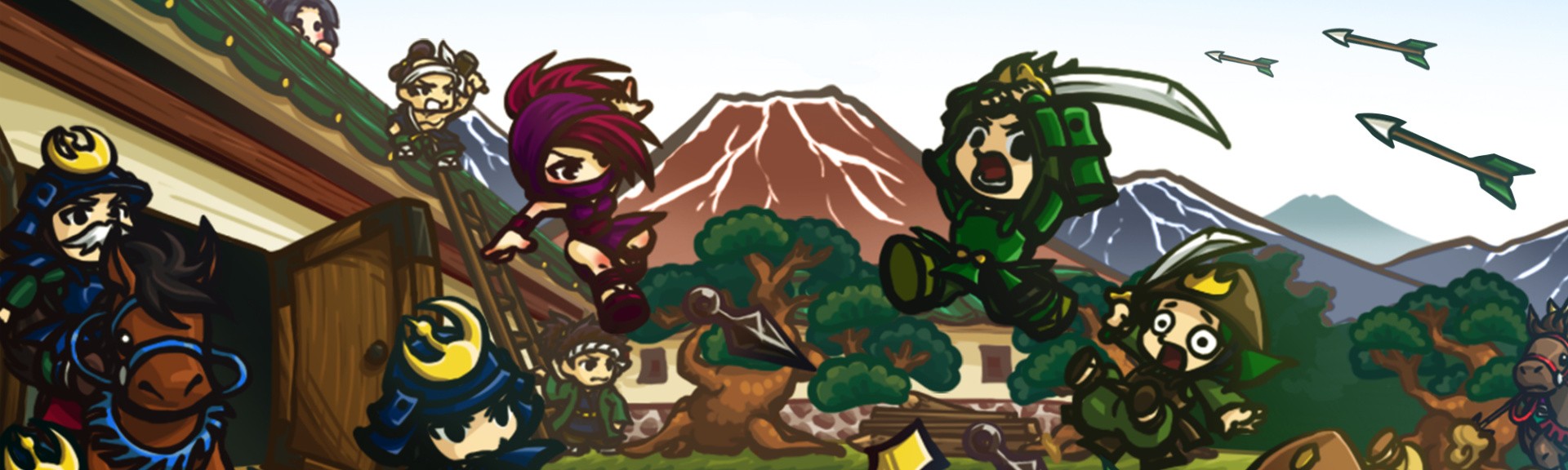
Everyone in Japan was at war back in the day and since there both firearms and artillery introduced by the Portuguese in the 16th century present in Samurai Defender: Ninja Warfare we can extrapolate that it takes place sometime in the Muromachi period. Your lovely castle is under siege by some other guy’s clan and it is up to you, a lonely archer sat on top of the castle gate to defend it against orders of enemies that rush it from the left side of the screen. Sounds like an uneven fight… at first.
The initial levels act as ongoing tutorial, so after you kill the first few enemy hordes with deadly accurate arrows, you are awarded with copper and gold coins for your successful castle gate defence duties. As usual in this game genre, you use these to upgrade your defences, including enhancing the power and speed of your arrows or even add extra defenders (up to five) on the roof with your copper coins. Gold coins buys (or reinforces) stratagems (the equivalent of magic spells since they cost self-recharging mana) that can be used in both attack and defence. One can even buy new classes to be used on the rooftop, such as the titular ninjas or fire archers.
It’s a tried and tested formula so you will find no surprise to learn that the whole concept works perfectly fine on Nintendo Switch. The mobile roots become evident when you play it in portable mode – you can simply tap the touchscreen to where you want your arrows to fly into and drag and drop stratagems straight into the single screen playing field. Using the Joy-Con or Pro Controller in docked mode is fortunately no deal breaker – the cursor moves fast and precise enough to ensure there are no mishaps in the heat of battle.
The more you upgrade your units and stratagems, the more your enemies will send deadlier units to your gates – so after a few dozen rounds, the sparsely populated battlefield become an epic painting of cartoon violence. New to this entry are bosses, who pop up every tenth level and possess not only huge amounts of HP, but also their own unique stratagems. We were slightly concerned when the second boss summoned a screen size naval warship heading straight into our castle, but some cool-headed planning and samurai line stratagem spamming prevented a shameful defeat. When you do find yourself stuck on a particular mission, you can simply play the previously cleared ones in order to grind copper or gold to upgrade your defences.
The graphics are cute, colourful and drawn with big bold black lines which helps ensure you don’t mistake enemy units for your own. The best bit of this package comes with the soundtrack. It features quite a few lovely melodies employing classic Japanese instrumentation that perfectly set the mood for some feudal Japanese warfare.
Conclusion
Samurai Defender: Ninja Warfare may not bring anything new to the table among the castle defence genre, but it does so in a charming feudal Japanese cartoon wrapper. Despite not setting the video gaming world ablaze (unlike the poor fools rushing at your door) anyone looking to blissfully slaughter wave upon wave of enemy cannon fodder soliciting at your castle gate need not look further.
It is hard to believe that Arc System Works’ Blazblue franchise is already turning a decade old. Even more baffling, it took those ten years for one of the series main entries to arrive on Nintendo hardware. Yet as you can probably gander from the title BlazBlue: Cross Tag Battle is far from a conventional sequel.
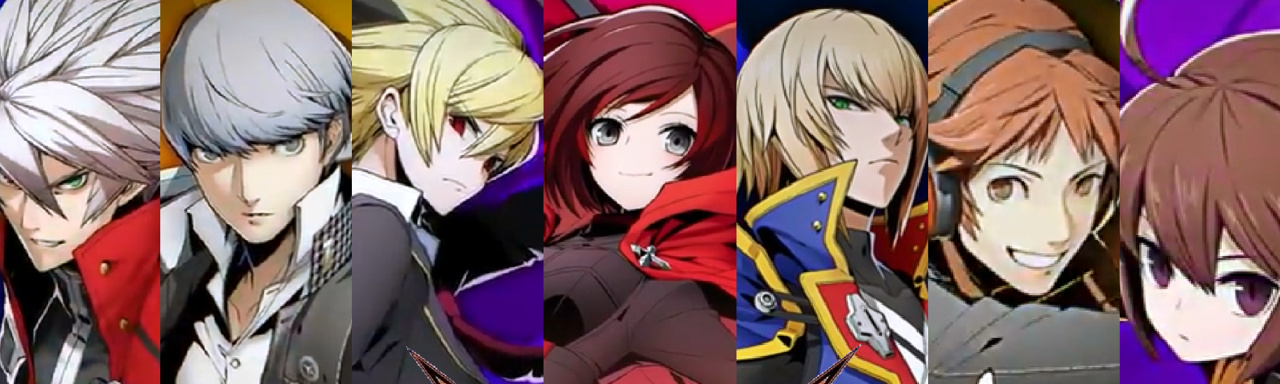
Cross Tag Battle is an ambitious crossover that remains first and foremost a BlazBlue title, something that is reflected in the game’s extensive deluxe roster. Along with series poster boy Ragna the Bloodedge come his brother Jin, Rachel, Hazama, Noel, the demented Azrael, Tager, Makoto, Nº 13 and Es. From the Persona 4 Arena fighting franchise you can pick from Yu, Yosuke, Chie and Yukiko. From the visual novel/fighting hybrid franchise Under Night In-Birth come Hyde, Lyne, the gigantic Waldstein and Gordeu. Lastly the most leftfield franchise and one not under the direct banner of Arc System Works are characters from the RWBY animated series, represented by the titular Ruby and Weiss. Unless you are willing to pay for DLC, this is the default 20 character roster you play with. We will address that specifically further along in this review.
The game uses a straightforward five-button control scheme. You can customise these as your wish on your controller and as a welcome bonus you can assign double-button actions to any free buttons on your controller of choice. While the Joy-Cons offer perfectly acceptable performance when attached to your Switch in portable mode, we recommend that due the amount of button presses going on in an average battle you should truly play this game with a Pro controller or your arcade stick of choice.
All characters share the same basic commands: ‘A’ is your weak fast attack, ‘B’ is your slower stronger attack and ‘C’ is for clash attack. ‘D’ and ‘P’ will let you mix things up by respectively switch or call an assist from your partner of choice. ‘A’+‘B’ will perform a useful aerial dash, ‘A’+’B’ will execute your character’s reversal move while ‘B’+‘C’ will execute your character’s throw. Last but certainly not least, hitting ‘D’+‘P’ will do a ‘Cross Burst’, briefly get both your characters into the battle, allowing for all sorts of combo shenanigans. Do not worry about feeling overwhelmed by these, part of this content heavy offering from Arc System Work is the offline ‘Tactics Mode’ where you have access to extensive tutorials on both game mechanics and every character. It is quite an achievement for a game of this genre to be both casual friendly and hardcore in equal shares. But do remember that those ready-to-use auto-combos will only take you so far…
Personal choices aside, what makes each character unique is their set of special moves (all are catalogued on the ‘Command List’). These are accessed by standard fighting game control motions and button presses and it is an absolute delight to explore how best to use these to chain combos or fool your opponents into opening up their guard to received a ton of damage. With enough Skill Gauge numbers in reserve, you might even call up your partner mid-special move to extend combos further. Even if you end up losing one of your team members, fighting alone isn’t a definitive loss since you can use ‘P’ to get your character into an awakened state for bonus damage and even pull off a single one-hit killing blow reminiscent from the original Guilty Gear that will end the battle in your favour. Since these require nine Skill Gauges to execute you will probably not see them very often, which makes for an even more spectacular sight to behold when they do happen.
As you might have discerned already, each and every single battle is an absolute spectacle of special moves, counters, super jumps, double jumps, dashes, timed ukemi (recovery from a knock down) and maximising combo potential with the aid of your partner. While the CPU and the several difficulty settings will provide more than enough challenge, it is when you sit a human opponent across the sofa and both go at it is when BlazBlue: Cross Tag Battle shines the most. This is an obvious cliché to mention in a review for a fighting game, but in this day and age where couch multiplayer seems to have taken a back-seat to online multiplayer we indulge upping word count to do so.
On the subject of online play, you will probably not be surprised to learn that the game takes cue from Dragon Ball FighterZ and ditches traditional menu-driven interface for a three-dimensional lobby system. You pick (or buy with in-game currency) your super-deformed 3D avatar and run around with it in the several available sections, being that one of them is the online lobby. While it is impossible for us to predict how a lobby with hundreds of players will behave upon official Western release of the game, the few matches we played with fellow journalists offered some hiccups during synchronisation sequences, the actual fighting was mostly done lag free. Considering we are reviewing the US version and were thus playing all the way cross the pond this was a pleasant surprise. We can only assume Arc System’s works previous network tests and experience with net-code have paid off. If you don’t have a friend to play against with you, there will most certainly be eagerly awaiting opponents all across the globe to take on your tag team of choice.
Even if you don’t like competition, there is a generous amount of single-player content in the form of ‘Episode Mode’. After a brief prologue featuring Ragna, you get the choice of four individual chapters, one for each of the franchises feature in this crossover. We won’t be giving out spoilers on these, but do know that each chapter is presented using still scenes using your character’s lovely art work and impressive voice acting, usually a prelude to a tag team battle until you figure out the mystery of this world everyone ended up getting sucked into. Not only this allows to explore the plot but it is also a great way to sample many of the characters on offer since you get to tag team with pretty much everyone in the roster (and even fight against the DLC characters). The BlazBlue episode even offers multiple choice questions and several endings to further push up replay value. This mode is also very good training for the fights ahead so do consider jumping into this prior to online battle mode.
It does, however, seem a bit odd to have one third of the complete roster locked behind a paywall. Platinum, sentient cat Jubei and Hakumen from Blazblue, Kanji, Aegis and Naoto from P4A plus Orie, the deranged Carmine and Vatista from Under Night In Birth are all already in the game, but you can’t play with them unless you pick up the DLC. Community backlash was so harsh that Blake and Yang from RWBY have since become free release day DLC. We fully understand that this is seen as standard practice in the industry nowadays, but how would you feel if you picked up the latest instalment of Super Smash Bros. with only two thirds of the roster available to play? A puzzling, non-consensual practice that will surely continue to divide fans in the foreseeable future.
While ‘Episode Mode’ provides a generous slice of single-player content, the actual combat sequences are quite far apart thanks to all the plot exposure going on. It is thus a bit baffling to notice the omission of a traditional arcade mode, even more so when there is clearly a section reserved for it in the lobby. Those wanting to grab a quick pick-up and play sessions are as such confined to ‘Survival’ or the ‘Vs CPU’ modes. We hope Arc System Works adds this mode down the line, we were surprised at how much we sorely felt it’s omission.
It is true that of the character sprites do recycle content from previous games but it is hard to fault that since the sprites are simply gorgeously detailed and animated. The numerous backgrounds use da mixture of two dimensional and polygonal models to provide a pleasing hybrid aesthetics and everything moves along at a very pleasing and stable fps rate. You will not find the Switch experience to be in any way different to the other consoles or PC counterparts. The soundtrack is sublime as expected from Arc System Works franchises and you can change up the phenomenal voice acting from English to Japanese to your pleasure. Even during the most explosive visual confrontations combat usually derails into we found no noticeable performance differences between docked and portable mode. This is not a downgraded port to please Switch owners starving for a current generation slice of fighting action, this is the real deal (unlike the strange world everyone ends up stuck in).
Conclusion
BlazBlue: Cross Tag Battle is an utterly accomplished 2D fighting game. Bursting with content and featuring the visual spectacle of combat that uses up every single trick in the book while doing so with the possibility of calling up a second character into the fray on demand sets Arc System Works title as the de facto current generation game fighting game to own on the Nintendo Switch. While we certainly appreciate the likes of Capcom and SNK (via HAMSTER) safely releasing previously proven hits of the genre, we were beginning to wonder when companies would notice that Switch is more than able to accommodate current generation titles as well. A few strange decisions aside it is very hard for us not to recommend you make this title a priority among your future acquisitions if you’re a fighting game fan. Even if you’re not a fan of any of the franchises represented in this game, you most certainly will be by the time you’re done with this stacked fighting package.
You may well be aware that a little thing called ‘E3’ is happening next week – a premier trading event where the biggest names in the video game world host presentations of the biggest titles we can expect to see in the coming months. Alongside Nintendo’s main presentation, the Nintendo Direct: E3 2018, several games will be on display for attendees to play.
Slightly surprisingly, one of those titles (or two, in a way) is Pokémon: Let’s Go, Pikachu! and Let’s Go, Eevee!. Despite only being officially revealed last week, Nintendo has announced that E3 attendees will be able to get some hands-on time with the games at the Nintendo booth. Whether this may lead to more snippets of information being revealed about the new titles remains to be seen, but it’ll be interesting to get hands-on impressions before the launch in November.
As a reminder, players will also get to experience the upcoming Super Smash Bros. for Switch which is set to be making a grand appearance during the main showcase, although a reservation is required to play this one. If you’re attending the show and want to get your hands on the new Smash, make sure to check out this FAQ which has all the info you’ll need.
Are you feeling the E3 hype yet? Are you lucky enough to be attending this year? Share your thoughts with us in the lovely comment section below.