Posted on Leave a comment

Feature: Talking Super Smash Bros. Ultimate With Nintendo’s Bill Trinen And Nate Bihldorff

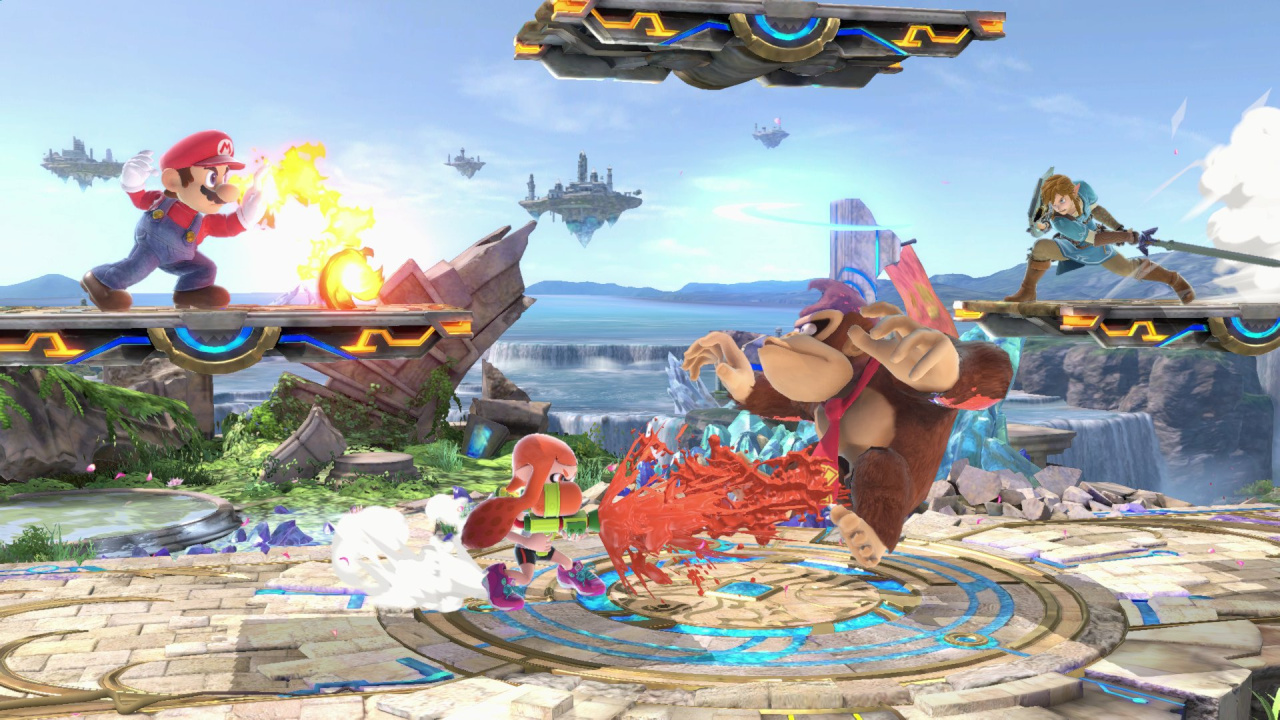
We’ve known about Super Smash Bros. Ultimate for quite some time ahead of its reveal at E3 2018. What we didn’t know was just how massive it would end up being, featuring every character from the series’ history, all wrapped up in a conveniently portable package. 

We recently had the opportunity to catch up with Nate Bihldorff and Bill Trinen of Nintendo of America to talk about the game and the new changes it’s bringing to both casual players and the competitive scene, whether Ultimate is a new game or an enhanced port, plans for the future, and… that fat guy from NES hockey?! Read on for the full interview.


Nintendo Life: Can you talk about how long the development cycle was on Smash Ultimate?  It feels like it had to have been really short compared to previous entries.

Nate Bihldorff: It is huge. We don’t have details on sort of exactly when development started on. I think those things ramp up over time. It’s kind of a small start like Genesis and then it ramps up all of the time, so we don’t have specific details about how long the development cycle is. I think the results kind of speak for themselves. It certainly doesn’t feel like something that was slapped together in a short period of time.

A lot of people were expecting Smash to be like Mario Kart 8 Deluxe, or even in a lesser sense Splatoon 2, in that it looks like the Wii U original but it is just improved upon; I feel like this is more of a completely original game.

Bill Trinen: I would argue Splatoon 2 is a completely original game. You look at, you know it is not like shooters change that much from version to version, but Splatoon 2, they added new modes.

I think that the perspective – at least among our audience – was that it still looked very similar, and yes, Splatoon does have a distinct visual style, but the art style itself seems to be different between Smash 4 and Ultimate.

Bihldorff: You know we were just talking about that today. In particular, the lighting and the texture work in the stages, stuff like that are really significant. Actually, for us, the biggest thing was going back and looking at Melee stages that you know and love and all of a sudden you see all the care that’s gone into bringing them into this new game. I’d say for people who are expecting a Mario Kart 8 Deluxe upgraded port thing, that they are very pleasantly surprised when they open up the box.

Trinen: That’s the question that I always ask. When was the last Smash Bros port?

Yeah. That’s true.

Trinen: There has never been a port.

We just played on Saffron City, which hasn’t been around since the original on Nintendo 64. We were really excited to see that pixelated Charizard is still there.

Trinen: Yeah, because it is awesome.

Are we going to see every stage that has ever been in a Smash Bros., or is it going to be a selection of some of the classics as well as some new stages?

Trinen: It is not quite going to have every stage, but as you see in the E3 build that they are looking at bringing some back. They are looking at bringing some over that were on the 3DS version, and bringing them into this game. Obviously, they look a lot better in this game than the did in the 3DS version.

Bihldorff: Yeah. I was actually reading; the internet sleuths did a wonderful job of dissecting the amount of media that we put out there between screenshots, and videos. They have already amassed all of the stages that they have seen in some form of media, and I don’t really know how big it is, but seeing it in a list is very different than seeing it on a stage selection screen.

The amount of stuff already in there is unbelievable, the number of stages in the game. You could get paralyzed by looking at it. And then you realize that every single one of those could be a final destination stage with the same theme. Every single one of those could be a battlefield stage with the same theme. And I think for me anyways as a player, that just makes me incredibly happy. There are certain stages that I gotta admit, the hazards on them absolutely destroy me. For whatever reason, the characters that I play are just at an automatic disadvantage because of whatever that particular hazard is, and being able to play a battlefield version because I love the world that it is in, is just awesome. Hopefully, people think so anyway.

Personally, what are the stages that you are the worst at?

Bihldorff: There’s a number of them. Mega Man stage, in particular, dealing with that yellow devil. I just can’t…I just don’t go in with a strategy because every time that I see it, I just try to avoid it. I know you are supposed to be on it yourself, and then you get it on to your team, and then you shoot up at people right? Is that the way that it works?

Trinen: Yeah.

Bihldorff: I mostly just try to avoid it and I always end up getting shot by it, basically I’m in defensive mode all of the time. I think I need more simplistic, more wide open stages… I like to play quick characters. So a lot of it depends on having quick sight lines to get to an item or to the person that I’m after. There’s a lot of stages that I’m bad at.

How many characters are currently announced for Super Smash Bros. Ultimate?

Trinen: Are you getting to the point where you’re counting the Pokémon Trainer as one or two?

Bihldorff: Yeah. It’s in the mid 60s.

Are there plans to either announce characters between now and December or is the finalized, complete roster?  Can we expect to see more at a later date?

Trinen: We can answer that when we get closer to December.

Will there be DLC? Are there plans to expand on the game after release?

Trinen: I think that Mr. Sakurai obviously said that the number one goal is to get all of the past characters, and you know, the thing with a game like Smash Bros is that when you make those changes to core mechanics in terms of speed, in terms of some of the additional directional air dodge and things like that, that they added to the core gameplay in this game. Then that means that you have to go through and re-balance all of the other characters, and once you have to do that, then you are having to adjust animations. You are also changing character models. You are giving some of them new moves. Some of them you are getting new final smashes, it does limit to a certain degree the ability to add a whole lot more. At the end of the presentation, [Sakurai] said not to expect too many, but he did offer one more at the end there, which is obviously going to be fantastic. So that was great. If you were at the tournament, you probably heard him mention that he is flying out on the midnight flight to get back and finish the game. That was not hyperbole. He actually did that.

He did it with a big smile on his face, because he did have a great time at the tournament. But his focus right now is getting the game ready for December. The thing about us, when it comes to something like DLC, we don’t really start on it until we have got the game done. So, maybe when the game comes out they will make a decision on if they will do it, or if they do what they want to do, that sort of thing.

We noticed that it felt like the difficulty curve of the game had been softened a bit. The directional air dodge helped us play on the edge of the stage better than in previous games. Were those changes made for players that aren’t quite so good at the game? Is it there to make the game more accessible to a broader range of players?

Bihldorff: I think that Mr. Sakurai’s design philosophy has always been that way. He is always thinking about making it as accessible and successful as possible because he wants absolutely everybody to play his game. But also he is not unaware that high-level players are playing it at a really high level. Techniques like what you are talking about really serve dual purposes. They as you mentioned, have more mobility for someone who is just learning how to play the game. But in the hands of a master, a pro, I mean we already saw what those guys are doing with just the directional air dodge. I’m trying to think… there was one specific moment, what is the Kirby, that item where you can target…

The dragoon.

Bihldorff: Yes, thank you. There was a moment in the finals where he got on that and he saw that. There was a directional air dodge where he dodged directly onto another platform and landed then ground dodged the second that he landed to dodge the second strike of the dragoon. I can’t even do that, and it really annoys me that these pro players probably did that after 4-5 hours of practice leading up to the tournament! [laughter] That is just a perfect example of a design decision that benefits both sides and as a result, it satisfies two very different groups.

Trinen: I think the way that I would phrase it is that already Smash Bros is about as easy as a start as you can get from a game, right? It’s the control stick, the A and B buttons, and even just with that. You don’t know how to roll, you don’t know how to shield. You don’t know how to do any of that. Just with the control stick and the A and B buttons, you can have a lot of fun playing this game. Even my own kids started playing Smash when they were four years old, because it is that easy. 

What they added to the game, as Nate was saying, is that it gives more things for people to experiment with. The other thing with the combination of the jump button and the attack button giving you instant access to the short hop aerial attack, what that does is that it takes a technique that had been really sort of exclusive to this top-tier player category and it brings it down a level and makes it easier for someone that is a beginner to do that. Same thing with the A and the B for the Smash Attach. Pressing A and B together to do a Smash Attack. It makes it easier to do these higher level manoeuvres. What that does is that it sort of gives a broader audience greater access to deeper techniques. But then it’s also forcing those higher level players to then adjust their game because they may to do things that lower level players were unable to do.  

You’re increasing the baseline.

Trinen: Yeah, but doing so in a way that is still incredibly easy access to beginner players.

Do mechanics like Perfect Shield cater to that higher level player? Smash Bros. gained a hugely competitive following at first, as a happy accident. It’s the most successful competitive Nintendo game out there. Are there any plans to further that along or host your own tournament series for this, sort of how Capcom does its Pro Tour?

Trinen: The first thing that I would do is rewind a bit and go to the ‘happy accident’ because that is a myth that I want to dispel. Absolutely dispel. Because the assumption is almost that Nintendo didn’t know what it had with Smash Bros. And that actually suggests that Mr. Sakurai didn’t know what he was doing. Whereas very, very specifically, he designed the game even back on the Nintendo 64 and especially on the GameCube, very specifically what we were talking about is a game that anyone can pick up and play, but one that has the incredible layer of depth to it. I mean, we used to play Melee every day at lunch and after work for 10 years. Literally. This went on in the Treehouse for years and years and years. Then we just got too busy.

We had families and all that. It was even over all that time, we continued to improve and grow as players because he specifically designed the game with layer upon layer upon layer of depth. It wasn’t an accident. The game didn’t accidentally become that way. He is a meticulous game designer. Every decision that he makes on the game is a planned decision. So what was the ‘happy accident’ wasn’t that the game was designed that way. The happy accident was that people started to discover it, and that became something that people could then relate to one another through and that they can have fun playing with each other. And that created the bond that gave them the inspiration for the community to build that tournament scene. But I do want to dispel the notion that the game wasn’t designed with that in mind, because it very much was.

Do you think that Nintendo is going to sponsor events or do anything like that to push that competitive scene a bit more forward outside of the traditional fighting game circles?

Trinen: We kind of take a different approach to tournaments. The first thing that I would say is that E3 2014, we held the original Smash Bros. Invitational. There was a confluence of events going on, you were seeing some big effort on the community side to really try to help elevate the scene. We held that tournament at that point in time had the highest viewership of any Smash Bros. tournament ever, which helped give exposure to the tournament scene. Of course, we invited a lot of community members to that tournament. It also was helped by the launch of Smash Bros. for the Wii U. Any time in the fighting game scene you have a new game come in, it tends to give momentum to the scene overall.  

What we have actively worked on behind the scenes the past few years is really making sure that both the Melee scene and the Wii U scene are both strong and healthy. If you were to go back and look at attendance at tournaments prior to 2014, viewership of tournaments prior to 2014, and what has happened with numbers post 2014, Smash Bros. has just been on a huge trajectory. Huge viewership numbers, number of people playing, what had been at the time big tournaments for Smash, but it is still very small to things like Genesis. We partnered with some of those tournaments, kind of behind the scenes, helping them and things like that. 

Obviously, we work with EVO for years as well. So our approach is a little bit different than other companies, but really what our goal is, is to try to continue to foster those places where the community can get together, the community can play, and the community can really engage in that fun competitive nature that we kind of talked about at the tournament as well.

Ridley being in Smash is a huge deal. I remember – I could be misquoting, so please feel free to correct me – I remember hearing that Sakurai himself said that Ridley was just too big for Smash. What happened?

Bihldorff: He studied the art, and he hunched his shoulders! [Laughter] He talked about that in a Treehouse Live segment that we did immediately following the Nintendo Direct. He was getting Ridley to stand upright in the game. One of his talks is Ridley standing straight up, which to me is probably him directly addressing the issue that he is too tall. He mentioned exactly what Ridley’s height is, although obviously it is on a sliding scale depending on which game you’re talking about. In the original Metroid it’s like Samus and Ridley were [not that large].

Whereas in Super Metroid, he was this massive beast.  

Bihldorff: Exactly. I think he’s got a specific size, but he did put a lot of work into making it look like the NES sprite where he has a hunched back most of the time.

Was it a big moment for you guys when you found out that Ridley was, in fact, going to be in the game? Was it directly in response to fan outcry about Ridley, or was it something that had been planned and fans happened to jump on it at the right time?

Bihldorff: A lot of people complain that a lot of characters that are still out there, they will complain about those, it doesn’t mean that they will make it. I think Mr. Sakurai hears it, but then I think he just muffles it out and puts in the characters that he wants to put in. I mean he clearly listens to the community. I mean, you heard him speak at the tournament. I think he knew that the scene would be psyched that Ridley got in, but I don’t think that it was the matter of, “oh, the way this reached its breaking point, it’s time to put in Ridley before this collapses on top of itself.”

Trinen: And certainly, if they were all to rally for the fat hockey player from NES…

Nate: Hey man!

Trinen: That wouldn’t happen.

Bihldorff: Mr. Sakurai, not only does he have an innate knowledge of each one of the characters, but he does so much research about what they are supposed to look like, what their move set is based on. It comes from somewhere in video game lore. He is a student of video games, period. It comes through the second you see a stage, a piece of music, a character, just breathes love for whatever that franchise is.

He does all of the balancing himself, doesn’t he?

Bihldorff: He’s involved in all aspects of a development. He’s probably got too many jobs to be sitting there doing 8 hours of gameplay, every day. But he is involved a lot in the process.

Mr. Sakurai has said in the past that he wants to keep making Smash. Melee was where he was content. Then he got pulled into Brawl and then he made Smash 4. Was he really willing to get involved in this one? Is he really done now?

Bihldorff: No, I think you are probably reading too much literally into those comments. I think that Mr. Sakurai really puts his all into every game that he works on. So, towards the tail end of a project where everything is furious and on fire, he might say, “I’m done for a while,” but I wouldn’t say that there would ever be a moment where he might say, “I’m never going to do a Smash Bros again,” or he’s “never going to do another game in another series.” He always has other ideas. I’m sure he is constantly surprising himself with what he can add. As this series iterates, it’s never a matter of just adding more characters. Every single game has plenty of new things, well beyond characters. It is all about game balancing. [So] I wouldn’t read too much into that. We didn’t kidnap Mr. Sakurai or anything.

Trinen: I would say that his approach is that if it had to be the last one, people would look back and say, “Man that was a killer last Smash Bros.” That’s what he puts into it every time, so that every time it is a fantastic game.

Speaking of characters, Snake is back. Fans have been wanting him back for a while, not only for Snake, but with David Hayter voicing him. Obviously Nintendo doesn’t have full control over whether those characters can appear. Was Konami all in when they were approached about whether Snake could return for Smash? What was that process like?

Bihldorff: We don’t have a lot of visibility into a lot of the conversations, the individual talks that occur. Clearly Mr. Sakurai and his team worked closely with every single one of them. That is a lot of characters outside of Nintendo’s purview. Every single one of them, not only is there a conversation to get this character to come back, but it comes down to every single last detail about the character. I guarantee you that every piece of art is getting approved, every piece of music, every detail that is related to that particular IP, they are working closely with the rights holders to make sure that it is perfect and to their satisfaction. We weren’t in the room when it got brought up, but I’m pretty sure it was pretty happy for them. There were probably a lot of fans over at Konami that wanted to play as Snake a lot.

Trinen: I think people don’t even recognize. He does that with all the Nintendo characters as well. When you think about it, with Mario, there is a Mario team at Nintendo. With Zelda, you’ve got the Zelda team. Inkling, that’s a different team. They all want input on their own characters to make sure that their characters are the way that they want as well. It’s actually a process that is applied to not just the third party characters, but even to all of our own characters. Then you have franchises like Fire Emblem which has obviously a lot of characters in Smash Bros. as well, that involve companies like Intelligent Systems, even Earthbound with that’s with Lucas. People just look at Smash Bros. as this thing, that’s just like, “It’s Smash Bros, they can just do it,” and they don’t really think of all of the work that goes into it.

It’s an enormous project.

Trinen: It really is. You’re talking, just from the playable characters, 30 different IP represented. That doesn’t even include all of the Assist Trophies. Even the Assist Trophies use third-party characters as well.

With the penalties that they put on repeated dashing, do you think that wave dashing will basically not be a thing?

Bihldorff: That is interesting. I was reading some initial reactions from the players last May and it is funny after one day it is like they are trying to figure out what techniques are going to be possible. I think that it is going to take some time for this game to mature with the pro players. 

It isn’t going to feel exactly like any of the other games. So the side techniques, they have their own language at this point. With dashing, wave dashing, this sort of thing. I don’t know what they’re going to come up with. I think that it will be different, but it will be robust.

Trinen: The other thing to keep in mind is that wave dashing wasn’t discovered until 9 months after the game launched. This game hasn’t even launched. It isn’t even at its point to start balancing yet. Even with the Wii U game, they were finding new tech, new combos and things like that, long after launch. There’s a lot to uncover about the game, especially once they start to piece together all of these changes fit together.

Bihldorff: I couldn’t believe how many good techniques I already saw in that tournament, with literally less than five or six hours of practice with the game, so I don’t think it’ll be called wave dashing, it’ll be called something else, but there are so many movement tools available, that I can’t wait to see what the pro community does with this thing. I think they’re going to find a lot of awesome techniques.

Trinen: The one person that I want to call out from that tournament was the dude, Pac-Man cosplayer. Not only did he have good cosplay, but he actually was a pretty good Pac-Man player.

Thank you so much for your time.

Trinen: Thank you.


Are you ready to take to the field of battle on 7th December? Do you plan on maining a returning character, a newcomer, or are you going to hold out for the fat guy from Ice Hockey? Can’t get enough Smash? Make sure to check out our hands-on preview from E3 2018

We’ll have much more on Super Smash Bros. Ultimate as we get closer to its release, but for now, let us know what you’re most excited about in the comments.

Posted on Leave a comment

Video: Learn More About Octopath Traveler In This Detailed Overview Trailer

Octopath Traveler has been one of the most anticipated Switch releases since its original announcement. Still, there’s likely a number of individuals out there who are confused as to what all the fuss about or aren’t even fans of the JRPG genre. 

If you are one of those people, perhaps the trailer above might convince you the Nintendo published title is worth your time. It’s a brief but comprehensive overview highlighting the eight travelers, path actions and the finer points of the battle system. 

Have you got your hands on Octopath Traveler yet? Are you enjoying it or are you unsure if it’s right for you? Tell us below.

Posted on Leave a comment

Koei Tecmo Confirms Western Release For The Next Atelier Title, Due Out This Winter

Following the game’s reveal in the Japanese publication Famitsu last month, Koei Tecmo has now confirmed Gust’s new entry in the Atelier series for Switch will receive a physical release in the west this winter.

As previously noted, Nelke And The Legendary Alchemists is more of a spin-off about top-down town building and features a cast of beloved characters to mark the 20th anniversary of the series.  

Here’s a full rundown on the story:

Nelke & the Legendary Alchemists: Ateliers of the New World puts players in the shoes of Nelke von Lestamm, a young noblewoman who has always been fascinated by the ancient legend of the Sage of Granzweit; a tale of the Granzweit Tree which is said to bestow great power upon those whom discover it. As she grew up and learned her skills were not in alchemy, she studied hard to become a government official and help those around her. The day Nelke is set to graduate the academy, however, her life changes forever as she hears a rumour that the tree can be found within her father’s lands near the small village of Westwald. Her father grants her permission to search for it on one condition – that she becomes governor of the area and develops Westwald into a prosperous city.

As players work hard to build Westwald up from a quaint village to a flourishing city, they will require the aid of the many alchemists that settle in the town. Nelke and the Legendary Alchemists: Ateliers of the New World features famous alchemists from previous entries across the Atelier series, including those from the Salburg, Arland, Dusk, and Mysterious trilogies.

In celebration of the reveal, Koei Tecmo has also released an anniversary trailer looking back on the past 20 years of Atelier. Take a look below, and let us know in the comments if you’re a fan of the series. 

Posted on Leave a comment

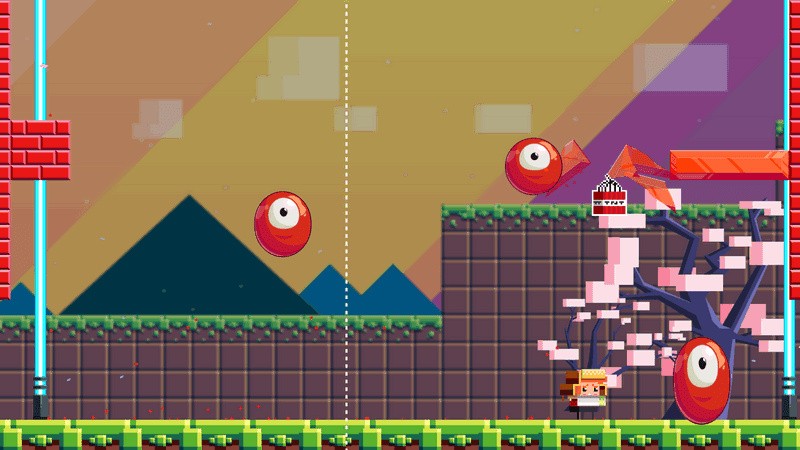
Break Some Balls When Spheroids Arrives On The Switch eShop Later This Month

Eclipse Games will release its platform title Spheroids on the Switch eShop later this month. The game will be made available to download in America on 20th July, with the European release a week later on 27th July.

If you haven’t heard about this game before, it was originally released on the Wii U eShop last January.  The design of Spheroids draws on the bubble popping mechanics of Pang / Buster Bros.

Set in a comical science-fiction universe, you take control of Lucas – a jumpy Canadian boy who sets out on an adventure with his crazy scientist companion Otto after discovering the government has been hiding alternative universes from the cubic world they live in. With dangerous alien spheres now trying to turn everything round, it’s up to the unlikely hero to save the day. 

In total there are 32 levels across eight different locations, a variety of enemies and gadgets, a unique art-style that combines pixel art with vector graphics and an original soundtrack.

Are you in the mood for another platform game on the Switch? Tell us below. 

Posted on Leave a comment

Review: Johnny Turbo’s Arcade: Express Raider (Switch eShop)

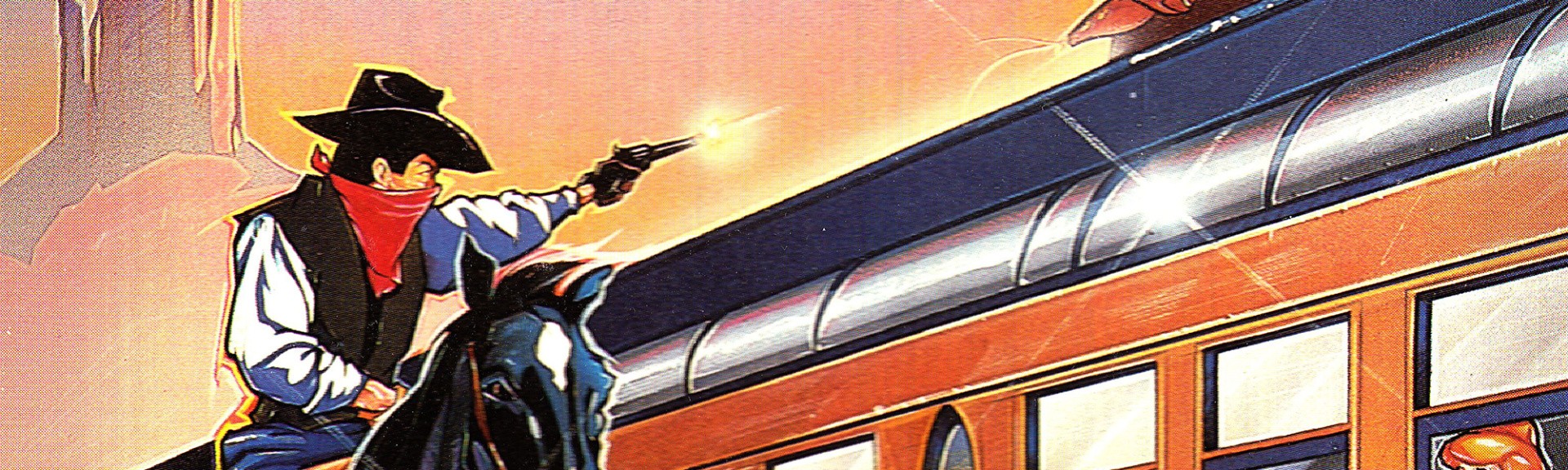
In this vintage 1986 Data East classic, you step into the snakeskin shoes of the toughest hombre in the West. In fact, you’re so tough you never even use your guns when robbing odd-numbered trains. This translates into a game of two halves, each with distinct gameplay mechanics. It was certainly fresh back in 1986 and Express Raider was deservingly praised for it.

You begin your infamous heist career by the power of fisticuffs. When entering odd numbered train levels, you walk on foot and use a traditional two-button setup for punches and kicks. On some levels you even begin on the ground, having to deal with bank tellers and coyotes before hopping onto the top of the last car in the train, before traversing along its rooftops. Of course, there’s plenty of things trying to stop you – railroad employees will do their finest to stand in your way (going as far as bombing the carriage couplers just to get rid of you,) as well as the need to duck under post signs and tunnels.

Things change up radically on those aforementioned odd-numbered trains. It’s here you’re finally given use to your six-shooter while riding alongside the train on your mighty steed. The game turns from a brawler into a shooting gallery game, with the first button firing and the second allowing you to ride sideways on your horse (making you invincible to bullets and other hazards like birds). But you can’t just spam bullets mindlessly – on several occasions in passenger cars, your mischievous lady companion throws out money bags for you to shoot/collect and hitting her will force you to lose a life.

Unlike previous Data East offerings, Express Raider has no end. After the tenth train the stages begin to loop, with ever increasingly harder enemies thrown at you, clearly showcasing the true coin-munching design philosophy from arcade games. With the lack of Caravan modes and infinite credits, it truly is just a matter of how long you can endure the punishment before giving up.

Both sides of the game are fun for short bursts, but we must give the fighting stages the definitive thumbs up. These play out like a re-skinned version of Spartan X (best know in the west as Kung-Fu Master) and connecting hits on opponents is extremely satisfying. While the shooting stages don’t really do anything particularly wrong, they end up being more of a shore and become just a distraction while you eagerly wait to get back to punching coyotes.

If you have been keeping up with our reviews of Johnny Turbo’s releases on the Switch, you know exactly what we are going to say about the emulation wrapper: it’s lacklustre when stacked side-by-side with Hamster’s offerings. A few graphics filters and screen ratio options are no substitute for being able to access DIP switch settings or just turn off all filters completely. Yes, you are still forced to play with bilinear filtering turned on if you choose not to use any of the graphics filters which remains an annoyance if you like your emulated arcade games pixel crisp.

Here’s something else we noticed with this port – the shooting stages do not feature the aiming cross-hair that made them less of a chore to play. The existence of this cross-hair in the original arcade board is currently under investigation (it most certainly existed on the ZX Spectrum home version) and after reporting it, Flying Tiger Entertainment is looking into this and will update this package if needed. It’s no deal breaker, but in case you played the original you may find the experience slightly different than the one you remember.

Conclusion

Express Raider remains a fun 2-in-1 game, with the fighting stages standing head and shoulders above the shooting ones, which is something of an oddity considering the Wild West setting. As such we recommend it to anyone who was a fan of the original or who played the home conversions and want to have the original on their virtual arcade Switch museum. But if you have an itchy trigger finger, we recommend you buy a ticket to a more steampunk kind of Wild West.

Posted on Leave a comment

Review: Ghost 1.0 (Switch eShop)

For a game to be a good Metroidvania (games that emulate the style and structure of early Metroid and Castlevania games), it needs to do a few very specific things well. For starters, it needs to have a large, labyrinthine map full of twists, turns, interconnected passageways, and secrets. Then, you need an ongoing upgrade system in which you slowly discover new weapons, gear, and items to grow in strength over time. And finally, most Metroidvanias involve a lot of backtracking to previous areas to unlock new passages using your updated gear.

All of that and much more is the case here in Ghost 1.0 and it comes together in a polished package that’s oozing charm. In fact, it’s got so much personality, sometimes we find ourselves grateful to have it on Switch so we can just turn it off for a bit and take a break. The cheesy jokes and often cringey voice acting tend to wear on you after a while.

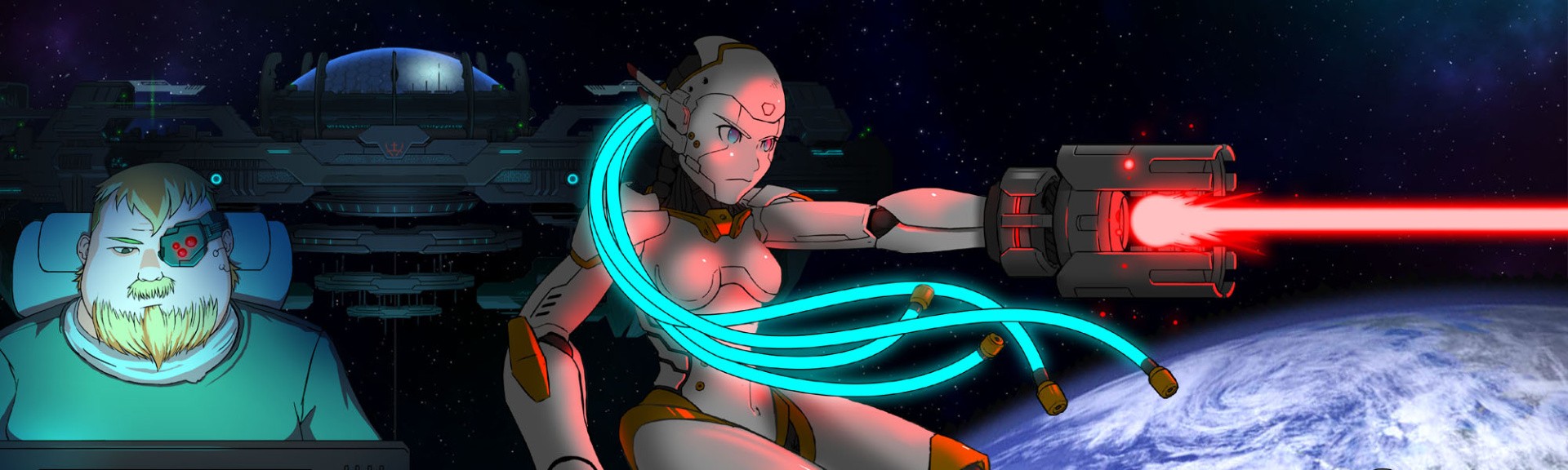
In Ghost 1.0 you take control of the titular character as a stealth infiltration expert. You’re tasked with sneaking into a high-tech facility, taking out any resistance that stands in your way, and shutting down the evil corporation. Like most Metroidvania’s, the story is light in terms of its tone and content, but it does a good job of pushing you along. That tongue-in-cheek style is consistent throughout the game as Ghost’s handlers back at operations are constantly riffing back and forth and Ghost herself even makes sly quips here and there. It’s at least a serviceable way to break up the action.

There’s a lot of room for nuance in this genre as it’s grown in popularity so much over the years. Axiom Verge is one of the best indie Metroidvanias of recent years, as well as the recently launched Hollow Knight. Now Dead Cells is coming soon and even Dust: An Elysian Tale is due out to release on Switch eventually. It’s a popular target for indie developers to hit – especially Francisco Tellez De Meneses, the creator of Ghost 1.0. He also created Unepic, another Metroidvania with heavy RPG influences that was ported to Switch earlier this year.

Everything from the art style, animations, and general flow of gameplay feels similar to Unepic which is both good and bad. On the one hand, it’s a crisp, modern 16-bit art style that looks really sharp either on the Switch screen or blown up on the TV while docked. But at the same time a lot of the environments feel like they were built using a limited tileset and if it weren’t for the map we’d have gotten lost more times than once just from everything looking the same.

Like Samus before her, Ghost does a lot of shooting. Her base weapon has unlimited ammo, but it has to charge before and after each shot with a max charge of 32 at first. That means if you fire off too many rounds in rapid succession you’ll eventually be stuck waiting for the clip to recharge. Thanks to the Switch’s comfortable dual analog sticks you aim her arm using the right stick and move her body with the left, similar to how you’d play a twin-stick shooter. Thankfully there’s a generous lock-on assist feature because we found it difficult to line up distant shots this way manually.

She can also ‘walk’ away from her body, spiritually (kind of like a ghost, get it?) and pass through walls, floors, ceilings and other solid objects to take control of other robots. Enemies will notice almost immediately, but it’s often used as a puzzle-solving mechanic and can be a fun way to mix things up in combat. When possessing something it leaves your actual body completely defenseless so you have to be careful.

Despite its awkward attempt at humor, Ghost 1.0 actually has some really subtle and clever mechanics that do a great job of selling the world itself. We’re big fans of when a game doesn’t break the immersion by gamifying things too far and the save system here is a great example. In most games, it doesn’t make lore-friendly sense that the player can save progress to reload after dying. But in Ghost 1.0 each save terminal is a computer in which you scan a copy of yourself and load it into a 3D printer. When you die, you just reprint yourself. That’s a really elegant and useful way of explaining things.

Throughout the game, you’ll discover all manner of new weapons and upgrades, many of which do a great job of filling the screen with explosions and bullets to dodge. The default layout maps the jump button to L, which feels really odd, so we’d recommend changing that. Otherwise, gameplay feels great and isn’t too stiff at all. The rocking sci-fi soundtrack helps round things out and ensured that we always played either with the volume turned up or headphones in.

Conclusion

Ghost 1.0 is a lighthearted Metroidvania that adapts a sprawling sci-fi setting with some really creative takes on the genre. Even though it originally released on PC two years ago, it still manages to fit right into the Switch’s growing library of quality sprite-based action adventures. If you’re looking for a less somber journey after the harrowing depths of Hollow Knight, you could do far worse than Ghost 1.0 as long as the forgettable story and cringe-inducing humor aren’t too off-putting..

Posted on Leave a comment

Captain Toad And The Legend Of Zelda Feature In The Latest European My Nintendo Rewards

The latest batch of My Nintendo rewards have now gone live in Europe, with an emphasis being given to Captain Toad (no doubt thanks to the recent release of Captain Toad: Treasure Tracker on Switch and 3DS) and The Legend of Zelda – because why not?

There are four succulent game discounts on offer in total this time around, all coming with a juicy Virtual Console aftertaste. Here’s the full list:

The Captain Toad: Treasure Tracker content comes in the form of a rather minimalist wallpaper design which you can see for yourself below.

  • Wallpaper – Captain Toad: Treasure Tracker (Theme): 20 Gold Points

Will you be taking advantage of any of these offers? Remember, your Gold Points can now also be spent on Nintendo Switch software directly from the eShop, too!

Posted on Leave a comment

Hardware Review: The Shōnen Jump 50th Anniversary Famicom Classic Mini Is Gorgeous, But Pointless

Nintendo may have fixed the supply issues which plagued the launches of the NES and SNES Classic Editions, but many will still be haunted by the devilish degree of difficulty they experienced in securing one of these micro-consoles at anything close to its recommended retail price. Thankfully both are easy enough to obtain at the time of writing, but that hasn’t stopped Nintendo launching what could end up being the most sought-after Classic Edition yet: the [deep breathNintendo Classic Mini Family Computer Weekly Shōnen Jump 50th Anniversary Version.

Released to commemorate the 50th birthday of Japanese comic Shōnen Jump, this gloriously glitzy device is basically a Famicom Classic Mini in gold with a new selection of games pre-installed, most of which are licenced titles that feature characters who have appeared in Shōnen Jump over the decades.

It’s a fun collaboration which will obviously mean a lot more to Japanese players than westerners, but there’s a massive downside to this arrangement: most licenced video games from this period are utterly terrible. The most notable exception here is Dragon Quest, which – while not based on a comic property – is a worthy inclusion as its creator, Yuji Horii, once edited Shōnen Jump and the comic series Dragon Quest: The Great Adventure of Dai appeared in the magazine between 1989 and 1996. Also, Dragon Quest lead artist Akira Toriyama has a long history with the magazine via his Dragon Ball series.

We’re probably being little harsh here, as the language barrier is a huge problem with this console; if you can’t read kana then you’re pretty much stuffed, as the vast majority of the games are text-heavy RPGs. Even so, it would be a real exaggeration to refer to this selection of games as ‘classics’ (Dragon Quest aside, of course); they’re typical of licenced fodder released during the 8 and 16-bit periods that bolted a lucrative IP – such as Dragon Ball, Hokuto no Ken (AKA: Fist of the North Star), Kinnikuman (AKA: M.U.S.C.L.E), Saint Seiya and Captain Tsubasa – onto a half-baked RPG-style game.

In case you’re interested, here’s the list of the 20 titles included on the Nintendo Classic Mini Family Computer Weekly Shōnen Jump 50th Anniversary Version:

  • Kinnikuman: Muscle Tag Match
  • Dragon Quest
  • Hokuto no Ken
  • Hokuto no Ken 3: Shin Seiki Sōzō: Seiken Retsuden
  • Dragon Ball: Shenlong no Nazo
  • Dragon Ball 3: Goku Den
  • Dragon Ball Z: Kyōshū! Saiyajin
  • Kinnikuman: Kinniku-sei Ōi Sōdatsusen
  • Saint Seiya: Ōgon Densetsu
  • Saint Seiya: Ōgon Densetsu Kanketsu-hen
  • Captain Tsubasa
  • Captain Tsubasa Vol. II: Super Striker
  • Sekiryūō
  • Famicom Jump: Hero Retsuden
  • Famicom Jump II: Saikyō no Shichinin
  • Sakigake!! Otokojuku Shippū Ichi Gō Sei
  • Ankoku Shinwa: Yamato Takeru Densetsu
  • Tenchi o Kurau
  • Magical Taluluto-kun FANTASTIC WORLD!!
  • Rokudenashi Blues

As you can see, the lineup is totally different from the one seen on the Famicom Classic Mini and NES Classic Edition. The interface remains largely the same, although it has a slightly different design scheme to reflect its association with Weekly Shōnen Jump, and there’s a cool ‘idle’ sequence which imitates the opening scene from the Weekly Shōnen Jump video game, Famicom Jump. Another neat touch is that instead of playing the same bespoke tune over the main UI, you get a randomised piece of music from one of the included games.

On a purely cosmetic level, the Nintendo Classic Mini Family Computer Weekly Shōnen Jump 50th Anniversary Version is physically identical to the original Famicom Classic Mini, with the exception of its gold casing. We imagine this could well divide opinion, but we think it looks utterly gorgeous; sure, it’s a bit brash and overbearing, but there simply aren’t enough gold video game consoles in the world. The packaging is also brilliant; the box is shaped like a copy of the Shōnen Jump comic, complete with authentic ‘spine-and-pages’ detail around the sides. 

Onto the negatives, the controllers are still ridiculously tiny – they have to be, as – like on the original Famicom from the ’80s – they bolt onto the side of the console when not in use. They’re also wired (again, like the original) so they can’t be replaced if they fail over time. The cable connecting them to the console is stupidly short, so you’ll need to sit right in front of your TV to play. You could argue this is providing an authentic experience – most Japanese gamers will have played their Famicoms in front of the telly – but in the modern era of massive flat-screen TVs and wireless controllers, this feels like an unnecessary throwback. The D-Pad on the controller is also far too small, and we found it was hard to peform precise directional inputs as a result. 

Given that it’s based on the same hardware and software as the other Classic Editions released thus far, we’d assume that hacking the Nintendo Classic Mini Family Computer Weekly Shōnen Jump 50th Anniversary Version and loading up your own selection of games is perfectly possible, but we’ve not attempted it ourselves with this unit as yet, so there’s a slim chance Nintendo could have introduced some kind of additional security to prevent it (although given that it didn’t on the SNES Classic Edition, we’d say that’s unlikely). Even if you did do this, it’s genuinely hard to recommend this system to anyone who lives outside of Japan, doesn’t have any kind of emotional or nostalgic connection to these games and doesn’t possess the hands of a tiny child. We’re sure that many Japanese players will have extracted some enjoyment from these licensed titles back in the day, but they’re not in the same league as the likes of Super Mario Bros.Final FantasyMetroidThe Legend of ZeldaCastlevania or Mega Man 2.

The Nintendo Classic Mini Family Computer Weekly Shōnen Jump 50th Anniversary Version is therefore little more than a collector’s item; it will look amazing on your shelf and we dare say that it will increase in value over the years, but as something to actually plug in and play, it’s a non-starter for almost everyone, even those who are able to read Japanese text. The only real positive is that the machine’s existence is proof that Nintendo is capable of working with third-party publishers on its Classic Edition range, and we could potentially see machines based on the N64, Game Boy and Game Boy Advance appearing in the future which come with more than just the usual selection of first-party Nintendo hits. Rare games on the N64 Classic Mini, anyone? It seems like a pipe dream, but stranger things have happened.

Please note that some of the links on this page are affiliate links. If you click them and make a purchase we may receive a small percentage of the sale which helps support the site. Please read our FTC Disclosure for more information.

Posted on Leave a comment

Random: Splatoon 2 Player Hacks In-Game Leaderboard To Send Nintendo A Message

Splatoon 2 has, unfortunately, been subject to a number of hacking attempts over the past few months, with many players reporting stories of cheating taking place online. Fans of the game have been using social media to share stories of others using unlimited ink cheats, rapid ink fire cheats, players who were using the Octoling characters before they were officially released, and much more, but one fan in particular has finally had enough.

In an attempt to get Nintendo to notice the issues and take action, one player used Splatoon 2’s very own in-game leaderboards to display a very clear message. Using their profile to sit at the top of each competitive mode’s board, and changing their in-game name around each time, the message “Please Add Anti Cheat” was eventually displayed in the game’s official app.

Ironically, the user had to use questionable methods to achieve this, editing their X Power in an unlawful way. The user eventually took to Reddit (under the name PleaseAddAntiCheat) to explain their actions:

“I hereby claim responsibility for the recent incident on the Rank X leader board.

Splatoon 2 is a game that I love so very deeply. Despite having its connectivity issues, I think it provides a healthy and competitive environment for all players; it advocates strategy and a strong sense ofteam work. It is because of this, everyone enjoys Splatoon, and enjoys the fun of fighting for a rank or a league position. However, this will not be true as long as there are cheaters lurking around…

Nintendo, you’re welcome to ban my console any time. My purpose was to call attention to the current issue that plagues the game, and I’ve done that. But my message is, please make protecting your players the top priority. Please add anti-cheat.”

Soon after all of this took place, Nintendo removed all four of the player’s score entries from the leaderboard – presumably for cheating to get there. There’s a somewhat comical amount of irony going on from all parties here, but at least this confirms that Nintendo has indeed seen the well-intentioned message.

Feel free to talk this one over in the comments section.

Posted on Leave a comment

Japan Will Get Physical Boxes Of Smash Bros. Ultimate And Pokémon Let’s Go With Digital Codes Inside

If you like having physical boxes of games to add to your ever-growing, beautiful collection of joy, but also like the convenience of having your games stored within your Switch’s internal memory for quick and easy access, you’ll likely be pretty jealous of Nintendo’s latest offerings in Japan.

On the official Japanese Nintendo store, Super Smash Bros. Ultimate and Pokémon: Let’s Go, Pikachu! and Let’s Go, Eevee! have a couple of different listings: one that is simply a case with a cartridge inside as usual; and one that gives you the case with a digital code to redeem inside instead. Each copy costs exactly the same price, regardless of whether you’re getting a physical card or not, but the option is there nonetheless.

On the one hand, selling what is essentially an empty box seems absolutely bonkers, but it’s actually quite a smart idea on Nintendo’s part; we imagine there are many who do indeed fall into the exact category we described above and the production costs will be lower if there is no cartridge inside. 

Whether a similar deal will make it over to North America or Europe remains to be seen, but could this be a new trend for major Nintendo releases?

Let us know if you’d pick up one of these digital code boxes given the chance with a comment below.