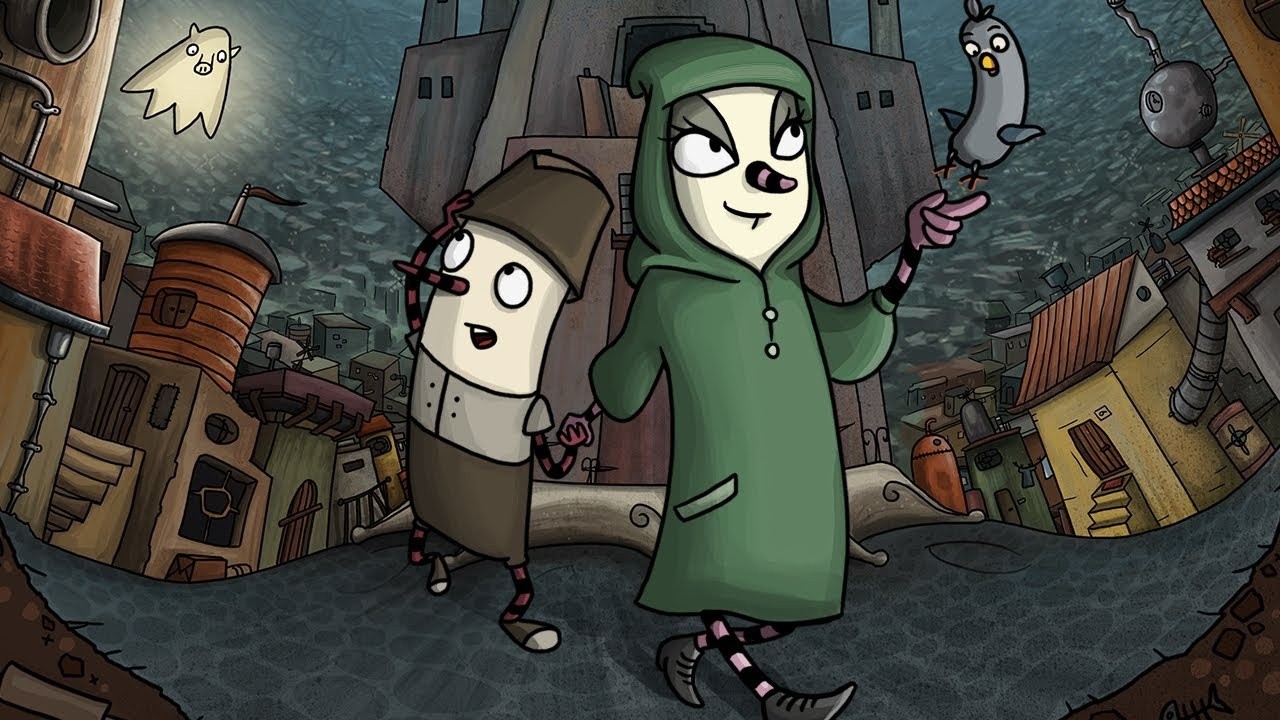
The Inner World follows the story of Robert, who lives an introspective, simple life as a court musician in the shadows of his honoured master and ideal Conroy. This changes abruptly, however, when suddenly one fountain after another runs dry and the Windgods befall peaceful Asposia. Robert, together with the mysterious thief Laura, must hit the road to solve the secret behind the disappearance of the winds in a game full of puzzles and adventure.
You can expect more of this puzzle gameplay in the sequel, too, as Robert and Laura are joined by a third party member who goes by the name of Peck for a new adventure. Both games have picked up numerous awards and nominations in the publisher’s home country of Germany, and could well be a fitting addition to the Switch’s library of games.
The Inner World will be available on the Nintendo eShop for $11.99 / €11.99 / £9.99, with the sequel being set at $14.99 / €14.99 / £11.99. Both games are scheduled to launch on 3rd August.
Are you intrigued by these games? Have you played them on other platforms? Tell us your thoughts down below.
It has been revealed that Flyhigh Works will be publishing a port of mobile rhythm game Cytus on Nintendo Switch, albeit under the new name of Cytus Alpha (or ‘Cytus α’).
The news comes from this week’s issue of Japanese magazine Famitsu, with early scans revealing the information slightly before its official publication. Cytus Alpha is a full remake of the original game and has reportedly been described as a complete evolution from that smartphone edition.
No further details on this Switch port have been shared just yet, but Cytus was originally developed by Rayark – the studio behind other Switch rhythm titles VOEZ and Deemo. We really enjoyed both of these games, giving them an 8/10 and 9/10 respectively in our reviews, so we have high hopes for another mobile rhythm game coming to Switch from the same developer.
Hopefully we’ll hear a little more about this one over the next days when Famitsu is properly released but, until then, why not let us know if you’re intrigued by the idea of this game coming to Switch with a comment below.
Mega Man X is back! Experience the Mega Man X saga with two exciting collections
Power up your arm cannon! Each of the classic Mega Man X games are now available on the Nintendo Switch™ system across two new collections—each packed with loads of extras such as the new X Challenge mode (which pits players against two deadly bosses in two-on-one battles) and a huge museum filled with rare production art, catalogs of classic merchandise, a playlist of nostalgic commercials, and more.
Play as Mega Man X – the powerful successor of classic fighting robot Mega Man – as he battles a variety of deadly bosses known as Mavericks in four hit titles. Mega Man X Legacy Collection includes the legendary 16-bit titles and the series’ exciting foray into the 32-bit era: Mega Man X, Mega Man X2, Mega Man X3, and Mega Man X4. The heroic robot grows stronger as he takes down Mavericks and steals their weapons, and can dash and wall jump making for a thrilling, fast-paced combat experience.
Complete the exciting Mega Man X saga with this collection of four action-packed titles! Spanning two gaming eras, this collection showcases the evolution of the series with Mega Man X5, Mega Man X6, Mega Man X7, and Mega Man X8. Both Mega Man X and his ally Zero return as playable characters, allowing players to jump and shoot through challenging stages with X’s arm cannon, or slash through enemies with Zero’s energy saber.
Mega Man X Legacy Collection 2 also includes an animated prequel film starring the origins of Mega Man X villain, Sigma.
There are countless Switch case options on the market these days, with a number of different companies stepping up to create their own console-protecting bags and pouches, and this new design is following that trend in style.
The Séfu Switch Bag has a minimalistic design that focuses on protection, accessibility, and quality materials, all while being just the right size to carry your Switch and a few daily essentials. The centre divide can hold 12 game cartridges, as well as protect your screen, and can also be removed entirely to allow for bigger things like a camera.
The bag’s designers have just launched a Kickstarter campaign to secure funding, with three different designs available to choose from. If you’re quick (and we mean really quick), you might just be able to get in on the early bird deals to save money. These are going incredibly fast, however.
You can see the options and pricing below and can check out the product’s full Kickstarter page for lots more information if you’re interested.
The bags are all scheduled to be sent to backers by November or before and the Kickstarter project still has 29 days to go. At the time of writing, the campaign needs another £9,000 to come to life.
Do you like the look of this? Are you in the market for a Switch carry case? Let us know if this suits your style with a comment below.
Compared to the relatively conservative video game hardware market of the modern era, the ’90s seems like a wasteland of failed systems and also-rans. The 3DO, Atari Jaguar, Commodore CD32, NEC PC-FX and Sega 32X were all pieces of hardware which, at launch, found themselves positioned as the next big thing in interactive entertainment, yet all failed to live up to their promise and consequently endured short lifespans thanks to consumer apathy.
You can add to that rather pitiful list the Philips CD-i, but what makes this particular machine so fascinating is its long history and – of course – the fact that it is one of the few non-Nintendo platforms in the history of the games industry to play host to officially licenced Nintendo games – but more on those shortly.
Despite launching in 1991, the CD-i’s origins actually stretch back to the mid-’80s. The compact disc – a digital storage medium created jointly by Dutch firm Philips and Sony – had made sizeable impact in the world of music, and was beginning to make itself known in the realm of computing; its ability to hold large amounts of data (as well as high-quality music and video) made it attractive to developers, and it was becoming increasingly obvious that as soon as the cost price of CD drives dropped, the format would take over from the likes of expensive cartridges, slow-loading cassette tapes and volatile, low-capacity floppy discs.
With this in mind, Philips and Sony decided to work together to lay down the foundations for a new CD standard which would leverage the format’s potential for multimedia functionality. Work on this ‘Green Book’ spec began in 1986 and was finalised at the close of 1988. By this point, NEC had already released a CD-ROM drive for its popular PC Engine console and gaming giant Sega was also investigating the potential of the compact disc; however, the fact that Philips and Sony convinced Japanese veteran Matsushita – then the world’s largest electronics company – to join its new ‘interactive CD’ alliance spoke volumes; Matsushita would later exit this trio but there remained a real sense of optimism about the format.
For Philips, there was a hope that CD-i (as the format would come to be known) would create a nexus for the worlds of music, movies, games, education and digital entertainment. Instead of buying a CD player, VHS player or games console, consumers would simply invest in a single machine that could cover all three bases. Curiously though, the company decided to avoid mentioning the potential for gaming in its early promotional material, instead aping Commodore’s messaging around its ill-fated CDTV system and pushing the more worthy elements of its feature set, such as interactive CD albums and encyclopedias. The first version of the console – the boxy 205 – looked exactly like a CD player, and only had one joystick port. The controller that came with it was totally unsuitable for gaming, although over time hardware revisions would attempt to fix this oversight, as well as add a second controller port for two-player software.
Upon its launch in 1991, the CD-i was met with a muted response, something the company later acknowledged was down to poor marketing and the fact that it generally ignored games as a means of getting the system into homes. Another major issue for Philips was the fact that by 1991, the CD-ROM war was really beginning to hot up; Sega’s Mega CD arrived at the end of the year in Japan and systems like the 3DO would soon start gobbling up column inches worldwide. Meanwhile, the CD-i’s ‘Green Book’ spec was drastically inferior to what true ‘next gen’ CD-based consoles were about to offer. For example, data streamed from a CD was limited to 170K/sec, around half what the 3DO would later manage. Philips had been bested by the fast-moving nature of home technology – and there arguably hasn’t been a period in gaming history where tech moved as fast as it did in the early ’90s.
Despite a lacklustre start and the arrival of more powerful systems on the market, Philips persevered. A revised model – the 400 – clad the hardware in more console-like clothing, and the system finally got a proper joypad. The release of the Digital Video Cart – which included an MPEG-1 chipset and allowed CD-i users to play Video CDs as well as enjoy high-quality FMV in certain games – gave the machine a real selling point; lest we forget, this was a time before DVDs had arrived and while Video CD movies suffered from compression problems, they represented a definite step up from VHS. The cart not only turned the CD-i into a valid replacement for your ageing VHS player, but also added 1.5MB of RAM which could be utilised by developers to create better games.
Slowly but surely, Philips awoke to the potential of gaming on its platform, and the standard of software rose. Titles like Burn:Cycle, Chaos Control, The Apprentice, Lost Eden, The 7th Guest, Creature Shock, Flashback and Kether proved that with the right amount of effort, CD-i was capable of hosting semi-respectable titles. However, it is the handful of Nintendo games available for the platform which are perhaps the most well known – if not for all the right reasons.
Before we dig into these releases, it’s worth looking at exactly how the likes of Mario and Link ended up on the CD-i. Sony’s work with Philips on the format in the ’80s wasn’t just for the good of humanity; like its Dutch partner, it too wanted to capitalize on the explosion of interest in interactive entertainment and established a publishing arm – Sony Imagesoft – to this end. Sony was, by all accounts, jealous of the kind of domination that Nintendo had achieved in the Japanese games market, and hardware like the groundbreaking Game Boy caused such consternation in the halls of Sony HQ that it was reported that one engineer resigned from his post in shame, with the general feeling being that Sony should have used its burgeoning Walkman range to launch a similar device, but had been beaten to the punch.
Despite this growing animosity, Sony was wise enough to know that it couldn’t force its way into the games market and saw the obvious potential in becoming a hardware partner with Nintendo, the world’s biggest gaming brand. It designed and manufactured the SPC700 chip at the heart of the Super Nintendo’s S-SMP audio processing unit, lending the 16-bit system with the kind of music that even CD-based systems struggling to better. Around the same time that the Super Nintendo was in its development phase, Sony signed another agreement with Nintendo to create a CD-ROM drive for the console, using the CD-ROM/XA standard that had been authored by Sony and Philips.
For Sony, this deal represented a way into the games industry – in addition to creating a bolt-on drive for the SNES, it would also create a stand-alone console known as the PlayStation. As part of the proposed deal, it would also retain licencing rights to the ‘Super Disc’ format that both variants of the hardware would use; effectively, Sony would make money off software released for Nintendo’s system. The rest is, of course, well-documented history; Nintendo rightly deduced that Sony was simply using the agreement to satisfy its ambition to gain a meaningful foothold in the games arena, and in 1991 it publicly broke off the engagement at the Consumer Electronics Show, announcing that it had penned a new deal with Philips to create CD hardware for Nintendo’s home console – the day after Sony had revealed its plans for the SNES CD-ROM.
The hardware never happened, and the SNES PlayStation became the stuff of legend – until very recently, when a working prototype surfaced which made it clear just how far development had progressed before it was shelved. Sony would lick its wounds and create a new PlayStation system, but Nintendo would ultimately pull the plug on the CD-ROM hardware for the SNES – ironically because it felt the CD revolution, as spearheaded by the likes of the CD-i – had failed to make an impact. Still, it was now indebted to Philips, and as a means of extracting itself from the proposed deal, it allowed the Dutch firm to use some of its most recognisable properties to bolster the CD-i’s pitiful games library.
The end result was a selection of games which don’t do the source material justice; Hotel Mario hardly ranks as one of the plumber’s best outings and although both Link: The Faces of Evil and Zelda: The Wand of Gamelon have an interesting place in gaming history, they’re generally regarded as poor takes on the famous Legend of Zelda franchise. Zelda’s Adventure is even more of a disaster, while Mario’s Wacky Worlds never got as far as store shelves. While the deal resulted in some modest software sales for Philips, these games did little to endear the CD-i to Nintendo’s audience and certainly didn’t convince the masses that the platform was the future of gaming. Philips continued to pour money into promoting the platform but it was ultimately for nought; even the introduction of basic internet connectivity via the CD-Online service wasn’t enough to give the CD-i a stay of execution.
Philips eventually abandoned the system in 1996, with around 570,000 units sold globally. It is believed that the project cost the company around a billion dollars, a reminder of just how high the stakes were in the games industry at the time. While the CD-i is utterly fascinating from a historical viewpoint, it’s a difficult machine to recommend today, even if you’re a seasoned lover of retro. So many of its key games are FMV releases lacking in engaging gameplay; relics from a time when developers seriously believed that gamers would be satisfied with basic interaction as long as live actors and CGI sequences were included. Another rock block for potential collectors today is the fact that the lithium battery which powers the CD-i’s 8k of non-volatile memory dies over time, and many systems won’t even boot up properly unless a drastic and invasive modification is undertaken. This fact – combined with a lack of decent software and the surprisingly high value of machines on the secondary market – makes CD-i one to avoid, unless you’re hell-bent on collecting every piece of gaming hardware ever.
Philips abortive attempt to crack the games market seems destined to be little more than a footnote; a well-intentioned move to unify the music, movie and gaming mediums in one place, but one that was almost doomed from the start. But hey, at least it has Mario and Zelda, right? Right?
Now, though, we’ve discovered that the Japanese version has its own exclusive Mega Drive-inspired reversible sleeve, fitting for that particular region, and it certainly gives that previous find a good run for its money.
The cover is aiming to replicate the Japanese version of Sonic the Hedgehog 3 on Mega Drive (or Sega Genesis for those of you in North America). You can see a side-by-side comparison of the two covers in this unboxing video below, shared on YouTube by …Since Spacies. The comparison can be seen from around the 3:10 mark.
While it’s all down to personal taste, we think this reversible cover has the North American and EU versions well and truly beat. The Japanese version is different in a couple of other ways, too, most notably losing that shiny gold cover for more of a matte finish. Either way, though, it’s another lovely edition and has several members of Team Nintendo Life hovering over the “import” button as we speak.
As ever, feel free to share your thoughts with us in the comment section down below.
Bandai Namco has confirmed that an open beta test will be taking place for Dragon Ball FighterZ on Nintendo Switch in the west, giving players the chance to jump in and see the game a little before release, and has also announced two very welcome game modes.
The announcement comes from Bandai Namco’s official UK Twitter account (which you can see below); the test had only been confirmed for Japanese players up until this point. The North American account has since confirmed the news for that region, too.
Perhaps the more exciting part, though, is that little mention of 2v2 and 1v1 game modes. On other platforms, for which the game is already available, players are forced to play in 3v3 matches only. It is currently unclear whether or not these new matchups will be patched into other versions – they appear to be exclusive to Switch at present.
Players have been hoping to see a 1v1 feature in the game for some time now, so seeing the option become available on Switch is a very welcome surprise. The game is scheduled to launch on 28th September.
Are you excited for this one? Will you be taking part in the open beta? Let us know down below.
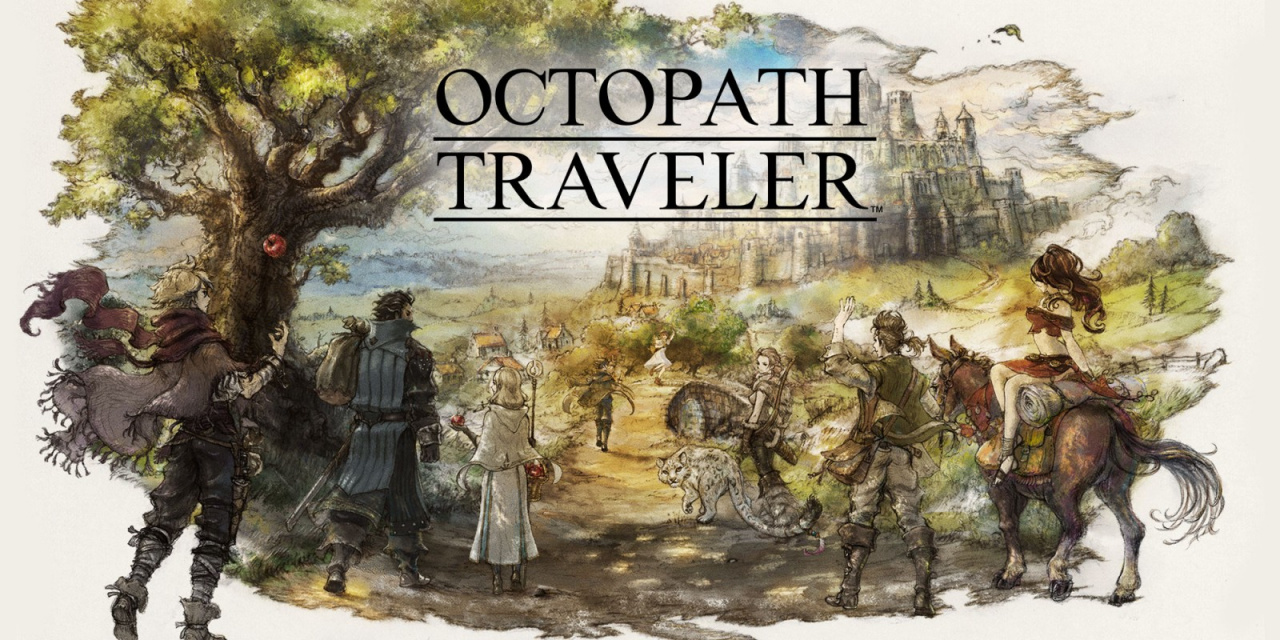
You may remember that, just last week, Octopath Traveler developer Square Enix issued an apology after underestimating the game’s popularity in Japan (a region in which the company is also acting as publisher). Many Japanese fans were unable to secure a physical copy of the game thanks to stock shortages, with Square Enix having little choice but to mention the possibility of downloading the game from the eShop instead.
Over the weekend, Yodobashi Camera, which is one of the largest video game and electronics retailers in Japan, saw a small restock of the game. Unfortunately for Square Enix, or fortunately – depending on which way you look at it – the game sold out again in just three hours, causing the studio to send out this tweet. Essentially, the message here states that more games will be shipped when possible and politely reminds fans once again that they can download the game instead if they are happy to do so.
It’s certainly an impressive launch – the game actually ended up shifting 90% of its initial shipment in Japan – and we’re hopeful that players will be able to get their hands on a copy soon if they haven’t already.
Have you been enjoying the game so far? Have you had any struggles in locating a copy in your region? Let us know with a comment below.
Just last week, Digimon Survive was officially announced to the world – the brand new game is being developed by Bandai Namco and will launch on Switch in Japan next year. Now, ahead of the Digimon 2018 Special Meeting event taking place next weekend, we’ve been treated to the first set of official screenshots from the game.
The game is taking a very different direction this time around, with strategy RPG battles taking place inside a visual novel story. A big part of the game centres around the choices you make in-game, and we get our first glimpse of this taking place in the images below. The options in the second image translate to “Let’s split up and search”, “Let’s yell loudly to lure it”, and “Let’s stick together and move”.
We also get a good look at the game’s battle presentation with these three shots below.
Of course, having only just been officially unveiled, we don’t expect to hear any concrete release information for Digimon Survive for some time. Hopefully, more details will be shared in the event mentioned above which is scheduled to be streamed live on YouTube on 29th July.
Share your early thoughts with us on this one in the comments below.
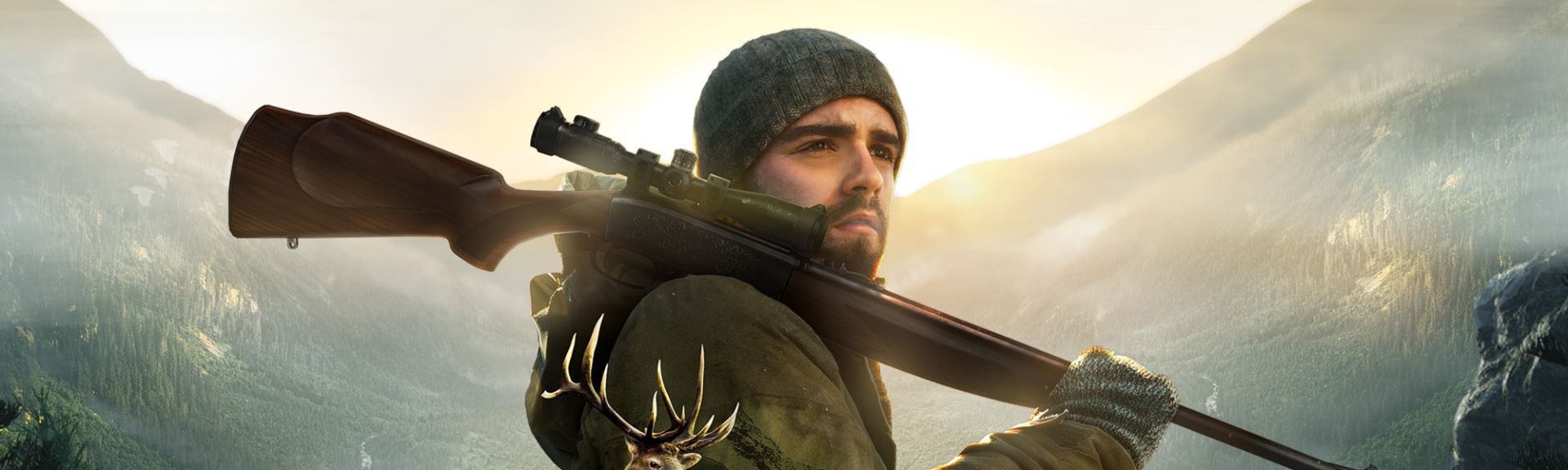
The words ‘shooter’ and ‘simulation’ don’t often populate the same sentence, especially when using them in relation to Nintendo Switch. You’re more likely to empty a magazine into an alt-history Nazi in Wolfenstein II or riddle knees with arrows across the unforgiving tundra of Skyrim. But now Nintendo’s hybrid machine has another, very niche, dimension to its FPS throng – the humble hunting simulator.
This game is actually called Hunting Simulator, just so there’s absolutely no confusion as to what you’re buying. There’s no semi-cryptic Deer Drive Legends or The Hunter: Call of the Wild nonsense here. It doesn’t even use the word ‘Cabela’ anywhere. It’s just a simulator that lets you shoot defenceless animals in the face from the comfort of a nearby hill.
If you are a shooter fan, this is not the kind of fast-paced, death-dealing frag fest you’re used to. This is the anti-DOOM; a slow, measured experience that purposely makes you take care with every step, punishing you for making too much noise or failing to take note of the wind when it changes. It’s an experience that demands a great deal of patience. To get the most out of it you need to leave your usual shooter muscle memories at the door. You can sprint, but you’ll never use it (not unless you want every animal on the map to immediately run like the clappers). You’ll boast a couple of shotguns or sniper rifles at any one time but you’ll use them sparingly.
The game’s own mechanics are often at odds with one another, the strength of one system ultimately dragged down by the mediocrity of another. For instance, the gunplay is quite forgiving. There’s no consideration given to bullet drop or wind sway, so at its core, you’ll simply hold your breath and shoot, a successful shot producing a Sniper: Ghost Warrior / Sniper Elite-style bullet cam.
The act of hunting is also solid. The myriad species that populate its 32 maps (which cover everything from the mountains of Colorado to the snowy drifts of Alaska) all boast very different levels of perception. Deer, for instance, have exceptional hearing so you’ll need to crawl to a good vantage spot. Meanwhile, bears or wolves can smell you a mile off, so you’ll need to use a chalk-like item in your inventory to check the direction of the wind to ensure your scent isn’t needlessly alerting them to your gun-toting presence.
Combined together, those two elements of Hunting Simulator are immensely rewarding, but they’re let down by an artificial tracking system that robs each map of a true sense of life. When you enter a map for the first time, you’ll see a series of white marks scattered across the map. These are usually droppings, which when checked, will reveal the type of animal, the amount of time elapsed since they were made and a few seconds of tracks to show you in which direction the animal went.
The problem is, these tracks aren’t made by animals in real time. In fact, the beasts themselves don’t make any tracks at all. Your own avatar – which can be chosen from a series of laughably poor character models in the menu – leaves tracks, yet for whatever reason, your prey does not. These tracking spots are instead generated by the game in advance, presenting you with a rough circle on your map where your chosen target species may be grazing.
Even if you wound an animal, there’s no blood trail to follow, which is doubly frustrating if you strike an animal but fail to mortally wound it. Bodies will appear on your HUD, but hurt animals often disappear as they bolt from the map. Considering much of the game’s core premise is based on investing a great deal of time – from slowly crawling around a map, to setting up the perfect shot – this unreliable tracking system too often ruins a hunt.
You also have to complete all the hunting challenges on a map – which require you to kill and collect the carcasses of specific species – in order to unlock the next. It’s a system designed to make you get the most out of one map at a time, but considering most are sparsely populated collections of rocks and trees, the result is an experience that fails to consistently reward those without the time-honed patience of a veteran virtual hunter.
This Switch port runs surprisingly well, with most slowdown resigned to menu navigation rather than actual hunting gameplay. Environment textures and lighting are rather basic on the whole, but animal models and gun details are actually quite impressive, considering the hardware the game is running on. With plenty of modes to choose from – ranging from Free Play to a Shooting Range – there’s a decent level of parity with other versions found elsewhere. There are also motion controls, but they’re not well-suited to the constantly moving targets Hunting Simulator presents you with.
Conclusion
While it’s not the best looking FPS on Switch, Hunting Simulator still manages to offer an experience that brings something new to the console’s growing library of software. The issues with its tracking system will rankle both veterans and newcomers, but if you can move beyond this roadblock then the bullet mechanics and actual minute-to-minute hunting have plenty to offer. Just remember to pack some sandwiches before you head out, because this is no ‘pick up and play’ purchase.