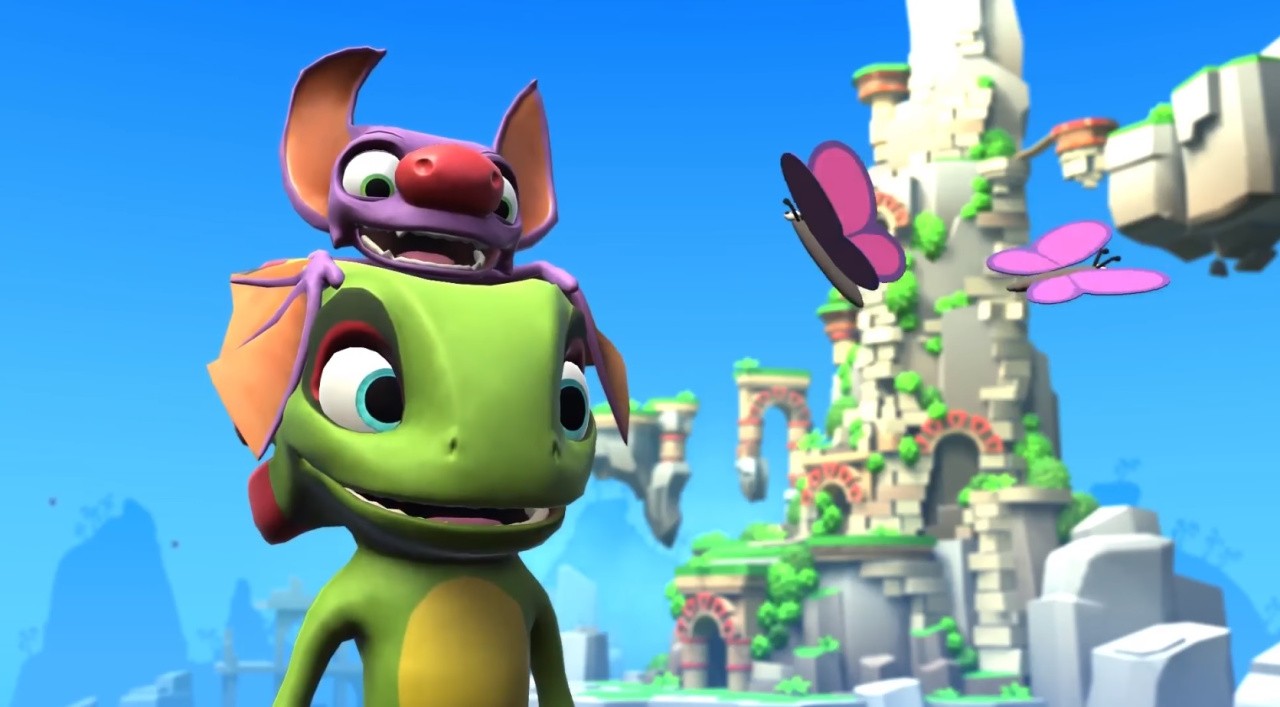
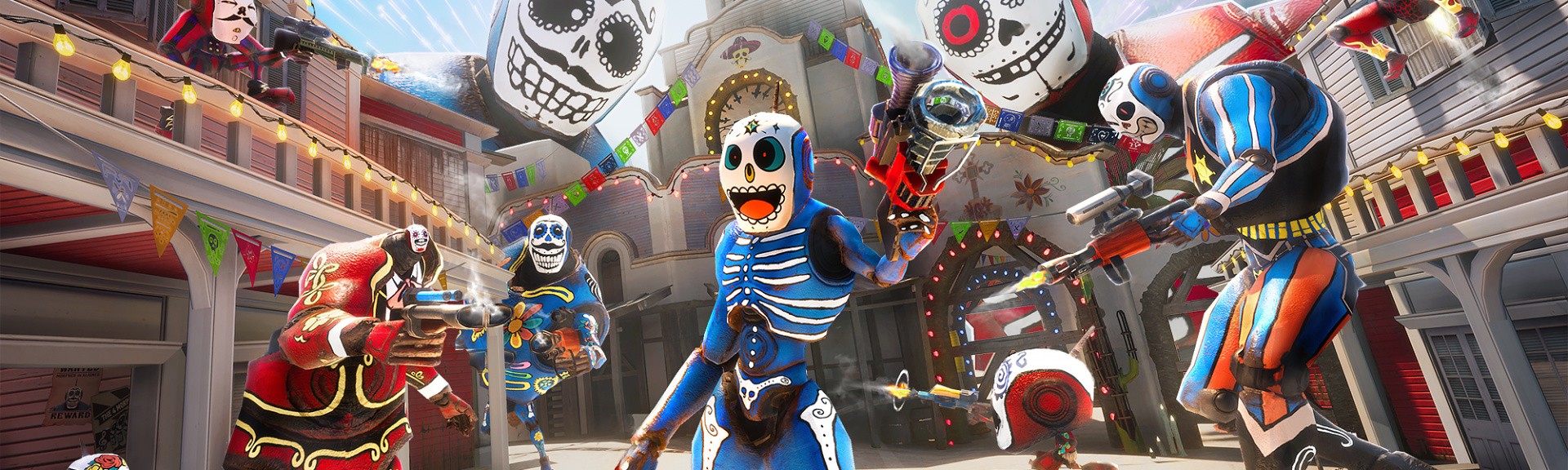
In July, Angry Mob Games gave us a glimpse of the new Brawlout fighter, Yooka-Laylee. It was evident from the trailer, Playtonic’s duo would feature their trademark attacks. This new Gamescom clip essentially shows more of the same.
What’s most interesting, though, is the part at the end of the video. Laylee the bat makes a comment about expecting more, having worked with a “blue” guy (Shovel Knight) in their own game. This subtle reference to Shovel Knight in Brawlout isn’t a first, with the Dead Cells character striking a familiar pose with a shovel. Brawlout is out now on the Switch, and the Yooka-Laylee fighter update is expected to be released soon.
Take a look at the trailer above, and tell us in the comments if you’re pumped about Yooka-Laylee joining the battle.
Since the launch of the Switch, physical releases requiring excessive downloads has been a major talking point. It admittedly makes owning actual hard copies of games a tad pointless – unless you want to display them on shelves, loan them to friends or perhaps resell them later down the line.
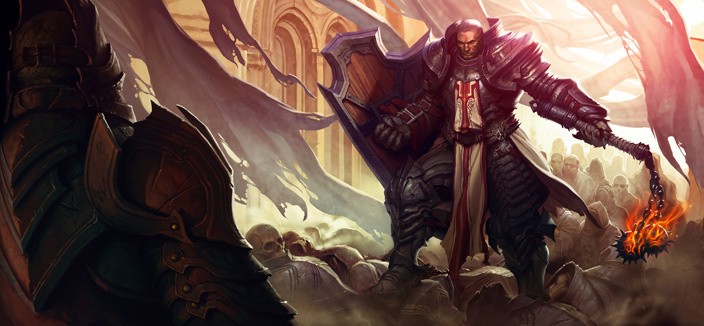
A post on pcmag.com points out Switch owners won’t have to worry about this problem with Blizzard’s recently announced Diablo III Eternal Collection. The Switch release will reportedly fit all of its content – including the Reaper of Souls expansion and Rise of the Necromancer DLC – onto a single game card, with no downloads required. It means you’ll literally be able to buy the game at your local video game retailer, insert the card into your Switch and play the game. As trivial as this may sound, it’s a sign of changing times when it is so frequently publicised.
Are you relieved to find out Diablo III Eternal Collection won’t require an internet download to play? Do you think downloading part of a game is just a harsh reality of modern gaming? Could other developers and publishers perhaps make more of an effort? Leave your thoughts below.
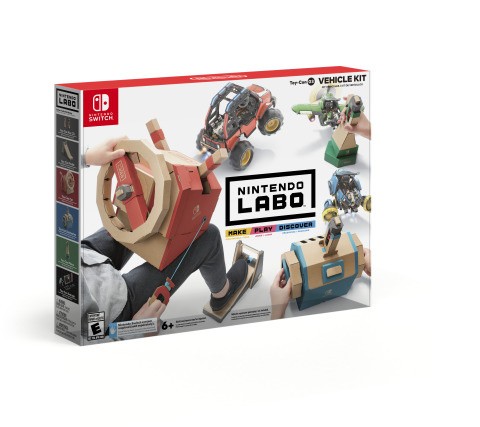
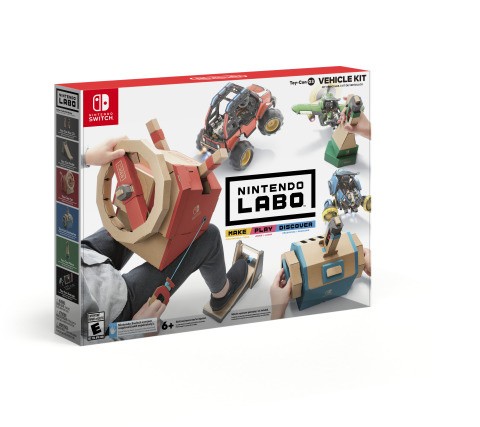
The Nintendo Labo Vehicle Kit is due out on 14th September for the price of $69.99. Each kit will come packaged with all the necessary parts and materials along with a copy of the new software. With details about the game itself still relatively scarce, Kotaku’s recent hands-on in a New York hotel meeting room has revealed some interesting new information about the title.
The scale of the game’s world is comparable to the size of Wii Sports Resort, with the game filled with 10 hexagonal zones which are all themed. Some of the ones mentioned include a city, meadow and desert zone.
Each vehicle will feature supplemental abilities – with the submarine able to fire torpedoes, the plane shooting missiles and the car believed to “throw” bombs. The car’s features don’t end there. It can also cut down trees with a gigantic buzzsaw (as displayed in the original trailer above).
There are many objectives littered around the game world, according to Kotaku’s Stephen Totilo:
The objectives I encountered were basic, involving things like sailing my submarine into an underwater flag or finding and carrying lost cows back to a holding pen. A more challenging one that I noticed while flying over the mode’s city zone seemed to involve having to fly over the top of a skyscraper, turn into the car, and parachute my vehicle onto that skyscraper’s roof.
The main character in the game is a flattened test dummy, and Nintendo estimates the steering wheel in the kit can take between one to two hours to assemble. Hopefully, more information about the kit is revealed prior to its release in September.
Are you excited about Nintendo Labo’s Vehicle Kit? Have you bought any Labo Kits yet? Will this one be your first? Tell us below.
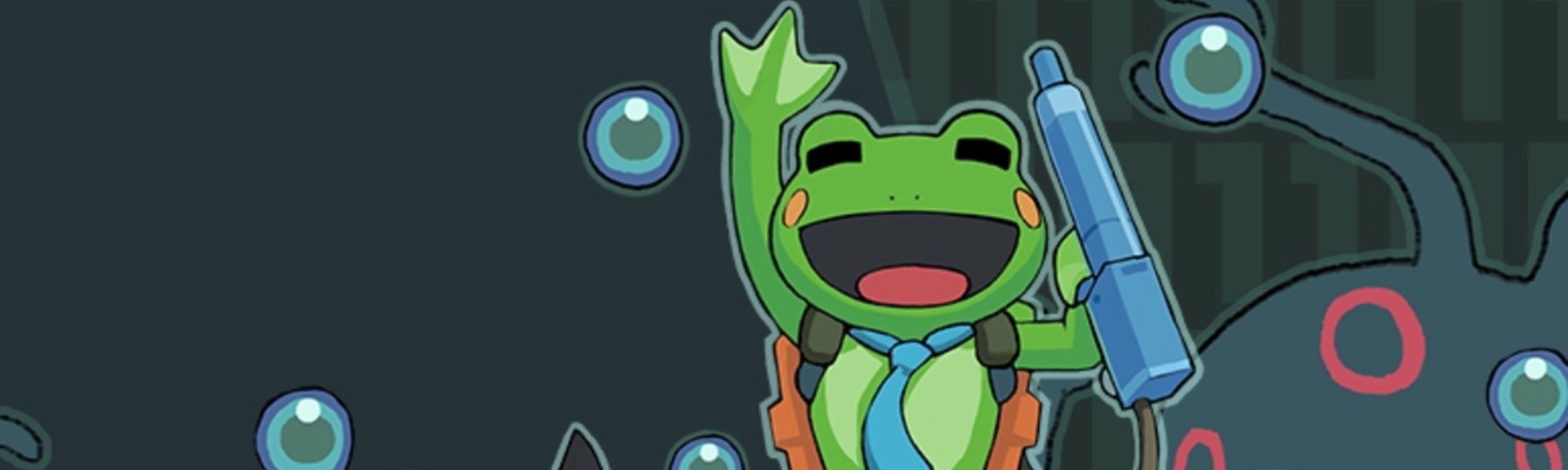
Sometimes, when things are going awry and the world finds itself in desperate need of a hero, only a bipedal frog armed with a blaster will do. Okay, technically it’s a company called Cat & Frog Inc. that needs assistance and our ‘hero’ is actually an employee, but why ruin the moment? Turns out C&F Inc. has made a name for itself in the world of teleporters, but when said devices start going offline it falls to one pixelated Kermit lookalike to strap on a weapon and put all this nonsense to bed.
With its 8-bit visuals and ubiquitous side-scrolling shooter setup, you’d be forgiven for discarding Kero Blaster as just another run of the mill throwback to one of gaming’s many golden ages. But this is the next game from Studio Pixel – aka solo Japanese developer Daisuke ‘Pixel’ Amaya – the man who brought the brilliant Cave Story to life, so you know you’re getting to be getting much more than a simple blaster.
As you’d expect, platforming and shooting are the bread and butter of Kero Blaster, offering plenty of options when it comes to battling its many enemies and bosses. You can fire your weapon indefinitely, but it’ll only fire in the direction you’re facing – effectively enabling you to move and fire in different directions if you’re holding down the fire button. It’s the kind of navigation quirk that takes a little while to adapt to in more intense battles, but once learned, it becomes vital to surviving and – when you’ve really nailed its nuance – dominating bosses and enemies alike.
There’s no procedural generation here, and most levels are relatively linear in design (with a handful of ‘hidden’ area usually containing a chest, safe or other container filled with coins). While you only start with two hearts, three lives and one type of blaster, those shiny discs of gold are your ticket to better upgrades across the board. Thankfully, your bank balance survives even when you die, and with a shop for both weapon upgrades and permanent health boosts, there’s a tangible benefit – even for those that are struggling to beat a certain level.
If you want a new weapon, however, you’re going to need to take on and beat the game’s big bads. Some of the early ones won’t be all that challenging or memorable, but as the game progresses and new worlds are unlocked, those giant foes and the traditional single-screen arena you battle them in get progressively more complex. One level, which sees you fighting a giant whale, requires you to dodge electrical attacks both underwater and by leaping between platforms.
When you do unlock new weapons (which you can switch between at any time by pressing ‘L’ or ‘R’), you’ll get access to a refreshingly different set of offensive tactics. Your standard repeater offers a thin line of tracer fire, but it’s less effective underwater. The wave, however, can fire underwater and has a wider area of effect, but its range is limited. There’s even a bubble weapon that can float on water or bounce off walls. Learning which weapon works best in certain encounters is part of the enjoyable learning curve that makes this indie hit so much fun to master.
With plenty of water sections to swim through with your waterproof weapons and later levels that use a jetpack to offer a similar floaty form of navigation, Kero Blaster’s platforming won’t blow you away or rewrite your perspective on the NES-era side-scrolling shooter, but it’s solid and works well with the directional ballistics our froggy avatar can unleash. When you filter in the impressively vast roster of enemies you’ll encounter – which are often carefully placed in order to prepare you for the boss to come – you begin to appreciate the entire game’s seemingly simple yet consistently rewarding technical precision.
While it has taken a long time to reach Nintendo Switch – it first appeared on PC and mobile in 2014 – the authentic mechanics and 8-bit pixel art style have ensured that Kero Blaster doesn’t feel dated or out of place on a platform so accommodating to indie developers. With around three hours of gameplay for a single run it’s certainly a far shorter and more straightforward offering than Cave Story ever was, but there’s plenty of replay value to be had as you chase those later upgrades and appreciate the subtle humour of its story.
Conclusion
Four years on, and Kero Blaster is just as engaging and rewarding as it was when Pixel first unleashed from within the Japanese indie scene. It doesn’t just look like the classics that made the genre such a pillar of gaming three decades ago, it confidently recreates the deep mechanical prowess of Contra and its ilk, with just a sprinkling of modern persistent systems to make it more palatable to newcomers and replayable far beyond those first few hours of froggy firefights.
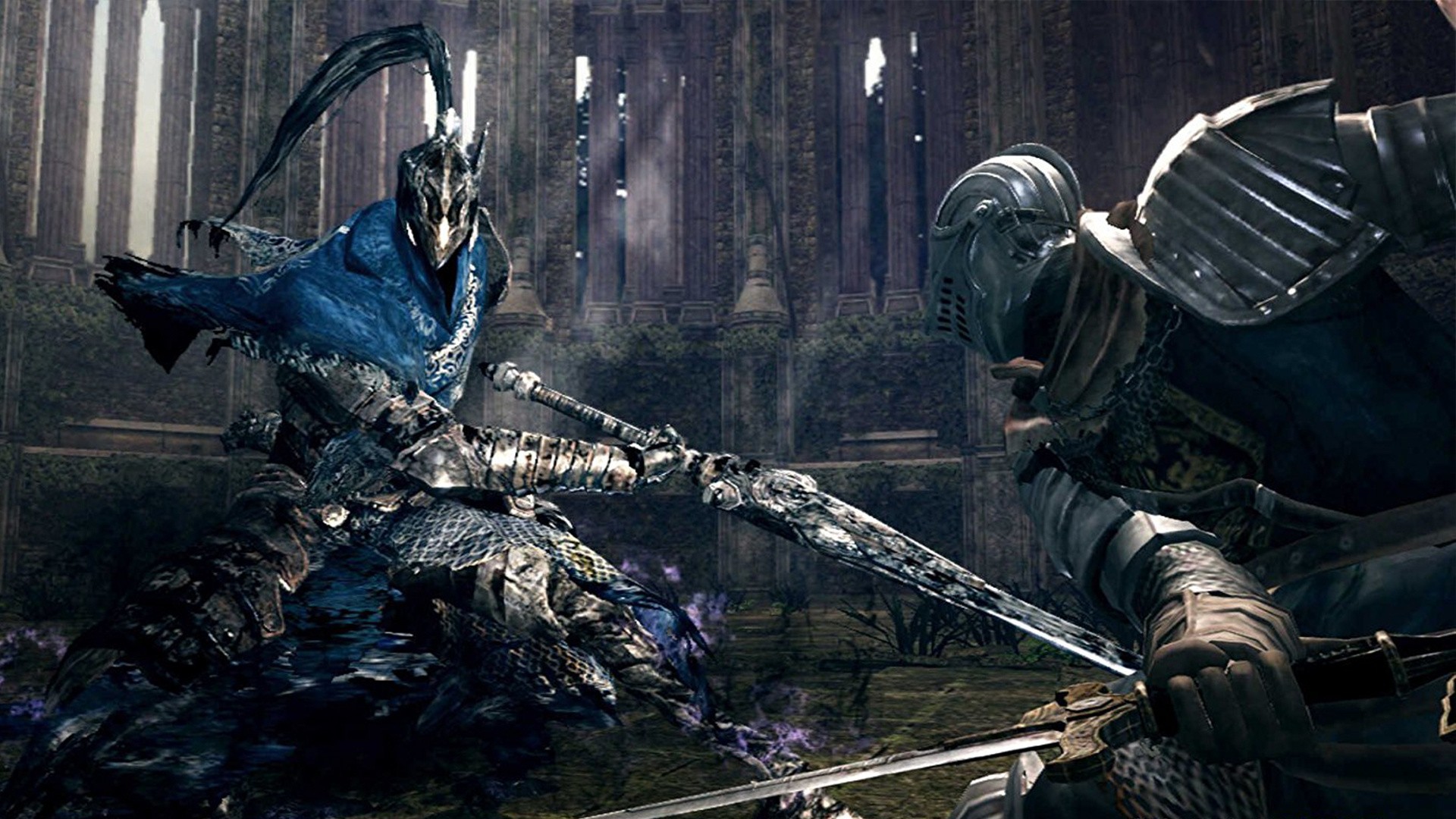
After a pretty scary delay, Dark Souls: Remastered finally received a new release date last week, with Bandai Namco confirming that Switch owners will get their chance to own the game on 19th October. With that date now safely pinned down, it’s time to start getting excited for its release once again, and maybe even take a cheeky peek at how it looks running on the console.
The latest build of the game has appeared at Gamescom, with attendees being given the chance to go hands-on and see how it looks in the flesh. YouTube channel Gaming Boulevard has uploaded a six-minute video of the game being played in portable mode, and while the bright lights of Gamescom might ruin the experience a little bit, it should give you a decent idea of how the game will look in your hands.
Of course, we already know that Dark Souls will run at 1080p while docked and 720p in handheld mode, with a frame rate of 30fps across the board. Things certainly look stable enough in the footage present above, so we’re very hopeful that this will be another success story for Switch.
Are you looking forward to playing through Dark Souls: Remastered on your Switch? Are you ready to see ‘You Died’ emblazoned across your screen over and over again? Let us know with a comment below.
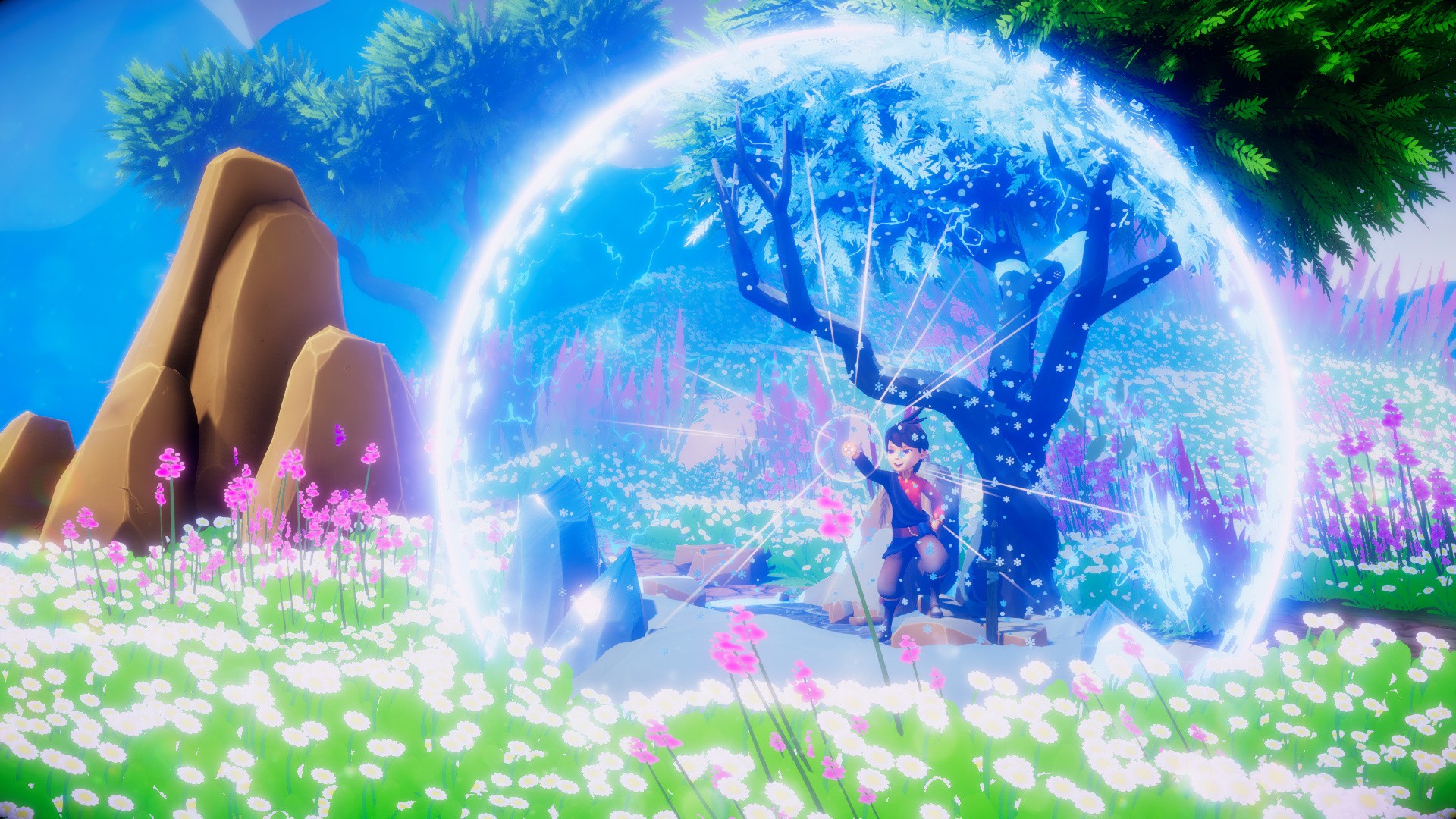
Modus Games has today announced a brand new adventure game headed to Nintendo Switch in 2019 – Ary and the Secret of Seasons.
Ary and the Secret of Seasonsfollows the journey of a young girl named Ary across the magnificent world of Valdi (as in Vivaldi’s Four Seasons, we’re guessing). Ary has joined the Guardians of Seasons, an old organisation traditionally ruled by men, in a move that surprises everyone around. The reason for this? To successfully restore Valdi’s seasons – a challenge which no other guardian has ever managed.
To help complete this quest, Ary can summon small spheres that act as tiny ecosystems for each season, changing the environment within to suit her needs. The spheres can be opened up three at a time, allowing Ary to jump from winter to summer to autumn in a single leap. This mechanic is used to introduce environmental puzzles and “innovative gameplay”.
Sebastien Le Touze, CEO at the game’s developer eXiin, and Christina Seelye, CEO of Modus Games, have commented on the announcement from Gamescom:
Le Touze: “We are excited to bring our beloved Ary to Gamescom once again, this time with our partners at Modus. We are confident those that come by to view the game will understand what makes Ary so special.”
Seelye: “Our team felt an instant connection to this game, and we couldn’t be happier to be publishing it next year. It’s a one-of-a-kind adventure that shouldn’t be missed.”
We’ll make sure to look out for any more news on this one as we slowly head towards 2019.
Until then, though, feel free to share your thoughts on this one in the comments below.
Morphies Law’s premise is a satisfyingly simple one, but much like Splatoon 2 – a game Swiss developer Cosmoscope has clearly taken a great deal of inspiration from – those arcade wares hide plenty of depth should you care to delve deeper. Here’s how it works: shoot another player and the body part you hit will shrink, while the corresponding limb on your own robotic Morphie inflates. It’s a bizarre concept, and it makes for some of the strangest firefights ever, with giant heads on tiny bodies battling oversized torsos running around with inflated thighs.
There’s a subtle balance at play here, too. The more mass you carry, the slower you become. Inversely, if you’ve had a run of bad luck and your character has been reduced to ‘Tiny’ status, you can move a lot faster, thus making you far harder to target. Your weapons also retain their standard damage regardless of size, so being small makes you no less deadly. Outside of the map, you’ll also notice two giant Avatars staring down at the map like eerie sentinels. The more mass your team has by the end of the match, the bigger your Avatar becomes. When the timer runs out, biggest one wins.
The more you play, the more you realise there’s far more to gathering mass than simple speed loss/gains. Increasing the size of your legs greatly affects how high you can jump, while making your arms bigger will increase the speed and reach of your grappling hook. You’ll also need to be careful where you go in each map as certain doorways will be too small to navigate if you swell too large. It’s the kind of arrangement that caters to less experienced players as the Morphies who are doing better are far easier to hit (and thanks to the fact the game measures success by overall mass stolen rather than kills).
At launch, Morphies Law comes with three standard match types. Morph Match is the game’s answer to Turf War, and uses the basic rules above for a deathmatch-style formula. Then there’s Head Hunt, which uses that age-old CTF setup and sees you fighting to control – you guessed it – an actual head in the middle of the map. Get said cranium back to your side of the arena and your team wins, but pick up the noggin when you’re too small and it’ll gradually drain your health until it crushes you flat.
The third and final mode is Mass Heist, and it’s here that the game’s size-stealing concept really comes together. Each of its four launch maps (the spinning discs of Maztec Temple, the shifting sands of Morphie Salon, the trap/launch pads of Fan Antonio and the tilting madness of Tanker Town) are dotted with shield switches. You need to stand on one coloured to match the opposing team, turn your weapon on their giant Avatar, and shoot a certain body part to fill up on mass. If you make it to a randomly placed altar that keeps changing location, you’ll add that mass to your own Avatar. It’s a mode that caters to both teamwork and lone wolves and, like most modes in the game, it would have really benefitted from some form of voice chat support.
It’s just a shame that Morphies Law only has four maps to its name, especially for a game that’s a) been delayed so much and b) asking for £20/$20 upfront. However, while the game does lack the polish of Splatoon 2, the dynamic DNA of these maps shows some real creativity with plenty of tactical application. Tanker Town especially – which tilts from one side to the other side depending on how heavy one Avatar is over the other – is a hoot to explore, offering much more than simple corridors for ambushes and the like.
That asking price is quite high, though, and it’s sometimes at odds with the rate of progression. There are no microtransactions and all cosmetic items can be bought from the game’s internal shop via a currency of metal washers you earn from wins and losses. The problem is these matches offer such a meagre reward in both XP and currency you’d be fooled into thinking you’re playing a free-to-play title specifically designed to facilitate grinding. It also doesn’t help that some of best cosmetic items in the shop are locked behind unnecessarily steep prices. Levelling up does gift you with a loot crate-esque piñata, but it’s a balance that needs some adjustment.
Most of the ‘items’ you’ll be buying and randomly unlocking all go towards customising your Morphie. Your arms, legs, chest, and butt all have unlockable static designs that can be mixed and matched at will, but the real flexibility, of course, is your face. You can customise your eyes, forehead, chin, mouth, and moustache with a level of freedom that would make a Mii blush. Every object can be individually moved, rotated, appropriately changed in size, and even be omitted entirely, allowing for an unprecedented number of possible combinations that range towards the infinite. Just don’t go making anything rude, or we’ll know.
Thankfully, all game-affecting unlocks are all based on progression, so don’t worry about Star Wars: Battlefront II-style advantage abuse. As you progress through levels and upgrade your robotic Morphie, you’ll gain access to different Specs and Plugins. Each Spec relates to a certain body part and provides a tangible buff (such as increased health for your Chest when that body part is grown in size, or a reduction in kickback if you select one based on your Right Arm). Plugins are special abilities you unleash in battle via ‘ZL’. These vary in application – from the Discomfort Zone shield to the Sticky Hand grappling hook – and each one is affected by the current mass of the relevant body part. It’s a great system in practice and one that’s got a great deal of potential for both inexperienced and more devious players.
There’s also an Ultimorph meter – which, when filled, enables you to briefly control that giant Avatar and either group heal your team or attack the opposing side with a deadly beam of energy. In reality, though, it’s Morphies Law’s version of an air strike/care package and rarely has much of an impact on a match as it’s so unwieldy to use. The Loadout option has plenty of potential, too – with two wheels that enable you to select a base weapon (ranging from assault rifles to simple shotguns) and a secondary fire option (such as bullets that leave paint splashes that slow enemies and partially heal teammates). It’s not quite as revolutionary as it first appears, but its simplicity will appeal to users that just want to make a quick combo and jump straight back into the action.
Any online game worth its salt needs a solid net code – especially one launching a month before Nintendo Switch Online’s proper infrastructure implementation – and Morphies Law is, well, erratic at best. Said code has been a little wobbly since its launch on 20th August. Sometimes you’ll be stuck for ten minutes at a time waiting for a match, while other times you’ll be kicked from a match for seemingly no reason. The promised ‘60-ish fps’ is extremely accurate, but there are occasional instances of jitteriness (especially when boost jumping across the map) that aren’t present when playing offline against bots. There’s a fair amount of lag as well, but the developer has promised it’s working on a workaround – and a day on from release we’ve already noticed a slight reduction in lag and matchmaking issues.
Conclusion
While Morphies Law lacks the grandeur of Splatoon 2 and the F2P gratification of Fortnite, there’s no denying that its mass-shifting gimmick has legs – giant ones, at that. It just needs the right kind of post-launch TLC from its developer and some smart adjustments to both net code and player progression. With added gyro controls making the most of those Joy-Cons (should you want to gather mass via motion controls) and support for local play with up to eight players (as opposed to online’s four), this indie shooter has the potential to grow into a genuine sleeper hit.
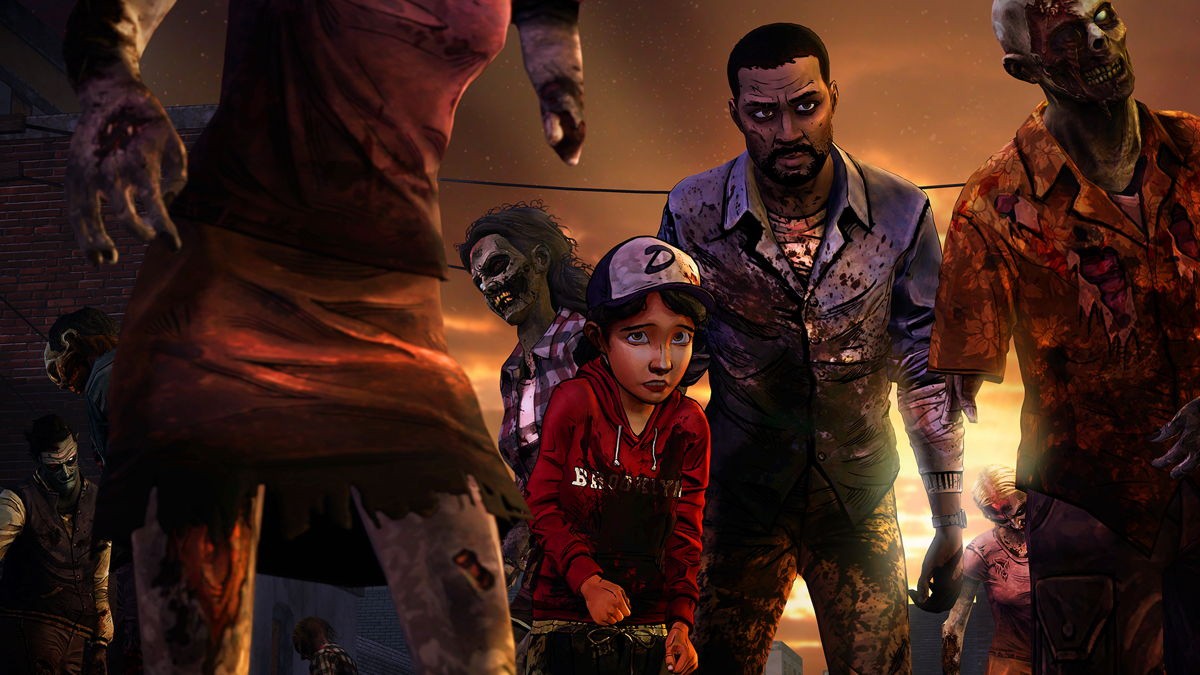
When The Walking Dead: The Final Season was announced for Switch – the first episode of which has just launched on the eShop in the US – we thought that it would be a great idea for Telltale to publish its previous seasons on the system as well. Luckily, the studio has clearly heard our prayers (or just decided to do this anyway, most likely) as almost the entire collection of The Walking Dead games will soon be available for Switch players to experience.
The Complete First Season includes all five original episodes, as well as the add-on anthology 400 Days. Both have been ported from last year’s The Walking Dead: The Telltale Series Collection, which offered substantial visual and performance enhancements over the previous, initial releases. Those upgrades will now carry over to Switch.
The full season, including all five episodes and the add-on pack, will be available to download from the Nintendo Switch eShop from 28th August for $24.99. European pricing is still to be confirmed.
The Walking Dead: Season Two and The Walking Dead: A New Frontier will both come to Switch later this year, meaning Switch fans will have access to the complete collection apart from the 2016 mini-series, Michonne.
Have you played through The Walking Dead on other platforms? Will you be experiencing this collection for the first time on Switch? Let us know with a comment below.
When Planet Alpha launches on Nintendo Switch on 4th September, Team17 will have released a whopping 100 games for our enjoyment. To celebrate this milestone, the studio has released a new video which looks back over some of the famous titles that have helped it to become one of the UK’s most well-known names in gaming.
Founded in 1990, the Wakefield-based Team17 started life as a publisher working with the likes of Housemarque onSuper Stardust and Epic on Silverball. It soon became famous for the Worms series – a mascot of which stands proudly at the studio’s main reception to greet unsuspecting guests – which launched in 1995 and has spawned a huge number of titles since including Worms W.M.D. on Switch.
In 2013, Team17 set up its global games label, helping bring hit games to the market including The Escapistsand Overcookedseries, Yooka-Layleeand many more. It’s been a long journey, but one that has put lots of great games into our hands, including a very healthy selection on the Switch over the last year or so.
Debbie Bestwick MBE, CEO of Team17, has released the following statement:
“The 100th game marks an incredible milestone for Team17 as we move closer towards our 30th year in this diverse and creative industry. Team17 started life as an indie publisher in 1990; the release of Planet Alpha in 2018 is a poignant moment for us all in that we have come full circle in bringing our expertise, perspective and values from our time as an independent developer to games publishing in this exciting modern era of indie games.
“I’d like to pay tribute to employees of Team17, both past and present, as we celebrate the release of a multitude of titles across many game systems from 16-bit and beyond and in countries far and wide. I’m appreciative, humbled and honoured to work with talented developers in bringing their wonderful creations to fans everywhere. We’re just as passionate and excited for the next 100 games!”
Do you have a favourite game from the studio, either new or old? Perhaps today would be a great day to fire up a couple of your favourites and join in with the celebrations. Congrats, Team17!
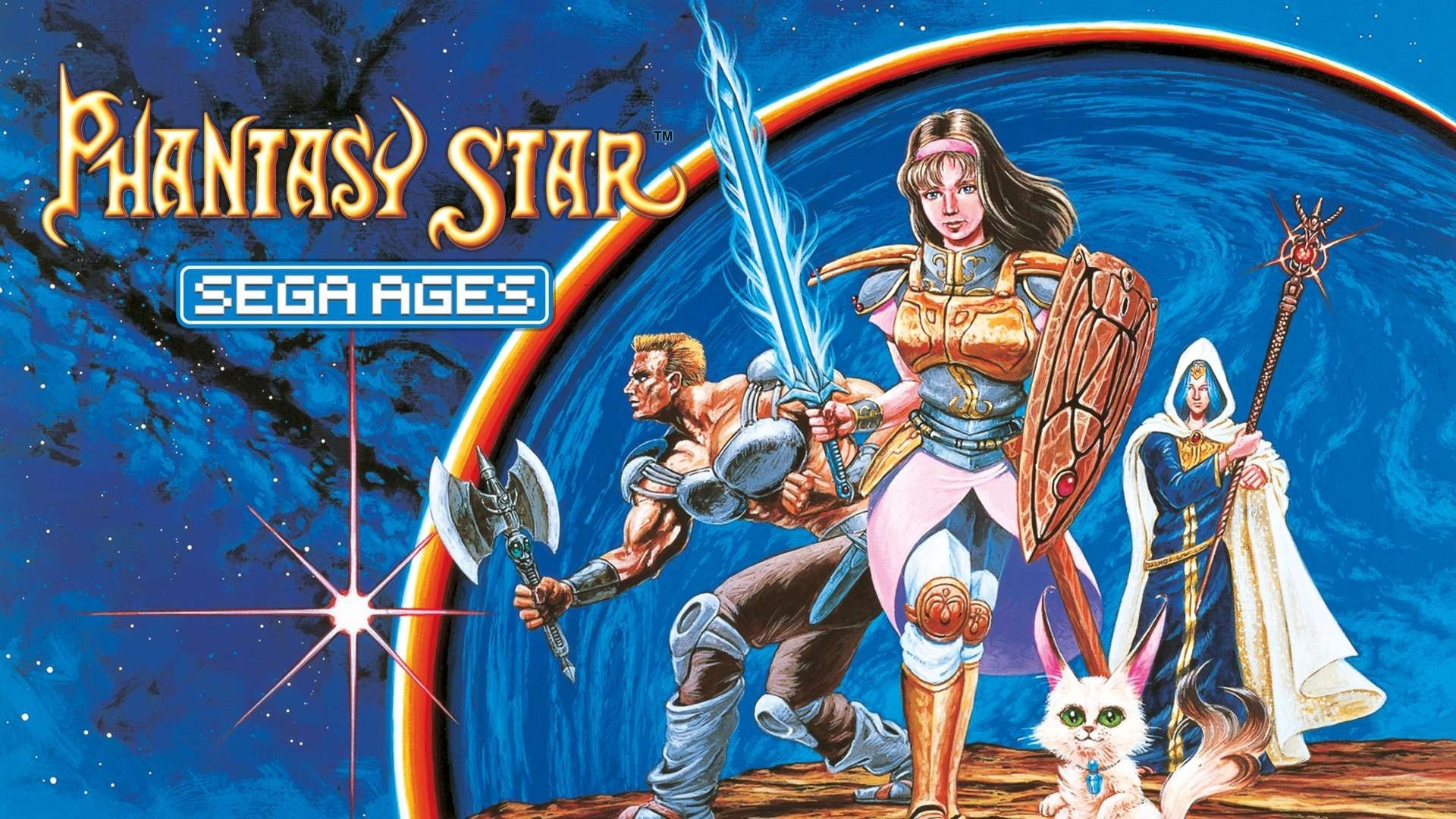
Japanese Switch players will be able to get their hands on the Sega AGES version of Phantasy Star next month, it has been revealed.
Costing ¥925 (approx. £6.50 / $8.30), Phantasy Star will join Sonic the Hedgehog and Thunder Force IV on Nintendo’s newest console. While the primary aim here is to let fans relive the nostalgia of playing these classic Sega titles – or to let newcomers experience them for the first time – a number of new features and adjustments have been added to streamline the gameplay experience.
One such example – and one that was probably expected – is the inclusion of a difficulty settings menu. Here, players will be able to make the game slightly easier to complete if they wish, allowing it to be more accessible to all. Other new features, such as a hiragana text option that originally appeared in the 1998 Sega Saturn version, and an FM Sound Unit music player consisting of 19 playable tracks, will also be included.
The game has also received some quality of life adjustments. Dungeons now feature an auto-mapping option; placed on the right side of the screen, this will help you to navigate first-person dungeons with a constantly updated map. Encountered monsters will be added to a codex, allowing you to study them before jumping into the action once again, and an item list allows you to go over the abilities, equipment, and items found within the game.
There’s still no news on when the Sega AGES line up will reach western shores, or whether or not we’ll face much of a wait after these Japanese launches. We’ll make sure to keep our eyes peeled for any announcements on this in the coming weeks.
Are you looking forward to playing this Sega range on Switch?