Posted on Leave a comment

Feature: The Console Wars Are Back With The Analogue Mega Sg, The First FPGA Sega Console

In the field of ‘new’ retro hardware, one name arguably stands out. Analogue started its life with the gloriously insane (and incredibly expensive) wooden Neo Geo MVS, but it was the Analogue Nt that really took the firm to the big leagues. Authentic NES hardware contained in an aircraft-grade aluminium frame – this was a true connoisseur’s console, and it flew in the face of the accepted trend of ‘clone’ systems built on flaky emulation and generally lacklustre construction quality.

Last year, Analogue delivered what has been perhaps its most acclaimed console to date, the Analogue Super Nt. Harnessing the incredible power of Field-Programmable Gate Array chips (something the company had previously dabbled with when it released the Analogue Nt Mini), it represents the ultimate way to experience the SNES library in 2018 – and for the foreseeable future, for that matter.

During email conversations with Analogue CEO and founder Christopher Taber around the launch of the Super Nt, I expressed the opinion that, as a rabid Sega fanboy (as well as a staunch supporter of all things Nintendo, of course), I’d personally love to see him tackle the SNES’ big rival in FPGA form: the Sega Genesis / Mega Drive. “Stay tuned” was his reply. I was quietly confident that sooner rather than later, Analogue would tackle the challenge.

Those suspicions have proved to be true because today the company has lifted the lid on the Mega Sg, its next FPGA-based console project, and perhaps its most ambitious yet. The Mega Sg doesn’t simply recreate the performance of Sega’s 16-bit hardware with complete accuracy and zero-lag – it’s a gateway to the company’s entire console history prior to the launch of the 32-bit Saturn.

Powered by the same Altera Cyclone V FPGA that’s found inside the Nt Mini and Super Nt, this system is capable of playing every single European, North American and Japanese Mega Drive game out of the box, and – via special cartridge adapters – can also play Master System, Mark III, SG-1000 and Game Gear software, all with the same unparalleled degree of accuracy. A Master System cartridge adapter will be included with every console, but the others will come later with a price tag of around $9.99. The ‘OMG’ moments don’t end there, however; the system will also be compatible with both variants of the Mega CD add-on, allowing players to experience CD-based games with the kind of accuracy that emulation can’t touch.

For Taber, the shift to Sega was an obvious one; like myself, he was actually a Sega fan first and foremost. Even so, he’s been careful to not allow his own rose-tinted memories cloud his judgement. “I grew up as a Sega kid and never owned any Nintendo systems until I was an adult,” he explains. “Neo Geo and Nintendo were the first systems Analogue tackled because those are the systems I personally wanted to explore. Our approach to making systems has nothing to do with nostalgia – our own or otherwise – it is consciously something we stay away from. We design systems to celebrate and explore the history of video games with the respect it deserves. We’ve got no interest in nostalgia gimmicks or making toys. Either way, I’ve always wanted to do the be-all and end-all Sega system – and here it is.”

All of Analogue’s previous consoles were focused on a single hardware format, but the Mega Sg can run games for multiple systems. Factoring this functionality into the hardware was down to Kevin ‘Kevtris’ Horton, the same genius who worked on the company’s previous FPGA-based systems. “Kevin is a one-of-a-kind talent,” says Taber. “He is extraordinarily good at what he does; I really cannot overstate that. Nobody can do what he does as well as he does. Over the years we’ve continuously refined and re-structured our product development process. This has allowed us to continue pushing the boundaries and offer as much value as possible in each product. We’re always looking to categorically outdo ourselves with each product; otherwise, what is the point?”

Taber is keen to stress that the level of accuracy present in the Mega Sg – and indeed any FPGA system produced by Analogue – is second-to-none. “Each Sega system is implemented 100 percent in FPGA – there’s no BS fake ‘hybrid emulation’, or an FPGA in the hardware but only being used to read cartridge or controller inputs. Did you know the Retron5 has an FPGA in the hardware? Having an FPGA in a product doesn’t mean anything; FPGAs are highly versatile components – they can be nearly anything. It’s how the FPGA is used that matters. Like all Analogue products, Mega Sg is designed with the core functionality of each and every system implemented 100 percent in the FPGA. It’s important for users to recognize that as FPGAs become more popular, there are going be other companies who intentionally manipulate technical details to make it seem like they are offering something they aren’t.”

Taber finds it hard to conceal his annoyance at rival firms who, in his eyes, are jumping on the FPGA bandwagon in an attempt to legitimise their products. However, his bitterness isn’t trivial; the effort involved when replicating each system using FPGA tech is almost superhuman, and Horton has expended countless hours of his life fine-tuning performance – there are no ‘off the shelf’ emulators present in the Mega Sg, and no deals have been inked with existing emulator owners to achieve this degree of faithfulness.

“It is a ton of work to implement an entire system via FPGA from scratch versus including software emulators on a PC box and skinning a user interface,” Taber continues. “It’s a walk in the park compared to building a system from scratch in an FPGA. Just our Mega Drive/Genesis core took one year to develop. Including Master System and original Mega / Sega CD compatibility is something we’re really stoked to offer. SG-1000, SC-3000, Mark III, MyCard/Sega Card – the goal with Mega SG is to be the ultimate Sega system; everything pre-Saturn. We’ll nearly be there at launch; only 32X remains.”

Indeed, the ill-fated 32X is the only format that the Mega Sg isn’t currently capable of supporting – but Analogue is working on a solution. “The original 32X is incompatible in HD due to its complex reliance on analog multi-link cables,” Taber explains. “We’re exploring solutions for using the original hardware in conjunction with Mega Sg post-launch. There are no promises just yet, but what I’d really love to do is implement the entire 32X in FPGA – no need for the original 32X hardware then.”

As was the case with all of Analogue’s previous systems, there are original controller ports which mean you can connect up your battered Mega Drive and Master System pads with no trouble whatsoever. However, an optional wireless controller produced by 8BitDo – the M30 – is also going to be available at launch, and Taber is confident that it will find favour with the Sega faithful, many of whom will have cut their teeth on the peerless Mega Drive 6-button pad. “It’s perfect,” he says when asked how the M30 compares. “Honestly a bit better, tighter, and more responsive than the originals. 8BitDo takes perfecting retro controllers to the highest level; nobody does it as good. I cannot wait to get it into everybody’s hands. I’m also stoked that we’re able to offer an M30 and 2.4g receiver for $24.99. Identical quality as always, but sans-Bluetooth in favour of faster and easier connectivity via 2.4g.”

Just as the Super Nt and Nt Mini were timed to ride the wave of interest in systems like the NES and SNES Classics, it won’t escape the notice of many people that the Mega Sg is launching in March – around the same time as the delayed Mega Drive Mini, Sega’s latest attempt to cash in on the gaming public’s seemingly unending appetite for retro. For Taber, the increased exposure is welcome because he’s confident that Analogue’s machine will prove to be the superior option. “If the Mega Drive Mini is anything like previous licensed Sega systems, it will sadly be abysmal quality,” he laments. “Hopefully Sega isn’t working with AtGames again and they’re going to redevelop it to at least Nintendo Classic Edition quality. Anything less would be a shame and disappointment, especially with the new standards that have been established. In terms of performance and accuracy, at best it will be like Super Nt vs. SNES Classic Edition. Mega Sg will blow it away in every category; it’s an enthusiast product versus a toy – there is no contest.”

Sega, Nintendo and SNK are all active in the ‘new’ retro sector, and the hunger for these reheated vintage platforms shows no signs of slowing. Firms such as Hyperkin and Retro-Bit – which have been around almost since the revival began – continue to release new systems, and newcomer Polymega is attempting to disrupt things with console that runs physical media for a wide range of platforms, albeit almost completely via software emulation. What does Taber make of this increased competition?

“Nintendo’s Classic Edition line is great; it’s wonderful they are making something like this finally,” he replies. “Outside of Nintendo’s Classic Edition line, no other company is making anything close to that level of quality. Let’s be real here – they’re all sad disappointments. Then the third party guys are still shovelling out the same junk they always have been; poorly designed, poorly manufactured, virtually unusable controllers, terrible emulation (typically because of the low-powered hardware designed around it). Analogue is the antithesis to companies like this. Yeah, we’re accuracy snobs. What Analogue is doing is one of a kind – we’re bringing totally new products to users, designed completely in-house from scratch. No compromises. No licensing (or stealing) the same software emulators and sticking them on a low-powered Android or Linux box, ad nauseam. And this isn’t a criticism towards the actual software emulator authors – the authors are the ones doing the real work – but their work just isn’t going to shine on cheap hardware versus a full-powered desktop computer, which even then has its limitations, such as latency.”

The Altera Cyclone V has been instrumental to the success of Analogue’s consoles, but does this FPGA chip have a limit? Can it replicate the performance of systems beyond the SNES and Mega Drive? “It’s roughly up to 16-bit with some exceptions, and then we’d need to utilize a larger FPGA for beyond,” explains Taber. But exploring new horizons is what Analogue is all about; a fresh hardware challenge is unlikely to dissuade Taber and his team, and it’s genuinely tantalising to think what the company could create next. “The systems that I’m the most inspired by are the ones that never received the recognition that they deserve. You know what I keep thinking about lately? A Wonderswan with an OLED screen. That would be good. Whatever we do next, you can count on Analogue continue to raise the bar. That’s what we’re here for. Moreover, like Super Nt, we’re going to continue to develop for Mega Sg after it’s released, taking user feedback onboard and developing new features. I’m beyond stoked to have an audience that loves what we do. It’s a pure pleasure.”


The Analogue Mega Sg launches next March for $189. Pre-orders are live now. You can view Mega Drive (Gunstar Heroes), Master System (Golden Axe), Game Gear (Ristar) and SG-1000 (Girl’s Garden) footage captured directly from the system below.

Posted on Leave a comment

Photorealistic Graphics Didn’t Match Welcoming Nature Of Pokémon Let’s Go Pikachu And Eevee

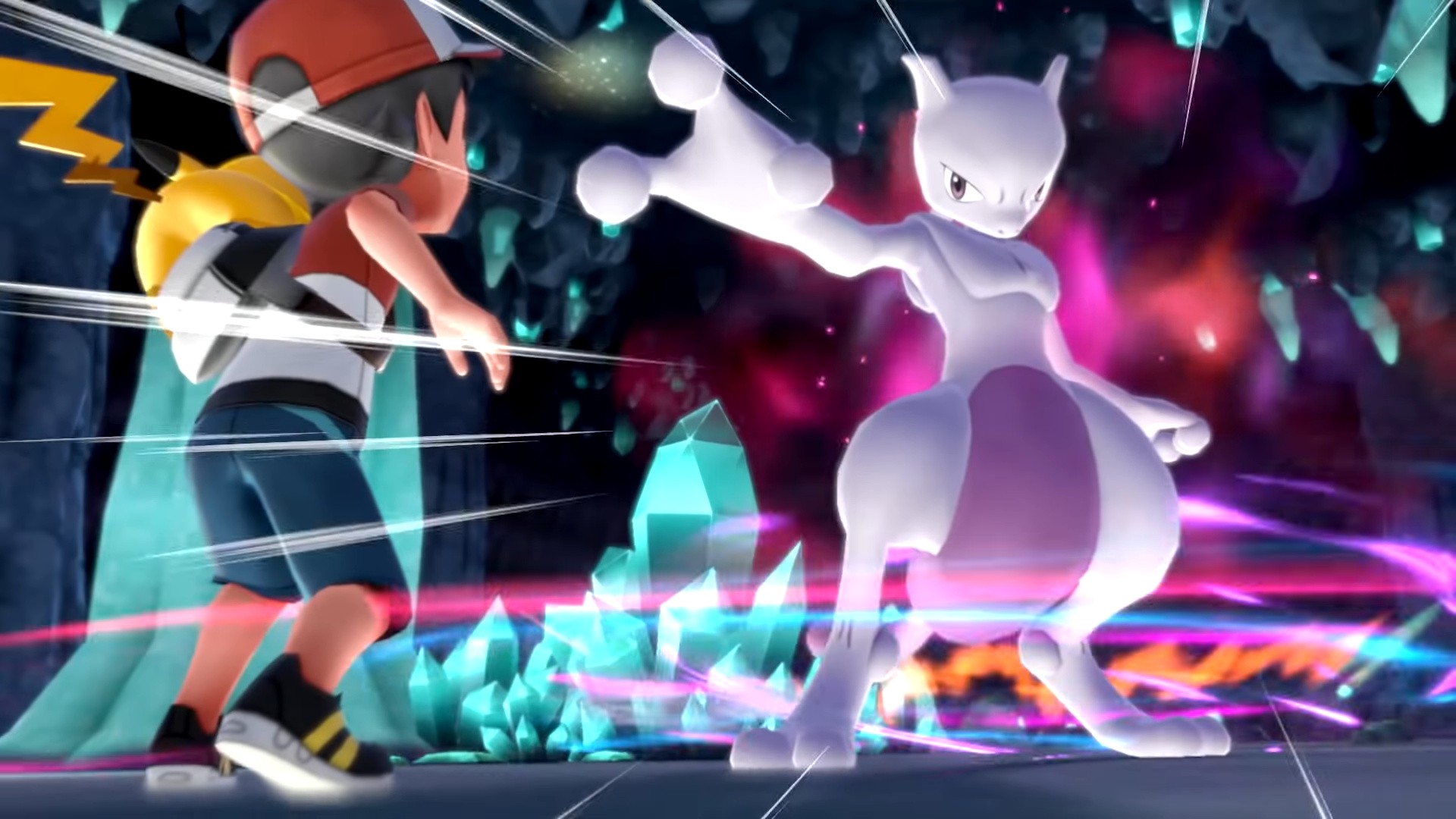
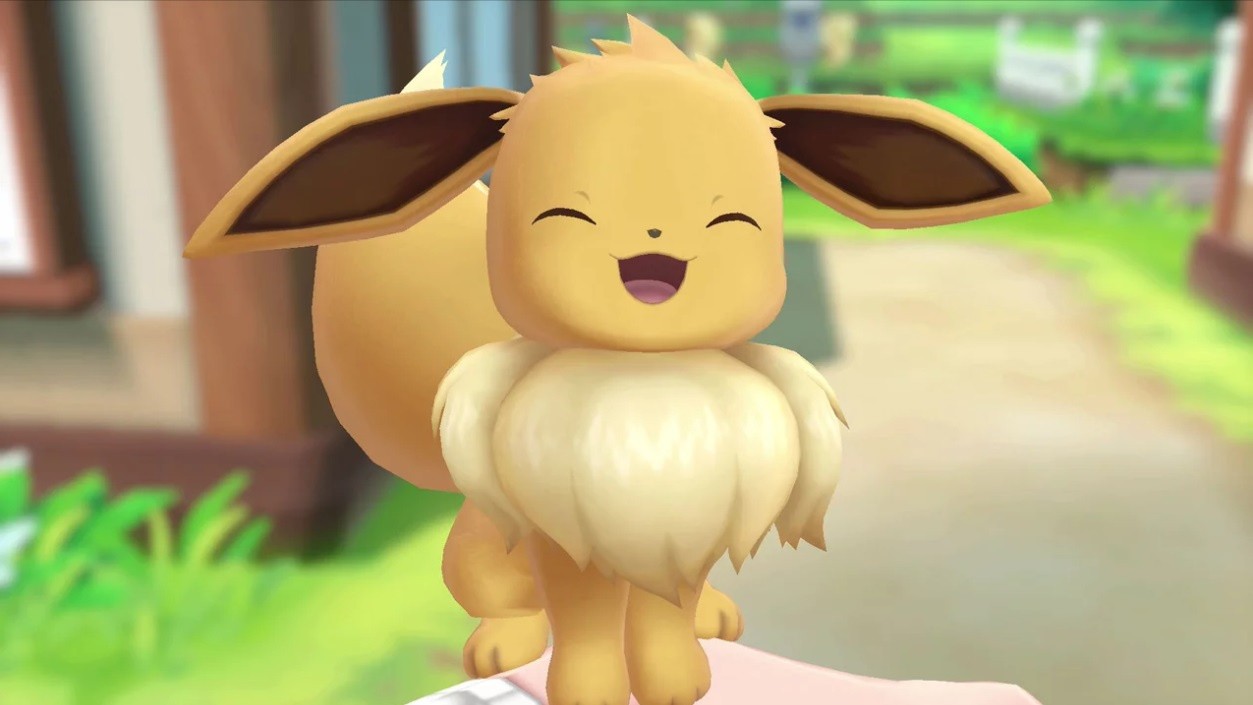
While Pokémon: Let’s Go, Pikachu! and Let’s Go, Eevee! reportedly offers plenty of challenging post-game content for veterans of the series, it’s primarily being marketed as an entry-level Pokémon game – with an emphasis on providing a relaxing experience. This applies to the gameplay as well as the audio and visual design.

Speaking to IGN, Director Junichi Masuda reiterated how making the game as inviting as possible was a major focus throughout development. The team at Game Freak went as far as removing “aggressive” styles of music, to create a more pleasant experience:

We really wanted to, at least for this first game, make the visuals as well as the audio just feel kind and inviting, not intimidating at all. So even for the music side, we’ve used more aggressive rock or techno styles in the previous games. We purposefully avoided those in this game just to make it really a warm and inviting experience.

The Lead Game Designer Kensaku Nabana elaborated on this, explaining how the team had experimented with photorealistic visuals before Masuda encouraged the team to go with friendlier aesthetics:

Usually, when you would have much more power with the Switch and taking it into HD, I think the natural tendency is to go for a more photorealistic approach. In the earliest days of development, we actually explored that direction quite a bit.

But we got the direction from Masuda…to go for this more kind and soothing and inviting experience with the visuals. After some experimentation, we just realized the more realistic, more photorealistic direction just wasn’t really working for what we were trying to do.

How do you feel about these welcoming design choices? Do you like the look of the new games? Would you prefer a soundtrack that’s similar to previous entries? Tell us below.

Posted on Leave a comment

Mix and match pilots, wings, weapons, and hulls to defend the Atlas star system in Starlink: Battle for Atlas

Mix and match pilots, wings, weapons, and hulls to defend the Atlas star system in Starlink: Battle for Atlas

The Atlas Star System is under threat from Grax and the Forgotten Legion, an evil robot force. It’s up to you and your band of interstellar pilots to free Atlas! Starlink: Battle for Atlas offers a whole new gameplay experience: pick your pilot, build your own modular Starship, mount it onto the controller and see it come to life in-game instantly.

Starlink: Battle for Atlas offers players a new, customizable gameplay experience.

Features

• Fully customize your starship: Be as creative as you’d like–mixing and matching pilots, hulls, wings, and weapons to assemble your ideal starship. Changes to your physical ship instantly appears in-game, allowing you to immediately jump into battle.

• Explore an entire star system: Travel throughout the Atlas Star System, seamlessly visiting exotic alien worlds with their own ecosystem and wildlife. Just remember, space is a dangerous place – not all planets will be hospitable to you. Enemies that you encounter will react intelligently and fight back.

• Get creative in combat: Build your own unique playstyle. Experiment with different abilities, weapon types, and status effects to discover and unleash devastating combos.

• Exclusively for the Nintendo Switch™ system: Fox McCloud appears as a special guest pilot in the game, teaming up with the Star Initiative to help stop the Forgotten Legion. Players have the opportunity to explore the Atlas Star System in Fox’s Arwing, a high-performance combat spacecraft.

• Every choice you make in Starlink: Battle for Atlas has an impact, evolving the world based on your actions. Choose wisely, and fight to stop Grax and the Forgotten Legion!

If you would like to purchase the game, please visit https://www.nintendo.com/games/detail/starlink-battle-for-atlas-digital-edition-switch.


Fantasy Violence
In-Game Purchases

Posted on Leave a comment

It’s good to be bad in LEGO DC Super-Villains!

It’s good to be bad in LEGO DC Super-Villains!

Embark on an all new LEGO adventure by becoming the best villain the universe has seen in LEGO DC Super-Villains.

The Justice League has disappeared! A new group of strange, wannabe superheroes calling themselves the “Justice Syndicate” has appeared…but what are they up to? Sometimes, it takes more than a superhero to get the job done, and it’s up to the player and a group of misfits to uncover the intentions of Earth’s new strange, wannabe superheroes.

LEGO DC Super-Villains lets you join DC’s best villains on an all-new mischievous adventure, written in collaboration with DC Comics. Players can create and play as a new super-villain, joining up with The Joker, Harley Quinn, Lex Luthor, Deathstroke, Killer Frost, Sinestro, and countless others from the Legion of Doom. Players will set out on an epic adventure to ensure their villainy remains unrivaled.

Unleash all your tricks to uncover whatever scheme the Justice Syndicate has planned.

If you would like to purchase the game, please visit https://www.nintendo.com/games/detail/lego-dc-super-villains-switch.


Cartoon Violence

Posted on Leave a comment

Toki Tori Developer Two Tribes Teases Mobile Game Swap This! For Switch eShop

At the start of this month, the Dutch developer Two Tribes – best known for games like Toki Tori and RIVE – said it was bringing another one of its small-sized releases to the Nintendo Switch. A tweet has now been posted, teasing an image of a YouTube trailer:

Overlooking demands for a new Toki Tori game, fans have narrowed it down to Swap This! It’s a 2011 colour-matching puzzle game for mobile devices. While we await the official announcement, here are some details about from the mobile game page:

  • Battle enemy fish in Fish Fight
  • Have some quick fun in Minute Match
  • Test your wits in Puzzle Mode with over 45 puzzles
  • Compete against your Facebook Friends, boast on Twitter
  • Five special power-ups to help break the ice

Are you a fan of Two Tribes games? Have you played this game previously? How do you feel about the Switch receiving mobile ports? Tell us in the comments.

[via nintendosoup.com, twotribes.com]

Posted on Leave a comment

Team Cherry’s Decision To Cancel Hollow Knight On Wii U Was Hard, But Ultimately For The Best

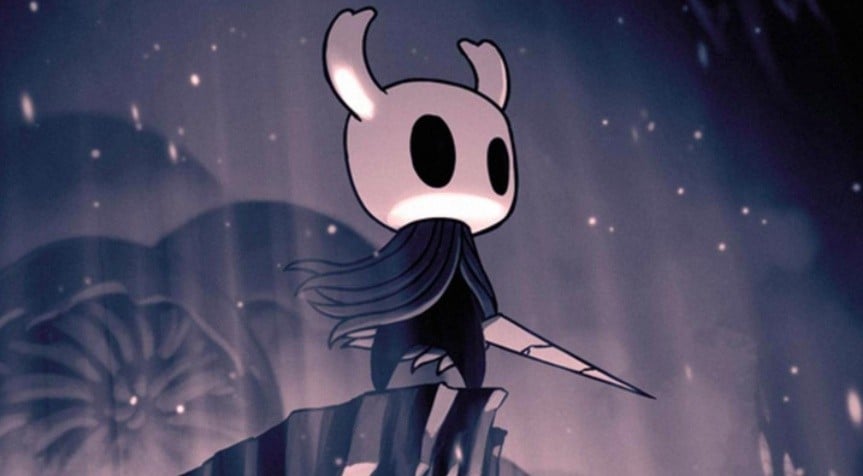
The indie title Hollow Knight has been a roaring success since it was released on the Nintendo Switch eShop earlier this year.

In the first two weeks, the bug-ridden Metroidvania sold over 250,000 copies. The free and final DLC – Godmaster – likely helped. In the end, it all worked out for the Australian-based developer Team Cherry.

In a recent interview with Game Informer, the duo behind the game admit it was fortunate development unfolded this way. Hollow Knight was originally slated for a June 2015 launch but kept getting pushed back.

It got to the point where cuts needed to be made. Hollow Knight Designer and Co-Director William Pellen said by this stage the video game landscape had changed and in early 2017 the team decided to cancel the Wii U version:

We had done a fair bit of preliminary testing and it was running [on Wii U] with most of the basic features, but performance would still have required further work.

It was hard because we loved the Wii U and we’d promised to get the game on there. But looking at the time frame, the Switch was fast becoming the main Nintendo console and our backers were already moving over. When we made the change, backers were excited for the shift and Nintendo was tremendously supportive through the process.

Ari Gibson – the game’s Art Supervisor and the other half of Team Cherry – explained how the “Boneforest” had to go as well due to time constraints:

We removed one large area from the game, the Boneforest…It was a huge later-game area filled with lava. Cutting it was tough at the time. It seemed so cool! But it was totally the right thing to do. William and I were already slammed with all the other enormous areas to build, and they all would have suffered for Boneforest’s inclusion.

We also significantly reduced the size of Deepnest, which seems unbelievable, given how huge it ended up being, but most players would thank us for that decision. Too long in Deepnest isn’t good for anyone!

Despite the decision to cancel the Wii U version and cut certain content, Team Cherry proved Hollow Knight was worth waiting for.

Are you still playing Hollow Knight on the Switch? Are you disappointed the game never saw a release on the Wii U? Were there any other games during the Wii U generation you eventually ended up experiencing on the Switch instead? Tell us in the comments.

Posted on Leave a comment

Review: Mark Of The Ninja: Remastered – A Stellar Stealth Hit That’s Better Than Ever

In 2012, Klei Entertainment (which would later go on to produce Don’t Starve) debuted Mark of the Ninja on the Xbox Live Arcade, introducing a bold 2D take on the stealth genre. Boasting gorgeous hand-drawn visuals and tight, open-ended gameplay, this new platformer quickly developed a reputation for its quality, cementing it as a cult classic and a genre standout. Now, six years later, Klei has brought Mark of the Ninja: Remastered to the Switch, promising all the content of the Special Edition along with a few other improvements. It turns out that time has been extremely kind to this game; Mark of the Ninja still stands as one of the best stealth games ever made, and now it looks and sounds better than ever.

Mark of the Ninja follows the story of a nameless ninja—sometimes referred to as “The Champion”—on a quest with his fellow ninja, Ora, to slay the evil Count Karajan for attacking the Hisomu clan with his private military group. While Ora remains a normal (albeit badass) ninja, the protagonist has received the eponymous Mark of the Ninja, a tattoo which grants the wearer superhuman reflexes and senses, but eventually drives them mad. As the plot progresses and the protagonist becomes more unhinged, the lines begin to blur in more ways than one as alliances are called into question and friends become foes.

It may not be a terribly emotional plot, but it’s certainly engaging and well-paced, with much of this being due to the excellent voice work and cutscenes. Each stage is bookended by a brief fifteen to thirty second voiced cutscene that echoes the art style of Samurai Jack, and these go a long way towards setting the tone and getting you accustomed to the cast of characters. Even so, there’s plenty of dialogue laid into each level as well, with Ora being frequently used as a convenient device for conveying exposition and light tutorializing. It all meshes together quite well, making for an experience that’ll have you eager to play that next level to see what happens next, and that’s before we even get to the stellar gameplay.

Mark of the Ninja is a stealth game through and through, playing the tropes straight in a way that encourages experimentation, creativity, quick reflexes, and quite a bit of planning. Each level is laid out in a relatively non-linear way, giving the players ample choice in exactly how they’d like to approach the solution to a problem. You can choose to kill all the guards in a room, let them all live, or bypass the room entirely in favor of taking an alternate route, and each one of these ways is equally viable. There are some real consequences to player choice, too, with some surprising outcomes happening in what should’ve otherwise been a straightforward plan.

For example, one mission saw us having to steal an item off a guard, and we were given the choice of killing him or just pickpocketing the item. Not seeing a difference, we chose to kill him for the extra points, but it turned out that he was wearing a heartbeat monitor which alerted the whole complex to the presence of an intruder. It’s moments like these which show how well Klei has mastered the design of a stealth game, with the overall pace oscillating wildly between calm and chaotic at the drop of a hat. One minute everything goes according to plan and then something goes wrong, demanding that you think fast on your feet to find a new solution. Knowing this, there’s always a tense air to every action you make, making each kill and narrow escape a thrilling experience.

Every level is designed with unique mechanics in mind, organically introducing the concept to the player and then building upon it as the level progresses and becomes more difficult. One memorable level has you infiltrating an enormous castle during a thunderstorm, with the occasional flashes of lightning giving away your position if you’re not hidden properly. Another features poisonous gas and moving crates that can be manoeuvred around as they proceed on their track. There aren’t very many puzzles in the traditional gaming sense, but rather, the whole game is a sort of puzzle, handing the player all the tools they need and letting them figure out a solution.

Unlike many other stealth games, Mark of the Ninja doesn’t hide many of its mechanics from the player, meaning that every mistake made rests purely on you. For example, every guard has a cone of vision depicting exactly how far they can see, giving you the chance to pick out blind spots and plan your route. Alternatively, your ninja can’t see through walls, so if you happen to be standing on a solid ceiling with a guard below you, the sound of his pacing footsteps is represented by a series of small rings moving across the floor. It’s having access to all this information that makes Mark of the Ninja such a joy to play, as each victory or defeat feels entirely earned.

Your ninja’s success will depend considerably on the usage of gadgets, which help add a considerable amount of depth to each encounter and give the player greater agency in how they approach them. You have an endless supply of bamboo darts—perfect for knocking out lights and fuse boxes—but your arsenal also consists of flares, firecrackers, spike traps, carnivorous insects and more. Each of these has distinct advantages and disadvantages, favoring a variety of playstyles, and this can make subsequent runs through levels more interesting as you try out different toolsets. Moreover, costumes with different playstyles, new takedown techniques, gadgets, and gadget upgrades can all be bought on an occasionally available upgrade screen.

Player performance is judged in myriad ways throughout each level, with a handful of platforming challenges, collectables, and optional sub-objectives all deciding how many Seals you’re given to buy upgrades with. The sprawling stages are filled with all sorts of nooks and crannies along the routes, and some of these are sure to contain scrolls which help fill out more of the Hisomu clan’s history. Some of these scrolls aren’t simply handed to you, instead tasking you with going through a difficult, isolated platforming stage that usually stands well above anything in the main level in terms of challenge. Every level also has three ‘achievements’ to attempt if you’re feeling lucky, such as goading a guard into shooting another guard, or sneaking past a particularly difficult encounter without being seen once.

All these extra sub-elements do a great job of giving the gameplay much more versatility, as the player is encouraged to do more than simply clear the next required encounter and keep moving on. Having things to reward the player for exploring the level with greater scrutiny, or for approaching combat encounters in slightly handicapped or unconventional ways, helps to give both the exploration and combat greater staying power; there’s much more to both elements if you’re willing to invest the time or skill.

From a presentation perspective, Mark of the Ninja manages to impress, going for a distinctive, dark, hand-drawn look that’s packed with charm. The ninja’s movements are all animated in amazingly fluid ways, and there are plenty of minor environmental details that make the levels feel like real places – such as when infiltrating an ominous castle in the rain or skulking through ancient catacombs filled with bones and chains. The sound design is a perfect match for the tone being set, with there being next to no music during sections when creeping through shadows, while the theme that plays when you’re slowly choking on gas rivals the Sonic the Hedgehog drowning theme in terms of how quickly it instigates anxiety and panic.

This being the ‘Remastered’ version naturally brings expectations that this is an enhanced version of the core game, and while it could certainly be said that this is the definitive version, it’s only by a hair. All the content from the previous Special Edition release is present here, including the ‘Dosan’s Tale’ DLC level, as well as the option to enable developer commentary, manifesting as interactable bubbles placed throughout levels which explain some behind the scenes processes of the game’s development. These surprisingly add a lot to one’s enjoyment of the game, as you’re told exactly why that obstacle you just passed was designed that way, or how the art department struggled to settle on the look of the room you’re in. Aside from that, and this version’s higher quality art and sound, we didn’t notice anything else particularly grabbing. Still, it’s nice to know that this version has been polished up quite a bit.

Conclusion

Mark of the Ninja Remastered is an utterly stellar stealth game and, six years on, it’s lost none of the magic that made the original such a critical darling. A strong art direction, engaging story, well-paced open gameplay, and a slew of extra content all combine to make for a near-flawless experience that you certainly won’t want to miss out on. We’d give this game a high recommendation to all Switch owners; it’s the best stealth game money can buy in the Switch library, and one of the best ones in any console library.