Posted on Leave a comment

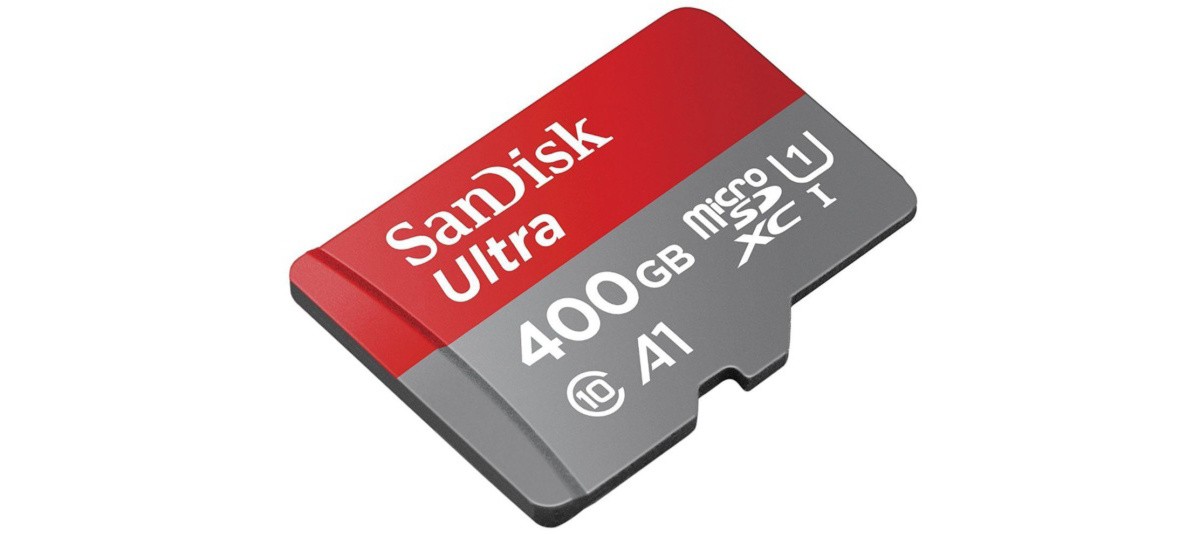
Deals: Black Friday 2018 Is The Best Time To Pick Up A 400GB Micro SD Card For Your Nintendo Switch

Some people say Black Friday is a load of old rubbish, with many retailers positioning products as great bargains when in actual fact they have been cheaper previously.

The amusingly named CamelCamelCamel is a great place to research potential purchases on Amazon, as they keep track of all the price fluctuations. We were pleasantly surprised to see that the current Black Friday deal on a SanDisk Ultra 400GB Micro SD card is now better than ever before.

Looking at how the price has dropped over time, we can see that this mighty micro SD card cost around £228.49 for quite a long time. The price has steadily been tumbling since then, and this Black Friday we’re getting the best deal ever at £82.99. That’s like 20p per GB!

In North America, we see the same Black Friday price madness. This amazing micro SD card is the deal of the day priced at $79.99 (was $249.99).

If you’re anything like us, you’ll probably have an ever-expanding Nintendo Switch digital library. A 400GB micro SD card will likely meet your needs for the lifetime of the system.

You can pick one of these bargain micro SD cards here:

Let us know if you have taken the plunge with a comment below.

Posted on Leave a comment

Review: Ms. Splosion Man (Switch eShop)

As bizarre a notion it might seem now, once upon a time Microsoft was the home of burgeoning indie talent. Xbox Live Arcade brought countless hits and GOTY contenders, and helped the Big M foster some remarkable partnerships and exclusives as a result. Twisted Pixel was one such studio and one of its biggest hits, 2009’s Splosion Man, proved a real digital highlight in the days of the previous generation.

Now that the Austin-based developer is fully independent and its exclusivity deals have expired, it’s bringing its own brand of hectic platforming to new platforms, namely Nintendo Switch. Interestingly, it’s not Splosion Man that’s getting the port treatment, but its 2011 sequel, Ms. Splosion Man. However, much like how Ms. Pac-Man showed her iconic male counterpart how things were really done back in the ’80s, the more explosive of the species ups the ante with levels that are faster, more complicated and far more challenging.

As her name suggests, Ms. Splosion Man is a being of pure kinetic energy. Rather than being able to jump (a rather important ability for any platforming heroine), she can ‘splode’ in order to both destroy scenery and leap off the ground. You can chain up to three of these elevating moves at once, but you’ll need to touch back down on the ground – or slowly slide down the side of a wall for a few moments – to recharge your innate powers.

As a 2.5D-style platformer, Ms. Splosion Man resembles Trials – another indie hit that reached super-stardom thanks to the same development scene on Xbox 360 – mainly in the sheer speed and acrobatic flair each level demands. As a newly-created creature, the titular character is a ball of rabid excitement, so she speeds through every level with wanton abandon. The entire time she’s babbling like someone on the world’s biggest sugar rush, quoting films and other snippets of pop culture as she goes.

She’ll somersault, pull quirky poses in mid-air and tap-dance at speed as you control her through 50 different levels. She manages to be more excitable and energetic than her male forebear, which is quite something if you’ve ever had the chance to play the first game. Her effervescent nature is indicative of the game as a whole; a brightly-coloured and silly experience that never stops throwing you into increasingly stranger locales (in which you’ll explode, naturally, and cause plenty of mayhem).

You shouldn’t let that silliness lull you into thinking this will be an explosive walk in the park, however. It’ll take a little while to gauge the optimum moment to use each of your three successive splodes to reach the most height, how you can use walls to change direction and harness momentum to leap across seemingly impossible gaps. When you add in the myriad extra elements that facilitate your high-speed platforming – such as switches that move platforms the longer you stand by them and barrels that send you flying even further should you splode them – things get really tricky, really fast.

There are also lots of over-the-top boss battles that will test your ability to string splodes together, both to evade giant attacks and wear each monolithic baddie down. The opening boss – a giant robot hell-bent on containing your explosive antics – is atypical of Ms. Splosion Man’s set-piece battles as you use your splodes to outrun its gigantic hands and make the most of handy electrical zip-lines to launch yourself at its optical weak point. These memorable encounters also help punctuate its high-speed levels nicely.

Alongside the single-player campaign, the Nintendo Switch port of Ms. Splosion Man also includes support for multiplayer. You can play locally with up to three other players on a single console, or connect via wireless to another Switch. You can even play online, so you can compete with total strangers in some multi-coloured destruction. Oh, and if you want some multiplayer action but you don’t want to actually play with other people, you can utilise the ‘2 Girls, 1 Controller’ mode and use either analog stick to control two exploding heroines at once.

As a port, Ms. Splosion Man is slick and slowdown-free experience, with the one-button setup suiting the feel of the Joy-Cons down to the ground (especially if you’re playing with a split one in multiplayer). This is, after all, a seven-year-old former XBLA game so it’s not going to push Switch too hard, but Twisted Pixel has still done an admirable job of porting over a game that still feels fun, fresh and exciting all these years later.

Conclusion

As with a good proportion of ports, Ms. Splosion Man is another old game that’s been given a new lease of life on another indie-friendly console. Free of its Xbox 360 exclusivity, Ms. Splosion Man’s fast and frenetic platforming and over-the-top boss fights hasn’t lost a step since 2011 and with support for all manner of single-player and multiplayer options it’s still got plenty of legs here and now in 2018. With a clean and smooth port on Switch, this digital delight will feel right at home on the eShop.

Posted on Leave a comment

Pokémon GO Finally Increases Storage To 2000, All Community Day Stars To Return For One Huge Weekend

Niantic has just announced a small avalanche of news for Pokémon GO, introducing a feature which fans have been desperate for for some time, and celebrating the success of this year’s Community Day events in style.

First up, the news so many have been waiting for: your Pokémon storage can now hold up to 2,000 of the lovely little critters to help keep hold of all your favourites. Every single social media post from Niantic over the past few months has been bombarded with fans asking for this feature, so hopefully this will please an awful lot of players.

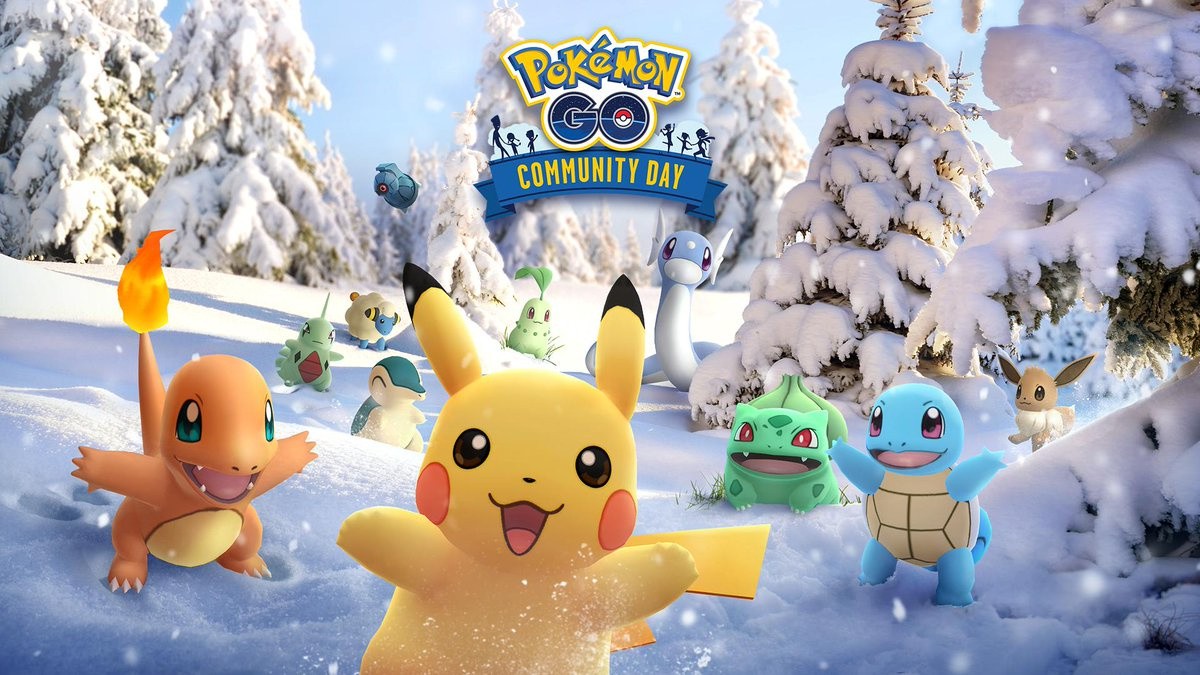
The Community Day news comes in the form of a big celebration, with every Pokémon species featured during past events returning once again for a special weekend-long event. Things will be kicking off from Friday 30th November to Sunday 2nd December, and all of the featured moves from each Community Day will also be available. You can check out some more details below:

Event Date + Time
November 30, 2018, at 1 p.m. PST to December 2, 2018, at 11 p.m. PST

Event Features
Bulbasaur, Charmander, Squirtle, Pikachu, Eevee, Dratini, Chikorita, Cyndaquil, Mareep, Larvitar, and Beldum will appear more frequently in the wild.
– Special moves previously featured during Community Day events in 2018 will be available again during the weekend!

Special Bonus Date + Time
Europe, the Middle East, Africa, and India: December 1, 2018, from 10:00 a.m. to 1:00 p.m. UTC (GMT +0)
– The Americas and Greenland: December 1, 2018, from 11:00 a.m. to 2:00 p.m. PST (GMT −8)
– Asia-Pacific: December 2, 2018, from 12:00 p.m. to 3:00 p.m. JST (GMT +9)

The bonuses mentioned above (which are only available during those set times) include double catch XP, double catch stardust, and double incubator effectiveness. You’ll also notice that the Legendary Pokémon Cresselia has recently been introduced as a new Raid Boss, so make sure to team up with some friends to snag that one soon.

Are you happy to see the storage increase? Will you be catching these special Community Day Pokémon? Let us know below.

Posted on Leave a comment

Deals: The Best Black Friday Nintendo Switch Bundle Has Been Revealed

The Black Friday deals are really starting to heat up now. Many eager consumers are waiting to find the best Nintendo Switch bundle deal this Black Friday, this deal from UK based retailer Very might well be as good as it gets this year.

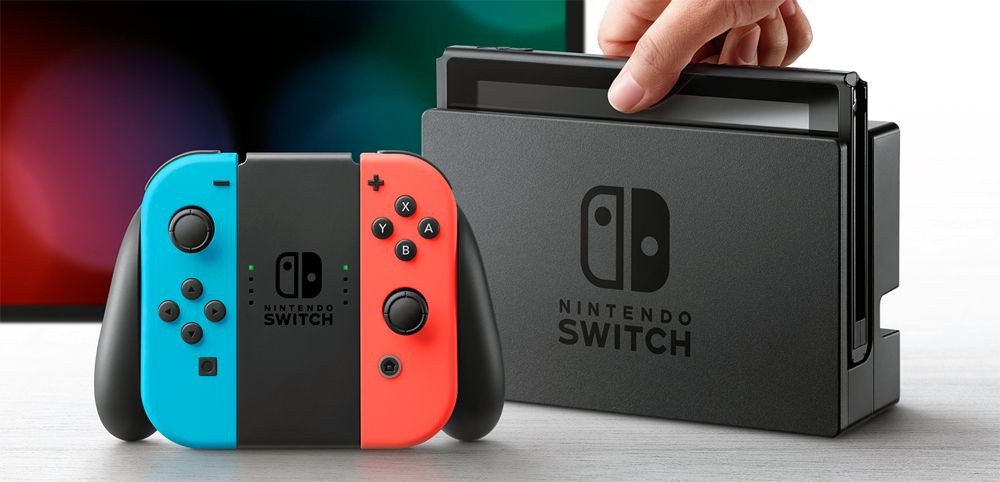
For only £299 you’ll get a neon Switch (which normally retail for £279) bundled with the newly released Pokemon: Let’s Go! Pikachu and the excellent Mario Kart 8 Deluxe. It’s quite the steal we have to say, a whopping £60 saving.

We’re sure that other retailers will have their own answer to this mega-bundle soon. So if you’re not crazy about Pokémon and you’ve played Mario Kart to death already, then here are some more deals which might tempt you:

Let us know if you’ve found an amazing deal on a Nintendo Switch bundle this Black Friday with a comment below.

Posted on Leave a comment

Chinese Bureau Receives Plaque From Nintendo For Enforcing Copyright Laws

Nintendo is serious about protecting its intellectual properties. Recently, the Japanese company has cracked down on trademark and copyright infringement in different locations around the globe. In an attempt to spread the message far and wide, it has now awarded a plaque to the Shenzhen Bureau for “protecting copyrights” and the rights of various companies. Here’s a picture of the special moment, courtesy of Chinese Nintendo:

As noted by Nintendo Soup, Nintendo has no official presence within mainland China but is still aware of the ongoing problems in the country when it comes to video game piracy. It’s known to have countered this previously by protecting certain brands with trademarks.

Despite China’s own advancements over the past number of years – with the emergence of globally recognised tech manufacturers and software developers – piracy continues to create problems. As mentioned in the above tweet, the bureau promises the local government will continue to strengthen copyright protection and create an environment that not only respects IP but also encourages innovation.

Do you think Nintendo’s efforts here will help in the long run? Tell us below.

Posted on Leave a comment

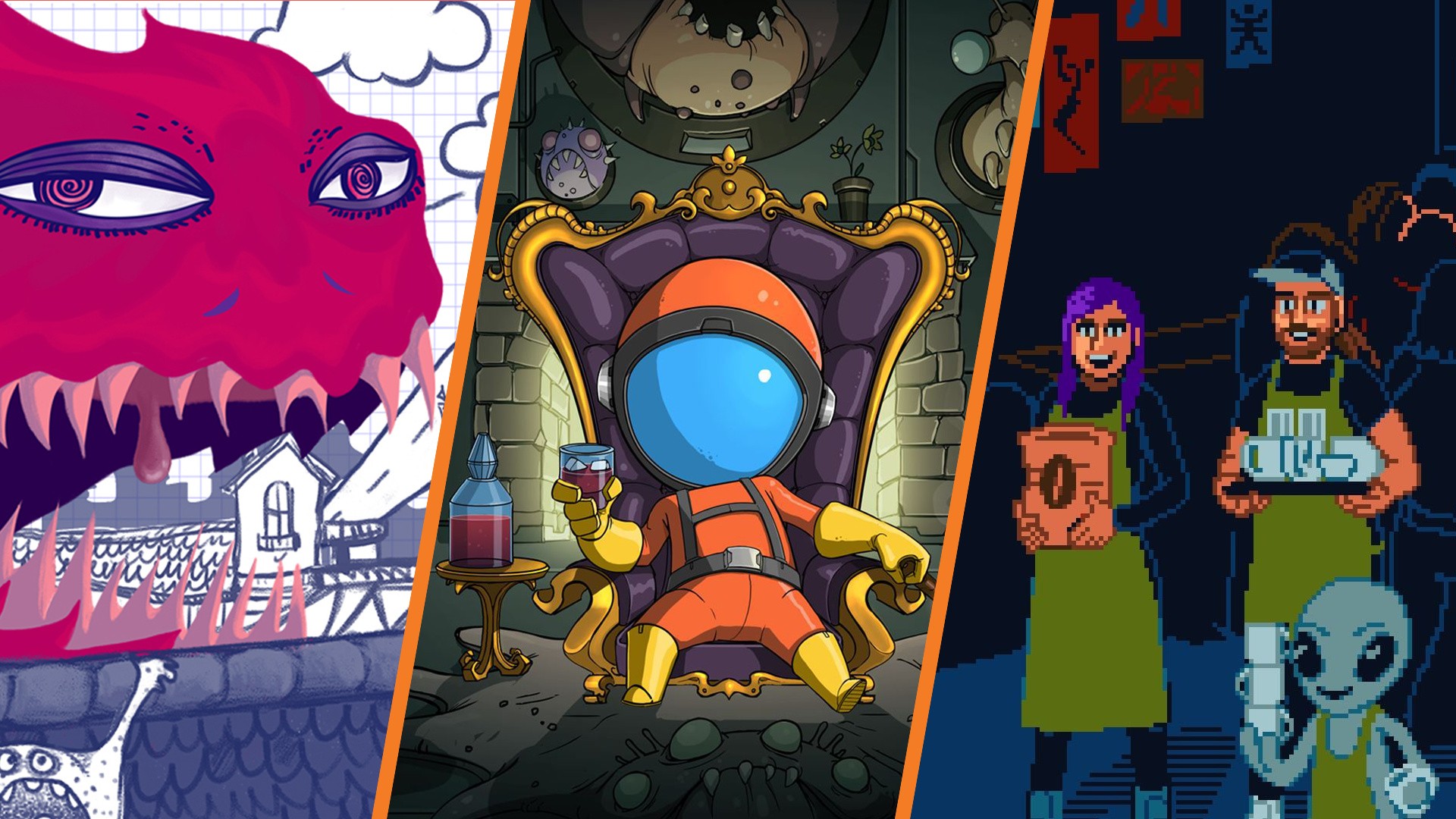
Nindie Round Up: The Bug Butcher, Escape Doodland, RocketsRocketsRockets, Coffee Crisis And 911 Operator

Those of you who have been visiting Nintendo Life since the days of the Wii and Wii U will have no doubt noticed that we’re struggling to cover all of the content that hits the eShop each week. While we used to review every single game that arrived on the Wii U and 3DS, the avalanche of games coming to Switch means we simply can’t hope to keep up. With that in mind, we’ve decided to introduce the Nindie Round-Up, which – while not totally solving this problem – should help us give wider coverage to more eShop games.

In each Nindie Round-Up, we’ll give short impressions of various eShop games to help you make up your mind about a potential a purchase. Each entry comes with a ‘yay, nay or maybe’. If a title is worth a look, it’ll be given the coveted Thumbs Up. If it isn’t so hot and might not be worth the time it takes to download, it’ll get a Thumbs Down. If it’s up in the air and could appeal to a niché crowd, it’ll get a Maybe.

Hopefully that all makes sense – now let’s take a look what this week has to offer…

A standard arcade shoot-a-thon, The Bug Butcher has you slaying hordes of ugly enemies resembling rejected Pokémon designs within a time limit, allowing you to take only a few hits. It’s standard wave-based fare, though the lack of an option to shoot horizontally as well as vertically is a bit of a surprise when you first boot up. After a few minutes of play, however, you’ll get the hang of it and find a simple shooter that grows appropriately harder as you progress and the hordes get increasingly larger, bigger and tougher. You’re of course armed with an array of power-ups which are generously dispensed, especially on easier difficulties. A particular joy is getting the laser beam that shoots straight up, allowing for a quick sweep of the room. After a certain number of kills, you’ll be rewarded with a brief ‘God’ mode, bestowing invincibility and a faster strain of fire upon you. The Butcher also has a sweet dash at his disposal, which can be useful for tight spots.

The game modes are split into three sections, with the section dubbed ‘Arcade Mode’ strangely acting as the main story. The other two modes are what you’d commonly refer to as an ‘arcade’ mode, here dubbed Panic Mode. It essentially has you fighting waves with no context, instead inviting you to make your way through a variety of different stages. The third is Panic Mode again, but with co-op, which is pretty much unchanged from the base mode, except with two players.

Presentation-wise, it’s ok, but not great. The art style harkens to Saturday morning cartoons, but the alien designs are bland and unoriginal. It’s also jarring how the enemies are generic aliens/monsters rather than resembling the titular bugs. The sarcastic dialogue between the Butcher and the Scientist gives our protagonist a little more personality and the Animal Crossing-inspired chibi sounds they make in place of words renders it that bit more amusing. Overall, The Bug Butcher is enjoyable but forgettable.

Verdict: Maybe

Well, you can’t say it doesn’t do what it says on the tin. RocketsRocketsRockets is a simple but surprisingly addictive competitive arcade shooter with a really pretty visual style, a banging soundtrack and great multiplayer action. After choosing your rocket, your goal is to land three hits on your opponent(s) by utilising your artillery of forward-shooting missiles and rear-facing mines. You have the ability to perform a small boost which keeps action frantic and is further complemented by the modest art style; the frame rate never falters, keeping gameplay sublime and smooth.

Multiplayer is where the action really heats up, however, leading to intense confrontations and rematches that’ll have you saying ‘just one more game’ several times over. Using one Joy-Con is simple and effective and due to the rudimentary arcade style, almost feels preferable to using both.

The game unfortunately doesn’t offer many modes and the basic deathmatch mode in a shallow pool of stages is all you’re going to get. There are single matches against the CPU, though it’s clear this is made to be played with friends. The only other modes are a standard tournament set up for multiplayer and ‘Zen’ mode. This is a bizarre yet pleasant addition that has you doing… well, nothing. You’re free to roam around a map and use your stream to literally colour in the sky while listening to the tranquil soundtrack. It’s a strange addition that proposes itself as a meditation tool, of sorts. You can even be zen with a friend. The option to change the music on the menu and skip between tracks is also a nice bonus.

The strange addition of Zen mode, a pleasing aesthetic and a smooth menu interface give RocketsRocketsRockets far more personality than you’d think its generic title would afford. Simple, enjoyable matches make this a great pick to play with friends, despite a weak single-player offering.

Verdict: Thumbs Up

An unexpected gem, Escape Doodland is an on-rails platformer that has you constantly outrunning a kaiju-sized creature by the power of sheer determination and flatulence. Its premise is simple, its art style hilarious and its gameplay devilish. You play as a chap called Steve, though other characters are available from the shop following the successful completion of levels and the cashing in of beans, matches and other collectables found during gameplay.

Tongue-in-cheek is the name of the game here, with the silly, crude art style being matched by an equally mischievous sense of humour. The game establishes itself by offering you the difficulty levels of ‘hard’ and ‘harder’, delivering on that promise thoroughly. A slightly mistimed jump, fart or dash fart can spell a frustrating end, taking you back to either the start of the level, or one of the fairly distributed checkpoints. This becomes the game’s main issue, however, as deaths can sometimes feel a little cheap and frustrating, rather than deserved. As a result, the levels can become an exercise in trial and error, as you sail through the earlier parts you’ve nailed in order to make it back to that one jump that got you.

Despite utilising a rudimentary list of controls, the charming and irreverent tone of Escape Doodland makes it really quite entertaining and genuinely funny. The touch of having Steve shout ‘no’ in his silly high voice as the monster closes in for the kill is delightfully grim. Despite the slightly frustrating elements, Doodland ‘escapes’ the clutches of mediocrity thanks to its smooth physics, subtle wit and memorable art style.

Verdict: Thumbs Up

Fans of both the decaf latte and the beat ‘em up genre can rejoice, thanks to Coffee Crisis. Taking control of either Nick or Ashley, both of whom are skilled baristas, this offering from Mega Cat Studios (previously available on the Sega Mega Drive / Genesis) has you taking on hordes of enemies with special moves aplenty to navigate the insane, self-referential plot. The premise includes aliens, the deep web and coffee bean-based skills and power-ups, just to name a few. The narrative is told in short cutscenes either spliced with in-game action or as still images, harkening back to the 16-bit style.

Gameplay wise, it’s what you’d expect from a beat ‘em up. It plays very similarly to retro titles like Golden Axe or Streets of Rage, with stilted, stiff walking animations, jumping and an attack button that can be charged for a greater hit. There are also the aforementioned special moves which, again typical of the genre, can be used at the cost of a fair chunk of health. Also typical is the arcade-level difficulty, which isn’t held back. The curve may be steep, but even for those new to beat ‘em ups, it’s very easy to get to grips with the controls and after a while, you’ll have adjusted to its ‘tough love’ approach.

Coffee Crisis is a great throwback to arcade beat ‘em ups of the early ’90s. Its 16-bit aesthetic screams retro Sega, though we would’ve preferred a traditional chiptune soundtrack truly reminiscent of the Mega Drive, rather than the heavy rock score the developers have opted for. This doesn’t take away from the polished style and traditional gameplay, however. Combined with the quirky story and indie humour, this promises a great time.

Verdict: Thumbs Up

Perhaps the most realistic police game ever, this simulation puts you behind the camera and the phone, allowing you to take calls, instruct the emergency services and prioritise incidents based on their severity. It’s all done from a top-down perspective of the map, showing you where your units are patrolling, with blue, red and white incidents popping up over the course of a game, requiring specific services for each.

The gameplay is good and allows a steady build of tension as the night progresses and more and more incidents appear, with limited units to dispatch. You must make the call (literally) and decide whether the cat stuck up the tree is of higher priority for the fire brigade than the burning house down the road. Of course, rejecting an incident will hurt your reputation, so it’s a balancing act. Incidents, however, are not just limited to flashing icons on the screen, as you must also take calls and handle them appropriately. The calls are incredibly lifelike and encourage you to actually act responsibly; whether that be scolding an irresponsible pocket dial, or trying to decipher information from a man slowly losing breath while stuck underneath a car. It doesn’t glamourise or make light of the situations it presents, which is both admirable and educational. However, this does make the game a tad repetitive. After you’ve been playing for a while, you’ll have likely taken the same call a handful of times.

Presentation wise, it’s a bit dull. It’s a very basic map screen, with stock generic icons representing each of the three services. Their paths are represented via lines on the screen which are incredibly thin, so it might be preferable to play this on the TV, rather than the Switch screen. That also goes for the audio, which can be a little hard to hear when projected from the console speakers. On the whole, however, 911 Operator is a fun way to pass the time and its realistic depictions of how to use the emergency services make it all the more commendable. It is, however, repetitive and may not be picked up again after an initial play-through.

Verdict: Maybe

Posted on Leave a comment

Review: Astebreed – A Fast-Paced Blaster Which Survives The Transition To Switch Mostly Intact

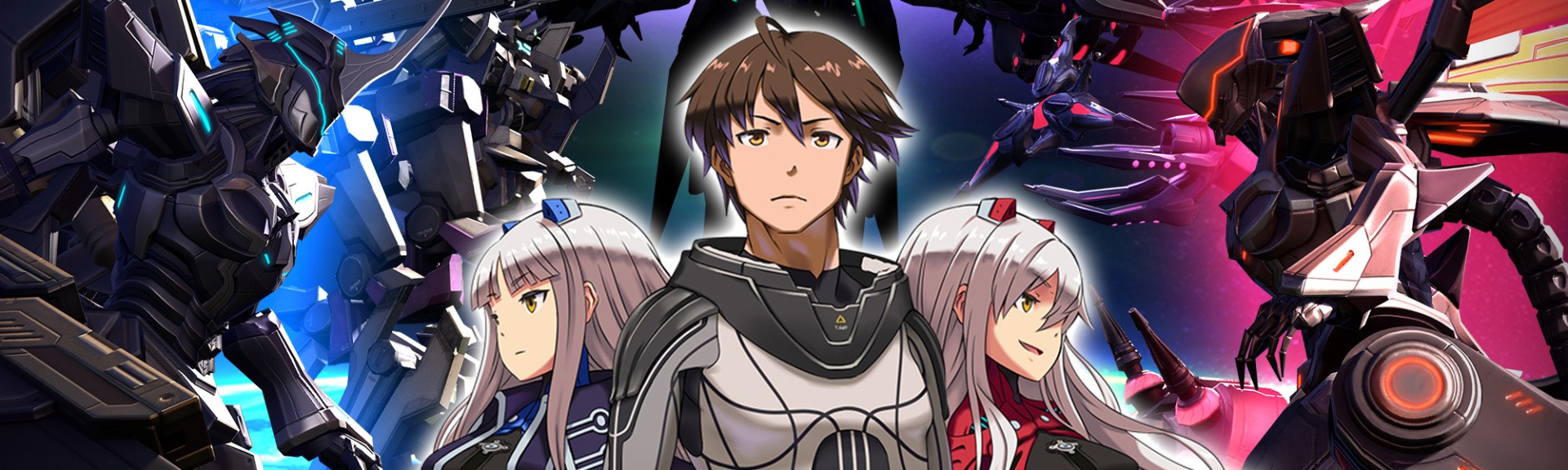
By now, we’ve learned to accept that fact a good proportion of the ports on Nintendo Switch are games that released elsewhere years ago. Sure, it often feels like a late-to-the-party cash-in at times, but there are plenty of Switch owners who have likely never played these games previously, having only owned Nintendo-made hardware. And, of course, it always helps if said older title has something about it to help it stand out along its fellow ports. Enter Astebreed, a 2014 shoot-’em-up that mixes break-neck speed, bullet hell mechanics and a 2.5D plane that’s constantly shifting the goalposts.

Its dynamic camera starts off innocently enough, with your otherworldly mech thundering through an alien stronghold in a side-scrolling affair. Enemies fly towards you in synchronised swarms, swirling in the foreground and background before returning to your plane so you fire your blasters or swing your giant sword at them (because who pilots a Gundam-esque suit without an equally gigantic blade?). Suddenly, the camera shifts and now you’re fighting upwards, Ikaruga-style. Then the camera shifts over your shoulder, turning Astebreed into an on-rails third-person shooter.

Mixed with the sheer speed of each level and the impressive amount of action that’s thrown at you from the moment you boot up the game, this constantly shifting perspective gives Edelweiss’ hit shmup a real sense of personality and distinction – which really helps considering just how many other shooters of this ilk are available on the eShop right now. And when we say sheer speed, we’re not kidding. Astebreed moves at a blistering pace, hurtling you through vortexes and cityscapes as you unleash all manner of weaponry on all manner of alien beasts.

There’s a story about a pilot called Roy and humanity’s attempt to hold back the constant threat of an extraterrestrial horde, but it’s pretty rote by Japanese sci-fi standards and the lack of an English dub means the tiny dialogue boxes that pop on-screen during battle are almost impossible to follow since your attention is entirely focused on total chaos unfolding before you. Thankfully, the gameplay itself mostly manages to make up for the narrative tropes going on in the background.

Your powerful flying mech – the X-Breed – comes outfitted with some laser cannons you fire with ‘ZR’, as well as the aforementioned mega blade that can block incoming enemy fire and be used to dash in and slash foes for some up-close-and-personal negotiation. Of course, this being a shooter, you’d be tempted to hang back and let your guns do the talking, but the developer is wise to your ranged ideas and weaves in enemies that can only be dealt with via a swing of your trusty sword. It’s a neat way of urging you to dash in and away at opportune moments, using gaps in enemy fire to level the playing field.

You can unleash a powerful slashing attack that charges over time, launch a barrage of missiles by flicking the analog stick and lock onto any foes in your immediate vicinity by clicking and releasing the same stick. Thankfully, the Nintendo Switch port benefits from ‘Arrange mode’, which remaps the buttons to better suit a controller. Since there are just so many weapons to juggle, and so many foes to track on screen, we found playing in docked mode with a Pro Controller the best way to experience Astebreed.

The Nintendo Switch port offers a decent iteration, but your enjoyment of its wares will depend entirely on whether you’ve played it before on another platform. If you’re new to this over-the-top shoot-’em-up, you’ll likely appreciate its fast-paced action, over-the-top boss battles and bullet hell levels. Performance holds up for the most part, but when things get really busy, the frame rate does start to chug.

If you have played this before, be it on PC or PS4, you will notice that Astebreed has taken a noticeable graphical downgrade to get it up and running on Nintendo Switch. Assets aren’t quite as detailed and the lighting system isn’t quite as striking as it is on other platforms, but bar those aforementioned occasional performance issues, it’s a pleasantly robust port of a four-year-old game. If you haven’t played Astebreed yet, and you love your shmups, its debut on Switch offers a fine place to experience it.

Conclusion

Nintendo Switch has plenty of shmups to its name, so Astebreed finds itself rubbing shoulders with some of the best retro and modern examples the genre has to offer. With its shifting planes and the constant switch between ranged and melee combat, it manages to offer just enough extra spice to help it stand out, although the lack of an English dub makes its story nigh-on impossible to follow unless you understand Japanese. Still, developer Edelweiss has made an effort to make its previously unwieldy controls fit the confines of the Switch’s control interface – although you really should invest in a Pro Controller if you want to enjoy Astebreed at its best. It’s not a masterpiece then, but remains worthy of investigation if you love the genre.

Posted on Leave a comment

Attention All Pokémon Let’s Go Poké Ball Plus Owners: For The Love Of God, Don’t Ever Delete Your Save

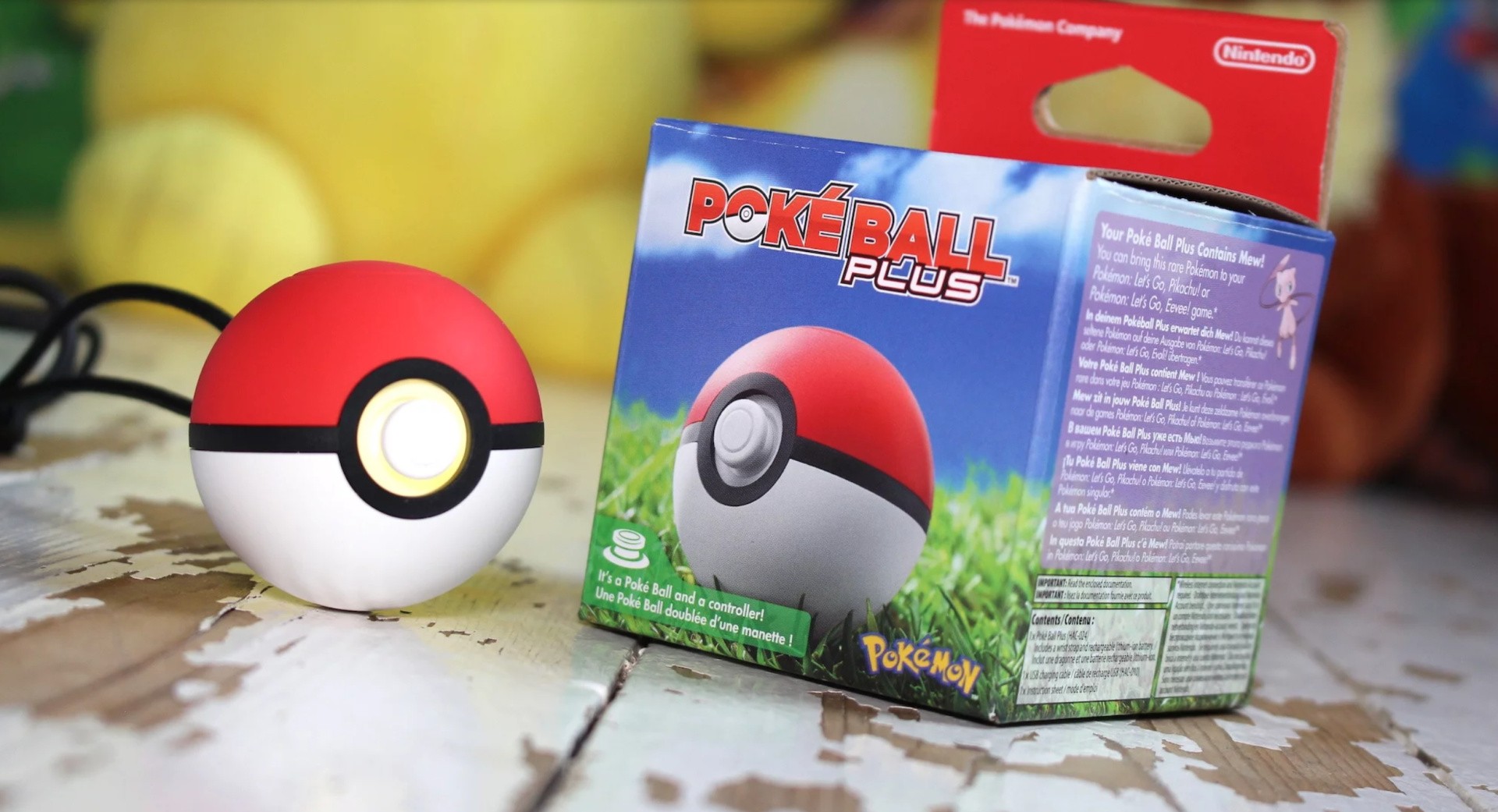
As we’ve already covered, the only way to get the legendary Pokémon Mew in Pokémon: Let’s Go is to buy the Poké Ball Plus device (brand new, we should add) and transfer the ‘mon contained within.

It’s important to remember that this is very much a one-time deal; once Mew has been transferred from that particular Poké Ball Plus, it can never, ever be accessed again.

In case you needed proof of this, Nintendo Soup has reported that one user, who was unhappy with the transferred Mew’s stats, decided to delete their save file in the expectation that they’d be able to transfer Mew a second time and perhaps get better stats.

As you might expect, they were less than happy when they realised the Mew inside the Poké Ball Plus had gone for good.

Here’s what Nintendo says on the topic:

Mew can only be transferred ONE TIME, into one copy of Pokémon: Let’s Go, Pikachu! or Pokémon: Let’s Go, Eevee!.

Once it has been transferred to a game, it will no longer be available on the Poké Ball Plus to transfer again to a different game.

Deleting a save file with Mew in it will also delete Mew. If you have deleted a game with Mew, you will not be able to get Mew a second time on a new game from the same Poké Ball Plus.

The only solution, should you do this, is to buy a second Poké Ball Plus. Gulp.

Posted on Leave a comment

The Eevee Tamagotchi Will Feature A New Evolution For The Popular Pokémon

Edit: We’ve now been told by our Pokémon expert Joe Merrick that reports that this special Tamagotchi will feature an exclusive new evolution are actually incorrect:


Original Story: Not so long ago, we reported on rumours that the unthinkable was about to happen – two ’90s icons, Pokémon and Tamagotchi, were joining forces.

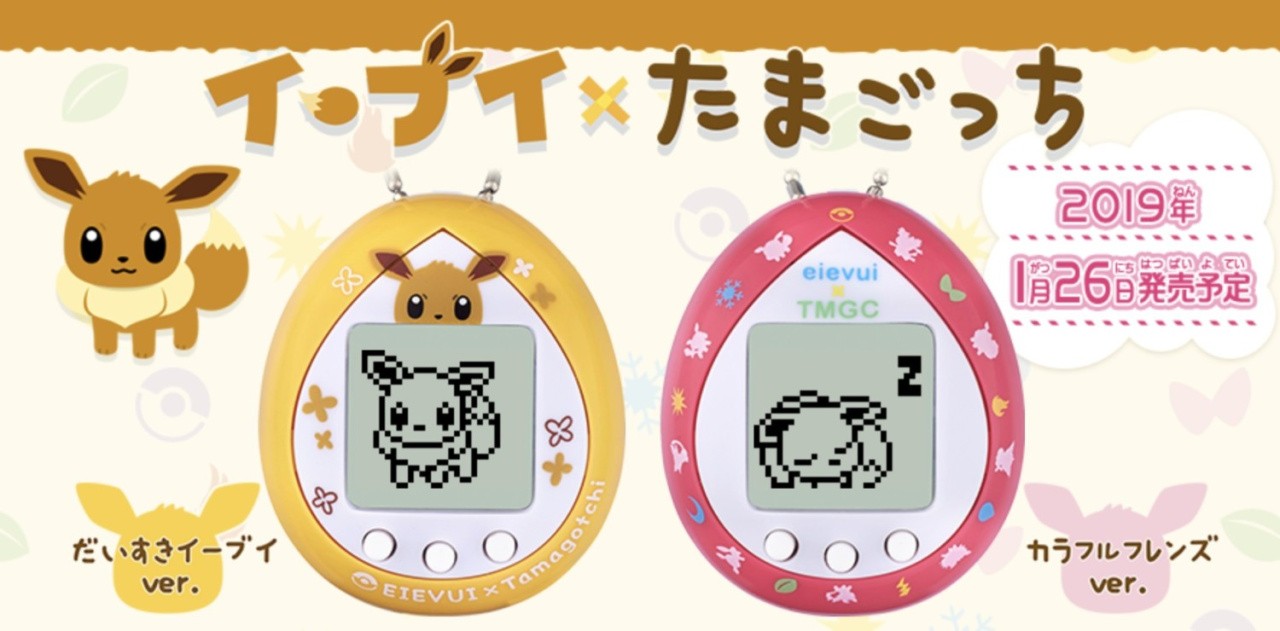
We’ve now had official confirmation from Japan that this is indeed the real deal, and the Eevee Tamagotchi will launch in Japan on January 26th next year.

As was previously reported, the device will come in two flavours: “I Love Eevee” and “Color Friends”; both have the same core features but showcase different case designs.

The objective is to raise an Eevee and make it evolve into one of the famous variants of the Eeveelution family, and you’ll be able to do the usual Tamagotchi activities, such as feeding, playing and other fun stuff.

The Eevee you look after will be able to express itself with a wide range of emotions, which will help you to form a bond with it over time – a bond that is handy to have when it starts beeping at you in the middle of a tense business meeting.

The big news here for Pokémon fans is that the device will have a special, exclusive evolution that can only be found on this Tamagotchi.

There’s no news on this coming to the west at present, but given that Bandai recently made a big deal about the 20th anniversary of Tamagotchi – and the fact that Pokémon is huge the world over – there’s a chance it could make it outside of Japan.

Posted on Leave a comment

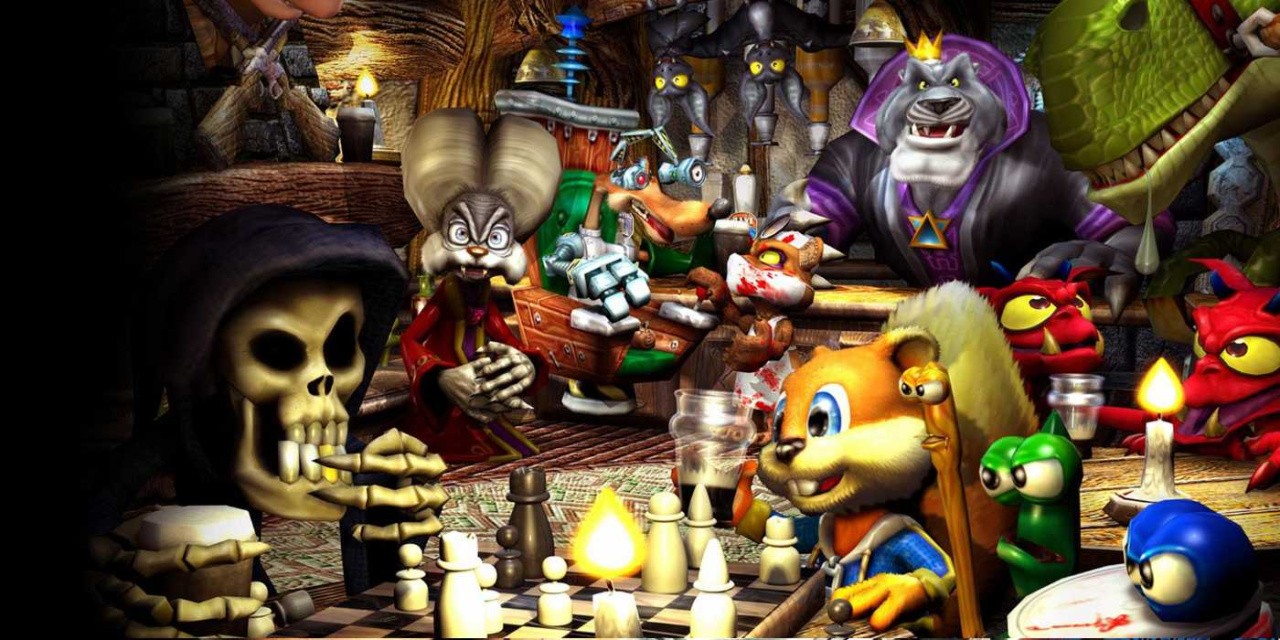
Chris Seavor Reveals He’s Working On A Spiritual Successor To Conker’s Bad Fur Day

Former Rare staffer Chris Seavor is someone that Nintendo Life fans should hopefully be pretty familiar with; not only was he the creative force behind the seminal N64 title Conker’s Bad Fur Day, but – along with fellow Rare alumni Shawn Pile at Gory Detail – he’s also spent the past few years working on The Unlikely Legend of Rusty Pup, which was due to arrive on Wii U and 3DS but is now slated for a Switch release in the near future (it launched on Steam recently).

Speaking to Gamesindustry.biz, Seavor reveals what his next project will be, and it should have Rare fans pretty excited. He explains that his original plan had been to resurrect Urchin, a dark fantasy title that he had worked on at Rare that never saw release.

However, when he posted a tweet jokingly saying that if people bought Rusty Pup on Steam it would help fund a new Conker outing, he decided to alter the brief a little:

It was a sort-of joke but the response was overwhelming. I’ve been quite resistant to that sort-of thing for a while. I like to try new things. But I gave it some thought, and thought that maybe we could do a [Conker successor].

While the game naturally won’t feature Conker himself as that IP is owned by Rare and Microsoft, Seavor hopes that people will see the same DNA in this new project – although it might not be as obvious as another game created by former Rare employees:

With Yooka-Laylee, [Playtonic’s] idea for a spiritual successor was very literal, which was fine. But I think I could do something that is Conker in essence, but is actually something completely new. I’ve worked something out that people would see and think ‘I can see Conker’. There will be little characters that are a bit bizarre, with cartoon violence… comedy, but a lot darker. We’ll do movie parodies, but we’ll focus on horror films. It will have all these Conker-like elements, but don’t expect an anthropomorphic squirrel, or cute visuals. People might see it and go ‘that’s not Conker’, but I think they’ll get what I’m doing.

He adds that he hasn’t had to throw away all of the work he’d done on the ‘Urchin’ project, either:

I’ve got quite a lot of the work done in terms of preparing for the dark fantasy game. But I can actually adapt a lot of what I’ve already done. You know when things coming together perfectly in your head? Sometimes when you try to add things together, it’s difficult to see how it can really work. But with this, straightaway, I could see it. It’s super early days. At some point, we’ll have something to show. I think people are going to love it and they’ll definitely see the Conker in there. We are going to satirise the games industry a bit, so watch out. I might upset some people. But that’s fine.

The most exciting thing is that Seavor hints this new game could reunite him with other ex-Rare staffers:

Depending how much money we make out of Rusty over the next year, that will feed into what we can do with aspects of the next game. As an example, we could bring in guest musicians. I’ve already asked Grant [Kirkhope, former Rare composer] about a section of the game that I think would fit him perfectly. That’s the kind of thinking in terms of how we spend our money. But the overall cost will be what it is. I do all the graphics, Shawn does all the code, we have another coder who comes in to help out… that’s it.

Regarding Rusty Pup, Seavor admits that it’s been a struggle to get the game in front of both journalists and players:

We launched it with very little fanfare… or the most we can get with a marketing budget of 5p. I’m most comfortable tinkering with gameplay. When it comes to actually trying to sell it, it’s a nightmare. I just don’t enjoy it. I dread it, actually. It is much easier to make a game than to sell one, at least as far as I can tell.

It’s hard to get people’s eyes on stuff. We got a mailing list for magazines and websites, because we wanted to get some reviews. I just want someone to look at the game… good or bad, I’d rather have bad reviews than no reviews. So we sent out all these codes. Well Shawn did, I’m not actually allowed to interact with people [laughs]. We sent out nearly 80. And aside from Out Of Office responses, we didn’t get a single ‘thanks for that, we’ll have a look’. We did get two in the end. We had [Gamesindustry] and Wesley from Eurogamer. But otherwise, we didn’t get a single response. It’s kind-of irksome, but I suspect journalists get these things all the time.

[Editor’s note: We’ll forgive Chris’ lapse of memory here because he makes a damn fine meat pie, is a great host and has an adorable dog – he actually gave us a Steam code as well, and we’ll be going hands-on with the PC version soon]

Have you played Rusty Pup on PC? Or are you waiting on the Switch version? What do you make of Seavor’s revelation that he’s making a spiritual successor to what is arguably his most famous game? Let us know with a comment below.