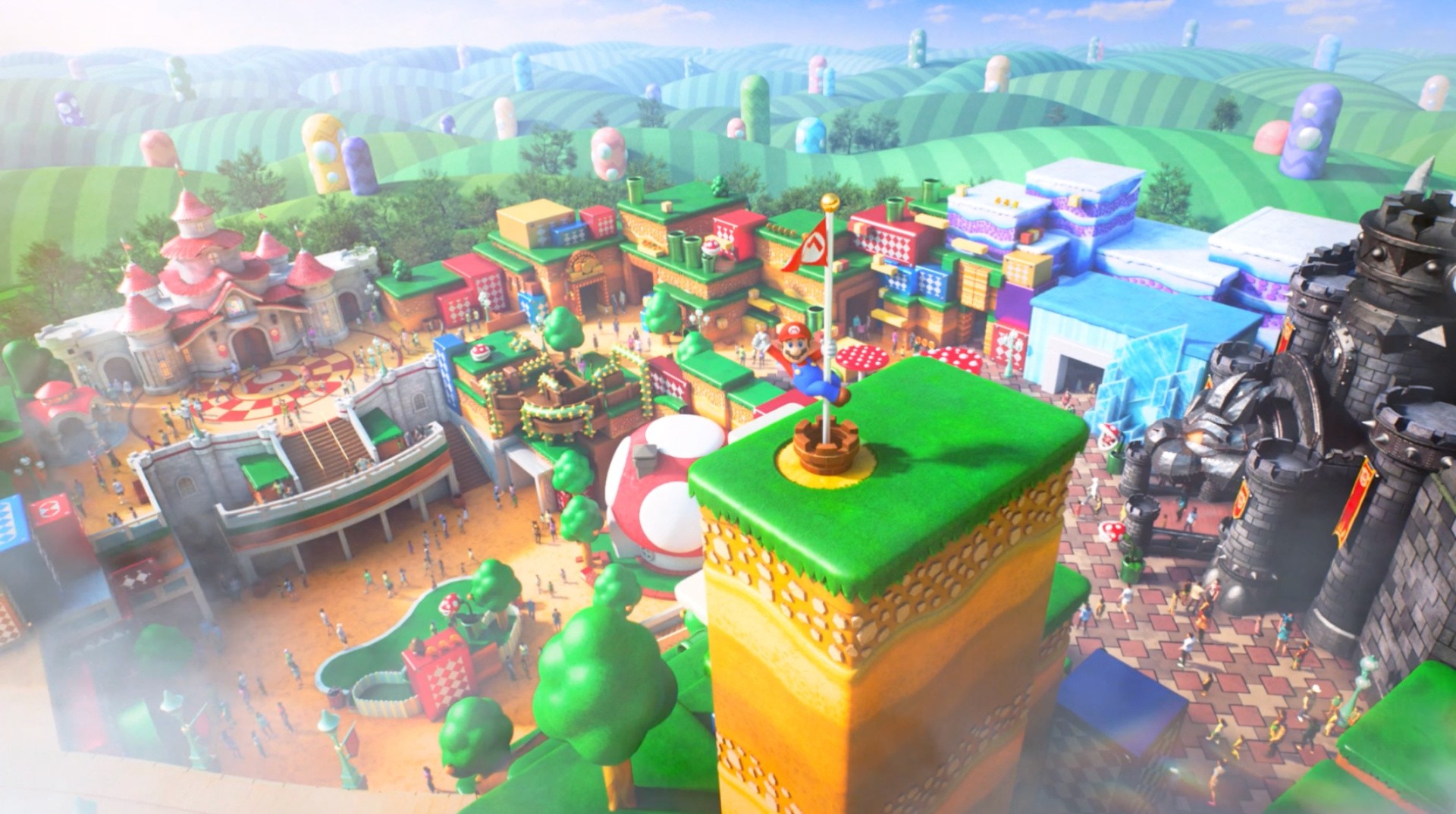
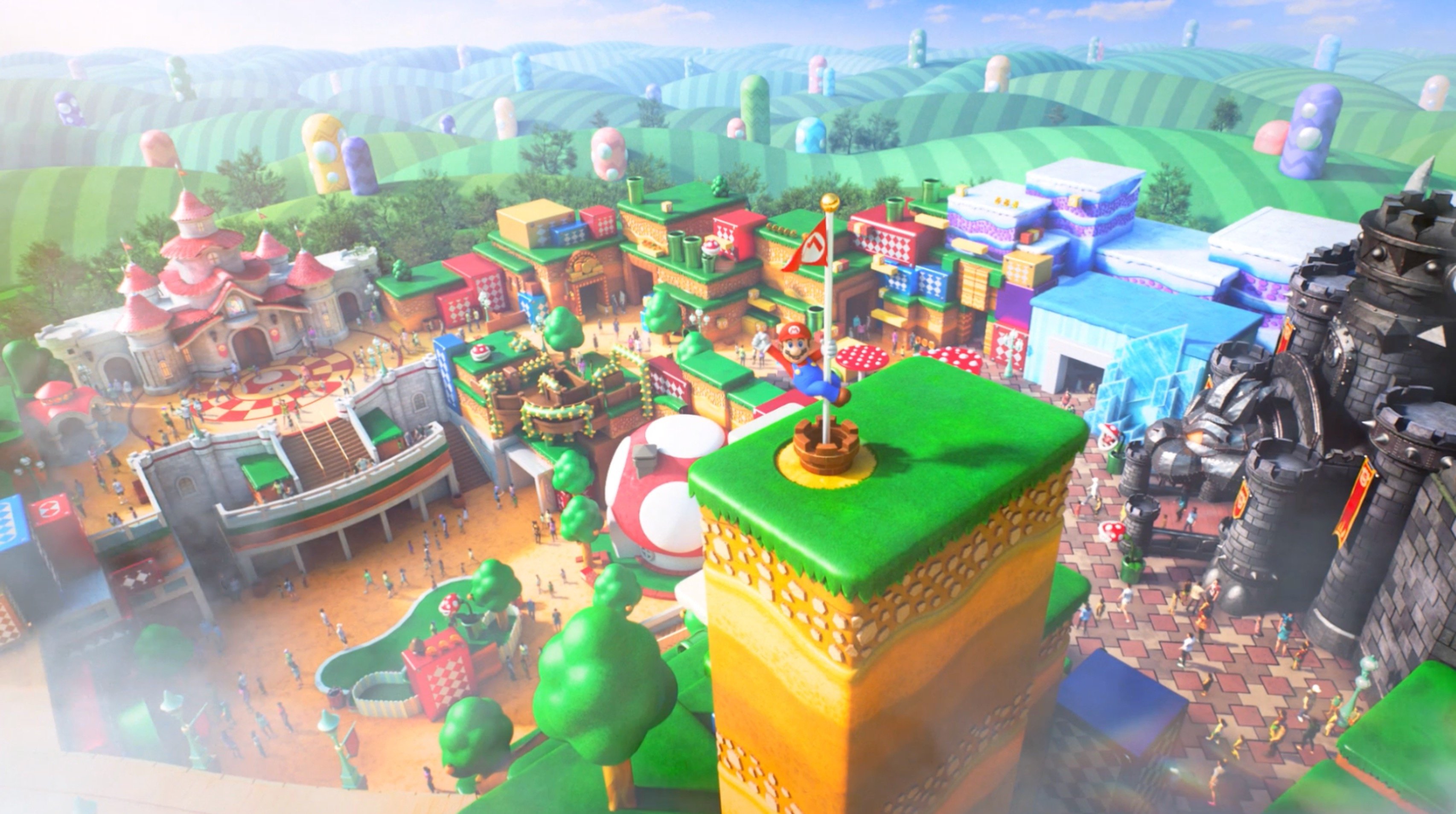
Since its initial reveal way back in 2015, not a whole lot has been said about Nintendo and Universal’s joint Super Nintendo World project. At the end of 2017, we learnt that the Orlando park would be bigger than originally expected, but things have been rather quiet as we build up to the main, Japanese park’s 2020 opening.
Shedding a little more light on its progress, Nintendo’s very own Shigeru Miyamoto has provided a statement telling us exactly where the theme park’s development is currently at, as well as confirming that a launch for the Tokyo Olympics in 2020 is still the main aim. Teasingly, he says that both the Japanese park, and the ones planned for the US, “will be really worth the wait”.
“Because the theme park is operated by Universal Parks & Resorts, we cannot talk about anything they have not yet announced. But ever effort is being made to advance preparations, and Unviersal Studios Japan is our top priorities, as is making sure we will be ready by the start of the Tokyo Olympics in 2020. After the opening in Japan, “SUPER NINTENDO WORLD” areas will also be built in the parks in Hollywood and Orlando in the US for the enjoyment of everyone.”
Of course, “everyone” doesn’t include us poor souls in Europe, though, does it? Boo, hiss, etc.
“We are in frequent contact with Universal Parks & Resorts, working closely together to develop the theme park fro a creative standpoint. Building work on our area at Universal Studios Japan is progressing, and the construction of interiors will be starting on a full-scale operation. Osaka is close to Kyoto, so we check on the progress of the work frequently. I think it will be really worth the wait.”
Just to tease you a little more, we’ll leave you with the official trailer for Super Nintendo World which was shared just over a year ago now.
Can we just go there, already? Who’s up for a Nintendo Life community field trip next year?
Nintendo has confirmed that it plans to “boost the appeal” of its Nintendo Switch Online service going forward, with more details set to be announced when the company is ready.
The news comes from a financial briefing Q+A, where Nintendo president Shuntaro Furukawa has spoken about the service’s early success and how it will evolve in the future. It was recently confirmed that more than 8 million accounts had subscribed to the service, although it has now been revealed that more and more customers are choosing to opt for short subscription plans, rather than the longer 12-month option.
Furukawa: “We do think Nintendo Switch Online has had a good start coming out of the holiday season, helped in large part by Super Smash Bros. Ultimate.
We are not disclosing details by each membership plan but among consumers who have purchased memberships, however, a growing percentage is now opting for shorter plans like the one-month membership. This is in contrast to the situation around the end of October of last year, when we reported that over half were opting for a 12-month family or individual membership.”
To combat this change, and in hopes to “build relationships with consumers and enrich the [service’s] content”, Furukawa notes that Nintendo is “planning ways to boost the appeal of the service on a yearly basis”, with announcements to follow.
Nintendo Director and Senior Managing Executive Officer, Shinya Takahashi, also commented on the matter, saying that “we are preparing various new offerings for consumers who subscribe to the service”.
Do you think the Nintendo Switch Online service needs to improve as time goes on? What do you think would make the service be the best that it can be? Share your thoughts below.
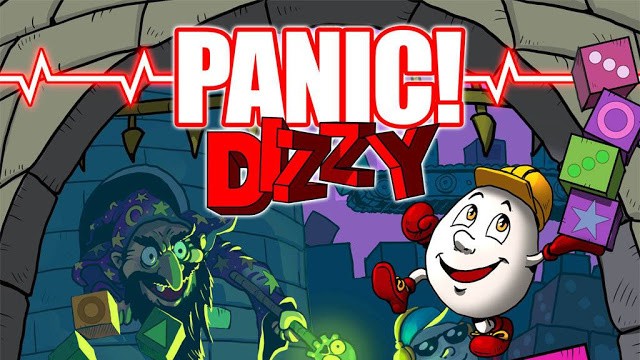
Dizzy fans rejoice! In what seems like an unending trove of unreleased software that Philip and Andrew Oliver have found down the back of their sofa, Panic! Dizzy is the latest in a line of rediscovered Dizzy titles seeking crowdfunding. The game will be free to play on their website, but the pair are kickstarting the production of NES cartridges just as they have for Wonderland Dizzy, Dreamworld Pogie and Mystery World Dizzy.
According to their blurb:
This game was written, by Philip and Andrew, in the autumn of 1992 in just 64KB using PCs with PDS boards cabled to NES consoles.
Unfortunately Panic! Dizzy wasn’t released by Codemasters at the time and was moth-balled. It was only recently rediscovered and restored by Dizzy fan Lukasz Kur for this very Kickstarter Campaign.
The game features five different puzzle modes – Four Suits, Match More, Dizzy Dice, Perfect Path and Picture Perfect – each with two-player support. A couple of them bear a passing resemblance to Data East’s Magical Drop – you can find more details on the Kickstarter page. They’re close to reaching their £13,500 goal, so it seems this will become a reality. It’s unthinkable today that a developer could possibly create a game and promptly forget all about it – how times have changed.
Is your head spinning with all these unearthed Dizzy games? Reckon the Oliver twins have anything else pugged away in a bottom drawer somewhere? Let slip your Dizzy fandom in the comments below.
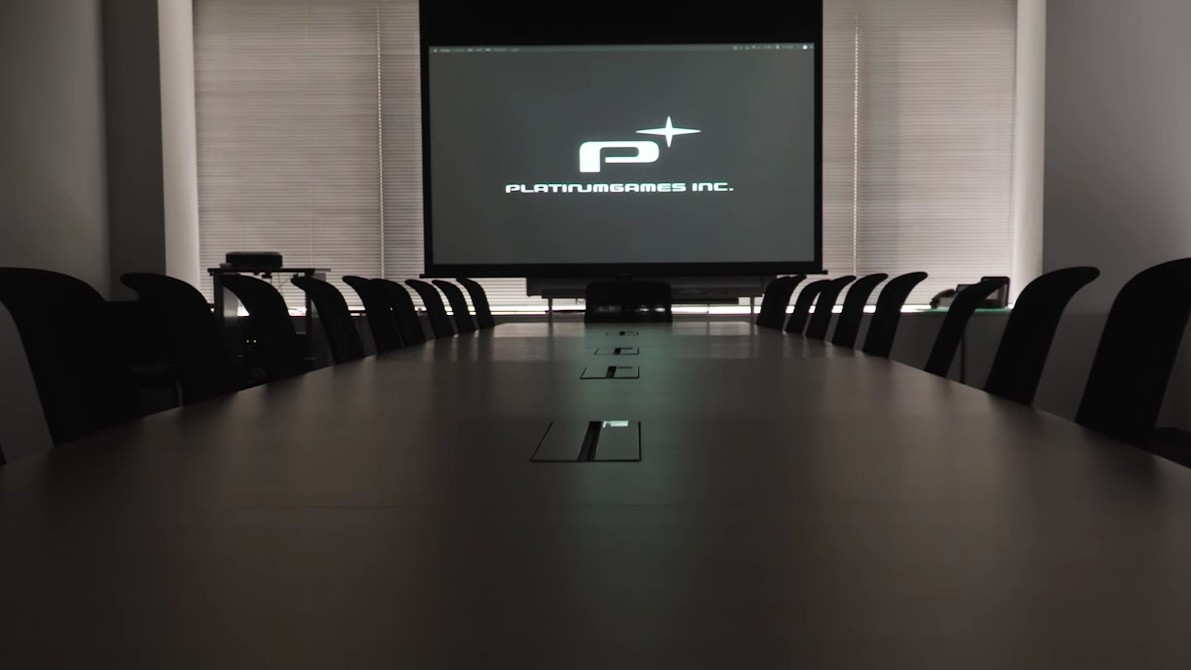
PlatinumGames has shared a lovely new video giving fans a tour of its headquarters in Osaka, Japan.
Getting the chance to have a good look around video game development studios is a rather rare treat, especially when they’re as utterly glorious-looking as PlatinumGames’ swanky pad of joy. The office is located in Osaka’s Umeda Sky Building, which just so happens to be one of the world’s more interesting buildings anyway, without having Platinum tucked away inside. Seriously, look at it.
If you haven’t already watched the video by this point, expect to find fancy shots of the studio’s entrance, work room, meeting rooms, sound studio, and library, as well as a surprising number of close-ups focusing on the wheels and bases of office chairs. Even the corridors look amazing, and we’ve never wanted to work there more.
Make sure to let us know your thoughts on the PlatinumGames office below; we’ll just be over here working out how much it would cost to move Nintendo Life HQ next door. Constantly-cloudy England just doesn’t cut it.
2019 is already shaping up to be a rather mysterious year on the Nintendo front; there are a number of major titles already scheduled to launch over the next twelve months, but there’s a distinct ‘there’s going to be more than this’-type feeling in the air, leaving fans entirely unsure of what to expect. Can you feel it?
For months now, fans have been waiting for a Nintendo Direct presentation to spill the 2019 beans once and for all, but there’s still no sign of one coming. Should we start to assume that there won’t be any more games than already promised, then? Absolutely not, as pointed out by Nintendo Director and Senior Managing Executive Officer, Shinya Takahashi in a recently shared Q+A session:
“I have heard some people say we have a tendency towards slow development, but thatʼs certainly not true in every case. We have titles currently in development that we havenʼt announced yet, some of which weʼre preparing to release this year, and I donʼt anticipate the kind of delays they would be concerned about.”
The statement comes as a response to a question asking about Nintendo’s process management for software development. Interestingly, Shigeru Miyamoto followed up on Takahashi’s words by talking about the importance of Nintendo’s younger developers.
“I am continuing to entrust more authority to younger people, and I believe it is through them that we have established our own unique, Nintendo-like development structure. I want to continue to nurture their growth, while we preserve Nintendoʼs unique way of making games.”
So, more unannounced Nintendo games are planned to arrive this year, and the company is actively nurturing its young talent. It certainly sounds like the future is going to be a bright one.
What games are you hoping for Nintendo to reveal this year? New IPs? Sequels? Remasters? Let us know in the comments.
While the Nintendo Switch, in most respects, is a fantastic handheld/TV combo console, it did require the sacrifice of a few features in order to achieve this hybrid state. One of those details, sorely missed by fans of handheld gaming, has been the D-pad.
Until now, the only real alternative on the market has been Hori’s D-pad left Joy-Con replacement – and while officially licensed and solidly-priced for its functionality, it would be nice to have more options available.
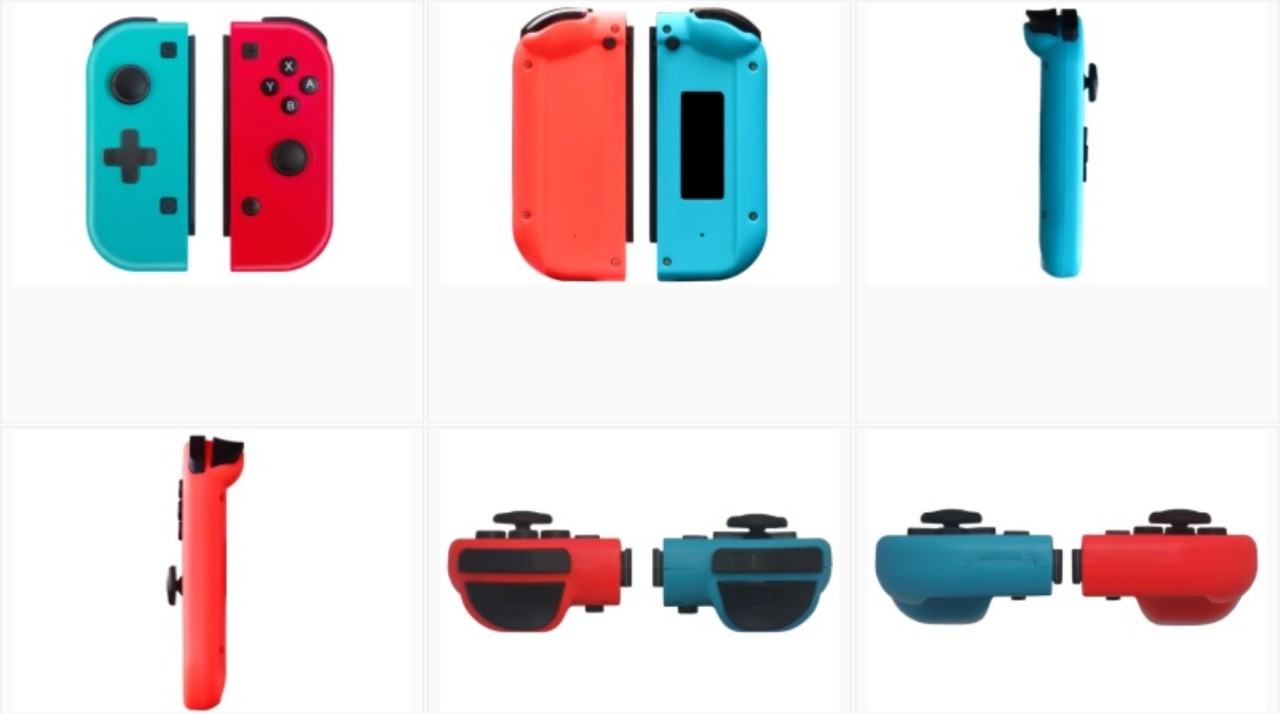
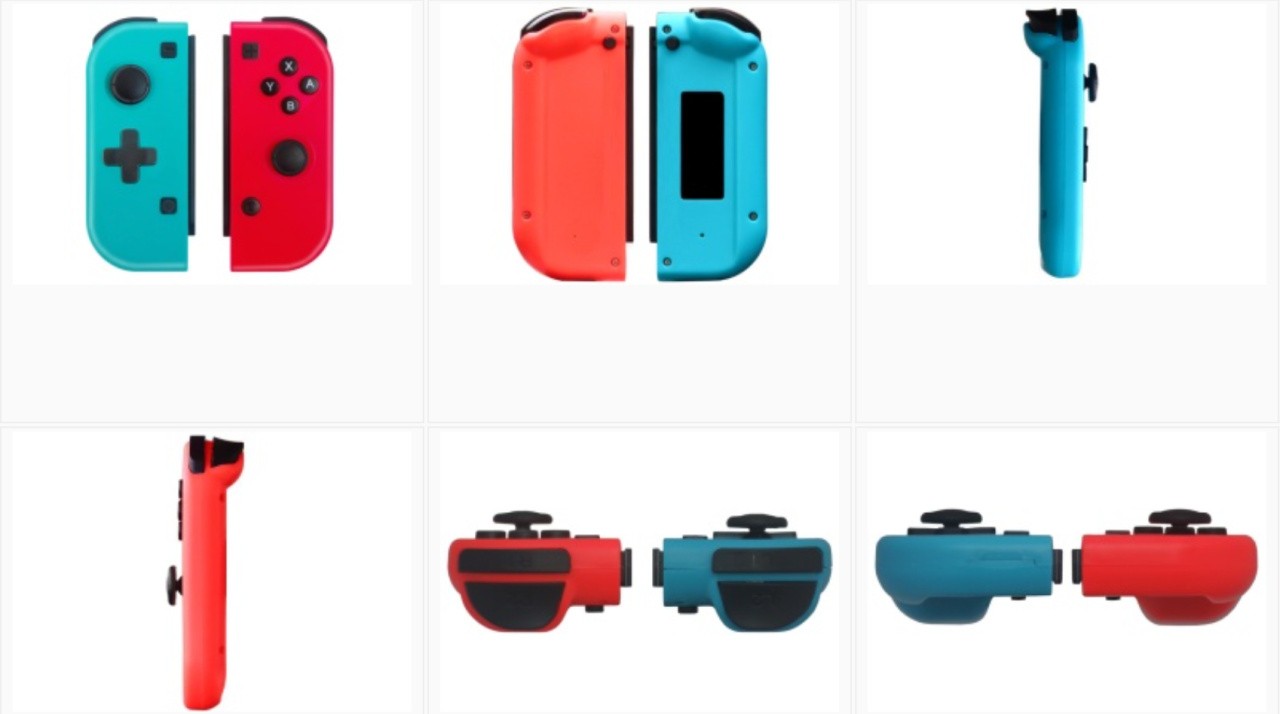
Shenzhen Jieruihong Electronics Co., Ltd. – a Chinese manufacturing company – saw this opportunity, and is headed in that direction. They recently filed a patent at the end of January in the WIPO’s Global Design Database for a set of Switch controllers. While very similar to Nintendo’s original Joy-Con in appearance – including the standard red and blue colours – it very clearly shows that the left Joy-Con features a D-pad.
Although we don’t know many other details about this product yet, it will be interesting to see if it includes any features currently lacking in Hori’s D-pad Joy-Con – such as motion sensing, vibration, NFC detection, IR sensor, or usability outside of handheld mode.
However, this is likely extremely wishful thinking, as the company has previously introduced several Nintendo Switch controllers under the brand name Vigrand – and they have all been relatively cheap, in both price and construction.
If these new D-pad controllers do come to market soon, it is probable that we’ll see purchasing options for them on websites like AliBaba, where Vigrand is currently selling their other controller models. Keep your eyes peeled for them.
Do you miss having a D-pad while playing the Switch? Have you tried other options currently available on the market? Would you purchase a controller not officially licensed by Nintendo? Let us know in the comments below.
At the end of last month, Nintendo revealed that it had cut its original 20 million Switch hardware sales target for the current financial year, instead resetting that estimate to 17 million. The change was based on lower-than-expected sales for the first nine months of the year, and resulted in an immediate drop in share prices for the company.
Now, a Q+A session from Nintendo’s recent Nine Months Financial Briefing has revealed more information about the target cut. Nintendo President, Shuntaro Furukawa, responded to a question about the revision, blaming “insufficient” efforts to convey the console’s appeal to a high enough number of people.
“As we look back so far (for this fiscal year), we now evaluate that our efforts to fully convey the appeal of Nintendo Switch hardware and software to the number of new consumers we originally hoped to reach were insufficient.
And from the viewpoint of our full-year unit sales forecast for this fiscal year, while we expected that releasing titles during the holiday season would help to increase sales, the year-on-year sales increase during the first half of the fiscal year (April to September) turned out not big enough, which also affected the revision of the unit forecast as we looked back now.”
It’s an interesting comment, and one that makes us think back to the failures of the Wii U. It’s strange to hear Nintendo say that it has struggled to convey the Switch’s appeal considering its huge success so far (especially when comparing it to that very issue with the Wii U), but also demonstrates just how far Nintendo hopes to go with its new hybrid machine. Interestingly, Furukawa goes on to talk about future goals, too.
“We will talk about the next fiscal year in more detail at a later time, but basically we want to further increase both our hardware and software unit sales more than this fiscal year. We want to further enrich our software lineup and convey its appeal to consumers, so that they decide this (calendar) year they would buy Nintendo Switch.”
Do you think Nintendo’s goals were just a little too high? Or do you think the Switch really did have the potential to shift 20 million units this year? Let us know your thoughts in the comments.
This year, Sega will release the Mega Drive Mini, its own take on the retro console craze which Nintendo has done rather well out of in recent years with the NES and SNES Classic Editions. However, it’s not the first time that the SNES rival has been resurrected using modern technology; in fact, we’ve been seeing clones of the Mega Drive / Genesis for the past decade, the vast majority of which have been pretty terrible. Plagued by poor emulation, terrible controls and hopelessly inaccurate sound replication, these devices have been huge disappointments – and the ones which carry Sega’s official blessing haven’t been any better either, often exhibiting the same issues because they’re based on largely the same ‘system on a chip’ tech.
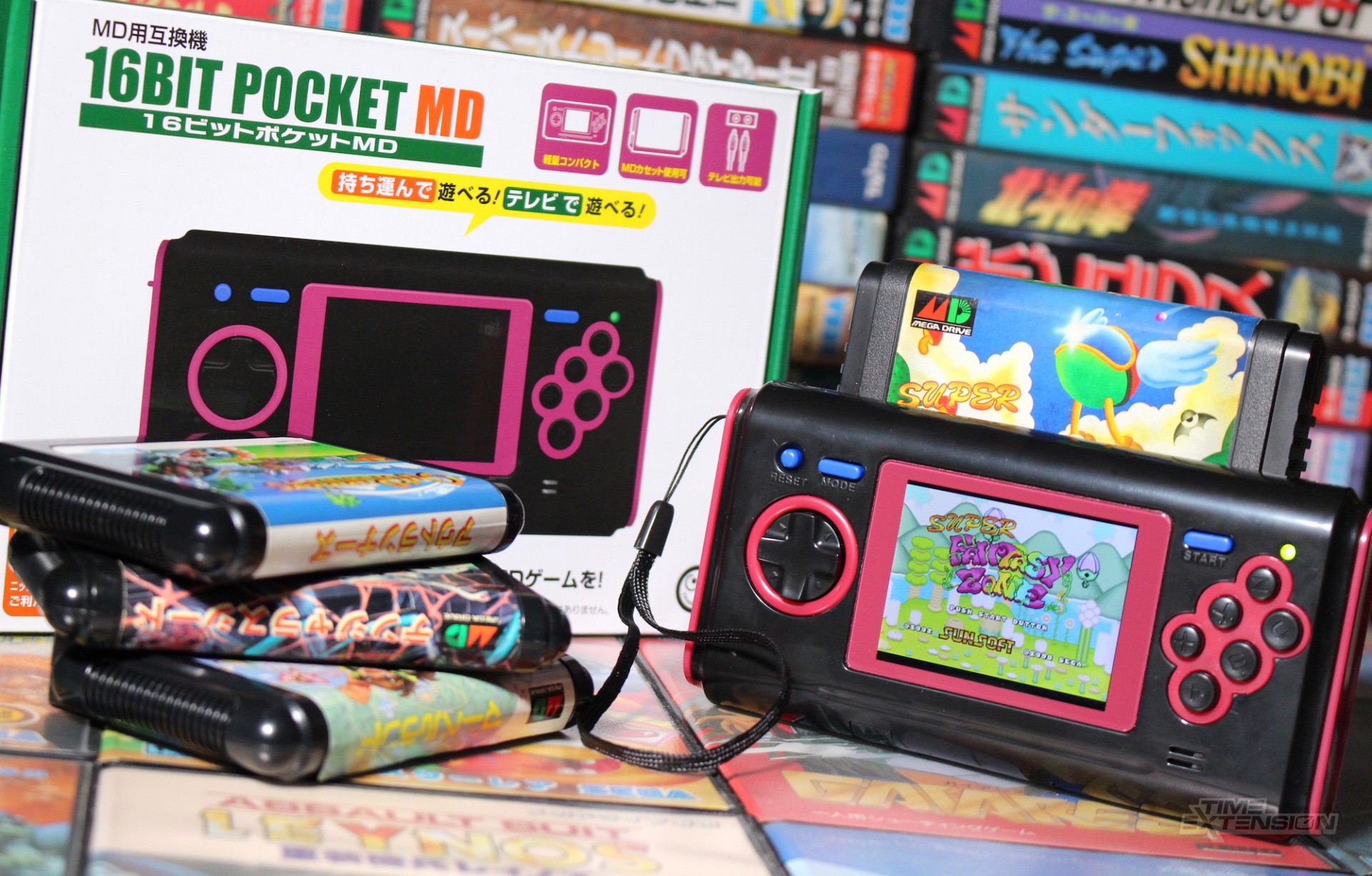
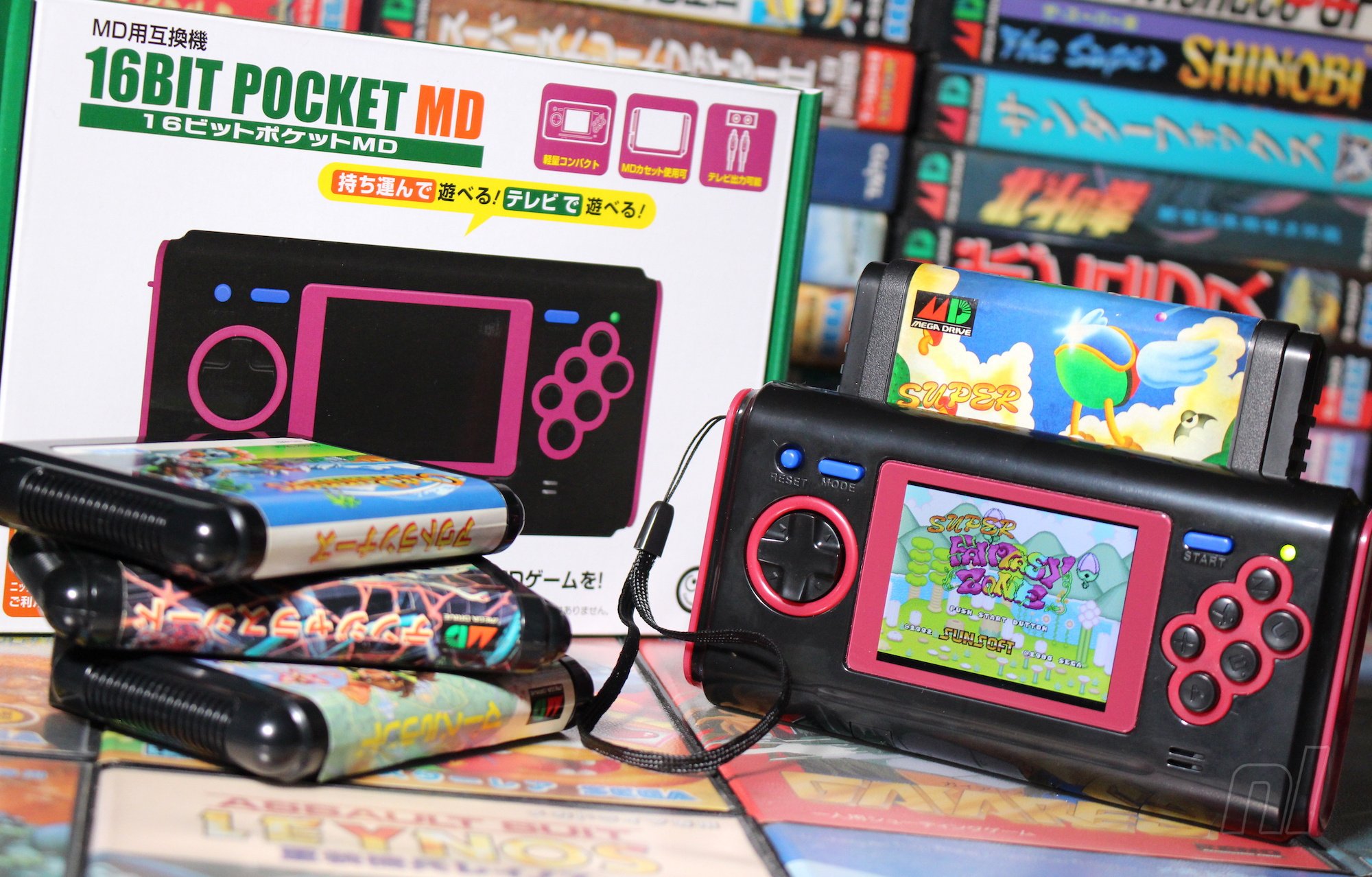
When news hit our ears that Japanese company Columbus Circle – which has been doing a good job of resurrecting classic games in recent years – was about to release its own portable Mega Drive clone, we had little reason to suspect it would change this sorrowful tradition. Nonetheless, we duly ordered one – mostly out of morbid curiosity – and we’ve been pleasantly surprised. Not only does the unit come with a good screen that really makes the pixels stand out (although viewing angles aren’t brilliant and some games appear slightly stretched), it also has a fantastic rolling D-pad and a six button setup which means you can play games like Super Street Fighter II perfectly (in case you were wondering, it works fine with games like Forgotten Worlds and Golden Axe II, both of which have issues with the official six-button controller on original hardware). It’s also comfortable to use for prolonged periods and is highly portable. Oh, and Mega Everdrive carts work on it, if you’re into that kind of jazz.
It’s not perfect, by any means; the sound, while better than we’ve heard on other clones, still isn’t quite right and bass notes cause the speaker to distort, even when it’s at quite a low volume. The unit doesn’t have an internal rechargeable battery either, and relies on four AAA batteries for power, which give around five to six hours of play. Despite the quality of the screen and the controls, the 16Bit Pocket MD looks and feels a little cheap, and almost looks like a prototype in some places; for example, on the top edge there’s a ‘DC 5V’ mark next to a blank piece of plastic, which suggests that Columbus Circle had intended to include the ability to power the unit from a wall charger, but removed it at the last minute. Elsewhere, the casing doesn’t quite fit together snugly enough, and we found that our copy of Virtua Racing – which includes Sega’s Super FX-beating SVP chip – refused to boot. PAL and North American games with region locking refused to work too, which means the 16Bit Pocket MD is imitating a Japanese Mega Drive console on a hardware level.
The 16Bit Pocket MD also has AV-out support, but it’s via composite and the quality is predictably poor; it’s a nice bonus but not something you’ll want to make much use of. The inability to plug in a second controller also means that you’re limited to single-player games, both in TV-out mode and when used as a portable (Sega’s own attempt at a portable Mega Drive, the Nomad, had a controller port on the bottom to overcome this).
In so many ways, the 16Bit Pocket MD repeats many of the mistakes other Sega clone systems have done; it’s a cheaply-made device rather than a premium proposition. But it gets the most important things (mostly) right – the controls are great, the screen is good and, by and large, performance is of an acceptable standard (although those of you who refuse to accept anything but FPGA quality will no doubt find plenty of issues).
The really puzzling thing about the 16Bit Pocket MD is how hard it is to get hold of; our unit was pre-ordered via Play-Asia before Christmas and was subject to several release date delays before finally arriving this week. Play-Asia is now completely sold out, and a quick glance online appears to suggest that Amazon Japan and Columbus Circle’s own online store are the only places that have stock right now. If you’re brave enough to order from either then you can pick one up for around £43 / $55, not including international shipping. It’s worth noting that Columbus Circle has also released a portable Super Famicom with HDMI-out support, although that appears to be just as hard to get as its Sega sibling.
If you do somehow manage to get your hands on a 16Bit Pocket MD, we can’t imagine you’ll be disappointed, especially for this price. While the Sega Nomad remains the portable console of choice for diehard Mega Drive / Genesis fans, its muddy screen and terrible battery life count against it in 2019; the 16Bit Pocket MD may not be perfect, but it does at least solve these two issues.
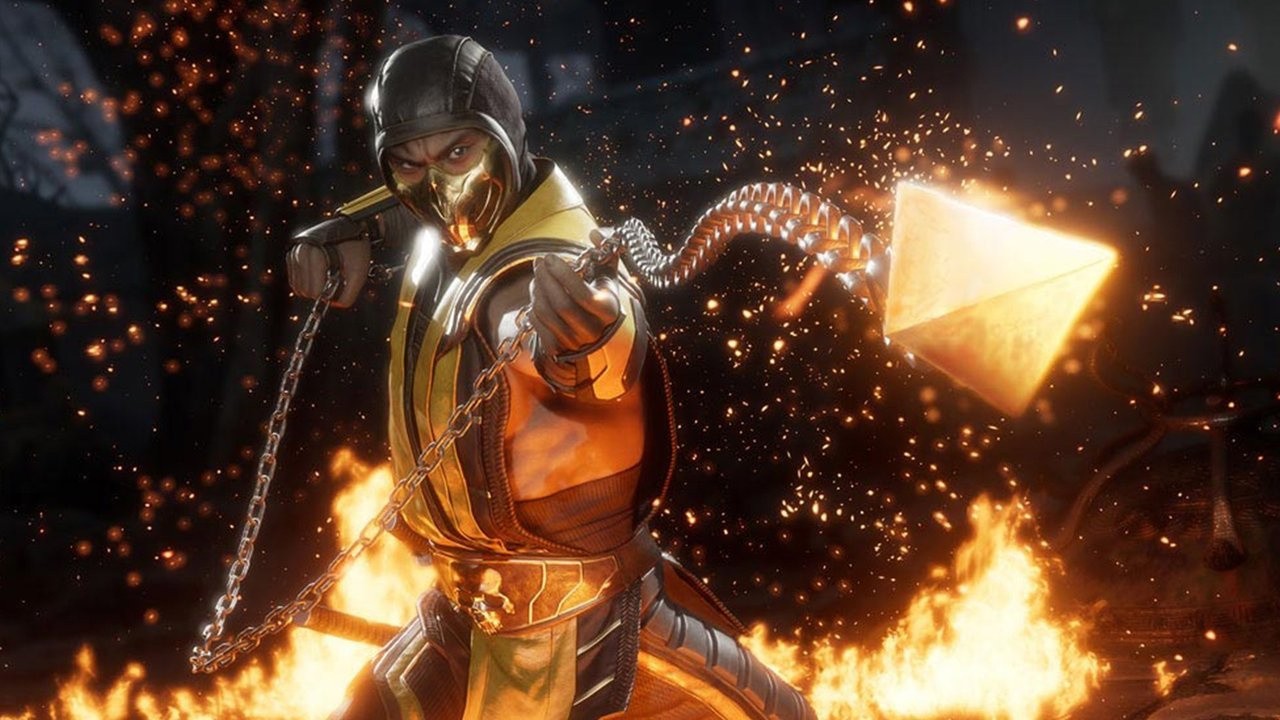
Mortal Kombat 11‘s release date is fast approaching, even with the confusion over what that date actually is in some areas, and the game’s roster is slowly but surely starting to take shape. It seems that we may now know several more fighters set to be announced thanks to a potential leak. Consider this your spoiler warning.
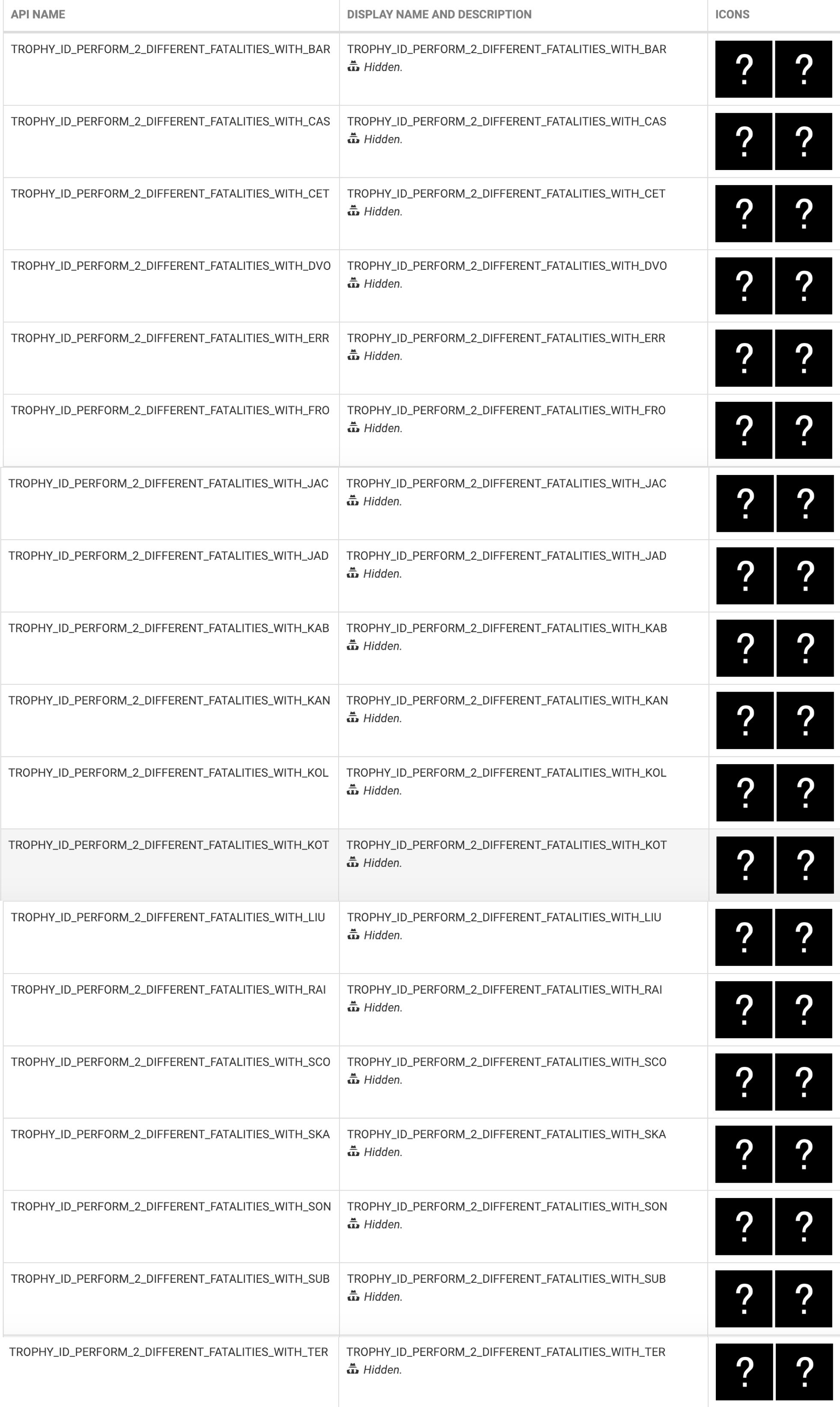
The potential roster discovery comes from a list of Steam achievements which has been made available online. The list shows a collection of achievements which require the player to use certain characters, and each one has a three-letter string of characters at the end of its name. You can see it for yourself below.
Assuming that ‘BAR’ is for Baraka, ‘DVO’ is for D’Vorah and so on, it’s pretty safe to assume that the three letters for each listing are the first three letters in other characters’ names. The listing has been subject to discussion over at Resetera, with user bluexy sharing the following predictions:
Err – Erron Black Kun – Kung Lao Cas – Cassie Cage Jad – Jade Cet – ? Fro – Frost Kot – Kotal Kahn Jac – Jacqui (Chance of Jackson “Jax”) Ter – ? Nimbus Terrafaux Kol – ?
Of course, none of this is official, so make sure to wait to hear confirmation before believing any of this to be true, but we’d certainly be willing to place a bet on at least some of the characters mentioned above appearing. And no, Shaggy isn’t listed.
Do you think this sounds about right? Any characters there that you would, or wouldn’t have expected to appear in the game? Let us know in the comments.
If you’re anything like us, hearing a piece of gaming music or even that familiar ‘click’ of the Nintendo Switch logo will instantly draw your attention to the TV. We’d expect to hear it in an advert every now and then, but never during a government-owned network’s official broadcast schedule.
Amazingly, Beijing Media Network, a Chinese network available across certain territories in Asia and North America, did exactly that, using an incredibly familiar piece of music from The Legend of Zelda: Breath of the Wild during a transition. The show in question was a special celebration programme for the Chinese New Year taking place this week.
Users on Chinese social media platform, Weibo, have been discussing the legality of the music being played. It’s rare to see a piece of a video game music be officially licensed for other uses, and many suspect that Beijing Media may have simply used the piece without permission. We’ll likely never know whether or not the music was authorised for use, but we’d certainly be more interested in watching TV if it had Zelda music playing all the time.
Now then, excuse us while we go and play Breath of the Wild again for the gazillionth time.