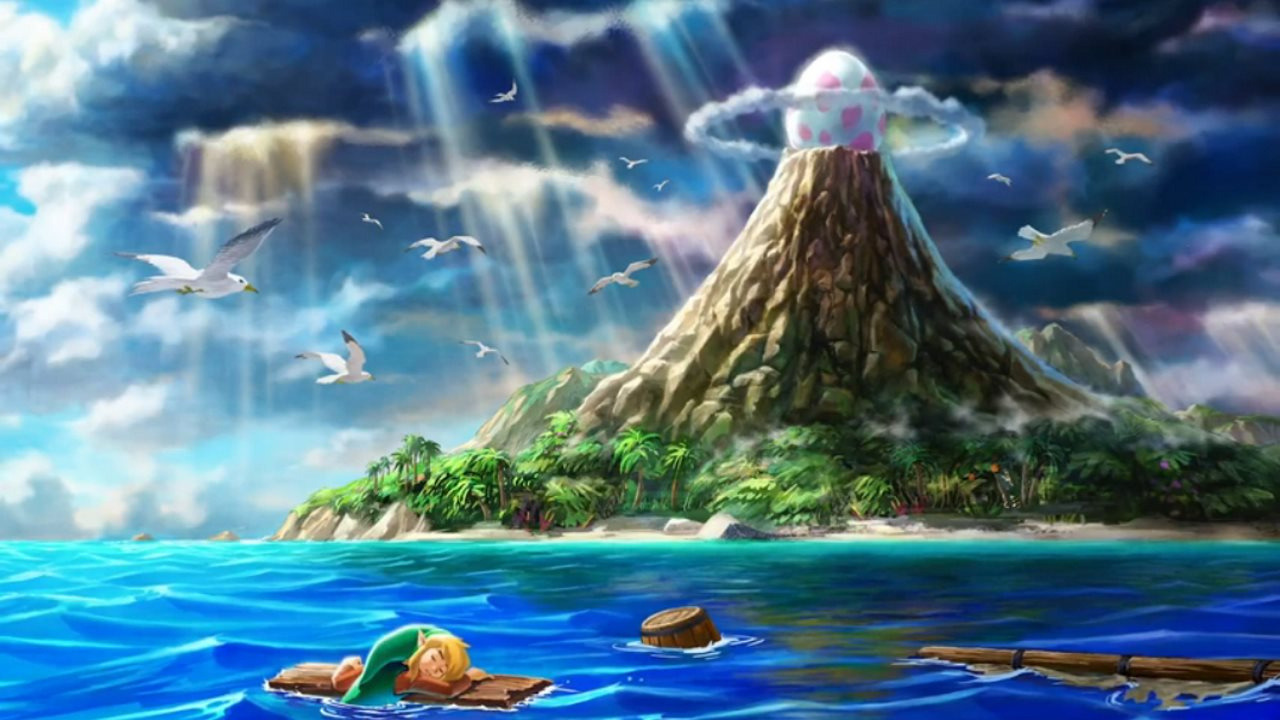
One of the standout games in the Nintendo Direct was, obviously,The Legend of Zelda: Link’s Awakening on Switch. Following the mighty Zelda: Breath of the Wild as the second game of the franchise to come to Nintendo’s newest machine, this one was a lovely surprise to close out the show, but Nintendo actually teased the entire thing earlier on. And we never even noticed.
A famous landmark from the original game on Game Boy is the Wind Fish’s Egg, a gigantic egg that sits on top of Mount Tamaranch and unsurprisingly houses the glorious Wind Fish himself. We see this egg (in its remastered beauty) in one of the lovely shots during the remake reveal’s opening, but we’d already seen the blasted thing just moments before.
That’s right, the Smash spring update – which featured a giant purple Yoshi egg – was teasing us the whole time. Originally, we just assumed the egg was a simple reference to spring, letting it slip by without another thought. It wasn’t until we saw the Wind Fish’s Egg at the end of the show that we realised it was also doubling up as a cheeky hint (the giant nature, the purple colouring, Link being there – it has to be, right?), and now we feel pretty silly about the whole thing.
We imagine (well, hope) that many of you lovely readers hadn’t realised either, but we’re happy to have spotted it even this late on. Perhaps in the next Nintendo Direct, we should analyse every single frame the moment they hit our over-excited eyeballs. Who knows what clues Nintendo might be dropping?
Did your mind jump to Link’s Awakening when seeing the egg for the first time? Did you only make the connection afterwards, or perhaps even just now? Let us know in the comments below.
Goat Simulator: The GOATY is the kind of game you’ll either get or you won’t. It’s either a hilarious way to kill time and affect some form of skill amid the chaos, or it’s just a jumped up joke that’s outlived the laughter. Wherever your thoughts might ultimately land, there’s no denying that Coffee Stain Studios has produced something quite unlike anything else on Nintendo Switch. And with every expansion released to date included with this new port, you’re getting the definitive edition right there on your hybrid console.
So what exactly is Goat Simulator? Well, you control a goat (shock horror) that runs around various locales causing as much wanton destruction as it’s possible for one four-legged beast to unleash. You can build up speed and headbutt scenery and people by holding ‘ZR’, jump with ‘B’, flip your body by holding ‘ZL’ and moving the left analog stick and grab onto things with your tongue via ‘Y’. Yes, it sounds stupid, and it is stupid, but that’s kind of the point.
While it’s received substantial updates in the form of multiple themed expansions – all of which are included here on Switch – the game still retains the buggy, physics-driven crudeness that’s made it so famous/infamous. In some ways, Goat Simulator is like a rougher version of the Skate games. While you’re not trying to pull off sick tricks on two wheels, the angle and position of your goaty avatar determine just how many points you’ll score. From doing backflips off the roof of a house to headbutting your way through a glass-surrounded office building, it takes quite a while to nail the subtle balance needed to land with all four hooves on the ground and keep your multiplier going.
The main Goat Simulator game revolves around this desire to rack up points and combos in various over-the-top ways, leading to some of the most bizarre activities you’ll likely ever partake in on Switch. You’ll smash up a BBQ and set people on fire for maximum points; you’ll use a trampoline to launch into a building site and send workmen flying like skittles; you’ll try to ride a bike – as a goat, obviously – through traffic and cause untold mayhem. There are even rolling objectives to complete that range from the simple (knock down some pedestrians) to the more long-winded (collect 30 golden goat statues).
Alongside the main mode, there are four extra expansions that take that same silly template and add a few extra factors for your goat to smash up. There’s Goat MMO Simulator, GoatZ, Payday and Waste of Space. Sounds like a weird bunch, right? You’d be absolutely right, and it suits Goat Simulator down to the ground. Those modes simply give you a little more structure; for instance, Waste of Space sees you raising money to repair a space station by, naturally, headbutting and kicking people until they drop their cash in sheer fear. You can even teleport yourself across a room – because at this stage, why not?
Goat MMO Simulator might be wearing its love of The Elder Scrolls on its sleeve, but don’t expect a mode worthy of the Dragonborn. Instead of tracking multiplied points and an overall score counter, this expansion translates it into XP and levels. It’s basically the same thing, but coupled with mutators that enable you to take on a variety of RPG-style classes, each with their own set of unique skills. You can also play a microwave on legs. Don’t ask why; you just can. Along with Waste of Space, it’s one of the better additions and actually feels like something approaching a proper game. You can also head out and explore its naff-looking fantasy world and complete quests for NPCs, but while it’s a more applied use of Goat Simulator’s mechanics, its paper-thin application doesn’t hold up for long.
The end result is a game with multiple personalities and vastly contrasting levels of quality. Even if you find the original Goat Simulator a bore, there’s some genuine sense of structure and – dare we say it – depth to the world of MMO Simulator, while Waste of Space is considerably more enjoyable thanks to its money-collecting objectives. But for its silliness, you’ll eventually start to tire of its bargain bin design, and even the extra modes can’t give it the longevity it badly needs.
Conclusion
Goat Simulator: The GOATY is a definitive edition of Coffee Stain Studios’ slapstick destruction simulator, and as such, it’s a mixed bag that varies wildly in quality. The base modes are fun for about five minutes, and there’s only so much entertainment to be had from launching a farm animal from the top of a roller coaster before it becomes dull. The Waste of Space and MMO Simulator expansions are decent fun in their own right thanks to a greater sense of structure, but the purposefully crude mechanics will start to grate after a while. This is a package that arguably works best as a smartphone proposition for when you’ve got five minutes to kill; when placed on a proper console with many more worthy uses of your time, it all starts to feel more than a little inconsequential.
As so often happens, it seems there were minor regional differences between the Nintendo Direct broadcasts for the east and west. Japanese fans were treated to games missing from the North American and European versions.
First up is Dragon Quest Rivals, a free download first released on mobile back in 2017. It’s an online card-based battler in the Hearthstone mould with characters from across the RPG series and cross-play between Switch and mobile.
Next is a cutesy baseball game from Konami, Jikkyuu Powerful Pro Baseball, launching this year. Part of a long-running series, it’s arguably most notable for being from Konami – they still make games, see! – but we’re not the biggest baseball fans. Four-player co-op sounds interesting, though, if you like a spot of rounders.
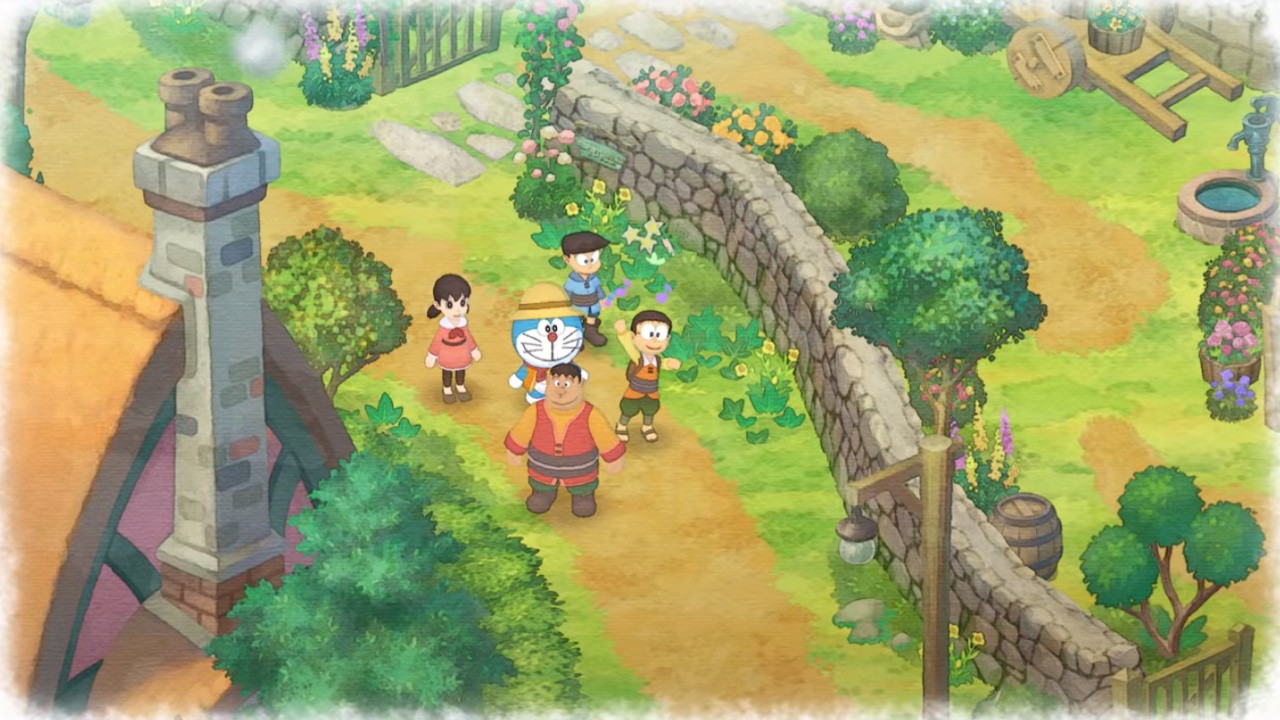
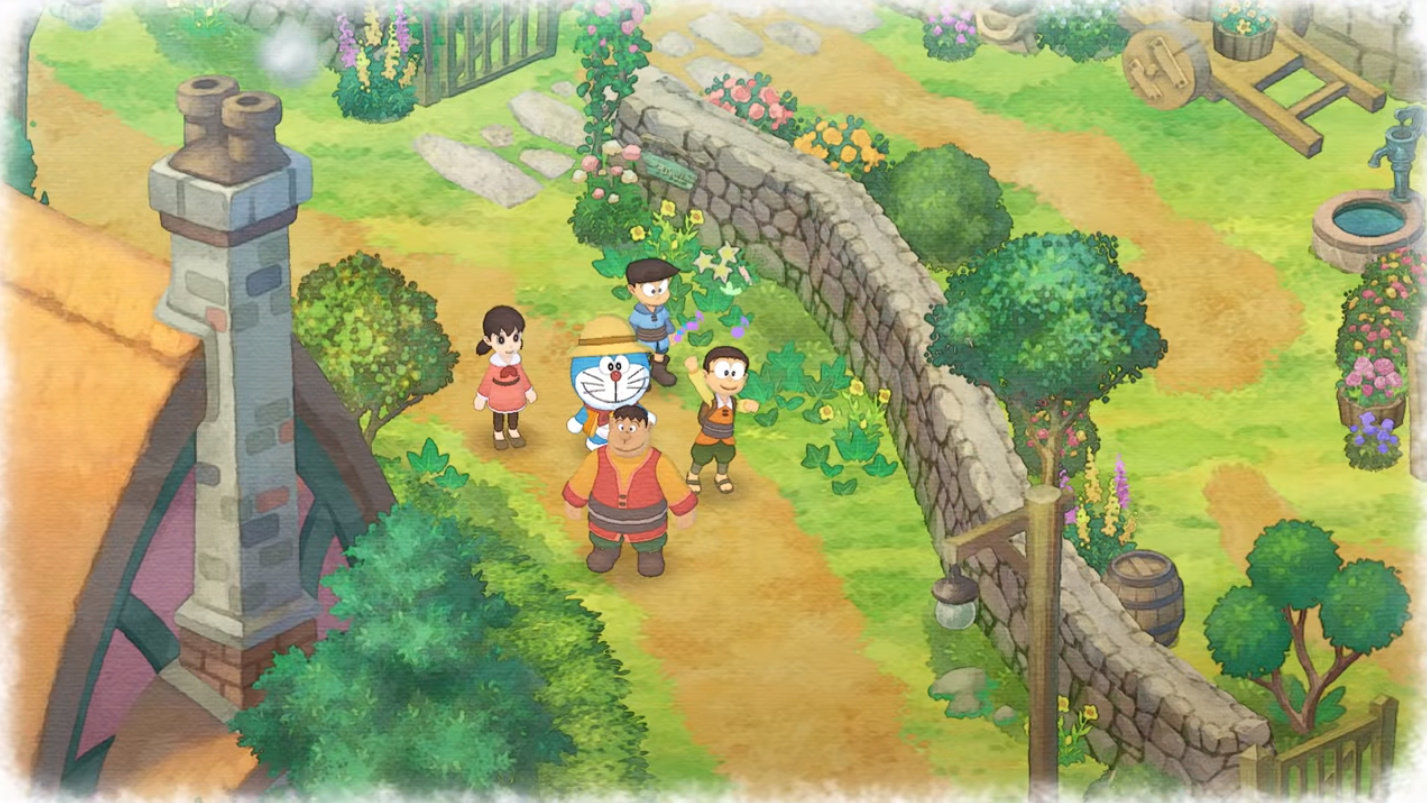
Finally we have a crossover, Doraemon: Nobita’s Story of Seasons, and we’re a bit jealous. It appears to mix classic Harvest Moon-style gameplay with the cast of Doraemon in a beautiful watercolour world. Check out the trailer:
Looks lovely, no? Hopefully we’ll get some information about a western release soon – otherwise we’ll be finding ways to add points to our Japanese eShop account when this one releases this year.
Do you wish that any of these were included in the North American or European Directs? More enthusiastic about baseball than we are? Let us know in the usual place.
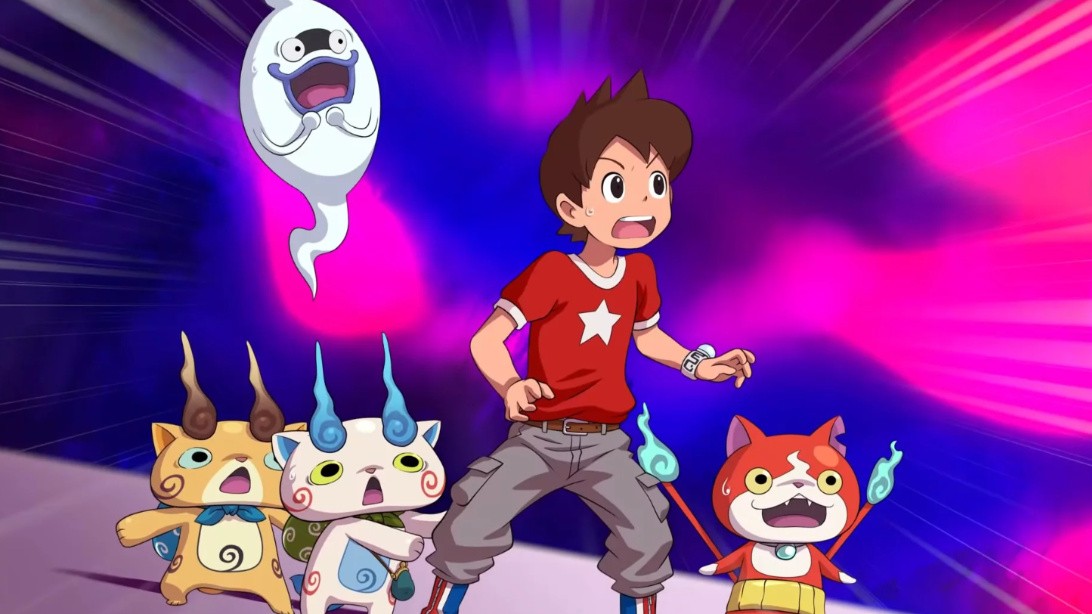
It seems the Yo-Kai Watch bubble is bursting fast in the Land of the Rising Sun. In fact, it burst a while ago, but the game and its accompanying media and merch were so incredibly popular in Japan that residual interest keeps the whole shebang running on fumes.
While the craze never quite took off over here, the game’s popularity created lines around the block outside Tokyo toy stores back at its zenith in 2014. Commentators forecasted the death of Pokémon as kids pleaded with their parents for all the plastic watches, medals and assorted merch they could get their mitts on.
However, as Kotaku reports, all things must – and pretty-much have – come to an end. After a meteoric rise which led to a shortage of Yokai merchandise of any kind, a sudden influx of goods covered with every conceivable character and logo just missed the boat and left shop shelves and bargain bins filled this Yo-Kai-branded tat.
The article cites incompatibility between different medal sets and watches, plus alterations to the anime’s theme song (and accompanying dance) as further reasons for its continued decline. It also speculates that the enduring success of Pokémon is down to its deep core mechanics; Yo-Kai Watch works fine for kids, but doesn’t have the complexity to draw you back as you grow older. As Pokémon fans for over two decades now, we’d have to agree with that.
As games like Fortnite shift suddenly from mere video game to worldwide phenomenon in a matter of weeks, it’s fascinating to see the approaches taken to riding those waves of popularity and turn these IPs into flourishing businesses and not just a blip on a graph. Unfortunately, it looks like Level-5 failed to do that here. Still, the bewilderingly fast cycle of modern reboot culture means the company need only wait twelve months before having another crack.
Are you a staunch Yo-Kai defender? What could Level-5 have done differently? Let us know your thoughts.
The Switch is certainly a versatile little system with a host of engines having added support for the ‘homeheld’ since launch nearly two years ago. In addition to all the official tweak-ery, unofficial platforms have also been seen running on the console ‘in the wild’ – we’ve seen photos of Linux running in a rudimentary form, and hackers are always poking away at Switch’s vulnerable spots.
Now it seems that the hacking community may have made another breakthrough. Twitter user @natinusala shared a photo last night of a Switch displaying a familiar logo:
The photo alone is hardly proof, but a gitlab.com link in a following tweet points towards the work that supposedly gets Android up and running on Nintendo’s console (in a very unoffical capacity, we hasten to add). Of course, simply having the OS boot doesn’t necessarily mean it’s in a fit state, but it’s interesting to see, nonetheless. Reports around the launch of the console suggested that Nintendo was originally interested in a modified Android operating system for their console before taking a custom route.
Android support in an official capacity would open avenues to all sorts of games on the console – Nintendo’s growing mobile catalogue included – so these unofficial steps are intriguing. Before the console’s launch, you can imagine Nintendo being very eager to get as much software as possible on the platform, but with Switch recently celebrating 1800 games on the eShop, Android support probably isn’t top of Nintendo’s to-do list.
Intrigued? What OS would you like to see running on Switch, off the record, on the QT, and very hush-hush? It’s Windows 98, isn’t it – love that Solitare. Let us know in the comments!
Just yesterday, we shared a snippet of a Game Informer interview with Sony Interactive Entertainment Chairman, Shawn Layden, pointing out his praise for other platforms (including Switch) and comments on Sony’s future. That very same interview also touched on the topic of cross-platform play, with Layden suggesting that Sony is much more open to the idea than people believe.
“People keep saying, ‘Why doesn’t Sony allow more people to have it?’ We’re open for business on this one. All it takes is for publishers and developers who wish to permission it. As ever, just work with your PlayStation account manager, and they will walk you through the steps that we’ve learned through our partnership with Epic on how this works. I don’t believe right now there is any gating factor on that. I think they’re open to make proposals, because the Fortnite thing worked pretty well.
We’ve found ourselves talking about cross-platform play more and more over the last year or so, with players on Switch, PC and Xbox One regularly enjoying the feature across a number of big titles. Sony was famously late to the party, eventually allowing the feature to be included in games like Fortnite and Rocket League, but this comment seemed to suggest that this would all be behind us. Finally, those of us wanting to play a friendly game of the next big release on Switch with our best friends on PS4 would be able to do just that.
However, Finn Brice, CEO of Wargroove developer Chucklefish, responded to this very comment over on Resetera; as you may well be aware, Wargroove launched on Switch at the beginning of this month, with cross-platform play being immediately supported with players on PC and Xbox. Brice says that Chucklefish did talk to its Sony account manager, as suggested by Layden, but “were told no”.
“Hi all,
CEO Of Chucklefish here, we just launched Wargroove with crossplay between PC, Switch and Xbox so I wanted to chime in.
We made many requests for crossplay (both through our account manager and directly with higher ups) all the way up until release month. We were told in no uncertain terms that it was not going to happen.
From our side, we can *literally* toggle a switch and have it working. Of course policy work might be more complicated for Sony.
Just wanted to provide some balance on the issue and say that it certainly isn’t a question of developers having not contacted their account managers or having dropped the ball. We were told no.”
Naturally, this opens the entire topic up for debate once again. Brice’s comment would suggest that we might not be seeing cross-platform play be a regular thing across PlayStation and Switch after all, despite an overwhelmingly strong reaction from fans to have it implemented.
As always, feel free to share your thoughts on this one in our comments section below. Do you think it should be available in all games?
Last year, Tikipod graced Switch users with the seminal Aqua Kitty UDX, a silly and extremely enjoyable take on the classic arcade game Defender which had that perfect blend of old-school design principles and modern game standards. Now, the developer has chosen to do a modern take on another arcade shooter classic, Smash TV, and the end result is Iron Crypticle, a horror-themed twin-stick shooter that doesn’t introduce a ton of new ideas, but absolutely nails that simple and intense arcade gameplay.
As one would expect, the story is kept to a minimum, following the escapades of the royal kingsguard in the land of Cryptonia. While the kingsguard is sleeping on the job during the night of the storm, an evil force breaks into the Cryptonian castle and steals away the royal treasure and the princess, so the kingsguard (accompanied by a cat, because why not?) quickly dives into action to retrieve what was lost. It’s nothing memorable, following the basic “save the princess” trope, but the general aesthetic of fighting Halloween monsters fits well with the gameplay. Another welcome plus is the frequent use of humour in item descriptions in the bestiary and interactions with the cat that runs the upgrade shop, keeping the tone lighthearted and fun.
As mentioned before, gameplay takes after the likes of Smash TV or Robotron 2084, tasking the player with weaving through waves of enemies in single screen rooms and gunning them all down. It’s simple enough for anyone to pick up, but quite difficult to fully master, due in no small part to the combo system that drives the player to take risks. Many enemies will drop some kind of food item when they die, and if you pick it up before it disappears, you can start a combo chain that boosts the score you get per kill. This combo can stack all the way up to 8x your normal score, and every food item snagged after that has a chance of also spawning a helpful item or stat upgrade on the floor. The sticking point, however, lies in how you lose the combo chain if you go too long between grabbing food items, and this is where much of the gameplay’s main hook comes into play. Do you charge into that throng of enemies and pick up the handful of items that dropped, or do you play it safe and pick them off from afar? A twin-stick shooter such as this encourages you to play conservatively and keep your distance to best manage crowds, but the combo system in Iron Crypticle delightfully turns this on its head, requiring you to constantly put yourself in dangerous situations if you want to see some of the best upgrades.
This focus on player choice extends to the game’s main mode, too, which features some light roguelike elements in how it handles progression. Every floor features a couple dozen rooms, culminating in a boss battle, but the route you take to the boss is entirely up to you. Upon clearing a room, you’re given one to three options of which door to exit through, and your decision can have serious ramifications for that run. Certain room types may be shrouded in darkness or house especially powerful enemies, while others feature arcade games that can win you coins or a shop where you can buy upgrades and refill health. You’re only allowed to see one room ahead at a time (unless you have a certain item), so there’s a certain amount of guesswork that goes into plotting out your path to the boss, and the random nature of each game ensures that no two floor layouts will ever be the same. Sometimes you get lucky and hit all the arcade and shop rooms, while other times see your already ailing character getting bodied in a catacombs room, and that even balance between random elements and player choice is part of what makes Iron Crypticle so engaging.
The randomness applies to your experience in each room, as well, affecting things like special weapon and item drops. Usually, a good streak of play is rewarded with a random special weapon dropping, swapping out your standard axe throw attack for something more useful like a flamethrower or mini-grenades that do a much better job of cutting through the monster hordes. Each of these weapons has a limited duration, however, so knowing when and where to use them is critical to surviving harder and harder floors. You can also be aided by random power up drops that affect your knight for the duration of the room, with buffs like a constantly maxed combo multiplier or a fire trail that scorches the ground you walk on. These extra power ups and weapons help to make battles in each room feel more dynamic, taking the gameplay a step beyond the repetitive run ‘n’ gun action by introducing an ‘X-factor’ every now and then to spice things up or bail you out of a tight spot.
Some progress does carry over between rooms, and this is all handled by an RPG-lite system which governs things like damage output and max health. Killing enemies and eating food grants a little bit of experience every time, and when you level up, it raises your max health and the max cap on all of your stats. Filling out the stats is a matter of hoping for drops from keeping the combo chains going and having enough coins to buy upgrades in the shop, and later floors basically require that you have a fair bit of progress in these stats to have a fighting chance. What’s nice about this system is how it introduces an element of progression to each run; your character at the end of a run isn’t necessarily the same as the one you started out with, and the game constantly throws new enemies and room types at you to meet that shifting power dynamic.
Though all of these gameplay concepts work well in practice, there is one minor caveat that hinders enjoyment somewhat, and that’s the overall slow pace of battles. Later floors, with tougher enemies and juiced-up characters, are a little better in this regard, but gameplay in Iron Crypticle can feel borderline sluggish at times as you cut through slow-moving zombie enemies with equally slow-moving attacks. This is the sort of game that would benefit greatly from a ‘boost mode’ of some sort that increased overall game flow, as repeated runs can become an exercise in patience as you wait for your now gimped attacks to slowly whittle down the hordes of enemies moving at glacial speeds.
For those of you looking for replayability, Iron Crypticle features online leaderboards for all modes and difficulty levels, leaving the door open for potentially endless hours of fun if you’re the type of player who is easily hooked by score-chaser games. Aside from the main mode, there’s a more straightforward, arcade-style endless mode that simply keeps you in one room and tasks you with surviving waves of increasingly difficult enemies, offering up an experience that’s less complex and a little easier to jump into. Upon finishing a run in either mode, you often unlock new weapon and item types that can then drop randomly in subsequent runs, ensuring that the game slowly gets more diverse as you play further. All told, there isn’t a ton of gameplay variety to speak of in Iron Crypticle – no interesting or surprising game modes – but those of you that are looking for solid twin-stick action won’t be disappointed by what’s being offered.
Naturally, co-op is a big part of the experience, too, and while there sadly isn’t any online multiplayer, up to three other friends can join you on the couch for a few rounds at any point in the game to help out. There’s even support for single Joy-Con play, if you happen to be on the go, but this is a bit more awkward in how it only allows players to shoot in the direction they’re facing, which drastically increases the difficulty. Even so, Iron Crypticle is a great experience for local play, and the simple nature of the gameplay ensures that just about anybody can pick it up without too much confusion or hassle.
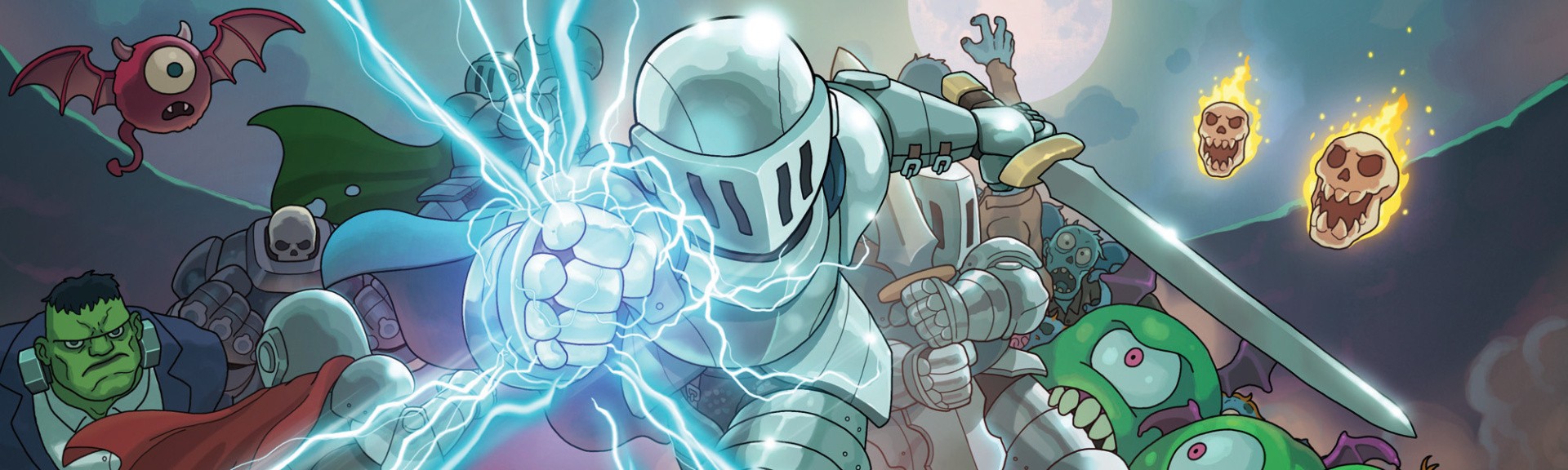
Iron Crypticle does a solid, if a bit unimpressive, job with its presentation, going for an art style that’s faithful to its arcade-style, pixelated roots, right down to the fuzzy scanlines if you choose to enable that feature in the options. The scrunched-up sprites are detailed and rife with colour, and detailed effects around things like fire help to add that extra bit of visual flair to take things a bit beyond the pixelated look. Still, there’s nothing here that contains very much of a ‘wow’ factor; it’s a well-made art style, jut not a terribly ambitious one. The music, similarly, is a rather forgettable, consisting of muted, atmospheric tracks that at the very least fit well with the Halloween aesthetic. While the game is a twin-stick shooter through and through, it’s worth noting that the key art gave us serious Ghouls ‘n Ghosts vibes, which is no bad thing.
Conclusion
Tikipod has done it again with Iron Crypticle, successfully reviving an old-school arcade concept and infusing it with some modern ideas. Iron Crypticle may not do a ton of innovative or new things with that twin-stick concept, but it nonetheless hits all the right notes in recreating that gameplay that made Smash TV such a smash hit. If you’ve ever been into twin-stick shooters or want another game for local co-op, Iron Crypticle is a great choice; fun gameplay, high replayability, and decent presentation make this one easy to recommend.
You may remember that, just last month, a total of 22 SNES games were spotted in the Nintendo Switch Online – Nintendo Entertainment System app. Ever since, and especially with Nintendo’s public commitment to “boost the appeal” of its Switch Online service, we’ve been practically convinced that SNES games will make it to the console in the near future.
In an interesting turn of events, though, today’s NES app update has reportedly removed all mention of the SNES titles previously discovered. Twitter user @itssimontime, who claims to data mine games, has spotted the change today, with his tweet being shared by previous leaker and data miner, @KapuccinoHeck.
Games originally spotted within the app’s code included the likes of Super Mario Kart, The Legend of Zelda: A Link to the Past, Star Fox, and Super Metroid, all of which would have rather literally “boosted the appeal” of the service pretty instantly. Of course, the reality here is that this still doesn’t really mean all that much; we weren’t supposed to know about the games hidden in the app’s code in the first place, and Nintendo still hasn’t confirmed whether or not the SNES games will arrive at all.
Still, the original evidence (and further digging) still has us believing that a SNES version of the NES app will appear on the console soon. Perhaps we’ll learn more in today’s Nintendo Direct?
What do you think? Are SNES games on the way? Will they arrive sooner than we think? Share your thoughts down below in the comments.
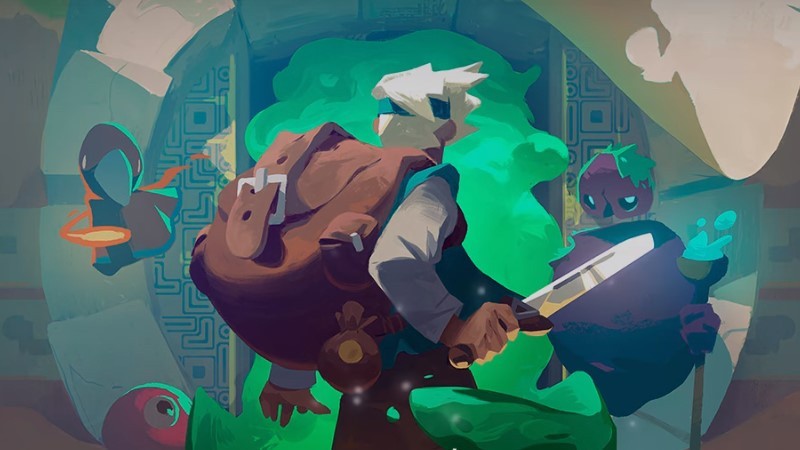
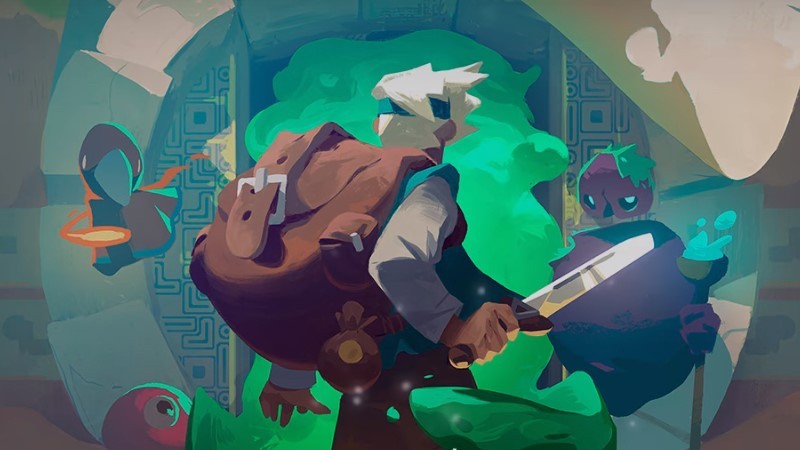
Digital Sun has released a free downloadable update for its beautiful dungeon crawler, Moonlighter. It includes a grand total of nine new companions to aid your adventures and a host of new minibosses, so as not to make its rogue-lite action too easy.
There are a load of minor additions to the base game, too. Here’s a more comprehensive list of features and changes from the horse’s mouth:
Zenon’s Campfire — From now on, when you visit the dungeons at night, Zenon will be there, sitting by his campfire, ready to tell you some forgotten stories of Rynoka and Moonlighter’s world. Those tales will be unlocked with the game’s progression. Tomo Stories — We’ve modified and added more lines for Tomo. They should explain her relationship with Will better, shedding some light on their mutual past. Banker Information — We have introduced a lot of special warnings and UI changes to avoid the Banker “stealing” your money. A lot of you forgot to revisit that mustachioed capitalist and were losing the investment. Sorting Items — We’ve added a sorting mechanic inside the inventory. Get the Broom! — We’ve added the possibility to get the Broom™ from Le Retailer (if you’ve managed to lose it somehow!). The Broom™ is important for getting some achievements – so we hope you like this little feature! Prices Update — We’ve added a new system in the Shop to better inform whenever an item’s price gets updated. + Minor changes and Fixes
We enjoyed the game a lot, despite its ‘grindy’ mechanics, saying in our review that “if you want to play a top-down Legend of Zelda game as a rogue-lite while also taking shifts as a shopkeeper then, hey, Moonlighter is about to scratch a distinctive itch for you. It hits a sweet spot somewhere between satisfying swordplay and nitty-gritty economic sim.”
Did Moonlighter strike a chord with you? Does this free update address any issues you had with it originally? Discuss in the usual boxes below.
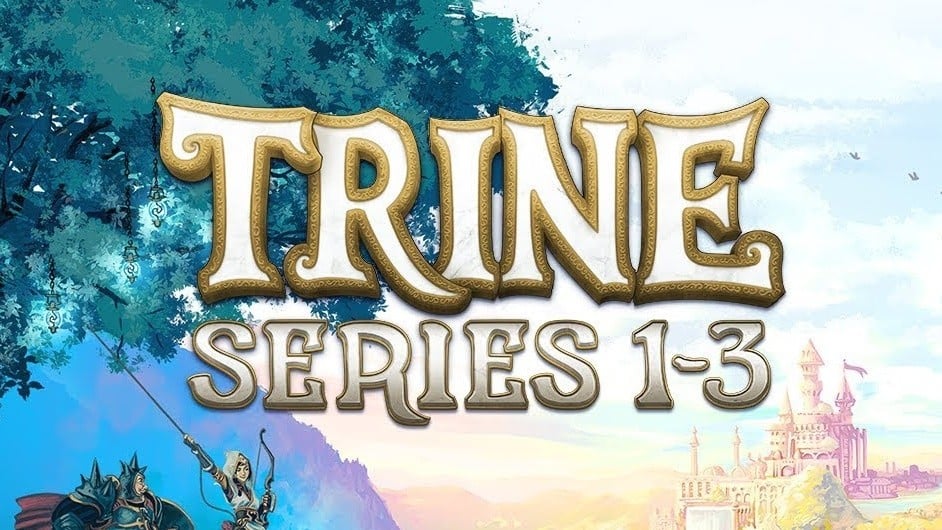
Frozenbyte has revealed that its super tasty ‘Trine Series 1 – 3‘ bundle, which unsurprisingly contains all three previously-released Trine games, will be getting a physical release. The best news is that all three will be available on one cartridge – so no pesky downloads required!
Combining puzzle, platforming, and action gameplay set in a beautiful fantasy world, the Trine series has seen a number of releases across Nintendo platforms over the last few years. The original is actually already available on Switch now under the name Trine Enchanted Edition, and Trine 2: Director’s Cut launched on Wii U back in 2012. The third entry, Trine 3: The Artifacts of Power, will come to a Nintendo platform for the first time with this release.
Those second and third instalments will be available as individual downloads, too, meaning you can pick and choose whichever titles you like from the series. You might remember that Trine 4 has also already been confirmed for a Switch release at a later date, so this would be a great chance to experience the whole collection.
The bundle is set to become available this spring, as you can see in the trailer above, and is available to pre-order today exclusively at GameStop stores and online for $39.99. Trine 2: Complete Story will launch digitally on Switch on 18th February for $16.99 / 16.99€ / £15.29.
Are you a fan of the Trine games? Will you be picking up this physical pack? Tell us below.