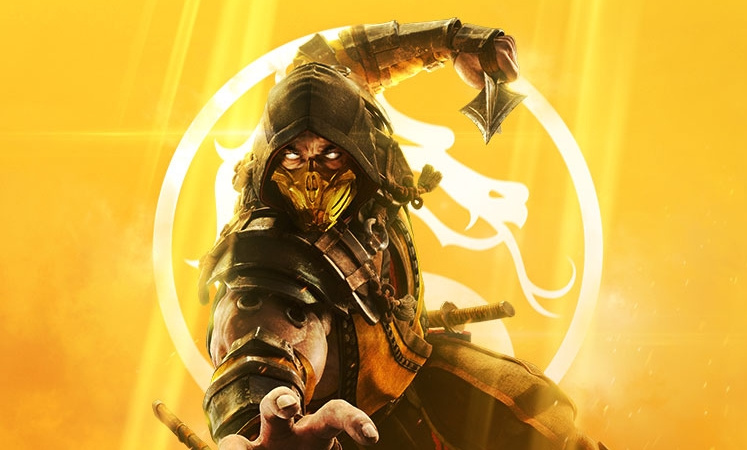
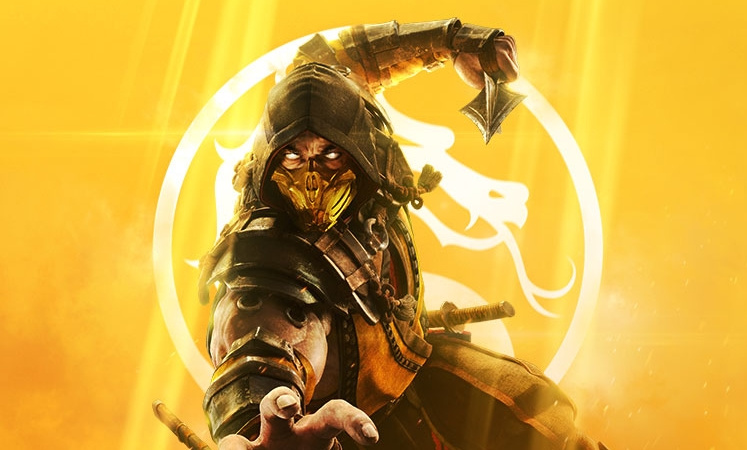
Following the release of Mortal Kombat 11 last month, it’s now been confirmed a new Mortal Kombat movie, in the form of a reboot, is on the way.
The Warner Bros. action film will be shot in South Australia and is being led by the Malaysian-born Australian producer James Wan, who is best known for his work on the Saw series, Furious 7 and more recently Aquaman. Pre-production is already underway and filming is set to take place between September and December.
Simon McQuoid, who is making his directorial debut, said the film would channel the “core essence” of the characters featured in Mortal Kombat but would go “deeper” than the video game series.
“We’ve gone back to the absolute sort of source material and we’ve taken that and we are turning that into an epic world.”
Executive producer E.Bennett Walsh believes South Australia is the ideal location for a movie like this and explained how it would be the biggest film production the state had ever seen.
“It’s the biggest production that’s ever been in Adelaide, that’s for sure, and because it’s an action-adventure film, the requirements are so much more and it goes into manufacturing and it goes into just the amount of people we have to hire.”
Larry Kasanoff, Micahel Clear and Sean Robins have also been named as executive producers. Todd Garner will be another producer on the film and the screenplay is being handled by the longtime gamer Greg Russo.
Would you be interested in seeing Mortal Kombat on the big screen? Have you seen the original films? Tell us below.
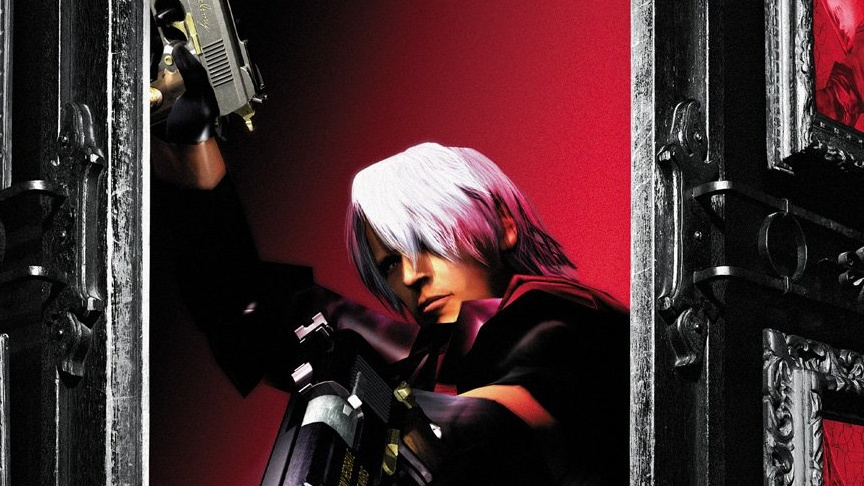
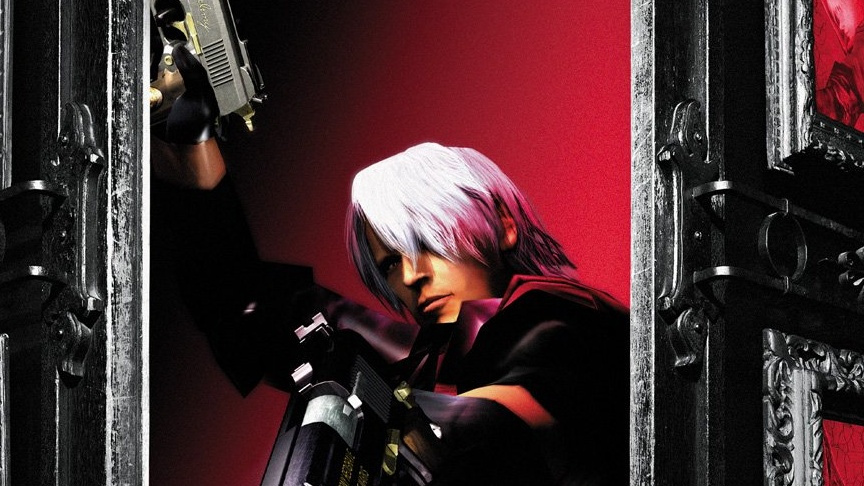
It’s been roughly a week since Capcom announced the original Devil May Cry game was coming to the Switch this summer.
Since then, we’ve heard how the Japanese company has “no plans” to release a standalone physical edition of the game on the eShop and have also seen the very first batch of screenshots for the Nintendo version.
The latest morsel of information about this upcoming release comes from US Gamer. After much speculation about which version of the game the Switch would receive, Capcom has now confirmed this specific release is part of the Devil May Cry HD Collection released on multiple platforms in 2018. For now, though, the company is focused exclusively on the original experience:
“Capcom is focused on bringing the original Devil May Cry experience for the first time to a Nintendo system. No other titles have been announced.”
The other two games in the HD Collection include Devil May Cry 2 and Devil May Cry 3: Dante’s Awakening.
Are you glad to hear Dante’s first outing on the Switch is part of the HD Collection? Would you like to play the second and third game as well? Leave your thoughts below.
Super Robot Wars T is the most recent entry (and the first on Switch) in Bandai Namco’s very successful series of tactical mecha adventures that stretch all the way back to deepest darkest 1991. With dozens upon dozens of previous entries under their belt you’d imagine they’d have exhausted Japan’s supply of pilotable robo-suits long ago, but Super Robot Wars T proves there are still fresh avenues to explore, and this entry has the pleasure of at last granting the wishes of anyone who ever dreamed of going into battle alongside Captain Harlock or the cast of Magic Knight Rayearth.
And if you’re the sort of person who has trouble telling your Tallgeese apart from your Transformers these days, or if you have no idea what any of this means at all, then you might think it was safe to say the game wasn’t for you and quietly move on – but you’d end up missing out on an experience that’s far more accessible than a cursary glance would have you believe. The team behind Super Robot Wars T are clearly well aware that a series with the kind of heritage and baggage this one brings can easily feel overwhelming for all but the most dedicated of fans, which is why the game has an excellent interactive tutorial sitting right there on the main menu, separate from the actual campaign.
This optional helping hand is everything you could hope for if you’re just starting out or find yourself in need of a quick refresher – it’s short and to the point so you don’t get overloaded with information that’ll be forgotten before you’ve even started the game properly, but it still does a very good job of covering the fundamentals well. This means going through thorough but never patronising explanations of the real nuts-n-bolts stuff that some games can, at times, be guilty of forgetting newcomers even need help with, such as ending a turn or learning how to activate the numerous in-game explanations. It’s all topped off with a stress-free playable battle that allows you to spend as much or as little time as you wish getting some meaningful practise in without fear of failure.
Perhaps most important of all is the tone of these self-contained lessons; they take great pains to hammer home how finding the difficulty level that works best for you and powering up your favourite (rather than ‘best’) mecha are the key components of an enjoyable Super Robot Wars experience – not worrying about optimal builds or a perfectly crafted teams. This means everyone, even complete newcomers, finish the tutorial not only thinking “I can do this!” but also knowing that the game is chiefly focussed on being an entertaining experience, even with pages of statistics to wade through and all sorts of other variables going on. This is hugely important for a game that’s about to plunge you headlong into hours and hours of large-scale tactical battles and reams of specialist terminology.
You are not abandoned once the game starts proper either, with everything from battle skills to obscure cutscene acronyms having detailed explanations available at the push of a button. Don’t know your Boson Jumps from your Neo-France? Can’t remember a character’s backstory or even which show they were from? No problem! The descriptions you can bring up cover enough ground to give you a good explanation of whatever you happen to be looking at, so even if you’re just playing because you like TRPGs and/or the concept of anime mecha in general, you never have to feel lost amongst a multiverse of technobabble.
Like any game that’s up to its mechanical armpits in laser cannons and giant spaceships, the vast majority of your time is spent locked in combat with an ever-expanding selection of sworn enemies, generic grunts, and violent robot-controlling AIs. In Super Robot Wars T this conflict plays out like a tactical RPG – think of Fire Emblem, Disgaea, and so on – with battles taking place across a solar system’s worth of isometrically viewed grid-based combat arenas. As with most games that have you politely taking turns to move your motley crew of mecha around a map, the basic aim is to get your team members close enough to dish out a successful beating without leaving them damaged, vulnerable, or surrounded by much stronger enemy forces on next turn.
But even something as straightforward as that could easily become confusing in a game that offers such a wide range of offensive and defensive options for every unit, even before taking in to account further wrinkles such as terrain type, barriers, skills, enemy size differences and all of the other things the game can trip you up with. So to keep things clear and streamlined you always get a concise summary of both yours and the enemy’s health, potential attack type, its chance of hitting and a warning if either of you is likely to shoot the other down before committing to battle; there’s also info on potential support calls, special skills and the option to tailor your unit’s response to an enemy’s attack (want them to focus on blocking instead of trying to counter? You can!) all on the same screen. Your victory and loss conditions are also clearly laid out before the start of every battle and the game gives you an equally upfront update should these change mid-bout. Details like these may feel insignificant or obvious in the grand scheme of things, but they all come together to give these large-scale conflicts a solid focal point in a game that could have otherwise come across as a little more than a pile of anime DVDs haphazardly glued back together after being fed through an industrial-strength shredder.
If Super Robot Wars T had left the fighting there then it would’ve been nice enough adventure, but nothing too special – trading blows and hoping the enemy falls down before you do is an OK enough way to pass the time but it makes for a mild purchase recommendation and one rarely worth going to the trouble of importing. Of course, a series that’s survived as long as Super Robot Wars has is going to have more than a few interesting tricks up its sleeve, and T is no exception. The game goes out of its way to offer lots of opportunities to intelligently mitigate incoming damage or enhance your own, as well as influence unit morale, movement range, repairs, retrievals, and all sorts of other helpful tactics that, when properly prepared and then used well, can really turn the tide of battle.
By default, individual skirmishes trigger a battle animation; sometimes these are quick and simple clashes of 2D sprites, other times they’re epic full-screen illustrations, and every now and then the game rolls out nothing less than a short FMV sequence to show just how seriously things are about to kick off. Whatever’s going on, you’re in for a visual treat as these scenes never fail to perfectly capture that very specific way the shows that these beautiful mecha originate from animate piercing laser fire and big showy explosions; it’s all joyously vibrant and expressive whether you know how closely they’re referencing the source material or not, paired up brilliantly with those unmistakeable sound effects of clashes and clangs that only come from two beautifully animated mecha duelling it out in the depths of space (or reruns of Jayce and the Wheeled Warriors, if you’d prefer).
Unfortunately, there’s no getting away from the fact that these glorious scenes are ultimately superfluous and no matter how wonderful they look they greatly bloat the length of battles – something the development team were thankfully well aware of, which is why you can speed up or interrupt these animations, or even go so far as to replace them entirely with super-quick and simplistic little battle sprites (which can themselves be further sped up too). These options can be toggled with just a few quick button presses before or during every fight, so you don’t have to skip your favourite attack sequence or miss out on an exciting all-new encounter for the sake of saving lots of time elsewhere in the scenario.
Another deftly-avoided worry is that the sheer quantity of units on the battlefield are going to result in tedious Project X Zone-style slogs (especially when reinforcements and new boss-level characters start showing up), but in practise they tend to pass by faster than you’d expect as there’s no time wasted while the CPU pretends to think things over; sprites reposition themselves quickly on the map when asked to and as your counter hits during the enemy’s phase are often enough to wipe out damaged generic “filler” troops with little effort, it doesn’t feel like the other half of the battle is wasted time for you.
With all of these units under your command and even more on the enemy side, it could be easy to lose someone on the expansive battle grid or spend a lot of time waving a cursor around to find a particular unit (the Switch’s touch screen is sadly not an option here) but all it takes is a quick tap of a shoulder button to cycle through pilots yet to move, or, if attacking, to cycle through hostile targets in range. The game will even warn you if you try to end a turn with characters still waiting for commands so you can’t miss someone, even when your team’s spread out across a dusty Martian plain or buried in a tangle of enemy mecha.
When you’re not busy fending off hordes of adversaries or spending a lot of time watching people refuse to talk about their troubled pasts with other people with equally troubled pasts, you’re given the opportunity to look over (as well as enhance and customise) just about every pilot and mecha currently under your command; teaching your team mates new skills or boosting their personal combat parameters, equipping their mecha with helpful items or improving their combat capabilities. The standard difficulty setting is balanced so things are clearly going to be easier if you take the time to refine your team’s abilities, but it’s more about customising things to your liking than getting caught up in a tear-inducing stat-crunching nightmare just for a chance to succeed in the next fight.
The alternative “Beginner” and “Expert” difficulty settings accessible at every intermission skew this balance in an appropriate direction so if you’re struggling to clear a scenario or just feel like you need a bit of a break after a hard day’s work, you can turn it down for a battle or two (the only “punishment” is missing out on the opportunity to earn some extra rewards), and on the opposite end of the scale if you fancy dipping your toes into the detailed team setup side of things, you can turn up the difficulty for a few fights without the fear that it will all become overwhelming after you’ve already sunk a week’s worth of precious free time into the game.
The entirely separate DLC scenarios can also be accessed during these intermissions; these take the form of pages and pages of extra mini-missions that offer cash rewards and equipment parts for you to use back in the main game once they’ve been cleared. Sadly, finding out exactly what’s inside each specific extra scenario is impossible within the game itself and the eShop’s DLC page only shows you the rewards you’ll receive on completion, rather than the content or even participating characters of the scenario itself, making this extra content something of a hard sell as its presented. As we’re now in the 21st century the internet’s always there to fill you in if you would like to know what sort of experiences you can find in here (and if they’re worth organising a region-appropriate eShop account to do so), but there’s no reason for it to take this amount of e-sleuthing just to discover what the game’s trying to get you to spend money on. The overall feeling is one of easily avoidable aggravation, which is a pity because any time spent with this melting pot of diverse characters is always a joy even if you’re not fully up to speed on the ins and outs of their previous adventures.
Which isn’t to say Super Robot War T’s plot is in any danger of rivalling the best and brightest tales the Switch has to offer, but for a story that by necessity is at least 90 percent references to a vast array of very different TV shows (with extra meta-references to other references on top) and has to spend a lot of time pushing yet another guest enemy or ally through the story’s revolving door, they’ve done an exceptional job here, creating an enjoyable tale even when everyone’s busy pointing and shouting at each other about truth, justice and revenge. Or even all three at the same time. Again. It’s all done with aplomb and the game absolutely has the quality and polish to back it up – not that anybody buying a game with “SUPER ROBOT WARS” printed in big gold letters on the front of the box really has any business minding when the game decides to stick with such a long-running formula.
And Super Robot Wars T is formulaic – if you’ve ever played any other game in the series then you’ll immediately feel a wave of familiarity washing over you the moment you start T – but while the series may be happy to fiddle around the margins rather than drastically overhaul itself for the sake of being different from one game to the next, there’s no question that what it does works, and works very well.
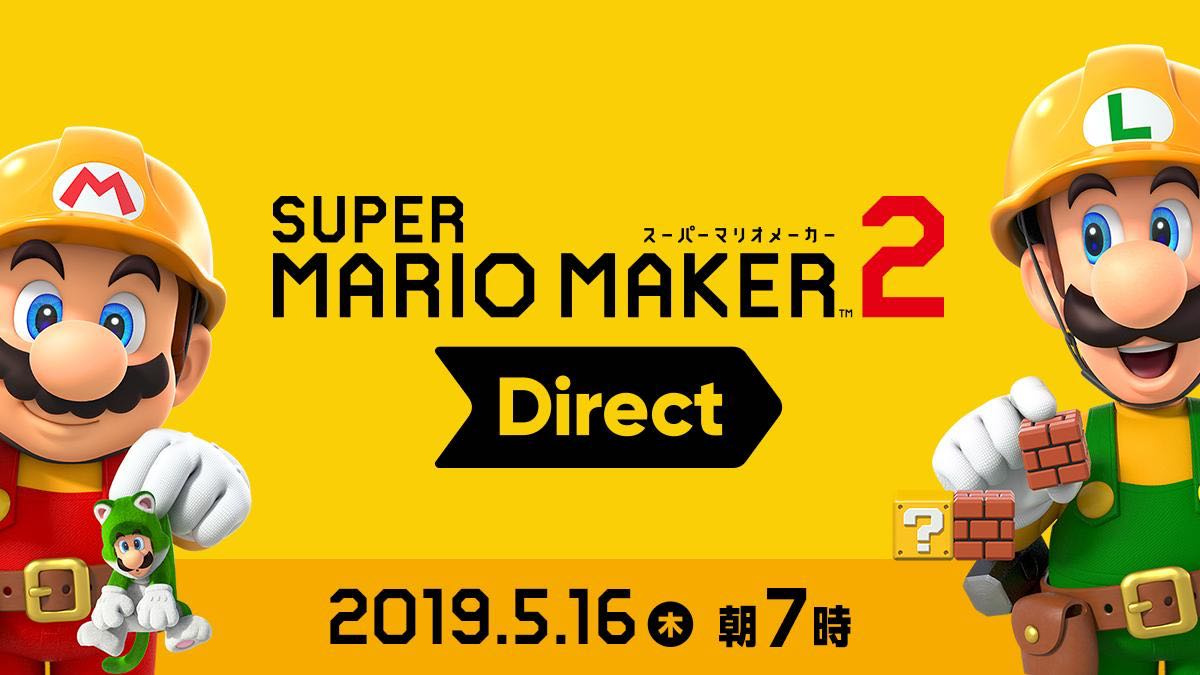
Completely out of the blue, a Super Mario Maker 2 Nintendo Direct has been announced to air tomorrow, 15th May.
The show will be 15 minutes long and “packed” with info about the upcoming release. The following description for the Direct has just been shared in a press release.
“Tune in on Wednesday, May 15 at 3 p.m. PT / 6 p.m. ET for a roughly 15-minute presentation packed with information all about Super Mario Maker 2 for Nintendo Switch.”
Times: 3pm PT / 6pm ET / 11pm BST
As always, we’ll be hosting the video right here on Nintendo Life, so make sure to check back with us tomorrow. As a reminder, the game launches on 28th June, just a couple of weeks after E3.
Excited? Ready to learn more about the game? Let us know what you hope to see in the video with a comment below.
They say that imitation is the sincerest form of flattery; if that is indeed the case, then few games are more overtly flattering to the classic Mega Man series than Venture Kid. This new release from FDG Entertainment isn’t shy when it apes the concept of Capcom’s legendary series, and while it does a reasonably satisfactory job of cornering what makes Mega Man games so enjoyable, it ultimately amounts to little more than a game-length equivalent of a playful elbow jab to the ribs as someone grins and says, “Hey, remember those old Mega Man games?”
The story follows Andy, a generic dude meaninglessly picking up orbs off the ground with an unnamed girl on a “distant island far away”. Just when the two have nearly wrapped up with their orb-collection duties, a nearby factory suddenly explodes, injuring the girl as Andy curses the name of someone named Teklov. Later that night, Andy reads in the paper that Teklov has built a space fortress as a ‘peacekeeping weapon’, and after using the power of baseless guesswork, Andy and the anonymous girl arrive at the conclusion that surely Teklov is up to no good. Another unnamed character enters the room – this time a burly, bearded man with an eyepatch – who hands Andy a gun and promises that more armaments are on the way, and Andy quickly leaves with murder on his heart.
As one would expect for an 8-bit game of this variety, the story isn’t enormously important, but the plot of Venture Kid is laughable even by retro standards. The nameless main characters and paper-thin setup seem to suggest that very little attention was paid to the narrative, and this is further driven home by how most levels in the game seem to have absolutely no connection to this evil Teklov figure; Andy just runs through different areas of the island and kills whatever gets in his way, Teklov’s sinister plans be damned. Still, as nonsensical as it may be, the plot isn’t really important to this primarily gameplay-focused title; as long as you don’t come into this one expecting much, you won’t be disappointed.
Gameplay takes the shape of a standard Mega Man platformer, right down to the three ‘on-screen projectile’ limit on your standard pea-shooter and the occasionally infuriating obstacle placement. Each stage sees you running ‘n’ gunning your way through a collection of easily-dispatched enemies and mildly difficult stage hazards, culminating in a boss fight that, once cleared, grants you a new weapon which will be particularly effective against one of the other bosses. Along the way, you can also pick up orbs scattered around each stage to spend on a shop in the pause menu, offering various boons like health upgrades and weapon energy refills. It’s a tried-and-tested formula that’s been done to death already, but to give credit where credit is due, Venture Kid does a decent job of using this formula; the game isn’t innovative by any stretch of the word, but it at least executes what it sets out to do with a reasonable degree of skill.
Generally speaking, Venture Kid is hardly what we’d describe as a difficult game, but it does every now and then throw a mean difficulty spike at you that simply feels unearned, such as a leap across a gap with a length that only barely falls short of your maximum jump length. These moments, infrequent as they may be, show up just a little bit too often for our liking, and kill any momentum or enjoyment you might be having in a stage – especially if they cause a Game Over and force you to replay an entire stage again. The stages are short enough that you’re not completely discouraged from trying again, but our issue also rests in how the other parts of the levels are simply uninspired; the stage design is mediocre at best and rage-inducing at worst.
As far as replayability is concerned, there are a few different game modes at the start to keep you in the loop, but all of them recycle the same basic content. The default mode, “Classic”, has you run through the levels in a linear fashion, which removes the guesswork in figuring out the weapon order – perfect if you just want to burn through the campaign as fast as possible. Next up is the “Adventure” mode, which plays more like a classic Mega Man game in how you can select any of the initial eight levels and create your own path of progression. Finally, there’s the “Survival” mode, which randomly runs you through segments of stages until you inevitably die, with the number of cleared segments becoming your score for that run. Beneath all of this, there’s an underlying achievement system that rewards you for pulling off certain feats, such as beating a boss with only one health heart left, and while it proves to be rather bog-standard achievement filler, completionists will no doubt be pleased at what’s on offer.
As for the presentation, Venture Kid makes no effort to differentiate itself from its inspiration or its peers, this is about as standard an 8-bit game as it gets. Levels are themed around tired concepts like ‘Desert’ and ‘Jungle’, and though what’s here for the spritework and animation is solid, it all feels a little too simple. There’s no pizzazz, no effort made at wowing the player; just a straightforward art direction that makes no effort at pushing the boundaries of the medium. Similarly, the soundtrack lacks the anthemic presence of many of the Mega Man games, instead consisting of a forgettable collection of chiptune tracks that satisfy, even if they fail to impress.
Conclusion
Venture Kid is the sort of game that understands how blatantly it borrows from previous genre luminaries yet makes no effort at even attempting to surpass them; this is very much a ‘what you see is what you get’ sort of experience. Bearing that in mind, it’s inevitably the kind of game that you’ll spend a few hours on, think “Well, that was… fun”, then move on and never return to it. Still, it does what it sets out to do – copying the Mega Man formula – and, when viewed as the sum of its parts, it does a reasonable job. If you’ve played all the Mega Man games to death and simply must have more, you could do a lot worse than playing through Venture Kid. If you don’t fall in this camp but are still looking to scratch that retro action platformer itch, then we’d suggest you pick up one of the numerous Mega Man collections already available on the eShop instead. Why play the imitation when you can have the original?
If you’ve played the Switch version of Saints Row: The Third – The Full Package since it was released last week, you might have noticed the open-world sandbox is a bit rough around the edges. To make the experience more enjoyable on Nintendo’s hybrid device, Deep Silver is issuing its first patch for this version of the game later this week. Below are the various fixes and improvements you can expect, courtesy of the Deep Silver website:
added auto-matchmaking feature
added low resolution particle rendering and related performance update
added credits sequence updates to icons & names
fixed an issue where audio would desync after switching to the main menu and back
subtitle fixes for female character customization
fixed user confirmation pop-up to reconnect to Nintendo Switch Online after connection loss
fixed auto matchmaking for public game play
fixed DLC Russian & Japanese localization
crash fix: forced termination may occur after selecting “End game” on the pose screen
general iterative bugfixes and performance optimizations
infinite loading screen fixed
user confirmation popup to reconnect to Nintendo Switch Online after connection loss
fixed International & Japanese subtitles and lip sync
subtitle fixed (subtitles for female character)
This patch will be ready for you to download to your Nintendo Switch from Thursday 16th May at 3AM CEST/ 4AM BST/ 9PM PST (15th May).
Deep Silver also mentioned how any “unusual issues” could be reported to the technical support team. This covers the following:
Input lag
Default low sensitivity in controls
Slider sensitivity in character creation
Texture and graphic bugs
If you encounter any of these problems, you can use this form to report the issue. You’ll also be required to provide as much information as possible (along with your Switch system number and SD card) so the tech support team can replicate and resolve the issue.
How has your experience with Saints Row been? Have you encountered any technical issues? Tell us below.
As illegal as it is in real-life, there’s something oddly satisfying about larceny in the digital world. From countless questlines for the Thieves Guild in The Elder Scrolls to the procedural heists of The Swindle, few things get your blood pumping in equal parts fear and elation quite like scoping a joint, filling your swag bag and legging it before the fuzz turn up. So when a game as cryptically titled as Thief Simulator sneaks its way onto Switch, it’s already in a good position to steal our attention (and our wallets) from the get go.
A few ‘missions’ in, and it soon becomes clear that Thief Simulator does exactly what it says on the tin. There’s no deep storyline full of double-crosses and elaborate heists, so don’t expect the kind of narrative tour de force you get with the Uncharted games. There aren’t huge open-worlds to a steal en masse in the vein of the Grand Theft Auto series, either. What you do get is a handful of neighbourhoods full of unsuspecting citizens and their precious valuables. You’re playing a character literally called The Thief, so you shouldn’t be expecting anything other than straight five-finger discounts.
In practice, Thief Simulator works like a cross between the Thief games (the good ones on PC, not that godawful reboot from 2014) and Payday 2. A sandbox sim is spent entirely in first-person, you’re slowly introduced to the easy-to-learn mechanics at play and how best to use them. You’ll start by using a crowbar to crudely smash a window and steal some kettles and saucepans. But later you’ll learn to pick a simple lock so you can gain access to a property without making so much noise. Not so long after you’re learning how to scope out a house, tagging the occupants to learn their routines and how to get away with more cumbersome items.
Thief Simulator has a lot of little systems running alongside one another, but it does a brilliant job of slowly introducing them to you at a pace that shows you just how many options you truly have. Pulling off simple jobs earns you XP, which in turn enables you to purchase better skills. It’s here you’ll learn how to pick tougher locks or identify items of interest faster. When you’re out on a job and you reach a climbable fence you can’t clamber over – because your agility isn’t high enough – you’ll know where to focus your skills next time you reach a new level. Stealing items and selling them at the local pawn shop will gain you cash, while more specific items can be sold off on a black market marketplace on the PC back at your garage HQ.
Occupants you’ve tagged will appear with white silhouettes, so you can track their movements when you’re nearby, which makes for some tense moments as you’re slowly opening drawers and cupboards in search of jewellery or cash. That same sense of intense fear comes into play when you accidentally trip an alarm system by smashing a window on a more expensive property, or walk out into a street and get spotted carrying a stolen TV. Now you’re driving away to outrun the cops or hiding in a nearby dumpster while the rozzers try and find you.
This is where Thief Simulator starts to trip itself up. Because when you’re slowly building up the details of a target location – building up a set of notes on routines and potential valuable locations before taking the risk to break in during the day or in the dead of night when they’re asleep – the game comes together like an illegal dream. But when you have to jump into a car and actually ‘get away’, you realise you might as well be driving a wet cardboard box. Even the cars in the Far Cry games drive better, and they have terrible driving models. It basically renders escaping utterly pointless, so you’ll always have to hide when things go awry.
There’s plenty of ways to enhance your jobs, including missions given to you by a cringe-worthy contact over the phone (complete with a knock-off New York accent) and intel you can buy on a certain location. These tips are expensive, but knowing a particular property has a high-tech security system or that there’s a key to the front door hidden outside can completely change the outcome of a thieving run. You can buy new gear as you level up and earn more cash – including mini cameras that can fit into mailboxes for some handy surveillance or cutters than remove planes of glass in a window – and some of those later skills effectively turn you into a silent god of theft.
The AI at play in Thief Simulator isn’t brilliant, which can make them both easy to avoid if you’re hidden in enough shadow, but also difficult to predict when a pedestrian just seemingly appears out of nowhere at the most inopportune time. It’s also odd that you can hit the same handful of properties in a row, but there’s no repercussions. If a house with plenty of valuables suddenly had bars on the window after you smashed one the night before, or had a dog patrolling at night because you entered the property during nightfall, you’d have to adjust your tactics for the promise of even better loot. Such systemic elements aren’t here, but the art of theft is still an addictive one.
As a short term experience, Thief Simulator is a lot of fun. But once you spend more than a few hours, you begin to find yourself repeating the same missions over again. With certain story quests locked behind certain character levels, you’re forced to hit the same set of houses over and over again. That initial thrill does briefly reappear every time you acquire a new skill or level up high enough to earn the ability to drill locks or hack security systems, but the grind becomes a little too much at times.
As a port, Thief Simulator is a decent effort on Switch. Despite the basic character, car and location designs, there are some moments of slowdown and pop-in becomes a fairly regular occurrence. It should be said that this is a game that doesn’t look amazing on PC either (something the developer intended in order to focus entirely on the craft of its gameplay), so this shouldn’t be mistaken as being entirely the product of poor optimisation for Switch.
Conclusion
If you’re tired of Payday 2’s often loud and at-large robbery antics – and you’d like to take a detour into the more quiet vocation of thievery – Thief Simulator has the new career for you. While it’s not the prettiest of games and it soon starts repeating itself, the sense of freedom you’re given to rob neighbourhoods full of unsuspecting victims is still an intriguing one. He might not be Garrett, but The Thief has plenty of skills to steal a place on Nintendo Switch.
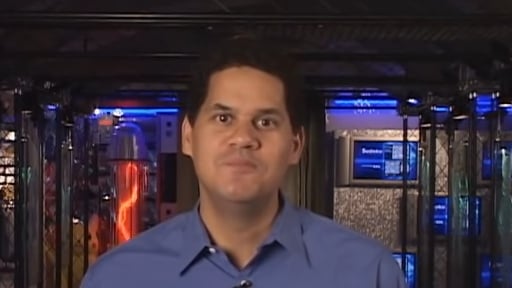
Since Reggie retired from his role as the Nintendo of America president last month, he’s been in demand all over the place. Last week he delivered a commencement address at Ringling College and now he’s spoken to The Sarasota Herald-Tribune newspaper, based in Florida, about his time as a student, career at Nintendo and what he has planned for the future.
If you’re prepared to set aside seven minutes, you can hear about how he’s never really fancied himself as a creator and originally started out in an undergraduate finance major, interning at banks. You can listen to more about Nintendo from the 2:40 mark onwards, where he reflects on the state of the company when he originally joined and how the challenge was to grow mainstream interest. He also takes some time to address why Nintendo fans liked him so much – apparently, it was his drive to win. He also talks about his recent retirement video, reflects on the original E3 that gave him his identity and discusses how video games have become a mass market.
If you haven’t already seen it, here’s his commencement address for Ringling College:
Learn anything new about Reggie? Do you miss him yet? Tell us down in the comments.
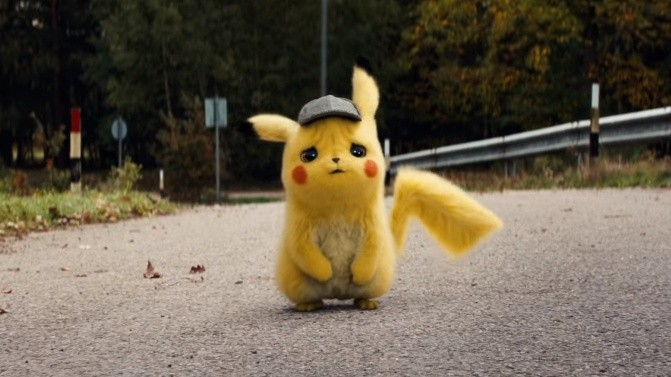
Even with the involvement of Ryan Reynolds, Pokémon Detective Pikachu has been marketed as a family-friendly film. Obviously, you would expect a few sparks along the way, but last week at a screening for the film in Montreal, some kids got more of a shock than they expected.
The cinema accidentally ran the R-rated Mexican-themed horror flick, The Curse of La Llorona. Parents of the children quickly caught onto this mistake when the trailers for Joker and Child’s Play started. It only got worse when the main screening began. Fortunately, the children in the audience had been shuffled out by this stage.
Ryan George from ScreenRant, who was in attendance, caught all of the action and uploaded it to Twitter:
The staff at the cinema eventually realised their mistake and relocated the audience to another theatre to watch Detective Pikachu. We’re just hoping the kids who saw the above horror movie aren’t too afraid of ghost type Pokémon after this ordeal.
Have you ever had a cinema mishap like this? Have you seen Detective Pikachu yet? Tell us down in the comments.
The founder of Atooi, Jools Watsham, has released a new blog post discussing everything the company has been working on over the past four months.
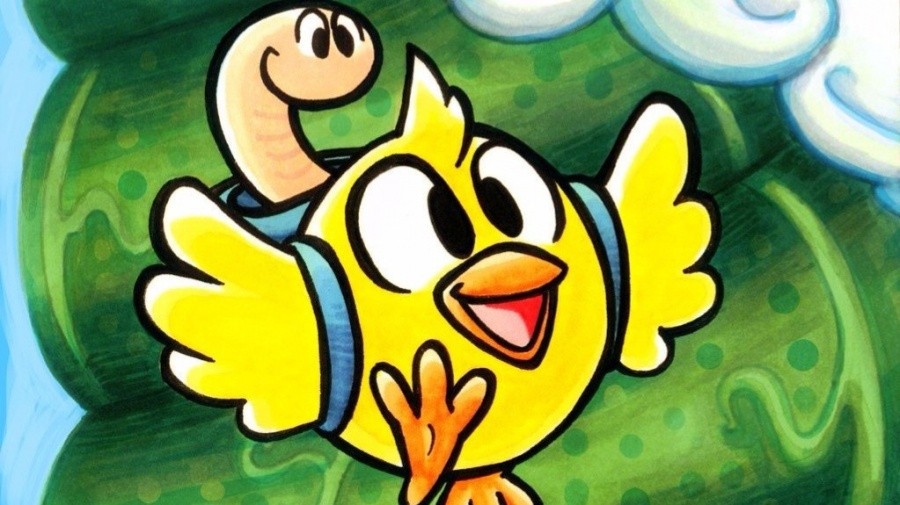
He started off with an apology for the delay of Chicken Wiggle Workshop on the Switch. The current objective is to release the game by the fourth quarter of 2019. So, sometime between October and December. Right now, the team is busy adding more content to the game and polishing every aspect of it to improve the overall experience.
“We’re adding more content to the game as well as polishing every aspect of it, which all takes extra production effort and time. The additional content we’re adding improves the player’s overall enjoyment and experience of the game – making it a much better title – while also addressing some of the feedback we received from the original release on 3DS. In short, we’re adding our own internal stretch goals to the project, despite the Kickstarter not reaching those extra funding goals.”
Jools went onto explain how developing multiple projects simultaneously resulted in shared resources and slower progress:
“Sometimes we must share resources across projects to keep Atooi, as a whole, on track with our overall company strategy. We are always developing multiple projects simultaneously. This is to ensure we have a steady stream of releases and hopefully a steady stream of revenue. This enables Atooi to continue making great games. The adverse effect of this approach is that it can slow down progress on some or all of our projects for a period.”
After this, he discussed how the company has three secret projects underway. The first is a physical release, the second appears to be a free online game and the third is a puzzle adventure title:
Secret Project #1: We are wrapping up a very special physical release right now. That’s right – a game in a box!! If everything goes as planned, it will be available to purchase in the next few months. I think this will be a very nice surprise for Atooi fans. Keep your eyes and ears open for more news on this very special release. We should have more news to share during E3, which is this June.
Secret Project #2: This title is extremely exciting and also extremely risky for us. We’re throwing our hat into the ring of free online games for Nintendo Switch (and hopefully other platforms eventually). Insanity? Yes, probably! The game is progressing extremely well, so even if it is not a financial success, it will certainly be a game that I am immensely proud of, and a game I am looking forward to play with everyone fairly soon-ish. More news closer to completion.
Secret Project #3: We have a puzzle adventure in the works, which shows excellent promise. It is a concept I first created many years ago that we’re finally developing now. It scratches a new itch when compared to our other titles. Exciting stuff. More news soon.
The last bit of news was about Treasurenauts. It’s still on the way, even if it was announced way back in 2013. Currently, the team is looking towards a 2020 release. Apart from this, the project is progressing very well.
“Yes, we’re still working on the game I first – mistakenly – announced way back in 2013. We’re tentatively looking at a 2020 release. I won’t have any new details to share until next year, I expect. The game is progressing very well. I am looking forward to share more on the game in the future.”
If you don’t already own an Atooi game, now is a great chance to try one out thanks to the current sale on the eShop, which has reduced all of the developer’s games by 80%. This includes Mutant Mudds Collection, Xeodrifter, Totes the Goat and Soccer Slammers.