Posted on Leave a comment

Get a job: Bandai Namco Studios Vancouver is hiring a Lead Software Engineer

The Gamasutra Job Board is the most diverse, active and established board of its kind for the video game industry!

Here is just one of the many, many positions being advertised right now.

Location: Vancouver, British Columbia, Canada

Responsibilities:

  • Define product and technical specification with producers, game designers, artists and other engineers.
  • Design, build, test, deploy entire game systems and support other engineers.
  • Produce engineering proposals, cost estimates, schedules, and other documentation to support project development.
  • Ensure that the quality of products made at the studio meets BANDAI NAMCO standards and its customer expectations.
  • Create an efficient and productive work environment.
  • Team leadership including mentoring, goal setting and career development for your reports.

Qualifications:

  • A degree in Computer Science, related field, or equivalent experience.
  • 7+ years of professional experience with at least 3 shipped mobile, console, PC game titles.
  • Expert knowledge in programming with C++, Unity/C#, iOS/Objective-C, Android/Java.
  • Broad knowledge of game development processes with expertise in at least 2 of the following: physics, AI, gameplay, rendering, online, tools, UI, audio.
  • Experience in building various pipelines and workflow to deliver high-quality product.
  • Excellent knowledge of common algorithms, data structures, patterns, and the ability to apply them to problems while keeping constraints and performance in mind.
  • Able to create, manage and track schedules for a team of engineers.
  • Demonstrated knowledge of good software engineering practices.
  • Positive attitude and ability to provide and receive constructive criticism.
  • Self-motivated, strong work ethic, able to work independently.
  • Objective profiling, analytical, and optimization skills.
  • Strong sense of ownership.
  • Problem-solving skills.
  • Excellent interpersonal skills to interact with a wide range of individuals from diverse backgrounds.
  • Being a tech enthusiast.

Interested? Apply now.

Whether you’re just starting out, looking for something new, or just seeing what’s out there, the Gamasutra Job Board is the place where game developers move ahead in their careers.

Gamasutra’s Job Board is the most diverse, most active, and most established board of its kind in the video game industry, serving companies of all sizes, from indie to triple-A.

Looking for a new job? Get started here. Are you a recruiter looking for talent? Post jobs here.

Posted on Leave a comment

Even if a game ‘makes it’, frugality is the best strategy, says Ultimate Chicken Horse dev

We didn’t immediately spend our cash on a fancy new penthouse office or immediately hire 15 people to start pumping out titles. We continued working the way we did before we had money.”

– Clever Endeavour’s Alex Attar explains why the studio kept its course steady despite releasing a successful game

Successfully launching a hit game shouldn’t necessarily change the way you move through game development, argues a member of the development team behind party platformer Ultimate Chicken Horse.

Speaking in a recent Reddit AMA lead programmer and Clever Endeavour CTO Alex Attar said that, despite the game becoming a successful title for the studio, the team maintained a frugal approach to development and ongoing studio operations.

For the Clever Endeavour team, this meant avoiding the “we can afford it” mindset and keeping its workflow largely the same both before and after obtaining some financial security.

“While I obviously can’t go around divulging sensitive financial information, I can say that once we realized we were successful, our biggest strategy has been frugality. We didn’t immediately spend our cash on a fancy new penthouse office or immediately hire 15 people to start pumping out titles. We continued working the way we did before we had money,” explains Attar.

“The only difference is that our conversations are now about whether or not something is worth the cost rather than simply if we can afford it.”

The rest of the AMA is well worth checking out as well, both for the occasional bit of game development insight and fun trivia factoids about the origin of the name Ultimate Chicken Horse. 
 

Posted on Leave a comment

Q& A: Resurrecting the past with Outcast: Second Contact’s Franck Sauer

It’s not often that developers get a chance to re-release their games for a new generation. That’s why earlier this year, we were excited to sit down with Outcast: Second Contact lead developer Franck Sauer, who had the rare opportunity to port the late-’90s open-world game Outcast for modern consoles. 

It was an interesting look back at how the game development world has changed so much, and what it takes to preserve assets and try to deliver a functional, yet historical experience for casual players. And we were semi-surprised to learn that Outcast has quite a cult fanbase who was eager to pepper Sauer with questions. 

We’ve transcribed some of the more relevant parts of our conversation below.  You can also watch the stream embedded above, or click here to see it on Twitch.

Stream participants: 

Bryant Francis, contributing editor at Gamasutra

Franck Sauer, lead developer on Outcast: Second Contact

Alex Wawro, editor at Gamasutra

Porting Outcast to a new engine

Wawro: I assume you’re not using the same engine you were back in the ’90s? I’d like to know a bit more, if you can, about the process of bringing this game to a new engine, and revamping it to look the way it does. What was that like, what engine is this running on, for example? I should probably know that but I don’t.

Sauer: That’s physically the original game running in the background, the original C++ code. What we did is replace all the visual-related aspects of the game with the Unity engine. So there is a plug-in, which is the original game, which is running inside Unity. On the Unity side, we did all the rendering of the environment, the characters, the new heads-up display and stuff like that.

Wawro: Nice.

Sauer: We also added more refined collisions on the Unity side. It was a fun development because we had something to start with. We had to remove the parts that we didn’t want to keep, one by one, and replace those with the new technology. Regarding the environment, what we did was to generate from the original dataset a kind of polygon soup with all the stuff from the original, and then we used that as a base from which to build the new content and assets.

Wawro: How did you decide what to keep and what to replace. Like, Bryant and I notice that the voices seem the same but the opening cutscene is different. What was the thought process behind that?

Sauer: It was basically down to the budget. We were a very small team. Originally we planned to make the game in one-and-a-half years, and it ended up to be two years. And we knew we had to replace the environments, the characters and most of the animations. We always had this in mind to minimize the effort, in order to stay within our budget while maximizing the output, which is what you see in the actual product.

Preserving original game assets

Francis: How fruitful was it to dig up the original source material for this game? You’re obviously working with the source audio, right?

Sauer: We had all the original files regarding the game code and the art assets, and the Redbook audio for the music. But we didn’t have the source CD recordings for the voices. So that’s why the voices are the original ones. We did what we could to clean up the files, but they were compressed. That’s why the sound is not top-notch in term of the dialog. But for the rest we had all the original source files. We had to recompile and debug the legacy C++ code a lot, but from there we build the new assets and code on the Unity side.

Insight on Outcast’s original level design

Francis: I’d like to comment real quick, I love the way the scale of this zone plays out. The flow of it in this maze-like structure that goes around the center of the island, where right now I’m navigating around trying to figure out some quests. This is really impressive. It’s one thing to say it’s impressive that an open-world game was doing this way back in the day. It’s another thing for there to be this very coherent structure you can study and see how it shapes player direction.

Sauer: At the time it was actually a 2.5D game. We built the whole game from the top view using tile systems, so you could have a good view of the entire game. Probably it helped to create something coherent on that front. Now we have less constraints, but sometimes it can be more messy if you do it the wrong way.

Posted on Leave a comment

Best of 2017: Making indie games is like being a musician. In the bad way

The following blog post, unless otherwise noted, was written by a member of Gamasutra’s community.
The thoughts and opinions expressed are those of the writer and not Gamasutra or its parent company.


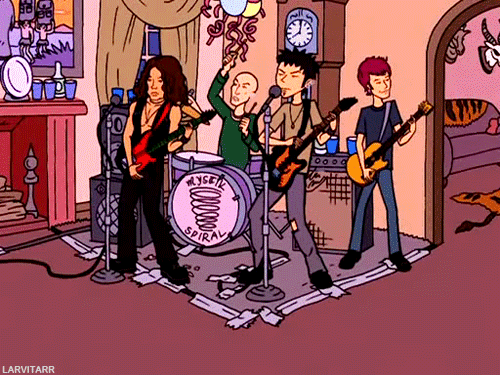
“Our game is called Mystik Spiral. It is an indie interactive aggression about the evils of conformist corporate culture. Coming on Steam for Windows and Mac and as an XBox One console exclusive.”

Over the last couple years, I’ve gotten a fair amount of attention for my articles about the Indie Bubble and the Indie Glut.  (And even a GDC talk.)

Quick version of indie gaming history: In 2010 or so, due to a combination of factors (AAA creative stagnation, better development tools, better online stores to sell on), indie games caught on in a big way and made a ton of money. For a short time, getting the Golden Ticket and landing a game on Steam was guaranteed big cash. This was the “Indie Bubble” phase.

People who wanted to write a video game (i.e. everyone) saw this and went, “Hey, I wanna get rich following my dreams too!” There was a big pile-on. MANY indie games became available, more than anyone actually wanted. This was the “Indie Glut” phase.

At last, I can complete the trilogy of articles. Now we can look around and see where we’ve ended up, a phase which I suspect will be permanent. (At least until the Earth gets hit by a large solar flare and we get to start over.)

You can’t deal with this business without grasping its fundamental reality. So it’s worth wallowing in this topic one more time. A proper understanding of reality will help us process a lot of otherwise perplexing issues (like Apple or Steam charging devs to have games on their store, or the ever-present “discoverability problem).

To see where we are, let’s talk about a long-standing rite of passage for young creative types: Starting a band.
 

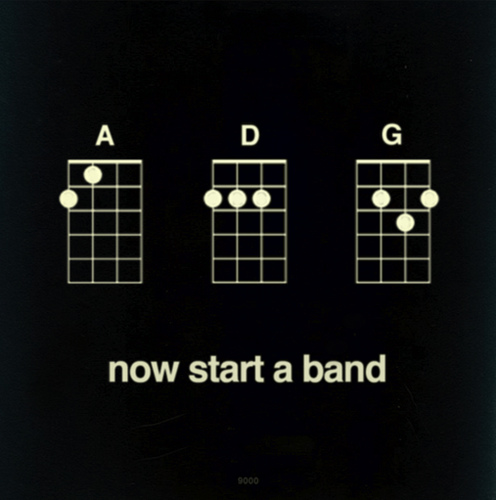
I think this would be really funny if I knew anything at all about music. Can someone translate it into a Guitar Hero chart for me? I think it means I have to learn how to play the orange notes.

The Story of Being a Musician

For decades, many young, enthusiastic, creative people have worked through their dreams, energy, and youthful ambition by forming bands.

Why not? It’s takes a fair amount of technical and artistic aptitude to learn an instrument, write songs, get gigs, press a CD, etc., so it’s a good sponge to soak up excess ambition and energy. But it’s not a prohibitive amount of energy, so just about anyone can start a band.

Usually, this band is a reaction against corporate pop culture. “Screw your plastic, AAA, mass-produced, soulless Katy Perry crap! We’re going to create real art.” This is an entirely worthwhile goal, even if it fails 99.999% of the time.

Of course, most bands die. After all, most bands are terrible. Even if they aren’t, people grow older. They lose their energy. Their dreams die. Life intervenes. They get jobs as insurance adjusters or whatever. Their demo CDs get stuck in the attic, forgotten, and then they have kids. Who start their own bands.

Not everyone gives up, though. A tiny handful of bands, through a combination of skill, connections, and luck, become actual successes and make careers out of it. Other musicians make a living as freelancers or working in a business environment (studio musicians, corporate gigs, etc). Others, the damned souls, trapped between a lack of talent and an inability to quit, live long (looooong) lives as failed musicians.

Most quit (or do art as a hobby). This is ok. The world needs plumbers far more than it needs musicians.

But the hard inexorable math of the thing is this: There are far more people who want to make a living as a musician (actor, writer, dancer) then there are paying jobs they can occupy.

There comes a time when you have to face this. Disney movies and La La Land lied to you. There is a point where refusing to give up makes you stop being an admirable young spitfire and start being a cautionary tale.

Anyway, this is the basic cycle of the thing. For the last few decades, younger people with a certain amount of talent, energy, and time could soak all that into starting a band. A few prospered. The rest went on to other things.
 

The current location on Steam of the New Releases chart. (Artist’s conception.)

You Probably Figured Out Where This Is Going

Getting together with some friends and writing a game is the new Starting a Band. I’m not saying this is going to happen. It already has.

Plenty has been written about the flood of games appearing on Steam. As I write this, 125 in the last week alone. More games than anyone wants, that’s for sure. That’s why Steam has made it very difficult to see all new releases. Let’s be honest. Almost nobody cares to drink from this firehose.

Don’t believe me? Check it out yourself!

It is very instructive to look at these new releases, which is why the site What’s On Steam, which just shows all new releases, is useful. Take a look. New titles appear FAST. Most of them will bomb, and their creators will vanish from the public view forever.

Here’s a fun trick. Write down the most recent 10 Steam games released. Wait a month. Check their sales on SteamSpy. (Bear in mind you need a few sales to appear on SteamSpy at all.) You will see very few games that get any traction. Each of their creators is just another kid who started a band (and there’s nothing wrong with that).

There’s no need anymore to predict the endgame for the video game glut. It’s happened. We’re living it. Bands haven’t gone away. There’s still a billion of them. People making lots of video games won’t go away. There’ll always be a billion of them, offering their hot take of the procedurally generated Roguelike 2-D platformer (now in VR!!!!!).

This is why “Indiepocalypse” is such a useless term. Other fields have exactly the same situation, but nobody talks about the Musicianpocalypse or the Actorpocalypse or the Writerpocalypse. It’s just part of life.

This is the new normal. So, if you are one of the doomed souls who is determined to make a living in this business, you must figure out how to deal with it.
 

Fun business tip! When you start seeing articles like this, you’ve already missed the boat.

Curation Won’t Make a Difference

Here’s what gets me about the situation. Often, when people talk about the flood of games on Steam, they act like it’s mostly trash and Steam should just curate most of it away.

I wrote a whole article’s worth of stuff in this section, but this post is already stupid long, so I chopped it out to post on its own. I’ll bullet point it for you:

1. Steam doesn’t want to curate. They hate it.
2. Even if they did curate, at least half of the stuff would remain, because it’s good enough. It’d still be a flood.
3. A fee to get on Steam won’t change anything any more than the fee to get on iTunes did. In other words, not at all.
4. Steam and iTunes don’t have a discoverability problem. They and their customers are doing great. Developers are the ones who have the problem. Nyeah.

College Degrees In Game Development

Colleges are, for all practical purposes, businesses. They charge a fee and provide a product (your degree). Like good, practical businessmen, when they saw video games get hot, they jumped forward and generously offered to give you, in return for over $100K USD of post-tax money, a piece of paper that claims you know how to make them.

I’ve written about college video game degrees before. I don’t have much more to add to that, except to say you shouldn’t get one without being realistic about your chances.

You might have a lifelong career in video games. Hey, anything’s possible. But video games are an artistic field. Writing a successful video game is HARD (like becoming a full-time musician), and a huge portion of the field burns out of it before they hit middle age.

Want a degree in video games? Fine. But you may want to approach it like getting a college degree in, say, playing the trombone. You might be one of the ones who makes it, but you’d damned well better have a solid Plan B.
 

Steam tried to get me to pay full price for an indie game. My face when.

Global Competition!

The competition in the vidya gaems biz is going to get even more gruesome. Development is starting to become far more of a global activity. This will mean not only more titles to fight, but more downward price pressure.

The Law of Supply and Demand already tells us that when there is a glut of supply (games) and roughly constant demand, prices will be pushed inexorably downward. (Which explains deep discount Steam sales and Humble Bundle.) I’ve sadly watched indie devs plaintively asking their fellows to join them in trying to keep prices high, only to see those efforts get ground to dust by the inexorable gears of Economics 101.

(Though I would note that if your business model requires Price Fixing to survive, it may be a bit flawed.)

But prices will get even lower, because you will increasingly compete against developers in the third world. Having a hard time competing now? Wait until you’re fighting someone in a country with 1/10 the cost of living of yours. Someone who can charge $1 USD a copy and still make out great.

Yeah. However pessimistic you were feeling about your game’s chances before, it’s even worse than that.

So What Does It Take To Succeed?

A really good game that feels fresh and new and is solid and also manages to, through going viral or really good PR work, get attention. Sometimes bands still get rich. So can you.

You just need to watch for those rare opportunities to make a game that says, “It’s Like [Popular Thing], but [Some Small Change].” in a new way. “It’s like Harvest Moon, but 16-bit.” “It’s like Minecraft, but 2-D.” “It’s like a JRPG, but with bullet hell shooter combat.” “It’s like Huniepop, but more Huniepop.”

There will always be ways to get rich. All you have to do is be brilliant, spot the right opportunity at the right time, have at least a little luck, and then make an amazing product.
 

This is all getting depressing, so, to cheer you up, I added a picture of an adorable doggo.

My Grim Future

When the Indie Bubble happened, I made a bunch of money. More than I deserved. And then I saved it. I’d been around long enough to see both booms and busts, and I knew you had to save during the former to prepare for the latter.

But the games business for small developers (and if you are an indie developer who didn’t write Minecraft, you are a small developer) is in a bust phase that won’t end. So now I’m asking myself, “How am I, between new games and remastering old ones, going to stretch Spiderweb Software for 20 years and reach retirement.”

It’s scary. I don’t know if I can do it. Our newest game, Avadon 3, didn’t do that well. I think it’s a really good game, and the people who bought it seem to like it. But there are new RPGs coming out on Steam every single workday, some of them are good, and you can only hold off so much competition before being overwhelmed.

Next year, I am going to write an all new game engine and series. I think it’s going to be really neat and different from what I’ve done before, and I’m excited about it. But I’ll tell you this: Its development is going to be LEAN AND MEAN.

I’m using as little custom art and music as I can. (Working title is “Unity Asset Store: The Game.”) Any way I can cut costs and still maintain a constant art style and game quality, I will take it, and I won’t apologize. This market doesn’t allow for blowing money unnecessarily anymore, at least not for me.

If you criticize me for that, feel free. It’s your right. I’ll just think of the developers who, during the Indie Bubble, flush with easy Steam money, made fun of my development style TO MY FACE. Developers who are sadly no longer in business. While I keep plugging along in my humble little bottom feeder way.

My goal is to prove you can live an entire fulfilling career writing indie games. From college to old age, all the way through. I’m over halfway there. But man, the next two decades are looking like a long road.

I’m Done Writing About This

This blog has been focused on the indie business for the last few years, and I’m mostly done with that topic. I believe we are in a stable phase now, so there isn’t much else to say. I think that most gamers don’t actually care. They don’t care about business stuff. They just want to talk about games and how awesome they are.

I write this blog to get attention for myself, because it’s really hard for a small developer to get attention. From here on, I want to write outrageous funny things about games in the hope that I get a little attention and something goes viral and I pick up a handful of customers along the way.

Good luck to everyone in this business. Unless you’re directly competing with me, in which case I wish you luck in some other business.

And if you want to make a living in games and need some advice, here it is: Write a VR game. It’s TOTALLY going to be the NEXT BIG THING and not a faddish washout AT ALL.

All of our delightful retro RPGS are out on Steam. I occasionally mutter on Twitter. My many blog posts are here.

Posted on Leave a comment

Blog: How the 3DO gave birth to my cynicism

The following blog post, unless otherwise noted, was written by a member of Gamasutra’s community.
The thoughts and opinions expressed are those of the writer and not Gamasutra or its parent company.


Behind every super logical sounding argument or theory, there is always some kind of emotional charge. This is especially true in media studies and criticism, I think. That’s not to say, however, that the argument or theories are wrong, or coming from a dishonest place. We’re all people and we all have stories that are real and that happened and that do actually say something about the world, and those real things are informing our point of view now, in the form of that emotional charge.

For as long as the internet has had access to me and my writing, and also for many years before that, I have been a strong videogame cynic. I pretty much hate all videogames, even the ones I play, and even the ones I endorse.

Someone asked me what the best Nintendo DS game was. I said, confidently, that I thought it was Mystery Dungeon: Shiren the Wanderer. They looked into it some, and were able to find out many egregiously horrible design flaws in the game. I conceded them all, saying, “I didn’t say Shiren was good, I said it was the best DS game.”

I’ve met people recently who call themselves videogame cynics, who say stuff like “I feel like I hate all videogames”, and I just know that they like videogames way more than I do. Over the last few years I’ve been telling people I’m a “videogame refugee”, particularly coming out of the GamerGate situation and how so much of videogame industry and fans (at least the loud, vocal ones) seem to be toxic, angry, aggressive, lacking compassion, etc. It feels very insular sometimes, going to these game conventions with booth babes, guns, and huge muscle cars everywhere. And as a straight white dude myself, I generally have wanted to kind of back off somewhat out of that insular little circle.

Oh, and also videogames cost a lot of money. And it’s this big conspicuous consumption thing where people just kind of want to buy stuff, like on some level the most fun games ever are are while you’re purchasing them. And also, what adult has the time to play these things, anyway?

The point is: if you want to withdraw from videogames, there are ample reasons to do so.

For years I’ve told myself that my hate for games is actually because I love them so much. I see a promise in them that other people either can’t see, or don’t care about – a promise of vastly better interactivity, etc. And all of that stuff, all of my criticisms, I think they’re not false. But there’s also an emotional charge element to it all that maybe explains it better than whether any of these points are true or false.

The picture above was taken sometime around 1992 or so, I believe, and it’s of me in my home-made Sonic the Hedgehog costume (thanks, Mom!). Growing up, I really liked videogames. But like, no – you don’t understand. I really, really liked them. I had a massive collection of NES, Super Nintendo, Atari 2600, Gameboy, Game Gear, and Genesis games at that time, and they weren’t the only things I was interested in, but they were always a main centerpiece of any social interaction or free evening.

And back then, I had an optimism and a positive identity as a “gamer”. I took pride in it. I would dress up as characters, draw the characters, talk to people about the games, go excitedly to Gamestop (or back then, more Babbage’s) and get excited about things.

In 1992, I was like how so many people are now about videogames. Excited, and able to take pride in my hobby. By 2000, I was distinctly and clearly not so.

You were so cute—what happened?!

The 3DO

There were a few formative events that pushed me in this direction, but if I had to point to one “inciting incident” for this change, it would probably have to be the Panasonic R.E.A.L. 3DO. Actually, I just looked it up on Wikipedia, and apparently the real, full name was the “Panasonic FZ-1 R.E.A.L. 3DO Interactive Multiplayer“. I had no idea, I never heard “FZ-1” and I don’t remember “Interactive Multiplayer” either.

[embedded content]

It came out in October of 1993. A hung out with a couple of friends who were older than I was, and had jobs, and were equally as obsessed with games, and they got a 3DO pretty early on. Here’s the big thing about the 3DO you need to know:

IT COST SEVEN HUNDRED DOLLARS. That’s $699.99, specifically. And that was not normal back then, or anything – the Sega Genesis cost $189.99 when it came out.

But I played the 3DO at my friend’s house and I was totally sucked in. I had to have it. The only way I could get that kind of money together quickly as a 12 year old was to have a tag sale, and so I had a huge one, wherein I sold almost all of my videogames*. The gameboy, the game gear, the NES, the Atari, a ton of accessories and games, were now all gone (I believe I kept my Super Nintendo, because I was also obsessed with Mortal Kombat 1 and 2 at the time).

[embedded content]

I really did that, and I got together most of the money to get a 3DO. I remember going to Babbage’s and buying it, and being so excited. I took it home, and honestly, I enjoyed some of the games a lot. The original Need for Speed was a decent racing game with the first “good car physics” I had ever seen in a game, and that was a lot of fun to play with. Crystal Dynamics’ Total Eclipse and Crash n’ Burn were both, totally fine videogames overall, if nothing particularly special. John Madden Football was… I mean, it was John Madden Football – it was quite like ’92 and ’93 which I liked a lot. Some other games were pretty obviously not-good, like Way of the Warrior, their attempt at a Mortal Kombat clone. There were a few other neat features – to this day I wonder why more systems don’t use the “chaining controllers” model that the 3DO used, where a second player would plug his controller into your controller, and a third player would plug their controller into yours, and so on. (Well, I dunno, maybe that’s not that cool actually, but it was novel.)

Overall, my actual interactive experience with the few games I had was actually alright. But it wasn’t mind-blowing. And overall, the Super Nintendo was way better. I don’t think I was conscious of that fact, but the undeniability of it kind of started sinking in.

But I remember the real moment everything sank in. I remember the moment so much stuff happened in my brain. About 4-5 months after I bought the 3DO, I went into Babbage’s, as I had many times, and I saw the shelf where the 3DO was, with a few boxes that looked like this:

All scuffed up – the mark of people abusing the hell out of Babbage’s ridiculous return policy (which I myself abused many times by buying PC games, installing them, and then returning them). But the worst part of all was that there was a little sticker slapped onto the box. It was a price sticker, but it wasn’t the normal small, white orange stickers you typically see on an item like this. It was an orange sticker, more like one you’d see in a supermarket on a 2-liter of store-brand cola when it was on sale. But the worst thing of all was what the sticker said:

$49.99

That’s right. The 3DO, between the time I bought it for $700, and the handful of months that had gone by, had now gone down in price to just fifty bucks. I had of course been following the news about various 3DO games getting reviewed badly, and how the system wasn’t doing so well, but when I saw that sticker, that was the moment when I knew that the 3DO had died.

But it wasn’t just the 3DO that died at that moment. My belief in the greatness of videogames, the dream of videogames, was really kind of shattered. It was all just… some crap. Seeing that box all tattered and bruised like that, that early in a console’s life, really just let me see behind the curtain in a way, and really realize—really know, and feel it, in my heart—that it’s just marketing, all the way down. From that point on, and even today, I see new games in this state: massively marked down, in a beaten-up cardboard box. I always ask, “how much value will this have, then? Without the hype storm, without the ads, without the memes?”

There wasn’t any overnight change, but I think that that was the last time I bought a console as soon as it was available. Both the original Playstation and the N64 I got, but 3-4 years after they came out. And that number got bigger and bigger for each successive generation. By 2000 I remember staunchly advocating against people buying consoles anywhere near their release date. Release day is the worst possible day to buy a console, I would tell people. The system has the smallest library, and it costs the most. Wait about 10 years, so you get the largest library and the cheapest cost, I would tell them.

Today

And those things aren’t false. It really is kind of irresponsible and sort of dumb in a way to buy a console really early in its lifespan. But maybe that’s what it is to like things. Being a little bit dumb – believing in something, even when maybe you know you shouldn’t. Because maybe you’re wrong. Have a little humility in your own ability to know how it’s going to go, and have a little bit of hope and optimism in the other human beings who are making these things. Now, I’m a game developer, I know indies and AAA people and everyone in between, and I’ve never met anyone who was very cynical about it at all. People are trying to make good things.

Beyond that, though, if you wait 10 years to buy a console, or if you don’t buy one at all, that means you won’t be connecting with anyone about these things. Most of the big games of the last decade or so, I’ve done this with—always played them at least a year after everyone else did, sometimes a lot more. And okay, yeah, they’re cheaper. But have fun playing them all by yourself with no one to connect with them on. There’s value in being part of a current conversation.

And there’s even value in some of the “hype”. If it takes hype to get me and a friend to sit down in front of a game and play it for a couple hours, then maybe there’s something to that. I can’t forget that a lot of these games are made by massive, massive corporations that are dealing in totally obscene amounts of wealth, and I can’t forget that we as a society are totally brainwashed into being these conspicuous consumers for whom it gives them a weird rush of pleasure to buy things.

But I can choose to try to have a positive attitude about things. Yeah, the 3DO is a good glimpse for me into the reality of what videogames, especially consoles, are. They’re marketing. They’re some plastic and some silicon and some metal with a good ad campaign. But they are also platforms for art, real art, made by real people, with real stories. And even for the huge AAA games, not all of those stories get their edges shaved off. We are connecting with a real person, with real people, when we play Breath of the Wild.

Going Forward

It’s true that on the extremely narrow axis of interactivity that I’m generally interested in – strategy games – I do think videogames are a little bit stuck in the mud (which is what a lot of my theory work is intended to help out with). But what about other things? What about puzzles like Portal, what about toys like Minecraft, what about contests like Rock Band, and what about interactive narrative experiences like Gone Home? I don’t deny that these things are all… quite fantastic. And yet I’ve still kind of just say that “videogames suck”, overall.

Ultimately, I just kind of have – or, have had, as I’m trying to change this – a negative attitude about games. This year, I bought a Nintendo Switch, and the new Mario, and the new Zelda. I also got Civilization VI and I’m excited about the upcoming expansion, which I’m going to play when it’s new, for once.

In my recent podcast episode, some got that I had “flip flopped” from my previous super-formal “hate everything” positions. It’s not the case. I still have all the same problems that I had before, I just am taking a wider view, and a more pro-social view. We can know about these problems and have a negotiated interaction with them, which is what I want to do. And I also want to recapture some of that feeling that I had dressing up Sonic as a kid.

~

Thanks for reading! You can support my work here.

* The good news is, in my early 20’s I worked at a Funcoland and got back all of my videogame collection, and then some. The bad(?) news is that I’ve since sold almost all of it again.

Posted on Leave a comment

Steam Winter Sale 2017 Continues! Plus, Vote For The Steam Awards!

The Steam Winter Sale continues today, through January 4th!* Save big on thousands of games for Windows, Mac and Linux!

Be sure to vote in The Steam Awards! Come back every day through January 2nd to vote for each award, and find out the winners on January 3rd.

Voting continues today with The “Mom’s Spaghetti” Award. Here are the finalists:

Alien: Isolation

Outlast 2

PLAYERUNKNOWN’S BATTLEGROUNDS

RESIDENT EVIL 7

The Evil Within 2

Remember to check back every day to see the new category and cast your vote!

*Discounts end January 4th at 10pm Pacific, unless otherwise indicated.

Posted on Leave a comment

Come to GDC 2018 and learn how Bungie tells stories in Destiny 2

The Game Developers Conference in San Francisco next March is shaping up to be a fantastic show, and today organizers want to make sure you know about a great talk from Bungie about the storytelling in its 2017 hit Destiny 2.

The talk is about how the Destiny 2 team told stories in the game, but it’s on the Programming track of talks so you know it’s going to be both technical and unconventional.

The talk, “Walking, Talking, and Projectiles: Storytelling Tools in ‘Destiny 2‘”, will see Bungie senior tools engineer Evan Moran going in-depth into Bungie’s new visual scripting tool called the Scene Editor that builds stories by coordinating AI movement and behavior.

This technique for non-cinematic stories keeps players in the heart of the action; Moran plans to showcase several examples from the beginning of Destiny 2 and explore the ways this new visual language supports complex coordinated interactions while chronicling surprises and pitfalls the team encountered along the way.

Plus, we have lots more GDC 2018 announcements to make in the coming months. For more information about GDC 2018 visit the show’s official website, and subscribe to regular updates via Facebook, Twitter, or RSS.

Gamasutra and GDC are sibling organizations under parent UBM Americas

Posted on Leave a comment

Founding member of Lizard Squad pleads guilty to cyber-crimes

A founding member of Lizard Squad, a group of cyber-attackers that took credit for taking down the PlayStation Network in 2014, has plead guilty to cyber-crimes.

As reported by the Chicago Tribune, Zachary Buchta confessed to being one of the group’s founding members during his guilty plea, where he admitted to one count of conspiracy to commit damage to protected computers. 

The charge can often carry a sentence of up to 10 years in prison, but prosecutors are recommending a sentence of 2.5 years if Buchta co-operates with a planned investigation. 

Lizard Squad rose to prominence after disrupting the PlayStation Network with a distributed denial of service (DDOS) attack in August 2014. 

The group also managed to get a plane carrying then Sony Online Entertainment president John Smedley diverted to a different location by tweeting a bomb threat at American Airlines. 

Lizard Squad continued to hound Smedley after his move to H1Z1 developer Daybreak, and took responsibility for multiple DDOS attacks against the company. 

The serious nature of the crimes prompted the FBI to look into the matter, while the UK’s National Crime Agency also begun its own investigation, and eventually managed to arrest five teens in connection with the attacks.

Posted on Leave a comment

Blog: Are casual games finally growing up?

The following blog post, unless otherwise noted, was written by a member of Gamasutra’s community.
The thoughts and opinions expressed are those of the writer and not Gamasutra or its parent company.


Co-Authored with Michael Katkoff

Why and how are casual games pivoting towards mid-core features? What differentiates Angry Birds 2 from all the previous Angry Birds games? For the first time a close chat with how the team at Rovio built Angry Birds 2 and what led them to make those bold design decisions.                 


Casual Games

Casual games is a relatively new genre that was arguably kicked off by PopCap when Bejeweled launched on browsers in 2001. The true growth of the genre was enabled by Facebook and driven by Zynga’s FarmVille and other Ville-style games. The third and largely ongoing growth started in 2012, when King took its popular Facebook game Candy Crush Saga to mobile. Today, when we talk about casual games, we tend to mean games with relatively simple gameplay, substantial active user base and somewhat limited monetization potential compared to more advanced games.

In short, casual games are generally targeted at people who may not traditionally consider themselves as gamers.

Casual games like Angry Birds, Candy Crush Saga, and Temple Run are typically distinguished by simple rules, reduced demand on time and limited need of skills demanded from the players. These characteristics sets casual games apart from competitive resource management oriented games like Clash of Clans, Clash Royale and Game of War. From a game design and cognitive load perspective, casual games have a straightforward core gameplay loop and simple currency sinks. In general, the session lengths in casual games are around three minutes. In contrast to more ‘core’ games, casual games also require players to do very less cognitive load management.


Why casual games and gamers might be maturing?

In an article published in early 2016 I speculated how masses of casual game players have come a long way since the early days of mobile games. As time has passed, casual games have been improved with new content and features. While we still play the same ‘old’ match-three, infinite runners and hidden object games, these games offer more deeper experience than their earlier version did 6 years ago.

I believe that casual gamers may be maturing due to:

1) Mastery of same old game mechanics.

2) Longevity and familiarity of playing the same genre and mechanics repetitiously.

3) Wearing off of the novelty value due to a flood of clones.

4) Introduction of ever deeper designs by game developers.

“As speculated, in between traditional genres now seemingly exists a massive pool of matured veteran casual player base!”


How to design for maturing casual players

This mass of matured veteran casual players may want to make a transition to more intricate gameplay but may be wary of high entry barriersgrinding, wait timers, base building, troop training, managing economies, social pressure of clans, cognitive load of making strategies that conventional mid-core games need (See mid-core loops above). All of which casual players hate. This can lead to a vacuum creation.

In short these veteran casual players may find the climb of casual games too SHALLOW, but mid-core too STEEP!

But this gap between casual and mid core genres can also be a window of opportunity!

Let’s look at how some top Devs. have successfully identified this gap and are experimenting to engage this audience.


Rovio Entertainment

Rovio Entertainment has seen unprecedented growth this year by experimenting and evolving it’s holster of casual games.


*Source: Seekingalpha

Rovio rose to fame with launch of its iconic smash hit Angry Birds title in December 2009, the game with its simple mechanics and ease of use on mobile enchanted masses of casual players and opened the world of games to many first time gamers, across the globe! The game was also boosted by the rise of iPhone and App Store. The game was simply perfect for the iPhone screen.

Let’s see how Angry Birds has evolved casual games and gamers towards mid-core features – with Angry Birds 2, having multiple progression paths, daily quests, Arena and Gacha.

Unlike its predecessor, Angry Bird 2 pushed the boundaries of what Rovio had to offer to casual players both in terms of content and mechanics, thereby introducing masses of casual players to more intricate and engaging mechanics commonly found in mid-core games. An excellent in depth breakdown of AB 2 has been done by Michail Katkoff .

Angry Birds 2 : Recipe of success

Note: How the feature list above resonates strongly with many contemporary mid-coregame mechanics!

Q & A with Rovio team:

Om: The number of additional features that AB2 offers compared to AB, what was the design thinking behind making such a dramatic change?

Henrik Lundin (Angry Birds 2 Lead game designer): With the initial design of Angry Birds 2, we knew that the core of Angry Birds works very well and tampering too much with it wouldn’t make much sense. Therefore we chose to keep the fun core intact and instead focus on the metagame around it.

“Knowing that we were making a sequel to a game downloaded billions of times, we needed to build something that we could expand upon for years to come. “Henrik Lundin

A system for leveling and improving the main characters of the game, the birds, hence felt very suitable for the game. Having a leveling system like that requires meaningful features that support that progression and just having a saga map with constant rewards felt very linear and uninteresting. That’s why the Daily Challenge and Arena features got added, where the players are put to the test to further increase their rewards and progression.

Om: When making such drastic changes, were you ever worried that it might add layers of complexity to the essence of what made the original title such a hit? Were you worried that it may perplex your existing casual player base? If yes, what precautions you took to mitigate it?

Henrik Lundin (Angry Birds 2 Lead game designer): When a new player started the game, our goal was that it should feel very familiar to classic Angry Birds. They had their saga map, they had the birds and pigs and they progressed through different chapters. As the player gets more used to the game we start unlocking features that are slightly more complex.

Something that might make Angry Birds 2 stand out from other games with higher complexity is our specific design aim for very spacious user interface.

“Features are not hidden behind menus or in long lists, they are all exposed and playful in their words which contributes to a more approachable user experience” Henrik Lundin

If players feel like they rather play a certain feature over the other we are not stopping them from doing so, every player is different in how they consume their entertainment.

AB 2 Similarities with Mid-Core Loops:

Multiple paths of progression : Unlike its predecessor, where players had a single track linear progression path of beating a set number of levels to move to next world, AB 2 offers a variety of parallel and intertwined progression arcs.

a) Player account Level Up

Player levels up by collecting stars. This account level is used to gate features such as the Daily Quests, Daily Challenge, and the Arena mode. Account level incentivized the player to replay levels till they are three-starred.

b) Birds Level Up : Crafting, Fusion & Components

Players can level up birds increasing the destruction points they generate upon collision. Points not only allow to get that coveted three-star-rating but they also contribute to getting the additional bird to sling.

As soon as players have enough feathers to upgrade a bird, they are prompted to do so, similar to character levelling up in mid-core games like Marvel Contest and Star Wars : Galaxy of Heroes.

Players can also buy functional goods like hats, which are much like fitting components in many mid-core games which multiply birds destruction power also creating more currency sinks. Levelling up requires feathers which are earned through gacha and daily rewards.

Q & A with Rovio team:

Om: Was the switch to evolving birds and introduction of light crafting and fusion mechanics purely driven by F2P nature of the game? Or were there any other reasons to introduce this mechanics?

Henrik Lundin (Angry Birds 2 Lead game designer): With Angry Birds 2 we wanted to give the players more than just a saga map. We wanted to:

  1. Focus more on the characters of the game
  2. Offer different flavors of progression without removing any of the previous features.

If the player cares more about the characters they are more likely to engage with the game and try out different features. In the game there are several vectors of progression, but in the end they all feed back into improving your birds. This helps with keeping the complexity low while still offering a variety of features to play.

If we wouldn’t have added these new features to the game, it would be very hard to scale and expand upon. Today the game is doing very well and is in a healthy state, that might not have been possible unless we branched out early on._ Henrik Lundin

Om: How did the players respond to all these change, as birds also have functional aspects of component fitting (Hats) more typical of Mid-Core games?

Henrik Lundin (Angry Birds 2 Lead game designer): The reaction from our fans have been very positive whenever a new engaging feature is released. When we released the hats into the game there was suddenly new goals for the players and they got to choose how their birds should look like.

We think it as a very positive change to have a sense of choice when playing, no matter if it’s how their birds look or if they rather play a certain feature over the other.  

c) Slingshot Level Up To level up the slingshot player first needs to unlock all the birds, which requires beating first 44 levels, this creates more rewards and goals for mid level players removing linearity of just beating levels with added incentive.

Q & A with Rovio team:

Om: It seemed like the design team added multiple level up’s and progression path which are intertwined? What was the motive and incentive behind them, how did you ensure players understood all these different paths without getting overwhelmed?

Måns Wide (Angry Birds 2 Executive Producer): The saga map progression is easy to understand and quite effective in casual games, but it has a lot of limitations. It’s hard to push seasonal content when all the players are sitting at totally different places in a huge map. Also, focusing on progressing the characters seemed like a logical move since people really relate to the birds. Leveling your beloved bird-makes is more rewarding than just moving from level to level.

As what comes from protecting players from becoming overwhelmed, we unlock the features one at a time. We also try to balance the game so that the players will never get too much new information at the same time.

2) Introduction to Gacha

Gacha systems are a huge hit with mid-core and hard-core players as it adds an element of luck and anticipation which a lot of players find thrilling, immense success of social casino games with a casual player base is also a strong testament of how thrilling luck based features are for the players.

AB 2 makes use of this in 2 ways.

  1. Daily chest and reward mechanics which offers players a free chest with rewards every half an hour and conditioning and habituating them to free rewards and paid premium chests if player wants more items.

2. Tower of Fortune: This is an interesting and engaging daily rewards mechanics which makes great use of behavioral economics principle of “Loss Aversion”

In economics and decision theory, loss aversion refers to people’s tendency to prefer avoiding losses to acquiring equivalent gains

“Tower of Fortune” is a daily reward mechanics with player having 75% chance of winning and 25% chance of losing, each floor of the tower gives player 3 rewards and one chance of losing all previous and current rewards if he chose a card with a pig on it, but as you can see in example above, once player has racked up multiple rewards from subsequent rounds and he encounters a pig, the cost of losing the rewards he has accumulated, is much greater than what he needs to pay to continue playing, this leads to a situation of “loss aversion” where players are less likely to let go of what they have already earned by paying a small fee/fine rather then let go of all that they know they have won for sure.

Q & A with Rovio team:

Om: What was the inspiration behind introducing gacha system to your casual player base audience? Why did you think such a mechanic will be a hit with your player base?

Henrik Lundin (Angry Birds 2 Lead game designer): Random based rewards have since long proven to work on games, as it’s both fun and exciting for players. Having several ways of progressing in our game, using different resources, it made a lot of sense to introduce gachas to the game.We have definitely taken considerable measures to be very clear about gatchas.

We take care to visualise clearly the opening of a chest so players understand what is going on. An important part of our interface when opening these chests is that all rewards are automatically added to where they belong with a clear visual animation.

This helps players understand why they got the resource and what it is good for. If that would not have existed we could have ended up in a situation where players received rewards that were both unclear in function while also just taking up space in some inventory.

Om: What was the player response to chests and Tower of fortune in terms of engagement?

Måns Wide (Angry Birds 2 Executive Producer):

 The Tower of Fortune had a huge impact on the game, mostly in terms of gem spent. As it is now, 30% of all hard currency is spent in there”_ Måns Wide

In terms of engagement it’s harder to say since we pushed the new start screen – a huge change in the game – about a month after introducing the Tower. So it is not trivial to see what’s the root of the positive trends in terms of engagement and retention.

Om: What do you think of our hypothesis? Was AB 2 targeted at engaging and maturing the existing casual player base? Or did you plan to make it more appealing to mid-core users as well?

Henrik Lundin (Angry Birds 2 Lead game designer): Angry Birds in general is a brand with a broad appeal, that is something we wanted to keep intact by making the game approachable for everyone.

“As we are introducing more mid-core features to the game, it is our responsibility to make it understandable even for casual players” _Henrik Lundin

We believe that creating more depth in the game is good for both our players and ourselves in terms of scalability, but we’re definitely taking baby steps into the mid-core features. For example, there is little inventory management in the game, meaning most of the flows in the game are streamlined towards the player progressing. If our players take part of an event, they’ll gather resources and improve their birds – it’s not more complex than that.

There is always a fine balance between keeping the game approachable but deep enough to satisfy most of our players. The best part about the game is that it’s all optional, our players can choose to spend their time in the game wherever they want without being blocked from other content. It might take months for a casual player to change their playing behaviour to a more mid-core style, but as they do I think Angry Birds 2 is a good gateway into the mid-core market.

3) Arena and social features

Every 3 hours, the player receives a Ticket, which allows them to enter the Arena. In the Arena, a player goes head to head against other players in an asynchronous battle of Angry Birds

Q & A with Rovio team:

Om: Arena battles were clearly a big move towards adding more social attributes to the game, do you think that objective was achieved with this mode?

Henrik Lundin (Angry Birds 2 Lead game designer): The Arena in Angry Birds 2 played two big roles in the game. The first was definitely to make it more social, seeing other players and having fun playing against another player. The second, but maybe the most successful, reason is to give players who like to compete a place to do so. I believe that even a player who is more casual can get a thrill out of knowing they play against someone else, and feeling great when they manage to win!

Competitiveness exists in everything we do in our ordinary lives, so it’s all about how you present the challenge to the player. In our game you play a level just like any part of the game, the only difference is that you play against your opponent’s final score. This means that there’s no great barrier to overcome making it more accessible. As the player wins they can climb in leagues and earn good rewards for it, further encouraging players to engage with the game.

Om: What are the future trends that you see for your casual and mid-core players, what new features can we expect from AB 2 evolution in future?

Måns Wide (Angry Birds 2 Executive Producer): Dynamic live-ops content engages players in mid-core games nowadays. We’ll add a lot of urgency to the game; stuff that happen HERE and NOW! With the clans and global leaderboards it makes sense to put more focus on social features and collaboration.

Om : Any advice to other Developers who are building casual games, to leverage engagement, social and monetization aspects of their game in this crowded space?

Henrik Lundin (Angry Birds 2 Lead game designer): I would start by pointing out that just because a game is casual doesn’t necessarily mean it’s shallow. Everything comes down to how you present information to the player in an approachable way so they don’t feel lost and confused along the way.

“When you’re creating your game you should design for it to live for years, that means you have to have smart systems in place that can scale and engage players for a long time. In support of that I would not look too much in the past way of making casual games where the core game was 90% of the experience” _Henrik Lundin

I believe that future games will have a much stronger meta game that can stand on its own feet, only to be enhanced by a fun core game. When players start engaging in an interesting meta game, by playing a fun core game, you will have a very good game on your hands!

Om: What would you call the secret sauce for success of Angry Birds 2?

Mia Lähteenmäki (Rovio User Research Lab): To me it seems that Angry Birds 2 team does have a secret sauce indeed, and I see there three major ingredients. At the general level they are domain expertise, systematic learning and understanding users. It is however possible to identify these ingredients more closely:

1) The game designers’ skills: Game genre skills and ability to adapt from existing knowledge of games. They have been able to distill all this into something totally new for this specific game and game genre.

2) Developing design principles: When they are developing new things and making iterations to make game work better, they have made efforts to develop them as learnings. As a consequence, they have been able to develop a set of general design principles that work for the game, some of which has been discussed above. This also helps keeping the game design consistent now and in the future, when new features are introduced.

3) Understanding and listening to players: This happens not only through analytics insights, but also by seeking understanding through other channels. For example, game development team, including product leads, have been active on our fan sites and social media like FB. So if you go and ask them what they players think about this or that, they are able to answer.

Conclusion:

From the analysis above we can safely conclude:

1) Players maturing is a rising trends, it is possible for devs. to mature and transition casual gamers into more mid-core & competitive gameplay, via introduction of mid-core features in a mild and phased manner for ultra casual games.

2) Casual game developers can extend the shelf life of their games and add more scalability and depth to create more immersive experiences by pivoting to mid-core features in an accessible and acceptable way.

In part 2 of this series we will talk to another blockbuster casual mobile game developer Playrix of Gardenscapes, Homescapes and Fishdom fame, and their take on maturing casual games and gamers. Stay tuned!!

Special thanks to contributors and editors:

Henrik Lundin (Angry Birds 2, Lead game designer) LinkedIn

Måns Wide (Angry Birds 2, Executive Producer) LinkedIn

Mia Lähteenmäki (Rovio User Research Lab) LinkedIn Twitter: @mia_lahtee

Adam Telfer (Deconstructor Of Fun) Twitter: @adamwtelfer

If you liked this post, you can check out my other Game UX Deconstructs. Or feel free to connect with me for my future article

Posted on Leave a comment

One of the first ever LGBTQ video games has been restored

Caper in the Castro, one of the first ever (if not the first) LGBTQ-themed video games, has been restored and is now playable through the Internet Archive

The point-and-click mystery was developed by C.M. Ralph back in 1989. It was distributed via BSS and was released as ‘charityware,’ with Ralph asking players to donate to an AIDS charity of their choice. 

Alas, many thought the Macintosh Hypercard title had been lost for good, but thankfully it has been recovered thanks to the hard work of preservationists led by LGBTQ Game Archive founder Adrienne Shaw.

The game itself sees players assume the role of a lesbian private detective called Tracker McDyke, who’s been tasked with solving the mystery of kidnaped drag queen, Tessy LaFemme. 

The case eventually takes McDyke to Castro St., where she learns more about LaFemme’s curious disappearance, and begins to see just how deep the rabbit hole goes.

You can try out the full game for yourself at the Internet Archive, or read more about it’s rich history by heading over to the LGBTQ Game Archive.