Posted on Leave a comment

Game Design Deep Dive: Creating comfortable UI for VR strategy in Skyworld

The Gamasutra Deep Dives are an ongoing series that aim to shed light on how specific design, art, or technical features within a video game come to be, in order to show how seemingly simple, fundamental design decisions aren’t really that simple at all.

Check out earlier installments, including creating drama through a multitude of simple tasks in Bomber Crew, or maintaining player tension levels in Nex Machinaand achieving seamless branching in Watch Dogs 2’s Invasion of Privacy missions.

I am a game designer at Vertigo Games and in cooperation with Wolfdog Interactive I have worked on the VR strategy game Skyworld. My previous game design experience is very diverse, working on a hack-and-slash console game, on applied games for several platforms, and even designed a physical card game.

Over ten years ago I wrote a student post-mortem for Gamasutra’s Game Career Guide for a FMV adventure game. So, hello again.

Skyworld was demanding from a user interface perspective for two reasons: it is a cross-platform VR game, and a VR strategy game.

We developed simultaneously for the Oculus, HTC and Microsoft Mixed Reality headsets. Whatever UI we came up with could not rely on too many buttons, because the amount of buttons between controllers varies. More importantly, what felt right with one controller, was less comfortable with the other, and intuitive controls are especially important in VR. 

In a strategy game you need a lot of information to know what’s going on. This information flow was a constant challenge and influenced all of our design decisions; from the shape of the battlefield (a round table, in our case) to the panel-based interactions. Everything boiled down to three questions, even if we did not know it at the time. 

‘Which info do we need when?’ 
‘What is the most direct way to present that info?’ 
And, ‘What is the most comfortable way to get that info?’ 

We ended up with a flexible and comfortable ‘world-based’ interface, without resorting to visual metaphors for all interactions.

Let us take a look at the implementation of two major features in the game: the round table and the panels.

The Round Table

Skyworld has a very board game-like feel, a lot of this has to do with its layout. In a way it is immersion breaking to place the game on a table and not in a seemingly endless world. But this lesser immersion is not perceived as such. In fact a little distance is exactly what you want in a strategy game.

Which info do we need when?

Obviously you need room for your empire. But you also need a good way to navigate and oversee it. Finally you need ways to interact with it. But you do not always need to see your empire. For instance when you are doing something very specific, like setting your taxes. In those cases we flipped the table to create the workspace to focus on that task.

What is the most direct way to present that info?

When you see hands as input devices (we didn’t have any virtual tools) you use them like you would use your hands. A round table with a large border screams to be rotated. Less obviously, even the surface itself can be grabbed and moved away from and towards the player. If the input for the game matches logical hand behaviour in real life, use it. 

In the end we needed the input schemes to be as basic as possible, which is always a good idea.

What is the most comfortable way to get that info?

By having the omnipotent view and the ability to rotate the board you can get across the entire playing field without getting out of your chair. Also the fact that only the table rotates and not your entire view minimizes possible nausea.

But some players wanted to grab objects in the world, for instance the General pawn, and go “full board game”. When standing up with a Vive, this is the most natural way of playing. But when you are sitting down this becomes an issue since you have to lean forward and accidentally punch out your monitors.

But we had to accommodate both. This is where ranged interaction came in (not called force-grab for copyright reasons, jk). We are still using objects that are placed in the world, but you can grab them from a distance. And when this object, a General pawn, is in your hand you can place it in the distance as well. We show this in the same way as you would show a teleport, with a beam and a reticule.

By allowing this ranged interaction we increased the comfort for the people who didn’t want to stand up or lean forward.

The Panels

The old fashioned way of opening up info in a strategy game is by pressing buttons that open panels. We ended up using panels too. But that was only the beginning.

Which info do we need when?

Much information was either abstract or high level so that adding it to a single object in the game world didn’t make sense. Things like: the happiness of your people or the total wood production of your lumberjack huts. And placing it above the world hurt the neck. In general showing all high level info constantly became very messy and unclear. No one wants to see a spreadsheet all the time. But you still want that info as fast as possible. 

What is the most direct way to present that info?

First we had a large spell book that was constantly open and attached to one of the controllers. But this felt cumbersome holding up, required flipping pages back and forth and reduced your available controllers to just one. Not very comfortable nor direct.

Then we tried out a plateau with a fixed place on the circumference of the table: go to the plateau and use the panels. But having to rotate the table to get to that plateau proved way too time-consuming. More comfortable, but even less direct. 

It needed to be accessible all the time. Meaning the location of players was irrelevant. And players needed to be able to choose when to get it.

What is the most comfortable way to get that info?

This left a couple of options, either trigger the panels with a hand motion, or use a physical button on the controller. We chose a combination. By holding down a button (or touchpad) four small items float around your hand. Move your hand slightly towards one of them and you automatically select a panel that attaches itself to your hand until you let go. And when you do it is positioned in the world relative to the player so it is always nearby.

This meant that the player was in complete control of the presented information. The panel was pinned in the exact place of preference of the player and could be dragged or closed again. It sometimes got cluttered, but at least the player was always in control.

In testing we quickly realised that players had their own points of preference anyway. One player liked to stash the panels, another had them all open constantly, a third one opened a panel and closed it as soon as it was no longer needed. Which is why it turned out to be so important to offer a flexible way to get to the information and not force one down players’ throats.

Design for comfort

Although there is a strong urge to use as many real-life interactions in a VR game as possible, this gets physically tiresome pretty quickly. It just wears you down having to constantly grab things from behind your back, or hold down a button to hold a gun in a game. Although this is not gospel for all VR of course, the type of game greatly shapes its interaction. But for our more laid back and longer strategy experience we needed a system that was as comfortable as possible. This is why, for instance, you do not hold down any button to show your hand of cards during the battles, even though holding down a button would rationally make more sense.

We do have levers that you need to move physically, but since you do not use them constantly it does not become tiresome and remains a fun VR interaction. We tried to strike a balance between using your hands, this is VR after all, and a more traditional point-and-ranged click interaction.

But as a guideline make sure your game requires the least amount of physical strain to play. Do not make players cross their arms, crane their neck or hold their hands in the air for longer than necessary. This not only vastly improves the time your game can be played comfortably, but it also makes the game more accessible to differently physically abled gamers. Although that topic deserves an article and attention in its own right.

Design for flexibility

One of the key recurring conclusions was that players play in different ways. And just like the real life design of doors, cars, traffic lights etc. we have to take into account all sorts of body shapes and sizes and left-hand vs right-hand preferences. 

We are not sure on which device they will be playing the game and if they will be standing up or sitting down when they do. In short, if they want to sit down and lean back, let them. If they want to get up and lean in, allow it. Are they left handed? Make sure your interface is equally suited for left-handed people. Apart from the battle arena, our entire game has completely symmetrical control schemes for both hands. And even for the battle arena the preferred hand can be switched.

Obviously it is more work to include multiple ways of interacting. But the more flexible your interaction is, the more a player can adapt it to their own preference.

VR is a very new medium, but borrows from a lot of existing disciplines, both in real life and digital interaction design. Build the game for all kinds of users in mind and make sure they’re as comfortable as possible.

Unless you make a fitness VR game, in which case: make them sweat.

Posted on Leave a comment

EA posts a loss on better-than-expected revenues for the holiday season

The folks at Electronic Arts today reported a loss for the company’s most recent quarter, the three-month period ended December 31, 2017, but reportedly saw a bit of a stock price increase thanks to posting better-than-expected revenues.

EA posted a $186 million loss on $1.16 billion in revenue (GAAP) generated during the holiday quarter. That’s a bit better than $1.15 billion in revenues it generated during the same period a year ago (on which it reported a loss of only $1 million) and a significant improvement over the roughly ~$1.14 billion some analysts predicted.

Intriguingly, the company also chalks up roughly $176 million of its losses during the quarter to “incremental income tax expense…due to the application of the Tax Cuts and Jobs Act,” which was enacted last month in the United States.

Most of EA’s revenue for the quarter (~$810 million) was generated from console software sales, while $181 million was generated from sales on PC/browser and $161 million came from sales on mobile devices.

In terms of whether EA is making more from sales of digital goods or packaged products, this quarter’s revenue split was roughly 67 percent digital, 33 percent physical; that’s well in line with prior quarters, and actually a bit more heavy on retail sales than the prior quarter (which was 72/28 digital/physical), likely due to an increased interest in physical products during the holiday shopping season.

No games were specifically called out as big sales generators, though EA’s press release did note that “nearly 70 percent of players engaged in the single-player campaign” for Star Wars Battlefront II, and The Sims 4 had its “highest-performing expansion pack to date” (The Sims 4: Cats & Dogs) during the quarter.

Looking ahead, the company says it expects to generate roughly $1.53 billion during its fourth quarter (which we’re immersed in right now), resulting in an estimated $5.1 billion revenue target for its 2018 fiscal year.

“Through the fourth quarter and fiscal 2019, we’ll be launching games across five different genres, on three different platforms, and to players around the world. We expect growth in full-game downloads, subscriptions, extra content, and in our mobile business.”

Posted on Leave a comment

Midweek Madness – Scrap Mechanic, 40% Off

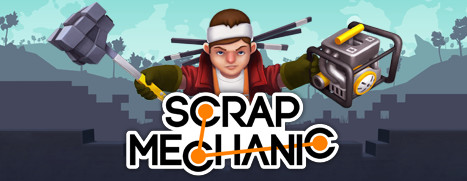
Save 40% on Scrap Mechanic during this week’s Midweek Madness*!

Scrap Mechanic is an all-new creative multiplayer sandbox game which drops you right into a world where you quite literally engineer your own adventures! Choose from the 100+ building parts you have at your disposal and create anything from crazy transforming vehicles to a house that moves. You’re even able to team up with your friends to create amazing things together: in Scrap Mechanic, you’re the master creator of anything you can imagine!

*Offer ends Friday at 10AM Pacific Time

Posted on Leave a comment

Daily Deal – Turmoil, 70% Off

Total War Saga: Thrones of Britannia is Now Available for Pre-Purchase on Steam and is 10% off!*

Thrones of Britannia is a standalone Total War game which will challenge you to re-write a critical moment in history, one that will come to define the future of modern Britain. With ten playable factions, you must build and defend a kingdom to the glory of Anglo-Saxons, Gaelic clans, Welsh tribes or Viking settlers. Forge alliances, manage burgeoning settlements, raise armies and embark on campaigns of conquest across the most detailed Total War map to date.

*Offer ends at 10AM Pacific Time

Posted on Leave a comment

Making 3D climbing work in an isometric RPG: Seven: The Days Long Gone

Isometric role-playing games have long been a strong format for exploring interesting storytelling ideas and fascinating tabletop game mechanics.

In the last few years, a number of notable developers have returned to the genre. Last December, Polish game dev Fool’s Theory and publisher IMGN.PRO teamed up to release Seven: The Days Long Gone, a new entry in the genre that focuses on stealth and, remarkably,, 3D platforming

When we decided to stream Seven last month, we did so because we felt it was notable that a developer was pushing some of the genre’s technological boundaries, creating more wide-open spaces and multiple terrain levels for players to navigate.

You can watch the full hour-long stream above, in which Fool’s Theory project lead Jakub Rokosz and world and story designer Karolina Kuzia-Rokosz join us to discuss the game’s technical achievements, as well as its design and story conceits as well. 

To help other developers better understand how the game works, and what challenges the team faced in creating an isometric stealth RPG in which the character can shimmy off balconies or scale cliffs, we’ve transcribed some useful parts of that conversation below.

Stream Participants: 

Bryant Francis, Editor at Gamasutra
Alex Wawro, Editor at Gamasutra
Jakub Rokosz, Project lead of Seven: The Days Long Gone at Fool’s Theory
Karolina Kuzia-Rokosz, World and story designer of Seven: The Days Long Gone at Fool’s Theory

Indie production insight

Wawro: It seems ambitious for a small team to jump right into games with a sort of traditional asymmetric-esque CRPG; this seems like a lot to tackle, although obviously your experiences with CD Projekt informs your work on this, I’m sure. Why did this particular project seem like such a good idea for you, your first time out?

Kuzia-Rokosz: If you think about it from the practical side, [the gap between some big ideas and what we can do is large]. So, first of all, we have a small team so first-person is really out of our reach for now, for such a small team. On the other hand, we still wanted to make something innovative, so like an isometric RPG or other game seemed like a good way to start.

“We decided on an isometric point of view, not just because it was easier — it wasn’t actually easier because we had the other problems with the camera and perspective and combat, etc. — but it kind of took some problems out of our way at the start.”

Rokosz: It’s a good way to start, I was thinking at length about it, about what we should do for our first project, and I always loved and wanted to do an RPG. What happened was, I started calculating how many people you needed for the back end, to do stuff of the proper quality level. It turned out that I don’t have that much money, and I don’t know anyone who does! (laughs)

So we could either crunch like crazy, or we could have only seniors in our team and crunch like crazy, or we would have to do something different, in a different approach. So we decided on an isometric point of view, not just because it was easier — it wasn’t actually easier because we had the other problems with the camera and perspective and combat, etc. — but it kind of took some problems out of our way at the start, so we didn’t need any people in the cinematic department, so we didn’t have to do film-esque cutscenes, or facial animations, or rigging all the fingers and stuff. That takes some workload off of our animators and stuff.

So it’s definitely easier to do this kind of game in a smaller team. The other thing was that, when we were doing Seven, it turned out we knew that we were going to need people who were multi-instrumentalists, so they could do anything and everything. So oftentimes it would be one person in our team would do three or four departments at the same time and juggle tasks.

Managing a complicated game camera in a multi-level world

Wawro: What is the rule you use for how to clip away objects in terms of where the camera rotates, and how do you decide which thing to clip away, and when?

Rokosz: Basically, in our game all the environments are done from modules. So there are little breaks that construct the whole map. Our lead programmer, Łukasz Królikowski, was working hard and delivering this feature where basically he has numerous traces from the camera to the player which gather all the objects that could get in the way, and then… I hope I am not making this stuff up! You can follow it up with Lukasz after this stream. But I think he’s dynamically doing material replacement with those objects, replacing them in real-time basically. I hope Lukasz answers your question because this is basically a custom-built system that our programmer did.

Francis: It is really cool, I was struck by, in a player’s sense, I’m overwhelmed with it in this town just now, how there’s so much to do in this one area. Unlike other CRPGs, like verticality here becomes not just a sloping of a 2D space, but it exists in a very big way. Like, right now I’m sitting in the middle of three levels. And of course I can climb on top of things and jump over things.

Wawro: Yeah. This is running on Unreal Engine 4. Let’s talk about the challenges you face in trying to make this isometric RPG on Unreal 4 where the character isn’t stuck to the ground. One of the most striking things that we’ll see is that he keeps climbing over things, sliding off things. That’s fascinating. How did you do that? What challenges did you face?

“Simply cutting the geometry by hand on a level just wasn’t cutting it, so we had to design and implement a special system that would take our geometry and take a snapshot of it cut into pieces, and then stream those pieces instead of regular geometry.”

Rokosz: Of the challenges that we encountered, the biggest challenge was how we handled navmesh. All of those objects have edges generated with on them with links and stuff like that, so it had to be generated, and at some point when we started to do our prototypes, we discovered that there is actually a limit of those edges that you can have streamed at the same time. So we had to do a little bit of tweaking to the engine.

I don’t know if it had this feature right now, since we’re on a fairly old Unreal engine version. We’re going to be upgrading soon. But we had to do our custom system which would stream, which would first cut the navmesh into grids, and then it would stream the grids as you progress through the map. The same would go with streaming geometry, just simply cutting the geometry by hand on a level just wasn’t cutting it, so we had to design and implement a special system that would take our geometry and take a snapshot of it cut into pieces, and then stream those pieces instead of regular geometry. Those were bigger issues for the early end of development, at the year mark.

Then we started having problems with AIs, like chokepoints on too many AIs streamed. Which is kind of the situations where you can see that the most is exactly the moment you can see the big backdrop at the end where you can see all the levels, and all the monsters and NPCs on those levels, and sometimes you get into having 500 AIs at the same time on the screen. Even though you don’t see them because they’re small, they’re still there.

Implementing the Techno Eye

Francis: Let’s talk about “Techno Eye” feature that you’ve implemented. For those of you watching at home, I’m holding down the “Q” button and moving the mouse around, and it gives me an overlay of information about the world around me. Can you talk about the process of implementing that kind of feature, and why do you think RPGs benefit from giving the player special vision, if you will.

Rokosz: The main reason that we did this was because of the perspective. The perspective is fine in looking into this [area], but it doesn’t give you a good view of the area you’re about to explore and infiltrate. So in the sneaking game, that’s a big handicap. You have to give the player some way to counter it.

So the sense mode where you can pan the camera like 1.5 screens left, right, up or down so you can have a quick look around. Also for us, it gives us the opportunity to not fill the screen with too much information in the UI, because usually you would have information about how strong the enemy is, what the difficulty is, how much HP he has, etc., where here you have a prompt that we just saw.

And you can upgrade that prompt, we don’t give you the full set of information on the spot, for the player who’s not really interested in it, he doesn’t need to upgrade it with passives. But there are some upgrades that you can implement that give you special abilities. Like, insight into NPC statistics, their pockets, how wealthy, what challenge they pose, etc.

Wawro: I think that’s really interesting, when you see systems like that in games, just sort of like super-vision systems where the player can easily hit a button or a toggle and look for clues or data they need to know, sometimes it can be hard to keep the player from just keeping that on all the time.

I remember that in the Arkham games, it was very common to have Batman with his Detective Vision on all the time, just so you know where everything was, and could see all the enemies. Was that a challenge that you faced in designing this, and if so how did you deal with the fact that it’s so easy for players just to leave that on all the time?

Rokosz: That was one of the ideas we had at the beginning, why not just give a toggle button for it and be done with it? But then I definitely felt, well it’s rather pointless, at the same time you could just leave it on and everybody will be running around with it and have a huge disc around them with all the containers lit up and all the enemies visible and stuff like that. This is like that part of the mechanic, of actually going into the sense mode and stopping for a second from running like crazy, and having a breather and looking around and thinking, what now? Where can I go? What can I see? This is the gamification of Teriel looking around, basically.

Kuzia-Rokosz: We tried the approach with everything enabled, so you could see every view-cone of the NPCs, which was so unclear. So now you can see view-cone of the character you click on.

For more developer interviews, editor roundtables and gameplay commentary, be sure to follow the Gamasutra Twitch channel.

Posted on Leave a comment

Video: How artists embraced change in BioShock Infinite

Creating a character isn’t always a clear cut path from point A to point B. As an artist it may be difficult to adapt to change, especially when working in a new direction or with a different engine.

In this GDC 2014 session, former lead character artist at Irrational Gavin Goulden discusses the development of Elizabeth and other characters from BioShock Infinite and BioShock Infinite: Burial at Sea through the context of an asset pipeline.

Goulden offers examples of the multiple directions the art team went through during development and explains what worked and what didn’t.

He explains how the team settled on their final direction for Elizabeth, the evolution of the characters encountered during combat, how the general population got an extreme overhaul, and why all of the changes were significant in helping to create a stronger end product. 

Artists interested in seeing how Elizabeth came to be designed can now watch the talk completely free via the official GDC YouTube channel!

In addition to this presentation, the GDC Vault and its accompanying YouTube channel offers numerous other free videos, audio recordings, and slides from many of the recent Game Developers Conference events, and the service offers even more members-only content for GDC Vault subscribers.

Those who purchased All Access passes to recent events like GDC or VRDC already have full access to GDC Vault, and interested parties can apply for the individual subscription via a GDC Vault subscription page. Group subscriptions are also available: game-related schools and development studios who sign up for GDC Vault Studio Subscriptions can receive access for their entire office or company by contacting staff via the GDC Vault group subscription page. Finally, current subscribers with access issues can contact GDC Vault technical support.

Gamasutra and GDC are sibling organizations under parent UBM Americas.

Posted on Leave a comment

After nearly a decade, MMO Alganon shuts down servers

Quest Online’s MMO Alganon has been offline since November of 2017. As noted by some eagle-eyed Reddit users, the game is currently inaccessible from the Steam store page.

Alganon originally launched in December 2009 after being criticized for borrowing heavily from World of Warcraft for its UI and mechanics. 

Because of lackluster reception from critics, Quest Online decided to remove David Allen (creator of the initial idea for Alganon) and replace him with game designer Derek Smart. This prompted Allen to file a wrongful dismissal lawsuit against Quest Online, which was eventually settled.

Problems continued even after the re-launch of Alganon, which raised controversy after it was revealed that its press release bore similar copy to BioWare’s Star Wars: The Old Republic.

Smart told users in a Steam post back in October 2017 that low server population was the cause for infrequent updates, writing that “we were planning a visual update, and another DLC, but those plans are on hold for now.”

In November the game went offline for what was characterized as server maintenance and migration, with the last update written on January 16th. 

Posted on Leave a comment

Wii Points addition to be disabled

Wii Points addition to be disabled

In preparation for the closure of the Wii Shop on January 30, 2019, we will be removing the ability to add Wii Points with either a credit card or a Wii Points Card on March 26, 2018 at 1:00 PM (PT). If you’d like to purchase Wii Points, please do so before this functionality is removed. Once you’ve added Wii Points, you can redeem them for Wii Shop content until the Wii Shop closes. For more information on the closure of the Wii Shop, please visit https://support.nintendo.com/wii/shopnews.

Thanks for your support,

Your Friends at Nintendo

Posted on Leave a comment

Daily Deal – BattleBlock Theater®, 80% Off

Total War Saga: Thrones of Britannia is Now Available for Pre-Purchase on Steam and is 10% off!*

Thrones of Britannia is a standalone Total War game which will challenge you to re-write a critical moment in history, one that will come to define the future of modern Britain. With ten playable factions, you must build and defend a kingdom to the glory of Anglo-Saxons, Gaelic clans, Welsh tribes or Viking settlers. Forge alliances, manage burgeoning settlements, raise armies and embark on campaigns of conquest across the most detailed Total War map to date.

*Offer ends at 10AM Pacific Time