Posted on Leave a comment

Dota 2 Update – February 27th, 2018

A Vulkan-compatible driver for macOS and iOS, MoltenVK, is now available free of charge and open-source. Having invested into its development for more than a year, we have sponsored The Brenwill Workshop to donate MoltenVK for inclusion in the Vulkan graphics ecosystem. We’ve also continued our efforts with LunarG who is today releasing a corresponding update to deliver macOS support to the Vulkan SDK. Also as a result of that work, Dota 2 will be updated in the comings months to target Vulkan on macOS.

It’s been almost four years since we started contributing to Vulkan’s goal of becoming a cross platform solution. With support for Windows, Linux, and Android crossed off the list, this latest set of updates checks off one of the largest remaining targets, giving developers an easy yet robust way to also target their Vulkan-based engines and titles to run on macOS and iOS. By making the code to MoltenVK freely available and open-source, the goal is to enable developers to bring their games to macOS and iOS with minimal evelopment cost.

The LunarG Vulkan SDK is a key component for developers targeting Vulkan by providing tools such as validation layers, shader compilers, and a loader. Now available from LunarG, an updated Vulkan SDK now offers those same tools to developers targeting macOS, enabling them to efficiently develop Vulkan code on the platform.

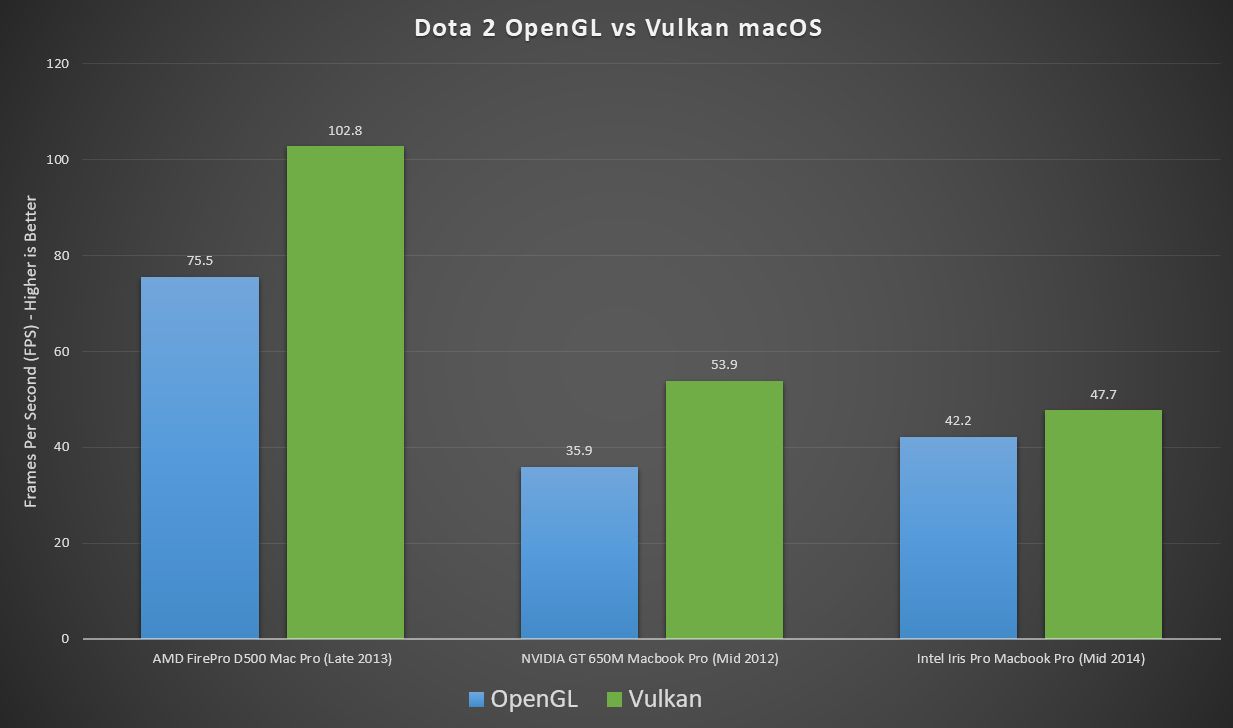
Additionally, we exercised MoltenVK with real world workloads including Dota 2 and we’re seeing significant performance improvements over running on OpenGL.

We encourage developers to test their engines and titles with MoltenVK and the LunarG SDK and provide feedback. We are committed to making Vulkan a viable option for developers targeting all platforms.

Posted on Leave a comment

Daily Deal – Ultimate General: Civil War, 50% Off

7.10:
====

* Enabled Dark Willow in Captain’s Mode

* Bounty Rune base gold bounty increased from 50 to 60 (affects runes after the first one)
* Bounty Rune no longer gives XP. Previously gave 0 at the start and increased by 7 per minute.
* Tome of Knowledge XP bonus increased from 500 to 700

* Melee Creeps gold bounty reduced by 1 (reduced from 41 to 40)

* Randoming now gives a Faerie Fire instead of a branch
* Bonus hero count increased from 10 to 12

* Aeon Disk: Cooldown reduced from 100 to 90

* Boots of Speed: Cost increased from 400 to 500
* Boots of Speed: Movement bonus increased from 40 to 50
* Phase Boots: Movement bonus increased from 45 to 50
* Power Treads: Movement bonus increased from 45 to 50

* Animal Courier: Flying Courier movement speed increased from 450 to 460

* Monkey King Bar: Added a sound effect for successful procs

* Soul Ring: Health cost increased from 150 to 170

* Abaddon: Level 15 Talent increased from +50 Mist Coil Heal/Damage to +60
* Abaddon: Level 20 Talent increased from +15% Cooldown Reduction to +20%
* Abaddon: Level 25 Talent reduced from +250 Aphotic Shield Health to +225

* Alchemist: Level 20 Talent increased from +25% Cleave to +30%

* Ancient Apparition: Level 15 Talent increased from -1.5s Ice Vortex Cooldown to -2.5s
* Ancient Apparition: Level 25 Talent changed from 4 Charges of Cold Feet to 900 AoE Cold Feet

* Anti-Mage: Level 10 Talent changed from +175 Health to +10 Strength
* Anti-Mage: Level 15 Talent changed from -2s Blink Cooldown to +400 Blink Cast Range
* Anti-Mage: Level 20 Talent increased from +300 Blink Cast Range to -2.5s Blink Cooldown

* Arc Warden: Level 10 Talent changed from +5 Armor to 8% Cooldown Reduction
* Arc Warden: Level 15 Talent increased from +2s Flux Duration to +3s
* Arc Warden: Level 20 Talent increased from +100 Attack Range to +125
* Arc Warden: Level 20 Talent changed from +10% Cooldown Reduction to -1.5s Spark Wraith Cooldown

* Axe: Level 15 Talent increased from +30 Movement Speed to +40

* Bloodseeker: Bloodrage now heals you for 50% of its value if you do not get the last hit but are within 300 AoE of a dying hero.

* Centaur Warrunner: Level 20 Talent increased from +250 Double Edge Damage to +300

* Clinkz: Strafe projectile dodge count increased from 3 to 4
* Clinkz: Level 15 Talent increased from +15% Evasion to +20%

* Crystal Maiden: Level 10 Talent increased from +200 Health to +250
* Crystal Maiden: Level 15 Talent increased from +90 Gold/Min to +120

* Dark Seer: Level 20 Talent increased from +300 AoE Surge to +400

* Dazzle: Base movement speed increased from 305 to 310
* Dazzle: Level 20 Talent increased from +30 Poison Touch DPS to +45

* Doom: Base Intelligence increased by 2
* Doom: Level 10 Talent changed from +25 Movement Speed to +16% Scorched Earth Movement Speed

* Dragon Knight: Agility gain reduced from 2.2 to 2.0
* Dragon Knight: Level 10 Talent changed from +30 Attack Speed to -20% Breathe Fire Damage Reduction

* Drow Ranger: Level 15 Talent increased from +400 Gust Distance/Knockback to +550
* Drow Ranger: Level 20 Talent increased from +2s Gust Duration to +3s

* Ember Spirit: Sleight of Fist bonus hero damage increased from 25/50/75/100 to 30/60/90/120

* Enchantress: Nature’s Attendants manacost increased from 125 to 140

* Gyrocopter: Improved visual effect for Flak Cannon projectiles
* Gyrocopter: Homing Missile bounty increased from 25 to 50
* Gyrocopter: Homing Missile cooldown increased from 20/17/14/11 to 26/21/16/11

* Invoker: Level 10 Talent from +0.3s Tornado Lift Time to +0.5s
* Invoker: Level 15 Talent from +1.5s Cold Snap Duration to +2.5s
* Invoker: Cataclysm Sunstrikes spawn distance is now slightly closer to each target (from 175-250 distance away to 160-220)

* Io: Tether duration increased from 12 to 14

* Jakiro: Level 10 Talent increased from +25% XP to +30%
* Jakiro: Level 15 Talent increased from +250 Attack Range to +300

* Kunkka: Tidebringer damage increased from 25/45/65/85 to 25/50/75/100

* Leshrac: Lightning Storm manacost rescaled from 90/100/110/120 to 75/90/105/120

* Lich: Level 25 Talent from Attacks Apply 30% MS and AS Slow to 40%

* Lina: Level 10 Talent increased from +100 Cast Range to +125
* Lina: Level 10 Talent increased from +25 Damage to +30
* Lina: Level 15 Talent increased from +300 Health to +350
* Lina: Level 20 Talent increased from +10% Spell Amplification to +12%

* Lion: Mana Drain slow increased from 14/16/18/20 to 16/19/22/25%
* Lion: Level 10 Talent increased from +75 Damage to +90
* Lion: Level 15 Talent increased from +90 Gold/Min to +120

* Lone Druid: Spirit Bear health regeneration increased from 4/5/6/7 to 5/6/7/8
* Lone Druid: Level 15 Talent increased from -8s Savage Roar Cooldown to -12s

* Luna: Level 15 Talent from -3s Lucent Beam Cooldown to -4s

* Lycan: Base damage reduced by 3

* Magnus: Base strength increased by 1
* Magnus: Level 25 Talent increased from +0.75s Reverse Polarity to +1s

* Mirana: Starfall manacost from 100/120/140/160 to 80/105/130/155
* Mirana: Level 25 Talent increased from -70 Moonlight Shadow Cooldown to -80

* Monkey King: Base damage increased by 2
* Monkey King: Fixed Mischief not showing the right particles for the first bounty rune
* Monkey King: Level 10 Talent increased from +150 Tree Dance Vision AoE to +300
* Monkey King: Level 15 Talent increased from +300 Tree Dance Cast Range to +600
* Monkey King: Level 20 Talent increased from +300 Primal Spring Damage to +400

* Morphling: Morph can now be toggled to go back and forth from the original target until the duration runs out. Has a 1 second toggle cooldown.

* Naga Siren: Sleep buff linger time reduced from 0.5 to 0.4
* Naga Siren: Song of the Siren manacost increased from 100 to 100/150/200

* Nature’s Prophet: Wraith of Nature cooldown reduced from 70/65/60 to 60
* Nature’s Prophet: Level 10 Talent increased from +30 Movement Speed to +40
* Nature’s Prophet: Level 15 Talent increased from +8 Armor to +10

* Necrophos: Level 15 Talent changed from +30 Movement Speed to +16% Ghost Shroud Slow
* Necrophos: Level 15 Talent changed from +300 Health to +40 Death Pulse Heal

* Ogre Magi: Level 20 Talent increased from +30 Strength to +40

* Omniknight: Purification cooldown increased from 11/10/9/8 to 11

* Oracle: Turn rate improved from 0.5 to 0.7
* Oracle: Intelligence growth increased from 2.9 to 3.2

* Outworld Devourer: Astral Imprisonment manacost increased from 120/140/160/180 to 140/160/180/200
* Outworld Devourer: Level 10 Talent increased from +200 Health to +250

* Phantom Assassin: Stifiling Dagger Talent now has a 300 cast range buffer for the secondary target

* Phantom Lancer: Level 25 Talent increased from -5s Doppelganger Cooldown to -7s

* Phoenix: Level 15 Talent changed from +40% XP Gain to +500 Health
* Phoenix: Level 20 Talent increased from +1s Supernova Stun Duration to +1.25s

* Pudge: Rot slow reduced from 20/24/28/32% to 17/22/27/32%

* Razor: Static Link manacost increased from 50 to 65

* Riki: Level 15 Talent increased from -5s Smokescreen Cooldown to -7s

* Rubick: Level 15 Talent increased from -35 Fade Bolt Hero Attack to -45

* Shadow Demon: Level 10 Talent increased from +25% XP Gain to 30%
* Shadow Demon: Level 25 Talent changed from +5s Disruption Banish Duration to 2 Charges of Disruption

* Shadow Fiend: Shadow Raze damage increase per stack reduced from 80 to 50/60/70/80

* Skywrath Mage: Level 15 Talent increased from -6s Ancient Seal Cooldown to -8s

* Slardar: Level 10 Talent increased from +20 to +25 Damage

* Slark: Level 10 Talent increased from +8 Strength to +10

* Spectre: Level 25 Talent increased from +20% Haunt Illusion Damage to +40%

* Sven: Level 15 Talent changed from +30 Damage to Storm Hammer Dispels Enemies
* Sven: Level 20 Talent changed from Storm Hammer Dispels Enemies to -5s Storm Hammer Cooldown
* Sven: Level 25 Talent changed from -9s Storm Hammer Cooldown to +0.75s Storm Hammer Stun Duration

* Terrorblade: Base HP regen reduced from 3.25 to 3.0
* Terrorblade: Reflection no longer reduces attack speed

* Tinker: Laser Scepter bounce radius reduced from 650 to 400
* Tinker: Laser manacost increased from 95/120/145/170 to 110/130/150/170
* Tinker: Level 20 Talent from +100 Damage to +10 Armor

* Tiny: Tree Grab cooldown increased from 18/16/14/12 to 24/20/16/12

* Treant Protector: Level 10 Talent changed from +35% XP Gain to +2 Living Armor Block Instances
* Treant Protector: Level 15 Talent improved from 3s Tree Respawn Time to 2s
* Treant Protector: Level 25 Talent changed from +6 Living Armor Block Instances to 700 AoE Living Armor (heroes and buildings)

* Troll Warlord: Level 10 Talent increased from +200 Health to +250
* Troll Warlord: Level 15 Talent increased from +50 Whirling Axes Damage to +75

* Undying: Level 10 Talent increased from +100 Cast Range to +150
* Undying: Level 15 Talent increased from +20 Decay Duration to +30
* Undying: Level 20 Talent increased from +3 Tombstone Attacks to +4

* Ursa: Fury Swipes Roshan duration increased from 6 to 10

* Venomancer: Level 15 Talent increased from +150 Cast Range to +200
* Venomancer: Level 20 Talent increased from +6s Poison Nova Duration to +7s
* Venomancer: Level 25 Talent increased from +600 Poison Nova AoE to +800

* Visage: Soul Assumption Talent now has a 300 cast range buffer for the secondary targets
* Visage: Added secondary ability on Visage to make the nearest Familiar land each time it is clicked.

* Warlock: Level 10 Talent increased from +125 Cast Range to +150
* Warlock: Level 15 Talent increased from +40% XP Gain to +60%
* Warlock: Level 20 Talent increased from +250 Shadow Word AoE to +300

* Weaver: Level 10 Talent increased from +25% XP Gain to +35%

* Windranger: Shackleshot Manacost reduced from 90/100/110/120 to 70/85/100/115
* Windranger: Level 20 Talent increased from +0.5s Shackleshot Duration to +1s

* Winter Wyvern: Arctic Burn manacost reduced from 120/110/100/90 to 90
* Winter Wyvern: Level 10 Talent increased from +50 Damage to +60

* Wraith King: Level 15 Talent changed from +5 Max Skeletons to +25 Skeletons Attack Damage
* Wraith King: Level 20 Talent changed from +30 Skeletons Attack Damage to 2x Skeletons Spawned

* Zeus: Level 25 Talent increased from +200 Cast Range to +275

Posted on Leave a comment

Now Available on Steam – CHRONO TRIGGER®

7.10:
====

* Enabled Dark Willow in Captain’s Mode

* Bounty Rune base gold bounty increased from 50 to 60 (affects runes after the first one)
* Bounty Rune no longer gives XP. Previously gave 0 at the start and increased by 7 per minute.
* Tome of Knowledge XP bonus increased from 500 to 700

* Melee Creeps gold bounty reduced by 1 (reduced from 41 to 40)

* Randoming now gives a Faerie Fire instead of a branch
* Bonus hero count increased from 10 to 12

* Aeon Disk: Cooldown reduced from 100 to 90

* Boots of Speed: Cost increased from 400 to 500
* Boots of Speed: Movement bonus increased from 40 to 50
* Phase Boots: Movement bonus increased from 45 to 50
* Power Treads: Movement bonus increased from 45 to 50

* Animal Courier: Flying Courier movement speed increased from 450 to 460

* Monkey King Bar: Added a sound effect for successful procs

* Soul Ring: Health cost increased from 150 to 170

* Abaddon: Level 15 Talent increased from +50 Mist Coil Heal/Damage to +60
* Abaddon: Level 20 Talent increased from +15% Cooldown Reduction to +20%
* Abaddon: Level 25 Talent reduced from +250 Aphotic Shield Health to +225

* Alchemist: Level 20 Talent increased from +25% Cleave to +30%

* Ancient Apparition: Level 15 Talent increased from -1.5s Ice Vortex Cooldown to -2.5s
* Ancient Apparition: Level 25 Talent changed from 4 Charges of Cold Feet to 900 AoE Cold Feet

* Anti-Mage: Level 10 Talent changed from +175 Health to +10 Strength
* Anti-Mage: Level 15 Talent changed from -2s Blink Cooldown to +400 Blink Cast Range
* Anti-Mage: Level 20 Talent increased from +300 Blink Cast Range to -2.5s Blink Cooldown

* Arc Warden: Level 10 Talent changed from +5 Armor to 8% Cooldown Reduction
* Arc Warden: Level 15 Talent increased from +2s Flux Duration to +3s
* Arc Warden: Level 20 Talent increased from +100 Attack Range to +125
* Arc Warden: Level 20 Talent changed from +10% Cooldown Reduction to -1.5s Spark Wraith Cooldown

* Axe: Level 15 Talent increased from +30 Movement Speed to +40

* Bloodseeker: Bloodrage now heals you for 50% of its value if you do not get the last hit but are within 300 AoE of a dying hero.

* Centaur Warrunner: Level 20 Talent increased from +250 Double Edge Damage to +300

* Clinkz: Strafe projectile dodge count increased from 3 to 4
* Clinkz: Level 15 Talent increased from +15% Evasion to +20%

* Crystal Maiden: Level 10 Talent increased from +200 Health to +250
* Crystal Maiden: Level 15 Talent increased from +90 Gold/Min to +120

* Dark Seer: Level 20 Talent increased from +300 AoE Surge to +400

* Dazzle: Base movement speed increased from 305 to 310
* Dazzle: Level 20 Talent increased from +30 Poison Touch DPS to +45

* Doom: Base Intelligence increased by 2
* Doom: Level 10 Talent changed from +25 Movement Speed to +16% Scorched Earth Movement Speed

* Dragon Knight: Agility gain reduced from 2.2 to 2.0
* Dragon Knight: Level 10 Talent changed from +30 Attack Speed to -20% Breathe Fire Damage Reduction

* Drow Ranger: Level 15 Talent increased from +400 Gust Distance/Knockback to +550
* Drow Ranger: Level 20 Talent increased from +2s Gust Duration to +3s

* Ember Spirit: Sleight of Fist bonus hero damage increased from 25/50/75/100 to 30/60/90/120

* Enchantress: Nature’s Attendants manacost increased from 125 to 140

* Gyrocopter: Improved visual effect for Flak Cannon projectiles
* Gyrocopter: Homing Missile bounty increased from 25 to 50
* Gyrocopter: Homing Missile cooldown increased from 20/17/14/11 to 26/21/16/11

* Invoker: Level 10 Talent from +0.3s Tornado Lift Time to +0.5s
* Invoker: Level 15 Talent from +1.5s Cold Snap Duration to +2.5s
* Invoker: Cataclysm Sunstrikes spawn distance is now slightly closer to each target (from 175-250 distance away to 160-220)

* Io: Tether duration increased from 12 to 14

* Jakiro: Level 10 Talent increased from +25% XP to +30%
* Jakiro: Level 15 Talent increased from +250 Attack Range to +300

* Kunkka: Tidebringer damage increased from 25/45/65/85 to 25/50/75/100

* Leshrac: Lightning Storm manacost rescaled from 90/100/110/120 to 75/90/105/120

* Lich: Level 25 Talent from Attacks Apply 30% MS and AS Slow to 40%

* Lina: Level 10 Talent increased from +100 Cast Range to +125
* Lina: Level 10 Talent increased from +25 Damage to +30
* Lina: Level 15 Talent increased from +300 Health to +350
* Lina: Level 20 Talent increased from +10% Spell Amplification to +12%

* Lion: Mana Drain slow increased from 14/16/18/20 to 16/19/22/25%
* Lion: Level 10 Talent increased from +75 Damage to +90
* Lion: Level 15 Talent increased from +90 Gold/Min to +120

* Lone Druid: Spirit Bear health regeneration increased from 4/5/6/7 to 5/6/7/8
* Lone Druid: Level 15 Talent increased from -8s Savage Roar Cooldown to -12s

* Luna: Level 15 Talent from -3s Lucent Beam Cooldown to -4s

* Lycan: Base damage reduced by 3

* Magnus: Base strength increased by 1
* Magnus: Level 25 Talent increased from +0.75s Reverse Polarity to +1s

* Mirana: Starfall manacost from 100/120/140/160 to 80/105/130/155
* Mirana: Level 25 Talent increased from -70 Moonlight Shadow Cooldown to -80

* Monkey King: Base damage increased by 2
* Monkey King: Fixed Mischief not showing the right particles for the first bounty rune
* Monkey King: Level 10 Talent increased from +150 Tree Dance Vision AoE to +300
* Monkey King: Level 15 Talent increased from +300 Tree Dance Cast Range to +600
* Monkey King: Level 20 Talent increased from +300 Primal Spring Damage to +400

* Morphling: Morph can now be toggled to go back and forth from the original target until the duration runs out. Has a 1 second toggle cooldown.

* Naga Siren: Sleep buff linger time reduced from 0.5 to 0.4
* Naga Siren: Song of the Siren manacost increased from 100 to 100/150/200

* Nature’s Prophet: Wraith of Nature cooldown reduced from 70/65/60 to 60
* Nature’s Prophet: Level 10 Talent increased from +30 Movement Speed to +40
* Nature’s Prophet: Level 15 Talent increased from +8 Armor to +10

* Necrophos: Level 15 Talent changed from +30 Movement Speed to +16% Ghost Shroud Slow
* Necrophos: Level 15 Talent changed from +300 Health to +40 Death Pulse Heal

* Ogre Magi: Level 20 Talent increased from +30 Strength to +40

* Omniknight: Purification cooldown increased from 11/10/9/8 to 11

* Oracle: Turn rate improved from 0.5 to 0.7
* Oracle: Intelligence growth increased from 2.9 to 3.2

* Outworld Devourer: Astral Imprisonment manacost increased from 120/140/160/180 to 140/160/180/200
* Outworld Devourer: Level 10 Talent increased from +200 Health to +250

* Phantom Assassin: Stifiling Dagger Talent now has a 300 cast range buffer for the secondary target

* Phantom Lancer: Level 25 Talent increased from -5s Doppelganger Cooldown to -7s

* Phoenix: Level 15 Talent changed from +40% XP Gain to +500 Health
* Phoenix: Level 20 Talent increased from +1s Supernova Stun Duration to +1.25s

* Pudge: Rot slow reduced from 20/24/28/32% to 17/22/27/32%

* Razor: Static Link manacost increased from 50 to 65

* Riki: Level 15 Talent increased from -5s Smokescreen Cooldown to -7s

* Rubick: Level 15 Talent increased from -35 Fade Bolt Hero Attack to -45

* Shadow Demon: Level 10 Talent increased from +25% XP Gain to 30%
* Shadow Demon: Level 25 Talent changed from +5s Disruption Banish Duration to 2 Charges of Disruption

* Shadow Fiend: Shadow Raze damage increase per stack reduced from 80 to 50/60/70/80

* Skywrath Mage: Level 15 Talent increased from -6s Ancient Seal Cooldown to -8s

* Slardar: Level 10 Talent increased from +20 to +25 Damage

* Slark: Level 10 Talent increased from +8 Strength to +10

* Spectre: Level 25 Talent increased from +20% Haunt Illusion Damage to +40%

* Sven: Level 15 Talent changed from +30 Damage to Storm Hammer Dispels Enemies
* Sven: Level 20 Talent changed from Storm Hammer Dispels Enemies to -5s Storm Hammer Cooldown
* Sven: Level 25 Talent changed from -9s Storm Hammer Cooldown to +0.75s Storm Hammer Stun Duration

* Terrorblade: Base HP regen reduced from 3.25 to 3.0
* Terrorblade: Reflection no longer reduces attack speed

* Tinker: Laser Scepter bounce radius reduced from 650 to 400
* Tinker: Laser manacost increased from 95/120/145/170 to 110/130/150/170
* Tinker: Level 20 Talent from +100 Damage to +10 Armor

* Tiny: Tree Grab cooldown increased from 18/16/14/12 to 24/20/16/12

* Treant Protector: Level 10 Talent changed from +35% XP Gain to +2 Living Armor Block Instances
* Treant Protector: Level 15 Talent improved from 3s Tree Respawn Time to 2s
* Treant Protector: Level 25 Talent changed from +6 Living Armor Block Instances to 700 AoE Living Armor (heroes and buildings)

* Troll Warlord: Level 10 Talent increased from +200 Health to +250
* Troll Warlord: Level 15 Talent increased from +50 Whirling Axes Damage to +75

* Undying: Level 10 Talent increased from +100 Cast Range to +150
* Undying: Level 15 Talent increased from +20 Decay Duration to +30
* Undying: Level 20 Talent increased from +3 Tombstone Attacks to +4

* Ursa: Fury Swipes Roshan duration increased from 6 to 10

* Venomancer: Level 15 Talent increased from +150 Cast Range to +200
* Venomancer: Level 20 Talent increased from +6s Poison Nova Duration to +7s
* Venomancer: Level 25 Talent increased from +600 Poison Nova AoE to +800

* Visage: Soul Assumption Talent now has a 300 cast range buffer for the secondary targets
* Visage: Added secondary ability on Visage to make the nearest Familiar land each time it is clicked.

* Warlock: Level 10 Talent increased from +125 Cast Range to +150
* Warlock: Level 15 Talent increased from +40% XP Gain to +60%
* Warlock: Level 20 Talent increased from +250 Shadow Word AoE to +300

* Weaver: Level 10 Talent increased from +25% XP Gain to +35%

* Windranger: Shackleshot Manacost reduced from 90/100/110/120 to 70/85/100/115
* Windranger: Level 20 Talent increased from +0.5s Shackleshot Duration to +1s

* Winter Wyvern: Arctic Burn manacost reduced from 120/110/100/90 to 90
* Winter Wyvern: Level 10 Talent increased from +50 Damage to +60

* Wraith King: Level 15 Talent changed from +5 Max Skeletons to +25 Skeletons Attack Damage
* Wraith King: Level 20 Talent changed from +30 Skeletons Attack Damage to 2x Skeletons Spawned

* Zeus: Level 25 Talent increased from +200 Cast Range to +275

Posted on Leave a comment

How Slay the Spire’s devs use data to balance their roguelike deck-builder

Mega Crit Games’ roguelike deck-builder Slay the Spire has already amassed nearly 400,000 players since entering Early Access in November, according to SteamSpy, and received almost unanimous praise from critics and players – not bad for a game with just two full-time developers.

It’s even more impressive when you consider its unusual mash-up of genres. Balancing a card game alone is a huge undertaking, and tiny tweaks can bend entire playstyles out of shape. Stir in the random events of a rogue-like and sprinkle on a few items that can flip a run on its head and you’ve got a potential recipe for chaos.

So just how have Seattle-based Mega Crit managed to keep the game feeling so tight? And how do they approach the mammoth task of balancing a game this intricate?

The key, developers Anthony Giovannetti and Casey Yano tell Gamasutra, is player feedback. Specifically, it’s about collating data on every single run and turning that into informed, specific changes to particular cards and enemies.

Even at an early prototype stage, when the game was being tested by Netrunner players, the team created a metric server to track every decision a player made, Giovannetti says.

“There’s no way we can intuitively do it all correctly”

“We have so many cards and so many interactions that even though we have a pretty strong card game background there’s no way we can intuitively do it all correctly,” he adds. “I said at one point, ‘look, we’re not going to reasonably be able to balance this many cards, we don’t have a team of people to do this’…[so] we took a data-driven approach. I’m just a big fan of data-driven decision making.”

“I said at one point, ‘look, we’re not going to reasonably be able to balance this many cards, we don’t have a team of people to do this’…[so] we took a data-driven approach.”

Early on, the pair would constantly add cards, first in batches to create a deck archetype, and then individual cards to “sculpt” those play styles. Playtesters enjoyed having new cards added all the time, and some ended up piling thousands of hours into the game, all of which fed into the team’s metric server.

The data told Yano and Giovannetti how often players selected a particular card when it was offered to them during their dungeon crawl, what they chose it over, how often that card appeared in winning decks, and how much damage players using that card – on average – took from a particular enemy.

Acting on that data, Giovannetti says, was not a “mathematical” approach. The team looked for patterns and tried to intuitively decide how to make a card more fun, or less powerful, or more attractive to players. That involved a lot of trial and error.

“We knew there was going to be knock-on effects, if I change one card and it’s part of particularly strategy, that’s going to have other ramification on the cards in that strategy,” he says.

“So we’d make the change and see what people thought of it, see what we thought, and we’d keep tweaking the knobs until we settled on a place that was good. We weren’t afraid of throwing things away and starting over with whole archetypes. My outlook was to be more aggressive on making changes during testing – you’d rather make the changes early and see how it works out.”

As the playerbase has boomed over the last few months, so has the amount of data. “In one hour we get more data than we had throughout the whole prototyping [phase]. Our sample sizes are so large now that they’re really accurate,” Giovannetti explains.

Yano tells me that the key to using that data is to ensure it’s all filterable and categorized. It’s also important, he says, to have a specific question in mind when looking at the data that you couldn’t answer just by playing the game.

“The first time we made our metrics, we had three graphs; now we have at least 90.”

“There’s lots of filters [and] check boxes, it’s important to have it filterable for a specific thing,” says Yano. “The first time we made our metrics, we had three graphs; now we have at least 90.”

And those graphs don’t just sit there, idle; they directly influence the decisions the developers make. Both men naturally have a deep understanding of how the game works, but sometimes they make mistakes, and the data shows them where they’re going wrong.

How often is a card picked, and how often is it a winner?

The two most important metrics, Giovannetti says, are how often a player picks a card when given the choice (too low and it’s “basically not a card in our game at that point”), and how often a card appears in a winning deck (too high and you know that card is overpowered).

The changes the team made to Dual Wield, which lets players duplicate cards, are a good example. It was strong in prototyping, but a lot of its best interactions didn’t make it to Early Access. The pair could see that players didn’t pick it up very often, so they switched its duplication power from the top card of your deck to any card in your hand. From the resultant data, it was very clear that the buff was too strong, and players were able to ride Dual Wield to victory.

“It was totally broken,” Giovannetti says. “You could copy skills and go infinite [being able to kill an enemy in one turn by duplicating particular cards] really easily. Going infinite is the number one thing we try to make really rare. It makes the actual playing of the game trivial. We then tweaked it so it can only copy Skill cards. So it was a change we thought was benign, found out quickly how degenerate it was and then gave it a slight nerf.”

The team takes the same approach to the game’s enemies. For example, the data showed that players with lots of Power cards in their decks were having trouble with one of the game’s final bosses, The Awakened One, who gains strength whenever the player uses a Power card. To stop that, the team reduced the rate at which the boss gained strength, while compensating with an overall damage boost.

By later looking at the numbers the pair could see that more players were beating the boss overall, Yano says. “This is the first boss players fight when they get to the end, so we didn’t want it to be weak.” By making tweaks to the damage, re-testing, and tweaking again, the developers have it at a level they’re happy with – and it’s all thanks to the data.

“Without that, we’d just get people with anecdotal evidence saying this boss is much stronger or weaker now, and it’s completely based on playstyle or other circumstances,” Yano adds.

That’s not to say anecdotal, subjective feedback is useless by any means. The team have a public Discord server that allows players to provide their thoughts using tags like ‘bugs’ or ‘feedback’. A bot collects that information and relays it to the team. 

Data alone is not enough

“The numbers are really useful but they’re not telling us how things feel, so we think it’s still really important,” says Giovannetti. “Incorporating the non-data is harder, but it is useful. We don’t have a good hard and fast rule [about when to act on it], but a single well-reasoned post is a lot more useful than lots of players saying ‘nerf this’.”

“Any other game I make going forward I’d do something similar, and I’d recommend other indies to use it whenever they can.”

Overall, Giovannetti says the fact that the game is a single-player roguelike makes balancing its many cards a lot easier than for most card games. Players are not competing against each other, so decks do not need to be equal, and the team can make changes for entertainment value rather than in the name of pure balance.

Plus, roguelike events add an element of chance that makes the game more replayable and forces players to switch up styles. And the fact that it’s still in Early Access also helps. “If we make a mistake, we’re releasing weekly patches,” he adds. “Because things are in flux players can expect that the balance will change.”

But the team is only able to react that quickly because of its data-driven approach. “I think that’s been really validated,” Giovannetti concludes. “Any other game I make going forward I’d do something similar, and I’d recommend other indies to use it whenever they can.”

Posted on Leave a comment

Video: The technology behind the sand in Journey

Journey takes place in a vast and lonely desert. With the player spending all of their time in an environment filled with sand, it’s important to get it right. What did it take to render the sand in Journey

In this 2013 GDC session, thatgamecompany’s John Edwards goes over the technical details of how sand was implemented in Journey.

Edwards also covers thatgamecompany’s approach to graphics in general, and discussing how time was spent during the three year development cycle. 

Artists interested in learning about the sand in Journey can now watch the talk completely free via the official GDC YouTube channel!

In addition to this presentation, the GDC Vault and its accompanying YouTube channel offers numerous other free videos, audio recordings, and slides from many of the recent Game Developers Conference events, and the service offers even more members-only content for GDC Vault subscribers.

Those who purchased All Access passes to recent events like GDC or VRDC already have full access to GDC Vault, and interested parties can apply for the individual subscription via a GDC Vault subscription page. Group subscriptions are also available: game-related schools and development studios who sign up for GDC Vault Studio Subscriptions can receive access for their entire office or company by contacting staff via the GDC Vault group subscription page. Finally, current subscribers with access issues can contact GDC Vault technical support.

Gamasutra and GDC are sibling organizations under parent UBM Americas.

Posted on Leave a comment

Pull off the perfect co-op heist in PAYDAY 2

Pull off the perfect co-op heist in PAYDAY 2

The original PAYDAY crew–Dallas, Hoxton, Wolf, and Chains—have come to Washington DC for an epic spree. Up to four friends co-operate on elaborate heists either online or locally. Along with earning more money and becoming an infamous criminal, customization options let players build and alter their guns and gear.

Features:

  • Rob Banks, Get Paid – Players must choose their crew carefully with the right mix of skills on their side.
  • CRIME.NET – The dynamic contract database CRIME.NET lets players pick and choose from available jobs by connecting with local Contractors – each with their own agenda and best interests in mind.
  • Online or Local Multiplayer – Play the game online or set up a local game with friends that share the same local network and own the Nintendo Switch™ version of the game.
  • New character – Releasing on Nintendo Switch™ as a timed exclusive, Joy is a computer whiz with her own mask, weapons, and hacker perks.
  • Dynamic Scenarios – No heist ever plays out the same way twice, as heists come with random geometry and events.
  • Choose Your Skills – As players progress, they can invest in any of five special Skill Trees: Mastermind, Enforcer, Ghost, Technician and Fugitive. Each one features a deep customization tree of associated skills and equipment to master.
  • More Masks than Ever – PAYDAY 2 features a completely new mask system, giving players the ability to craft their own unique mask together with a pattern and a color.
  • Weapons and Modifications – A huge arsenal for the serious heister, covering everything from sniper to assault rifles. You can modify your weapon with optics, suppressors, fore grips, reticles, barrels, frames, stocks and lots more.
  • Play It Your Way – Each job allows for multiple approaches, such as slow and stealthy ambushes, to running in guns blazing.
  • HD Rumble and Touch Screen Support – Navigate menus with the touch screen, while HD Rumble lets you feel everything from explosions to weapon recoil.

To purchase the digital version of the game, please visit https://www.nintendo.com/games/detail/payday-2-switch

Game Shown:

Blood and Gore
Drug Reference
Intense Violence
Strong Language
Suggestive Themes

Posted on Leave a comment

Free and Open-Source Vulkan on macOS and iOS

A Vulkan-compatible driver for macOS and iOS, MoltenVK, is now available free of charge and open-source. Having invested into its development for more than a year, we have sponsored The Brenwill Workshop to donate MoltenVK for inclusion in the Vulkan graphics ecosystem. We’ve also continued our efforts with LunarG who is today releasing a corresponding update to deliver macOS support to the Vulkan SDK. Also as a result of that work, Dota 2 will be updated in the comings months to target Vulkan on macOS.

It’s been almost four years since we started contributing to Vulkan’s goal of becoming a cross platform solution. With support for Windows, Linux, and Android crossed off the list, this latest set of updates checks off one of the largest remaining targets, giving developers an easy yet robust way to also target their Vulkan-based engines and titles to run on macOS and iOS. By making the code to MoltenVK freely available and open-source, the goal is to enable developers to bring their games to macOS and iOS with minimal evelopment cost.

The LunarG Vulkan SDK is a key component for developers targeting Vulkan by providing tools such as validation layers, shader compilers, and a loader. Now available from LunarG, an updated Vulkan SDK now offers those same tools to developers targeting macOS, enabling them to efficiently develop Vulkan code on the platform.

Additionally, we exercised MoltenVK with real world workloads including Dota 2 and we’re seeing significant performance improvements over running on OpenGL.

We encourage developers to test their engines and titles with MoltenVK and the LunarG SDK and provide feedback. We are committed to making Vulkan a viable option for developers targeting all platforms.

Posted on Leave a comment

Toys of the future will be designed for augmented reality

As reported by Wired, toy companies have revealed new products utilizing augmented reality during the New York Toy Fair last week. 

With the rise of AR apps and games, companies like Hasbro and Mattel are following suit by utilizing the same technology in their toys.

Whether AR is integrated with stuffed animals or board games, all it takes is a smartphone to access the tech. 

As co-founder of Merge (a company specializing in VR/AR content for kids) Andrew Trickett explains to Wired, AR demands less hardware than a traditional VR headset. 

For example, Merge developed its 6DoF Blaster which uses a smartphone to create digital targets kids can run around and shoot at, akin to playing laser tag. 

The appeal in AR toys lie in having kids be active and mobile, as opposed to glued to a television.

This has prompted companies to start designing AR gadgets that merge the physical with the virtual, from AR integrated picture books to puzzles.

“There’s a certain satisfaction with touching something and physically manipulating it. I don’t think that’s going to go away,” notes Trickett. “But those physical objects are going to become a lot more interesting.”

Posted on Leave a comment

Designing side quests? Study these 7 games (and some Chris Avellone pointers)

Side quests can make or break your game — good ones draw players further into your world; bad ones may sour players on the entire experience.

To that end, we reached out to several game writers and designers for their thoughts and recommendations on great side quests — or games with generally-strong side quests — that every developer should study. 

Their responses are summarized below, but first, courtesy of former Black Isle writer, designer, and Obsidian creative director Chris Avellone, here are four general guidelines to evaluate everything against:

  1. A good side quest informs the main plot or the area it’s located in in all respects — lore, NPCs, even through the rewards you get.
  2. A bad side quest is a quest that upstages the main quest in terms of stakes, enemies, or even the lore.
  3. Side quests should be quick and fun to complete (15 min is the range I shoot for).
  4. Side quests should use the core gameplay mechanics and avoid special case new functionality (or be careful with it). This includes having the same range of reactivity, choices, and consequences as a normal quest in the main plot, although the scope of the reactivity, etc. may be smaller.

The Witcher 3 — a masterclass in side quest design

“The best side quests in the business are in The Witcher 3,” says Deep Silver Volition senior designer Brad Johnson, who did mission design on the past three Saints Row games. “Their side quests are more involved from both a gameplay and story perspective than most games’ main quests. I expected to skip through some boring dialog and do some simple fetch quests but each one kept drawing me in and kept my interest. There were always twists, trying to throw off expectations.”

This was a conscious decision by developer CD Projekt, which wanted every quest — even the little ones about fetching or delivering something for somebody — to be memorable. Take one of the very earliest side quests as an example: in A Frying Pan, Spick and Span, the player is tasked with finding an old woman’s soot-covered frying pan, which she’d been lent to a stranger who seemingly then nicked off with it (turns out it’s just inside the house she’s standing outside of, and the man had had more important things to worry about than returning the pan after using the soot to make ink for writing letters). 

Such a mundane, menial task could easily be seen as beneath a great and respected hero like Geralt. But it’s presented with such respect, empathy, and sincerity that you can’t help but feel warmed to Geralt — the big, tough witcher who holds the simple folk of the world in the highest regard. It also subtly informs both the lore of the area and the story at large, and both its goal (find a crappy old frying pan) and its rewards (baked apples and apple juice) reflect the nature of the town and its inhabitants, which is exactly what Avellone says a good side quest should do.

TAKEAWAY: Even the most ordinary, uneventful, routine quests can be memorable and affecting; you just have to make the effort to design them so.

Fallout 2‘s open-ended quest and skill systems

The Witcher 3‘s lead quest designer Mateusz Tomaszkiewicz thinks that Fallout 2 has particularly good quest designs. “Tasks are simple, but open-ended,” he explains. “You can complete many of them in a variety of ways and it’s done very organically — they don’t seem forced, nor do they involve much hand holding, if any at all.” Indeed, the game is so open-ended that most quests can be bypassed altogether — meaning that nearly every quest could be described as a side quest. And the player’s actions have consequences — even in the more innocuous quests — that can play out both over the course of their remaining journey and in the ending.

Fallout 2 also cleverly works the skill system into the dialogue, with every stat affecting dialogue choices and results, rather than following the common approach of only checking communication-related skills. 

“If you invested heavily in small guns, for example, you might end up using that knowledge to impress someone,” says Tomaszkiewicz. “If you know a lot about computers, you could’ve used that fact to reprogram a robot, etc. This use of gameplay-related skills in dialogues and quests was very unique and immersive — something I’d come to expect from a pen & paper RPG, not a video game.”

TAKEAWAY: Side quests, like main quests, benefit from an open-endedness that allows for different solutions and playstyles and that ideally also acknowledges all of the player character’s relevant skills.

Fallout: New Vegas — consequential and interesting open-world quests

Tomaszkiewicz says that Fallout: New Vegas shares many of the same qualities as Fallout 2, but he adds that its approach to building quests in an open-world setting is also great. “They felt consequential and interesting,” he explains, “and yet managed to overcome the difficulties of constructing complex quests in an open world environment. It was a big inspiration for me when working on The Witcher 3: Wild Hunt and its expansions.”

Perhaps the best side quest of the bunch involves helping some ghouls launch a space expedition (or helping to sabotage said expedition) to complete their “Great Journey” to a place far beyond the cruel wasteland. It’s a bizarre quest with an eccentric, charismatic cult leader, huge super mutants that can turn invisible (the leader of whom is even more eccentric than the head ghoul, what with him being beholden to the guidance of an antler’s skull on his desk), a tech genius human who thinks he’s a ghoul, several big choices to make, splendid sound design, and a healthy dose of twisted humor. It’s ridiculous, but it’s memorable and weighty from beginning to end — as every good quest should be, regardless of its relevance to the main plot.

(Side note: I’ve limited Fallout‘s presence here to two games for balance, but every entry in the series is widely recognized for excellent quest writing and design, with numerous side quests worthy of study. Fallout 3‘s Wasteland Survival Guide is a great tutorial side quest, for instance, while Fallout 4‘s Last Voyage of the USS Constitution uses flavorful staging and characterization to elevate an otherwise-generic side quest to a higher level.)

TAKEAWAY: Side quests present a great opportunity to flesh out the world building and let the player have a supporting role in the defining moments of other characters’ lives, especially in an open-world environment.

Baldur’s Gate 2 

Wasteland 3 lead designer George Ziets loves it when side quests directly affect the gameplay. “Taking something away from the player (or temporarily giving them something new — especially if the player can gain it permanently later) often makes a side quest more memorable,” he explains. “A good example comes from a quest involving Jaheira, one of the player’s companions in Baldur’s Gate 2.”

The quest begins when a nobleman who wants revenge for being exposed as a slaver places a magical curse on Jaheira — whose stats then get progressively weakened until the curse is broken. “Some designers will argue against the tactic of debuffing player-characters until a quest is completed,” says Ziets, “but the gameplay implications of this quest were a huge motivator for me, and it made me genuinely angry at the vengeful nobleman. How dare he weaken a member of my carefully-crafted party!”

Ziets says that this created a sense of urgency and made the side quest feel much more personal, although he cautions that it’s not a design tactic to be taken lightly — do it poorly and players will get angry at the game as much as the villainous characters.

He adds that he believes that side quests should always take an unexpected turn at some point along the way — a view that he attributes to Baldur’s Gate 2‘s untrustworthy NPCs. He cites another example involving Jaheira: first she tells the player they’ve been summoned to the headquarters of her faction, but then on arrival they’re interrogated and sentenced to magical imprisonment — whereupon they must fight their way out. “Later the party is confronted by Jaheira’s old mentor,” says Ziets, “who warns her that the other Harpers now view her as a traitor, and she renounces her membership in the faction that has defined her throughout the game. But the quest takes a turn when the player discovers that the local Harpers are traitors, and Jaheira’s mentor has joined them.”

Tomaszkiewicz also had great praise for the optional quests in Baldur’s Gate 2, singling out two sets of side quests in particular: the stronghold quests, which are tailored according to the player’s chosen class, and the Ust Natha storyline, which involves going undercover in the Drow society. He says that these Ust Natha side quests “were built in a way that allowed you to experience how the Drow go about their lives, but [they] gave you options to solve them in a way that would be true to your character.”

TAKEAWAY: Some of the most memorable side quests create motivation by threatening something that matters to gameplay or offering an unexpected twist. Others define the quest parameters to according to the player’s character stats or customizations.

Gothic 1 and 2 — side quests that build immersion

You could describe the first two Gothic games as being like Elder Scrolls Morrowind set in an intricate fantasy prison, then remade from a fraction of the budget, and while they’re full of bugs and design oversights and awkward voice acting, there’s one element that they excel at.

Tomaszkiewicz argues that the special thing the Gothic games do — especially the second one — is to use side quests and activities to build immersion. How a player’s character develops affects how these optional elements unfold. “For example, there was this tough bully that wouldn’t let you enter the port’s tavern and was pretty hard to beat in the beginning,” he explains. “But if you initially avoided the confrontation and then visited him after you became a Mage, his attitude toward you would be completely different — he’d show you respect due to the office you were holding.” 

“The game was full of small touches like that, making the world seem more alive and interactive, ripe with possibilities.”

TAKEAWAY: The most important function of a side quest is not to keep the player busy or help them grind up their stats; it’s to immerse them more deeply within the game. 

Planescape: Torment — subverting expectations and conventions

With a script that’s around 800,000 words long and a protagonist with lost memories who wakes up in a mortuary every time he dies (not to mention the quirky cast of support characters, which includes a world weary floating skull and a succubus who doesn’t like to seduce mortals), you’d expect Planescape: Torment to have at least a few great side quests. And it certainly delivers, especially for players who love to get extra bits of story.

Ziets (who has worked on the recent Torment games but not the 1999 Infinity Engine original) points to the game’s trope-breaking Mar’s Box side quest as one of the standouts. “It starts out like a standard fedex quest,” he says. “An NPC (Mar) hands me a box and asks me to deliver it to another NPC. Being a well-trained RPG player, I naturally accept. But it turns out that nobody wants the box, and I get passed from character to character. Everyone is horrified to see the box and wants nothing to do with it. Worse, the box turns out to be cursed, and I can’t get rid of it. I can open the box, but that releases the horrible thing that’s trapped inside, resulting in a difficult fight.”

The player can eventually find someone to remove the curse, and when they’re ready they can head back to Mar and confront him — at which point he bargains for his life. “That moment of satisfaction at the end and feeling like a badass — confronting the guy who set me up and seeing that he’s scared — is important,” explains Ziets. “It brings the quest full circle and makes the player feel like they’re ultimately in charge — sure, the game tricked them, but in the end, the player can have the last laugh.”

TAKEAWAY: Side quests tend to fall into one of a set of standard tropes like fetching or delivering an object/person. Play with them, twist them, and subvert the player’s expectations.

Yakuza 0‘s quirky substories

RPGs don’t have a monopoly on good side quests — run of the mill open-world games can surprise and delight with their non-essential missions, too. Few accomplish this better than Yakuza 0, which rivals even The Witcher 3 on the sheer volume of available missions.

At their core, most Yakuza 0 side quests — or substories, as they’re called in-game — are dead simple: press a button to choose between a few dialogue/action options, several times, then beat up some guys. But to describe them in this way is to ignore the humor, nuance, and poignancy they bring to the game, and it would ignore their long-term impact — the addition of the oddball cast of people helped to the game’s two core management mini-games (which are an important source of income). Over the course of the game, Kiryu and co can get themselves temporarily mixed up in the lives of tragedy-stricken gangsters, a trainee dominatrix, doomsday cultists, a kid too scared to buy an adult magazine, a disco dancer, and more, with each side quest punctuated by some nugget of entertaining or touching dialogue. 

TAKEAWAY: The key to making a simple side quest memorable is in the characterization — use of humor, offbeat characters who don’t quite fit expectations, and nuanced social commentary can go a long way.

Don’t just follow the tropes

The question to ask, besides ‘what makes a good side quest?’, is ‘what kinds of side quests do we want here?’ (which should then have a follow-up of ‘and how do we make them interesting?’). Side quests can be about collecting non-essential stories, like in Lost Odyssey, or testing a player’s skills in ways the main game doesn’t, or they can build immersion or boost a character’s stats or resources or give comic relief. They can be a great way to explore a mechanic that’s underused in the main game, too. Form follows function, and only by carefully considering both can you end up with something special.

There are also plenty of interesting non-traditional side quests, which perhaps fall more in the realms of being optional game modes. Lots of people have fond memories of Final Fantasy VII‘s chocobo racing and breeding, for instance, in an effort to get the gold chocobo and in turn to unlock the Knights of the Round materia and access some extra areas. The GTA series has also been great on this front, with GTA V‘s paparazzi side missions and San Andreas‘ array of optional activities — vigilante missions, firefighting, gang wars, dirt track racing, boxing, and even dating — among the highlights.

As noted in Chris Avellone’s side quest design guidelines at the top, however, going outside of the core game mechanics, undermining the basic principles of the world, or upstaging the main questline is very risky — so there’s a fine line to tread whenever trying something unusual.

Thanks to Chris Avellone, Brad Johnson, George Ziets, Bruce Nesmith, and Mateusz Tomaszkiewicz for their help putting this list together.

Posted on Leave a comment

Video Game Deep Cuts: Rolling The DICE For An Oregon Trail Switch

The following blog post, unless otherwise noted, was written by a member of Gamasutra’s community.
The thoughts and opinions expressed are those of the writer and not Gamasutra or its parent company.


[Video Game Deep Cuts is a weekly newsletter from curator/video game industry veteran Simon Carless, rounding up the best longread & standout articles & videos about games, every weekend. This week’s highlights include Phil Spencer’s speech at the DICE Summit, editorials on how the Switch is encouraging people to play games they wouldn’t otherwise, & rare documents on The Oregon Trail’s history.

Having just returned from DICE in Las Vegas – helmed for the first time by my former GDC colleague Meggan Scavio, and excellently, too – still had time to dig out some of the best links of the week. Unfortunately, a lot of the discussion at DICE is off the record, but there were a lot of interesting subjects being discussed – from the role of game streamers to new ways to approach video game preservation.

Still, guessing they will percolate into some of the journalist/YouTuber editorials you’ll see in this column over time, being trends and all!

Until next time,
– Simon, curator.]

——————

7 games with interesting hacking mechanics all devs should study (Richard Moss / Gamasutra – ARTICLE)
“These days hacking is more topical than ever, and for anyone making a game that even flirts with the implications of the growing interconnectedness and networking capabilities of objects and devices all over the world — and the sometimes-questionable security protocols protecting them — it’s rife for potential as a video game mechanic.”

Conan Exiles’ director talks Early Access development, the future of the survival genre and dong sliders (Joe Donnelly / PC Gamer – ARTICLE)
“Conan Exiles entered Steam’s Early Access initiative at the end of January last year, and has spent the last 12 months working and reworking its sprawling survival world. In December last year, developer Funcom earmarked May 8, 2018 for full release—and with this in mind I caught up with game director Joel Bylos to learn about Exiles’ journey so far, and what it has planned for the future.”

The Animation Pipeline of Overwatch (Jesse Davis / GDC / YouTube – VIDEO)
“In this 2017 GDC talk, Blizzard’s Jesse Davis takes a look at how the Overwatch team built an animation pipeline and workflow around a new game universe, a new team culture, and Blizzard’s tried-and-true values.”

Game industry pushes back against efforts to restore gameplay servers (Kyle Orland / Ars Technica – ARTICLE)
“A group of video game preservationists wants the legal right to replicate “abandoned” servers in order to re-enable defunct online multiplayer gameplay for study. The game industry says those efforts would hurt their business, allow the theft of their copyrighted content, and essentially let researchers “blur the line between preservation and play… Analyzing the arguments on both sides shows how passionate both industry and academia are about the issue, and how mistrust and misunderstanding seem to have infected the debate.”

How small game makers found their community with Bitsy (Adam Dixon / RockPaperShotgun – ARTICLE)
“A year ago Bitsy released on itch.io – a humble game making tool described by its creator as a “little editor for little games or worlds”. Since its release, more than 600 games have been made using the tool by 300 different authors.”

Reading Digital Games As Texts (Matthew Farber / Edutopia – ARTICLE)
“Would screening a Ken Burns documentary for students be considered teaching with educational technology because it was delivered using a DVD player and a projector? Clearly not. In my research, I’ve discovered something similar about some digital games: They’re not edtech tools, per se; instead they fall into the category of mediated experiences, and can be read—like literary fiction or films—as texts.”

The 33-Year Quest for the Perfect Run of ‘Super Mario Bros.’ Is Almost Over (Patrick Klepek / Waypoint – ARTICLE)
““Oh my gosh,” muttered Super Mario Bros. speedrunner Kosmic, as he snaked through a tough section of 8-4, the final stage in the game. “C’mon, man.” Moments later, he jumped over Bowser’s hammers, dropped his controller to the ground, and began to process the enormity of the moment. At four minutes, 56 seconds, and 462 miliseconds, Kosmic had achieved a new world record for speedrunning Super Mario Bros.

Finding Relief In Overwatch – Chronic Pain And Gaming (Kimberley Wallace / Game Informer – ARTICLE)
“You can never anticipate every curveball life throws at you, and sometimes the perfect video games just appear during your time of need. That’s how it was for me and Overwatch. Blizzard’s first-person shooter became a positive force amid my hardest years.”

Shadow of the Colossus: How Music Tells Its Story (Writing On Games / YouTube – VIDEO)
“Arguably one of the most significant aspects of Shadow of the Colossus’ legacy is its simple but profound story. In this episode of Writing on Games, I want to examine why Kow Otani’s genius soundtrack might be at the centre of it all.”

How Michael Brough’s love of exploring a single game mechanic beget Cinco Paus(Jennifer Allen / Gamasutra – ARTICLE)
“In the course of a recent conversation with Gamasutra, Brough opened up a bit about his approach to game-making and shed some light on why, exactly, he made such interesting design choices while crafting Cinco Paus.” 

The DeanBeat: Microsoft’s Phil Spencer steps up as a diversity leader (Dean Takahashi / Venturebeat – ARTICLE)
“Phil Spencer, executive vice president of gaming at Microsoft, spoke from the heart about diversity and being a leader in building a better culture at the company at the opening of the elite game conference, the DICE Summit, this week in Las Vegas. I was proud to see a leader of the game industry and one of the top people at Microsoft call for the game industry to do a better job embracing inclusiveness.”

The Oregon Trail, MECC, and the Rise Of Computer Learning (The Strong Musem Of Play – SLIDESHOW)
“The… exhibit draws on unique artifacts and rare documentation from the museum’s International Center for the History of Electronic Games (ICHEG) and its Minnesota Educational Computing Corporation (MECC) Collection to present the history of The Oregon Trail and the pioneers who created it and other groundbreaking educational software. [SIMON’S NOTE: The Strong has an amazing collection of donations around games, so good to see online exhibits in _some_ form…]”

The Nintendo Switch has me playing games I’d otherwise ignore (Andrew Webster / The Verge – ARTICLE)
“A year ago, if you had told me I’d be spending my evenings playing Payday 2 on a tablet, I wouldn’t have believed you. Yet, here I am, plugging away at a heist game that came out five years ago. Such is the power of the Nintendo Switch. [SIMON’S NOTE: Also see ‘The Nintendo Switch Is Great For Playing Games You’re Ashamed Of’]”

Make Peace, Not War | Diplomacy AI in Total War: Attila (AI and Games / YouTube – VIDEO)
“In part four of the Total War series I take a look at improvements made to the Monte Carlo Tree Search algorithm as well as the diplomacy AI personalities that reside within Total War: Attila.”

Road to the IGF: Subset Games’ Into the Breach (Joel Couture / Gamasutra – ARTICLE)
“Gamasutra sought out Justin Ma of Subset Games, developers of the Seumas McNally Grand Prize and Excellence in Design-nominated Into the Breach, to learn more about why they chose to make players care about blowing up the city they’re supposed to be saving, giving players the ability to read enemy moves, and what these two things did to make the FTL developer’s new game feel special. [SIMON’S NOTE: Just calling out this game because it’s the next game from the FTL devs & seems INSANELY polished, and comes out this week – don’t sleep on it!]”

Road to GDC: Triple-A Gaming While Blind (Karen Stevens / Rolling Stone – ARTICLE)
“When I joined EA back in 2013 as a Madden NFL graphics developer, every Raiders fan was eager to get their hands on the next game in the franchise. Everyone except my friend who was legally blind. He told me that he couldn’t play Madden NFL anymore.”

The Great Kinect Art Heist (Chris Bratt / Eurogamer – VIDEO)
“In late 2015, one of the world’s most priceless artifacts was stolen. The thieves (or activists, depending on your viewpoint) used Microsoft’s Kinect to swipe it. [SIMON’S NOTE: Don’t miss this one!]”

The Worlds Of Ultima (Jimmy Maher / Digital Antiquarian – ARTICLE)
“In the very early days of Ultima, Richard Garriott made a public promise which would eventually come back to haunt him. Looking for a way to differentiate his CRPG series from its arch-rival, Wizardry, he said that he would never reuse an Ultima engine.”

TouchArcade Game Of The Week: Alto’s Odyssey (Jared Nelson / TouchArcade – ARTICLE)
“[SIMON’S NOTE: and here’s the actual review of Alto’s Odyssey – highlighting cos I want you to know about new/interesting games – the devs “still find room for a few surprises while maintaining the engrossing atmospheric experience of the original.”]”

Interview: Deciphering the whimsical Wattam with Keita Takahashi (JC Fletcher / TinyCartridge – ARTICLE)
““This is not a five-minute game,” Keita Takahashi tells me in the Annapurna Interactive booth at PAX South, as a line stretches out of said booth for demos of Wattam, the whimsical new game Katamari Damacy’s creator is making at Funomena. “You need enough time to understand.””

Sim Society: DARPA, serious simulation, and the model that stopped a flood (Emily Gera / Eurogamer – ARTICLE)
“The science of prediction has a long history of seeking answers to seemingly impossible questions. What will the weather look like next month? Will the stock market dip in the next hour? In 1928, studies were being done by the United States government to find an answer to another hard question, one that might save lives: Can you predict the nature of a river before a flood?”

——————

[REMINDER: you can sign up to receive this newsletter every weekend at tinyletter.com/vgdeepcuts – we crosspost to Gamasutra later on Sunday, but get it first via newsletter! Story tips and comments can be emailed to vgdeepcuts@simoncarless.com. MINI-DISCLOSURE: Simon is one of the organizers of GDC and Gamasutra & an advisor to indie publisher No More Robots, so you may sometimes see links from those entities in his picks. Or not!]