Posted on Leave a comment

Blog: Effectively introducing game mechanics

The following blog post, unless otherwise noted, was written by a member of Gamasutra’s community.
The thoughts and opinions expressed are those of the writer and not Gamasutra or its parent company.


Hey everyone,

Hope you are well, playing and making the games you love. I started writing this just after christmas so I hope you all got something nice. I got a few new games, Persona 5, Xenoblade Chronicles 2 and Mario Odyssey.

All great games, they all have things in common but the one thing we are going to focus on, is the fact that in each game you as a player are given new mechanics. As players progress they will unlock a new mechanic which means players will have to learn this.

What I am about to say about in this post is mostly known, yet I see this stand out in a lot of students and devs early in their careers, I know I made these mistakes when I just started. So if I can help someone learn quicker, then this post has done its job.  

Every developer when creating their game, has a list of mechanics that they will be introducing within their game and how it will play with their levels or combined with previous mechanics.   

Which is great because these twists and turns of mechanics open up the games, and one of the best things that make games amazing. A lot of planning goes into these mechanics, but sadly I do not see as much planning or thought go into to how these mechanics are introduced.

I am going to break this blog up into a few categories:

  • Common Mistakes
  • How to improve
  • Examples to learn from

Common Mistakes

For us to move forward, we first have to see what the problem is, some of us reading this may not see an issue with what I am saying or someone reading this may not of been involved with introducing a mechanic in a game. Which is great because because that means that you will hopefully gain something extra from this article. Now let’s get into some of those common mistakes my friend.

1) Multiple Mechanics introduced is one of the most common things I see young devs do, they are excited to get all the mechanics to the player as fast as possible. This normally comes from the fact that they believe the game will only reach its best form when players receive everything.

When I was making my mobile game Chest Quest I also made this mistake which lead to player frustration not enjoyment in play testing. Luckily a friend gave feedback and was able to help me out.

2) Instant death, This is also a common thing, players receive a new mechanic but what they have to use this (for example new weapon) on an enemy which can only beaten by this. Yet players are not just fighting soley that enemy but a number of other as well, resulting in their death. It is not just by fighting enemies but if the player fails it means that it is Game Over which is not very fun for players. They will be as if they are being punished for something they have just received.

3) Learning in fire, what I mean by this is that players get a mechanic in the middle of for a example a battlefield, so they have no chance to explore the mechanic or able to go at their own pace leading to frustration.

4) No clear direction or feedback, it is important with mechanic design that there is clear signposting and feedback so players know when and where to use their mechanic and the impact it has had on the gaming world. An example is a weak wall that can be blown up by a certain bomb or super punch to break through. This wall has a lighter colour to the other walls with giant cracks running through them.

5) Text or non-engaging tutorials, we all have seen these where you get a novel instructing you how to play the game. This can be extremely bad because players not only are taken out of the experience but will sometimes skip these just to play the game, meaning they miss the data you wanted them to learn. On the other side we have tutorial which are truly just boring, typical ones where it teaches players to look up and down, like no one has played a game before. These again break immersion and just can feel like a time waster for players.

There are some of the most common mistakes I see when it comes to introducing mechanics. Now let’s move on to the next section of the blog to talk about how we can improve these common mistakes.        

How to Improve

  1. Multiple Mechanics, this is an easy one as you have already said to yourself ‘Just introduce one mechanic at a time’ and it is that simple. If you are worried that one mechanic won’t be good enough to keep player entertained then it is most likely not worth keeping in my opinion. Give the player time to learn this mechanic, increase the difficulty or find new ways to use that same mechanic, this way players can learn and get the most out of one mechanic.
  2. Instant Death is a powerful tool which can be used and depending on a case by case bases could be used to express a certain emotion with a new mechanic. Yet it should be avoided when teaching players, they are wanting to learn and grow with something you have given them. Look into to other ways which less punishing, maybe you make punish players by taking up their time. If they fall it means they have to go back to where they started, this may be annoying for players but it is less punishing and allows them to spend more time learning this new mechanic without feeling frustrated.
  3. Learning in fire is what I mean when there is so much going on where players cannot focus on this new mechanic because there is a chance they could die or fail to lead to a game over. When giving players a new mechanic, there needs to be a safe space in which players can take their time to learn this mechanic, without feeling threatened. Then you can increase that risk and difficulty.
  4. No clear direction or feedback, this really is helping players understanding what is related to this mechanics through signposting and then once it has been used how do players know this and the impact it has on the level.
  5. Text or Non-engaging tutorials, now this is a hard one to give a simple answer or solution to solve all unlike the previous four. What I would say to all designers is make sure I do not have to press ‘next button’ more than once when reading a tutorial because player wants to PLAY and having this much text will only lead to frustration. Next for boring tutorials is more time spent on this tutorial. Trust players skill level as players are smart so have faith in their ability.    

My final point on how to improve these is to have LOADS of PLAYTESTS, honestly, you will find out more and more about your game from having people play. I have been too small gatherings where indie titles are shown and as people play their game they just walk away from their game. That is not good, you should be begging players for their feedback, as this will only improve the game and stop you from making those Common Mistakes, I mentioned earlier.  

Examples to Learn From

Now that we have touched on some of the mistakes and some tips on how to improve those mistakes, let’s take a look at the master’s and learn from them.

First is one of the flagship characters in video games, none other than Mario himself. In many of his titles, the designers do a great job of not only teaching player but progressing a mechanic to its highest form. They often give a big space for players to experiment with no chance of getting hurt with that experimenting when first receiving that mechanic. For a more in-depth look at this checkout Game Makers ToolKit.

Another group of devs who are always the best to learn from is Valve. They are known for making great games and my goodness the lessons you can still learn from the half-life series is mind-blowing. Half-life does do things very different, in terms of not pausing the game to teach you but using either the layout in the environments or carrying out playful tasks which do not break the immersion form the game. When players have first introduced the Crab-Head enemies their route is blocked by all these buzzsaw blades and players only a gravity gun, then on the right the first Crab-Head appears, players have no choice but to pick up these saws and shoot them at the Crab-head killing it. I also think there is a Crab-Head chopped in half on the left side of the room if I remember correctly too. But these are a new enemy type and it does not just pause the game and do a lengthy novel on how to kill one. It gives you no other option than to use what the designers have put in front of you.

That is just one instance that Half-life does well if you re-play this series you will see so many great examples.

The final game which I am going to call upon may come out as a surprise but it is the God of War series. They have multiple weapons and enemy types within each installment of the series, which they take extreme care of when introducing these. Not only is it about how they introduce these new mechanics, but some phenomenal pacing in their tutorials which builds up to some truly epic boss battles.

Another good point to learn particularly from God of War 2, is how it introduces the player to the Blade of Olympus, showing you the power you have in your hands. Being able to feel like a god. Then suddenly you lose it, which is fantastic because it now sets the bar of which players need to achieve yet again. They use it not only to teach players how to use their weapons but also to tie in with the emotion of the character because Kratos has been stripped of his power and we as the player feel this by losing an incredible weapon.

Conclusion

There we are my fellow devs, some tips to help you out when introducing or tutorialising your mechanics within your game. I hope you have all found it useful and if you have some good tutorials then please let me know as we are all here to learn.

If you want to hear more of my thoughts and advice on game design then please check out my podcast the Level Design Lobby 

And follow me on twitter @MaxPears

All the best

Posted on Leave a comment

Designing great hitboxes for a 2D beat-’em-up with swords and shields

Creating satisfying, readable hitboxes is fundamental to developing a great game. If it’s too easy or too hard to hit a given character, your players will get frustrated — and more often than not, quit.

Fully Illustrated and Darkwind Media worried about this while developing their 2D beat-‘em-up Wulverblade, which debuted in January, and they took a number of steps to ensure their hitboxes were just right. 

Most notably, they took pains to ensure that every character had a similar reach, and they made sure to effectively implement the hitboxes around the art.

In Wulverblade, players choose from three playable warriors who are revolting against the Roman Empire: Caradoc, Brennus, and Guinevere. The goal is straightforward: move from left to right, decapitating Romans and traitorous tribes with your weapons and taking on bosses that get progressively stronger as you advance through the levels.

Design enemies with the player’s hitbox in mind

“Make sure every enemy that attacks you has a weapon with a reasonable range. And if the weapon they’re carrying doesn’t have a reasonable range, then their primary attack has to give them that reasonable range.”

Creative director Michael Heald (a big fan of both ancient history and classic Capcom arcade beat-’em-ups) was responsible for all of the art within the game, and keyframed the majority of the animations.

One major problem he had from the beginning was that the game used weapons, which meant that it was much harder to balance enemy reach than if all the characters fought with their hands.

“One thing you find initially when you start creating a beat-‘em-up that uses weapons is the reach of the character is a lot further than that of a traditional beat-‘em-up where they’re using their fists,” says Heald, explaining that this makes enemies that don’t have longer weapons much easier to kill, which feels less challenging and not as rewarding.

“That was a hurdle to overcome initially: to make sure every enemy that attacks you has a weapon with a reasonable range,” he continues. “And if the weapon they’re carrying doesn’t have a reasonable range, then their primary attack has to give them that reasonable range.”

He gives the example of characters who wield hammers, knives, and shorter swords. These characters all have leaping attacks, to counter their limited range. This gives them a range that is equal to the player’s, allowing combat to be much more balanced and affording them a much better chance of threatening the player’s hitbox.

Finding the right hitbox, and dialing in the damage zones 

Another challenge was deciding on the types of hitboxes used. One of the major problems was that the game was made in Unity (Unity2D was released halfway into development), meaning the game is essentially 3D with the 2D perspective achieved through off-axis projection and the game being drawn in three distinct layers: foreground, background, and battlefield.

Wulverblade‘s method of hit detection went through a bunch of revisions, because of this, before the team settled on a solution that gave them adequate control.

For the damage zones, the team used a simple box for each character with tweaked dimensions.  They wanted the damage zones to be tied closely to the design. This meant adjusting the hitboxes to each character’s individual size.

“They generally are dependent on the character’s apparent width,” says Brian Johnstone, the lead programmer on the game. “We didn’t want it to be too disconnected from the visuals otherwise a player will think it looked like they should have hit but they don’t. So, some enemies have wider hitboxes than others.”

Sometimes, the best hitbox is a hitsphere

The querying, the process by which the collision is confirmed and tested against the game’s date, is achieved through another method.

Johnstone explains, “[It] ended up being a series of width-adjustable sphere queries extending out along the path of attack. This allowed us to precisely control both the length and the width of the attack (how far in the Z plane up and down your attack could hit things).”

These were used because the game’s engine is much faster at checking for sphere intersections; this allowed a query with a lot of control over the attack zone, permitting the devs to change the sweep angle and have as many sweeps as they want to cover an area. So, if the player is controlling the sword-wielding Cardoc, they can quickly swipe their blade out over and over to hit numerous incoming targets.

Surprise! Let’s add a blocking mechanic

The addition of blocking also complicated the development process. In Wulverblade, players can block attacks using a shield, a feature not typically included in beat-‘em-up games. This meant that more time had to be spent on animations and that the code required altering to give out a much lower damage output whenever players successfully block an attack.

Initially, Heald was reluctant to add the blocking mechanic, in large part because of his desire to adhere to rules established by older games in the genre.

“Being a fancy pants illustrator and only being bothered with the aesthetic, I wanted my characters to hold shields purely because I thought they looked cool,” says Heald. “I had no interest in adding blocking in, because that wasn’t really something you got in side-scrolling beat-‘em-ups. Blocking doesn’t really exist.”

“I had no interest in adding blocking in…It complicated things a lot in the sense that there was an entirely new input for the game with new actions. It opened up some nice opportunities though.”

“It was after the initial combat design but still quite early on where people constantly brought up the fact that our characters were carrying shields but could not block,” adds Johnstone. “It complicated things a lot in the sense that there was an entirely new input for the game with new actions.”

However, he admits that “It opened up some nice opportunities though. Without blocking we wouldn’t have been able to add the perfect block slowdown counter attack moves which I find endlessly satisfying to execute.”

In the end, Wulverblade debuted in January as a love letter to classic beat-’em-ups with a few of its own unique twists. Devs may appreciate knowing that, when asked to reflect on what he might do differently if he could do it all over again, Heald wishes he’d made it easier to swap in new content.  

“I would probably make it easier […] to change the character’s main weapon. Right now, it would be a case of a lot of redrawing to make that happen,” he says. “Also, making characters more easily reskinnable would be another change. So, we can widen the character set with a lot more ease. [At the moment], it would be an absolute beast of a task.”

Posted on Leave a comment

Trump’s meeting with the game industry over gun violence may be a debate

A number of game industry executives have been invited to a meeting at the White House tomorrow to discuss gun violence and violent video games, and it looks like they’ll also be joined by some vocal critics of the game industry.

According to a report today from The Washington Post, representatives from game industry stakeholders like the Entertainment Software Association will be sitting down with Parents Television Council founder Brent Bozell and Missouri Representative Vicky Hartzler (R), both of whom have publically called on the U.S. government to crack down on violence in media. 

While it remains to be seen how or if this proposed meeting will play out tomorrow, the fact that the White House has invited at least two established advocates of increased scrutiny or control over the content of video games and other cultural mediums suggests that tomorrow’s meeting will be less of a conversation and more of a debate.

For example, shortly after the abominable mass shooting at Connecticut’s Sandy Hook Elementary School in 2012, Hartzler published an opinion piece arguing that stricter gun control laws were not a long-term solution to the problem of school shootings.

“We must have a meaningful conversation about mental health issues and other possible cultural and societal contributors to violent behavior, such as violence in video games,” she wrote.

Around the same time, Bozell published an article arguing that lawmakers seeking to do something about school shootings should have a dialogue about violent video games, not gun control.

“The problem is violence, a violence of monstrous and horrific proportions that has infected America’s popular culture,” he wrote. “Does it make sense for policy makers to go around suggesting that gun makers be held liable for school shootings, but fail to suggest the same for say, Microsoft Game Studios, which makes ‘Gears of War’ series, spotlighted by PBS as especially bloody?”

The Washington Post says a spokesperson for Representative Hartzler confirmed her plan to attend, and a White House spokesperson told the paper that there may well be more meetings to come.

 “As we continue to work towards creating school safety programs that protect all children, the president will be meeting with video game industry leaders and Members of Congress to discuss violent video-game exposure and the correlation to aggression and desensitization in children,” the spokesperson said. “This meeting will be the first of many with industry leaders to discuss this important issue.”

As we noted last week, game industry veteran (and former White House senior advisor for digital media) Mark DeLoura wrote a brief Gamasutra blog post about the state of research into any link between violent video games and real-world violence. It covers work done over the past 15+ years, and is well worth reading if you’re curious about this issue.

Posted on Leave a comment

The Super Smash Bros. series heads to Nintendo Switch in 2018

The Super Smash Bros. series heads to Nintendo Switch in 2018

During its latest Nintendo Direct presentation, Nintendo announced that the Super Smash Bros. franchise is coming to Nintendo Switch this year. The video also showcased more than a dozen upcoming games for both the Nintendo Switch system and the Nintendo 3DS family of systems, with many of the featured games coming from third-party developers, including SQUARE ENIX, Capcom, Grasshopper Manufacture, From Software and Ubisoft.

“Nintendo Switch and Nintendo 3DS are being propelled through 2018 with an energized lineup of games of all kinds,” said Doug Bowser, Nintendo of America’s Senior Vice President of Sales and Marketing. “These games contain a solid mix of first-party franchises starring some of Nintendo’s most recognizable characters, acclaimed third-party titles and promising indies.”

To view the Nintendo Direct video in its entirety, visit http://www.nintendo.com/nintendo-direct. Some of the highlights revealed in the video include:

Nintendo Switch

  • Nintendo Switch Super Smash Bros. (working title): The Super Smash Bros. series comes to Nintendo Switch in 2018. The teaser trailer featured recognizable faces like Mario, Link and the Inklings from the Splatoon series.
  • New Single-Player Expansion Coming to Splatoon 2 : The first paid DLC is coming to Splatoon 2 this summer. Splatoon 2 : Octo Expansion adds a hefty new single-player mode that lets players play as new character Agent 8, an Octoling (!) with lost memories. The new single-player campaign features 80 missions, as well as new stories that shed new light on beloved characters. Players that complete the Octo Expansion campaign will unlock the ability to play as Octolings in multiplayer battles. While Splatoon 2: Octo Expansion launches this summer, players can pre-purchase the DLC starting today in Nintendo eShop to immediately receive Octo-themed in-game gear to use in battle right away. (The full version of the game is required to use DLC.)
  • Major Splatoon 2 Update: In April, Splatoon 2 is getting a major free update (Version 3.0) that contains 100+ new pieces of gear, more stages rolling out throughout spring (Piranha Pit, Camp Triggerfish and Wahoo World) and a new rank (Rank X). Rank X is an extreme rank, even higher than S+.
  • Mario Tennis Aces: Unleash an arsenal of shots and strategies in all-out tennis battles with friends, family and fan-favorite Mushroom Kingdom characters. With up to four-player local (additional accessories may be required and are sold separately) and online* multiplayer, and a story mode that even includes creative boss battles, Mario Tennis Aces is one of the most robust Mario sports games yet. The intuitive and deep gameplay allows for exciting competitions in the living room or, really, anywhere using the power of Nintendo Switch. In Swing Mode, players can use their Joy-Con controllers like a tennis racket, swinging them to initiate the tennis swings in the game. Mario Tennis Aces launches exclusively for Nintendo Switch on June 22.
  • Mario Tennis Aces Pre-launch Online Tournament: More details will be revealed in the future, but a free Mario Tennis Aces demo is coming soon. For a limited time, players can try out online* tournament matches in the game before it launches. To participate, players just have to download the Pre-launch Online Tournament in Nintendo eShop on Nintendo Switch.
  • Kirby Star Allies: Kirby is coming to Nintendo Switch for the first time next week! As players make their way through the robust adventure, they will reach dream palaces where fan-favorite legacy characters can become Kirby’s Dream Friends. Eventually, more Dream Friends will be added to the game through free updates. The first such update hits March 28 and adds classic characters Marx, Gooey and character set “Rick & Kine & Coo” to the game. Kirby Star Allies launches exclusively for Nintendo Switch on March 16. A free demo for the game is currently available in Nintendo eShop.
  • Octopath Traveler: Producer Masashi Takahashi from SQUARE ENIX revealed new details about the upcoming RPG, including the final game name, Octopath Traveler, two more main characters (Tressa the Merchant and Alfyn the Apothecary) and the ability to equip multiple jobs per character for use in battle. Octopath Traveler launches exclusively for Nintendo Switch on July 13. Octopath Traveler: Wayfarer’s Edition, a special edition bundle that includes a stylized pop-up book, a helpful cloth map, the Octopath Traveler: Sound Selections CD and a replica coin based on the in-game currency, launches the same day.
  • Captain Toad: Treasure Tracker: Captain Toad: Treasure Tracker, which originally launched for Wii U, is coming to Nintendo Switch. The new version includes new miniature courses based on various Kingdoms in the Super Mario Odyssey game. Also, anyone can play with a friend or family member by sharing a pair of Joy-Con controllers. While one player controls Captain Toad, the other can assist with things like turnip cover fire. Captain Toad: Treasure Tracker launches for Nintendo Switch on July 13. A Nintendo 3DS version of Captain Toad: Treasure Tracker , which includes stereoscopic 3D visuals and touch-screen controls, also launches on July 13.
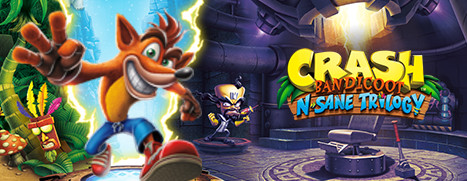
  • Crash Bandicoot Crashes Nintendo Switch: Crash Bandicoot N. Sane Trilogy , which includes remastered versions of the first three Crash Bandicoot games, launches for Nintendo Switch on July 10.
  • Okami HD: The gorgeous and ethereal remake of classic action-adventure game Okami is coming to Nintendo Switch. In the Nintendo Switch version of the game, players can use the touch screen in Handheld Mode or the Joy-Con motion controls in TV or Tabletop Mode to control the Celestial Brush to defeat enemies and solve puzzles. Okami HD launches in Nintendo eShop on Nintendo Switch this summer.
  • South Park: The Fractured But Whole: The South Park gang is back in an outrageously offensive superhero RPG adventure. And with Nintendo Switch, players can now drop into South Park anytime, anywhere. In addition to the main game, all of the game’s add-on content will be available for purchase. South Park: The Fractured But Whole launches for Nintendo Switch on April 24.
  • Sushi Striker: The Way of Sushido: Originally announced for Nintendo 3DS at last year’s E3, Sushi Striker: The Way of Sushido is also coming to Nintendo Switch! The action puzzle game finds players devouring conveyor-belt sushi, matching plates and then throwing them to defeat enemies. The basics are simple, but the gameplay is deep … and tasty! In the game’s multiplayer mode, players can even compete locally or online* against other players in intense matches. Sushi Striker: The Way of Sushido launches for both Nintendo Switch and Nintendo 3DS on June 8.
  • DARK SOULS: REMASTERED: The remake of the genre-defining and beloved original DARK SOULS game launches for Nintendo Switch on May 25. On the same day, an amiibo figure based on Solaire of Astora will also be released. By tapping this amiibo, the popular “Praise the Sun” gesture can be used with reckless abandon from the start of the game. (The gesture can also be obtained through regular gameplay.) Players who want to take the game for a spin can participate in a “network test.” The free network test launches in Nintendo eShop, and will allow players to download and play a part of DARK SOULS: REMASTERED before it launches to try out the gameplay and unique online features. More details about the network test will be revealed soon.
  • Travis Strikes Again: No More Heroes: When Travis Touchdown wanders into the game world, he goes on a rampage of epic proportions. The latest title in the cult classic No More Heroes series contains a total of seven game titles, including an action game, racing game and puzzle game. By using another Joy-Con controller, two players can team up for co-op multiplayer action. Travis Strikes Again: No More Heroes launches exclusively for Nintendo Switch this year.
  • Little Nightmares: Complete Edition: From award-winning developer Tarsier Studios comes Little Nightmares, a charmingly horrific puzzle-platforming adventure. The Complete Edition contains the two haunting tales of Six and The Runaway Kid in one package. You can even tap the PAC-MAN amiibo figure (sold separately) to unlock the Pakku Mask when playing. Little Nightmares: Complete Edition launches on May 18.
  • UNDERTALE: The million-selling role-playing game in which nobody has to die is headed to Nintendo Switch. Launch details will arrive at a later date.
  • Hyrule Warriors: Definitive Edition: The definitive edition (it’s in the title!) of Hyrule Warriors brings together dozens of characters from the Legend of Zelda series in an over-the-top action game. The game launches for Nintendo Switch on May 18.
  • ARMS US & Canada Online Open Tournament**: Players who want to show off their ARMS skills will be able to enter the ARMS US & Canada Online Open Tournament, which takes place in the Nintendo Switch game’s Ranked Match mode now through March 18. The eight top players in these preliminary rounds will have an opportunity to move on to the online finals on March 31. The finals will be streamed live from Nintendo of America HQ at https://arms.nintendo.com/videos/ .
  • ARMS Testpunch: A new global Testpunch for the ARMS game, which lets Nintendo Switch owners try out select modes for free, will be running for three days starting on March 31. To participate, players just have to download the Testpunch in Nintendo eShop on Nintendo Switch.

Nintendo 3DS

  • WarioWare Gold: The frenetic WarioWare series is back, and for the first time it’s on Nintendo 3DS! With 300 fast-paced microgames that can be controlled by pressing buttons, tilting the system, tapping the touch screen or using the microphone, WarioWare Gold is the biggest entry in the series. And for the first time, the game includes fully voiced characters. WarioWare Gold launches exclusively for the Nintendo 3DS family of systems on Aug. 3.
  • Luigi’s Mansion: The original Luigi’s Mansion, which was a launch game for the Nintendo GameCube system in 2001, is coming to Nintendo 3DS. This remake has an updated look and new features, like a map that displays on the bottom screen and a boss rush mode. Luigi’s Mansion launches exclusively for the Nintendo 3DS family of systems this year.
  • Mario & Luigi: Bowser’s Inside Story + Bowser Jr.’s Journey: In this Nintendo 3DS remake of a classic Mario & Luigi action RPG adventure, fans can replay (or play for the first time) Mario & Luigi: Bowser’s Inside Story, one of the most critically acclaimed games in the Mario & Luigi series. It features new graphics and a new mode that tells the behind-the-scenes story of Bowser Jr. Mario & Luigi: Bowser’s Inside Story + Bowser Jr.’s Journey launches exclusively for the Nintendo 3DS family of systems in 2019.
  • Dillon’s Dead-Heat Breakers: Action meets tower defense in Dillon’s Dead-Heat Breakers. In this new game, players take on the role of armadillo ranger Dillon, who teams up with an animalized version of the player’s Mii character to help stop enemy invasions and save the post-apocalyptic frontier. Dillon’s Dead-Heat Breakers launches exclusively for the Nintendo 3DS family of systems in Nintendo eShop on May 24. A free demo for the game will be available to download on May 10.
  • Detective Pikachu: Starting today, this new detective adventure game starring self-proclaimed “great detective” Pikachu is available for pre-purchase on Nintendo eShop and Nintendo.com. The game, as well as an extra-large Detective Pikachu amiibo figure (sold separately), launches on March 23. (The game is playable in 2D only.)

Remember that Nintendo Switch and the Nintendo 3DS family of systems feature parental controls that let adults manage the content their children can access. For more information about other features, visit https://www.nintendo.com/switch/ or https://www.nintendo.com/3ds/.

*Nintendo Account is required. Online services and features, including online gameplay, are free until the paid Nintendo Switch Online Service launches in September 2018.

**NO PURCHASE NECESSARY. Open to legal residents of US and CAN; high-speed internet required. Qualifier Period begins 3/8/18 at 5PM PT and ends 3/18/18 at 4:59PM PT. To participate, play at least 50 matches in Ranked Match during Qualifier Period (Ranked Match only available after you beat Grand Prix). Based on ARMS in-game ranking system and winning percentages during Qualifier Period, 8 Finalists and 4 Alternates will be selected to be available to participate in Finals to be held 3/31/18. Winner of Finals will get 1 color artwork (ARV $125). Other Finalists and Alternates will get 1 artwork (ARV $50 each). Odds of winning depend on no. of participants. Restrictions apply. Visit https://arms.nintendo.com/rules.pdf and https://arms.nintendo.com/fr/rules.pdf for additional details and full rules. Sponsor: Nintendo of America Inc.

Games Shown:

Posted on Leave a comment

Now Available on Steam – Northgard, 25% off!

Crash Bandicoot™ N. Sane Trilogy – Valve

Crash Bandicoot™ N. Sane Trilogy is Now Available for Pre-Purchase on Steam!

Your favorite marsupial, Crash Bandicoot™, is back! He’s enhanced, entranced and ready-to-dance with the N. Sane Trilogy. Relive all your favorite moments in Crash Bandicoot™, Crash Bandicoot™ 2: Cortex Strikes Back and Crash Bandicoot™ 3: Warped, now in fully-remastered graphical glory!

Posted on Leave a comment

Blog: Learning more about your audience

The following blog post, unless otherwise noted, was written by a member of Gamasutra’s community.
The thoughts and opinions expressed are those of the writer and not Gamasutra or its parent company.


If someone were to ask you who your target audience is would you have an answer? Is your answer everyone? Core gamers? Hearts? People who love indie games? 

You have probably had debates with your dev team over things like “well I think our players would like X because they are Y type of gamer” or “ I think they would like this screenshot because they like game Z.” Usually when you hear arguments that start with “Well I think our audience…” that person doesn’t know what they are talking about. You are not your audience. You have no idea without evidence.

As indies we have to be super careful with our marketing because we have no money and very little influence in the press. We are playing a totally different game than the huge companies who can saturate the media channels with tons of ads. We can’t just say our market is hardcore gamers because how do you even advertise to them? We have to be guerilla fighters that target our limited resources to where it counts. But how do you know where it counts? 

Well the best way is just ask. In this week’s column I want to give you some tips for getting a better understanding for your audience and what you can learn by using audience surveys. 

You can get some useful insights without knowing how to calculate margin of error and confidence level. Although if you want to here is a cool calculator. 

Your main goal with this survey is to find out more qualitative data and clusters of similarities about your audience. You are more interested in finding unexpected patterns or clusters of people that you didn’t know existed. The results should be treated more of like a single sonar ping that identifies where groups of people are hanging out instead of a map that tells exactly what you need to do. 

“Survey my audience? What is this some sort of corporate focus group where it is design by committee? This feedback will just sand the corners off of my vision! I am an auteur who creates games by the will of my inspiration. No one can tell me where my muse will be.” 

Whoa whoa there Godard. The internet by its very nature is anonymizing. Worst yet, the app stores are crassly transactional. The best way to sustained success making games is to build a fan base that knows who you are and feel like they are part of your vision. 

In the restaurant industry the successful chefs will come out and talk to their patrons. Over a complimentary glass of sherry, they listen to what their customers liked about the meal they just ate, what they didn’t.

Comedian Chris Rock tests gets audience feedback by going to tiny clubs and reading his jokes (without windup) from a yellow legal pad.

From back stage, musicians peek at their audience and see if they are gray haired, teeny boppers, or bikers. 

The internet makes it so the personal connection that Chefs, comics, and musicians have very very hard. However a survey is one of the best tools we have to reach across the gap left by technology and understand who our fans like.

Furthermore understanding who your audience is helps you shape your vision. I have a running google doc that is made up of 79 pages of wild-ass ideas that came to me as I struggled to turn my brain off at 2AM. Most of these ideas are terrible that nobody will want. However, many of them are just as creative but are something that someone will actually want to play. If I am going to dedicate 6 months to 2 years building something, I want to at least figure out which of my ideas are actually going to be something someone wants to play. 

This is one of my favorite scenes in all of Mad Men (from season 5 Episode 3) trying to understand the younger generation Don Draper starts an impromptu survey of some teens at the back stage of a Rolling Stones concert.

The absolute best populations you can survey are the people who have purchased your past games. These people liked what you made before and are theoretically willing to pay for your next game. You want to find out who they are so that you can go track down and market to other people who are just like them but have not yet heard about you.  

I hope you added an email list signup form so that you can communicate with those customers. Your list is where you are going to get the highest response rate. Similarly, with an email list you have the capability to send your survey to just the subset of your biggest fans (aka the ones open every email you send out.)

If you don’t have a mailing list (shame on you, here is how to fix that), Twitter is your next best bet. Be warned though, Twitter is not as reliable as email because your followers are not necessarily your customers, they might be following you because you post pictures of baby Echidnas. Similarly twitter has a very low conversion rate for clicking links.

Picture courtesy of Taronga Zoo

If you don’t have an email list or have never released a game you can still make it work. Consider putting out a beta of your in-progress game but require people to sign up for your mailing list to download it. Then, send a link to the survey to those people who have signed up and played your game. 

Another option is if you have been posting a regular dev log to a forum, post a link to the survey there. Again these people are not your customers and have never played your game so the data might not be as trustworthy.

We are all busy developers who would personally never find the time to answer a dumb survey from some dumb corporation, why would we expect our audience to do the same? The friendly checkout lady at Target tells me to go online to fill out a survey every single time but I have never every filled one out.

The thing to remember is that we are indies and have a more personal connection to our audience. Don’t just send out an email that says at the bottom in tiny type: “Click this link to fill out our survey.”

Instead, send an email where the only thing in it is about the survey. Don’t just cram it in the bottom of an email that is about your new trailer.

Understand that there are several reasons why people take the time to fill out surveys. For more info, see this. Here are some tips:

  • Phrase your solicitation personally and emphasize that you need their help. For example “I want to make sure that my next game lives up to your expectations. Please help me understand what you did and didn’t like about my last game…”
  • Appeal to their sense of altruism: “Completing this survey helps building the community around this game so that we can bring in more people that want to play it as much as you do.” 
  • Many people fill out surveys because they are just interested in the subject matter and how you work. So you can phrase it as “I am seeking feedback from you on my next game, this survey will give you an early peek at what I am working on so I can get your opinion.”
  • You could consider offering a giveaway. Maybe you have an old game that isn’t selling very well. Give a steam key if they complete the survey. In the study I linked to above, they found that offering an incentive does not unduly influence the responses.
  • If you send your survey to your mailing list, you can see who clicked the survey link or not. After a few days, resend the email (with a different subject and different appeal) to those who did not open or click the link. You can also further encourage them by sharing some early results: “We found that the majority of people who responded to this survey think games are too hard, does that match your experience? Let me know if it didn’t: SURVEY LINK”

It still is hard to get people to complete the survey. To give you an idea of what you can expect, when I last ran a survey to my mailing list about 10% of the audience completed the survey. 

I just use a simple Google form. To create one just go to your Google Drive and select New > More > Google Forms. Remember to set the name of the form so it doesn’t say “Untitled” and then start writing your questions. 

Here are some good questions to ask your audience

Basic demographic data

Age range – I usually phrase it as 10-19, 20-29, 30-39..

Also ask basics like Gender, Education Level. I don’t ask country because you can get that data if you install Google analytics in your game or from your store’s data. 

List three of your favorite games (excluding my games) OR
Name a game that you think is similar to my game

This freeform question allows you to find out a lot. First it gives you a general insight into what type of games your audience plays such as hardcore, casual etc. the other thing is that it allows you to target your marketing to similar devs. 

If you find out the games that your audience likes another small indie game, you can reach out to the developers of that game. Say to them “hey I found out a lot of my players also like your games. Would you like to team up marketing efforts?” If they are nice and understand that indie games are not zero-sum you cross promote each other’s games. You can also bundle your games together to sell on the store. Because their audience will probably like your games and vice versa if you both have active mailing list, you can send out an email that say “Hey if you like my game you will also really like this game from this dev. In fact they are running a sale right now!”

What was your favorite level in my latest game and why?

If you get a response like “I love the open world emergent gameplay in level 3.” guess what your first bullet point should be in your store description. When you learn what your audience does and doesn’t not like about your games you can write your store descriptions in a way that makes them feel like this game is made specifically for them. You can also use this to find out if they are the type of gamer who likes beautiful scenery or if they like a challenge. 

What was your least favorite part of my game?

This question will help you develop games faster because you can cut features that nobody really cares about. Maybe you don’t really need to spend another 2 months building that fishing mini game. 

One of the biggest skills that you learn once you have released a few games is which features are actually important to spend extra time on and which you can cut.

In my game Wizard Golf RPG I added a sub-game that worked like the collectible star mechanic in Mario 64. I thought people would love it but very few people went after them and even more people were confused about it. 

You might also find out that people think your game is too hard. I know challenging games are all the rage but you might find that the majority of your audience actually plays your games for the story and tolerates the difficulty. 

What blogs do you read OR
What forums do you post to?

You are going to get a lot of Kotaku, IGN, and theVerge.com with this answer but you might also find some little known forums for super hard core fans. With that knowledge you can double your efforts to try an appeal to the moderators and authors of that site.

Don’t go pay too much attention to the percentage of the responses because those can be influenced by any press coverage you already got. For instance, my game Return of the Zombie King was chosen as one of Touch Arcade’s best games of 2016 which caused many readers of that site to download my game. So, naturally, a huge percentage of the audience said they were Touch Arcade readers. You are more looking for sites you weren’t aware of or ones that have an unexpectedly high influence. 

In your survey software, don’t make this a choice where they can select multiple answers because many people have an account in all the big ones. You are asking what their favorite one is. This answer helps you decide where you should focus your social media marketing. Don’t be shocked if Twitter is not the #1 choice of your fans.

This question really was eye opening to me and influenced my strategy. For many years I made mobile games but when I surveyed my audience I found that 81% of them also had Steam accounts (a far higher percentage than any other gaming system.) I will be releasing my first Steam game in a couple months. 

I was shocked at how much of my mobile audience played Steam games. My hunch is that this survey was of players of my premium game Zombie King. People who are willing to pay for games are more likely to be traditional gamers. 

(If you have an upcoming game) Which app store capsule image or icon do you like best?

Your in-store marketing is the first thing that most potential players will see. It must grab their attention right away. Since you have been looking at this material every day you cannot judge what is best. So provide 3 potential designs and ask your audience. You will be surprised to see how much one design outperforms the rest. Be sure that you use the “randomize” function on the multiple choice because you want to make sure players aren’t just picking a design because it is the first or last on the list.

What game should I make next

Take any response for this question with a grain of salt. And don’t let this be the only reason why you pick your next game. But, if you are hemming and hawing and wondering if you should make a sequel to your previous game, make a safe variation of a popular genre, or try to do something that is way out there, see what your audience thinks. 

Limit this question to three choices. Write up a short 2 sentence elevator pitch for each game. Also create some simple mockup art for the style you are thinking of for each game. 

I phrased the question as “I can’t decide what game to make next. Which one are you most excited about. Note: this is hypothetical and there is no guarantee any of these will be made.”

I tried this and was sure that everyone was going to pick choice #1 (I even secretly wrote the pitch to sound even better than the other two.) Sure enough almost 60% went for choice #3. Shows me what I know about my audience. I ended up not making any of the three games but it was a fun exercise. 

These were the results when I asked my audience which of my 3 hypothetical games they were most interested in. I thought the red one was the surefire winner but only 28.8% of my audience wanted to see that get made.  

  • Keep your survey short: only about 8 or so questions. If you have more to ask, do a follow up survey in a year or 6 months. 
  • Make every question optional because it will boost overall response rate. One un-skippable tricky question is like putting in a really tough boss fight mid game, you will keep people from finishing the rest of the game. 
  • Start with simple questions at the start, place the ones that require written responses at the back. This prevents people from bailing right away when they see you are asking big questions.
  • Ask them to fill out your survey as part of your onboarding email auto responder sequence. Doing this will give you a constant pulse on your audience as it evolves. Add the survey-related email fairly deep into the autoresponder sequence so that you can be sure that the people filling it out are truly an interested audience. If you don’t know what an autoresponder is check out my Email Marketing 101 column.  

Posted on Leave a comment

Blog: How to design for coziness

The following blog post, unless otherwise noted, was written by a member of Gamasutra’s community.
The thoughts and opinions expressed are those of the writer and not Gamasutra or its parent company.


What follows is a very brief summary of an analysis performed by a group of designers at Project Horseshoe in the fall of 2017, including Jake Forbes, Daniel Cook, Chelsea Howe, Squirrel Eisorloh, Dan Hurd, Anthony Ordon, Joshua Diaz, and Tanya X. Short (the editor of this summary and the one to be blamed for any mistakes, omissions, or misrepresentations). To read the full paper, visit the Project Horseshoe website


Popular games such as Animal Crossing or Stardew Valley offer coziness as a core gameplay value proposition to players, while the more stressful core gameplay of Dark Souls or The Legend of Zelda: Breath of the Wild may provide breaks of coziness in select spaces and times to deepen and salve an otherwise stressful player experience with respite between adventures.

Coziness refers to how a game evokes the fantasy of safety, abundance, and softness: 

  • Safety: risk and danger (physical, emotional, social) are minimized.
  • Abundance: lower-level needs are met and nothing is lacking or pressing.
  • Softness: stimuli are gentle and comforting, reducing stress.

Each of these aspects of coziness reinforce each other, such that a game (or section of a game) centering safety, abundance, and softness will often also encourage intimacy of space and emotion, with a slower pace, implying authenticity, sincerity, and humanity.

Maslow's hierarchy of needs
Maslow’s hierarchy of needs as it relates to coziness

Aspects which may negate coziness include extrinsic rewards, dangers or threats, responsibility, distractions, intense stimulus, vast distances, non-consensual social situations, confinement, deception, and opulence. These same negating elements can be used to enhance coziness if they are safely outside the player’s defined cozy space (spatial, emotional, etc) by providing contrast and juxtaposition. For example, cold rain against a window emphasizes the warmth of a reading nook without threatening to disrupt it. If that same cold rain was blowing through a broken window, the scene would no longer be cozy.

Harvest Moon
Harvest Moon was a popular cozy title that offered a mundane, ritual refuge in pastoral life, with clearly demarcated seasons to signify both economic and community activities.

Many things which might be considered cozy (such as cuteness, romance, wealth, childhood, or even the home) are often cozy-adjacent upon further inspection. When creating cozy games, inspect every aspect for potential risk-taking, stress, responsibility, stimulus, and feelings of inadequacy or fear.

As you approach cozy design, remember that coziness is adjective; coziness is an aesthetic goal, a flavor that can be applied to any underlying type of game. Some mechanics are emotionally more in tune with coziness, but any game can be made more cozy. This also means that there is no single defining genre that is “coziness”.

In this analysis, we discovered patterns of coziness throughout games, including aesthetics, mechanics, narratives, and dynamics. Finally, we found patterns in our own work habits and approaches that allowed coziness during the process of game development.

Cozy aesthetics are audio/visual sensory cues that are often familiar to the player that evoke images or memories of safety, softness, and contentedness. They commonly contrast a shared refuge from a less pleasant external environment, and can be applied as a moment to reset or reframe the player’s mindset.

Common cozy aesthetic patterns include:

  • Abundances of plenty and generousness, including plenty of food, drink, joy, and warmth, especially in spaces like taverns, kitchens, cafes, and bedrooms.
  • Smooth transitions and gradients can add gentleness to cozy areas, though clear thresholds may also preserve the comfort of a distinctly cozy area, such as coming in from a snowstorm into a log cabin, or ducking into a cave behind a waterfall.
  • Protection and support signalled, such by as a relaxed guardian animal or character, communicates to the player that they are free to pursue their higher-order needs.
  • Focus and elimination of interruptions or pressures can create a familiar, comfortable, intimate space.
  • Mundanity and familiarity will always be cozier than something alien or exotic, as its safety and abundance is clearer. 
  • Refuge & Escape: if there is an “outside”, this place is a clear shelter
  • Human-centric: rooms and objects are scaled for human comfort and belonging
  • Welcome: the player is explicitly welcomed and given freedom and safety to express themselves however they wish, without responsibility or pressure to perform
  • Ritual: repeated, meaningful actions create familiarity and contentedness
  • Seasons: the familiarity and ritual history of seasons is often correlated with community and abundance, particularly in autumn and winter.

Cozy visuals may include warmer, low-contrast colors and lighting, natural and familiar building materials, enclosed intimate spaces, and occasional windows into the external, non-cozy space taken refuge from.

Yoshi's Woolly World
Yoshi’s Woolly World makes the entire world feel touchable, soft, and lovingly crafted.

Cozy audio would ideally always be diagetic, allowing the player to connect concretely and intimately with the sources of the sound (whether a character or object). Ambient or human-created music and audial reminders of safety, abundance, and reinforce comfort.

Cozy locations and items are centered on leisure, practicality, ritual, history, and familiarity. Cozy content allows for privacy and creative expression, so that players can be companionable or in solitude as preferred. As familiarity and physical comfort are core to coziness, domestic places and objects or hobby/crafts can be cozy. Examples given of cozy locations include:

  • “3rd spaces” separate from work or home such as bars, cafes, libraries, cabins, and gardens
  • Transition spaces without danger or obligation, such as trains, car backseats, or slow-moving spacecrafts
  • Places supporting low-intensity companionship, with calm pets or passive people-watching

Coziness is opt-in, depending on player agency, requires intrinsic satisfaction from the activity, not satisfaction contributing to some other purpose, such as progression, status, power, etc. Extrinsic rewards may undermine the coziness and make the activity/mechanic feel compulsory or optimal.

Furthermore, a mechanic will be engaged with in a cozy manner only if it is safe, known, and relaxing — it will not stress the player with undue costs, difficulty, or danger. This tends to create tasks that can become rituals or hobbies, such as:

  • Tidying or organization
  • Searching for or collecting beautiful items
  • Fishing
  • Reading
  • Sewing
  • Brewing and drinking tea or coffee

Warning: unfortunately, it is easy for cozy mechanics to devolve as players acclimate to the systems and seek to min/max them. Cozy mechanics may even be weaponized by cruel designers, such that the intimacy and vulnerability of a cozy moment is identified as a weak point to monetize. To preserve coziness even in a monetized environment, the best practice is to service existing player needs and avoid introducing artificial scarcity or anxiety-inducing social comparison.

Halo 2
Halo 2 re-imagined the matchmaking lobby as a virtual sofa. At the time, staying with the same group from match to match was a big innovation. A very cozy move for a decidedly un-cozy game.

Cozy interactions online can be difficult, as the internet is arguably inherently dehumanizing. Tips for cozy social mechanics include:

  • Reduce the number of strangers, which inherently signify risk and lack of trust
  • Promote persistent identities to encourage pro-social behaviour
  • Deepen communication channels to allow additional signals of sincerity and meaning
  • Promote social norms of trust and successful reciprocation loops
  • Comfortable spaces with politeness and consent
  • Capability for forgiveness and repair when interpersonal mistakes are made
  • Codes of conduct help players agree to ideals of behaviour
  • Feedback systems immediately targeting a behaviour can help players reform
  • Gameplay scenarios can reinforce desired norms (such as generosity), even without a strong extrinsic reward
  • Escalating layers of opt-in social interactions, allowing players to gradually expose themselves to risk of unpleasantness and threat
  • Allow players to linger in rooms or areas after its purpose has been completed
  • Design for group activities that encourage proximity without high-intensity distraction, such as fishing, gathering, or crafting
  • Allow for personal sourcing, creation, and/or delivery of gifts
  • Create non-threatening ways for players to ask each other for feedback or give apologies.

In a game’s narrative, coziness may manifest as low-pressure, low-intensity, an ensemble cast, non-violence, intimacy, practicality, and episodic encounters. The most cozy moments within a narrative are often respites that involve a place called home, safety before or within a storm/conflict, or as denouement post-climax. This is a common grounding moment in classic adventures, in which adventurers bond with food and drink over a campfire, before or after a big battle.

Cozy narratives and themes center around homes and family, or practicality, such as homecoming in Night in the Woods, or the pastoral escape of Stardew Valley

Cozy characters are often nurturers, providing affection, shelter, food, companionship, and acceptance, or simply reassuring the player that they are loved. Note that these labors should be non-transactional; in this fantasy, characters help each other because it is nice and gifts expect no reciprocation, without obligation or neediness.

Undertale
Undertale uses warm tones, focused interiors, and the presence of a relaxed guardian character to indicate safety and coziness.

Final Fantasy XV
Final Fantasy XV’s companions are confident in what they bring to the team and look out for each other, and often express affection.

Gestures of trust, like sharing a secret or inviting the player into a private space, helps the player feel welcome and appreciated. Characters who can be recipients of the player’s generosity, kindness, and nurturing, without punishment or expectation, such as low-maintenance pets, can be exceedingly cozy. These characters provide a potentially appealing target for the natural “tend and befriend” response.

Perhaps surprisingly, curmudgeons and pariahs have their place in a cozy game as an opportunity for player empathy, and adds authenticity to a community that might otherwise seem fake or oppressive. From cranky villagers in Animal Crossing to Oscar the Grouch, grumpy characters can be charming as opt-in engagements and reminders that life goes on in a community independent of the player.

How does your studio or your team allow for coziness? Emotional safety allows for honest communication and collaboration. Abundance leads to a willingness to experiment without fear of loss. You may also find key personnel are easier to retain when they’ve experienced a place they are able to feel safe and cozy.

The ideally cozy workspace would have:

  • Opportunities to escape and change environments
  • Food and coffee provided
  • Familiarity and trust in colleagues
  • Natural materials and lighting
  • Access to the music or audio of choice
  • Flexible hours or working from home support
  • Refuge from external forces, pressures, or threats
  • Separation of the role of manager and mentor, to allow for trusted confidantes
  • Opportunities for work cliques to mingle and spend repeated time together
  • Clear, gentle, considerate, and timely feedback when opted in

Don’t go overboard trying to make everything cozy! You cannot force intimacy, and cozy spaces or times may be used as an escape from difficult topics or unpleasant interactions, leading to awkward conformity.

In most employment scenarios, the power differential guarantees that all parties cannot engage in true coziness — one person has the ability to severely affect the career of the other, and therefore, trust should not be expected or used to manipulate.

An Invitation to Cozy Design

The following is an Invitation to radically cozy game-making, which you may send (edited at will) to your colleagues:

Dear designer whom I care for, 

I wish for you that game-making be a refuge from the storm. I take joy from the games you make, and I hope you feel fulfilled when you make them. As a colleague, I want you to feel safe to express your inner self, to take creative risks in your craft. As a friend, I wish that you can escape the ever-present hurry and pressure of our industry and world, into a restful, healthy practice. 

If you feel comfortable, I invite you to make a game that reflects those moments in your life that were meaningful, where you were content and cared for. I invite you to make a game that offers moments for players to reflect and be at ease. You don’t have to show it to me; you don’t have to share it with anyone. But I would like to be a companion in the journey towards cozier games, and I think others would, too, if you would have us. 

It’s difficult and slow and I’m probably asking a lot from you. But if you try and fall short of your expectations, please know that I will still support and celebrate you. I care about you, and your work is but a small part of what makes you wonderful. 

Good luck, if and when you’re ready,
(your name)


Thank you for reading, from Chelsea, Daniel, Jake, Dan, Tanya, Squirrel and Anthony. This was only 5 of 40+ pages worth of valuable design insight! To read the full paper, please visit the Project Horseshoe website.

Posted on Leave a comment

Video: Designing a new UI system for The Division

The Division was an ambitious project for the team at Ubisoft Massive, who were tasked with designing a UI system from the ground up. So how did they do it? 

In this 2017 GDC talk, Ubisoft Massive’s Christian Savoie covers some of the major lessons learned while developing new technology and creating the UI for The Division.

Each lesson Savoie imparts is backed by examples of the challenges the team at Ubisoft Massive encountered when creating a new UI technology specifically for the game. 

UI programmers interested in how the UI was created for The Division may appreciate that they can now watch the talk completely free via the official GDC YouTube channel!

In addition to this presentation, the GDC Vault and its accompanying YouTube channel offers numerous other free videos, audio recordings, and slides from many of the recent Game Developers Conference events, and the service offers even more members-only content for GDC Vault subscribers.

Those who purchased All Access passes to recent events like GDC or VRDC already have full access to GDC Vault, and interested parties can apply for the individual subscription via a GDC Vault subscription page. Group subscriptions are also available: game-related schools and development studios who sign up for GDC Vault Studio Subscriptions can receive access for their entire office or company by contacting staff via the GDC Vault group subscription page. Finally, current subscribers with access issues can contact GDC Vault technical support.

Gamasutra and GDC are sibling organizations under parent UBM Americas.