Posted on Leave a comment

Dota 2 Update – April 18th 2018

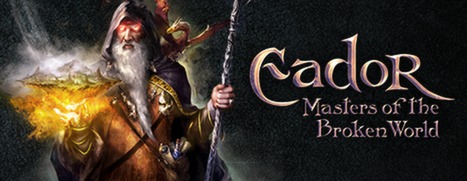
Eador. Masters of the Broken World – Valve

In celebration of its 5 year anniversary, you can add Eador. Masters of the Broken World to your account for FREE starting now until Sunday at 6pm Pacific! Once you add the game, it will remain in your account permanently.

Eador is a universe made of countless shards of land drifting in the Great Nothing. Each of the shards is a little world unto itself, with geography and denizens of its own. The power over the shards is bitterly contested by Masters, the immortal beings mortals believe to be gods. Take the role of the mighty Master and shape the destiny of Eador! It is in your power to deliver the world from ultimate destruction – or to choke it with an iron fist of tyranny. Eador: Masters of the Broken World is a turn-based fantasy strategy game, where the decisions you make affect the world even deeper than the battles you win.

Posted on Leave a comment

Life is Strange dev Dontnod headed toward an IPO

Dontnod, the French game developer behind Life is Strange and the upcoming Vampyr, has registered with the French regulator Autorité des marchés financiers (AMF) and taken the first steps toward going public on the Euronext Growth stock exchange.

A translation of a story from the French publication Le Figaro notes that listing on the exchange and opening up for an IPO should give Dontnod enough of a solid cash boost to continue partially funding its own games alongside investments from publishers, as it has with publishers like Focus Home Interactive for Vampyr.

“By financing a small part of the development ourselves, we take a controlled financial risk, but this allows us to generate larger royalties if successful,” Dontnod CEO Oskar Guilbert tells Le Figaro. “We are not abandoning the classic model of full funding by the publisher. We want to achieve a smart balance between the two models.”

The Dontnod CEO continues, explaining that the company had been eyeing an IPO for some time but that it “had to first reach a certain maturity,” something that he notes has taken a significant amount of work, likely in the wake of some financial trouble during the studio’s earlier years.

“The global video game market, which is already worth $109 billion in 2017, has a strong dynamic and we want to take full advantage of it,” said Guilbert in a translation of a statement published by the AFJV. “The original works of our studio, developed by experienced and passionate collaborators, have enabled us to appeal to the world’s largest publishers and a very wide audience, and we intend to continue this momentum through this IPO project.”

Posted on Leave a comment

Blog: Breaking down the technologies of Civilization

The following blog post, unless otherwise noted, was written by a member of Gamasutra’s community.
The thoughts and opinions expressed are those of the writer and not Gamasutra or its parent company.


The tech tree quietly does a lot to reinforce the major themes of the game and to provide the heartbeat that keeps players moving through the game.

Constant Progression

I think the most important thing that it does is ensure constant progress for the player. Civ greatly benefits from always giving the player something they want within a couple of turns. This is a large part of what feeds the one-more-turn compulsion of the games.

It serves much of the same purpose of leveling in an RPG, albeit flavored strongly by the rest of Civ. Like RPG levels, it gives you a major in-game reward on a regular basis and helps make the player feel like they’ve grown over time.

It really forces the game to feel like it’s moving forward. It introduces new pieces regularly and so keeps the game from feeling like it’s stuck in a rut. No matter what else is going on in the game, there’s always a new tech in a few turns and most of those techs have something interesting attached to them.

Meaningful Rewards

This progression is strongly reinforced by the way that the techs tend to have something meaningful attached to each of them. There are a few that I don’t care about, especially ones with non-essential military units, but mostly they have something that I want.

The game as a whole is good about making everything meaningful. It encourages you greatly to have a variety of all of the pieces, such as improvements, units and districts. This gives the game a lot of pieces to give you and so it can distribute them across the tech tree and keep the techs valuable.

This isn’t completely perfect though. Things like aircraft upgrades just don’t have enough of an impact in a normal game for me.

The Tree

The other major theme that it does a lot to reinforce is that of progression through history. It’s the feeling of having started as just a single settler and a warrior and growing to be a massive, advanced empire. The abilities to trace technological advancement and the idea of getting to such things as spaceflight from such techs as animal husbandry and archery are very satisfying.

Also, having techs unlock other techs adds value to early techs. Now, not only are they valuable for what they give, but also for what they unlock. The tension between a tech that has more immediate benefit and one that will let you get to a more powerful tech sooner is also fun for players to navigate.

Asymmetry of Tech Options

Despite my above point of the meaningfulness of the techs, there are some that feel much more powerful than others, and those act as guides for decisions that have no clear answer. In this way, they greatly reduce the effective complexity of the decision of what to research for mid-tier players.

This is a little bit of an involved point, so I’m going to expand on it a little. Essentially, deciding which tech to research next is an individual skill that players develop as they play the game. When this skill is not fully developed (and it may be unreasonably difficult to ever fully develop this skill), there are going to be situations in which the player cannot easily decide between a number of options for which tech to research next, when those techs are judged simply by their immediate value. The existence of powerful techs further down the tree makes these decision points more approachable as they give the player a direction in which to research.

Tech And Units

A sub-point here is that techs which result in a major difference in unit strengths are one of those asymmetries and an interesting one to unpack. First of all, the one in SM:AC is one of my favorite impact moments in video games because when you jump from two attack to four attack, but the defense remains the same, that’s a moment that highly incentivizes attacking while you retain the technological edge. Civ6 also does a good job of making units of different tech levels differ greatly in power, so your crossbowmen one-shot the opposing archers.

That’s very satisfying because it’s the conversion of a scientific advantage into a military one and it’s fun to be in unequal battles that you’ve earned. Also, it is the realization of the fantasy of winning a war due to superior technology, which is a familiar narrative, albeit one I believe to be heavily misapplied.

Complexity

The big issue with this tech tree system is the degree of front-loaded complexity that comes with it. It’s very hard for a beginning player to make a decision of what tech to research, even when only considering the choice menu and not the full tree. There’s a lot of content that requires familiarity from the player and the choice of which tech to research requires a lot of comfort with the rest of the game as well. Complicating this with the tree structure exacerbates the issue. To some degree, the depth of the tree makes this unavoidable however.

Essentially, just having the knowledge required to make a decision is a major barrier to entry for new players. Things like the advisors are meant to help with that, but it’s probably insufficient. To some extent now, new Civ games are meant for people who have played earlier Civ games and so it can be hard for players who don’t have that experience.

Staticness

An interesting point to think about is that the tech tree is static between games. The techs are in the same positions on the tree, cost the same amount and unlock the same pieces every time. This is probably in large part because it’s much easier to design and implement that way, especially when you have to take historical pseudo-realism into account, but the results of that decision are worth examining.

You can ensure consistency in the above points through this static design. A good procedural solution could do that as well, but it is again substantially easier to manage with a hand-crafted tree.

This drastically reduces the complexity of the tech tree on later playthroughs. One of the skills of the game is simply getting better at traversing the tech tree. This naturally also leads to players no longer engaging with the decision point of which tech to research next because they feel they have a good, solved path. The rest of the game does influence the decision, but the raw power of some techs is often enough to overwhelm those wrinkles for some players.

History

Tying the tech tree to historical technologies greatly reduces the complexity. Logical connections between the pieces make them much, much easier to understand and historical context helps the player get an idea of what the techs do.

Also, it pushes a compelling fantasy of how technological research works. Having technologies that lead to other technologies and being able to trace that development is intrinsically very satisfying due to what research is in the real world.

Tech Boosts

This is my favorite feature from Civ6 just for all that it does. As you may have seen by now, I love things that tie different parts of the game together and having your actions in the world have such a direct impact on research is wonderful. I love how this plays and how it generates sub-quests which encourage trade-offs. I really enjoy when the game pushes you to go kill something with your slinger so that you can boost archery for instance.

Also, the flavor of the piece is wonderful. It makes sense that slingers would look to improve their weapons. It makes sense that having a number of musketmen would spur replaceable parts. The whole thing is just something that feels like it makes sense.

Civics

Civ6 does something very elegant in making the techs and civics use the same structure. However, these two things need to feel different somehow, and if it isn’t in the mechanical structure, then it needs to be somewhere else. Civ6 handles this with making the reward for civics mostly be policy cards. This certainly functions effectively as a way to differentiate the two trees, but it is both difficult to understand the ramifications of policy changes, and the system feels divorced from the rest of the game.

By and large, it manages all of the above points, but the rewards don’t feel as meaningful as in the tech tree, and so it doesn’t do the same job of feeding the one-more-turn compulsion that the tech tree does. However, it does not exist in isolation, and so does not need to.

Alternate Approaches

The first alternative to examine is that of Beyond Earth, but the visual difference merely hides an equivalent system. There are minor differences in terms of branching, but despite the difference in appearance, the system is functionally identical to that of the other Civ games and so has the same benefits and weaknesses.

On the other hand, this lack of a tech tree is one of the biggest weaknesses of Colonization. I feel like one of the major issues with that game is that there often comes a point where you feel like you’ve gotten into a bit of a rut. Essentially, the next real goal is quite a distance away and so the one-more-turn compulsion ends up lost and the game founders.

The Stellaris design of giving the player a choice between a group of semi-random options from an underlying tech tree might on first glance feel very similar to the Civ one, but the presentation and randomness detract from the points above about long-term planning and so the feature is much weaker. Additionally, the techs do not all feel meaningful (at least, as of before the major change to combat from a few months ago, when I last played). However, the complexity of this decision for new players is thus also greatly reduced for new players as the decision becomes which one of the limited options is most immediately beneficial. For advanced players, it reduces to something much closer to that of Civ, but not quite there.

Polytopia has the major difference of requiring the same currency for research as for everything else. This completely removes the major point of constant progression detailed above. However, each game of Polytopia is both short and dense and so it can stand to lose that piece.

Sorceror King and Master of Magic have a more implicit tech tree in that buildings unlock other buildings. This again loses the constant progression that is a critical benefit of the tech tree and so the games end up with the same problem as Colonization where there comes a point without a reward that is both compelling and reasonably near and the game starts to sputter.

Conclusion

The Civ games have long been known for that one-more-turn compulsion, and I think that the tech tree is the driving force behind that. It’s quite safe to say that without this, Civ would not be anything like the game that it is.

Posted on Leave a comment

Blog: Creating a hard AI for Terra Mystica

The following blog post, unless otherwise noted, was written by a member of Gamasutra’s community.
The thoughts and opinions expressed are those of the writer and not Gamasutra or its parent company.


Spoiler alert: This doesn’t have a happy ending.  Digidiced has been hard at work for more than a year trying to produce a Hard version of its AI for Terra Mystica using machine learning.  Our results have been a lot less impressive than we were hoping for.  This article will describe a little bit about what we’ve tried and why it hasn’t worked for us.

If you’ve paid attention to the latest developments in AI, you’ve probably heard of AlphaGo and AlphaZero, developed by Google’s DeepMind.  In 2017, AlphaGo defeated Ke Jie, the #1 ranked Go player in the world.  AlphaGo was developed by using a massive neural network and feeding it hundreds of thousands of professional games.  From those games, it learned to predict what it thought a professional would play.  AlphaGo then went on to play millions of games against itself, gradually improving its evaluation function little by little until it became a superhuman monster, better than any human player.  The defeat of a human professional was thought to be decades away for a game as complex as Go.  But AlphaGo shocked everyone with its quantum leap in playing strength.  AlphaGo was able to come up with new strategies, some of which were described as “god-like.”

But it didn’t stop there.  In December of 2017, DeepMind introduced AlphaZero – a method that also learned the game of Go, but this time didn’t use any human-played games.  It learned entirely from self-play, being only told the rules of the game.  It was not given any suggestions or strategies on how to play.  AlphaZero not only able to learn from self-play alone, it was able to get stronger than the original AlphaGo.  And on top of that, the same methodologies were used for Chess and Shogi and the DeepMind team showed results that AlphaZero was able to solidly beat the top existing AI players in both of these games (which were already better than humans).  Since these results have come out, there has been some criticism around if the testing conditions were really fair to the existing AI programs, so there is a little debate as to whether AlphaZero is actually stronger, but it is an outstanding achievement nonetheless. 

It also became quite clear that AlphaZero approached chess differently than Stockfish (the existing AI they competed against).  While Stockfish examined 70 million positions per second, AlphaZero only examined 80,000.  But AlphaZero was able to pack a lot more positional and strategic evaluation into each of those positions.  By examining the games that AlphaZero played against Stockfish it became obvious to a lot of people that AlphaZero was much better at positioning its pieces and relied less on having a material advantage.  In many cases AlphaZero would sacrifice material in order to get a better position, which it later used to come back and secure a win.  It suggested the possibility that there might be a resurgence in chess programming ideas, which had been stagnating in recent years.


The DeepMind team was able to show that AlphaZero learned many human-discovered opening moves.  They showed several examples of how different openings gained and lost popularity as it continued to learn.

As Digidiced’s AI developer, these were exciting developments for me.  I’ve had experience with machine learning and neural networks before and have been playing around with them for many years.  I once developed a network as a private commission for a professional poker player that could play triple draw low at a professional level.  I began to wonder if I could use some of these same techniques for Digidiced’s Terra Mystica app.  One of the compelling features of AlphaGo was that it was largely based on something called a convolutional neural network (CNN).  A CNN is also used in other deep learning applications like image recognition and is good at identifying positional relationships between objects.  AlphaGo was able to use this structure to identify patterns on the Go board and determine the complex relationships that could be formed from the different permutations of stones.

While Terra Mystica takes place on a hex-based map instead of a square grid, a CNN can still be applied to it so that the proximity of players’ buildings can be incorporated, which is a critical part of TM strategy.  However, there are several things that make TM a much more complicated game than Go.

  • TM can have anywhere from 2 to 5 players, although it is often played with exactly 4.  For programming AI, the leap from 2 players to more than 2 is actually a lot more difficult than most people realize.  You may have noticed that whenever you hear about an AI reaching superhuman performance, it’s almost always in a 2-player game.
  • While a spot on a Go board can only have 3 states (white stone, black stone, or empty), a hex on a TM map can have 55 different states, taking into account the different terrain types and buildings.  Add things in like towns and bridges and the complexity goes up from there.
  • TM has 20 different factions using the Fire & Ice expansion, and each one of these factions has different special abilities and plays differently.
  • TM has numerous elements that occur off the map including the resources and economies of each player, positioning on the cult tracks, and shared power actions.
  • Each game is different by adding scoring elements and bonus scrolls that are different with each game.  Which elements are present in the particular game can have a massive effect on all of the player’s strategies.  Not to diminish the complexity of Go (a game which I’m still in awe of after casually studying it for over a decade), but you’re always playing the same game.

One of the things that makes TM such a great game and causes it to have a very high skill ceiling is the fact that its economies and player interactions are so tightly interwoven.  The correct action to take on the map can be highly dependent on not only your own situation, but the economic states of your opponents or the selection of available power actions.  All of this makes TM orders of magnitude more complex of a game than Go.


Chaos Magicians, Swarmlings, Darklings, and Dwarves fight it out on the digital version of Terra Mystica.  Complexities abound and an AI needs to know how to read the board.  Darklings will want to upgrade one of their dwellings to get the town bonus. They should upgrade next to the Dwarves to keep power away from the stronger CM player. The choice of towns could affect the flow of the rest of the game:

  • Should they take 7VP & 2 workers so they have enough workers to build a temple and grab a critical favor tile?
  • Or 9VP & 1 priest that they can use to terraform a hex or send to the cults?
  • Or 8VP & free cult advancements which will gain them power and cult positioning?
  • 5VP & 6 coins is sometimes good, but probably not in this situation since the Darklings have other income sources.

  The other town choices seem inferior at this point, which the AI needs to recognize.  Notice what is needed to plan a good turn – the recognition that a town needs to be created this turn, the optimal location of the upgraded building, the knowledge that a critical favor tile exists and how to get it, the relative value of terraforming compared to other actions, the value of cult positioning (not shown) & power, as well as the value of coins which depend on how many coin-producing bonus scrolls are in the game.


The main idea behind training the network to become stronger is called bootstrapping.  I’m simplifying things a bit here, but think of the neural network as an enormously complicated evaluation function.  You feed it all the information about the map, the resources of all the players, and other variables that describe the current game state.  It crunches the numbers and spits out an estimate of the best action to take (each action is given as a percent chance that it is the best action) and an estimate of the final scores for each player.  Let’s say you have a partially trained network that has an okay evaluation function, but not that good.  You now use that, and each time you’re going to make a move you think 2 moves ahead, considering all the options and picking what you think is best.  You’ll now have a (moderately) more informed estimate of your current state because you’ve searched 2 moves ahead.  You now try to tweak that model so that your initial estimate is more similar to your 2-moves-ahead estimate.  If you were able to fully incorporate everything from 2 moves ahead into your evaluation function, when you use this function to search 2 moves ahead, it’s equivalent to searching 4 moves ahead with your original function.  It’s not that simple, but you can see how repeating this over and over again will keep improving the model as long as it has enough features to handle the complexity.  You just have to repeat it billions of times…

In order to train its networks, DeepMind was able to utilize a massive amount of hardware.  According to an Inc.com article, the hardware used to develop AlphaZero would cost about $25 million.  There is no way that a small company like ours would be able to compete with that.  Some people have estimated that if you were to try and replicate the training done on a single machine, it would take 1,700 years!  Even after all the training, when AlphaGo is run on a single machine, it still uses very sophisticated hardware, running dozens of processing threads simultaneously.  We needed to create an AI that was capable of running on your phone.  For each single position that AlphaGo analyzes, its neural network needs to do almost 20 billion operations.  We were hoping to have a network with less than 20 million.  And instead of analyzing 80,000 positions per second, we would be lucky if we could do 10.  We also considered an even smaller network that could look at more positions per second, but it would not have enough complexity to incorporate a lot of the nuances needed for a strong player.

So our goal was to create an AI for a game that was even more complicated than Go, using a network about a thousandth the size.  AlphaZero was able to play over 20 million self-play games in order to help its development.  Even renting several virtual machines and playing games 24/7 for a few months, Digidiced was only able to collect about 40,000 self-play games.  Despite these limitations, we were cautiously optimistic.  We didn’t need super-human and god-like play.  We wanted something that could be a challenge to the entire player base while not taking too long to think for each move.

A tiny peek into the complexity of Alpha Go (from David Foster’s AlphaGo Zero Cheat Sheet).

But even that turned out to be too much of a challenge with our limited budget.  The AlphaZero paper claimed that starting from scratch and completely random play yielded better results than mimicking games played by humans.  We decided to try both methods in parallel: one network would start from random play and build up network sophistication over time while another network was trained on games played on the app.  Neither was able to create a very strong player; in fact, we were never able to create a version that could outperform our Easy version that used fairly standard Monte Carlo Tree Search.  We even tried focusing the development on only 4-player games, but this didn’t help much.

What was really heartbreaking was that we could see the improvement that the network was making.  We could see the improvement over time.  But the rate of improvement was just too slow for the amount of money we were spending.  It was a very difficult decision, but we’ve decided that we’re going to halt development work on this for now.  We still see a possibility of spending some time converting the played games from Juho Snellman’s online implementation of TM, but we don’t have the funds for that now.  Juho had very kindly given us permission to do that much earlier, but the conversion proved to be very difficult for a number of reasons, mostly due to how the platforms differed in accepting power.  So while there is still a chance of further development, we don’t want to promise anything that doesn’t seem likely.

Posted on Leave a comment

Game design portfolio-building tips from a Creative Assembly vet

In this helpful article, Creative Assembly senior designer Simon Mann describes ways to think like a designer and help build a strong game design portfolio to get yourself noticed.

Games design is one of the most varied and exciting roles in the games industry today.

Designers work closely with all other disciplines to deliver the project vision. The discipline encompasses everything from psychology to art, sound to architecture, data analytics to programming and beyond.

However, in an industry where fewer companies have positions for junior designers, and more and more applicants, how do you make yourself stand out in an oversubscribed field?

In this article, I’ll describe ways to think like a designer and help build a strong portfolio to get yourself noticed.

Play Games

Play as many games as you can. Don’t stick to one genre and don’t just play the 80+ Metacritic AAA titles (but you should play them as well). Playing games lets you know your target audience, its trends and fashions, as well as giving you great ideas for your own projects. While playing games, pause for a second, look at what the game is doing. Why did they put that feature in? How is it trying to make you feel? How is it achieving (or not) its intended goals? Could it be improved? If you feel you’ve discovered an interesting theme or idea, share with others or even write articles on the web.

Make Games

Make Games- Small games, big games, ideas, prototypes or card games. Every game you make gives you valuable experience about the design process, as well as developing your ancillary skills. Try, where possible, to work with others on group projects or game jams; good teamwork skills are invaluable to a designer. Making as many games as possible also shows that you’re willing to put in the hard work required to succeed in the games industry, as well as implementing the cool ideas you’ve come across.

“All our best ideas generally come from the most unexpected sources. Give yourself a healthy work/life balance – travel, meet people, go to events.”

Design Always

Games design doesn’t occur in front of a computer. All our best ideas generally come from the most unexpected sources. Give yourself a healthy work/life balance – travel, meet people, go to events… Do anything you want, but always be thinking like a designer, on the lookout for the next great inspiration. Carry a notebook or make notes on your phone, so when the creativity hits, you can get it on paper as quickly as possible.

Strong CV

At the heart of any good design portfolio is a strong CV. Show where you’ve come from, the things you’ve done to further your career and give recruiters a strong sense of where you’re going to fit into their team. Keep your CV to one page, with only relevant information to the role you’re applying for. If your CV isn’t concise, recruiters won’t even look at your portfolio.

When I started looking for jobs in the industry, I shotgunned my CV indiscriminately to hundreds of companies, and funnily enough, never heard back. Later in life I realized that I was more desperate to get on the ladder than think about the roles I was applying for, so my CV was ignored out of hand. When applying, always consider: why does this company need you? Ask yourself why you’re applying for that role and how you feel you can improve it with your presence. This will also come in useful for the interview stages.

Have a portfolio website

While carrying a large folder with reams of paper in it may seem enticing to some, we’re in the 21st Century now. Set up a website for yourself, fill it with your work, blog posts, pictures, text and playable demos. Recent studies have found that you only have a few seconds to create a lasting impression. Let your site lead with your personality, have a strong front-page which really sets the tone for the rest of your portfolio.

Always take pride and enjoy your creations, even when making a portfolio. It’s easy to spot the copy-paste versus the lovingly-handcrafted content, even in static media. I’m afraid there are no shortcuts for design, you have to put in many many hours of hard graft, and if you’re not willing to put it into selling yourself, then you won’t be able to do it later down the line.

Content

Be prepared to show off all your skills! Avoid demo reels on your front page where possible and make project subsections with pictures and gameplay videos. An organized site is an organized mine and will make it easier for recruiters to get all of the relevant information.

Varied content on a portfolio is a great thing to show off your skills. However, while you may have a lot to talk about, be concise. No recruiter will read a 40-page Design Document and they will not be impressed by drawings on napkins. Everything in your portfolio should show off your best work in the shortest time.

Show it Off

Show your portfolio off to as many people as possible. Do not just show it to your friends and family. Even with the best will in the world, they will rarely give you unbiased feedback. Show it to your peers, recruiters and anyone you can. When (not if) you do get poor feedback, don’t just react defensively, think about why the feedback was given and how you could fix it. This is a very important skill for any designer as honest feedback is a huge part of the design process and you have to be a little thick-skinned about it. You may think something is amazing, or satisfactory, but perhaps you forgot about your audience? If you are unsuccessful in an interview or application process, never be afraid to ask for feedback, it’s how we learn and grow.

And breathe. This isn’t an exhaustive list of dos and don’ts but certainly the ones I prescribe to. I’ve been in the position of being an unemployed graduate, desperate for anything games related job-wise, but games isn’t a job, it’s a career, and a passion. Patience is a virtue, and while it may take a while, if you truly love making games, and have the skills, you’ll get the break.

Posted on Leave a comment

Sponsored: Join this free live webinar on cross-platform multiplayer game dev!

Presented by AWS and Amazon GameLift

Supporting cross-platform play for multiplayer games gives your players the most competitive matches and allows them to play with friends regardless of console or device they play on. As a game developer, how do you architect your backend and matchmaking to let everyone play together?

Join AWS and Amazon GameLift and learn how to support cross-platform play for your multiplayer game. Bruce Brown and Peter Chapman will explain design patterns and backend architecture that allow you to accept game requests from multiple gaming devices, match players into games, and route player groups to suitable game servers.

Bruce Brown
Software Development Manager
Amazon GameLift

Bruce Brown is the Software Development Manager of the Amazon GameLift Player Experience team responsible for building the FlexMatch matchmaking service. He has been in the software industry for 12 years including time spent at Microsoft on the Xbox Live Cloud Compute and Xbox Multiplayer teams and at Riot Games working on the League of Legends Live Gameplay and Personalization teams. Currently, he is playing Zelda: Breath of the Wild with his 6 year old son, and he enjoys designing games with his wife in his free time.

Peter Chapman
Solutions Architect
Amazon

Peter Chapman is a Solutions Architect in the Amazon GameLift and Lumberyard teams. He has over 13 years of software development and architecture experience. He has designed solutions in many industry sectors including Retail, Healthcare, and Gaming. Currently, he is having a great time playing Axiom Verge on his Switch.

Moderator: Kris Graft
Editor-in-Chief and Publisher
Gamasutra

Kris Graft is editor-in-chief and publisher of Gamasutra, the leading site dedicated to the art and business of making games. He has worked as a full-time game journalist since 2005, specializing in the business and creative aspects of the industry.

Posted on Leave a comment

Blog: Why Fortnite will fall, but battle royale will rise on mobile

The following blog post, unless otherwise noted, was written by a member of Gamasutra’s community.
The thoughts and opinions expressed are those of the writer and not Gamasutra or its parent company.


This post was originally published on my personal game blog www.gamemakers.com. The views expressed in this post are my own and do not represent the views of my employer. Even further, this post is just a fun thought experiment expressing a contrarian view to current popular opinion.

Fortnite is a cultural phenomenon with over 40M downloads on PC and console and bursting out of the gates on mobile. The game has garnered well over 11M installs and reportedly generating up to $1.8M per day on iOS.

Recent press coverage suggests a game that has exploded onto mobile and will only grow bigger:

With all of its current success are we on the brink of a new world order in the mobile App Stores? Will we have a new dominant mobile gaming winner? One that will dominate the AppStore for years to come like Supercell or King?

I don’t think so. Why?

Physics. You can’t fight gravity.

While I’m a huge fan of Fortnite on PC and console, I’ve definitely got longer term skepticism at the current level of success on mobile.

Given all of its current success, however, I am definitely in the minority in saying:

  • Fortnite on mobile on Unreal (with current device requirements) will flame out. Hence, we should prepare to *eventually* see a major fall off
  • While I can certainly see the game do “well”, I do not believe the game sustains over time in the say top 10-25. In other words, I don’t believe Fortnite is a game on the order of Clash of Clans or Candy Crush in terms of long-term success.

Why am I such a hater? As a professional in the mobile game industry, shouldn’t I be happy for Epic and all of their success? Am I sort of like the old console/PC guys who hated on and doubted F2P games in the early days?

Discussions with my friends in the mobile F2P industry are markedly divided across two camps:

  1. Believers: This is 90%+ of the folks I talk to. Those proclaiming a new world order and embracing Fortnite with open arms, these guys shake their heads at me: the grumpy old guy who can’t face the new reality
  2. Skeptics: F2P old-schoolers who are totally confused by Fortnite’s success and believe Fortnite will eventually fall out completely of top grossing ranks in the AppStore. 

I’m very fortunate to know people in both of the above camps and benefit from the discussion and debate from both.

While I’m more in the Skeptics camp, I can see the case for why Fortnite is a great game and why Battle Pass should not be written off as just “cosmetics monetization”.

Let’s dig in a little more and start with the Skeptics. Why don’t they believe Fortnite is for real? Or at least like me, don’t believe it will sustain as a top 10-25 grossing game long-term? Well, the criticism boils down to the following three primary concerns:

  1. Size of Addressable Market: Fortnite currently only runs on high end iPhones with at least 2GB of RAM and running IOS 11. The sheer volume of downloads makes one wonder just how much of the addressable market there is and how much more growth is physically possible.
  2. Monetization: Old school F2P guys like me have never seen cosmetics monetize on mobile except for in Asia/Japan. The monetization in the game for cosmetics is on an order never before seen here in Western markets.
  3. Gameplay: To date, mobile games with high twitch and “micro” controls have not been very successful in the West. Most Western players have consoles and PCs they generally prefer to play high micro types of games on. Hence, MOBAs, ARPGs, and FPS as key game genres on PC/console, because of the high twitch factor, have generally not fared well in Western markets.

So should we believe Fortnite is just a massive phenomenon that has broken through all three of these key issues above.

Let’s try and back this up with some data.

1. Size of Addressable Market

I’m just doing back of the envelope math. Happy to have folks out there provide better data points for me.

Let’s try to first determine what the size of the total addressable market for Fortnite is.

Just doing a 5 minute search on the Internet we can arrive at a rough approximation of phones that are capable of running Fortnite as say 600M. Let’s just say it’s “New iPhones” from the data from Deutsche Bank below. Again… back of the envelope.


Breaking this down further, let’s say the addressable demographic who want to play this game are males 18-44 years old. Based on another rough estimation we can say that would be approximately 36.5% x 50% (for males) = approximately 18.25%.

600M iOS phones x 18.25% = approximately 111M phones.

Now let’s say that within that group of males, 18-44 years old, that the percentage of those who would play a fairly hardcore PVP game like Fortnite is say 20% (I think this is pretty generous).

That leaves us with:

  • 111M x 20% = approximately 22.2M phones

Ok, so based on media reports we have at least 11-14M installs (as of 4/7/2018). Are we saying we have over 50% of the addressable market already?

Obviously my analysis makes strong assumptions off of very quick and dirty numbers and but I don’t think I’m like an order of magnitude off.

If nothing else, what this should suggest is that at least on iOS we should hit saturation sometime soon given the current rate of installs. Again, assuming I didn’t miss something pretty major.

2. Monetization

I personally have never seen significant monetization contribution from cosmetics for a mobile game in Western markets. Prior to Fortnite, implying anything over $0.20 in LTV I would decry as super aggressive.

Now, I know cosmetics can sell. Given my position in the industry and seeing how games like Phantasy Star Online 2 monetizes, I know in *Asia* it can be a very big deal. There are certainly also mobile games like the DragonQuest game in Japan that monetizes heavily from cosmetics.

But in the West? Hard to believe. But certainly not impossible.

In particular, the way Fortnite monetizes through BattlePass is certainly a significant advance in monetization design for cosmetics. BattlePass isn’t just cosmetics. By having a quest system and progression mechanics baked in as well as XP boost, it meaningfully adds to the gameplay experience. Further, by offering a new Battle Pass every season (around every 2 months), Epic creates a stronger recurring revenue stream.

Rather than regurgitating how BattlePass works here, read this link below:

So let’s quantify this a bit more. Based on SensorTower data from one of the articles linked above, Fortnite has (as of 4/6/2018):

  • $10.5M in net revenue 
  • 11M global installs
  • That gives us an ARPI (average revenue per install) of roughly $0.95

ARPI generally climbs over time and log fitting ARPI (month by month) can help us get a better idea of long-term LTV in the future. However, since we don’t currently have that data we’d have to guess what the longer term LTV may be.

For F2P games, this ARPI growth (month by month) can be fairly significant, shown below is a real world example for an RPG game which will likely hit at least $22-$23 in LTV.

Let’s say that for Fortnite, the game can continue an increased ARPI trend and that we would even say the game can increase this significantly (for cosmetics) say 3-5x this over time to $3-$5 in overall LTV.

As a traditional, old school F2P game designer I have a hard time believing cosmetics (even with the improved design) can do more than that. Time will prove me right or wrong… let’s see!

This implies that Fortnite should generate (on iOS only) a *lot* but not game changing, AppStore dominating revenue. Certainly, we’ll see another big burst after the launch of Android as well though.

3. Gameplay

In general high twitch, action based games just do not do as well in Western markets as they do in Asia. This has been a truism since the beginning of mobile gaming.

The market, particularly in China however is different. In China, many people (obviously not all) simply do not own a computer at home and don’t have cars. In some ways, their phone is their car. Hence, if you can’t play League of Legends on your home PC you’ll play Arena of Valor on your mobile phone. It’s not the whole market but generally the case.

Certainly, high micro games have been making greater in-roads in Western markets more recently. With games like Mobile Legends Bang Bang, Pixel Gun 3D, and Zombie Hunter Frontier 3 amongst other games breaking the top 100-150 Grossing from time to time. But top 10 is a totally different level. Fortnite is currently the #1 grossing game in the App Stores for the US. This is certainly new territory.

Let’s take a look at the top grossing performers in the high micro categories and see how they stack rank vs. Fortnite:

Key High Micro Game Category Mobile Game Title Grossing Position on US AppStore (Based on AppAnnie on 4/7/2018)
Battle Royale Fortnite #2
FPS Pixel Gun 3D #128
MOBA Mobile Legends Bang Bang #226
ARPG Lineage 2: Revolution #139

While I believe that high micro games will do increasingly better in Western markets in the future on a genre by genre basis, I don’t think we’re there yet. Based on my read, I think we’re in for a regression to the mean with Fortnite as well for mobile. For this type of game, I believe players will prefer to play on a PC or console vs. mobile and be discouraged by the inability to be as competitive with true cross-play for mobile.

Whatever happens to Fortnite, I am a 200% believer in Battle Royale.

Years ago, I sat next to some young kids at an airport who couldn’t stop talking about a game they were playing called King of the Kill. I asked them about it and they explained the basic concept to me. Once I got home, I immediately bought it. Over the years, I’ve kept an eye on this kind of game with PUBG and now Fortnite. For me, I fully understand this is an important and lasting game category that has survived the test of time and multiple product variations and will continue for the long-term.

I also believe in Battle Royale on mobile. In fact, I believe in Battle Royale as a sustainable, top 5-10 grossing mobile game.

While Epic and Netease have proven that there is massive user demand for a Battle Royale style of game on mobile, both companies have not fully optimized for:

  1. Addressable market: Through larger device support
  2. Monetization: Stronger F2P monetization (this point is debatable)
  3. Gameplay: Through shorter sessions more appropriate for mobile devices and mobile user behavior

In my view, a game company that addresses the above will be the next big winner for this market.

Also keep in mind, Battle Royale doesn’t necessarily have to be FPS. It could be a MOBA, a .io (some of which we’re already seeing from China), sniper, or various other forms of gameplay.

Whatever the form, I submit that we are currently in the MySpace phase of Battle Royale. The Friendster phase (with H1Z1: King of the Kill) is over.

In the end, regardless of how this plays out, what Epic has done with Fortnite has been absolutely fantastic for the end user. They have proven that cosmetics can sell, that a game can be successful without pay to win, and now brought massive attention for the Battle Royale category for mobile.

I’m hoping the big guys pay attention: Supercell, MZ, Glu, Activision Blizzard, Riot, get moving already!

Who will be the next Facebook of Battle Royale?