Posted on Leave a comment

Blog: What headphones are right for VR?

The following blog post, unless otherwise noted, was written by a member of Gamasutra’s community.
The thoughts and opinions expressed are those of the writer and not Gamasutra or its parent company.


In this article written for video game composers, Winifred Phillips (composer of music for God of War) is here pictured working in her music production studio.

By Winifred Phillips | Contact | Follow

Glad you’re here!  I’m videogame composer Winifred Phillips.  My work as a game music composer has included music for projects released on nearly all of the gaming platforms, from one of my most recent projects (a Homefront game released on all the latest consoles and PCs) to one of my earliest projects (a God of War game released on PlayStation 2, PlayStation 3, and PlayStation Vita, pictured above).  

Lately, I’ve also been creating lots of video game music for awesome virtual reality games developed for the Oculus Rift, Oculus Go, HTC Vive, Samsung Gear VR, PlayStation VR, and lots of other top VR platforms.  One of the things I’ve noticed while working in VR is the immense importance of the audio delivery mechanism.

When audio is painstakingly spatialized, it becomes crucial to convey that carefully-crafted spatialization to the player with as little fidelity loss as possible.  With the importance of this issue in mind, for the past few years I’ve been periodically writing about headphones in relation to their use in virtual reality.
Illustration depicting a set of headphones, from the article by Winifred Phillips for video game composersAs game audio experts, we want to make sure that players are using the best kind of headphones, so that our work isn’t distorted or deteriorated.  To that end, in these articles we’ve been taking a look at new types of headphones that offer technology designed to enhance the VR experience. 

We’ve also been considering how consumers use headphones, and some end-user problems that might come up along the way.  In this article, I’d like to revisit some topics we first touched upon in previous years, so that we can see how that tech is progressing.  Let’s get started!

Audeze iSINE

Audeze debuted its iSINE Virtual Reality Headphones in January 2017 at the Consumer Electronics Show in Las Vegas. These in-ear headphones touted planar magnetic technology as the driving factor behind their ability to deliver more convincing 3D audio for VR. While most headphones deliver sound by virtue of the standard dynamic driver (a.k.a. the moving coil driver), iSINE has focused its attention on planar magnetic technology.  For a discussion of what planar magnetic technology offers and why it may be significant to the VR gamer, you can read about the Audeze iSINEs in my article from last year.

A depiction of the Mobius headphones created by the popular Audeze manufacturer, from the article for video game composers by Winifred Phillips (game music composer).So, what’s new with Audeze?  Well, Audeze has taken their product line one step further by announcing a new set of over-the-ear headphones that they’re branding as the ultimate headphones for gamers.  The Audeze Mobius headphones (pictured right) bring the planar magnetic technology forward into a dedicated gaming product, featuring the enhanced clarity of spatialization that makes this tech uniquely applicable to VR uses. While the Mobius headphones can also simulate surround sound, gamers will want to turn that function off when using these headphones in VR.  Along with the sound quality and increased spatialization promised by the planar magnetic drivers, the Mobius also features 3D head-tracking and a detachable microphone for in-game chat.  All these specs come at a price, however, and the Mobius headphones will be selling for $399 when they begin shipping to consumers at the end of September.  This might seem steep, but coming from a high-end headphone manufacturer whose top-of-the-line models sell for nearly four thousand dollars, the pricing for the Audeze Mobius is relatively accessible.  Here’s a video produced by Engadget about the Audeze Mobius:

[embedded content]

Audeze completed an Indiegogo campaign for the Mobius in March, raising over a million dollars from over four thousand backers. It will be interesting to see if a Mobius success story might inspire more manufacturers of gaming headphones to begin incorporating planar magnetic technology into their products.  Of course, we can’t forget that crowdfunding campaigns can be risky (as shown by the unfortunate story of the OSSIC X later in this article), but since Audeze is an established headphone manufacturer with a well-known track record, we shouldn’t have to worry about the Mobius failing to ship.  For a very different story, let’s now get an update on the fate of two prototype VR headphones we discussed a year ago.

The OSSIC X and the Entrim 4D

I have the sad duty to report on the demise of two promising headphone models.  These products announced themselves during the height of popular enthusiasm for the nascent VR industry, and for awhile it seemed like they had seized their opportunity at just the right time.  Let’s start off the discussion with the OSSIC X.

OSSIC X

In this article for video game composers, Winifred Phillips explains the circumstances behind the premature demise of the famous OSSIC X headphones.Back in 2016, I first wrote about the OSSIC X headphones, which were being described by OSSIC founder and CEO Jason Riggs as the “Oculus for audio headphones.” When the Kickstarter campaign for OSSIC X netted a whopping $2.7 million dollars in April 2016, the press began hailing the famous prototype headphones for their historic achievement in breaking Oculus’ record as the largest VR crowdfunding campaign to date.  OSSIC followed this up with an additional $500 thousand dollar Indiegogo campaign, and everything looked promising for awhile. The headphones were purported to calibrate to each wearer’s unique ears by virtue of what the OSSIC folks were calling “individual anatomy calibration.”  Using eight discrete drivers, the headphones would be able to play back sound to the correct portion of the ear, fully simulating the natural Head Related Transfer Functions of each wearer.  For a fuller explanation of Head Related Transfer Functions, check out this article I wrote back in 2015.

A year later, I checked back in with the OSSIC X to see how things were going, and I interviewed OSSIC’s creative director Sally Kellaway.  We discussed some of the features of the forthcoming headphones, and Kellaway clarified a few issues in regards to the required developer-side plugin that would enable a VR game to fully avail itself of the OSSIC X’s Head Related Transfer Functions.  While all these details painted an appealingly sunny and optimistic picture for the OSSIC X, some dark clouds were beginning to appear on the horizon.

OSSIC began announcing delays in their production schedules, and prospective purchasers discovered that they could no longer pre-order the product. Then, in April the company raised an additional $100 thousand dollars on the StartEngine crowdfunding site as they prepared their product for mass production.  Why was OSSIC going back into fundraising mode at this stage?

Capture from the popular Kickstarter page for the OSSIC X headphones, in the article written by Winifred Phillips for video game composers.A month later, all these portents of doom were fully realized.  On May 19th 2018, OSSIC announced via its Kickstarter and Indiegogo pages that it would be unable to deliver the OSSIC X headphones it had promised (as pictured right).  So, what went wrong?  After an historically successful crowdfunding campaign, OSSIC managed to fully design the product and ship just eighty units to some developers and a few early backers.  With only a smattering of units delivered, the OSSIC team explained that “the product still requires significantly more capital to ramp to full mass production, and the company is out of money.”  Whereupon OSSIC abruptly shuttered its company, leading to an outcry from the tens of thousands of product backers who had contributed over $3.7 million dollars to the crowdfunding campaign.  The Washington Post published an article about the failure of the OSSIC X to keep its mass production promises, and backers of the OSSIC X launched a Facebook page for a planned class-action lawsuit.

The situation couldn’t be any messier, or sadder.  The OSSIC folks had an intriguing idea regarding customized HRTF and increased fidelity of spatialization.  Perhaps another company will take up these ideas and execute them with a more cautious and frugal business plan.  The story of the OSSIC X may provide a useful case study, as well as a cautionary tale, to those audio technology companies who may aspire to create a revolutionary headphone product for VR.

Entrim 4D

Depiction of the Entrim 4D headphone system, from the article by Winifred Phillips for video game composersThen there’s the story of the Entrim 4D. First announced by Samsung over two years ago, we initially discussed the Entrim 4D headphones in an article from September 2016.  Like the OSSIC X, the Entrim 4D headphones are designed specifically for VR.  However, that’s where any similarities end.  Unlike other headphones, the Entrim 4D wasn’t designed to blaze new trails in audio quality and spatialization.  Instead, they were designed to literally rock our world.

The Entrim 4D directs low level electrical impulses into the wearer’s inner ear in a process known as Galvanic Vestibular Stimulation.  Once these impulses reach the nerve regulating balance, they work to create the illusion that the wearer is moving.  Depending on the nature of the pulses, the wearer may feel varying types of movement, and these sensations can be customized to match the kinetic activities within a VR environment.  In other words, the Entrim 4D claimed to solve the inherent problem causing VR nausea – that our visually-perceived movements do not match our physically-perceived movements.

The Entrim 4D headphones made a few appearances at some technology conventions such as SXSW 2016 and the Samsung Developers Conference. And then… nothing.  If you’ve been a regular reader of these articles, you’ll recall that we’ve been revisiting this subject periodically to see if the Entrim 4D headphones might eventually pop up again in the news, or make another appearance at a technology event.  At this point, with such a long period of silence firmly behind us, I think we can comfortably draw the conclusion that the Entrim 4D headphones will not be seeing a retail release.

An animated illustration of the vMocion 3v system of Galvanic Vestibular Stimulation, from the article for video game composers by Winifred Phillips (game music composer).However, that doesn’t mean that the idea of Galvantic Vestibular Stimulation in VR has been abandoned.  During the 2017 SIGGRAPH conference, an Osaka University team lead by Dr. Kazuma Aoyama demonstrated a system called GVS RIDE that uses Galvanic Vestibular Stimulation to induce the sensations of roll, pitch, and yaw.  The GVS RIDE consists of a set of four electrodes delivering pulses to influence the vestibular system.  Similarly, the VMocion 3v System (pictured) also uses a set of four electrodes to induce the sensation of physical movement within VR. Developed by the Mayo Clinic’s Aerospace Medicine and Vestibular Research laboratory team in Arizona, the VMocion 3v system is currently available for license to VR game studios.  Here’s a video produced by the makers of the VMocion 3v System to explain the virtues of Galvanic Vestibular Stimulation:

[embedded content]

While all these developments are intriguing, they unfortunately don’t involve any sort of integration into audio headphones (as the Entrim 4D would have).  So at this point, let’s move on to an entirely different topic relating to the use of audio headphones in VR.

The Headphones Problem

In this article for video game composers, Winifred Phillips discusses the incompatible technologies of Surround Sound systems and the famous Virtual Reality platforms.Back in 2015 I wrote about a tricky issue associated with the use of headphones in VR… or, more specifically, a popular misperception about the use of headphones in VR.  At the time, I’d noticed that many gamers and game journalists were recommending surround sound headphones for VR use.  This is, as we know, completely wrong.  Surround sound (as pictured left) interferes with the binaural signal of the VR game, degrading the quality of the positional audio that the game is trying to deliver.  Back in 2015, the message hadn’t really gotten out that surround sound headphones are incompatible with VR.  In fact, there was some confusion regarding what the difference was between surround sound and other formats (binaural, ambisonic, etc).  This kind of confusion is exactly what leads consumers to waste money on expensive surround sound headphones for use with their brand-new VR rig.  So, as a part of this update article, I thought I’d revisit the issue and see if the situation has improved.  Are people still talking about surround-sound formats and spatialized VR audio as though they’re the same thing?

Well, the problem certainly hasn’t gone away.  For instance, Scientific American published an article last year about advances in VR sound with the title “New VR Tech Aims to Take Surround-Sound to the Next Level.”  The article itself discusses the importance of headphone-delivered spatial audio in achieving a sensation of presence in virtual reality.  The title, however, serves to perpetuate a misconception that surround sound and other types of spatial audio are essentially synonymous when used with headphones, when they are definitely not.  These kind of false equivalencies continue to be drawn by publications such as The Verge, which described ambisonics as a “full-sphere surround sound technique,” that works to “trick your brain” into “assigning positions and distance to sounds, even when wearing something like headphones.”  Describing ambisonics as a “surround sound technique” and suggesting that this surround sound works great in VR when you’re wearing headphones is a problem – it may confuse players into thinking that surround-sound headphones are viable for VR.  In a similar vein, the technology site Tech.co began an article about VR gaming by suggesting that the reader might “put on a VR headset and add over-ear 7.1 surround sound headphones.”  We all know that applying 7.1 surround sound encoding to VR audio would seriously degrade the sound quality.

And, of course, let’s not forget the products that are still on the market, claiming to enhance the experience of VR by virtue of surround sound headphone technology.  As a fun example, let’s look at a bizarre product advertising itself as an ideal solution for VR sound.  Illustration of the HaloSurround product, from the article written by Winifred Phillips for video game composers.The ‘HaloSurround‘ (pictured) has an amusingly peculiar visual aesthetic.  It combines a set of in-ear headphones with a black hoop-shaped contraption worn on the top of the head like a hat.  Resembling a ‘halo’ only in the vaguest sense, the HaloSurround headphones deliver 5.1 surround sound through the six speakers mounted inside the ‘halo’ perched on top of the wearer’s head.

Just to complete the overall weirdness of this product, the HaloSurround is available in a model that includes its own Google Cardboard-style VR headset designed for “VR apps”.  So again, what we’re seeing here is a false connection drawn between surround-sound headphones and VR.

At the moment, it seems that most gamers are resorting to online forums to sort out their confusion in regards to whether surround sound headphones should be used in VR.  While the PlayStation VR has always included information about this in the FAQ area of their web site, the Oculus and HTC Vive sites offer no easily-discernible guidance on this issue.  Considering how much effort and care are devoted to the creation of convincing aural worlds for VR, it would be a shame if some players missed out on the experience because they were using the wrong headphones.  I’ll be keeping an eye on this issue, in the hopes that some more definitive guidance may be forthcoming from the VR headset manufacturers.

Conclusion

In this article we’ve revisited topics of interest connected to VR headphones, and we’ve been brought up to speed on current developments with several headphone models.  In my next article, I’ll be exploring what’s brand new in the world of headphones for VR.  In the meantime, please feel free to share your thoughts in the comments section below!


Photo of Winifred Phillips in her video game composers music production studio.Winifred Phillips is an award-winning video game music composer whose recent projects include the triple-A first person shooter Homefront: The Revolution. Her latest video game credits also include numerous Virtual Reality games, including Scraper: First Strike, Bebylon: Battle Royale, Fail Factory, Dragon Front, and many more.  She has composed music for games in five of the most famous and popular franchises in gaming: Assassin’s Creed, LittleBigPlanet, Total War, God of War, and The Sims. She is the author of the award-winning bestseller A COMPOSER’S GUIDE TO GAME MUSIC, published by the MIT Press. As a VR game music expert, she writes frequently on the future of music in virtual reality games.

Follow her on Twitter @winphillips.

Posted on Leave a comment

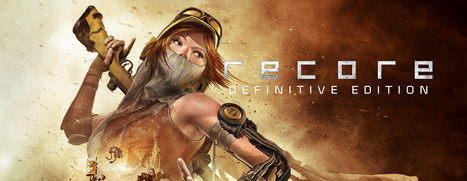
Now Available on Steam – ReCore: Definitive Edition

ReCore: Definitive Edition is Now Available on Steam!

From creator Keiji Inafune and the makers of Metroid Prime comes the ReCore: Definitive Edition, an action-adventure crafted for a new generation. As one of the last humans, forge friendships with robotic companions and lead them on an epic adventure through a dynamic world. Includes the new Eye of Obsidian adventure and T8-NK Corebot frame!

Posted on Leave a comment

The Weekender: Adventures Edition

Welcome to the Weekender, your weekly look at the best new games, sales, and updates. Byte for byte this is one of the better editions of the year owing to two standout games, one a tactical combat game and the other an old-school-style RPG. We’ve also got a tabletop to digital conversion.

Out Now 

Chaos Reborn: Adventures (iOS Universal) – Full Review Coming Soon!

A tactical turn-based combat game from the creator of XCOM? I’m listening. Recently ported to iOS so I can play it on my iPad? Now we’re talking. Chaos Reborn: Adventures is a grid-and-card-based combat game akin to Duelyst and Faeria, but in a premium pay-once-and-play-forever package. Combat is between two or more wizards, each armed with a deck full of spells driven magical style and gear rather than any deckbuilding efforts on the part of the payer. It requires good tactical planning thanks to considerations such as line-of-sight and high ground. Chaos Reborn also includes some cool mechanics like illusionary creatures. You can choose to cast a creature without paying its mana cost, which places a fully-functional copy on the battlefield. It’s able to attack and be attacked as normal, but, if the opposing wizard chooses to disbelieve the creature it disappears. Disbelieving is a free action if successful but costs the wizard their ability to cast another spell that turn if they are wrong, so it creates some interesting bluffing circumstances and yet another strategic layer.

[embedded content]

Chaos Reborn has a single-player campaign mode as well as online duels against another real-life human where you can choose live or asynchronous action. The AI is actually good and puts up quite a fight, especially as you work to ascend the game’s learning curve. As to that, I highly recommend playing through the tutorial. It’s long but does a nice job of layering in complexity as you go and is a good initial challenge in its own right.

Chaos Reborn: Adventures is a well-designed game and absolutely worth picking up if you love the tactical crunch of games like XCOM and Duelyst. The variety of different creatures and spells—a forest of crystal trees with a chance to transform into elven archers for example—should ensure the game remains compelling for quite some time. The premium price, with no packs to buy, is icing on the cake.

Vampire’s Fall: Origins (iOS Universal and Android) – Full Review Coming Soon!

The king is dead, and without heirs his kingdom disintegrates into warring factions. A dark force grows in the power vacuum, The Witchmaster and his army threaten all in their path. Your village, Vamp’Ire, decides to raise a militia and you volunteer. Things…do not go well, and you’re left changed and seeking answers about what happened to you.

This is the setup for Vampire’s Fall: Origins, an old-school indie RPG built for mobile. Aside from the main quest line exploring your new circumstances, the game has side quests and plenty of random combat encounters. It’s also full of laugh-out-loud moments due to some witty and often sarcastic dialogue. The combat is good as well and is turn-based with an intriguing combo system. A normal turn allows you to make one attack or use one special power, but every three turns you can unleash a barrage of attacks and special powers limited only by the amount of energy you have available. It’s quite fun and adds an entertaining tactical layer to planning your attacks and energy  usage.

vampires fall origins android

As you complete quests and defeat foes you gain experience and gold. The former gains you levels and points with which you can improve your abilities and advance your way along three different skill trees called Blood Lines. Each point adds what appears to be a relatively minor benefit, but over the course of a couple levels you can make huge strides in terms of character capability and the blood lines offer a lot of different ways to optimize. Naturally, gold buys gear to kit out your ten different equipment slots (including both main and offhand weapons) and higher quality gear provides special benefits. This all combines for some satisfyingly deep character progression.

Vampire’s Fall: Origins is a surprisingly strong mobile RPG with lots of single-player content, sarcastic NPCs, a PVP mode, and plenty of room to improve over time. It’s built by a small indie crew and is completely free-to-play with no ads or freemium mechanics. The developers plan to add optional IAP down the road to support future development (implementing a clan system is one goal) but are dedicated to not mucking up the user experience. If you’re a fan of RPGs, especially on mobile devices, you should absolutely go grab this one.

Warhammer Age of Sigmar Champions (iOS Universal and Android)

Warhammer Age of Sigmar: Champions is a new CCG with the physical game landing on shelves earlier this summer. Now, the digital version has officially launched. You pick one of four Grand Alliances: order, chaos, destruction, and death and go to battle using its champions and blessings. Warhammer doubles down on the two-lane system made popular by Elder Scrolls: Legends. Quite literally, in fact, as there are four lanes, one for each of your champions. The more-unique twist is that turn by turn the champion cards rotate 90 degrees, offering up different effects as they do. The other interesting difference from other CCGs is the fact you can scan your physical cards and make use of them in the digital game.

[embedded content]

Sales

Infinite Passengers (iOS Universal and Android): $.99 on iOS

If you want to simulate running an airline Infinite Passengers has you covered. You cater to customers and attempt to run the best airline in the biz. 

Patchwork the Game (Review) (iOS Universal and Android): $2.99/$3.49

Uwe Rosenberg’s two-player quilting game is also on sale on both iOS and Android. It’s easy, colorful, and has a good amount of strategy without being overwhelming. 

Potion Explosion (Review) (iOS Universal and Android): $2.99/$3.49

Symbol matching game, Potion Explosion, has a solid solo mode and offers online multiplayer as well.

Cosmic Express (Review) (iOS Universal and Android): $2.99

Challenging puzzle game Cosmic Express has reached its lowest price ever. It’s about finding the best train route for a series of space colonies. It’s a lot of fun and worth a look for puzzle fans.

Seen anything else you like? Played any of the above? Let us know in the comments!

Posted on Leave a comment

Take-Two CEO: U.S. gov’t needs to take a stand on China’s game trade

” Our government actually does need to take a position with regard to our trade with China. Because we have a completely odd and unequal situation […] by the way the other backdrop is, China has been stealing our intellectual property for a really long time. Those things just have to change.”

– Take-Two Interactive chief Strauss Zelnick, speaking at a Goldman Sachs conference earlier this week.

In the middle of a wide-ranging interview at a Goldman Sachs conference this week, Take-Two CEO Strauss Zelnick answered a question about the company’s plans for China with guarded optimism.

“We have a solid business, albeit a small business, in China,” Zelnick said, noting that the company operates free-to-play games like NBA 2K Online there, and plans to launch Kerbal Space Program on China’s WeGame platform in the near future. “It’s no secret that the Chinese government changed the venue for approving game titles, and has basically slowed or shut down approvals for a period of time. [That] does not affect us because the games that we’re bringing to market are approved.”

But while Zelnick seemed bullish about a timely end to China’s current freeze on game approvals, he sounded less optimistic about the future of Western game companies doing business with China. While he believes it will grow easier for Western devs to release games in China, he called out the U.S. government for not doing more to support the game industry in its efforts.

“I have no doubt approvals will start up again. The real question is whether, and it really is a whether, there comes a point where the Chinese government says look we’re not worried that bringing Western entertainment into this country is going to be a problem…I think they’ll arrive at that conclusion. I think the barriers will come down, and that would have a massive effect on us,” he said during the business conference.

“But I wouldn’t recommend you underwrite to one man’s opinion on this topic, because I could be completely wrong. We certainly do not underwrite to it. I just observed that the opportunity is huge if we move in that direction. And at the risk of being a little bit political, our government actually does need to take a position with regard to our trade with China. Because we have a completely odd and unequal situation where Chinese companies can come to the US and buy companies, no problem. And if they don’t want to do that they can bring a title here and market and distribute it, no problem, and keep all the proceeds. 

“We, in order to go to China, have to have half of our business owned by a local company,” he continued. “The good news is that they provide expertise, which is great, and we have great relationships with companies like Tencent. We’re thrilled to be in business with them. But we don’t have a choice, to be clear. And furthermore, we need government approval, which is politically driven. And I’m not sure why the US government feels that’s an okay thing to do with our second largest export category after aerospace. And I would observe that the days when we were borrowing money from China to buy oil in the Middle East, those days are basically gone. And I think the political landscape has to reflect that….by the way the other backdrop is, China has been stealing our intellectual property for a really long time. Those things just have to change.”

While his concerns about piracy and the difficulty of breaking into the Chinese market echo complaints game devs have been voicing for years, it’s interesting to hear Zelnick call on the U.S. government for aid addressing them. If you’d like to hear more of Zelnick’s comments, you can check out the full webcast of his interview.

Posted on Leave a comment

Hop into the driver’s seat with Nintendo Labo Vehicle Kit, now in stores

Hop into the driver’s seat with Nintendo Labo Vehicle Kit, now in stores

It’s time to drive, dive and fly in the newest addition to the Nintendo Labo line of interactive DIY kits, harnessing the power of the Nintendo Switch system to create imaginative gameplay experiences. Starting today, Nintendo Labo: Vehicle Kit navigates its way to stores at a suggested retail price of $69.99. The new kit includes materials to build several unique projects, called Toy-Con, including a car, plane, submarine, spray can, pedal and two keys. But building these projects is only the start of the fun!

In Adventure, a single- or multiplayer game*, players can explore a large, mysterious world featuring snowy mountains, a futuristic city and even archeological ruins solo or with a friend. Navigating the world is as easy as hopping behind the steering wheel of the Toy-Con Car, grabbing the flight stick of the Toy-Con Plane or rotating the controls of the Toy-Con Submarine. When players want to change from one vehicle to another, they simply have to swap out the Toy-Con Key to continue exploring through land, air or sea.

“Fans of all ages have embraced the originality and creativity of Nintendo Labo,” said Doug Bowser, Nintendo of America’s Senior Vice President of Sales and Marketing. “Nintendo Labo: Vehicle Kit expands the possibilities of what Nintendo Labo can do, with a variety of fun gameplay modes and deeper programming elements to explore.”

Each of the three vehicles in Nintendo Labo: Vehicle Kit handles differently, with specific controls and special moves. Players can launch a grappling hook with the submarine, do a barrel roll and shoot missiles in the plane, and perform wheelies and deploy weapons while driving the car. All of these moves and more can be used while participating in the many activities scattered around the colorful and vast in-game world.

Some of the other games include Rally, in which players pass through checkpoints in an off-road race against the clock in the world of Adventure; Circuit, a racing game with a twist – players can launch punches at in-game opponents; Slot Cars, a classic game that is controlled using only the Toy-Con Pedal; and Battle, one-on-one automotive showdowns with other players or against the game’s AI.

Customization is a big part of the Nintendo Labo: Vehicle Kit experience. In Paint Studio, people can use their Toy-Con Spray Can to personalize their in-game vehicles and drivers. When gently shaking the Toy-Con Spray Can, users will actually hear the “ball” inside as they mix the paint. In Discover, users can learn how Nintendo Labo works, and in Toy-Con Garage, users can experiment with new ways to play and create their own Toy-Con inventions. Custom Controls is a new feature that allows users to make their own Toy-Con controllers for the game using common household items. For example, by using unexpected objects like a sponge and a notebook, industrious creators can make an additional Toy-Con Pedal for a friend! The possibilities are only limited by the scope of the user’s imagination.

Players can feel like they’re really in the driver’s seat by using the Toy-Con Car, Toy-Con Pedal and Toy-Con Key to control their in-game vehicle in Mario Kart 8 Deluxe for Nintendo Switch. This immersive functionality will be available to download as a free software update for Mario Kart 8 Deluxe on Sept. 19. These custom options join the Motorbike from the Nintendo Labo Variety Kit, which is already compatible with Mario Kart 8 Deluxe.

For more information about Nintendo Labo: Vehicle Kit, visit https://labo.nintendo.com/kits/vehicle-kit/.

To make, play and discover with other kits, Nintendo Labo: Variety Kit and Nintendo Labo: Robot Kit are also now available in stores at suggested retail prices of $69.99 and $79.99, respectively.

*Multiplayer games require additional Joy-Con controllers and may require an additional Nintendo Labo: Vehicle Kit. System, kits and some accessories are sold separately.

*Nintendo Switch system required. Parental supervision recommended.

Posted on Leave a comment

Ex-Riot devs net $2.5M to help launch new LA studio Singularity 6

News slipped out today that there’s a new game studio in Los Angeles: Singularity 6, founded by former Riot Games staffers Anthony Leung and Aidan Karabaich with an eye towards creating “genre-defining” online games.

Notably, the pair have secured $2.5 million in seed funding from London Venture Partners, which is reportedly the largest single investment the firm has ever made in a company.

Perhaps most notably for game devs, Singularity 6 appears to be hiring. Further details can be found over on the company’s new website.

Posted on Leave a comment

Video: The risky development of Sword & Sworcery

In this classic GDC 2012 talk, Capy Games’ Nathan Vella outlines the choices made by the team that helped one of the App Store’s weirdest games become a critical and financial success.

Vella discusses how Superbrothers: Sword & Sworcery EP was a risky project that required new approaches to both business and development.

He also explains how the team handled “truly collaborative” development, the process of developing a PR voice to help promote the game, and how the studio mitigated a business risk by being as risky as possible.

It was an insightful talk that’s still worth watching, so developers shouldn’t miss the opportunity to do so now that it’s freely available on the official GDC YouTube channel!

In addition to this presentation, the GDC Vault and its accompanying YouTube channel offers numerous other free videos, audio recordings, and slides from many of the recent Game Developers Conference events, and the service offers even more members-only content for GDC Vault subscribers.

Those who purchased All Access passes to recent events like GDC or VRDC already have full access to GDC Vault, and interested parties can apply for the individual subscription via a GDC Vault subscription page. Group subscriptions are also available: game-related schools and development studios who sign up for GDC Vault Studio Subscriptions can receive access for their entire office or company by contacting staff via the GDC Vault group subscription page. Finally, current subscribers with access issues can contact GDC Vault technical support.

Gamasutra and GDC are sibling organizations under parent UBM Americas.

Posted on Leave a comment

Now Available on Steam – Frozen Synapse 2

7.19c:
==
* Blade Mail: Cooldown increased from 20 to 25
* Blade Mail: Bonus armor reduced from 6 to 5

* Clinkz: Base strength reduced by 2
* Clinkz: Searing Arrows manacost increased from 10 to 12
* Clinkz: Level 20 Talent reduced from +20 Health Regen to +16
* Clinkz: Level 25 Talent reduced from +4s Strafe Duration to +3s

* Crystal Maiden: Arcane Aura allied mana regen reduced from 0.8/1.0/1.2/1.4 to 0.7/0.9/1.1/1.3

* Dark Willow: Brambles total damage reduced from 140/180/220/260 to 125/150/175/200
* Dark Willow: Shadow Realm cooldown increased from 30/24/18/12 to 32/26/20/14
* Dark Willow: Cursed Crown stun duration reduced from 2/2.5/3/3.5 to 1.75/2.25/2.75/3.25
* Dark Willow: Bedlam damage reduced from 60/120/180 to 60/110/160

* Earthshaker: Root now disables his Scepter ability

* Enchantress: Strength rescaled from 19 + 1.3 to 16 + 1.5
* Enchantress: Base movement speed reduced from 325 to 320
* Enchantress: Base intelligence reduced by 2

* Grimstroke: Ink Swell no longer makes the target immune to attacks
* Grimstroke: Ink Swell no longer silences and disarms the target
* Grimstroke: Soulbind duration increased from 4/6/8 to 6/8/10

* Phantom Lancer: Agility gain reduced from 2.8 to 2.6

* Phoenix: Level 15 Talent reduced from +50 Fire Spirits DPS to +40

* Silencer: Last Word damage rescaled from 150/200/250/300 to 120/180/240/300
* Silencer: Arcane Curse manacost increased from 105/115/125/135 to 125/130/135/140
* Silencer: Global Silence manacost increased from 250/375/500 to 300/450/600

* Spectre: Desolate radius increased from 375 to 500
* Spectre: Dispersion rescaled from 10/14/18/22% to 7/12/17/22%
* Spectre: Haunt manacost increased from 150 to 150/200/250
* Spectre: Level 10 Talent changed from +15 Desolate Damage to +4 All Stats
* Spectre: Level 15 Talent changed from +8 All Stats to +15 Desolate Damage
* Spectre: Level 25 Talent reduced from +8% Dispersion to +6%

* Storm Spirit: Static Remnant damage reduced from 140/180/220/260 to 120/160/200/240

* Ursa: Fury Swipes damage per attack reduced from 15/20/25/30 to 12/18/24/30
* Ursa: Earthshock damage reduced from 90/140/190/240 to 50/100/150/200
* Ursa: Enrage damage multiplier rescaled from 1.5/1.75/2.0 to 1.4/1.7/2.0

* Vengeful Spirit: Movement speed reduced by 5
* Vengeful Spirit: Magic Missile projectile speed reduced from 1250 to 900

* Weaver: Base intelligence reduced by 2
* Weaver: The Swarm cooldown increased from 35/30/25/20 to 44/36/28/20
* Weaver: Time Lapse cooldown increased from 60/50/40 to 70/55/40
* Weaver: Level 10 Talent changed from +20 Mana Break to +7 Strength
* Weaver: Level 15 Talent changed from +12 Strength to +20 Mana Break

* Wraith King: Wraithfire Blast stun duration rescaled from 2 to 1.1/1.4/1.7/2.0
* Wraith King: Wraithfire Blast base damage rescaled from 50/100/150/200 to 100
* Wraith King: Wraithfire Blast DPS rescaled from 20/35/50/65 to 10/30/50/70
* Wraith King: Vampiric Aura is now a melee only ability

* Zeus: Strength gain reduced from 2.3 to 2.1
* Zeus: Level 25 Talent reduced from +170 Arc Lightning damage to +155

Posted on Leave a comment

The Best RTS Games on Android, iPad & iPhone

When it comes to real-time strategy, the mobile marketplace has big shoes to fill. From Age of Empires to Command and Conquer and Starcraft, the frantic blend of actions-per-minute with grand strategy, the macro- and micro-management required to play this genre at peak performance has inspired many a gamer.

The internet is great, but we don’t always have access to it. Here are some of the best strategy games you can play while offline.

It also presents something of a design challenge – the concept of APM needs to be carefully applied to a touch interface so that players don’t get overwhelmed. Even on-the-go offerings need to provide that similar thrill, with various settings, mechanics, play-modes and distinct pacing.

Here are the best RTS games for android, iPhone & iPad.

Autumn Dynasty

Developer: Touch Dimensions
Platforms:  iOS Universal, Android
Price: $1.99, $4.99 

Autumn Dynasty Besrt RTS

Autumn Dynasty has campaign progression and a bare-bones story to push the action forward with some serviceable if dull reasoning, but what really makes it shine are the battles. Unit types include simple categories like cavalry, pikemen, archers and catapults but this simplicity is complicated by the rock-paper-scissors relationship between them.

In the heat of battle, single moments of positioning and command become crucial, and this constant feeling of decisive command is what makes Autumn Dynasty such a fulfilling RTS title. Its sequel, Autumn Dynasty: Warlords lost some of the pure force and tension of the original in favor of adding map objectives and 4X elements, but the first game is still the best. This one is for all intents and purposes an Android-exclusive, for the developer’s whole portfolio was wiped out with iOS 11 Appocalypse. It works, but only selectively on older Apple hardware.

Auralux: Constellations (Review)

Developer: War Drum Studios
Platforms:  iOS, Android
Price: Free (IAPs)

auralux

Auralux is generally brilliant and wickedly simple. Glowing orbs skip across the void of space to do battle over planets, which in turn spawn more orbs for the controlling player. Gestures are dead simple, tapping to select and dragging to assign. There is only one type of ‘unit’ and one objective: take over the entire map. From these givens, Auralux has some intense, hair-pulling and nail-biting levels where the odds are almost ludicrously stacked against the little player that could.

The ‘constellations’ in the title are simply clustered series of levels, each with a gimmick mechanic which must be understood and utilized to power through said levels. The game shows its age a bit, but it also demonstrates how a simple idea with excellent execution can stand the test of time. Another bonus is the variable speed setting, which makes the action go from hyper to sedate, depending on playstyle. Local multiplayer is a nice plus, but the game’s primary draw is solo play.

Mushroom Wars 2 (Review)

Developer: Zillion Whales
Platforms:  iOS, Android
Price: Free (IAPs)

mushroom wars

Mushroom Wars 2 has sent its spores far and wide and proliferated grandly for its efforts. (The series has successfully spawned a sequel and premium versions for the PC and Switch, that is). The soldiers in this battle hail from the kingdom ‘Fungi’ and are constantly churned out by villages as players send them out to capture new turf or perhaps take on a boss. The original’s formula was much the same, but this one adds heroes who function as commanders with special abilities to give some tactical oomph to the feel of play. 

The art and story are merely perfunctory, but this is ultimately unimportant, because the game itself has fair, crisp actions and a robust ranked multiplayer mode. Those here just for the single-player campaign will find a challenge but also a fair bit of repetition, so be warned that while solo play will season you in battle, multiplayer is where it’s at.

Dominations

Developer: Nexon M
Platforms:  iOS, Android
Price: Free (IAPs)

dominations

Dominations deserves to be loved and known for the quality of play it provides and its relatively tasteful monetization, but unfortunately the quickest way to worm its way into your heart and home screen are comparisons, so let’s get those over with. It’s Civilization meets Clash of Clans, with empires spanning the Iron Age to Space Age, wonders to build, raids to conduct, and all the usual trappings.

So, yes, there is a certain likeness to established powerhouses, but the devil is in the details, and Dominations gets those spot-on. Playing it to a satisfying endgame without shelling out serious dinero will take patience, but Dominations’ emulation of all of recorded human history and conflict is pretty satisfying to stretch out and play in pieces. Of course, human history never before ran on a timer…

Iron Marines (Review)

Developer: Ironhide Studios
Platforms:  iOS, Android
Price: $4.99

iron marines

The Iron Marines are a space-trotting, world-saving team of elite squads tasked with putting out fires and defeating hostiles wherever needed. The elevator pitch for the game would be Starcraft…in space. There is a home-base which usually has to be fortified and defended, additional refineries to secure more resources, and just a handful of units. 

From these simple, intuitive elements, the game ekes out a good sense of micromanagement and delectable real-time tension. Its enemies have unusual abilities and synergies, and its difficulty is no joke, especially on the higher levels. Yet the game also retains Ironclad Studios sense of long-term planning and strategy present in its tower defense titles. Its next update will introduce a brand-new world, the icy Borealis, on September 27th, but this is just an extra check in its favor.

Subterfuge

Developer: SnappyTouch
Platforms:  iOS, Android
Price: Free (IAPs)

subterfuge

Subterfuge is exactly as advertised: a subtle, long-term game of expedient alliances and stone-cold betrayals, filled with the irrefutable logic of hard numbers and the soft uncertainty of fog of war. A turn just means giving subs and bases a command which will take hours to fulfil, so while it is real-time like warfare is real-time, in Subterfuge the theatre of war sees its stage advance slowly.

Its scale is just grand enough to be deeply satisfying but be warned that it does take some time investment to get a game fired up. The leaders provide asymmetrical player powers, but even these super-units can be captured and bartered. Barring these modifies and special cases,  the bases and subs are more or less identical. The game is simply a question of position, resources and force, but these factors are always shifting because of the partial information and precarious alliances.

Rymdkapsel (Review)

Developer: Grapefrukt Games
Platforms:  iOS, Android
Price: $3.99

rymdkapsel

Rymdkapsel is about space-base-building and defense, mostly, but also includes some spatial puzzling a la Tetris and ‘exploration’. Its minimalism is more than just stylistic, going instead to the core of every action, options and goal. Perhaps the most satisfying bit is the constant packing problem for expanding the base.

New buildings can be any type and go any spot the player chooses, but also must have predefined dimensions. (all four unit polyominoes) A tightly knit base might come across as more defensible but reaching and researching the far-flung monoliths gives permanent global passive bonuses. The game is a logistics and timing puzzle with a really keen sense of efficiency and management for all its stripped-down design.

Tropical Stormfront

Developer: Noble Master Games
Platforms: iOS, Android
Price: $3.99

tropical stormfront

Island-hopping Tropical Stormfront pits the United Democratic Alliance against Order, Discipline and Obedience in a faux-historical struggle across the archipelago. The graphics are deliberately dated and the unit mixture, contrary to every other item on the list, is realistic and accurate. Missions scenarios range from the typical conquest to capture the flag and survival mode.

It’s like a real-time Advance Wars with pretty much no hand-holding, just sink-or-swim gameplay. The touch controls mean a bigger screen is practically a must, for while missing a swipe or tap in another genre would be merely inconvenient, in a game like this it is quite the setback. Still, Tropical Stormfront is a smartly realized real-time-strategy game with staying power.

Anomaly 2

Developer: 11 bit studios
Platforms: iOS, Android
Price: $3.99, $4.99

anomaly 2

‘Reverse tower defense’ just means normal protect-and-escort missions, but the moniker is an apt way of conveying the claustrophobic battles and quick wits required to succeed. The ‘morph’ mechanic lets players adjust squad composition on the fly. Variable tools and an expanded suite of power and abilities go hand-in-hand with vexing and varied level design. The game’s five years old but made waves on release for its unusual level of visual pizazz, which has aged gracefully. Most compelling of all is the asymmetrical multiplayer, scored on a point system shared between the attackers and defenders. This series set the standard a half-decade ago, and it still shines today.

Plague Inc.

Developer: Ndemic Creations
Platforms: iOS, Android
Price: Free (IAPs) 

pandemic best RTs

You’re a disaster waiting to happen, a plague carefully evolved to swallow the whole globe in the embrace of black-winged death. Starting life as just a twinkle of a mass pandemic, in an undeserving corner of the world, players pick traits and use evolution points to increase their plague’s rate of infection and severity of symptoms. From the beginning, players must balance virulence against lethality. While the ultimate goal is always to make the earth a human-free zone, this usually requires a skosh of subtlety.

Once the plague is detected and rated a danger to humanity, the globe will mobilize research efforts towards a cure. So the game has a doomsday clock within a doomsday clock. Plagues must spread well enough to get a reserve of points and eventually flip the kill switch. The many varieties of plague types and scenarios give the game massive replayability, and the pacing is surprisingly sedate given the stakes. Still a tense and intense pleasure and the number-one way to strike fear into the hearts of the WHO.

What would your list of the best RTS games on mobile look like? Let us know!

Posted on Leave a comment

Earn double Gold Points with digital pre-purchase of Super Mario Party

Earn double Gold Points with digital pre-purchase of Super Mario Party

The party of the year is almost here!

The Super Mario Party™ game for Nintendo Switch™ system is arriving on 10/5 and now you can earn double My Nintendo Gold Points when you pre-purchase the game from Nintendo eShop or Nintendo.com.

  • Receive a bonus of 300 My Nintendo Gold Points when you pre-purchase the digital version of the Super Mario Party game from Nintendo eShop or Nintendo.com (where available).
  • Offer starts 9/13 at 7:00 p.m. ET and ends 10/4 at 11:59 p.m. ET.
  • Bonus points will be issued on the game’s launch day, are earned based on the original list price of the game on Nintendo eShop, and will vary by country and currency.

Use your points toward select digital games for Nintendo Switch. Offer ends on 10/4, so order now and get that party started!


Mild Cartoon Violence