Posted on Leave a comment

How enemy AI works in Dicey Dungeons

The following blog post, unless otherwise noted, was written by a member of Gamasutra’s community.
The thoughts and opinions expressed are those of the writer and not Gamasutra or its parent company.


Hey all! For the past month or so, I’ve been tackling one of the biggest technical problems in my new game, Dicey Dungeons – improving the enemy AI enough for the final release of the game. It’s been pretty interesting, and lots of it was new to me, so I thought I’d write a little bit about it. 

First up, a sort of disclaimer: I’m not a computer scientist – I’m just one of those people who learned enough about programming to make video games, and then stopped learning anything I didn’t have to learn. I can usually muddle through, but a real programmer probably wouldn’t have approached all this the way I did.

I tried to write all this in a fairly high level approach in mind, so that hopefully the basic ideas all make sense to other non-programmers. But I’m for sure no expert on all this stuff, and if I’ve gotten any of the details wrong in explaining the theory, let me know in the comments – happy to make corrections!

Let’s start by explaining the problem!

The problem

If you’ve not played Dicey Dungeons, here’s a crash course: it’s a deckbuilding RPG, where each enemy has a selection of equipment cards that do different things. Also, they roll dice! They then place those dice on the equipment to do damage, or cause various status effects, or heal, or shield themselves from damage, or lots of other things. Here’s a simple example of a tiny frog using a big sword and a little shield:

A more complicated example: this Handyman has a spanner, which allows it to add two dice together (so 3 + 2 would give you a single 5, and a 4 + 5 would give you a 6 and a 3). It also has a Hammer, which “shocks” the player if they use a six on it, and a Pea Shooter, which doesn’t do much damage, but which has a “countdown” which persists across turns.

One more important complication: there are status effects which change what you can do. The most important of these are “Shock”, which disables equipment at random until you unshock it by using an extra dice on it, or “Burn”, which sets your dice on fire. When your dice are on fire, you can still use them – but it’ll cost you 2 health points. Here’s what a clever Handyman does when I shock and burn all his equipment and dice:

There’s more to it than that, of course, but that’s basically the gist of it!

So, the problem: how do you make an AI that can figure out the best thing to do on it’s turn? How does it know which burning dice to extinguish, which dice to use for unshocking and which dice to save for important equipment?

What it used to do

For a long time, my AI in Dicey Dungeons just had one rule: It looked at all the equipment from left to right, figured out the best dice to use on it, and used it. This worked great, until it didn’t. So, I added more rules.

For example, I dealt with shocking by looking at the unshocked equipment, and deciding what dice I would want to use on it when it was unshocked, then marking that dice as “reserved” for later. I dealt with burning dice by just checking if I had enough health to extinguish them, and choosing whether or not to do it by random chance.

Rule after rule after rule to deal with everything I could think of, and ended up with an AI that sorta kinda worked! Actually, it’s amazing how well this hodge-podge of rules held together – the AI in Dicey Dungeons might not have always done the right thing, but it was definitely passable. At least, for a game that’s still a work in progress.

But over time, this system of adding more and more rules to the AI really started to break at the seams. People discovered consistent exploits to get the AI to do stupid things. With the right setup, one of the bosses could be tricked into never actually attacking you, for example. The more rules I added to try to fix things, the more weird things would happen, as rules started to conflict with other rules, and edge cases started to crop up.

Of course, one way to fix this was to just apply more rules – work through each problem one by one, and add a new if statement to catch it. But I think that would have just been kicking the problem further down the road. The limitation this system had was that it was only ever concerned with this question: “What is my next move?”. It could never look ahead, and figure out what might happen from a particular clever combination.

So, I decided to start over.

The classic solution

Look up AI stuff for games, and likely the first solution you’ll come across is a classic decision making algorithm called Minimax. Here’s a video that explains how it’s applied to designing a Chess AI:

[youtube https://www.youtube.com/watch?v=DZfv0YgLJ2Q]

Implementing Minimax works like this:

First, you create a lightweight, abstract version of your game, which has all the relevant information for a particular moment in time of the game. We’ll call this the Board. For Chess, this would be the current position of all the pieces. For Dicey Dungeons, it’s a list of dice, equipment, and status effects.

Next, you come up with a value function – a way to measure how well the game is going for a particular configuration of the game – i.e. for a particular board. For Chess, maybe a board where all the pieces are in their initial positions is worth 0 points. A board where you have captured an enemy Pawn is maybe worth 1 point – and maybe a board where you’ve lost one of your own Pawns is worth -1 points. A board where you have your opponent in checkmate is worth infinity points. Or something like that!

Then, from this abstract board. you simulate playing all the possible moves you can make, which gives you a new abstract board. Then, you simulate playing all the possible moves from those boards, and so on, for as many steps as you want. Here’s an excellent illustration of that from freecodecamp.org:

What we’re doing is creating a graph of all the possible moves both players can make, and using our value function to measure how the game is going.

Here’s where Dicey Dungeons splits from Minimax: Minimax comes from mathematical game theory, and it’s designed to figure out the best series of moves in a world where your opponent is trying to maximise their score. It’s so named because it’s about trying to minimise your loss when your opponent plays so to as to maximise their gain.

But for Dicey Dungeons? I actually don’t care what my opponent is doing. For the game to be fun, you just want the AI do make moves that make sense – to figure out the best way to play their dice on their equipment to make it a fair fight. In other words, all I care about is the Max, not the Min.

Which means: for the Dicey Dungeons AI to make a good move, all I need to do is create this graph of possible moves, and look for the board which has the best score – then make the moves that lead to that point.

A simple enemy turn

Ok, examples! Let’s look at this frog again! How does it decide what to do? How does it know that it’s chosen action is the best one?

It basically just has has two options. Place the 1 on the broadsword and the 3 on the shield, or do it the other way around. It obviously decides that it’s better off putting that 3 on the sword than the 1. But why? Well, because it looked at all the outcomes:

Place the 1 on the sword and you end up with a score of 438. Place the 3 on it, and you end up with a score of 558. Great, ok! Then, I get a better score by placing the 3 on the Sword, done.

Where’s that score coming from? Well, the Dicey Dungeons scoring system currently considers:

  • Damage: The most important case – 100 points for every point of damage dealt.
  • Poison: An important status effect that the AI considers almost as important as damage – 90 points for each poison.
  • Inflicting other Status effects: Like Shock, Burn, Weaken, etc. Each one of these is worth 50 points.
  • Bonus status effects: Inflicting yourself with positive status effects like Shield, etc, is worth 40 points each.
  • Using equipment: Using any piece of equipment is worth 10 points – because if all else fails, the AI should just try to use everything.
  • Reducing countdowns: Some equipment (like the Pea Shooter) just needs a total value of dice to activate. So, the AI gets 10 points for every countdown point it reduces.
  • Dice Pips: The AI gets 5 points for every unused Dice Pip – so a 1 is worth 5, and a 6 is worth 30. This is intended to make the AI prefer not to use dice it doesn’t need to use, and does a lot to make its moves look more human like.
  • Length: The AI loses 1 point per move, making it so that long moves have very slightly lower scores than short ones. This is so that if there are two moves that would otherwise have the same score, the AI will pick the shorter one.
  • Healing: Worth just 1 point per health point healed, because while I want the AI to consider it in a tie break, I don’t want it to be preoccupied with it. Other things are always more important!
  • Bonus score: Bonus score can be applied to any move, to trick the AI into doing something they might not otherwise decide to do. Used very sparingly.

Finally, there’s also two special cases – if the target of the attack is out of health, that’s worth a million points. If the AI is out of health, that’s worth minus a million points. These mean that the AI will never accidentally kill themselves (by extinguishing a dice when they have very low health, say), or never pass up a move that would kill the player.

These numbers aren’t perfect, for sure – take, for example, these currently open issues: #640, #642, #649 – but it actually doesn’t matter that much. Even roughly accurate numbers are enough to incentivise the AI to more or less do the right thing.

Harder enemy turns

The frog case is simple enough that even my shoddy code can figure out every single possibility in 0.017 seconds. But, then things get a bit more complicated. Let’s look at that Handyman again.

It’s decision tree is, uh, a little more complicated:

Unfortunately, even relatively simple cases explode in complexity pretty quickly. In this case, we end up with 2,670 nodes on our decision graph to explore, which takes quite a bit longer to figure out than the frog did – maybe as much as a second or two.

A lot of this is combinatorial complexity – for example, it doesn’t matter which of the 2s we use to unshock the equipment initially, this algorithm considers them as two separate decisions, and creates a whole tree of branching decisions for both. This ends up with a branch that’s a totally unnecessary duplicate. The are similar combination problems with deciding which dice to extinguish, which equipment to unshock, what dice to use in what order.

But even spotting unnecessary branches like this and optimising them (which I’ve been doing to some extent), there is always going to be a point where the complexity of the possible permutations of decisions leads to huge, slow decision trees that take forever to figure out. So, that’s one major problem with this approach. Here’s another:

This important piece of equipment (and things like it) cause a problem for the AI, because they have an uncertain outcome. If I put a six in this, maybe I’ll get a five and a one, or I might get a four and two, or maybe I’ll get two threes. I won’t know until I do it, so it’s really hard to make a plan that takes this into account.

Thankfully, there is a good solution to both of these problems that Dicey Dungeons uses!

The modern solution

Monte Carlo Tree Search (or MCTS, for short) is a probabilistic decision making algorithm. Here is a, uh, slightly odd video which nevertheless explains the idea behind Monte Carlo based decision making really well:

[youtube https://www.youtube.com/watch?v=BfS2H1y6tzQ]

Basically, instead of graphing out every single possible move we can make, MCTS works by trying out sequences of random moves, and then keeping track of the ones that went the best. It can magically decide which branches of our decision tree are the “most promising” thanks to a formula called the Upper Confidence Bound algorithm:

That formula, by the way, is from this very helpful article on Monte Carlo Tree Searches. Don’t ask me how it works!

The wonderful thing about MCTS is that it can usually find the best decision without having to brute force everything, and you can apply it to the same abstract board/move simulation system as minimax. So, you can kinda do both. Which is what I’ve ended up doing for Dicey Dungeons. First, it tries to do an exhaustive expansion of the decision tree, which usually doesn’t take very long and leads to the best outcome – but if that’s looking too big, it falls back to using MCTS.

MCTS has two really cool properties that make it great for Dicey Dungeons:

One – it’s great at dealing with uncertainty. Because it’s running over and over again, aggregating data from each run, I just let it simulate uncertain moves like using a lockpick naturally, and over repeated runs, it’ll come up with a pretty good range of scores of how well that move will work out.

Two – it can give me a partial solution. You can basically do as many simulations as you like with MCTS. In fact, in theory, if you let it run forever, it should converge on exactly the same result as Minimax. More to the point for me, though – I can use MCTS to generally get a good decision out of a limited amount of thinking time. The more searches you do, the better the “decision” you’ll find – but for Dicey Dungeons, it’s often good enough to just do a few hundred searches, which only takes a fraction of a second.

Some cool tangents

So, that’s how the enemies in Dicey Dungeons decide how to kill you! I look forward to introducing this in the upcoming version v0.15 of the game!

Here are some tangential thoughts that I don’t really know where to put:

Those graphs I’ve been showing gifs of? Including this one on twitter:

Sure, the neighbours seem to be really enjoying their party, but the REAL fun is going on here: spent the evening hacking together a GraphML exporter for Dicey Dungeons’ new AI! Now I can explore enemy moves and actually see what’s going on step-by-step! #screenshotsaturday pic.twitter.com/EeCwUz2NBK


— Terry (@terrycavanagh) November 25, 2018

I created these by writing an exporter for GraphML, which is an open source graph file format that can be read with many different tools. (I’ve been using yEd, which is great and which I can recommend a lot.)

Also! Part of making this all work was figuring out how to let the AI simulate moves, which was a big puzzle in and of itself. So, I ended up implementing an action scripting system. Now, when you use a piece of equipment, it runs these tiny little scripts that look like this:

These little scripts are executed by hscript, a haxe based expression parser and interpreter. This was definitely kind of a pain to implement, but the payoff is great: it makes the game super, super modable. I’m hoping that when this game finally comes out, people will be able to use this system to design their own equipment that can do basically any cool thing they can think up. And, even better, because the AI is smart enough to evaluate any action you give it, enemies will be able to figure out how to do whatever weird modded equipment you give it!

Thanks for reading! Happy to answer any questions or to clarify any of this in the comments below!

(And, finally, if you’re interested in playing Dicey Dungeons, you can get alpha access on itch.io right now, or if you prefer, wishlist us on steam, which will send you a little reminder when the game comes out.)

Posted on Leave a comment

Hasbro & Wizards of the Coast invest in Magic: The Gathering esports with $10M prize pool

Hasbro and Wizards of the Coast have unveiled Magic Esports, a new 2019 competitive program (with a $10 million prize pool) which introduces a restructured tournament format for online games Magic: The Gathering and Magic: The Gathering Arena.

Announced earlier tonight during the Game Awards, the 2019 Magic Esports season is designed to appeal to fans of both the digital and tabletop versions of Magic, consisting of four digital and six tabletop tournaments called Mythic Championships.

The first invitational Mythic Championship will kick off at PAX East 2019 in Boston for Magic: The Gathering Arena, with a $1 million prize pool

In addition, Magic Esports also heralds the launch of the Magic Pro League, which encompasses the current top 32 ranked Magic players. Magic Pro League members are automatically qualified for every Mythic Championship, and in addition to competing for a piece of the prize pool, they will receive a yearly salary and additional benefits aimed at allowing them to play Magic as a career.

Players outside of the Magic Pro League will also have the ability to qualify for Mythic Championships, with more details on how to to be revealed in 2019.

Posted on Leave a comment

Ready to fight! Super Smash Bros. Ultimate is now available

Ready to fight! Super Smash Bros. Ultimate is now available

The wait is over! Fans both new and pro can now clash in the ultimate brawl between gaming legends. Get ready to play the biggest game in the Super Smash Bros.™ series ever—anytime, anywhere.

In the Super Smash Bros. Ultimate game, newcomers like Inkling, Simon Belmont, King K. Rool, Ridley, Incineroar, and Isabelle join every fighter from past Super Smash Bros. games. A total of 74 fighters from over 30 games series are here to battle it out.

Features:

  • All past Super Smash Bros. fighters have joined the battle. Everyone is here!
  • More than 100 stages. The new Stage Morph option even transforms one stage into another while battling.
  • Play in a variety of ways. Go 1-on-1 with a friend, hold a 4-player* free-for-all, kick it up to 8-player* battles and more. Whether you’re throwing a party or a tournament, a wide range of modes and options await you.
  • New items, Assist Trophies, and Pokémon spice up battles with special abilities and unpredictable results.
  • Unleash the power of Spirits. Collect characters from a wide range of video game worlds to power up your fighters in different ways. Test out tons of combinations!
  • Explore the single-player Adventure Mode, World of Light. Fighters and spirits will have to team up to stop the mysterious fiend known as Galeem.
  • More than 800 music tracks can be listened to with the in-game music player (even when the system’s screen is off!).
  • Play with a wide variety of control options, including GameCube™ Controllers.

Buy early, get Piranha Plant for free!

And finally, here’s one more thing to chomp on. Register the game by Jan. 31 and Piranha Plant will join the battle! There are two ways to get this toothy fighter:

1) Buy the digital version of Super Smash Bros. Ultimate before 11:59 PM PT on Jan. 31, 2019. (The game will automatically be registered to your account.)

OR

2) Buy the retail version and register the game card with My Nintendo before 11:59 PM PT on Jan. 31, 2019.

A download code for the Piranha Plant character will be sent by email to the email address associated with your Nintendo Account. You’ll receive the new fighter when it becomes available in early 2019. **

If you would like to purchase the game please visit https://www.smashbros.com/.

* Additional accessories may be required for multiplayer mode; sold separately.

** A software update may be required to receive the downloadable content. Download code expires 6/30/2019 at 11:59 p.m. PT. Full version of game required to use DLC.


Cartoon Violence
Comic Mischief
Suggestive Themes

Posted on Leave a comment

Katamari Damacy REROLL is ready to roll. Also, try before you buy with a demo!

Katamari Damacy REROLL is ready to roll. Also, try before you buy with a demo!

Don’t worry, do your best…

The stop-at-nothing pushing prince is back and ready to reroll! When the King of All Cosmos accidentally destroys all the stars in the sky, he orders you, his pint-sized princely son, to put the twinkle back in the heavens above. Join the King and Prince of Cosmos on their wacky adventure to restore the stars at home or on the go – now in full HD!

The beloved roll-em-up game returns with fully updated graphics, completely recreated cutscenes, and controls exclusive for the Nintendo Switch!

Players can use the Joy-Con™ controllers to control the katamari using gyro controls. Also, play with a friend by using one pair of Joy-Con controllers on the same Nintendo Switch!

If you would like to purchase the game or try the free demo please visit https://www.nintendo.com/games/detail/katamari-damacy-reroll-switch.


Alcohol and Tobacco Reference
Mild Fantasy Violence

Posted on Leave a comment

Video: The process of polishing Uncharted 3 for release

In this GDC 2012 session, Naughty Dog’s Benson Russell goes over the approach and principles that Naughty Dog used to make games like Uncharted 3 as polished as possible.

Russell discusses methods used internally, the approach to scheduling, the level of detail to look for, and how the studio strikes a balance between making the game as great as it can be while still shipping on time.

It was an insightful talk that’s definitely still worth watching, so developers shouldn’t miss the opportunity to do so now that it’s freely available on the official GDC YouTube channel!

In addition to this presentation, the GDC Vault and its accompanying YouTube channel offers numerous other free videos, audio recordings, and slides from many of the recent Game Developers Conference events, and the service offers even more members-only content for GDC Vault subscribers.

Those who purchased All Access passes to recent events like GDC or VRDC already have full access to GDC Vault, and interested parties can apply for the individual subscription via a GDC Vault subscription page. Group subscriptions are also available: game-related schools and development studios who sign up for GDC Vault Studio Subscriptions can receive access for their entire office or company by contacting staff via the GDC Vault group subscription page. Finally, current subscribers with access issues can contact GDC Vault technical support.

Gamasutra and GDC are sibling organizations under parent company Informa

Posted on Leave a comment

Review: Kingdom Rush: Vengeance

Playing the bad guys is always a treat, what with all the contemptuous monologizing and the ‘I’ll show them what true power is!’ Plus, evil creatures are always way more interesting to command than boring noble goodies. That’s why Ironhide giving players the chance to captain the armies of the evil wizard Vez’nan is the best feature in this otherwise routinely excellent tower defense game. However, it may be more than just the player that turned to the Dark Side in this entry, since Ironhide has also walled-off a chunk of this premium game’s content behind a paywall.

Vengeance is the fourth entry in the mega-popular Kingdom Rush tower defense series and is the entry that makes the most changes to the gameplay, though still keeping it solidly within TD tropes. (It’s a little weird that you still play on the defense the entire game, given that your army is supposedly the invading force, but that’s the genre, so we’ll just have to roll with it.) The biggest gameplay update is in the way you choose and upgrade your towers.

Vengeance 1

Rather than leveling up your basic towers into more specialized variations in the middle of the level, you’ll have to do a little more planning. Between levels you get to choose five towers to take with you that have very different purposes: your basic towers give you ranged magical/non-magical damage, grunts to slow down the oncoming horde, or long-distance artillery. You gradually gain more towers by completing levels, so customizing your ‘hand’ of five towers becomes the metagame. You may end up with a few favorites that you always lean on, or you can customize your loadout each level for maximum efficacy against the given target. This makes for great replay value as you try to score the highest rating on each level.

Levels themselves are fairly long for a mobile title, taking about thirty minutes to complete, so there’s a lot of gameplay here even if you’re not a completionist. Each map is highly individualized (within a few themes) with few reused assets, so they never get dull. They often have amusing themes or cute details that let you play goofball fantasy Where’s Waldo in-between waves. The dwarf king will occasionally swim around in his gold like Scrooge McDuck, and there’s a smirkable Terminator reference in the smelting furnace level (you know what I’m talking about).

Special events will also frequently occur that change the landscape and open up new avenues of attack for your enemies, like Viking ships landing. It’s important not to get tunnel-vision on a few lanes or become complacent, because you never know when the tide will suddenly shift. This makes it tough to get a perfect score your first time through a level, but it also makes the game much more active than your average TD game.

Vengeance 2

Adding to the dynamism are the hero units that you can order about the battlefield. They all have a bevy of special abilities that you don’t have direct control of but do make them majorly useful for crowd control or taking down bosses. Each offers a slightly different playstyle. Your basic orc boss is a great tank, but you’ll soon get a rogue character that is good for debuffs and crowd control, and a mage that will do more damage-per-second. Finally, you can cast spells and summon instant minions to take care of any unexpected difficulties. In between missions, an upgrade tree lets you buff your hero, towers, minions and spells, giving you fun new abilities to play with beyond purely higher stats. There’s a lot going on inside and outside the levels, is basically what I’m saying.

You start with four towers and earn seven more by playing the game, and you quickly score two additional heroes beyond your starter. Eleven towers and three distinct heroes sounds pretty good … but there are another five towers and six more heroes locked behind *shudder* relatively expensive paywalls.

Vengeance 3

Is it too much monetization for an already-premium game? Fans of the series are divided. I think it’s important to remember that the base price, like just about any mobile game, is already absurdly low so the title can compete in the ridiculously cut-rate mobile market controlled by greedy gatekeepers. Yes, the IAP exist, but as long as you can ignore a persistent alert badge on one menu item, there’s little to no reminder that the developers want more of your money. It’s there, but it’s not obnoxious, and in this day and age maybe that’s all we can ask for.

The content included in the game is absolutely worth the purchase price, and I didn’t feel like I missed out on much by not spending more. The game is intensely engaging with a light-hearted tone that makes it a real pleasure to jump in to. Tweaks to the Kingdom Rush formula should please long-time fans and jaded TD players who have seen everything. If you’re new to this kind of game, Vengeance is a great, entertaining jumping off point.

Posted on Leave a comment

Now Free To Play on Steam – Counter-Strike: Global Offensive!

Counter-Strike: Global Offensive is Now Free To Play on Steam!

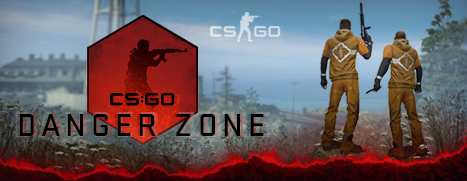
Introducing Danger Zone — a fast-paced battle royale game mode built on CS:GO’s tactical gameplay where players use their wits, skill, and resources to fight to the finish. Play solo, or work together as a squad of two or three!

CS:GO is now FREE TO PLAY
So there’s never been a better time to bring in your friends.

Posted on Leave a comment

Opinion: What will Artifact on mobile look like? If it’s anything like PC, it’ll have a fight on its hands

By Nick Vigdahl 06 Dec 2018

Valve Corporation has a long history of developing popular and successful video games, although lately they’ve been relying on the veritable money-printing machine that is Steam. They’ve finally released a new game, Artifact, and it’s a big bet in the crowded collectable-card game (CCG) genre.

Artifact is based on one of Valve’s most-successful games of all time, DOTA 2, and takes a crack at differentiating its gameplay from Hearthstone and other options in this space. While interesting, those differences aren’t getting nearly as much attention as the way Valve is monetizing Artifact. With the game coming to iOS and Android in 2019 it’s worth looking at what Valve is doing with Artifact‘s pricing, and how it might manifest on mobile.

Artifact Mobile 1

Gold Standard

The standard CCG take on monetization is to sell randomized packs of cards, but to also offer the ‘grinders path’ by allowing ‘free’ players to earn in-game currency with which they can pick up packs without spending money. The main reason to do this is to pump up the active-player count so players willing to spend money don’t have to wait in long queues for an opponent, the surest way to kill a CCG. Valve has eschewed the grinders path entirely and at present the only way to acquire new cards is to buy them with real money or win them playing ‘expert’ constructed or draft events, which costs money to enter in the form of event tickets. 

Valve has set up Artifact to be very profitable starting with a $20 purchase price on Steam which is another departure from the usual model: CCGs are usually free to download. Your initial investment gets you ten of Artifact‘s twelve-card packs and five event tickets. It’s effectively a starter kit and naturally you’ll want more cards. Packs cost two bucks and additional event tickets run five for $4.99. You can also purchase individual cards from other players through the Steam marketplace, from which Valve also takes a cut.

Artifact Mobile 3

The reaction from many players and games media has been negative. Artifact has nearly ten-thousand “mixed” reviews on Steam. A great many of these can be broken down to, “pay to own, pay to play, pay to win,” with a primary gripe being the inability to grind out packs without spending money. It’s a predictable response, given the genre norms, and Valve has made some minor concessions to the complaints so far in the beta. They recently added a card “recycling” feature that lets you convert 20 unwanted cards into an event ticket where previously the only way to unload cards you didn’t want was to sell them to others.

There could be more changes coming, but I’m betting we won’t see anything as extreme as the addition of an in-game currency and a way to grind for packs. Valve seems to be making a play for gamers willing to treat Artifact like a hobby and invest accordingly. Their bet is that they can attract enough players to not have to rely on free-to-play grinders to fill their queues. It’s not a crazy idea by any means and has worked for twenty-five years for the original and most-successful CCG of all time: Magic: The Gathering (MTG).

Artifact Mobile 2

There’s no way to grind free physical packs of MTG cards, after all, and you can’t “dust” the cards you don’t want to craft ones you do. Paper MTG and digital Magic: The Gathering Online (MTGO) cards have been resold by third parties as singles since the game was born (though Wizards of the Coasts can only dream of a cut). There’s a big benefit to this kind of a system for paying players as you can buy just the cards you want instead of packs which is often cheaper when building constructed decks. The ability to resell cards also opens up a lot of options to reinvest in the game or spend that money elsewhere in Steam. Valve seems to be going for the same players that made MTG the behemoth it is today.

Artifact on Mobile

Agree with it or not, this is Valve’s monetization plan for Artifact and the game’s coming to mobile next year. We can only speculate on what a mobile version of Artifact will look like, though a $20 price tag will be a much tougher sell on the App Story and especially the Google Play store than it is on Steam. They could drop the price and provide fewer initial packs and event tickets. Either way however, Steam players may balk at having to buy into mobile in exchange for cards they probably already have. The other option, and one that would assuage existing players, would be to make the game free to download but push a ‘starter IAP’ on new players. This is the likeliest option.

Artifact Mobile 4

The bigger hang-up will be the secondary card marketplace. It’s difficult to conceive of how Valve could implement anything similar on iOS or Android. They can, and likely will, direct mobile players to Steam for the full functionality of card resale and purchase. This would put mobile-only players at a distinct disadvantage, with no ability to sell cards they don’t want and fully reliant on packs and expert events to get any new cards. A partial solution would be for Valve to directly sell popular cards or bundles of cards via in-app-purchase though this could be tough to balance with the player-driven marketplace on Steam.  

How will mobile gamers react to Artifact? Well, it’s going to get pummeled in the user reviews. Premium isn’t popular on mobile. Neither are games listed as free that end up requiring a purchase to continue (just ask Nintendo). Free-only players will stay away. There are mobile players that don’t mind paying money for a good game, however, this site exists because of them. There are certainly CCG players who don’t mind paying to try new cards, new decks, and to keep up with a metagame. They probably don’t write many grammatically disastrous user reviews on Apple or Google’s stores, but they are out there. Valve’s betting they can find them and time will tell if they’re right.

At the time of writing, there was no official information on the mobile version of Artifact, but it’s still still being worked on as far as we know. In the mean time, you can play on Steam.

Posted on Leave a comment

Now Available on Steam Early Access – Survived By

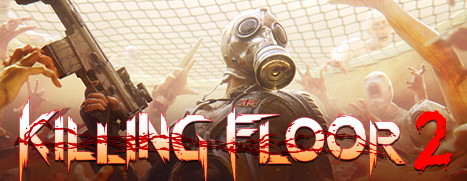
In celebration of Killing Floor 2’s Twisted Christmas update, play Killing Floor 2 for FREE starting now through Monday at 10AM Pacific Time. You can also pickup Killing Floor 2 at 67% off the regular price!*

The update includes new maps, 4 new weapons, play as Badass Santa and much more!

If you already have Steam installed, click here to install or play Killing Floor 2. If you don’t have Steam, you can download it here.

*Offer ends Monday at 10AM Pacific Time

Posted on Leave a comment

Free Weekend – Killing Floor 2, 67% off!

In celebration of Killing Floor 2’s Twisted Christmas update, play Killing Floor 2 for FREE starting now through Monday at 10AM Pacific Time. You can also pickup Killing Floor 2 at 67% off the regular price!*

The update includes new maps, 4 new weapons, play as Badass Santa and much more!

If you already have Steam installed, click here to install or play Killing Floor 2. If you don’t have Steam, you can download it here.

*Offer ends Monday at 10AM Pacific Time