Posted on Leave a comment

Pocket Tactics 2018 Boxing Day Guide

Happy Holidays! And welcome to Pocket Tactics’ annual Boxing Day Guide, where I endeavor to point you to some of this year’s greatest games to pick up with the gift cards Santa left you. Games are sorted by iOS non-sale price (Android prices vary but usually not by much), and I have tried to include quality titles at a variety of prices. Enjoy, and happy gaming!

Hexologic (iOS Universal and Android) is a quick and clever puzzle game that offers loads of challenging and fun levels for fans of Sudoku and anybody that doesn’t mind a little simple addition. It’s just the right amount of tactical thinking for a relaxing experience, and I’d recommend it to puzzle fans of any kind.

[youtube https://www.youtube.com/watch?v=yXPt9nEVqnI]

Rogue Hearts (iOS Universal and Android, REVIEW) didn’t get a very good review here at Pocket Tactics, but despite having some issues, I don’t think it’s a bad game — certainly not for a buck. It’s a turn-based, tactically-oriented RPG with good character-power progression.

Minesweeper Genius (iOS Universal and Android, REVIEW) is a new take on one of the oldest digital video games. The graphics are attractive, and the gameplay, while familiar, is spiced up by special mechanics. Minesweeper Genius a lot of fun, a great nostalgia trip, and a delightful puzzle game in its own right.

Startup Grave (iOS Universal) is a solitaire card game played with a deck of 48 monster cards. There are good and bad monsters, and the goal is to keep them balanced until you can play through the entire deck. It’s simple, fun, and it works well to kill a few minutes here and there.

Meteorfall (iOS Universal and Android, REVIEW) is not just one of the top games of the year, but also one of the best roguelike deckbuilders ever. It’s well-designed, attractive, and a ton of fun to play. Best of all, its vertical orientation and swipe-to-choose gameplay make it easy to play one handed.

[youtube https://www.youtube.com/watch?v=SkNRPOgWoWM]

Sir Questionnaire (iOS Universal and Android, REVIEW) is a roguelike dungeon crawler that takes place in fast-paced turns, each of which presents you with two options: fight a monster or flee, search a room or move on to the next. As you delve deeper, you level up, improve your skills, get new gear, and become a bigger badass.

[youtube https://www.youtube.com/watch?v=QcLg-VhwZz8]

Holedown (iOS Universal and Android, REVIEW) is an arcade-style ball shooter from the developer of rymdkapsel. You are a space-miner that must dig deep into asteroids, moons, planets, and more to find valuable gems. You mine by firing balls that ricochet and chip away at rocks,  allowing you to delve deeper and deeper. As you earn gems, you can unlock upgrades like more balls or a larger cargo hold, allowing you to grab even more precious stones. It’s a well executed clever design,  and it is rather hard to put down.

[youtube https://www.youtube.com/watch?v=a1oi3EDwbTE]

Motorsport Manager Mobile 3 (iOS Universal and Android, REVIEW) is the year’s best simulation game, and arguably the best motorsports game on mobile, as well. I know absolutely nothing about racing cars, but was quickly and thoroughly engrossed in my role as the chief of a racing team. The depth of the game is great, as you really do manage every aspect of the sport.

Pocket City (iOS Universal and Android, REVIEW) is the closest you can come to SimCity on a mobile device. The visuals are attractive and its touch controls intuitive. Gameplay is more casual and laid back than challenging, but will feel right for those looking for a relaxing gaming experience.

[youtube https://www.youtube.com/watch?v=fEwT-u1qvzI]

Teen Titans Go! Figure (iOS Universal and Android, REVIEW) is the sequel to one of 2016’s best games, and one of the most successful premium games on the App Store, Teeny Titans Go. It keeps what’s great about the original—you run around Jump City collecting figures, completing quests, and taking on opponents in real-time figurine battles—but adds a new main story line, side quests, city layout, new figures and powers, and new tofu battle effects. If you enjoyed the original or like real-time battlers in general definitely pick this one up.

[youtube https://www.youtube.com/watch?v=wxRtSyYKt8M]

Antihero (iOS Universal and Android, REVIEW) lets you build your own criminal empire in the seedy underbelly of a city meant to evoke Victorian London. It’s a turn-based game featuring a single-player campaign and online matches against other criminal masterminds, and it’s all about making your move for power through thievery, bribery, and outright assassination.

[youtube https://www.youtube.com/watch?v=n6ZYAlfOIRQ]

Card Quest (Android and iOS Universal, REVIEW) is graphically unpolished with some poor user-interface choices, and it’s easy to look at screenshots and dismiss it immediately — which would be a mistake. The game is indisputably a five-star title thanks to its remarkable game design,  which rewards smart tactical thinking and creates impressive depth.

[youtube https://www.youtube.com/watch?v=AZL8215c73o]

Fidel Dungeon Rescue (iOS Universal) is a clever pick-your-path puzzle/dungeon crawler featuring Fidel, a puppy protagonist. You must guide Fidel through grid-based levels, defeating monsters, grabbing gold, and ultimately getting to the exit intact.

[youtube https://www.youtube.com/watch?v=1rtV-xhZ0JY]

Grimvalor (iOS Universal, REVIEW) is an action-RPG-platformer inspired by Dark Souls, set in a gloomy fantasy world. It features fast-paced combat with plenty of jumping, dodging, rolling, and exploitation of your enemies attack patterns. It also includes plenty of dying, at least for me. It’s a fun game, looks great, and the controls are rock solid — if you’re good at these skill-intensive action-RPGs, you should definitely pick this one up.

[youtube https://www.youtube.com/watch?v=ja4MyxIDyG0]

Stardew Valley (iOS Universal, REVIEW) is a farming-simulation game where you step into the shoes of a disgruntled office worker who leaves their job in favor of restoring their deceased grandfather’s farm. There’s a ton to do, both on the farm and in terms of the town’s social scene, and the game is a big sandbox where you really can do whatever you desire.

[youtube https://www.youtube.com/watch?v=pHUqhYslji4]

Barbearian (iOS Universal, REVIEW) is a frenetic hack-and-slash fest against overwhelming hordes of foes. It’s about as real-time as it gets without requiring ninja-like reflexes to succeed, and it offers highly customizable controls and difficulty settings.

[youtube https://www.youtube.com/watch?v=jPTvKTP70MM]

Chaos Reborn: Adventures (iOS Universal and Android, REVIEW) is a tactical turn-based combat game from the creator of the original X-COM that plays a lot like CCG games Duelyst and Faeria, but in a premium pay-once-and-play-forever package. Combat is turn-based, tactical, and fun, and the game features a single-player campaign mode as well as online duels against another real-life human where you can choose live or asynchronous action.

[youtube https://www.youtube.com/watch?v=rfDb5qRqSqQ]

One Deck Dungeon (iPad  and Android, REVIEW) is my favorite tabletop-to-digital conversion of the year. Handelabra did a fantastic job capturing both the crunch and flavor of the game, and about the only thing better about the tabletop version is the tactile feel of rolling a handful of dice. One Deck Dungeon is ideal for fans of single-player games full of strategic depth and replay value.

[youtube https://www.youtube.com/watch?v=fHB6wWApQv0]

Six Ages: Ride Like the Wind (iOS Universal, REVIEW) is the spiritual successor to King of Dragon Pass, an iOS classic, and features the same mix of RPG, tribal management, turn-based tactics, and interactive fiction. There’s plenty of mythology, top-notch artwork, and meaningful choices.

[youtube https://www.youtube.com/watch?v=oXl7zCaRI9M]

Posted on Leave a comment

Attend GDC for a postmortem look at the making of Candy Crush Friends Saga!

Happy holidays! It’s a popular season for mobile games, what with so many people traveling for the holidays, and at next year’s Game Developers Conference you’ll get an inside look at how one of King’s latest and greatest was made.

As part of GDC 2019’s Mobile Summit, King will be presenting a postmortem look at its latest Candy Crush game in “Expanding the World of ‘Candy Crush’: A Postmortem on ‘Candy Crush Friends Saga’.”

Featuring principal game designer Jeremy Kang, studio lead (narrative design) Tracey John and senior director of visual development Robert Mackenzie, this session will walk through the process of how the development team expanded the game world and built upon this billion-dollar IP to create a more accessible game, including adding collection and other gameplay elements, redesigning the look of the characters, and retrofitting a new narrative foundation.

Make time to attend, and you’re likely to walk away with practical learnings about the game design, art vision, and strategy behind the making of this new Candy Crush game, as well as the goals and challenges of expanding the world of this successful IP.

For more details on this talk (and many more!) check out the GDC 2019 Session Scheduler. There you can begin to lay out your GDC week, which takes place March 18th through the 22nd at the (newly renovated!) Moscone Center in San Francisco. 

Bring your team to GDC! Register a group of 10 or more and save 10 percent on conference passes. Learn more here.​

For more details on GDC 2019 visit the show’s official website, or subscribe to regular updates via Facebook, Twitter, or RSS.

Gamasutra and GDC are sibling organizations under parent company Informa

Posted on Leave a comment

Q& A: The appeal of building a natural world in Equilinox

Equilinox is a soothing game of shaping nature, having players create their own ecosystems of plants and animals living in harmony. Through the flora and fauna that you place throughout the world, you’ll feed into the needs of your living beings, creating a healthy world.

Karl Wimble, developer of Equilinox, put a deep love for the nurturing, calming power of nature into this sandbox title, using his own happy experiences with plants to create a slower, more relaxed game.

Not only would it be relaxing to play, but in some ways, its nature also made it more relaxing to develop, creating ways for even the developer to unwind while creating it.

Intrigued to learn more about Wimble’s naturalistic approach to game development, we caught up with the man himself for a quick chat about what happens when game dev and mother nature cross paths. 

How a love of nature created Equilinox

I’ve always been very interested in nature and love being outside in general. When I was young my mum used to teach me all about the different birds and plants in our garden and I really enjoyed growing things of my own, especially vegetables! I still do that to this day, in pots, on the balcony, or anywhere that I can find space for it! So, back in 2015 when I was deciding what project to do next, I wanted to make something nature-related to allow me to tie together two of my passions: nature and game development.

When I was deciding what type of game I wanted to make, I first considered making something similar to a farming simulator, as I’ve always enjoyed growing vegetables myself. However, there were already a lot of farming games in existence, so I decided to go for something similar but with a bit less “structure” – something a bit more organic. That’s where the idea of creating and balancing ecosystems came from. 

At the start, I had plans for a very sandbox-y simulation game, but as the project progressed, my ideas for the game altered slightly and I started incorporating more aspects of city-builder style games. Concepts such as paying currency to buy new objects for the world, earning currency back from certain objects, unlocking newer and more interesting objects as you progress, and managing your world to ensure nothing gets out of balance.

The appeal of building a natural world

For me, personally, I’ve always found something inherently satisfying about nurturing something, putting effort into growing it, and watching it thrive and grow over time. It’s like a very physical representation of progress – you put in the time and effort to look after something and you get to see the results very clearly as the plant grows. It’s even more satisfying when the plant produces fruit or vegetables, so that you can literally harvest the fruits of your labor. 

So, I imagine that it’s a similar feeling with the wildlife in Equilinox – you have to make some choices and put in some effort to make the habitats suitable for living in, and you then get to see your work pay off as the plants and animals flourish. Plus, in Equilinox, this happens a lot faster than in real life, so the satisfaction comes a lot quicker. Combine that with completing tasks and continuously unlocking new species with different behaviors as you progress, and you get a rather satisfying experience.

On giving players a variety of worlds to build

The main variety in the game comes from the fairly large number of species and the various different biomes. Over the years that I’ve been working on Equilinox, I’ve continuously been adding in new species to the game, and tried to give many of the plants and animals their own unique behaviors and effects. Even the plant species mostly have their own different purposes in the ecosystem, such as providing food, improving the biome quality, healing sick animals, calming the bees, producing fruit or providing a place for birds to nest, etc. 

There were actually many more animals in Equilinox at one point during development, but I decided to cut back a bit to ensure that each animal really added some value and something unique to the game, instead of just being another generic bouncing animal with a slightly different model. There’s every chance that I’ll add more of these species back into the game in the future, once I’ve spent the time to give them interesting behaviors and characteristics.

Choosing which animals & animals to add to Equilinox

To start with, I was somewhat limited by my artistic skills. As a programmer, I don’t have much experience with 3D modeling, so the first few animals I added were ones that I thought would be simple to make. The sheep was the first animal in Equilinox because I could make it using just a white blob with a few bits attached! As the project went on, I did manage to improve my low-poly modeling skills a bit and was able to add some more interesting animals. 

I often chose animals based on the behaviors that I thought would be interesting to add to the game, such as the beavers that cut down trees and make dams, or bees which build hives and produce honey. As for choosing plants, it was usually either because I thought the game was lacking something, or because I’d seen a nice tree outside that I wanted to recreate! I found modeling nature to be quite relaxing, and I would often create a new plant model for fun, just to relax a bit after hours of complex programming.

When to move away from real-world animal behaviors

It wasn’t really an intention of mine to make the game particularly educational, but if Equilinox helps to get people more interested in nature and ecosystems then all the better! A lot of the choices I made in terms of species are based on reality, although sometimes I had to make choices for gameplay reasons. 

For example, in Equilinox, the bees build their beehive directly on the floor instead of in trees. This is because I wanted the beehives to take a while to be created, and most of the trees have a relatively short life length, so it would have been hard to even start producing honey before the tree died and fell down. There are various other things like this in the game where I had to favor gameplay over reality.

City-builder inspirations in a game of nature

As I’ve already mentioned, I got quite a bit of inspiration from city-builder games. I saw how they made a game out of building and managing cities and I, to some extent, tried to apply the same concepts to creating and balancing ecosystems. 

The main gameplay points that I thought people would enjoy were the world creation aspect, the balancing/managing aspect, the feeling of progression, and the simulation of nature. So, I concentrated a lot on these four things, making sure there was enough freedom and variety to allow players to be creative in making their own worlds, ensuring that there were various things to balance and manage to keep the game interesting, allowing players to progress by unlocking new species through the evolution system, and making sure that there were plenty of interesting behaviors and interactions that would make the simulation feel dynamic and engaging.

Creating a soothing experience

I’ve always wanted Equilinox to be a calm and relaxing experience – a lovely way to de-stress at the end of a busy day. It’s not a fast paced game and it’s not full of action; it’s a simple game where you can immerse yourself in low-poly nature, enjoy the dynamic evolving world, and slowly expand your areas and shape the ecosystems to your liking. I hope that the cute art-style, quirky animations, and the peaceful sound effects and soundtrack help to make it an enjoyable and completely stress-free experience!

I think the style of game lends itself well to being a more relaxing experience. It would be quite a challenge to create a relaxing action game or first person shooter, but it’s rather easier when it’s a sandbox simulation/management game like Equilinox. The fact that the theme is nature also helps as I’m sure many people would associate nature with relaxation. 

As I said, the sound effect and music were also meant to add to the calming feel of the game – I explained to the musician who was making the soundtrack how I wanted the music in Equilinox to be gentle, ambient, background music (almost like the sort of music one might associate with meditation), and I tried to choose natural simple sounds for the UI sound effects; nothing too electronic sounding.

The gameplay itself it meant to be pretty stress free – it’s a very casual game; you don’t have to have your eyes glued to the screen the whole time, no terrible disaster is going to occur and require you to suddenly react, you can go away and come back again, and there’s no chance of you really losing much progress. There are also no time pressures of any sort; if you want you can just enjoy watching the birds make their nests for a while or watch the beavers as they go around collecting sticks to build their lodges. There are no punishments for not progressing fast enough.

On taking care of yourself during development

I’m extremely lucky – I love game development, it’s a huge passion of mine, and I get to do it every single day, so I have nothing to complain about on that front. However, spending all day every day in front of a computer is not the best for my health or sanity, so I do ensure that I take enough breaks, get outside, and meet with friends on a regular basis. 

There were times during the last years where I didn’t put so much importance on this and just concentrated on making progress with the game but it would inevitably lead to a burn out, eventually. So, I do put a lot of importance into having a good work-life balance, and this is something that I also try to get across in my devlog videos that I do each week on my YouTube channel. As for staying relaxed while actually working, I tried to mix up my tasks quite a bit to keep things interesting; for example, doing coding during the morning and then 3D modeling in the afternoon. It just helped to stop me getting too bogged down or burnt out on any particular task.

Posted on Leave a comment

Xenko 3.1 Beta Released

Xenko 3.1 beta has just been released.   This is the first major point release since the Xenko project went open source this summer.  The primary focus of this beta is reorganizing Xenko to make it play nicely with the NuGet distribution system, although this refactoring has some very cool side effects.  Now you are able to use individual components of Xenko on their own.  For example, if you wanted to use the Xenko graphics library on it’s own, you can, independent of the rest of the Xenko game engine.  This release also moves towards Xenko using .NET standard.

Details of the release from the Xenko blog:

Xenko was always a big proponent of NuGet: since first version, Xenko was distributed as a NuGet package.

However, due to limitations (hello packages.config and project.json!), we were leveraging NuGet more as a distribution medium than proper NuGet packages: Xenko 3.0 is still a monolithic single package and it would not work out of the box when referenced from Visual Studio without using Xenko Launcher and Game Studio.

Xenko 3.0 paved the way by making Xenko compatible with the new project system (game projects were referencing Xenko using a PackageReference).

Today, Xenko 3.1 brings Xenko as a set of smaller NuGet package, each containing one assembly, with proper dependencies:

GitHub

As a result, it is now possible to create a game project that references only the packages you want. Here are a few examples of “core” packages:

  • Xenko.Engine: allows you to use core engine runtime (including its dependencies)
  • Xenko.Core.Assets.CompilerApp: compile assets at build time
  • Xenko.Core.Mathematics or Xenko.Graphics: yes, if you want to make a custom project only using Xenko mathematics or graphics API without the full Xenko engine, you can!
  • Xenko.Core.Assets, Xenko.Presentation or Xenko.Quantum: all those piece of tech being used to build Xenko tooling are also available for reuse in other projects. Nothing prevents you from generating assets on the fly too!

Then, various parts of the engine are distributed as optional packages:

  • Xenko.Physics
  • Xenko.Particles
  • Xenko.UI
  • Xenko.SpriteStudio
  • Xenko.Video

If you don’t reference those packages, they won’t be packaged with your game either. In many situations, it results in a smaller packaged game and improved startup time.

In addition to the above changes, you can take a look at the commit log on GitHub for other aspects that made it into the 3.1 release.

[youtube https://www.youtube.com/watch?v=2dWELSNkzUE&w=1280&h=720]

GameDev News


Posted on Leave a comment

Pocket Tactics Presents: The Year in Mobile Board Games 2018

By Matt Skidmore 24 Dec 2018

As 2018 draws to a close, it’s time for us to look back and reflect on another year in the land of mobile gaming. Specifically, we’re going to focus on board games – the past couple of years has seen a growing wave of ‘born digital’ and digital ports of board/card games, and these are proving a popular replacement for premium experiences as other genres seek their riches elsewhere.

Board games and card games are intertwined with the identity of Pocket Tactics’ readership, so we’d be remiss if we didn’t spend some time looking at how 2018 has treated one of our favourite genres…

A Slow Start

It was a real sluggish start to the year. In fact, it wasn’t until May that the first really impressive release blasted onto our screens. Among the Stars is a card drafting game that shares many similarities with the multi-award winning 7 Wonders. With engrossing gameplay, a neat spatial element and an interesting, if rather short campaign mode, this space station building game is well worth trying.

ATS4

June got off to a blazing start with the release of One Deck Dungeon; a game that manages to condense traditional pen and paper role playing games down to their very essence. Two heroes venture into the dungeon, overcoming the various challenges with just their wits and a fistful of virtual dice for company. Tackling the dungeon with a mix of different characters ensures longevity, with the only downside being the rather steep learning curve. Overall, an app that our reviewer concluded made the actual physical game obsolete.

Holiday in the Sun

July gave us the chance to jet off to Istanbul to indulge in some wheeler-dealing at the Grand Bazaar. The game turned out to be both captivating and intense, as the players raced from store to store, trying to collect enough rubies to claim victory. Istanbul can be a very tight game that feels quite ruthless, with a single ill-thought-out move costing you victory. However, the seamless interface alongside the tried and tested gameplay make this a winner.

IstanbulZoomedout

No summer holiday would be complete without a good book. Word game Hardback is the sequel to Paperback. It is a deck-building word game that takes its core ideas from the original game whilst adding a little more flexibility to help you build even more impressive words. It may be more of a matter of refinement rather than revolution, but for fans of word games, this is another bestseller.

All the Leaves are Brown

Moving into the autumn, and the chance to take a bracing ramble through a New England forest in Indian Summer. Uwe Rosenberg is one of the biggest names in board game design. Although Indian Summer is very much at the lighter end of his impressive canon, it makes for a great mobile game. The game shares the same tile-laying, grid-filling gameplay of both Patchwork and Cottage Garden, however this time, the action is geared towards more experienced players.

Indian SUmmer Header

With no points to worry about, this is a race to fill your board as quickly as possible. The result is that in spite of the mellow theme this game still manages to be both tense and captivating. It is my personal favourite board game conversion of the year and I eagerly await an announcement that the final part of the trilogy, Spring Meadow, will appear on touchscreen at some point next year. If you fancy even more autumnal exercise then recent release Morels is also worth foraging for. It may be a straightforward game of set collection, but the quirky illustrations and well-balanced gameplay make for a mouth-watering snack.

Hopes for the Future

Throughout 2018 the behemoth publisher Asmodee has continued to gobble up large chunks of the boardgame publishing market. Consequently, they also have an ever-growing presence in the digital arena. Asmodee has acquired and released a diverse array of apps, although their approach has been a scattergun one. Not all of the games selected for conversion have been a good fit for mobile. Love Letter springs to mind as an experience that sorely misses the face-to-face interplay between players.

Love Letter In Game

Personally, I would really love to see more games that make the effort to develop single player campaigns around the core boardgame rules. Let’s face it, we don’t always have the time or the patience to play asynchronous online games. Furthermore, the extended period of playing time takes away from the immediacy; the final outcome is an experience that hardly ever feels entirely satisfying. In the past, Galaxy Trucker did a brilliant job of building an engaging campaign around the basic rules and Splendor also added some very enjoyable single player challenges. This year, Among The Stars added a fun if rather short-lived campaign, which hinted at greater things but never really delivered. Of course, some games are already perfectly suited to the digital format. One Deck Dungeon, which is a quick playing solo game managed to make a seamless leap to digital formats.

An interesting trend has seen independent game developers recognising that boardgames can provide a rich source of ideas and inspiration. A game doesn’t have to be a straight conversion to succeed; indeed without the constraints of a cardboard counterpart, these games are free to be more adventurous and bolder in their design choices. Critical hits such as Antihero and Meteorfall show how the creation of born-digital games can scratch the boardgame itch in a way tailored to fit mobile formats.

On The Horizon

Having said all of that, there are still shelf-loads of boardgame’s poised to hit the mobile market. Let’s take quick looks at a few that have caught my eye.

Proving that Brexit isn’t the only long-running saga, we still wait with bated breath to see if Asmodee will finally confirm whether or not Scythe will finally be making its way to mobile. This 4X board game, set in an alternative 1920’s Europe, has earned loads of acclaim. Maybe Teresa May’s negotiations would be more fruitful if she strapped herself into a mech before heading off to Europe.

scythe pc

Another classic board game that we should be seeing soon is Castles of Burgundy. The game has you building settlements by manipulating a clever dice allocation system. A more recent classic that will have many players licking their lips is Terraforming Mars in which players compete to build settlements on the red planet. The snag is that the players must also improve the environmental conditions by raising the temperature, improving the atmosphere and creating oceans.

Fans of the deckbuilding card game Ascension will be pleased to see that Shards of Infinity is being ported to mobile devices. It may be from the same designers but this time there is much more direct confrontation, plus the ability to level up your cards.

Finally, one of the best apps of recent years, Through The Ages, should be getting a new expansion that throws even more leaders and wonders into the mix – Definitely looking forward to this one.

What have been your top moments in digital board gaming in 2018? Let us know in the comments!

Posted on Leave a comment

Video Game Deep Cuts: The Best Of The Best Of The Year

The following blog post, unless otherwise noted, was written by a member of Gamasutra’s community.
The thoughts and opinions expressed are those of the writer and not Gamasutra or its parent company.


[Video Game Deep Cuts is a weekly newsletter from video game industry ‘watcher’ Simon Carless (GDC, Gamasutra co-runner), rounding up the best longread & standout articles & videos about games, every weekend.

This week’s highlights include a multitude of ‘best of’ lists of the top games of the year – from video through group round-ups to individual highlights. And there’s also pieces on the current (The Outer Worlds & Atlas) and classic (NES history, the quarter-century of Digital Extremes), among others. 

Happy holidays to you and yours, by the way! Hope you’re having a wonderful one – with a little time off to click on links about video games.

Until next time…

– Simon, curator.]

——————

5 trends that defined the game industry in 2018 (Kris Graft / Gamasutra – ARTICLE)
“The year 2018 lasted approximately 30 normal years. From studio closures to the Fortnite phenomenon, here are the trends that defined the game industry in the longest year in the history of humankind. [SIMON’S NOTE: also see 5 events that rocked the game industry in 2018​.]”

Staying With Power: 35 Years of NES History – Museum Tour (Kelsey Lewin / YouTube – VIDEO)
“Helping plan and curate the museum at the Portland Retro Gaming Expo was one of my favorite things I’ve done this year. This video is the guided tour that we never quite got to give — with lots of history and extra information. I also included a bit about our planning process and challenges we faced at the end if that sort of thing interests you. [SIMON’S NOTE: masterminded by the Video Game History Foundation‘s Frank Cifaldi, Kelsey, and many others besides, this was an AMAZING pop-up museum exhibit!]”

The creators of The Outer Worlds on learning to make better RPGs (Wes Fenlon / PC Gamer – ARTICLE)
“I recently visited Obsidian Entertainment to see the studio’s new RPG The Outer Worlds, which I called a blend of Firefly and Fallout… You can read a lot more about The Outer Worlds in my feature, but I also talked to Tim and Leonard about their careers making RPGs, and how that experience and working at Obsidian is affecting this new game. Here’s what they had to say.”

The brilliance of video game maps (Various / Eurogamer – ARTICLE)
“Hello! Earlier this year, Thames and Hudson published a beautiful book on literary maps. It’s called The Writer’s Map: An Atlas of Imaginary Lands… A few of us ordered the book to arrive on day one. And as we read through it, our thoughts inevitably turned to video games and their own relationships with maps. Below you’ll find some of the things we ended up thinking about.”

Atlas is a pirate MMO where players run the seas (Matt Cox / RockPaperShotgun – ARTICLE)
“There’s a pirate MMO on the horizon, and its sea-farers look ambitious… I spoke to project director/lead programmer Jeremy Stieglitz and creative director Jesse Rapczak over Skype. We chatted about singing to stave off boredom on voyages, player politicking, ship combat as a team sports game – and a plan to save every player before they die of old age.”

Heavily Pixelated: S01:E07 – Shane (Heavily Pixelated – PODCAST)
“Hosted by veteran writer and TV host Scott C. Jones, Heavily Pixelated examines the moments when gamers are at their most vulnerable, and the ways video games helped them endure those difficult moments. Half Freudian-style therapy session, half celebration of a particular video game,.. When his parents separate, Shane uses a vintage NES game to reunite his newly fractured family.”

Xbox is poised to dominate the next console generation (Jessica Conditt / Engadget – ARTICLE)
“Well, this is certainly a surprise. Xbox has been the bumbling underdog of the eighth console generation, playing catch-up to Sony’s PlayStation 4 and watching from a distance as the Nintendo Switch reignited the passion of video game fans worldwide. However, over the past five years, Microsoft has doggedly climbed its way out of a PR and reputation pit with items like the Xbox One X and the Adaptive Controller as well as its public support of cross-console play.”

From Epic Pinball to Warframe: 25 years of Digital Extremes (Tom Senior / PC Gamer – ARTICLE)
“Today Digital Extremes is known for its big free-to-play hit shooter, Warframe, but the studio has been around since PC gaming’s early days… Founder James Schmalz started out learning coding tidbits from magazines before working alongside Epic luminaries Tim Sweeney and Mark Rein. DE’s story is one of a studio that has fought hard for the opportunity to create its own property in an industry that’s often tough on mid-sized independent developers trying to break out.”

The 15 Best Video Games Of 2018 (Andrew Webster / The Verge – ARTICLE)
“It’s hard to top a year like 2017… But this year was also surprisingly strong, offering up an incredibly varied mix of interactive experiences. There are the blockbusters, of course, like the free-wheeling Spider-Man and the meticulously detailed Red Dead Redemption 2. But 2018 was also a fantastic year for smaller games.”

Market correction in esports? (Ben Fischer / Sports Business Journal – ARTICLE)
“Esports insiders are increasingly convinced that many team organizations are overvalued and a market correction is coming. In the two years since traditional sports teams started acquiring esports organizations, faith in the long-term potential of video games has grown stronger. But pessimism about the short- and medium-term prospects of esports teams is also growing, as spending pressures grow faster than revenue.”

Gamasutra’s Best of 2018: Bryant Francis’ top 10 games (Bryant Francis / Gamasutra – ARTICLE)
“Amidst all the challenges, a lot of great developers put out some seriously great games this year, and we’re getting a lot of chances at Gamasutra to celebrate them this week. Today, here’s some of the games that your humble contributing editor/video producer has truly enjoyed in 2018. [SIMON’S NOTE: also see some really well-considered lists from my other colleagues, including from Chris Kerrfrom Alissa McAloonfrom Alex Wawrofrom Emma Kidwell, and from Kris Graft.]”

Frank Lantz – Director of NYU’s Game Center and Creator of Universal Paperclips(YCombinator – PODCAST)
“Frank Lantz is a game designer and Director of the NYU Game Center. He cofounded Area/Code Games and most recently released a game called Universal Paperclips in which you’re an AI that makes paperclips.”

The 50 best games of 2018 (Polygon staff / Polygon – ARTICLE)
“A list of the best games of the year is more useful, more thoughtful and more complete, we believe, if it accumulates all year long. That’s why we made a change. Throughout the year, the Polygon team collected its game of the year list in real time. We updated the list as new games made the cut. Now, with 2018 in the books, we’ve reorganized that list, ranking entries into a Top 50.”


‘They make him feel normal’ – the role of video games in a children’s hospice (Keith Stuart / The Guardian – ARTICLE)
“I’m watching Shay play video games in a big, bright social area at the Keech children’s hospice in Luton, where he is a regular and very enthusiastic visitor. “Whenever he comes here, I know the staff need a rest when he leaves,” says his father, Alan. “He’s a character. In a way, the disability has made him who he is – with the family sarcasm added on.””

Tim Rogers Roasts The 2018 Games Of The Year (Tim Rogers / Kotaku – VIDEO)
“So, so many good video games came out in 2018 that I knew for sure I wanted to do a video about my favorite games of the year. However, I didn’t have time to also do a “worst” games of the year video. So I decided to combine the two ideas: click play and listen to me say the worst, most bluntly honest things I can think of to say about my absolute favorite games of 2018.”

Heroes of the Storm eulogy: For once, Blizzard couldn’t balance the casual and competitive (Rowan Kaiser / Venturebeat – ARTICLE)
“Heroes of the Storm isn’t dead. But it isn’t alive, either. Blizzard Entertainment’s announcement this week that it was ending Heroes esports entirely, shifting developers off the game, and “changing the cadence” of updates effectively stated that the game was shifting away from active development. The maudlin tone of the piece, even though it said the game was continuing development, made it fairly clear: Blizzard will support Heroes as it is for a while, but it’s halting its attempts to make it a hit.”

In 2018, Video Game Developers Took Unionization Seriously (Dante Douglas / Waypoint – ARTICLE)
“At the Game Developers Conference in March of this year, International Game Developers Association chair Jen McLean—along with other representatives of the IGDA—were met at a roundtable with a standing-room-only crowd eager to speak loudly about issues that had been too often relegated to whispered asides and quiet addendums. Crunch. Gendered pay parity. Workplace culture. Frustrations that had been long considered untouchable by game development culture.”

‘Fortnite’ Dance Lawsuits: The Carlton, the Floss, the Milly Rock, What Is Going On? (Brian Crecente / Variety – ARTICLE)
“When is a dance a dance and not just a move, and can you copyright it? That seems to be the lynchpin question in a series of lawsuits filed this month against “Fortnite” creator Epic Games by a rapper, an actor, and an Instagram star.”

How Crowfall is trying to redefine open world PvP in MMOs (Steven Messner / PC Gamer – ARTICLE)
“Crowfall, which was first kickstarted to the tune of $1.7 million back in 2015, is an ambitious PvP-centric MMO with one unique twist: Eventually one side reigns supreme. Instead of having persistent servers where players are expected to make characters that last indefinitely while fighting an endless tug of war, Crowfall centers around impermanent campaigns that span weeks to (eventually) months.”

Welcome to Hades – Developing Hell Episode #1 (Noclip / YouTube – VIDEO)
“In the first episode of our series covering the development of Hades, we meet the team at Supergiant Games who are preparing to launch in early access and finish their announcement trailer. All in preparation for Hades’ secret public debut at The Game Awards.”


——————

[REMINDER: you can sign up to receive this newsletter every weekend at tinyletter.com/vgdeepcuts – we crosspost to Gamasutra later on Sunday, but get it first via newsletter! Story tips and comments can be emailed to [email protected] MINI-DISCLOSURE: Simon is one of the organizers of GDC and Gamasutra & an advisor to indie publisher No More Robots, so you may sometimes see links from those entities in his picks. Or not!]

Posted on Leave a comment

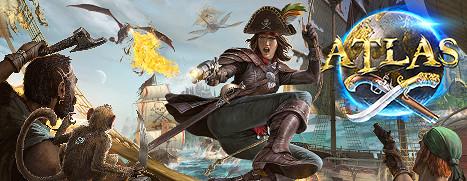
Now Available on Steam Early Access – ATLAS, 17% off!

ATLAS is Now Available on Steam Early Access and is 17% off!*

ATLAS: The ultimate survival MMO of unprecedented scale with 40,000+ simultaneous players in the same world. Join an endless adventure of piracy & sailing, exploration & combat, roleplaying & progression, settlement & civilization-building, in one of the largest game worlds ever! Explore, Build, Conquer!

*Offer ends January 2nd at 10AM Pacific Time

Posted on Leave a comment

Discord raises another $150M after opening its own games store

The folks Discord snuck in here today at the end of 2018 to announce they’ve raised $150 million in another round of funding led by Greenoaks Capital. 

The company – which the new investment values at $2.05 billion – seems to be riding high after the recent full-fledged launch of its own in-client games store, replete with Early Access system and an attractive 90/10 rev-share split in devs’ favor. It now claims a global userbase of over 200 million.

Prior investor Tencent also put some money into this funding round, alongside Firstmark, IVP, Technology Opportunity Partners and Index Ventures. 

Posted on Leave a comment

Video: How Valve uses biofeedback to make better games

In this GDC 2011 talk, Valve’s Mike Ambinder explores how the company is making use of biofeedback (the measurement, display, analysis modification, manipulation, and response of psychological signals) to both explore new avenues of gameplay and improve in-house playtesting processes.

Using Valve’s own Portal 2, Left 4 Dead 2, and Alien Swarm as examples, Ambinder explains how the studio measured players’ skin conductance response, heart rate, and eye movements to design titles that effectively toy with player’s psychological limits.

It was an insightful talk that’s definitely still worth watching, so developers shouldn’t miss the opportunity to do so now that it’s freely available on the official GDC YouTube channel!

In addition to this presentation, the GDC Vault and its accompanying YouTube channel offers numerous other free videos, audio recordings, and slides from many of the recent Game Developers Conference events, and the service offers even more members-only content for GDC Vault subscribers.

Those who purchased All Access passes to recent events like GDC or VRDC already have full access to GDC Vault, and interested parties can apply for the individual subscription via a GDC Vault subscription page. Group subscriptions are also available: game-related schools and development studios who sign up for GDC Vault Studio Subscriptions can receive access for their entire office or company by contacting staff via the GDC Vault group subscription page. Finally, current subscribers with access issues can contact GDC Vault technical support.

Gamasutra and GDC are sibling organizations under parent company Informa