Posted on Leave a comment

Godot Donation Changes

The Godot game engine announced some changes to their donation strategies going forward, as well as changes to their Patreon tiers and some insight into their future hiring goals to support the project.

From the Godot blog:

The project situation changed a lot for the better in the past few months, with a steady growth in the amount of users and contributors, and a nice boost to our funding situation thanks to an Epic MegaGrant which will cover my (Juan) and George’s work for the next two years, freeing donation funds for new purposes. Therefore, we discussed with core contributors that this is a good time to change how the project manages donations, and give our whole crowdfunding a much-needed update.

Perhaps of the most interest though, the roles that future milestones will fund:

  • General usability, 2D editor, website
  • Contributor for networking, HTML5
  • Mono/C#, GDNative
  • Junior rendering contributor
  • VR/AR/Mobile rendering contributor
  • More contributors

They also announced some changes to the Patreon tiers, including the elimination of two existing tiers.  You can read further details of the changes going forward, or you can learn more about the changes in the video below.

[embedded content]

GameDev News


<!–

–>

Posted on Leave a comment

Get a job: Join Remedy as a Technical Director

The Gamasutra Job Board is the most diverse, active and established board of its kind for the video game industry!

Here is just one of the many, many positions being advertised right now.

Location: Helsinki, Finland

Remedy Entertainment, the creator of Control®, Quantum Break®, Max Payne®, Alan Wake® and Death Rally® and one of the leading independent game studios in the world is looking for a Technical Director for an exciting new online multiplayer game.

As the Technical Director, you will be part of the project’s core leadership team and own and drive all technical areas and aspects of the project from vision to execution. You will lead a team of highly talented programmers and collaborate closely with a cross disciplinary team of experienced game makers in creating a new, groundbreaking online multiplayer experience.

Ideally, you have worked in Technical Director or Lead Programmer roles over one or more full life cycles of designing, building, releasing and operating an online game as a service (GAAS).

Responsibilities

  • Lead the gameplay engineering team and help team members to make the most out of their day-to-day work by establishing coding guidelines, best practices and leading regular code reviews etc.
  • Own and drive the overall technical vision, architecture and execution of the project
  • Plan, manage, document and track project schedules and workflows
  • Be part of the project’s leadership team and contribute ideas toward all aspects of the game’s production and development
  • Ensure that consistent communication is maintained in all directions to guarantee the quality of the game
  • Actively sharing insights expertise and best practices with the gameplay team and colleagues in other teams

Requirements and qualifications

  • A minimum of 10 years’ experience in game programming
  • Robust experience with developing in Unreal Engine 4
  • Robust experience across the full life cycle of developing and operating live multiplayer games as a service
  • Excellent command of network and code best practices for multiplayer games
  • Excellent C++ skills
  • Solid team leadership experience and strong leadership and teamwork skills
  • Experience with Agile methodologies (Scrum, Kanban etc.)
  • Ability to collaborate and work with a range of disciplines from art to design
  • Excellent verbal and written communication skills (in English)

The ideal candidate will also have

  • Experience with games built in a modular way
  • Experience in working on various platforms

What is in it for you?

  • Yes, you get to move to Finland where the quality of life is exceptional and cost of living is affordable
  • Moving to a new country can be intimidating, but our relocation service is there every step of the way to take care of you. You can concentrate on work, while we’ll take care of everything else
  • You will be offered competitive compensation with a bonus system
  • We work hard, but at Remedy we believe in a great work life balance. Happy people work better. In Finland you get up to 5 weeks of paid vacation every year. This is on top of public holidays and other special occasions
  • Above all, you get to work on awesome, unique video games that the global audience is interested in at a studio where your input is valued. We try our hardest to keep our team sizes and the work load sensible, so your contributions feel valuable

Interested? Apply now.

Whether you’re just starting out, looking for something new, or just seeing what’s out there, the Gamasutra Job Board is the place where game developers move ahead in their careers.

Gamasutra’s Job Board is the most diverse, most active, and most established board of its kind in the video game industry, serving companies of all sizes, from indie to triple-A.

Looking for a new job? Get started here. Are you a recruiter looking for talent? Post jobs here.

Posted on Leave a comment

Report: Xbox ‘encouraging’ publishers to keep cross-gen game upgrades free

Third-party games aren’t required to participate in Xbox’s Smart Delivery cross-buy program to bridge the current and next-gen gap, but the console maker is reportedly urging publishers that embark on their own cross-generation promotions to offer those upgrades free of charge.

Sources on the publishing side of things shared as much with VGC, noting that Xbox is reportedly asking publishers with cross-gen games in the mix not to charge players to upgrade the Xbox One version to the Xbox Series X version. 

On top of that, those sources say that Microsoft is urging those that don’t participate in its own Smart Delivery program to offer their own cross-buy promotions, similar to what EA already has in the works with a limited-time “dual entitlement” to allow cross-generational upgrades for some digital games.

It’s a messy space to navigate on both sides of the fence given that a number of triple-A heavy-hitters are expected to arrive on both current and next-gen platforms later this year. Systems like Xbox’s Smart Delivery option aim to offset some of the uncertainty its players may have when buying new Xbox One games only months before a new console launches, but even then unknown factors like various third-party cross-buy policies or even the yet-unannounced launch dates for new consoles leave a lot of room for confusion.

Posted on Leave a comment

VGDC: Em Reed’s ‘All Time Greats’ article/video picks

The following blog post, unless otherwise noted, was written by a member of Gamasutra’s community.
The thoughts and opinions expressed are those of the writer and not Gamasutra or its parent company.


[Time for our fourth Video Game Deep Cuts guest post, following Kyle Orland’sBennett Foddy’s and Brandon Sheffield’s ‘best ever game article/video’ picks. This time, writer & cultural commentator Em Reed contributes some really interesting links that straddle history, art, academia and culture adeptly.

Em has recently written for Rock Paper Shotgun and EGM, and I really enjoy her sensibility and point of view – for example, this Speculation Jam piece on what game preservation could be like in 2024, or indeed her picks for the ‘20 games to remember’ for the past decade. Take it away, Em…]

It’s hard to decide the “best-ever” anything, especially writing. Assembling this list was a good chance for me to think back over my experience writing about games from around 2013, and an even longer-standing interest in them.

These pieces are all well-written and interesting, that should go without saying. But to really narrow down the field I decided to focus on ones that also expanded my perspective and had a lasting influence on my own writing practice.

Rhizome: Towards an Art History for Videogames (Lana Polansky, 2016 )

This is an article that always jumps to mind when I think of really important, formative work. Lana Polansky has gone on to do amazing critiques of the game industry and its labor practices, and has even started a Twitch channel which features lesser-known, experimental games.

But this one sticks with me because of how it upends the standard narrative of “art games” and instead widens the field to include some fascinating aesthetically and conceptually ambitious work from across gaming history. 

The Arcade Review: Anyhowly Anyhow (Krish Raghav, 2014)

Remember when everyone was making custom versions of 2048? I like teaching this article alongside Nick Montfort’s “Combat in Context” because it is a deep read on a videogame that is far from the first thing to come to mind when you ask people to think about videogames.

This article explores the mechanics of the game PAP 2048, as well as the platforms which enabled its creation and distribution alongside the political and cultural context of Singapore masterfully illustrates the variety of elements effecting a game’s reception and meaning.

Real Life: Well Played (Vicky Osterweil, 2018)

Despite being a recreational activity, videogames’ technological nature and the effort they often demand can make them feel a lot like the technologically-mediated work many of us already spend a lot of time doing. This article, and the subsequent instalments of Vicky Osterweil’s work on this site, don’t avoid this contradiction, tracing it across topics like the gaming industry, game design, and live streaming. 

ZEAL: Playing Love Live: School Idol Festival Or: My Perverted Image-Object Commodity Fetish (Helen Stefanie, 2019)

I both love and see myself in this charmingly personal comic that still incorporates an insightful analysis of not only the mechanics of gacha games, but why so many people are so attached to them. If you’re baffled as to why Fate/Grand Order was the most discussed game on Twitter of 2019 (really!) then read this.

Eurogamer: Shooters: How Videogames Fund Arms Manufacturers (Simon Parkin, 2013)

This piece sticks with me because it evaluates the issue of videogames and representation of gun violence from an alternative angle that does not rely on psychological speculation one way or the other. Instead, Simon Parkin literally follows the money, examining how the intersection of high-quality digital gun models and official licences from firearm brands are seen as a marketing opportunity for videogames and weapons manufacturers alike. 

Fictional Videogame Stills (Suzanne Treister, 1991-1992)

So this is not really a piece of writing, but I find Suzanne Treister’s evocative Fictional Videogame Stills, made on an Amiga in the early 90s, to capture the imagery and tone of videogames, the mysterious experiences they offered, and the excitement and tension of this new technology.

They’re still extremely inspiring to me. Treister captured these images by photographing the screen of her Amiga, so clicking on the thumbnails also reveals lovely material traces of the CRT monitors of the time. 

Slots of Fun, Slots of Trouble: An Archaeology of Arcade Gaming (Erkki Huhtamo, 2005)

This article uses a ton of wonderful historical details to come at videogames from a different angle. Instead of focusing on their relation to other, longer-lived forms of play like sports, boardgames, or make believe, Erkki Huhtamo puts videogames in dialogue with issues of automation and human-machine relationships that emerged over the 19th and early 20th century. 

Game Studies: Say it with a Computer Game: Hobby Computer Culture and the Non-entertainment Uses of Homebrew Games in the 1980s Czechoslovakia (Jaroslav Svelch, 2013)

This article is a fascinating look at how videogames come to serve different purposes and are created and distributed in very different ways in an area without an established gaming entertainment industry. It’s a reminder that the history of videogames is much broader than even what we know, and that creativity and expression have always played a role at every level of production.  

Everything But the Clouds (Patrick LeMieux, 2017)

While this video essay is primarily about a piece of New Media art, which led to some controversy, it is also a rigorous investigation of the code and structure of the original Super Mario Bros., its related romhacking scene, and Nintendo’s broader cultural influence. You will definitely learn something, either about art or homebrew.

The Time Traveler’s Diary: A Year in YU-NO (2017-2018) (Phantom, 2019 – NSFW)

This was a fairly recent read for me, but I still found it incredibly impressive. Combining personal reflections, multiple theoretical perspectives and careful analysis into an inventive format leads to a definitive longform essay about a wildly ambitious game that hardly anyone has played.

However, YU-NO is also an eroge or H-game, and the discussion does not shy away from some of its more controversial and graphic sexual and violent content, so heed the content warnings!

Posted on Leave a comment

Core Platform Launch Pilot Monetization Program

Core, a game development platform by Manticore Games (previous hands-on here), have just announced a pilot program enabling game developers to get paid for their game creations.  Core is built on top of the Unreal game engine and provides you everything you need to create your own games.  Details of the pilot payment program from the Manticore blog:

We designed the Creator Payouts Pilot Program around one simple concept: the more people play your game, the more you should get paid.

Each calendar month, creators in the program can receive $3 per average daily player. This will be calculated by taking the daily number of unique users who log into your games and averaging them across that month.

This means that if you have 500 unique users log into your games every day (they do not need to be the same players) you could receive $1,500 after the end of the month. If you average 1,000 users, you could receive $3,000. If you average 10,000 … you get the idea.

We chose this system because we want creators to be unified in the mission of making fun games and bringing new players to Core. You don’t need to manage subscriptions or design a vast catalog of microtransactions. Instead, the only thing you need to focus on is making great games that attract and retain players. The more players you and your fellow creators bring in, the more money you could make.

During the pilot, spots are limited for the chance to monetize your Core creations.  If you are interested in getting in the pilot, you need the fill out this form.  Be sure to check out the terms and conditions and the FAQ.  Check out the video below for more details.

[embedded content]

GameDev News


<!–

–>

Posted on Leave a comment

THQ Nordic’s Kingdoms of Amalur: Reckoning remaster opens the door for new DLC

THQ Nordic is working on a remaster of 38 Studios and Big Huge Games’ 2012 RPG Kingdoms of Amalur: Reckoning, cleverly named Kingdoms of Amalur: Re-Reckoning, and now plans to release a brand new expansion for the game at some point after Re-Reckoning’s September 2020 launch.

While remakes and remasters have been a bit of a trend for several years now, more and more companies are using those revivals as a platform to launch entirely new games or content based on IP that may have otherwise fallen to the wayside.

We’ve seen it with Activision’s upcoming Crash Bandicoot N. Sane Trilogy follow-up Crash Bandicoot 4: It’s About Time, with new content promised for Hangar 13’s (now slightly delayed) Mafia remake, and now with new post-launch content heading to THQ Nordic’s Kingdoms of Amalur: Re-Reckoning revival.

For now, THQ Nordic hasn’t said a ton about how this new addition will play into the nearly decade-old story of the original game, noting only that it is billed as a “a brand new expansion” currently due out at some point in 2021.

Posted on Leave a comment

Video: How to prioritize your dev efforts in an era of rising costs

In this GDC 2018 talk developers Pany Haritatos, David Edery, Adrian Crook and Mario Wynands explore game design, marketing, and production tactics intended to help control your costs without diminishing your odds of success.

If you’re at all concerned about how to effectively manage rising game development costs, this is the talk to watch. Together, these three game makers from around the industry shared personal anecdotes and practical advice you can (hopefully) apply to your own projects.

Miss seeing it live, or just want to brush up on some of the finer points? This talk was recently made available for you to watch for free on the official GDC YouTube channel!

In addition to this presentation, the GDC Vault and its accompanying YouTube channel offers numerous other free videos, audio recordings, and slides from many of the recent Game Developers Conference events, and the service offers even more members-only content for GDC Vault subscribers.

Those who purchased All Access passes to recent events like GDC or VRDC already have full access to GDC Vault, and interested parties can apply for the individual subscription via a GDC Vault subscription page. Group subscriptions are also available: game-related schools and development studios who sign up for GDC Vault Studio Subscriptions can receive access for their entire office or company by contacting staff via the GDC Vault group subscription page

Posted on Leave a comment

Former Microsoft exec Peggy Johnson signs on as Magic Leap CEO

Newsbrief: Magic Leap has brought ex-Microsoft executive Peggy Johnson as the company’s new CEO, filling a vacancy left by co-founder Rony Abovitz’s departure from the chief exec seat in May.

Johnson, who previously served as Microsoft’s EVP of business development, is set to officially assume the CEO role on August 1 to, according to a press release, “accelerate Magic Leap’s growth and bring transformative enterprise solutions to market.”

She joins the company at a complicated time, having signed on just months after Magic Leap laid off around 1,000 employees in a bid to help it “adapt to new market realities.” Shortly after, the company secured $350 million in funding to stave off further layoffs as it continues to push toward a more enterprise-focused AR strategy. 

“As CEO, I look forward to strategically building enduring relationships that connect Magic Leap’s game-changing technology and pipeline to the wide-ranging digital needs of enterprises of all sizes and industries,” reads a statement from Johnson.
 

Posted on Leave a comment

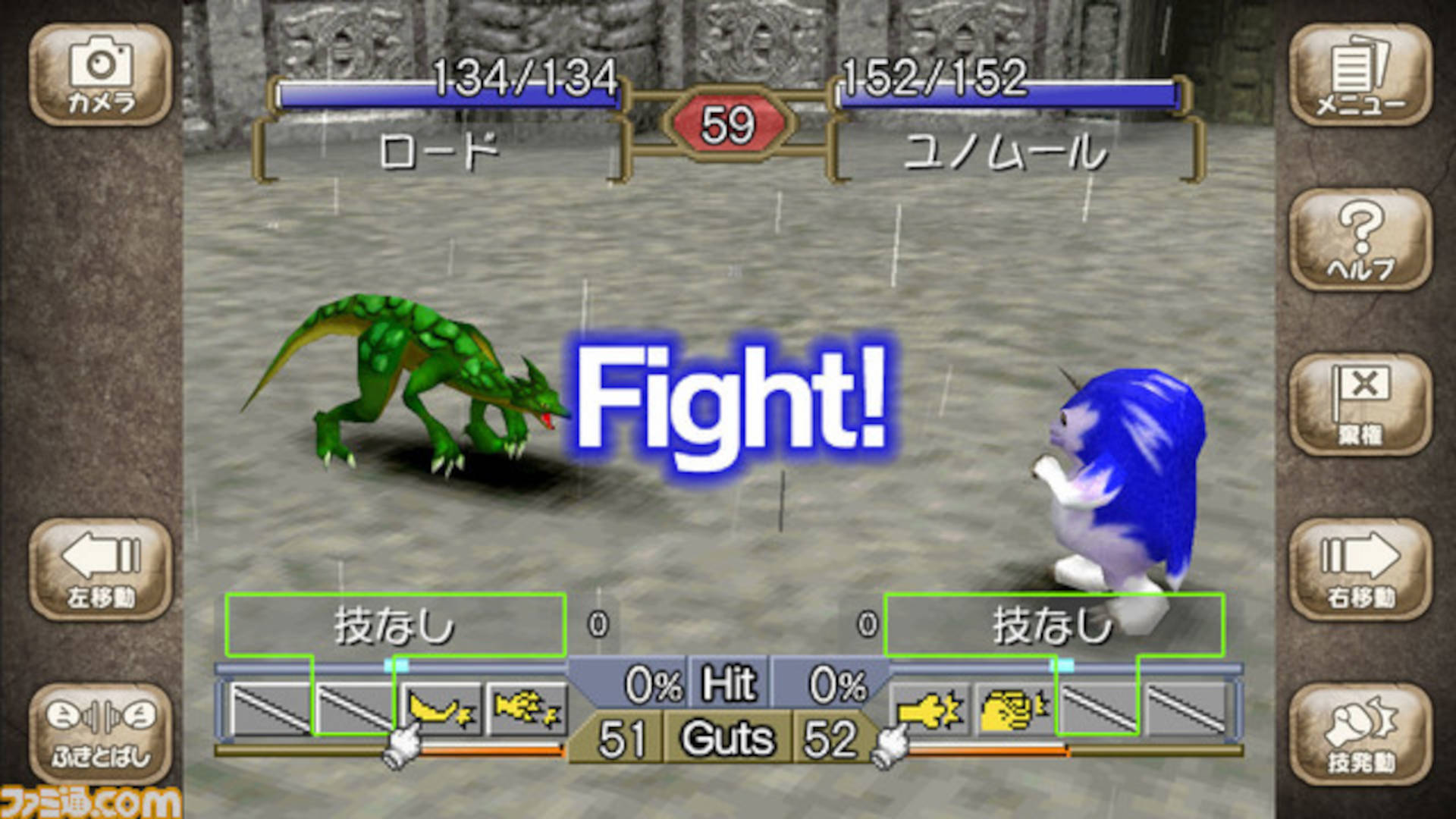
Monster Farm 2 is coming to mobile in Japan this fall

Monster Farm 2, or Monster Rancher 2 depending on where you live, is a PlayStation game originally released in Japan in 1999. The developer, Koei Tecmo Games, has confirmed that its been working on a remaster for the Nintendo Switch, iOS, and Android. We can expect to see the game released sometime in the fall of this year, though it is only coming to Japan at this time.

The best way to describe Monster Farm 2 is a monster fighting game. Gameplay involves breeding and raising the strongest monsters to win tournaments. The more tournaments you win, the more monsters and moves you unlock.

There is no word yet if the classic monster breeding game will make its way to the Western world. However, seeing as the original Monster Farm took the best part of half a year to make its way to the US and EU, we may be in luck soon. The news was released on the official Monster Farm Twitter account earlier today, and its clear fans of the series are excited as they have retweeted the post over 12k times.

Although very little information is available on the Famitsu site, the release does mention that there will be new features added to the game, beyond just a faithful remaster.

If you are interested in Monster Farm 2 and would like to know more, you can check out the official release notes here. If you would like to see the Tweet mentioned above, click here.