Posted on Leave a comment

NeoAxis 2019.3 Released

NeoAxis 2019.3 was just released.  NeoAxis is a free C# powered 3D game engine with an editor capable of targeting Windows and UWP platforms currently with more planned in the roadmap.  The 2019.3 release brings several major new features such as a new terrain system and a built in 3D building for assembling geometry directly inside the game engine.

Details from the changelog:

  • API of the engine and the editor have been updated. Now they are considered complete.
  • Terrain.
  • Builder 3D. Fast level creation tools, 3D modeling tools, constructive solid geometry operations.
  • Three ways to create objects in the scene are now available: Drag & Drop, By Click, By Brush.
  • Tools for creation a huge amount of objects.
  • Surface component. A definition of surface type which contains material, set of meshes and other objects. Surfaces are used for painting and object creation by means brush.
  • Group Of Objects component. An object in a scene designed to store and display a large number of similar objects.
  • Decals.
  • Material: Advanced blending. The ability to configure which channels to write to the G-Buffer. Used for decals.
  • Per-object motion blur.
  • Smooth LOD transition.
  • Area component. Represents an area in space defined by the set of points.
  • Layers in the scene.
  • Package manager has been added.
  • Support for creating a build for the target platform has been improved. Now scripts and engine add-ons are supported. The process of creating a build is simplified. The page about build in manual has been added.
  • Build for Universal Windows Platform (UWP) has been improved.
  • Engine DLL assemblies management has been improved. Now unnecessary assemblies are not loaded into the simulation, thereby reducing the load on garbage collector.
  • C# Editor: Work with CS files has been improved. Now changes are synchronized between files. Now there are no invalid warning markers.
  • C# Editor: The ability to customize the visibility of markers has been added.
  • Occlusion query API has been added.
  • Lens flares now use occlusion queries to detect visibility on the screen.
  • Lens flares now appear and disappear smoothly.
  • The ability to change video mode, fullscreen mode, vertical sync in the player app.
  • Editor: Tool tips for events.
  • Editor: Many small fixes.
  • Material Editor: Access to TexCoord 2 and 3 from the shader editor.
  • Material Editor: DitherBlending function.
  • Objects Window: Search.
  • Scene Editor: Select same objects in sphere area by mouse double click.
  • Vignetting screen effect: Noise.
  • Bug fix: Physics: No collision between soft bodies and rigid mesh shapes.
  • Bug fix: Scene Editor: Unable to detach the object when it contains collision body.
  • Bug fix: Screen Space Reflection effect fixed.

You can learn more about the release and see NeoAxis in action in the video below.

[youtube https://www.youtube.com/watch?v=BcJBAuhPoyI&w=480&h=270]

GameDev News


Posted on Leave a comment

The Weekender: Back to Business Edition

Normal service resumes again today, and there’s a lot to catch up on. Still kind of bummed there wasn’t much more to write about from PDXCon regarding mobile. The Stellaris spin-off was definitely a point of conversation but other than saying “we messed up,” there wasn’t much more for them to say.

Meanwhile, in mobile gaming…

Out Now

This is going to be a bit of a disjointed section this today because there’s quite a few things to catch up on from the past couple of weeks.

First thing’s first, y’all saw Bad North last week, right? Our review is in-progress and coming as fast as we can, but I’ve been playing it on Android and it’s pretty legit. It’s a minimalist game so you may not be able to play it for long periods of time, and the controls are a tiny bit fiddly, but it’s still pretty good.

Add to that is the fact that Rome: Total War – Alexander is now available on iPhone (making the game iOS Universal), as well as Android devices. This is the last of the Rome: Total War releases to complete their mobile journey. You can read our Rome: Total War Alexander review here, otherwise, what are you waiting for?

[youtube https://www.youtube.com/watch?v=DN9Hu0lTqY0?controls=0]

Go here for device requirements.

It also seems 7 Wonders: Duel released onto both iOS and Android this week, to absolutely zero fanfare (hats off to the Stately Play community for the tip). It distils the typical 7 Wonders gameplay into a more competitive one-on-one mode. We’ll try and get on this as soon as we can, but it might have to wait a week or two.

[youtube https://www.youtube.com/watch?v=uZ-hBqfTVtg?controls=0]

As for other releases this week, there have been a few things that have caught our eye, but nothing we’ve actually played yet:

  • Cursed Castilla (iOS) is a classic console arcade game that’s been ported to iOS, complete with a baked in Arcade UI.
  • The Swords of Ditto (iOS & Android) is a “compact” action-RPG from Devolver that people have been saying positive things about.
  • Undead Horde (iOS) seems like one of those games that’s high-concept/but low budget. You are a necromancer who must raise zombie armies to conquer a fantasy Kingdom. Bills itself as a ‘simulation’. 

Updates & Future Releases

There are a couple of things to put into this section as well this week, let’s run through the big ones:

Pacific Fire, which we reviewed this week, has been updated recently. I’d tell you when, but I’ve never been able to figure out the date for these things on the Google Play store and since it’s Android only, I’m stuck.

Dota Underlords has received another big update this week, which adds in a few things like Duo Mode, a new ‘Insects’ pieces type and the Underlords themselves. The Trese Brothers are also up to their usual tricks, with a new Star Traders: Frontiers update that adds new talents, new content and tweaks a variety of things.

Black Desert Mobile’s full release isn’t until December, but if you’re an Android user in Canada, Chile, Sweden, Malaysia, Turkey, Ireland or Australia, then you’re in luck! The popular MMO’s mobile port has just been soft-launched in these countries, so you can jump in right now and check it out. Not sure if the same will happen on iOS or not.

EVE Echoes – the latest EVE Online mobile spin-off seems to actually be happening (unlike War of Ascension which we were expecting last year before it disappeared), will have an Open Beta in December this year, and there’s a playable build at CCP’s FanFest Vegas event this weekend. I’ve got one of our freelancers in situ taking a look, so I’m hoping to bring back some impressions of what it’s going to be like. In the meantime, enjoy this gameplay trailer:

[youtube https://www.youtube.com/watch?v=7Cai8fwFa0I?controls=0]

Sales

Got a couple of sales for you this week that are worth checking out:

Seen anything else you liked, played any of the above? Let us know in the comments!

Posted on Leave a comment

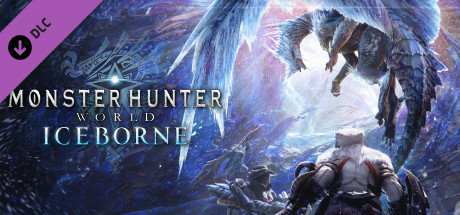
Pre-Purchase Now – Monster Hunter World: Iceborne

Monster Hunter World: Iceborne is Now Available for Pre-Purchase on Steam!

Monster Hunter: World, the game that brought you a new style of hunting action, is about to get even bigger with the massive Monster Hunter World: Iceborne expansion!

Pre-purchase now to receive the Yukumo Layered Armor Set* free!

*Layered armor only changes your character’s appearance. It does not include any weapons.

Posted on Leave a comment

AppGameKit Particle Editor Released

The Game Creators have just released the AppGameKit Studio: Particle Editor, which despite the name will work with both AppGameKit Classic and the newer AppGameKit Studio.  It is a combination editor and runtime making creating and controlling particle systems for AGK a breeze. 

Key features include:

  • Create effects with as little as 1,000 to 1 million particles
  • Emitter types include box, circle, disc, filled sphere, spherical shell, line
  • Burst emitters for explosions and sparks
  • Particle type settings from size, colours, lifespan and more
  • Animated image particle support
  • Particle blend modes supported, opaque, alpha, additive
  • Particle colouring controlled using gradients
  • Particle orientation control
  • Turbulence system
  • Vector field controls, paint, push, attract, repel, swirl
  • Function packed runtime code for your projects (Win, Mac & Linux)
  • Custom textures and gradients supported
  • Reflector system used to bounce particles off floors and walls

The Particle Editor is available as DLC with an MSRP of $30 USD.  If you are interested in checking out AppGameKit Studio, be sure to check out our hands-on getting started tutorial series available here or check out the video below.

[youtube https://www.youtube.com/watch?v=tSQH-30a7Bg&w=877&h=493]

GameDev News


Posted on Leave a comment

AMD Joins Blender As A Patron

2019 has been a massive year for the open source 3D application Blender.  Back in July Blender 2.80 was released, perhaps the biggest release in Blender’s history.  Just a few days later, Epic Games announced that they would be giving Blender 1.2M dollars as part of their Mega-grant program.  Then earlier this month, NVIDIA became a Patron level sponsor, the highest tier possible.  Today another company joined that tier, announced in the following tweet:

image

No formal details of the partnership have been announced by either Blender or AMD as of yet, but a patron level sponsorship means that AMD will be giving the Blender Foundation at least 120K Euro/month, enabling the hiring of at least two developers full time!

Learn more about this and prior announcements in the video below.

[youtube https://www.youtube.com/watch?v=LuecgWCP13g&w=853&h=480]

GameDev News Art


Posted on Leave a comment

Pacific Fire Review

A strange thing that occasionally happens to me is that I get what I’ve referred to as Paradox dreams. Not because they are self-contradicting, but because they occur when I play too much of one of Paradox’s grand strategy games, such as Crusader Kings 2 or Europa Universalis 4.

Essentially, my brain ends up thinking of ways I can improve my position in these games via my dreams.

Pacific Fire has gotten my attention in such a way that I had one of these ‘Paradox dreams’ about it. So, what’s so special about this mobile wargame that it has kidnapped my subconscious?

A PACIFIC UN-PACIFIED

Pacific Fire does not have much in the way of astounding graphics like you may see from AAA mobile studios like the big brains behind Clash of Clans or Candy Crush (people still play that, right?), or a very engaging story, but neither are really missed. Pacific Fire knows what it is good at, and has cut everything else in favor of compelling and engaging gameplay.

You are given several scenarios to try your hand at, pushing air, land, and sea units between bases in order to complete your objectives for the scenario, generally on a strict turn limit of x amount of months. Notably, the game uses WEGO, a turn method that sees both sides make their moves simultaneously, then showing how the action played out at the beginning of the next turn. This format suits Pacific Fire wonderfully, as the Pacific theatre’s naval engagements were defined by the opposing fleets guessing the other’s position, attempting them to coax them into a decisive battle on their own terms.

Pacific Fire 1

This brings us to the most important element of Pacific Fire, the order in which all these moves take place. There’s a grand total of fourteen steps to combat resolution, but essentially it boils down to this: air units arrive at their destination and dogfight with enemy air units, the surviving bombers attack their respective land or naval targets. The naval forces then move to their destination, fight the enemy naval forces, and bombard any land units. Lastly, land units resolve their combat with the enemy. This turn ordering allows for clever strategists to replicate the great naval battles of the Pacific, with smartly deployed squadrons and fleets able to negate an invading army’s numbers.

In a nice touch, planes and ships have their own sets of stats, which determine how they function in battle. Generally, newer vehicles operate at a higher efficiency. On a similar note, land units have 3 stats that determine combat capability: men, tanks, and guns. Men are the overall strength of the unit, tanks help the unit in offensive battles, and the guns help on defense and help protect the unit against enemy bombers. This layer of attention to units adds a degree of thoughtfulness to how you should utilize your army, making successful actions pleasing to pocket generals

ISLAND HOPPING

That’s all very well and good, but what about the context surrounding these engagements? Pacific Fire comes with a total of 13 scenarios (1 of which also operates as a tutorial), with a focus on specific areas of the war. There are several scenarios from the Allied side that capture the struggle to survive as war broke out and the Japanese overwhelmed the British, French, Dutch, and American holdings. These make for good starting scenarios, as the map is smaller, and the Allied player needs to worry about deploying smaller numbers of units rather than the entire Pacific theatre. Even while these are certainly scenarios aimed towards a beginner, Pacific Fire is not an easy game. Leaving a base without fighters to defend it can see enemy bombers quickly killing hundreds of men, leaving the player in an unwinnable position for the scenario.

Pacific Fire 3

The scenarios covering the later parts of the war are generally more challenging, a particularly campaign covering the time period around the Battle of Coral Sea (still haven’t managed to beat it). Even more intimidating, there are 3 full Pacific campaigns available, with increasing complexity and difficulty. While several scenarios can be wrapped up over the course of a lunch break, these will be campaigns that take a longer stretch of time.

Disappointingly, there are less playable scenarios for the Japanese, but these are very interesting scenarios. One follows the Japanese in the Burma campaign, looking to push into China and India with 0 naval forces in this scenario (a companion to the much harder Allied version of this campaign). Another notable scenario uses the “What If” of an invasion of the Japanese home islands, using civilians to hold off the Americans until a peace can be brokered. The Japanese don’t play significantly different to the Allies, but there is one key difference. Both sides will in a scenario have an “Industry Score” that determines how many reinforcements will be deployed at the end of the turn. The Allies gain Industry Score over time, but the Japanese player’s score depends on how many bases they hold. As they control less territory, the Japanese are less able to replenish their forces, which follows the “rules” of the history well.

While Pacific Fire does a lot right, the few flaws it has are amplified by the focus that is placed on the gameplay itself. In some of the smaller scenarios, it’s easy to feel as if there is a “right” answer to unit movement and placement, making these scenarios feel more like puzzles than proper warfighting. This may not be an issue to all players, but for a game that has several solid wargaming scenarios, these can be disappointing, as one wrong move can mean that a win is impossible.

Pacific Fire 2

Similarly disappointing is that with a lack of multiplayer support, the game is entirely player v. AI. The AI is… interesting. It’s difficult to realty get a feel for it, as the AI deciding to sit on a base for several turns without moving could either be a cog in a larger strategic plan, or it could be the AI not properly utilizing all of its forces. It does seem easier to lure AI naval fleets into an engagement than it does to bait an army to attack, but that may be just contextual.

CONCLUSION

Pacific Fire is a surprising hidden gem. I hadn’t heard of it at all until the Editor asked me to write a review for it, and I’m very glad he did. My other mobile games have become completely forgotten in the last week as I’ve used my work breaks to figure how to withstand the Japanese assaults on Mandalay, or how to crack the defenses around Truk. Pacific Fire has some shortcomings, but is overall an excellent use of your time, both when awake and, in my case, when asleep.

Posted on Leave a comment

Apple Arcade Roulette #2

Round and round the roulette spins. Here are five more random choices from Apple Arcade’s selection. Will we strike gold this time? Or just strike out? If you missed our first batch, as reminder: Apple Arcade is out, and with it over a 100 new games for you to try and explore at your leisure. There’s almost too many for us to consider individual reviews, although we know other outlets have gone down that route.

If you want to cut to the chase, read our list of our favourite Apple Arcade games so far.

So, we’re running a new feature where we take a randomly selected batch of five games across a spread of genres, and run through some quick reviews so that you can get an idea of what’s worth your time, and what isn’t. 

Hot Lava (Platformer) (2-Stars)

Normally I love everything Klei comes up with but this was a disappointment. Hot Lava has a pretty obvious premise: remember playing that ‘the floor was lava’ game when you were a kid? And it has a great theme: you’re pretending to be a character from a sweet 90s Saturday morning cartoon, with all the kitsch and bombast that comes with that genre. But the gameplay itself is just preset obstacle races with instant death when you fall into the lava.

What’s more, this precision 3D platformer does not work with mobile controls. One control option has you using the gyro in the phone to control your view, which is precise, but awkward if you’re in a space where you can’t move around. The other option is touch only, but doesn’t give you easy access to all of your abilities. If you have a controller, give it a try, but it’s not worth the hard drive space otherwise.

[youtube https://www.youtube.com/watch?v=TNXoTLn5ISs?controls=0]

Where Cards Fall (Puzzle) (2-Stars)

I guess ‘moody navigation puzzler’ is now a well-established thing, and Where Cards Fall is the latest entry in it. There have been some standouts in this genre, Monument Valley being the most obvious one, that built their deliberate pace around smart and mind-bending puzzle design. However, in this case, Where Cards Fall‘s slow pace, requisite for ‘atmospheric’ titles, meant that in my brief time with it I barely scratched the surface of the puzzles.

You walk a character through various isometric playing fields, dragging around packs of cards. The cards essentially are platforms that can be collapsed and moved to create paths that the hero can jump through. Lead him to the magic card portal exit and you get to watch an inscrutable vignette. In the time I spent with this game, the hardest part was the fiddly controls—it took a while to figure out that with some care I could control the size of the platforms created by pinching my fingers ever so slowly. The puzzles themselves weren’t challenging at all.

[youtube https://www.youtube.com/watch?v=_2PoSWgupUM?controls=0]

Mutazione (Adventure) (4-Stars)

This adventure game’s story is told with a light touch but it’s instantly compelling. Your character, Kai, has immediate motivation, as she attempts to fulfill her grandfather’s dying wish and understand what he had devoted his life to. The setting, too, is immediately intriguing: Mutazione is an island of mutated people and plants, whose characters are quickly and efficiently drawn.

The game starts feeling like a traditional adventure game, but its conversation trees are mostly for flavor (like obvious influence Kentucky Route Zero) and its puzzles all revolve around amateur botany. It’s occasionally awkward to control, especially the lengthy plant encyclopedia that is inexplicably indexless. But for players looking for a unique interactive story, Mutazione should be your first stop on Arcade.

[youtube https://www.youtube.com/watch?v=_slT6nfE9g4?controls=0]

King’s League 2 (Strategy/Management) (3-Stars)

A sport’s management game without sports, King’s League puts you in charge of a team of fantasy fighters as they battle their way up the titular league. The story mode is entertaining with well-written (albeit broad) characters and it does a good job introducing the concepts of the game. If you don’t want to bother clicking through dialogues, you can also just jump in to creating your own custom team.

You recruit team members from town, choose training styles to mould them, and buy new gear. When you get into a match, most of the battle is handled for you, as your units march forward and bounce off one another. All you do is occasionally activate a special ability, when you have the chance. Because the matches are so simple, the team management is necessarily also simple. King’s League definitely has more of a ‘mobile game’ feel with its simplified gameplay. If that’s what you’re looking for, though, it might be a good fit.

[youtube https://www.youtube.com/watch?v=lkgHGN6gZy0?controls=0]

Shinsekai: Into the Depths (Platformer) (3-Stars)

Capcom takes a break from arcade ports to bring us this Metroidvania set at the bottom of the ocean. This is one of the best-looking games on Arcade and probably they best sounding. Headphones are a must if you want to get the full underwater experience. The game itself is a slow paced platformer with forgiving controls that work pretty well on a touch screen, with a swipe-anywhere stick and tap and drag controls for actions.

In the time I had with it, I saw a lot of potential, but not too much interesting or challenging happening in the first hour or so. The slow pace is also a blessing and a curse: easy to handle with touch controls, but often dragging out basic movement in ways that kill the pace of the game. Your goals are also not entirely clear, which can be a motivation-killer in a wide-open game like this.

[youtube https://www.youtube.com/watch?v=47F-9RQrZgE?controls=0]

Still nothing too amazing this time around. I’m standing by my assessment that Arcade will probably be packed with a lot of good-but-not-great titles that are polished but not innovative. Let’s try again next time–hopefully the wheel will land on one of the new games Apple just added!

Posted on Leave a comment

LowRes NX Fantasy Console

LowRes NX is a cross platform and open source fantasy console.   Fantasy consoles are designed to create a virtual game console as well as providing all the tools you need to create games for the console.  It’s a way of harkening back to a simpler time in game development and is an excellent way of introducing game programming while keeping the complexities down, as well as teaching more experienced programmers how to deal with more constrained environments.

LowRes NX is described as follows:

Virtual Game Console

Imagine LowRes NX as a handheld game console with a d-pad, two action buttons and a little rubber keyboard below a slidable touchscreen. LowRes NX was inspired by real 8- and 16-bit systems and simulates chips for graphics, sound and I/O, which actually work like classic hardware. It supports hardware sprites as well as hardware parallax scrolling, and even offers vertical blank and raster interrupts to create authentic retro effects.

Old-School Programming

The programming language of LowRes NX is based on second-generation, structured BASIC. It offers all the classic commands, but with labels, loops and subprograms instead of line numbers. Graphics and sound are supported by additional commands and you can even access the virtual hardware directly using PEEK and POKE. You have complete control over the program flow, there is no standard update function to implement.

Creative Tools

LowRes NX includes all the tools you need: The Character Designer for editing sprites, tiles and fonts, the Background Designer for tile maps and screen layouts, as well as the Sound Composer for music and sound effects. All of these are just normal BASIC programs. You can change and improve them or even create your own custom editors.

Share and Play

Send your games directly to other users or share them via the website. All programs are open source, so you can play them, learn from them and edit them. Do you prefer making just art or music? Share your creations as assets and let other programmers use them in their projects.

One of the most interesting aspects of LowRes NX is there is a completely free iOS implementation available on the Apple App Store enabling game development on the go.  There is also a community of games you can learn from.  The source code is available on GitHub under the LGPL v3 open source license.  You can check out LowRes NX in action in the video below.

[youtube https://www.youtube.com/watch?v=1F4TOtT2k1M&w=853&h=480]

GameDev News


Posted on Leave a comment

Versus: Unfriendly Frenzy Review

Versus: Unfriendly Frenzy has a rhythmic name that just rolls off the tongue, and its gameplay is every bit as dynamic. The presentation and play experience are zippy, the theme is zany if a little vacuous, but the strategy is ultimately flat. This ain’t Civ 5, folks, and it was never meant to be. As a series of rapid-fire tactical skirmishes, Versus shines, as it also does with local multiplayer. It has clearly been well-polished and is quite fun, but the lack of depth in decision-making and interactions makes the overall experience middling.

It’s real time strategy in a lightweight sense: two commanders duke it out on a single-screen map by spawning units down the lanes of the map. These forces march to the other side of the battlefield, fighting any enemies they come across and ultimately damaging the base if left unopposed. Every one of these units costs energy, which regenerates automatically over time. Your leader can be re-positioned and becomes the spawn point for any or all new units. Honestly that’s 90% of the game, so it is practically pick-up-and-play accessible.

Versus 2

I suppose because Starcraft & Warcraft cast long shadows, there are three factions. There’s some notional asymmetry amongst them: the Circus, Muscle Faeries, and Junkyard. Each one has a roster of six units, three (or rarely four) of which must be selected as a squad. Some are area-of-effect attackers, others demolish buildings quickly. There are tanks and glass cannons alike. It’s a bit like throwing rock-paper-scissors to finagle an advantage in a match, for the melee/ranged/flying matchups serve as soft counters to each other. Standard stuff, nothing fancy or wrong with it really, just a tad uninspired. To be fair, the visual and thematic design is kitschy and eclectic, so at least the aesthetics are colorful.

The extensive single-player campaign does a thorough job parcelling out how everything works in stages. It give tutorials on different units, win conditions, terrain effects and power ups, and moreover separates these new elements into their own missions. A generous interpretation to this campaign structure would be to say it onboards the player gently and has a leisurely difficulty curve. The cynical take is that there’s more padding here than mechanically unique challenges. As ever, the truth is somewhere in the middle. While the campaign storyline does follow the quest to steal and use the Pixie Protein Powder to revive ‘dark magicks’ it is constantly jumping around point-of-view and setting. New cartoon characters are introduced and dismissed rapid-fire, and the missions are generally beaten using the exact same operating procedure. It’s a fever dream, yet also dreary at times.

Versus 3

Seize power ups early, increasing your force’s power level and consistently turning the tide of battle in your favor. That’s it. The specifics of faction matchups and squad composition are only of trifling concern. If ‘strategy’ means long-term planning to you, implying some overarching ambition and design, then Versus is a weakling in terms of strategy. It is, however, tactically intense. Because of the obstacles and unpredictable spawn behaviour of those power ups, timing and quick wits are crucial. A flurry of micro-skirmishes between forces proves pivotal, so to master those, you have to position your leader correctly and tap the right mixture of units in the right window of opportunity. Unfortunately there is no real way to micro-manage the flow of battle beyond this. Contrast that with, say, Iron Marines, and you have a weird hybrid where battles are set into motion without much additional oversight or fine control. In this respect it strongly resembles a lane-pushing or tower-defense game.

The single game element that keeps Versus from getting totally stale is the power-ups. There are ones which beef up a unit type’s health, speed or attack, but there are also one-off ones, which can freeze the enemy commander or create a super-unit. Power-ups have to be used manually, and while the unit stat upgrades have the longest tail of influence, the short-term ones are no joke, either. They are decisive and unpredictable, so they keep the game from becoming a tedious overlong tug-of-war match. It’s a mid-range objective to give additional momentum, and the trick works.

Versus 5

The theme of the game, as well as it’s overall presentation were clearly going for Saturday morning cartoon, and they hit that aim. Each faction has a few key players and personalities, all of which bicker and quibble over every little thing, just as a way to generate dialogue to break up the battles. Heavy dialects drive home how unsubtle the whole affair is. The story, much like the gameplay, is best digested by kids.

Some good news: the multiplayer is a standout and somewhat redeems the rest of the game’s weaknesses. Finally all of the simplicity in design and inputs makes perfect sense: how else can you manage local multiplayer without split screen? It’s about as good as it gets in this limited format, though the strategy fiends would be infinitely better served by a pass-and-play game, and this feels more like an RTS game for parties.

‘It’s a bit rubbish, but I can’t stop myself from playing’. This phrase is a tidy bit of unfair rationalization, used as a preface to diminish every single so-called guilty pleasure. It leapt to mind several times while playing Versus: Unfriendly Frenzy, and though the game is well-made, it quickly runs out of interesting things to say or do. The guilty pleasure here is that of an easy, familiar challenge, and it is easy for any gamer to simply enjoy Versus, which for all its faults is at least well-executed. As a routine or background action, the battles are pleasurable enough, but the game demonstrates how difficult it is to straddle that fine line between simple and simplistic. For someone just looking to blaze through the game in a few hours and leave it behind with only dimly pleasurable hazy memories, it is perfectly adequate, but for long-term play it isn’t a keeper.