Posted on Leave a comment

The deck building card game Marvel Duel is available for pre-registration

The latest game in the Marvel universe is Marvel Duel, and it’s ready for pre-registration now in certain territories. The fast-paced card game features your favourite heroes from the entire saga. Although no exact release date has been confirmed, the pre-registration suggests that the full launch of Marvel Duel is not too far away.

Marvel Duel is a game where you collect superheroes to fight for you against the forces of evil. The aim of the game is to build as strong a deck as possible out of the 150+ characters available. It’s clear that the game is all about collecting and upgrading characters, but there are also equipment, abilities, and trap cards needed to build a supreme deck.

Details on the newest Marvel game are surprisingly sparse. However, judging from the game description and screenshots, fans of traditional CCGs will be familiar with the Hearthstone-looking game board. The description also reveals that a mysterious force has altered the iconic events in Marvel history. This means you can expect to see some familiar settings in the story mode.

Marvel Duel Pre-registration: Where can i pre-register

You can pre-register for Marvel Duel on both the App Store and Google Play. It’s worth mentioning that the pre-registrations are geographically restricted to the following countries.

  • Thailand
  • Indonesia
  • Philippines
  • Malaysia

Although we don’t have an exact date of when to expect the game to head west, you can expect to hear more about it in the coming weeks.

Marvel Duel trailer: How does the gameplay look?

Marvel Duel looks like your traditional turn-based card game. If you are familiar with Hearthstone, then you will already know what to expect from Marvel Duel. If you would like to see the trailer, check out the 15 second teaser below.

[embedded content]

Marvel Duel character list: How many characters are there?

Although it is still too early to provide a complete list of characters, the game page states there will be over 150. While flicking through some new screenshots of Marvel Duel, we discovered that there are 183 cards to collect. Whether this is just characters or items included, it’s fair to say that you will see a lot of familiar faces.

Marvel Duel online: Will I be able to fight my friends?

Marvel games are always keen on uniting players through guilds or alliances. Sometimes these features are added after launch. In Duel, there are some elements of a community. For example, the leaderboards tab and the duel game mode. It would surprise us if Marvel Duel had no in-game friends list or private match capability, but it’s still too early to tell.

Marvel Duel Download: How to get an APK

If you are looking to get your hands on an APK of Marvel Duel, you can do so from APKPure. We have yet to try it out ourselves, but there are plenty of trustworthy sites offering their own versions if you can’t wait.

Posted on Leave a comment

Sony Make 250M Investment in Epic Games

Epic Games, creators of the popular Fortnite series, as well as Unreal Engine, have just announced they have received a $250M investment from Sony, makers of the PlayStation consoles.  It was announced in June that Epic Games were looking for investments valuing the company at 17B dollars.  While this does not appear to be that investment, it does in fact value Epic Games at over 17B USD.

The $250M dollar investment represents an ownership stake of 1.4%, a far cry from the 40% Tencent received for it’s 2012 $330M investment.  The ultimate question is… what does Sony get out of this?  Dean Takahashi at VentureBeat discusses exactly that subject:

The deal is important for Sony because it needs allies in the upcoming console war. Later this year, Sony plans to launch the PlayStation 5 game console in competition with Microsoft’s Xbox Series X. But Epic has said that its Unreal Engine 5 and Fortnite will work with all game platforms, as Epic has generally been neutral when it comes to making cross-platform technology. If Sony gets any advantage from investing in Epic, it isn’t clear from this deal.

In a statement, Sony CEO Kenichiro Yoshida said that Epic’s technology keeps it at the forefront of game development and that is exemplified in the features of Fortnite. Epic CEO Tim Sweeney, meanwhile, said in a statement that both Sony and Epic have created businesses at the intersection of creativity and technology and they share a vision of real-time 3D social experiences that will lead to a convergence of gaming, film, and music. He also said the parties plan to build a “more open and accessible digital ecosystem for all consumers and content creators.”

The bolded point above is perhaps the most important part for game developers, Unreal Engine should not be affected by this investment.  You can learn more in the video below.

[embedded content]

GameDev News


<!–

–>

Posted on Leave a comment

FNA–Now with Vulkan Support

FNA is an open source project making it easy to port and maintain XNA based games to several different platforms.  FNA has been used to port a huge number of indie games including the likes of Celeste, Bastion, Axiom Verge, FEZ, Owlboy, Rogue Legacy and more. 

The goal of FNA is described as:

Our goal is to preserve the XNA game library by reimplementing XNA itself, with an incredible focus on accuracy. We want to reproduce XNA as it was made by Microsoft, while providing an experience that feels “at home” on all of our target platforms. We don’t use game-specific hacks in our code: either we do it right or we don’t do it at all.

Because our platform focus is exclusively on fully open platforms, our primary focus is on the desktop. To that end, FNA supports Windows, macOS, and GNU/Linux with a single assembly file. We don’t use preprocessor conditionals for platforms; our platform model requires that we build a library that works on any platform, regardless of where it was built. When you build an FNA title with Visual Studio, you can expect it to function on Windows, Mac, and Linux with that one set of output assemblies. Additionally, FNA has support for iOS, tvOS, Xbox One, Nintendo Switch, and Google Stadia.

A more recent development reported on Gaming On Linux, is the creation of FNA3D, a new backend supporting different 3D back ends, including new alpha level support for the Vulkan framework.  The one thing FNA does not support is the Content Pipeline, although you can use the MonoGame content pipeline.  The reasons why FNA didn’t implement the XNA pipeline is described here.  There is a project to make getting up and running using FNA and MonoGame’s content pipeline available here

If you are interested in learning more about XNA/FNA/MonoGame, we have a tutorial series available here.  You can learn more about FNA in the video below.

[embedded content]

GameDev News


<!–

–>

Posted on Leave a comment

Deck building Witcher RPG Thronebreaker suddenly releases on iOS

CD Projekt Red, in a sudden turn of events, has launched Thronebreaker on iOS. No one seems to have known that The Witcher RPG was coming to mobile, but it’s a pleasant surprise nonetheless! You can also download Thronebreaker on the App Store right now, for those of you that can’t wait. Since Gwent: The Witcher Card game launched on mobile not so long ago, we’ve been waiting for Thronebreaker news, as a deck building RPG that uses the same card system – check our Gwent review to find out more!

CD Projekt Red originally developed Thronebreaker as the story mode for Gwent, before deciding to create The Witcher Tales and spin it off into its own game. We’re glad it did, though, as Thronebreaker is both an excellent RPG and deck building game.

For those that don’t know, Thronebreaker follows the story of Queen Meve, a beloved character from the books who knights Geralt, hence his ‘of Rivia’ title. Her story involves traipsing across The Continent, trying to reclaim her kingdom, as, all while, the second Nilfgaardian war rages around her.

You can watch the iOS release trailer below if you want to see how it plays:

[embedded content]

In celebration of Thronebreaker coming to mobile, CD Projekt Red are giving away a set of rewards, including the soundtrack, some concept art, and an annotated map of Lyria – one of Meve’s kingdoms. Gwent players can also claim some benefits from jumping into Thronebreaker, such as unique ornaments, and 20 new cards.

We’re excited to see Thronebreaker finally take its rightful place on mobile, as a game that is perfectly built for the platform. If you want to find out more about creating the art of The Witcher universe, we spoke to Gwent’s art director not so long ago about creating Gwent’s card art – check it out!

Posted on Leave a comment

Unreal Engine Launch Live Link iPhone App

Unreal Engine have just launched a new iPhone App called Live Link that enables real-time facial capture for Unreal Engine using an iPhone 10x or newer.  The requirements are Unreal Engine 4.25 or higher as well as an iPhone with a “True Depth” front facing camera.

Details of the App from the Apple App Store:

Virtual production-ready facial animation in real time from your iPhone — Live Link Face for UnrealEngine.

Stream high-quality facial expressions to characters and visualize them with live rendering in UnrealEngine. Record facial tracking data that can be further fine-tuned in animation tools to achieve a finalperformance and assembled in Unreal Engine’s Sequencer. Shoot professional-grade performance capture with an integrated stage workflow.

Facial animation via front-camera and ARKit:

    • Stream out the data live to an Unreal Engine instance via Live Link over a network.
    • Drive a 3D preview mesh, optionally overlaid over the video reference on the phone.
    • Record the raw facial animation data and front-facing video reference footage.

Timecode support for multi-device synchronization:

  • Select from the iPhone system clock, an NTP server, or use a Tentacle Sync to connect with a master clock on stage.
  • Video reference is frame accurate with embedded timecode for editorial.

Control Live Link Face remotely with OSC:

  • Trigger recording externally so actors can focus on their performances.
  • Capture slate names and take numbers consistently.
  • Extract data automatically for archival.

Browse and manage the captured library of takes within Live Link Face:

  • Delete takes, share via AirDrop.
  • Play back the reference video on the phone.

You can learn more about the new Live Link application on the Unreal Engine blog and learn more in documentation available here.  Learn more in the video below.

[embedded content]

GameDev News


<!–

–>

Posted on Leave a comment

Godot Donation Changes

The Godot game engine announced some changes to their donation strategies going forward, as well as changes to their Patreon tiers and some insight into their future hiring goals to support the project.

From the Godot blog:

The project situation changed a lot for the better in the past few months, with a steady growth in the amount of users and contributors, and a nice boost to our funding situation thanks to an Epic MegaGrant which will cover my (Juan) and George’s work for the next two years, freeing donation funds for new purposes. Therefore, we discussed with core contributors that this is a good time to change how the project manages donations, and give our whole crowdfunding a much-needed update.

Perhaps of the most interest though, the roles that future milestones will fund:

  • General usability, 2D editor, website
  • Contributor for networking, HTML5
  • Mono/C#, GDNative
  • Junior rendering contributor
  • VR/AR/Mobile rendering contributor
  • More contributors

They also announced some changes to the Patreon tiers, including the elimination of two existing tiers.  You can read further details of the changes going forward, or you can learn more about the changes in the video below.

[embedded content]

GameDev News


<!–

–>

Posted on Leave a comment

Core Platform Launch Pilot Monetization Program

Core, a game development platform by Manticore Games (previous hands-on here), have just announced a pilot program enabling game developers to get paid for their game creations.  Core is built on top of the Unreal game engine and provides you everything you need to create your own games.  Details of the pilot payment program from the Manticore blog:

We designed the Creator Payouts Pilot Program around one simple concept: the more people play your game, the more you should get paid.

Each calendar month, creators in the program can receive $3 per average daily player. This will be calculated by taking the daily number of unique users who log into your games and averaging them across that month.

This means that if you have 500 unique users log into your games every day (they do not need to be the same players) you could receive $1,500 after the end of the month. If you average 1,000 users, you could receive $3,000. If you average 10,000 … you get the idea.

We chose this system because we want creators to be unified in the mission of making fun games and bringing new players to Core. You don’t need to manage subscriptions or design a vast catalog of microtransactions. Instead, the only thing you need to focus on is making great games that attract and retain players. The more players you and your fellow creators bring in, the more money you could make.

During the pilot, spots are limited for the chance to monetize your Core creations.  If you are interested in getting in the pilot, you need the fill out this form.  Be sure to check out the terms and conditions and the FAQ.  Check out the video below for more details.

[embedded content]

GameDev News


<!–

–>

Posted on Leave a comment

Monster Farm 2 is coming to mobile in Japan this fall

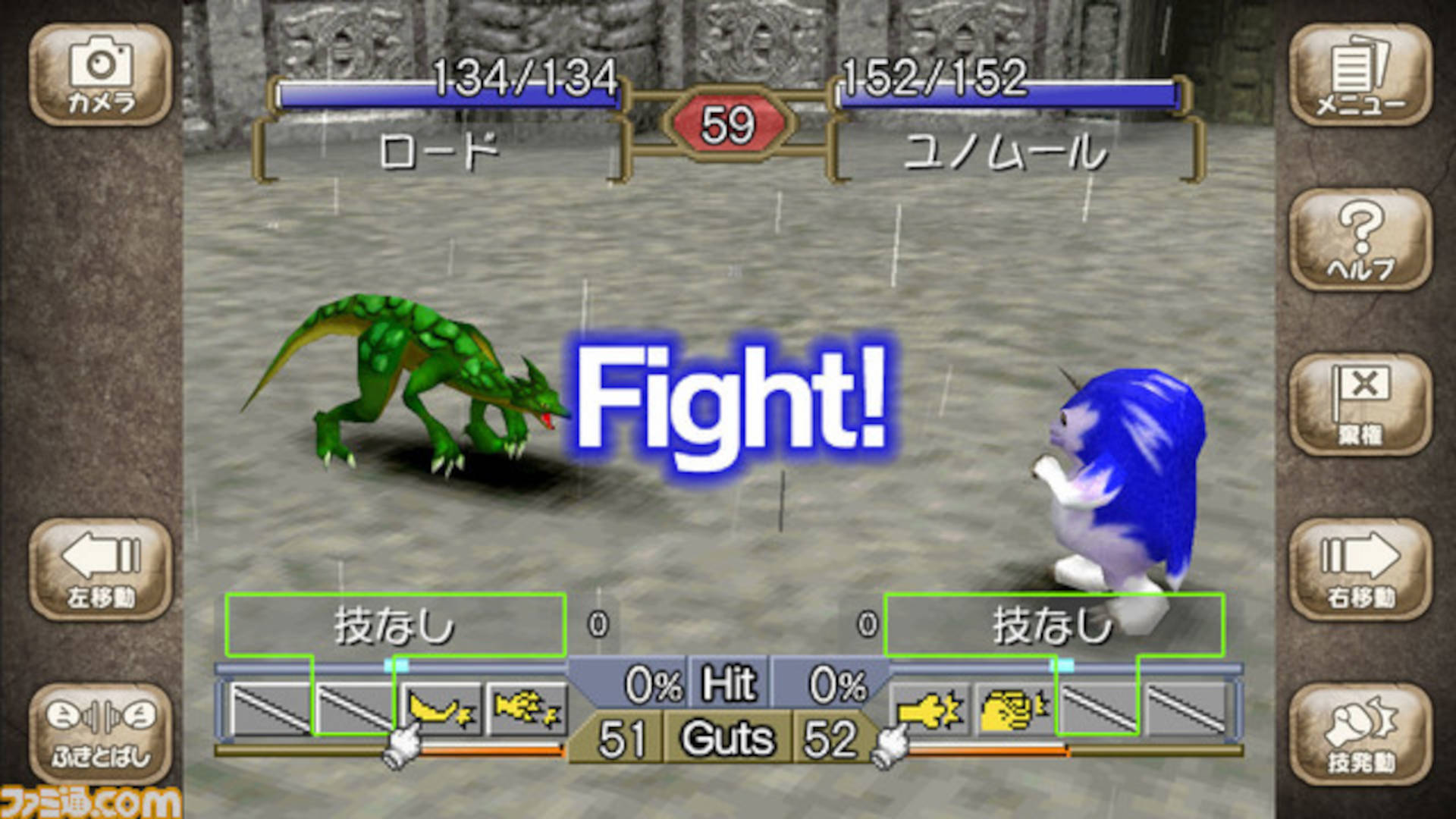
Monster Farm 2, or Monster Rancher 2 depending on where you live, is a PlayStation game originally released in Japan in 1999. The developer, Koei Tecmo Games, has confirmed that its been working on a remaster for the Nintendo Switch, iOS, and Android. We can expect to see the game released sometime in the fall of this year, though it is only coming to Japan at this time.

The best way to describe Monster Farm 2 is a monster fighting game. Gameplay involves breeding and raising the strongest monsters to win tournaments. The more tournaments you win, the more monsters and moves you unlock.

There is no word yet if the classic monster breeding game will make its way to the Western world. However, seeing as the original Monster Farm took the best part of half a year to make its way to the US and EU, we may be in luck soon. The news was released on the official Monster Farm Twitter account earlier today, and its clear fans of the series are excited as they have retweeted the post over 12k times.

Although very little information is available on the Famitsu site, the release does mention that there will be new features added to the game, beyond just a faithful remaster.

If you are interested in Monster Farm 2 and would like to know more, you can check out the official release notes here. If you would like to see the Tweet mentioned above, click here.

Posted on Leave a comment

Sprytile Now Available For Blender 2.8x

Sprytile is a free tile map editor that runs entirely inside Blender, similar in functionality to the recently covered Crocotile 3D.  Over the weekend, Sprytile for the most current Blender 2.8x versions was just released. Details from the Sprytile Itch.io page:

Sorry for the long long long delay, but finally the official release of Sprytile for Blender 2.8 is out!

All of the work porting Blender to 2.8 was handled by Yonji and Ologon, with Ologon taking the work to the finish line.  Ologon has written a guide on the changes to the Blender 2.8 workflow on the forum.

A major change to the workflow is the use of the Sprytile tools tab in the Tools Sidebar. Open the sidebar by pressing the arrow button on the right of the viewport, or pressing the T key.  Another optional workflow change is setting up the pixel viewport. By default, Blender 2.8 will make your textures look darker without this step, but you might want to skip this if you will be using the color correction functionality of Blender.  Sprytile tools are now part of Blender 2.8’s toolbar. To use the ‘Get Normal’ mode, you just need to press ‘N’ on the keyboard while in Build mode.

I’m very grateful to the community for porting Sprytile to Blender 2.8 and continuing to showcase the work they make with Sprytile.

Sprytile is available as a free download here, with the documentation available here.  Be sure to note that many things have changed for Blender 2.8, shown in the guide above, or by watching Sprytile in action in the video below.

[embedded content]

Art GameDev News


<!–

–>