Posted on Leave a comment

You can swing into a new journey with Unravel Two – available today!

You can swing into a new journey with Unravel Two – available today!

When you’re looking for adventure, it helps to see from a different perspective – or two.

Dive into an immersive story filled with energy, exuberance, inspiration, and even monsters. Awaken the world around you and discover an unbreakable bond between friends.

Features

  • Two Yarnys: Control two Yarnys – small creatures made from a single strand of yarn – on your own or with a friend*. Use both Yarnys to solve tricky puzzles, get past daunting obstacles, and escape shadowy enemies.
  • A World of Wonders: The world looks different from a few centimeters off the ground. Navigate landscapes and complex urban environments inspired by real Scandinavian locations.
  • Playful Problem-Solving: Use your yarn as a lasso, build magical bridges, turn everyday objects into catapults, and more. Dangerous environments, electric shocks, hungry birds, and shadowy monsters wait ahead, and you’ll have to use every skill you have to reach your goal.
  • Heartfelt Storytelling: Your job is to chase a mysterious “spark” that two young people dearly need, and your journey will take you deep into their most important memories. Explore the world, build the bond that holds them together, and escape the shadowy creatures that try to stop you.

If you’d like to purchase or learn more about the game, please visit https://www.nintendo.com/games/detail/unravel-two-switch.


Mild Fantasy Violence

Posted on Leave a comment

Unity Distribution Portal In Beta

Earlier at their GDC 2019 keynote, Unity announced the beta release of Unity Distribution Portal, or UDP for short… thank goodness that acronym isn’t taken!  So what exactly is UDP?  Its a combination of a beta package in Unity that integrates with their existing analytics and IAP packages and enables you to submit to the UDP.  The UDP itself is an online portal for managing publishing, IAP and tracking of multiple different online stores around the world. 

Described succinctly as:

Create once, publish everywhere

UDP reduces the engineering complexities associated with publishing to multiple app stores, enables you to distribute and operate games in local markets, and connects you with hundreds of millions of players worldwide through participating app stores.

Currently limited to the Android platform and only a few live app stores ( Catappult and MOO Store), with more coming online soon.  Essentially it allows you to publish to more stores with very little extra effort, all managed and reported in a single interface.  More interesting, is the following question and answer pair from the FAQ:

Does UDP support non-Unity games?

Currently, UDP only supports games made with Unity. However, in the future, UDP will be engine-agnostic. More details on this will be coming soon.

For more details on the Unity Distribution Portal beta visit here.  See it in action in the video below.

[youtube https://www.youtube.com/watch?v=zL6bXslyoAI&w=853&h=480]

GameDev News


Posted on Leave a comment

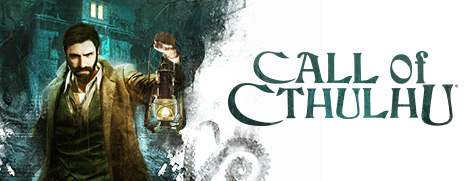
Weekend Deal – Call of Cthulhu®, 33% Off

Save 33% on Call of Cthulhu® as part of this week’s Weekend Deal*!

1924. Private Investigator Pierce is sent to look into the tragic death of the Hawkins family. Plunge into a world of creeping madness and cosmic horror. Cryptic clues, shadowy figures, and pure terror bar your way as you fight to retain your sanity and solve an otherworldly mystery.

*Offer ends Monday at 10AM Pacific Time

Posted on Leave a comment

Interview with Immortal Rogue Developer Kyle Barrett

It’s not often we get to do developer interviews these days, but thanks to the efforts of an interested reader, we’re pleased to be able to share with you a Q&A with Kyle Barrett, solo developer on generation-hopping rogue-like Immortal Rogue (which we recently reviewed). This interview was conducted by Sam Jeffreys, a designer for Feral Interactive who happens to be a fan of PT and now Kyle’s work. Sam is not an official staff writer, but he generously donated his time and his words to bring us this article. (ED)

—————- 

Pocket Tactics: How did you get started in game development?

Kyle Barrett: Well, I think the very first time I made a game I was about 10 and used the Age of Empires 2 scenario editor to make a little RPG for all of my friends to play. From there I started dabbling in GameMaker, the StarCraft editor, Morrowind mods, etc.

For some reason (probably because there was no real game industry where I grew up), I never thought making games could be a career. It wasn’t until I was over halfway through earning a degree in architecture that I had the idea to start sending out game design specs to my favorite companies. Eventually I got my foot in the door at a start-up in the bay area and the rest was history.

Pocket Tactics: Vampires, branching timelines, an elegant one finger control system… What came first, and how did everything fit into place?

Kyle Barrett: It was a combination of a couple separate ideas. One of those original design specs I created to try and get an industry job had this cool (or at least I thought it was cool) matrix that showed how worlds could evolve based on authoritarian factors and technological progress. I always wanted to put that in a game, ideally without a multi-million dollar production budget. I don’t remember where the vampire metaphor came from exactly, but it seemed like a great way to utilize a system with such a long narrative timespan.

The control system comes more from a personal challenge. Since I primarily work in mobile, I like trying to come up with control schemes that can provide dynamic gameplay with minimal touchscreen inputs. While there are pretty decent dual stick control schemes out there, they just don’t feel natural for a platform that doesn’t actually have buttons or joysticks.

Pocket Tactics: How long was the development time?

Kyle Barrett: Three months! I’m kind of proud of that. I knew I had three months where my work obligations weren’t going to be as intense, so I picked a concept I thought I could execute in that time period.

The first month was rapid prototyping and figuring out how the game would work. The second month I spent figuring out the art style and creating assets. The last month was spent importing the assets and polishing. It did take me a fourth month to fully launch the game, but that was because I neglected doing any marketing while I was focused on development.

Pocket Tactics: And what was your dev tool of choice?

Kyle Barrett: I used GameMaker Studio 2. While I mostly use Unity for industry work, GameMaker has always been my go to for rapid iteration and prototyping. It’s come a looong way since the ‘90s, and made a solo project much more feasible.

Pocket Tactics: Immortal Rogue is your second mobile title. What lessons did you learn from Ever Knight?

Kyle Barrett: Pretty much all the stuff that let me make Immortal quickly. How to work with the engine I was using, what animation tools and processes to use, the quirks of publishing on different mobile devices, etc. It probably took me longer to make Ever Knight than Immortal, even though EK is a much simpler game. The best advice I could ever give someone who wants to learn a game development tool is to just try making and publishing a simple project. I learned a ton.

Pocket Tactics: You have a full-time job in the games industry. How do you balance that with being a solo indie dev?

Kyle Barrett: I don’t have kids so that probably helps. But really, I think it’s about creating a habit and setting aside regular time blocks where you can work. For me, a few hours a night and larger chunks on the weekend seemed to work. I had to give up another hobby, but it was totally worth it.

It also helps if your bosses are cool and supportive (which mine totally were). Pro tip: mark down any game you want to make as a ‘previous invention’ when signing a job offer, so you can develop and own that project without making things messy for you or your company.

Pocket Tactics: What are your core design philosophies? What should every one of your projects have?

Kyle Barrett: That’s a tough one. For a personal project, I get excited if it has three things:

  • An enticing player fantasy or story that could stand on its own (like the story of a vampire living through all of history).
  • An addictive/novel core gameplay loop that works even in greybox. If I’m not playing the greybox in my free time then it’s probably not fun enough yet.
  • Systems that tie the first two elements together in a way that they enrich one another. So it’s sort of like a sandwich: Metaphor on top, core gameplay on the bottom, and systems in the middle.
  • Oh, and an art style that’s fun to draw…. So four things.

Pocket Tactics: I love seeing early concepts and prototypes. Is there anything you could share?

Kyle Barrett: The first few weeks went through a ton of changes as I figured out how the gesture controls and visuals would work together. I actually started with Ever Knight sprites. (Oldest to newest from left to right)

immortal knight prototype

Pocket Tactics: Any tips for indie devs on staying the course and keeping focused?

Kyle Barrett: I’m still pretty new to the indie side of things. I think just setting a small, achievable goal and following through is the first step. Also, prioritize! You don’t have to do everything; Find a simple mechanic or idea and build your game around that. Bells and whistles are fine but they don’t make a game fun if the meat isn’t there first.

Pocket Tactics: Why knights?

Kyle Barrett: Because they’re awesome! I was originally thinking the hooded character would be Immortal’s mascot, but I ended up liking how the knight armor looked too much. Also, a shout out to my friend Matt Elser (http://www.elserart.com/) for making the awesome splash art character.

Thanks again to Sam for writing this up for us, and thanks to Kyle for agreeing to be interviewed. 

Posted on Leave a comment

Godot GDC 2019 Keynote That Wasn’t

After doing keynotes for Google, Unity and Unreal, some people have been asking when the Godot keynote is going to be.  The answer is basically never… these things cost millions of dollars and that’s just not compatible with the way Godot’s open source development works.  That doesn’t mean that exciting things haven’t been happening in the land of Godot, some big and some small enough they didn’t merit their own coverage.  So here we are!

Godot 3.1 Was Released

Obviously the big news is, after a year in development, Godot 3.1 became a reality last week!  You can watch our video on the subject here and read the official blog here.  Usability improvements across the entire engine, a GL ES2 renderer, CSG support, optional static typing and much more were added to the engine.

Rust Language Bindings

Want to use the Rust programming language in Godot?  Now you can thanks to this set of GDNative language bindings available on Github.

GDScript Playground

It’s an interactive browser based way to run and test GDScript.  Check it out here.

Battle for Wesnoth Porting to Godot

First teased in a tweet it seems the popular open source turn based strategy game Battle for Wesnoth is being ported from C++ to the Godot Engine.  Link to the Wesnoth 2.0 prototype on Github thanks to Feniks Gaming.

Offline Documentation Builds

Got spotty internet or just want an offline copy of the Godot documentation?  Now you can get it from this nightly build source.  It’s basically the online documentation built for offline use.

[youtube https://www.youtube.com/watch?v=RZ6gCOxcTt4&w=853&h=480]

GameDev News


Posted on Leave a comment

Time to get Crafty!

Time to get Crafty!

Did you know March is National Craft Month? It’s true! Whether you like to cross-stitch or carve wood, this is your time to unleash your inner artisan. If you don’t have time to get to the craft store, though, there are a couple of new Nintendo games that can help you get in the spirit of the season.

Kirby’s Extra Epic Yarn
Kirby’s craftiest adventure gets extra epic in this action-packed title for the Nintendo 3DS family of systems. Kirby uses his yarn body to transform into knitted wonders like tanks and flying saucers. Plus, his new ravel abilities mimic his classic copy abilities, adding something new to every stage of this action-adventure game. Give it a spin today!

Buy now>
Try the demo>

Yoshi’s Crafted World
Jump into a new Yoshi adventure set in a world made of everyday objects like boxes and paper cups! As the always adorable Yoshi, you’ll leap up high, gulp down enemies, and set out on a treasure hunt to find cuddly collectables. This game comes out on March 29, but you can pre-purchase it now or try out the free demo on your Nintendo Switch system.

Pre-purchase now>
Try the demo>

Games Shown:

Posted on Leave a comment

Nintendo Switch and Frito-Lay Variety Packs make snack time a little more super (Mario)

Nintendo Switch and Frito-Lay Variety Packs make snack time a little more super (Mario)

Nintendo is teaming up with Frito-Lay to add superstar characters from some of its hit Nintendo Switch games to the in-store packaging of various Frito-Lay Variety Packs. Starting on March 25 and running through May 19, the spring promotion will include package art featuring the three characters Mario, Luigi and Yoshi from various Nintendo Switch games like New Super Mario Bros. U Deluxe, Super Mario Party, Mario Kart 8 Deluxe, Mario Tennis Aces and Yoshi’s Crafted World. Like Frito-Lay Variety Packs, all of these Nintendo Switch games are fun for families to enjoy together.

Fans who purchase the specially marked Frito-Lay Variety Packs will also have the chance to win a Nintendo Switch system and three Nintendo Switch games selected by Frito-Lay*. Frito-Lay Variety Packs are giving away these Nintendo Switch prize packs every hour between March 25 and May 19, so there are plenty of opportunities to win. Participants just have to look for the unique code on each specially marked package and enter the code at FLVPGameGiveaway.com for a chance to win.

“This partnership with Frito-Lay Variety Packs is another way for us to expand the Nintendo brand and bring it directly to families,” said Doug Bowser, Nintendo of America’s Senior Vice President of Sales and Marketing. “Mario and Frito-Lay Variety Packs are a great fit, as both are loved by people of all ages.”

This year will see a lineup of new Nintendo Switch games, starting with the new platforming adventure Yoshi’s Crafted World on March 29. Other notable upcoming releases include Super Mario Maker 2 in June and major updates to Super Smash Bros. Ultimate. The games featured in the promotion with Frito-Lay Variety Packs like New Super Mario Bros. U Deluxe, Mario Kart 8 Deluxe and Mario Tennis Aces are currently available in stores and digitally in Nintendo eShop on Nintendo Switch. For more information about Nintendo Switch, visit https://www.nintendo.com/switch/.

Remember that Nintendo Switch features parental controls that let adults manage the content their children can access. For more information about other features, visit https://www.nintendo.com/switch/. For more information about Frito-Lay Variety Packs, visit https://www.fritolay.com/.

*NO PURCHASE NECESSARY. Open to legal residents of 50 US/DC, 13+. Void where prohibited. Begins 12:00:00pm CT 3/25/19 & ends 11:59:59pm CT 5/19/19. Limit 3 Code submissions per day. For a free Code, send a 3″ x 5″ card or piece of paper with your full name, address, city, state, zip code, date of birth & email address, to be received by 5/15/19, to: Frito-Lay Variety Packs Game Giveaway Code Request, PO Box 760006, Dept. 882-715, El Paso, TX 88576-0006. Code will be emailed. See Official Rules at FLVPGameGiveaway.com. Sponsor: Frito-Lay, Inc., 7701 Legacy Drive, Plano, TX 75024-4099. Nintendo is not a sponsor, co-sponsor or administrator of this sweepstakes.

Games Shown:

Posted on Leave a comment

Review: Tides of Time

The digital arm of Portal Games has been very quiet over recent years. In fact, it was way back in 2010 when they released their first and still rather brilliant port of strategy board game Neuroshima Hex. Now Portal Games are back with Tides of Time, a micro-card drafting game that follows in the footsteps of Love Letter. However, this time around instead of a multiplayer game of courtly intrigue and bluffing, we have a two-player empire-building face-off, which plays like a simplified version of 7 Wonders.

With a deck of only eighteen cards to work with, players compete through three ages to develop the most prosperous civilisation. At the start of each era, both players are dealt a hand of five cards. These cards represent the various buildings and monuments that can be constructed. Each card will belong to one of five suits, and most of them will also have a point-scoring objective. Players select a single card and drag it into their play area; there are no resource costs to worry about since all buildings are constructed for free. The players will then exchange hands and from then on, it’s rinse and repeat until neither player has any cards left to play.

Tides of Time 1

The monuments that the players managed to construct are then evaluated. Scoring will usually depend on having the most of a particular suit or require you to collect different sets. The Sky Pillars monument, for instance, belongs to the temple suit but scores points for each pair of cards that belong to the garden and library suits. Whereas the Golden Ziggurat is part of the garden suit but scores points if the player who built it has the majority of monuments that belong to the palace suit. Some buildings have special abilities like The Roof of the World, which doubles the value of the player’s most numerous suit. At the end of the first two eras, players must elect one of their buildings as a relic from the past, which means that it will remain in play until the end of the game. They then choose a second building to remove from the game. Finally, each player will draw two new cards and then the next age will commence. The player with the most points at the end of the third era wins.

The first thing that strikes you about Tides of Time is the wonderful graphics. The large cards are adorned with some beautiful and evocative artwork. This is complemented by some eye-pleasing graphics used to depict the buildings when they are placed into the play area. Another nice touch is the way that at the end of each era the monuments crumble into dust. Trails of lights attempt to help you see at a glance which buildings trigger scoring opportunities. However, I didn’t find this feature especially helpful. A better option is to check the icons along the right hand side of the screen, which record all of the cards that you have played along with their respective suits and scoring potentials.

Tides of Time 2

Tides of Time is a simple game and the interface only has to manage the manipulation of a hand of cards. It does this reasonably successfully, although if you do not drag a card directly upwards to the play area, there is the chance that you will actually place a neighbouring card by mistake. All is not lost though since a simple tap of the undo button will take back your last move. I think there is a problem with the screen formatting, as sometimes you cannot see the full image of the cards when they are close to the edge of the screen without carefully dragging them to a more central position. The game also forces you to play out the last round of each era, although you have no choice other than to play your remaining card, this could have been handled automatically. Options are limited; you can play a quick match against one of three AI opponents or take on a human challenger in hot seat mode. I managed to beat the first two AI opponents on my initial attempt, thankfully, the third one put up more of a challenge. At the moment, there are no online options.

It is really only the special power cards that make Tides of Time anything more than a really simple set collection game. You have the high scoring but risky Maze of the Damned, which requires ownership of a card of each of the five different suits – no easy task, even in the third era when you already have two cards already in play. In contrast, The Eye of The North scores points for each suit that you do not have. The Kings Nest doesn’t score any points directly but does allow the owner to win all ties for suits. Whilst The Molehill scores points for each of your suit majorities as long as they consist of just one single card. Unfortunately, even with these welcome nuances, the game still suffers from a lack of variety.

Tides of Time 3

All eighteen cards are going to show up every time you play, indeed you will end up seeing many of the same ones turning up time and again in the space of a single game. By the second turn of each era you will be aware of all of the cards in play and the game begins to feel more like a test of memory than skill. The drafting can also often feel more like a negative way of putting an end to your opponent’s plans rather than actively improving your own position. This can be especially true when one player is trying to preserve an advantage. It can feel like the second leg of a football match in which the team with the advantage is happy to grind out a dour draw.

As a quick playing micro-game this digital version works much better than Love Letter, whose lifeblood is so dependant upon the social interaction between players. I really like how the game handles the advancement through the different eras. Many buildings fall only to rise again, others persevere as relics and some crumble never to be seen again. Deciding which cards to transform into relics and which ones to destroy creates the most interesting decision points. However, the Tides of Time’s lack of variety means that you soon feel like you have seen all that the game has to offer. There is nothing inherently wrong with Tides of Time, it just feels artificially constrained by its microgame pretentions. This lack of substance, alongside the limited options, results in a game more likely to crumble to dust rather than become a lasting landmark.

Posted on Leave a comment

Google Stadia could change the way we use our mobile devices for gaming

By Joe Robinson 20 Mar 2019

It’s perhaps a testament to how the worlds of mobile gaming and traditional gaming are starting to converge that we find ourselves covering a second mainstream GDC 2019 announcement in a 24-hour period. Google have been teasing some kind of big gaming announcement for a few weeks now, and last night they revealed what they’ve been working on – Google Stadia.

The nuts and bolts is that Google want to use their tech – honed over decades of internet shenanigans – to power a cloud-streaming game platform. They’ve essentially declared war on traditional hardware formats; mainly consoles, but high-end PCs will come into the crosshairs as well. I think the thing that summed up their ‘intent’ for me was an analogy they used for describing how link sharing works.

google stadia all

You get sent a link, you click on it, the page loads quickly and seamlessly. They essentially want that to be true for games in general. YouTube videos will have game links on them now, or perhaps a friend or a streamer will share a game link via social media or chat. You click on it, and instantly you’re playing that game without loading, installing or buffering. They boast they’ll be able to do it at the highest quality as well (dependent on Wi-Fi infrastructure).

If you’re passionate about gaming and you’ve got some time to spare (maybe on a lunch break or later this evening), I would recommend giving the full stream a watch – it’s a pretty fascinating vision, at the very least:

[youtube https://www.youtube.com/watch?v=hl-Y1QVhmcM?controls=0]

If you just want a recap or highlights though, here’s the short version:

[youtube https://www.youtube.com/watch?v=vsaenNSjclY?controls=0]

But what does this mean for mobile gaming?

It’s a complicated proposition – I think the question that Stadia poses is more to do with how we use our handheld devices for gaming, rather than ‘mobile gaming’ itself. For those of us lucky enough to possess the wireless infrastructure that ‘optimum’ Stadia will demand, it will be another attempt at engaging with a game streaming/cloud gaming platform, similar to what OnLive tried in the UK half a decade ago. Instead of jumping on to Meteorfall or Castles of Burgundy, you could instead fire up whatever AAA game is currently doing the rounds, and you wouldn’t need a console to do it. Further to that, if you’d been playing that game at home before you left your house, you could pick up exactly where you left off on your tablet or phone. Theoretically, you’d be playing with the exact same visual fidelity as well, with the only real difference being the interface.

But for the rest of us, the App stores and the games that end up there will remain our primary source of games on mobile. Android users I think have the most to be concerned about at the moment – It’s hard to judge the impact Stadia will have on the Google Play store. They’ll be some kind of integration for sure, but whether Google will try and phase it out, or encourage the devs there to use Stadia as an additional thing, only time will tell.  Apple, being a self-contained infinity engine, will probably continue as normal and as long as phones with physical memory still exist I suspect there will always be a demand for mobile games as we know them currently – stored locally on the device, built to the specifications of existing physical hardware.

google stadia

The real question is how will the app store game line-ups be affected: Will less devs make games for Google Play/Apple? Will the currently growing ‘console-games-on-mobile’ trend fall off with those companies switching to Stadia instead? How will this effect the currently popular business models on mobile. At the moment, there’s painfully little information as to how Stadia plans to monetise itself and provide revenue for developers. Is there a fundamental difference for developers and/or users between someone having Crashlands on their phone, or playing Crashlands via the cloud?

At the very least, we could be getting a snazzy new wireless controller out of this initiative. The Stadia controller was also announced during the showcase. It’s a Wi-Fi gamepad that’s apparently able to connect to any device. Whether it can be used for non-Stadia games we’re not sure – current reports indicate the controller hasn’t actually passed the FCC certification process yet, so a lot of its capabilities are still TBC.

The one thing we can say with confidence, however, is that we won’t have long to wait until we find out what all this means. Google Stadia plans to launch this year in 2019, and we’ll be keeping an eye on this as it develops. StadiaTactics confirmed.

Posted on Leave a comment

New indie games bring even more quality and variety to Nintendo Switch in 2019

New indie games bring even more quality and variety to Nintendo Switch in 2019

The Nintendo Switch system has quickly become the go-to platform for indie developers. As more and more top indie developers bring their creations to Nintendo’s console, they continue to deliver high-quality experiences that can be played at home or taken on the go. A new Nindies Showcase video today demonstrated the breadth of the Nintendo Switch indie library and the enthusiasm developers have for the platform. This includes the revelation of the rhythmic action-adventure game Cadence of Hyrule – Crypt of the NecroDancer Featuring the Legend of Zelda from Brace Yourself Games. That’s in addition to announcements from indie houses like Devolver Digital, bringing system-exclusive content like Katana ZERO and My Friend Pedro, and new game reveals like RAD from award-winning studio DOUBLE FINE PRODUCTIONS.

To view the Nindies Showcase video in its entirety, visit https://live.nintendo.com.

“Top indie developers look to Nintendo Switch to showcase their games to a broad audience,” said Steve Singer, Nintendo of America’s Vice President of Publisher and Developer Relations. “The diversity of indie content we discussed today demonstrates how Nintendo Switch players can find quality indie games of nearly any type.”

The games discussed during today’s video include:

  • Cadence of Hyrule – Crypt of the NecroDancer Featuring the Legend of Zelda: In the latest rhythmic action-adventure from Brace Yourself Games, you can enjoy the gameplay of Crypt of the NecroDancer in the setting of The Legend of Zelda series. As Link or Princess Zelda, players explore randomly generated overworld and dungeons on a quest to save Hyrule, and every beat of the 25 remixed Legend of Zelda tunes is a chance to move, attack, defend and more. From modern-looking Lynels to the Hyrulean Soldiers of old, players must master the instinctive movements of each pixel-art enemy and strategically outstep them in rhythmic combat using an arsenal of iconic items from The Legend of Zelda, as well as the spells and weapons from Crypt of the NecroDancer. The game is scheduled to launch this spring.
  • Cuphead: Studio MDHR brings its run-and-gun action game to Nintendo Switch. Inspired by cartoons of the 1930s, the visuals and audio are painstakingly created with the same techniques of the era, such as traditional hand-drawn cel animation, watercolor backgrounds and original jazz recordings. The game launches on Nintendo Switch on April 18.
  • Stranger Things 3: The Game: Play through and delve deeper into the events of Stranger Things 3 in a retro-style adventure game from BonusXP. Explore Hawkins, solve puzzles and team up with a friend in local co-op to battle the emerging evils of The Upside Down as one of twelve playable characters from the hit original series. The game launches on Nintendo Switch on July 4, the same day the third season debuts on Netflix.
  • Red Lantern: Timberline Studios, Inc., challenges players to survive the Alaskan tundra with a team of five sled dogs. The Musher becomes lost while training for the grueling Iditarod race and must fend off bears, resist frostbite and take care of the dogs while navigating the wilderness and trying to return home. The game is coming to Nintendo Switch later this year.
  • RAD: DOUBLE FINE PRODUCTIONS and BANDAI NAMCO ENTERTAINMENT AMERICA INC. present a 3D action rogue-like set in a post-post-apocalyptic world. As a teenage protagonist, players must journey into the Fallow, an ever-changing, procedurally generated wasteland that holds the secrets of the past and answers for the future. Here, radioactive toxins will randomly mutate your character, giving you powerful new abilities that challenge you to constantly adapt your play style. Using these abilities and your trusty bat, you have been tasked with saving humanity’s future by healing the world. The game launches on Nintendo Switch this summer.
  • Katana ZERO: Devolver Digital and askiisoft have created a stylish neo-noir action-platformer featuring breakneck action and instant-death combat. Players take on the role of an assassin, the Dragon, to slash, dash and manipulate time to unravel their past in a beautifully brutal acrobatic display. Players can overcome the opposition however the situation requires, as each level is uniquely designed for countless methods of completion. Deflect gunfire back at foes, dodge oncoming attacks and manipulate enemies and environments with traps and explosives. Leave no survivors. The game launches on Nintendo Switch on April 18, and is available for pre-purchase starting today.
  • Nuclear Throne: Vlambeer’s post-apocalyptic roguelike-like top-down shooter challenges players to fight their way through the wastelands with powerful weaponry, collecting radiation to mutate some new limbs and abilities. The game offers 12 playable characters, seven playable main worlds, 30 ways to mutate characters and more than 120 weapons. The game launches on Nintendo Switch – today!
  • Super Crate Box: Vlambeer’s Super Crate Box is coming to bring back the glory of the golden arcade age, when all that really mattered was getting on that high score list. The Nintendo Switch version will include exclusive two-player co-operative and competitive multiplayer for even more arcade mayhem. Prepare for an arcade delight with tight controls, refreshing game mechanics, cracking retro art and a terribly hip chiptune soundtrack when Super Crate Box launches in April.
  • Vlambeer Arcade with ULTRABUGS: Vlambeer Arcade is a collection of bite-sized games with a growing catalog that starts with ULTRABUGS, a fast-paced, high-score-centric game in which players pilot a ship to fight endless space bugs. The only problem is that those bugs then split up into more space bugs when they’re defeated. By beating boss monsters, players will unlock enemy DNA that they can use to customize their ship. Vlambeer Arcade with ULTRABUGS is coming to Nintendo Switch later this year.
  • My Friend Pedro: Devolver Digital and Deadtoast deliver what is undoubtedly the first game about friendship, imagination and one man’s struggle to obliterate anyone in his path at the behest of a sentient banana. Players unleash a torrent of destruction with an incredible level of control over both their weapons and body. They can twist and turn through the air while aiming both hands at priority threats or lining up a perfect ricochet to drop an unsuspecting gangster from behind. The game launches as a system-exclusive on Nintendo Switch in June.
  • Creature in the Well: Flight School Studio challenges players to this top-down, pinball-inspired hack-and-slash dungeon crawler. Players venture deep into a desert mountain haunted by a desperate Creature to restore power to an ancient facility by charging energy orbs and having them bounce around and ricochet to reactivate dormant machinery. They will uncover and upgrade powerful gear to help them save the city of Mirage from a deadly sandstorm. The game launches on Nintendo Switch this summer.
  • Blaster Master Zero 2: INTI CREATES CO. LTD. sets its sequel months after the events of Blaster Master Zero. Jason and Eve must venture into the depths of space to stop the mutant infection that’s slowly corrupting Eve’s body. Thankfully, stopping mutant outbreaks is Jason’s specialty. The game launches on Nintendo Switch – today!
  • Pine: Kongregate and Twirlbound offer a stirring open-world adventure with beautiful biomes to explore, puzzles to solve and secrets to discover. Players take on the role of Hue, a brave young adult who belongs to the last remaining tribe of humans on the island of Albamare. The island’s factions trade and fight with each other over food and territory, while Hue learns about ways to influence the ecology in search for a new home for the humans. The game launches on Nintendo Switch in August.
  • Bloodroots: Paper Cult delivers ultraviolence in a twisted Western revenge tale with a deranged cast of characters. Betrayed and left for dead, Mr. Wolf is hell-bent on finding his attacker and exacting revenge. Players can choreograph spectacular, bloody combos by making use of everything around them, from hatchets and ladders to … carrots? The game launches on Nintendo Switch this summer.
  • Overland: Finji delivers a new game from Adam Saltsman, the creator of Canabalt. In this turn-based survival game, players take care of a group of travelers on a post-apocalyptic road trip across the United States. Fight off scary creatures, rescue stranded survivors and scavenge for supplies like fuel, first aid kits and weapons. There are consequences for every action. The game launches on Nintendo Switch this fall.
  • Darkwood: Acid Wizard Studio and Crunching Koalas set their survivor horror game in East-Central Europe, in a forest possessed by unknown evil forces that corrupt all the inhabitants of the woods: people, animals and even the plants. Players can get new powers by extracting a strange essence from mutated fauna and flora and injecting it into their bloodstream. The game builds an atmospheric, psychological feeling of tension without the usual horror tricks of jump scares and creaking doors. The game launches on Nintendo Switch in May.
  • Neo Cab: Fellow Traveller and Chance Agency offer an emotional survival game about staying human in a world disrupted by automation. Lina, the last human driver on the neon-drenched streets of Los Ojos, California, interacts with a diverse cast of characters with individual story arcs. Players must balance their income, sustain a positive rating and manage their emotions, as fulfilling Lina’s job as a rideshare driver is the only way they might reunite with her best friend Savy, who’s mysteriously gone missing. The game launches on Nintendo Switch this summer.
  • Swimsanity!: Decoy Games takes a deep dive with this multiplayer underwater shooter with action-packed co-op and versus game modes, all supported by online and local play. The game comes with an ocean of content, with more than 150 challenges across eight game modes. Players can toggle between classic dual-stick controls and motion aiming, whether they’re playing locally or online*. The game launches on Nintendo Switch this summer.

To celebrate indie games (and their creators!), Nintendo is offering discounts of up to 30 percent on select indie games currently available in Nintendo eShop for Nintendo Switch. The sale runs from 10 a.m. PT on March 20 until 8:59 a.m. PT on March 27, and includes standout games like Firewatch from Campo Santo Productions and Yoku’s Island Express from Villa Gorilla and Team 17.

Remember that Nintendo Switch features parental controls that let adults manage the content their children can access. For more information about other features, visit https://www.nintendo.com/switch/.

*Nintendo Switch Online membership (sold separately) and Nintendo Account required for online play. Not available in all countries. Internet access required for online features. Terms apply. nintendo.com/switch-online