Posted on Leave a comment

Creature Runtime Licenses Changed To Apache Open Source

Kestrel Moon just made a change to the licensing of the runtimes powering their Creature 2D animation software.  These runtimes enable you to fully utilize animations authored in Creature in your game engine of choice.  Runtimes exist for the follow game engines and platforms:

The terms of licensing for the runtimes are now as follows:

The Creature Runtimes operate under 2 License types depending on whether you own a Licensed copy of Creature or not.

  • People who own a licensed copy of Creature: You use the standard Creature License included with the runtime code. TLDR: You are free to publish/modify/sell your product with the Creature runtimes without needing to state you are using the runtimes/put the copyright notice in your code/app. If you already have been using the Creature runtimes as a licensed owner of Creature, nothing changes šŸ™‚

  • Everyone else: The runtimes are released under the very permissive Apache License šŸ™‚

Both Licenses allow for private use and do not require any disclosure of your source code.

The previous licensing required developers to have a license to work with a runtime, making integrating Creature runtimes into various game engines and technology impossible if you didn’t already own a license.  This change should make it easier for example for a game programmer to work with the runtimes using art generated by an artist, not requiring an additional license in this scenario.

If you are interested in learning more about Creature, be sure to check out our hands-on video available here and embedded below.

[youtube https://www.youtube.com/watch?v=9uBk5NJJLlo&w=853&h=480]

GameDev News Art


Posted on Leave a comment

Feud Review

Feud has one of the most irreverent app store descriptions that I have ever had the pleasure to read. Not only does it make for a refreshing change from the usual shameless hyperbole but it also provides some potentially life-saving health and safety advice concerning the perils of open manholes. The game itself is a two-player strategy game in which each player takes it in turns to move their pieces around a chequered board with the aim of capturing their opponent’s king. As you may have already guessed, Feud shares many of its sensibilities with the granddaddy of all abstract board games. It follows in the quirky footsteps of the slurred-sounding Chesh and the really rather good Really Bad Chess, by messing with the established rules of Chess to create a fresh new challenge.

A few quick calculations reveal that the board in Feud has only sixteen spaces and that there are a total of sixteen pieces. As a result, the pieces are packed tighter than Tokyoites on a commuter train. This means that the only way to move around the board is to swap places with orthogonally adjacent pieces. The crammed board is viewed from overhead in either a portrait or landscape orientation. Before the game commences, each player will place their king on one of the four spaces in the back row. This will determine the starting positions of all of their other pieces. Each turn a player must first switch the positions of one of their pieces with an adjacent one and they then have the option to carry out a single action. You do not have to take an action but if you fail to take an action for three consecutive turns then you automatically lose the game. The space constraints may mean that there are fewer movement possibilities than in Chess, but these special actions go some way to making up for this.

Feud 1

The King is the most important piece; he doesn’t have a special action and if he dies you lose the game. Wizards can teleport, which allows them to swap places with any other friendly piece, not just adjacent ones. Archers can make a ranged attack in a straight line, either horizontally or vertically. Shields cannot be moved by the opposing player and their positioning will block an archer’s line of sight. Knights get an extra attack and medics can heal up to four adjacent friendly pieces for one health point each. Kings and shields begin the game with four health points, whilst all other pieces have three points. When a piece attacks an enemy it will inflict a single point of damage. Reduce an opposing piece to zero health points and it will be removed from the board.

The combatants are a rather insecure bunch, feeling the need to be adjacent to other friendly pieces in order to function. An isolated piece is therefore useless, and if at any time all of your remaining pieces are isolated, you will lose the game. It may sound simple enough – until you start playing that is. The chain of repercussions that accompany each and every move will soon have you turning mental somersaults. Things get even more fraught as players begin to lose pieces and the board opens up. Now, the problem of leaving your pieces isolated becomes ever more pressing. In a face-to-face match, Feud can really put you in a state of analysis paralysis, which will often leave your opponent twiddling their thumbs and wishing that the developers had included a timer in order to speed things up.

Feud 2

Let us take a look at the aesthetics, and I should make it clear that I am not talking about the apparent dashing good looks of Feud’s developers. I love how the cute buttoned-eyed characters stop blinking when they become isolated. The top-down view means that the pieces are easy to distinguish and the interface is both clean and smooth. However, not being particularly good at thinking ahead, I do miss the opportunity to take back a mistaken or disastrous move. Although games do not take long, I would still have appreciated the option to save a game that is in progress. As it is, returning to the main menu will cancel your current game.

Feud definitely falls into the easy to learn, difficult to master category. The tutorial is nicely presented and will have you ready to play in no time at all. There is a hint system that will recommend a move when you are hopelessly stuck but it would have been nice to have an advanced tutorial to take you through an actual game and explain the thinking behind some of the moves. As it stands, I found myself initially feeling a bit clueless as to what approach to take and how to formulate a strategy. I did quickly discover though that the starting player usually snatches the impetus, giving them a distinct advantage. 

Feud 3

There is a hot seat mode, which allows you to take part in a face-to-face battle, or you can challenge an AI opponent.  The AI has two difficulty levels and three different play styles. An aggressive opponent will throw everything into recklessly pursuing your king, a defensive AI focuses on protecting their own king, whilst a sneaky challenger will try their best to isolate all of your pieces. The easy AI isn’t up to much, but the hard one gave me a decent challenge. I have always been a bit rubbish at these types of games and so a more capable player may have a different story to tell.

There is always the option to find an online opponent and you can play cross-platform against iOS, Android, PC, Mac and Linux users. Currently, online games are limited to asynchronous games with a 24-hour turn deadline. This does mean that games can drag on and the option for a quicker turnaround would be much appreciated. There isn’t a ranking system either, which can lead to some one-sided games that are not much fun for either player. Aside from a few negatives, Feud is a clever and compelling abstract game and better still it is entirely free to play. So you have nothing to lose by giving it a try.

Posted on Leave a comment

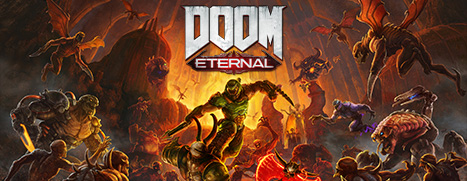
Pre-Purchase Now – DOOM Eternal

DOOM Eternal is Now Available for Pre-Purchase on Steam!

As the DOOM Slayer, you return to find Earth has suffered a demonic invasion. Raze Hell and discover the Slayer’s origins and his enduring mission to rip and tear…until it is done.

Experience the ultimate combination of speed and power as you battle your way across dimensions with the next leap in push-forward, first-person combat.

Posted on Leave a comment

Construct Beta r153

Construct beta r153 has just been released.  Construct is a ā€œcodelessā€ HTML5 based game engine that runs entirely in your browser.  The major feature of this new update is the new ease curve editor which can be used for tweening timelines.  Addition you can now use both local and global variables in scripts in events.

Details from the release notes:

New Features:

  • Custom easing curves to use with timelines

New Additions:

  • Use custom easing curves in with the tween behavior

Changes:

  • Consistently lowercase filenames on export to avoid case-sensitivity issues
  • Also warn on Remote Preview if images over 4096 pixels big are used (previously only warned on export)
  • Animations Editor: Pasting a color into the color inputs of the color palette now changes the alpha to 255 if it was previously 0

Bugs Fixes:

  • Animations Editor: Background of the animation preview dialog was different to the background of the main panel
  • Animations Editor: Content pasted twice when using the rectangle select tool
  • Animations Editor: Possible crash while using the rectangle select tool
  • Animations Editor: Colors not updated properly after pasting into the HEX color input of the Color Palette
  • Tween Behavior: Runtime crash when destroying the instance affected by a tween which had not yet finished playing
  • Attempting to copy in the text editor incorrectly triggered a paste action
  • Disabling a built-in function block could prevent the project running
  • Fix crash closing Find Results or Bookmarks bars (regression in r151)
  • Unintentionally could drag view up and down with touch on iOS (regression in r151)
  • C3 runtime: keep Multiplayer hosts alive even when browser window minimised
  • Event sheet view: preserve trailing newlines in comments
  • Runtime: context menus accidentally blocked on form controls (regression in r152)

Scripting Updates:

  • Asset APIs to load external scripts & WebAssembly modules
  • New ‘Loading external script & WebAssembly’ example
  • Access global variables in event sheets via runtime.globalVars
  • Access local variables in event sheets via localVars in script actions/blocks
  • runtime.setReturnValue() function to make it easier to return script values from event functions
  • Script interfaces for layouts and layers
  • Editor now validates JavaScript code in your project before preview or export, prompting you to fix syntax errors
  • Debugger CPU profiler now separately measures time spent in scripts
  • Added warnings for unused variables, use-before-initalise and assigning to constants

GameDev News


Posted on Leave a comment

Mystic Vale Review

I confess I have been somewhat lax in my boardgame-fanboy duties as of late. We are inundated with all and sundry new releases each year (mostly clustered around the fall conventions) and generally get served more new games than we know what to do with. This inevitably means some worthy releases pass by without enough notice. Mystic Vale is the latest to cross-over from cardboard to the app store(s). The result is a surprisingly punchy lightweight, rapid-fire push-your-luck game, remixing relatively new trends in mechanics (deck-building & customization) with the tried-and-true (set collection, engine building). It is a good game and faithful app, but a little flat and perfunctory as well. Mystic Vale is generally a worthy super-filler, and the digital app gets the job done.

To cleanse the land of corruption, competing tribes of druids graft on ever-more-potent magical allies, animal spirits and the like to turn the tide. Every player starts with an identical deck of cards and takes turns drawing from the land’s energy to fuel more magical improvements. But the tainted land is strong as well and will leave greedy players empty-handed.

mystic vale 1

There’s a Mario Party minigame where the players take turns inflating a comically oversized balloon until it pops, exploding with (again, comedic) force and knocking out contestants one by one until there is only the winner left. The spirit, if not the mechanic, of push-your-luck, is crystallized into this image. Players can calculate the risks and independently decide how far they want to push their luck for a greater reward. Mystic Vale does this with its Spoiled Lands, drawing every turn until three corrupted symbols appear. The player can choose to draw more cards, one by one, increasing their rewards in the process, but also risk busting and ending their turn prematurely with nothing to show for it. Push-your-luck is so satisfying because it breaks a large risk down into delicious increments. It’s difficult to do well, aside from very pure, refined implementations (e.g. Can’t Stop).

To its credit, Mystic Vale make it  one of the central decisions of each turn, and then tasks successful players with spending their mana & spirit symbols to further enhance their decks. Each deck cycles through 20 cards with a top, middle, and bottom region which can each be enhanced with purchases from a common pool of cards. The game’s iconography is crystal-clear, and its elements as stripped-down as can be.

mystic vale 2

In addition to the primary resource, mana, there are four elemental symbols as well as a ā€˜guardian’ subtype with tribal synergy. Most purchases simply enhance a deck’s mana and victory point yield during the harvest, but the bigger swings in ā€˜tech’ improvements come from the vale cards. These are also purchased after the harvest, but instead of using mana, players must have a match of the symbols of the vale. A few give straight-up victory points, but the more interesting offerings give unique effects (bonus mana, avoiding spoilage, wild symbol conversion) to dramatically accelerate the game’s pace.

The game feels aggressively midrange for such a naturalistic-shamanistic setting, for the whole affair is over in under twenty turns (Which passes in no time at all on the app). It ends just as things really start taking off for the players, kinda like with Splendor. It has achieved an amazing balance of brevity and strategy, for players must constantly assess which engine to build and how. Pretty much every card is viable and competitive, some with niches smaller than others. Mana and timing constraints mean that even winning decks often have jury-rigged, rag-tag elements mixed in with the rest.

mystic vale 3

The endgame comes so quickly because the pacing is up to the players. Instead of a set number of turns, the game is scaled around a victory point pool. Once it is completely divvied up amongst players, the game is over. More involved multi-card synergies will generate gonzo points in a single turn, but are they worth the lengthy set-up? Alternatively, is it worth scrimping a few victory points each turn if everyone else is planning for a deferred late game? It’s a simple but elegant change which turns game length into another strategic element to be decided by the dynamic equilibrium generated by the players.

The app makes the art look inorganic and forced, as if the graphical assets were used to recreate the tabletop visual as literally as possible. (They also appear to scale poorly). Functionality and legibility are top-notch. Music and layout are both serviceable, and the app has a touch of whimsy about its loading-screen text, but generally this implementation is a by-the-numbers affair. It is good but not to be oversold, like when the game boasts of its ā€˜card crafting system’. Lastly, Mystic Vale has both an in-game rule reference, a card compendium, as well as the obligatory introductory tutorial series, so props for thoroughness on that front.

mystic vale 4

Now for the bad news. Everything Mystic Vale does well recalls a stronger instance in another game. As an experience or an instruction in game design, it’s masterful. But there are other lightweight games I love more, and other quick-playing games with a little more control or strategy on tap. The game itself couldn’t be further than kitchen-sink, but in terms of gaming niches this is precisely the trap it falls into. Maybe this is the hobbyist curmudgeon in me, but it feels as if Mystic Vale’s strengths do not actually further its appeal.

Mystic Vale is refined and sharp, better than most of its kind, that of a mid-range, easy-to-learn, decently competitive multiplayer deck builder. Its individual components are better represented by other games, and honestly it isn’t really that strategic, but it is extremely well-made and fun. The app is a fairly priced way to experience it, with decent AI and timed multiplayer. Good, but not excellent.

Posted on Leave a comment

Pre-Purchase Now – Cyberpunk 2077

Cyberpunk 2077 is Now Available for Pre-Purchase on Steam!

Cyberpunk 2077 is an open-world, action-adventure story set in Night City, a megalopolis obsessed with power, glamour and body modification. You play as V, a mercenary outlaw going after a one-of-a-kind implant that is the key to immortality. You can customize your character’s cyberware, skillset and playstyle, and explore a vast city where the choices you make shape the story and the world around you.

Posted on Leave a comment

The Weekender: Pierce the Vale Edition

It’s good to be back, hope you all managed to survive with out me. This week I’ve been making a concerted effort to be pro-active with smaller, news-y bits to break-up the Reviews/Reposts/Weekender cycle that nominated much of May, hope you’ve enjoyed the wider variety of topics. Next week we’ve got a gameplay guide, at least one review and then some other goodies in the pipe for later in the month.

It’s E3 next week but I’m not expecting much mobile-specific news unless it’s platform related (like Google Stadia from this morning).

Meanwhile, in mobile gaming…

Out Now

Mystic Vale (iOS & Android) – Full review coming soon!

2019’s conquest of digital board games continue, with Nomad Games bringing another popular table-top experience to mobile. Deck-building is starting to become a crowded genre with Mystic Vale’s Druidic offering, although new twists in the form of card crafting and a ā€˜decay’ system that can end your turn early promise to keep things fresh. Michael’s already on the case with this review, so look to the East next week for our own verdict. The mobile version comes with the Vale of Magic expansion included at no extra cost, although it’s listed as a separate IAP.

[youtube https://www.youtube.com/watch?v=jsvjUY9p0WE?controls=0]

Also on our Radar:

Infectonator 3: Apocalypse (iOS) – The third instalment in a franchise where you play as the zombies trying to destroy the world, this one looks like it could be interesting but early reports suggest it’s quite buggy, so we’re going to wait and see.

Lovecraft’s Untold Stories (iOS) – Lovecraft x Roguelike makes for an interesting, if slightly overdone combination, but the price-tag means this will have to work pretty hard to impress. Take one of five heroes across randomly generated worlds, fighting unspeakable horrors.

SSC 2019 (iOS) – Uprising Games returns with the 2019 version of their free-to-play retro-themed soccer game. Mentioned only because sports releases are so rare, but beware the F2P trappings. New additions include improved AI, Online 2 player matches and a data editor.

Updates

Evolution: The Video Game (iOS & Android) (Review)

While the digital adaptation still doesn’t have async play, the recent update this week now means you do pass and play for up to four players. You rotate the device between players when picking traits but feeding happens simultaneously from multiple edges of the screen. There’s also been some extra optimization work and larger text for tutorials and cards.

Star Traders: Frontiers (iOS & Android) (Review)

Those mad bastards known as the Trese Brothers have updated Star Traders: Frontiers twice this week. The first on added a new Bounty Hunter vignette as well a host of other fixes and clarifications, while the second update added new Steel Song faction modules, a new starting ship that’s great for spying, and some balance tweaks around strike craft.

Auto Chess (iOS & Android)

The beta for the official mobile version of DOTA Auto Chess is well underway, with the app now in the iOS app store under the name Auto Chess: Origins. There’s been an update this week although I’m not 100% sure on the details, but recent big changes include the official introduction of a Season system, a Battle Pass, various Account improvements and optimisations and bug fixes.

Sales

Only a couple of sales of note this week – Ironhide’s sci-fi RTS Iron Marines is down to $2.99 on iOS & Android, while award-winning puzzle game Monument Valley 2 is also $2.99 on iOS.

You may also have spotted that Final Fantasy Tactics: War of the Lion is discounted on all mobile platforms, although the price is not as good as it was during the Black Friday sale last year. Also, playing that game on mobile kinda sucks. Don’t @ Me.

Seen anything else you liked? Played any of the above? Let us know in the comments!

Posted on Leave a comment

Google Stadia will launch this November, but its’ mobile application will be limited

By Joe Robinson 07 Jun 2019

A couple of months ago you may remember I talked about Google’s new gaming initiative, Stadia. Using the power of Google’s infrastructure, the search giant wants to offer a new streaming service that will allow players to access games on any device, provided your internet is good enough.

Last night Google ran their first ā€˜Stadia Connect’ Stream which revealed details on pricing, release date and some technical specs. You can watch it here:

[youtube https://www.youtube.com/watch?v=k-BbW6zAjL0?controls=0]

What was interesting about the Stadia proposition is that it included tablet and mobile devices. With internet infrastructure and device specifications getting better year-by-year, certain demographics of mobile gamers stand to benefit quite a lot from Stadia’s mobile application. If the only extra bit of kit you need is a wireless controller, there’d be few reasons why you wouldn’t fire up, say, Assassins’ Creed: Origins or XCOM 2 on your handheld device as opposed to mobile-specific games like Demon’s Rise 2 or the recently released Mystic Vale. Assuming barriers for entry and performance etc. are the same.

Judging from the recent Stadia info-dump however, the initial mobile usage will be disappointingly limited: While anyone using a tablet device will be able to access Stadia via the Chrome browser, smartphone options aren’t as flexible.

pixel 3a

At launch, only people with a Google Pixel 3 or the recently announced Pixel 3a will be able to access the service via a bespoke Stadia app. This implies that they will be disabling accessing the service via phones on phones, which is a bit odd, but in the same stream Harrison also confirmed that more smartphones will be brought on board in the future.

Still it’s not the end of the world, and there were plenty of other interesting tid-bits to come out of the show. For example, the recommended minimum download speed is 10MBS, which will still allow you to stream in 720p HD. On top of that, there will be a wide range of controllers that Stadia will support, not just their own bespoke controller. For iOS users, this pairs well with the fact that Apple recently announced that iOS 13 (and Apple TVs) will be getting official support for PS4 and Xbox One controllers.

In terms of games, there’s 31 titles confirmed for Stadia’s initial launcher in November. We’ve posted the highlight video below, but you should check out our friends over at PCGamesN for the full breakdown. Highlights include Baldur’s Gate 3 (which was announced during the stream), Football Manager 2020 and Destiny 2:

[youtube https://www.youtube.com/watch?v=nx21mOYsb2k?controls=0]

Some important clarifications: While Stadia will be launching in November, the only way you can get involved is by purchasing the $129 Founder’s Pack. This comes with some goodies and three months’ worth of ā€˜Stadia Pro’, which will be the service’s premium subscription option at $10/Ā£10 a month. The main draws of this subscription is that you can stream games up to 4K/60FPS (internet dependant) and will have access to an as-yet-unconfirmed set of Stadia’s game catalogue for free.

For anyone who doesn’t want to subscribe, ā€˜Stadia Base’ will be rolled out sometime in 2020. With this, you’re limited to streaming at 1080p, and you have to buy any games you want to play individually.

Stadia is raising a lot more questions than it’s answering at the moment, but the mobile potential is still clear. It’s just a shame more phones won’t be supported at launch. Might finally be time to invest in that tablet I’ve been toying with getting.