Posted on Leave a comment

Autodesk Join Khronos Group

Today, the Khronos group announced that Autodesk has joined the consortium, specifically the 3D Formats Working Group and the 3D Commerce Exploratory Group.  The Khronos Group is the regulatory body guiding such efforts as OpenGL, Vulkan, OpenCL and of course glTF.  This is a long winded way of saying that Autodesk, makers of popular 3D applications such as 3DSMax and Maya as well as industry standard AutoCAD, are moving to support the open standard glTF.

Details from the Khronos website:

Big news! 3D software developer, Autodesk has joined the Khronos Group. Autodesk is an industry-leading provider of 3D design, engineering and entertainment software, that joined the 3D Formats Working Group to support the Khronos glTF file format and the 3D Commerce Exploratory Group, a group of companies exploring standards and guidelines for the production and distribution of real-time 3D representations of products. glTF is an open standard for efficient and reliable encapsulation and transmission of 3D assets and scenes, including PBR materials and animations.

Autodesk is committed to accelerating the adoption of open standards as industry-wide collaboration is critical to improving our customers’ workflows and advancing computer graphics technology,” said Henrik Edstrom, senior software architect, Graphics Technology at Autodesk. “As the need for interoperability and consistency between applications and across platforms becomes increasingly important, we see great value in open data formats like glTF. There is also more demand for richer experiences on web, mobile, and XR platforms, and new opportunities in areas such as general compute and real-time ray tracing. We’re excited to be part of the Khronos group and the evolution of computer graphics.

Further support for the open and real-time friendly glTF format is a step forward in interoperability between game engines and DCC tools and away from proprietary and complicated formats such as Autodesk’s own Filmbox (FBX) format, or that of prior overly complicated open standards such as COLLADA (DAE).

Interestingly, there was no mention of MAX, Maya or games in general in the entire article, arguably the biggest sector impacted by this announcement.

GameDev News


Posted on Leave a comment

Raiders of the North Sea Will Burn Lindisfarne Next Week

By Joe Robinson 24 Jul 2019

You may remember earlier in the year we reported that Dire Wolf Digital were working on a fair few digital boardgame ports, including everything from Mage Knight to Wings of Glory. Raiders of the North Sea by designer Shem Phillips (Garphill Games) was one game mentioned, and we’re very excited to learn that it’ll be landing on our mobile shores as soon as next Tuesday.

There’s an official game page you can check out, as well as some teaser footage:

[youtube https://www.youtube.com/watch?v=YoKjsticxQ4?controls=0]

Raiders of the North Sea is actually the second game in a trilogy themed on the Viking-age, with Raiders representing Scandinavian raiding activities for much of the 8th & 9th Centuries. It’s essentially a worker placement game, with you needing to slowly build up your resources and crew cards so you can tackle bigger and better challenges for victory points; the person with the most being crowned the winner. It’s a four player exercise (an expansion for the physical game did bring it up to five, so maybe we’ll see that at some point), and multiplayer will be both live and asynchronous, as well as featuring cross-platform play between iOS, Android PC and Switch.

It looks like there’ll be plenty to keep you busy outside of the main gamemode as well:

  • Turn-Based Strategy lets you play at your own pace!
  • Learn the Oars in a full tutorial that teaches you the strategy of the game!
  • Explore the North Sea in a 10-game campaign!
  • Lead Your People in single-player games against AI opponents!
  • Rise to Greatness in multiplayer battles!

Dire Wolf obviously will have the other games mentioned in the original story to contend with, but you can also add another potential project to the list – Architects of the West Kingdom. This is the first entry in a follow-up series of games by the same designer, and in replies to their tweet about Raider’s release date they seem to some-what confirm there may be scope for them to work on Garphill’latest creation:

Personally, I’d much rather they tackle Explorers of the North Sea, the third game in the North Sea Trilogy, but to be honest Mr. Phillips create such good products that so long as he’s getting love and exposure, I don’t mind what’s being worked on.

We’re working on getting review code as we speak, so hopefully our review will be ready at launch.

Posted on Leave a comment

Nocked! True Tales of Robin Hood Review

There is no canonical version of Robin Hood. The earliest printed tales we have date from the 15th century, but it was an oral tradition much earlier. And it seems he wasn’t always the jolly socialist we know and love. These first stories feature many well-known names, but a violent Robin who is more interested in regaining his lands than giving to the poor.

So it’s fitting that the best part of Nocked! True Tales of Robin Hood, a text and strategy hybrid game about his adventures in Sherwood forest, is how you can shape Robin as you like. Even the gender and love interests of this Robin are yours to make your own. Beyond that, you can fashion Robin’s morality from classic outlaw to a far crueller thief.

You can make Robin a wronged nobleman or a champion of the peasantry. They can be a practical champion or one who dabbles in monsters and mysticism. 

nocked 1

Choosing to add supernatural elements to this much-loved fairy-tale is a controversial choice. And it’s something any player has to buy into full-heartedly because it’s everywhere. On the whole, it works, adding a lot of extra choices and colour to the classic stories, as well as allowing the occasional mood change. An early encounter with a ghostly knight on a hill was a welcome touch of horror amid the pageantry. But as the story moves on, it becomes too frequent, becoming everyday and pedestrian when it should be mystical and exciting.

As far as the core characters of the legends go, though, they’re all here and bought to life in vivid colour. Some, like Marian, you’ll meet close to the beginning. Others don’t turn up until you’ve got a good way into the story. The drip-feed helps build the anticipation for big entrances. Bumping into well-known names, like Little John, wielding his staff atop a river crossing, feel like punch-the-air moments.

nocked 2

Of course, none of this would work without some quality writing, and here Nocked! delivers in droves. Descriptions make a great job of setting the scene and drawing characters, who advance in complexity alongside the story. Fantastic art and music help draw you deep into Sherwood. Yet for all that, it’s well-edited and restrained as a good gamebook should be. You’re never too far from making important decisions instead of getting bogged down in reams of text.

Indeed, the writing is so good it does a great job of supporting those decisions. Often, text adventures like this are complete crapshoots where there’s almost nothing to go on other than blind instinct. Nocked!, by contrast, telegraphs potential consequences with great skill, dropping hints to use when choosing your path. You can shape Robin however you like, but when the chips are down it can pay to re-read the passages before a decision.

nocked 3

Some rudimentary strategy elements add depth to your text-based decisions. Early on this consists entirely of resource management. Later you’ll be able to use those resources to make more long term decisions as you build a base of operations deep in Sherwood forest. Some decision options, often the more desirable choices, come with a resource cost which is clearly marked in-game. Where it gets more interesting though is in resource allocation at pivotal moments. 

Say you’re in a battle against a group of fearsome bandits. Nocked! neither leaves it all to text or numbers but a mixture of the two. You’ll get to direct the major characters in the scene and allocate your pool of Merry Men to attack, defence or other operations. These choices can have major consequences for how the story plays out. 

nocked 4

Yet they actually feel less strategic than making text decisions. The numbers are clear and visible whenever you need them. But the outcome of spending or allocating them to different options doesn’t carry the same sense of hidden hints. This creates an odd contrast, where the subjective decisions feel weightier than what should be objective ones. Nocked! uses numbers creatively, adding timers for tension on top of stats and resources. But while they add colour, they don’t offer any extra sense of control.

Nocked! True Tales of Robin Hood is not a short game, but the many faces you can give to Robin give it plenty of replay value. A bigger question is how many players will want to. This is no Six Ages, with a seamless blend of story and tactics. Rather it’s a top-quality gamebook which throws a few numbers around to add a vague sense of strategy. Fans of the former genre will lap it up; fans of the latter should approach with a bit more caution.

Nocked! was originally released on iOS in 2017, but it made the jump over to Steam last week.

Posted on Leave a comment

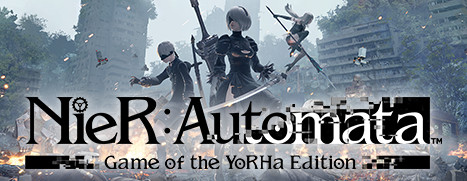
Midweek Madness – NieR:Automata™ Game of the YoRHa Edition, 33% Off

Save 33% on NieR:Automata™ Game of the YoRHa Edition during this week’s Midweek Madness!

Humanity has been driven from the Earth by mechanical beings from another world. In a final effort to take back the planet, the human resistance sends a force of android soldiers to destroy the invaders. Now, a war between machines and androids rages on… A war that could soon unveil a long-forgotten truth of the world.

The NieR:Automata™ Game of the YoRHa Edition includes the game itself and comes packed with DLC and bonus content for the full experience of the award-winning post-apocalyptic action RPG.

Posted on Leave a comment

Ubisoft Joins Blender Foundation

Ubisoft, or more specifically Ubisoft Animation Studio, has just joined the Blender Foundation as a gold sponsor.  The Blender Foundation Development Fund is a way for individuals and corporations to contribute financially to the development of Blender.  Additionally, UAS will be adopting Blender 2.80 for future animation projects.

Details from the Blender news:

Today Ubisoft announced that they will join the Blender Foundation’s Development Fund as a corporate Gold member. Not only will Ubisoft help funding online support for Blender developers, Ubisoft Animation Studio – a department of Ubisoft Film and Television – will also use Blender for their productions and assign developers to contribute to Blender’s open source projects.

Pierrot Jacquet, Head of Production at Ubisoft Animation Studio says “Blender was for us an obvious choice: Its strong and engaged community paired up with the vision carried by the Blender Foundation makes it one of the most creative DCC of the market.”

“Good news keeps coming” says Blender founder and chairman Ton Roosendaal, “it’s such a miracle to witness the industry jumping on board with us! I’ve always admired Ubisoft, as one of the leading games and media producers in the world. I look forward to work with them and help them finding their ways as a contributor to our open source projects on blender.org.“

As well as from Ubisoft:

For those that may not know, Blender has been around for quite some time as open-source animation software. Why has Ubisoft chosen now to become a Corporate Gold Member?

PJ: We believe that Blender 2.8, which will be released in the coming days, is a game-changer for the CGI industry. Blender has been on Ubisoft’s radar for a long time already, and in the past year, more and more of our artists have shown an interest in using it in production. The growth of our internal Blender community, as well as the innovations brought by 2.8 – e.g. a revamped UX, Grease Pencil, EEVEE real-time rendering – convinced us that this was the right time to bring support to our artists and productions that would like to add Blender to their toolkit. What better way to support that switch than donating to the Blender Foundation, so we can help Blender to continue to grow?

How does working with open-source tools balance out with in-house developed tools?

PJ: At Ubisoft Animation Studio, we will always have very specific needs, and in-house development is the most efficient way to serve these.

On the other hand, when we had our own DCC, we had to spend a significant amount of time to maintain and improve the core of the software; this was less time we could spend innovating. Working with open source solutions like Blender offers us more flexibility and frees some resources to focus on research and exploration of new ways and tools to create animated shows.

Our discussions with the Blender Foundation have shown us that our goals are aligned, making the open source collaboration the obvious choice.

The above is only a portion of the complete Ubisoft interview about their plans for using Blender and open source in the future.  If you are interested in supporting Blender, be sure to check out details on the Corporate Developer Fund available here or here (PDF).

[youtube https://www.youtube.com/watch?v=oJCCOZGH-Ns&w=853&h=480]

GameDev News


Posted on Leave a comment

Santorini Review

Santorini is an incredible abstract strategy game. Yes, it rehashes the old truism ‘easy to learn, hard to master’ as its tagline, and its artstyle is rife with chibi-style Greco-Roman mythical figures, but trust me, every part of this syncretic approach works. Abstracts have a habit of punching well above their weight, and this one will twist your brain in knots. On a 5×5 grid, players take turns moving figures and placing buildings, step by step, the iconic ivory-and-azur builds of the island Santorini. It is a skillful game with a rich, cutesy presentation. 

The core ruleset is wicked simple, but also stays true to abstraction as a genre by offering a robust challenge. Santorini’s masterstroke is to offer an additional layer that gives each player a unique power which breaks the normal scheme of things. Gaia has extra pieces for example, and Artemis can move twice. The game is satisfying even in its powerless, vanilla form, so mixing in these variations makes for a truly infinite challenge. In this, it reminds me of Cosmic Encounter as much as Chess. Both are helter-skelter in its variety, regimental in core procedure. Each turn a piece must move (either adjacently or orthogonally) and then build nearby. A piece can move at most one step up but can ‘jump’ any steps down. The game ends when one player advances their piece to the third level from a lower level. It can also, more rarely, end because the other player cannot make a legal move with either of their pieces. That’s the gist of it, barring certain edge-cases and power interactions.

santorini 2

I had forgotten how rusty I’d become and upon firing up the app for the first time I proceeded to lose to the temptingly-named ‘novice’ AI. A few times. This game has teeth, folks, and its bots will trounce the unwary. Re-learning good play was like revisiting Chess, or perhaps Cinco Paus. Certain patterns and rules of thumb emerge. The center is vitally important, one generally seeks the upper ground to gain the upper hand, and initial placements are almost never around the periphery of the board. It’s difficult to generalize beyond this, but after just a few thoughtful short play sessions, Santorini creates something like a flow state: pure challenge, effortless concentration. Can’t say I’m a grandmaster or that these bouts of time spent were filled with earth-shattering insights, but I can vouch that the flow means it’s an inviting game to lose yourself in.

It’s also an inviting game to learn. The system and rules are so simple as to appear plain, indeed many people bounce off abstracts because they seem ‘dull’, but Santorini has plenty of spirit and style. It’s a good game for kids to pick up, because it has a low barrier to entry and some whimsy to its presentation. Said whimsy belies an absolutely ironclad, zero-variance mental slugfest. ‘For kids’ means the highest praise, cool enough to attract fickle attention but clever enough to hold up over ages. There’s a metagame and deeper level of nuance behind power matchups, but the standard ruleset is extremely refined and punishing. The game has opted for a series of short videos to illustrate bite-sized examples of the game. There’s a mother-lode one for how to play, and a bunch of spin-offs which each explain a specific character’s power. The game also has really clean-cut iconography, with suggestive visual icons for a power above the ruletext and an eminently readable board. The color saturation and architecturally distinct levels make parsing the field at a glance a breeze. So, yeah, it’s polished.

santorini 3

It also has a decent online multiplayer, though here some features are lacking. You find matches either through random pair-ups, or by invitation only with a code. There is an ELO-based ranking system but no official ranked mode. Last but not least, all online multiplayer uses a 45 second turn timer. Usually that’s enough to speed things along without undue pressure, but one would hope that exceptions for particularly vexing turns were possible. 

The single player ‘Odyssey’ mode is very fun, structured as a series of God-specific challenges with optional trophies to unlock. Your playstyle and strategic headspace probably has favorite gods and least favorite foes, so if nothing else, Odyssey is a nice way to sample the field. It’s kinda like Splendor’s challenge mode, creating artificial constraints the player has to solve creatively. The game isn’t drowning in content but it is dripping with replayability. Do note that more than a few of the gods are premium DLC, and that their respective parts of ‘Odyssey’ are also locked.

santorini 4

Here at Pocket Tactics, we’re deeply fond of our board game adaptations. Usually they’re a long time coming, and when they arrive they breathe new life into an older, august title. Well, even among these, Santorini is special. For one, its history stretches back a little further than most. It had pretty much become an obscure collector’s item, praised but unknown, from its 2004 self-published version until its 2016 Kickstarter gave it a new art style and high production values, along with widespread, cost-efficient distribution. The game has always been very good, only lately to have been given the just distinction of becoming well-known. It’s even better than most other adaptations, partially because the game is simple, so plenty of attention has been given to bells-and-whistles. There are sophisticated animations, unique effects for each god power, and a full-throated soundtrack. 

Santorini is a picturesque dream of an island, and the game with its namesake is as good as it gets. It marries perfectly two distinct brands of appeal, the wildly imaginative to the coldly analytical. Enough beauty and wit are in this one to keep Santorini on a gamer’s homepage and daily rotation for a good while. Great for abstract die-hards, excellent for those just getting their toes wet. The DLC pricing is a smidge high, and the lack of asynchronous multiplayer a little disheartening, but these are trifling drawbacks to a paragon of what abstract board games can be.

santorini 5

Posted on Leave a comment

libGDX 1.9.10 Released

The cross platform open source Java based game framework libGDX just released version 1.9.10.  If you are interested in learning libGDX we have a comprehensive tutorial series available here and a video series available here.  While the tutorials are a few years old, libGDX is a mature framework that has stayed relatively stable over time, so they should still be perfectly valid.  This release updates several of the dependencies to newer versions as well as an update to the Gradle build system.

Highlight details of the release include:

  • GWT update to 2.8.2
  • MobiVM release 2.3.7
  • Lwjgl 3.2.1
  • Lots of QOL and bug fixes for GWT backend
  • Better iOS backend customization
  • PixmapPacker features like NinePatch and whitespace stripping
  • InstancedRendering support via Mesh and InstanceBufferObjects
  • SCENE2D (Standard tweaks and improvements across the board)
  • Gradle updates to latest

Full release notes and details are available here.

GameDev News


Posted on Leave a comment

Machinations–Game Design Tool

Machinations.io is a fairly rare breed, a tool dedicated to game design.  Currently in a free beta, Machinations is a browser based tool for designing and simulating mechanics for gameplay.

Descriptions for the Machinations.io website FAQ:

Machinations.io is a browser-based platform to design, balance and simulate game systems. It allows you to map any game system in an interactive diagram, set parameters that define elements and the relationship between them, and visualise the way in which these systems work. Based on that, you can simulate different outcomes, plot results and balance your game economy.

If you are familiar with diagramming software like Visio or have used a mind mapping application, you have a decent understanding of Machinations.  Machinations is however one of those tools that is easier to understand when seen in action, so I would recommend watching the video below.

[youtube https://www.youtube.com/watch?v=7kR5VHh2yjo&w=853&h=480]

GameDev News Design


Posted on Leave a comment

The Weekender: Eye of the Beholder 2 Edition

So I’ve been trying out The Mighty Quest for Epic Loot past couple of weeks. Fun Fact: This game originally launched in 2015 on PC as some weird blend of loot-tastic action/RPG and a Dungeon Master type deal as players built their own Castles/Dungeons for players to raid for said loot. It didn’t last that long, closing down shy of two years after launch. In January 2017 it came back on mobile, soft launched in only a few territories. Whatever they were testing seems to have worked because it released world-wide in full the other week. 

The problem is, it’s now just one Red Hot(TM) Free-to-Play gacha mess. Energy gating how long you can play in one go, chests that you can unlock by spending keys, which can be bought for money. Hey, want to double the loot you got from this chest? Watch an add! Can’t be bothered to play? From Level-5 there’s an ‘Auto’ mod, and you can even buy ‘Instant Win’ tickets that by-pass playing levels out entirely. I mean look at this non-sense:

epic loot

The worst thing is, they’ve gotten rid of the Castle building elements, which I personally think was the most interesting part about it, but what do I know? Here I am, playing it anyway… It’s an incredibly pretty game. Like, I really dig the production values that have gone into designing the character models and levels and I’m not going to lie, I’ve taken more-than-appropriate satisfaction from putting different pieces of bad-ass gear to my dude. 

Tl;dr – Don’t play Might Quest for Epic Loot, you will probably end up hating yourself (while looking like a baws).

Meanwhile, in the world of mobile gaming… 

Out Now

Beholder 2 (iOS Universal) – Full review coming soon!

If this had already been announced, I must have missed the memo as I was not expecting to see Beholder 2 on the release docket this week. We reviewed the first game back in 2017 and while it had some interesting ideas in terms of the choices and trade-offs, it was too easy to succumb to ‘efficiency’ rather than trying to deal with morality. Beholder 2 seems to be a rather expanded affair, with your character a fully-fledged member of the Ministry of Security. You must work your way up the career ladder, spying on your co-workers and praising the leader at every turn. It’s only on iOS at the moment but the first game made it do Android eventually, so it’s hopefully just a matter of time.

[youtube https://www.youtube.com/watch?v=VxeSZ-M8ThU?controls=0]

Fluxx Digital (iOS Universal) – Re-Review Coming soon!

This is technically a ‘re-release’ rather than a new release, but you’ll remember the other week we reported that Playdek has decided to revive their digital adaptation of Fluxx from the dead. Originally released in 2012, it was lost in the Appocalypse a couple of years ago – now it’s back! This is a card game for 2-4 players where the rules and objectives can change at any moment. It’s chaotic and pretty unique, as card games goes.

We do have a review buried in the site archives, but it hasn’t aged well so I’ve got Michael on the case to re-review it for us, so watch this space. Also note – if you bought the game originally between 2012 – 2017, so long as you still have access to the iTunes account you bought it on, you’ll be able to re-download it on your modern iOS devices without have to re-purchase the game. The originally release was never on Android as far as we know, and we don’t know if there are plans to bring it to Google Play anytime soon.

Fluxx ios

Also released this week  of note was Cosmic Frontline AR, which we reviewed yesterday (it’s not very good, unfortunately) and Healer’s Quest: Pocket Wand (Android), which at first glance is a strategy RPG in the style of Final Fantasy, except it’s also got comedic themes woven into its DNA. It seems a little generic on paper, but we’re wondering if the light-hearted presentation makes it stand out.

Finally, for the more aesthetic among you, the developers behind 2013’s iconic Journey have released a new game this week. Sky: Children of the Light is a free exploration/adventure game where you can fly around, explore and go on adventures with other players.

Updates

A few update of note this week, so let’s run through them…

Chess Rush

Tencent’s version of Auto Chess received an update this week, which along with the usual tweaking of pieces and new rewards/content drops, also included a co-op mode. I’ve yet to test it out, but it sounds intriguing.

Santorini

The digital version of Santorini has had a few updates since launch. Two this week fixed a few bugs as well adding in an easy share feature for private matches, along with a discount for God of the Week promos. If you’re wondering, our review will be dropping on Monday – sorry for the delay!

Harry Potter: Wizards Unite

The first official patch since the end of June, this week’s update offers a few quality of life teaks, such as making the Exstimulo potions a bit more effective, and showing how much Spell Energy you have left in more obvious places. You can also change your code name in the settings, if you want, but only once.

Star Traders: Frontiers

In this week’s episode of the Star Traders: Frontiers Update Show, the latest update adds a new ship, new salvage, replaces the Pirate template as well as a few others goodies that keep this game ticking.

Sales

On the sales front, here’s what we’ve got:

Seen anything else you liked? Played any of the above? Let us know in the comments!