What were you doing in 1997? Take yourself back. We can tell you what we were doing… playing instant RTS classic, Age of Empires! 25 years ago, with a distinctive “Rogan?” the first villager was born and the empire began. The game that began it all is having a big birthday and we’re not going to let that milestone go unmarked. From failed boar lures to the most impressive wonder victories, there’s a lot to celebrate!
Today we’re thrilled to announce that on October 25, we’ll be celebrating 25 years of Age of Empires in a big way. Join us live from a special location as we share our Anniversary Broadcast featuring announcements, interviews with the team and some surprises. Of course, we want to maintain an air of mystery so we won’t tell you exactly what we have garrisoned in our Town Center, but we promise there’ll be something for everyone! Tune in October 25 at 10am PT on the following channels to take part:
And for our fans in China, we will be streaming the celebration the following day on HuyaTV, DouyuTV, and Bilibili.
That’s not all that we have to share today though. October 25 will be a big day for the franchise as we are also releasing Age of Empires IV: Anniversary Edition on Steam and Microsoft Store! This new version of the game will include the base game, all updates released thus far and the Anniversary Update, featuring our two new civilizations, the Ottomans and the Malians. Existing Age of Empires IV owners will get the Anniversary Update for free — including the Ottomans and Malians, new mastery challenges, fresh achievements, eight new maps and two new biomes to explore and conquer. We’ll also be kicking off Season Three, adding Ranked Team Games, improving naval balance and introducing waypoint markers. Season Three has some specially themed rewards, so get involved to see how you can join the party. One year on from launch, there’s never been a better time to get started, come back to see what’s new or push forward your play in new ways.
The Age of Empires IV Anniversary Update on October 25 will also add eleven languages to the game! Players will now be able to experience Age of Empires IV in Hindi, Dutch, Danish, Swedish, Czech, Norwegian, Greek, Hungarian, Polish, Finnish, and Portuguese (Portugal) in addition to the languages we launched with.
Age of Empires II: Definitive Edition and III: Definitive Edition will also join the anniversary soiree with in-game challenges and exclusive rewards. Stay tuned to official channels for more information on these.
The end of the week will culminate in the finals of Red Bull’s Wololo: Legacy tournament, the biggest Age of Empires competitive event of all time! Head to the event website for all the latest information and be sure to watch as the world’s top players come together to battle it out live from Heidelberg Castle in Germany.
We’re so proud of the past 25 years and are thankful for you, our players, who have kept our games alive and thriving. We’re looking forward to celebrating with you soon. Join the conversation on social media with #AoE25 and ensure you’re following our official channels to be sure you don’t miss anything.
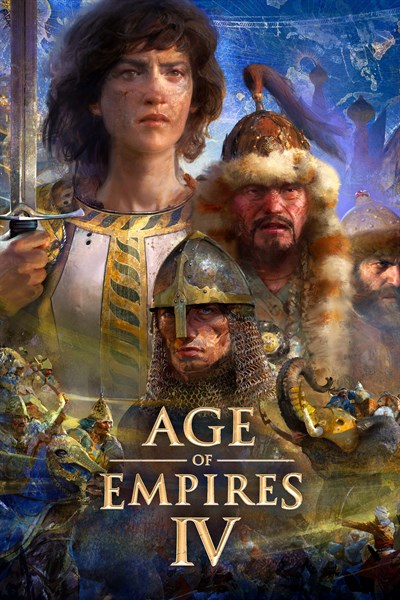
One of the most beloved real-time strategy games returns to glory with Age of Empires IV, putting you at the center of epic historical battles that shaped the world. Featuring both familiar and innovative new ways to expand your empire in vast landscapes with stunning 4K visual fidelity, Age of Empires IV brings an evolved real-time strategy game to a new generation. Return to History
The past is prologue as you are immersed in a rich historical setting of 8 diverse civilizations across the world from the English to the Chinese to the Delhi Sultanate in your quest for victory. Build cities, manage resources, and lead your troops to battle on land and at sea in 4 distinct campaigns with 35 missions that span across 500 years of history from the Dark Ages up to the Renaissance. Choose Your Path to Greatness with Historical Figures
Live the adventures of Joan of Arc in her quest to defeat the English, or command mighty Mongol troops as Genghis Khan in his conquest across Asia. The choice is yours – and every decision you make will determine the outcome of history. Customize Your Game with Mods (Beta)
Chart your own course with powerful creator tools in the latest beta release of Mod Editor. Sculpt your own skirmish and multiplayer maps, craft unique mission scenarios, forge data driven tuning packs and envision new modes of play for Age of Empires IV. Challenge the World
Jump online to compete, cooperate or spectate with up to 7 of your friends in PVP and PVE multiplayer modes. An Age for All Players
Age of Empires IV is an inviting experience for new players with a tutorial system that teaches the essence of real-time strategy and a Campaign Story Mode designed for first time players to help achieve easy setup and success, yet is challenging enough for veteran players with new game mechanics, evolved strategies, and combat techniques.
AI is transforming industries by helping organizations in modernizing business processes and accelerating development. While global AI software revenue is forecasted to reach $62.5 billion in 2022, a 21.3 percent increase from 2021 (Gartner®),1 a common challenge is moving from experimentation to making AI part of standard operations.
Microsoft is deeply invested in AI solutions, engaging highly experienced researchers, data scientists, and thought leaders. Our goal is to help organizations move from reactive to proactive decision-making and bring the power of Microsoft AI to business outcomes while improving efficiency of operations and helping people be more productive.
Microsoft’s pragmatic approach to solving real-world problems with AI, built on a foundation of responsible AI principles, empowers businesses to start implementing today. AI is core to the value we deliver and is inherently infused in all our industry clouds. Here, we share recent examples of new AI solutions we have delivered as part of Microsoft Cloud for Healthcare and Microsoft Cloud for Financial Services as well as give a preview of capabilities we are developing for our Microsoft Cloud for Retail customers and partners.
Healthcare: Reduce missed appointments
The annual cost of missed appointments in the healthcare industry is more than $150 billion in the U.S. alone.2 Missed appointments not only lead to a decline in patients’ health, but the economic effects of patient no shows significantly affect clinic operations and fixed cost calculations, resulting in overstaffing and unscheduled downtime, ultimately leaving healthcare providers struggling with everyday operations. This area of concern is an opportunity to improve outcomes for both providers and patients. At a time of rising demand for healthcare but funding shortfalls, the use of AI and machine learning promise much-needed efficiencies in healthcare, while maintaining or even improving the quality of patient care. These areas of concern present an opportunity to improve outcomes for both providers and patients.
Missed appointments prediction is a fully integrated AI solution available in Microsoft Cloud for Healthcare. The model is easily deployable and can be trained within just two hours, leaving the healthcare provider ready to use the solution within just one day. This offering benefits both clinicians and patients. With a user-friendly and familiar interface, missed appointments prediction empowers office staff and clinicians to predict patient no-shows without data science training or staffing. Patients in turn have peace of mind knowing their physician’s office is prioritizing appointments that work best for them, building trust and ensuring better patient-centric care.
The Microsoft Cloud for Healthcare missed appointment model uses Microsoft Dynamics 365 Customer Insights and is integrated in unified patient view to enable an out of box experience for the users. It can be shipped as a standalone model and potentially be integrated into other platforms.
Figure 1: Missed appointment prediction assesses risk and explains reasoning
Input data has been found to be significant in predicting missed appointments in the healthcare domain. Demographics, historic patterns, social determinants, and appointment data such as type and time of day are input examples that care teams can use to train the model. Based on these factors, the machine learning model predicts the probability for a patient to miss an appointment and surfaces the reasons that contribute to the score within the solution. A higher probability score means a higher risk of missing the appointment, allowing the healthcare representative to act upon— such as reminding the patient or better organizing the physician’s schedule.
Financial services: Speed up the process with document intelligence
The customer onboarding process is thought to be one of the most critical aspects of the customer journey. Customers expect a secure and efficient process when becoming a financial services client. An awkward user experience or slow response time can degrade customer confidence and trust and potentially cost an institution a loss of business. Today, many onboarding scenarios are manually managed by financial institutions, resulting in high costs, long service times, and missed business opportunities. Whether the customer is onboarding as a new client or applying for a loan, manual processes are time-consuming and can be both inefficient and costly.
Our document intelligence AI solution within Microsoft Cloud for Financial Services improves these onboarding processes. Foundational to setting up a document journey for each document type, document intelligence enables institutions to automate various workflows depending on business context and scenario. The document verification scenario uses AI Builder with Azure Cognitive Services Form Recognizer AI model to evaluate whether a document fits a known template. Customers can train the model to process different document types and organizations can determine individual journeys for each document type with multi-tiered verification steps such as categorization and third-party validators.
Microsoft provides business administrators with low code tools to build the onboarding journey easily, accurately, and fast. The model is configurable to adjust to geolocation, business processes, and various kinds of documents. Several AI capabilities combine to validate documents uploaded by the customer (e.g., passport verification) and provide a predictive confidence score for document validation.
Microsoft industry AI solutions are also extensible and composable. Partners can build solutions on top of the AI model to include other steps that host third-party AI models or services that continue the customer journey. An external fraud detection service, for example, can be connected as part of checking whether the identity document is part of a fraud ID repository. From there, the pipeline business logic can determine the document status recommendation.
Financial institutions such as banks, insurance companies, and wealth managers can leverage the document intelligence model to implement various onboarding scenarios. From account opening, claims and policies applications, to loan and product applications, financial institutions can improve their processing time, the confidence in the accuracy of the process, and respond faster to their customers.
Prompt and accurate responses to customer queries are a critical part of successful customer onboarding—building customer confidence and trust in an institution’s infrastructure and commitment to customer care. With document intelligence used as part of the onboarding process, customers can receive the answers they need even quicker than before. This gives organizations a competitive advantage, drastically reducing the manual labor involved in processes, improving operational efficiency, and serving more customers, faster, while meeting their needs.
Retail: Bring the online experience to physical stores
Online shopping has grown and, in its wake, brick-and-mortar stores struggle to compete with e-commerce. Retailers with physical stores seek ways to optimize the shopper’s experience while managing operational costs. Understanding the customer purchasing journey becomes an important factor for success.
Our Microsoft Cloud for Retail and Industry AI engineering teams are exploring a scenario that uses anonymized data from smart store providers about shoppers’ in-store purchasing journeys to provide insights to help merchandizing managers optimize their smart stores. We would provide indicators for monitoring the performance of the store, including a built-in model that provides insight into items most commonly purchased together. The AI model would rely not only on checkout data to help understand shopper behavior, but also allow retailers to make decisions based on rich behavioral information uniquely available in smart stores—including shopper actions such as picking up items from the shelf and then returning them or lingering in front of the shelf.
Store managers are responsible for monitoring and optimizing the day-to-day operations of the store—ensuring products are stocked and placed effectively while also providing great customer service. This AI model would assess the number of items moving from shelf to basket—monitoring window shopper data against paying customer data and assessing how quickly customers check out, all while maintaining individual customer privacy. Additionally, the shopper heatmap would help managers to understand which aisles are highly trafficked versus not. This way the store could avoid putting products that need clearing from the dead zone areas. Changes to complimentary product placement, ordering frequency, and promotional opportunities would also be made based on the recommendations provided by the AI model.
AI models such as document intelligence, showcase our approach to delivering responsible AI inside flexible, and reusable components. These allow our network of independent software vendors (ISVs) to build on top of Microsoft AI and integrate their own AI on top of Microsoft platforms to deliver composable solutions tailored to serve their customers. Microsoft continues to invest in our global partner ecosystem to offer customers a network of trusted partners who build solutions designed for specific industry and customer needs.
Announcing updates to Azure Space, as we work with our growing ecosystem of partners to provide low latency access to the cloud from anywhere.
I’m here in beautiful Paris for the 25th annual World Satellite Business Week. Moments ago, I participated in a fireside chat with Pacome Revillon , CEO, Euroconsult, in which I unveiled our latest Azure Space developments to enable digital resiliency and empower the space industry. First up, Azure Orbital Cloud Access is now available in private preview for Azure Government customers. Using a prioritized network provided by SpaceX’s Starlink connectivity and Azure Edge devices, customers get low-latency access to the cloud from anywhere on the planet that Starlink operates. This technology helped us enable new scenarios for customers, including the Wildland Fire Information Technology (WFIT) group at the National Interagency Fire Center (NIFC). Working with them, we conducted a test of our Azure Orbital Cloud Access capabilities with the goal of equipping firefighters with uninterrupted connectivity in remote locations to their wildfire response management solution in Microsoft Teams and SharePoint. We also partnered with Pegatron and SES Satellites to explore a scenario that brings together the power of 5G and space in natural disaster scenarios that may compromise communications infrastructure to equip the Hsinchu City Fire Department in Taiwan with connectivity resiliency. Next, alongside our partner network that includes KSAT – Kongsberg Satellite Services, our fully managed Ground Station as-a-Service, Azure Orbital Ground Station, is now generally available to all customers. This gives customers such as Pixxel, Muon Space, and Loft Orbital the ability to operate their satellites with Azure while reducing costs and ensuring data is available in their Azure tenant for further processing.
Lastly, we are continuing digital transformation efforts by creating elasticity and minimizing costs for satellite operators thanks to our virtualized satellite communication networks and expanded updates from ST Engineering iDirect and SES. You can read the full details with the latest news in my Azure blog post: https://lnkd.in/gZQ9GjH5. #WSBW#AzureSpace#MicrosoftAzure#5G#Space#Satellite
5G marks an inflection point for operators. The disaggregation of software and hardware in 5G enables operators to move telecommunication workloads to public or hybrid public/private cloud infrastructures, giving them unprecedented agility and flexibility to deliver exceptional customer experiences and realize cost efficiencies. However, the full benefit of running large-scale telecommunication services in the cloud can only be achieved if cloud adoption is accompanied by a comprehensive approach to network analysis and automation supported by cloud-based big data and AI.
Today, Azure for Operators is introducing a network analytics solution accelerator program, providing a standardized approach to data acquisition and visualization that aids operators on their journey toward complete end-to-end AI Operations (AIOps). The solution employs the same operational techniques and capabilities that Microsoft uses to manage Azure, packaged specifically for operator analytics. Our network analytics solution comprises existing Azure services combined with unique capabilities developed specifically for communications service providers, which allows network planners and engineers to visualize performance and troubleshoot service anomalies.
Disaggregated cloud native 5G networks add many new individual elements that must interwork effortlessly. These increasing interdependencies mean management and analytics tools can no longer run in relative isolation. Successfully deploying and managing end-to-end services in such environments requires the ability to analyze network and host platform data simultaneously from numerous sources. Only then can operators reactively and proactively diagnose issues, while ensuring operational costs are kept in check and that customers are always presented with the best user experiences.
With the scale and complexity of such services, network management needs to operate autonomously in a closed loop manner—taking operational insights on the health of network elements and the underlying distributed cloud infrastructure and ensuring a service is configured optimally.
At Microsoft, we understand this journey because Azure went through a similar evolution. In the early days, we recognized the challenges of troubleshooting across disparate services. To solve this, we established a common data analytics infrastructure that gave us a comprehensive view of how our services performed, which resulted in lower engineering overheads and better service quality.
Control starts with network insights
Large operators generate petabytes of data every day—complicating the challenges associated with quickly ingesting, cost-effectively storing, and concisely analyzing the information to gain meaningful insights. Public clouds are ideal for solving these problems because they simplify the ability to aggregate and analyze data, thereby allowing operators to rapidly identify and act on any irregularities or opportunities. Azure excels in this area with a portfolio of trusted storage, machine learning, business intelligence, and automation tools.
Azure Data Lake, for example, can capture and store a wealth of disparate log data generated by communications services. Data lakes are more adept than classic data warehouses at handling the sheer velocity, volume, and variety of information operators will need to store. Lakehouses, such as those enabled using Azure Databricks, provide a mediation layer to enforce data quality and consistency.
Once ingested, Azure has several standardized services for aggregating and analyzing otherwise distinct data streams such as logs, traces, telemetry information, and alerts, from inherently different platforms, network functions, and devices. Azure Data Explorer (ADX) rapidly ingests and analyzes petabytes of unstructured, structured, and semi-structured data formats. Similarly, Power BI provides real-time analytical intelligence through a combination of dynamic visualizations and AI-driven insights.
Azure network analytics empowers operations teams to accelerate root cause analysis, enables capacity planners to understand where to deploy new resources, and allows engineers to improve customer experiences by enhancing network performance and quality of service. Our analytics offerings can also assist business teams in tuning marketing strategies toward reducing customer churn and increasing monetization opportunities.
Naturally, with large companies and many users handing enormous amounts of potentially sensitive information, we must guarantee the governance, integrity, and security of this data, providing role-based access while ensuring relevant compliance standards and policies are followed. Microsoft’s Purview provides a fully managed and centralized unified data governance service that delivers the tools such organizations demand. Purview can even prevent the duplication of analytics dashboards, providing a quick and easy way to search for existing interfaces that meet their immediate needs.
Intent-based management and closing the loop
A critical step towards a fully automated network is the ability to identify anomalies and predict issues before they become catastrophic failures. Existing rules-based systems rely on heuristic approaches that will struggle to scale to the quantity and complexity of data they must ingest to pinpoint potential problems within modern network infrastructures. Instead, big data and machine learning–driven inferencing approaches are needed to predict problems hidden within terabytes of disparate logs, error messages, and security alerts with lower severity levels.
Closing the loop from detection to resolution requires a comprehensive vendor and platform-agnostic approach to provisioning standalone network functions and end-to-end services. This evolves to solutions working at the application layer that make choices about how and where to instantiate elements that enable a complete end-to-end service. Such solutions operate across multiple access, edge, core compute, and cloud platforms and are responsible for assigning appropriate resources and tuning configurations within each component to meet the requirements of the service. Underpinning this is multi-cloud and edge lifecycle management systems such as Azure Arc, which provides ongoing governance and management of virtual machines, Kubernetes clusters, and databases.
Ultimately, the goal is that the network operates autonomously based on a loose set of expected outcomes rather than explicit rules defining how to react to specific requests or conditions. Such intent-based management systems will require the application of artificial neural networks which employ deep learning on the vast amounts of real-time data streams that will enable them to train themselves to carry out tasks and perform actions.
There are many scenarios where our network analytics capabilities are needed today. Operators can use the solution to proactively analyze the quality of service in mobile and fixed voice networks, detect issues, prevent outages, and gain insight into infrastructure utilization for capacity planning. The network analytics solution also monitors mobile core performance, looking for underlying platform issues and reporting poor quality of service to accelerate root cause analysis. Furthermore, the solution performs deep packet analysis of end-to-end services, which accelerates deployments and reduces the mean time to repair.
Partner with Microsoft on the AIOps journey
The network management and automation journey can look daunting but, with our network analytics solution accelerator program we offer operators an easier path. With the right technology and the flexibility to handle data from many systems, operators can adopt automation incrementally and at their own pace, meeting business objectives along the way. Azure network analytics allows operations teams to build trust in big data and AI and provides the foundation for closed loop automation.
As part of the Azure for Operators program, Microsoft is making it easy to start discovering the power of Azure’s network analytics offerings. Our solution accelerator enables service providers and systems integrators to take advantage of the Azure tools and services available today as they evolve their longer-term AIOps analytics strategies. Our experts are on hand to guide you through the process of importing, analyzing, and visualizing the massive amounts of data produced by the networks you maintain. Plus, we have resources available to help solve any network issues you are experiencing today or simply understand how your infrastructure is performing. To learn more about participating in our solution accelerator program, contact us here.
The Grounded team is very proud to announce that the game has now hit its full release! Grounded is available today on Xbox Series X|S, Xbox One, Windows 10/11, and Steam for $39.99, and also available with Xbox Game Pass, PC Game Pass, and Xbox Cloud Gaming (Beta). Having launched into Game Preview/Early Access in July 2020 with only a sampling of what the game would be today, the full backyard experience is waiting for players to explore.
Two years ago when Grounded entered Game Preview/Early Access, there were six biomes to explore, and 14 creatures to interact with. Now with the full “1.0” release, there are 13 biomes, three of which have had massive overhauls, 44 creatures, including the giant koi fish and bird, and a whole host of features to flesh out the game.
Grounded has been built alongside our community the entire way. Each update has improved the game mechanics, added new features, and expanded the yard based on feedback and suggestions that the community has shared with us. With every update, the community has been invited along the development journey of Grounded, and we are now celebrating together with our 1.0 release. And with any good celebration, the team behind Grounded has a few surprises in store for everyone.
The full yard with the complete story is now featured with 10 total minutes of pre-rendered cutscenes and hundreds of additional lines of dialogue. Eight new creatures, three new bosses, five new armor sets, nine new weapons, new building materials, several new features, and for all of the achievement hunters out there, the final batch of nine new achievements including secret achievements tied to the story. This is just a sampling of what is going into the game to bring it to 1.0 as there are plenty of other things to find in the yard including some secrets that we definitely don’t want to spoil for you.
We know that those who have been with us since the July 2020 Game Preview/Early Access release may be wondering if any of their progress will survive. For those continuing previous save games, all items, bases, recipes, and other unlocks will carry over into this release. Milk Molar unlocks will be refunded to be reallocated due to new additions. Story quests and progression of the science labs will be reset and will need to be progressed through again to align with the story flow. We suggest starting a new game to experience the full and complete story.
We are also happy to announce that the Grounded (Original Soundtrack – Year 2) is now available on Spotify, Apple Music, and other streaming services as of today. Check out the new tracks that are now in the yard thanks to the composing group, Finishing Move, and take a listen to the end credits song by Marc Rebillet any time you’d like. Both soundtracks are also available as a bundle on the Grounded Steam Page for $9.99 or can be purchased with the game at a discounted price of $44.99.
The Grounded team is very excited to have everyone jump into the full release of the game. If you’ve been playing the game since day one, we can’t wait to hear what your thoughts are on this latest update. If you’re new to the game, welcome to the backyard. We can’t wait to hear your thoughts and feel free to hang out with us and give us suggestions/feedback in our Discord.
Grounded is available now on Xbox Series X|S, Xbox One, Windows 10/11, and Steam for $39.99. It’s also available with Xbox Game Pass, PC Game Pass and Xbox Cloud Gaming (Beta). To learn more about Grounded, check out the latest Developer Vlogs on the Obsidian YouTube Channel or visit the official website.
Grounded
Xbox Game Studios
☆☆☆☆☆928
★★★★★
$39.99$31.99
Xbox One X Enhanced
PC Game Pass
Xbox Game Pass
The world is a vast, beautiful, and dangerous place – especially when you have been shrunken to the size of an ant. Explore, build, and survive together in this cooperative survival-adventure. Can you thrive alongside the hordes of giant insects, fighting to survive the perils of the backyard? Uncover the mysteries while playing through the story!
How did you wind up so small? Who did this to you? How do you go home? These are all answers you will uncover as you play through the story. Solo or with friends – anytime!
You can face the backyard alone or together, online, with up to three friends. Not only that, but with the Shared Worlds feature, you can continue to play in your shared world even if the original host is not on, with all your progression saving! (Online console multiplayer requires Xbox Game Pass Ultimate or Xbox Live Gold, sold separately.) Nowhere is safe – not even your base.
Creatures can be found roaming the yard in a multitude of environments, such as the depths of the pond, the caverns of the termite den, and even the sweltering heat found in the sandbox. You can even attract them to different places in the yard by activating the MIX.R devices. However, the more you interfere with the creatures in the yard, the higher the chance that they come knocking at your own door, so you better prepare. Play true to your playstyle!
Use the in-game customization systems such as Mutations and Milk Molars to activate the bonuses and perks you want for your character. Not only that, but craft and upgrade your armor and weapons to give your character the stats and advantages you need in order to take on the perils of the backyard. It’s time to go big, or never go home!
At this one-day virtual event, higher education students have the opportunity to:
Discover and connect virtually with their local Microsoft student developer community
Build new tech skills and apply them in fun challenges and activities
Get inspired to start innovating!
Scott Hanselman, Partner Program Manager at Microsoft, and Khushboo Verma, Software Engineer at Microsoft and former Microsoft Learn Student Ambassador, will kick off the summit which will be held throughoutOctober in eight regions across the globe. Local hosts and speakers will cover career advice, introductions to cloud-enabled developer tools, a kickoff for the Imagine Cup, project ideation and brainstorming, and ! And depending on the location, different languages are available–English, Spanish, Brazilian Portuguese, Mandarin, and Hebrew!
Don’t miss out on the student event of the year! Join us in your region for free by registering now.All students are welcome and encouraged to attend!
Before the event Can’t wait for the event to start? Here’s some great content to check out beforehand so you can get started early!
In order to come ready to learn and have fun during the Student Summit, we highly recommend that you activate your Azure for Students offer and create a GitHub account. While you’re at it, consider registering for the 2023 Imagine Cup in order to showcase what you end up building!
More than two years ago, the NBA set out to transform the way fans engage with the league and its teams and players. Their vision was to offer a truly personalized experience – where each fan’s interests would drive the content they receive.
“What makes this app unique in the sports world is that it’s both a deeply personalized experience and an all-in-one destination,” says Chris Benyarko, NBA executive vice president of direct to consumer. “We think this platform makes it easy to be an NBA fan. It allows people to immerse themselves in what’s happening with the league. And there is much more to come.”
A personalized app with a global footprint
Delivering a personalized experience is a tall order considering the league has a social media community of more than 2.1 billion people globally across league, team and player accounts. There are fans on every continent in every time zone speaking every language, and each person might prefer a particular team, player or aspect of the game.
“NBA fans are global, they’re dynamic, they’re diverse,” says Benyarko. “It’s vital to establish a direct relationship with our fans, so we’re in a position to make this app a resource that speaks to all things NBA and all things basketball.”
The NBA vision for the next-gen fan experience was crystal clear but building it would be complex. Enter the Microsoft Cloud.
According to Ken DeGennaro, senior vice president of media operations and technology for the NBA, Microsoft stood out with the ability to provide a complete platform to aggregate data and then act on it using advanced AI and machine learning. Microsoft’s own engineers and vast network of partners also meant the NBA could tap into the resources and expertise needed to bring its vision to life.
Ken DeGennaro.
“We’re a basketball league,” says DeGennaro. “We don’t need to reinvent what companies in the tech and broadcast industry already do so well. We’re focused on creating a differentiated basketball experience [for our fans]. Microsoft offered the Azure platform, the capabilities, and partners with deep expertise to help us put it all together.”
A broadcast platform for now and the future
Like all personalized digital experiences, the new NBA App is driven by data, but those deep data services depend on the fundamentals of handling the content. Just broadcasting a single game takes massive effort from many touchpoints, hands and voices. Other content types come at different velocities and levels of creative overhead. Some clips are true craft pieces that are voiced over, reviewed, edited and finalized. Others are served up as they happen.
The ability to scale and handle such a massive flow of content and data across multiple time zones is a difficult challenge. But for the NBA, it’s table stakes.
“The ability of Azure to receive very high-quality feeds is paramount for us as stewards of the game and the fan experience,” says DeGennaro. “Microsoft has a cloud tailor-made and ready to deliver these streaming services. Those fundamentals are things that have been enabled via Azure and its partner network for the NBA to deliver the best experience to fans.”
A massive data challenge and a huge opportunity
A “massive flow of content” is no understatement. The league wanted to be able to utilize fan insights to personalize their experiences and incorporate data about the game itself and everything that’s happened over decades of NBA play. This includes a treasure trove of live and historical content, statistics, game strategies and a host of other aspects.
“Combining data from the game with insights from fans will allow us to build engaging content and deliver experiences you can’t get anywhere else,” DeGennaro says. “It also allows the system itself to continually learn about basketball and improve over time.”
Those fan experiences take several forms, from how people watch the game to surfacing deep statistical insights. Machine learning creates a flywheel that gains momentum to deliver more insight into what fans see, how they interact with the applications and their behaviors and reactions to the content.
Looking to the future, the ability to extend into new capabilities such as augmented reality, virtual reality, and other technologies will ensure the NBA’s official app continues to evolve. These technologies could allow the NBA to tailor live game broadcasts and modify the game experience. For example, giving fans the ability to use different viewing angles, or different commentators, or offering animations of the game in real-time, such as a first-person view of the way LeBron James sees a play breakdown as he brings the ball up the court.
“We like to experiment with everything, and we feel like we have a good foundation to do that,” says DeGennaro. “We’ve always thought of this launch as day zero. Beyond the things that we’re launching now, we have more than a few things in the lab. In order for that to be possible, the underlying technology platform needs to exist, and that is Azure, that’s Microsoft.”
The NBA and Microsoft are committed to wowing fans with a product that truly stretches the boundaries of basketball and technology.
Figure 1: Performance assessment methods change across the development lifecycle for complex AI systems in ways that differ from general purpose AI. The emphasis shifts from rapid technical innovation that requires easy-to-calculate aggregate performance metrics at the beginning of the development process to metrics that reflect the performance of critical AI system attributes needed to underpin the user experience at the end.
AI systems are becoming increasingly complex as we move from visionary research to deployable technologies such as self-driving cars, clinical predictive models, and novel accessibility devices. Unlike singular AI models, it is more difficult to assess whether these more complex AI systems are performing consistently and as intended to realize human benefit.
Real-world contexts for which the data might be noisy or different from training data;
Multiple AI components interact with each other, creating unanticipated dependencies and behaviors;
Human-AI feedback loops that come from repeated engagements between people and AI system.
Very large AI models (e.g., transformer models)
AI models that interact with other parts of a system (e.g., user interface or heuristic algorithm)
How do we know when these more advanced systems are ‘good enough’ for their intended use? When assessing the performance of AI models, we often rely on aggregate performance metrics like percentage of accuracy. But this ignores the many, often human elements, that make up an AI system.
Our research on what it takes to build forward-looking, inclusive AI experiences has demonstrated that getting to ‘good enough’ requires multiple performance assessment approaches at different stages of the development lifecycle, based upon realistic data and key user needs (figure 1).
Shifting emphasis gradually from iterative adjustments in the AI models themselves toward approaches that improve the AI system as a whole has implications not only in terms of how performance is assessed, but who should be involved in the performance assessment process. Engaging (and training) non-technical domain experts earlier (i.e., for choosing test data or defining experience metrics) and in a larger capacity throughout the development lifecycle can enhance relevance, usability, and reliability of the AI system.
Performance assessment best practices from the PeopleLens
The PeopleLens (figure 2) is a new Microsoft technology designed to enable children who are born blind to experience social agency and build up the range of social attention skills needed to initiate and maintain social interactions. Running on smart glasses, it provides the wearer with continuous, real-time information about the people around them through spatial audio, helping them build up a dynamic map of the whereabouts of others. Its underlying technology is a complex AI system using several computer vision algorithms to calculate, pose, identify registered people, and track those entities over time.
The PeopleLens offers a useful illustration of the wide range of performance assessment methods and people necessary to comprehensively gauge its efficacy.
Figure 2: The PeopleLens is a new research technology designed to help people who are blind or have low vision better understand their immediate social environments by locating and identifying people in the space dynamically in real-time.
Getting started: AI model or AI system performance?
Calculating aggregate performance metrics on open-source benchmarked datasets may demonstrate the capability of an individual AI model, but may be insufficient when applied to an entire AI system. It can be tempting to believe a single aggregate performance metric (such as accuracy) can be sufficient to validate multiple AI models individually. But the performance of two AI models in a system cannot be comprehensively measured by simple summation of each model’s aggregate performance metric.
We used two AI models to test the accuracy of the PeopleLens to locate and identify people: the first was a benchmarked, state-of-the-art pose model used to indicate the location of people in an image. The second was a novel facial recognition algorithm previously demonstrated to have greater than 90% accuracy. Despite strong historical performance of these two models, when applied to the PeopleLens, the AI system recognized only 10% of people from a realistic dataset in which people were not always facing the camera.
This finding illustrates that multi-algorithm systems are more than a sum of their parts, requiring specific performance assessment approaches.
Connecting to the human experience: Metric scorecards and realistic data
Metrics scorecards, calculated on a realistic reference dataset, offer one way to connect to the human experience while the AI system is still undergoing significant technical iteration. A metrics scorecard can combine several metrics to measure aspects of the system that are most important to users.
We used ten metrics in the development of PeopleLens. The most valuable two metrics were time-to-first-identification, which measured how long it took from the time a person was seen in a frame to the user hearing the name of that person, and number of repeat false positives, which measured how often a false positive occurred in three frames or more in a row within the reference dataset.
The first metric captured the core value proposition for the user: having the social agency to be the first to say hello when someone approaches. The second was important because the AI system would self-correct single misidentifications, while repeated mistakes would lead to a poor user experience. This measured the ramifications of that accuracy throughout the system, rather than just on a per-frame basis.
Beyond metrics: Using visualization tools to finetune the user experience
While metrics play a critical role in the development of AI systems, a wider range of tools is needed to finetune the intended user experience. It is essential for development teams to test on realistic datasets to understand how the AI system generates the actual user experience. This is especially important with complex systems, where multiple models, human-AI feedback loops, or unpredictable data (e.g., user-controlled data capture) can cause the AI system to respond unpredictably.
Visualization tools can enhance the top-down statistical tools of data scientists, helping domain experts contribute to system development. In the PeopleLens, we used custom-built visualization tools to compare side-by-side renditions of the experience with different model parameters (figure 3). We leveraged these visualizations to enable domain experts—in this case parents and teachers—to spot patterns of odd system behavior across the data.
Figure 3: Visualization tools helped the development team, including domain experts, in connecting the AI system to the user experience using realistic data. In this image, the top bar shows images taken from the wearable camera stream overlayed with the various model outcomes. The bottom bar shows the output of the world-state tracking algorithm on the left and the ground truth on the right. The panel in the middle shows model parameters that are being changed with the impact on the user experience being viewed in real time.
AI system performance in the context of the user experience
A user experience can only be as good as the underlying AI system. Testing the AI system in a realistic context, measuring things that matter to the users, is a critical stage before wide-spread deployment. We know, for example, that improving AI system performance does not necessarily correspond to improved performance of AI teams (reference).
We also know that human-to-AI feedback loops can make it difficult to measure an AI system’s performance. Essentially repeated interactions between AI system and user, these feedback loops can surface (and intensify) errors. They can also, through good intelligibility, be repaired by the user.
The PeopleLens system gave users feedback about the people’s locations and their faces. A missed identification (e.g., because the person is looking at a chest rather than a face) can be resolved once the user responds to feedback (e.g., by looking up). This example shows us that we do not need to focus on missed identification as they will be resolved by the human-AI feedback loop. However, users were very perplexed by the identification of people who were no longer present, and therefore performance assessments needed to focus on these false positive misidentifications.
Multiple performance assessment methods should be used in AI system development. In contrast to developing individual AI models, general aggregate performance metrics are a small component, relevant primarily in the earliest stages of development.
Documenting AI system performance should include a range of approaches, from metrics scorecards to system performance metrics for a deployed user experience, to visualization tools.
Domain experts play an important role in performance assessment, beginning early in the development lifecycle. Domain experts are often not prepared or skilled for the in-depth participation optimal in AI system development.
Visualization tools are as important as metrics in creating and documenting an AI system for a particular intended use. It is critical that domain experts have access to these tools as key decision-makers in AI system deployment.
Bringing it all together
For complex AI systems, performance assessment methods change across the development lifecycle in ways that differ from individual AI models. Shifting performance assessment techniques from rapid technical innovation requiring easy-to-calculate aggregate metrics at the beginning of the development process, to the performance metrics that reflect critical AI system attributes that make up the user experience toward the end of development helps every type of stakeholder precisely and collectively define what is ‘good enough’ to achieve the intended use.
It is useful for developers to remember performance assessment is not an end goal in itself; it is a process that defines how the system has reached its best state and whether that state is ready for deployment. The performance assessment process must include a broad range of stakeholders, including domain experts, who may need new tools to fulfill critical (sometimes unexpected) roles in the development and deployment of an AI system.
Now that the school year has begun, it’s important to have the right tools that can help you create a quality learning environment for students as well as educators. With these new Microsoft Teams features, you can better understand the well-being of educators, connect with parents and guardians to help manage student learning progress, and use various tools from the integration with our partner app, Kami.
Create Reflect check-ins in staff teams
Social and emotional learning is not only important for students, but for educators as well. Teachers that have higher levels of social emotional knowledge may have a better chance of creating effective learning strategies and keeping their students engaged. However, very little training is provided to support teacher’s social emotional learning growth.
Recently, we’ve updated Reflect in Microsoft Teams to appear as a featured tab in each of your classes, and now you can create Reflect check-ins for staff teams. By providing educators opportunities to check-in with themselves and take the temperature of your school ecosystem, school leaders can build a culture of trust and growth so voices can be heard.
How to create a staff check-in
To create a Reflect staff check-in you must be a team owner. Simply click on Reflect in the general channel of your staff team, select a question from the gallery based on CASEL core competencies, and create space for personal and community growth through reflection.
Explore the check-in questions using the categories, then select a question.
Parent Connection for Teams mobile is now available
We understand the importance of keeping parents/guardians involved with their child’s school progress. This not only helps motivate the student to do better in school, but also allows teachers and parents to understand areas of improvement and cater to the students’ best interests. To keep this line of parent-teacher communication open wherever you are, Parent Connection is now available in the Microsoft Teams mobile app. You can find the Parent Connection app within an individual class team along with the other apps enabled for your class (Assignments and grades, Class Notebook, and Insights).
You can use the Teams desktop or mobile app to send messages to parents/guardians for any status updates of their child.
Reach out to parents/guardians with Teams chat in mobile.
Learn more information about Parent Connection in Microsoft Teams so you can stay informed about your child’s school performance.
Introducing a new partner app in Teams: Kami
We’re excited to announce Kami’s new Microsoft Teams integration allowing teachers to gain access to more than 40 tools and features in addition to their existing learning resources and curriculum.
With this integration, you’ll be able to do these tasks in Teams:
Create Kami assignments
Create a shared Kami file inside of a team
Provide rich feedback for your students
Effortlessly grade and return assignments
Sync your feedback or grading annotations in real-time
[youtube https://www.youtube.com/watch?v=ff51rHCi3Z0?&wmode=opaque&rel=0&w=640&h=360]Watch the video to learn how to create and work with Kami assignments in Microsoft Teams.
Who can use Kami’s Microsoft Teams integration?
This feature is available to users with a Kami Teacher, School, or District Plan. Schools or districts using Microsoft Teams can request a free domain-wide Kami trial to see if these tools fit your school environment.
Want to know what Teams can do for your classroom?
To get an interactive demo of how Teams can work in your classroom or to watch videos to help you and your students get started using Teams, visit the Educator Center to find Microsoft Teams product guides. This digital learning hub provides educators with a wide selection of learning paths and training modules to help you grow and better manage your classrooms.
A recent survey from HBCU Connect, commissioned by Microsoft, determined that out of 200 respondents, approximately 95% of college students and alumni from HBCUs across the country shared that they have interest in a career in the gaming industry, with 34% of respondents stating that they were specifically interested in Program Management roles, 24% interested in Engineering roles and 18% interested in Gaming Development roles. This week marks National Historically Black Colleges and Universities (HBCU) Week in the United States, which occurs annually in September, an initiative led by the White House Initiative on Advancing Educational Equity, Excellence and Economic Opportunity through Historically Black Colleges and Universities (HBCUs), to recognize these institutions’ contributions to the U.S and to commemorate HBCUs’ impact on American Culture.
Gaming is a leading form of entertainment, but to date – only 2% of professionals in the video game industry are Black compared with 13% of the U.S. population. In partnership with members of the Black Communities at Xbox, Xbox is looking to uplevel that statistic and close this gap by promoting pipelines for Black people and youth across the gaming industry. Introducing: Project Amplify – a video series that aims to magnify Black voices within Xbox to inspire, educate and motivate youth across the U.S. to aspire towards careers in the gaming industry through real-life storytelling from Black leaders and employees across the Xbox ecosystem.
Project Amplify features fourteen Black employees from across Xbox as they each share advice, insights into their current roles, and highlights from their time within the gaming industry. This video series is meant to educate youth on the diversity of roles within the gaming industry, while highlighting some of the Black people who are working in those roles, daily. On behalf of the Black Communities at Xbox, co-leads shared their personal stories in the video series, of their journey into the gaming industry inclusive of:
“Growing up I didn’t have much of a vision for what my career would be. I decided to go to college because I thought it was a way to ‘get a good job’ and escape poverty, but even as a freshman Computer Science major, I still had a very shallow knowledge of the opportunities that the tech industry presented me. Throughout my college experience and with internships, I learned more about how big the world is – how many companies, careers, and pathways exist for you to find or create a job that you love. I want more people to know that they have options, nothing is impossible or out of reach for them and encourage those to start chasing their passions early.” – Q Muhaimin, Product Manager
“In my early years I was more focused on what not to do versus what I could be. It wasn’t until my adult years that I learned to leverage my passion for games into a career. I am now incredibly thankful to be celebrating 10+ years in my dream career and I hope Project Amplify inspires people to dream and take action toward their own goals. As my coaches & mentors would say, “play to win instead of playing to not lose.” – James Lewis, Senior Business Development Manager
To launch this initiative, Xbox is partnering with the 2022 Revolt Summit x AT&T for a 2-day event (September 24-25) to reach students and gaming enthusiasts through on-site industry panels and networking opportunities with members of the Black Communities at Xbox.
For additional resources:
Learn programming fundamentals and C# with the following tutorials:
Introduction to C#: Written tutorial with sample projects that takes you from “hello world”, to numbers, loops, some basic data structures, and OOP concepts like inheritance.
C# 101: A video series along the same lines as the written tutorial.
Once comfortable with fundamentals and C#, try Unity courses:
Download and learn fundamentals of Unreal Engine with tutorials:
Learn about game design:
Some game designers at Xbox Game Studios consider these two GDC (Game Developers Conference) presentations very informative and inspiring if you are into game design.
Learn about the game development process:
Narrative Tools to get started with:
Twine: an open-source tool for telling interactive, nonlinear stories
Art Tools to get started with:
GIMP or Krita are great free resources to get started learning how to use textures