Posted on Leave a comment

Fuel 4-in-1 Power Station review: Small footprint, big capabilities

Fuel 4-in-1 Power Station

AppleInsider may earn an affiliate commission on purchases made through links on our site.

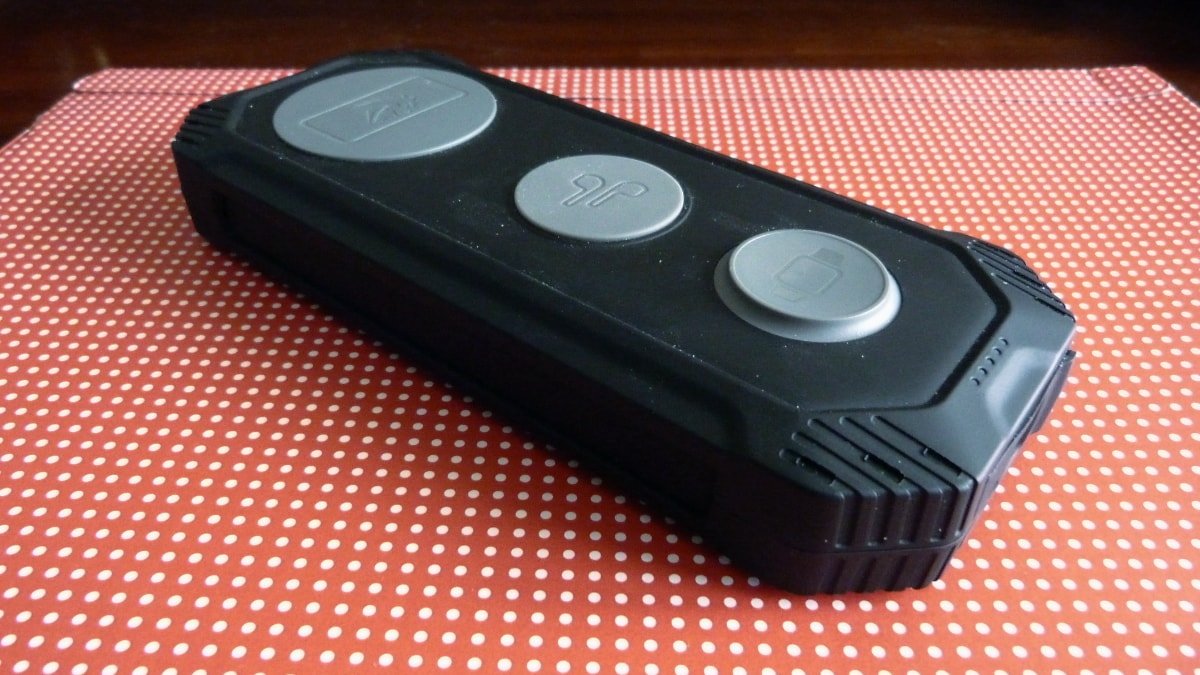
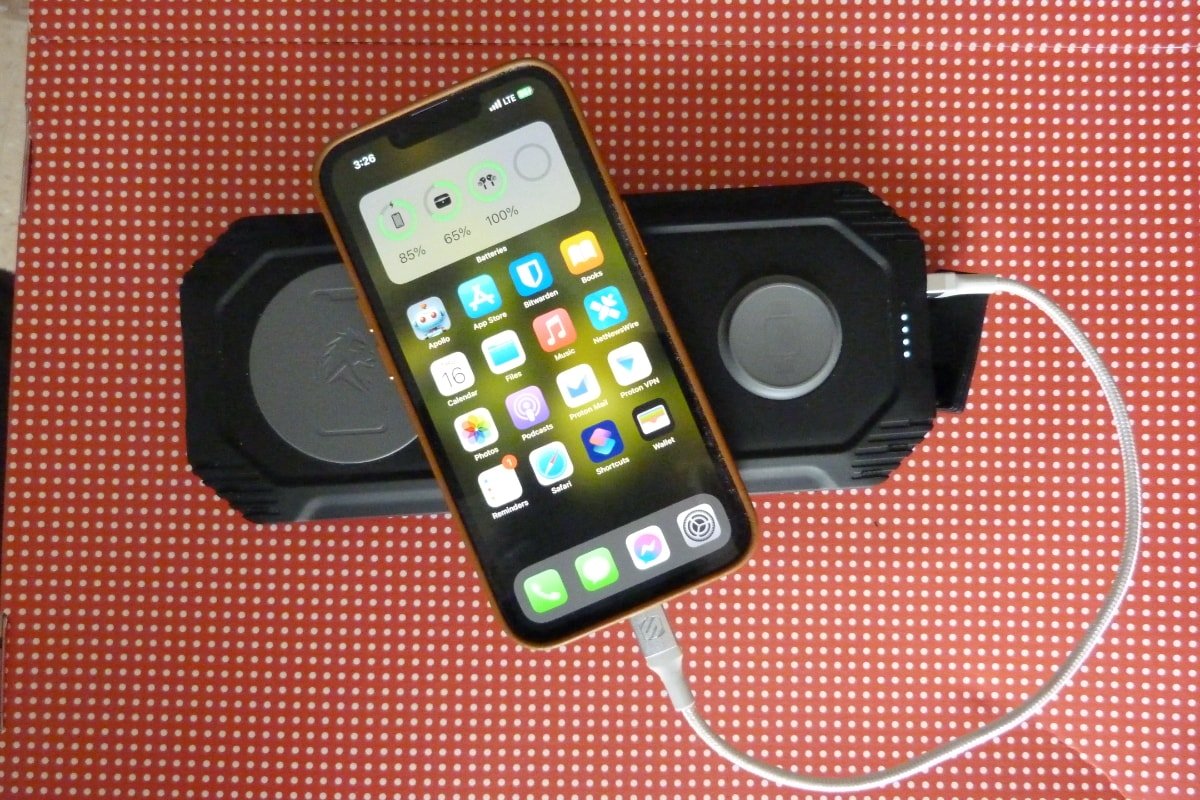
The Fuel 4-in-1 Power Station from Case-Mate can simultaneously recharge an iPhone, Apple Watch, AirPods, and a fourth device in an all-in-one charging system.

Made with recycled materials, the power station has wireless power options for three Apple devices, and it also includes a USB-C port to charge an additional device. It works with Qi-compatible products at up to 15W of power.

Fuel 4-in-1 Power Station – Specifications

The iPhone stand has a max output of 15W, though iPhones are limited to 7.5W under Qi without MagSafe, while the AirPods and Apple Watch pads produce 10W and 5W, respectively. The USB-C PD 3.0 port has a maximum output of 20W.

The power station doesn't have a large footprint, so it should be able to fit on most desks and side tables

The power station doesn’t have a large footprint, so it should be able to fit on most desks and side tables

There are charging indicators on the power station that light up when a device is charging, with an amber color used when it detects metal objects such as keys or coins. Fuel recommends removing the object and aligning the iPhone on the charger to ensure regular operation.

Fuel 4-in-1 Power Station – Usage

The power station doesn’t have a large footprint, so it should be able to fit on most desks and side tables. It measures just under eight inches in length, 3.5 inches in width, and just under 0.5 inches for height.

The charging slot for the iPhone is purely Qi and doesn’t have any magnets for MagSafe iPhones — it just leans there. Like most 15W chargers, it can recharge an iPhone 14 from 0% to 100% in about two hours.

For charging other devices, AirPods Pro reached 100% in roughly two and a half hours, and 3.5 hours for an Apple Watch Series 7. The USB-C port offers more power and cuts the Apple Watch charging time down to about two hours using Apple’s USB-C fast charging cable.

It comes with a DC power brick

It comes with a DC power brick

A DC cable with a barrel connector powers the Fuel 4-in-1, which isn’t ideal since it has limited usage. We can’t think of any other product like this one, with that type of input port. In an age of high-power USB-C, this isn’t fabulous.

That said, it’s a nice power station, overall, and a good competitor for similar products at its price point. For example, a cursory web search surfaced other 4-in-1 chargers.

We found some that were around $100, and others as high as $180, and they were from well-known brands. Case-Mate is such a brand, and the Fuel power station is a fine addition to their collection.

Adding magnets to the iPhone and AirPods charging components would have been nice, because a wayward pet or child could easily knock devices loose. This reviewer’s house has neither of those, however, so that particular situation wasn’t available for testing.

Fuel 4-in-1 Power Station – Pros

  • Nice design
  • Every charging pad is fully powered for Apple devices
  • Foreign object detection

Fuel 4-in-1 Power Station – Cons

  • DC connector with barrel connector, versus USB-C
  • MagSafe-like magnets would be nice

Rating: 4 out of 5

Pricing & Availability

The Fuel 4-in-1 Power Station is available from Case-Mate for $150.

Posted on Leave a comment

How to cancel a subscription to Tweetbot or other Twitter clients

Twitter clients

AppleInsider may earn an affiliate commission on purchases made through links on our site.

Twitter has cut off nearly every Twitter client, and most of them are subscription-based apps. The developers are working on dealing with it, but that’s going to take time. Here’s how to cancel a subscription to Tweetbot or other Twitter clients.

The problem started on January 13, when popular Twitter clients such as Tweetbot, Twitterific, and Echofon stopped working. However, others did not.

As a result, users could not log into their accounts or view their timelines. At first, developers thought it was a bug, but Twitter later revealed that it was intentional and updated its developer’s agreement with a clause prohibiting app developers from making their own Twitter clients.

How to cancel a subscription to an app

Tapbots, the creator of apps such as Tweebot, is working with Apple to cancel any subscription renewals automatically, and developers of other apps may be doing the same. However, users can manually cancel their subscriptions now, and not wait for the process to lurch to a conclusion.

  1. Open Settings on an iPhone or iPad.
  2. Tap your Apple ID.
  3. Next, select Subscriptions. This presents a list of active and expired app subscriptions.
  4. Find the subscription for your Twitter client app, tap on it, and hit the Cancel Subscription button.

A popup will appear asking to confirm the cancellation and noting that users can still access the subscription until the renewal due date. Tap on the Confirm button to proceed.

Canceling a subscription

Canceling a subscription

There is a call on social media for folks to ask Apple for a refund instead. This is within users’ rights, of course, but the fault is more on Twitter, and not on the developers.

We here at AppleInsider are cancelling our subscriptions because there’s no telling how long the process is going to take.

As far as we are concerned, the developers are entitled to the few dollars that they might get for the last week of confusion, since they had nothing to do with the cut-off.

Posted on Leave a comment

Apple TV+ content currently unavailable due to outage

AppleInsider may earn an affiliate commission on purchases made through links on our site.

Apple’s subscription streaming service, Apple TV+, has been experiencing a widespread outage on Thursday evening.

The outage affects the service for all Apple devices, including the Mac. Apple has acknowledged an intermittent outage affecting both Apple TV Channels and Apple TV+ on its system status page.

Users on Twitter have also reported the outage.

AppleInsider staff have been able to reproduce this error, noting the iOS app often only displays the option to view a user’s existing library. If users can access the Apple TV+ tab, it shows a “content unavailable” message.

Posted on Leave a comment

Apple announces premiere dates for more Apple TV+ shows

Image Credit: Apple

AppleInsider may earn an affiliate commission on purchases made through links on our site.

Apple has announced premiere dates for additional Apple TV+ offerings available this spring, including the return of “The Afterparty” and “Schmigadoon!”

Apple TV+ spring lineup continues as “Schmigadoon!,” “City on Fire,” “The Last Thing He Told Me,” “Extrapolations,” and “The Afterparty” get premiere dates.

“Schmigadoon!”

Apple’s acclaimed, award-winning musical comedy returns to Apple TV+ on Friday, April 7. New episodes will premiere every Friday through May 5, 2023.

“Schmigadoon!” follows Josh (Keegan-Michael Key) and Melissa (Cecily Strong) in Schmicago, the reimagined world of ’60s and ’70s musicals.

The series has won both Emmy and AFI awards, as well as a Critics Choice Award nomination.

“City On Fire”

The series follows the story of Samatha, an NYU student is shot in Central Park on the Fourth of July, 2003. There are no witnesses and very little physical evidence.

Image Credit: Apple

Image Credit: Apple

As the crime is investigated, Samantha is discovered to be the connection between a series of citywide fires, the music scene, and a wealthy uptown real estate family.

Samantha will be played by Chase Sui Wonders, known for her role as Riley in “Generations.” Wyatt Oleff (“It,” “It Chapter Two”) plays Charlie, a friend of Samantha’s who stops at nothing to unravel the mystery of what happened.

“City On Fire” is set to premiere on Apple TV+ on Friday, May 12.

“The Last Thing He Told Me”

Executive produced by Jennifer Garner, “The Last Thing He Told Me” follows Hannah (Jennifer Garner), who must forge a relationship with her 16-year-old stepdaughter Bailey (Angourie Rice) to find out why her husband has mysteriously disappeared.

Image Credit: Apple

Image Credit: Apple

“The Last Thing He Told Me” will premiere on April 14 on Apple TV+.

Set to premiere on March 17, “Extrapolations” is a drama set in the near future, where climate change has affected our everyday lives.

Image Credit: Apple

Image Credit: Apple

Eight stories about love, work, faith, and family will explore the choices that must be made when the planet changes faster than the population.

“The Afterparty”

Apple has announced that its murder mystery comedy series “The After Party” will return to Apple TV+ on Friday, April 28.

Image Credit: Apple

Image Credit: Apple

In the second season, a wedding is ruined when the groom is murdered and every guest is a suspect.

“The Afterparty” explores each character’s account of a fateful evening, with each story told through the lens of a popular film genre.

Posted on Leave a comment

Apple agrees to audit labor practices ahead of shareholders meeting

Apple Park

AppleInsider may earn an affiliate commission on purchases made through links on our site.

In an effort to appease investors, Apple will undergo a third-party assessment of its labor practices concerning workers’ freedom and collective bargaining.

The news of the audit comes ahead of the 2023 annual shareholder’s meeting on March 10.

According to a filing with the SEC spotted by The New York Times, Apple has said the assessment will focus on whether Apple is upholding its official human rights policy as it relates to “workers’ freedom of association and collective bargaining rights in the United States.”

As part of the agreement, Apple will hire a third-party firm to conduct the assessment.

Apple has been accused of undergoing anti-union tactics as employees at Apple stores push unionization efforts.

The National Labor Relations Board has evidence that Apple used anti-union tactics to try to stop unionization efforts, including interrogating and coercing employees.

In December, the Cupertino tech giant was accused of illegally creating a workgroup driven by managers to try to stop union organizing efforts.

In November, Apple Towson filed a labor complaint against the company for unfairly withholding health and education benefits from members.

Posted on Leave a comment

How to get started coding for Arduino on macOS Ventura

AppleInsider may earn an affiliate commission on purchases made through links on our site.

In a previous article, we looked at connecting various kinds of Arduino hardware to your Mac. Here’s how to get started programming on them to create your own projects.

Getting started

In order to program your Arduino, you need the Arduino IDE (Integrated Development Environment) from the arduino.cc website. We mentioned how to download and install the IDE in the previous article but we’ll reiterate it here:

On your Mac, go to arduino.cc, click on “Software”, then under the Download Options section, click the link for the Mac version for either Intel or Apple Silicon.

Note that unless you want to explore the current development version, you don’t want the link under the section “Nightly Builds”. Nightly builds may be unstable and contain bugs.

Once you’ve downloaded the IDE, refer to the previous article for details about how to connect and set up your Arduino on your Mac in the IDE. You need a connection before you can upload code from the IDE to your Arduino.

Basics

You only need rudimentary programming skills to program your Arduino. You can use Arduino’s C-like programming language, or Python, but we’ll only use C in the examples below.

In Arduino programs, called Sketches, you essentially write code to set up your Arduino for a specific tasks or tasks, then run a continuous loop which gets called repeatedly by the Arduino microcontroller once your Sketch is uploaded to your Arduino device. The loop usually waits for input from sensors or users, and sends control signals back to sensors and devices to display some sort of output.

The loop code can also connect to, and interact with, the internet.

You can also install third-party libraries which support various sensor devices and shields using the Library Manager in the IDE. To access the Library Manager, create or open a sketch window, and click the icon on the left side which looks like a set of books:

A pane will appear and at the top, you can browse available libraries by Type and Topic by clicking either of the two popup menus:

You can also check for installed library updates by selecting “Updatable” from the “Type:” menu.

The Library Manager pane lets you download official and third-party libraries. Libraries are code bundles that add a specific functionality or device support to the IDE.

For example, if you use a particular brand of a non-generic sensor, you’ll need to download its library and install it first.

You can view different categories of libraries by clicking the “Topic” popup menu at the top of the Library Manager window.

Most Arduino Sketches are simple and short and are stored in a “Sketchbook” folder specified in the Arduino IDE Settings window. You can change where the IDE stores sketches from here by clicking the Browse button next to “Sketchbook location”:

Sketches have a file extension of .ino, which stands for “innovation”.

You can also change text editor and compiler settings here. If you have an unsupported Arduino, you can add its board support file or URL by clicking the small icon in the lower right of the window, one which looks like a stack of documents.

Click on the “Click for a list of unofficial board support URLs” text in the Additional Boards Manager URLs window to view the vast array of boards supported on Arduino’s GitHub.

The Arduino IDE provides a sample sketch with a simple program outline in a text window when you first open it.

There are also a vast array of code samples under the File->Examples submenu item. Samples are organized by “Built-In” and “UNO Examples” in the menu. Custom-installed libraries may also provide examples.

A first example sketch

In our first example, we’ll use the built-in Blink example. To open it, select File->Examples->0.1Basics->Blink submenu item.

After a few seconds, a new editor window will open with the Blink example. Make sure your Arduino board and port are selected from the connection popup menu at the top of the IDE’s editor window.

Blink does one thing — it blinks a built-in LED on the Arduino. There’s a description of the sample in the comment at the top of the editor window and online.

In code, comments are notes programmers leave to describe what code is doing. Comments are ignored during compilation.

The IDE editor window uses C-style comments: the compiler will ignore anything bracketed inside of /* and */. Single-line comments start with // but must be on one line only. Anything after the // is ignored.

When you click the large Verify button with the checkmark icon in the editor’s upper left corner, the IDE will compile the code in that window.

During compilation, an Output pane will appear at the bottom of the editor window in black showing progress. If there are no errors, you’ll see messages such as:

"Sketch uses 924 bytes (2%) of program storage space. Maximum is 32256 bytes.
Global variables use 9 bytes (0%) of dynamic memory, leaving 2039 bytes for local variables. Maximum is 2048 bytes."

Or something similar.

If there are errors, they will appear in red text and you’ll have to fix your code until there are no more errors. Some errors are not critical, and your sketch will still run with them, but other errors can prevent your sketch from running at all.

You can clear the Output messages by clicking the small icon in the upper right corner of the Output pane. You can hide the Output pane entirely by clicking the small square icon in the lower right corner of the editor window.

When you click the Upload button (the one with a large right arrow icon) next to the Verify button, the IDE uploads the compiled binary program into the Arduino on the port you specified. The Arduino microcontroller takes over from there and executes your code on the Arduino.

During upload, if your Arduino has an RX (Receive) LED built-in, you should see it flash rapidly as it receives the sketch data.

If your Sketch couldn’t be uploaded for any reason, the Output pane will list a description and why.

A few words about C-based languages

C is the language of operating systems. Some early Mac apps in the late 1980s and the 1990s were written in C or one of its later variants: C++.

The Arduino IDE programming language is based on C-like syntax.

In most C-like languages, all code lines end with a “;” — without the semicolon, the code won’t compile and you’ll get an error.

Most C-based languages also use predefined code text files called headers, which usually have a “.h” file extension.

Think of a .h file as a predefined set of code that describes how functions are to be accessed, called prototypes. Each prototype defines a function name, parameters to be passed to the function (inside parenthesis), and a return type that is sent back from the function when it exits.

If you call (access) any library or built-in functions in your Sketch code, how you call each function must match its prototype defined in a .h file somewhere. Libraries work the same way.

For example, if a prototype says a function must take two input parameters (in the parenthesis), and a certain type of return value (listed before the function name), then you must call it in precisely the same way. Anything else will throw an error during compilation.

Header files can also contain a C-style construct called a ‘define.’ A define creates a label as another code expression, such as a number, text (a string in C), a calculation, or some other function.

To create a define, you use the #define C preprocessor directive. For example:

#define FALLING 2

This code defines the label ‘FALLING’ as the value of 2. Anywhere you use FALLING in your code, the number 2 will be substituted at compile time. #defines can get quite complex but can make your code shorter and more readable.

The Arduino IDE uses #defines to define things like I/O pin numbers, modes, and other things.

You can also create your own headers and #defines.

Headers can be included in other files – in other .h files, or in Sketches themselves. The contents each included .h file get inserted at compile time into the top of any files they are included in.

To insert a header into another file, use the #include C directive. For example at the top of Arduino.h you’ll see:

#include "binary.h"

Which includes another header file called “binary.h” into the top of Arduino.h at compile time.

If you look at the screenshot shown above you’ll see two included .h files in the example Sketch:

EEPROM.h
Ethernet.h

All this may seem confusing at first, but it’s actually quite simple: you put function prototypes and #defines in .h files so they can be used in many other files. Then you #include them in other files and the compiler inserts them where indicated during compilation. Easy.

Organizing definitions into seperate headers enables code reuse.

Just think of .h files as definitions, and your Sketch files as programs that use them.

Modern programming languages such as Apple’s Swift and Microsoft’s C# have done away with header files, in the interest of simplicity.

In the Blink sample’s setup() function, there is one line of code:

pinMode(LED_BUILTIN, OUTPUT);

Both LED_BUILTIN and OUTPUT are #defines defined by Arduino headers. The main Arduino header file is named Arduino.h, as we saw above.

You can hold down the Command key on your Mac keyboard and double-click any #define in an editor window to jump to its definition in the corresponding .h file where it’s defined. A new tab will open in the same editor window displaying the matching .h file.

LED_BUILTIN is defined as “13” in pins_arduino.h:

#define LED_BUILTIN 13

This indicates digital pin 13 on the Arduino’s pins connector (also called a header).

But at the same time LED_BUILTIN tells the Arduino to use the actual built-in LED on the Arduino circuit board itself. If you connect a jumper wire to pin D13 on the Arduino header, then connect it to an LED on a breadboard, it will blink that LED also.

pinMode’ is a built-in Arduino function that sets how a given I/O pin on the Arduino behaves – either input or output. In this case, we’re telling the Arduino to use pin LED_BUILTIN (13) as an output pin.

Since pinMode()’s prototype in the wiring_digital.h header has a return type of ‘void’, the function doesn’t return any value. ‘void’ is a C data type meaning ‘nothing’. All C functions having a ‘void’ return type return nothing.

When the compiled Blink sketch runs on your Arduino, it runs setup() first, setting up the hardware, then it runs loop() over and over forever. In the Blink example, loop() simply turns the pin on and off with a delay of one second between each:

digitalWrite(LED_BUILTIN, HIGH); // turn the LED on (HIGH is the voltage level)
delay(1000);
digitalWrite(LED_BUILTIN, LOW); // turn the LED off by making the voltage LOW
delay(1000);

“High” and “Low in electrical engineering terms simply mean “on” and “off”.

digitalWrite() is a built-in Arduino function that simply turns the digital U/O pin specified on or off – in this case whatever is attached Arduino pin D13, or LED_BUILTIN.

delay() is a delay function that halts further processing until the specified interval has elapsed. delay() takes a single time value, in milliseconds, with a value of ‘1000’ being one second.

Go ahead and click the Upload button in the Blink Sketch IDE window.

That’s it. You’ve now compiled and run your first sketch. If everything worked, you will see the built-in LED on your Arduino blink on and off.

Most shields also have a built-in LED on them which does the same thing as the built-in one on the Arduino.

A breadboard example

Now that you’ve seen the Blink example in action, we’ll do the same thing – but this time we’ll make an external LED on a breadboard blink at the same time. For this example you’ll need:

  1. A breadboard
  2. 2 jumper wires
  3. 1 3.3V LED
  4. 1 220 Ohm resistor

First, plug two jumper wires into the “D13” or “13” and “GND” holes on the corresponding Arduino headers.

Plug the other end of the “D13” wire anywhere into row one in the interior of the breadboard (any position except in the “+” and “-” power rails on the outer edges).

Next, install the LED onto the breadboard so the long (+) leg of the LED is in the same horizontal row as the “D13” wire you just installed.

Turn the LED sideways so the short leg is inserted into a hole towards the long end of the breadboard about three holes away.

Next, insert a 220 Ohm resistor into the same horizontal row as the short LED’s leg, but towards the power rail on the opposite side of the board. Across the center of the board works perfectly.

Insert the other end of the resistor into another hole in the same direction about three holes away.

You should now have the “D13” wire, LED, and resistor in a pattern somewhat in the shape of a stretched-out “Z” (see photo below).

At the other side of the breadboard in the last or second to last hole before the power rail, insert the other end of the “GND” jumper wire. The final assembly should look something like this:

Remember there is a grid of metal rails under all the holes on the breadboard. No matter which way components are oriented on the breadboard, they must always form connections between components, the Arduino, and with jumper wires to complete the circuit.

If you already uploaded the Blink example to your Arduino, you should see the LED start to blink. Both the LED on the Ardunio and the one on the breadboard should blink in unison. If not, go back and check all your connections again.

Note that some electronic components such as LEDs are polar: current can only flow through them correctly in one direction. Other components such as most resistors are non-polar: current can flow the same through them in either direction.

You can play around with the timing value passed to the delay() function to speed up or slow down the blink rate of the LEDs. Try huge and tiny values and watch what happens.

By adding more digitalWrite() and delay() statements to your Sketch you can alter the blink pattern: for example, you can make the LEDs blink Morse Code.

Final example: a traffic light simulator

Now that you’ve seen how to blink your Arduino’s LED, we’ll use one final, slightly more complex example: we’ll use a third-party UNO breakout board and an external traffic light sensor board to simulate a three-color traffic stop light.

Alternately, you can find a temporized one with a countdown timer LCD also on PCBWay.

In our example, we’ll use the simplest three-light sensor and make it change colors at brief intervals, just like a real traffic light.

These traffic light boards usually have three or four pins: one for each colored LED, and one GND. The code is smilier to Blink, except that you turn all the lights off except one, wait using delay(), then turn that one off, and the next one on, in sequence.

First, we’ll connect our traffic light sensor to a generic breakout shield we have installed on our Arduino UNO: breakout shields are shields containing banks of analog and digital pins, GND pins, Bluetooth, and serial cable connectors.

Our traffic light sensor has four pins: R, G, Y, and GND. We’ll connect digital pins 9, 10, and 11 to R, G, and Y respectively, and the fourth pin, GND to a GND pin on our shield.

Now open the Arduino IDE and start a new Sketch. First, we’ll define some things we’ll need at the top of the Sketch above setup().

First, we define how many milliseconds are in a second so we can specify how many seconds to pass to delay();

#define kMillisecondsInSec 1000

Next, we define how many seconds we want the yellow light to be on for:

#define kSecondsForYellow ( kMillisecondsInSec * 4 )

Then we define which three pins we want to use for red, yellow, and green on the Arduino. Instead of using defines, we assign the pin values each to a global variable, in this case variables of type int (which is defined by C):

int RED = 9;
int YELLOW = 10;
int GREEN = 11;

Think of a variable as a named container whose contents (value) you can change whenever you want. Variables also have a type in order to specify what kind of values they can hold. Global variables can be accessed from anywhere in a program.

Variables declared inside of functions are called local variables and can only be used inside one function. This is called variable scope.

Next, we define global variables and assign calculations to them to simplify how we calculate seconds and milliseconds, and delay values for the green, red, and yellow lights in seconds. In this case we use a variable type called ‘unsigned long int’, which are like ints, but can hold larger values:

unsigned long int millisecondsInMinute = ( kMillisecondsInSec * 12 ); // # of milliseconds in 1 min.
unsigned long int minutesForGreenAndRed = ( 1 * millisecondsInMinute ); // number of minutes to leave green, red lights on.
unsigned long int yellowDelay = kSecondsForYellow; // Time to leave yellow light on. Yellow delay is shorter than red/green.

Now in setup() we define the pin modes for pins we defined above, one each for red, yellow, and green:

void setup( void )
{
pinMode( RED, OUTPUT );
pinMode( YELLOW, OUTPUT );
pinMode( GREEN, OUTPUT );
}

This tells the Arduino we will use those three pins for output values (in this case on or off).

In loop(), we start by turning the red/yellow lights off, the green light on, then we wait for onDelay seconds:

void loop( void )
{
// Green - Start
digitalWrite( RED, LOW );
digitalWrite( YELLOW, LOW );
digitalWrite( GREEN, HIGH );
delay( onDelay );

After onDelay, we turn the green light off, the yellow light on, then wait for yellowDelay seconds:

digitalWrite( GREEN, LOW );
digitalWrite( YELLOW, HIGH );
delay( yellowDelay );

After yellowDelay, we turn the yellow light off, the red light on, and wait for onDelay seconds:

// Red
digitalWrite( YELLOW, LOW );
digitalWrite( RED, HIGH );
delay( onDelay );

Finally, after onDelay elapses, we turn the red light off, effectively resetting the simulation:

digitalWrite( RED, LOW );
}

The next time the loop runs, the same sequence repeats, starting with the green light. This loop will run forever until stopped. We now have a working traffic light simulator:

Once you’ve uploaded the Sketch to your Arduino, if you plug in an external power supply to your Arduino’s DC barrel jack, and unplug its USB cable, the simulation will continue to run.

This is one of the benefits of Arduino: once you program the microcontroller, it can run a program independently of a host computer.

You can make Arduinos do just about anything – act as sensors, display info, wait for input, make sounds, use cameras and send images back to other devices, monitor conditions, drive motors, and so on.

I’ve posted the complete traffic light Sketch. You can download it and upload it to your Arduino.

There are a few introductory books worth reading for learning Arduino’s C-like language:

These simple examples should get you started programming Arduino. As you build your programming skills and gain confidence, you can expand to bigger examples.

In future articles, we’ll explore programming Arduino devices, shields, and busses such as I2C and SPI, and creating complex device environments.

Posted on Leave a comment

How to add a security key to an Apple ID in iOS 16.3

Yubico hardware keys

AppleInsider may earn an affiliate commission on purchases made through links on our site.

As part of Apple’s Advance Data Protection features, users can add a physical security key to their Apple ID starting in iOS 16.3.

Announced in December, Advanced Data Protection includes three ways to protect user data. First, end-to-end encryption has expanded to more parts of iCloud, including iCloud Drive, Apple Notes, Apple Photos, and more.

Second, with iMessage Contact Key Verification, users can choose to verify that they are messaging only with the people they intend. Conversations between users who have it enabled receive automatic alerts in the extremely rare event that an attacker breaches Apple’s servers and intercepts iMessage conversations.

Third, iOS 16.3 will add another layer of protection to an Apple user’s two-factor authentication on their Apple ID. It will allow third-party hardware security keys to sign into an Apple ID.

What are security keys?

A hardware security key is a form of two-factor authentication to verify that the person signing into an online account is the valid owner of that account. They take the form of small USB devices that can plug into a computer or wirelessly connect to a device using NFC or Bluetooth.

Yubico is probably the most well-known company that produces hardware keys. They have various models that offer USB-C connectors, NFC connection, and even a Lightning key for iPhones.

AppleInsider reviewed a Yubico YubiKey in 2021, giving it a high 4.5 rating for its battery-free design and compatibility with many online accounts.

How to add a security key to Apple ID

With iOS 16.3, iPadOS 16.3, and macOS Ventura 13.2, Apple users can add a security key to their Apple account.

iOS will ask for two keys

iOS will ask for two keys

  1. Open Settings and tap on your profile at the top.
  2. Go to Password & Security.
  3. Scroll down to find “Add Security Keys.”
  4. On the next screen, tap on “Add Security Keys” and follow the onscreen instructions.

The system will ask for two security keys so that users can have one key as a backup. Adding a security key will replace the verification codes that Apple sends to user devices when signing in or resetting specific passwords.

Posted on Leave a comment

Oakywood Magsafe Collection Review: perfect for a home office

AppleInsider may earn an affiliate commission on purchases made through links on our site.

Using sustainable wood detailing, the Oakywood Magsafe Collection provides aesthetically pleasing MagSafe docking stations that would be a great fit in the home or office of those who appreciate expert, handcrafted wooden carpentry from an eco-friendly brand.

The lineup immediately shows one large limitation, however, in their all-around Magsafe compatibility. These products are only compatible with Apple-certified Magsafe chargers with the exact dimensions: 3.24 x 3.24 x 0.72 inches.

If you don’t own the Apple Magsafe charger, it is safe to say that Oakywood will not suit your needs — they simply won’t fit!

This, perhaps, is one caveat to crafting materials out of wood – the rigidity of the holder. Crafted wood simply cannot be adjusted to fit my slightly larger (4 x 3.7 x 1.8 inches) Magsafe charge pad from Bohuma on Amazon.

For the $40 to $200 price tag for each item in this lineup, the consumer should definitely be made aware that the product is only compatible with Apple-manufactured Magsafe chargers — to avoid disappointment when unpackaging the item.

Oakywood iPhone Stand is only compatible with Apple MagSafe chargers

Oakywood iPhone Stand is only compatible with Apple MagSafe chargers

Don’t let the high price tag fool you. These products are quality, which is apparent from the first time you feel their solid weight in your hand, or run a finger along the expertly-sanded surface.

Although we often look for items that are cost-effective, oftentimes cheap equals will break quickly. In the case of Oakywood, these items are built to last and are crafted with sustainability in mind.

Since its inception in 2017, Oakywood has garnered an impressive range of 140 products in its catalog, and with a global reach.

Magsafe iPhone Stand

Of the four in the collection, Oakywood’s iPhone Stand is the most alluring due to its solid and sleek design — and looks great on any desk.

Oakywood Magsafe iPhone Stand

Oakywood Magsafe iPhone Stand

It contains a wooden backrest, inclined at an ergonomic angle for easy phone retrieval, as well as a solid base. Something that deserves high praise about this particular piece is that it is both heavy and sturdy.

This means that if your cat, dog, or toddler happens to bump your desk during an important meeting, the stand will not fly off the desk and create a ruckus.

Features

Inclined vertically, the stand allows you to view incoming phone messages without having to crane your neck and pour over a phone that lays flat on the desk.

For those who are social media content creators, the vertical nature of the product doubles as an accidental, simple desk tripod. One which allows you to take video and photos in the ideal, upright position.

This would be particularly suited to authors like Victoria Aveyard, who conduct live writing sessions with their followers. It could also be used for those hands-free FaceTime sessions with Mom or Dad.

The iPhone stand includes a convenient keyhole to feed your Magsafe wire through, and a river-like divot in the back so that your wire runs flat through the product and to your charging pad.

Oakywood Magsafe iPhone Stand back view

Oakywood Magsafe iPhone Stand back view

The bottom of the product could be a concern to those who are prone to spilling liquids at their desk (oops). The underside appears to be made of cork. You’ve probably known someone with cork coasters, and many of these do not hold up, or dry properly, after coming into contact with liquids.

Compatibility and other notes

The Magsafe iPhone Stand is compatible with all iPhone 12, iPhone 13, and iPhone 14 models and the original Apple Magsafe charger. It’s available in oak, walnut, black stained oak, and aluminum (matte black).

Rating: 4/5

Where to buy

The Magsafe iPhone Stand is available on the Oakywood website for $135. For every product purchased, Oakywood works with One Tree Planted to allocate income to plant one tree.

Magsafe iPhone Desk Shelf Mount

The Magsafe iPhone Desk Shelf Mount takes the above free-standing iPhone Stand for the desk to new heights – especially in the realm of minimalism and space-saving capabilities.

Oakywood Desk Shelf Mount

Oakywood Desk Shelf Mount

Like the free-standing iPhone Stand above, it is a sturdy, sleek product that seamlessly fits all Apple-manufactured Magsafe chargers.

Features

It consists of a metal holder, compression bolt, wooden backrest, and another metal holder for the original MagSafe charger. The steel holder and compression bolt ensure a safe and stable base for the wooden backrest.

Like the MagSafe Stand above, there is a keyhole for the charging cable to be threaded through to the back for a hidden design.

Oakywood Desk Shelf Mount

Oakywood Desk Shelf Mount

Measure your shelves — the iPhone Desk Shelf Mount holder fits all shelves to 3 cm thick. If you own a turn-of-the-century desk that has no anchor point, this holder won’t be for you.

Perhaps the one drawback to this product is its potential, after months or years of use, to create a compression stamp on your desk from the constant task of holding the weight of both your iPhone and the Shelf Mount.

Heaviness is usually conducive to quality — especially when it comes to carpentry — but in this case, the heaviness of the product might permanently compromise the integrity of your desk.

If your desk was your great grandma’s, or some treasured family heirloom, perhaps consider purchasing the aforementioned free-standing MagSafe iPhone stand.

Compatibility and other notes

The MagSafe iPhone Desk Shelf Mount is compatible with all iPhone 12, 13, and 14 models and the original Apple Magsafe charger. It’s available in oak, walnut, black stained oak, and aluminum (matte black).

Rating: 4.5/5

Where to buy

The Desk Shelf Mount is available on the Oakywood website for $81.00. For every product purchased, Oakywood works with One Tree Planted to allocate income to plant one tree.

Magsafe Apple Watch Stand

Of the four items, the Apple Watch Stand feels like the most unnecessary. It is small (to match the Apple Watch) and light — perhaps too small and light. When taking it out of the box, it is difficult to discern what it is meant for.

Features

For the high price tag, it elicits no more than a shrug.

Oakywood Apple Watch Stand

Oakywood Apple Watch Stand

It contains a wooden leg and aluminum holder for the original Apple Watch charger. It would be easy to knock off a desk or to be yanked off kilter by an accidental trip over the charging wire.

Oakywood Apple Watch Stand back

Oakywood Apple Watch Stand back

If you are a completionist, have an extra chunk of change to burn, and fancy working in a calming, wood-infused environment, this product complements the above iPhone docking products and would be a nice addition.

Compatibility and other notes

The Apple Watch Stand is compatible with all Apple Watch models and Apple-manufactured only Apple Watch chargers. It’s available in oak, walnut, and black.

The high cost and the lack of sturdiness make it a harder-to-recommend item over the rest in the range.

Rating: 2.5/5

Where to buy

The Apple Watch Stand is available on the Oakywood website for $81. For every product purchased, Oakywood works with One Tree Planted to allocate income to plant one tree.

Magsafe iPhone Wall Mount

This product is the most invasive of the three, including the option of screw-anchoring or 3M tape in the back to stick or mount the product onto the surface of your choice. However, this also means that you have the freedom to mount this product to the surface and location of your choosing.

Oakywood iPhone Wall Mount

Oakywood iPhone Wall Mount

If you’re worried about the mount falling from its sticker anchor, 3M tape holds up to 30 pounds on the wall.

Oakywood iPhone Wall Mount back

Oakywood iPhone Wall Mount back

Like the iPhone Stand, the Wall Mount could double as a wall tripod for the content creator.

Features

Besides the invasive tape or screw option for those who don’t like mucking up their walls, one drawback is the aesthetic. Depending on where you anchor it to the wall, the MagSafe’s charger wire juts out from the bottom like the chain to a cuckoo clock.

This could be an eyesore to some, and an invitation for yank-happy toddlers or cord-biting cats. However, if you place the product above on the wall above your desk, the cord could drop behind the desk and could be out of sight.

One huge upside to this product is its material, including its use of metal components. MagSafe warms quickly when a phone is left to charge for hours, so the metal on this product will absorb and dispel excess heat from the charger.

Another upside is its price in comparison to the others: the Wall Mount is the cheapest, with a price tag of $72.

Compatibility and other notes

The MagSafe iPhone Wall Mount is compatible with all iPhone 12, 13, and 14 models and the original Apple Magsafe charger. It’s available in oak, walnut, black stained oak, and aluminum (matte black).

Rating: 4/5

Where to buy

The Wall Mount is available on the Oakywood website for $72. For every product purchased, Oakywood works with One Tree Planted to allocate income to plant one tree.

Posted on Leave a comment

Apple Music releases Rihanna trailer for Super Bowl LVII Halftime Show

Rihanna for Super Bowl LVII

Apple Music is sponsoring the NFL Super Bowl LVII Halftime Show and released a trailer featuring Rihanna.

The brief, 30-second teaser shows Rihanna, who will be the headliner at the event. Super Bowl LVII will be on Sunday, February 12, 2023, at State Farm Stadium in Glendale, Arizona.

Apple made the announcement in September 2022 that it will sponsor the halftime show after Pepsi pulled out of sponsoring it in February 2022. “Music and sports hold a special place in our hearts,” Apple vice president of Apple Music and Beats Oliver Schusser said, “so we’re very excited Apple Music will be part of music and football’s biggest stage.

Apple Music is also featuring a spot in its app that highlights the trailer and includes playlists from Rihanna, NFL player playlists, and videos from previous Halftime Shows for fans to “Rih-fresh” their memory.

According to the NFL, 2022’s Super Bowl LVI Halftime Show was watched by over 120 million people. Super Bowl LVII will be on Sunday, February 12, 2023.

Posted on Leave a comment

Apple racks up 21 nominations for the 2023 NAACP Image Awards

AppleInsider may earn an affiliate commission on purchases made through links on our site.

Apple Original “Emancipation” earns five NAACP Image Award nominations, including Outstanding Motion Picture.

On Thursday, the NAACP announced its nominations for the 54th Annual NAACP Image Awards.

Apple scored a record 21 nominations across 10 Apple Original films and series, as follows:

“Emancipation”

  • Outstanding Motion Picture
  • Outstanding Actor in a Motion Picture — Will Smith
  • Outstanding Ensemble Cast in a Motion Picture
  • Outstanding Directing in a Motion Picture — Antoine Fuqua
  • Outstanding Costume Design (Television or Film) — Francine Jamison-Tanchuck

“The Last Days of Ptolemy Grey”

  • Outstanding Television Movie, Limited-Series or Dramatic Special
  • Outstanding Actor in a Television Movie, Limited-Series or Dramatic Special — Samuel L. Jackson
  • Outstanding Supporting Actor in a Television Movie, Limited-Series or Dramatic Special — Omar Benson Miller
  • Outstanding Directing in a Drama Series — Debbie Allen, “Robyn”
  • Outstanding Directing in a Drama Series — Hanelle Culpepper, “Sensia”
  • Outstanding Make-Up (Television or Film) — Michele Lewis

“Causeway”

  • Outstanding Independent Motion Picture

“Louis Armstrong’s Black & Blues”

  • Outstanding Documentary (Film)
  • Outstanding Directing in a Documentary (Television or Motion Picture) — Sacha Jenkins
  • Outstanding Documentary (Film)
  • Outstanding Directing in a Documentary (Television or Motion Picture) — Reginald Hudlin

“Central Park”

  • Outstanding Animated Series

“The Boy, the Mole, the Fox and the Horse”

  • Outstanding Short-Form (Animated)
  • Outstanding Actress in a Comedy Series — Maya Rudolph

“Little America”

  • Outstanding Supporting Actress in a Television Movie, Limited-Series or Dramatic Special — Phylicia Rashad
  • Outstanding Make-up (Television or Film) — Zabrina Matiru

Since its inception, Apple TV+ has earned 310 wins and more than 1,300 nominations for its slate of films, documentaries, and series.