Posted on Leave a comment

Hands on with Apple’s new lineup of iPhone XS and XS Max cases


Video

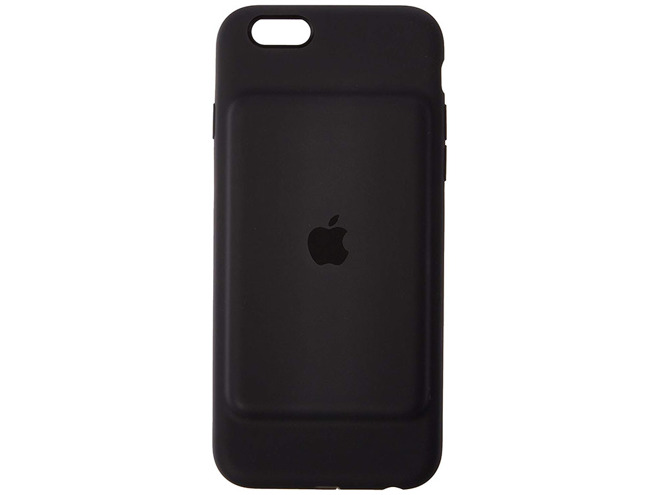
To go alongside the latest iPhones — the XS and XS Max — Apple has updated its lineup of first-party cases, which include leather, silicone and folio options. AppleInsider goes hands-on with the accessories to see what has changed and find out if they are compatible with the iPhone X.

[embedded content]

All of Apple’s cases are great quality while staying minimalist in nature. They are thin, with tactile buttons and made from premium materials. The leather cases all utilize anodized aluminum buttons on the sides, always a nice touch. Interiors are lined with microfiber on each case, protecting the iPhone from loose debris.

On the underside, the bottom of the phone is exposed, a design that has its pros and cons. We prefer this design as it allows easier access to ports and works seamlessly with many docks, but at the same time it opens more of the phone up to possible damage.

Last year, the folio was exclusively available for the iPhone X, but this year it comes in two different sizes for the XS and XS Max.

Colors for everyone

Externally, the biggest change to all of the cases is a smattering of new colors.

Silicone cases now come in Nectarine, Lavender Gray, Blue Horizon, Stone, Pink Sand, Midnight Blue, White, Black, and (PRODUCT)Red while the leather case will be available in Peony Pink, Cape Code Blue, Forest Green, Taupe, Midnight Blue, Saddle Brown, Black, and (PRODUCT)Red. The leather folio comes in Peony Pink, Cape Code Blue, Forest Green, Black, (PRODUCT)Red.

iPhone XS Cases

Changes between X and XS cases

Notable changes between last year’s cases and the models offered in 2018 include slight tweaks to the camera bump cutout. The latest iPhone’s have a slightly larger camera bump, which could cause compatibility issues when using the new cases with iPhone X. If you put any of Apple’s iPhone XS cases on an iPhone X, you will notice a slight gap around the otherwise precision-designed case.

There are also changes to the arrangement of the Hall Effect sensors between generations. The auto wake/sleep functionality doesn’t work when using the iPhone XS folio on the iPhone X, and vice versa.

Where to buy

Right now, the cases are available exclusively through Apple. Silicone cases cost $39 and the leather run $49. If you’d like the leather folio, it runs $99 and $129 for the iPhone XS and XS Max, respectively.

Apple’s cases not doing it for you? Check out AppleInsider’s roundup of excellent iPhone XS and XS Max cases that are available now.

Posted on Leave a comment

Code in iOS 12.1 beta hints at Memoji syncing over iCloud, references ‘iPad2018Fall’


Lines of code unearthed in Apple’s first iOS 12.1 beta, released earlier on Tuesday, suggest a future version of the operating system will support syncing of Memoji characters over iCloud, a feature that points to potential integration with a rumored iPad Pro with TrueDepth camera array. Further spelunking reveals references to an “iPad2018Fall,” hinting that the device could launch soon.

Memoji

Included in the initial beta release is a new daemon called “avatarsd,” which 9to5Mac believes will be used for syncing and storing Memoji data through iCloud.

Not much is known about the feature as it is currently restricted to iOS 12.1 builds distributed internally at Apple. If avatarsd does indeed sync Memoji over iCloud, however, its existence suggests Apple is working to build its TrueDepth sensor into devices beyond iPhone.

Introduced with iOS 12 on Monday, Memoji is Apple’s take on customizable 3D avatars. Similar to Animoji, animated emoji characters introduced in iOS 11, Memoji react to head and face movements captured by iPhone’s TrueDepth camera.

User-created Memoji are stored on a local device, which is currently limited to iPhone X, but will expand to iPhone XS and XS Max on Friday. Save for the handful of people who own and use multiple iPhones, syncing Memoji to iCloud makes little sense and would be an unlikely candidate for iOS 12.1 unless something else is coming.

While mere speculation, Apple could be preparing for an as-yet-unannounced device with TrueDepth integration, one that is used in conjunction with or addition to iPhone. A prime candidate is a much-rumored next-generation iPad Pro.

Reports last November first suggested Apple was at work on an iPad revamp that ditched Touch ID for Face ID biometric authentication, a change expected to afford space for a nearly edge-to-edge display. Code uncovered today hints at support for Face ID in landscape mode, seemingly backing up months of rumors.

Some believed Apple would announce the new iPad Pro at its September event, but the company reserved last week’s gathering for iPhone XR, XS, XS Max and Apple Watch Series 4. In fact, Apple only used its annual iPhone event as a platform to introduce new iPad products once in 2015 with the iPad mini 4. The company typically unveils its latest and greatest slates during a separate event in October, though the second-generation iPad Pro debuted last June.

Indeed, code in the latest iOS 12.1 beta references an “iPad2018Fall” device identifier, hinting that Apple will maintain it usual October launch cycle this year.

Posted on Leave a comment

iPhone XS LTE speeds up to 266 percent faster than iPhone X, early test reveals


As we head towards the release of the iPhone XS, the first speed tests are teasing what we can expect when it comes to LTE speeds across the major carriers. According to results from SpeedSmart.net, iPhone XS and XS Max will boast quite the improvement from last year’s iPhone X.

Of the three major carriers — AT&T, Verizon, and T-Mobile — AT&T looks to be the fastest with average download speeds of 72.24Mbps. That figure compares to average recorded iPhone X speeds of 27.67Mbps.

Verizon was the second fastest in this test, with average downloads of 62.20Mbps, up from 26.08Mbps. T-Mobile came in a close third with 59.92Mbps on the iPhone XS, compared with 29.82Mbps on the iPhone X.

When looking at the increases, the new iPhone XS and XS Max show a 233-percent average bump in download speed across the three networks.

Upload speeds were slightly less impressive, with iPhone XS on T-Mobile netting 19.35Mbps, up from the 12.22Mbps seen on iPhone X. Verizon and AT&T hit 16.10Mbps and 14.88Mbps, respectively, up from 10.92Mbps and 10.28Mbps.

The survey was taken using the SpeedSmart Speed Test app on iPhone X, XS, XS Max between Sept. 12 and 16. Though early and surely limited due to a small sample size, the results show impressive gains that should be in line with speeds consumers can expect come Friday.

The greatly enhanced data transfer statistics comes thanks to new Gigabit-class LTE with 4×4 MIMO technology and LAA. With iPhone X, Apple employed two LCP FCPBs to power 2×2 MIMO, while the iPhone 8 series used a single LCP module. The integration of 4×4 MIMO standards with iPhone XS and XS Max delivers much improved bandwidth capable of supporting higher throughput.

Posted on Leave a comment

Apple responds to viral tweet over disappearing iTunes movies


Apple over the weekend responded to a viral tweet claiming it had removed purchased movies from a user’s iTunes account with their consent, allegations that kicked spurred a flood of commentary regarding digital media rights.

The tweet in question outlined a fairly simple-sounding scenario in which a user said three movies he had purchased in iTunes had been removed from his account, meaning he was unable to play or re-download them. Apple support acknowledged that the movies were gone and attempted to rectify the issue by providing rental credits, far off the value of the missing films.

The problem, and initial response from Apple, prompted speculation that Apple has the power to delete purchased media at will, but an investigation by CNET suggests there is more to the story.

For starters, the user in question had recently relocated from Australia to Canada, changing their active region in the iTunes Store. Some movies are not available in different regions, and if they are, they can be different versions of the film. For instance, production houses might change political or regional references, remove aspects of a film to satisfy ratings boards in more conservative countries, or change the name of a movie to something more relevant for a specific audience.

That seems to have been the issue in this particular situation.

In a statement provided to CNET, an Apple spokesperson said, “Any movies you’ve already downloaded can be enjoyed at any time and will not be deleted unless you’ve chosen to do so. If you change your country setting, some movies may not be available to re-download from the movie store if the version you purchased isn’t also available in the new country. If needed, you can change your country setting back to your prior country to re-download those movies.”

The statement suggests neither Apple nor the studio pulled these specific films. Instead, the titles likely have Canada-specific versions that are different than those offered in Australian. Anders is also seemingly unable to switch back to the Australian iTunes Store as it requires a local Paypal or billing address, which he no longer has. There are apparently workarounds here, but it seems unnecessarily difficult to pull off.

The crux of the matter is physical ownership versus digital ownership. To date, Apple has not revoked access to a film that someone has purchased (outside of these fringe scenarios). For those who want to play it safe, best practices would imply downloading and creating a physical copy of the movie. Store these on a hard drive, and should ever the day come that Apple or a studio ever remove access, you still have them available.

In this case, it appears Apple Support has now pledged a workaround to allow Anders to once more have access to his movies. He also has been a good sport about it, noting he “fell into a licensing crack, it seems.”

Posted on Leave a comment

iPhone XS and iPhone XS Max carrier deals: Buy one, get one $700 off; $0 per month with eligible trade & more


Now that preorders have begun for Apple’s iPhone XS and XS Max, wireless carriers are offering deals on the new devices. We’re rounding up where to get the best discounts, including buy one, get one $700 off promotions.

AT&T Wireless

Kicking off our wireless deal roundup is AT&T Wireless. The wireless giant has added Apple’s iPhone XS and XS Max to its popular “buy one, give one” program, which provides shoppers with $700 off when two qualifying devices are purchased. The promotion requires users to buy both devices on AT&T Next with a minimum wireless plan of $65 per month (combined) after the discount. It also requires a new line in order to secure up to $700 off in credits over 30 months. As with other wireless deals, if service is canceled, the device balance becomes due. An activation fee of $30 does apply.

Find out how to take advantage of the deal by visiting AT&T Wireless’ website.

Verizon Wireless

Like AT&T, Verizon Wireless is running its own buy one, get one $700 off promotion. Shoppers can mix and match any two iPhone XS Max, XS, X, 8 Plus or 8 256GB devices, and you will need to add a new line to one of the phones. You’ll then see a credit of $29.16 per month over 24 months on your bill.

If you do not wish to add a line and have an old device lying around, you can instead take advantage of Verizon’s $100 trade-in deal with the iPhone XS or XS Max. To qualify, you must have a qualifying trade-in that’s in good working and cosmetic condition. You’ll then see $100 over 24 months as a small monthly credit starting in one to two billing cycles. This ends when the balance is fully paid, or if you cancel or transfer your line to another plan. Luckily, if the market value of your trade-in is higher than $100, you’ll get the full value as an account credit in one to two billing cycles.

The following iPhones are eligible for the trade-in promotion:

  • iPhone X
  • iPhone 8 Plus
  • iPhone 8
  • iPhone 7 Plus
  • iPhone 7
  • iPhone 6s Plus
  • iPhone 6s
  • iPhone 6 Plus
  • iPhone 6
  • iPhone 5s
  • iPhone SE

Devices from other brands also qualify, including:

  • Google Pixel 2
  • Google Pixel 2 XL
  • Google Pixel
  • Google Pixel XL
  • LG V30
  • LG V20
  • LG V10
  • LG G6
  • LG G5
  • LG G4
  • Motorola Z2 Force
  • Motorola Z Force
  • Motorola Z2 Play
  • Motorola Z Play
  • Motorola Z Droid
  • Motorola Z Play
  • Motorola Turbo 2
  • Samsung GS9
  • Samsung GS9+
  • Samsung GS8
  • Samsung GS8+
  • Samsung GS7
  • Samsung 7 Edge
  • Samsung 7 Active
  • Samsung GS6
  • Samsung 6 Edge
  • Samsung 6 Edge+
  • Samsung 6 Active
  • Samsung GS5
  • Samsung GS4
  • Samsung Note 8
  • Samsung Note 5
  • Samsung Note 4
  • Samsung Note Edge
  • HTC 10
  • HTC M9/M9+

Sprint

Sprint is also running a promotion that offers shoppers the 64GB iPhone XS for $0 per month after a $41.67 per month credit. You must have an eligible trade-in and sign up for Sprint Flex Lease, the latter of which includes Sprint’s iPhone Forever perk, allowing you to return and upgrade to the latest iPhone any time after 12 lease payments.

Those wanting the new iPhone XS Max are also eligible for a discount under the same terms. However, the monthy payment will be $4.17 per month with an eligible trade-in.

Full terms and conditions can be found on Sprint’s website. Offer ends Sept. 27.

Mac Deals

AppleInsider and Apple authorized resellers are also running a handful of additional exclusive promotions this month on Apple hardware that will not only deliver the lowest prices on many of the items, but also throw in discounts on AppleCare, software and accessories. These deals are as follows:

See if there is a Mac, iPad, Apple Watch or Certified Used iPhone deal that will save you $100s by checking out prices.appleinsider.com and deals.appleinsider.com.

Posted on Leave a comment

New Apple video details iPhone XS and XS Max in less than a minute


In a new video, Apple shows all there is to show about its latest flagship iPhone models that were introduced at a special event on Wednesday.

Screens shown in new iPhone video

On Friday, two days after its “Gather Round” event in Cupertino, Apple released a video to its YouTube channel showing “everything to know in 54 seconds” about the new iPhone XS and XS Max. The video surfaced on the day those two devices opened for preorders.

Combining beautiful video of the two new devices with words illustrating its features, the video touts the iPhones’ big screens, water and dust resistance, gold color, improved Face ID, better cameras, A12 Bionic chip, and better speakers.

[embedded content]

“It’s not just one amazing iPhone,” the video concludes. “It’s two.”

It’s not clear whether the video will ever run as a TV commercial, but Apple typically saves summary clips for use on social media.

The video’s fast-paced format is similar to a clip Apple published summarizing all the big announcements from the “Gather Round” event.

[embedded content]

Apple’s iPhone XS and XS Max, as well as the new Apple Watch Series 4, went up for preorder earlier today on the company’s online storefront. Launch day supply of the handsets quickly sold out, with nearly all U.S. carriers showing depleted stock just 30 minutes after sales went live.

Posted on Leave a comment

Apple Heart Study data reportedly used to win FDA approval for Apple Watch ECG


The two FDA clearances that Apple announced Wednesday for the Apple Watch Series 4’s ECG capabilities came from data collected via the Apple Heart Study, according to a report Thursday.

Apple Watch warning

Apple announced Wednesday at its “Gather Round” event that the new Apple Watch Series 4 comes with the ability to take an electrocardiogram — the first Apple product to receive clearance from the FDA. Apple COO Jeff Williams said on stage that the company received the clearances for its ECG and atrial fibrillation testing on the Apple Watch via a “de novo” pathway, which means it supplied data to the agency to prove the product both worked and is safe.

Quartz reported Thursday, citing FDA documents, that the FDA used data from the Apple Heart Study in order to grant Apple those clearances. That study, conducted by Apple along with Stanford Health, launched last November and began winding down earlier this month.

The Watch’s abilities don’t actually mean much, according to one doctor.

Andrew Moore, an emergency department physician at the Oregon Health and Science University, told Quartz Thursday that the Series 4 doesn’t rise to the level of a medical device.

“The tech that Apple is working with is very rudimentary compared to what we’d do for someone in a hospital or health care setting,” Moore told the site. “The ECG thing is a little bit overhyped in terms of what it will really provide.”

Apple has never quite claimed that this Apple Watch, or any other product it makes, is meant to serve as a substitute for full-fledged medical devices or professional medical attention.

It says right there on the Apple Watch, that if the Watch detects atrial fibrillation (AFib), “you should talk to your doctor.” At the same time, Apple’s Williams admitted that the Series 4 won’t always catch AFib every time.

Posted on Leave a comment

Apple to enable new iPhone eSIMs via software update, iPhone XS boasts faster wireless charging


With the big announcements out of the way, we take a closer look at a couple of less-prominent features coming to the iPhone XS — dual SIM support and faster wireless charging.

Dual SIM

Apple touted the iPhone XS’ ability to support dual SIM cards during its announcement event, sharing a few details in passing.

First, the solution will require one SIM card slot, with users inserting a physical SIM that is to be accompanied by Apple’s eSIM technology. The company currently uses eSIM tech in both the iPad and the Apple Watch, and is bringing it to iPhone for the first time.

Dual SIM

As predicted by analyst Ming-Chi Kuo, the iPhone XS supports Dual SIM Dual Standby (DSDS), wherein the phone automatically activates a particular SIM card as a call comes in. The active line will even be denoted below in the incoming number. DSDS technology provides a number of benefits to end users, the most obvious being the ability to travel across borders or coverage zones without swapping SIM cards.

Users in China will have to use two physical SIM cards — one inserted on each side of iPhone’s SIM card slot — as Apple does not have approval to launch its eSIM in the country.

Unfortunately for those looking forward to the dual SIM capabilities, a small footnote on Apple’s site reveals eSIM functionality will be disabled at launch. The company says it will activate the feature through a future iOS 12 software update, but fails to provide a specific timeline for release.

Wireless charging

On an unrelated note, the new iPhone XS and XS Max will be capable of charging at faster rates than iPhone X when paired with compatible wireless chargers. The exact increase in power is still unknown, but could likely be 9W or 10W, both of which are common output levels for Qi chargers.

Apple didn’t mention the speed increase — or wireless charging at all — on stage during the event, likely due to what is presumes to be problems getting its AirPower mat to market. The device, which was announced at last year’s iPhone event, but has yet to see release, was completely scrubbed from Apple’s website post-event.

Keep up with AppleInsider by downloading the AppleInsider app for iOS, and follow us on YouTube, Twitter @appleinsider and Facebook for live, late-breaking coverage. You can also check out our official Instagram account for exclusive photos.

Posted on Leave a comment

FCC pauses review of Sprint and T-Mobile merger


Government stops the “shot clock” on the merger’s review period, in order to take a look at modeling.

T-Mobile's John Legere

The Federal Communications Commission sent a letter to Sprint and T-Mobile Tuesday informing the carriers that it’s pausing the current review of their merger.

“Today we are pausing the Commission’s informal 180-day transaction shot clock in this proceeding. Additional time is necessary to allow for thorough staff and third-party review of newly submitted and anticipated modeling relied on by the Applicants,” said the letter, signed by David B. Lawrence, head of the T-Mobile/Sprint Transaction Task Force, and Donald Stockdale Chief of the FCC’s Wireless Telecommunications Bureau.

The new facts requiring review include a revised network engineering model submitted by the parties in early September, the mentioning in a meeting of a T-Mobile business model called “Build 9,” which was not reviewed by the FCC until recently and T-Mobile’s recent disclosure that it “intends to submit additional economic modeling in support of the Applications, beyond that strictly responsive to the various economic analyses in the Petitions to Deny.”

The 180-day clock, the FCC letter said, “will remain stopped until the Applicants have completed the record on which they intend to rely and a reasonable period of time has passed for.staff and third-party review. The Commission will decide whether to extend the deadline for reply comments after receiving the remainder of the Applicants’ modeling submissions.”

Sprint and T-Mobile announced in April that they had agreed to an all-stock merger worth $26 billion, with T-Mobile CEO John Legere to assume leadership of the combined company, to be called “New T-Mobile.” The companies submitted their formal merger request to the FCC in June, in which they vowed to “deliver a robust, nationwide world-class 5G network and services sooner than otherwise possible.”

Posted on Leave a comment

Tesla to restock sold-out wireless phone charger, cut price by $16


After quickly selling out of a sleek but underpowered wireless smartphone charger in late August, Tesla this week informed customers that the device will soon be back in stock at a roughly $16 discount.

Tesla Wireless Charger

Tesla is in the process of emailing customers who purchased the eponymous charger last month for $65, saying new shipments of the product are coming in and will be sold for $49 on the company’s online store, reports The Verge.

According to the email, copies of which were posted to social media on Monday, the $16 price drop is thanks to a higher quantity second production run. Customers who bought the Tesla Wireless Charger when it first went on sale last month will be refunded the $16 difference for being “early adopters.”

Tesla quietly introduced its Qi-compatible wireless charging device at the end of August. Described as a charging pad that “features the same design language used in our energy products, like Powerwall,” the charger sold out within a matter of hours.

Along with inductive charging, the device integrates a USB-C plug for compatible phones, while a USB-A cable provides a means to recharge the pack. With a 6,000mAh battery cell and wireless module that outputs 5W of power, the Tesla Wireless Charger is easily outperformed by cheaper, more capable products. As AppleInsider noted last month, RAVPower’s HyperAir battery pack boasts a 10,400mAh cell and 7.5W wireless charging capabilities for $50.

Still, Tesla’s brand appeal is sure to give the wireless charger a boost when it goes back up for sale in the near future. The company did not specify a restock timeline, but the recent emails suggest that date is soon approaching.