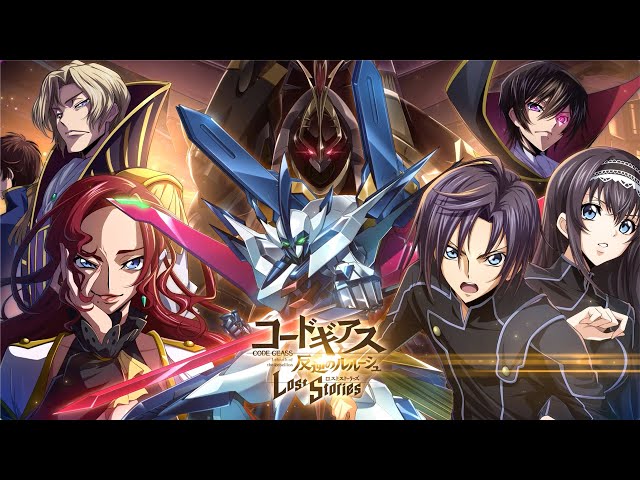
Finally, the hit mecha alternative-history anime series Code Geass has its own mobile game, and the Code Geass: Lost Stories release date is nearly here. Join Lelouch and his friends in this action-packed 3D Knightmare Frame battle RPG and crush the Britannian Empire.
When is the Code Geass: Lost Stories release date?
Code Geass: Lost Stories releases globally on iOS and Android on September 13, 2023. Not long now until you can embark on your lost story alongside Lelouch and the others.
What are the Code Geass: Lost Stories pre-registration rewards?
Pre-registrations are open now for Code Geass: Lost Stories on the App Store and Google Play. Here are all of the rewards up for grabs for different pre-registration milestones:
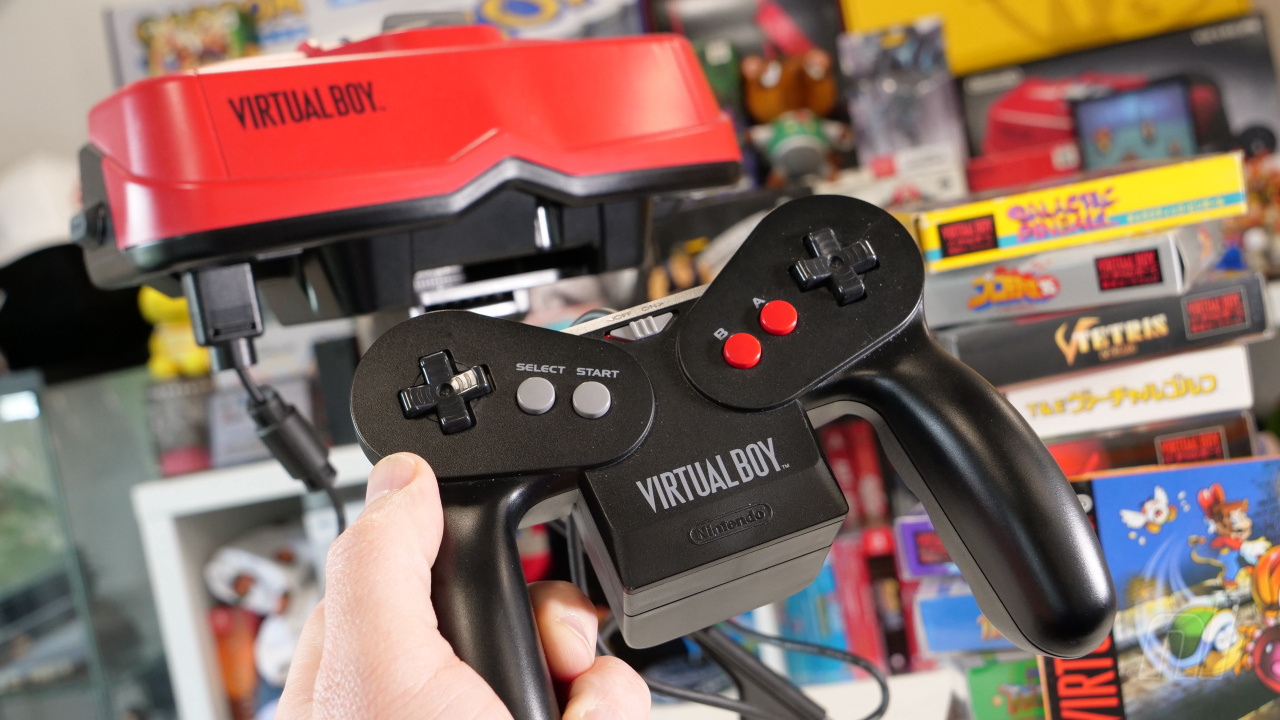
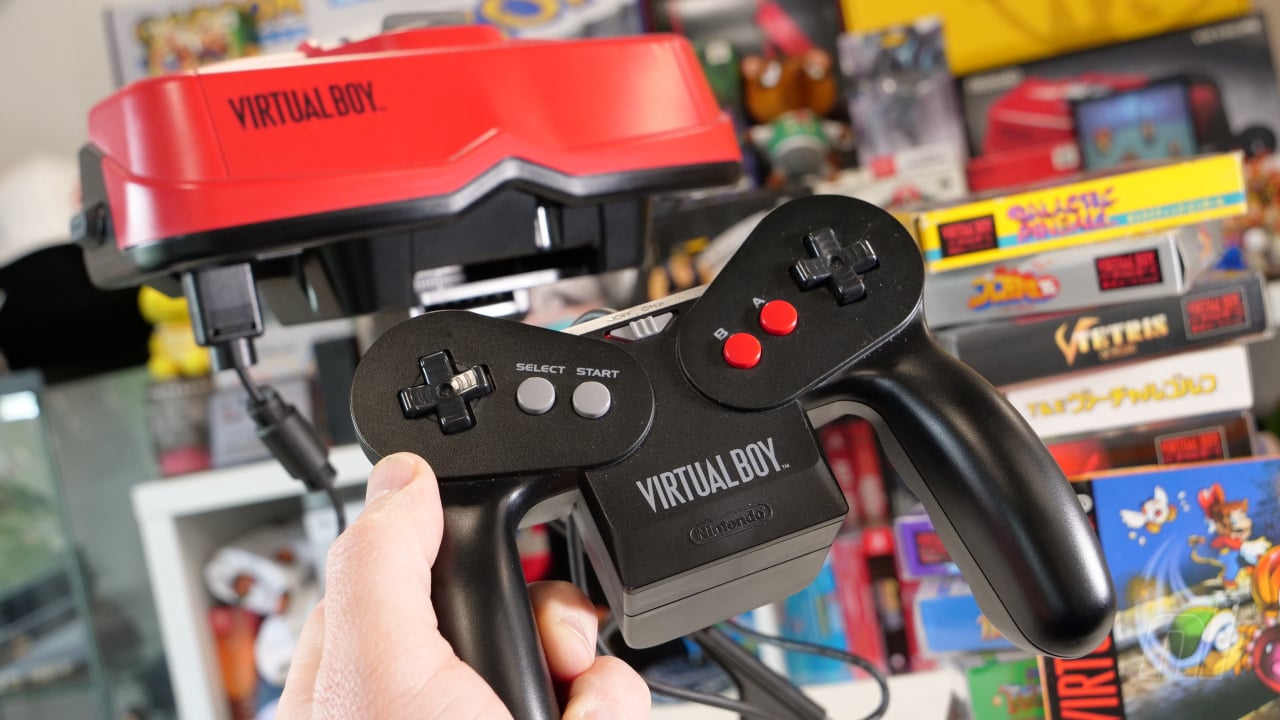
As the reputed black sheep of the Nintendo console family, one might think 1995’s Virtual Boy to be the last piece of hardware capable of garnering an enthusiast following today. Discontinued after less than a year on the market and never released in Europe, the elusive red-and-black headset is remembered as a headache-inducing, seemingly epic misfire from legendary Game Boy creator Gunpei Yokoi.
Nonetheless, a small but passionate community of engineers and developers is working to keep the Virtual Boy alive nearly three decades on from its premature and unfortunate demise. Their wares, which include high-quality after-market hardware and commercially successful small-batch physical copies of newly developed games, are a sign of sustained interest in the system.
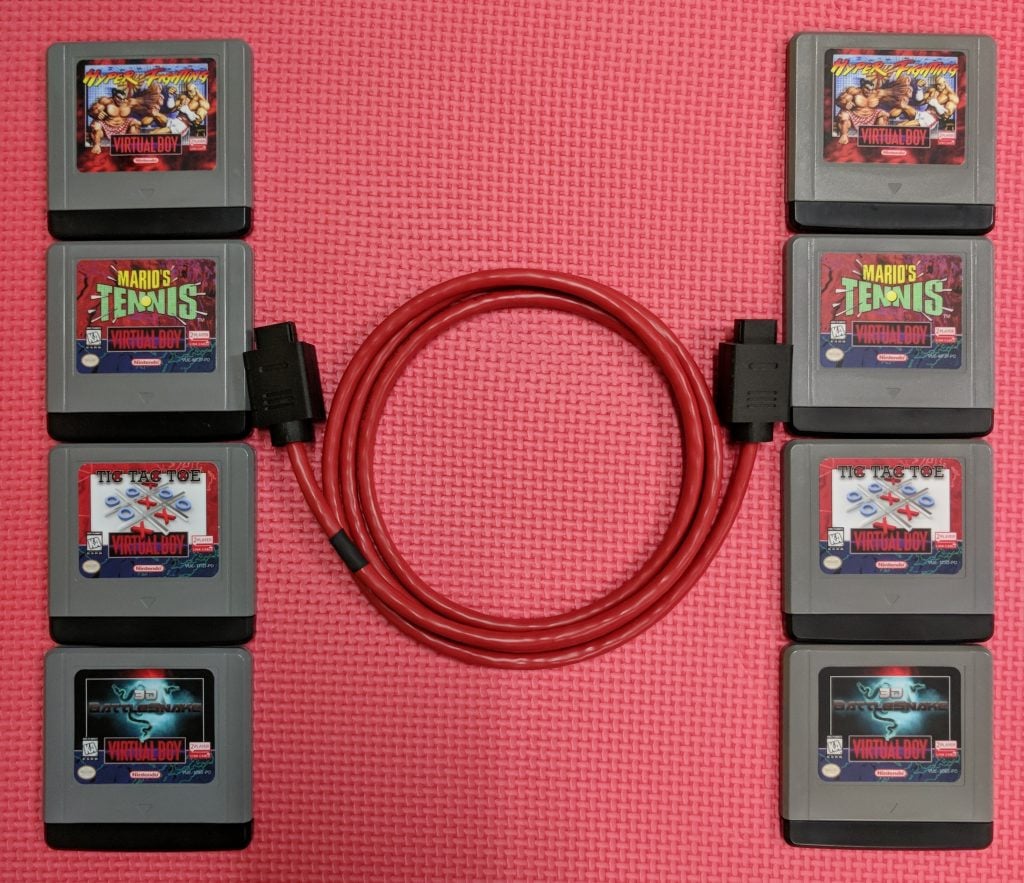
Mellot’s original Virtual Boy link cable — Image: RetroOnyx
“Everyone always points to the Virtual Boy not being as successful as Nintendo wanted and them basically wanting to forget that system ever existed,” says engineer Kevin Mellott, the man behind retro gaming hardware maker RetroOnyx, through which he produces and sells everything from Virtual Boy power adaptors and reprogrammable printed circuit boards to boutique flashcarts.
Collaborating with developers Christian Radke and Jorge Andres Eremiev, creators of the VUEngine, an open-source game engine built specifically for the Virtual Boy, Mellott also funded the development of the recently released Virtual WarZone, a tank combat game built around the console’s unique hardware attributes and parallax effects, which create visual depth.
In an interview with Nintendo Life, we unpack Mellott’s passion for Nintendo’s console curio, hear about his favourite games for the hardware, upcoming projects from the VUEngine team, as well as a sleek new flashcart he’s developing, which will give players access to the Virtual Boy’s entire library along with a growing selection of increasingly sophisticated homebrew titles.
Nintendo Life: How did you begin creating after-market retro gaming hardware for the Virtual Boy through RetroOnyx?
Kevin Mellott: When I was a kid, I wanted a Virtual Boy. My parents wouldn’t buy me one because it was a little bit expensive at the time, at least in my parent’s eyes. So, when I was older, 18 or 19, I ended up buying one when I was out at tech school and played with one for a few years. I eventually sold it and then after many years after that, when I was finishing up my master’s degree, I decided to look into it again.
It was during that time when I joined the online community on Planet Virtual Boy looking at what they had been up to and building. One of the things I came across at that time was a link cable design that users had worked on, and I thought, ‘Hey, I can probably do that.’ And that kicked things off about six to seven years ago. That’s how I got started doing gear; just an interest from the past, the education, and the capability after many years of being an engineer and a tech to be able to contribute there.
Image: Damien McFerran / Nintendo Life
The Virtual Boy is Nintendo’s most abject hardware failure. As far as consoles go, it’s one of the strangest and most niche. Critics were never kind to it, and it has a reputation for causing eye strain and headaches. How did you develop such a passion for the maligned Virtual Boy? What attracted you to it as a younger person?
The first time when I came across it, it was at a Circuit City in Southern California. I was maybe 12 or something, and that kind of 3D representation just blew my mind. I think they were running a demo of Red Alarm and I [had] just never quite seen anything like that. We of course had seen 3D movies with red and blue glasses and that kind of thing, but playing a video game in 3D, I believe that’s the first time I’ve ever seen anything like that, at least at that time, so it just caught my imagination. The Virtual Boy disappeared very quickly, but it has just stuck with me over the years and pulled me back in a number of times.
RetroOnyx is best known for Virtual Boy-compatible flashcarts. Take me through the process of developing that hardware and the motivations behind it.
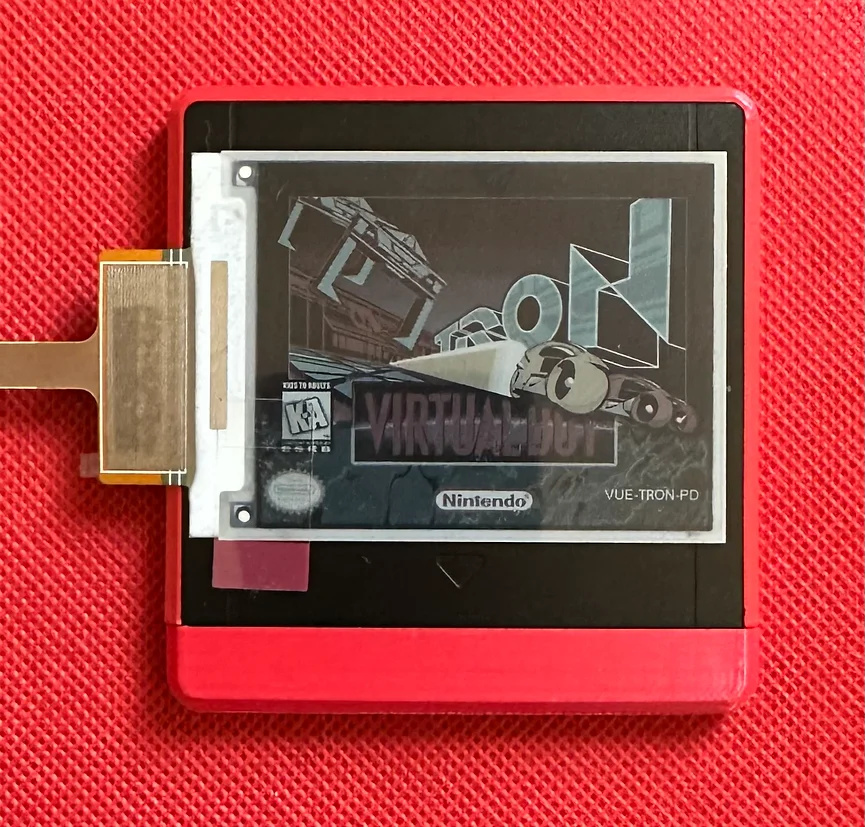
I was talking with people in the Virtual Boy community about what kinds of things they would like to see. Then I came across these eInk panels and had this crazy idea of putting one in a flashcart. My first flashcart was the HyperFlash32 because it was 32 megabits and could hold the full Hyper Fighting [a well-known unlicenced homebrew port of Street Fighter II] ROM. There had been copies of those going for $1,200 on eBay, so it just kind of blew my mind that carts that are basically memory chips were that expensive.
The HyperFlash32 has an eInk screen that updates when you load in a ROM and capacitive touch buttons on the back to go through the game menu system. It’s still a single-game-at-a-time flashcart, and there was a lot of over-engineering for fun. A year or two later I did the HyperBoy, which was intended to be a cheaper version by removing the eInk screen and all the over-engineering. It’s still called the HyperBoy because it can hold that full Hyper Fighting ROM. I just got into it for fun and it has kept going.
There were only 22 games officially released for the Virtual Boy in North America and Japan. What would you say are the titles most worthy of replaying today and why?
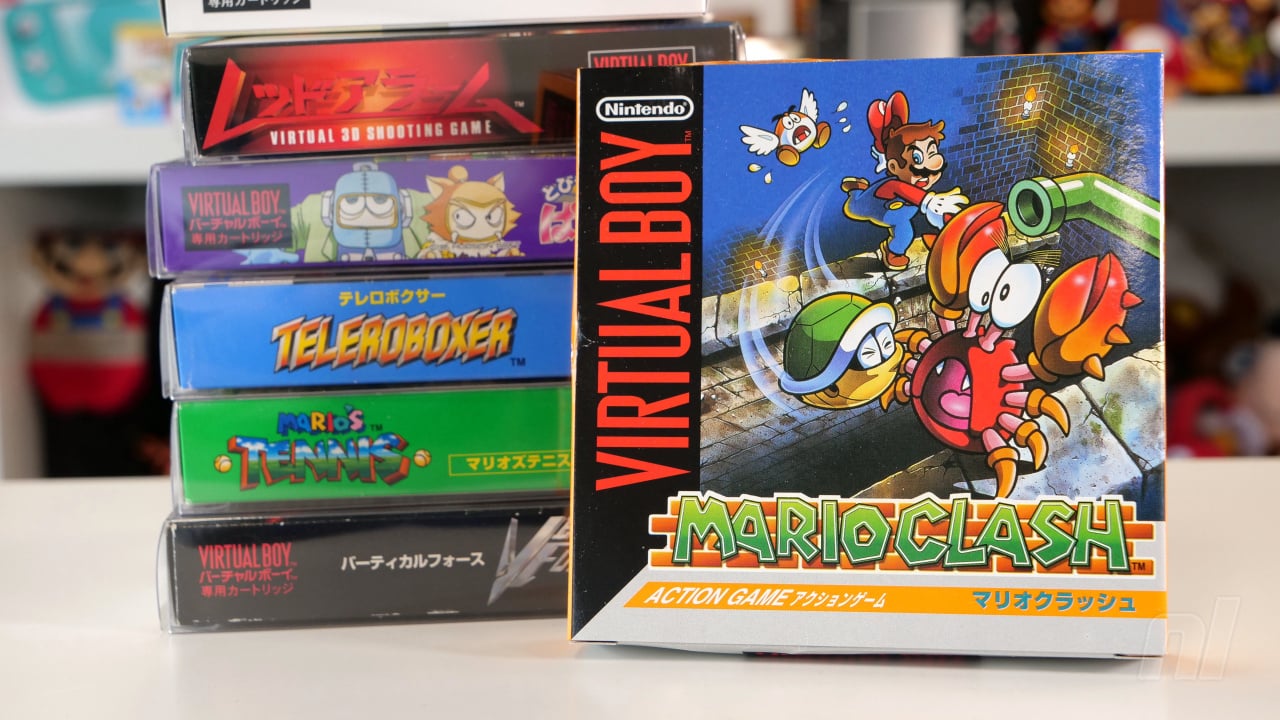
One of my favourites is Red Alarm. Maybe some people won’t agree there, but that’s just because I have a nostalgia for that particular game, having played it in the stores when I was a kid. Wario Land is quite good and usually regarded as one of the better ones. I like Teleroboxer as well. Bound High is one that people tend to like, it was a near-complete game that was never released because the Virtual Boy was discontinued, but the ROM was eventually patched and found its way online, and it became quite popular. I’ve always had a soft spot for Space Invaders, probably some link from my childhood as well.
Image: Damien McFerran / Nintendo Life
The homebrew scene for the Virtual Boy is surprisingly lively and owes a great deal to your products, through which newly developed games can be played on original hardware. One such title is the RetroOnyx-fundedVirtual WarZone, a tank combat game developed on the VUEngine that released in 2022. Can you share your motivations for supporting the game’s development?
The two primary guys behind the VUEngine are Chris and Jorge, and they’ve been in the Virtual Boy community far longer than I have. I would call them true Virtual Boy developers, and there aren’t many of them. They put out original content and they’ve developed that whole engine to help other people produce content.
For Virtual Warzone, I hooked up with Jorge to develop this game because I always thought a Battlezone-esque type of wireframe game would show well on the Virtual Boy, kind of like how I enjoy Red Alarm. I reached out to Jorge and we started developing that, and then Chris helped out as well. Chris runs Planet Virtual Boy and has done so for many years before I came around.
We had some other people help out as well. An online community member does my box art manuals and another user helped with some of the 3D content like the tank cockpit and what that looks like. I’ve known those people through the community for years now. I just reached out to them about developing this game. Jorge agreed and did all the heavy lifting and most of the development.
They’re a great group to work with and should have a second game released by the end of the year called Formula V, which is like a top-down F-Zero meets Micro Machines on a racetrack. It’s also harder to play than it looks. Jorge likes to build games like that. It’s quite polished, even the demos they put out for that game are very polished. It’s got all the bells and whistles of the VUEngine that they’ve developed over the years. It’s going to be a great showcase of what’s possible on the VUEngine and another great addition to the homebrew scene.
That’s fantastic. Do you intend to support more of these retail-quality original titles from the VUEngine team going forward?
I would like to. On Formula V, I’ll help them create physical carts for them to sell and be involved that way. I could see myself doing another full kind of Virtual Warzone game. Virtual Warzone has done decently for a Virtual Boy homebrew title. I recovered development costs, which I count as a win for developing games for a system like Virtual Boy with a small niche group of users. So yeah, I can see myself doing it in the future.
What’s next for RetroOnyx? You’re currently developing a “MultiBoy” flashcart with an eInk on-screen menu for game selection. How does this new product differ from your earlier flashcarts and when will it be available?
A multi-game cart has long been on the list, and all the design lessons that I’ve learned on my earlier carts will directly feed into the MultiBoy. The intention there is it’s more like an EverDrive, with on-screen – or in-headset – game selection rather than on an eInk display, and it holds more than just a single game at a time. I may add some components on there to allow developers to do some hardware acceleration on the cart, like the SNES Super FX chip type of stuff, mainly to help calculations, probably just floating-point support, things like that. I would love to do that kind of thing.
I will probably make the eInk screen an optional item because it does raise the cost a bit, and it makes a little bit less sense here because it’s going to be an on-screen display where you select your games. That’s really what people these days think flashcarts are, basically all the things that an EverDrive will do. Virtual Boy still doesn’t have a true multi-game cart, so I’d like to finish that out. That’s really the next big one on the list.
Thanks to Kevin for speaking with us. You can find his products on the RetroOnyx website, and more information about developments in the Virtual Boy homebrew scene at Planet Virtual Boy.
Hello folks, and welcome to another edition of Box Art Brawl!
In last week’s battle, we took a look at Pokémon Stadium for the N64, pitting Europe and North America against Japan. It was a fairly close match, but Japan just about managed to take the crown with 58% of the vote.
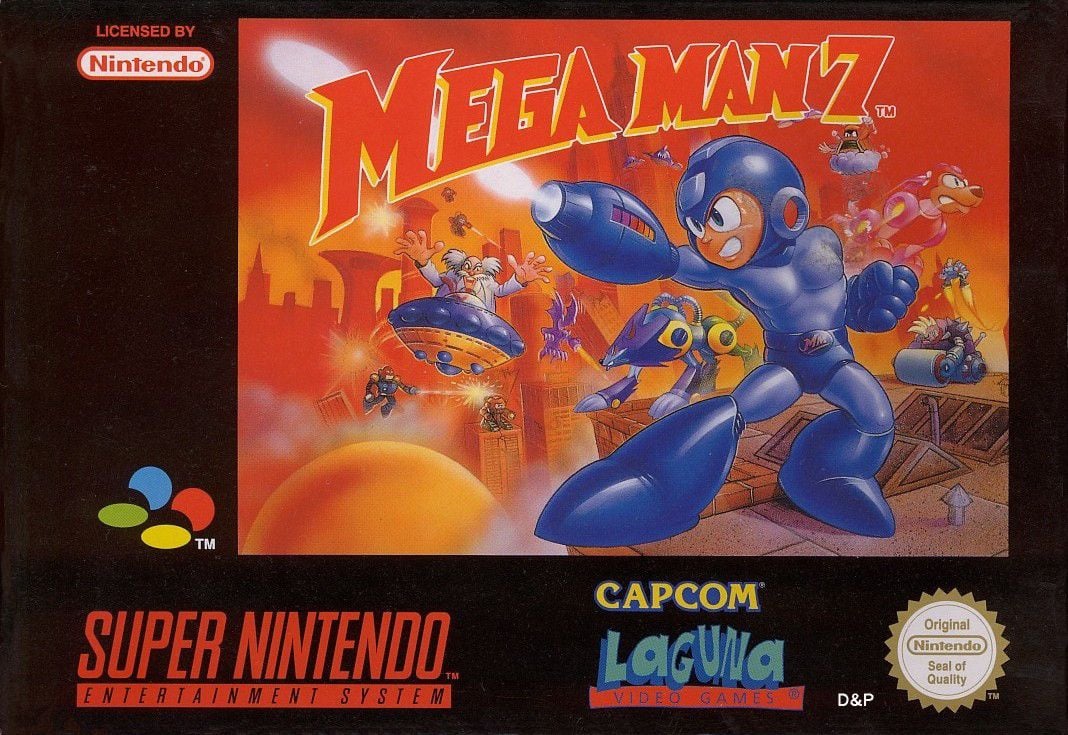
So this time, we’re going back to the SNES to look at Capcom’s Mega Man 7. Launched in 1995, it was deemed a decent title in its own right, but many players considered it to be a bit of a step down when compared to the more stylised Mega Man X.
Europe and North American share very similar designs for this one, so they’re going to team up once again to go against Japan. Let’s get on with it!
Be sure to cast your votes in the poll below; but first, let’s check out the box art designs themselves.
Europe / North America
Image: Capcom
The western design for Mega Man 7 features the Blue Bomber himself front and centre, striking a very eye-catcing pose. You’ve also got Dr. Wily and his goons in the background, while the logo itself curves nicely over the top of the image. We like the contrast here between the deep blue of Mega Man’s body and the ominous red background.
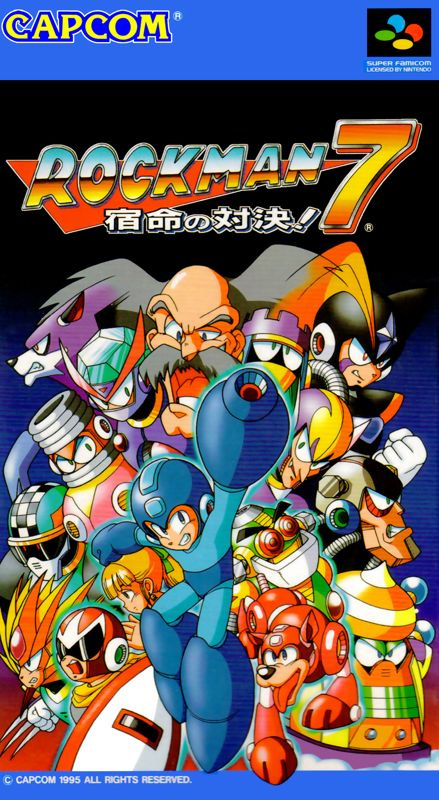
Japan
Image: Capcom
Japan’s design is very much a case of “everyone is here” for Mega Man. We can see the hero in the middle of the composition towards the bottom, with all the supporting cast, including Rush and Zero, lurking in the background. It definitely fills the image quite nicely, but we think it might be a tad ‘busy’… What do you think?
Which region got the best Mega Man 7 box art? (1,707 votes)
Europe / North America33%
Japan67%
Thanks for voting! We’ll see you next time for another round of the Box Art Brawl.
The AI scaling laws could be the biggest finding in computer science since Moore’s Law was introduced. In my opinion, these laws haven’t gotten the attention they deserve (yet), even though they could show a clear way to make considerable improvements in artificial intelligence. This could change every industry in the world, and it’s a big deal.
ChatGPT Is Only The Beginning
In recent years, AI research has focused on increasing compute power, which has led to impressive improvements in model performance. In 2020, OpenAI demonstrated that bigger models with more parameters could yield better returns than simply adding more data with their paper on Scaling Laws for Neural Language Models.
This research paper explores how the performance of language models changes as we increase the model’s size, the amount of data used to train it, and the computing power used in training.
The authors found that the performance of these models, measured by their ability to predict the next word in a sentence, improves in a predictable way as we increase these factors, with some trends continuing over a wide range of values.
For example, a model that’s 10 times larger or trained on 10 times more data will perform better, but the exact improvement can be predicted by a simple formula.
Interestingly, other factors like how many layers the model has or how wide each layer is don’t have a big impact within a certain range. The paper also provides guidelines for training these models efficiently.
For instance, it’s often better to train a very large model on a moderate amount of data and stop before it fully adapts to the data, rather than using a smaller model or more data.
In fact, I’d argue that transformers, the technology behind large language models are the real deal as they just don’t converge:
This development sparked a race among companies to create models with more and more parameters, such as GPT-3 with its astonishing 175 billion parameters. Microsoft even released DeepSpeed, a tool designed to handle (in theory) trillions of parameters!
However, findings from DeepMind’s 2022 paper Training Compute – Optimal Large Language Models indicate that it’s not just about model size – the number of training tokens (data) also plays a crucial role. Until recently, many large models were trained using about 300 billion tokens, mainly because that’s what GPT-3 used.
DeepMind decided to experiment with a more balanced approach and created Chinchilla, a Large Language Model (LLM) with fewer parameters—only 70 billion—but a much larger dataset of 1.4 trillion training tokens. Surprisingly, Chinchilla outperformed other models trained on only 300 billion tokens, regardless of their parameter count (whether 300 billion, 500 billion, or 1 trillion).
What Does This Mean for You?
First, it means that AI models are likely to significantly improve as we throw more data and more compute on them. We are nowhere near the upper ceiling of AI performance by simply scaling up the training process without needing to invent anything new.
This is a simple and straightforward exercise and it will happen quickly and help scale these models to incredible performance levels.
Soon we’ll see significant improvements of the already impressive AI models.
How the AI Scaling Laws May Be as Important as Moore’s Law
Accelerating Technological Advancements: Just as Moore’s Law predicted a rapid increase in the power and efficiency of computer chips, the scaling laws in AI could lead to a similar acceleration in the development of AI technologies. As AI models become larger and more powerful, they could enable breakthroughs in fields such as natural language processing, computer vision, and robotics. This could lead to the creation of more advanced and capable AI systems, which could in turn drive further technological advancements.
Economic Growth and Disruption: Moore’s Law has been a key driver of economic growth and innovation in the tech industry. Similarly, the scaling laws in AI could lead to significant economic growth and disruption across various industries. As AI technologies become more powerful and efficient, they could be used to automate tasks, optimize processes, and create new business models. This could lead to increased productivity, reduced costs, and the creation of new markets and industries.
Societal Impact: Moore’s Law has had a profound impact on society, enabling the development of technologies such as smartphones, the internet, and social media. The scaling laws in AI could have a similar societal impact, as AI technologies become more integrated into our daily lives. AI systems could be used to improve healthcare, education, transportation, and other areas of society. This could lead to improved quality of life, increased access to resources, and new opportunities for individuals and communities.
Frequently Asked Questions
How can neural language models benefit from scaling laws?
Scaling laws can help predict the performance of neural language models based on their size, training data, and computational resources. By understanding these relationships, you can optimize model training and improve overall efficiency.
What’s the connection between DeepMind’s work and scaling laws?
DeepMind has conducted extensive research on scaling laws, particularly in the context of artificial intelligence and deep learning. Their findings have contributed to a better understanding of how model performance scales with various factors, such as size and computational resources. OpenAI has then pushed the boundary and scaled aggressively to reach significant performance improvements with GPT-3.5 and GPT-4.
How do autoregressive generative models follow scaling laws?
Autoregressive generative models, like other neural networks, can exhibit scaling laws in their performance. For example, as these models grow in size or are trained on more data, their ability to generate high-quality output may improve in a predictable way based on scaling laws.
Can you explain the mathematical representation of scaling laws in deep learning?
A scaling law in deep learning typically takes the form of a power-law relationship, where one variable (e.g., model performance) is proportional to another variable (e.g., model size) raised to a certain power. This can be represented as: Y = K * X^a, where Y is the dependent variable, K is a constant, X is the independent variable, and a is the scaling exponent.
Which publication first discussed neural scaling laws in detail?
The concept of neural scaling laws was first introduced and explored in depth by researchers at OpenAI in a paper titled “Language Models are Few-Shot Learners”. This publication has been instrumental in guiding further research on scaling laws in AI.
Here’s a short excerpt from the paper:
OpenAI Paper:
“Here we show that scaling up language models greatly improves task-agnostic, few-shot performance, sometimes even reaching competitiveness with prior state-of-the-art fine-tuning approaches.
Specifically, we train GPT-3, an autoregressive language model with 175 billion parameters, 10x more than any previous non-sparse language model, and test its performance in the few-shot setting.
[…]
GPT-3 achieves strong performance on many NLP datasets, including translation, question-answering, and cloze tasks, as well as several tasks that require on-the-fly reasoning or domain adaptation, such as unscrambling words, using a novel word in a sentence, or performing 3-digit arithmetic.”
Is there an example of a neural scaling law that doesn’t hold true?
While scaling laws can often provide valuable insights into AI model performance, they are not always universally applicable. For instance, if a model’s architecture or training methodology differs substantially from others in its class, the scaling relationship may break down, and predictions based on scaling laws might not hold true.
If you’re worried about repetitive stress injuries while working, the Kensington TB550 Pro Fit Ergo Trackball mouse provides an ergonomic solution at a budget-friendly price.
It’s not exactly breaking news that using a mouse for extended periods can lead to all sorts of wrist problems, including repetitive stress injuries and carpal tunnel.
Plenty of ways to help limit the damage include taking frequent breaks, regular exercise, or switching up your equipment.
We recently had the opportunity to try out the Kensington TB550 Pro Fit Ergo Trackball mouse, a budget-friendly option marketed specifically to first-time trackball users.
TB550 Pro Fit Ergo Trackball mouse – design & functionality
The TB550 has a thumb-operated trackball, which we find preferable to those operated with the palm but less ideal than those operated with the fingertips. This will come down to personal preference.
For most people, the TB550 will fit well in their hands. It features a 45-degree tilt that keeps your wrist aligned properly while working. We tested it with two users of above and below-average hand sizes, and neither had any problem operating the mouse as intended.
One neat feature we enjoyed was the 4D scroll wheel, which allows users to scroll horizontally as well as vertically.
Connecting the TB550 to our iMac was easy. Kensington provides a 2.4GHz dongle stored in the bottom of the mouse that can be used with a USB-A port. If you don’t want to take up a port — or, more realistically, bust out an adapter — the TB550 can also connect over Bluetooth LE.
The TB550 Pro Fit with included dongle
The setup process was straightforward, and the compatibility with both Windows and macOS systems is a plus, catering to a wider range of users. The plug-and-play functionality is convenient, and we appreciate that no additional software installation is required.
However, if you want to further customize it, you can use Kensington’s KensingtonWorks software to further make the mouse fit your needs.
The TB550 features a rechargeable battery that lasts up to four months per charge. It can be recharged via the USB-C port on the side.
Last but certainly not least is the trackball eject feature, which allows users to quickly pop out the trackball to clean it whenever necessary. We love this feature as trackball mice are prone to picking up dirt and grime quickly.
TB550 Pro Fit Ergo Trackball mouse – be prepared to adjust
While Kensington bills the TB550 as a beginner-friendly entry into the world of trackball mice, that doesn’t mean it’s quick to pick up.
We found that we were significantly slower at every task for the first several days of using the TB550. Even now, after using the mouse for over a week and a half, we’re still nowhere near as fast as we are with a standard optical mouse.
The TB550 next to the Apple Magic Mouse included with the 2021 iMac
If you need to complete time-sensitive tasks at your job, the TB550 can and will cost you a lot of time while adapting to it. We highly suggest that, if possible, you learn in an environment without time pressure.
And, like any other new tool you pick up, trackball mice can also be physically uncomfortable to use. Sure, these kinds of mice prevent certain types of repetitive stress injuries. Yet, that doesn’t change the fact that your body will probably struggle against old habits.
We found that we had a fair amount of thumb and wrist fatigue while learning to use the TB550 and required regular breaks to prevent pain. As always, take it slow while getting used to any new tool.
Who the TB550 Pro Fit Ergo Trackball mouse is for
Like any other tech, these types of trackball mice aren’t for everyone.
The TB550 really can’t be used for intense, response-based gaming — but that’s true of any trackball mouse. However, some people greatly prefer trackball mice for 3D modeling or CAD work.
However, if you aren’t gaming and you’re willing to take some time to get used to it, some major health benefits can be gained from making the switch. The TB550 is a great choice for those who want a trackball mouse at an entry-level price.
TB550 Pro Fit Ergo Trackball mouse – Pros
45-degree angle keeps wrist and forearm aligned
Trackball pops out for easy cleaning
Plug and play
Optional software allows for further customization
Connects via dongle or Bluetooth LE
TB550 Pro Fit Ergo Trackball mouse – Cons
Quite bulky
Takes a while to get used to
Not as versatile as a standard mouse
Rating: 4 out of 5 stars
Where to buy
You can snag the TB550 Pro Fit Ergo Trackball mouse from Amazon for $89.93
Following a successful launch in June and even some DLC, Spike Chunsoft has now released another minor update for the noir detective adventure game Master Detective Archives: Rain Code.
This is a relatively small hotfix but it will improve the overall game experience on the Nintendo Switch. Here are the full patch notes via Spike Chunsoft. Keep in mind, this patch is required to access the latest DLC.
– Added “SKIP” functionality for “Deduction Denouement” – Minor text/audio fixes – Adjusted certain maps and characters – Adjusted certain events – Minor bug fixes *The latest patch is required for DLC
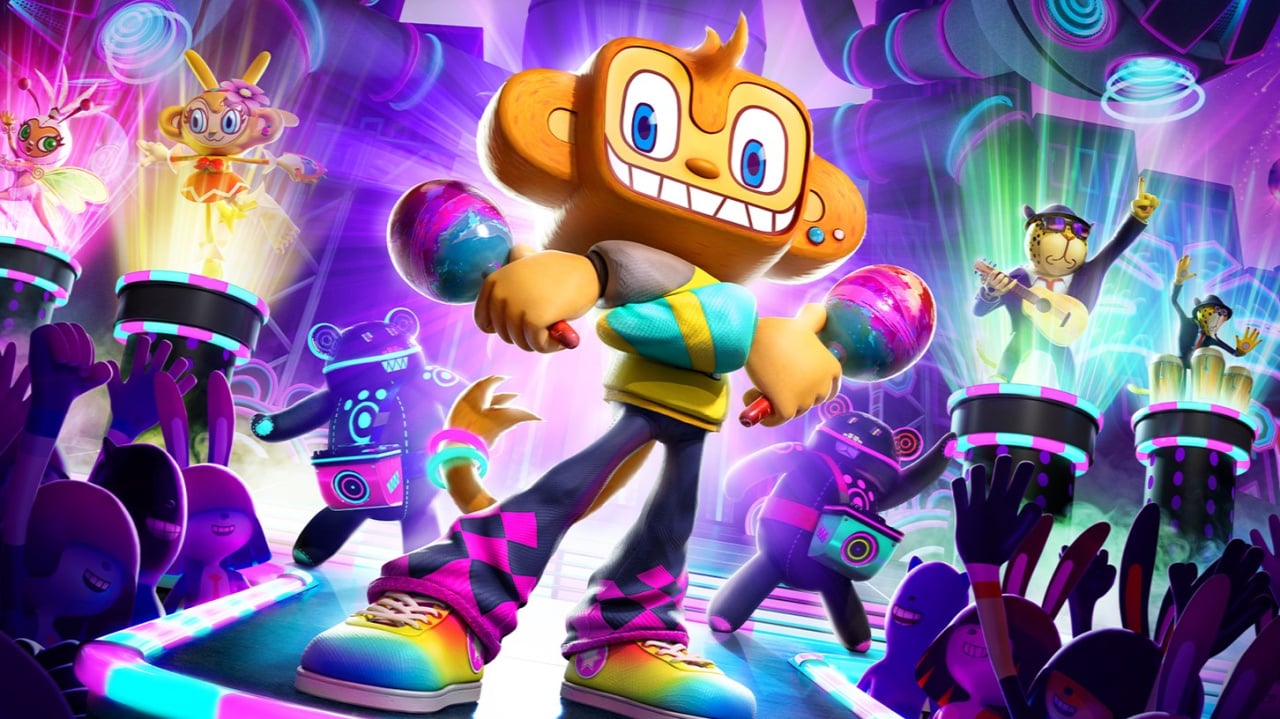
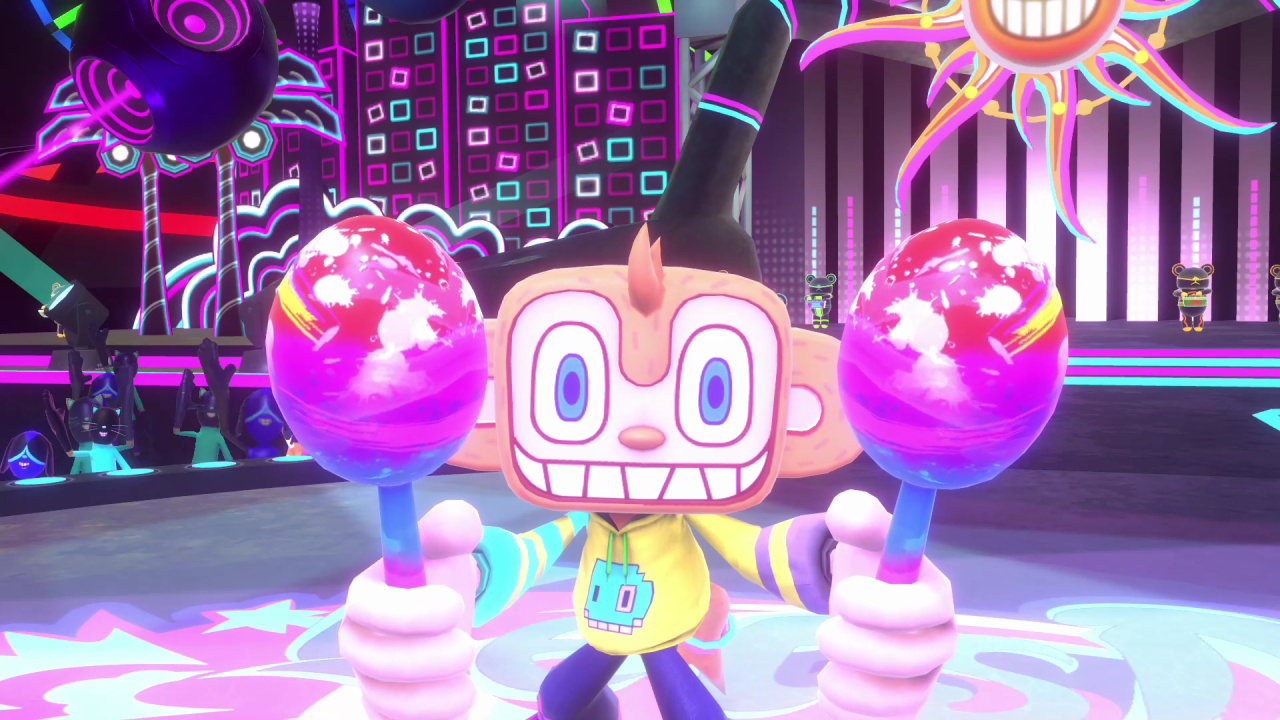
If you know your Sega history, then you most likely know — and love — the maraca-shaking monkey Amigo. Samba de Amigo was a cult hit on the Dreamcast back in 1999, and this little monkey rattled his way into many a heart over the years.
Laced with catchy Latin American music, pop songs, and a pair of maraca-shaped controllers, Samba de Amigo became a cult hit for its arcade-style gameplay and fun aesthetic. Incredibly, while it feels like Amigo has become a staple in Sega’s history — appearing in titles such as Sonic & Sega All-Stars Racing (and its Transformed sequel) — the sombrero-donning monkey’s debut game has never received a direct sequel, with Ver. 2000 launching in arcades and in Japan, and Samba de Amigo on Wii being an enhanced port.
But don’t worry, 2023 is the year of the retro return, and Samba de Amigo: Party Central sees Amigo take to the global stage. Sonic Team is bringing the beloved party music title back, and to tell us a little bit about the series’ history is director and producer at Sonic Team, Shun Nakamura.
Nakamura-san made his debut as a director on the original Samba de Amigo and has plenty of interesting tidbits to share about just how the series has changed from 1999 to today, along with some Smash Bros. desires and how TikTok has influenced this brand-new game…
Nintendo Life: Samba de Amigo is synonymous with the Dreamcast for many Sega fans. How did you come up with an idea for the game and the character of Samba?
Shun Nakamura, Sonic Team producer and director: Samba de Amigo was first created as an arcade game. At the time, it was all about cool music games, but for me, I was more into creating a game where we can forget ourselves and enjoy being fun-loving – a game where we can enjoy the sounds of karaoke or live music, rather than just playing music. That is why I started Samba de Amigo. Japanese people like to use maracas to liven up the atmosphere when they sing karaoke, and this experience led to the introduction of the maraca controllers. At the time, the Sonic team had no experience with arcade games, but we started this as an experimental project, and each time we presented the game, it was well received, which eventually led us to the Dreamcast version.
We decided on the character Amigo because we thought his cheerful image would match the brightness of the monkey character. The final touches were done by the character designer of the Sonic series.
Did you ever consider using other instruments in Samba de Amigo?
Actually, when Nintendo first showed us the Switch hardware, we thought about bringing back Samba, but we decided to change it up a bit and make something new, so we were working on another music game before the system’s launch. But for various reasons, that project didn’t work out. In that previous game, the concept was to control a large number of musical instruments, but the design, unfortunately, went in so many different directions, so it didn’t end up working out.
when Nintendo first showed us the Switch hardware, we thought about bringing back Samba, but we decided to change it up a bit and make something new
With this experience in mind, we decided to proceed with a Samba project instead, where we did not think about other instruments as we wanted to express something silly and enjoyable when using a single instrument. [Samba de Amigo: Party Central] also has a feature called ‘happenings’, which allows the player to enjoy various rhythm games in addition to the normal performance. I think this feature solves the problem of getting bored with playing the same instrument.
Amigo has made numerous cameo!!s and appearances in other Sonic Team games such as the Sega All-Star Racing series. What’s your dream cameo for the character?
Amigo sometimes appears in other games as a separate character, but never in connection with the storyline or anything like that, so I hope that in the future they will be able to be put in a key role. However, in order to do so, I think Amigo will have to become more famous, so I will try my best to make that happen.
Also, I enjoy Smash Bros., so I would like for Amigo to participate in that game as well. I think it would be interesting for Amigo to have these music-based attacks because no other character has that. Of course, I am joking!
Samba Studios in Sonic & All-Stars Racing Transformed — Image: SEGA
Why do you think Samba de Amigo has a cult following among Dreamcast fans?
Personally, I don’t know the real reason. However, I believe that those who like Samba de Amigo are those who enjoy having some light-hearted fun. This remains the most important part of this project, and it’s also the part that we have expanded upon. I think we were able to offer something that makes people feel that even just dancing with maracas is fun, but it also goes beyond that.
I think Amigo will have to become more famous, so I will try my best to make that happen.
In this game, we have this difficulty mode called CRAZY, which is somewhat different from the “difficulty of the game” you would normally see. With CRAZY, we wanted to find ways to get the player to really move their body to the rhythm. By the way, I haven’t told anyone this, but I named it after the CRAZY TAXI’s groove and CRAZY-ness. I hope that fans will support the new Samba in a cult-like way.
The newest entry in the franchise – Samba de Amigo: Party Central – is being billed as a follow-up to the original Dreamcast game. Why is now the time to revisit the series?
In recent years, I think there have been a lot of new remakes of past titles in the game industry. This Samba de Amigo was created with that trend in mind, with the idea that it would be more interesting if it were adapted to today’s market. The Joy-Con and VR controllers were a big part of this title, and while the Dreamcast version was fun with the separate maraca controllers, they were very expensive and could not be used by many people. This time, the hardware comes with the motion controllers, so I think many people will be able to enjoy the game with a low threshold.
In terms of content, we have maintained the base gameplay, while also making important changes that are in tune with the current era and that will make the game even more entertaining. It is not a simple music game, but rather an experience that allows everyone to enjoy the “silly fun” that only Samba can offer.
What influenced the decision to pivot to popular music for Party Central?
Originally, many fans expressed the desire to enjoy other genres of music in Samba de Amigo, even during past productions. Certainly, musical taste varies from person to person, so while putting together a collection of music from the same genre can give it a sense of unity, it also means you may not be able to pull in those who have other tastes. That’s why we made it a priority to broaden the number of genres featured in the game so that even more people can enjoy it.
we made it a priority to broaden the number of genres featured in the game so that even more people can enjoy it.
We moved even more in that direction by challenging ourselves to create more types of music with the DLC. We even included gospel music in the game’s original tracks, so we believe that players will enjoy all the new aspects of the song list. Of course, we always make sure to ask ourselves, “Can this song be enjoyed as a Samba song?”. We believe every song in the game has that fun groove that is unique to this series, so please do not worry.
At the same time, the “world setting” is also built around the fact that Amigo has stepped out of the environment of past games and become a beloved performer around the world. Although you may not normally pay attention to this kind of thing when playing a music game, we have prepared a variety of exciting situations, and we hope that you will be able to witness Amigo’s global debut.
Can you talk about any challenges you faced while developing the game for Switch?
As you can imagine, the most difficult part was adapting the Joy-Con controllers. In Party Central, there are these ‘rhythm balls’ that fly towards rings that are shown on both the upper, middle, and lower sides of the screen. The player’s goal is to shake the controllers in the direction of the target just as each rhythm ball passes through the target. That’s why we needed to make sure the Joy-Con’s responsiveness was in sync with the player, which ultimately proved challenging. We made a lot of adjustments to the Joy-Con settings right up until the very end. We also tested this with a lot of different people and received their feedback throughout the process.
How do you think new audiences will react to Samba de Amigo’s return?
When thinking about the right approach to the “silly fun” concept, I looked at TikTok as a place that contains similar elements. TikTok has a lot of videos that have creators who perform with different kinds of music, and those watching them will laugh and just have a great time. This is actually close to what we were originally aiming for with the first Samba. Here, we focused on creating a game that would be enjoyable for younger people by mixing the new Samba with certain aspects of TikTok.
we focused on creating a game that would be enjoyable for younger people by mixing the new Samba with certain aspects of TikTok.
One example is the ‘happening’ element I talked about earlier. Usually, in music games, you play what you are supposed to play in a certain way – basically, things are very straightforward. But in this game, we decided to incorporate a roulette element as we wanted to emphasize the spontaneous moments and the joy that comes from it rather than following the normal rules. I hope that Samba, which was once considered a cult classic, will become a major music game in the modern era.
I also want to note, that for those who want to enjoy Party Central as a traditional music game, whether for casual play or when competing for a high score, you can always turn the ‘happening’ settings off in the options.
Party Central will be getting a few Sonic the Hedgehog songs. Are there any other Sega franchises that you want to include music from in the future?
Many of Sega’s songs are loved by its fans, and we have a tremendous number of tracks we would like to use. This time, we have prepared music from Ryu Ga Gotoku (Yakuza / Like a Dragon series), Space Channel 5: Part 2, and Rhythm Thief & the Emperor’s Treasure, and we would like to expand this even further. Please look forward to the songs we have already prepared, and if you send us your requests via Twitter and elsewhere, we may be able to increase the chances of even more music…
Image: SEGA
This interview has been lightly edited for clarity.
Thank you to the team at Sega and to Namakura-san for taking the time to answer our questions. Samba de Amigo: Party Central is out on Nintendo Switch on 31st August. A free demo is available to download now from the Switch eShop.
Will you be joining Amigo’s return later this month? Shake it down in the comments.
Now we’re ready to kick back with some of the wonderful games that the Switch has on offer. Have a read through what we’re up to and then take to the comments to let us know what’s on the menu for you this weekend.
Ollie Reynolds, Staff Writer
On the Switch, having completed Luigi’s Mansion 3, I’ve now decided to start Persona 4 Golden. I briefly played it when it launched, but aside from the initial “oh yeah, it’s Persona 4 on the Switch’ novelty, I quickly set it aside in favour of other games. This time, I hope to play it all the way through.
Over on the Series X, I downloaded Texas Chainsaw Massacre The Game from Game Pass and will be giving it a go this weekend. I’ve heard some mixed things about it and I’m not usually one for those asymmetric multiplayer games, but I’m a big fan of the franchise and hopefully I’ll appreciate some of the nods and callbacks.
Jim Norman, Staff Writer
I am going away for the next week so will be looking for games that thrive in handheld mode. I would love to say that this gives me an excuse to finally hit up some of the NSO gems that I have been meaning to get around to for weeks — Oracle of Ages with a dash of Pokémon Trading Card Game, perhaps? But I would be lying if I said that I can see myself playing anything other than Vampire Survivors.
I had read the reviews. I knew the risks. But my god if this isn’t one of the most addictive games I have ever played. When I’m not playing Vampire Survivors, I’m thinking about Vampire Survivors. How do I get out of this loop? Play more Vampire Survivors, I suppose…
Alana Hagues, Deputy Editor
I knew this would happen – I’ve been holding off on buying Vampire Survivors on other platforms because I know it would sink its fangs into me and I wouldn’t stop. Now I have it on Switch… that’s exactly what’s happened. Oops. I’ve got a few 30-minute runs in and some devastating builds, and I just can’t stop.
Otherwise, for something a bit more calming, I’m back on Let’s Build A Zoo thanks to the Aquarium Odyssey DLC. I say calming, but I’m not sure chaotic zoo management and animal splicing is a soothing experience. Ah well…
Gonçalo Lopes, Contributor
What a week for Switch eShop enthusiasts everywhere! Vampire Survivors can easily take hours of your life with its addictive game loop without you even noticing while Shinobi Non Grata is Irem’s Ninja Spirit sequel you never knew you needed. Quake II remains very much in play too. Yet all of that is eclipsed with the incredible tale of revenge of one John Marston. Red Dead Redemption is back in my life, an incredible port that seems impossible to be running this well on a Switch. I don’t even want to pretend to understand how they pulled this off, I just want to keep riding forever.
Game of the week is the Summer vacation of a lifetime. That’s right, the time of the year when I shut down the Internet and go off to play something retro on the beach is upon us. Hope you all stay well in my absence, I will surely see you again on the flip side.
Do your weekend gaming plans match any of ours? Drop the game that you will be maining in the poll below and then take to the comments to let us know what else you have on the cards.
The zip() function in Python is a built-in function that provides an efficient way to iterate over multiple lists simultaneously. As this is a built-in function, you don’t need to import any external libraries to use it.
The zip() function takes two or more iterable objects, such as lists or tuples, and combines each element from the input iterables into a tuple. These tuples are then aggregated into an iterator, which can be looped over to access the individual tuples.
Here is a simple example of how the zip() function can be used:
Keep in mind that the zip() function operates on the shortest input iterable. If any of the input iterables are shorter than the others, the extra elements will be ignored. This behavior ensures that all created tuples have the same length as the number of input iterables.
list1 = [1, 2, 3]
list2 = ['a', 'b'] zipped = zip(list1, list2) for item1, item2 in zipped: print(item1, item2)
Output:
1 a
2 b
To store the result of the zip() function in a list or other data structure, you can convert the returned iterator using functions like list(), tuple(), or dict().
Feel free to improve your Python skills by watching my explainer video on the zip() function:
Working with Multiple Lists
Working with multiple lists in Python can be simplified by using the zip() function. This built-in function enables you to iterate over several lists simultaneously, while pairing their corresponding elements as tuples.
For instance, imagine you have two lists of the same length:
list1 = [1, 2, 3]
list2 = ['a', 'b', 'c']
You can combine these lists using zip() like this:
combined = zip(list1, list2)
The combined variable would now contain the following tuples: (1, 'a'), (2, 'b'), and (3, 'c').
To work with multiple lists effectively, it’s essential to understand how to get specific elements from a list. This knowledge allows you to extract the required data from each list element and perform calculations or transformations as needed.
In some cases, you might need to find an element in a list. Python offers built-in list methods, such as index(), to help you search for elements and return their indexes. This method is particularly useful when you need to locate a specific value and process the corresponding elements from other lists.
As you work with multiple lists, you may also need to extract elements from Python lists based on their index, value, or condition. Utilizing various techniques for this purpose, such as list comprehensions or slices, can be extremely beneficial in managing and processing your data effectively.
multipled = [a * b for a, b in zip(list1, list2)]
The above example demonstrates a list comprehension that multiplies corresponding elements from list1 and list2 and stores the results in a new list, multipled.
In summary, the zip() function proves to be a powerful tool for combining and working with multiple lists in Python. It facilitates easy iteration over several lists, offering versatile options to process and manipulate data based on specific requirements.
Creating Tuples
The zip() function in Python allows you to create tuples by combining elements from multiple lists. This built-in function can be quite useful when working with parallel lists that share a common relationship. When using zip(), the resulting iterator contains tuples with elements from the input lists.
To demonstrate once again, consider the following two lists:
By using zip(), you can create a list of tuples that pair each name with its corresponding age like this:
combined = zip(names, ages)
The combined variable now contains an iterator, and to display the list of tuples, you can use the list() function:
print(list(combined))
The output would be:
[('Alice', 25), ('Bob', 30), ('Charlie', 35)]
Zip More Than Two Lists
The zip() function can also work with more than two lists. For example, if you have three lists and want to create tuples that contain elements from all of them, simply pass all the lists as arguments to zip():
Note: When dealing with an uneven number of elements in the input lists, zip() will truncate the resulting tuples to match the length of the shortest list. This ensures that no elements are left unmatched.
Use zip() when you need to create tuples from multiple lists, as it is a powerful and efficient tool for handling parallel iteration in Python.
Working with Iterables
A useful function for handling multiple iterables is zip(). This built-in function creates an iterator that aggregates elements from two or more iterables, allowing you to work with several iterables simultaneously.
Using zip(), you can map similar indices of multiple containers, such as lists and tuples. For example, consider the following lists:
list1 = [1, 2, 3]
list2 = ['a', 'b', 'c']
You can use the zip() function to combine their elements into pairs, like this:
zipped = zip(list1, list2)
The zipped variable will now contain an iterator with the following element pairs: (1, 'a'), (2, 'b'), and (3, 'c').
It is also possible to work with an unknown number of iterables using the unpacking operator (*).
You can use zip() along with the unpacking operator to combine their corresponding elements:
zipped = zip(*iterables)
The result will be: (1, 'a', True), (2, 'b', False), and (3, 'c', None).
Note: If you need to filter a list based on specific conditions, there are other useful tools like the filter() function. Using filter() in combination with iterable handling techniques can optimize your code, making it more efficient and readable.
Using For Loops
The zip() function in Python enables you to iterate through multiple lists simultaneously. In combination with a for loop, it offers a powerful tool for handling elements from multiple lists. To understand how this works, let’s delve into some examples.
Suppose you have two lists, letters and numbers, and you want to loop through both of them. You can employ a for loop with two variables:
letters = ['a', 'b', 'c']
numbers = [1, 2, 3]
for letter, number in zip(letters, numbers): print(letter, number)
This code will output:
a 1
b 2
c 3
Notice how zip() combines the elements of each list into tuples, which are then iterated over by the for loop. The loop variables letter and number capture the respective elements from both lists at once, making it easier to process them.
If you have more than two lists, you can also employ the same approach. Let’s say you want to loop through three lists, letters, numbers, and symbols:
letters = ['a', 'b', 'c']
numbers = [1, 2, 3]
symbols = ['@', '#', '$']
for letter, number, symbol in zip(letters, numbers, symbols): print(letter, number, symbol)
The output will be:
a 1 @
b 2 #
c 3 $
Unzipping Elements
In this section, we will discuss how the zip() function works and see examples of how to use it for unpacking elements from lists. For example, if you have two lists list1 and list2, you can use zip() to combine their elements:
The result of this operation, zipped, is an iterable containing tuples of elements from list1 and list2. To see the output, you can convert it to a list:
Now, let’s talk about unpacking elements using the zip() function. Unpacking is the process of dividing a collection of elements into individual variables. In Python, you can use the asterisk * operator to unpack elements. If we have a zipped list of tuples, we can use the * operator together with the zip() function to separate the original lists:
In this example, unzipped will be an iterable containing the original lists, which can be converted back to individual lists using the list() function:
The above code demonstrates the power and flexibility of the zip() function when it comes to combining and unpacking elements from multiple lists. Remember, you can also use zip() with more than two lists, just ensure that you unpack the same number of lists during the unzipping process.
Working with Dictionaries
Python’s zip() function is a fantastic tool for working with dictionaries, as it allows you to combine elements from multiple lists to create key-value pairs. For instance, if you have two lists that represent keys and values, you can use the zip() function to create a dictionary with matching key-value pairs.
The new_dict object would now be {'a': 1, 'b': 2, 'c': 3}. This method is particularly useful when you need to convert CSV to Dictionary in Python, as it can read data from a CSV file and map column headers to row values.
Sometimes, you may encounter situations where you need to add multiple values to a key in a Python dictionary. In such cases, you can combine the zip() function with a nested list comprehension or use a default dictionary to store the values.
Now, the nested_dict object would be {'a': [1, 4], 'b': [2, 5], 'c': [3, 6]}.
Itertools.zip_longest()
When you have uneven lists and still want to zip them together without missing any elements, then itertools.zip_longest() comes into play. It provides a similar functionality to zip(), but fills in the gaps with a specified value for the shorter iterable.
When using the zip() function in Python, it’s important to handle errors correctly and account for empty iterators. Python provides extensive support for exceptions and exception handling, including cases like IndexError, ValueError, and TypeError.
An empty iterator might arise when one or more of the input iterables provided to zip() are empty. To check for empty iterators, you can use the all() function and check if iterables have at least one element. For example:
def zip_with_error_handling(*iterables): if not all(len(iterable) > 0 for iterable in iterables): raise ValueError("One or more input iterables are empty") return zip(*iterables)
To handle exceptions when using zip(), you can use a try–except block. This approach allows you to catch and print exception messages for debugging purposes while preventing your program from crashing. Here’s an example:
try: zipped_data = zip_with_error_handling(list1, list2)
except ValueError as e: print(e)
In this example, the function zip_with_error_handling() checks if any of the input iterables provided are empty. If they are, a ValueError is raised with a descriptive error message. The try–except block then catches this error and prints the message without causing the program to terminate.
By handling errors and accounting for empty iterators, you can ensure that your program runs smoothly when using the zip() function to get elements from multiple lists. Remember to use the proper exception handling techniques and always check for empty input iterables to minimize errors and maximize the efficiency of your Python code.
Using Range() with Zip()
Using the range() function in combination with the zip() function can be a powerful technique for iterating over multiple lists and their indices in Python. This allows you to access the elements of multiple lists simultaneously while also keeping track of their positions in the lists.
One way to use range(len()) with zip() is to create a nested loop. First, create a loop that iterates over the range of the length of one of the lists, and then inside that loop, use zip() to retrieve the corresponding elements from the other lists.
For example, let’s assume you have three lists containing different attributes of products, such as names, prices, and quantities.
To iterate over these lists and their indices using range(len()) and zip(), you can write the following code:
for i in range(len(names)): for name, price, quantity in zip(names, prices, quantities): print(f"Index: {i}, Name: {name}, Price: {price}, Quantity: {quantity}")
This code will output the index, name, price, and quantity for each product in the lists. The range(len()) construct generates a range object that corresponds to the indices of the list, allowing you to access the current index in the loop.
Frequently Asked Questions
How to use zip with a for loop in Python?
Using zip with a for loop allows you to iterate through multiple lists simultaneously. Here’s an example:
list1 = [1, 2, 3]
list2 = ['a', 'b', 'c'] for num, letter in zip(list1, list2): print(num, letter) # Output:
# 1 a
# 2 b
# 3 c
Can you zip lists of different lengths in Python?
Yes, but zip will truncate the output to the length of the shortest list. Consider this example:
list1 = [1, 2, 3]
list2 = ['a', 'b'] for num, letter in zip(list1, list2): print(num, letter) # Output:
# 1 a
# 2 b
What is the process to zip three lists into a dictionary?
To create a dictionary from three lists using zip, follow these steps:
In his parting message on social media to more than one million followers, the senior director of corporate communications mentioned how he needed to “take a step back and work on the next chapter” of his career. Now, in an update, that may or may not be related to this, the former face of Xbox – who worked on global PR and marketing launches of games & more – revealed he recently made a trip to Nintendo.
While he’s hashtagged it with “just visiting”, some followers of the Major and Nintendo haven’t been able to resist sharing their own thoughts about a possible match-up. On Larry’s “guest” pass, it’s noted how he visited the office yesterday on the 18th of August.
Considering he has called time at Microsoft, this may just be him saying one last goodbye to any partners at Nintendo’s American branch. The two companies have maintained healthy relations for a long time now, and Nintendo’s HQ is just over the road from Microsoft in Redmond, Washington.
In saying this, it could also mean something else… but it’s probably best not to get too excited. Over the years, employees at both companies have been known to jump between the two industry giants. Nintendo and Microsoft have also worked together on releases such as Minecraft, Banjo-Kazooie, Steve and Alex in Smash Bros., and more recently games like GoldenEye 007 for the NSO service.
You can read more about Major Nelson’s recent departure from Xbox on our sister site Pure Xbox. Do you think the Major is just making one last trip to Nintendo, or could he be up to something else? Give us your own thoughts in the comments below.




 In my opinion, these laws haven’t gotten the attention they deserve (yet), even though they could show a clear way to make considerable improvements in artificial intelligence. This could change every industry in the world, and it’s a big deal.

 For example, a model that’s 10 times larger or trained on 10 times more data will perform better, but the exact improvement can be predicted by a simple formula.


 Recommended: