Hello folks, and welcome to another edition of Box Art Brawl!
Before we get cracking with this week’s brawl, let’s take a look at how we got on last time.
With the launch of Excitebike 64 on Nintendo Switch Online, we looked at the original release on N64, pitting the Western design against Japan. In the end, Japan took the prize with an impressive 64% of the vote, though the North American / European design certainly had its fair share of fans.
This time, we’ll be checking out Sea of Stars on the Nintendo Switch. The game, developed by Sabotage Studio, launched digitally on the eShop at the end of August, but with physical editions coming in 2024 from iam8bit and Kakehashi Games, we thought it would give us the perfect opportunity to scroll our peepers over the gorgeous box art.
It’s worth keeping in mind, however, that the artwork for both regional options here may be subject to change ahead of launch. Heck, if nothing else, it’ll give us the opportunity to do this again at a later date!
It’s another duel this week, so get your votes and let your voice be heard, Solstice Warriors!
Be sure to cast your votes in the poll below; but first, let’s check out the box art designs themselves.
Europe / North America
Image: Sabotage Studio/iam8bit
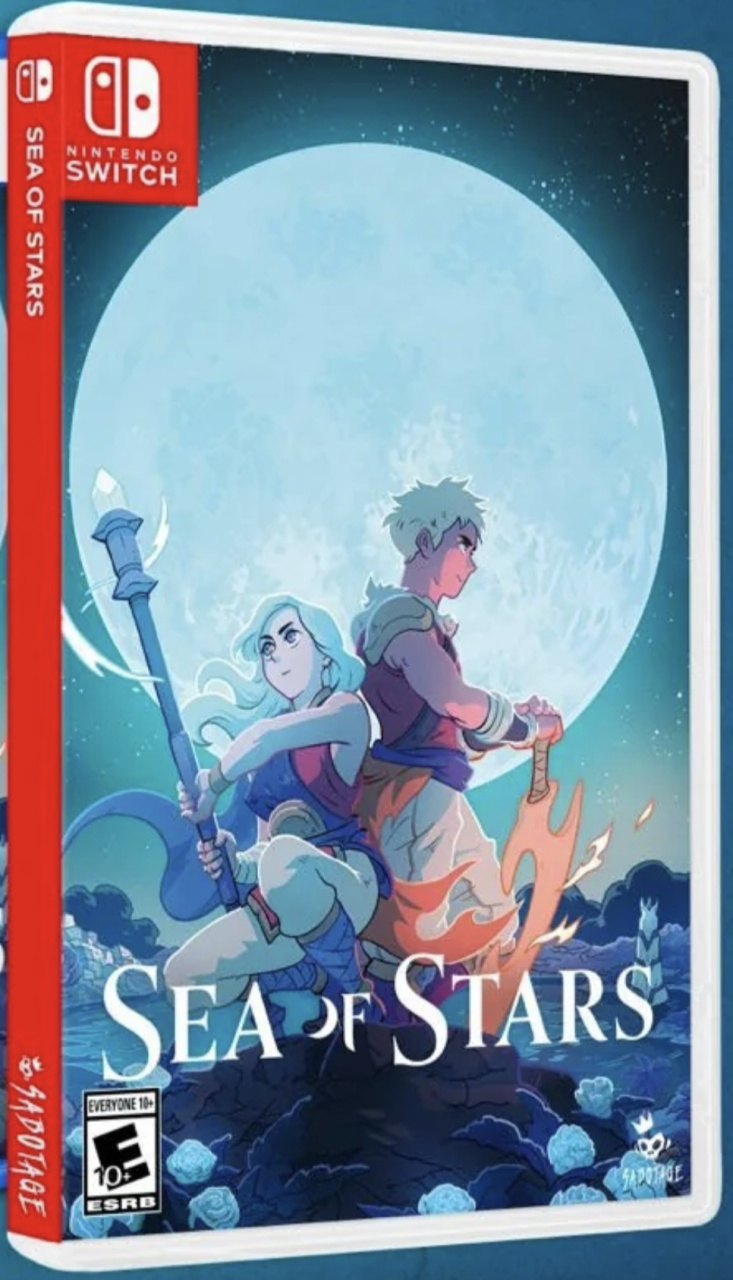
The Western design for Sea of Stars uses the standard key art that we’re all likely familiar with at this point. It showcases our Solstice Warriors Valere and Zale (poor Garl) looking suitably grand and imposing against an impressive blue moon in the background.
It’s a great composition, with the moon drawing the viewers’ eyes down toward the characters and the logo at the bottom. It’s neat, it’s clean, and we love it.
Japan
Image: Sabotage Studio/Kakehashi Games
Japan’s approach, meanwhile, goes for something a touch busier and features a whole bunch of additional playable characters that you’ll be meeting on your journey. Valere and Zale are front and centre again, but Garl has joined them this time, and the overall colour palette is a lot softer and brighter than its Western counterpart.
This is going to be a tough one, for sure. Who will take the crown this week?
Which region will get the best Sea of Stars box art? (1,770 votes)
North Amerca / Europe48%
Japan52%
Thanks for voting! We’ll see you next time for another round of the Box Art Brawl.
Super Mario Bros. Wonder has already been praised in early hands-on previews for being one of the most refreshing takes on the 2D series in a very long time and it seems part of the reason behind this is tied to the fact there was no deadline in the early phases of its design.
Speaking to Wired, the game’s producer Takashi Tezuka mentioned how during the prototyping stage, there was no due date, which seemingly encouraged more creativity and ideas. Here’s exactly what he had to say:
Takashi Tezuka: “I wanted to prevent people from saying, ‘We won’t make that deadline, so that’s why we didn’t do it—we can’t do it,’”
Mario Wonder’s director Shiro Mouri added to Tezuka’s comment, mentioning how the number of ideas generated for Wonder effects was apparently in the thousands, and from there, the best ones were refined:
Shiro Mouri: “The number of ideas we got was probably over a thousand, 2,000 ideas.”
Wonder effects have the ability to completely transform courses in all sorts of unique and unexpected ways. This upcoming Switch release also has a lot of other immediately noticeable differences compared to the average 2D Mario game – such as elephant power-ups and talking flowers.
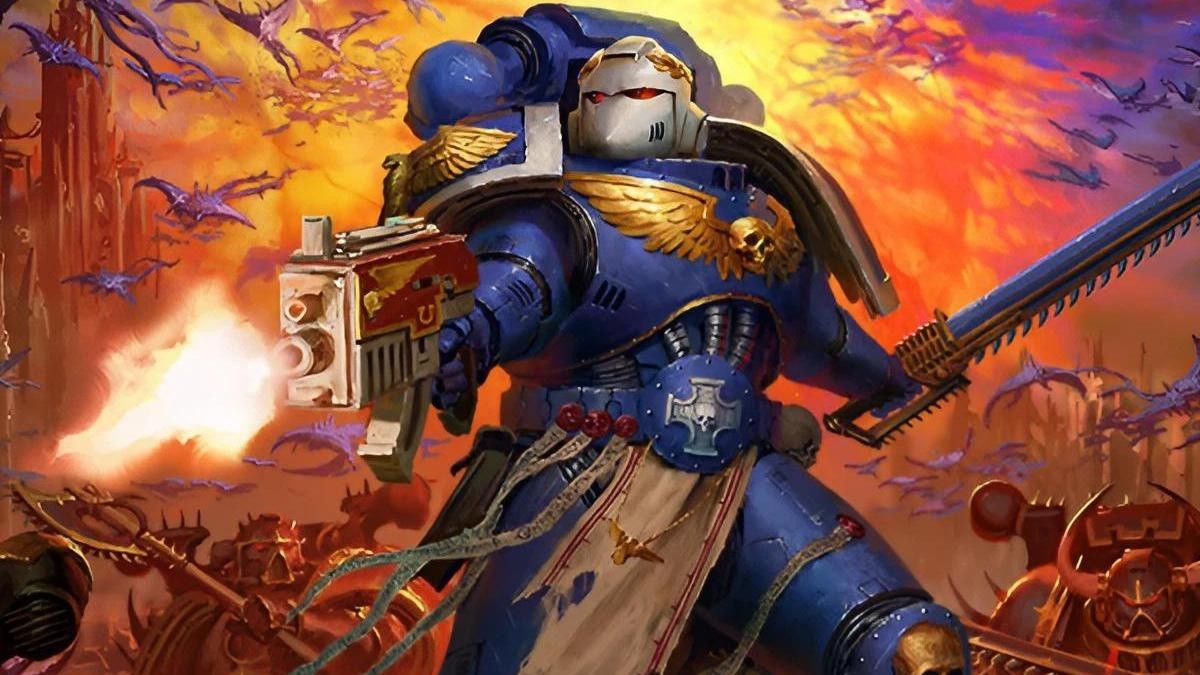
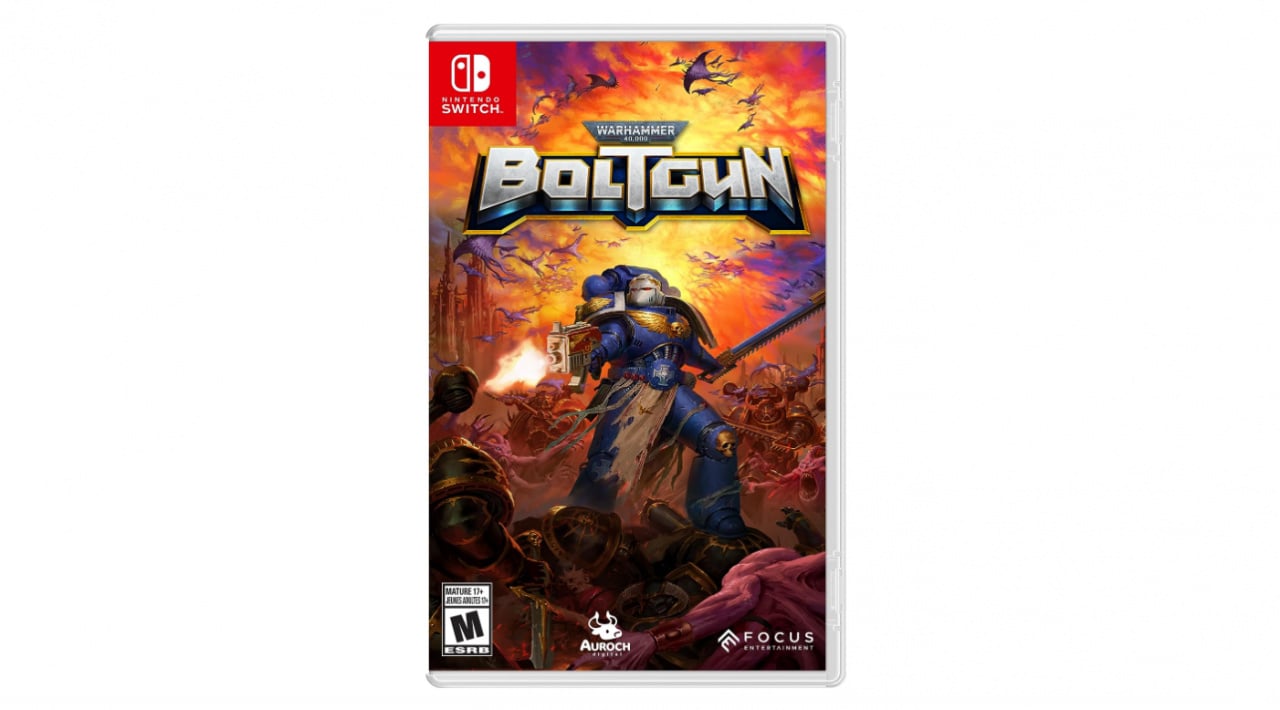
If you were hoping to see a hard copy release of the retro-style FPS Warhammer 40,000: Boltgun, today is your lucky day.
Boxed versions are now appearing online. According to a listing on Amazon, the game will be priced at $39.99 USD and is expected to be released on 5th September 2023. Here’s a look at the boxart:
When this game arrived on the Nintendo Switch back in May of this year, we thought it was a fun game to tear through and highly recommended it to anyone looking for a retro-inspired FPS fix. The game also got a quality-of-life update in July.
Will you be adding this game to your Switch library? Tell us below.
Final Fantasy Switch fans are in for a treat this November, with Square Enix announcing it will be adding 11 songs from the new entry Final Fantasy XVI to the rhythm game Theatrhythm Final Bar Line.
These 11 songs will arrive on 1st November as part of the Season Pass Vol. 3. The good news is the pack will also be available to purchase separately. Here’s the full list of tracks, along with an official graphic:
1. My Star – 2. Hide, Hieaway – 3. To Sail Forbidden Seas – 4. Away – 5. Control – 6. Titan Lost – 7. Ascension – 8. The Riddle – 9. Logos – 10. Find the Flame – 11. No Risk, No Reward
If you’ve not tried out Theatrhythm Final Bar Line, you can always download the game’s demo via the Switch eShop. There’s also our Nintendo Life review to check out, if you want to learn more:
Will you be returning to Theatrhythm Final Bar Line to try out these tracks? Leave a comment below.
Nintendo’s amiibo line might not be quite as busy as it once was, but there are still new figurines arriving on a regular basis.
With this in mind, there are reports of updated packaging for Nintendo’s Super Smash Bros. Ultimate amiibo series. A recent post from a Famiboards forum member shared some photos of the new look.
It’s got quite a lot of attention online because there’s supposedly “no mention” of the Switch or other compatible platforms on the back of the box:
Famiboards user Ajimi: “I work at retail in France, and today we received “new” Smash amiibos (Link, Luigi and DK so far). They are the same as before, but the back of the box is different, a lot more neutral (no pictures and no mention of a specific game or console).”
As noted by amiibo Alerts in the social media post above, the new box on the left now just mentions how amiibo can be used with “compatible software”, whereas the old one actually showed all compatible platforms as well as some information about the game.
There’s already been some speculation Nintendo could be “future proofing” its amiibo line. There could also be many other reasons behind a possible update, and it’s worth noting Nintendo no longer sells or really supports the 3DS and Wii U – so there’s that to consider as well.
This same design has been spotted in other regions as well as previously highlighted by Amiibo News on social media:
If we hear anything else, we’ll let you know. Have you come across this new amiibo packaging? Tell us in the comments.
Being able to work with some of the biggest IPs in the world like Mario and Zelda is probably a dream for many aspiring game developers, but how many people actually stick with a career at the video game giant Nintendo?
According to new data from Biz Journal (via a translation by Tokyo Game Life), Nintendo has a 98.8% employee retention rate in Japan. That’s almost a perfect score, and when you compare it to Japan’s average employee retention rate of 70% it’s even more impressive!
As further stated by the source, some of the factors behind this retention rate include brand strength, the small number of new hires and a strong employee welfare program. A translation courtesy of GoNintendo also notes how “Nintendo’s approach to same-sex relationships and diversity are also positive” and “for every 100 employees the company brings on, just one decides to quit”.
Unfortunately, we don’t have any new data on Nintendo’s employee retention rate at its other branches around the world, but we do know there are many key figures who have enjoyed long and successful careers at the company throughout its history.
Would you work at a place like Nintendo? How about another video game studio? Leave a comment below.
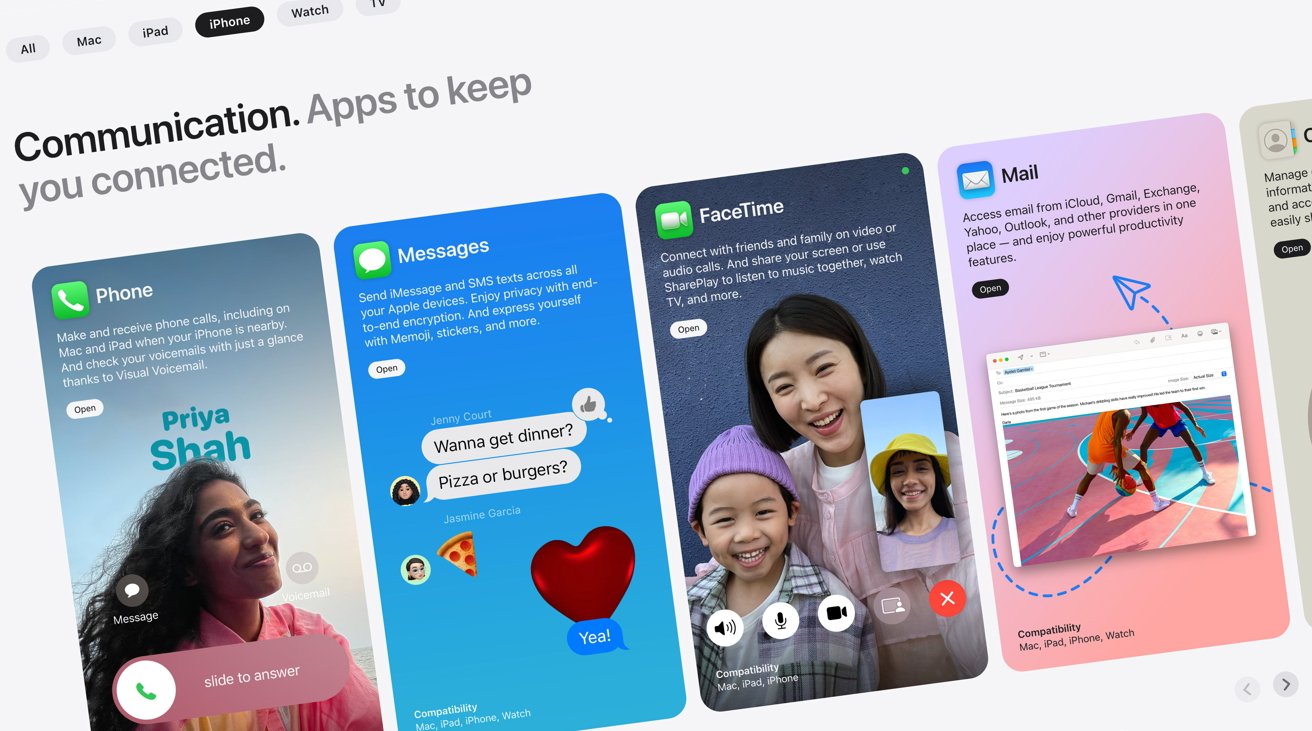
Apple has added a new page to its website, with Apps by Apple promoting all of the first-party tools and applications Apple makes for its iPhone and other hardware.
Updated on Saturday, the new Apps by Apple page explains users can “connect, create, and get things done with powerful and intuitive apps designed to be accessible, private, and secure.”
The headline carousel has slides promoting Messages, Safari, Final Cut Pro for iPad, and Logic Pro for iPad. Each listing, along with a small paragraph explaining what the user can get out of using the app, is accompanied by a link for users to find out more.
Further down the page are smaller carousels, organized by Communication, Creativity, Productivity, Exploration, Entertainment & Home, Health & Fitness, and Features. The default All view will show all apps on each carousel, but users can also elect to view apps for the Mac, iPad, iPhone, Apple Watch, or Apple TV, with the lists adjusting to match.
At the bottom, Apple has a large grid of non-interactive app icons, showing all of the smaller feature-like apps its operating systems also provide.
Toward the bottom of the page, Apple reiterates its commitment to privacy and accessibility, and a final part that takes users to the App Store.
The timing of the page’s introduction is curious, as Apple is thought to be bracing itself for the European Union to force the company to allow third-party App Stores to exist on its devices in 2024. It also occurs ahead of the expected fall release of iOS 17 and its other milestone operating systems.
As you dive into the crypto ecosystem, you may come across Polygon (MATIC) and Ethereum (ETH), two popular and interconnected projects. What’s the relationship of those two projects and tokens?
Polygon, formerly known as Matic Network, is an interoperability and scaling framework designed for building Ethereum-compatible blockchains. Its native token, MATIC, serves multiple purposes, including governance, staking, and gas fees.
On the other hand, Ethereum is a well-known decentralized platform that enables the creation and execution of smart contracts and decentralized applications (dApps) using its native cryptocurrency, Ether (ETH).
Disclaimer: This is not financial advice. The author of this post holds both tokens. No guarantee of correctness – this is a complicated space and errors can be made easily. Also projects change over time.
When examining the connection between MATIC and ETH, it’s important to recognize that rather than competing, Polygon is designed to complement and enhance the Ethereum network.
By offering solutions for scalability and reducing transaction costs, Polygon emerges as a valuable ally for Ethereum in its journey to improve the overall crypto ecosystem.
Understanding Matic and Ethereum
Let’s dive into the connection between Matic (also known as Polygon) and Ethereum.
Matic, or Polygon, is an interoperability and scaling framework designed for building Ethereum-compatible blockchains.
While Ethereum is a well-known and widely-used platform for decentralized applications (dApps), it faces problems related to scalability and transaction fees. Polygon aims to resolve these issues by operating as a side-chain, or secondary layer, to the Ethereum main chain.
As a developer, you’ll find it beneficial to work with Polygon since it’s compatible with Ethereum-based dApps and smart contracts. This compatibility means that you can easily integrate your work on Ethereum with the Polygon network. By doing so, you can take advantage of improved transaction speeds and lower fees without having to leave the Ethereum ecosystem.
The MATIC token plays a crucial role in the Polygon network. Originally an ERC-20 token on the Ethereum blockchain, MATIC serves as the native cryptocurrency of the Polygon network. It is used for governance, staking, and paying transaction fees within the platform. This dual existence of MATIC on both Ethereum and Polygon allows for seamless interaction between the two networks.
An essential component of the Polygon framework is its consensus protocol, which relies on Proof of Stake (PoS). In PoS systems, network participants called validators are randomly assigned to produce new blocks. These validators secure the network by staking their tokens, boosting the network’s security and performance. As a user in the Polygon ecosystem, you can also participate in the staking process to earn rewards and contribute to the platform’s stability.
As you explore the crypto landscape, you might wonder why Matic token, now known as Polygon, emerged as an essential aspect of Ethereum’s ecosystem. To understand this, let’s dive into some of the limitations of the Ethereum network that led to the development of Matic.
Ethereum’s underlying technology has faced challenges in the form of high gas fees and network congestion. As more users and developers adopt the Ethereum platform, these issues have become more prominent. High gas fees make using Ethereum-based applications expensive, discouraging new users from joining the network. Moreover, network congestion slows down transaction processing times, leading to a less efficient user experience.
To address these limitations, Ethereum developers have been working on multiple upgrades focused on improving the network’s scalability, security, and energy efficiency. However, the transition is a gradual process, and during this time, solutions are needed to alleviate network constraints.
This is where Matic, now known as Polygon, comes into play. Polygon is an Ethereum-compatible Layer 2 scaling solution that enables fast, inexpensive, and secure off-chain transactions. By handling transactions off the main Ethereum chain, Polygon takes a significant load off the congested Ethereum network, thus mitigating the issues of high gas fees and network congestion.
Functionality of Matic
Matic, now known as Polygon, offers a layer-2 scaling solution for Ethereum, providing significant improvements in transaction speed and cost. As you explore the functionality of Matic, you’ll notice its role in enhancing Ethereum’s ecosystem, particularly in the DeFi space.
When it comes to assets, the Matic ecosystem supports various tokens and digital assets, as well as enables the creation of decentralized applications (dApps). With Matic, your transactions on the Ethereum-compatible sidechain experience faster execution and lower gas fees. These reduced transaction fees are possible due to Matic’s Plasma framework, a plasma chain designed for enhanced scalability and security.
The native token of this ecosystem is the MATIC token, which has multiple functions. For instance, MATIC is used for staking, allowing you to secure the network and earn rewards from the validation process. Furthermore, the token is employed for governance, enabling you to participate in protocol upgrades and other decisions that affect the ecosystem.
To interact with Matic and its supported dApps, you can use popular wallets such as MetaMask. Integration with these wallets provides a seamless and familiar experience for Ethereum users. Additionally, Matic is compatible with various DeFi platforms, like Aave, which can be easily accessed through the sidechain.
Important to note are the validators in the Matic network. Validators work by confirming transactions and adding them to the sidechain, ensuring smooth and efficient operations. Stakers, or token holders, can delegate their MATIC tokens to these validators, maintaining the network’s security while earning rewards from successful transaction confirmations.
How Matic Works
Matic, or now known as Polygon, is an Ethereum layer-2 scaling solution that provides a faster and more efficient network for Ethereum-based transactions. In this section, we will explain how Matic works, what it offers to users, and its benefits for the Ethereum ecosystem.
When using Ethereum, you may have encountered issues like high gas fees and slow transaction times, which can be off-putting for users and developers alike. Matic aims to address these problems by using a proof-of-stake consensus mechanism on its sidechain, which runs parallel to the Ethereum mainnet. By doing this, it can process transactions more quickly, with lower gas fees, and increased transaction finality.
To begin using Matic, you must first set up your MetaMask wallet to interact with the Matic sidechain. This process involves configuring the custom RPC settings in MetaMask, which allows you to connect to the Matic network seamlessly. Once your wallet is set up and connected, you can easily switch between Ethereum mainnet and Matic sidechain as needed.
The Matic network uses its native token, MATIC, which is also an ERC-20 token. This token is utilized for paying gas fees on the network, securing the network through staking, and participating in governance decisions. The proof-of-stake consensus mechanism keeps Matic secure and efficient, allowing it to support a higher transaction throughput compared to the Ethereum mainnet.
There are several scaling techniques that Matic uses to achieve its goals, including zk-rollups and plasma chains. Without delving too deep into the technical aspects, these methods help to bundle multiple transactions together into one single transaction, making them faster and more efficient, ultimately resulting in lower gas fees.
As Ethereum evolves with the introduction of Proof-of-Stake and Ethereum 2.0, Matic is expected to play a significant role in helping the network scale and overcome its challenges. By providing faster transaction speeds, reduced gas fees, and an overall improved user experience, Matic has made it possible for developers and users to interact with the Ethereum ecosystem more seamlessly, leading to increased adoption and growth.
It’s important to note that Matic does not compete with Ethereum, but rather, it acts as a complementary tool that helps the Ethereum network work more effectively and efficiently. With this mutual support, both Matic and Ethereum can continue to thrive and maintain their strong positions within the blockchain space.
Matic’s design consists of several key elements, including the Ethereum main chain, validators as a service, a security layer, and an execution layer. As you explore Matic’s architecture, you’ll notice that it was built to enhance Ethereum’s ecosystem while maintaining compatibility.
The Ethereum main chain plays a crucial role in Matic’s architecture. Matic acts as a layer-2 network, which means it is designed as an add-on layer to Ethereum without altering the original blockchain layer. It provides Ethereum with increased scalability, with technologies like zero-knowledge proofs, optimistic rollups, and fraud proofs.
Validators as a service are an essential aspect of Matic’s security layer. This service allows for a decentralized network of validators who stake Matic’s native token, MATIC, to participate in the proof-of-stake (PoS) consensus mechanism. This system ensures that the network remains secure and trustworthy while also providing users with an energy-efficient validation process.
Matic’s security layer is further reinforced through the integration of additional technologies such as zero-knowledge proofs, which help add an extra layer of privacy to transactions. Furthermore, optimistic rollups and fraud proofs work to enhance transaction processing and ensure data integrity.
The execution layer in Matic’s architecture is responsible for processing transactions and smart contracts. Built upon Ethereum’s virtual machine, it ensures that smart contracts are forward-compatible and can efficiently run on both Ethereum and Polygon networks. This compatibility is beneficial for developers looking to build decentralized applications (dApps) that can operate seamlessly across both ecosystems.
In summary, Matic’s architectural design focuses on enhancing Ethereum’s functionality while maintaining compatibility. By integrating components like the Ethereum main chain, validators as a service, a security layer, and an execution layer, Matic provides a robust and scalable layer-2 solution for Ethereum users and developers.
User Experience and Applications on Matic
In the realm of blockchain technology, the Polygon Network takes center stage as an interoperability and scaling framework for building Ethereum-compatible blockchains. Developed by Mihailo Bjelic, this solution addresses the challenges of slow transaction speeds and high gas fees typically associated with the Ethereum network.
As a user, you’ll find that the user experience on Polygon (formerly known as Matic Network) is seamless and hassle-free. With its sophisticated functionalities, Polygon enables you to interact with web3.0 applications effortlessly. The platform’s interoperable blockchains ensure compatibility with Ethereum-based decentralized apps (dApps) while significantly reducing transaction costs and improving the overall speed.
Security is a top priority on the Polygon Network. Fast, inexpensive, and secure off-chain transactions for payments and general interactions with off-chain smart contracts are made possible by its Layer 2 scaling solution. Even when you’re dealing with complex apps and high-value data, your transactions remain safe and secure.
To access the benefits of Polygon, you can download the network’s compatible wallets or simply use popular options like Coinbase, which allows you to store, trade, and manage the native MATIC token. As a participant in the ecosystem, you can leverage the MATIC token for governance, staking, and paying gas fees.
Frequently Asked Questions
How does Polygon complement Ethereum?
Polygon is an interoperability and scaling framework that helps expand the capabilities of Ethereum by building Ethereum-compatible blockchains. It enhances the Ethereum ecosystem by providing a faster, more scalable, and cost-effective solution for developers. By acting as a “Layer 2” solution, it improves the transaction throughput and reduces gas fees, all while maintaining compatibility with Ethereum’s infrastructure, thus complementing the Ethereum network.
What is the role of MATIC in the Polygon ecosystem?
MATIC is the native token of the Polygon network, serving various purposes within the ecosystem. It is used for governance, allowing token holders to participate in decision making and protocol upgrades. Additionally, MATIC is employed for staking to secure the network and validate transactions. Lastly, the token is utilized to pay gas fees, providing an incentive for validators to process transactions and maintain the network’s smooth operation.
How do Ethereum transaction fees compare to those on Polygon?
Ethereum transaction fees, or gas fees, are typically higher than those on Polygon. Due to Ethereum’s popularity and limited scalability, transaction fees can become expensive, especially during peak congestion periods. Polygon, as a Layer 2 solution, enables more transactions per second and, consequently, lowers the gas fees. Therefore, using Polygon can be significantly more cost-effective for developers and users compared to relying solely on Ethereum.
What are the advantages of building on Polygon over Ethereum?
Some of the main advantages of building on Polygon instead of directly on Ethereum include lower transaction costs, faster confirmation times, and increased scalability. Additionally, Polygon supports multiple consensus algorithms and provides developer-friendly SDKs and APIs. By being Ethereum-compatible, projects built on Polygon can easily integrate with the existing Ethereum infrastructure, tools, and applications, benefiting from the robustness and security of Ethereum while enjoying Polygon’s performance enhancements.
Can assets be transferred between Ethereum and Polygon networks?
Yes, assets can be transferred between Ethereum and Polygon networks through bridge technologies. These bridges facilitate seamless movement of assets, such as tokens and NFTs, between the two networks. For instance, the Polygon PoS Bridge allows swapping of assets between the Ethereum mainnet and the Polygon sidechain. By using bridges, users can enjoy the benefits of both networks, combining Ethereum’s security with Polygon’s speed and lower transaction costs.
How do Ethereum smart contracts interact with Polygon?
Ethereum smart contracts can interact with Polygon in multiple ways. One approach is by deploying Ethereum-compatible smart contracts directly on the Polygon network. This enables developers to leverage Polygon’s high-speed, low-cost environment while maintaining compatibility with Ethereum’s tools and infrastructure. Additionally, smart contracts on Ethereum can interact with Polygon through bridges or other cross-chain solutions, enabling seamless communication and asset transfer between the two networks.
Alcohol takes on an almost spiritual quality in Harvest Moon 64 — Image: Natsume
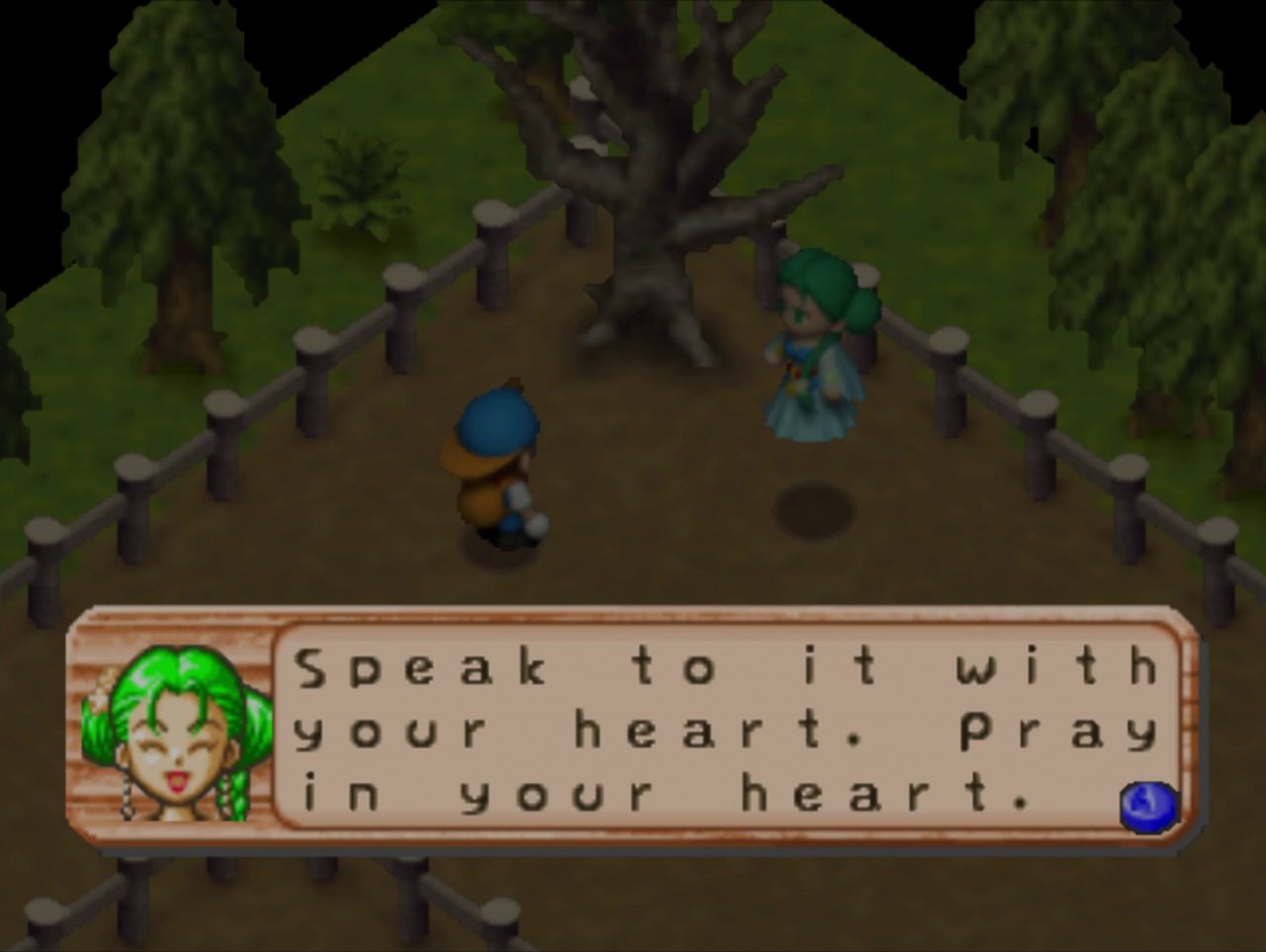
Nintendo games are usually all-ages affairs, but every once in a while a game breaks the family-friendly mold the company’s consoles are known for. One example, Natsume’s Harvest Moon 64 (Bokujō Monogatari 2 in Japan,) is set to be released on Japan’s Nintendo Switch Online service sometime this year, and we’re feverously awaiting announcement of a Western release (seriously— it’s the best one of these kinds of games that isn’t called Stardew Valley.) However, even though it was re-released on Wii U’s Virtual Console, its absence from Nintendo’s Switch subscription service in the West may be due to one of the game’s central mechanics.
Nintendo has a history of censorship in the West, especially in the ’90s. Around the creation of the ESRB, when there was more outrage about how video games were affecting our youths, Nintendo had a strict policy calling for certain alterations to licensed games on its platforms during the localization process. The company would routinely require the removal or replacement of any instances of suggestive content, gore, and religious iconography in order to make its library more family-friendly and palatable in the West. One of the most common practices to appease this policy was stripping out any reference to alcohol and replacing it with something more ‘wholesome.’
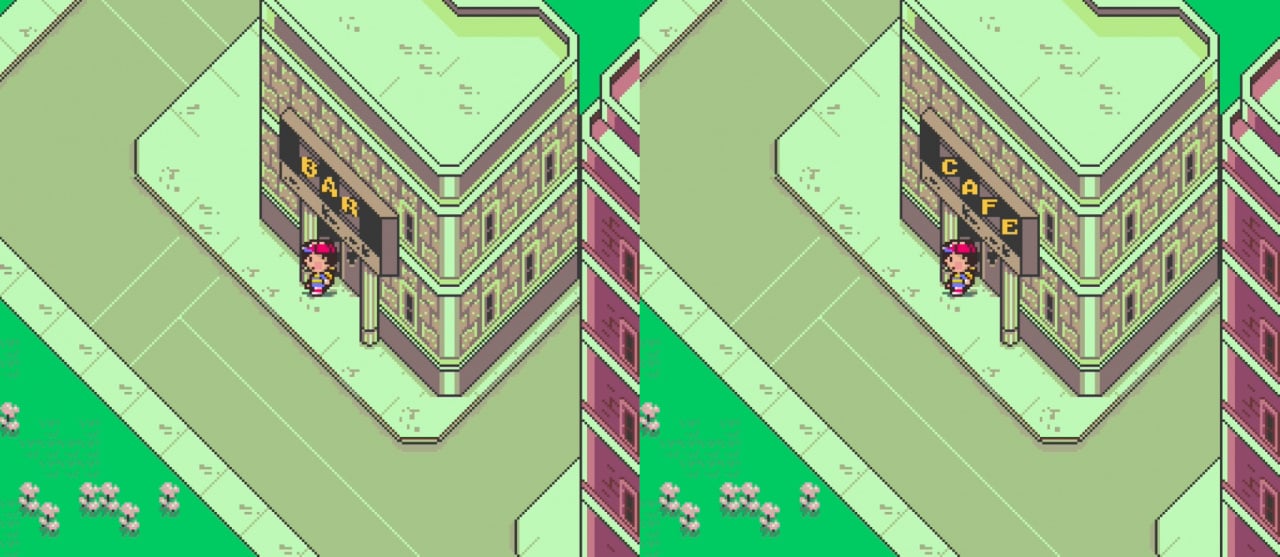
In the original Japanese release of Pokémon Red / Blue / Green / Yellow, a drunk old man in Viridian City briefly blocks your path before sobering up. In the American release, however, he’s simply grumpy and in need of his morning coffee first. The changes don’t stop there. Buildings clearly labeled ‘BAR’ in Japan’s Mother 2 are all renamed to read ‘CAFE’ in America’s EarthBound. In Mike Tyson’s Punch-Out!!, Vodka Drunkenski becomes Soda Popinski. Wario becoming dizzy and belching after being hit with a ball in Wario Land II suddenly makes much more sense when you realize he was originally being hit with a mug of frothy beer. This censorship was also required of third-party games, with Tecmo’s Secret of the Stars replacing an entire alcohol-related town named ‘Drunkards’ with the coffee-dependent ‘Sleepers.’
You’re able to challenge every person to a drink-off, winning handily if you’ve spent the year honing your alcohol consumption. Some are impressed. Others are dejected. All are drunk.
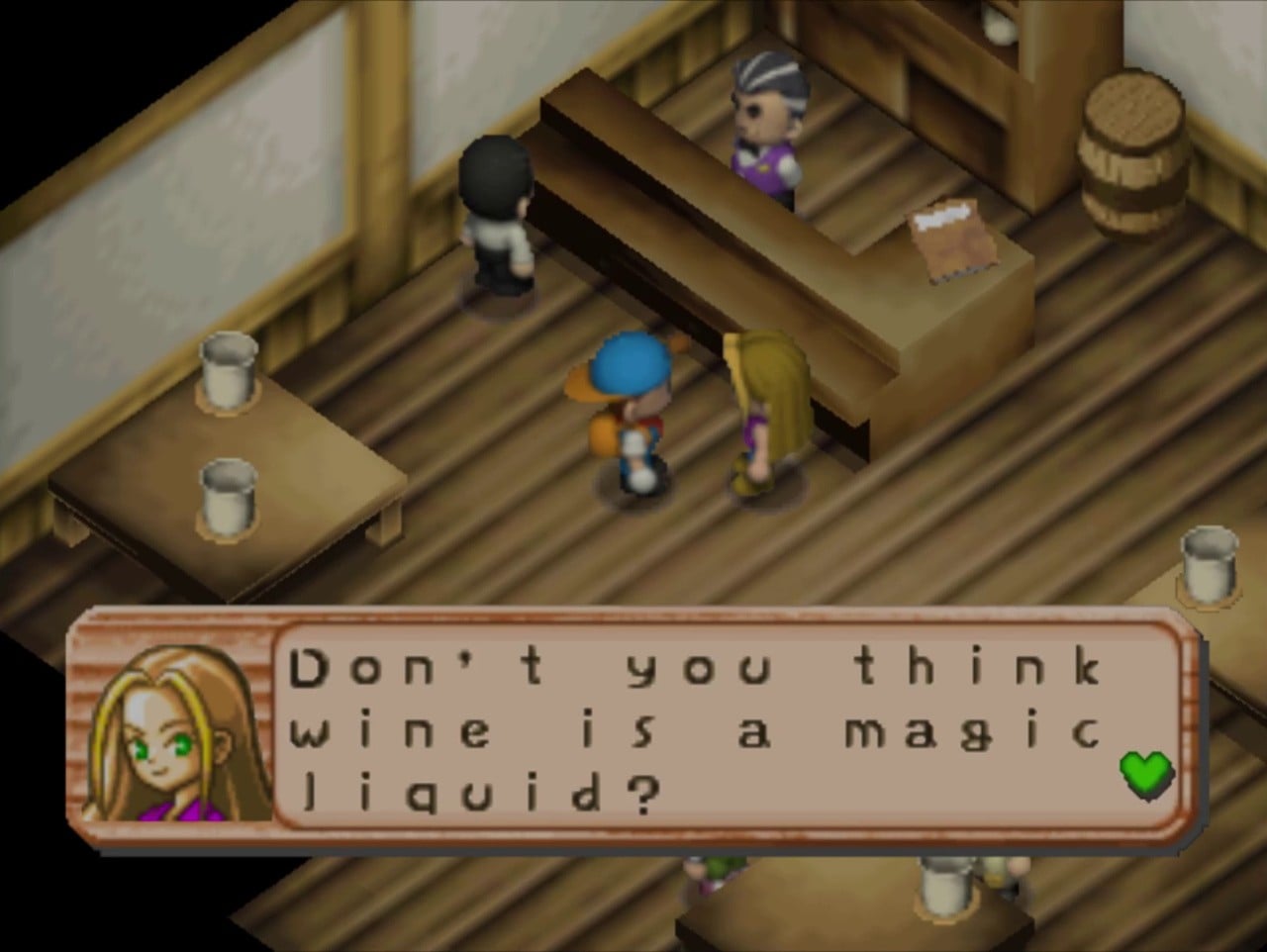
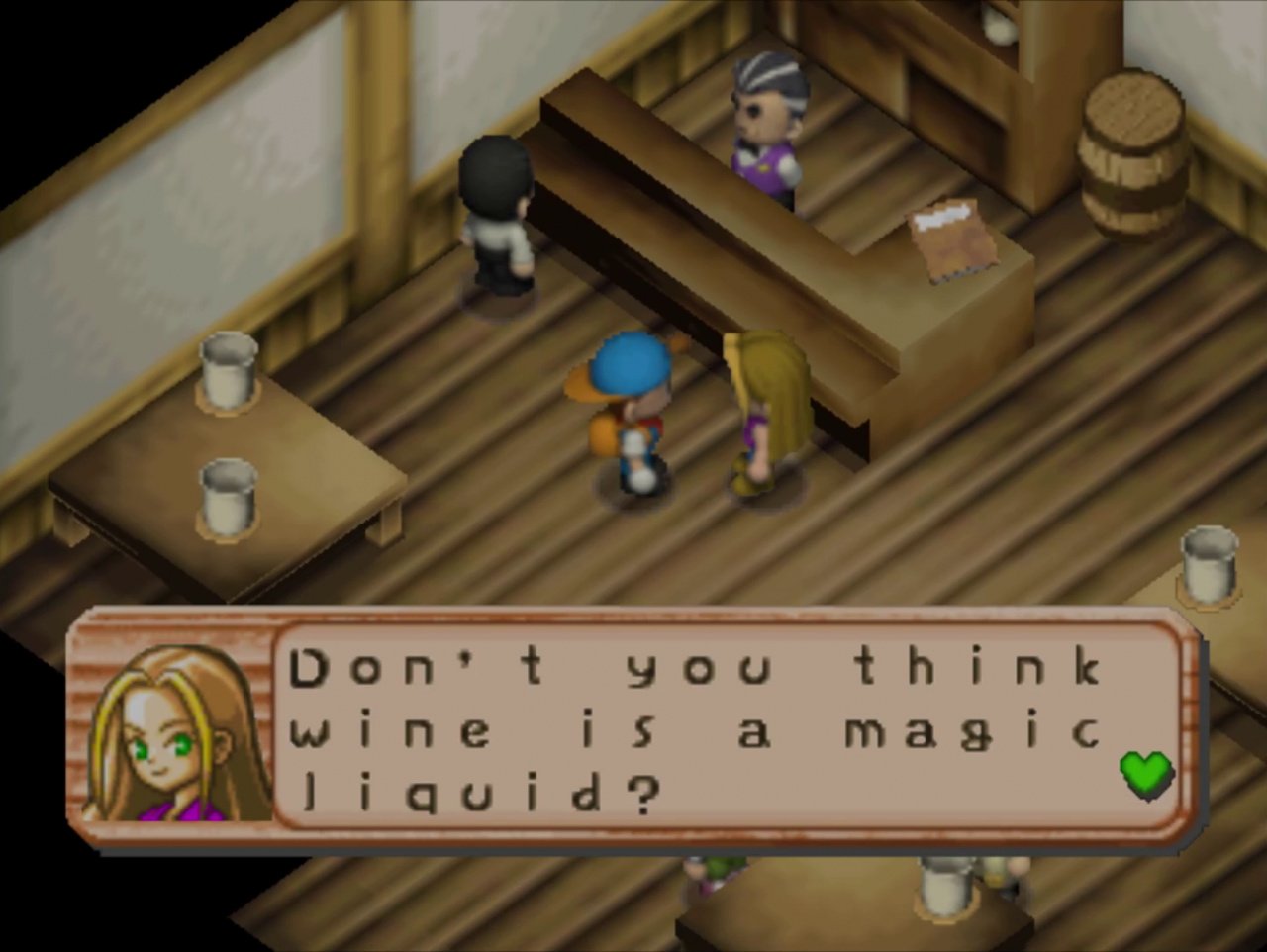
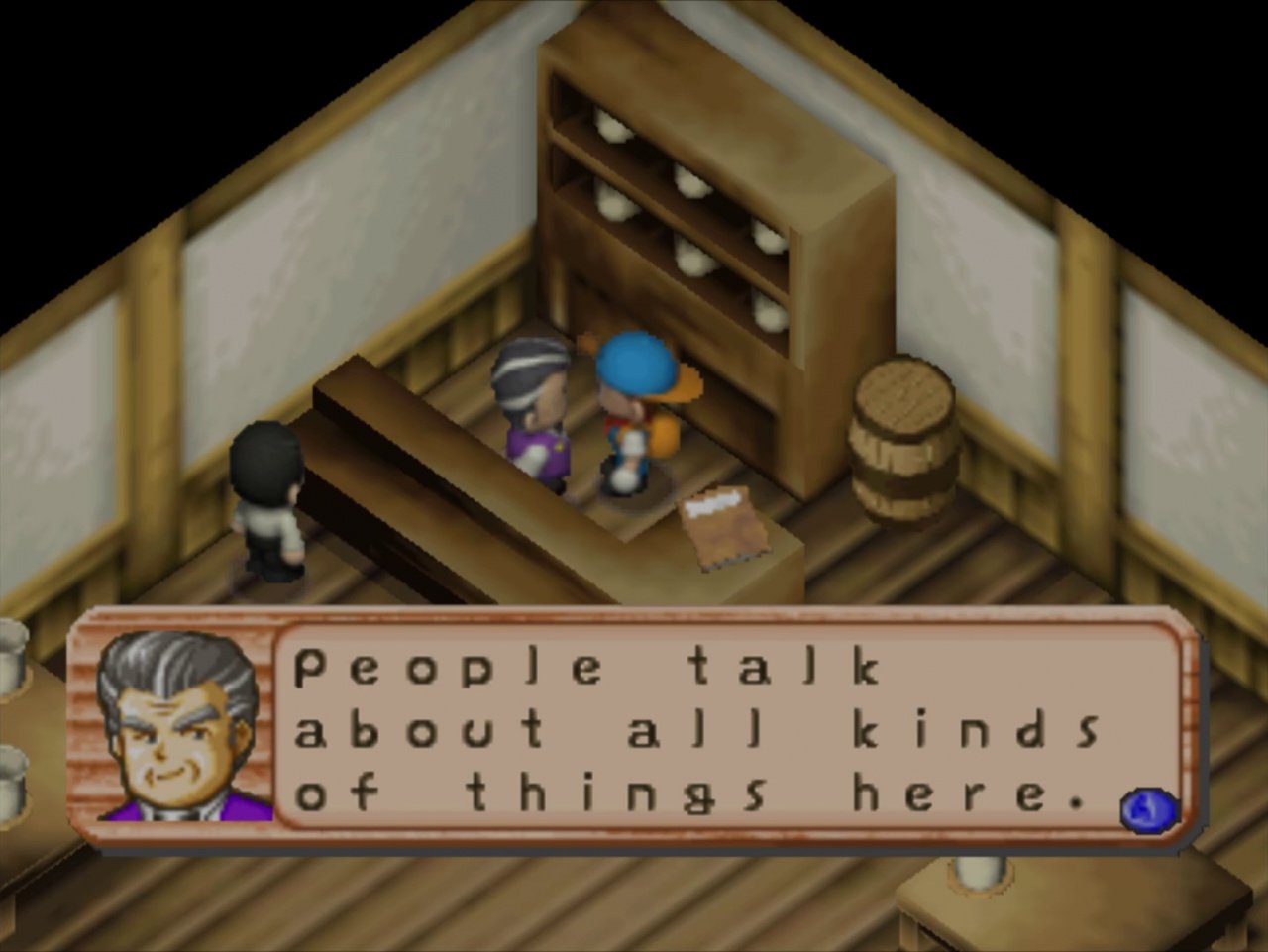
It’s surprising then, that not only did Harvest Moon 64 survive this localization change, but alcohol actually plays a uniquely deep role in the game. Its influence can truly be seen all over, in everything from its story to its mechanics. Take, for instance, the only building in town open during the second half of your day: the bar. At this local tavern you’re able to spend your hard-earned money on a glass of wine, liquor, or beer while surrounded by a fluctuating number of townsfolk. Sometimes lively and boisterous, with numerous residents crowded around wooden tables, other times lonely and barren, with only the bartender there for comfort.
It is here where, already a few drinks in, you uncover the deepest worries and desires of these residents. Harris, the lonely postman, wonders if he’s good enough for Marie, the librarian and mayor’s daughter. The baker, Jeff, ponders if he’s too young to already be waxing nostalgic. Zack, the town shipper, prays he’s capable of raising his young daughter after his wife’s death. All of these people are only able to come out of their shell with the help of this ‘magic liquid.’
Flowerbud Village’s residents share their deepest thoughts at the bar each night — Image: Natsume
The connection between Harvest Moon 64 and alcohol permeates through to the game’s mechanics. A hidden ‘tolerance’ stat determines your ability to outdrink the village residents at the New Year’s Eve celebration. You’re able to challenge every person there to a drink-off, winning handily if you’ve spent the year honing your alcohol consumption. Some are impressed. Others are dejected. All are drunk. Regardless of their reaction, each townsperson you’ve bested stumbles out of the festival with a higher affection stat for you. Drink is a central component of this community, and you’ve proven yourself capable of being a part of it.
Nowhere is this relationship with alcohol more prevalent than in the player’s attempt to restore the vineyard—the game’s longest, most opaque side quest. In the far back corner of Flowerbud Village’s vineyard rests a large, dead tree. It’s been years since the vineyard has produced quality grapes, and the family who runs it has suffered, unable to see the twisted, sickly, barren branches of this tree as anything other than a sign of their own failure.
Karen, the moody and abrasive daughter who works part-time at the bar, dreams of saving up enough money to run away to the city (and away from her family) for good. Gotz, the grumpy father who inherited the vineyard, drinks alone each night, turning down your every attempt to socialize. Sasha, the meek, withdrawn mother, worries heavily about her daughter’s unhappiness. None of them can understand why the quality of their wine isn’t what it used to be, and why that barren tree no longer blooms. Legend has it, however, that in this tree sleeps a spirit. A Goddess of Wine capable of restoring the vineyard—and its family—to former glory. Harvest Moon 64’s very own Dionysus.
It’s by completing this side quest that you’re able to awaken the long-dormant spirit. Through a series of events that include befriending the local bartender, a harvest sprite, and a specific prayer, you’re able to restore the vineyard back to its former glory, its wine becoming sweet and profitable once again. Karen and the rest of her family are overjoyed. One of the workers, Kai, brings by a bottle of the new batch to your farm and drinks with you to celebrate. What were the most standoffish NPCs in the game are suddenly reborn, and, if just for a moment, full of ebullient hope.
With the help of the Harvest Goddess, the vineyard is restored to its former glory — Image: Natsume
It is worth noting that the game tends to celebrate alcohol consumption in a way you wouldn’t likely see today. It’s not blind glorification — the bartender cautions you not to drink too much, and a scene of Karen stumbling drunk on the job is certainly not portrayed as a good thing — but overall Harvest Moon 64 tends to fall short of showcasing more nuanced, negative aspects of drinking. However, for an almost 25-year-old game on a Nintendo console, it’s impressive that it was present at all.
Who knows why Harvest Moon 64 was spared Nintendo of America’s strict censorship policy back in 1999. It’s not as if the game came over from Japan completely unchanged, as a fourth television station and farm completion screen are among the features not brought over from the Japanese version. Probably it was simply too integral to lose or adapt in this case. After all, what would this small country town be without the joys and sorrows of alcohol? How would they celebrate their success? How would they mourn their loss? It’s drinking that brings out these residents’ rich, complicated interior lives, turning would-be stock characters into blooming three-dimensional ones you can truly empathize with.
So next time you’re in Flowerbud Village, take a moment to have a glass of wine and appreciate just how undiluted the English language version of this game was. Cheers!
Good grief, is it really the weekend again? Bonkers.
It’s also September, which means that 2024 will be here in the blink of an eye. Before we all wallow in existential despair, however, let’s take a look back at what went on this week in the world of the Switch.
For now, let’s see what Team Nintendo Life is up to this weekend, shall we?
Ollie Reynolds, Staff Writer
I’m afraid there’s not a great deal I’m playing at the moment, dear friends. I finished Alan Wake Remastered, and so I’m in a bit of limbo at the moment while I wait for Starfield to drop on GamePass (there’s no way I’m paying for the privilege of early access). I might dive into a bit of Aria of Sorrow via the Castlevania Advance Collection; it’s the equivalent of comfort food for me, so it’ll tide me over for the time being.
Alana Hagues, Deputy Editor
My weekend gaming will largely be spent with Sea of Stars, which I’m having a wonderful time with so far. The world and dungeon design tick all of my boxes, and I’m delighted this is living up to my expectations.
I’ve almost finished Virtue’s Last Reward, so I’m looking for something else to hop into — although Zero Time Dilemma‘s pull may be too strong. Since the bug has bitten (though it’s always biting), I might dive into some actual retro RPG action and start Lunar 2: Eternal Blue Complete. Two RPGs at once? Am I mad, you say? Yes.
Jim Norman, Staff Writer
It’s looking like a big weekend of games for ol’ Jim. I started Sea of Stars on release day last week and good grief it really is a beauty, huh? If I can throw a couple more hours into that over the next couple of days, I will be a very happy boy indeed.
Apart from that, it will be back to the sewers for the TMNT: Shredder’s Revenge DLC. I think it will take a little time to build that muscle memory back up, but I am so very excited to dive into this one — totally tubular, man!
Gotta be honest, I’m pretty zonked after a busy week, so I’m looking for something engaging but not taxing this weekend. I downloaded the Star Trek: TNG table for Pinball FX the moment I heard it had dropped and it’s a perfect little diversion – one that’s saved me from the time sucker that is Vampire Survivors.
I’m also eager to continue my way through Sea of Stars. Garl has already become a firm favourite and I’m intrigued to see where the story takes him after the first couple of hours. Enjoy your gaming, everyone.
Do your weekend gaming plans match any of ours? Drop the game that you will be maining in the poll above and then take to the comments to let us know what else you have on the cards.













 Recommended:
  Recommended: