Hot Wheels Unlimited races into soft launch in Canada, Australia, and the UK
Budge Studios has soft-launched a new Hot Wheels game on mobile. Hot Wheels Unlimited is a mobile version of what every Hot Wheels fan dreams of – a racing game where you can build your very own custom tracks.
The game is set in Hot Wheels City, a busy metropolis full of challenges designed to test your speedy skills. Once you’ve let your hair down, you can zoom into the Build-A-Race Festival, where you get to build your very own track and race against your friends. Besides constructing the craziest course ever, you can build your very own collection of iconic speedsters by completing challenges and earning some red wheels. Exchange these wheels for your favourite Hot Wheels, like the monster truck and Rodger Dodger.
Unfortunately for some, Hot Wheels Unlimited is only available to download in select regions. These include Canada, Australia and the UK. While we don’t have an exact global release date for Hot Wheels Unlimited, we can show you the new gameplay trailer and keep you updated for when the game is released.
If you are curious about the gameplay of Hot Wheels Unlimited, then check out the trailer below:
[embedded content]
It’s not often that a 30-second trailer gets us excited, but just looking at those crazy tracks makes me want to dust off my crash helmet and take on the Nemeses.
Posted by: xSicKxBot - 08-11-2020, 12:19 AM - Forum: Windows
- No Replies
Vaccine alliance Gavi turns to Microsoft Teams to launch ‘Jab FM’
The show’s seven-member crew works for Gavi, a Geneva-based organization focused on providing vaccines for children in the world’s poorest countries. As the organization’s approximately 280 employees turned to working remotely when the coronavirus pandemic struck, Mends, Gavi’s director of operations, worried some might become isolated. He pulled together other members of Gavi’s social club, which he runs, to think about ways to help their colleagues connect.
“One of the things that really resonated with me when we were having that conversation was the power of music and the familiarity of hearing people talking,” Mends says. “So I came up with the zany idea that we do a radio station.”
It was also Mends’ idea to use Teams, Microsoft’s collaboration and chat platform, to power the show. He looked at various technologies for connecting audio to create the effect of the crew being together in a studio but found them overly complex and unstable. Instead, he uses a professional microphone that picks up audio from the hosts and guests that is streamed out of a laptop via Teams. A second laptop runs a web radio app used to mix in music and jingles.
“What a simple Teams meeting gave us was that ability to sound like we’re all in the same studio,” Mends says.
For Milena Lawrence-Samuel, Gavi’s communications and change manager, the breakfast show is a way to connect with colleagues she no longer sees around the office.
“Gavi is a really interactive and somewhat informal environment, and I love being able to walk around and have a quick chat with a friend or someone I’ve never interacted with professionally,” says Lawrence-Samuel, who does a tech tip of the day and runs a quiz question on the show.
“Those people have fallen off my radar. This is a way of getting that back. It’s a touchpoint to our colleagues that we don’t get to see every day anymore.”
Gavi helps vaccinate almost half the world’s children. Here, nurses attend a training program on vaccine and health procedures at a clinic in Sri Lanka. (Photo by Mithra Weerakone)
Jab FM (“jab” is Brit slang for an injection, a nod to Gavi’s mission) launched with its first breakfast show in late April and has so far attracted almost 5,000 listeners on every continent except South America, according to Mends. The station plays music around the clock, but the breakfast show is its only live broadcast.
The show airs Tuesday and Friday mornings and is heavily music-focused, with themes often reflecting Gavi’s diverse workforce. One episode focused on African music, with Gavi employees from African nations coming on to request songs and talk about their significance. Another episode was French-themed. Others have celebrated disco, Bollywood music and movie tunes.
The show aims not just to attract Gavi listeners, but actively engage them as guests.
“People feel when they ring in that they’re participating in something,” Mends says. “It’s that sense of community that has motivated people. But the primary purpose was really to give a bit of a lifeline and a bit of normality to those people who were feeling isolated in the beginning (of the lockdown).”
Mends even had jingles created for the show and each crew member to surprise the team. “Although it’s not a professional station, I just thought we wanted to wow people and make them feel it was a real thing,” he says.
The show is an international effort — Mends broadcasts from his basement in Perroy, a town about 15 miles from Geneva, while co-host Ardiff works from his home across the border in Ornex, France. The other crew members are scattered around the Geneva area.
A high point for the show was its live broadcast during Gavi’s Global Vaccine Summit in early June. Held every five years, the event is Gavi’s main fundraising effort, and the stakes this year were especially high.
Parents bring their children to a health center in Dedza, Malawi to be immunized against two deadly diseases, measles and rubella. (Photo by Jacques Schmitz)
The summit, attended by 52 countries, was originally to be held in London and was instead going online for the first time. Staffers wondered if vaccine funding would be a high enough priority during the global pandemic to meet Gavi’s target of $7.4 billion. Funding was needed for Gavi’s routine vaccination programs, and the organization was also launching a program to distribute an eventual COVID-19 vaccine to impoverished countries.
Nerves were running high as Mends and other Gavi employees gathered in a room at the Global Health Campus in Geneva, at desks spaced apart, to track donations and monitor the event. As Jab FM listeners tuned in, Mends interviewed colleagues to get their read on how things were going, holding a microphone attached to a length of bamboo to maintain a safe distance.
The tension was palpable as the crew waited to hear British Prime Minister Boris Johnson announce the fundraising total. As Johnson began speaking, a cheer went up and Mends jubilantly relayed the amount — a record $8.8 billion in funding for 2021 to 2025.
“$8.8 billion, Barry!” Mends tells his co-host. “$8.8?” Ardiff says incredulously. “$8.8!” Mends repeats. “That is extraordinary,” Ardiff says. “I think Andy sounds like he’s going to cry.” “No I’m not. I’m fine,” Mends says, laughing. “That is absolutely amazing,” Ardiff says. “Brilliant.”
Though anyone could tune in to the virtual event, Mends thinks the radio show gave listeners a unique perspective.
“It portrayed a real, inside view on the emotion and tension that’s the same for a virtual event behind the scenes as it is for a physical event,” he says. “It captured the essence of why we did it, which was to bring people together so that they felt joined up even though we were all very apart.”
Children at a school in Myanmar show off their certificates after receiving a vaccination for Japanese encephalitis. (Photo by Jacques Schmitz)
Though Jab FM represents Gavi’s most innovative use of Teams, the platform has become a go-to tool for the organization in other ways. Gavi’s “demand hub,” which promotes vaccine demand and provides guidance to countries, adopted Teams so employees could work on documents together in one place and avoid endless email threads.
With Gavi partners working across different time zones and regions and on many different workstreams, online collaboration was important. When the pandemic hit, the ability to quickly share information became even more critical.
Tala Ghalayini, a digital innovation consultant for Gavi, researched various platforms and settled on Teams because it allows users to have video meetings, chat, upload documents and collaborate in one place. She used Teams to create a channel where partners in various countries can add links and updates on their regions. While some employees were initially reluctant to adopt a new application, she says, the pandemic changed that.
“Because COVID is so fast-moving and every day there’s so much happening so quickly in so many different places, it’s hard to keep up,” says Ghalayini.
“And this is where Teams comes in, because it’s easy to quickly share a guidance note or an in-country survey that could be useful to somebody. I think this is where Teams really did catalyze the movement to using it more rigorously. I’m shocked by how quickly it’s taken off.”
Gavi’s office culture might be informal, but its work is a somber business. Since launching in 2000, the organization and its partners have helped vaccinate more than 760 million children from infectious diseases, preventing an estimated 13 million-plus deaths.
Polio vaccinators in India, where the disease has been eradicated, immunize children wherever they are — in cities, remote regions and transit stations. (Photo by Manpreet Romana)
Before the pandemic, Gavi employees were expected to report to the office. A formal work-from-home culture didn’t exist. Suddenly, employees had to figure out a way to work remotely without slowing down the organization’s critical work. Gavi had access to Teams but hadn’t rolled it out officially or trained employees to use it. Yet during the first week of remote work, Gavi employees held more than 830 meetings and more than half were on Teams.
“People figured out really quickly that it was a great way to meet online,” says Cagen, the former Seattleite who is the senior manager of Gavi’s monitoring and evaluation team. “It’s suddenly had this boom of activity.”
The informal nature of remote work and video meetings — kids popping up in backgrounds, pets making random appearances — has brought a newfound levity to Gavi, employees say. Cagen’s group launched a “fun channel” on Teams where they’ve posted photos of their dogs, traded tips on traveling in Switzerland and held a happy hour during which they walked around with their phones and laptops, showing each other their apartments.
“Until lockdown, you didn’t see everyone’s inner workings,” Cagen says. “Now I know that Milena has the really cool kitchen.”
Ghalayini recalls an early Teams meeting when her manager set her background to one with bouncing balls, to her amusement.
“We do serious business and it’s hard to inject some fun, especially amidst the crisis, but it was very humorous,” she says. “Even just seeing that, it felt like a cultural shift. Other people were uploading sunsets in the background, and beaches, and it was really funny.”
As for the Barry and Andy show, Mends hopes it will go on even after Switzerland continues to move out of lockdown.
“It has opened up another channel of communication with staff and an opportunity for us to connect in a different way,” he says. “It’s quite a unique thing to the organization. I think it would be sad to see it go completely.”
Top photo: The Jab FM crew is all smiles during a recent episode of Barry and Andy’s breakfast show. Clockwise from top left: Shelby Lyon, Milena Lawrence-Samuel, Jane Mulder, Maria Isabella Paez, Andy Mends, Barry Ardiff. Bottom row: Rod Abson. (Photo courtesy of Gavi). Audio segment produced by Sara Lerner.
The game’s director even said he intended to sort it out, and the publisher Rising Star followed this up by confirming the development team was working on patches to improve the overall performance.
The good news is the latest patch for the game (version 1.0.3) seems to have done this, and also adds an inverted camera option – according to the developer TOYBOX. Here’s a before and after of the frame rate, courtesy of our very own Gavin Lane:
If you’re still not sure what all the fuss about, take a look at Digital Foundry’s technical analysis of the launch version. The performance in the open-world section of the game (see above) was so “atrocious” on release, the frame rate was able to drop all the way down to 4-2fps.
Will you be returning to Deadly Premonition 2 now that this new update has been released? Tell us below.
Sexy Confinement Adult Bundle | 10 Full Volumes | 95% OFF
[www.indiegala.com] The hard times continue, so we'd like to give you 10 reasons to stay inside... in the form of literature. Prove that you are an individual of culture, stay safely confined indoors, if possible, and take care of your health.
Five tips for making better loot experiences in games
There are a lot of ways to distribute loot in video games. From the loot drops of MMORPGs, to the Pokemon Card Game’s booster packs, to just plain gachapon-based systems, players love to spin the wheel and see the multicolored loot fly out.
But it turns out when balancing a loot system, it’s not just enough to say “common, uncommon, rare, epic,” seed the loot by power level, and call it a day. The experience of making finely-tuned loot experiences—known in the professional tabletop world as “collating,” is a fascinating mix of art, science, and data. At GDC Summer, former Heroclix game designer Eric Engelhard took the time to break down a series of principles that can help developers make better, more fair-feeling experiences for players.
To help break down some of Engelhard’s math-laden examples, we’ve selected a few key lessons you can take away from his talk. (But be sure to watch the whole thing once it hits the GDC Vault).
Build a randomization strategy that lets you communicate EXACTLY how items should be distributed.
The core component of Engelhard’s talk was the notion of a “Fixed” method of item collation. In fixed collation, a designer creates a randomization formula that first divides the items into rarity tiers, then calculates how items should be distributed by precisely specifying which cards of which rarities should be in which booster packs, which are then arranged into sets of boosters (referred to here as “bricks”), and then boxed again as “cases.”
This creates specific rules for how items should be arranged in what is encapsulated as a “packout.” If loot is distributed only along the lines of a simple randomization chart, it creates a system that’s not only difficult to fulfill at a physical factory or in programming terms, but also creates long gaps where players won’t have the great loot experiences that make buying booster pack-type items so rewarding.
Engelhard’s example lets you control, say, what Heroclix figures appear in what boxes, but you can apply this to an MMORPG’s loot table too. If a boss just follows a randomized loot formula, there’s a good chance the rarest loot, though it’s statistically likely to appear, will never drop for some players, even if they defeat said boss at every possible opportunity. (Source, me, having flashbacks to my days raiding Zul’Gurub in the summer of ’07).
Ensure your players can always get a rare item of some kind.
Depending on the sliding scale of your game’s rarity and item-total, you may wind up in a scenario where your distribution system doesn’t guarantee the rarer, high-value items that make your loot system feel good. For instance, if you’re using a 4-tier rarity system (common, uncommon, rare, super-rare), you may wind up with a scenario where players have a 64 percent chance of receiving a rare item, and a 32 percent chance of receiving a super-rare item.
Applied to each respective item, those values make sense. But combined, they create a 2 percent chance that a player won’t receive either item in a pack. Engelhard demonstrated this with an example from an anonymous online RPG, where he opened 88 booster packs bought in one bulk package. According to the game’s publicly released values, higher-value items were supposed to appear in every 1/8 packs, which should average out to 11 of those items.
He got zero. “A lot of players would have quit the game right then and there. That kind of thing is the rough edge of randomness that I try to minimize with what I do.”
Consider the cost to collect, and make sure your math doesn’t skew it
When distributing loot through randomized systems, there’s still a fixed cost of what it will take to collect items at each reward tier. When figuring out the odds of your individual loot items, this can create some wonky math where even though your loot is prioritized appropriately, once the cost of an individual pack is considered, it creates disparities in an item’s relative value.
For instance, in one example Engelhard drew up, it was possible for the cost of acquiring common items to be GREATER than acquiring uncommon items. This was because even though the distribution of common to uncommon cards felt ‘fair’ in an isolated instance, it created assymetrical values and drove up the cost of common cards across a larger item set.
Engelhard’s solution in this example was to increase the chance of common items being found, and decreasing the chance for uncommon items
Don’t let the costs to collect balloon from rarity tier to rarity tier
Once your loot system’s cost-to-collect values are consistent, you may encounter another problem that Engelhard discussed; the cost differences between your different tiers may create an un-fun experience.
For instance, in a loot set, it may cost $50 to acquire all of a set’s common items, and $80 to collect all its uncommon items. Then it’s $100 to collect all of the rare items. In this case, the delta from common to uncommon is greater than that from uncommon to rare.
Even if your loot system doesn’t have a monetary cost, but measures ‘cost to collect’ in hours played, Engelhard argued it still can create a disjointed feeling for players.
Re-examine your loot system to make sure it has fun flavor
Once you have your loot table spread out, Engelhard argued that it’s worth diving back into what makes opening packs so much fun, and not just counting on your players being satisfied with another cookie-cutter randomized loot system. While a strong balance in a packout can help ensure your game’s power curve is managed fairly and profitably, he argued that players are still more attached to the surprise factor of opening these packs than the power itself.
In digital games, this can be done by creating specific rules that help players guarantee valuable loot after a certain amount of time. (Think how Apex Legends guarantees its 1 percent-rate ‘Heirloom’ drops within 500 packs).
In collectible games broadly, you can think of bonuses that add value to your lower-rarity items. This can happen on the game’s design side, where specific lower-value items have synergy with higher-value items, or on the flavor side, with alternate art schemes or unique aesthetic characteristics that make unspecial items feel more special.
One of Engelhard’s pleas to developers watching his GDC talk was that they not treat item collation as an afterthought. Engelhard acknowledged that much of the reason that loot distribution systems can feel bad is that designers often don’t have the knowledge on best practices in the world of collation, since the random nature of the business means collation formulas have to be kept a tightly-guarded secret.
By sharing the tips above (and others that you can see in his full talk), Engelhard hopes that developers can finally outgrow the short-term memory syndrome this practice creates, and establish long-lasting loot principles that can be rewarding for players and developers alike.
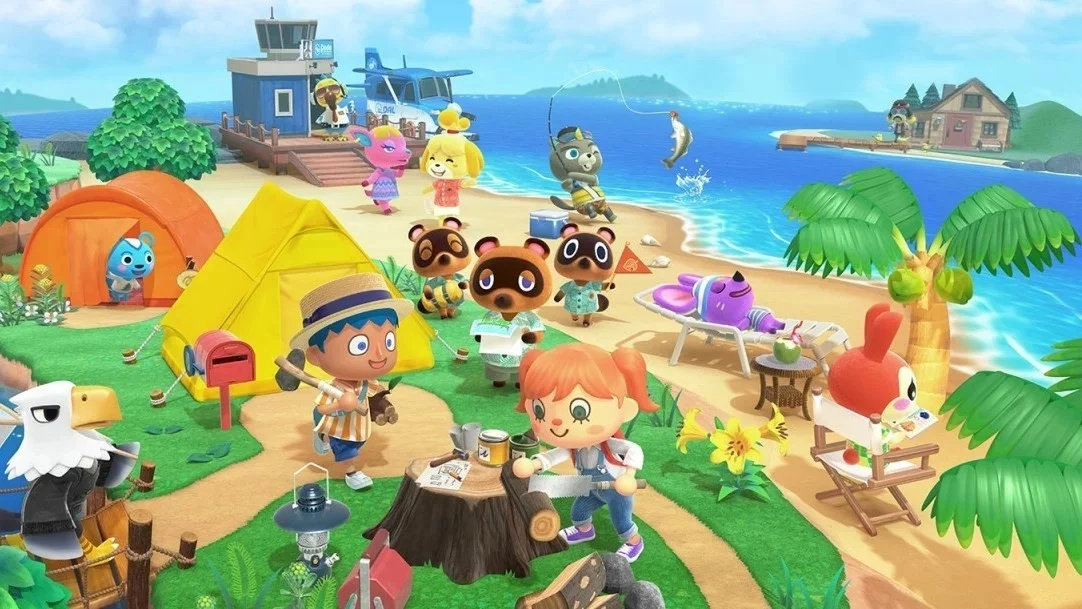
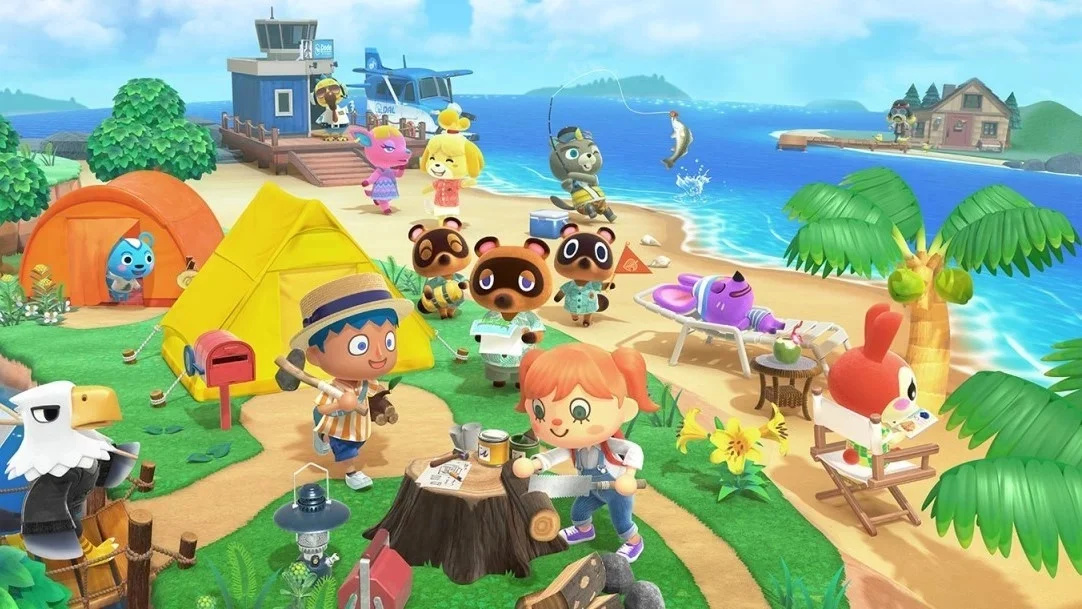
If this wasn’t already enough proof of just how big Nintendo’s life sim series has become over the years, Game Data Library has crunched some numbers – revealing the most recent entry is now the second best-selling video game ever within Japan.
The only game ahead of it is the original Pokémon title on Game Boy, which has shifted a whopping 10,230,000 units (mind you, that’s the combined total of Red, Green and Blue). Technically this means Animal Crossing: New Horizons is the best-selling single SKU in Japan – putting it ahead of the original Super Mario Bros. game in four months.
Here’s the full list of the top 20 best-selling video games in Japan of all-time, courtesy of Nintendo Everything:
1. Pokémon Red/Green/Blue (Game Boy) – 10,230,000 2. Animal Crossing: New Horizons (Switch) – 7,500,000 3. Pokémon Gold/Silver (Game Boy Color) – 7,1710,000 4. Super Mario Bros. (Famicom) – 6,810,000 5. New Super Mario Bros. (DS) – 6,490,000 6. Pokémon Diamond/Pearl (DS) – 5,850,000 7. Animal Crossing: New Leaf (3DS) – 5,800,000 8. Pokémon Black/White (DS) – 5,530,000 9. Pokémon Ruby/Sapphire (GBA) – 5,400,000 10. Animal Crossing: Wild World (DS) – 5,330,000 11. Brain Age 2 (DS) – 5,100,000 12. Monster Hunter Freedom 3 (PSP) – 4,850,000 13. Super Smash Bros. Ultimate (Switch) – 4,640,000 14. New Super Mario Bros. Wii (Wii) – 4,630,000 15. Pokémon X/Y (3DS) – 4,600,000 16. Pokémon Sword/Shield (Switch) – 4,520,000 17. Dragon Quest IX (DS) – 4,400,000 18. Monster Hunter Freedom Unite (PSP) – 4,250,000 19. Tetris (Game Boy) – 4,240,000 20. Super Mario Land (Game Boy) – 4,190,000
The two other Switch titles featured on this list include Pokémon Sword and Shield and Super Smash Bros. Ultimate. Game Data Library also mentions how Pokémon Red, Green and Blue will likely be overtaken by New Horizons in the future.
Are you impressed as we are by this Animal Crossing: New Horizons sales data? Leave a comment down below.
The Combat Pack comes with a bunch of unique cosmetics, led by the Epic Zane Footballer skin--a fitting addition considering Season 5 opened up the Verdansk Stadium. To unlock the skin, you'll have to fulfill one of two conditions: win a match in Warzone or get the Juggernaut in Modern Warfare's multiplayer. Neither task is particularly easy, as earning the Juggernaut requires a 15 kill streak. If you don't already have Zane unlocked as an Operator, you'll get him by unlocking the skin.
Posted by: xSicKxBot - 08-10-2020, 11:16 AM - Forum: Python
- No Replies
Python Infinity
Infinite “∞” is a term derived from the Latin word infinitas which means “without an end” or “boundless”. Similarly, infinity in python is an undefined value that can either be positive or negative. It comes in handy for measuring and optimizing complex algorithms.
The positive infinity is used to denote the greatest of all values while the negative infinity is used to denote the least of all values.
Until now there is no way to represent infinity as an integer. However, in python float values can be used to represent infinite integer values.
Let’s explore the ways Infinity can be used in python:
Method 1: Using float(inf) and float(-inf)
Infinity can be a positive or negative value and can be represented by float(inf) and float(-inf) respectively.
The following code demonstrates the implementation of positive and negative infinity:
infinity_positive = float('Inf')

number = 9999999999999999999999999

if number > infinity_positive: print("number is greater than Infinity!")

else: print("Positive Infinity is the greatest! Even greater than",number) infinity_negative = float('-Inf') if -number < infinity_negative: print("number is lesser than Negative Infinity!") else: print("Negative Infinity is the least! Even smaller than",-number)
Output:
Positive Infinity is the greatest! Even greater than 9999999999999999999999999 Negative Infinity is the least! Even smaller than -9999999999999999999999999
Method 2: Using the “math” Module
Python’s math module can also be used to implement infinity. In Python 3.5 and higher math.inf is a predefined constant that is used to return positive infinity while -math.inf constant returns negative infinity. It returns a floating value.
The following code demonstrates the implementation of infinity using the math module:
import math

infinity_positive = math.inf

number = 9999999999999999999999999

# Positive Infinity

if number > infinity_positive: print("number is greater than Infinity!")

else: print("Positive Infinity is the greatest! Even greater than",number)

# Negative Infinity

infinity_negative = -math.inf

if -number < infinity_negative: print("number is lesser than Negative Infinity!")

else: print("Negative Infinity is the least! Even smaller than",-number)
Output:
Positive Infinity is the greatest! Even greater than 9999999999999999999999999 Negative Infinity is the least! Even smaller than -9999999999999999999999999
Method 3: Using the “decimal” module
Another way of implementing infinity is by using Python’s decimal module. Decimal(‘Infinity’) returns positive infinity while Decimal(‘-Infinity’) returns negative infinity.
The following code demonstrates the implementation of infinity using the math module:
from decimal import Decimal

infinity_positive = Decimal('Infinity')

number = 9999999999999999999999999 # Positive Infinity

if number > infinity_positive: print("number is greater than Infinity!")

else: print("Positive Infinity is the greatest! Even greater than",number) # Negative Infinity

infinity_negative = Decimal('-Infinity')

if -number < infinity_negative: print("number is lesser than Negative Infinity!")

else: print("Negative Infinity is the least! Even smaller than",-number)
Output:
Positive Infinity is the greatest! Even greater than 9999999999999999999999999 Negative Infinity is the least! Even smaller than -9999999999999999999999999
Method 4: Using the “Numpy” library
Another popular way of implementing Infinity in python is by using Python’s famous Numpy library. Numpy has its own definitions for infinite values. np.inf returns positive infinity while -np.inf returns negative infinity.
The following code demonstrates the implementation of infinity using the math module:
import numpy as np

infinity_positive = np.inf

number = 9999999999999999999999999

# Positive Infinity

if number > infinity_positive: print("number is greater than Infinity!")

else: print("Positive Infinity is the greatest! Even greater than",number)

# Negative Infinity

infinity_negative = -np.inf

if -number < infinity_negative: print("number is lesser than Negative Infinity!")

else: print("Negative Infinity is the least! Even smaller than",-number)
Output:
Positive Infinity is the greatest! Even greater than 9999999999999999999999999 Negative Infinity is the least! Even smaller than -9999999999999999999999999
Infinity Arithmetic
Generally, most arithmetic operations performed on infinity values result in generation of other infinite values. The following example illustrates this concept :
value = float('inf')

print('Result of Addition : ',value + 15)

print('Result of Subtraction : ',value - 15)

print('Result of Multiplication : ',value * 15)

print('Result of Division : ',value / 15)

#special scenario

print('Multiplication by Zero: ',value * 0)
Output:
Result of Addition: inf

Result of Subtraction: inf

Result of Multiplication: inf

Result of Division: inf

Multiplication by Zero: nan
Note:
Division by zero raises a ZeroDivisionError exception instead of yielding a resultant value.
Arithmetic operations on NaN always give NaN. There is no “negative NaN”.
Python Infinity Check
The isinf() method of the math module is used to check for infinite values in python. The following example demonstrates this concept :
import numpy as np

import math

num1 = np.inf

num2 = -np.inf

num3 = 25

print("Is num1 an infinite number?: ",math.isinf(num1))

print("Is num3 an infinite number?: ",math.isinf(num2))

print("Is num2 an infinite number?: ",math.isinf(num3))
Creating Arrays with Infinity values
The following example demonstrates how an array of infinity values can be created:
import numpy as np

# To create a numpy array with all values initialized to infinity

array_infinity = np.full(5, np.inf)

print('Infinite Array: ',array_infinity)
Output:
Infinite Array: [ inf inf inf inf inf]
Test your knowledge based on the above explanations:
What will be the output of the following snippets?
Answers: Run the code to get the answers!
Conclusion
Infinity is majorly used in complex algorithmic designs and optimization problems. One such example is the Shortest Path Algorithm where the current distance values have to be compared with the best or the least distance values.
I hope you found this blog article useful and it helps you to get started with the fundamentals of Python Infinity!
Where to Go From Here?
Enough theory, let’s get some practice!
To become successful in coding, you need to get out there and solve real problems for real people. That’s how you can become a six-figure earner easily. And that’s how you polish the skills you really need in practice. After all, what’s the use of learning theory that nobody ever needs?
Practice projects is how you sharpen your saw in coding!
Do you want to become a code master by focusing on practical code projects that actually earn you money and solve problems for people?
Then become a Python freelance developer! It’s the best way of approaching the task of improving your Python skills—even if you are a complete beginner.