Pokémon Café Mix Adds New Co-Op Team Event And A Very Hungry Snorlax
A number of new updates have made their way to Pokémon Café Mix, the free-to-play Pokémon puzzler which launched on the Switch eShop this June.
Most notably, the game has added its first-ever team event, where players can join forces to recruit new Pokémon staff. This new function lets you form a team of up to 30 people – separate from your friend list – to take on challenging team events. It looks like you’ll need the help, too, as Snorlax is far too hungry to please by yourself.
Here’s a full rundown of the new updates:
Form Your Team You can create your own team for the cost of 300 golden acorns. When you create a team, you become the team captain. You can form a team with your existing friends, but this is also a great opportunity to branch out and become friends with other players as well.
Cool New Bonuses To celebrate the Pokémon Café Mix update, players who start their own team can pick up a nice bonus for a limited time: For every team member you recruit, you will earn 300 golden acorns (up to 10,000 golden acorns). In addition, the shop has a special Team Order Pack—which you can purchase with real-world money—that contains Snorlax Maniac Pikachu.
Hungry Snorlax And yes, Pokémon Café Mix’s first team event sees a snack-craving Snorlax visiting your café. By working with your team members from September 24 through October 8, 2020, you can raise Snorlax’s satisfaction level by serving it tasty dishes and convince it to join your staff. Snorlax’s Café Skill can clear Pokémon icons and gimmicks below, potentially making it very useful in completing tricky puzzles. Once this event ends, you can look forward to more team events in the future.
Did you spot the mention of a ‘Snorlax Maniac Pikachu’? Yep, it’s adorable.
Do you play Pokémon Café Mix? Do you like the sound of this new content? Tell us below.
Posted by: xSicKxBot - 09-24-2020, 08:42 PM - Forum: Windows
- No Replies
AI for Humanitarian Action expands program beyond nonprofits
Last December, before the onset of COVID-19, I had the opportunity to visit Zaatari in Jordan – the world’s largest camp for Syrian refugees – to learn more about the challenges and opportunities refugees face. I met a young girl, Doha, who was participating in a computing class. I asked her what she thought about this class, and she said, “Computing is the language of life today. It’s how things get done.”
This week, while participating in the 75th United Nations General Assembly, I’m reflecting on Doha and the inspiring leaders of the camp to see what more we can do to empower refugees and vulnerable communities, especially given the impact of the global pandemic. With the urgency of the moment, this week Microsoft Philanthropies will expand the reach of one of our programs to help underserved communities.
Two years ago at the 73rd United Nations General Assembly, Microsoft President Brad Smith announced AI for Humanitarian Action as part of the Microsoft AI for Good program, a $165 million initiative to help unlock the power of data and AI to address some of the biggest challenges facing society today. The five-year AI for Humanitarian Action commitment was launched to help change the way front-line relief organizations anticipate, predict and better target response efforts related to disaster recovery, the needs of children, promotion of human rights, and protection of refugees and displaced people.
Over the past two years, we’ve worked with selected nonprofit and humanitarian organizations to deliver on the program’s promise to help respond to global humanitarian issues. Some examples include:
Human rights – Empowering the Clooney Foundation for Justice with innovative technology that supports monitoring and responding to trials around the world that pose a high risk of human rights violations.
Needs of children – Enhancing surgical outcomes and helping more children in need of facial surgery through the use of a facial modeling algorithm with long-time nonprofit partner Operation Smile.
Since 2018, the need to accelerate the pace of innovation has increased rapidly due to growing inequality and the COVID-19 pandemic. Building on the progress of the past two years and the urgency of the moment, we’re expanding the program beyond nonprofits to include applications from any type of organization through October 31, 2020, with this web portal.
The challenges faced by children are inextricably linked to those of women, including access to healthcare, which is disproportionally affecting women and children during COVID-19. As a result, we have also expanded the focus on children to include women.
“An effective response to COVID-19 accounts for the disproportionate impact on vulnerable communities, including women and girls,” said Michelle Nunn, President and CEO of CARE. “It is essential to listen to women and girls and ensure that all involved collect, publish and act on sex-disaggregated data to design inclusive and effective responses to COVID-19. That’s why Microsoft’s expansion of its AI for Humanitarian Action initiative to be inclusive of the needs of women and children is needed now more than ever.”
As we work with new partners through AI for Humanitarian Action to enable their work and accelerate their impact, we remain committed to using our expertise to help empower vulnerable populations – like those in Zaatari – by ensuring we leverage technology to address the broadest societal needs.
Posted by: xSicKxBot - 09-24-2020, 08:42 PM - Forum: Windows
- No Replies
NextGen Network report on ‘How AI Can Work for Humanity’ launches
Whether it is being used to analyze the human immune response to COVID-19 or map the spread of wildfires, artificial intelligence (AI) has proven itself to be a powerful tool for tackling the kinds of challenges that have been thrust into the spotlight this year. However, as the use of AI becomes more widespread, it is also becoming clear that, without action to ensure AI will be used responsibly, it could create problems of its own, disrupting jobs, threatening social and economic inequality and potentially undercutting progress on human rights.
As the use of AI grows, a broad discussion is needed about how to realize its full potential in a way that also addresses the challenges it creates. And, as the ones who will live and work with this technology for years to come, the voice of young people must be at the forefront of these discussions. Launching today, the NextGen Network report How AI Can Work for Humanity seeks to elevate the perspectives of young people around the world, helping them inform the debate on how AI can be used responsibly. The report includes three core recommendations:
Governments must take the lead in putting into practice new frameworks for responsible AI.
Countries must work together to drive greater international co-operation on AI and create an international framework for responsible AI use.
Organizations of all kinds should put a set of values at the center of how AI is deployed to ensure its use is human-centered, accountable and transparent.
Broadening the conversation on AI
The mission of the NextGen Network is to provide a platform for young people to help shape decisions on technology. The report and today’s launch event with Věra Jourová, EU Commissioner for Values and Transparency, and Sarah Bird, Responsible AI lead for Azure AI at Microsoft, provide an opportunity for young people to share their ideas on how the technology should be developed and used.
NextGen member Enrique Zapata, the data and new technologies lead at the Latin American Development Bank, explained why it’s so important for young people to be part of these discussions: “Our generation, as well as generations Z and A will be the ones living the impact of AI in our lifetimes. It is critical that our voice, values and expectations are taken into account as the main inputs for the future use of digital technologies, even more than those of previous generations, which already had their chance.”
The report is the product of six workshops and a poll of young people from 13 different countries. It finds that the group is positive about the impact that AI will have in general and its ability to drive breakthroughs in healthcare and environmental sustainability. But it also highlights concerns about potential disruption to the world of work, as well as the impact of AI on income inequality and human rights.
The report seeks to add to the global discussion about how to use AI responsibly. This discussion is advancing in many parts of the world, with the EU Commission having recently launched its white paper on AI, the New Zealand government publishing its Algorithm Charter and the UK Government creating its Centre for Data Ethics and Innovation. These developments take place alongside many fruitful conversations happening elsewhere. The hope is that the ideas represented in this report can help catalyze further discussion and translate this into positive action.
The breadth of geographical representation and wide range of backgrounds of those feeding into the report was designed to help foster a more international conversation around AI. In doing so, the Network hopes to broaden the conversation around AI and help address concerns that have been raised that the current discussion on AI may be dominated by a narrow group of countries and people in a way that could hinder efforts to ensure responsible use. NextGen member Henri Brebant, graduate student at the Harvard Kennedy School, stressed the need for this diverse and global conversation, stating that “only a global conversation on AI ethics can generate the momentum that is needed.”
NextGen perspectives on next generation technology
The report is the first of its kind from the NextGen Network, a partnership between the Aspen Institute and Microsoft. The Network was launched in 2018 to provide a forum for young people from around the world to discuss issues of technology and society. Currently active in Mexico, India, UK, France, Germany, and Central and Eastern Europe, the Network brings together people from the fields of science, business, government and journalism as well as civil society, creating a diverse conversation. The Network also looks to create spaces for young people to interact with leaders from across government, business and civil society, providing a platform for an intergenerational conversation on how to ensure technology can be used for the benefit of society.
The opportunity to share ideas with others is often why young people join the Network. Suhasini Vira, NextGen member and founder of the Clean Hands Initiative, said she “got involved in the Network because of its focus on creating spaces for thought-provoking, structured and open conversations about the role of technology in society.”
Similarly, Charlotte Douglas, NextGen member and post-doctoral researcher at the Francis Crick Institute, said that “engaging in the NextGen network gave me this incredible opportunity to meet like-minded individuals and passionately discuss the impact of digital technologies and how the conversation regarding these technologies is growing and expanding globally.”
Learn more about the NextGen Network here and get the report here.
Dead Cells’ Free Barrels o’ Fun Update Is Now Live On Nintendo Switch
Update: Get those Barrel Launchers at the ready, folks, because Dead Cells‘ Barrels o’ Fun update is now live on Nintendo Switch. You can find all the details you need for this update in our original story below.
Original Article (Wed 12th Aug, 2020 10:30 BST): Yesterday, Motion Twin and Evil Empire dropped a brand new update for Dead Cells on Steam. Thankfully, Switch owners will also be able to join in the fun when the free ‘Barrels o’ Fun’ content arrives on Nintendo’s platform later this summer.
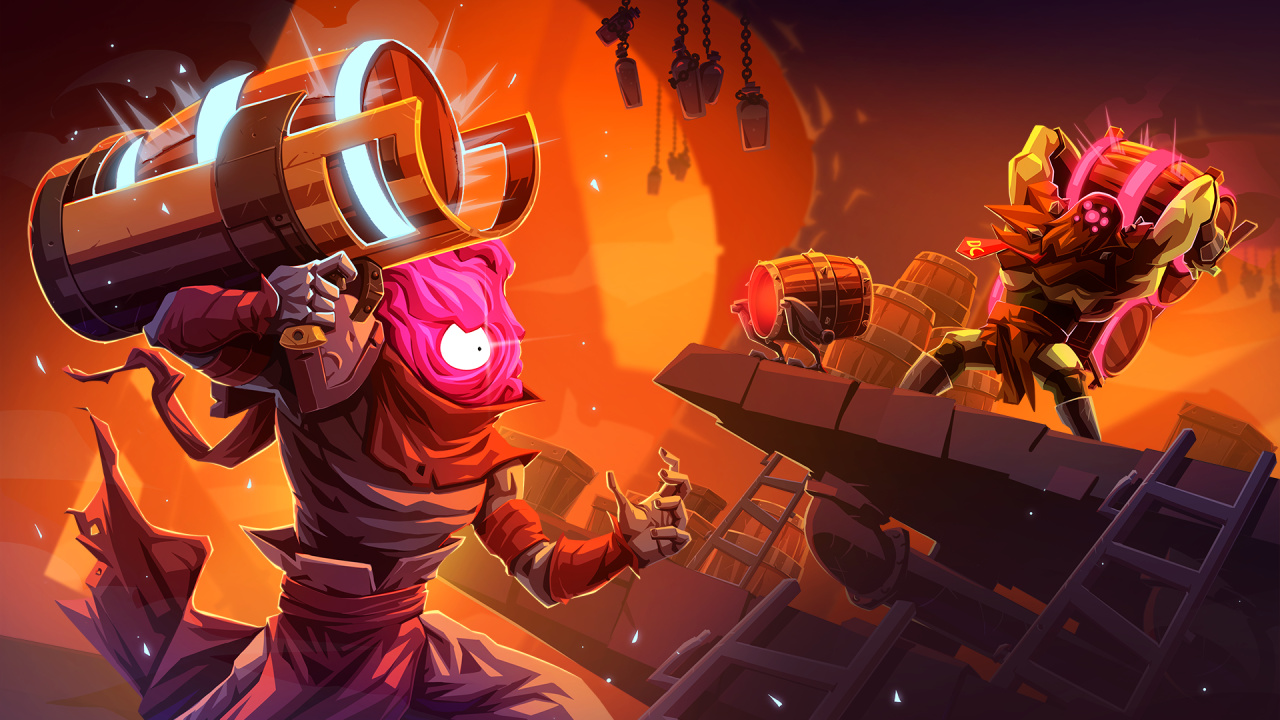
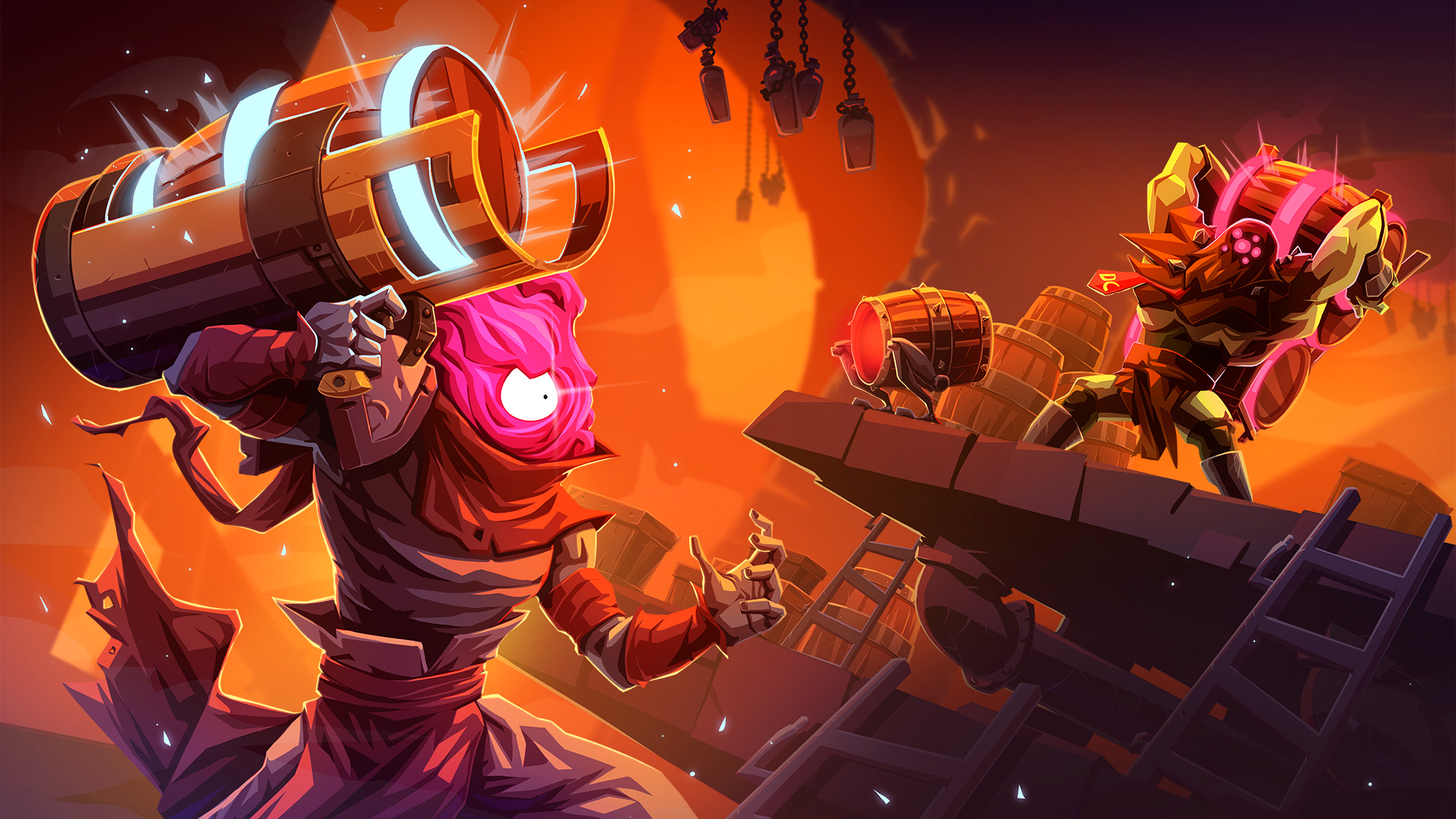
Serving as the game’s 20th update – wow – Barrels o’ Fun adds a new biome, new items and lots of explosions. You can check it all out in the trailer above, but here’s a rundown of the most important additions:
– New biome: Derelict Distillery. High Peak Castle alternative, currently available from the Collector area leading to the High Peak Castle. – New item: Tesla Coil! A medium-range, multi-targeting, shock inflicting turret. – New item: Barrel Launcher!: Throw explosive barrels on enemies. Just make sure they don’t throw it back to you. –New OST: You can now choose between the original version and the brand new demake/8-bit/chiptune version of the soundtrack in the Sound option menu. – Added 3 new achievements linked to the Distillery
The update also brings with it some balancing and quality of life tweaks, which can be found in the update’s full patch notes.
We don’t have an exact release date for this new update on Switch, but at least we know that we shouldn’t have too long to wait. When the game’s 19th update dropped on PC, console players only had to wait 20 days to check it out for themselves.
Random: Well, Here’s A Crazy New Theory About Mario’s Origins
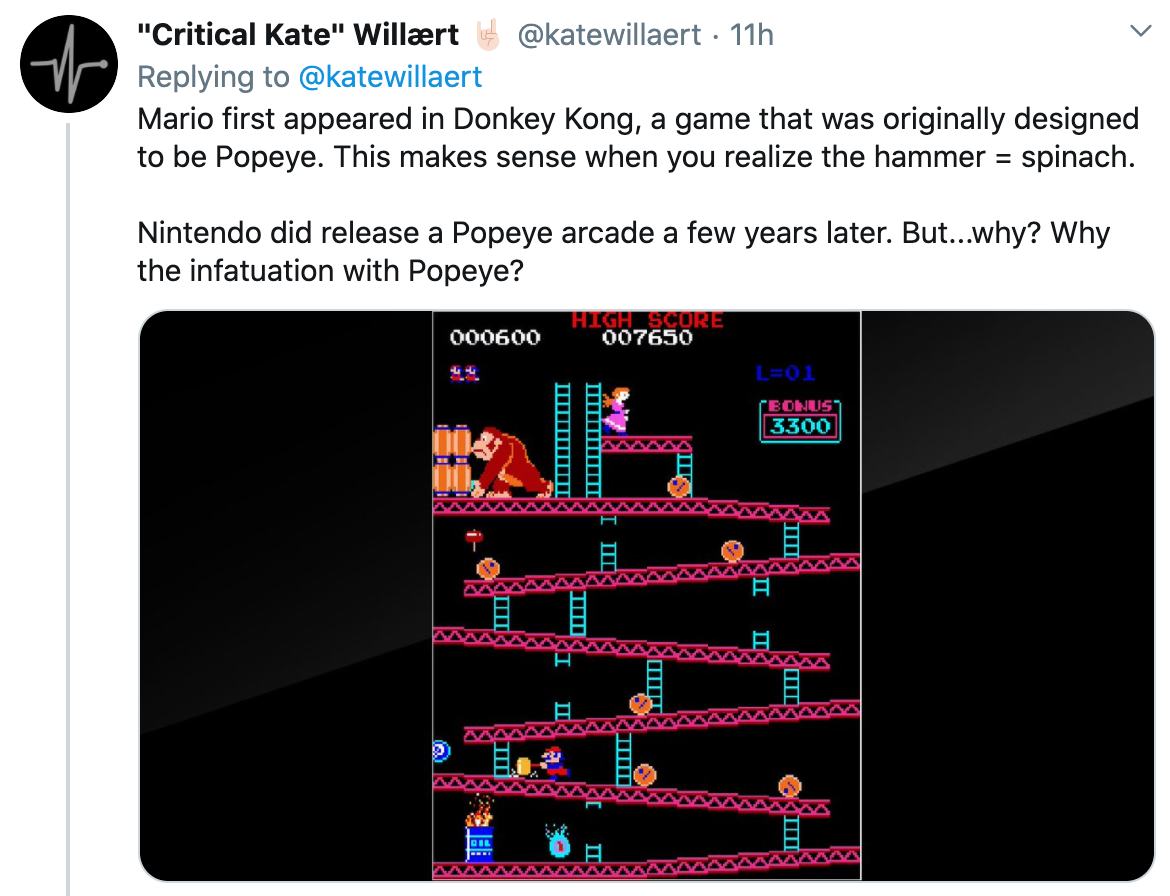
We all know that Mario began life as the protagonist of Donkey Kong, although he was referred to in the early days simply as “Jumpman” and it has been widely reported that he only gained his famous moniker when the resemblance between the character and the late Mario Segale – the landlord of Nintendo of America’s Tukwila warehouse in the early ’80s – became apparent.
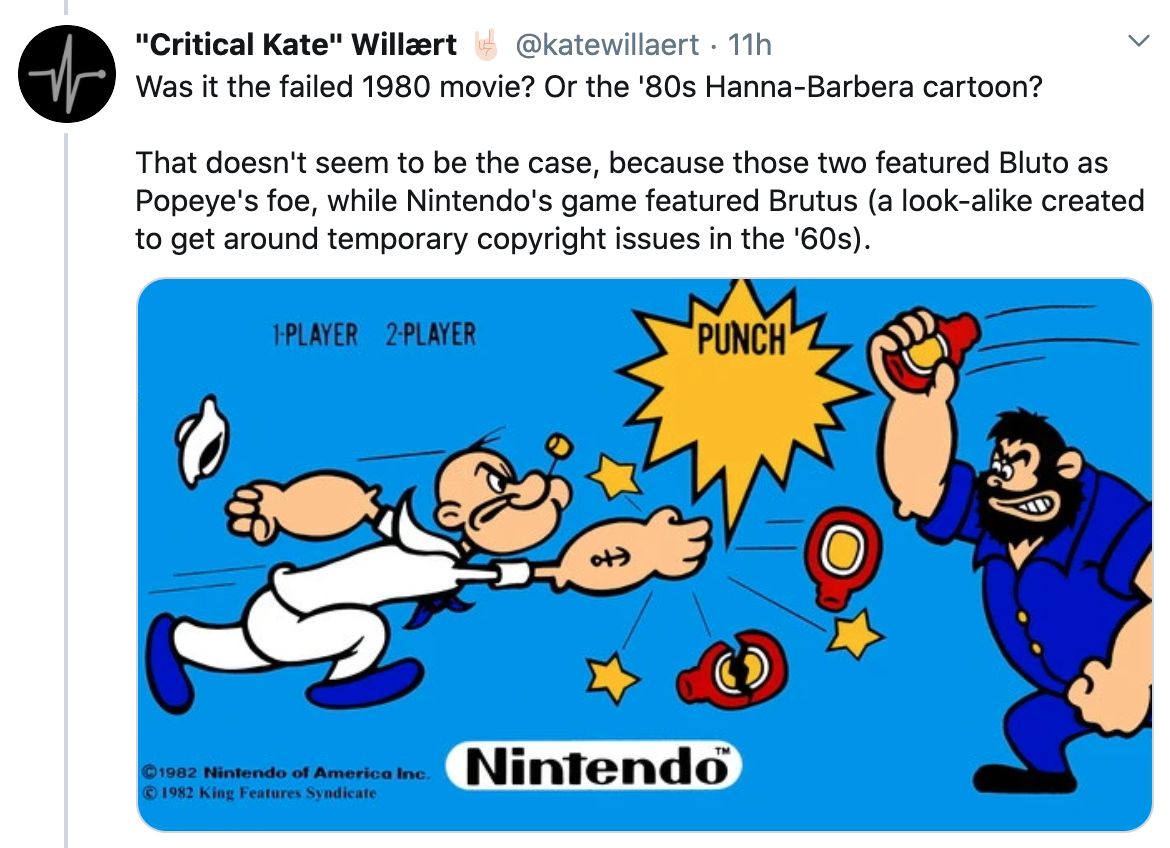
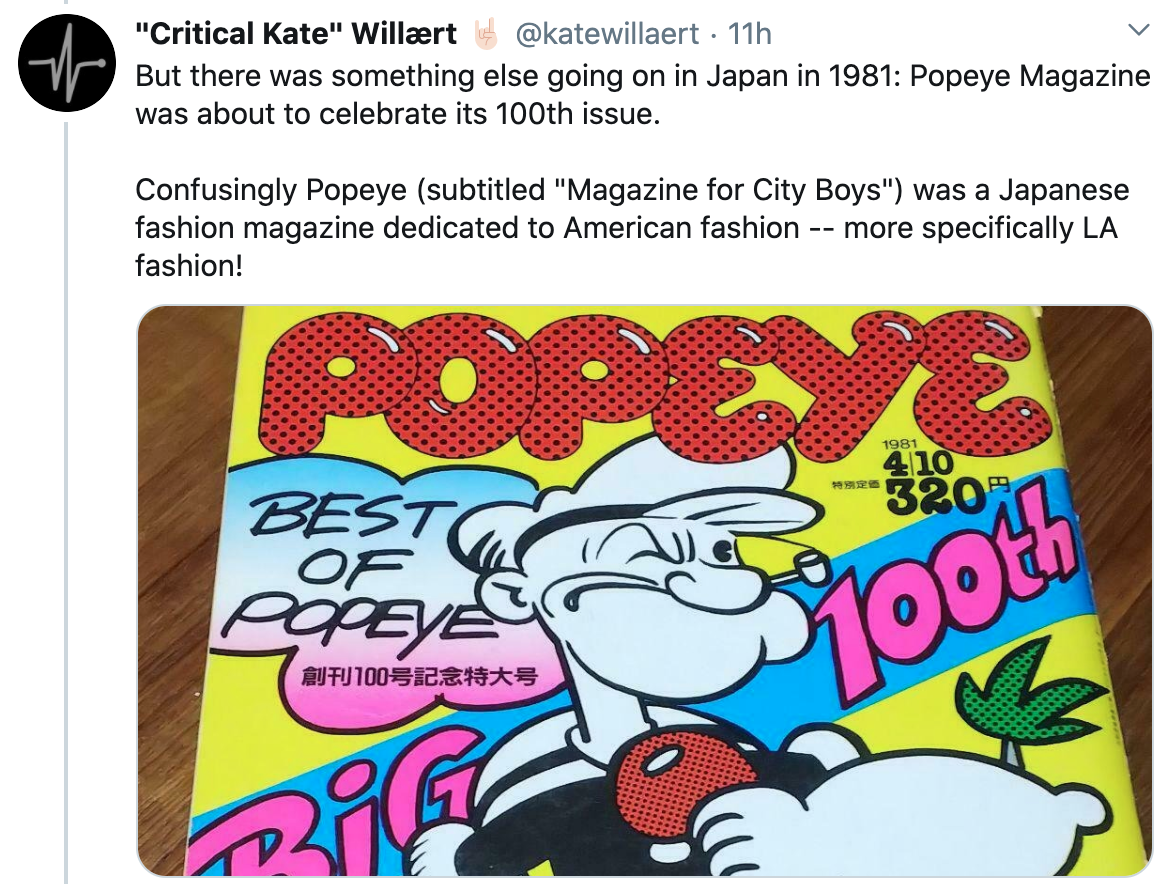
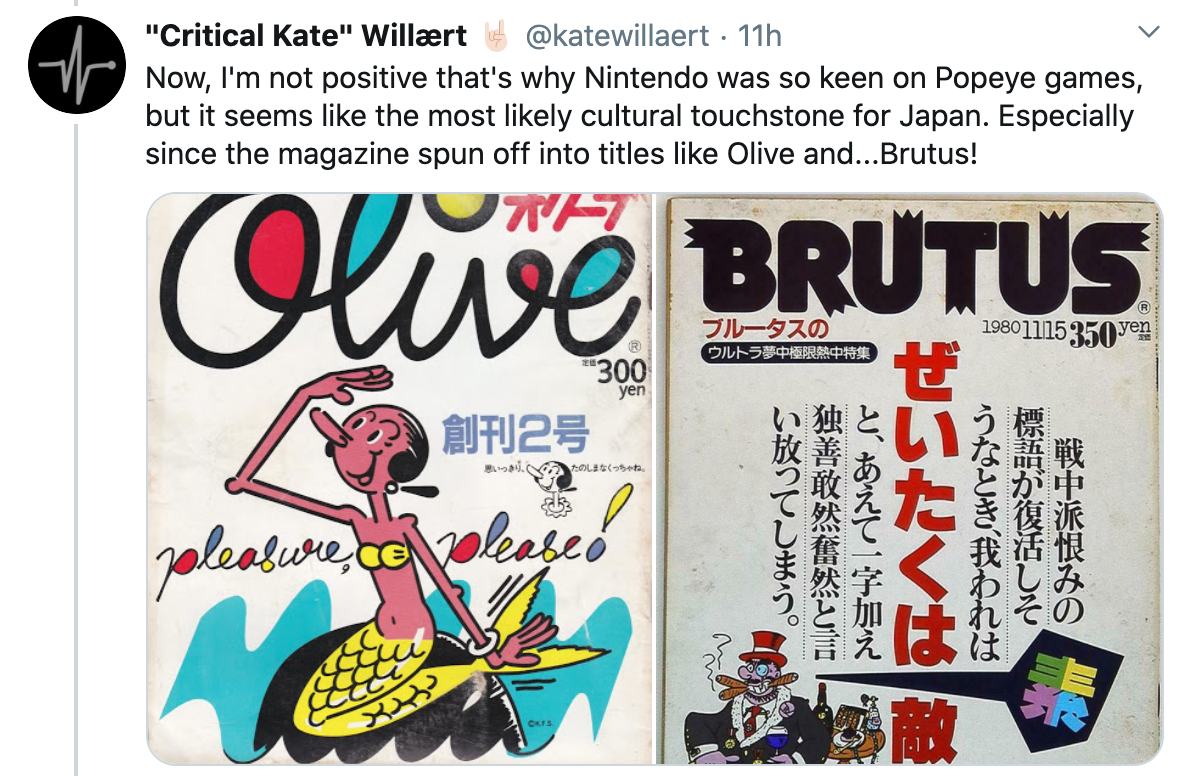
We also know that Nintendo – and Shigeru Miyamoto – were actually working on a Popeye game prior to Donkey Kong becoming a hit; because the process of securing the rights to the comic character from King Features Syndicate was taking longer than expected, the choice was made to remove Popeye, Olive Oyl and Bluto (or Brutus, which is the name often given to Popeye’s arch-enemy due to confusion over who actually owned the copyright to the name, King Features or Paramount Pictures) and replace them with entirely new characters.
All of this is well known, of course – as is the fact that following Donkey Kong’s amazing success, Miyamoto got his chance to produce a proper Popeye game for arcades shortly afterwards (a Game & Watch showcasing the character was also produced).
However, Twitter user katewillaert has uncovered what could be an interesting new theory on how Mario actually came to be – and his origins could be tied even more closely to Popeye than we at first assumed.
We’ll let katewillaert take it up from here:
Far-fetched? Perhaps. But also maddeningly plausible. After all, Mario was originally a carpenter before he was a plumber (check out the toolbox on that photo) and while the overalls and shirt have their colours reversed in the final game, this could be to do with how the colours looked on-screen during play (it has been reported that the dungarees were added to the sprite in Donkey Kong so Mario’s arms would be a different colour to his body and therefore the running animation would be easier to parse for players).
This is one rabbit hole we didn’t think we’d be diving down today, but it’s been fun all the same.
Hulu Reveals New York Comic-Con Panels And Event Times
While the annual New York Comic-Con won't be happening at the Javits Convention Center this year, it's still happening virtually, much like Comic-Con@Home, DC FanDome, and FunimationCon. The virtual NYCC event has already announced a few high-profile panels, including Walking Dead and Netflix events. Now, Hulu has revealed the dates at times for all their panels for the October 8-11 event.
The streaming service is hitting horror hard in the upcoming year, with the streaming service's next big thing being Clive Barker's Books of Blood. Launching October 7, the anthology movie will tell three horrific stories and has been in the works for nearly a win. The panel will consist of the director of the film and the cast on Thursday, October 8.
There are two Marvel-related panels arriving during NYCC as well. There is a first look at the upcoming animated series MODOK, which features the creators and cast of the upcoming show during the Friday panel. While we're heard a lot about the series, this will be the first time anyone will get to see just what the show will look like. And right after that panel, there will be a sneak-peak at the Hulu/Marvel show Helstrom, which we just saw the first trailer for.
You’ll first learn about the definition of freelancing. Then, I’ll show you how you can evaluate whether the freelance developing niche is attractive for you and whether you can expect it to grow over time. So, let’s get started, shall we?
Definition
Freelancing is the act of delivering a service to another business or another customer in exchange for a defined rate.
If you travel back in time—say, ten years—freelancing would be the act of delivering your services to another business: a B2B (business-to-business) transaction.
But, since the appearance of freelancing platforms such as Upwork or Fiverr, it more and more became a B2C (business-to-customer) transaction. There are plenty of people, often employees, who need your services to become more and more productive.
In essence, you’re solving problems for other people. These people can be businesses, private persons, or employees. These people hire you to solve a problem for them. This makes perfect sense: in our world, everyone is a business owner.
As a person, employee, or freelancer, you are a one-person business that gets hired by organizations and other businesses.
As an employee, you are already a freelancer—have a look at the definition again. You sell your services to another party. You get paid by the hour. If you have experience as an employee, you have experience as a freelancer, too, because being an employee is nothing but a special case of being a freelancer.
But there are many more forms of freelancing. As an employee, you’re in a contract between your employer and yourself that ranges for many months. As a freelancer, you can also have these types of contracts: You can agree to contracts that range many years—in fact, businesses hire freelancers often on a long-term basis. If it makes economic sense to hire you once, why shouldn’t it make sense to hire you on a regular basis? But you can also have much smaller contracts that range only for a few hours.
Freelancing comes with all kinds of advantages and disadvantages. But as the term freelancing is so broadly defined, you cannot really generalize those: no advantage and no disadvantage will apply to any type of freelancing gig. Well, as a freelancer, you can aim for the best of both worlds: income security and higher income—if you design your freelancing business in an intelligent way.
Let’s have a deeper look into the freelance developer niche—is it attractive?
About the Freelance Developing Niche
Make no mistake: niche selection is critical.
Many people will tell you that you can select any niche. But this is only partially true.
Sure, if you join the top 10% of people in any niche, you’ll earn a lot of money and you’ll succeed in your profession.
But if you select the right niche, you can earn 10x or even 100x as a person in the top 10%. An example would be the niche “journalism” vs “machine learning engineer“.
As a top journalist, you can expect to earn $50,000-$100,000 per year. (source)
As a top machine learning engineer, you can expect to earn $200,000-$1,000,000 per year. (source)
That’s 4x to 10x difference in earnings of the top guys and gals! Niche selection is crucial.
Python Employee vs Freelancer
So, you may ask: should you go into the freelance developing niche—for instance, Python freelancing—or should you go into the pure Python development niche and become an employee?
I’ve recently read a book from the great Richard Koch: The Star Principle. He’s the author of The 80/20 Principle as well and he’s worth hundreds of millions of dollars. How has he done it?
He invests all his money in so-called “star companies”. And he has worked all his life in the same “star companies”. These companies generate lots of cash and everyone who’s involved benefits from their cash-generating ability.
A star business is an industry leader in a high-growth industry. This concept was developed by the Boston Consulting Group many decades ago—but it still applies to today’s businesses. Have a look at the matrix taken from BCG:
You want to invest your time and money only into businesses that are in high-growth markets and that have a high market share. An example is Google as the leader in the search engine market when the search engine market was still growing by more than 10% per year. Today, Google would be a “Cash Cow” according to the model—still attractive but not necessarily a star anymore.
The combination of being an industry leader and being in a high-growth market is very powerful.
As an industry leader, you have higher profit margins and more cash to reinvest than any other player in the market. This allows you to keep your growth rate over each other player in the market. Plus, you enjoy strong network effects (“the rich get richer”)—everyone knows you’re the leader so customers will come to you which reinforces your position as the leader.
As a company in a high-growth market, you will grow significantly even if you only maintain your market share.
If you can participate in a company that is the leader in a high-growth niche, you can expect significant benefits (if you don’t overpay as an investor).
So, how does it apply to the freelance developer niche?
The freelancing niche is growing double digits every year. Both companies Upwork and Fiverr (the industry leaders) grow more than 10% per year for many years.
These companies are out to disrupt the organization of the world’s talents. And if they keep growing, they’ll accomplish it!
As a developer, as a coder, you’re in an industry that grows 5% per year based on my estimation. It’s an attractive industry but it’s not a “star industry” anymore. Coding is still important and it will grow in importance over time. But it is not a high-growth niche anymore.
As a freelance developer though, you’re both in the freelancing and in the developer niche. Both grow significantly and their growth compounds. So, being a freelance developer is an extremely attractive niche.
If you combine it with Python which is the fastest-growing major programming language, you obtain a combination that has a high potential to transform your life.
If you want to participate in this disruptive trend, you should consider becoming a Python freelancer. Check out my Python freelancer course to get this going FAST!
Leaving the Rat Race
Do you want to develop the skills of a well-rounded Python professional—while getting paid in the process? Become a Python freelancer and order your book Leaving the Rat Race with Python on Amazon (Kindle/Print)!
Elite: Dangerous (-80%), Milestone, Adult Manga Sale
Elite: Dangerous at 80% OFF
[www.indiegala.com] In Elite: Dangerous the real stars, planets, moons, asteroid fields and black holes of our own galaxy are built to their true epic proportions in the largest designed playspace in videogame history. https://youtu.be/hQOdSXnDiB8
The game is free to keep until Oct 1st, 2020 - 15:00 UTC.
We are welcoming everyone to join our discord[discord.gg]. We are more active there on finding giveaways, small or large, and there are daily raffles you can participate.
The Wick Editor is a surprisingly capable free and open source tool that defies categorisation. At it’s core it’s a 2D graphic and animation tool, but it also has programmability features making it capable of creating simple games. It supports publishing animated GIFs, movies, soundtracks, sprite sequences and even single click html applications.
The Wick Editor is a free and open-source tool for creating games, animations, and everything in-between. It’s designed to be the most accessible tool for creating multimedia projects on the web.
The Wick Editor is a hybrid of an animation tool and a coding environment, heavily inspired by similar tools such as Flash, HyperCard, and Scratch. It was developed in response to a growing need for such a tool for the modern web.
As mentioned the project is open source with the code hosted on GitHub under the GPL v3 license. The Wick Editor runs entirely in the browser and can be run by visiting https://editor.wickeditor.com/. You can also install locally and run using node and npm. You can learn more about Wick Editor and see it in action in the video below (or watch on Odysee).