At first glance that’s a confusing sentence, so take a deep breath and hold on to your hat, because we’re about to venture down the THQ rabbit hole. Ready? Here goes.
THQ Nordic GmbH is the owner of Deep Silver and its parent company Koch Media, the latter of which still holds the rights to the Metro franchise, and yesterday suggested it wasn’t enamored with the company’s decision to pull Metro Exodus from Steam in favor of the Epic Store.
“We do not want to categorically exclude the possibility of timed exclusives for any of our games in the future,” wrote THQ Nordic GmbH on Twitter, “but speaking in the here and now, we definitely want to have the players choose the platform of their liking and make our portfolio available to as many outlets as possible.”
Now, THQ Nordic GmbH’s own parent company, THQ Nordic AB, has distanced itself from those comments, and said it fully supports Koch Media’s decision as well as the autonomy of its various subsidiaries.
“I believe it’s in the group’s, and ultimately the consumers’, best interest that business decisions are made close to the market and this is the group’s consistent business model,” said THQ Nordic AB chief exec Lars Wingefors.
“I firmly believe that Deep Silver and Koch Media have carefully considered the advantages and disadvantages, opportunities and risks in their decision to go solely with Epic Games Store. The decision has my full support.”
Wingefors has also realized the shortcomings of having two different business entities sharing the THQ Nordic name, and now plans to change the name of THQ Nordic AB to better reflect its status as the group’s parent company.
THQ Nordic GmbH, the operating entity based in Vienna (and the one that tweeted yesterday) will keep its current moniker.
Starting at 2:00 p.m. PST today, members of the Xbox One Preview Delta Ring will begin receiving a new 1902 Xbox One system update (rs5_release_xbox_dev_1902.190121-1920). Read on for more about the fixes and known issues in the latest 1902 system update.
Fixes:
System
System performance fixes to improve performance.
Audio system fixes when switching from Home to a game or app.
Localization fixes.
Known Issues:
Profile Color
Sometimes users may encounter the incorrect Profile color when powering on the console.
A deadly virus engulfs the residents of Raccoon City in September of 1998, plunging the city into chaos as flesh eating zombies roam the streets for survivors.
An unparalleled adrenaline rush, gripping storyline, and unimaginable horrors await you.
Xen Project Celebrates Unikraft Unikernel Project’s One Year Anniversary
It has been one year since the Xen Project introduced Unikraft as an incubator project. In that time, the team has made great strides in simplifying the process of building unikernels through a unified and customizable code base.
Unikraft is an incubation project under the Xen Project, hosted by the Linux Foundation, focused on easing the creation of building unikernels, which compile source code into a lean operating system that only includes the functionality required by the application logic. As containers increasingly become the way cloud applications are built, there is a need to drive even more efficiency into the way these workloads run. The ultra lightweight and small trusted compute base nature of unikernels make them ideal not only for cloud applications, but also for fields where resources may be constrained or safety is critical.
Unikraft tackles one of the fundamental downsides of unikernels: despite their clear potential, building them is often manual, time-consuming work carried out by experts. Worse, the work, or at least chunks of it, often needs to be redone for each target application. Unikraft’s goal is to provide an automated build system where non-experts can easily and quickly generate extremely efficient and secure unikernels without having to touch a single line of code. Further, Unikraft explicitly supports multiple target platforms: not only virtual machines for Xen and KVM, but also OCI-compliant containers and bare metal images for various CPU architectures.
Over the last year the lead team at NEC Laboratories Europe along with external contributors from companies like ARM and universities such as University of Bucharest have made great strides in developing and testing Unikraft’s base functionality, including support for a number of CPU architectures, platforms, and operating system primitives. Notable updates include support for ARM64.
The Unikraft community continues to grow. Over the last year, we’ve seen impressive momentum in terms of community support and involvement:
Contributions from outside the project founders (NEC) now make up 25% of all contributions.
Active contributors rose 91%, from 2 contributors to 23.
The initial NEC code contribution was around 86KLOC: since then around 34KLOC of code have been added and/or modified.
An upcoming milestone for the project is the Unikraft v0.3 release, which will ship in February. This release includes:
Xenstore and Xen bus support
ARM32 support for Xen
ARM64 support for QEMU/KVM
X86_64 bare metal support
Networking support, including an API that allows for high-speed I/O frameworks (e.g., DPDK, netmap)
A lightweight network stack (lwip)
Initial VFS support along with an a simple but performant in-RAM filesystem
We are very excited about this coming year, where the focus will be on automating the build process and supporting higher-layer functionality and applications:
External standard libraries: musl, libuv, zlib, openssl, libunwind, libaxtls (TLS), etc.
Language environments: Javascript (v8), Python, Ruby, C++
Frameworks: Node.js, PyTorch, Intel DPDK
Applications: lighttpd, nginx, SQLite, Redis, etc.
Looking forward, in the first half of 2019 Unikraft will be concentrating its efforts towards supporting an increasing number of programming languages and applications and towards actively creating links to other unikernel projects in order to ensure that the project delivers on its promise. Stay tuned for what’s in store. If you want to take Unikraft out for a spin, to contribute or to simply find out more information about Unikraft please head over to the project’s website.
Also, if you are attending FOSDEM, February 2nd and 3rd, please stop by room AW1.121 for the talk “Unikraft: Unikernels Made Easy,” given by Simon Kuenzer. Simon, a senior systems researcher at NEC Labs and the lead maintainer of Unikraft, will be speaking all about Unikraft and giving a comprehensive overview of the project, where it’s been and what’s in store.
Want to learn more about Unikraft and connect with the Xen community at large? Registration for the annual Xen Project Developer and Design Summit is open now! Check out information on sponsorships, speaking opportunities and more here.
The Best iOS Strategy Games of Yesteryear: 2012 Edition
By Owen Faraday31 Jan 2019
Unfortunately, the article that was supposed to go up today has gotten lost in transit. Rather than find a token news story to write up, or a recent list to republish, I thought I’d do something completely different: republish a really OLD list.
I happened to be going through the deep dark of PT’s CMS, mainly to see if there was anything Owen (the founder of Pocket Tactics) covered back then that could help inform content ideas for today. How fitting then to find one of Owen’s earliest takes on the state of strategy games on iOS from 2012, given the work we’ve been doing recently.
Pocket Tactics has had a content migration since this article originally went live so I’ve had to clean it up a bit (and the images are terrible), but I’ve otherwise left his words as-is, with some added notes to reflect what’s changed since then. I hope you enjoy it-ED
——————
It is a great time to be a strategy gamer. So many outstanding games have come out for mobile platforms or are just around the corner. If you’ve just bought an iPhone or an iPad, you might be wondering what games to pick up – and even if you’ve had an iOS device for ages, you’d be forgiven for having fallen behind.
The Situation Report is a perennially updated list of Pocket Tactics’s favorite games in each strategy sub-genre – we’ll have a similar feature up for Android soon. So without further delay, the (very subjective) Pocket Tactics iOS Situation Report.
The Best iOS 4X Game: Civilization Revolution
Civ Rev is a stripped-down (cynics will say “console-ized”) version of the venerable Sid Meier’s Civilization series for PC and Mac. It’s also starting to show its age a bit, as it’s now almost 3 years old. But for all that, Civ Rev is still the best expand, explore, exploit, and exterminate game for iOS – it just barely edges out the superb Ascendancy. Civ has the advantage of being based on the time-tested Civilization formula and despite the tablet streamlining, it delivers. The more recent sci-fi 4X Starbase Orion has given Civ and Ascendancy some welcome competition, but compared to those two the newcomer is a bit sterile and bland. Starbase Orion‘s devs have been steadily improving that game with regular updates though, so watch this space.
Note: Probably due to the iOS 11 App-ocalypse, Civ Rev was withdrawn from sale by 2K last year. It’s sequel, Civilization Revolution 2, is still available however.
The Best iOS City-builder: Rebuild
Rebuild isn’t exactly SimCity (though if you’re desperate, EA has a pretty disappointing iOS SimCity on the App Store), but the liberties it takes with the traditional city-building formula make it one of the most exciting experiences in strategy gaming. Rebuild puts you in a world overrun by zombies, where you are in charge of retaking a city from the undead. You have to recruit survivors to your cause and assign them to critical tasks while you decide how to put your metropolis back together. It’s hard to overstate how much fun it is and how replayable it is. It’s not a straight city-builder, but there really aren’t any on iOS worth talking about, anyway.
The Best iOS Casual Wargame: Battle Academy
For the time being, there is simply nothing like Battle Academy on iOS. It’s a full-featured PC game that invalidates the idea that games need to be stripped down to work on tablets. Battle Academy is easy to pick up and learn but has a diabolical tactical AI at its heart, so experienced grognards will get a challenge out of it, too. It would be a great wargame on any platform, but it’s the best on iPad.
Honorable mention goes to Legion of the Damned, which doesn’t look nearly as pretty as the iPad-only Battle Academy, but is an outstanding casual wargame in its own right. The multiplayer-focused Uniwar still has a dedicated community of players years after release.
Note: Quite a few of Slitherine’s games were hit by the Appocalypse, so Battle Academy and its sequel, BA2, no longer work on modern devices. If you want some iOS friendly wargames to try out, we recommend reading our recent mobile war games list.
The Best iOS Hardcore Wargame: Position vacant
Given that the iPad was born to play good old tabletop wargames, it’s hard to believe that there still aren’t any proper hex-and-counter wargames to be found in the App Store. That’s not going to be the case for long, what with Panzer Corps and possibly Battle of the Bulge on the way, but for now I can’t award this belt to anybody.
The Best iOS Squad Tactical Game: Tactical Soldier: Undead Rising
Let’s not mince words: this is the X-Com category. For a whole generation of gamers, X-Com is a perfect Madonna figure that has never been matched, much less exceeded. There is, as yet, no squad tactical game on iPhone or iPad that holds a candle to X-Com – but Tactical Soldier is the closest thing we’ve got. Despite a name that looks like it came out of a random game cliche generator, Tactical Soldier has a wickedly entertaining (if goofy) single-player campaign built on top of a solid 3D engine. Worth mentioning in this category is Hunters 2 by Rodeo Games. Hunters has more interface polish and refined art direction, but it doesn’t have the tactical depth or variety of Tactical Soldier and gets tedious after a while. Those who prefer their squad tactics in a fantasy setting should try the charming Dungeon Crawlers.
It’s not possible to overstate how polished, how replayable, and how perfectly suited to mobile devices Elder Sign: Omens is. Set in Lovecraft’s Cthulhu Mythos, Elder Sign gives you a handful of uniqely gifted investigators and sets you to stopping the arrival of an Elder God into our dimension. It’s a stubbornly difficult game at times but that difficulty arises from thoughtful design – there is a great deal of luck in every encounter but your strategic decisions give you sufficient influence over the outcomes that you won’t feel cheated. There are a raft of boardgame conversions coming to iPad this year but they will have to be very good indeed to outdo this game.
The Best iOS Tower Defense Game: Anomaly: Warzone Earth
This is possibly the most crowded category of them all, but most of it is crap. In an App Store full of nearly identical tower defenders, Anomaly stands out by making you the attacker running the gauntlet of towers. The revised formula keeps you very busy and the generous checkpointing system means that the game’s considerable difficulty never infuriates. Also worth a look are the visually and aurally stunning Radiant Defense, the now-ancient but still tactically brilliant Geodefense Swarm, and Kingdom Rush – whose cartoony graphics mask a deep gameplay experience.
Note: Our list of the best RTS games has some more recent TD gems, including the latest release in the Kingdom Rush series.
Posted by: xSicKxBot - 01-31-2019, 11:34 AM - Forum: Lounge
- No Replies
Xbox "Going Big" At E3 2019 After Sony Drops Out
E3 2019 is going to be a big year for Xbox at E3, it seems. Head of Xbox Phil Spencer said on a recent podcast that Microsoft's showing at E3 this year will be "as big" as it's ever been for Xbox, and one reason why might be because Sony is dropping out of E3.
Speaking to Major Nelson, Spencer started off by saying, "This is going to be a fun E3 for us." He recalled an internal Microsoft conversation about E3 after the "news" that dropped last year about E3, which is presumably a reference to Sony skipping the show.
"There was some news about E3 back in the fall. We had a discussion internally about, 'Should we go big?' 'Should we save some money?' 'What does that mean?' We decided, no [we're not going to save money], we're going to do our thing," Spencer said. "We're going to go and be as big at E3 as we've ever been. I love that opportunity."
Right now, with about five months to go before E3 2019, Microsoft is in the midst of thinking about how and who the company can get to come on stage, Spencer said. The company is also talking about if the company wants to talk about titles and products coming in the short-term versus the long-term. Spencer said he personally likes to be transparent, but he's also mindful of being careful not to announce something too early.
Spencer didn't get into specifics, but he said the content lineup from Xbox for E3 2019 is already "great." The company also plans to talk about the future of Xbox and more about what the Xbox brand means--beyond console. The Xbox is a console, but there are "millions" of people who spend time and money on Xbox outside of the console family through PC and mobile, Spencer pointed out. At E3, he wants to let people know that they don't need to own an Xbox to be part of the Xbox community.
Also in the interview, Spencer talked about Xbox's position in 2019, saying the groundwork that Microsoft put down in recent years will really begin to pay off this year. Quoting George W. Bush, Spencer said, "This is a year where it's not strategery--we're going to roll up our sleeves and we're going to show. I love that. Now it's go time."
One of the new platforms Microsoft has in the works for gaming is Project xCloud, which is the working title for the company's game-streaming service. It's already up and running, and Spencer said he was using it during his travels at the end of 2018. It'll probably be "years" before streaming becomes the primary way people play games, but the technology is coming together, Spencer said.
Additionally, Spencer discussed Microsoft's recent spree of studio purchases. One of the reasons Microsoft bought and set up a total of seven studios in six months was to create a catalog of titles that "surprise and delight" fans, and release on a "regular cadence." Microsoft has been criticised in recent years for not having enough compelling first-party content, and Spencer acknowledged that Microsoft's first-party lineup is "so different" than what it's been over the past five years. He also shared an anecdote from Microsoft CEO Satya Nadella, who apparently said he's eager and happy about Microsoft investing so heavily in teams that will make exclusive content for Xbox going forward.
One of Microsoft's announcements at E3 2019 could be a new console. Spencer has already confirmed that Microsoft is working on multiple new consoles. According to Brad Sams, one is a disc-free streaming box and another is a console more powerful than the Xbox One X.
E3 2019 takes place June 11-13, 2019 in Los Angeles. While Sony is backing away, the show is expected to be a very big one full of surprises and reveals of all kinds.
SAP has been working with open source for decades and has now established an open source program office (OSPO) to further formalize the coordination of its open source activities and expand its engagement with the open source communities. “SAP was one of the first industry players to formally define processes for open source consumption and contribution,” says Peter Giese, director of the Open Source Program Office.
Even so, many people do not yet consider SAP to be a company that embraces open source engagement and contributions.
“In the past, we may not have been active enough in sharing our open source activities,” says Giese.
Now, SAP is shining a spotlight on its work in open source. Transparency is an essential part of the new open source mandate, beginning with an explanation of what the company has been up to and where it is headed with open source.
How SAP came to adopt open source
“In 1998, SAP started to port the R/3 system, our market-leading ERP system, to Linux,” says Giese. “That was an important milestone for establishing Linux in the enterprise software market.”
Porting a system to Linux was just a first step, and a successful one. The action spurred an internal discussion and exploration of how and where to adopt Linux going forward.
Posted by: xSicKxBot - 01-31-2019, 11:34 AM - Forum: Windows
- No Replies
Data loss prevention: Human error, insider threats and the in-between
Do you remember the first or last time you found a user had shared sensitive information with the wrong people?
Companies dedicate large amounts of resources and money towards establishing an air tight DLP policy to detect and protect company data and prevent it from getting into the wrong hands, whether deliberately or by mistake. But no matter how good the technology, or how vigilant the security team, there is always a wildcard – end users.
“A company can often detect or control when an outsider (non-employee) tries to access company data either physically or electronically, and can mitigate the threat of an outsider stealing company property. However, the thief who is harder to detect and who could cause the most damage is the insider—the employee with legitimate access. That insider may steal solely for personal gain, or that insider may be a “spy”—someone who is stealing company information or products in order to benefit another organization or country.”
–Introductory guide to identifying malicious insiders, U.S. Federal Bureau of Investigation (FBI)
From the above data we can see that insider threats are becoming a real concern for most organizations, and that active steps are taken to mitigate the risk inherent to these threats.
In this post we’ll discuss how regular users can expose sensitive data by wrongly classifying documents, how malicious users can take advantage of the encryption to exfiltrate data, and how Microsoft Cloud App Security’s new capability of scanning content in encrypted files, as well as the wider Microsoft Information Protection offering, can help organizations mitigate these risks.
The innocent mistake
While employees in the modern workplace are getting increasingly technologically savvy, and are finding new tools to improve their productivity, they aren’t always aware of the security implications of their actions.
Many of our customers are leveraging Microsoft Information Protection solutions to classify, label and protect their data. To minimize the impact on end users and their ability to be productive, these organizations often choose to empower their users to label documents themselves, by providing automatic suggestions but not auto-labeling or -protecting documents.
A user can inadvertently label a document containing highly confidential information with a low sensitivity label that applies minimal access restrictions. Since the file is already encrypted, it will not be scanned by the DLP solution, but might still be accessible to unauthorized people.
The malicious insider
A bigger threat with a much higher potential for damage, is the malicious insider. A malicious insider who is actively working on exfiltrating sensitive information from the organization, whether for personal gain, corporate espionage or other reasons.
This malicious user might exploit the ability to encrypt files to purposefully classify a file as low sensitivity while inserting highly sensitive data and then sharing it externally. As in the “mistake” scenario this will allow the file to pass the scanning of the DLP solution.
How does Microsoft Cloud App Security handle these risks?
Microsoft Cloud App Security has a wide set of tools targeted at handling insider threats. These include user behavior anomaly detections, cloud discovery anomaly detections, and the newly released ability to scan content of encrypted documents.
User anomaly detection
Microsoft Cloud App Security comes with a wide set of out-of-the-box anomaly detection policies that are activated by default as soon as the product is enabled. These detections look at the activities performed by users in sanctioned apps and define a usage baseline, leveraging UEBA capabilities to automatically identify any anomalous behaviors going forward.
An example of these types of detections, aimed at insider threats, is “Unusual file download activity by user”. This detection will create an alert whenever a user performs file downloads that differ from their usual pattern – a potential indicator of a data exfiltration attempt.
Cloud anomaly detection
In addition to the user anomaly detections for sanctioned apps, Cloud App Security also offers detections aimed at identifying suspicious behavior of users in unsanctioned applications. These detections are based on the data we get and analyze as part of our Cloud Discovery capabilities.
An example for such a detection is “Data exfiltration to unsanctioned apps”, which looks at the amount of data being uploaded by users to unsanctioned applications – one of the most common scenarios of insider threat data exfiltration.
Content inspection of encrypted files
We have recently released the ability for an admin to allow MCAS to scan the content of files that are protected by Azure Information Protection. After enabling this functionality, the admin can define MCAS file policies to inspect the content of encrypted files, and generate an alert, or take an action based on the match.
This functionality ensures that files are handled according to their actual content, even if they are labeled incorrectly; thus, preventing sensitive data from leaving the organization – both by mistake and by design.
Figure 2: Policy setting to allow Microsoft Cloud App Security to scan files protected with AIP
Human error and malicious intent will forever be a part of organizational lifecycles. While we cannot eliminate them completely, it’s our goal to enable IT and Security admins to minimize this risk. With our advanced capabilities and unique set of insights, Microsoft Cloud App Security and the wider Microsoft Information Protection offering help organizations to protect their sensitive information – wherever it lives or travels.
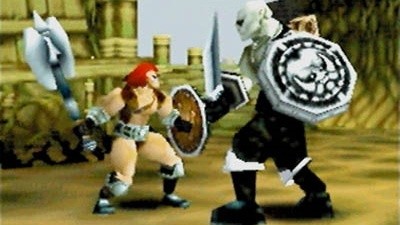
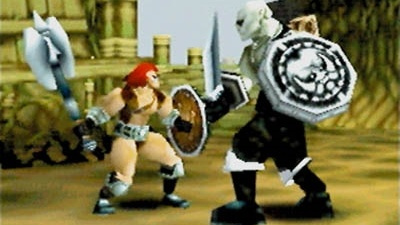
Unreleased N64 Game Dragon Sword Might Finally Be Completed 20 Years Later
Around 1997-98, a hack-and-slash game under the name Dragon Sword was in development for the Nintendo 64. Sadly, it was never completed, and players never got to see it as it was truly intended, but that might be about to change.
The game was originally being created by Team Storm at Interactive Studios, the team behind 1998 platformer, Glover), but unknown complications relating to its publisher meant that it never made it to store shelves. A beta of sorts was eventually released in 2010 thanks to an anonymous collector, shared online for those intrigued to experience the game at the point at which it had been abandoned, but its unfinished state and unresolved bugs meant that it was more of a novelty than a fully working game.
Now, though, Piko Interactive has confirmed that it has acquired the rights to the game along with its source code, hinting that it may well go on to finally finish the game’s development 20 years later. Piko Interactive has a history of restoring lost games, notably resurrecting another lost N64 title, 40 Winks, via Kickstarter just last year.
We could well see a similar crowdfunding campaign for this project in the near future – potentially being something for any eager retro fans to keep their beady eyes on. If you’re interested in rare or lost games and have fond memories of the N64 era, make sure to keep an eye out for this one.
The agenda will cover the latest developments to the DPDK framework and other related projects such as FD.io, Tungsten Fabric and OpenvSwitch, including plans for future releases by contributors, and will provide an opportunity to hear from DPDK users who have used the framework in their applications.