We're now in the final stretch of Fortnite Season 7, but there's still plenty to do in Epic's hit battle royale game before Season 8 kicks off. That includes Week 10's challenges, which are now available across all platforms. You'll find the usual assortment of tasks in this batch, including another search for Expedition Outposts.
As usual, completing challenges will reward you with Battle Stars, which in turn will level your Battle Pass up and unlock Season 7 cosmetics. If you finish all of the tasks from a given week, however, you'll also complete one of this season's Snowfall challenges and unlock a special loading screen that points you toward a free Battle Star (good for leveling your Battle Pass up by one tier) or a Banner (which can be used as a profile icon) hidden somewhere on the map.
If you've finished all 10 sets of weekly challenges, you'll complete the final Snowfall challenge, which will reward you with the loading screen pictured below. This one depicts the Prisoner--the Legendary skin you unlock for completing 60 weekly challenges--sitting beside a campfire atop a hill. Look to the left of the campfire, however, and you'll spot a Banner waiting beneath a tree in the distance. That's where you'll need to go to find the item.
The tree in question can be found at the edge of the desert, near the race track just east of Retail Row. Once you've jumped into a match, glide to the area, locate the tree, and the Banner will appear beneath it, just as in the loading screen. Collect it like you would any other item then finish the match, and the Banner will be yours to use as an icon. You can see its exact location on the map below. We also show you where to go in the video above.
Like always, there are a couple of caveats for this secret Banner. The item won't appear in the game unless you've completed all 10 sets of weekly challenges, so you can't simply go to the right location and expect to find it unless you've done the necessary work. If you need help finishing up any remaining tasks, you can find tips in our complete Season 7 challenges guide.
Season 7 is scheduled to end on February 28 according to Epic's website, so there isn't much time left to complete this season's challenges. Of course, with Season 8 quickly approaching, some unusual things have begun happening in the game, namely earthquakes. What this means for the new season remains to be seen, although it wouldn't be surprising for the tremors to result in some portion of the map being dramatically transformed.
Posted by: xSicKxBot - 02-09-2019, 10:19 PM - Forum: Windows
- No Replies
Microsoft Translator now certified compliant to meet your needs
Microsoft Translator is happy to announce that it is now certified for ISO, HIPAA, and SOC compliance. This comes as a result of Azure’s commitment to privacy and security.
Last year, Translator announced that it was GDPR compliant as a data processor. Now, Microsoft Translator is ISO, HIPAA, and SOC compliant, in addition to receiving CSA and FedRAMP public cloud attestation.
ISO: Microsoft Translator is ISO certified with five certifications applicable to the service. The International Organization for Standardization (ISO) is an independent nongovernmental organization and the world’s largest developer of voluntary international standards. Translator’s ISO certifications demonstrate its commitment to providing a consistent and secure service. Microsoft Translator’s ISO certifications are:
ISO 27001 Information Security Management Standards
27018:2014 Code of Practice for Protecting Personal Data in the Cloud
20000-1:2011: Information Technology Service Management
ISO 27017:2015: Code of Practice for Information Security Controls
HIPAA: The Microsoft Translator service complies with the US Health Insurance Portability and Accountability Act (HIPAA) Health Information Technology for Economic and the Clinical Health (HITECH) Act, which govern how cloud services can handle personal health information. This ensures that the health services can provide translations to clients knowing that personal data is kept private. Microsoft Translator is included in Microsoft’s HIPAA Business Associate Agreement (BAA). Health care organizations can enter into the BAA with Microsoft to detail each party’s role in regard to security and privacy provisions under HIPAA and HITECH.
SOC: The American Institute of Certified Public Accountants (AICPA) developed the Service Organization Controls (SOC) framework, a standard for controls that safeguard the confidentiality and privacy of information stored and processed in the cloud, primarily in regard to financial statements. Microsoft Translator is now SOC type 1, 2, and 3 compliant.
CSA STAR: The Cloud Security Alliance (CSA) defines best practices to help ensure a more secure cloud computing environment, and to helping potential cloud customers make informed decisions when transitioning their IT operations to the cloud. The CSA published a suite of tools to assess cloud IT operations: the CSA Governance, Risk Management, and Compliance (GRC) Stack. It was designed to help cloud customers assess how cloud service providers follow industry best practices and standards, and comply with regulations. Microsoft Translator has received CSA STAR Attestation.
FedRAMP: The US Federal Risk and Authorization Management Program (FedRAMP) attests that Microsoft Translator adheres to the security requirements needed for use by US government agencies in the public Azure cloud. The US Office of Management and Budget requires all executive federal agencies to use FedRAMP to validate the security of cloud services. FedRAMP attestation for Microsoft Translator in the dedicated Azure Government cloud is forthcoming.
The Microsoft Translator service is subject to annual audits on all of its certifications to ensure the service continues to be compliant. View more information about Microsoft’s commitment to compliance in the Microsoft Trust Center
Devil May Cry 5 Sticks To Tradition And I Wouldn't Want It Any Other Way
After several hours spent playing Devil May Cry V, my wrist was cramped and the joints in my fingers were aching. These pains should be familiar to Devil May Cry fans; the series always demanded a high level of dexterity to master its combat. But in this sorry state, a joy washed over me: "I'm playing a new Devil May Cry, and that's awesome." But at the same time, another thought prodded my mind: "Will everyone else want this?"
DMCV is a return to not only the series' previous canon, but to the philosophy and near fighting game-like intricacy of the first four games. As a longtime fan, it was exhilarating to play Nero and Dante again, slowly learning the strategic nuances of their every move, while constantly trying to better my execution. The high skill ceiling taunted me, instigating a deep desire to better understand how Nero's Devil Breaker arms work, and to finally master seamlessly switching between Dante's four different fighting styles.
While I'm confident hardcore fans will love the work that's been done with combat in DMCV, the level design in between combat sections leaves much to be desired. This is where I find myself second guessing what the game is doing. There are some lessons from DmC: Devil May Cry that haven't been learned from here. Say what you will about the polarizing reboot, but that game presented some incredibly interesting level design and provocative visuals; showcasing diverse and compelling environments (sans the edgy text displayed on walls).
In DMCV, you're typically running through ruined city streets and dilapidated buildings infested by thorny roots from a massive demonic tree at the center of town. A mission in the aforementioned tree helped break things up, but interesting sights like this were quickly overrun by more of the same apocalyptic backdrops. The repetition wore me down, especially when I started to realize that progression outside fights could be narrowed down to "destroy this red sack on this root, open path, repeat." It made me yearn for the chaotic highs of air juggling demons and subsequently breakdance-fighting their friends into oblivion.
If not for DMCV's fantastic combat, this issue would be more troublesome. But it got me thinking: does this problem exist because classic DMC games are designed with a different philosophy in mind? While I can't answer this question myself, all I know is that the innovation of the combat system is what keeps me eager to return to DMCV.
Newcomer V is an excellent example of this innovation; his ranged playstyle is probably the most creative and refreshing part of DMCV so far. You use V's summoned beasts to damage enemies for you, while you stand back and wait for the moment to deliver the final blow after their life has been depleted. It's all about space management and calculated movement; you need to be mindful of enemies around you, as a dodge in any direction will instantly call back one of his summons from the fray for a brief duration. Cunningly avoiding attacks as you command your beasts to deliver complex juggles provides a satisfying thrill. It's made all the more rewarding by the impact of a final blow alongside V's goading remarks. V's fighting style defies the directly offensive strategies of previous playable characters, but it's one that still feels right at home with the series. He's where I feel DMCV's combat design expresses itself the most, innovating and rearranging what we know from past games.
There are hints of previous mechanics all around, but refinements and alterations have brought new life to them. V's playstyle calls to mind the tactics spurred by Vergil's concentration gauge from DMC4: Special Edition, where minimal movement and calculated attacks are key. On the other hand, Nero's various Devil Breakers significantly evolve his playstyle by adding more offensive options in a fight. You can propel a foe across the screen with the Overture's powerful attack, but in short time, detonate it in another group of demons while switching over to the Punch Line, riding it like a rocket-propelled skateboard into those still left alive. A great degree of technical skill is introduced to Nero thanks to the Devil Breakers, making his once beginner-friendly playstyle more complex than ever before.
Dante is the only character who seems to remain faithful to previous iterations with few adjustments made to his base abilities--but maybe that's the point. With all the new mechanics introduced with Nero and V, Dante maintains the series' tradition, confidently declaring that everything you remember from the classic DMC combat system is back. That said, I only had access to a few of the weapons in his arsenal, so it's possible even he may change as you progress further in the full game.
It's difficult to balance my expectations for DMCV. The more experimental DmC: Devil May Cry inspired me to think more deeply about what a game in the series could be, calling upon a higher standard for its accessibility and design overall. But my time with DMCV brought back memories of my infatuation with the story and combat of early games. Dante sports that same endearing confidence that charmed my teenage heart all those years ago. Nero maintains the brashness of DMC3 Dante that I love; though, a new outlook reduces his once angsty demeanor. And with the innovation and creativity present in combat, I can't help but look past my greater dreams of what DMC's structure could be and simply accept DMCV for the traditional experience it is. If that means newcomers being further alienated from one of my favorite series of all time, then that might be a reality I have to accept. My fondness for the series in this form is simply too strong to want it any other way.
When DmC: Definitive Edition and DMC4: Special Edition both launched in 2015, the franchise was at a crossroads. After playing both, I realized that the series can honestly be one or the other and still be phenomenal. Before going to this event, I anticipated Capcom would make DMCV a hybrid of both, but in the end it chose one: classic DMC.
Monster Hunter Generations Hits 3 Million Sales Across Switch And 3DS
As you may or may not be aware, Capcom keeps a tally of all its million-sellers called the ‘Platinum’ list. It covers all platforms and, right now, it’s up to 87 titles (although, confusingly, Capcom’s own description states that it has over 100 million-selling games) stretching from NES classics like Mega Man 2 and Ghosts ‘n Goblins right up to its most recent releases.
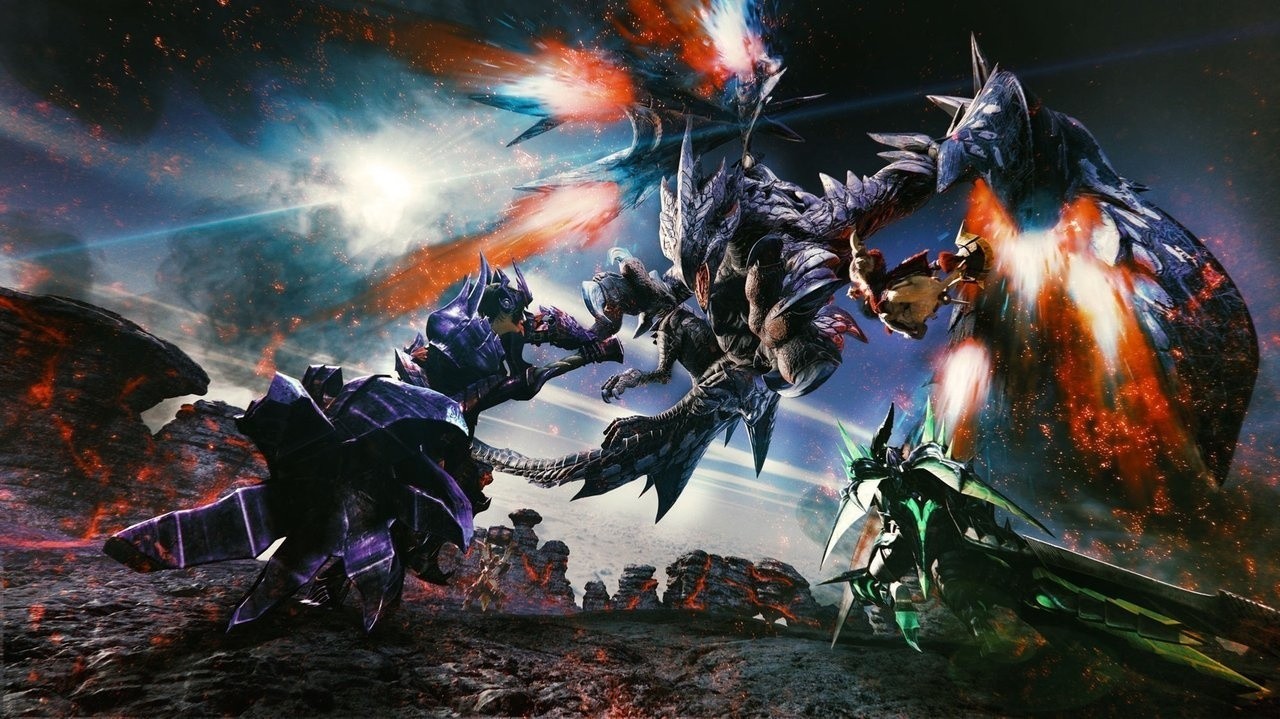
While it’s worth bearing in mind that this data dates back to the end of last year – and therefore doesn’t include the massively successful Resident Evil 2 remake just yet – it makes for some interesting reading. Monster Hunter: World jumps all the Resident Evils and Street Fighters to the top of the list with a colossal 11.9 million sales across all platforms. From a Nintendo perspective, Monster Hunter Generations creeps up to number 17 having sold an impressive 3 million copies across 3DS and Switch. There’s no individual breakdown between the platforms, although Capcom commented in its February 4th financial report that the Switch version enjoyed “robust sales” outside Japan.
With Switch’s growing player base, Capcom is sure to have plans for the franchise on Nintendo’s system going forward – the list features plenty of Nintendo hardware elsewhere. While a port of the ultra-successful Monster Hunter: World is unlikely, it’s not beyond the realm of possibility.
Would you snap up a Switch port of Monster Hunter: Worlds or would a bespoke title be a better idea? Give us your thoughts down below.
Comparing the 2018 MacBook Air with the less-expensive 2017 model
The 2018 MacBook Air refresh is packed with potential, but is it worth buying it versus the prior generation? AppleInsider talks about which version is the better option for your money.
2017 MacBook Air (left), 2018 MacBook Air (right)
Three months ago, Apple released the new 2018 MacBook Air, complete with the first full redesign to the line in 10 years. It’s packing a bunch of new features and technology that brings it up to date with Apple’s other MacBook offerings at a relatively low price of $1200.
However, Apple is still selling the old MacBook Air for $1000, that’s $200 cheaper.
This raises the question of whether the new MacBook Air is really worth that extra $200, or if the old MacBook Air may be a better option. Or, for owners of the old MacBook Air, should they upgrade to the newer model?
Obvious Outside Refinements
Right off the bat, you’ll notice that the new Air has a modern look and feel to it, using an all-aluminum design whereas the old Air’s hinge is made of plastic. One thing the new model lacks is the glowing Apple logo, but it doesn’t really matter that much.
Even the hinge has changed between models
Even though they both pack 13-inch displays, the new Air is quite a bit smaller and more portable at 11.97 inches long and 8.36 inches wide, instead of 12.8 inches long and 8.94 inches wide, and it’s a little bit thinner as well. With the old model, you get a bunch of ports, including 2 USB-A ports, a headphone jack, a Thunderbolt 2 port, and an SD card slot.
You also get a MagSafe charger, which will quickly disconnect if someone trips over the cable.
The 2017 model uses Magsafe to recharge
With the new Air, you simply get a headphone jack and two high-bandwidth Thunderbolt 3 ports, which can be used for charging or connecting external devices like a 5K display. Yes, having only two parts is pretty limiting, but you can easily find a relatively cheap USB-C hub.
Opening up to see the displays, may will notice a huge difference in design. The old Air looks outdated compared to most laptops on the market, with those huge silver bezels, while the new Air has slim glossy black bezels surrounding the new Retina display, that look much more pleasing.
The off-angle color shift is more obvious in the older version
The Retina Display itself is worlds better on the new model, as it can display 96 percent of the sRGB spectrum compared to only 71 percent on the old Air. It’s also laminated, so it looks like its a part of the glass.
With the old Air, there’s a noticeable gap between the glass and the display which can be distracting for some. The worst part about the old display is its horrific viewing angles, as it changes colors and gets very dim while looking at it off-angle, an issue that is minimized in the newer model.
Tactile Parts
There’s no doubt there’s a lot less key travel on the new Air’s keyboard, and it does take some time to get used to, though some still prefer the old keys. The nice thing about the new Air is that it features Apple’s third-generation butterfly key mechanism, which incorporates a silicone barrier to protect from dust and debris.
The third-generation butterfly key mechanism means there’s less key travel in the 2018 MacBook Air
The new Air also gains Touch ID for logging in and using Apple Pay online, which is a nice little bonus. Sure, passwords are decent enough, but using Touch ID seems to be a quicker option.
A huge difference is in the trackpads, as the new one is not only larger, but it’s a force touch trackpad so it doesn’t physically move. A motor beneath the trackpad vibrates to simulate clicks, and you can easily customize pressure-sensitivity in the settings.
There’s a bigger trackpad in the newer model
You also get an even clicking feel across the whole trackpad, whereas the old model used a cantilevered design that makes it difficult to click near the top edge.
Sound and Internals
The speakers are also much better on the new Air, with vocals clearer than before and with a generally more full sound. The old Air doesn’t even have speaker grilles, as the sound comes from beneath the keyboard.
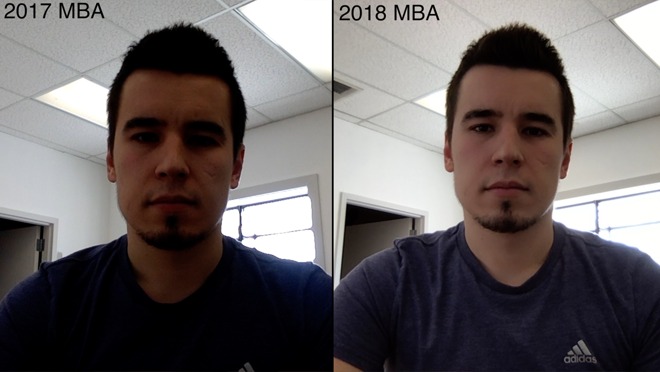
Comparing the FaceTime cameras of the two models
The new MacBook Air also gets the T2 security chip, which takes care of a lot of items on behalf of the processor, like controlling the SSD and making the whole system more secure. Even though both models have the same quality 720P FaceTime camera, the T2 chip helps the new Air record much better video, including a brighter image than the older model.
To go with the speakers, the microphone quality is also improved in the latest model.
For performance, obviously the new model is faster despite both old and new versions having a dual-core processor, with the 2018 edition roughly 30 percent faster than its predecessor. Not only that, but the technology in the processor is newer, so it supports hardware encoding of HEVC which can help with video rendering.
We also saw a 25 percent increase in graphics performance on the new Air as well, which is nice since it still maintains the same 12 hours of battery life.
Decision Time
Is the new Air better? Oh yes, much better, and it is definitely worth the extra $200. To make it even better, there are multiple sales going on right now, so you can buy the 2018 MacBook Air for as little as $1079.
The new Air is basically better in every way, unless you need a lot of ports.
Comparing connectors on the two MacBook Air generations
If you currently own the old MacBook Air, should you upgrade to the new one? Well, if you’re happy with your current MacBook and it does everything you need it to do, then don’t upgrade.
You’ll notice a difference, but not enough to make it worth spending the cash. Use your old MacBook until it breaks down or starts impeding on your ability to get work done.
If you have some money burning a hole in your pocket, and feel like you’re ready to upgrade, the new Air is a great choice.
Where to buy
Apple authorized resellers are discounting both the 2017 MacBook Air and 2018 MacBook Air with instant rebates of up to $250 off. A few of the hottest deals can be found below, but it’s always wise to check out the AppleInsiderPrice Guide for the latest discounts and product availability.
Posted by: xSicKxBot - 02-09-2019, 10:12 AM - Forum: Lounge
- No Replies
New Shadows Die Twice Trailer Introduces The Protagonist's Origin
From Software has released a new trailer for its upcoming Souls-like game, Sekiro: Shadows Die Twice. The trailer delivers our first official look at the game's story, specifically the origin of its protagonist, The Wolf. You can watch it above.
The developer behind Dark Souls and Bloodborne is changing quite a few aspects of its tried-and-true formula to deliver a new kind of experience with Sekiro. For one, Sekiro's protagonist actually speaks. The story in Sekiro plays out more as a Japanese drama, with players embodying a specific character with his own established backstory, feelings, and sense of morality. Some of the narrative will play out as flashback sequences as well, which is another first for From Software when it comes to its Soulsborne titles.
Sekiro's boss battles will also play out differently than what's been seen in Bloodborne and Dark Souls. "The traversal options allow much more dynamic movement within the boss arena, both for yourself and the boss character themselves," From Software director Hidetaka Miyazaki said. "Previously, you would have just had to run around a huge boss' feet and hack away at his ankles, but now you have all these movement options; you can both fully use the extent of that arena." You'll actually be able to pause the game too, even in the midst of a hectic fight, as there isn't any multiplayer in Sekiro.
Miyazaki has confirmed that Sekiro is "probably even more challenging than previous From games," and after playing some of it, we agree. Sekiro's addition of parkour and stealth mechanics certainly allows you to move faster and occasionally kill more efficiently in comparison to previous Soulsborne titles, but the game's new combat system of wearing down an enemy's guard before executing them definitely has a learning curve.
Sekiro: Shadows Die Twice is scheduled to release on March 22 for Xbox One, PS4, and PC.
Video: Take A Tour Of PlatinumGames’ Stunning Headquarters In Osaka, Japan
PlatinumGames has shared a lovely new video giving fans a tour of its headquarters in Osaka, Japan.
Getting the chance to have a good look around video game development studios is a rather rare treat, especially when they’re as utterly glorious-looking as PlatinumGames’ swanky pad of joy. The office is located in Osaka’s Umeda Sky Building, which just so happens to be one of the world’s more interesting buildings anyway, without having Platinum tucked away inside. Seriously, look at it.
If you haven’t already watched the video by this point, expect to find fancy shots of the studio’s entrance, work room, meeting rooms, sound studio, and library, as well as a surprising number of close-ups focusing on the wheels and bases of office chairs. Even the corridors look amazing, and we’ve never wanted to work there more.
Make sure to let us know your thoughts on the PlatinumGames office below; we’ll just be over here working out how much it would cost to move Nintendo Life HQ next door. Constantly-cloudy England just doesn’t cut it.
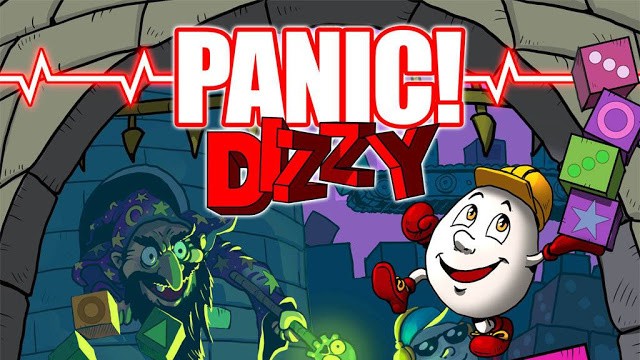
Unreleased NES Title Panic! Dizzy Hits Kickstarter
Dizzy fans rejoice! In what seems like an unending trove of unreleased software that Philip and Andrew Oliver have found down the back of their sofa, Panic! Dizzy is the latest in a line of rediscovered Dizzy titles seeking crowdfunding. The game will be free to play on their website, but the pair are kickstarting the production of NES cartridges just as they have for Wonderland Dizzy, Dreamworld Pogie and Mystery World Dizzy.
According to their blurb:
This game was written, by Philip and Andrew, in the autumn of 1992 in just 64KB using PCs with PDS boards cabled to NES consoles.
Unfortunately Panic! Dizzy wasn’t released by Codemasters at the time and was moth-balled. It was only recently rediscovered and restored by Dizzy fan Lukasz Kur for this very Kickstarter Campaign.
The game features five different puzzle modes – Four Suits, Match More, Dizzy Dice, Perfect Path and Picture Perfect – each with two-player support. A couple of them bear a passing resemblance to Data East’s Magical Drop – you can find more details on the Kickstarter page. They’re close to reaching their £13,500 goal, so it seems this will become a reality. It’s unthinkable today that a developer could possibly create a game and promptly forget all about it – how times have changed.
Is your head spinning with all these unearthed Dizzy games? Reckon the Oliver twins have anything else pugged away in a bottom drawer somewhere? Let slip your Dizzy fandom in the comments below.
Posted by: xSicKxBot - 02-09-2019, 10:12 AM - Forum: Windows
- No Replies
Test your quantum programming skills in the Microsoft Q# Coding Contest
Whether you’re new to quantum computing and want to improve your skills, or have done quantum programming before and need a new challenge, we have just the thing for you: The second Microsoft Q# Coding Contest. Designed to help developers ramp up quickly in quantum computing and quantum programming, this contest will help participants build the expertise they’ll need to be ready for the advent of true quantum computing.
Organized in collaboration with Codeforces.com, the contest will be held March 1-4, 2019. It will offer the participants a selection of quantum programming problems of varying difficulty. In each problem, you’ll write Q# code to implement a transformation on qubits, or perform a more challenging task. The top 50 participants will win a Microsoft Quantum T-shirt.
This contest is the second in a series that began last July. The first contest offered problems on introductory topics in quantum computing: Superposition, measurement, quantum oracles, and simple algorithms. This second contest will take some of these topics to the next level as well as introduce some new ones.
For those eager to get a head start in the competition, a warm-up round will be held February 22-25, 2019. It will feature a set of relatively problems and focus on helping participants become familiar with the contest environment, the submission system, and the problem format. The warm-up round is a great introduction to quantum programming, both for those new to Q# or those looking to refresh their skills.
Another great way to prepare for the contest is to work your way through the Microsoft Quantum Development Kit katas. The katas allow you to test and debug your solutions locally, giving you immediate feedback on your code.
Q# can be used with Visual Studio, Visual Studio Code or command line, on Windows, macOS or Linux, providing an easy way to start with quantum programming. Any of these platforms can be used in the contest.
We hope to see you at the second global Microsoft Q# Coding Contest!
Posted by: xSicKxBot - 02-09-2019, 06:08 AM - Forum: Lounge
- No Replies
The sloth behind the scenes of 2019’s biggest Twitch stream
The charity stream run by leftist video game YouTuber Hbomberguy (aka Harris Brewis), which he ran on behalf of the UK-based trans charity Mermaids, has earned a place in gaming history with over $350,000 raised during an exponentially escalating 55 hour bonanza that saw game industry stars, YouTubers, politicians, artists, and activists all join in promoting the stream or chatting on it.
What began as a bid to play Donkey Kong 64 to raise £3,000 turned into something legendary–and it wasn’t down to one man’s efforts alone.
Much attention has focused on Brewis, but I thought it would be appropriate to give this column over to one of the many trans women who worked behind the scenes to organize what quickly turned into a monumental operation. The gaming streamer and cyber sloth Casey Explosion joins us for a chat about how she helped make one of the best stories in gaming news come to life.
Katherine Cross: So, how did you get involved in HBomberguy’s stream and what did you actually do while it was running?
Casey Explosion: I got involved when HBomb asked me to come on the stream and chat to keep him alert, or chat with others while he was gone to sleep so that there wasn’t just dead silence on stream. Everything beyond that was completely unintended and unplanned.
I got the call (we were still chatting via Discord call, rather than a dedicated server) on Saturday morning, and when I came onboard I suggested getting Jim Sterling on for a little, which he very kindly agreed to! At some point we gravitated from a discord call to a server, which Pio (@PioBrando on Twitter) set up.
It was later that evening that things really began to take off, I had been speaking to the folks at Mermaids (the charity we were raising money for) and trying to get their CEO Susie Green on to talk, so I was talking them through using Discord for the first time to get her on.
I had also reached out to Grant Kirkhope, the composer of Donkey Kong 64‘s soundtrack and voice of Donkey Kong himself, and someone very kindly put us in touch. For me, that was the point where the stream itself started to take shape, I had invited Chelsea Manning on, and it just became something bigger than any of us could’ve imagined.
KC: What happened after that?
CE: I became the main point of contact for people asking to appear on the stream, so while I was reaching out to people I wanted to have as guests, like John Romero, others were reaching out to me requesting to appear. By Sunday, I was getting positively inundated with DM requests. People were messaging me mainly through Twitter, but I also got messages through Discord, Twitch, Steam, and Facebook from folks.
Most folks who appeared went through me, and it was bizarre all of a sudden having people like Owen Jones, Adam Conover, The Chapo guys, and so many more, all sliding into my DMs.
At one point on Sunday I described myself as “herding cats” trying to get folks on to speak and others to make room, so we had to go from an open channel to a locked one that we had to moderate getting people in and out of to speak with HBomb, so as not to have too much chatter all at once.
I have to give gigantic thanks to Dan Olson, Shaun, Shannon Strucci, Pio and others who also did great work behind the scenes. Dan took over as the main point of contact for the remainder of the stream once I had to go to bed. I got extremely burned out eventually, but I was happy that the last guest I managed to get on was trans game developer Rebecca Heineman.
KC: You’ve talked at length about how major news organizations, if they deigned to notice you at all, labeled you an “activist” — but that’s an inapt description of what you actually do and where your skills lie. Talk a bit more about that, and what it means to be an “aspiring gaming personality” in 2019.
CE: The reason I spoke about not wanting to be labeled an “activist” was not really about myself, but rather trying to draw attention to what I see as a more systemic issue on how media tends to frame trans people who speak up about their issues at all. It’s not really about me, and to be honest I don’t think I would have a problem with the label if it were just me it’s applied to, but it’s not.
The same publications that labeled me an activist also gave the same label to Chelsea Manning, and it just irked me. Not whistleblower Chelsea Manning or anything, just activist. And that’s weird to me, that the only trans people mentioned get stuck with “activist” while everyone else mentioned in the coverage gets to be known for something else. That doesn’t even take into account how the term has become a dog whistle for transphobic bigots as of late, where you’ll often hear them say “I don’t hate trans people, just trans activists” so that’s something that definitely adds to my reluctance to accept the label.
As for being an “aspiring gaming personality”? It’s about the space I want to create within gaming. When we think of the typical YouTube or Twitch personality, what can often come to mind is abrasive, loud and angry. With my streaming, I wanted to have a channel that is almost the exact opposite, where people can expect a more chill and relaxed commentary, where LGBT folks are explicitly welcome, and nobody has to worry about any “heated gamer moments” or “gamer words” if you know what I mean?
To grow that space, that’s it means to me. And when folks in my Twitch chat are saying things like “Casey ASMR when?” I know I’ve hit the right kind of chill that I wanted to achieve, and I hope I can continue to carve out that niche, be that kind of voice in gaming.
KC: The stream was remarkable for many reasons but, aside from the magnificent sum raised, it was perhaps most notable as a symbol. We’re told constantly as transgender people that a silent majority of our fellow citizens despise us. Despite that, this campaign was grassroots and blew up with minimal shepherding on anyone’s part. Thousands of people came out for us, including politicians and celebrities. What do you think caused this? Where was the magic?
CE: The magic? To a degree, I think a lot of that has to do with [British comedy writer] Graham Linehan, #thanksgraham! He doesn’t realize this, but what he has done is give cis people a villain. For trans people, nothing of what he is saying is new, it’s the same transphobic claptrap we’ve always had to put up with, it’s mundane to us.
But for cis people, this was something they haven’t seen before. He did something so cartoonishly evil in targeting Mermaids, attempting to get the funding pulled from a children’s charity? That’s something people can rally around.
Some folks in the games industry have described him as a monster when I told them what the stream is for! On his Twitter account, Graham has been directing a lot of hate at some very public figures who’ve challenged him, and his followers who’ve dogpiled their mentions often have bizarre conspiracy theories about what Mermaids even do, often calling them pedophiles and groomers, it’s so unhinged and eerily mirrors the “Pizzagate” conspiracy. He’s dragged transphobia from an abject concept for many people, straight into the limelight and shown everyone the truly hateful face of transphobia; raw, ugly, and spiteful.
As trans people, we are indeed told that the “silent majority” hate us, and are all too used to public figures we’ve looked up to turning out to hate us. We’ve all had disappointments with musicians we used to admire for example, who’ve turned out to be transphobic, so we’re sort of conditioned to expect the worst by this.
This has upended the notion that everyone’s silently transphobic! The sheer volume of people who wanted to get on our stream to support the trans community was mindboggling to me, it wasn’t something I expected to see. The messages I got from trans people telling me that this stream gave them the courage to come out has been incredible and heartwarming.
KC: The video game community has taken a drubbing in recent years, deservedly at times. But this stream was a watershed, in many ways. A lot of people felt a sense of relief that this sort of thing could happen spontaneously. Here was a charity stream that stood up for the defenseless, rather than yet another YouTuber spouting Nazi talking points.
On top of that, it even redeemed trolling a bit. “Do you know how to beat Beaver Bother?” became one of the top rejoinders to online transphobes. Suddenly the biggest TERFs and right wing bigots found their provocations met by Donkey Kong gifs.
Do you think there’s a model in this for how the gaming community can be a site for constructive politics, rather than just a source for one sad/tragic story after another?
CE: Absolutely! It’s been empowering, and it’s given people hope. It definitely feels like we have a hell of a lot more people on our side than we expected, that we feel a lot less alone in the world. It definitely put paid to the idea that gaming is the sole dominion of the straight, white, and angry.
I’ve been quoted in The Escapist as saying “It felt like the whole internet came out for trans rights!” and I stick by that. The fact that it was all so spontaneous demonstrates how genuine that audience was, and the positivity of the Twitch chat was incredible. I do hope this is a watershed.
And I most certainly think this shows the way for us to continue, I hope we can keep up the momentum and energy we had and do more, and I hope more people can take their cue from what HBomb has done.
KC: On a happier note, what game do you most enjoy streaming and why? And, perhaps finally, what’s next for you?
CE: Oh, definitely Armello! It’s just such a chill game to stream, and it’s at its absolute best when I have guests on to play with. But it depends, one of my favorite streams recently was when I had the developer of Lucah: Born of a Dream on to discuss the game and their inspirations, because I really enjoyed highlighting an excellent indie title that a lot of people slept on.
As for what’s next? I want to continue streaming and having that space for folks who want a more chilled experience, maybe do more with getting developers on as guests to talk about their games, and I’m already thinking of doing my own charity stream at some point in the future, but who knows? We’ll have to see. I’m also going to try to continue writing articles on Medium to build up a portfolio and perhaps see if I can’t get some freelance work in games media.
I possibly want to work on some YouTube videos if I have the time and energy to do so, as I tried making YouTube content before, but got extremely burned out by it. I’ve had some ideas that I’ve wanted to work on for a very long time, such as a comparison between the original Ring and its American remake. Other than that, I don’t know. But it feels like I’ve got an awful lot on my plate now than I ever had.
Katherine Cross is a Ph.D. student at the University of Washington who researches anti-social behavior online, and a gaming critic whose work has appeared in numerous publications.